
• 0203 811 8175
  • Make an Enquiry

    Request A Call BackX

    ADDRESSBerkeley Square House, Berkeley Square, Mayfair, London, W1J 6BD
    +44 (0)203 811 8175

    PLEASE FILL IN YOUR DETAILS

    Sending your message. Please wait...

    Thanks for sending your message! We'll get back to you shortly.

    There was a problem sending your message. Please try again.

    Please complete all the fields in the form before sending.

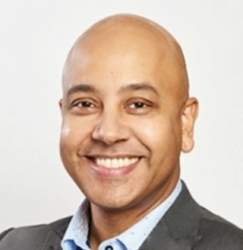
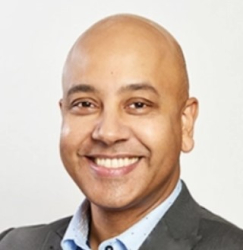
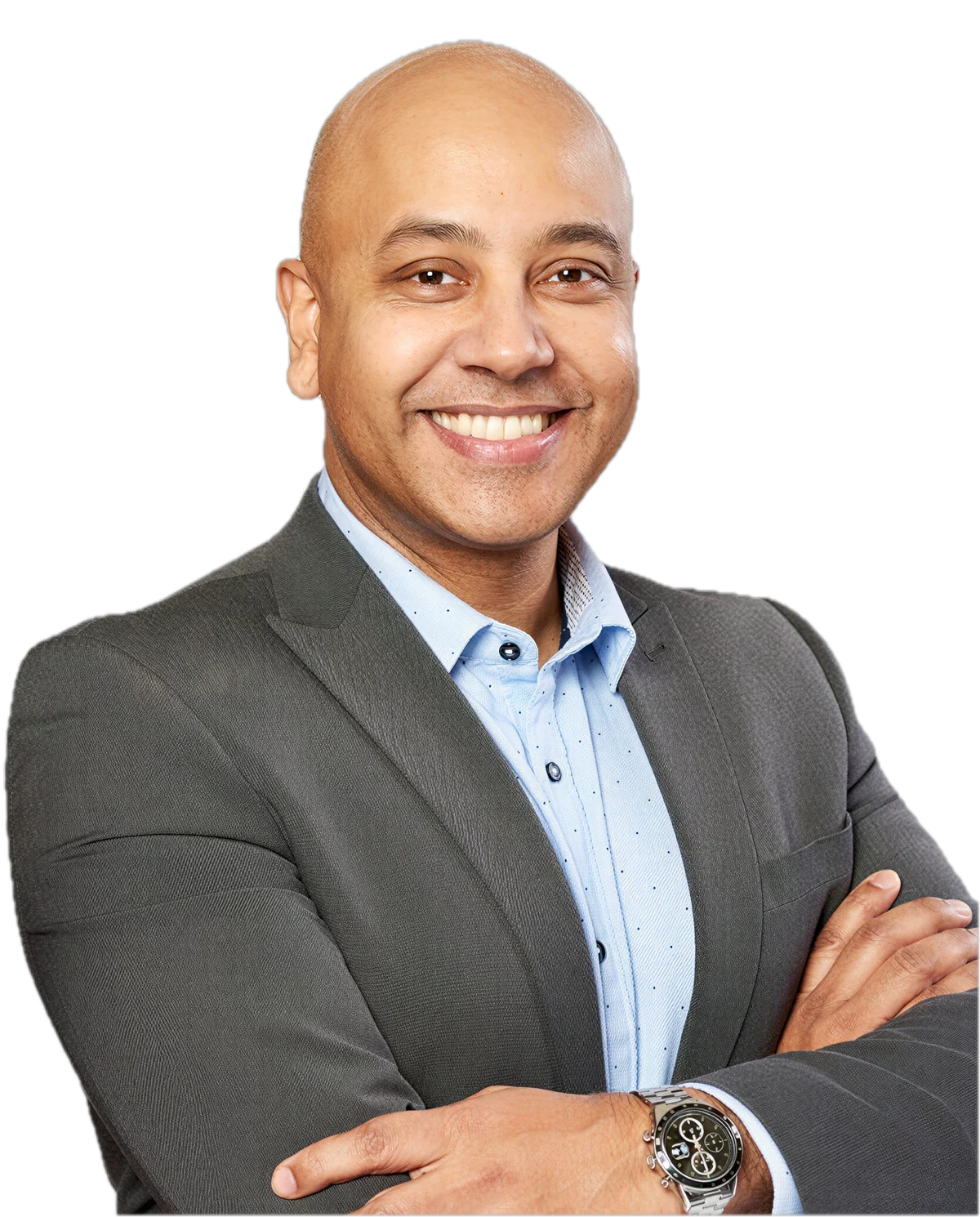
Mr Taimur Shoaib | Consultant Rhinoplasty Surgeon | London

Consultant Plastic Surgeon, Mr Taimur Shoaib based in Harley Street, London, who specialises in Primary Male & Female Rhinoplasty, Revision and Functional Septoplasty. With over 30 years of surgical experience and more than 19,000 procedures performed, his approach combines detailed anatomical assessment with long-term functional preservation.

Medically Reviewed by Mr Taimur Shoaib, FRCS (Plast) | Last Updated: 12 February 2026

Mr Taimur Shoaib | Consultant Rhinoplasty Surgeon | London

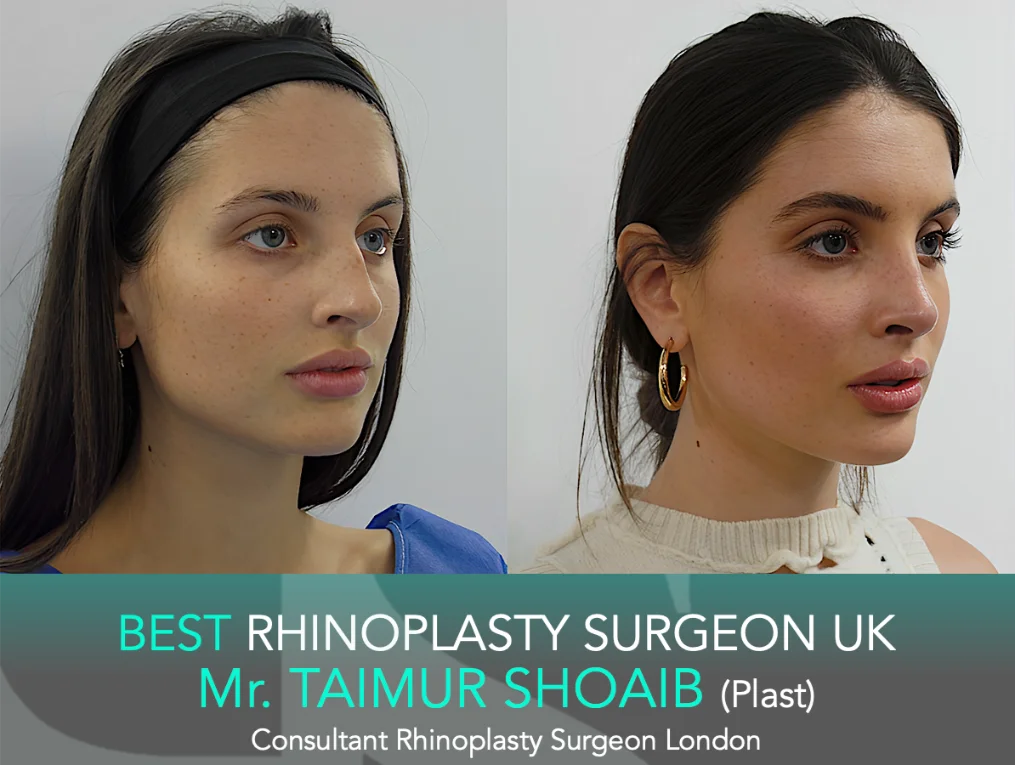
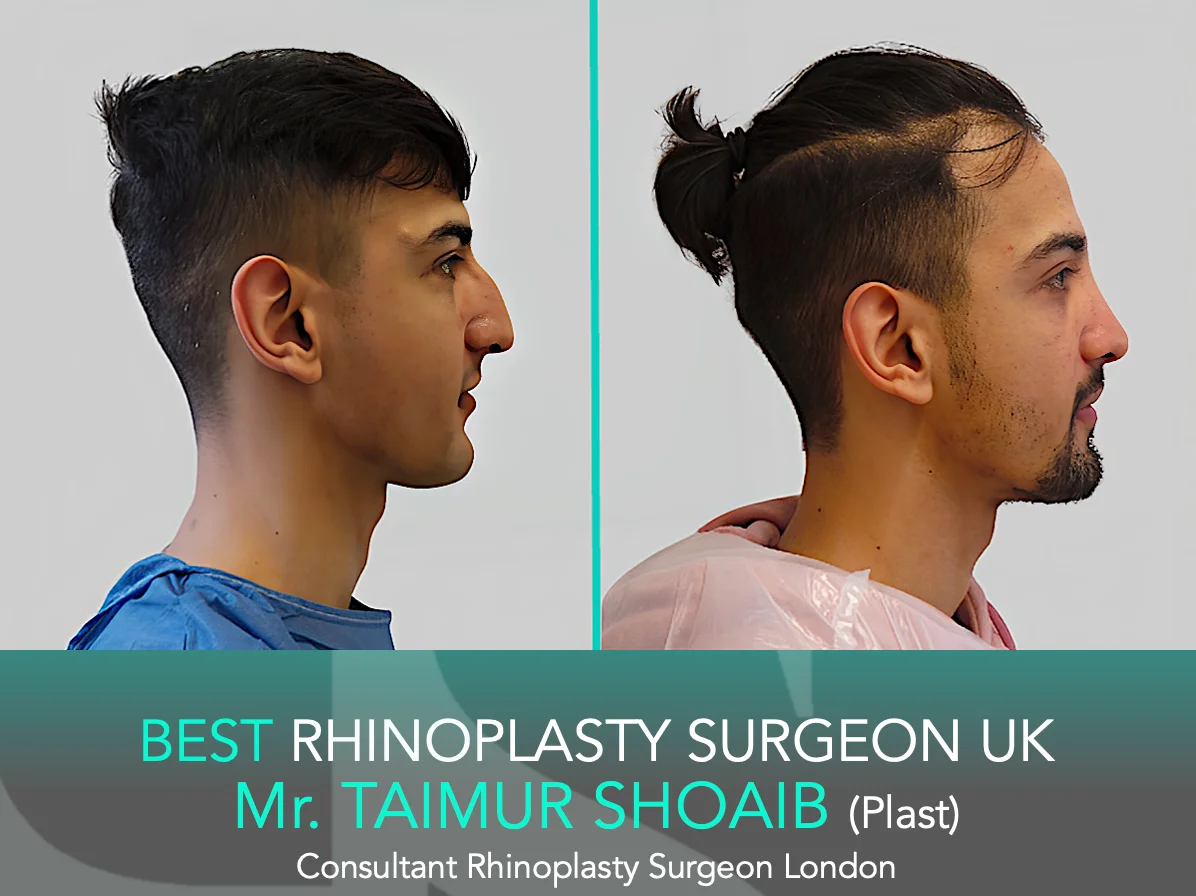
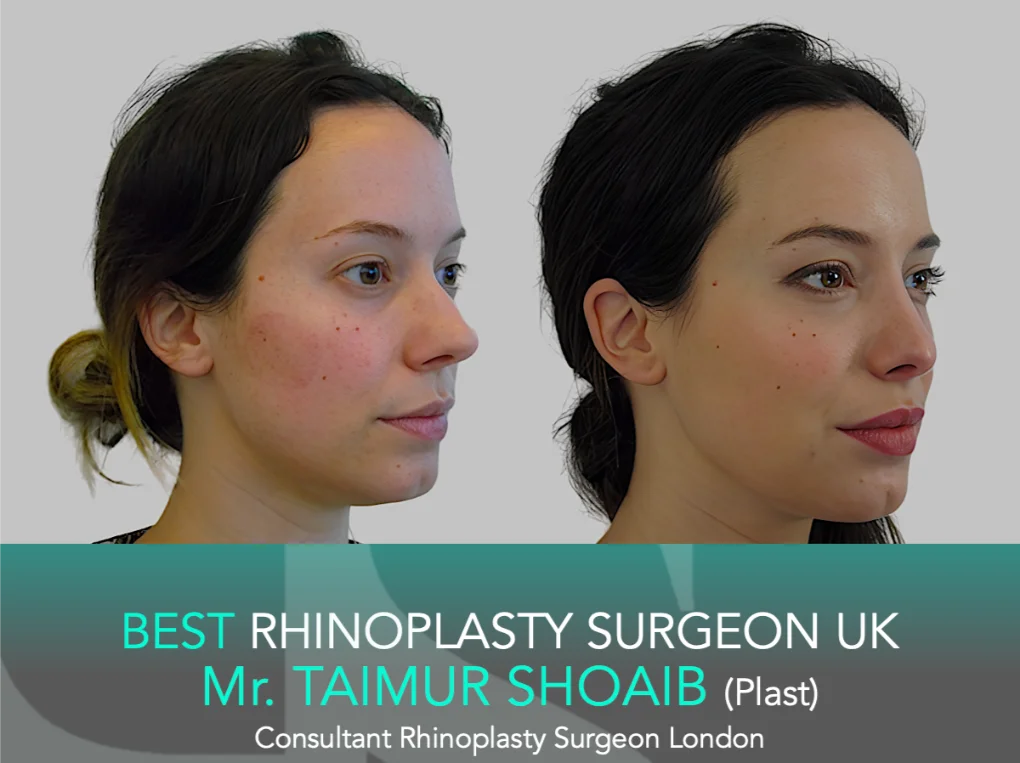
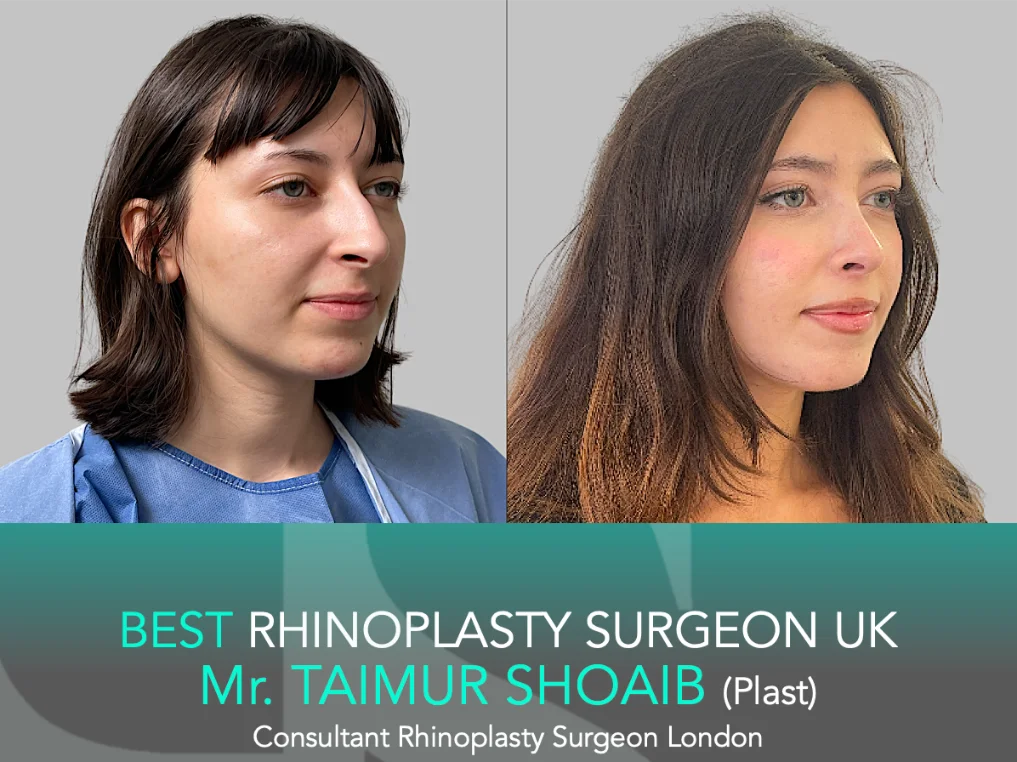
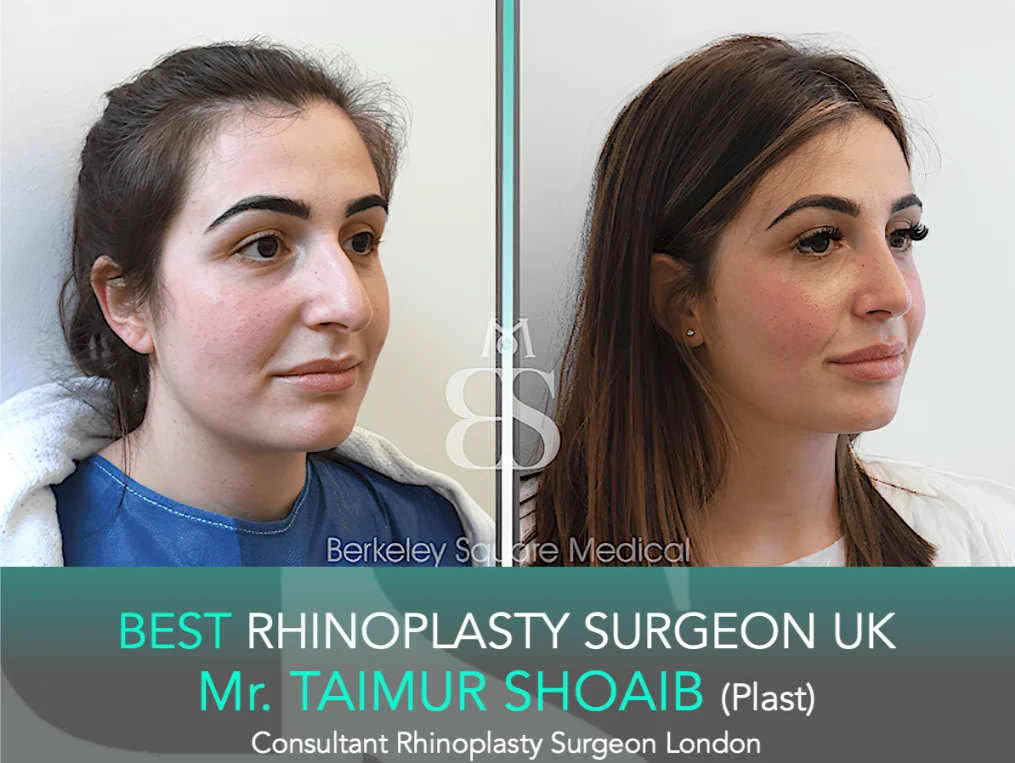
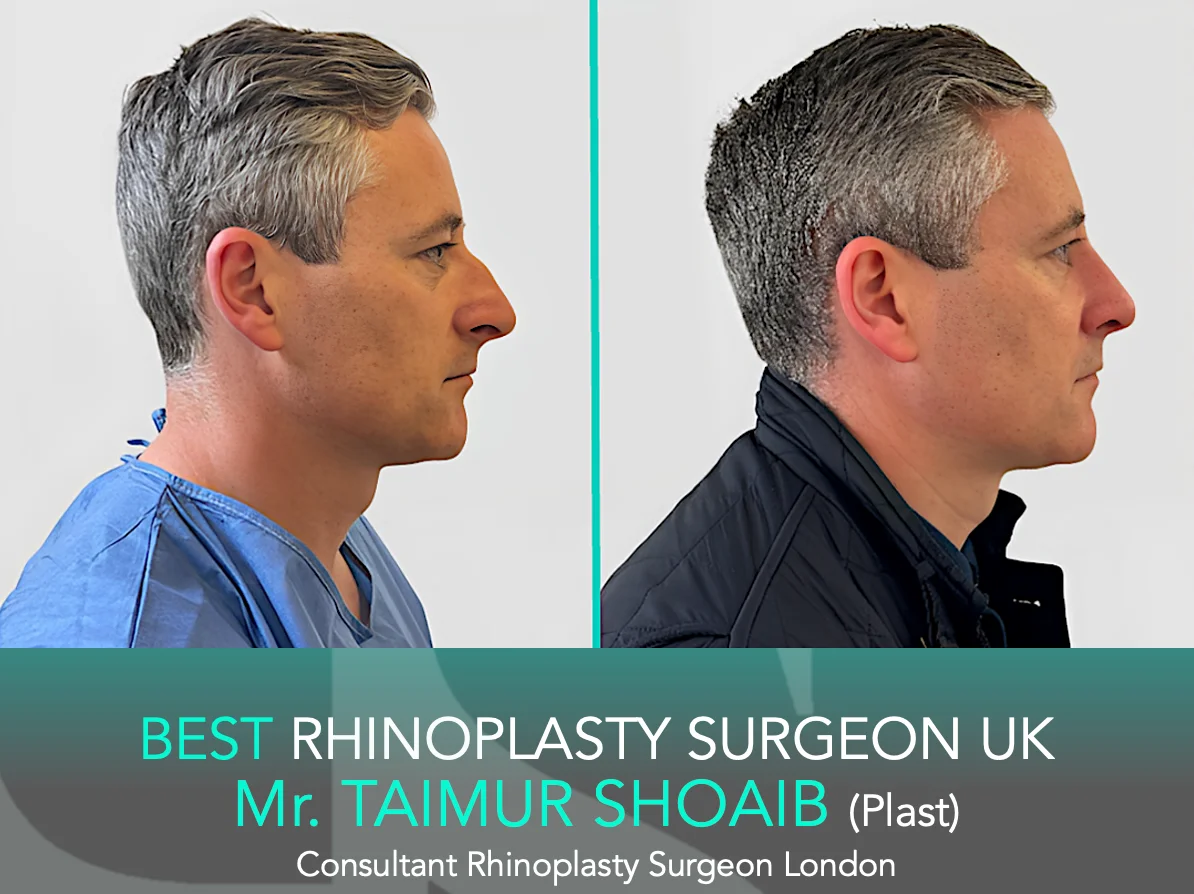
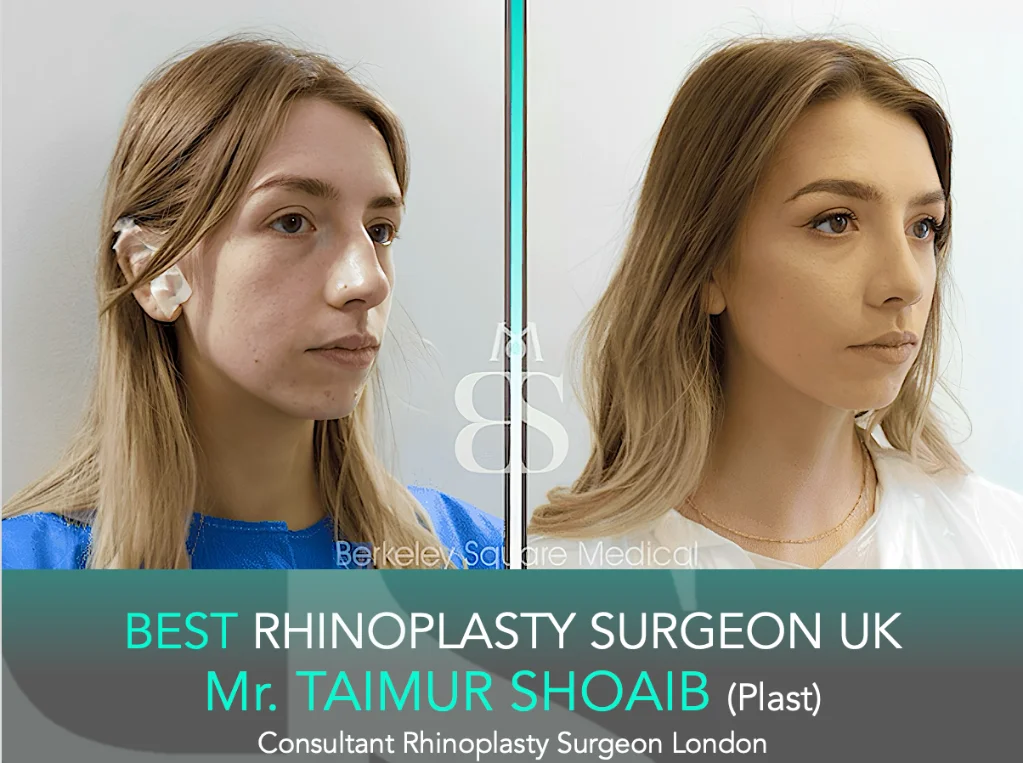
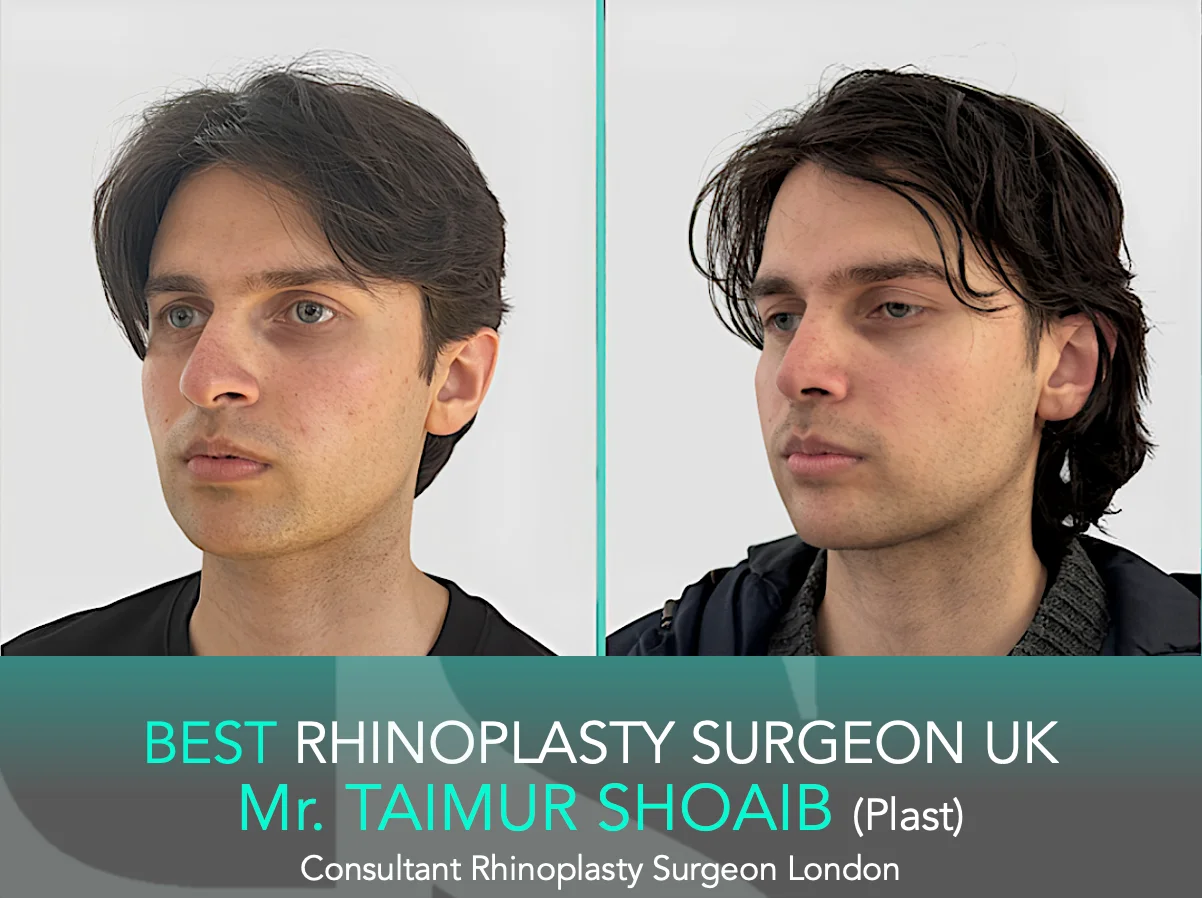
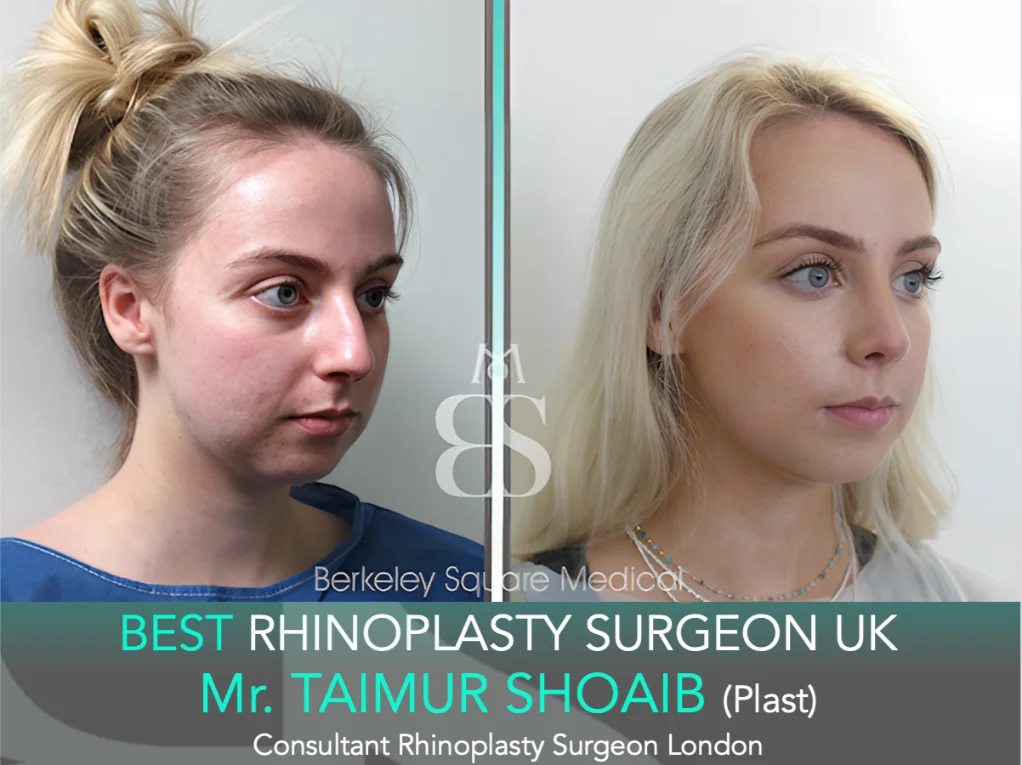
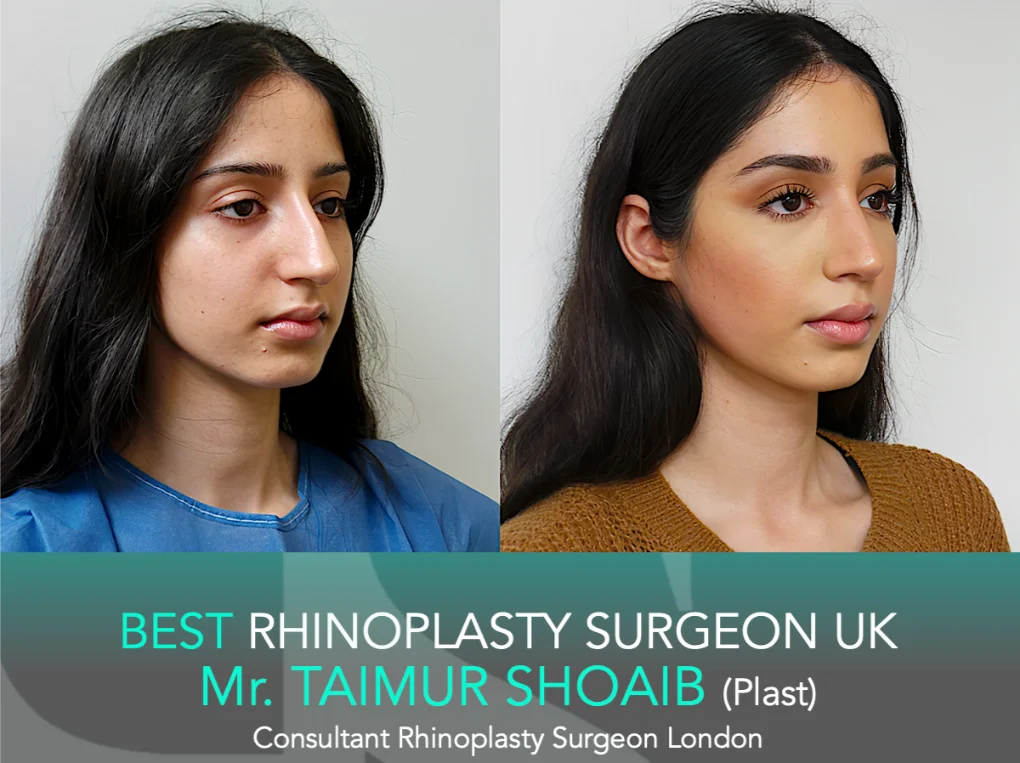
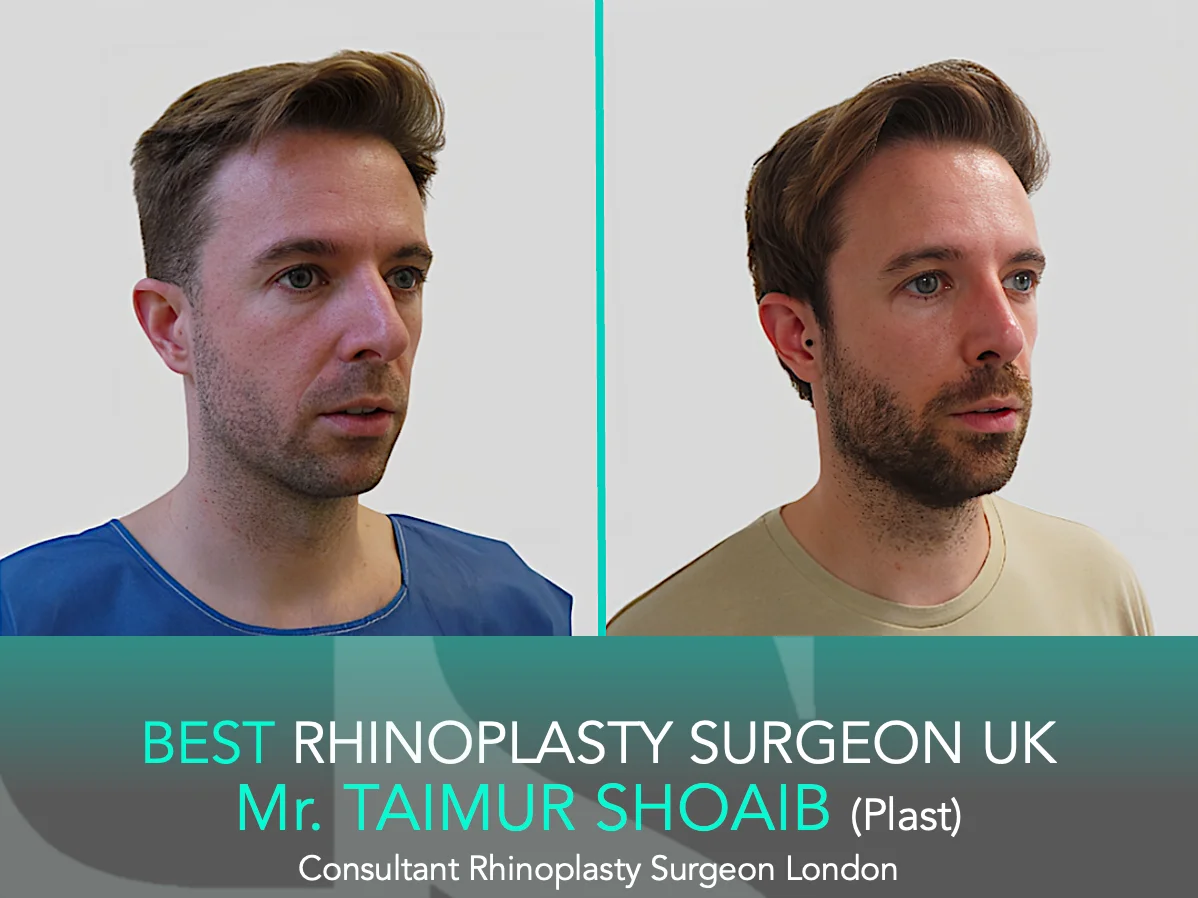
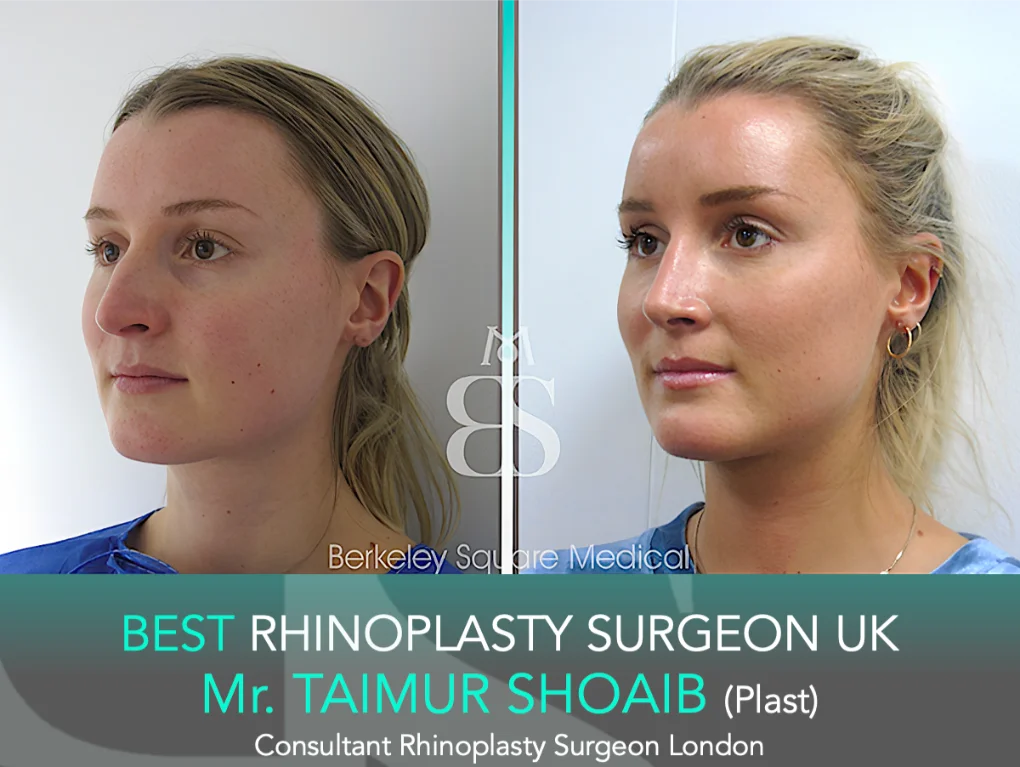
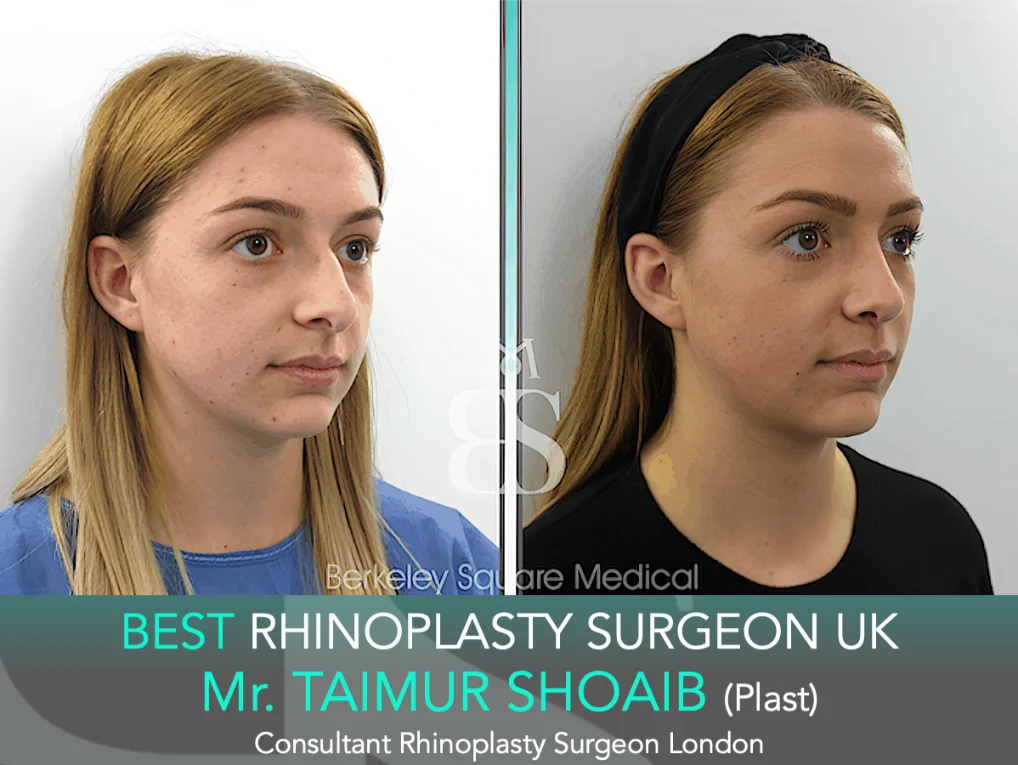
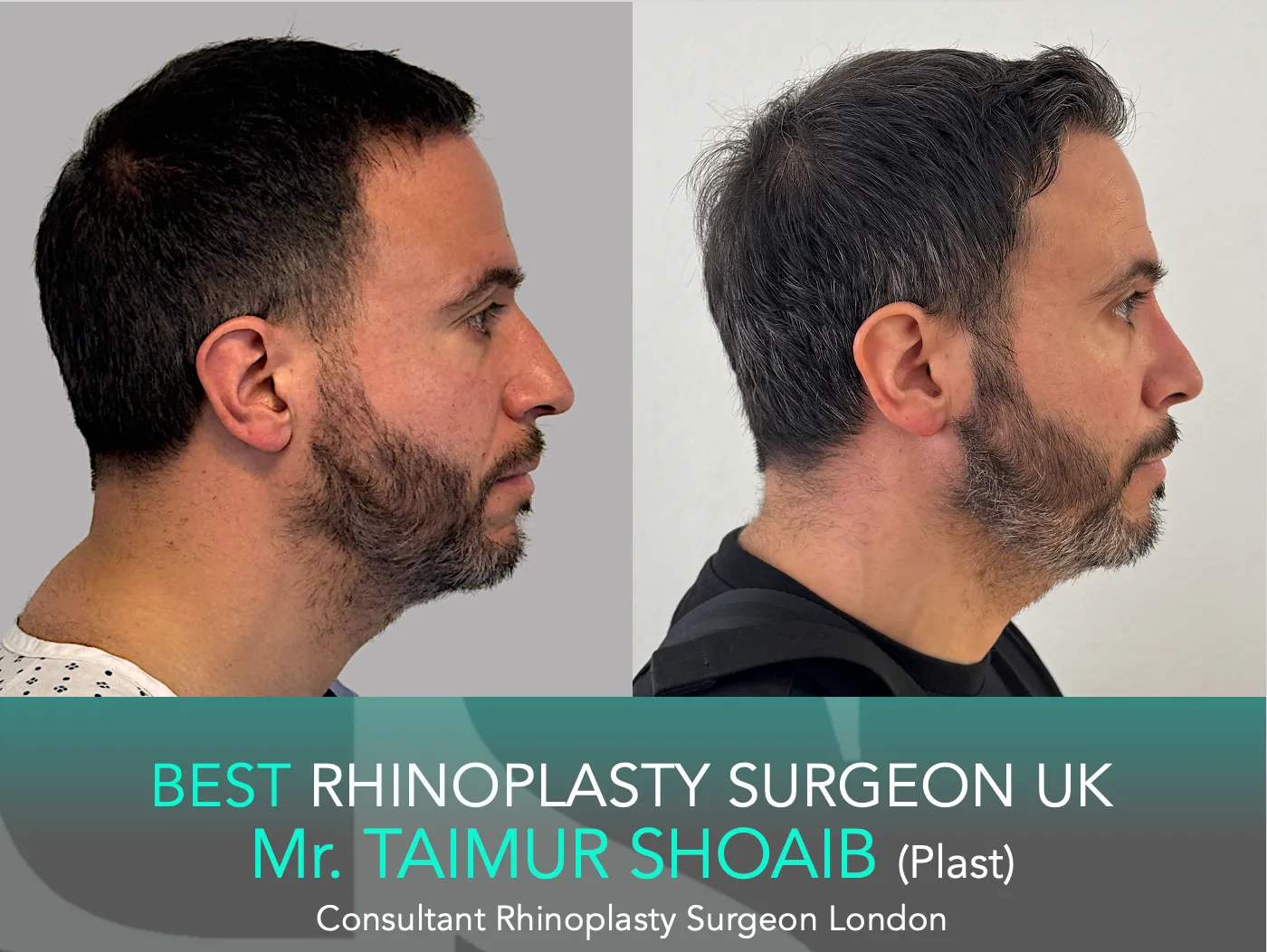
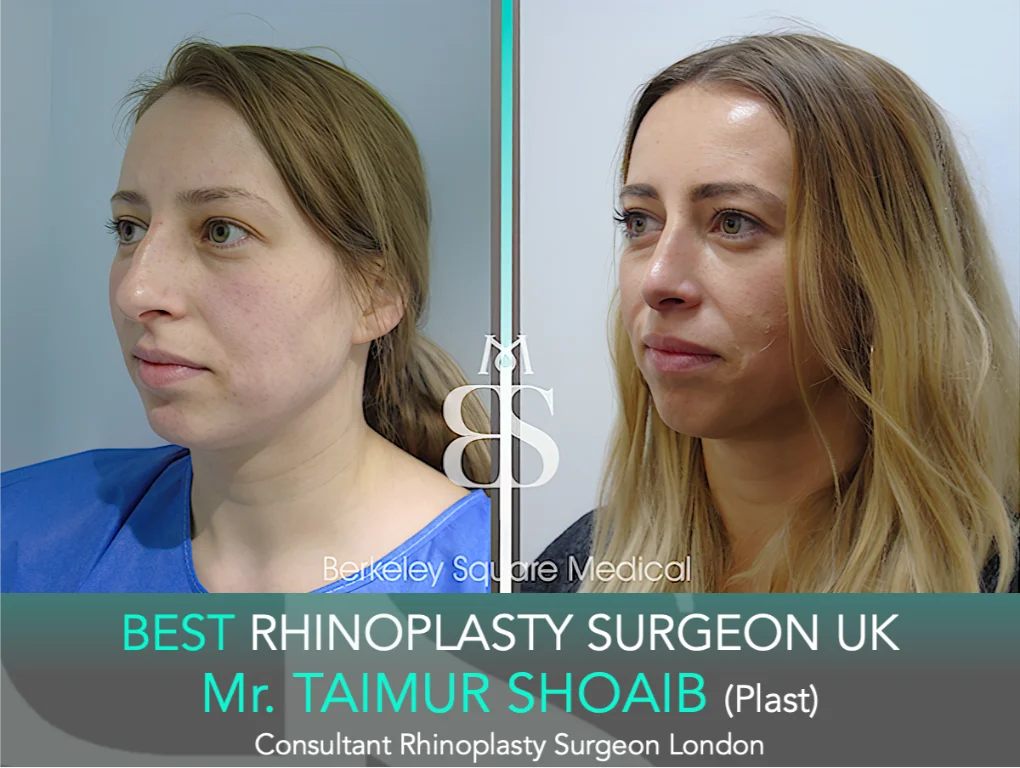
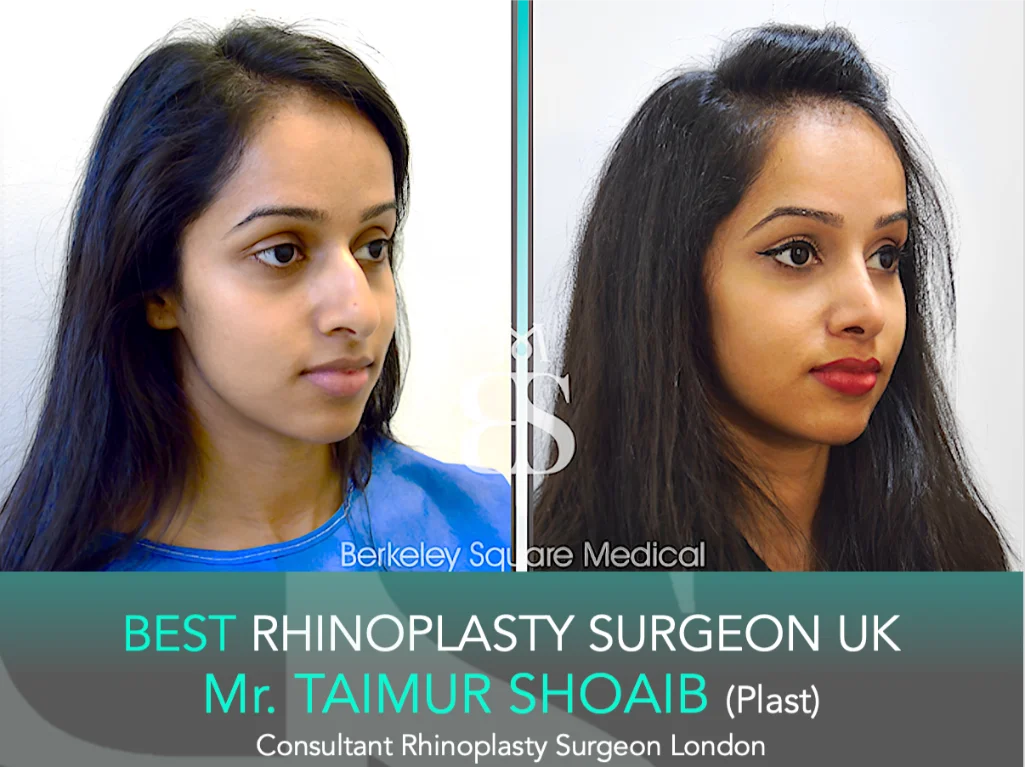
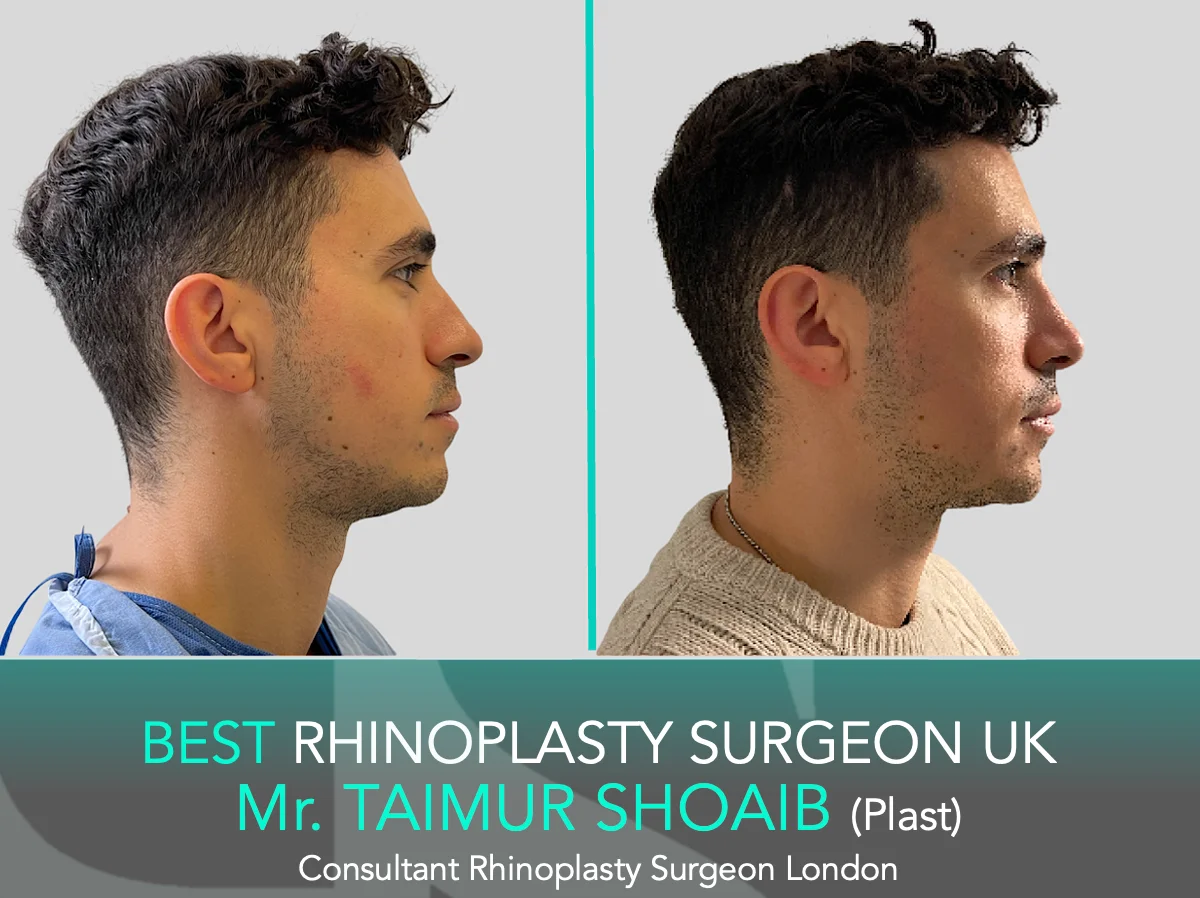
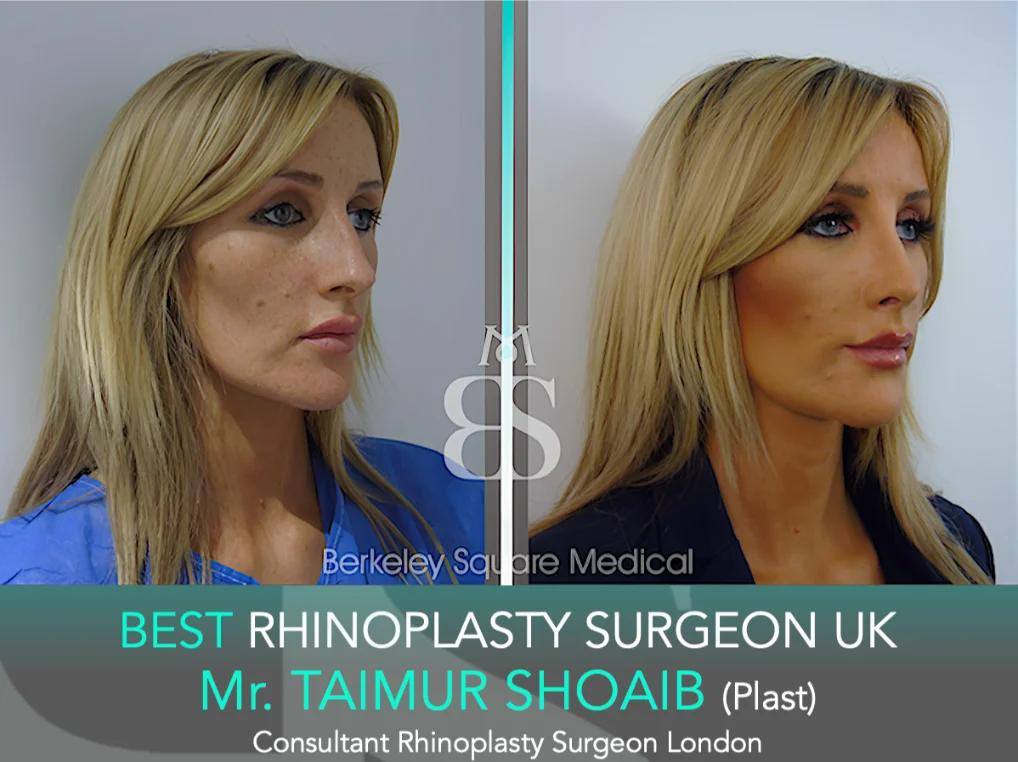
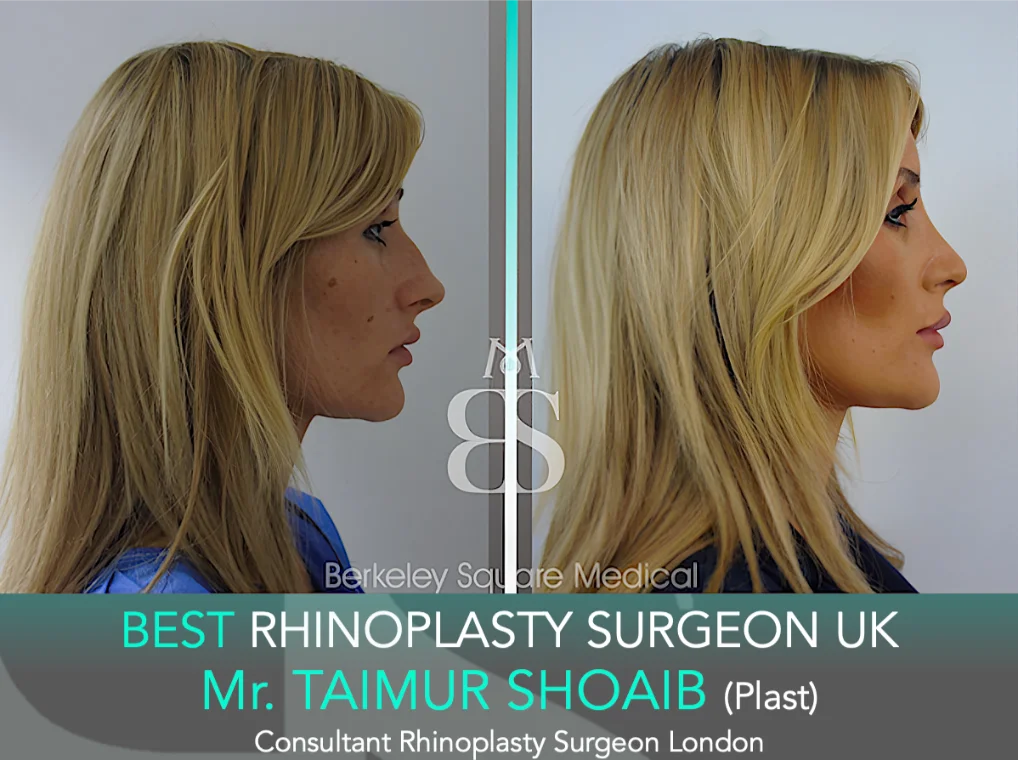
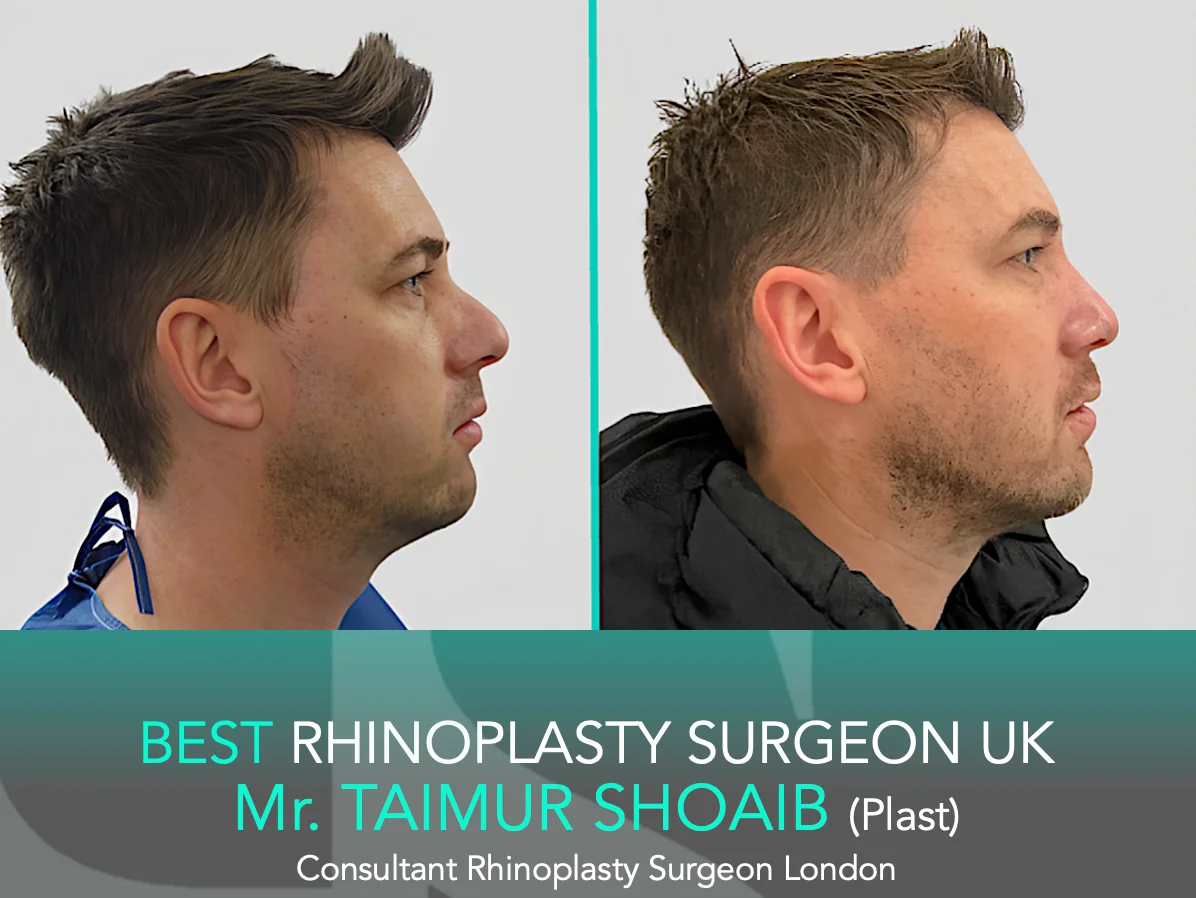
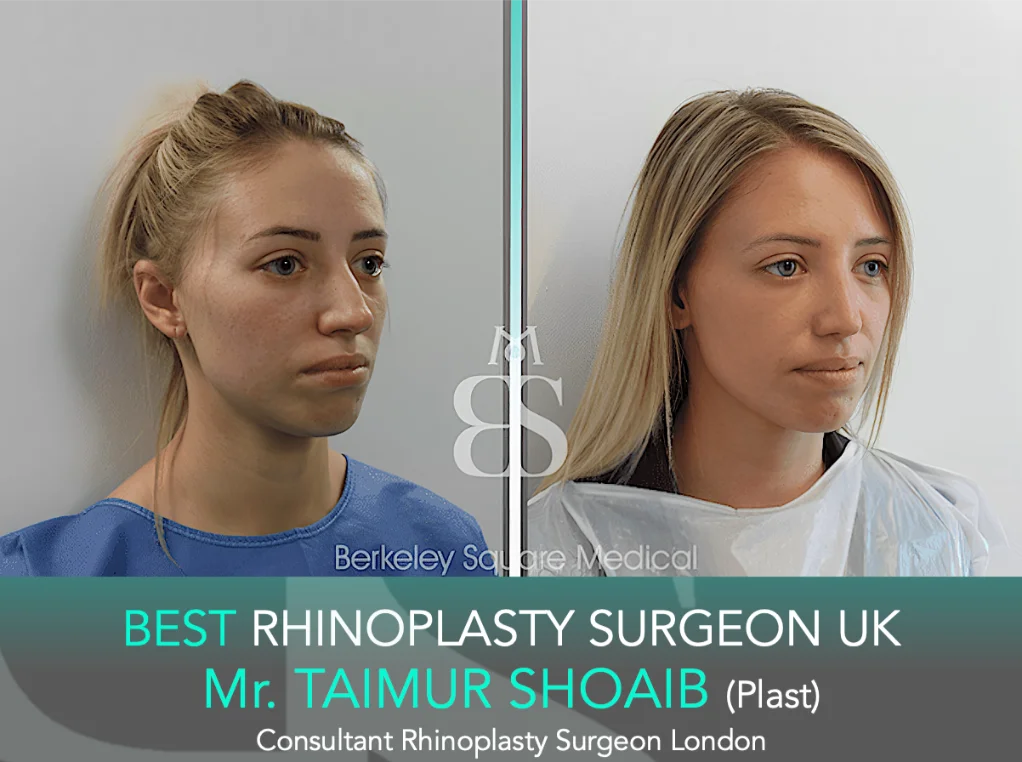
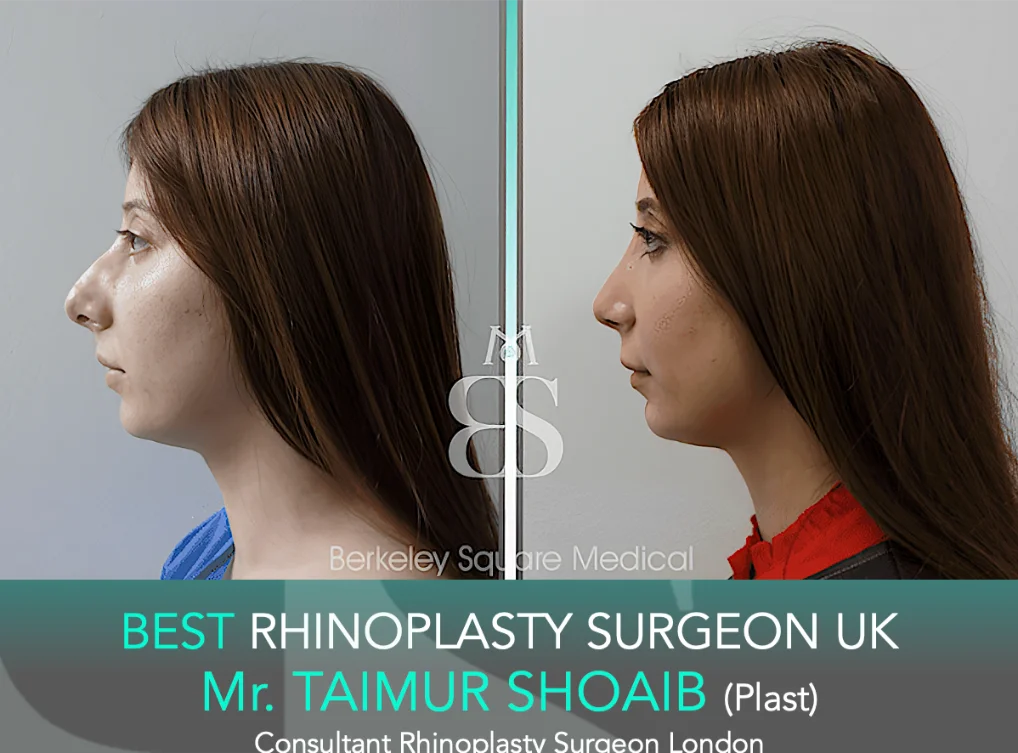
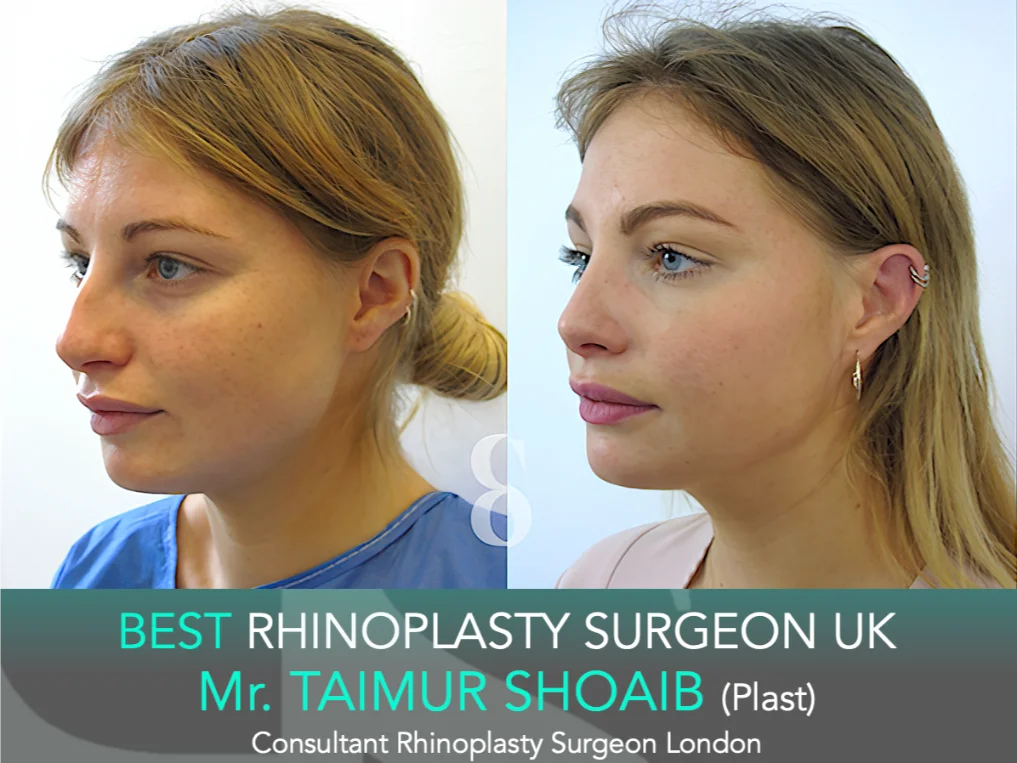
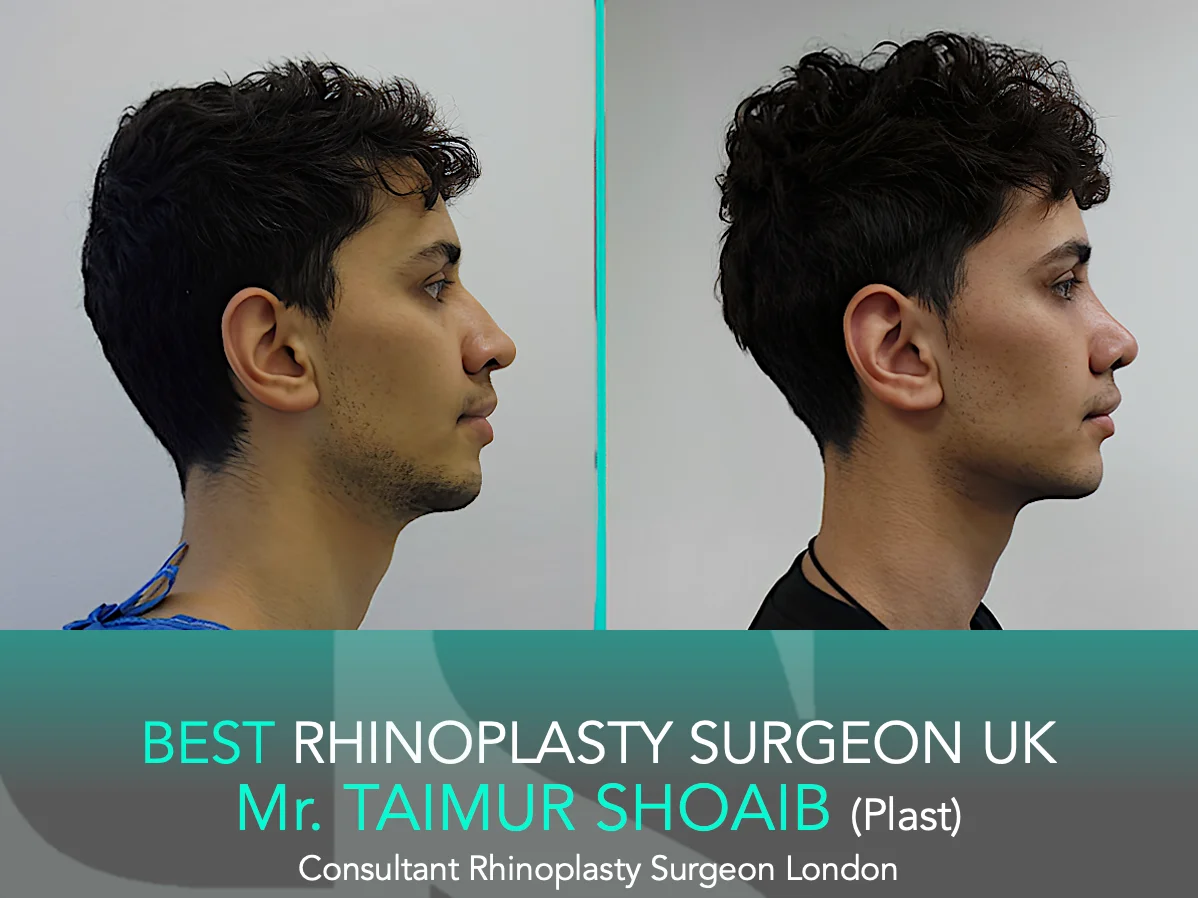
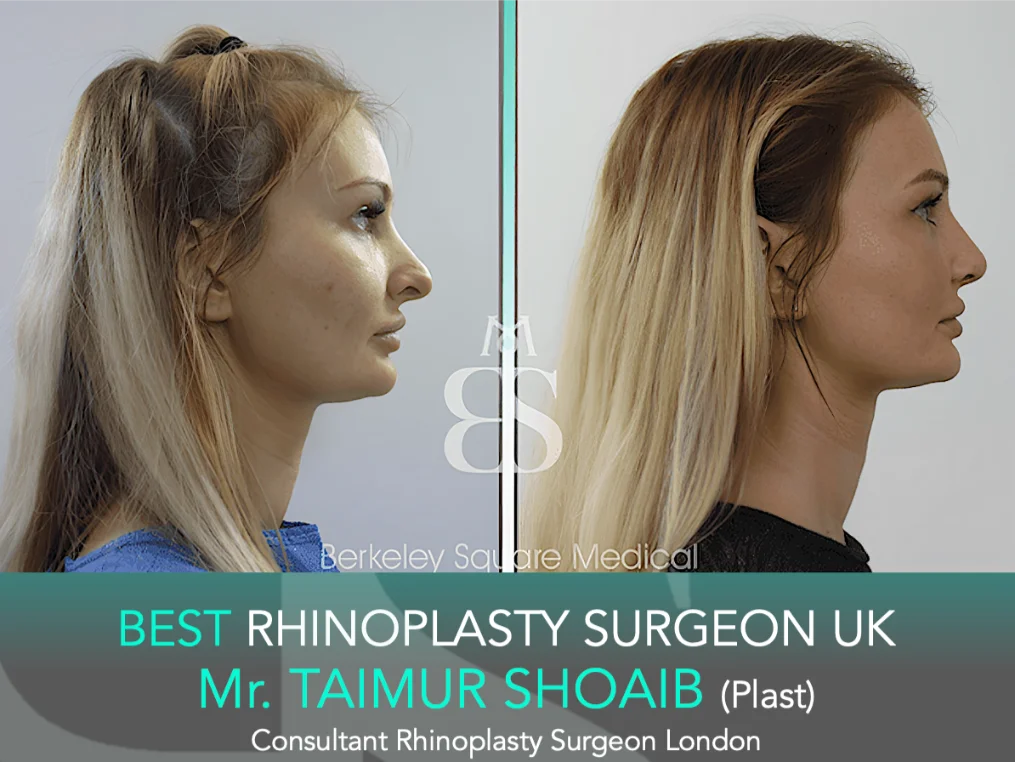
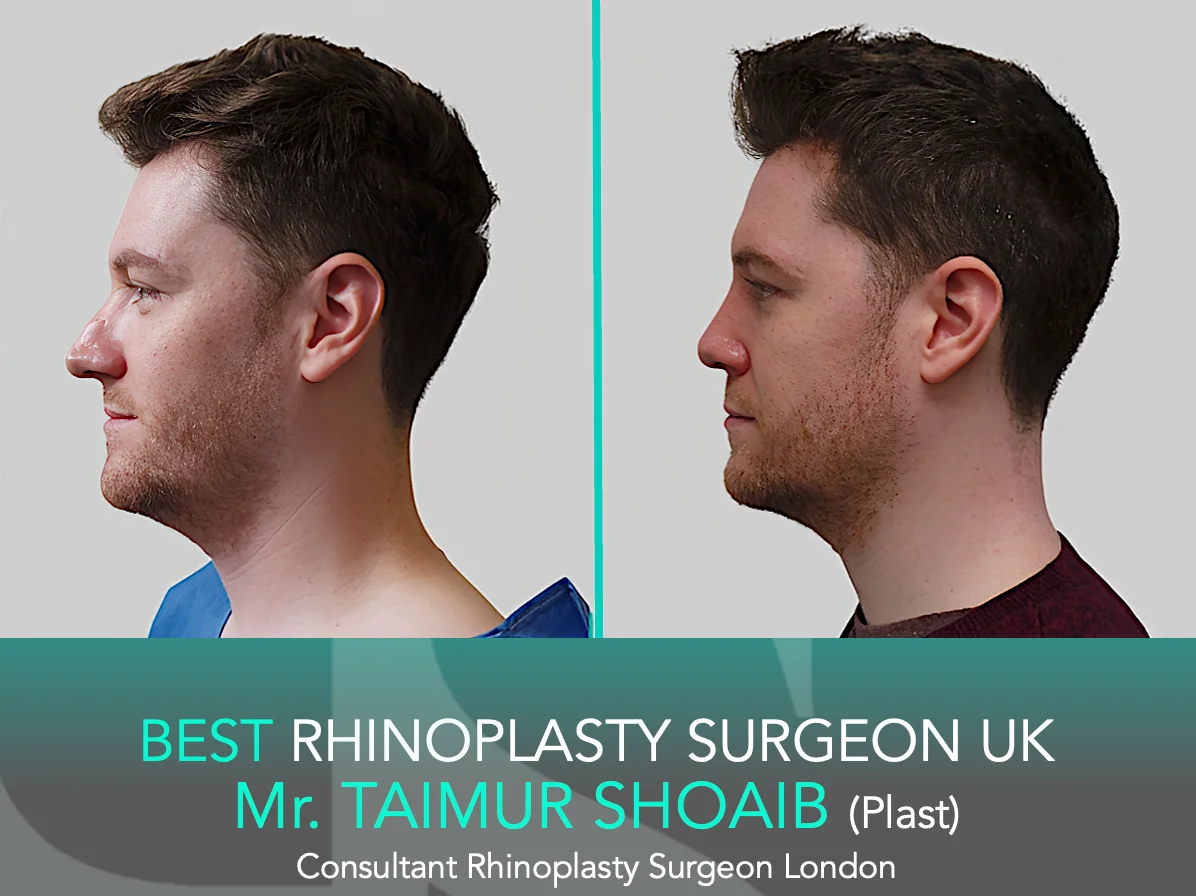
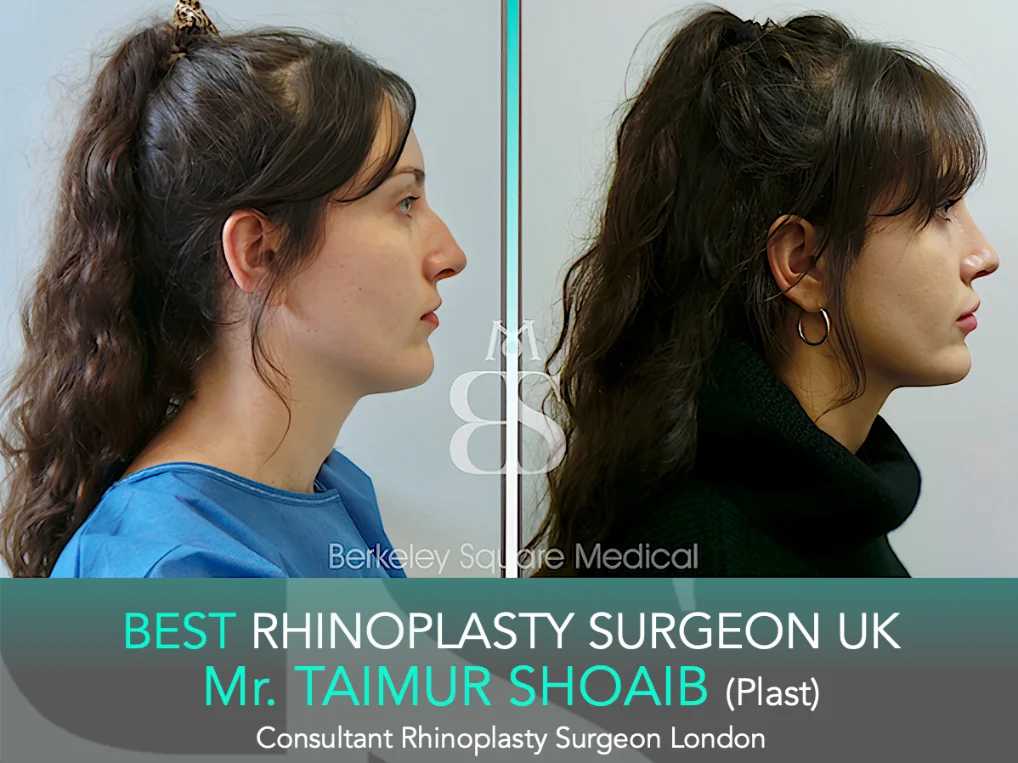
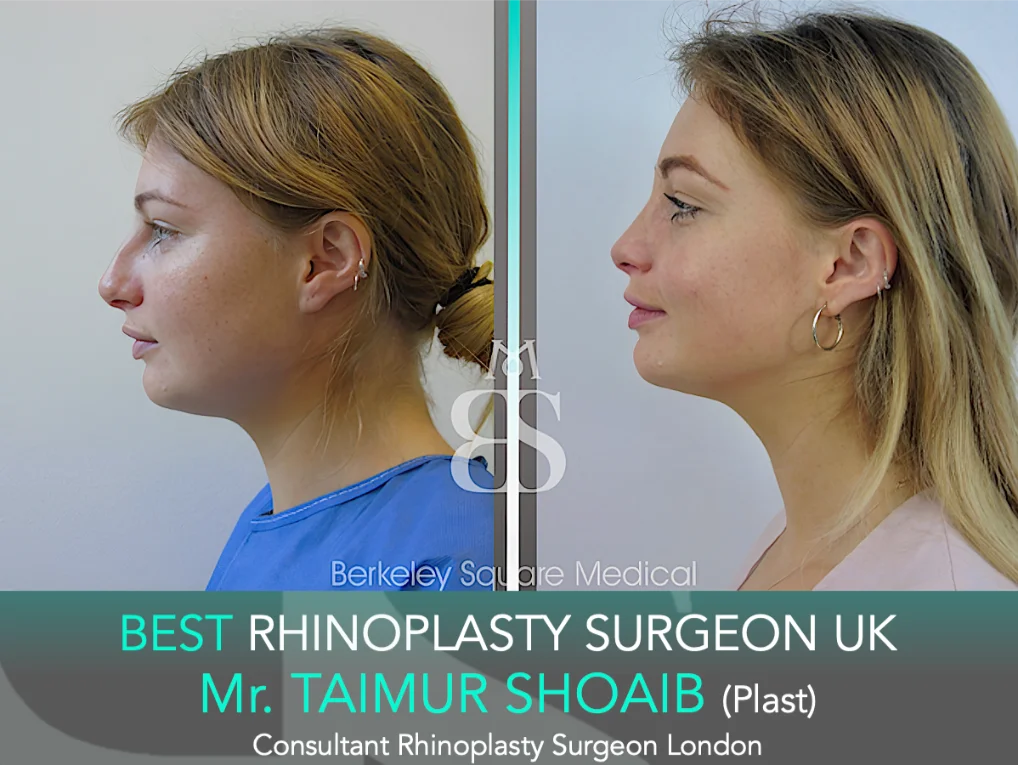
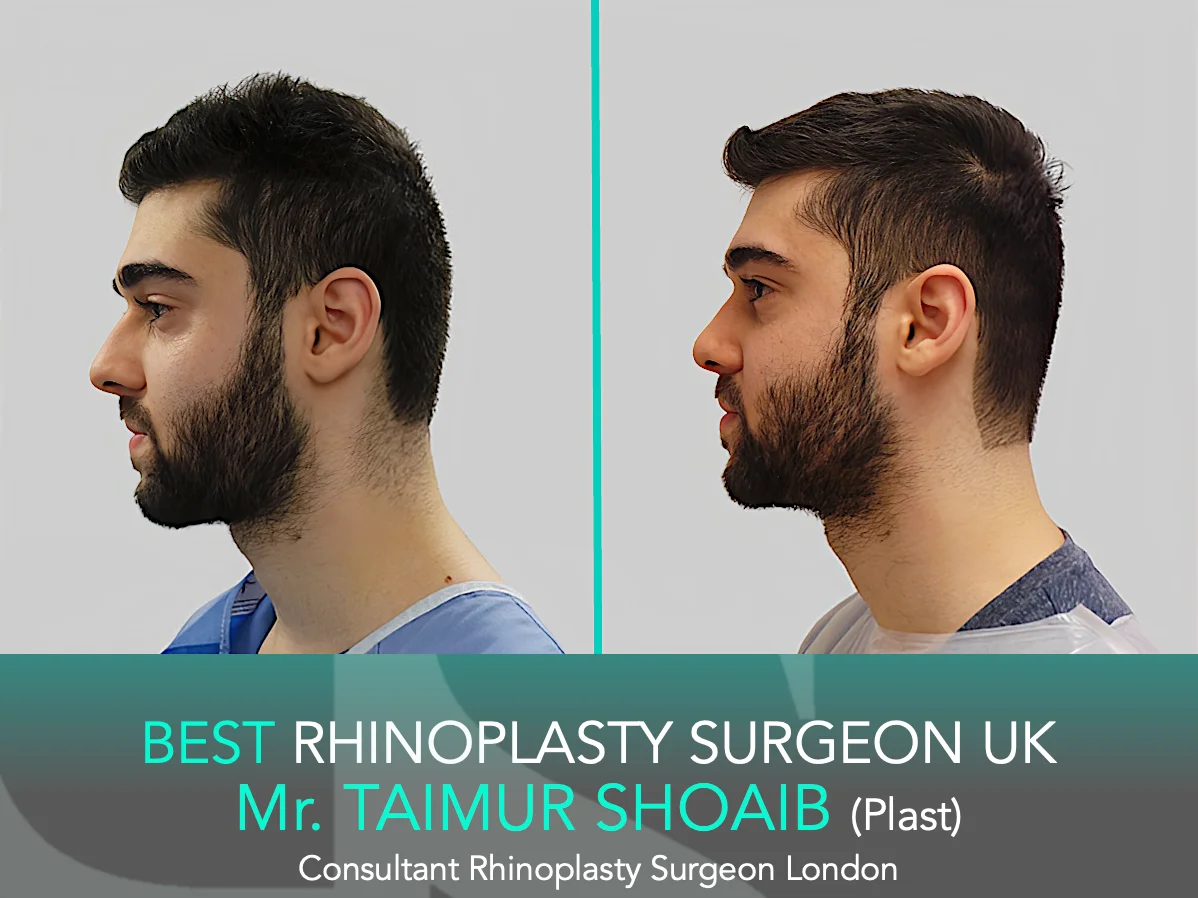
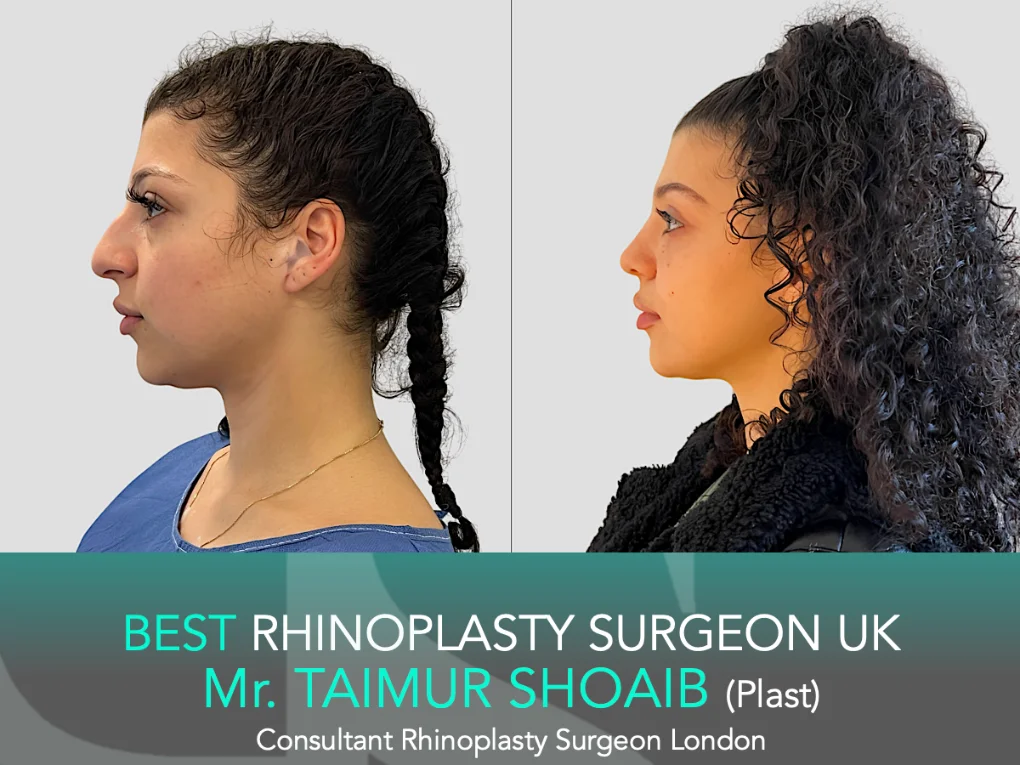
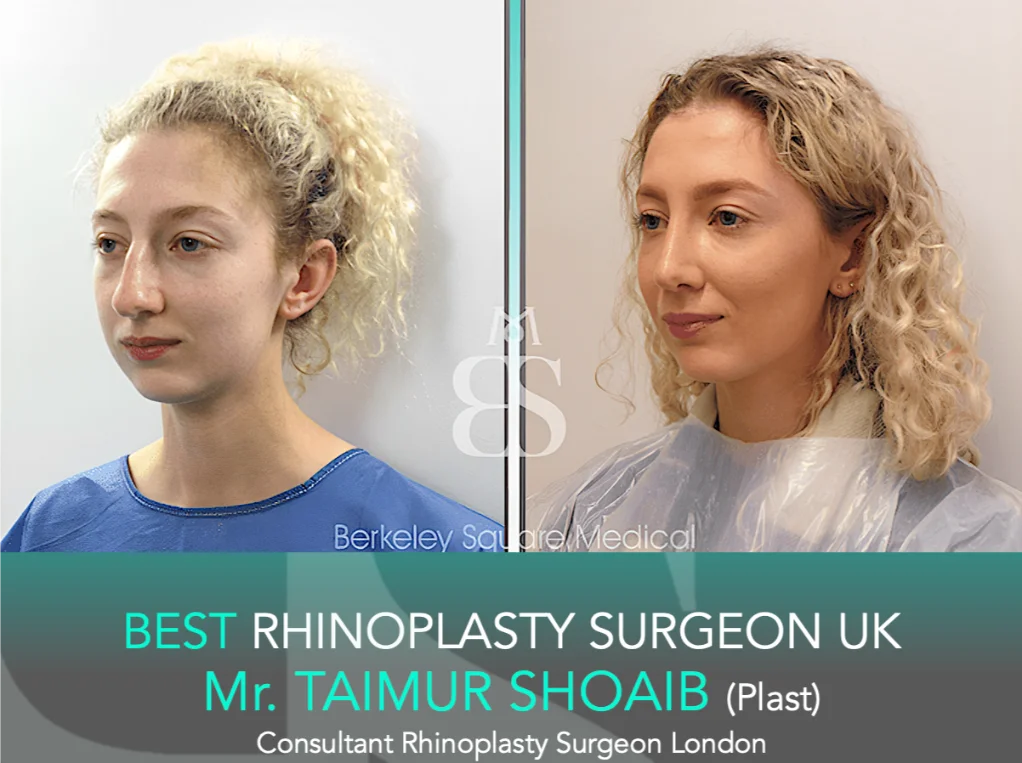
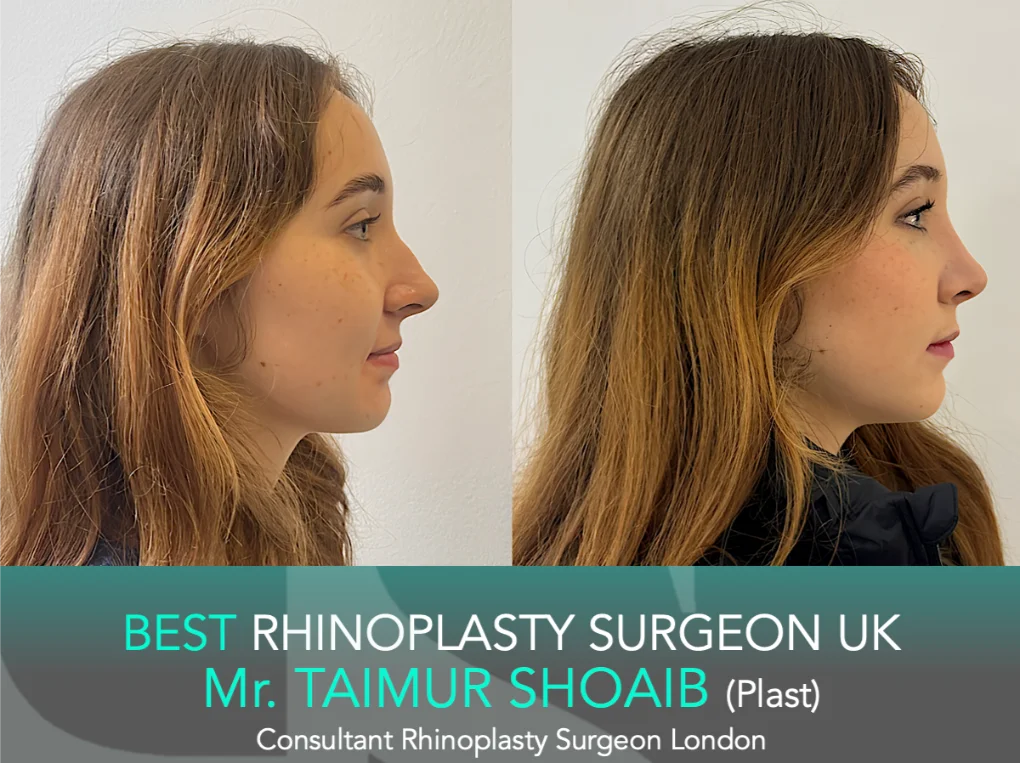
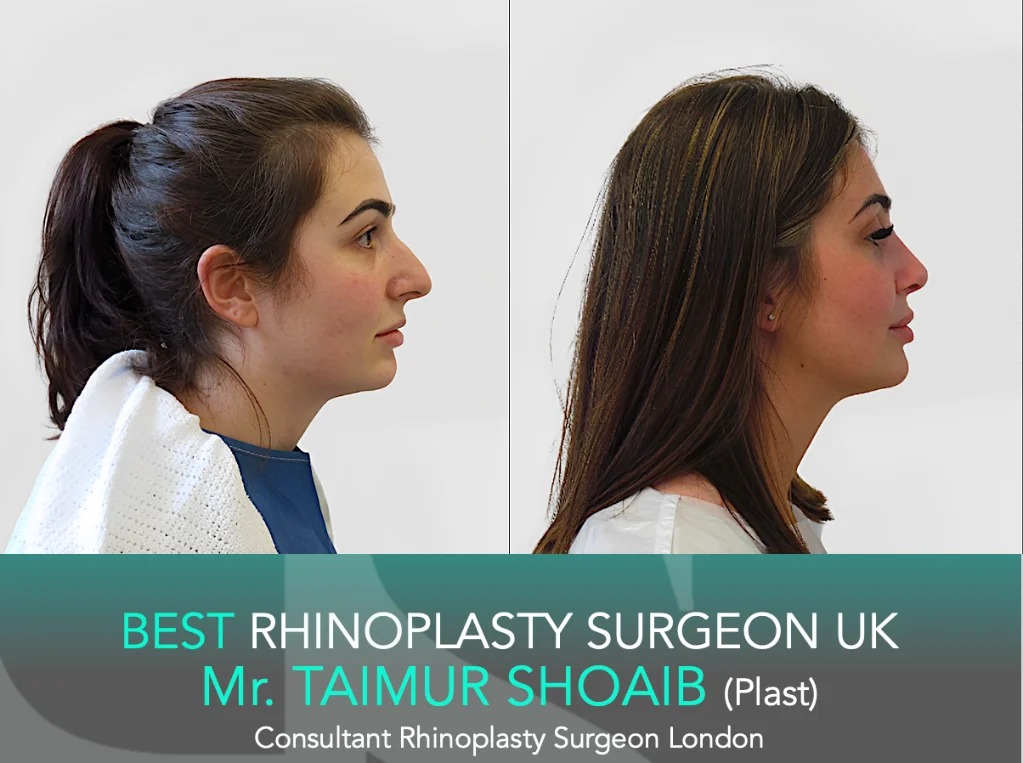
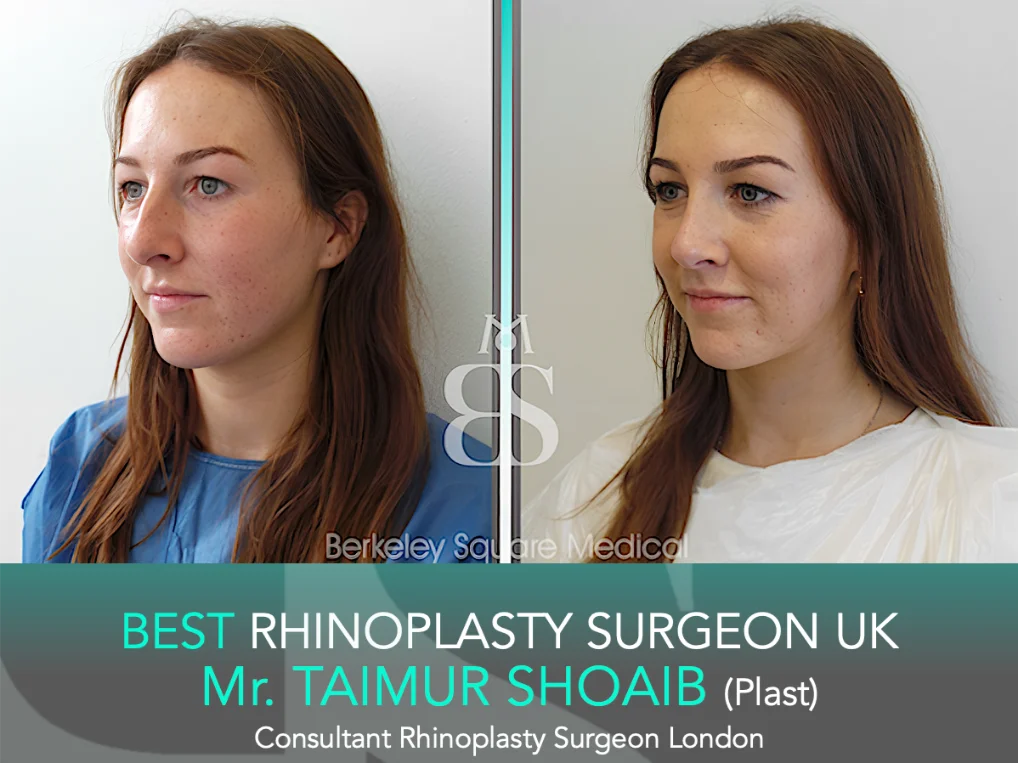
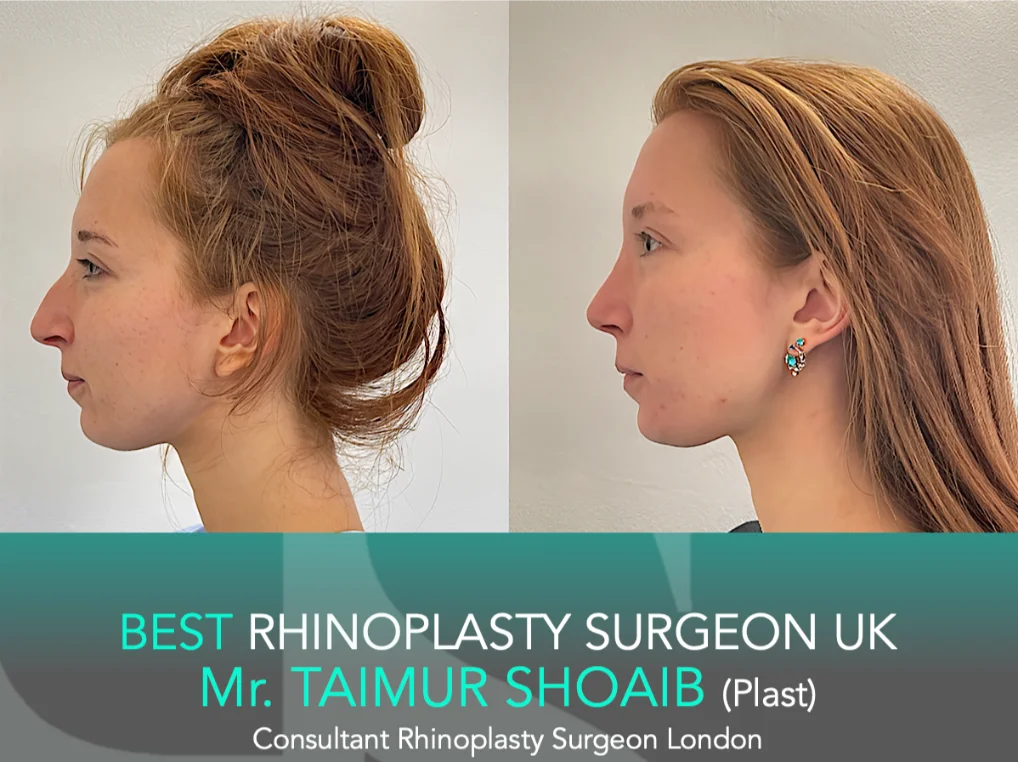
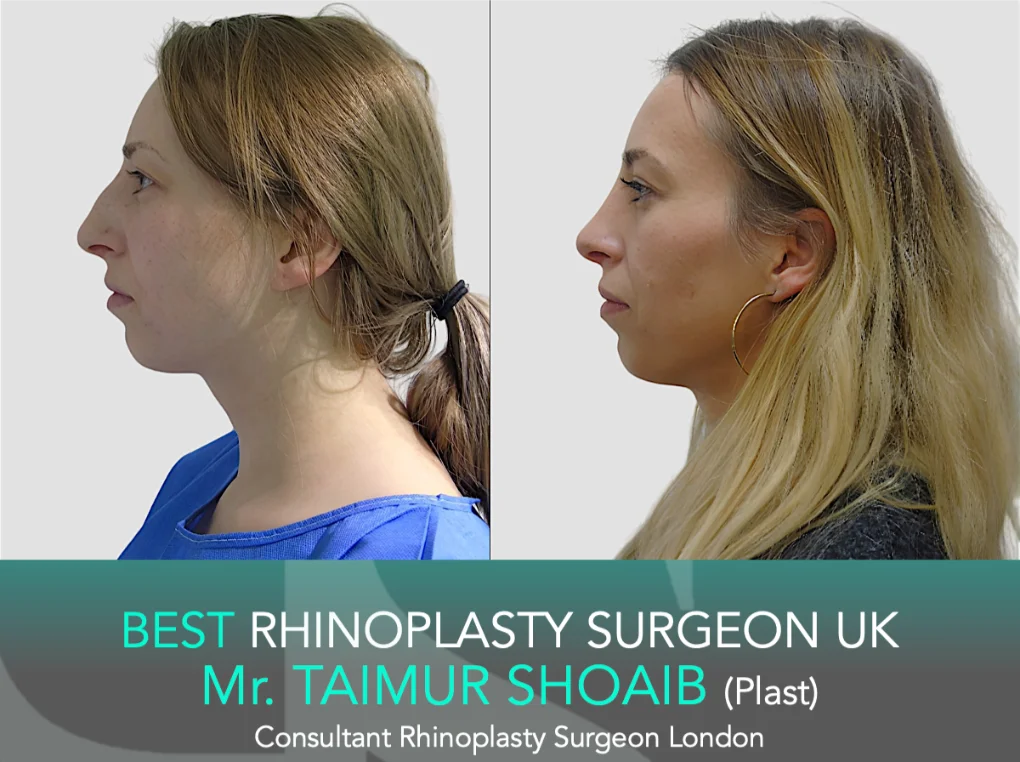
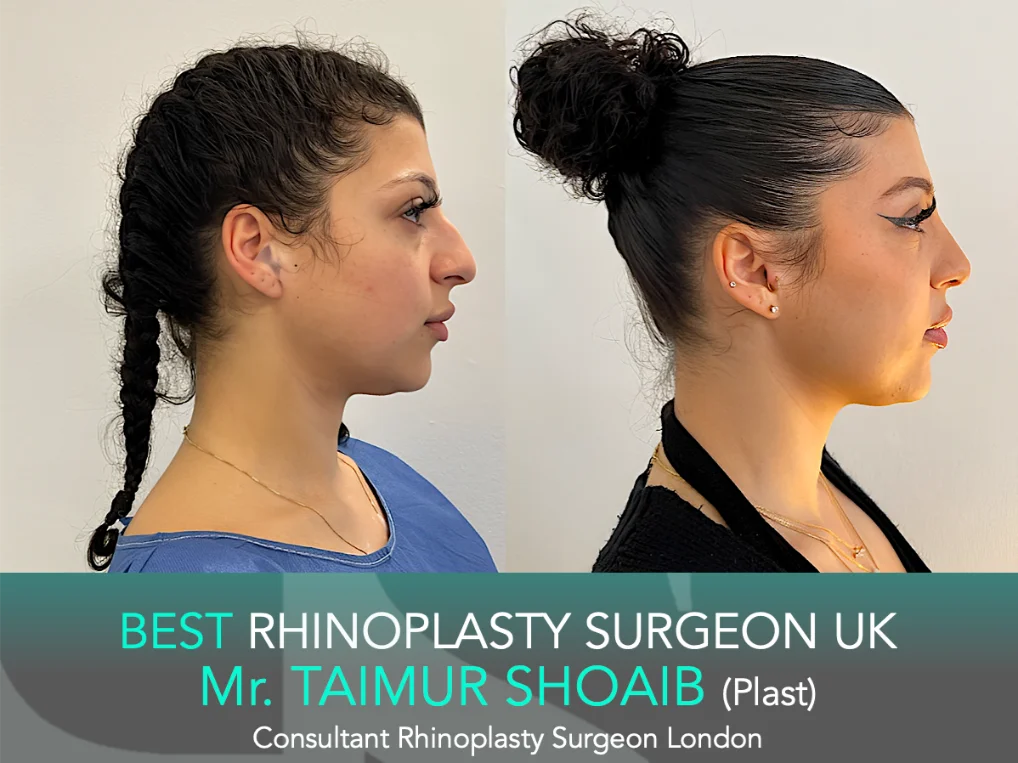
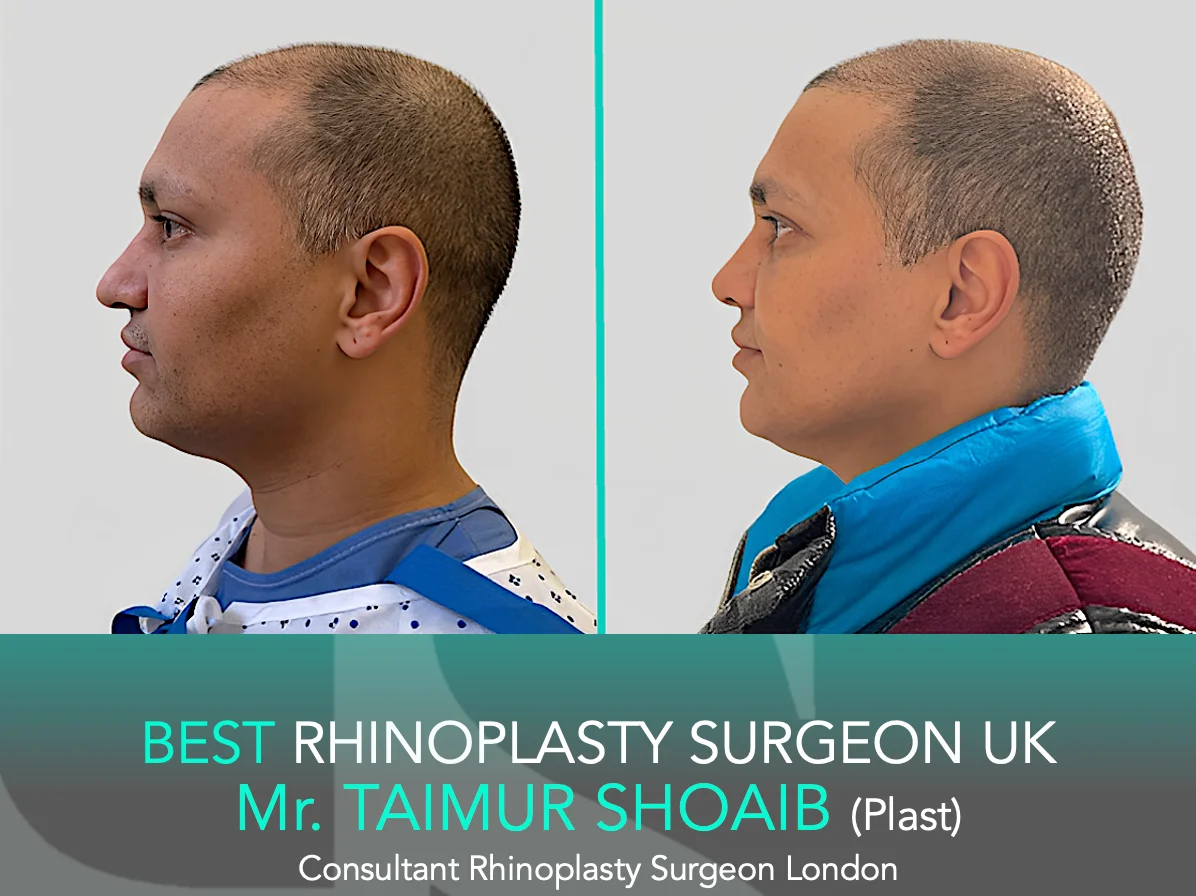
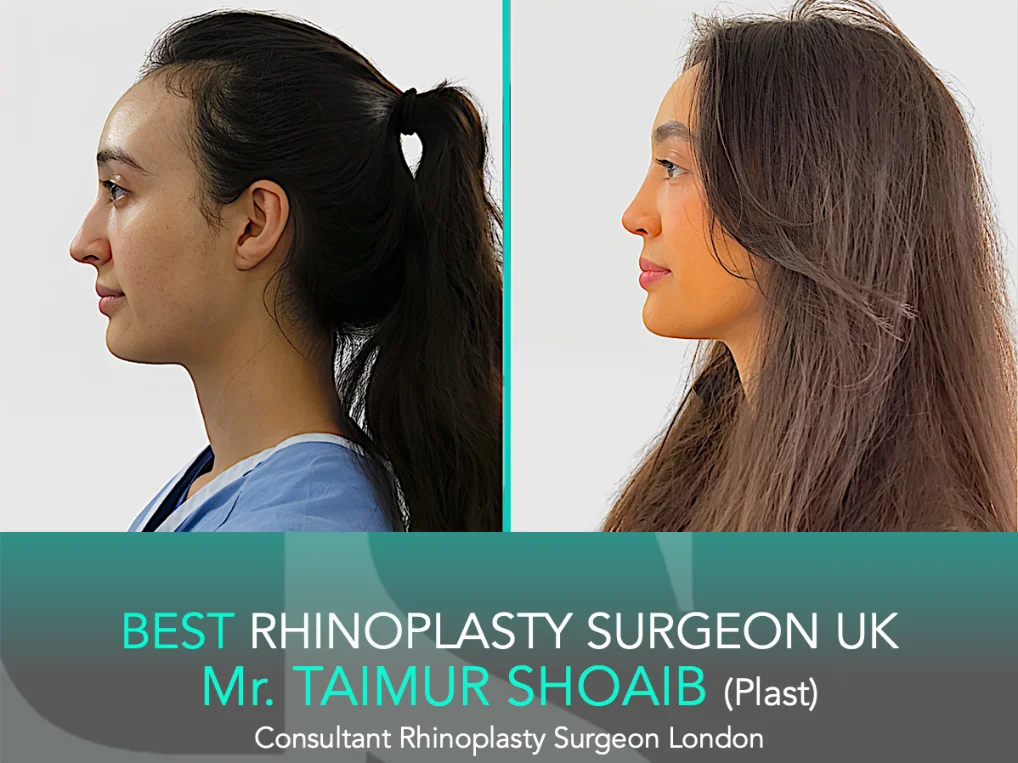
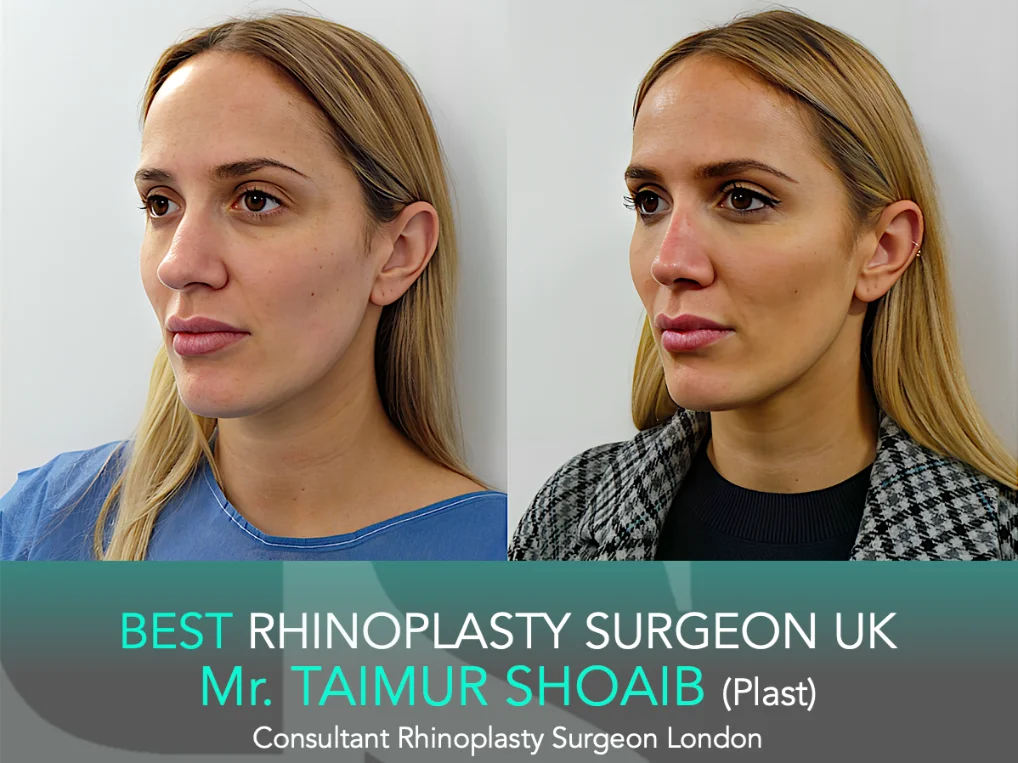
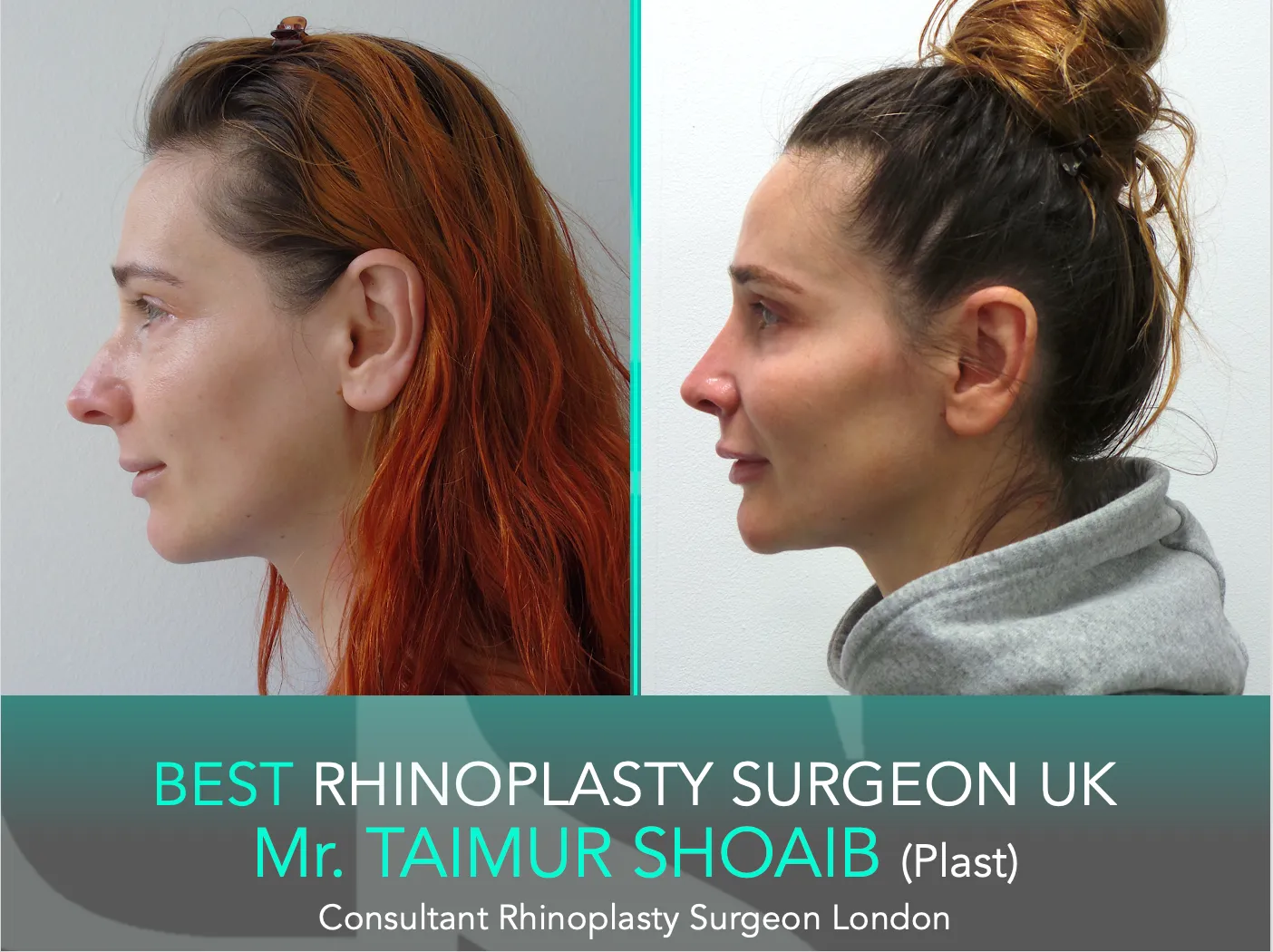
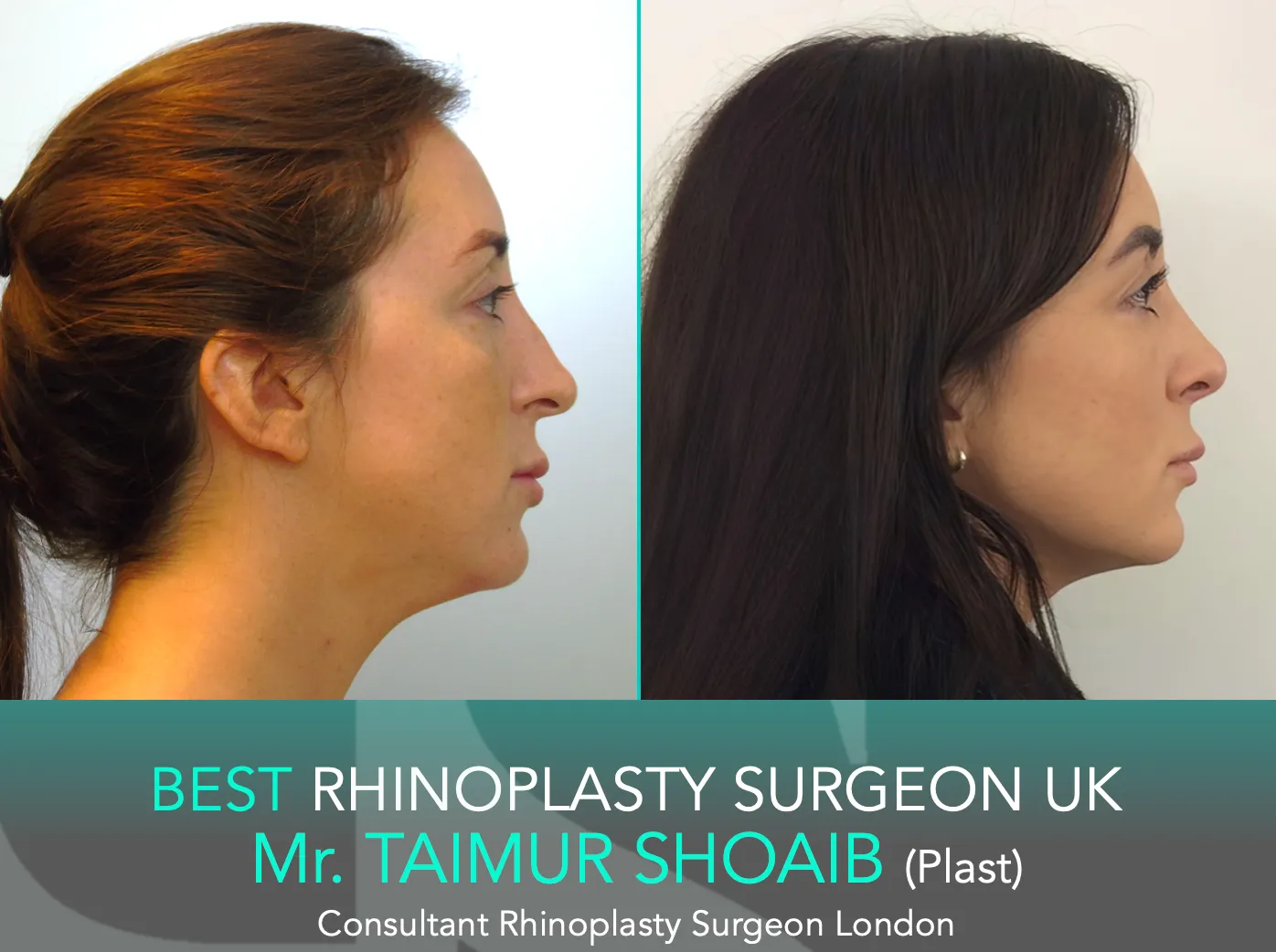
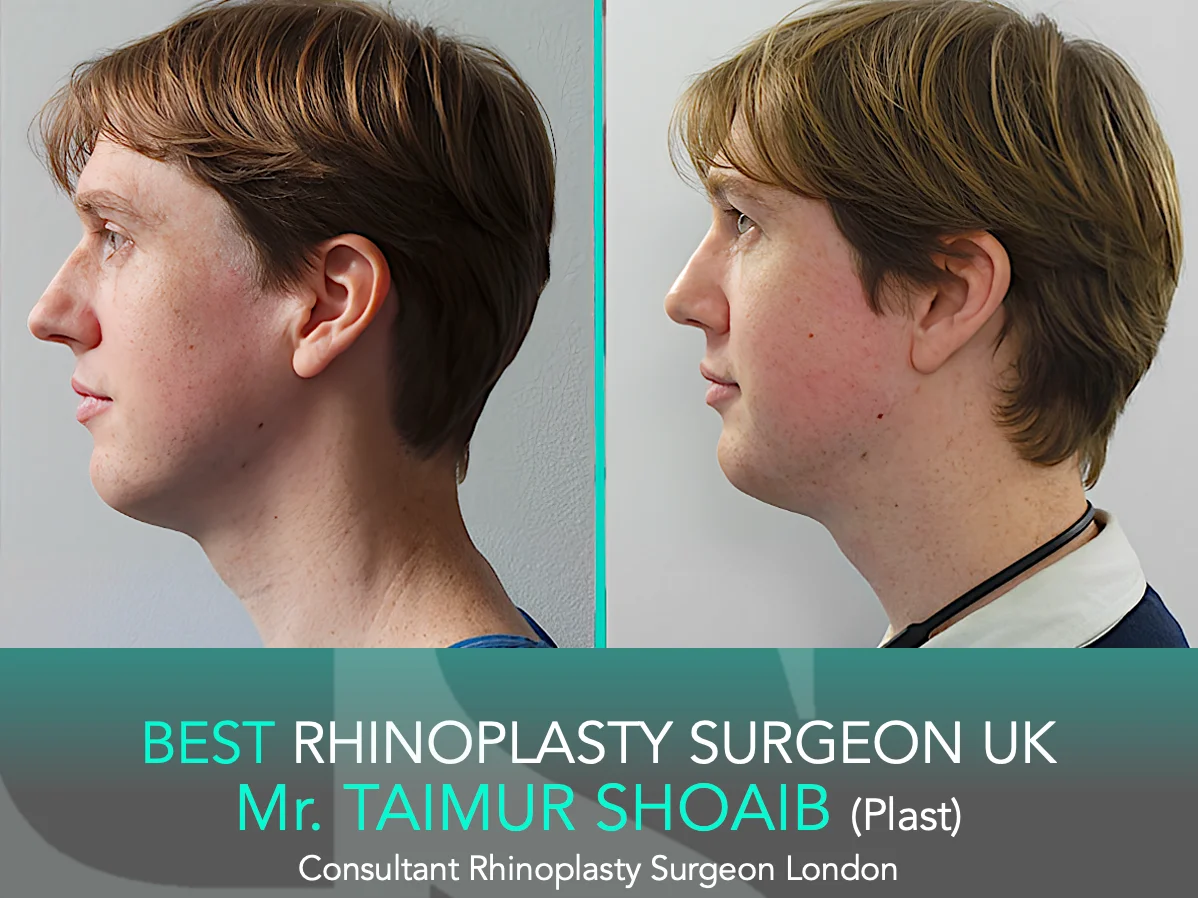
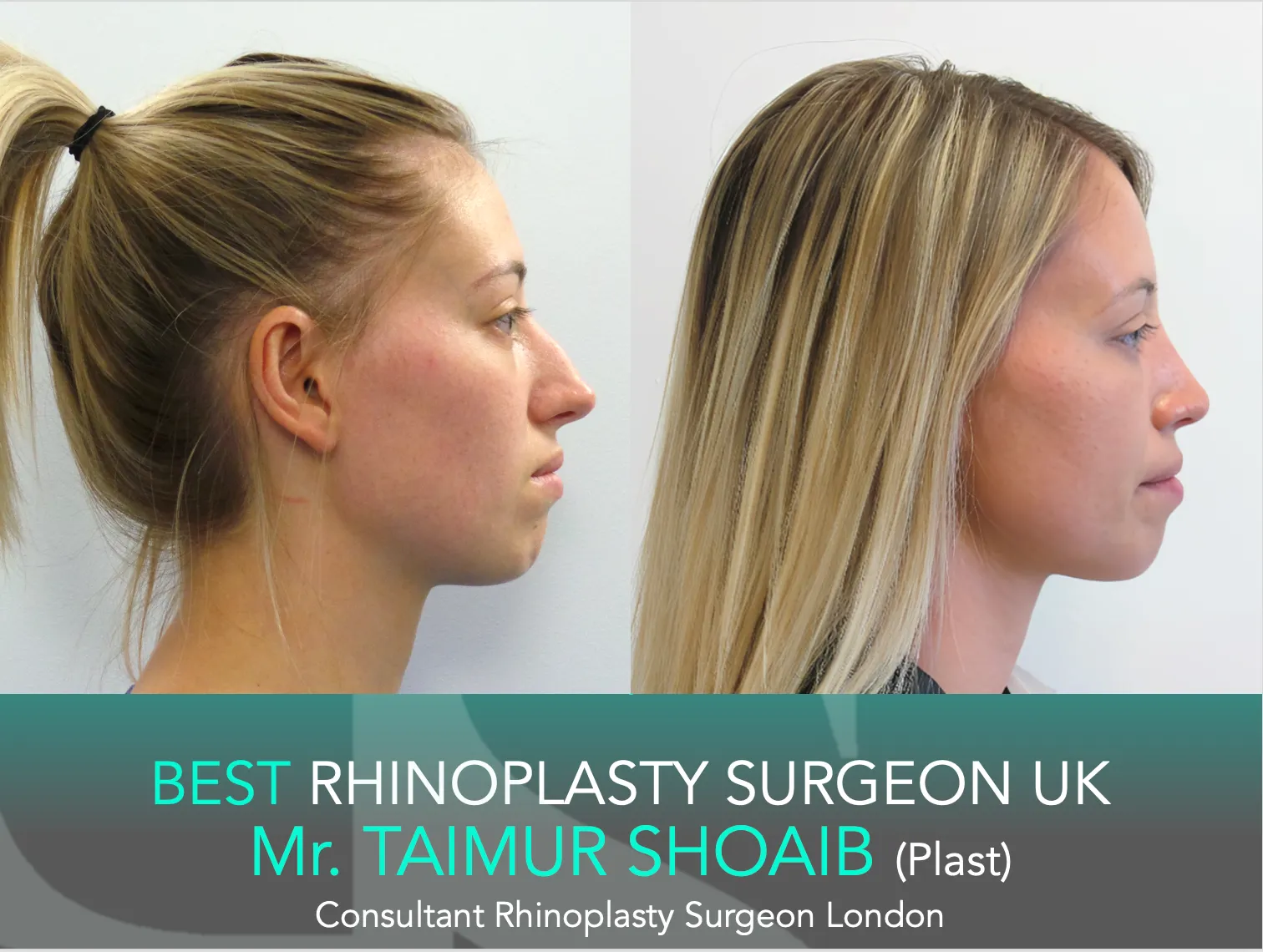
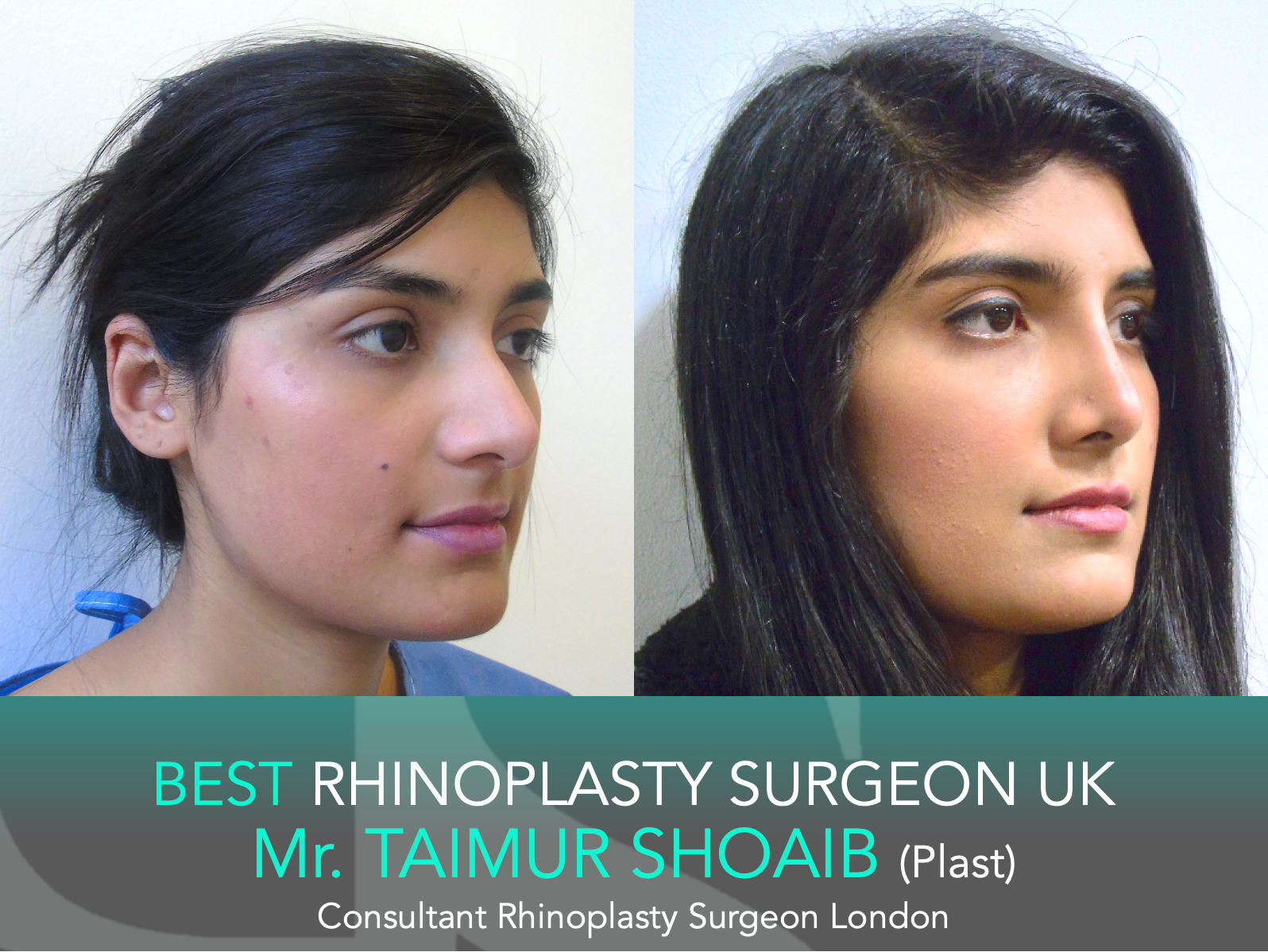
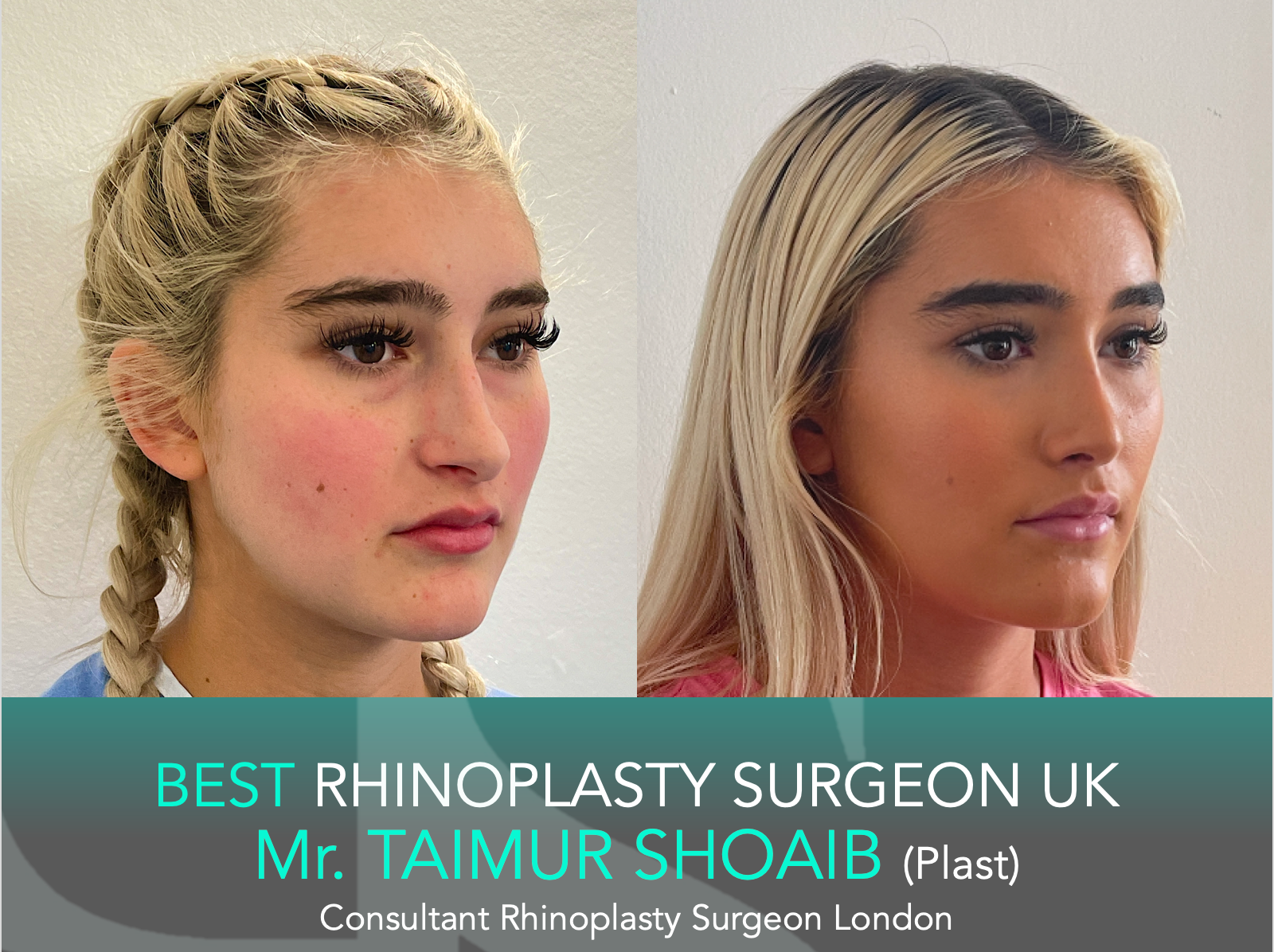
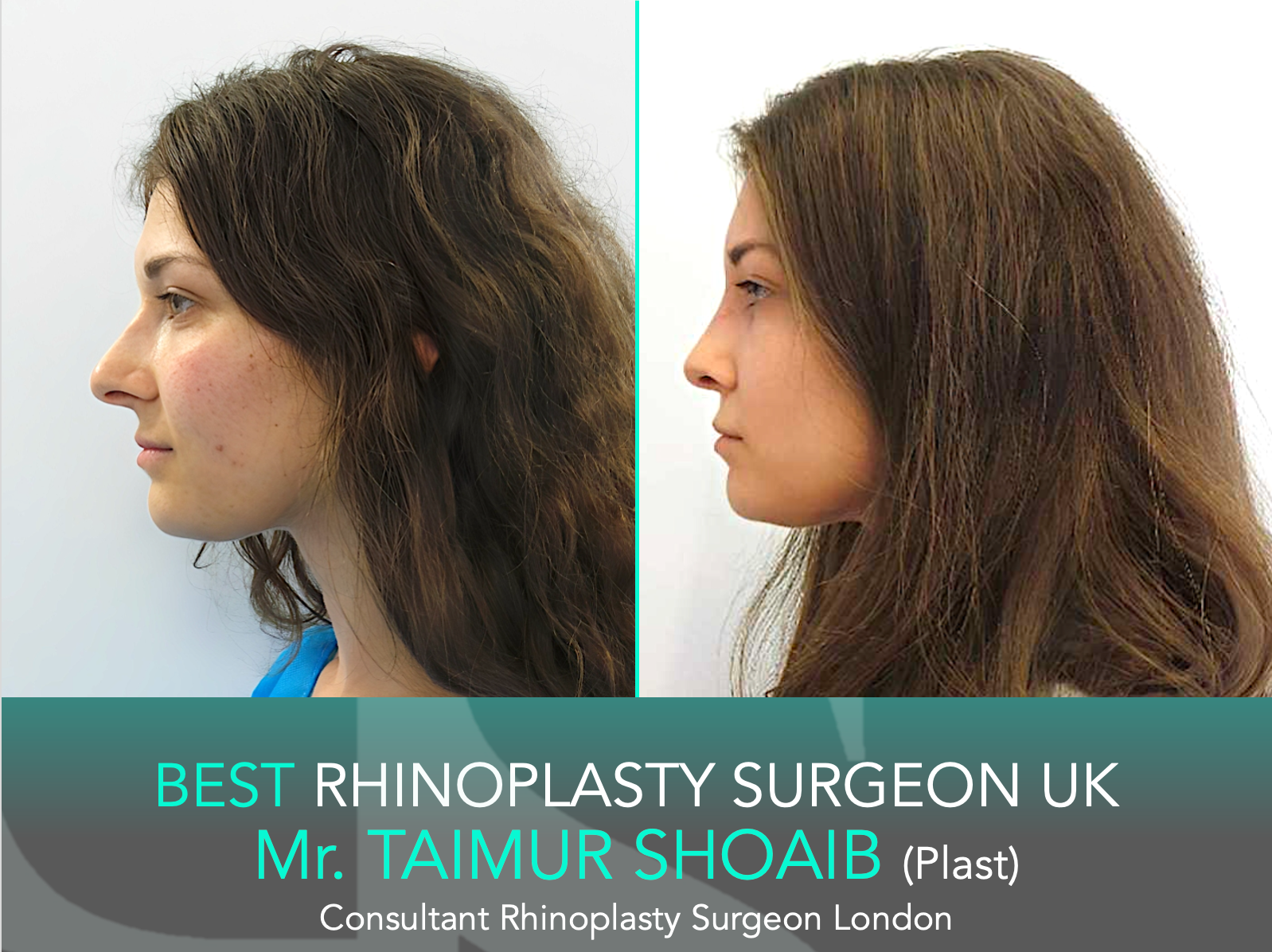
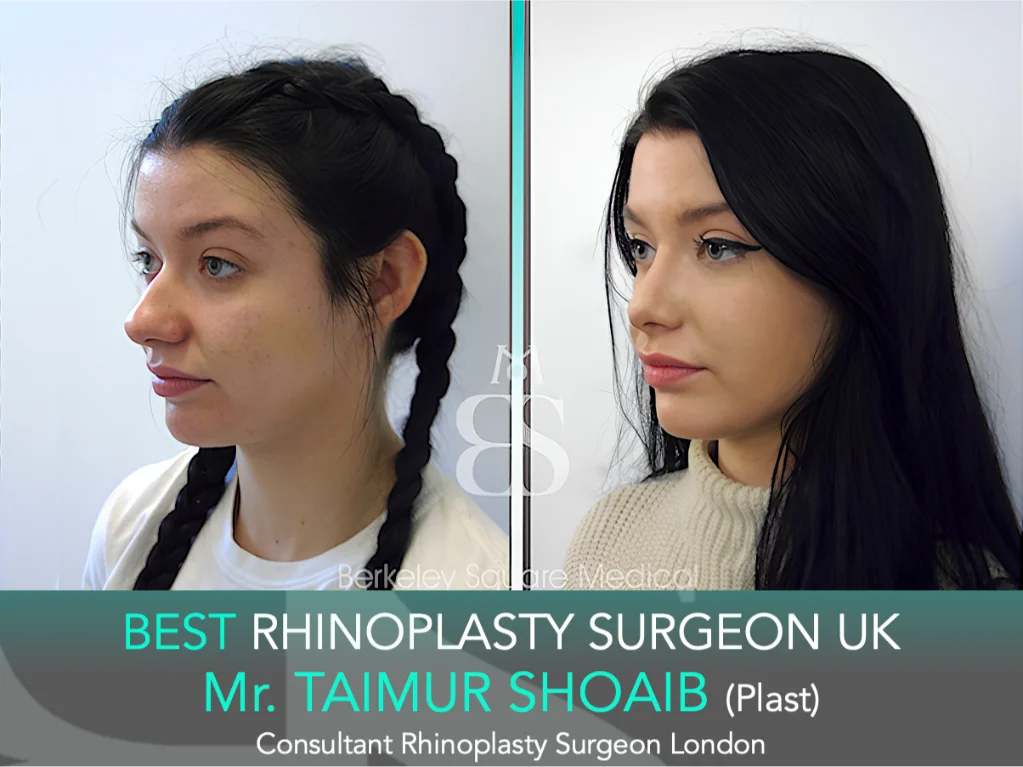
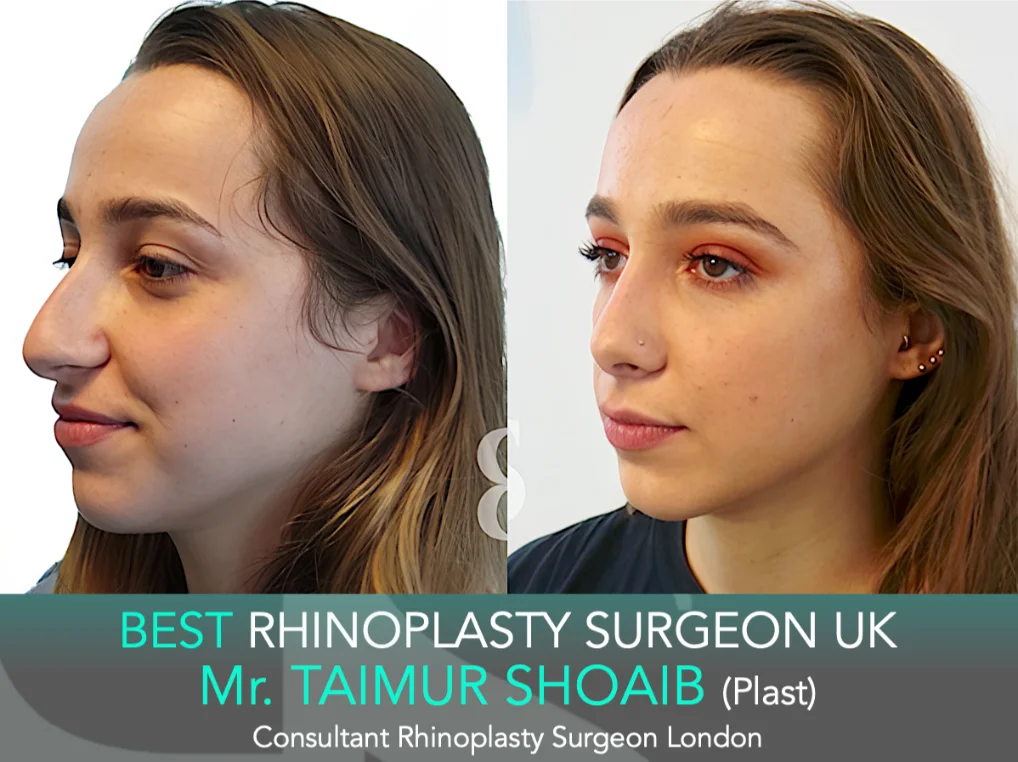
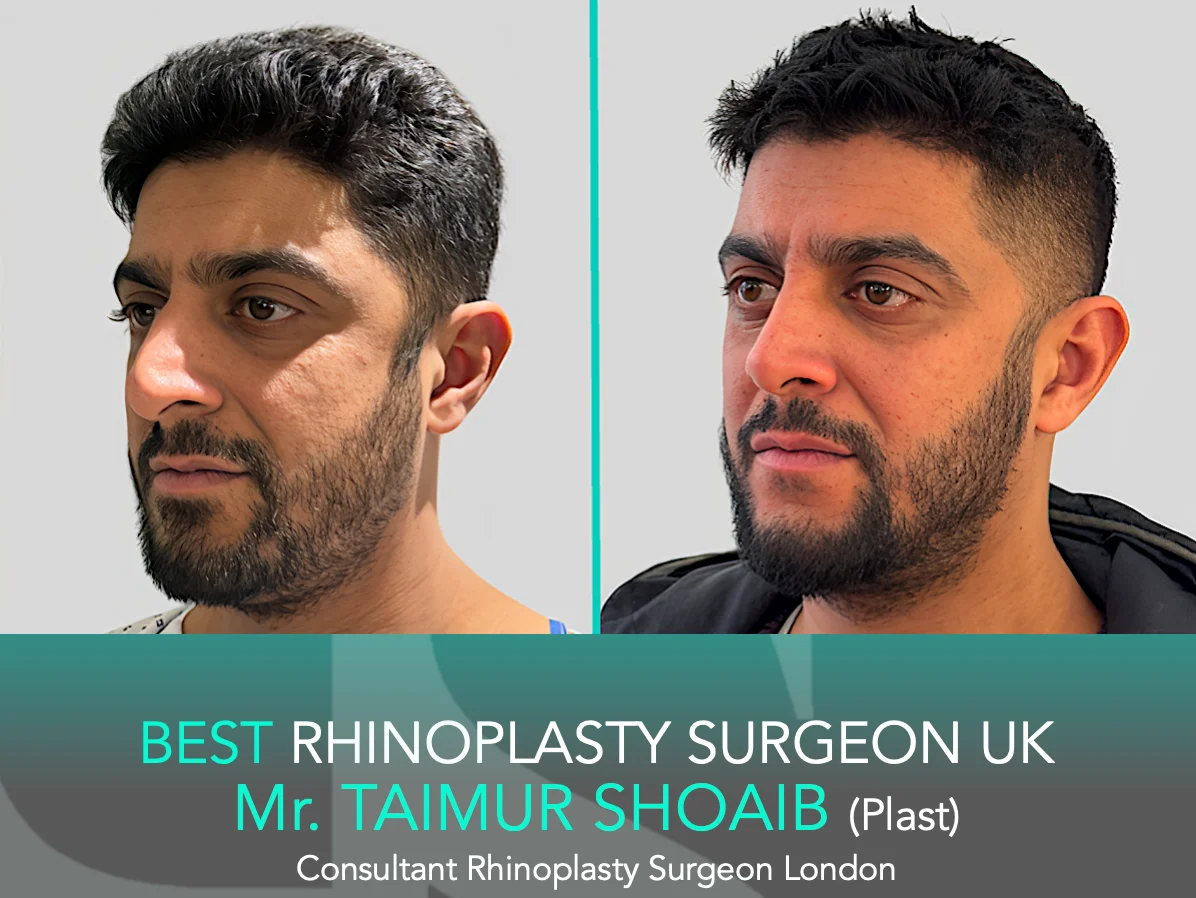
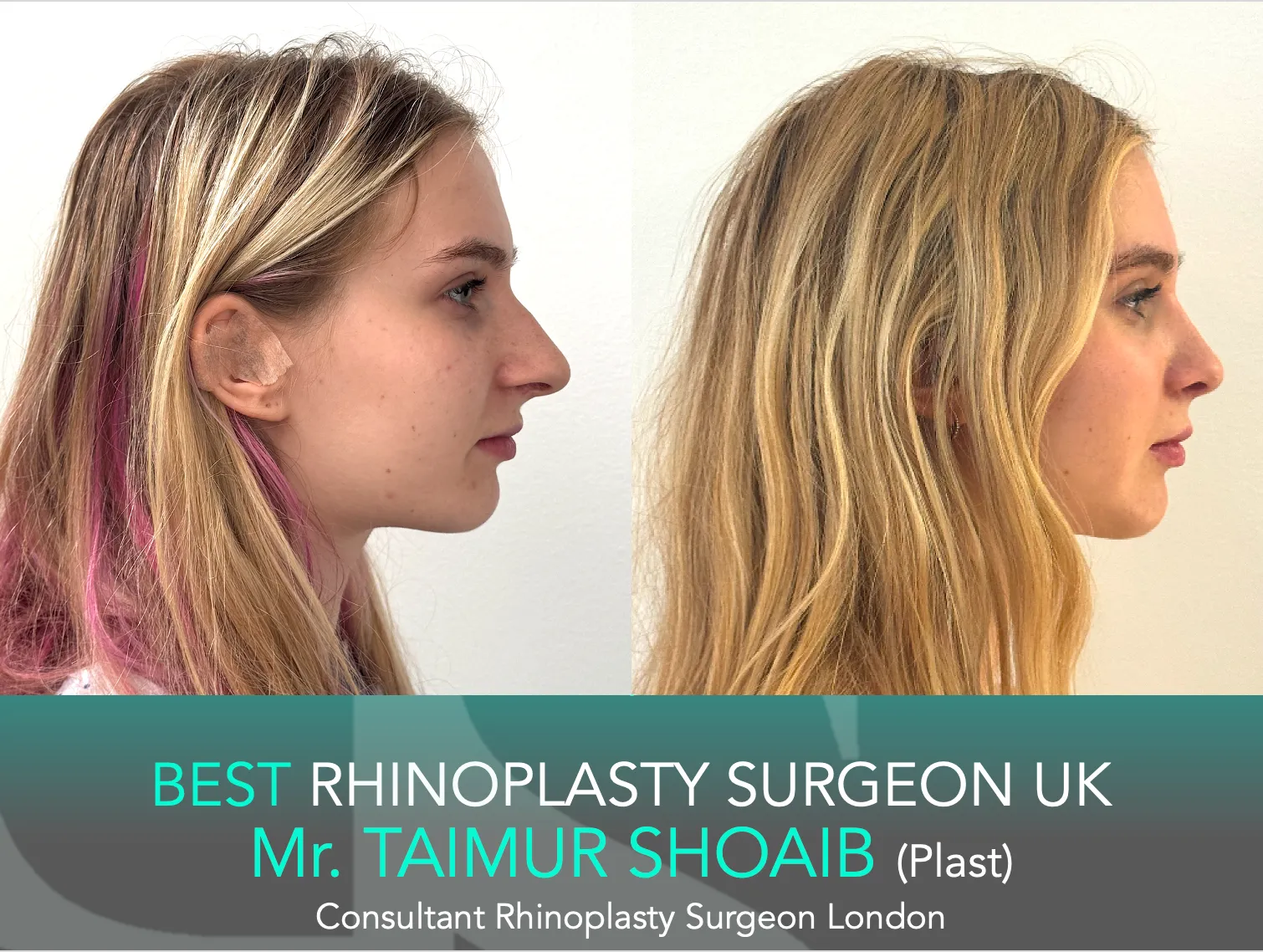
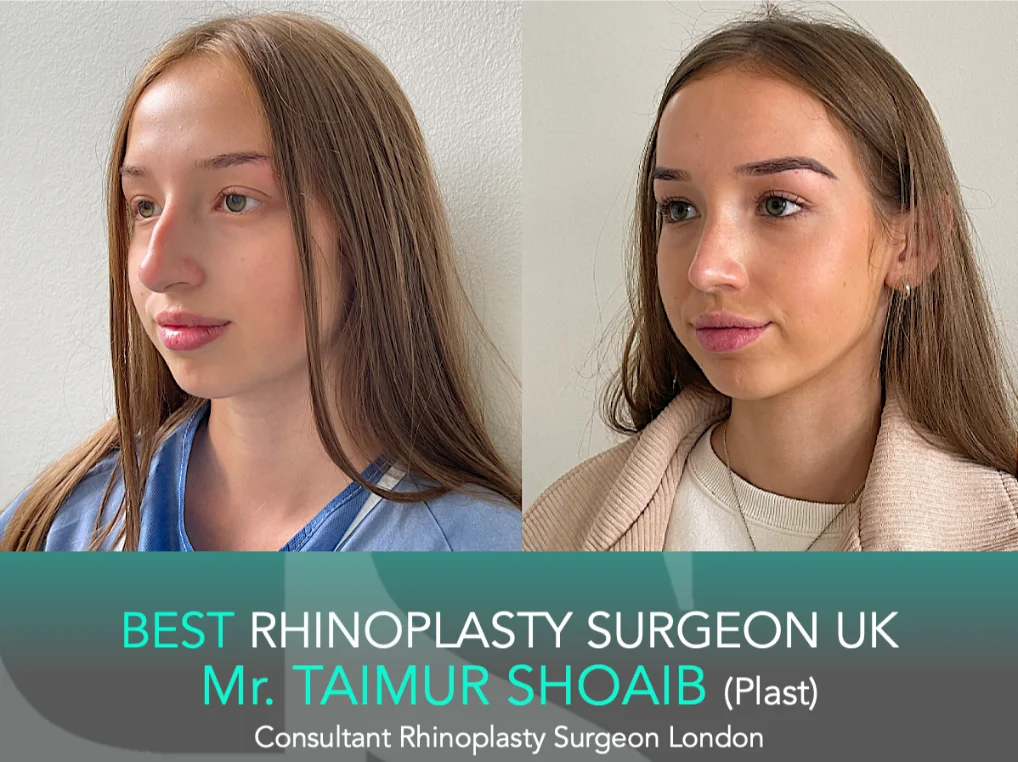
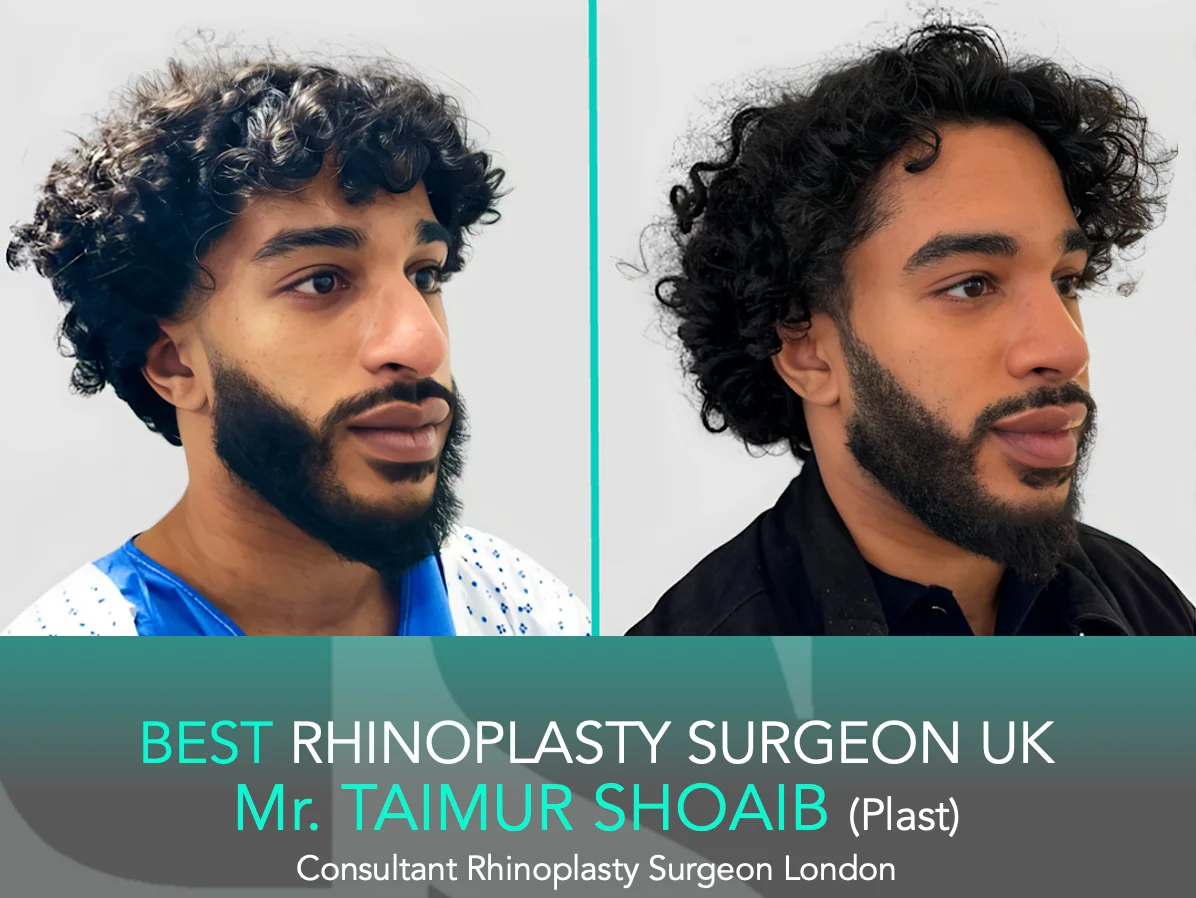
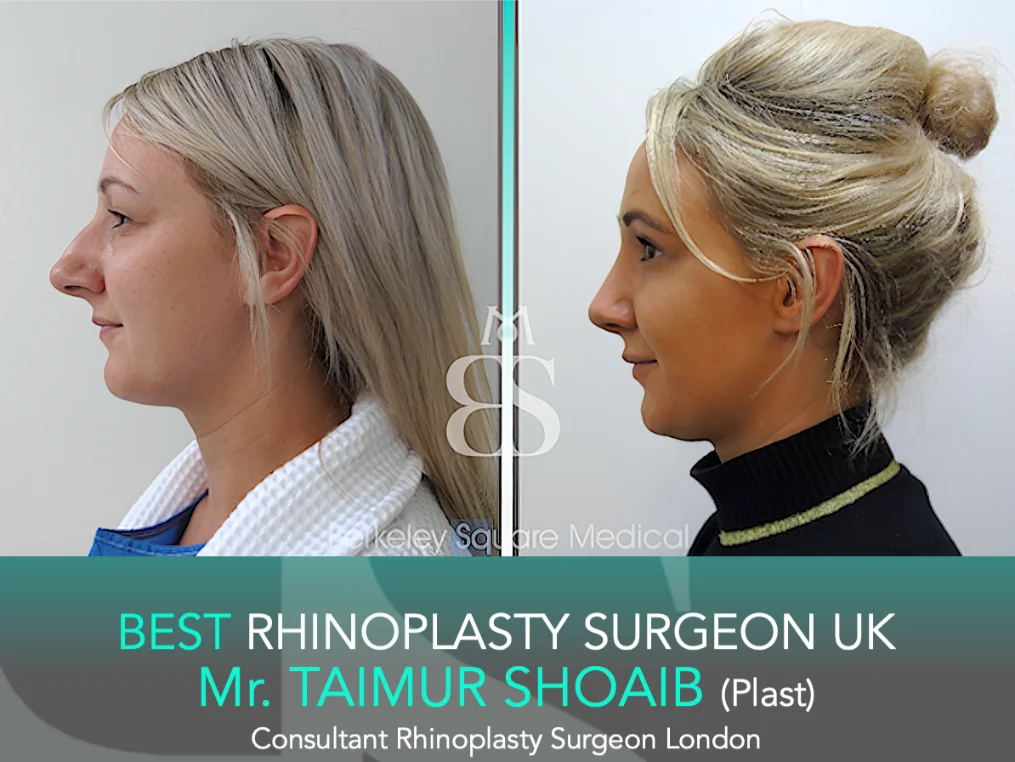
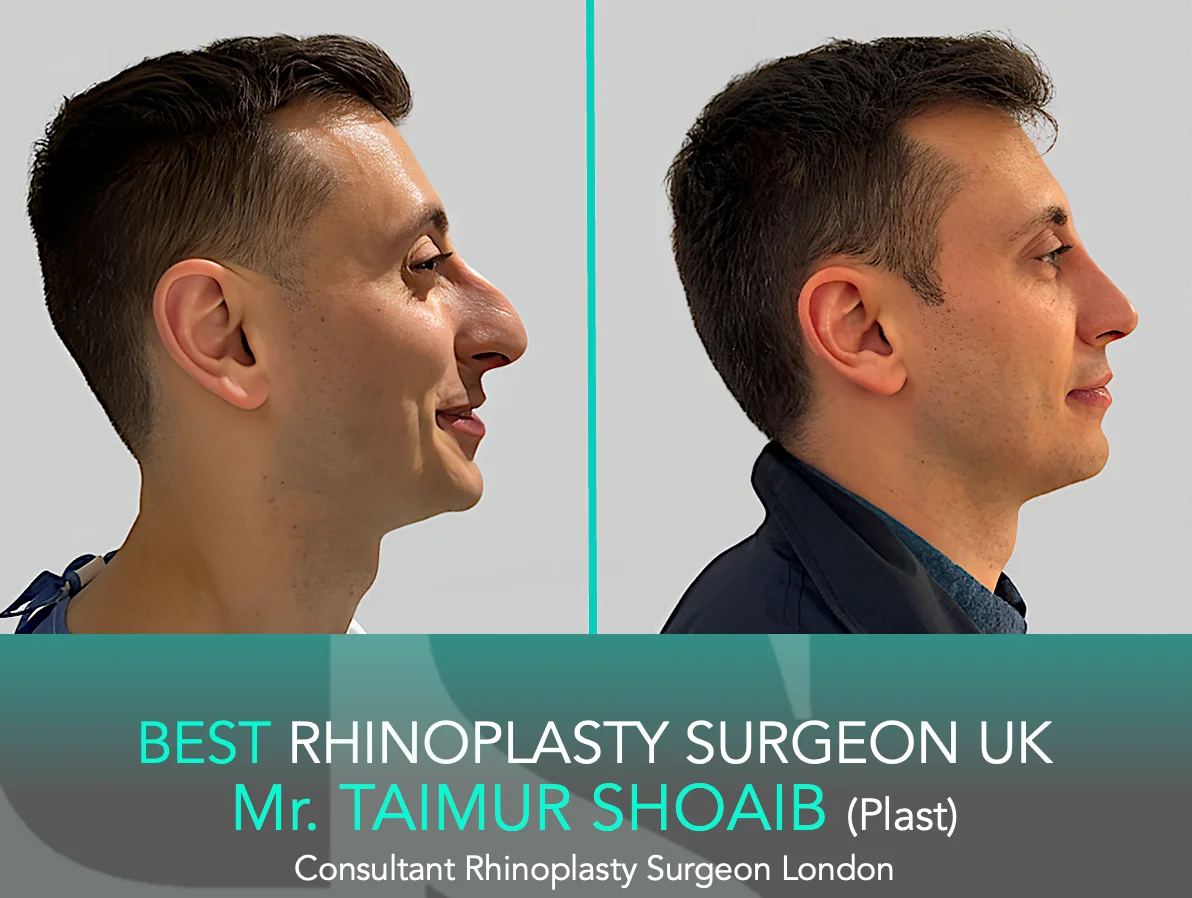
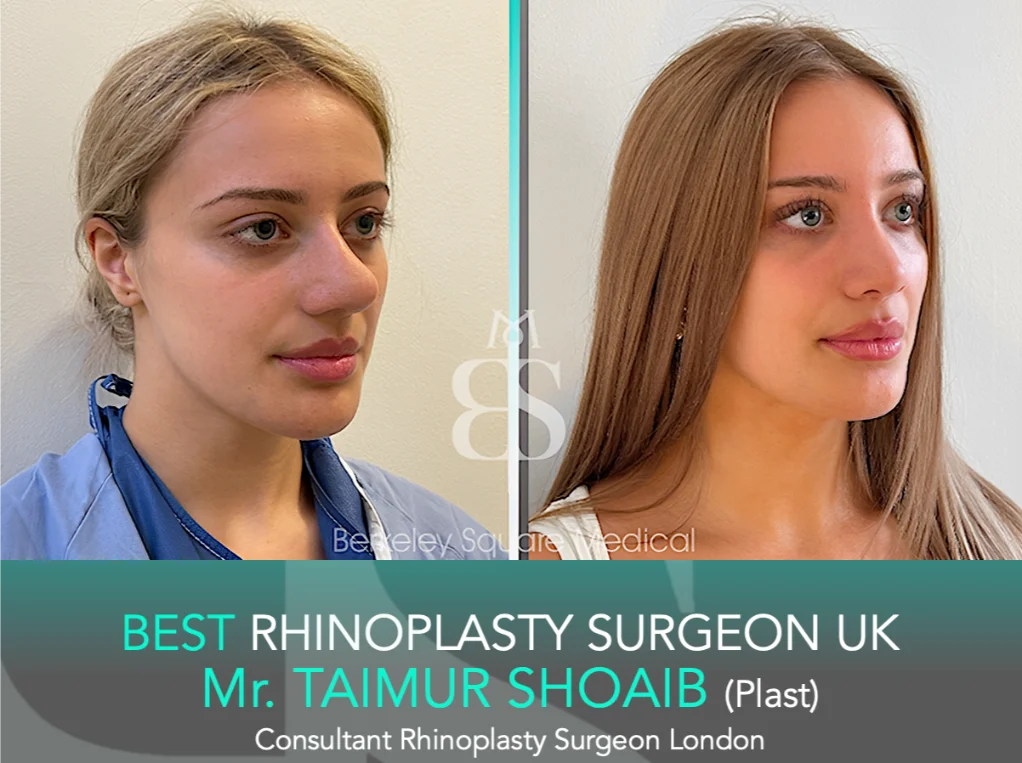
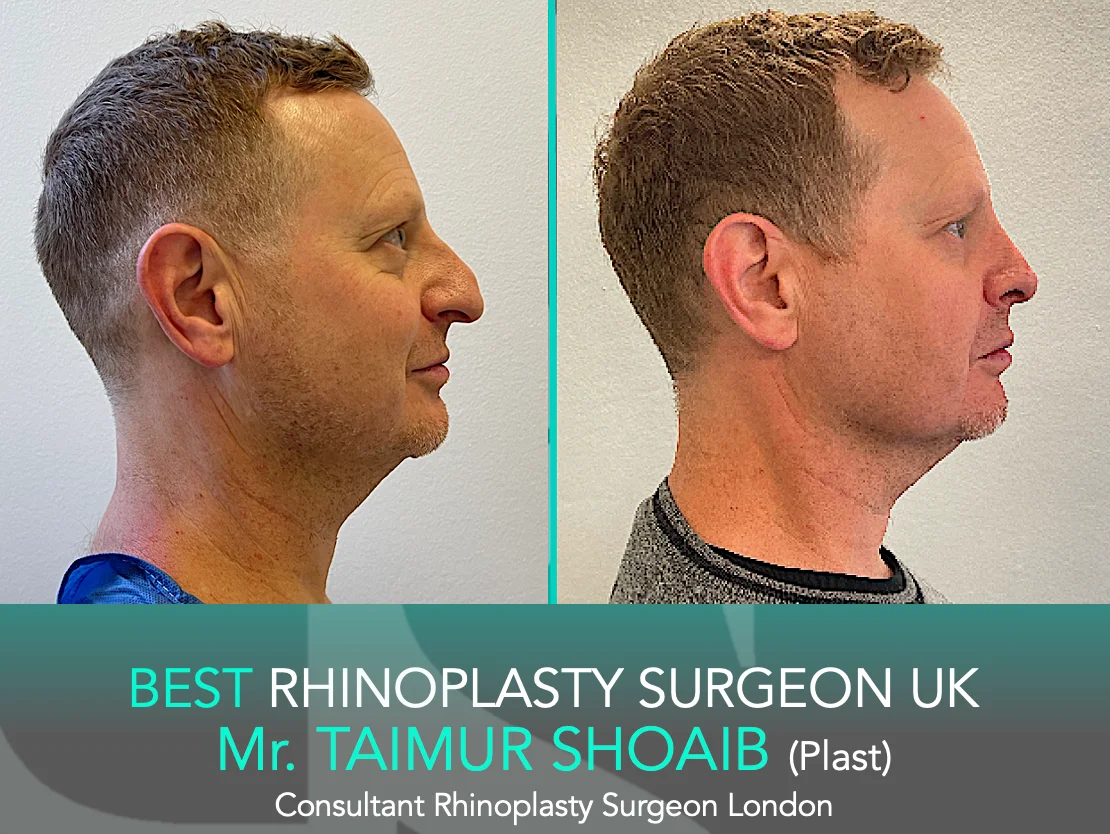
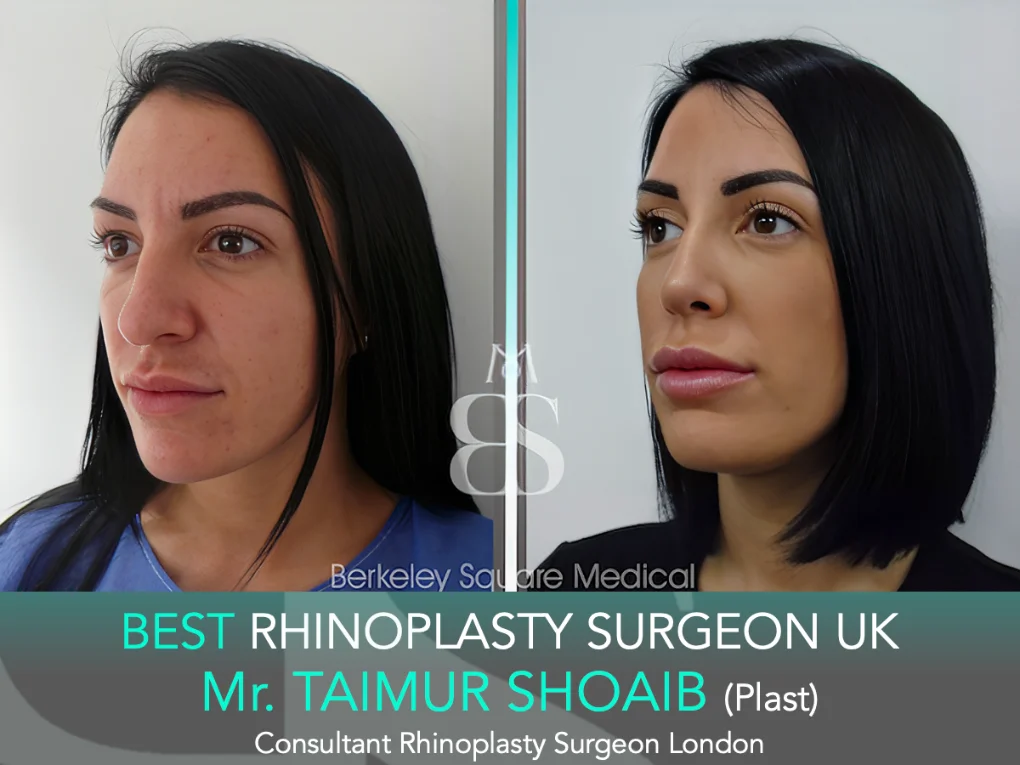
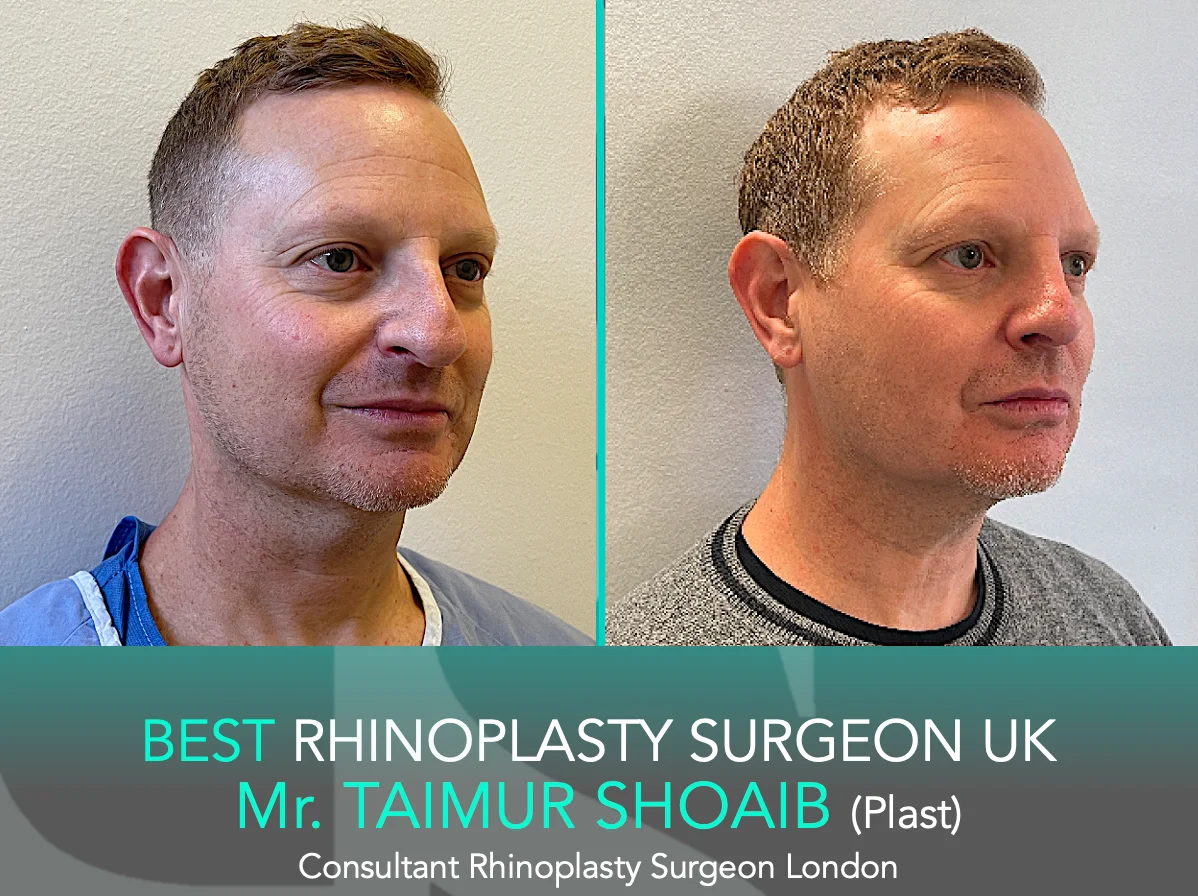
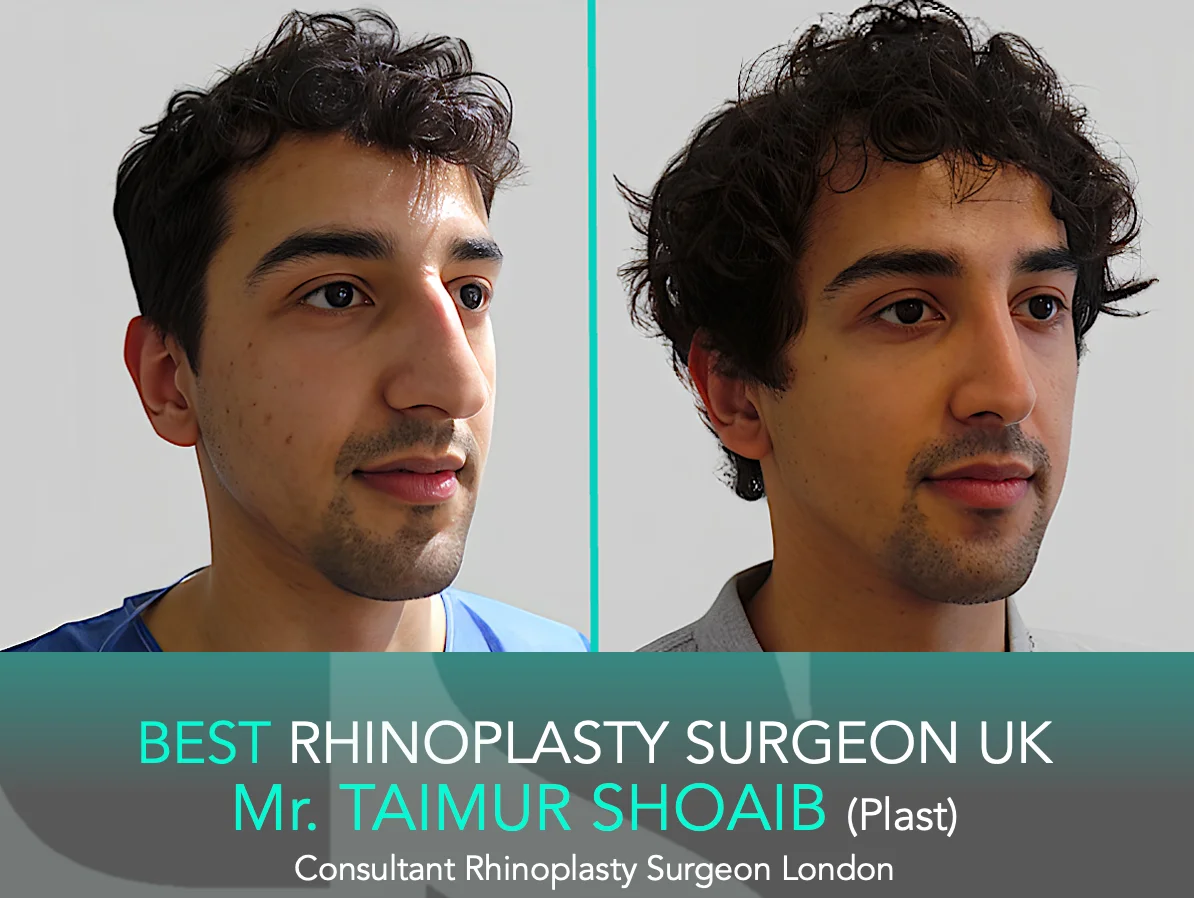
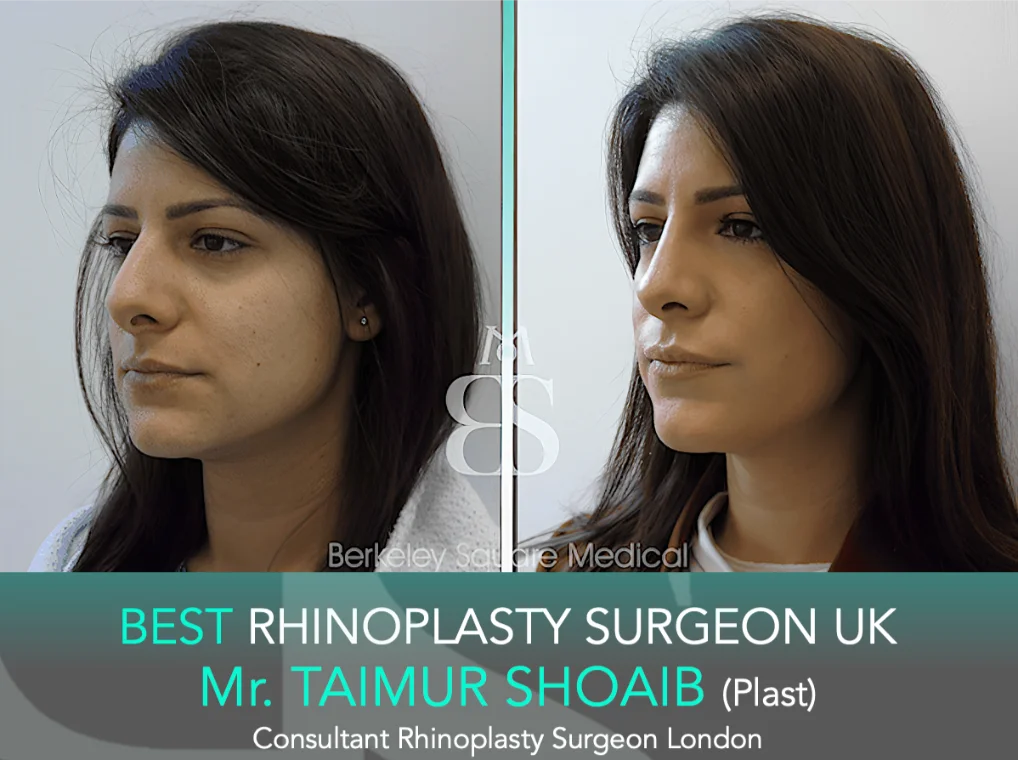
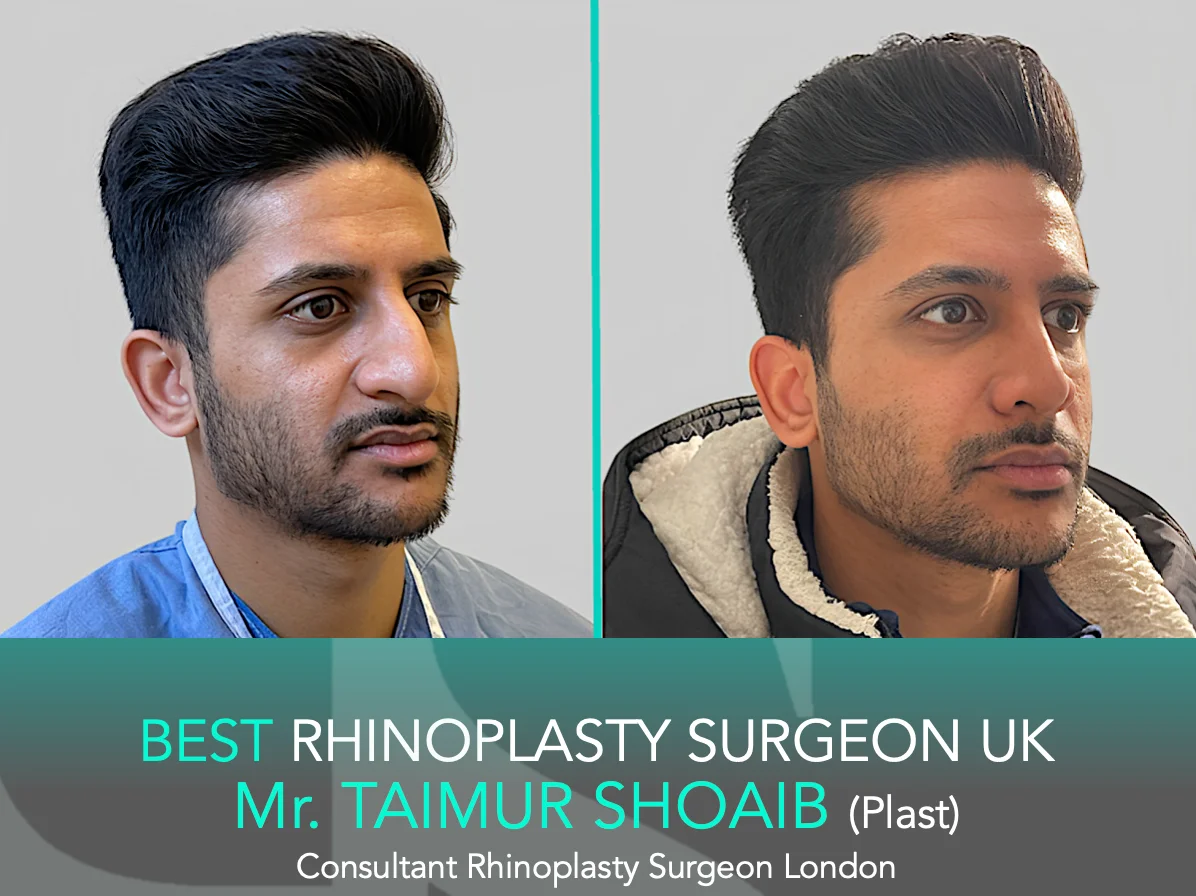
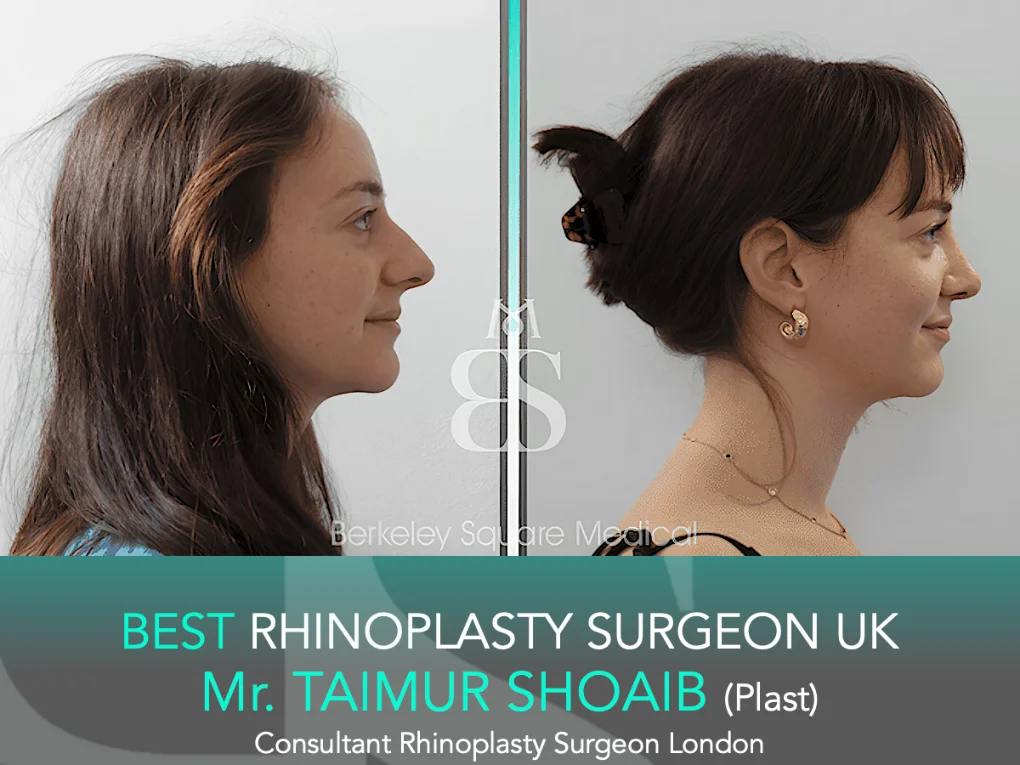
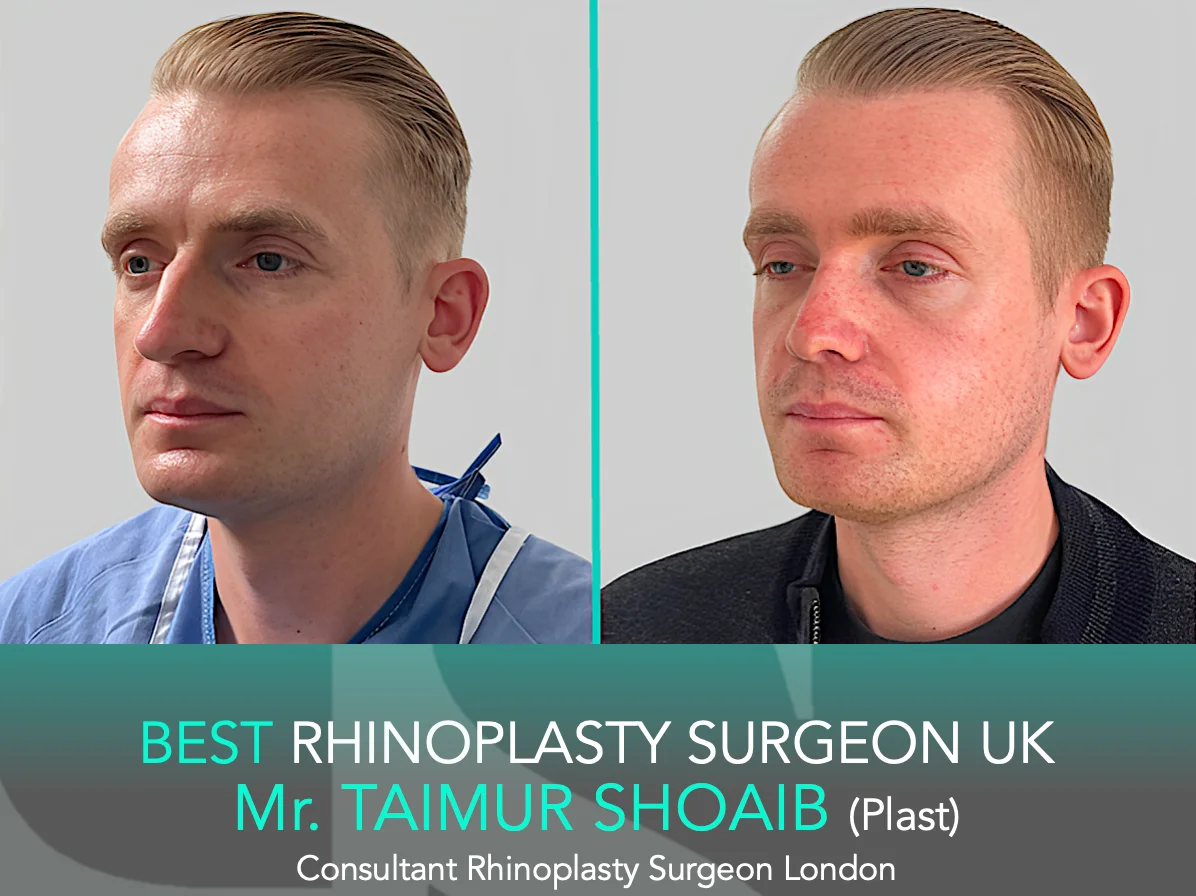
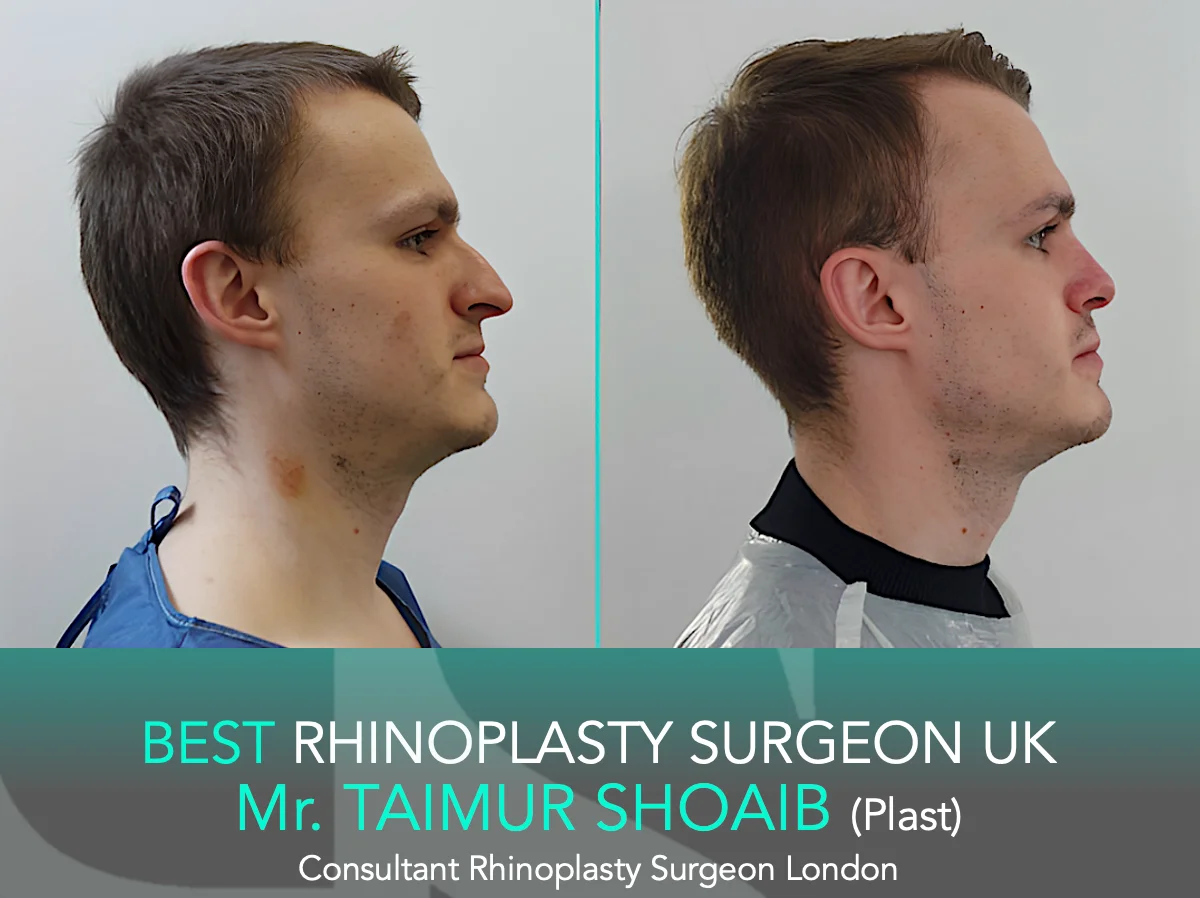
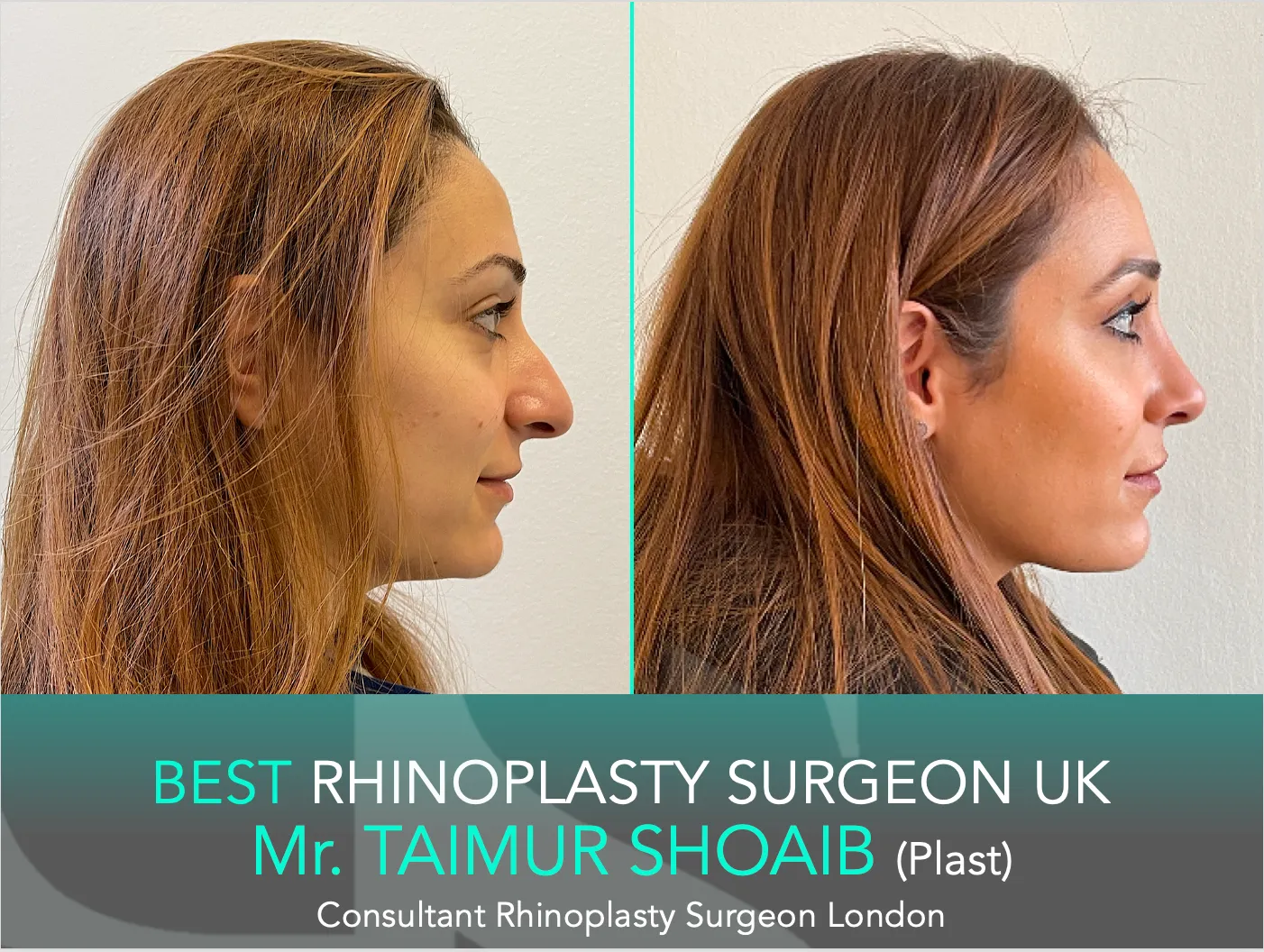
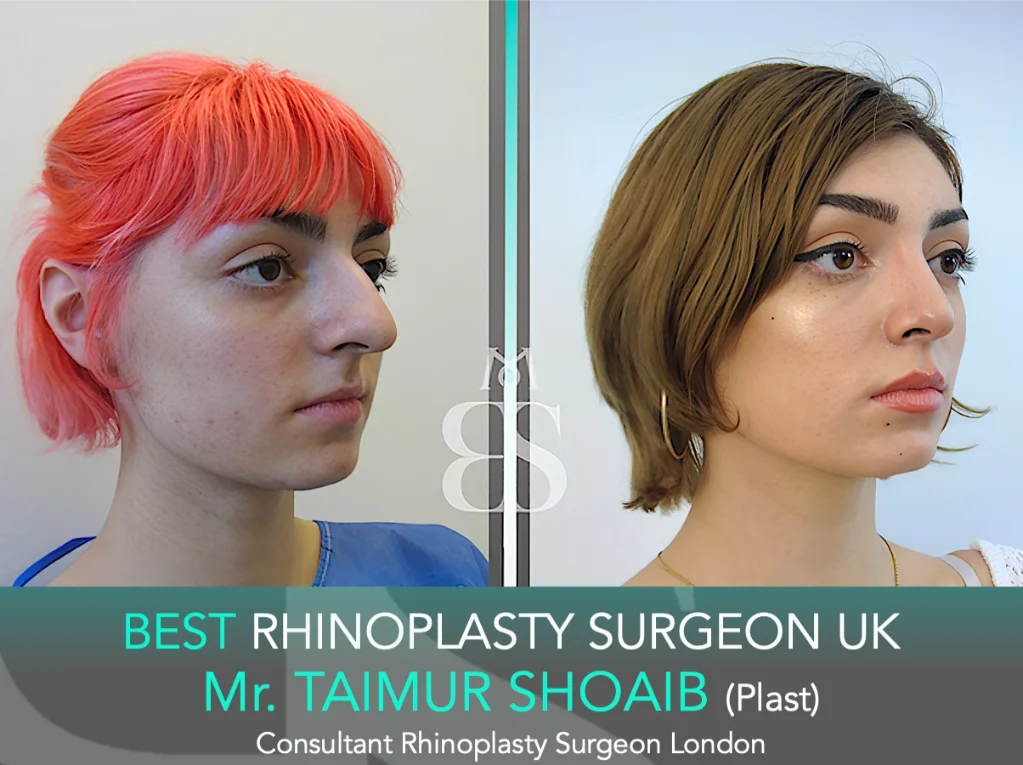
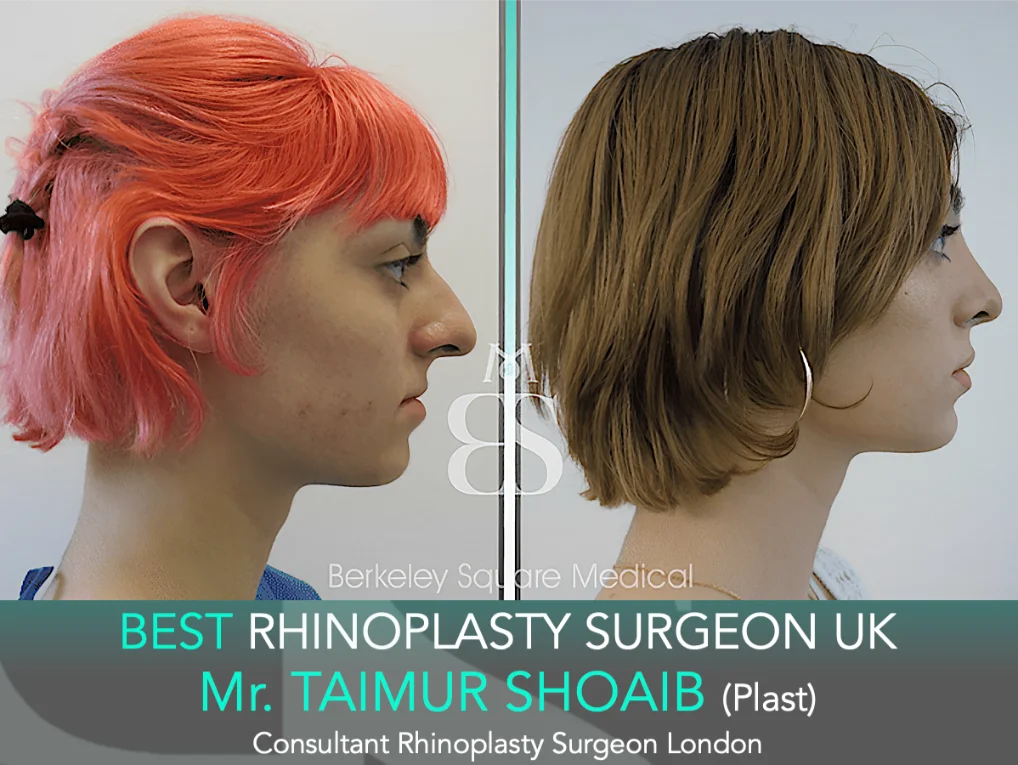
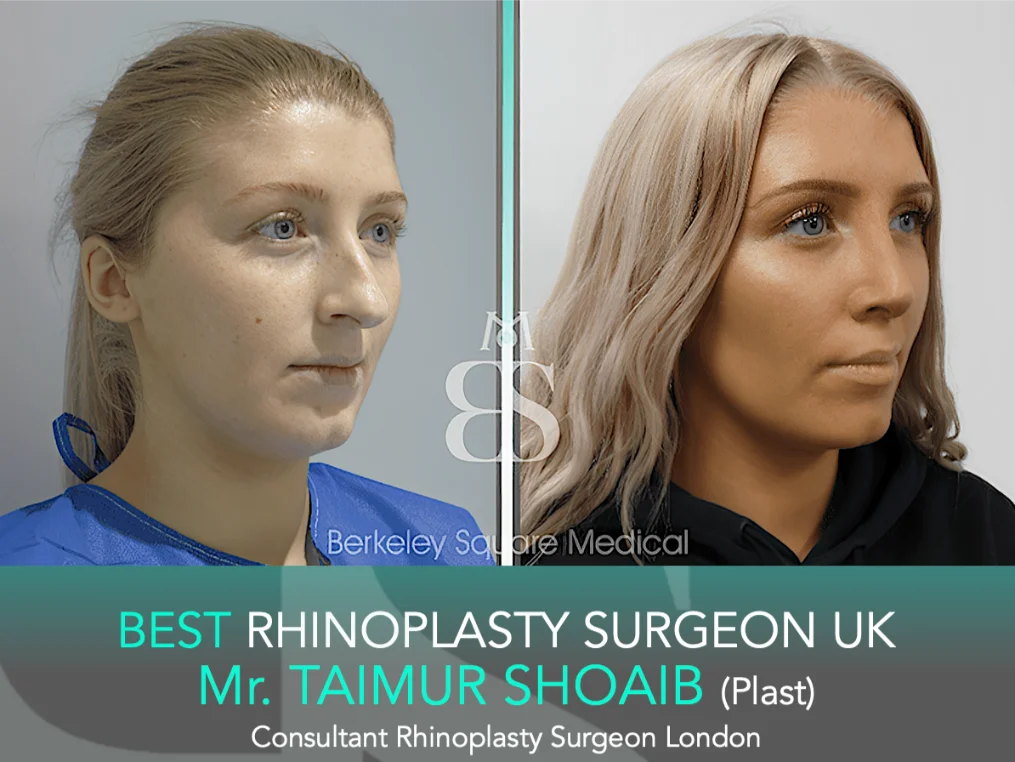
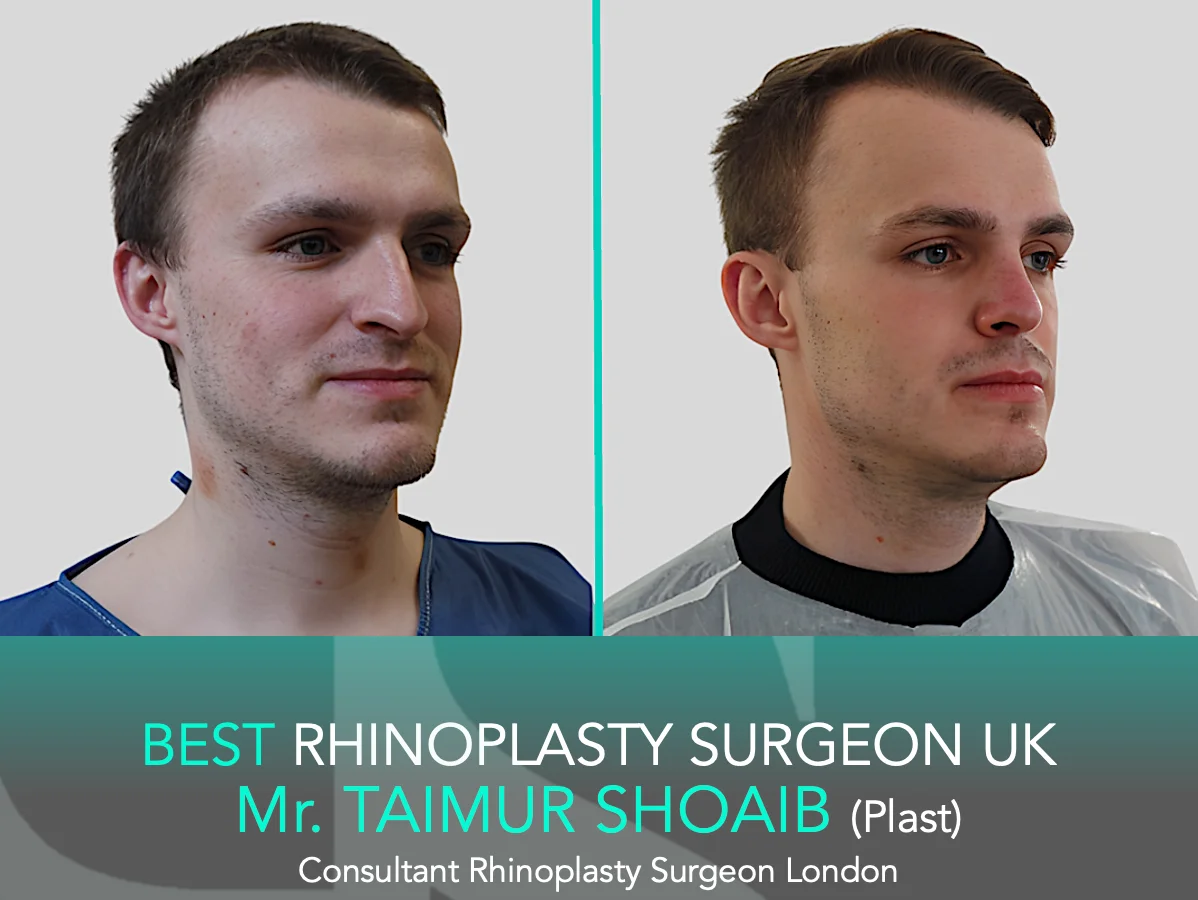
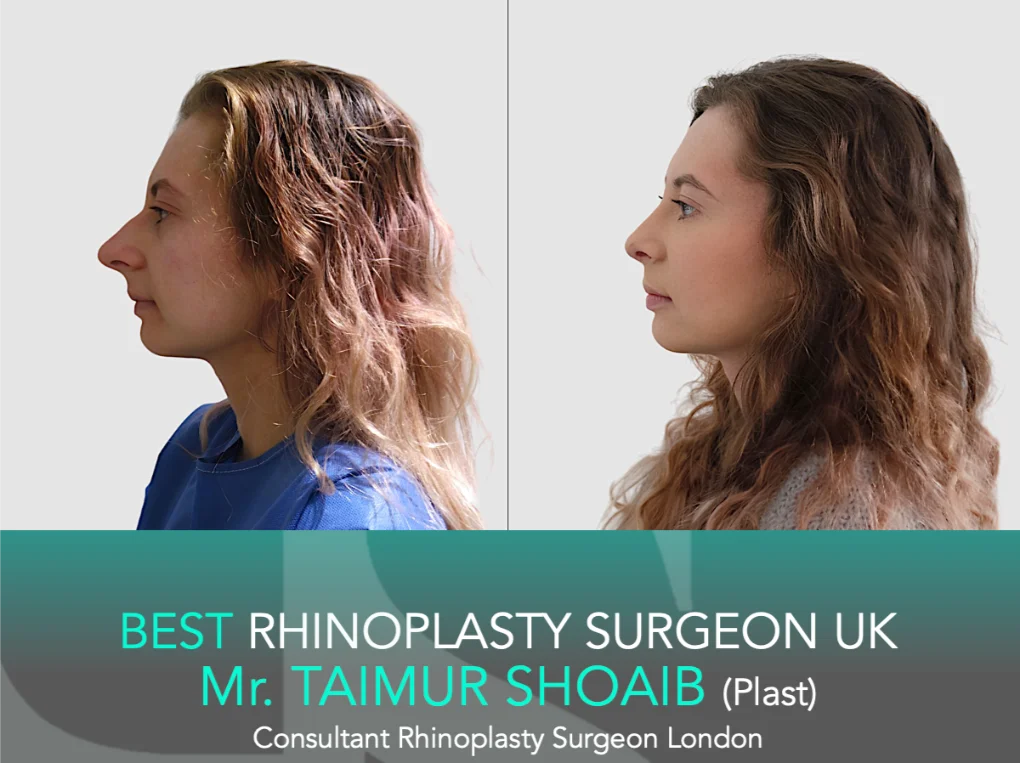
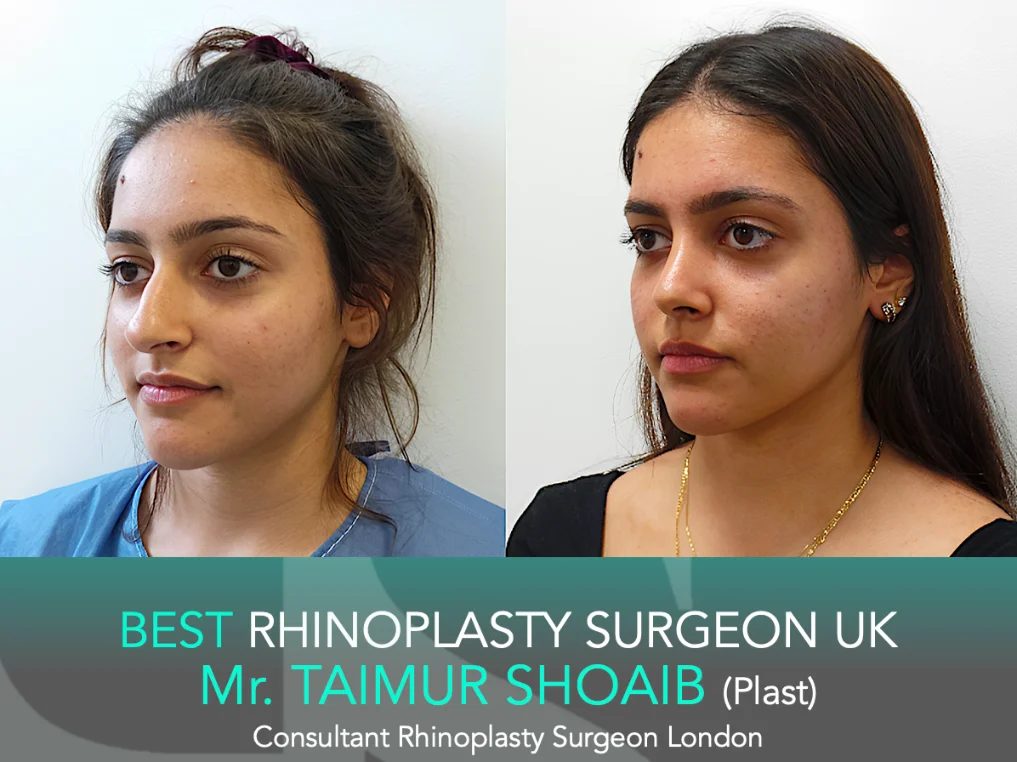
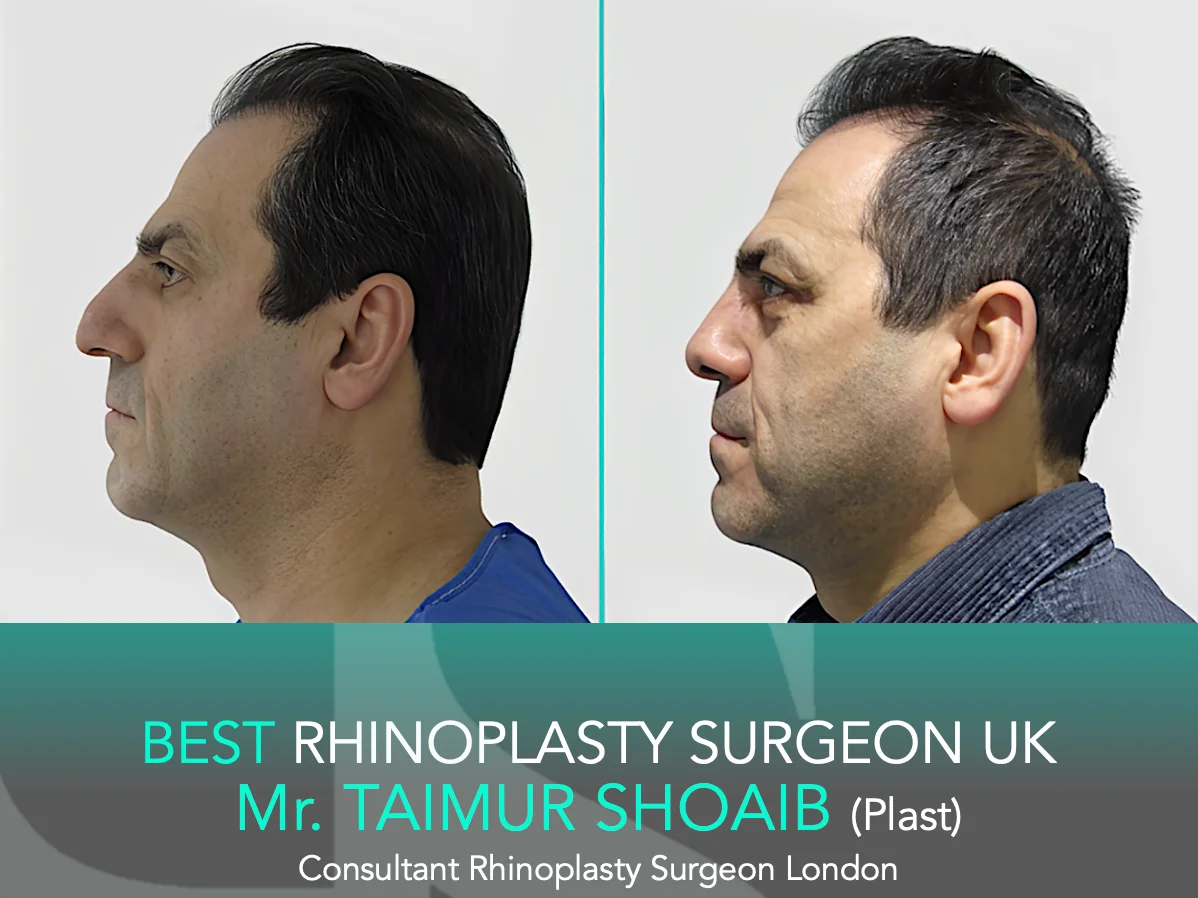
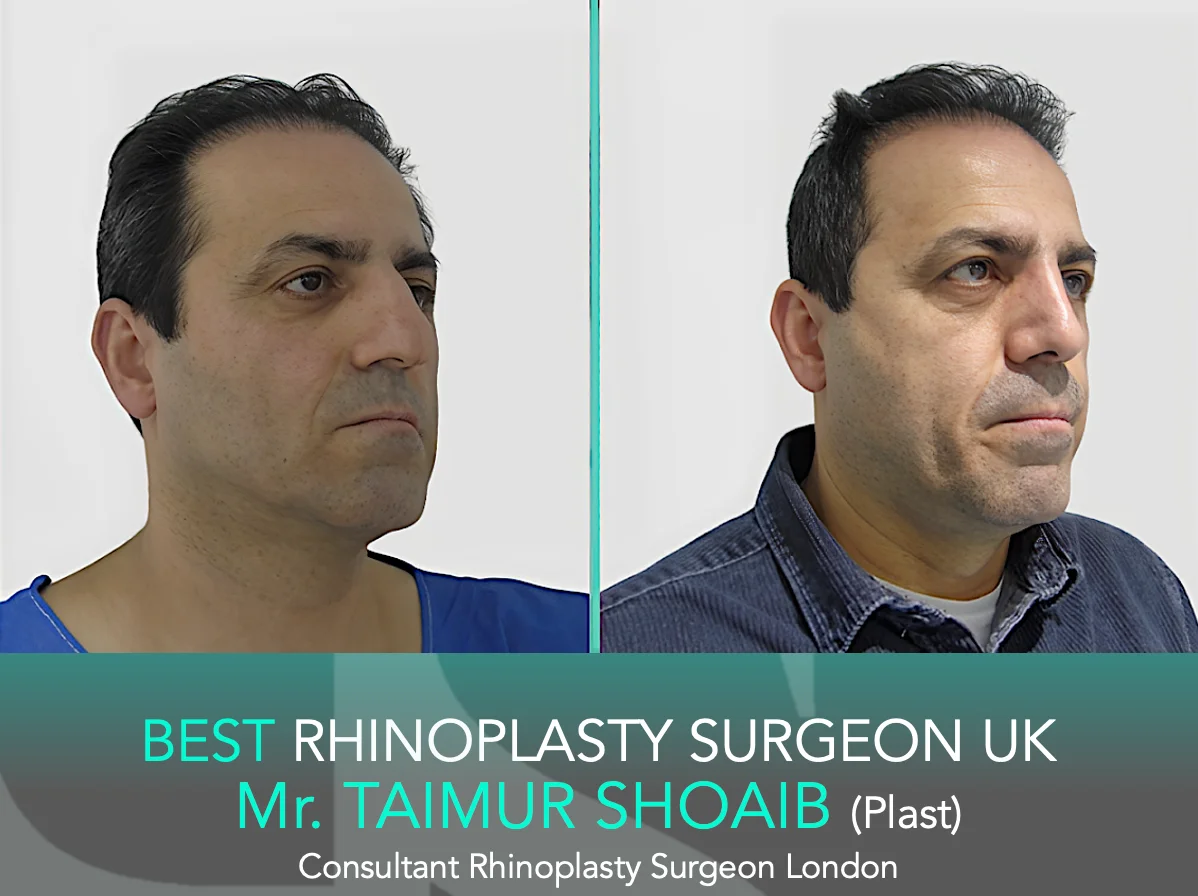
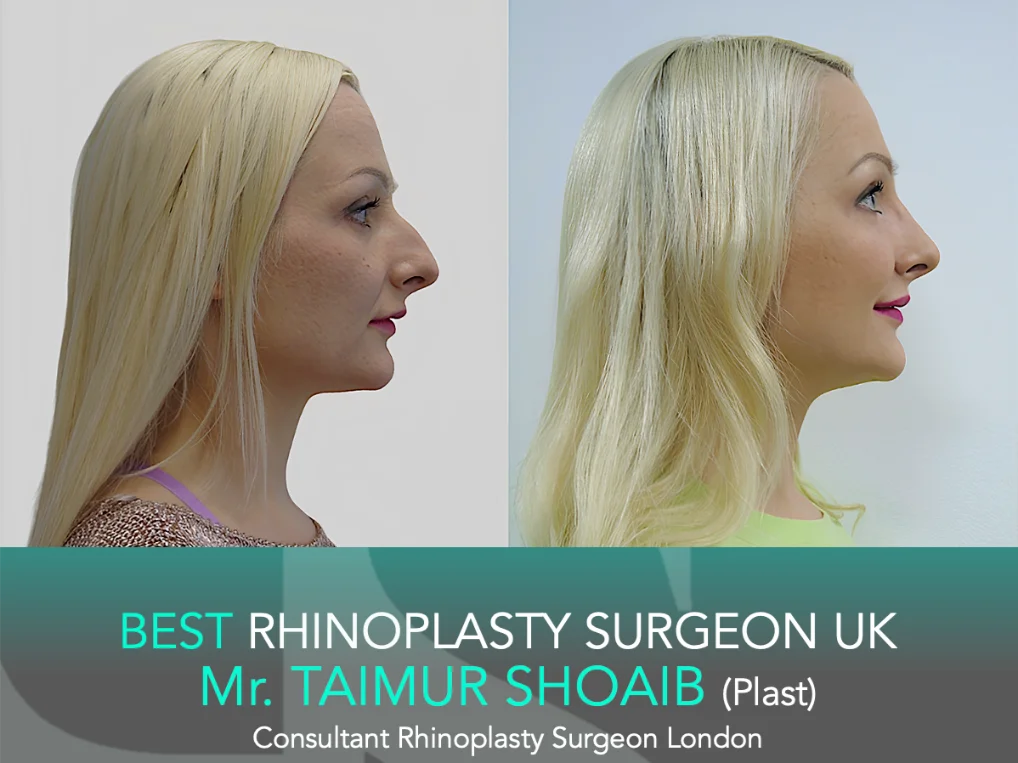
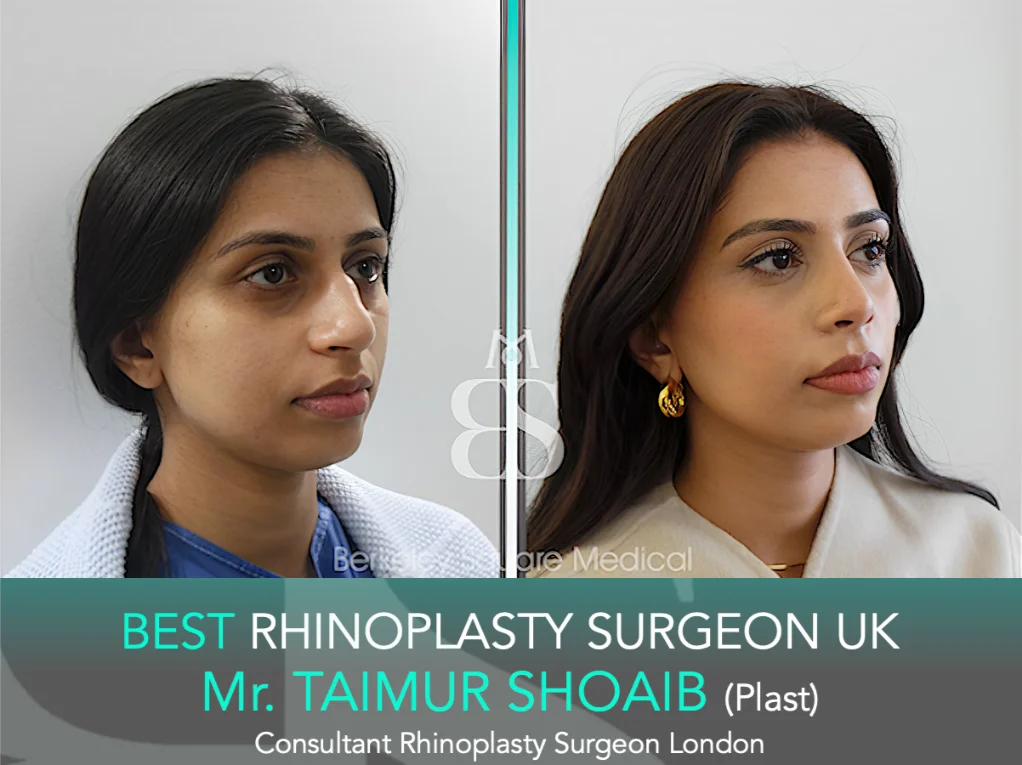
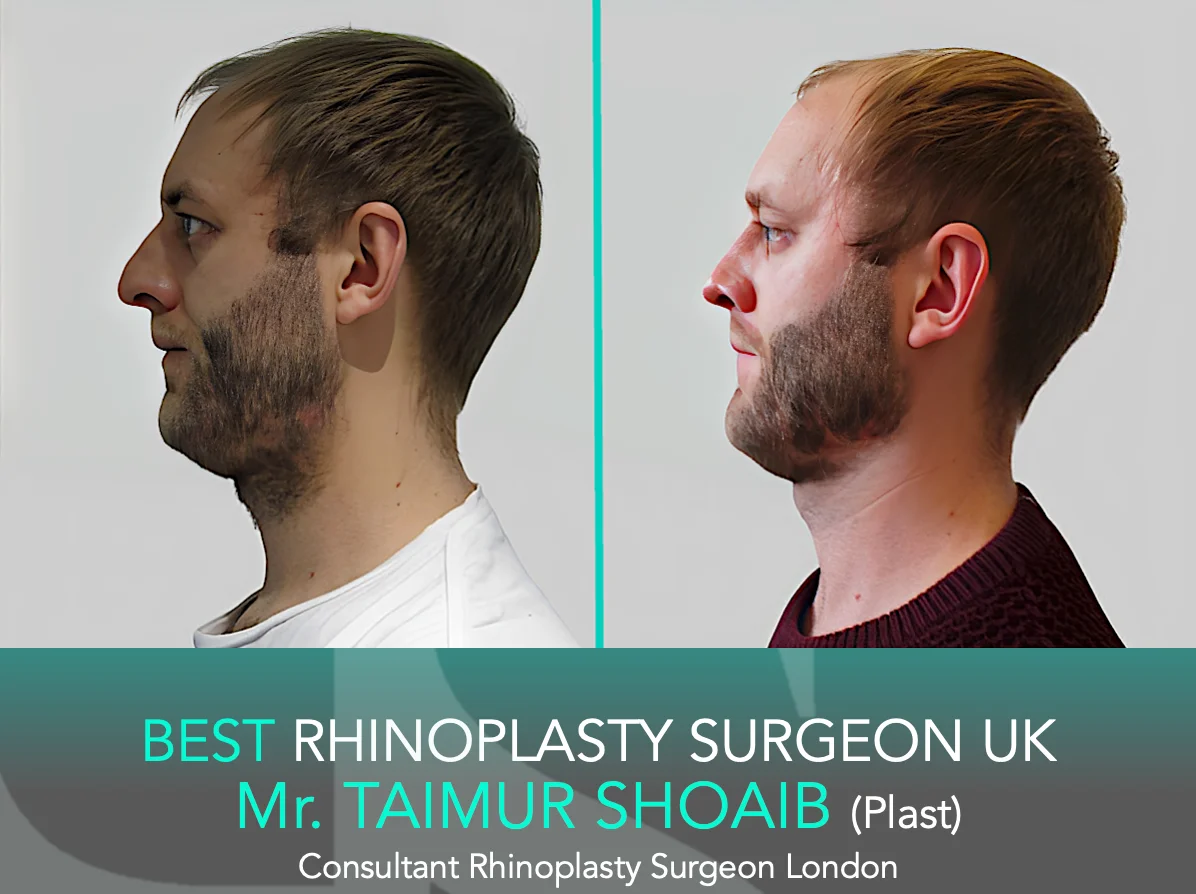
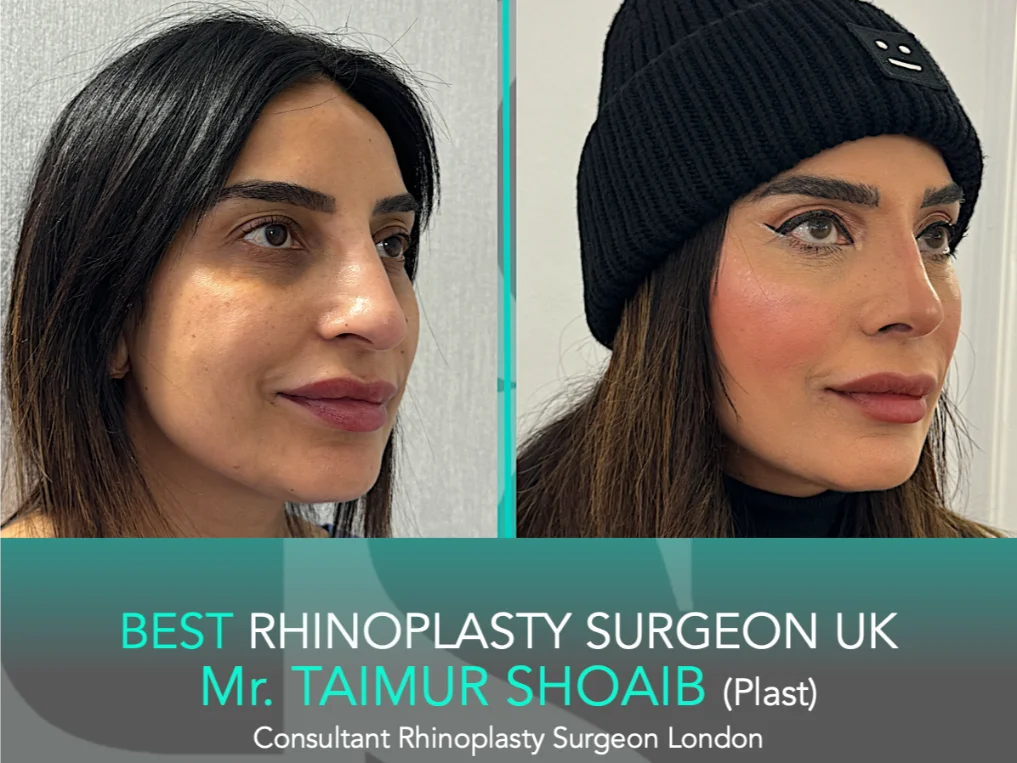
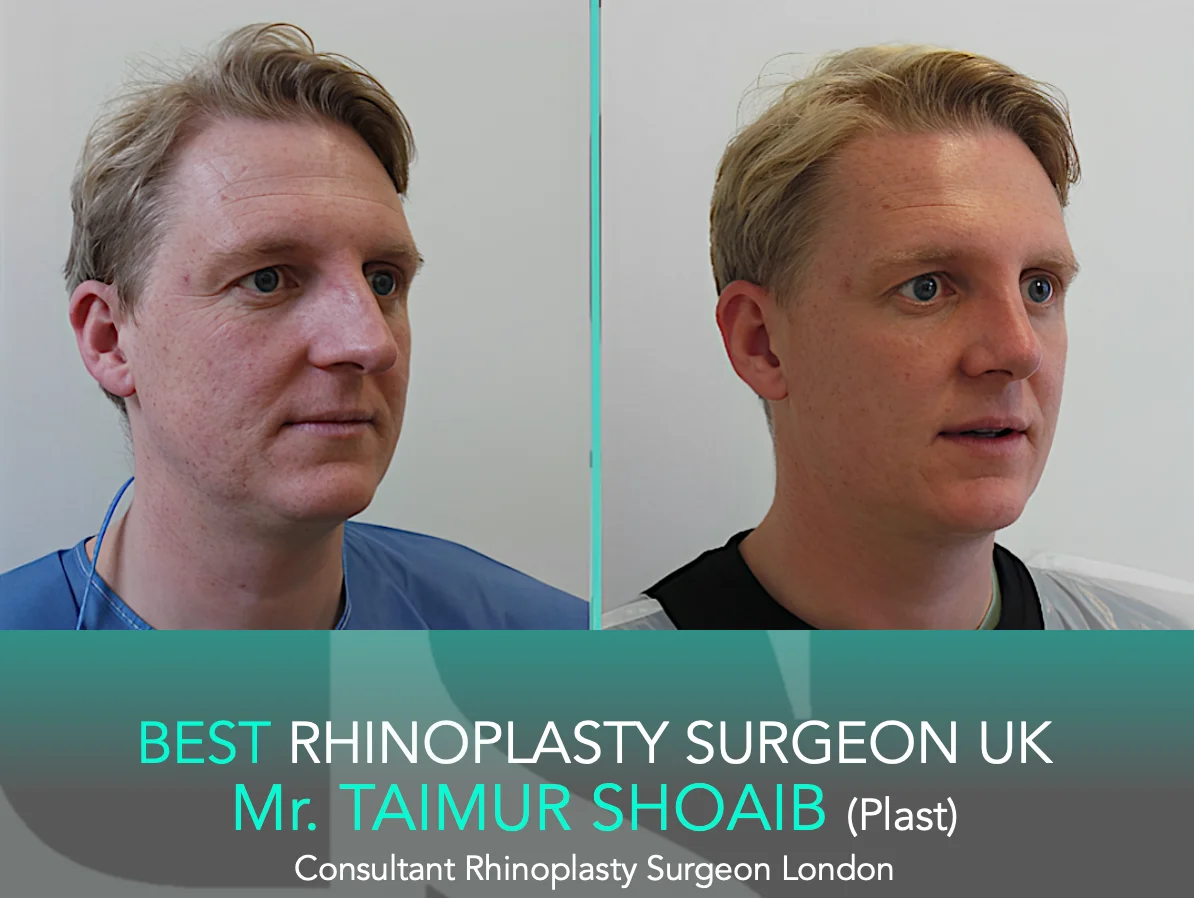
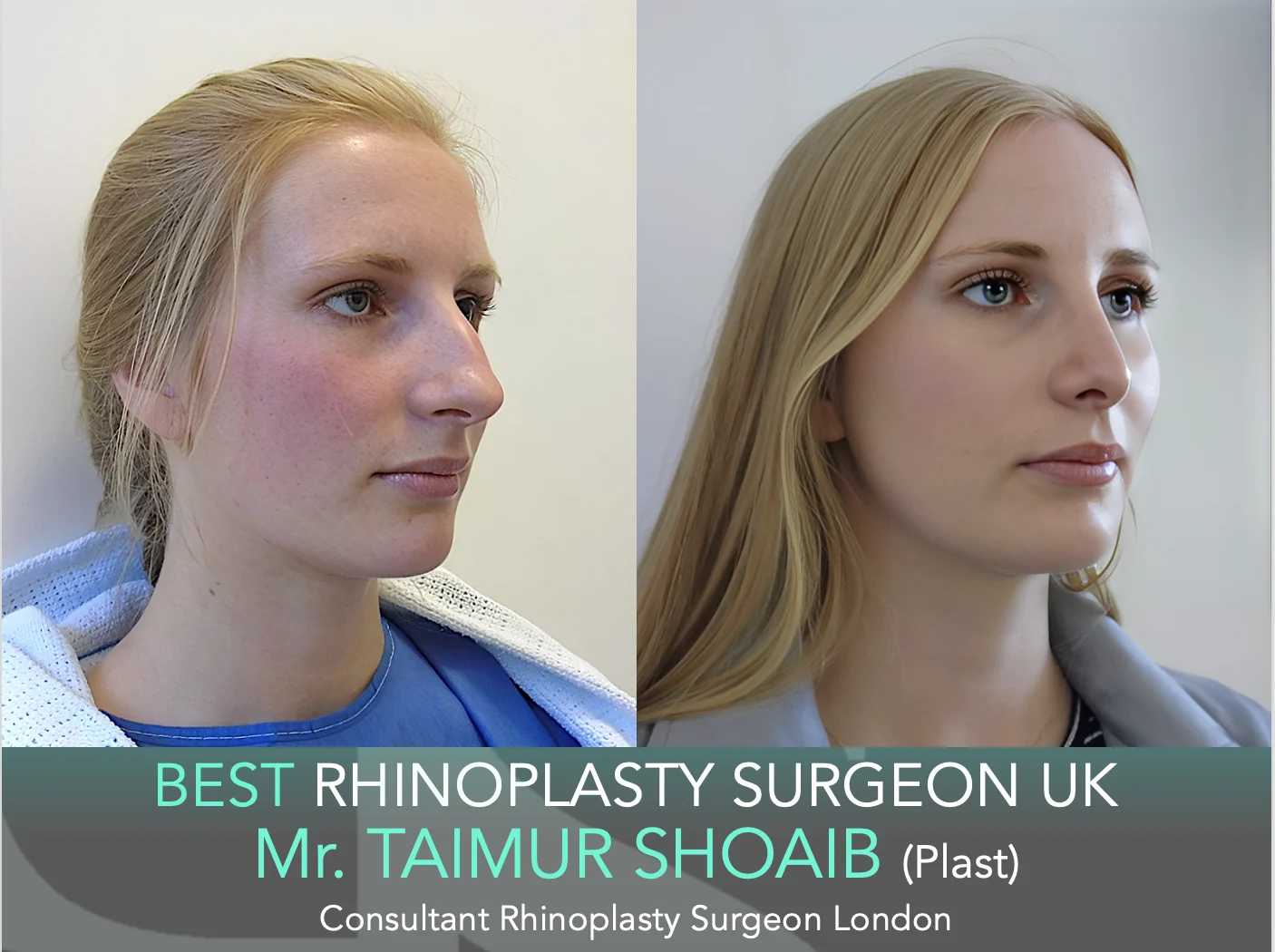
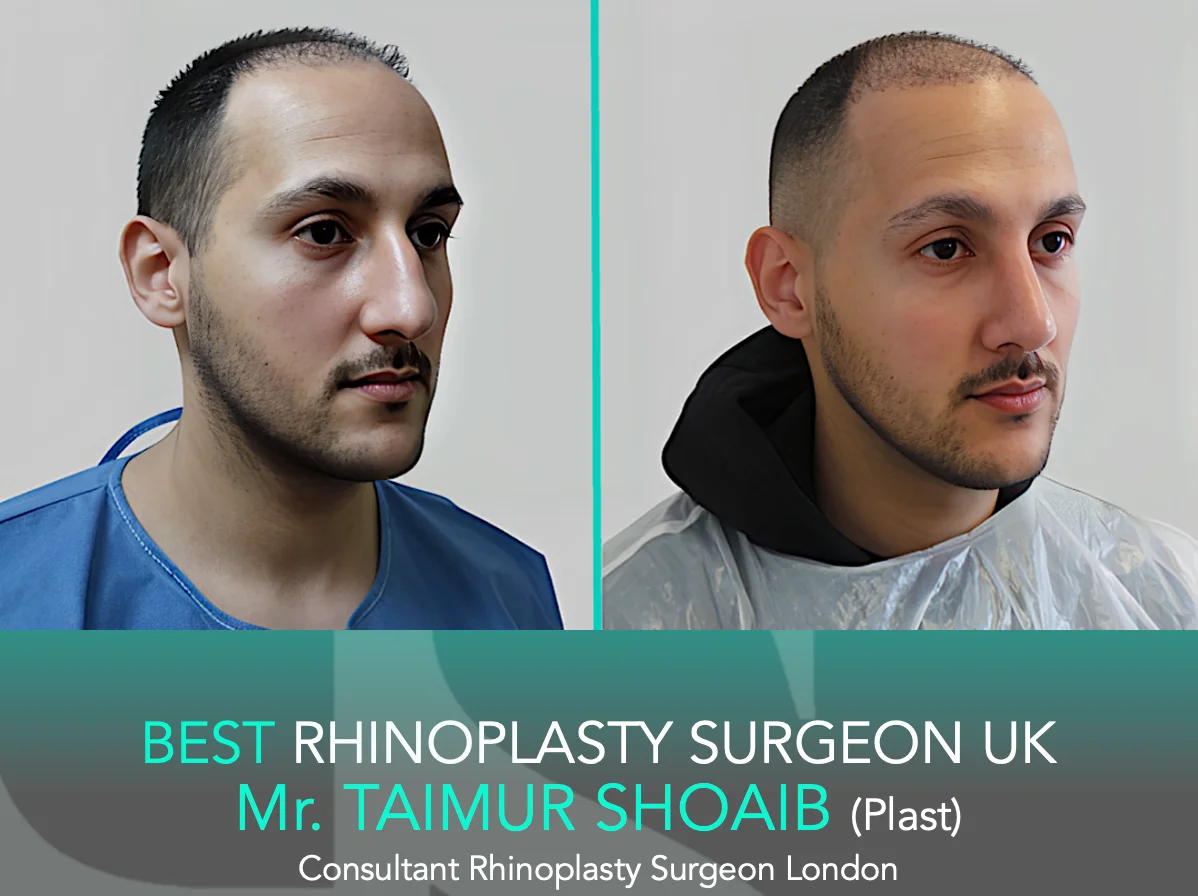
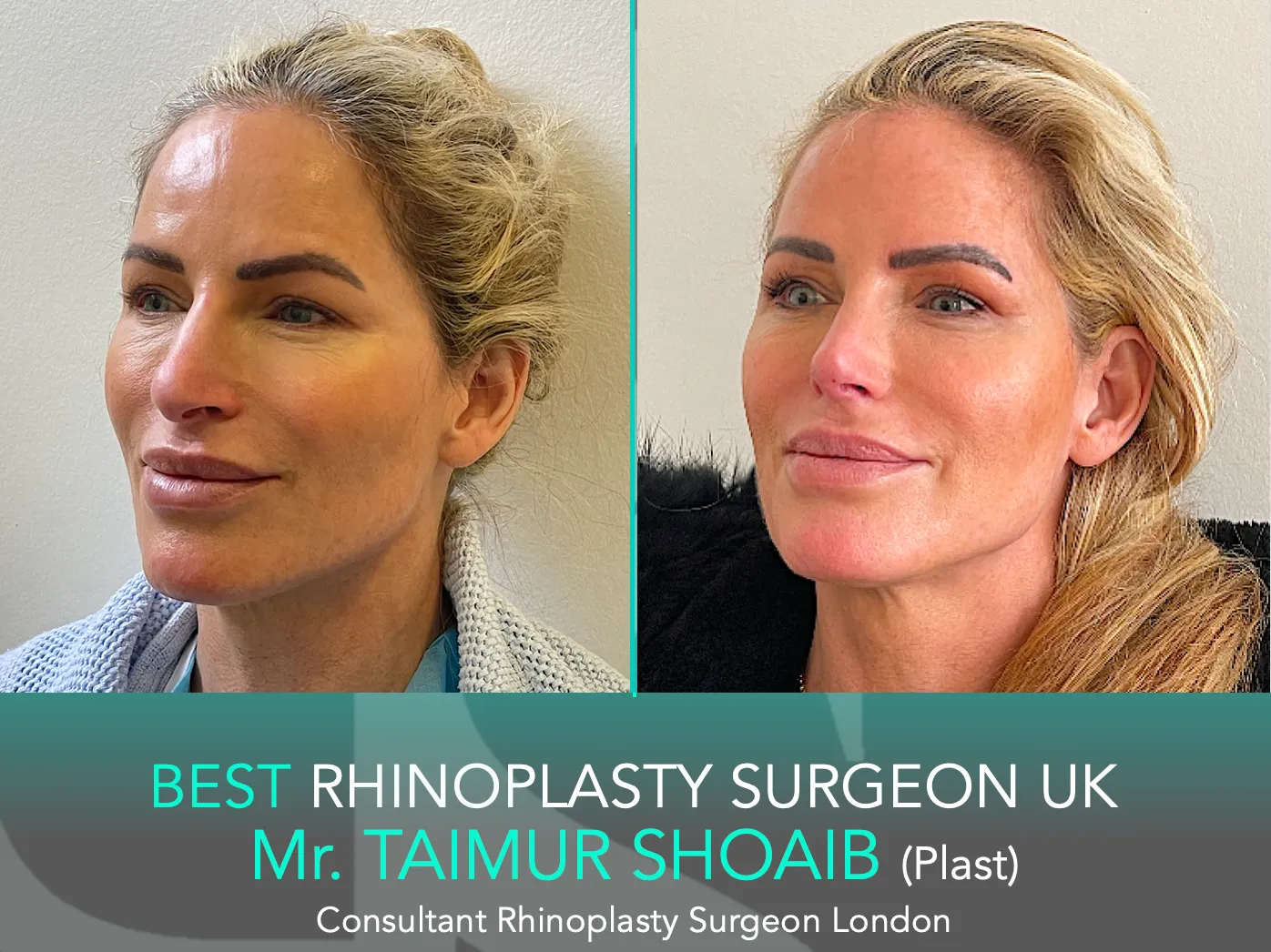
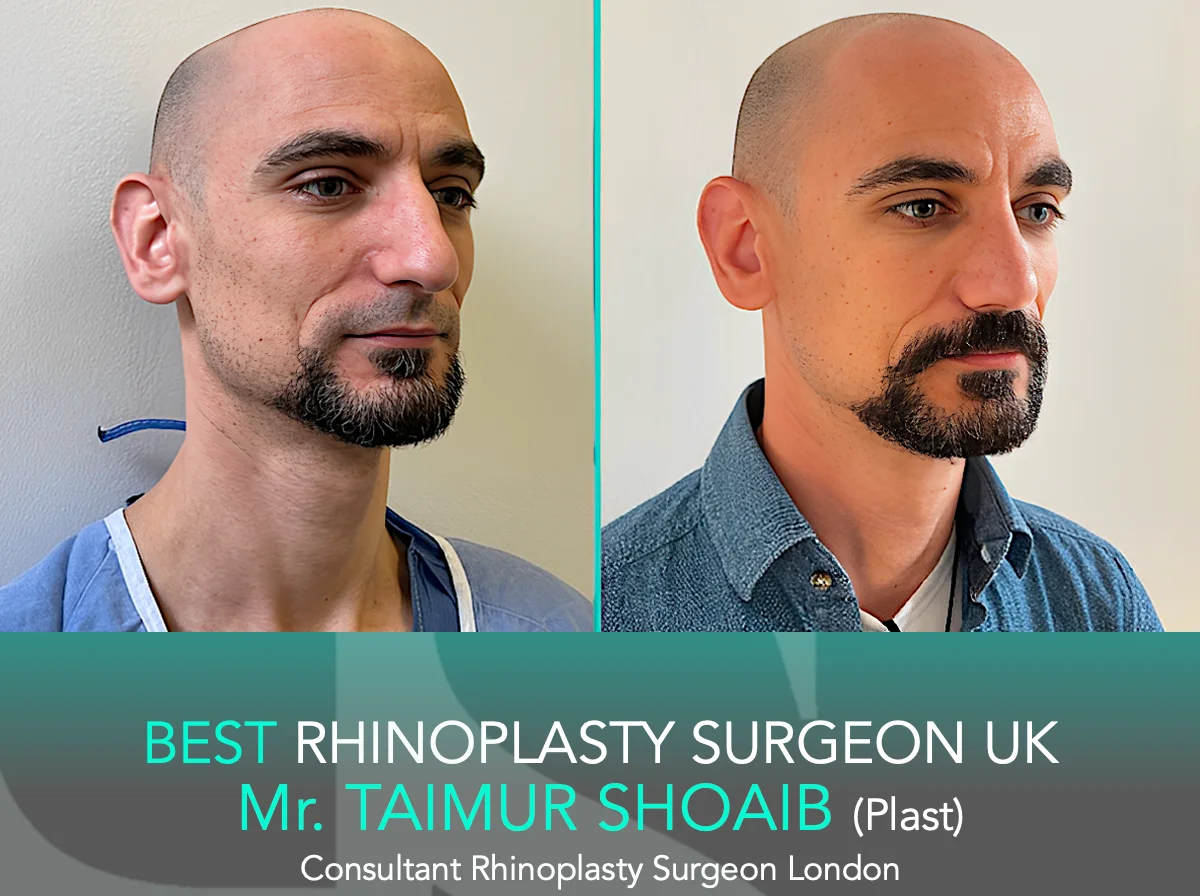
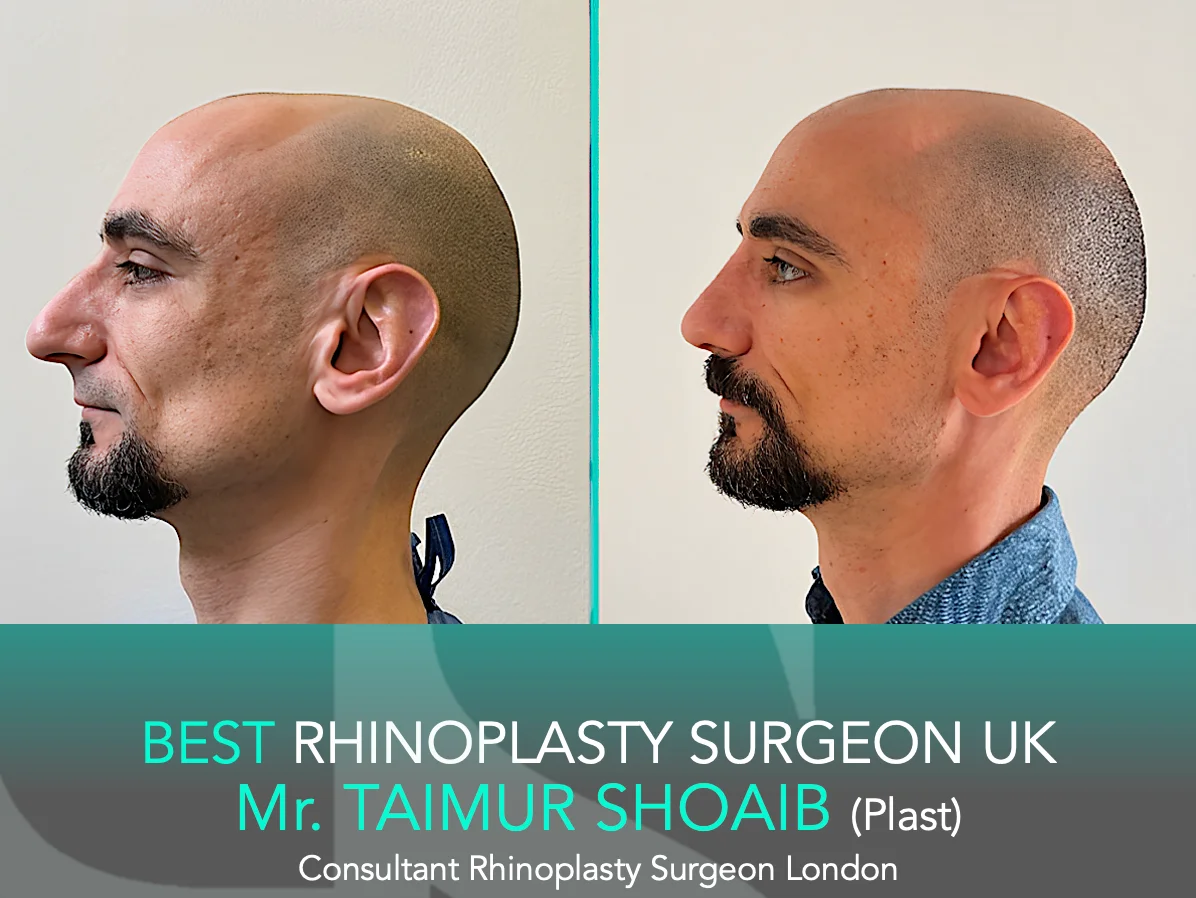
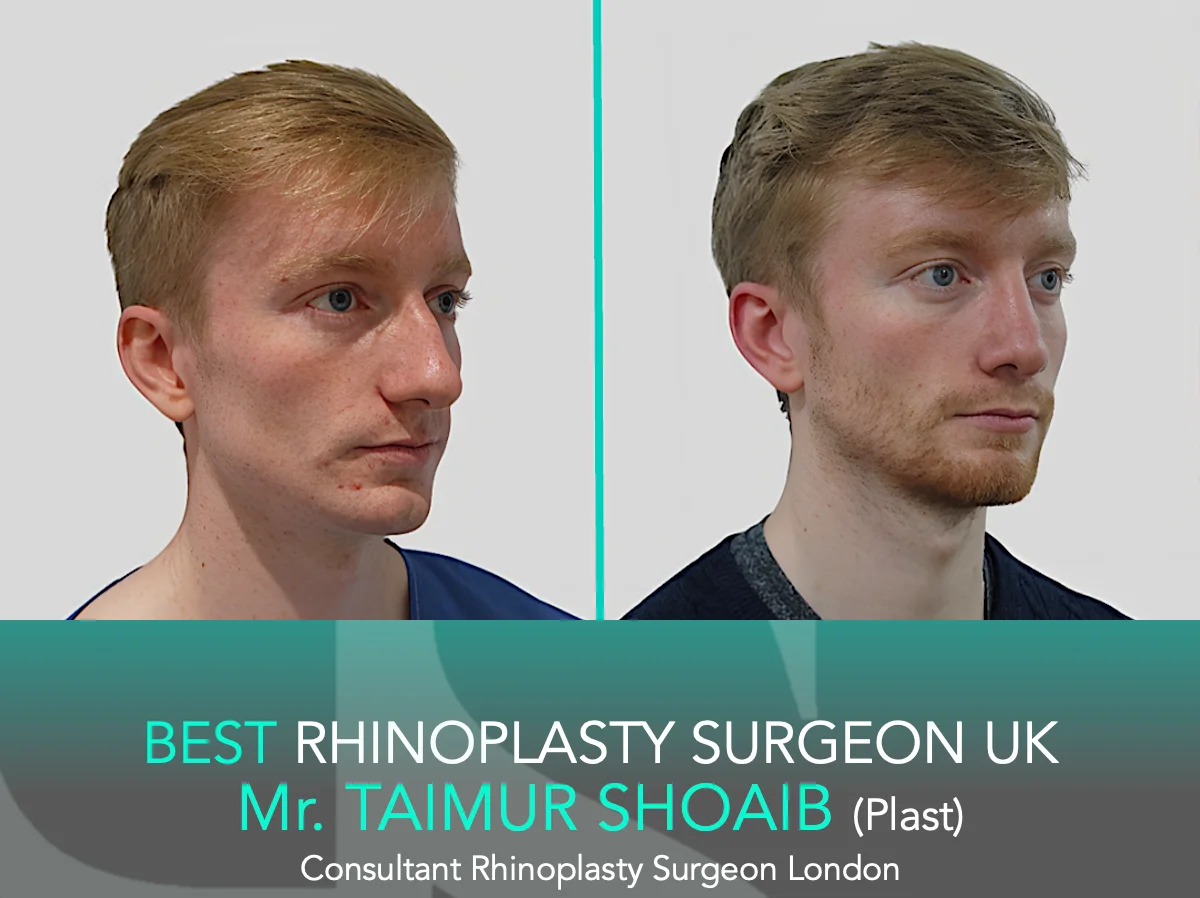
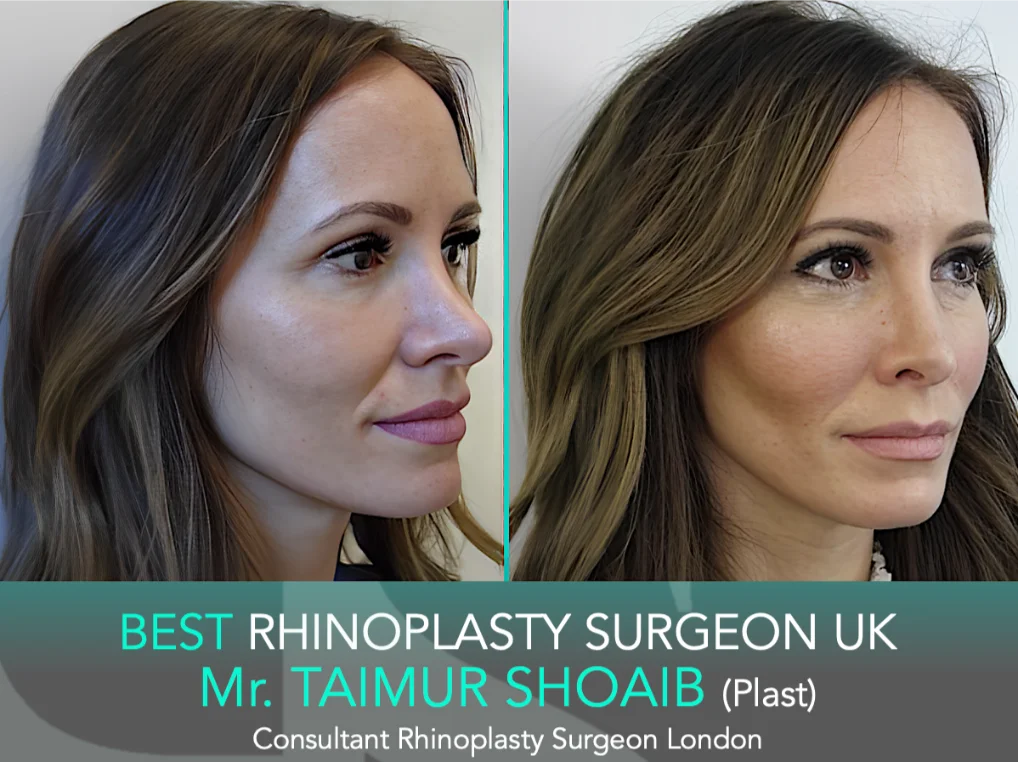
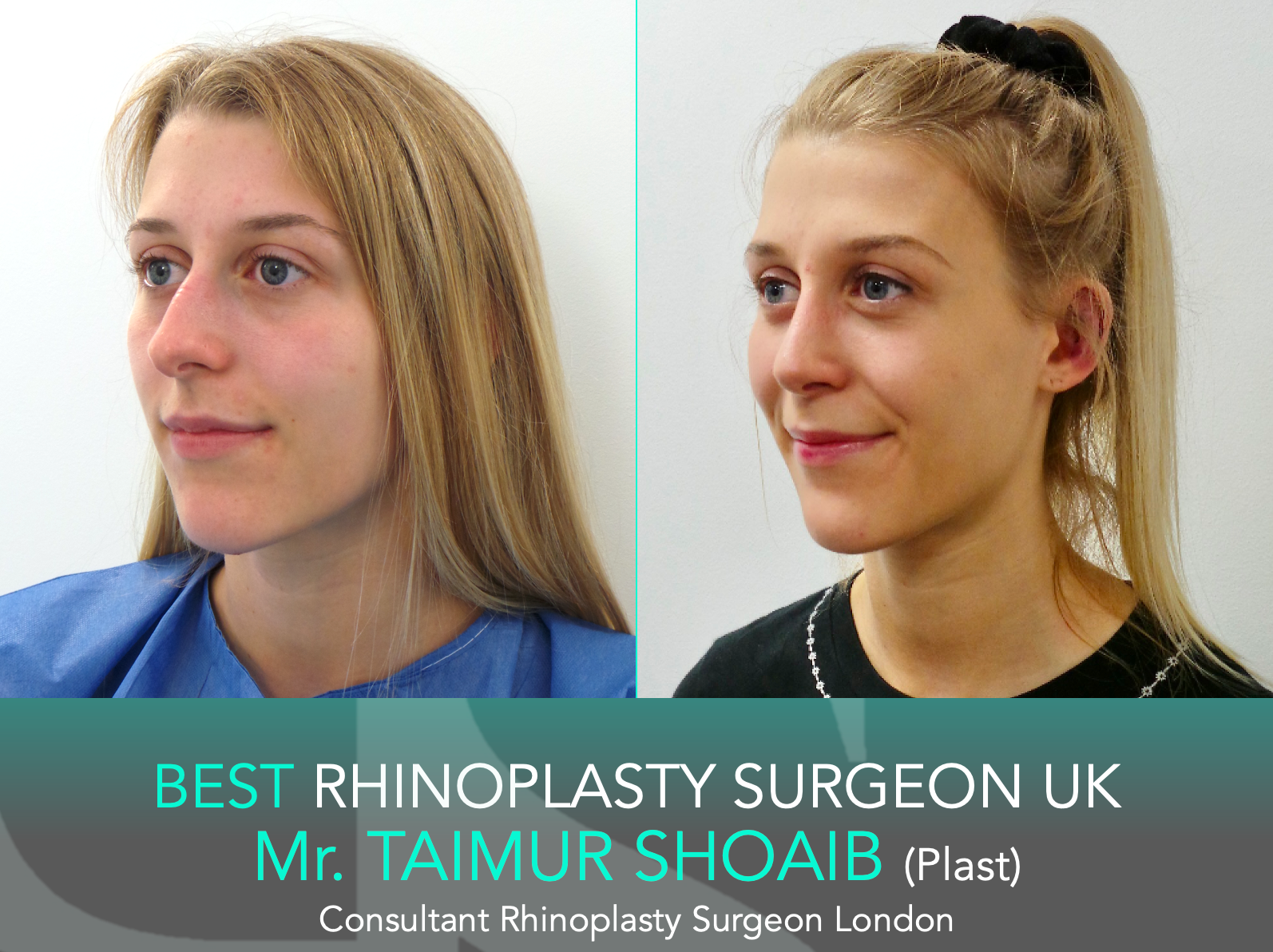
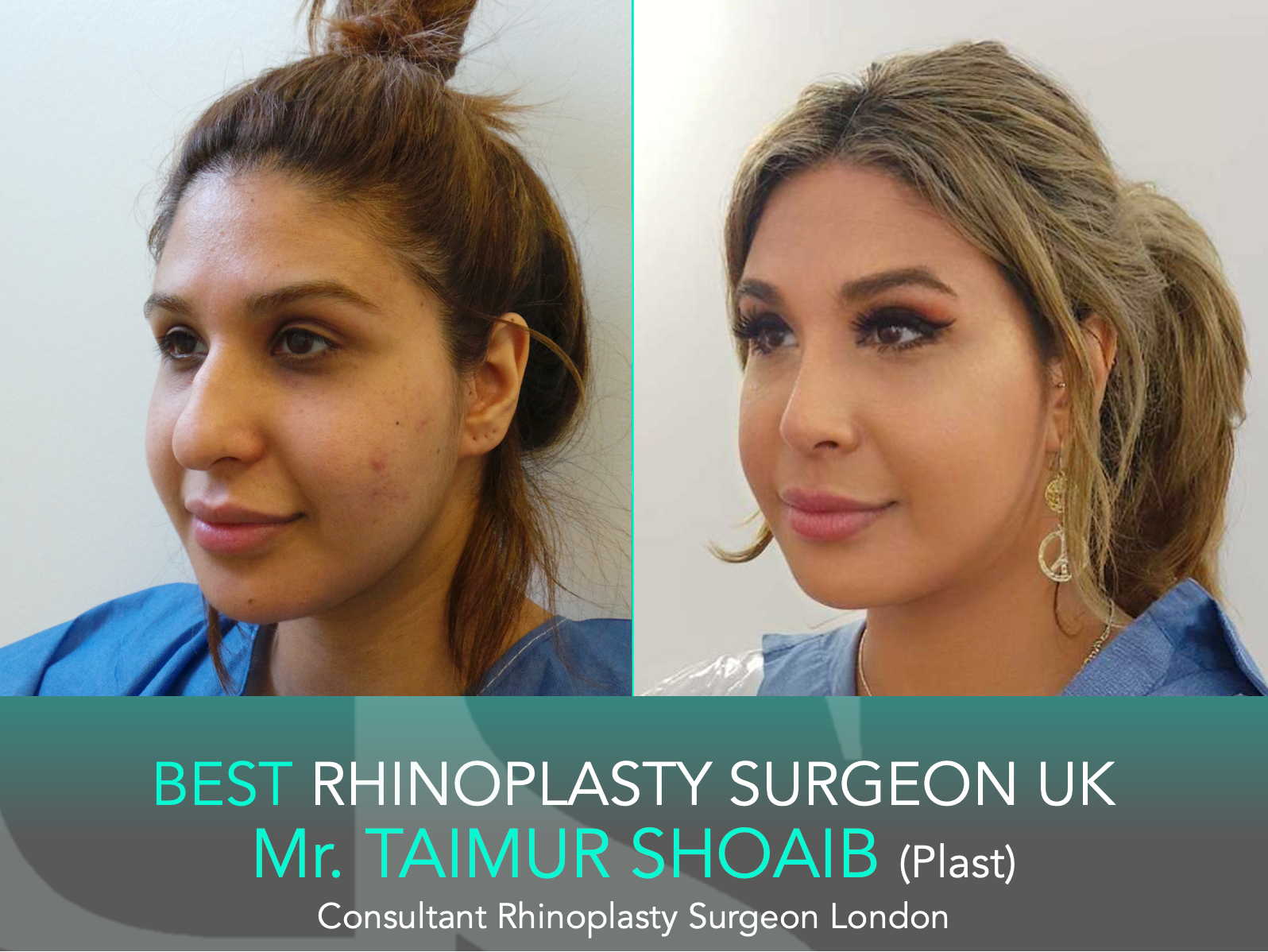
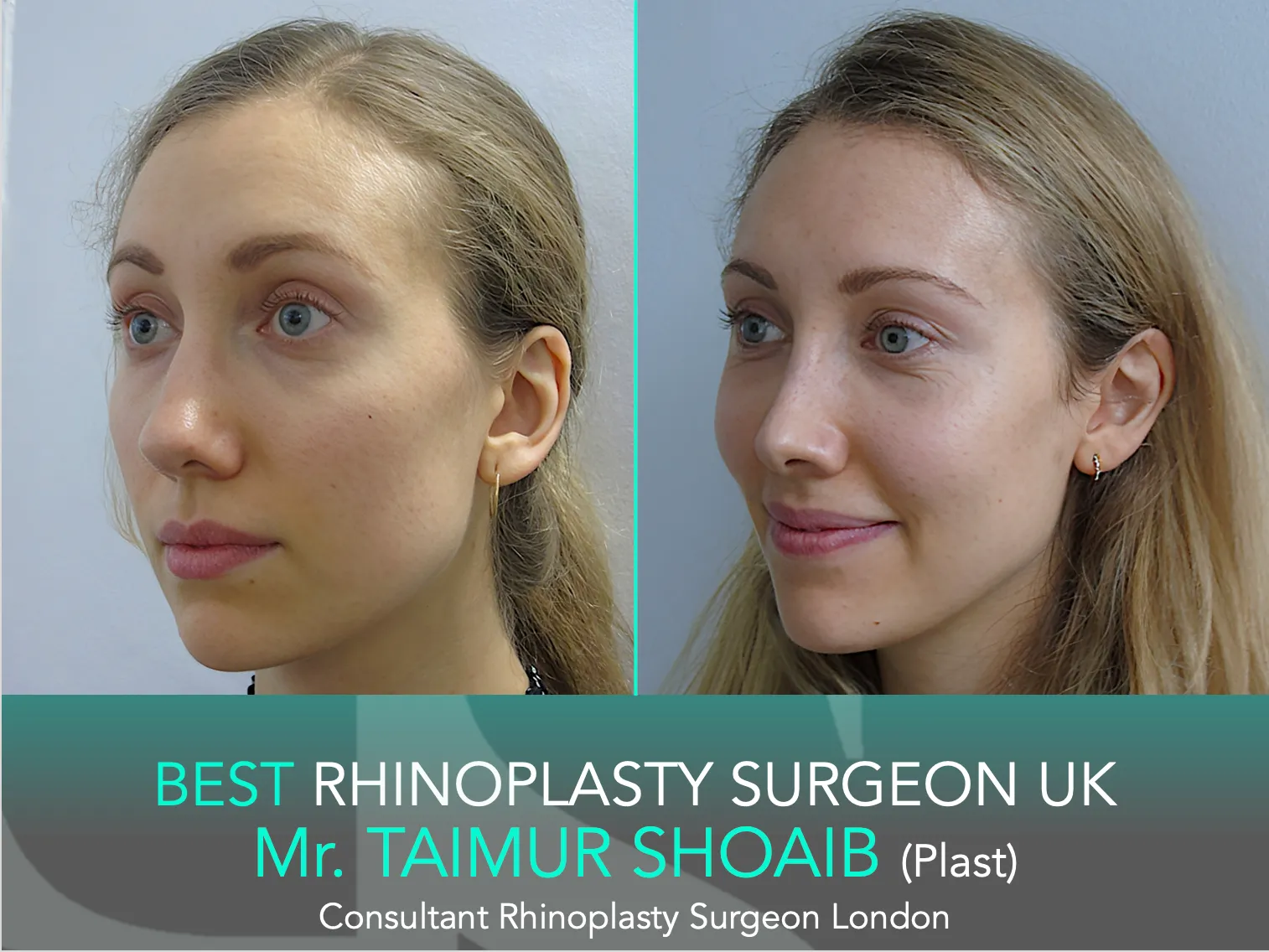
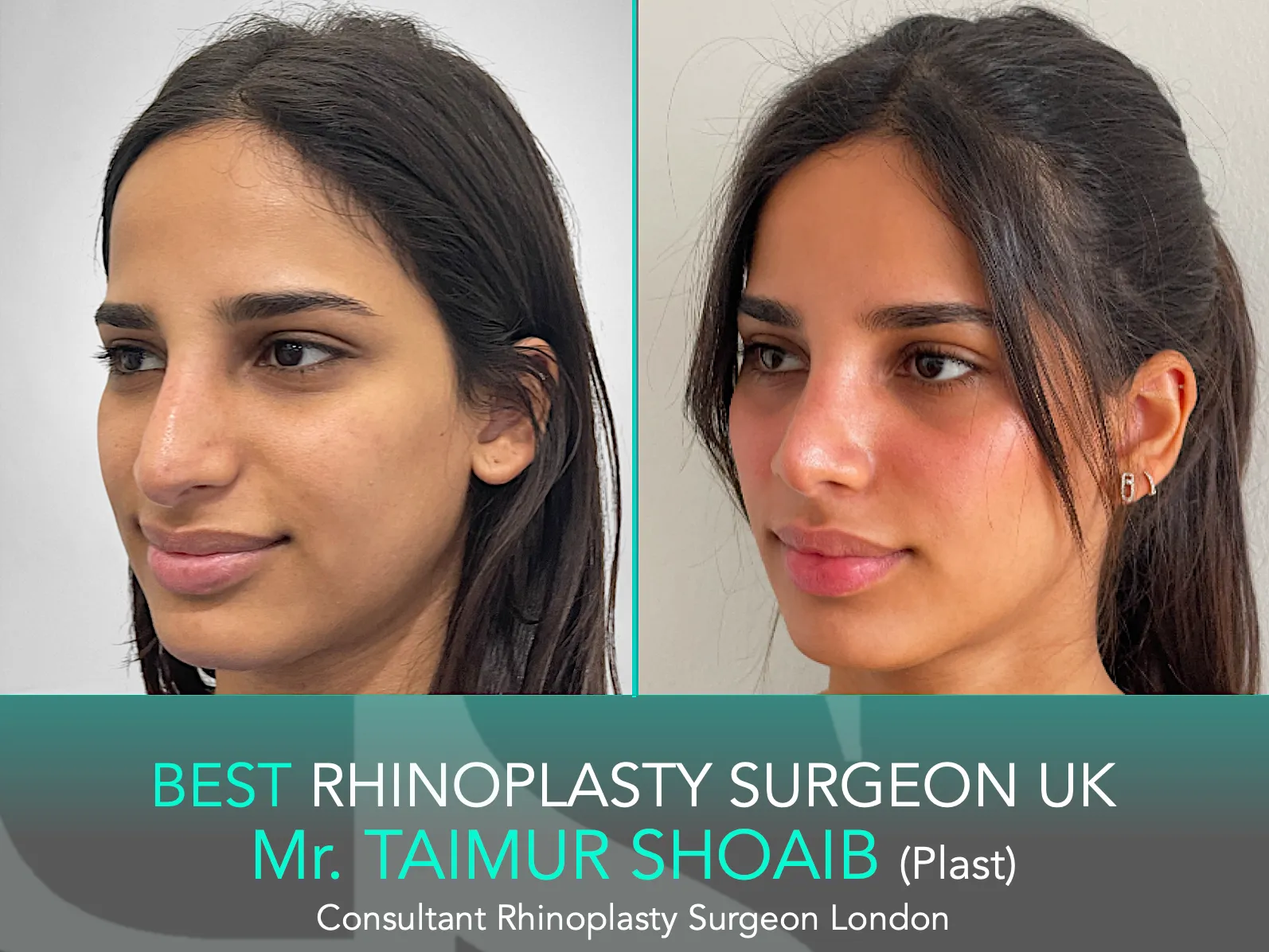
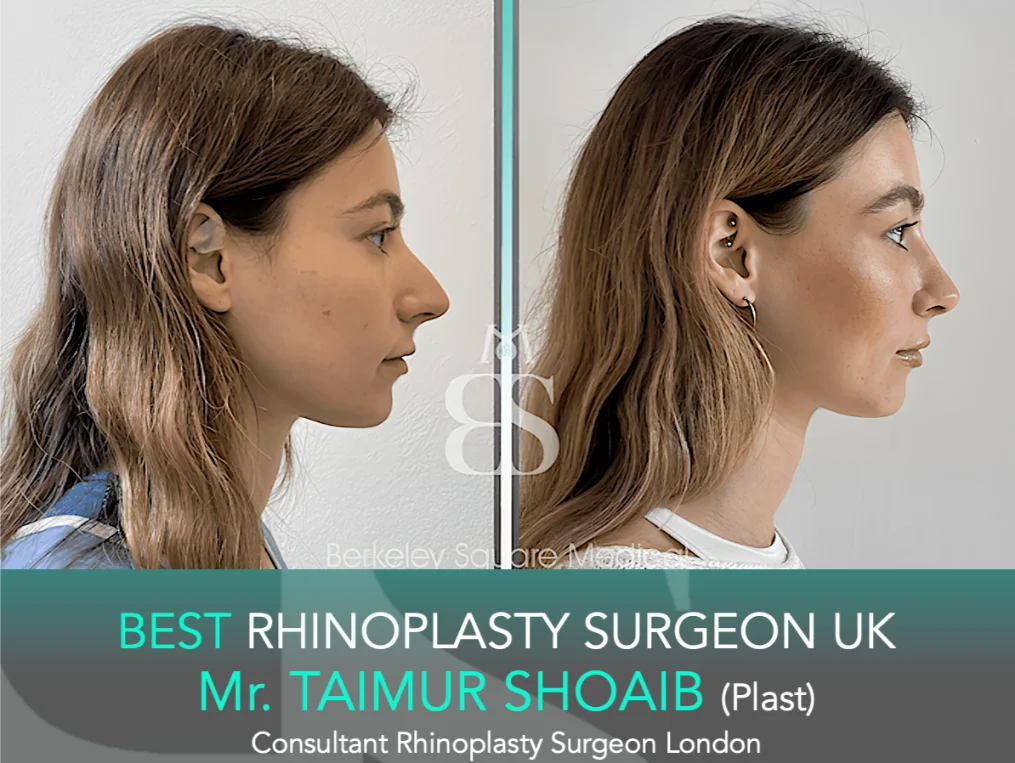
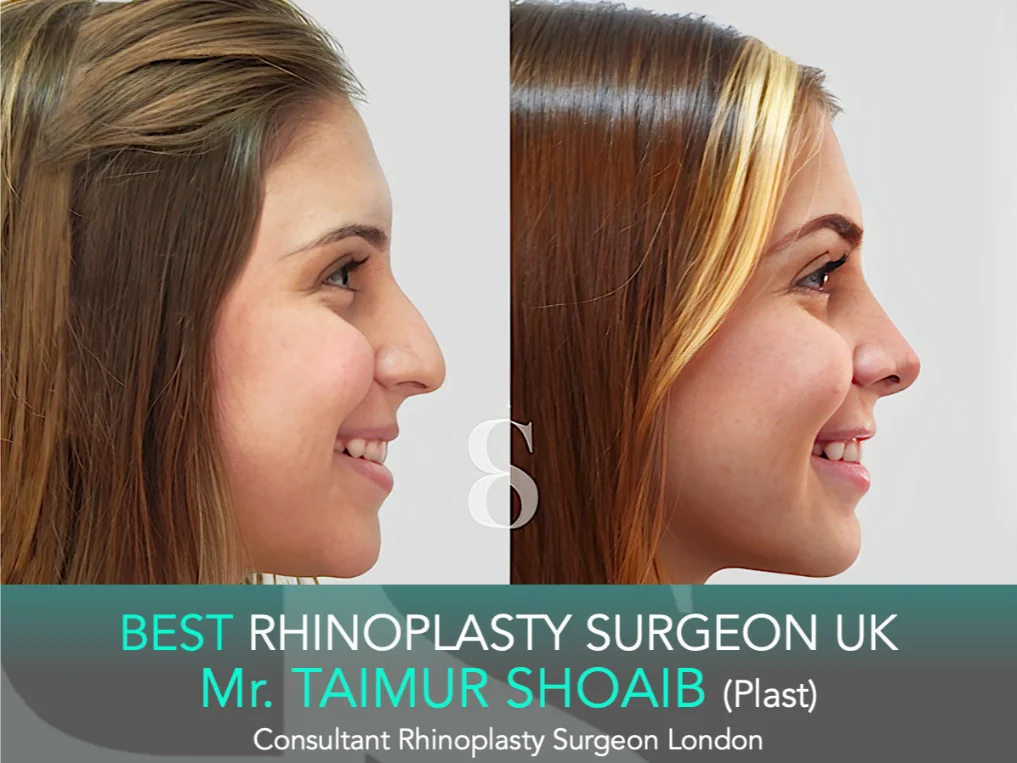
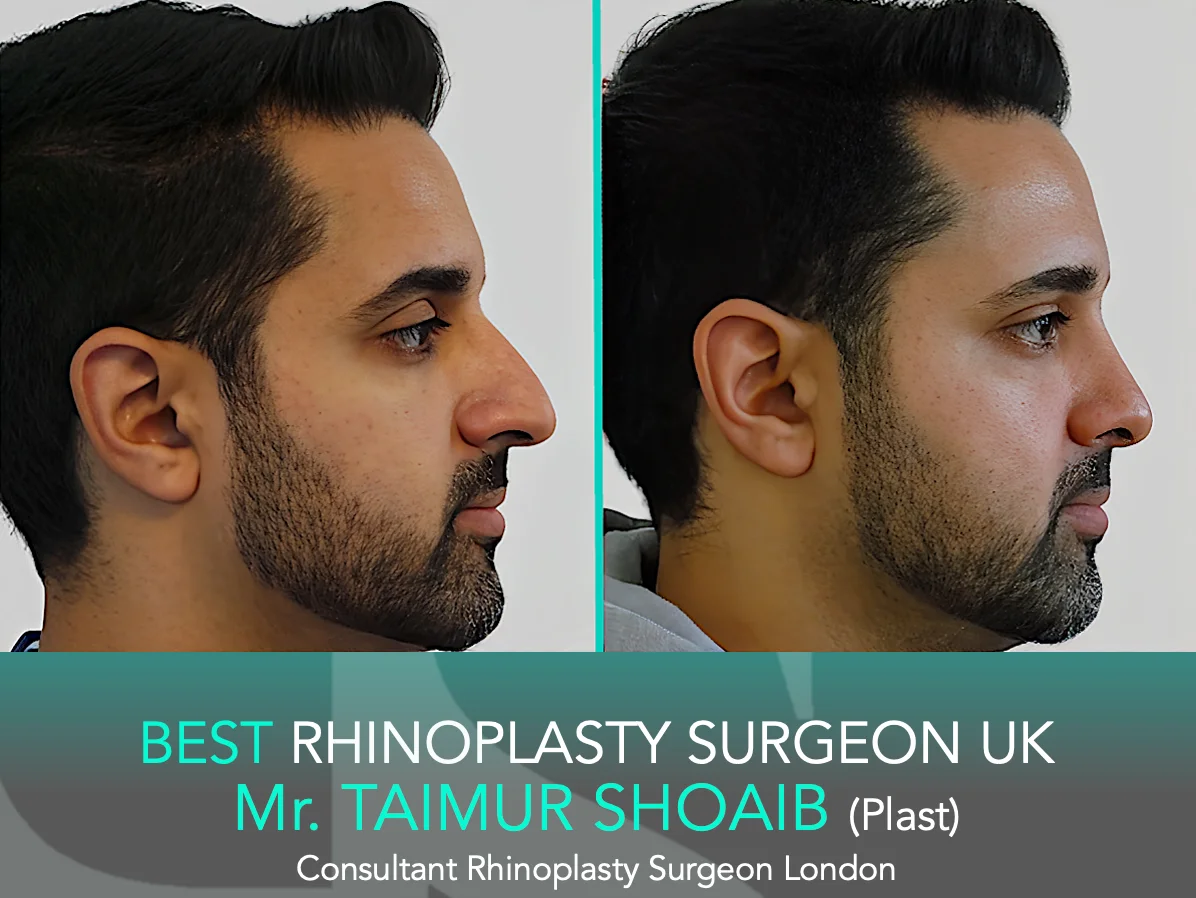
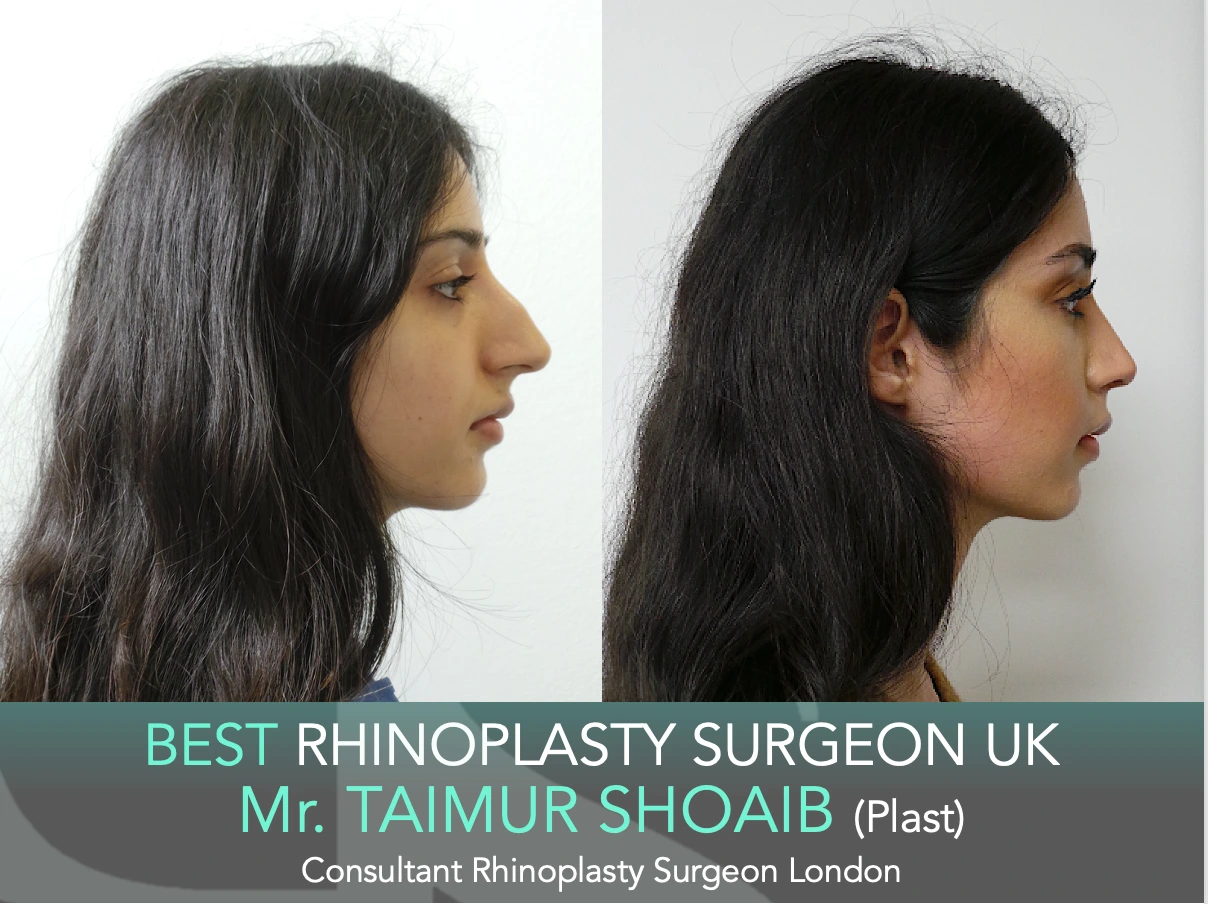
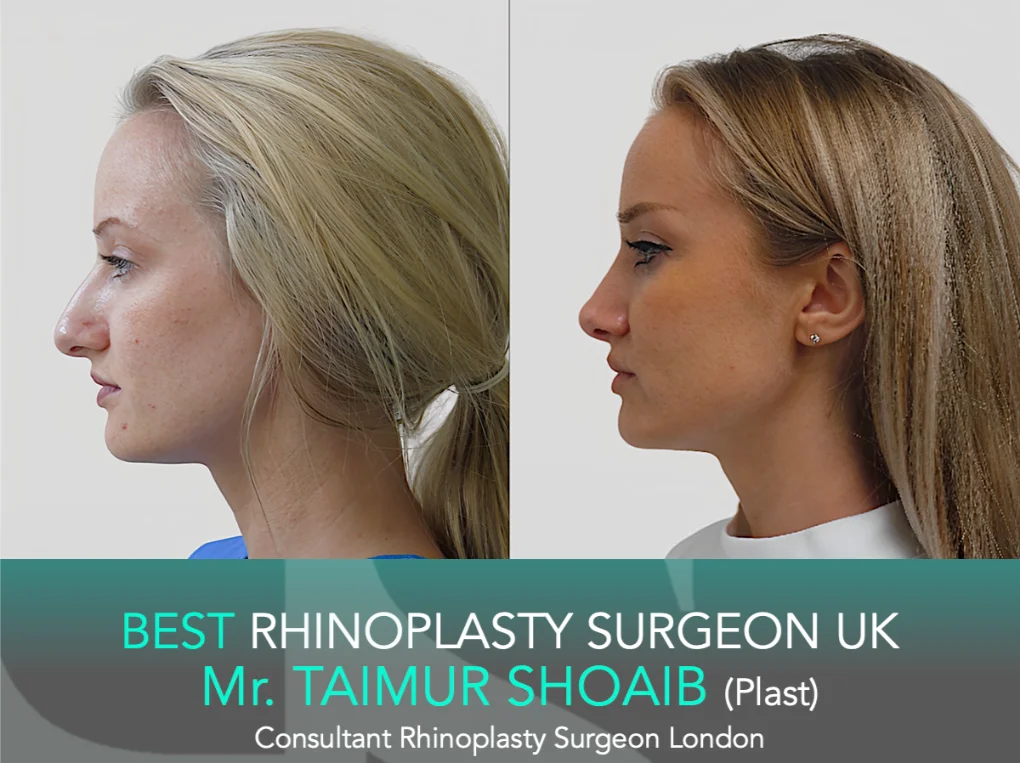
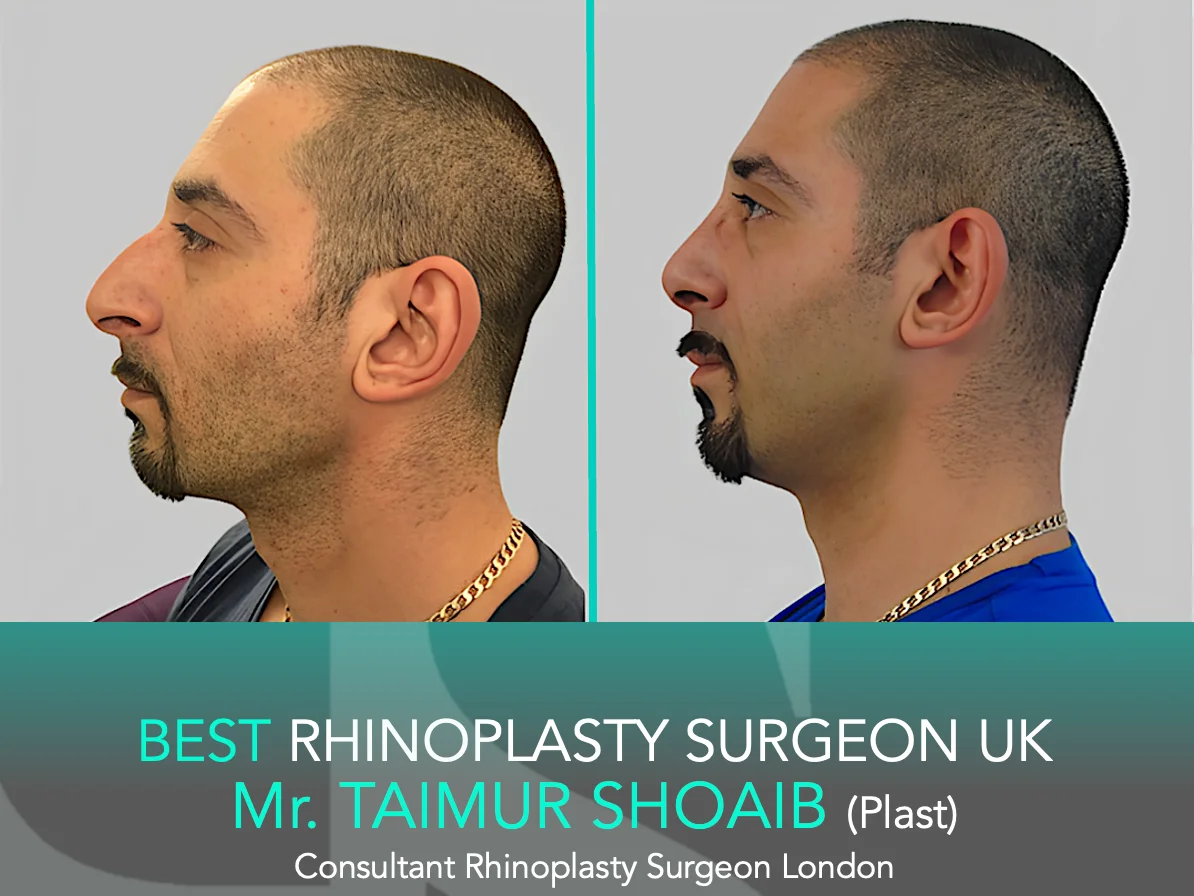
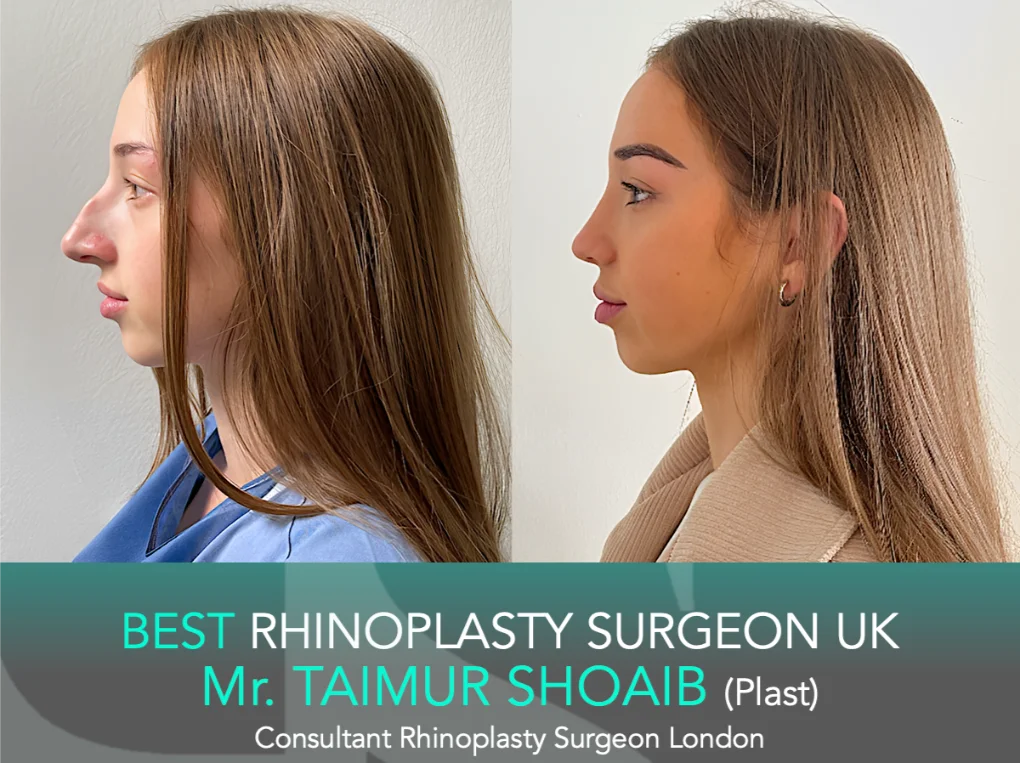
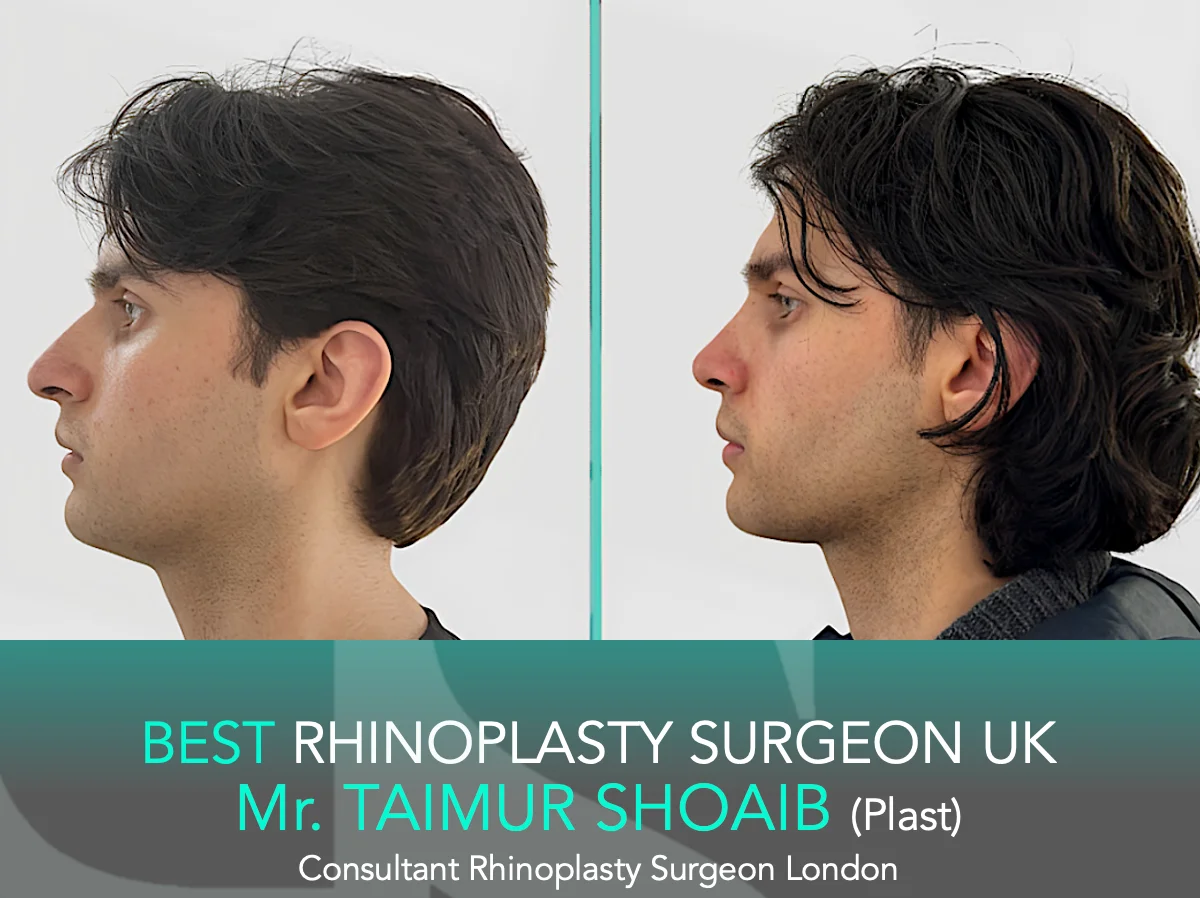
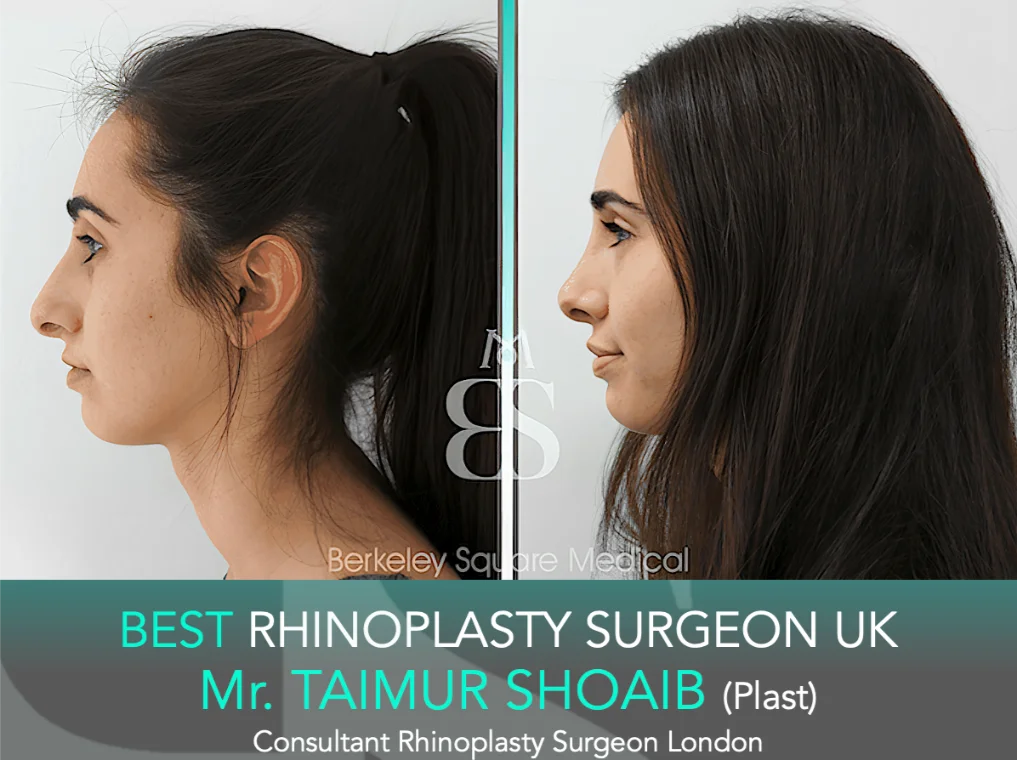
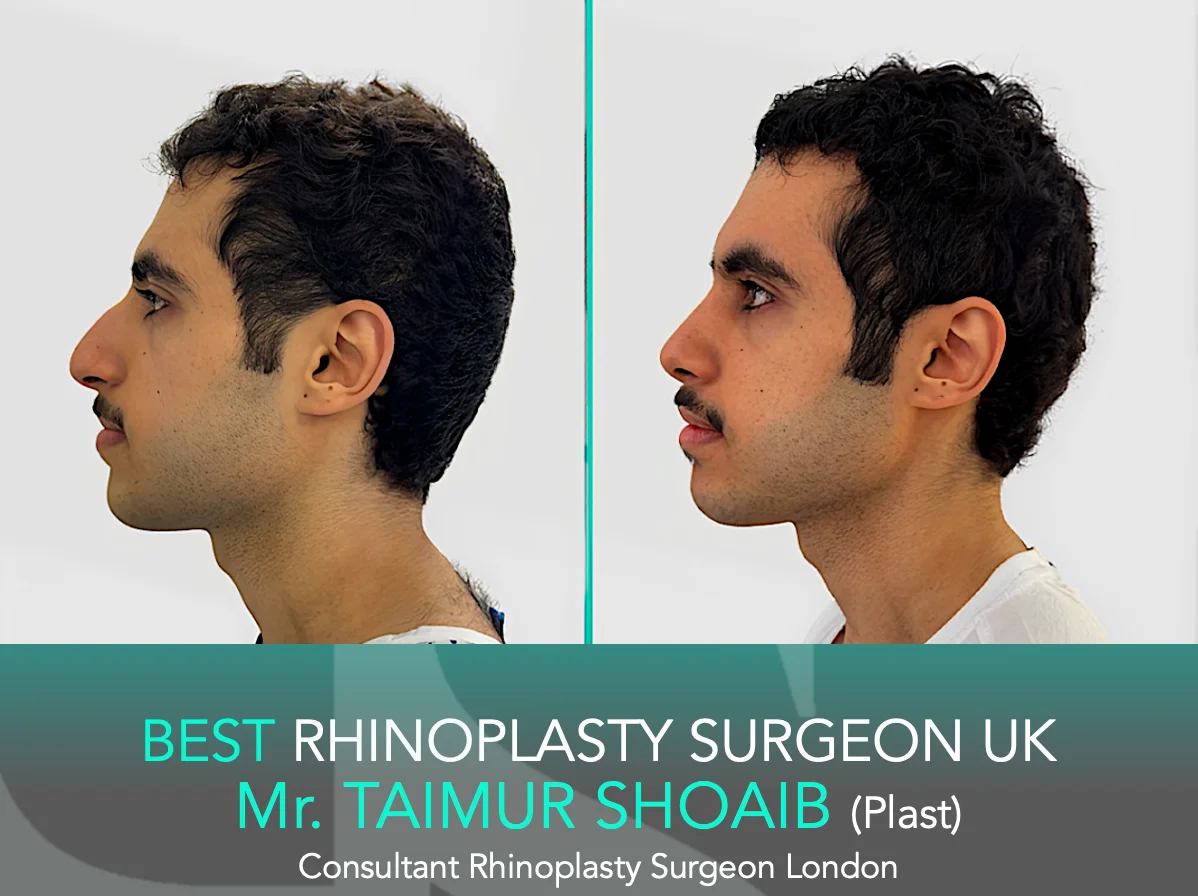
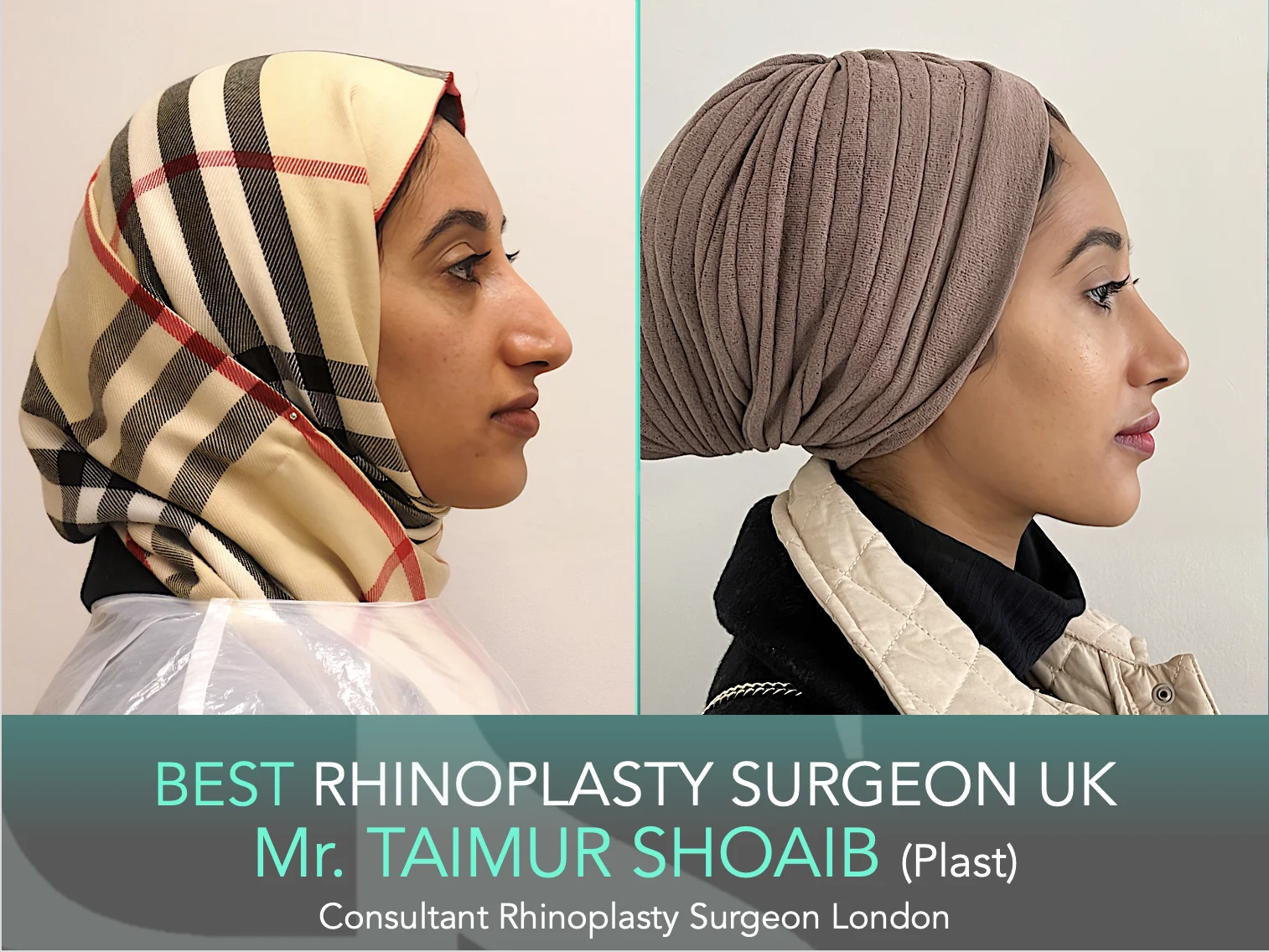
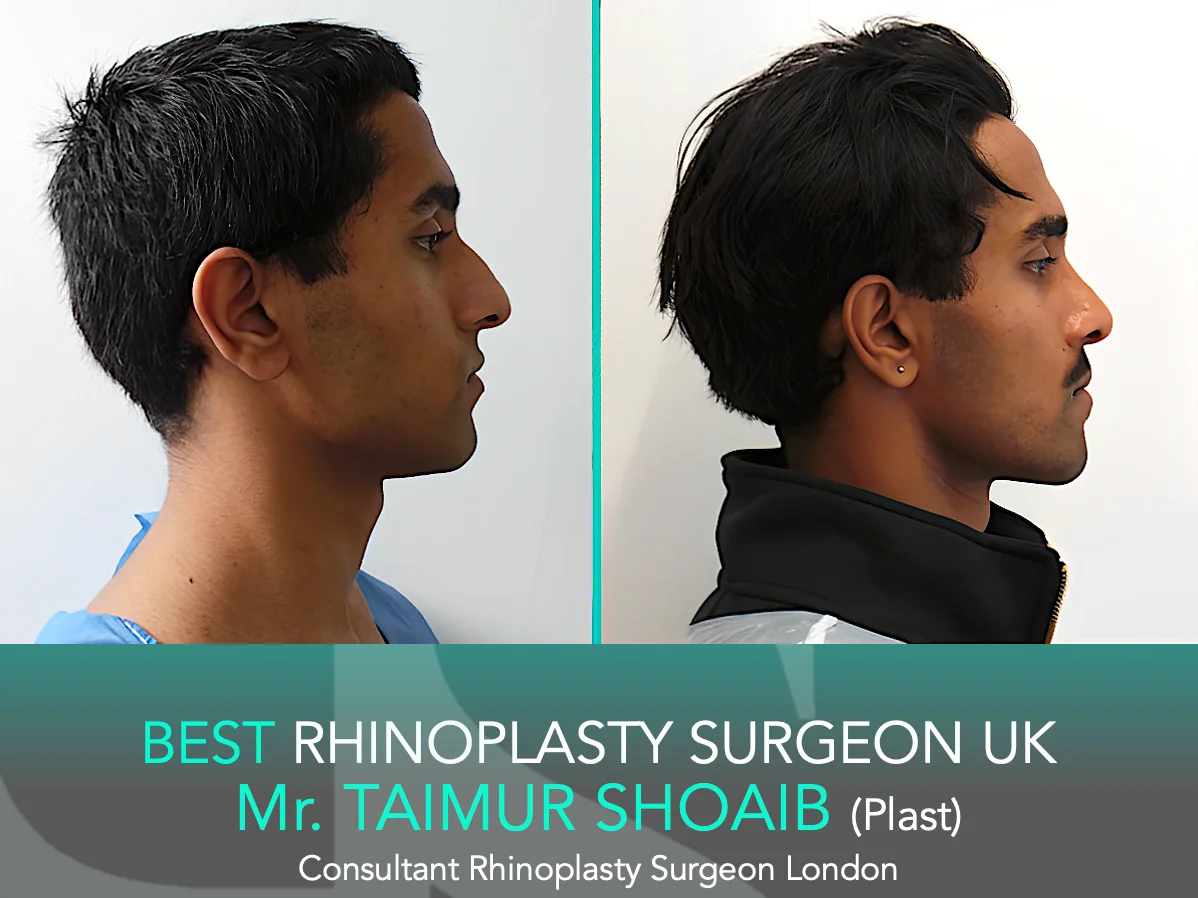
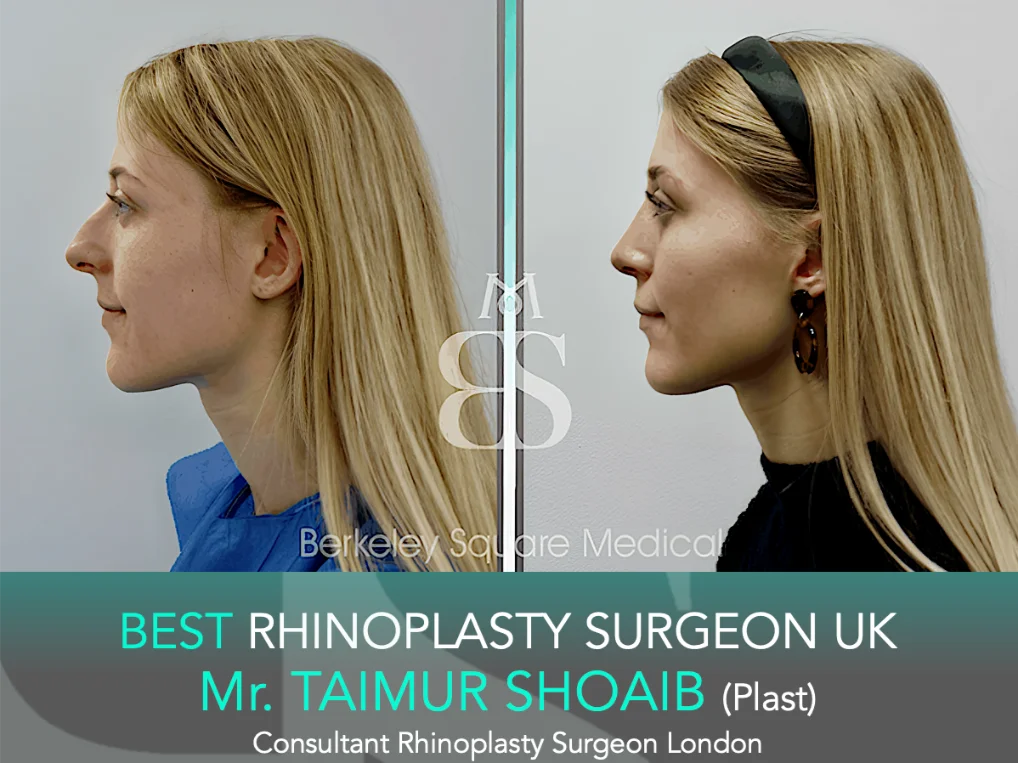
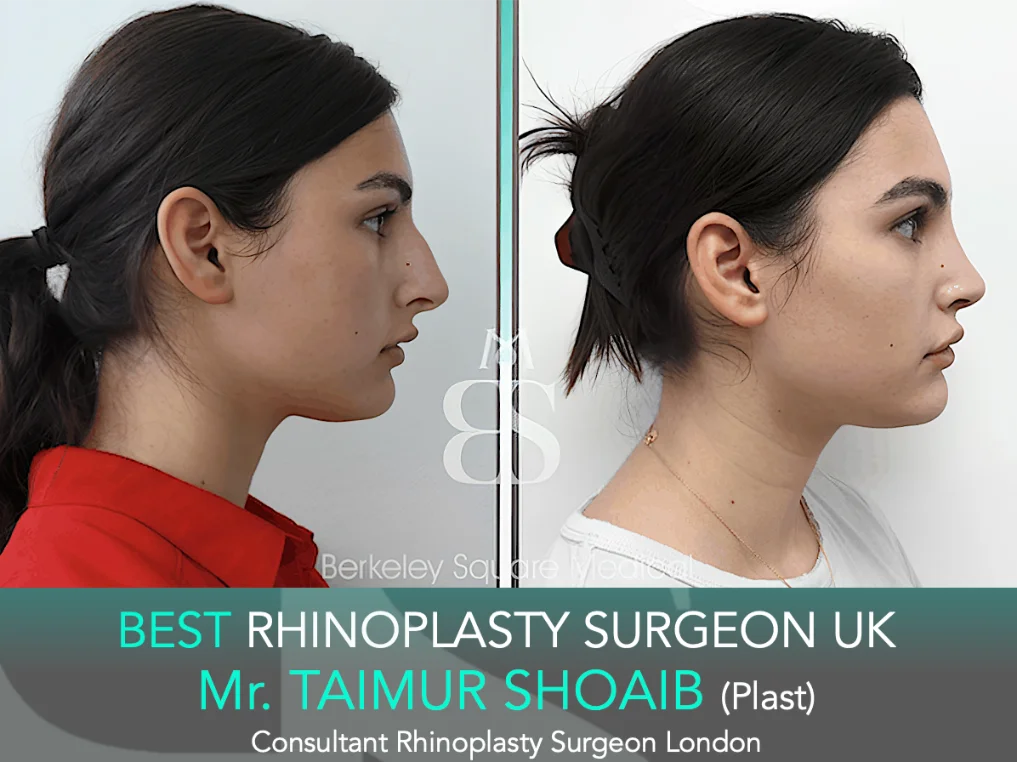
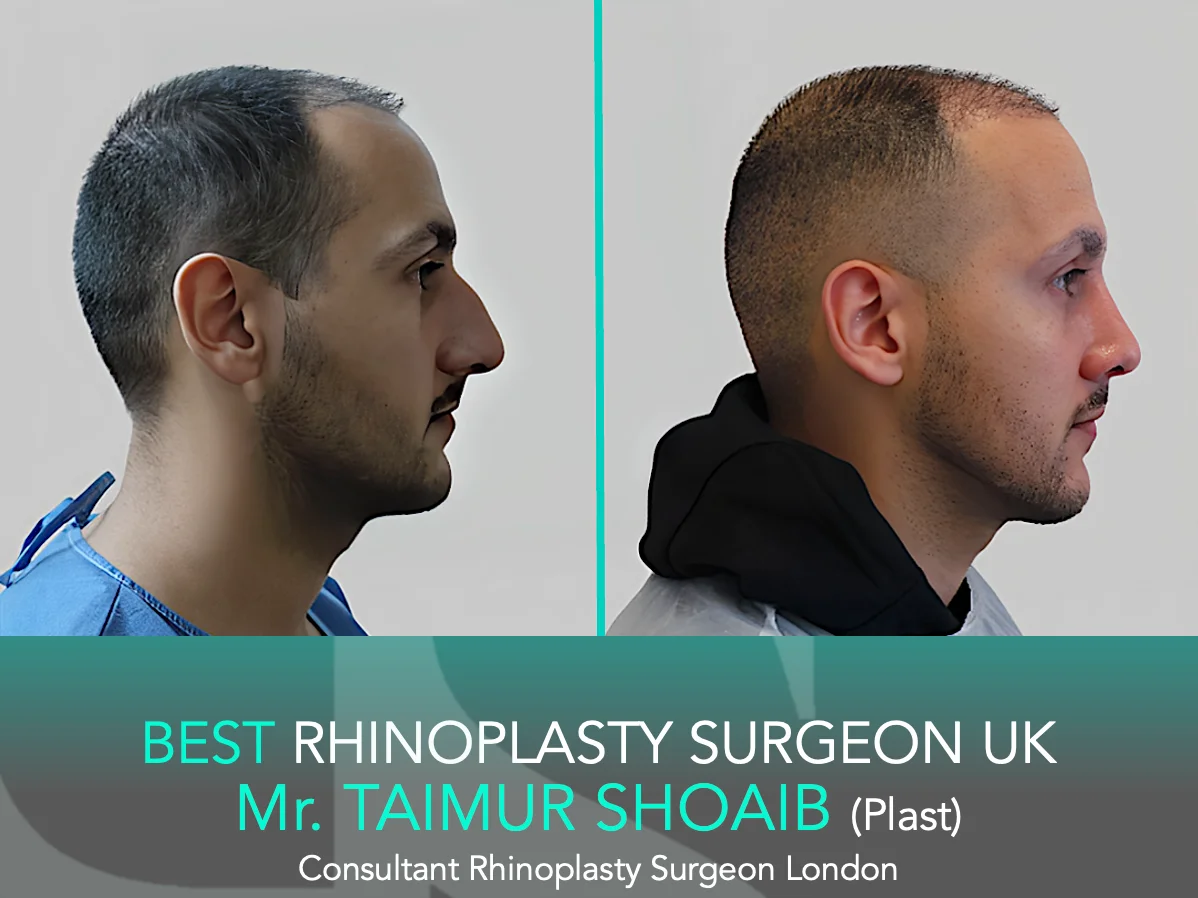
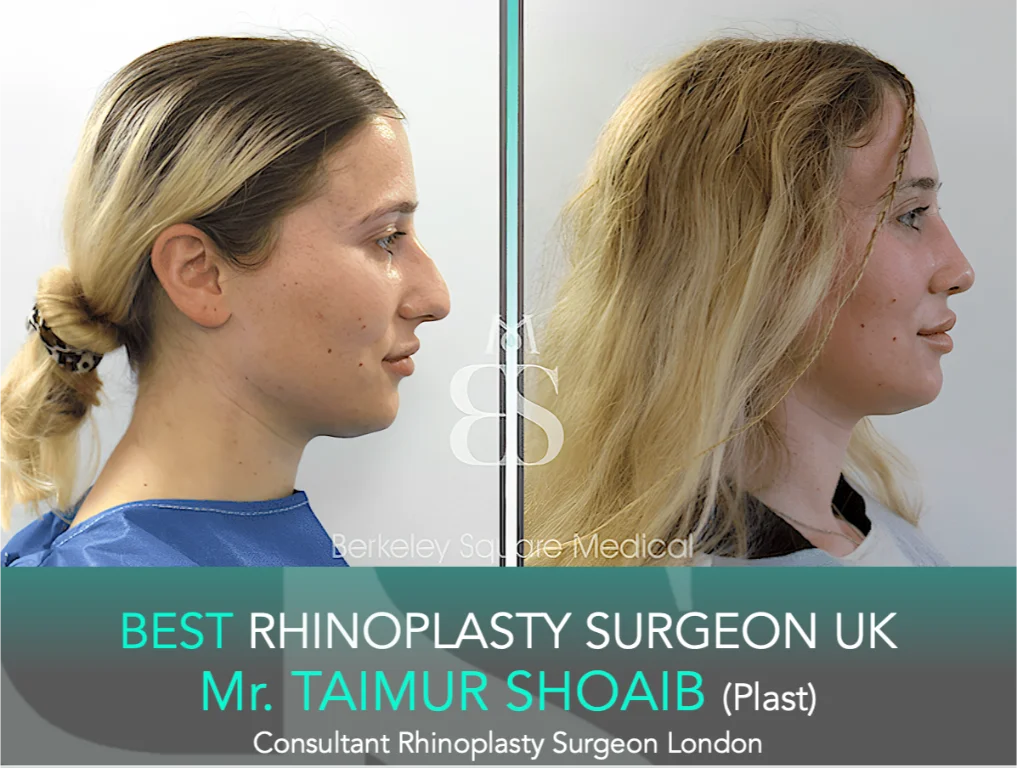
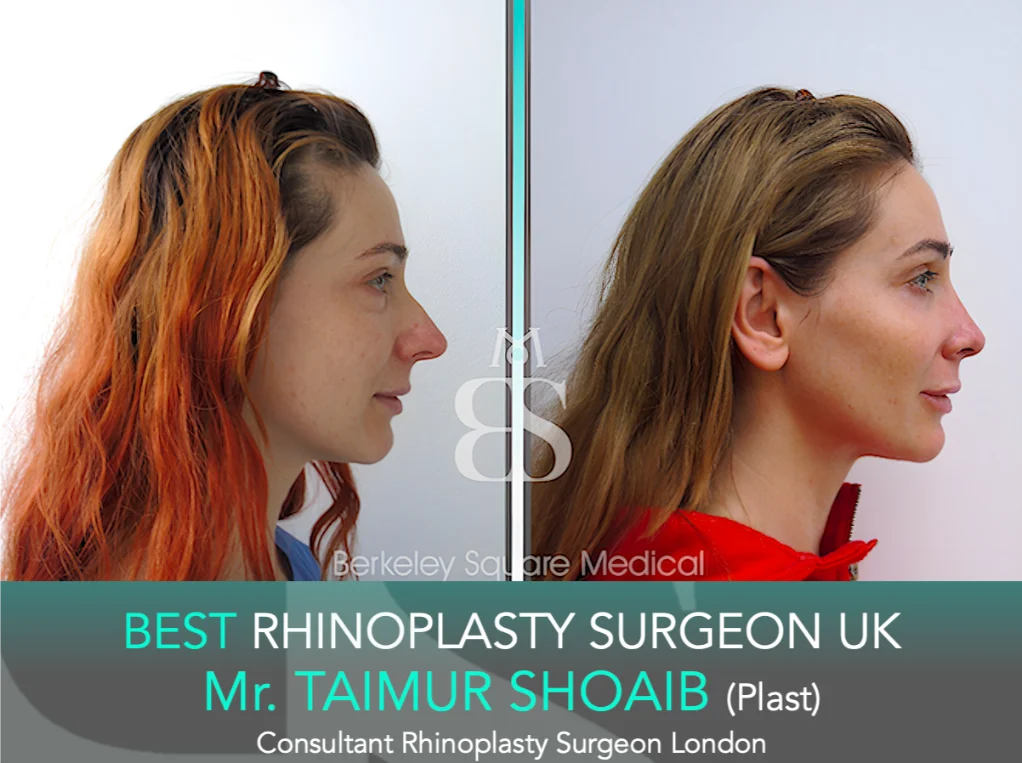
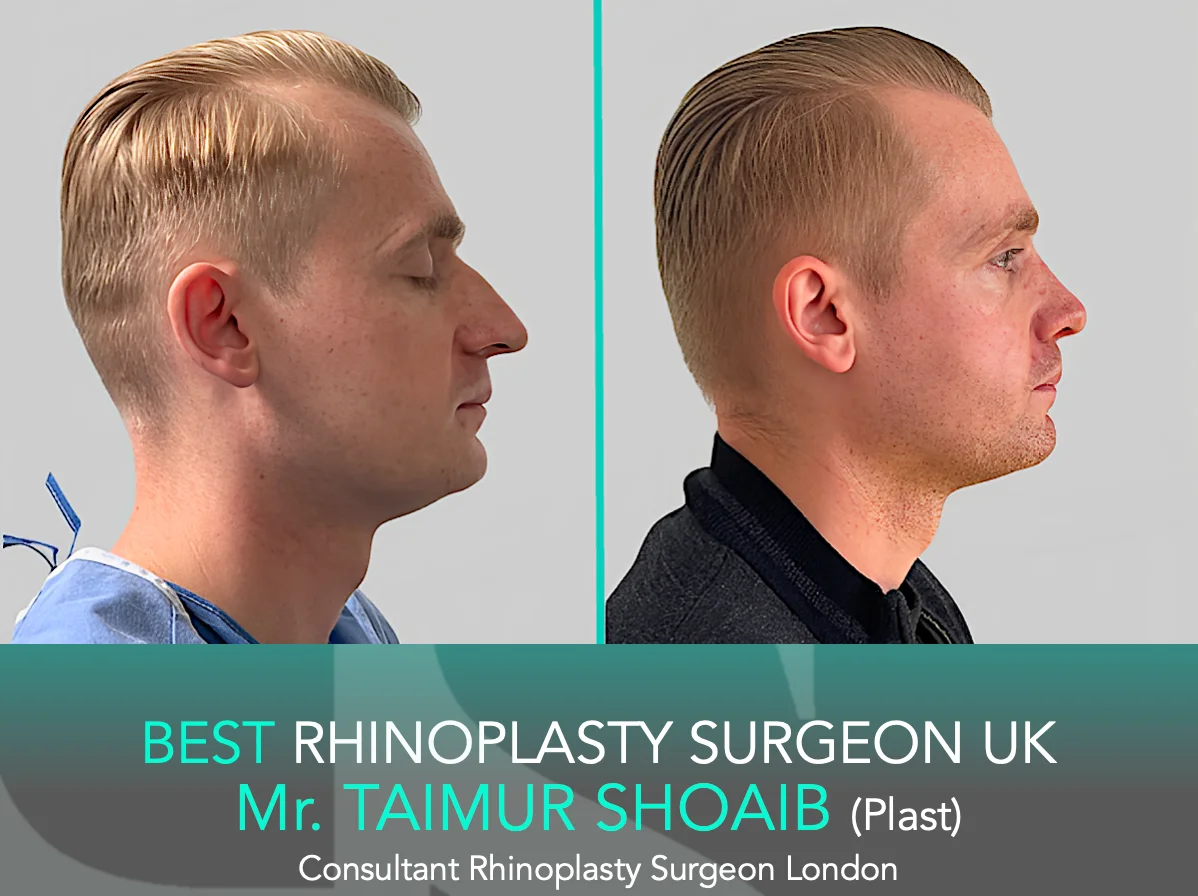
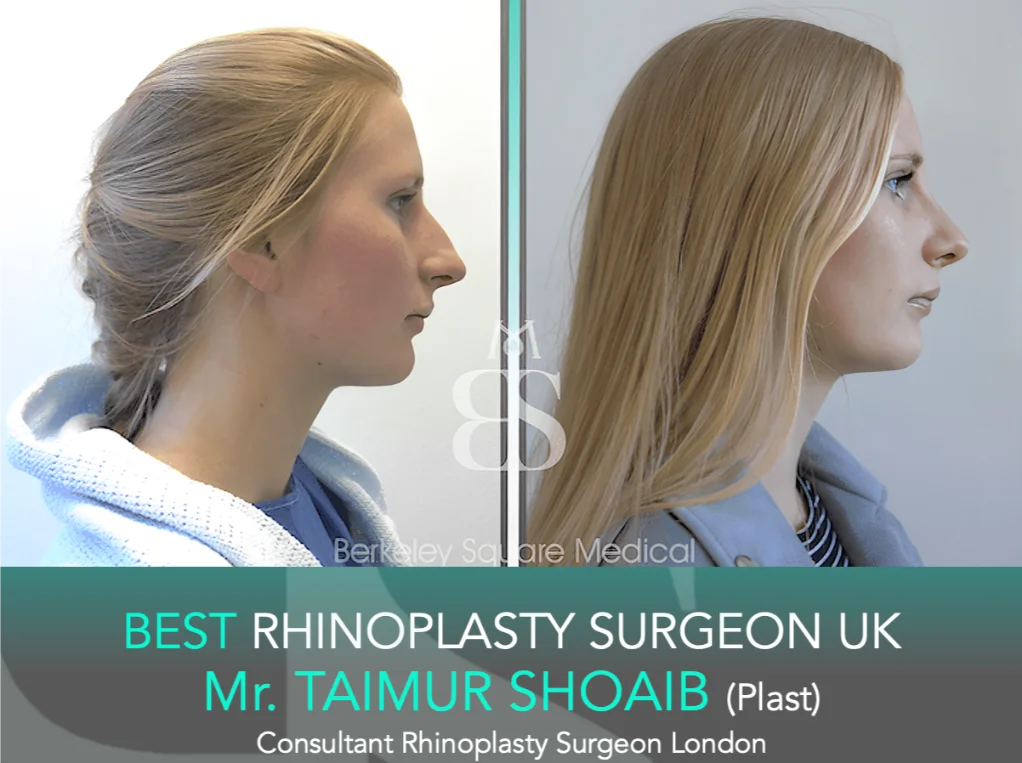
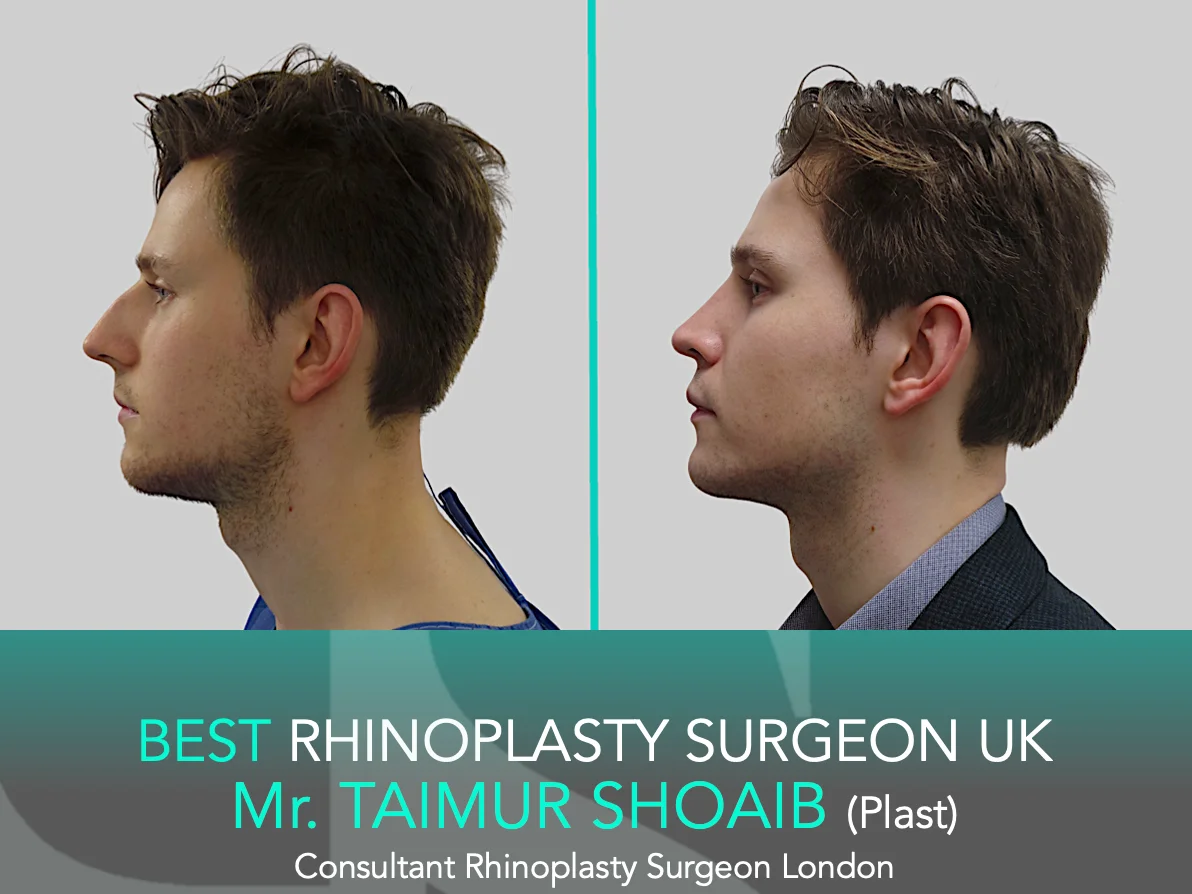
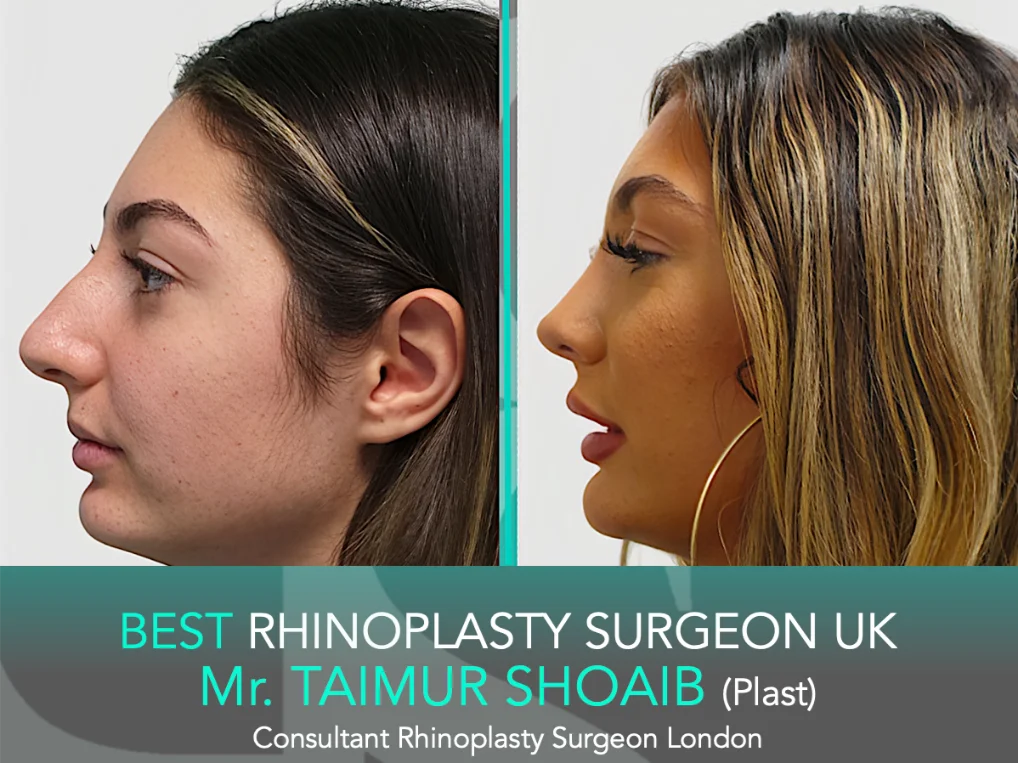
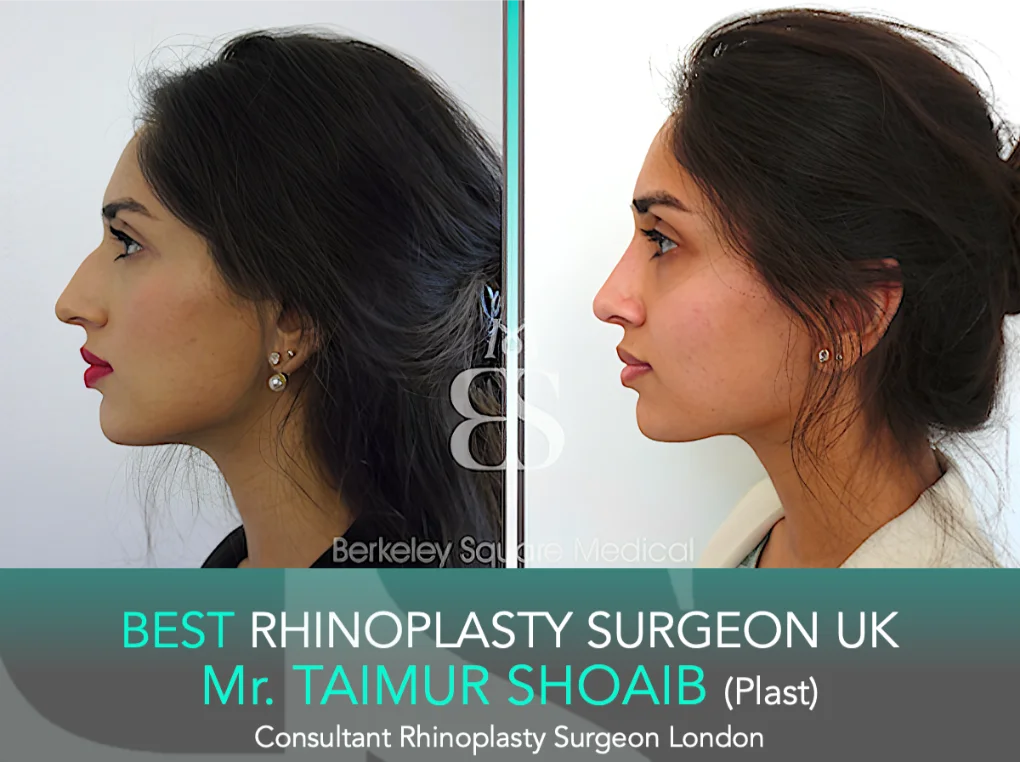
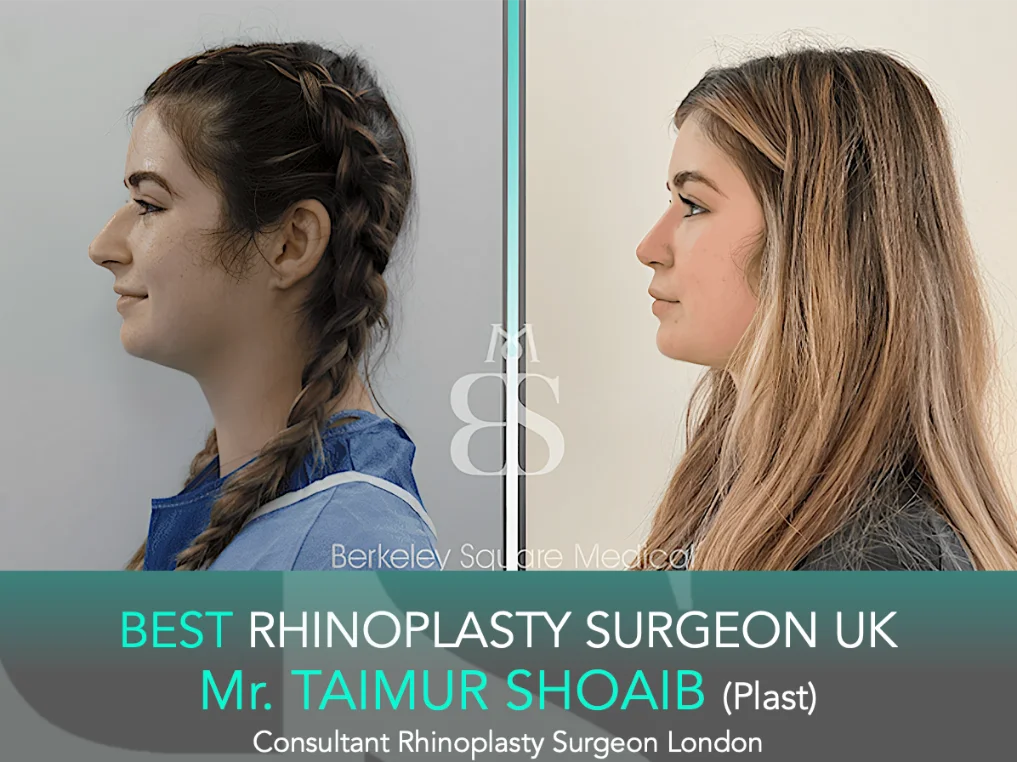
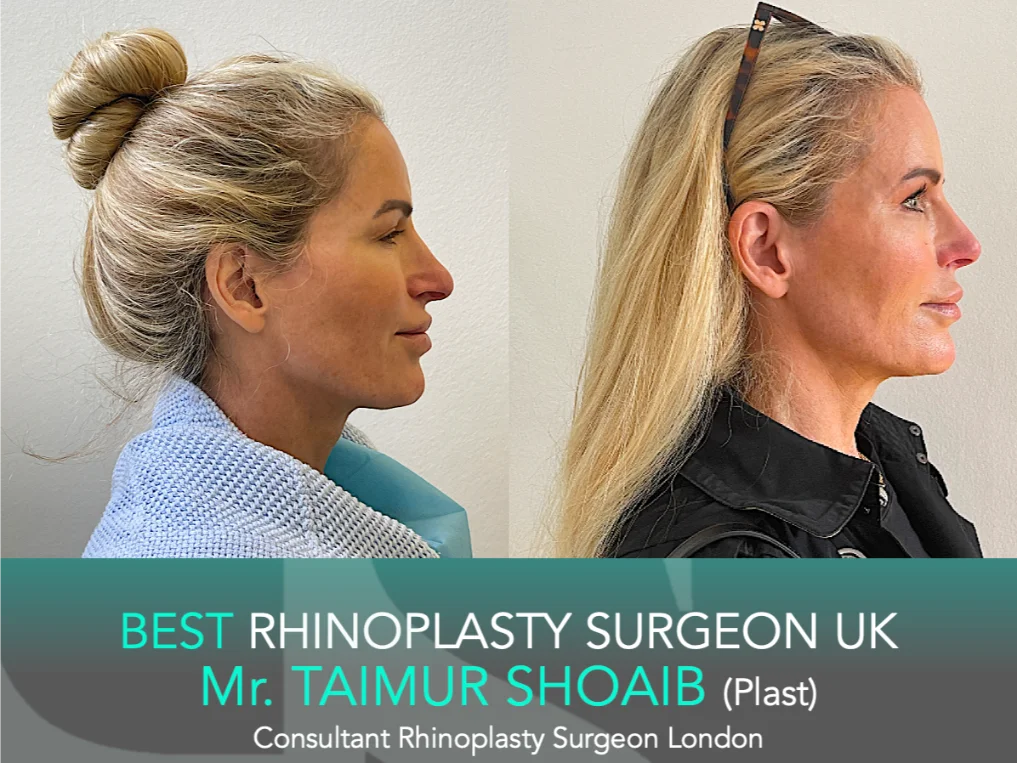
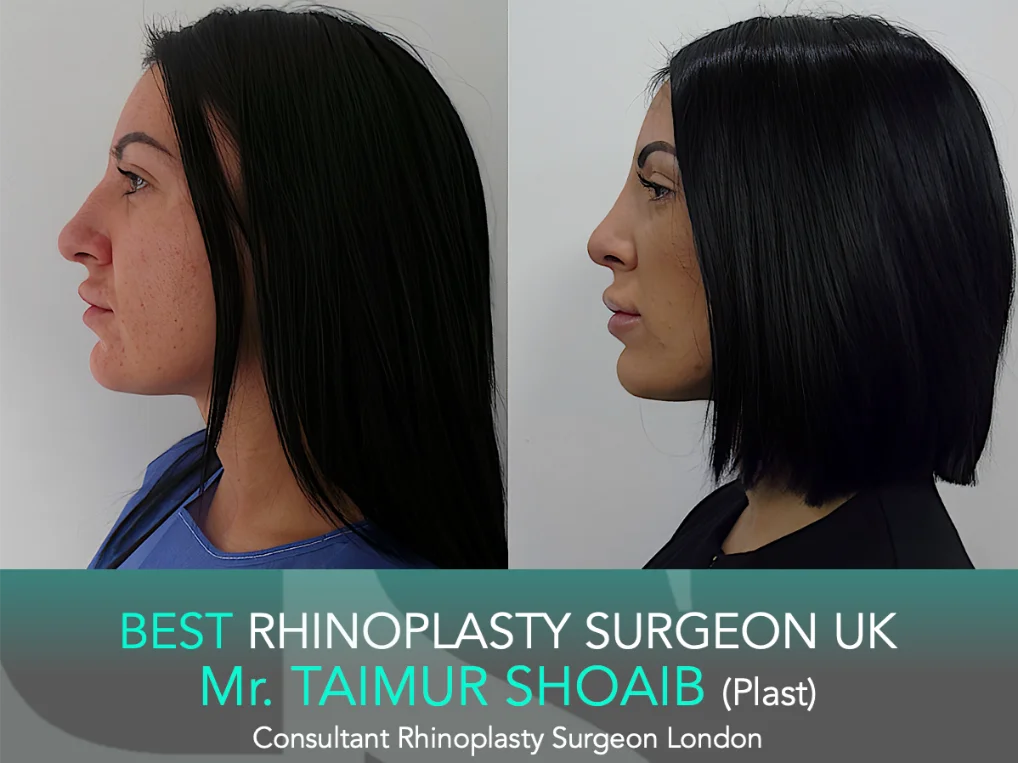
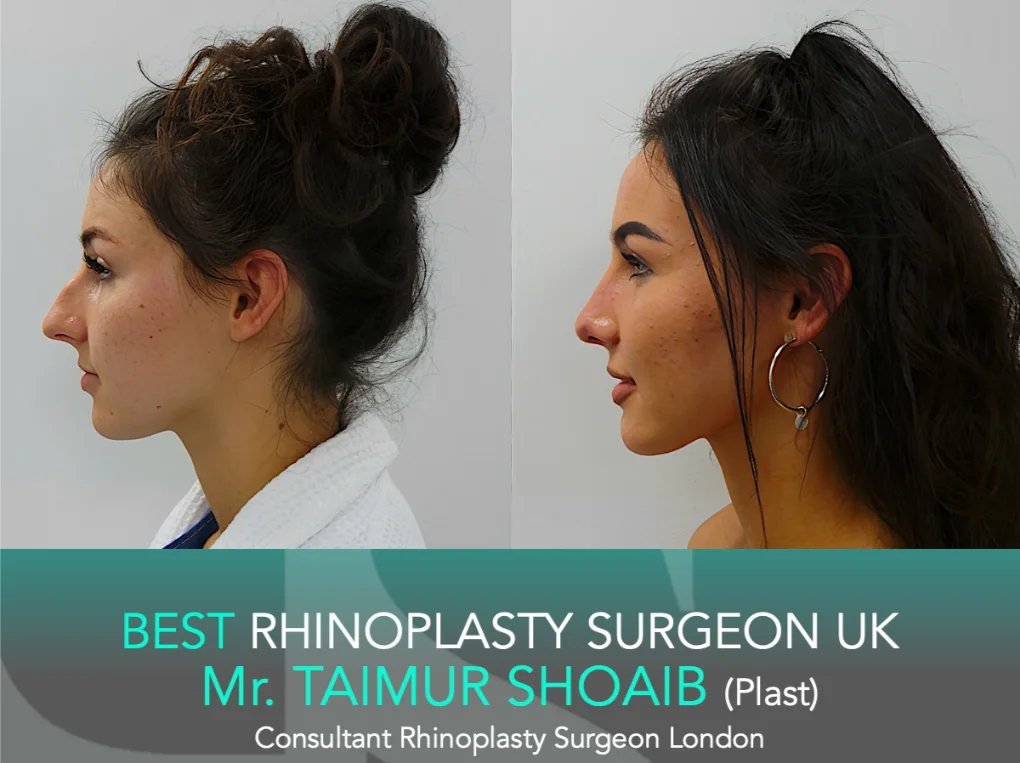
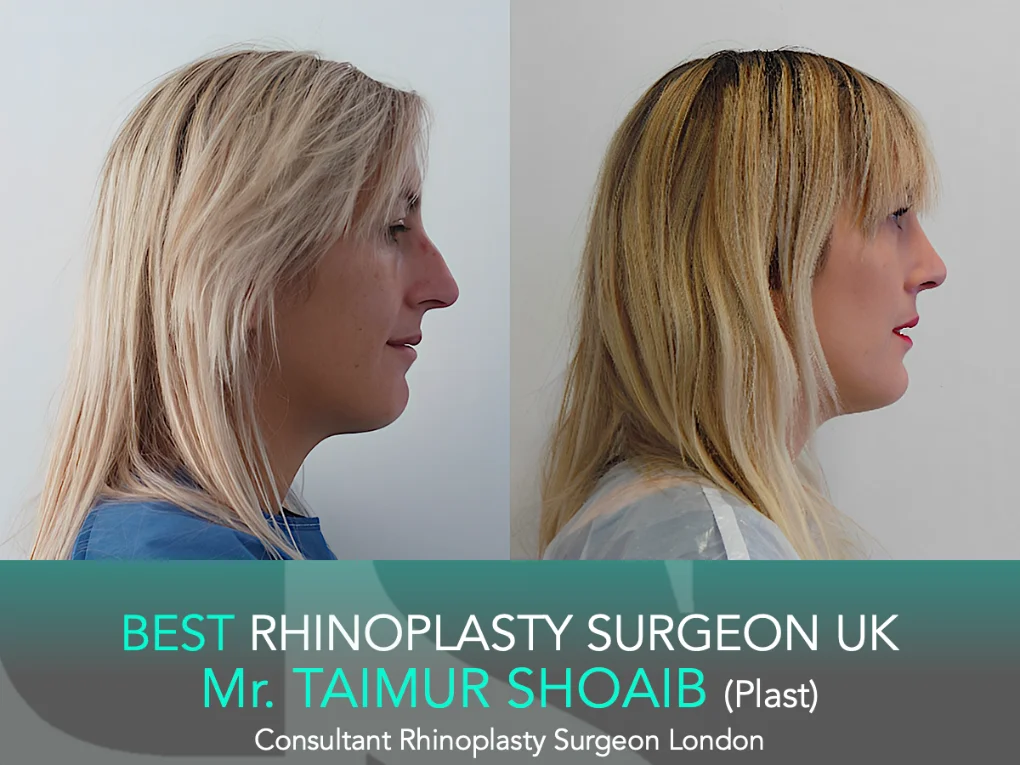
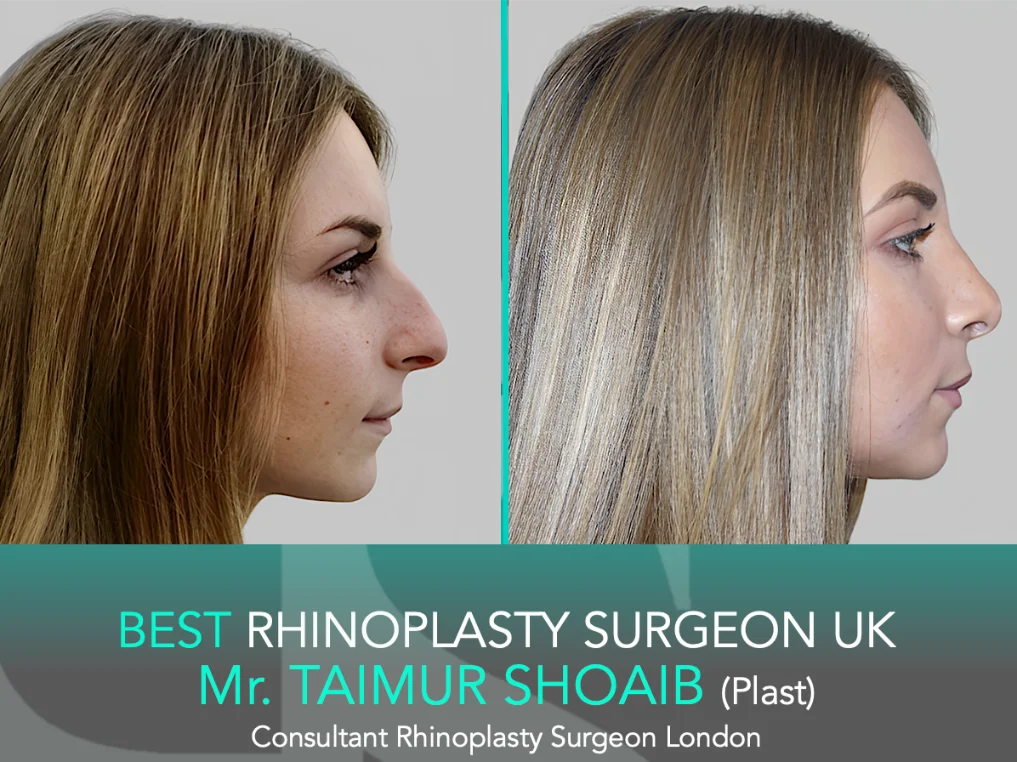
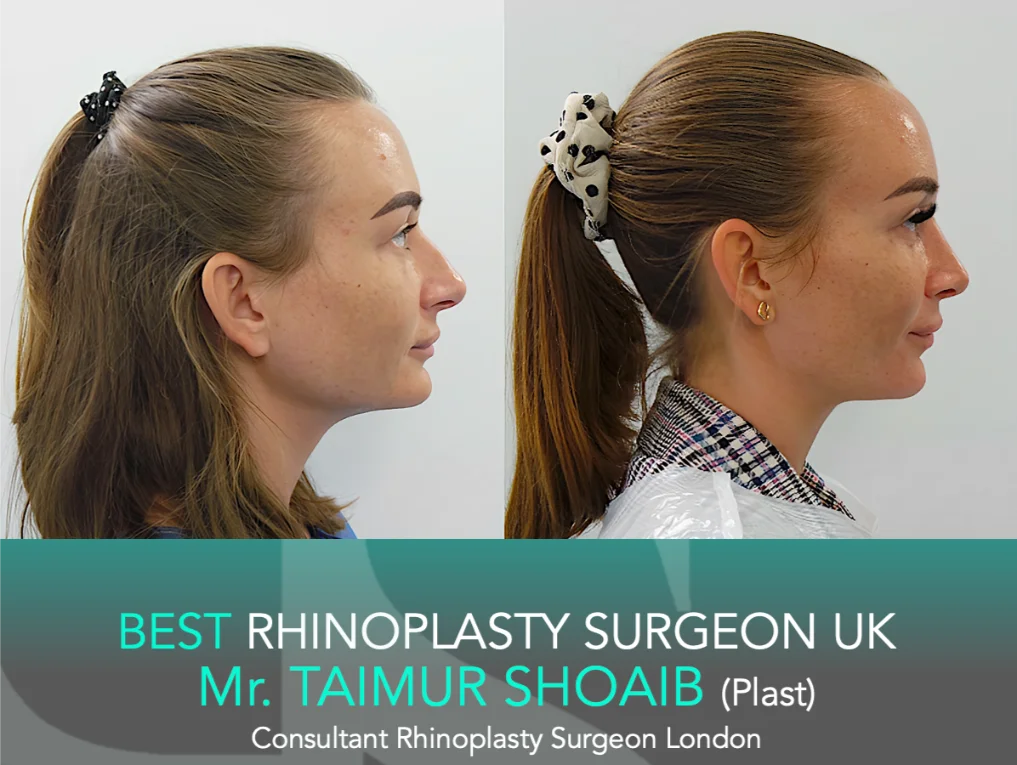
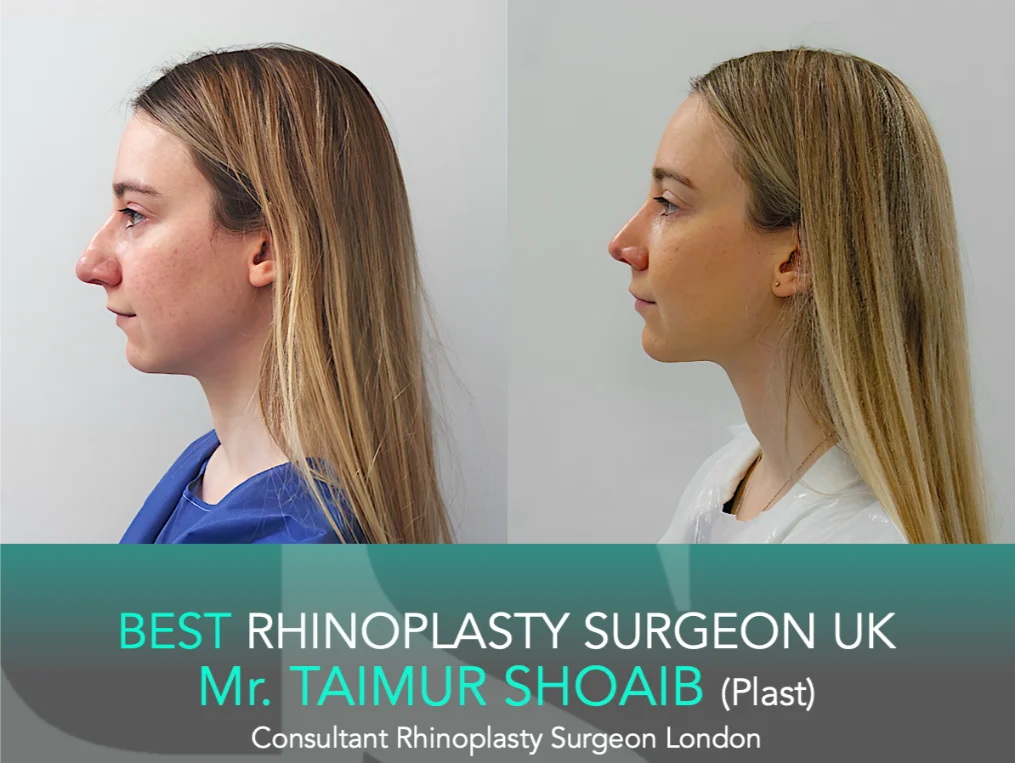
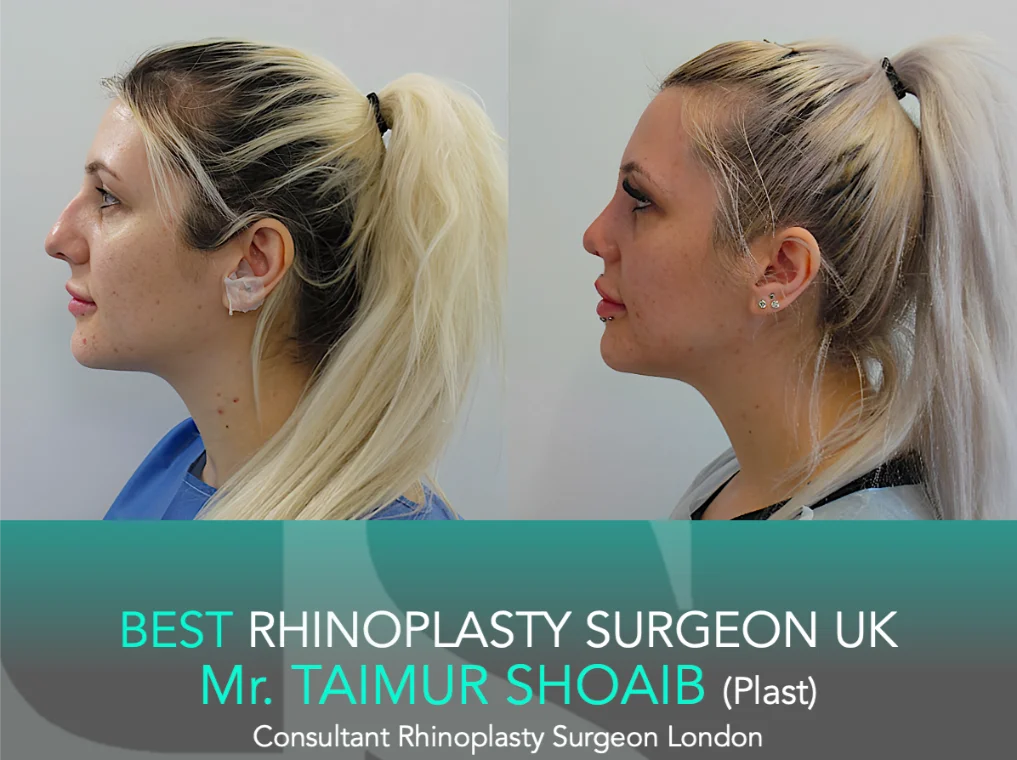
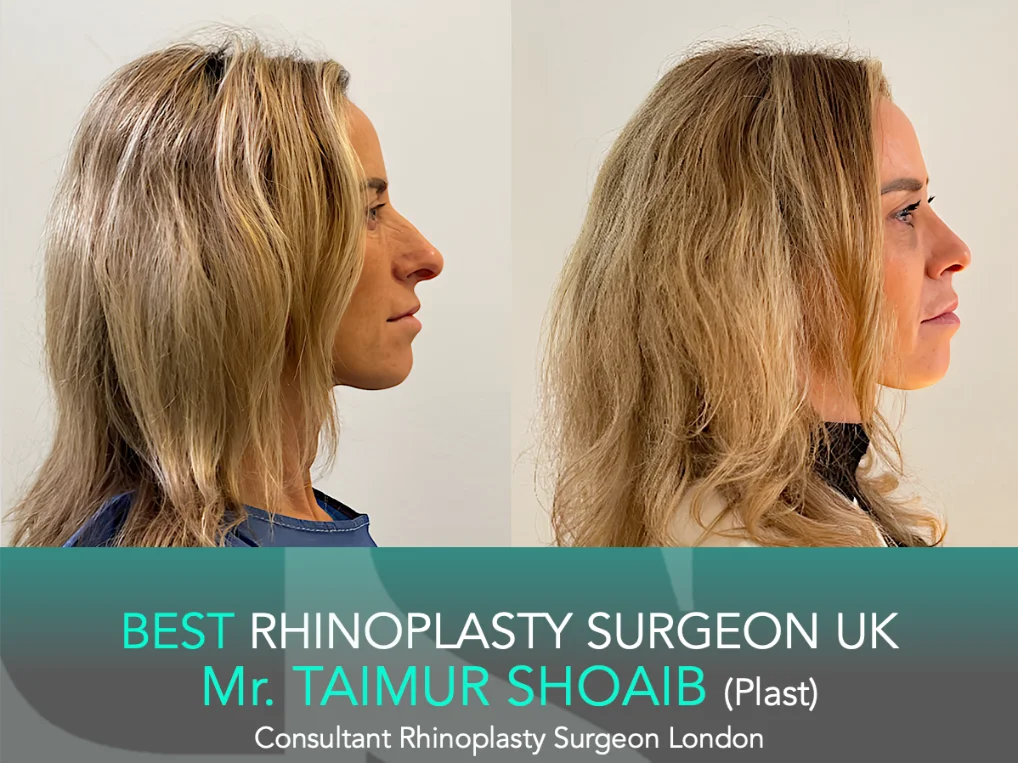
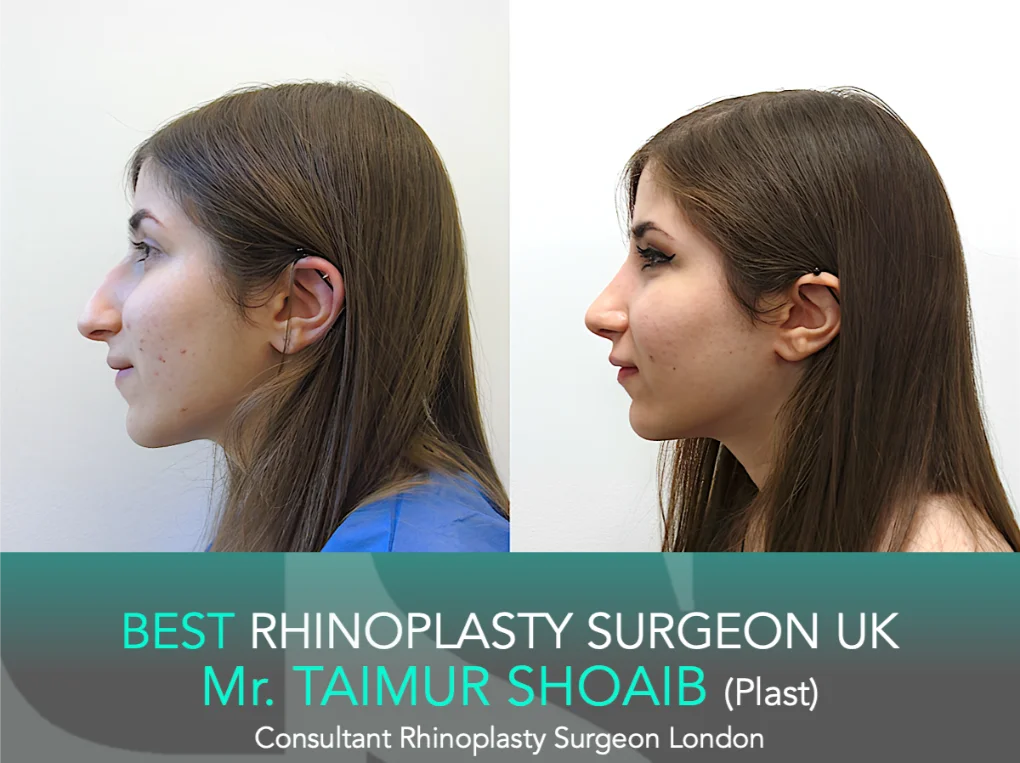
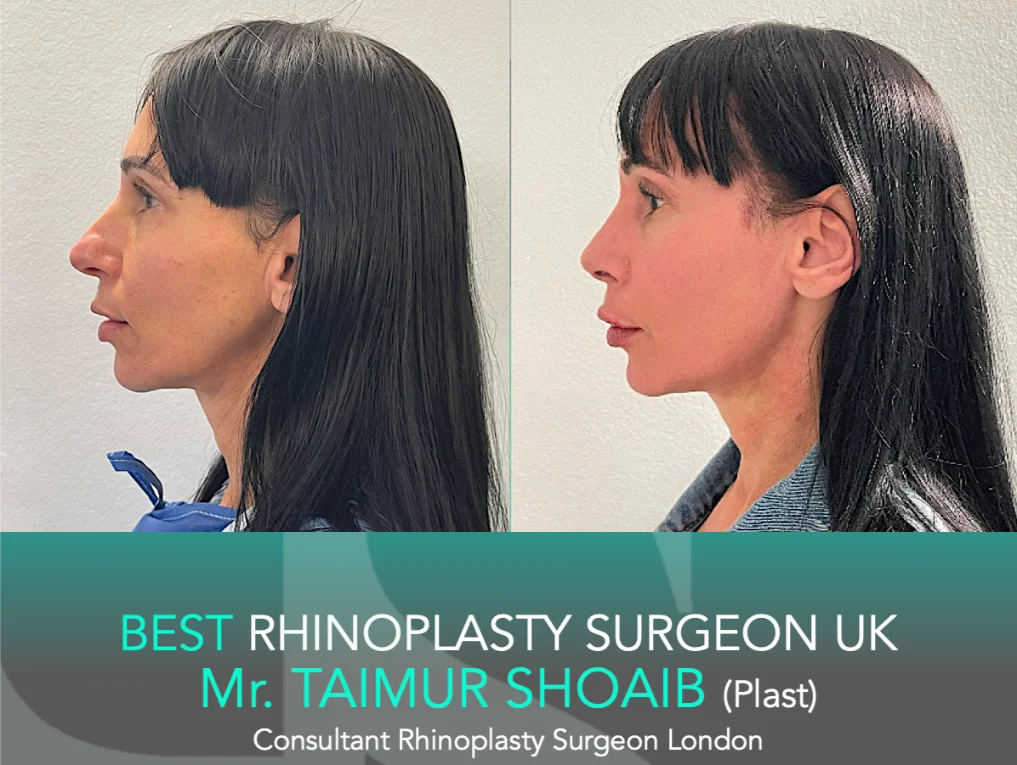
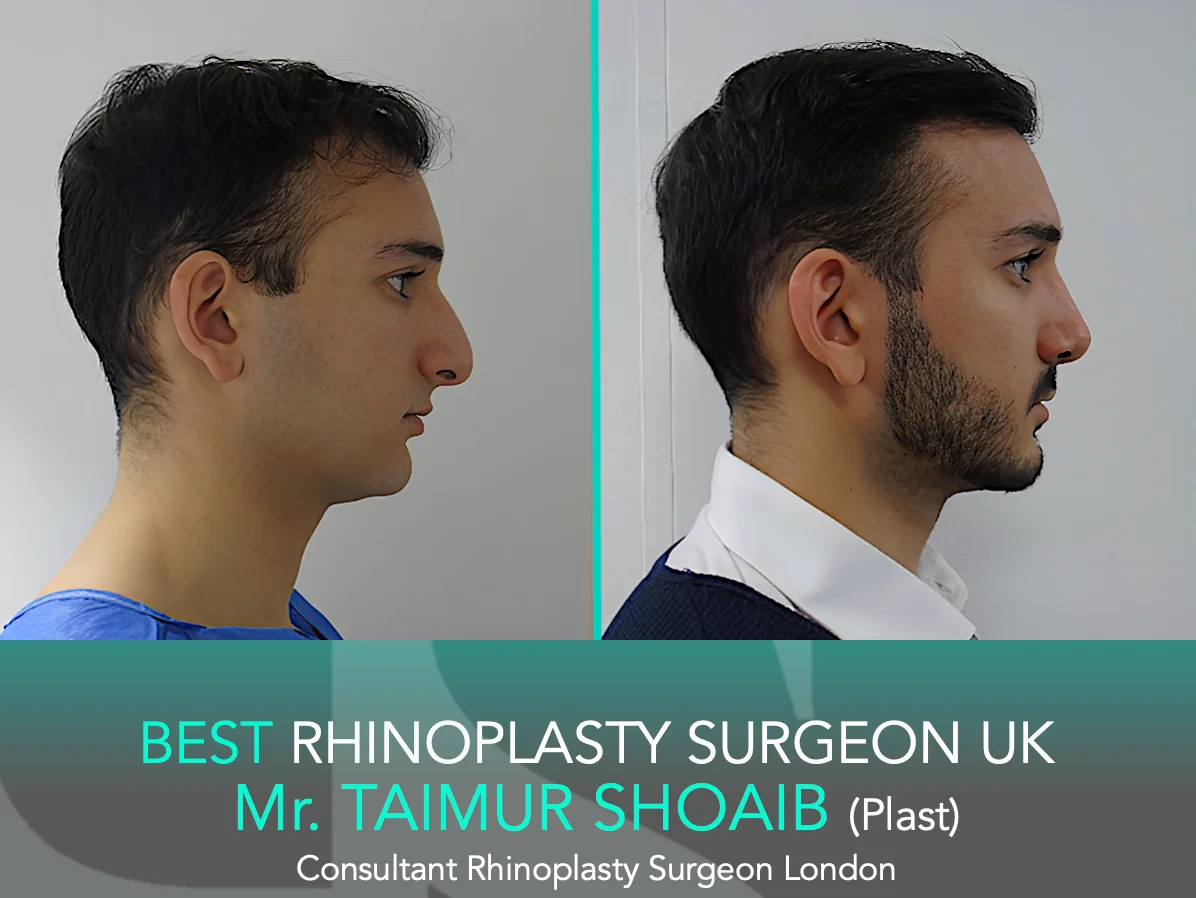
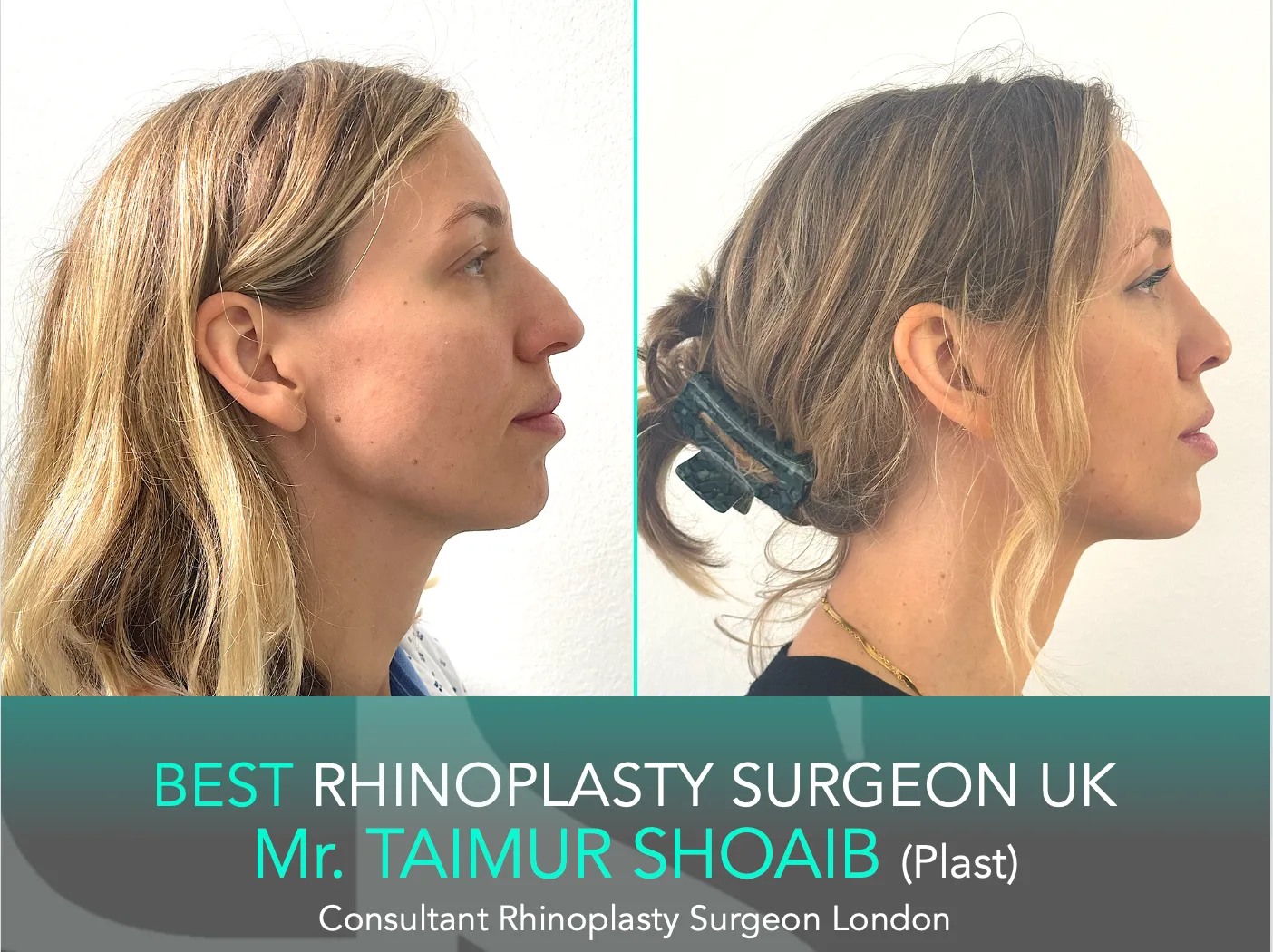
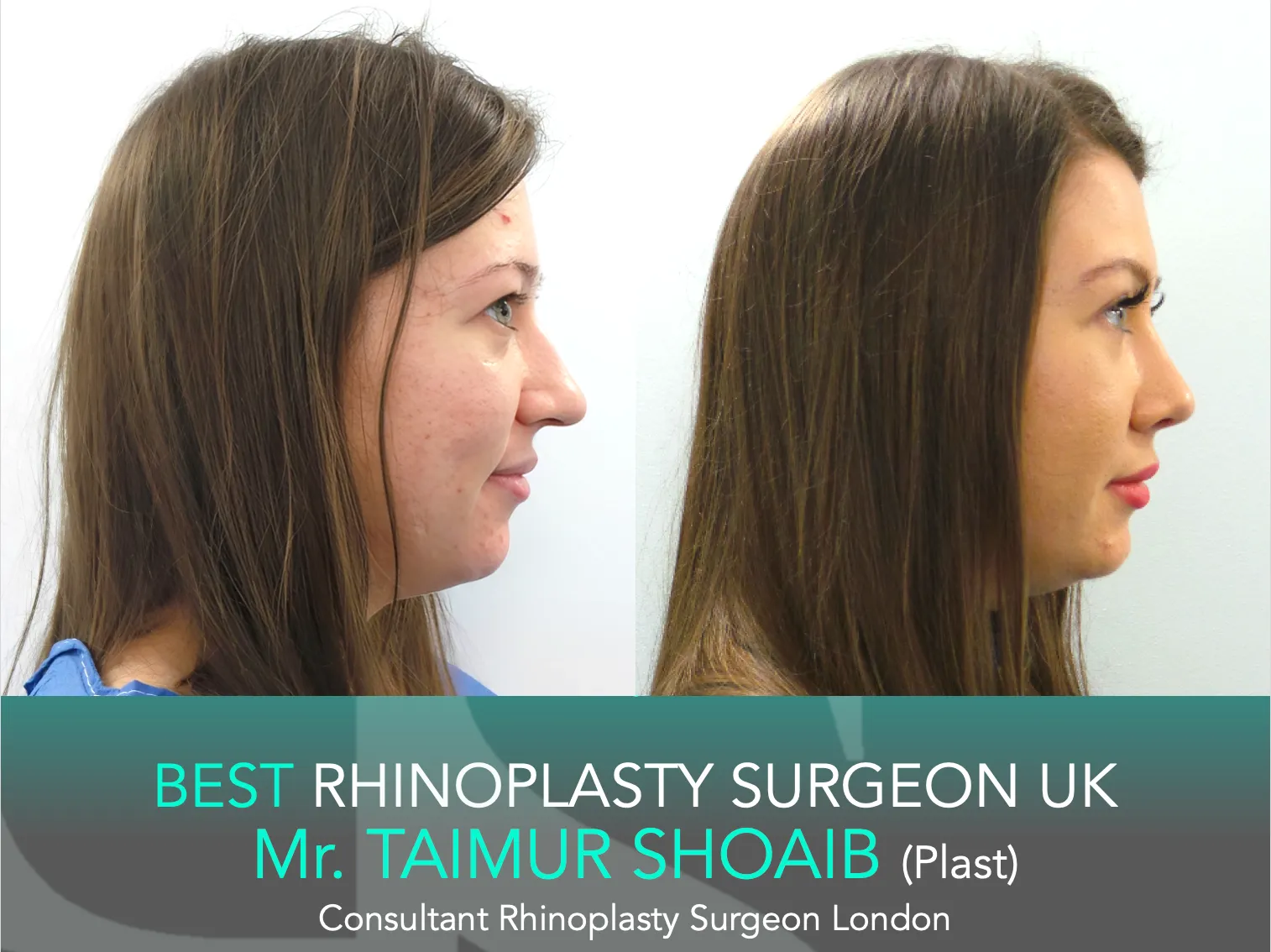
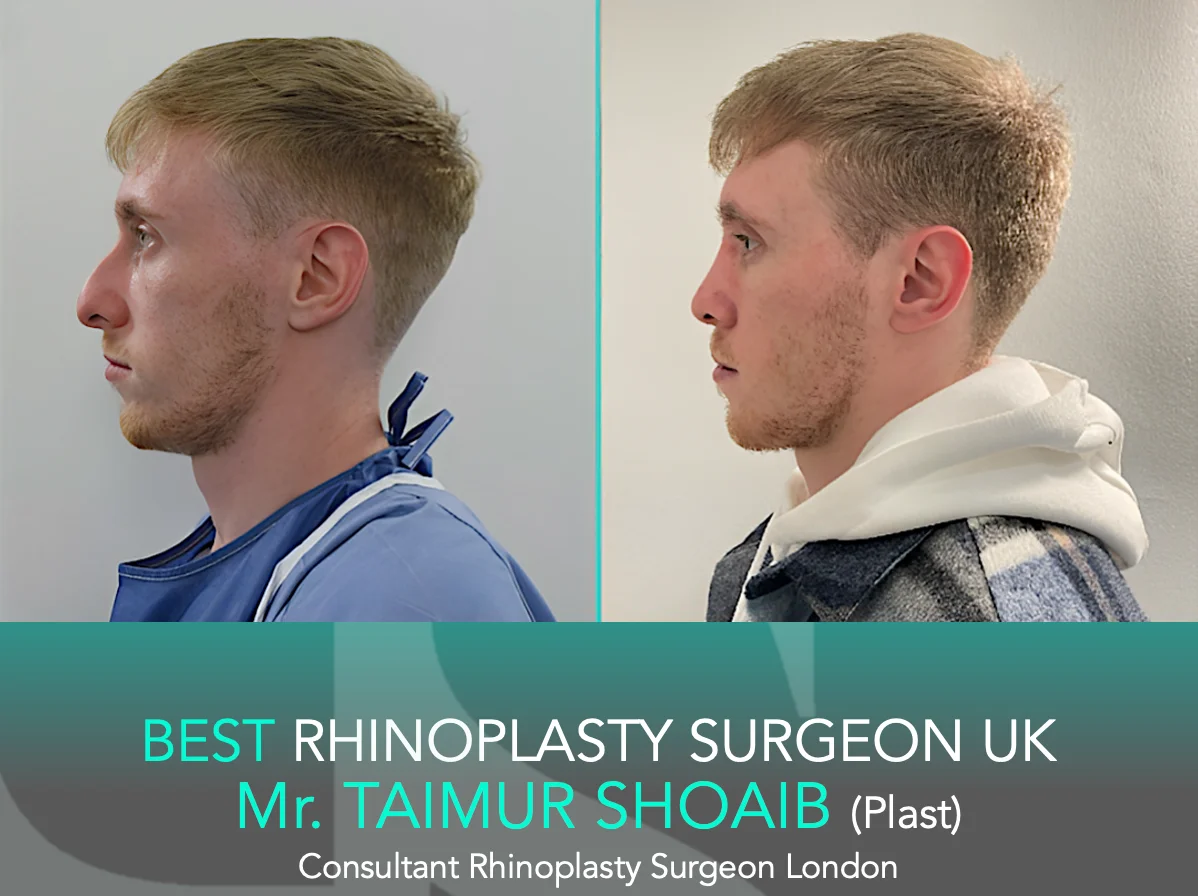
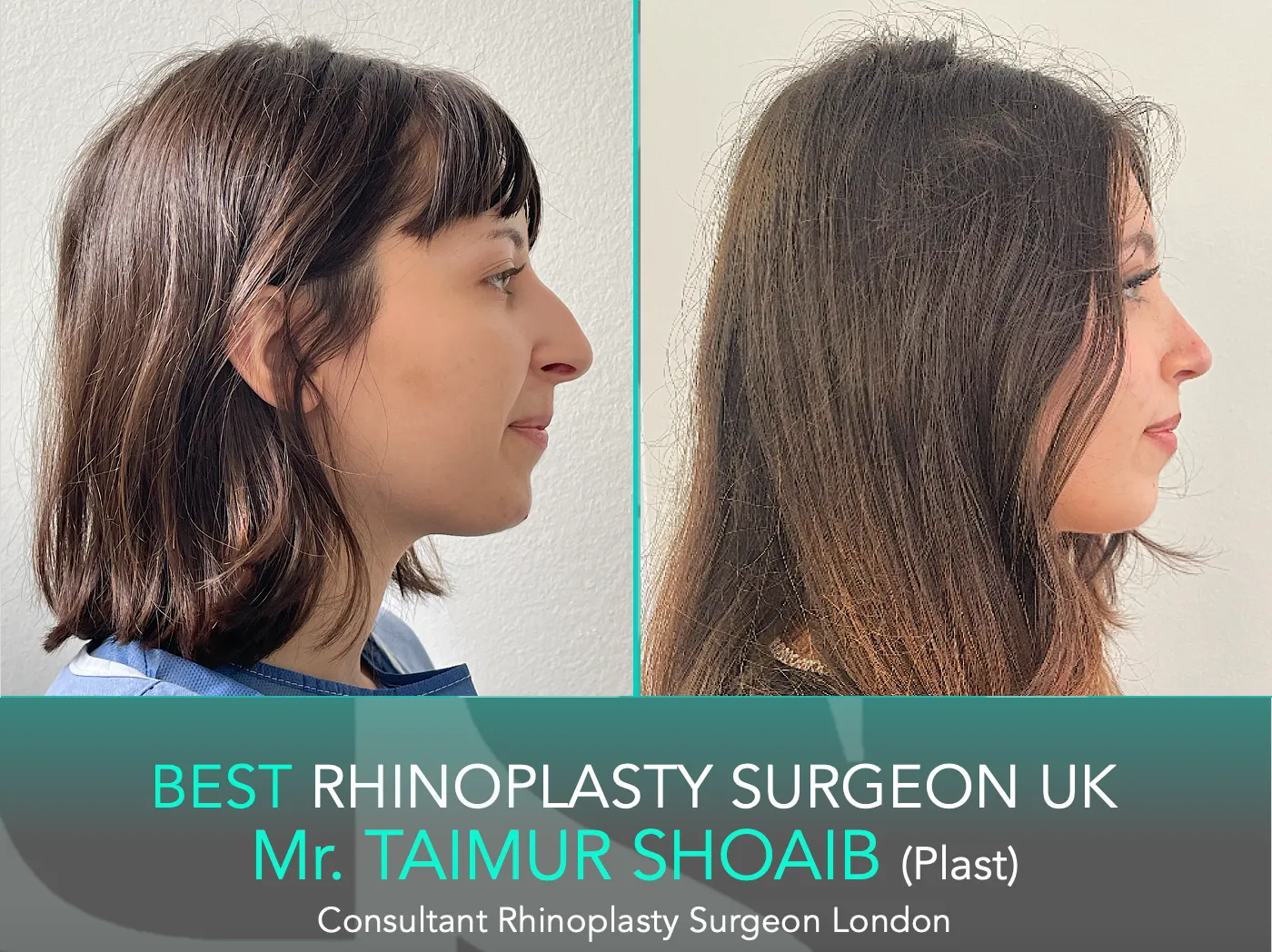
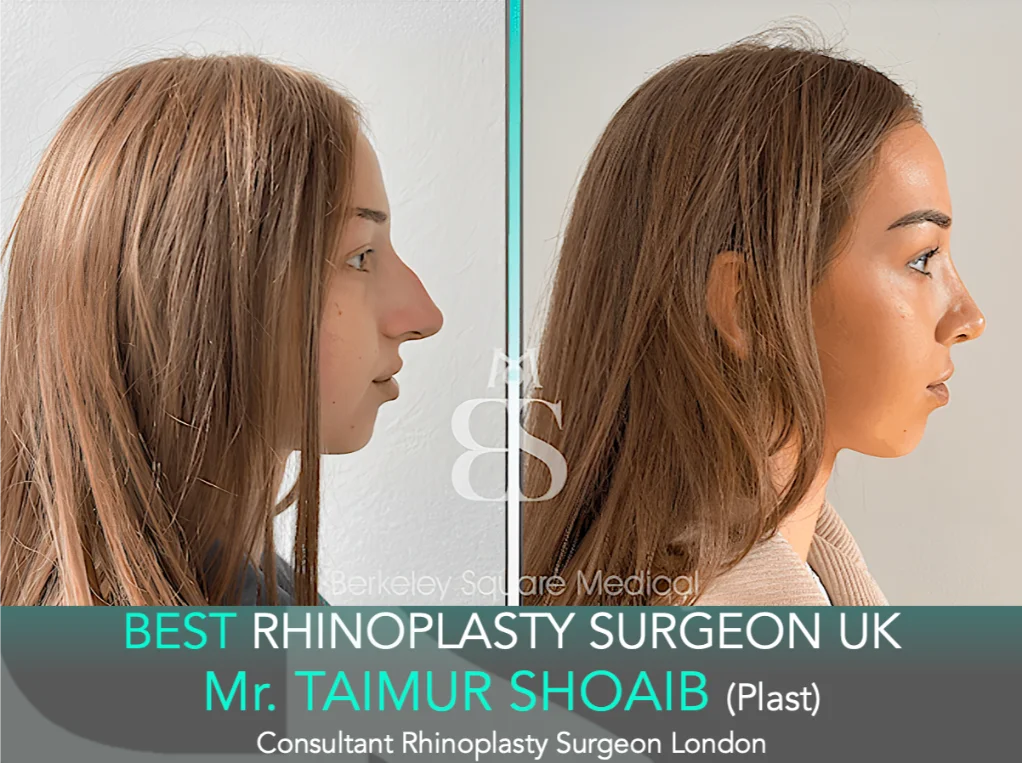
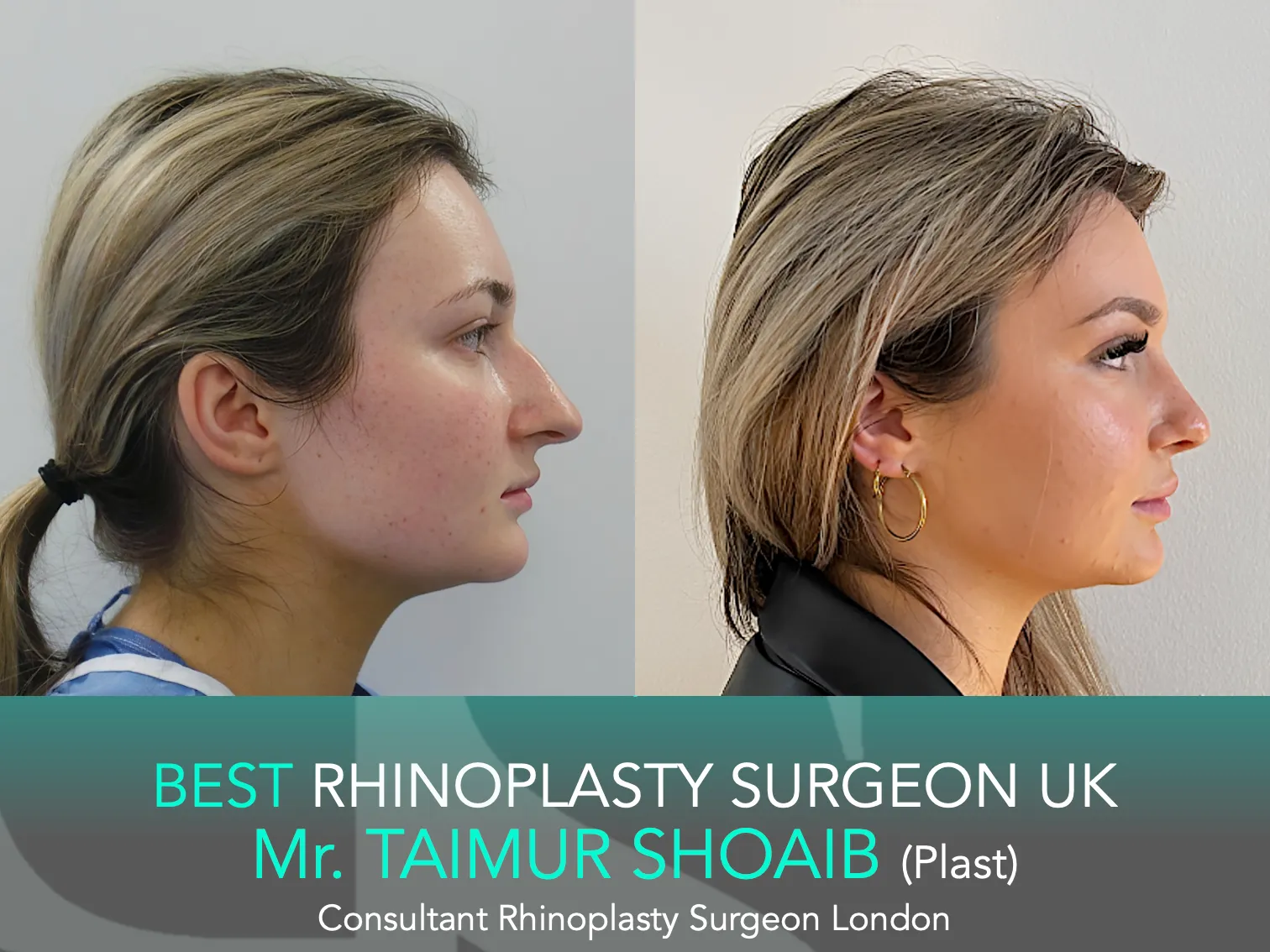
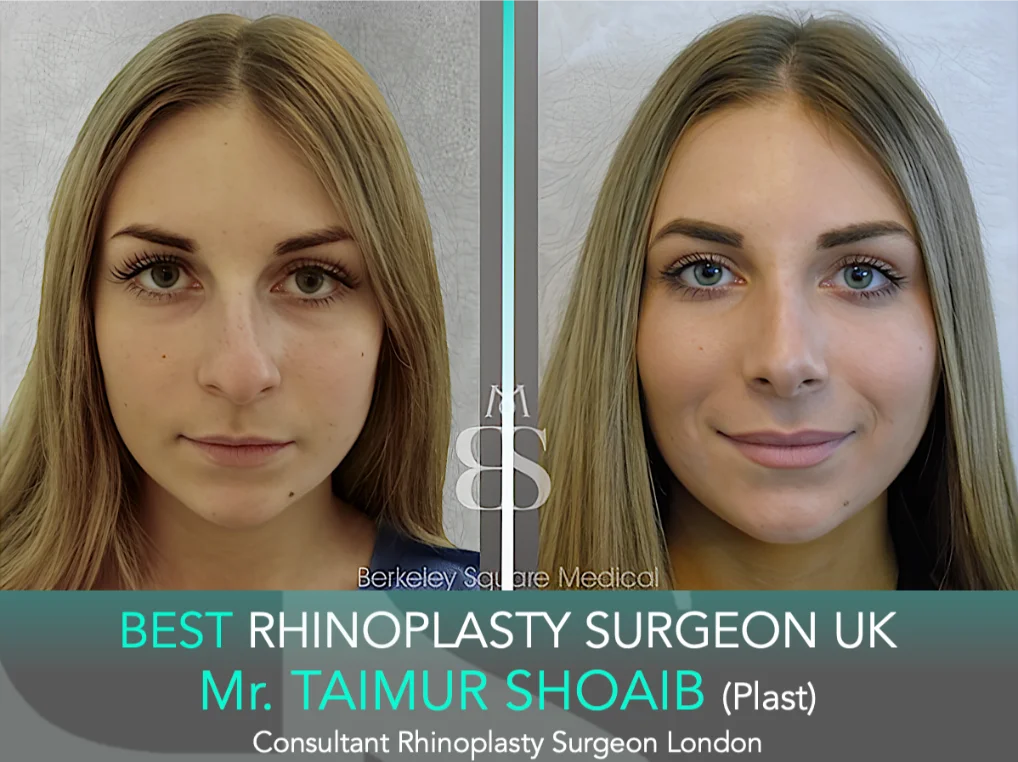
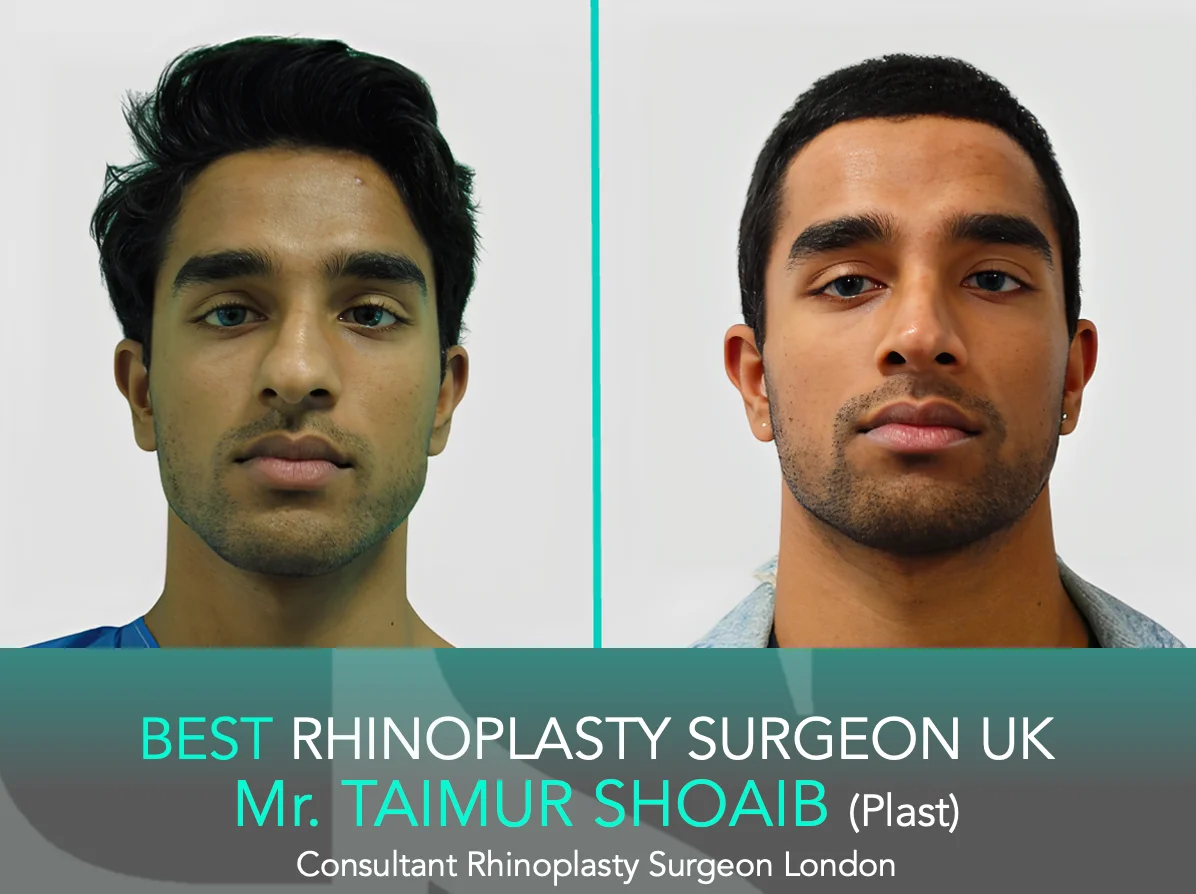
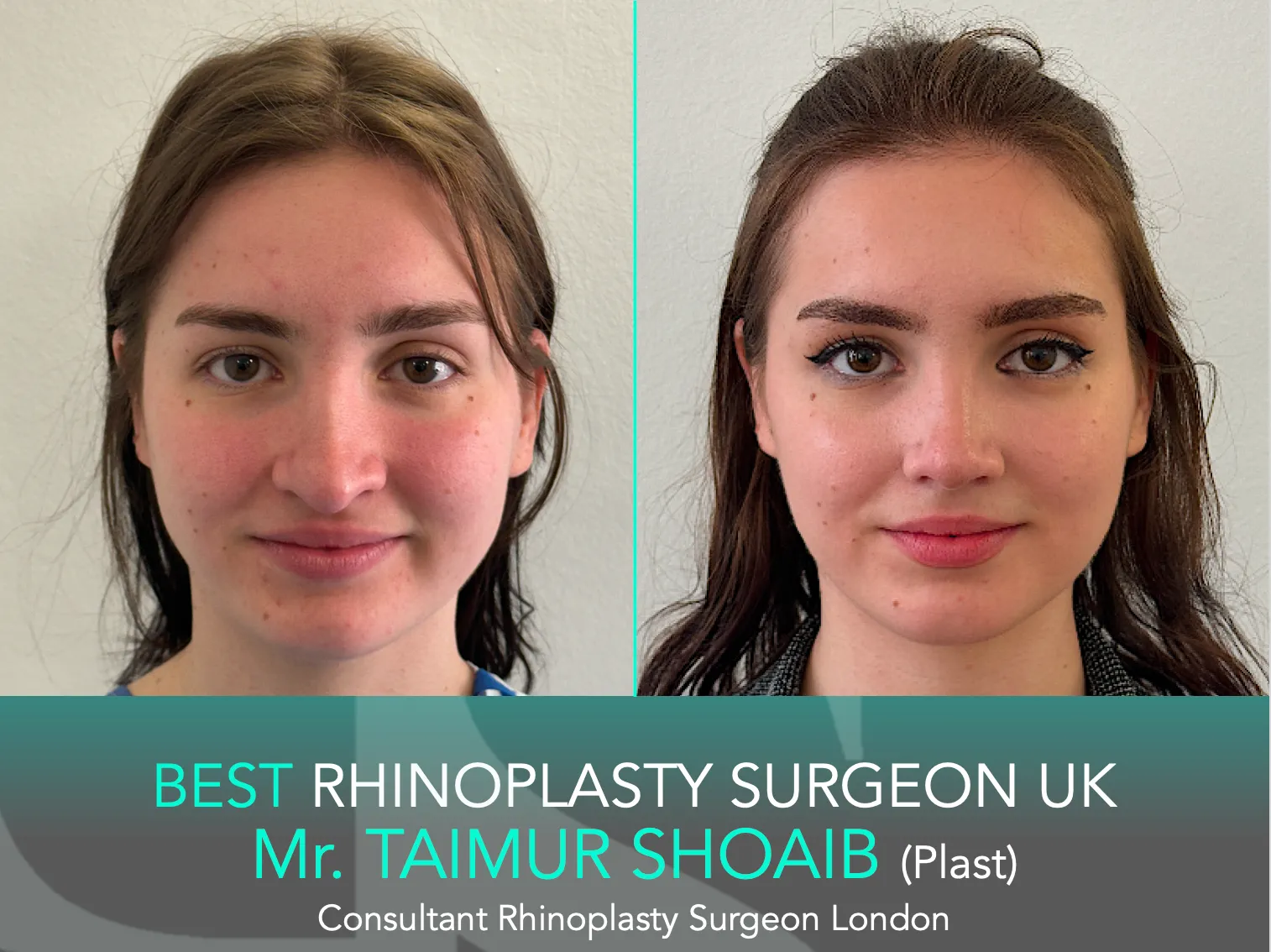
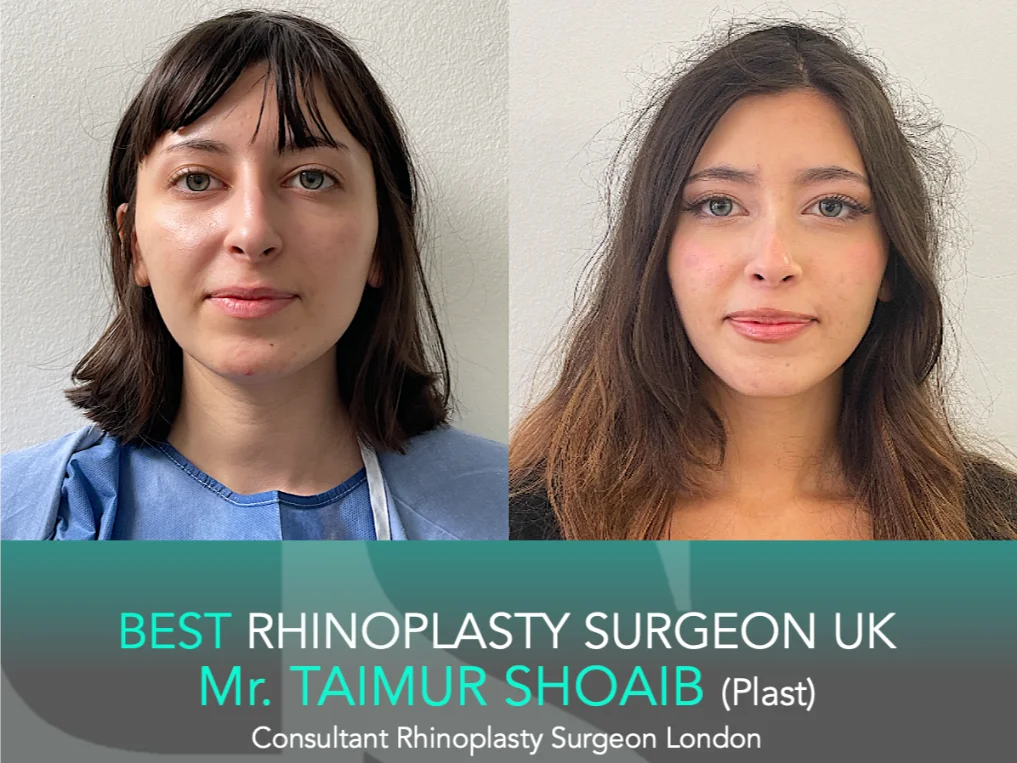
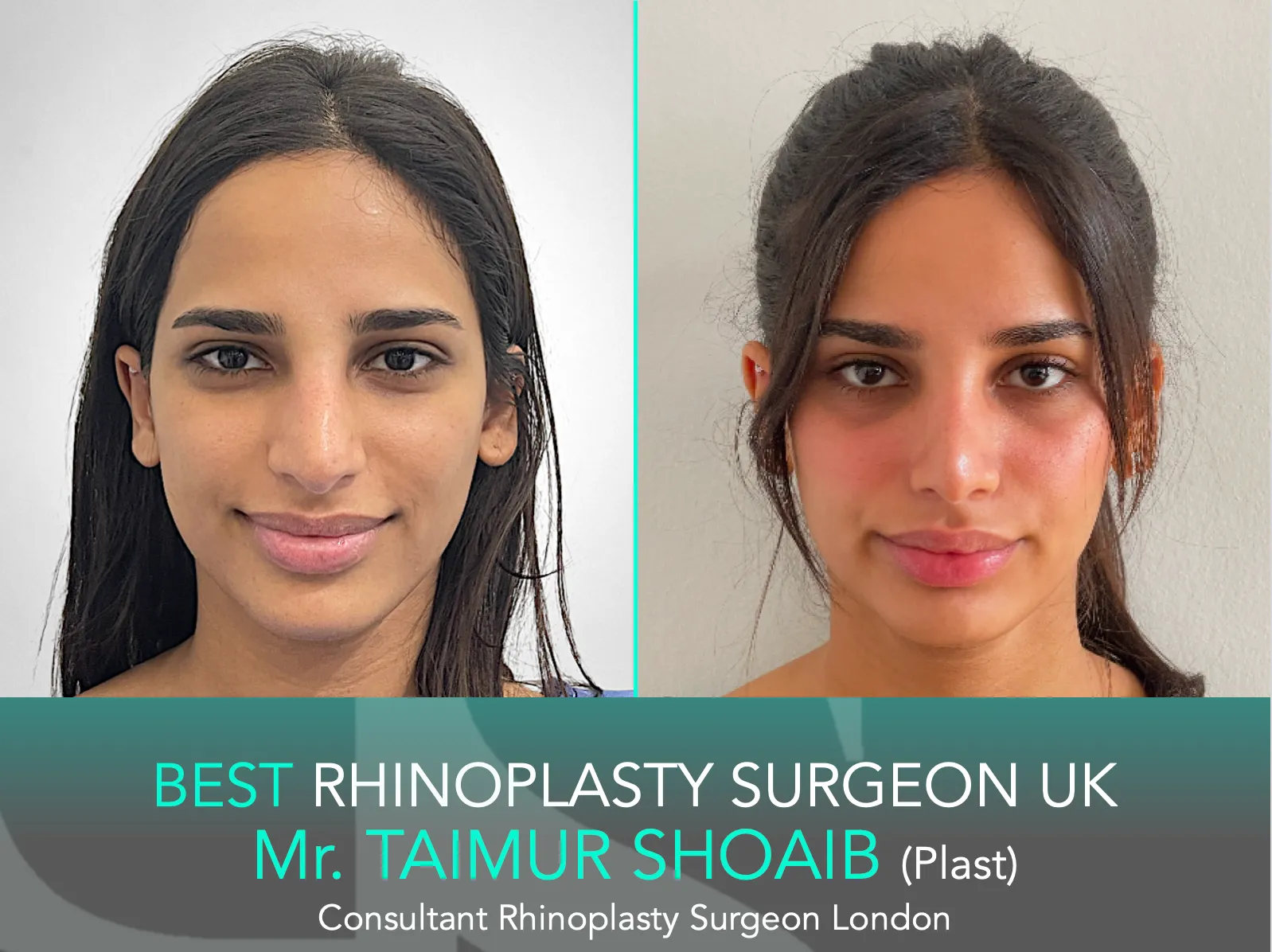
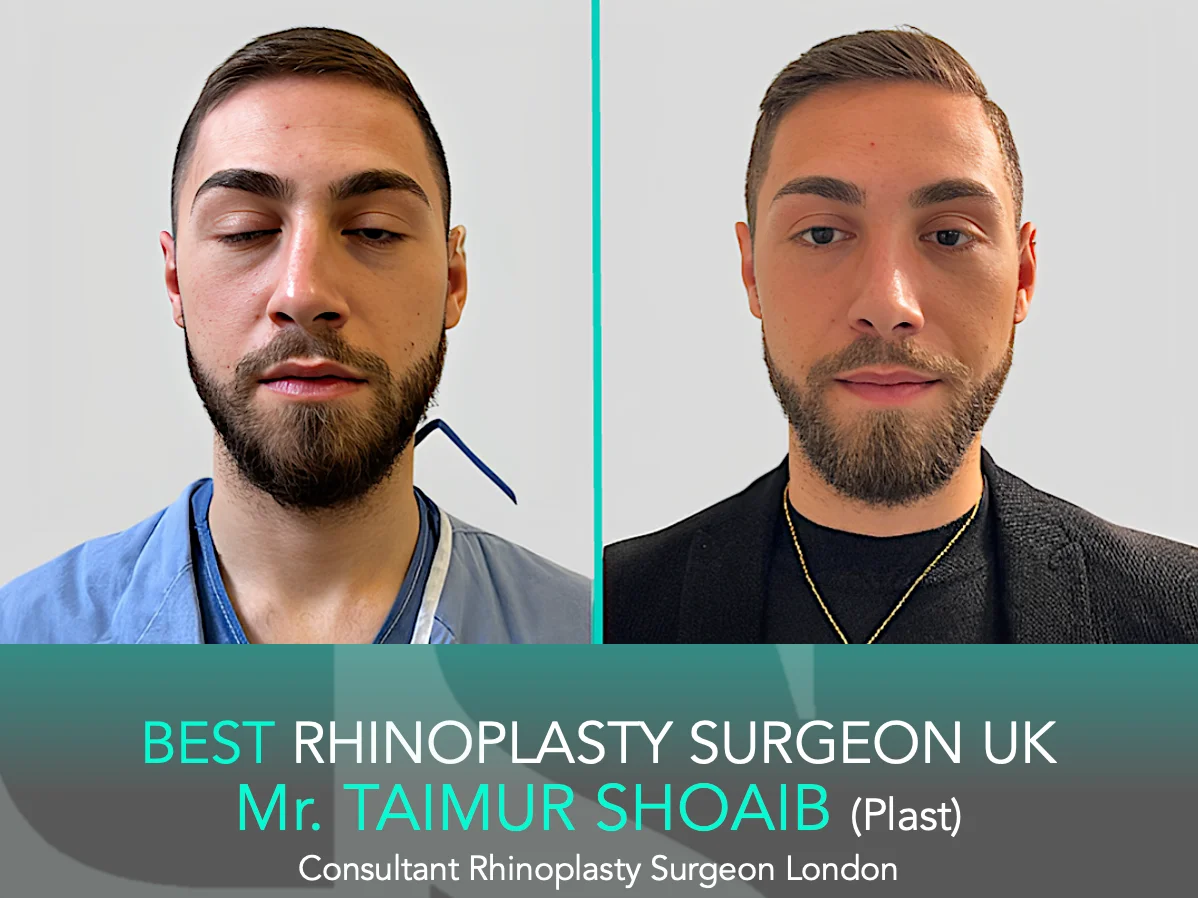
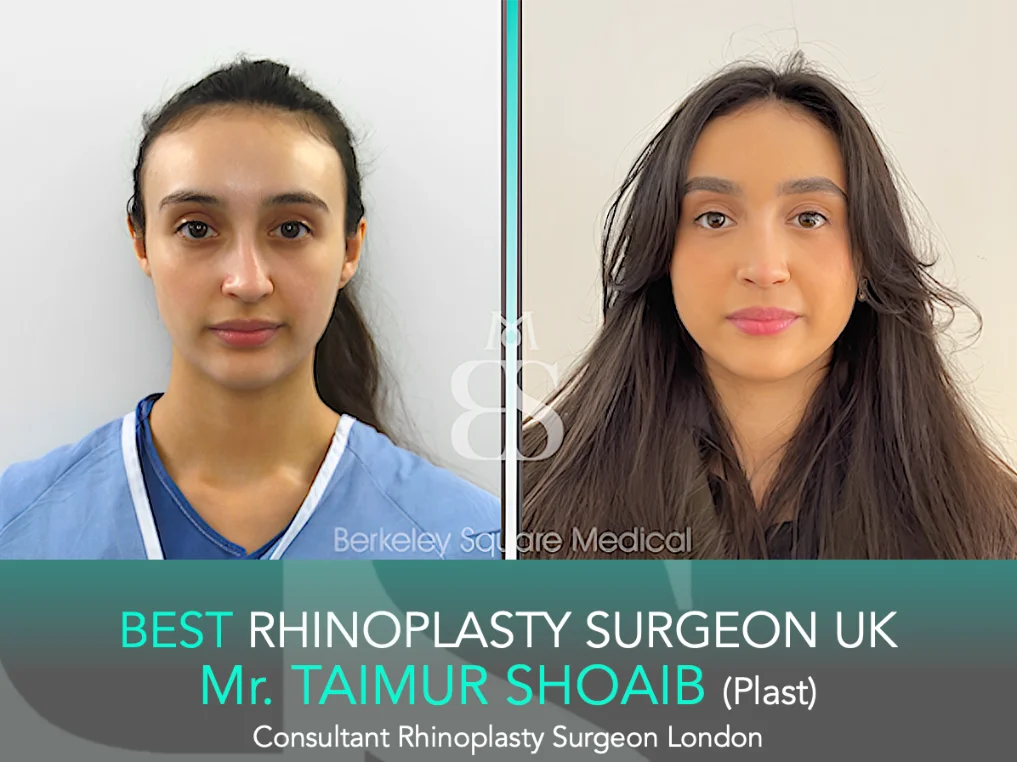
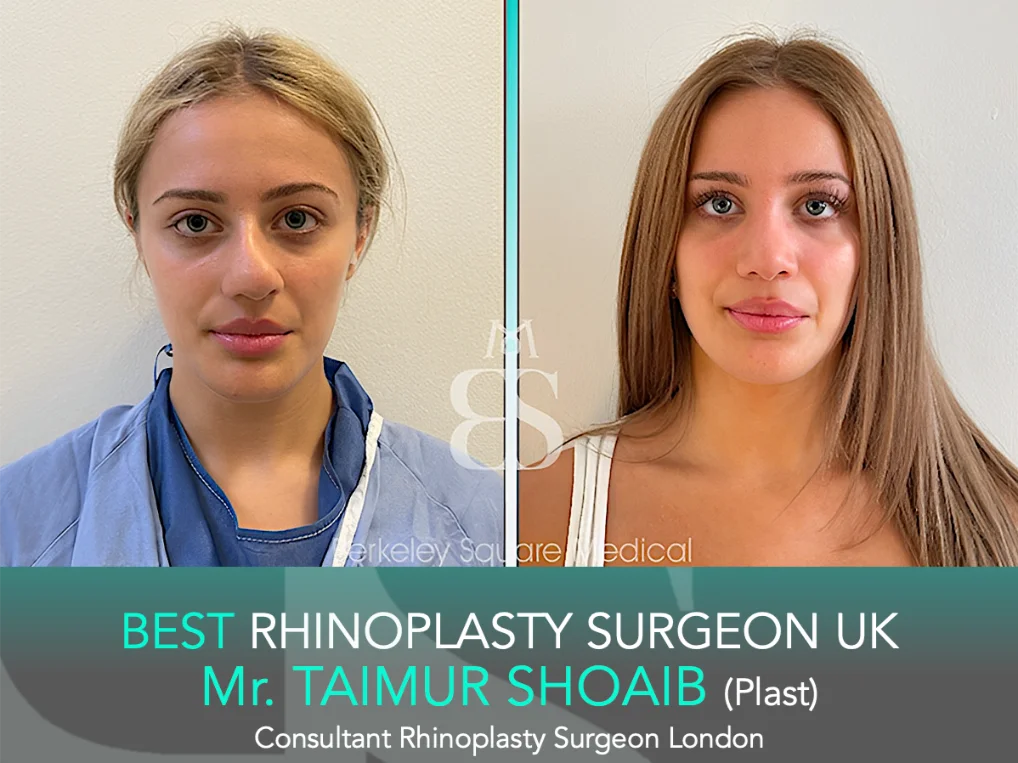
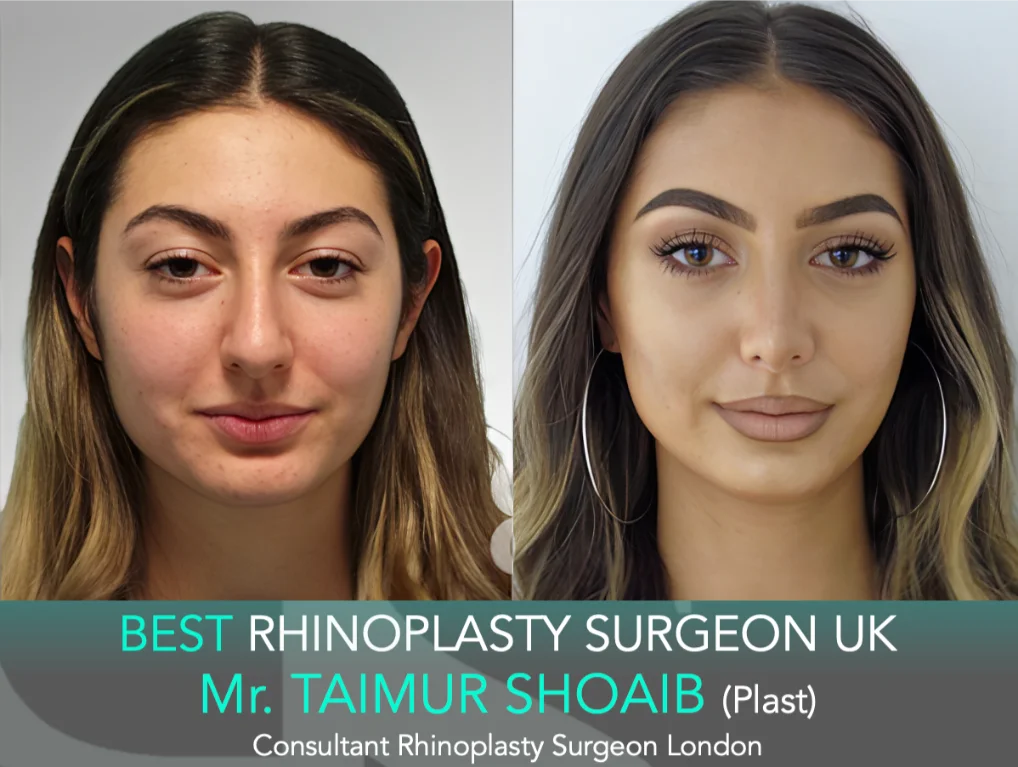
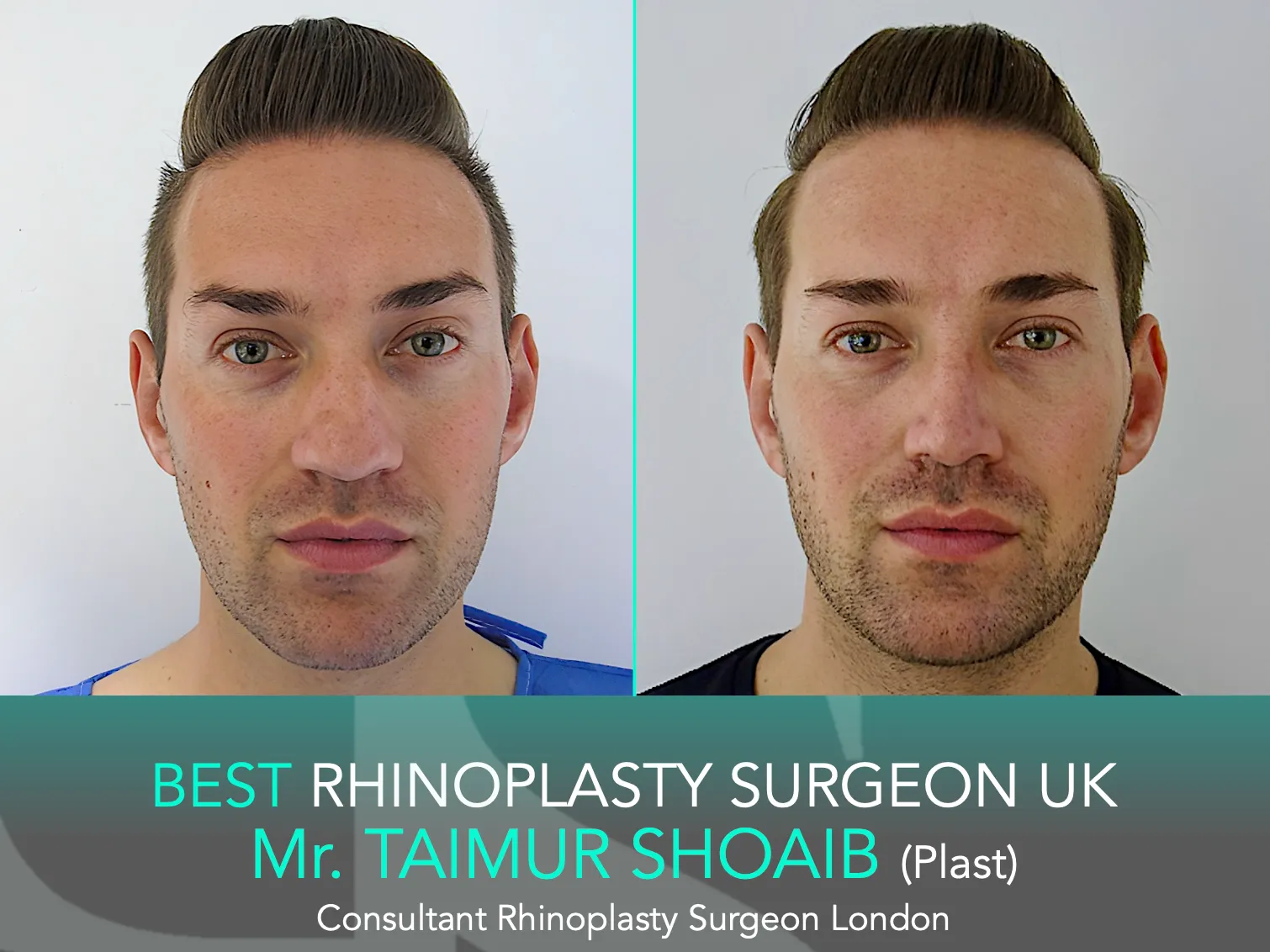
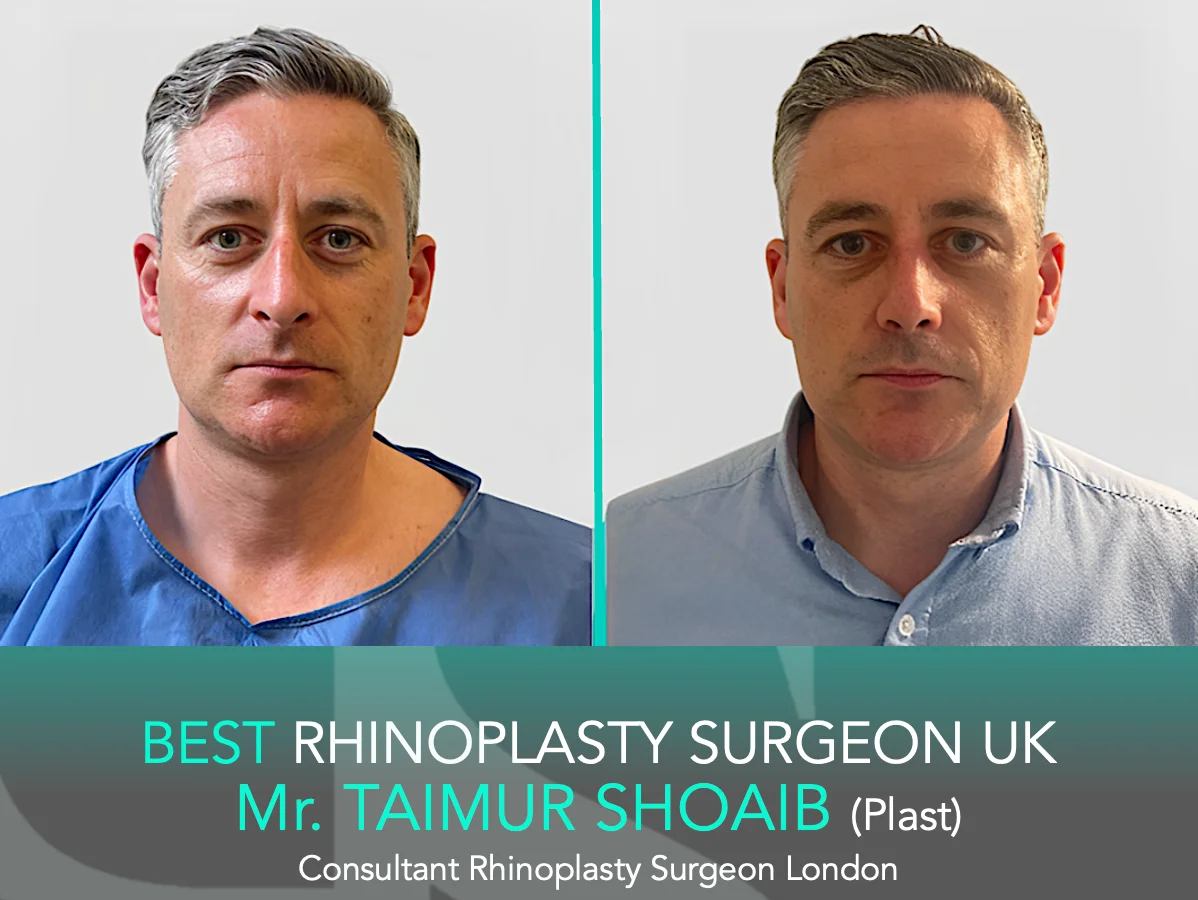
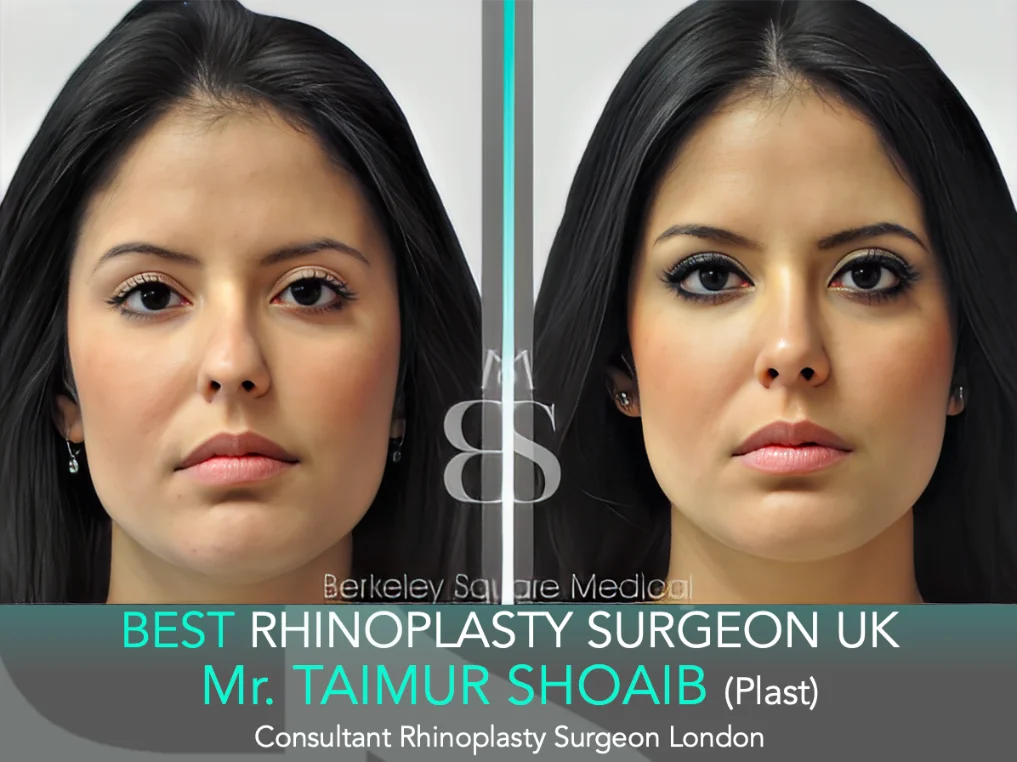
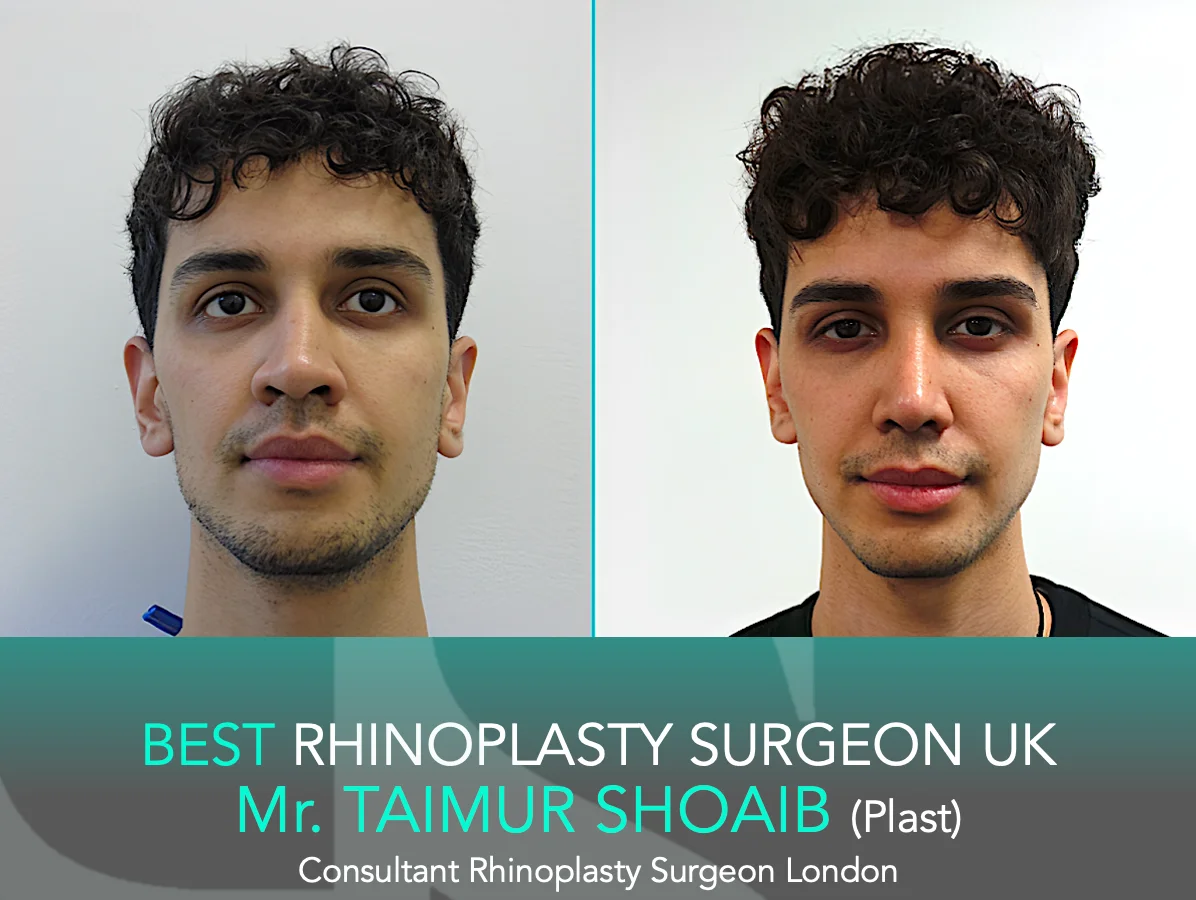
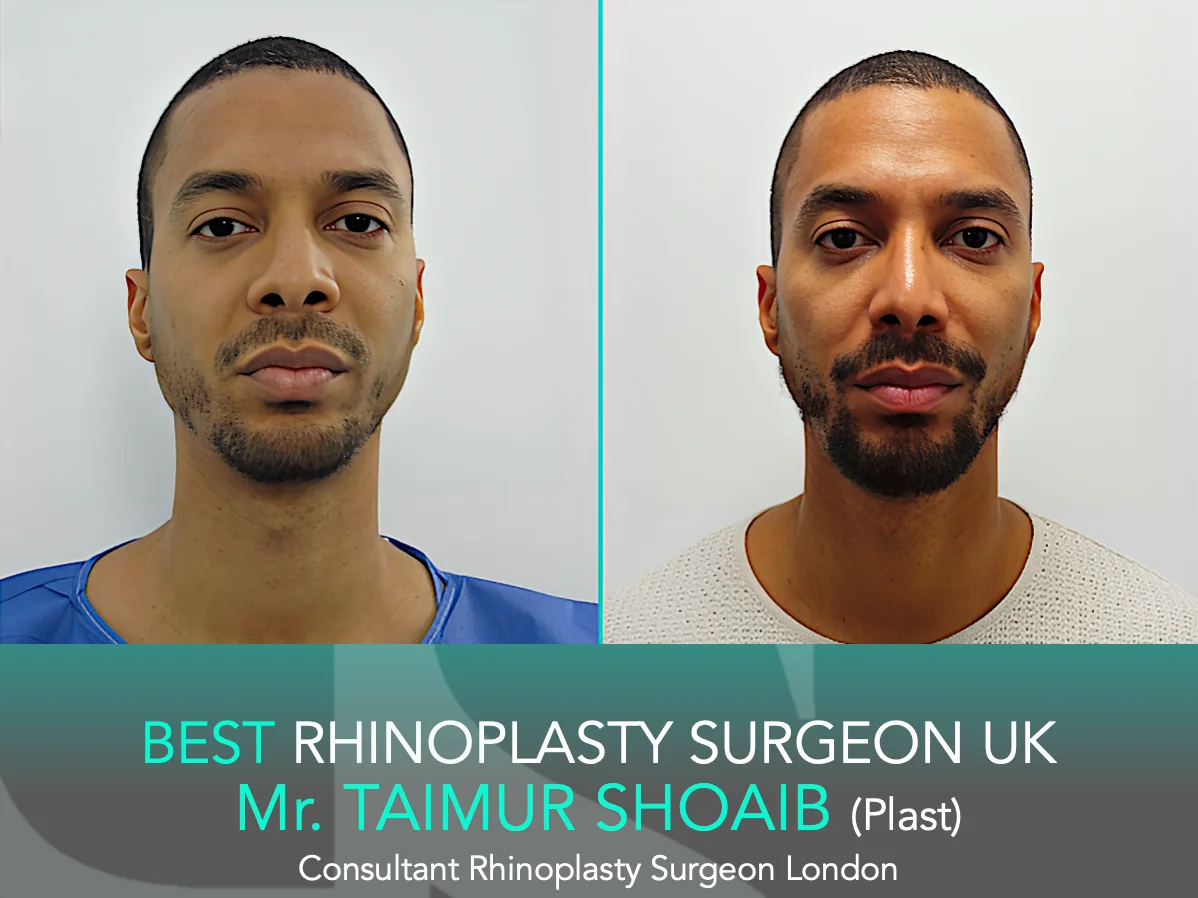
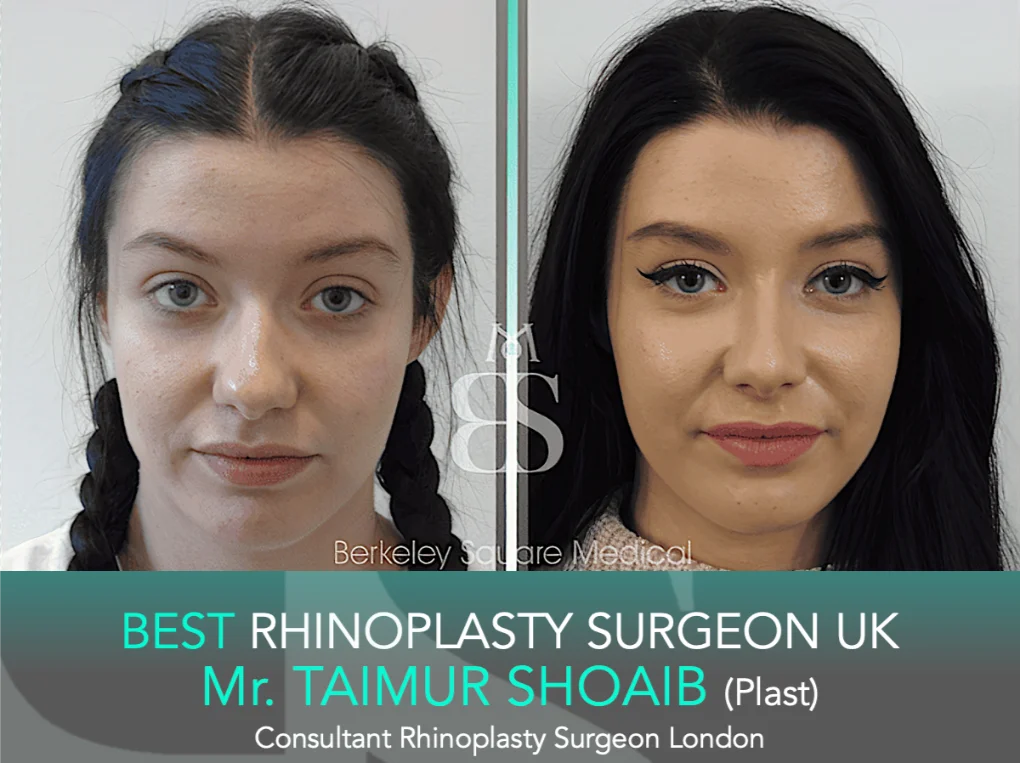
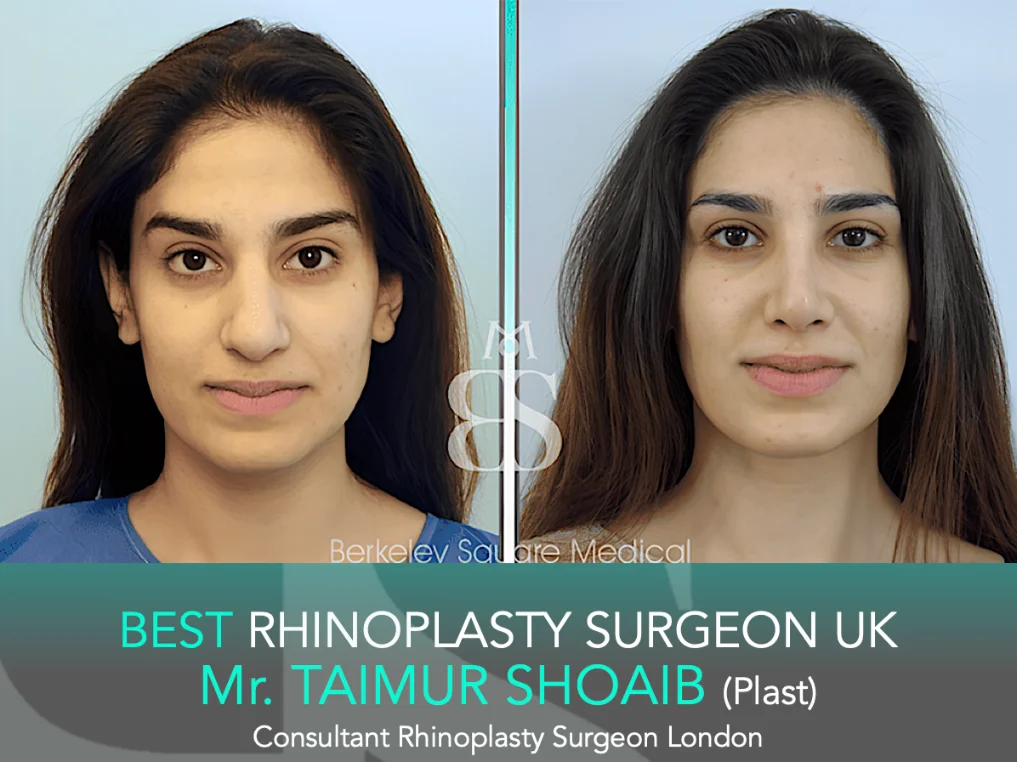
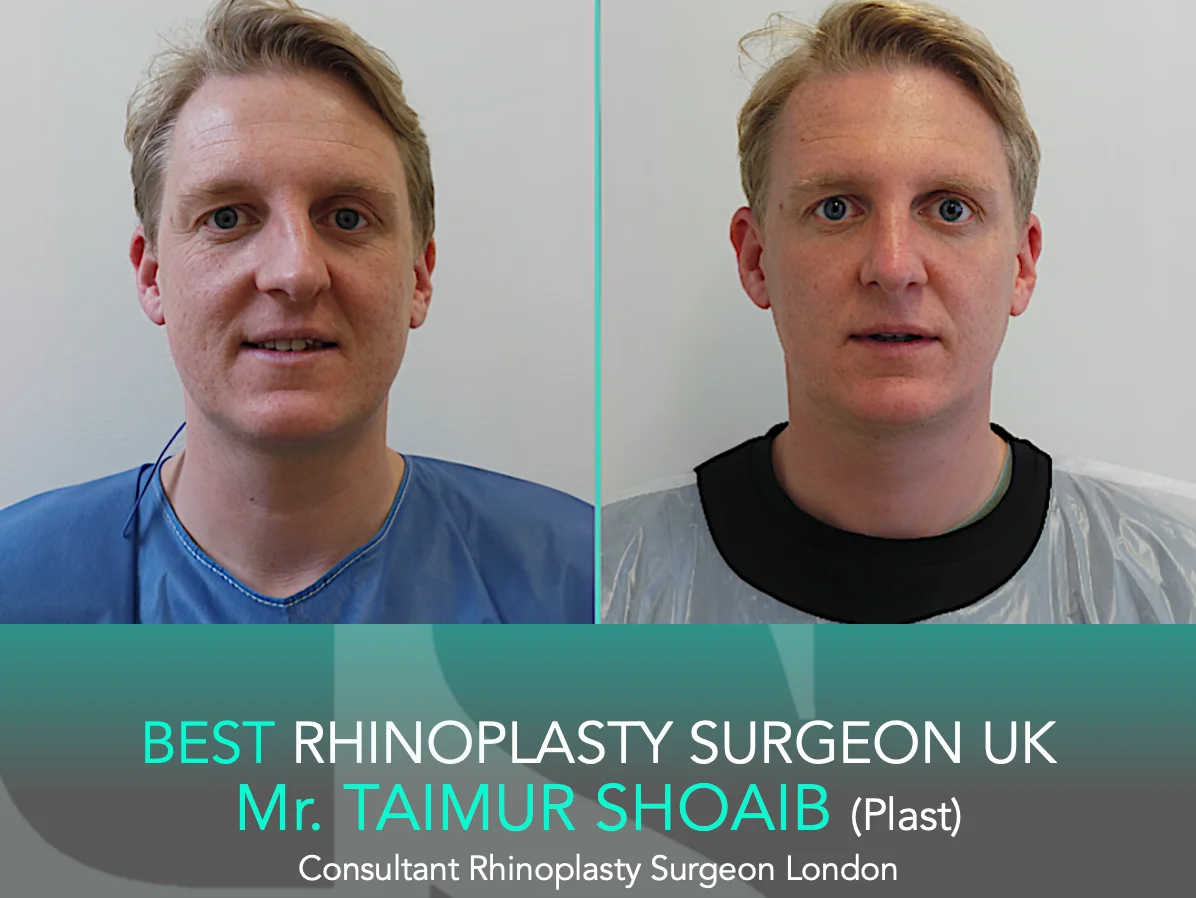
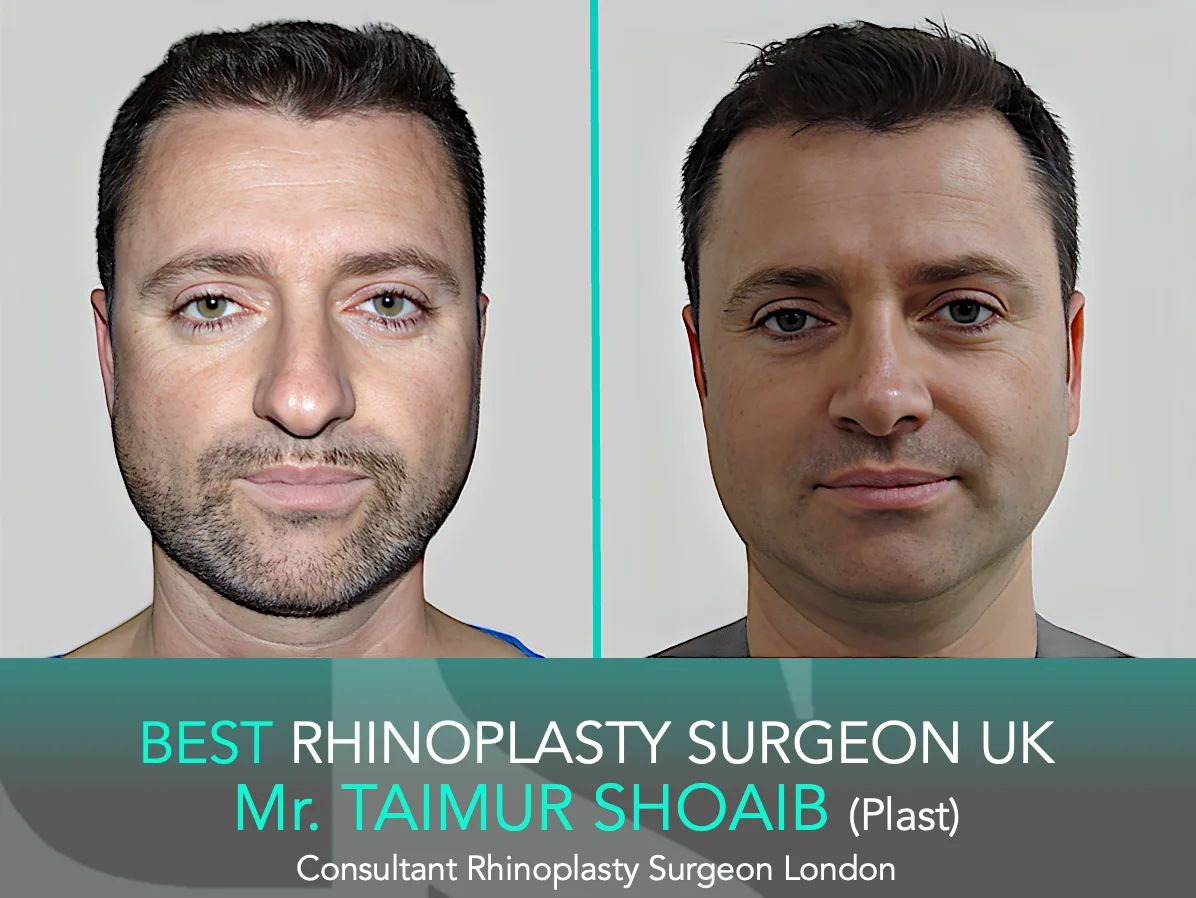
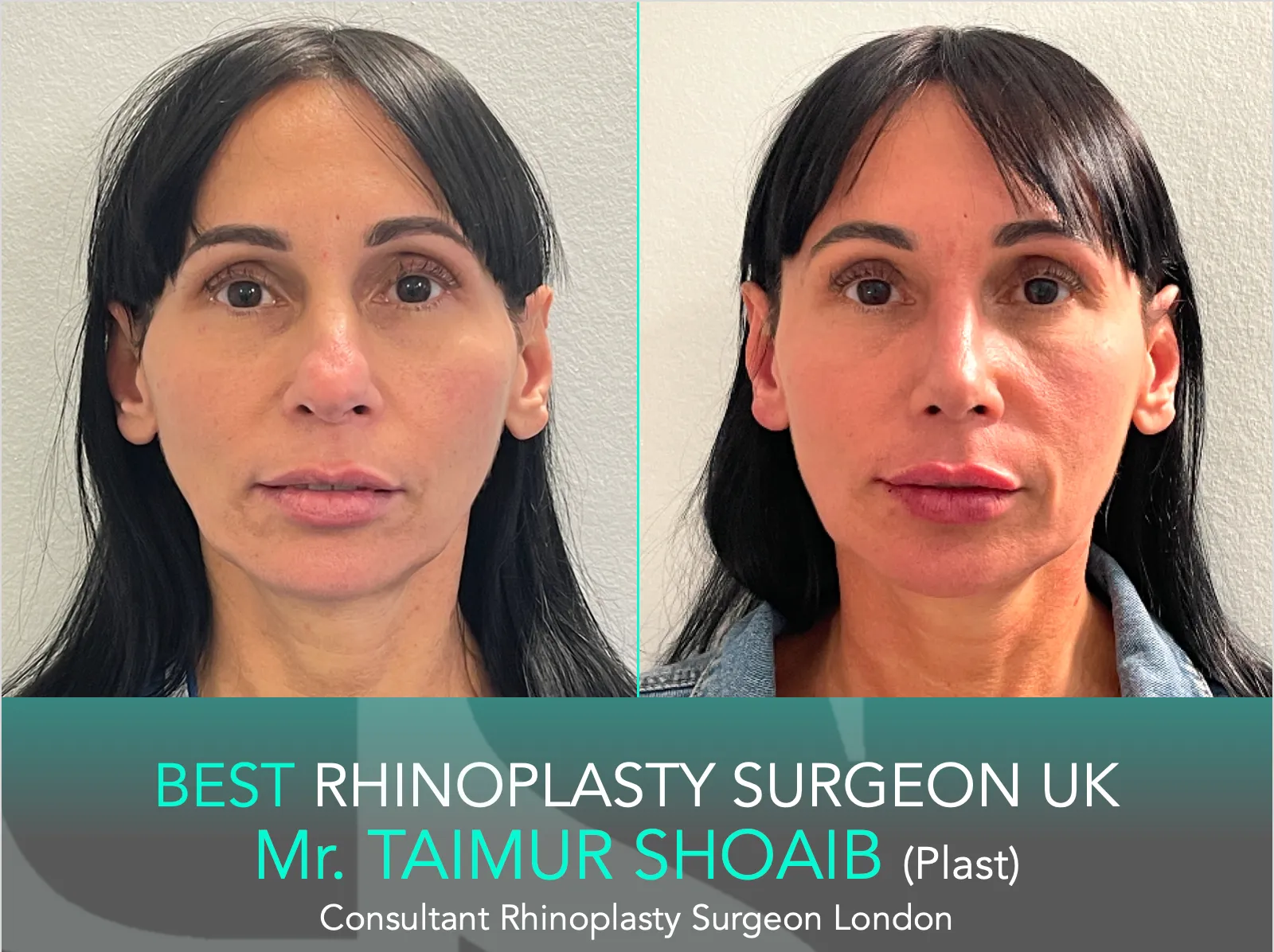
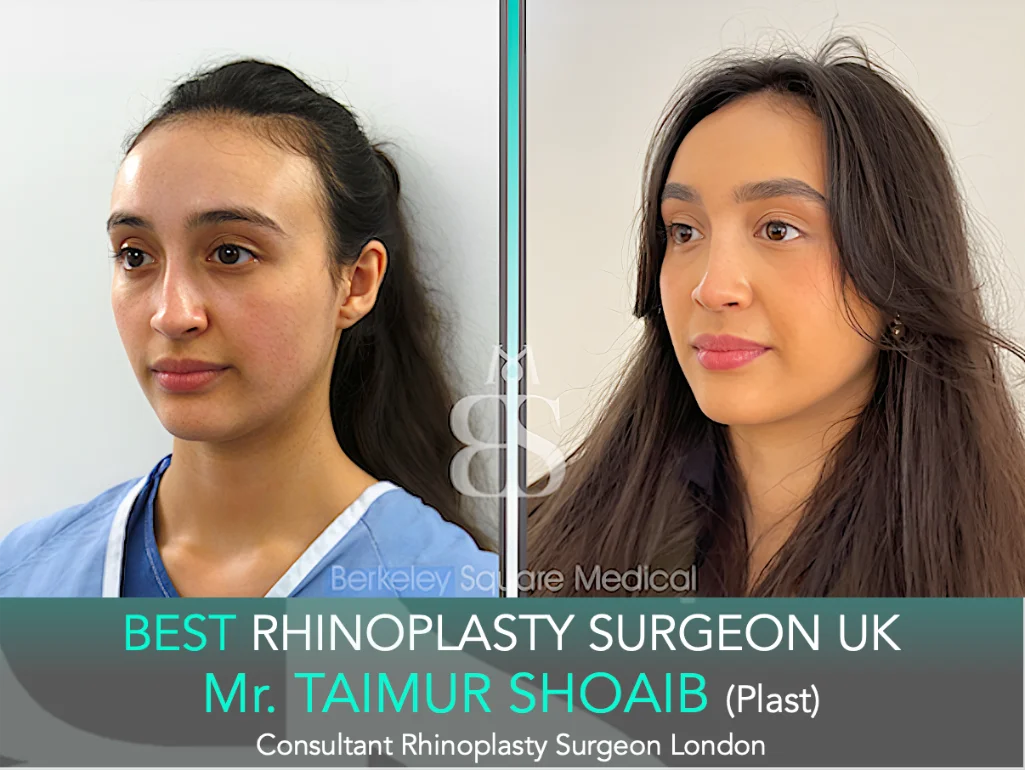
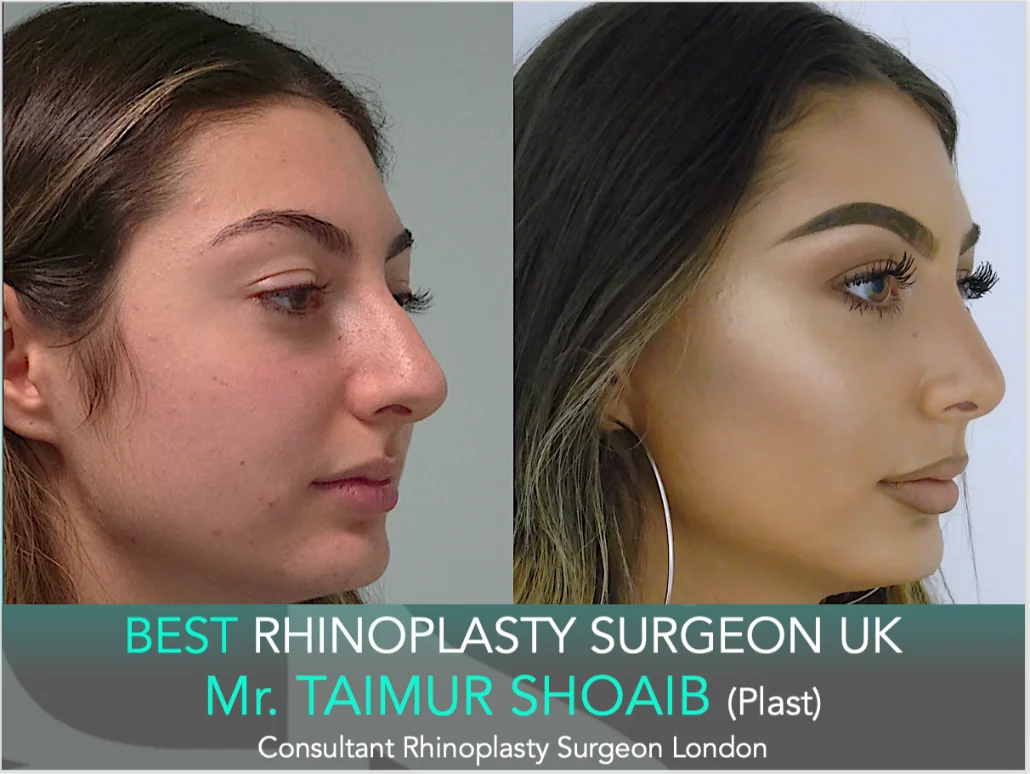
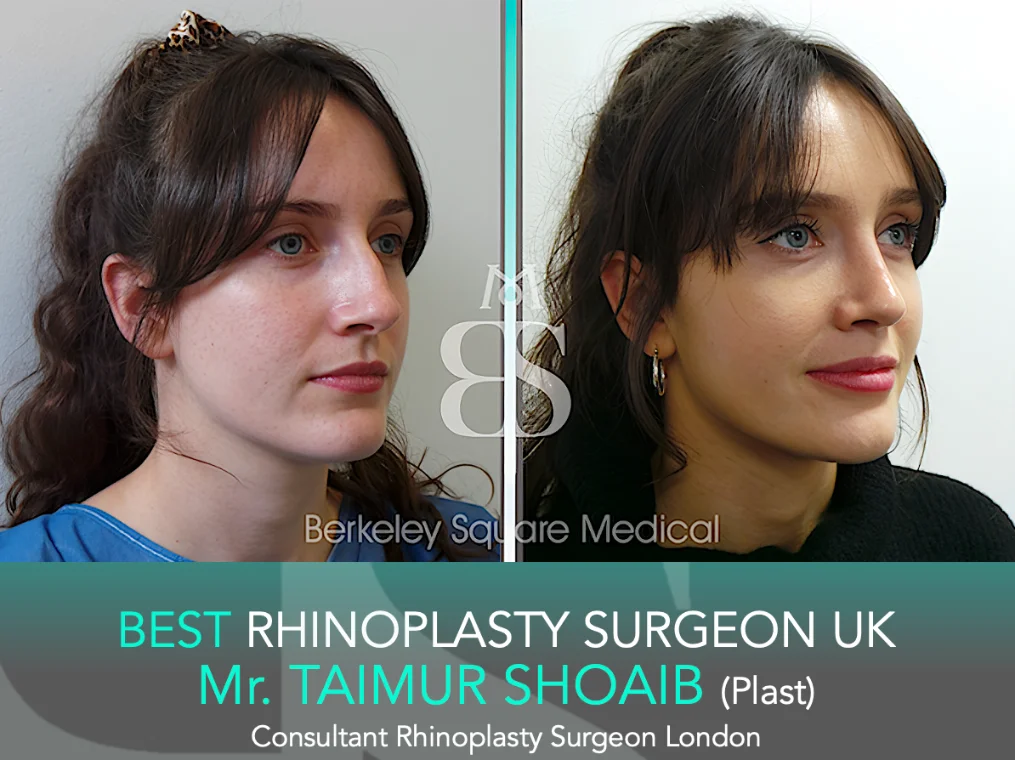
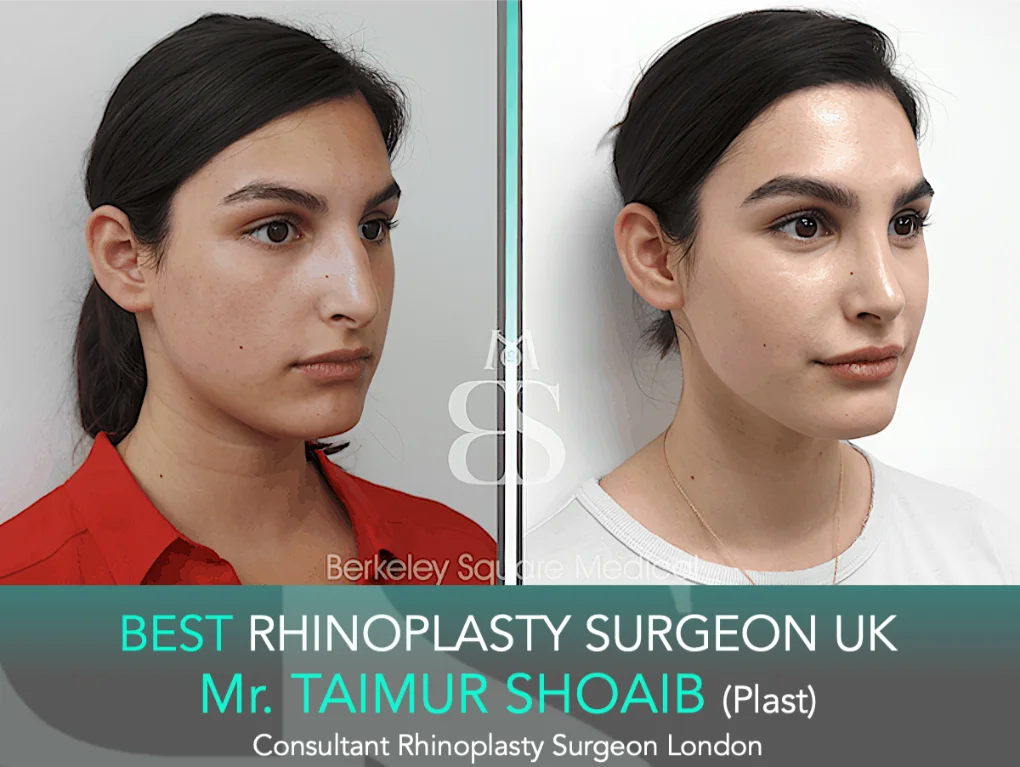
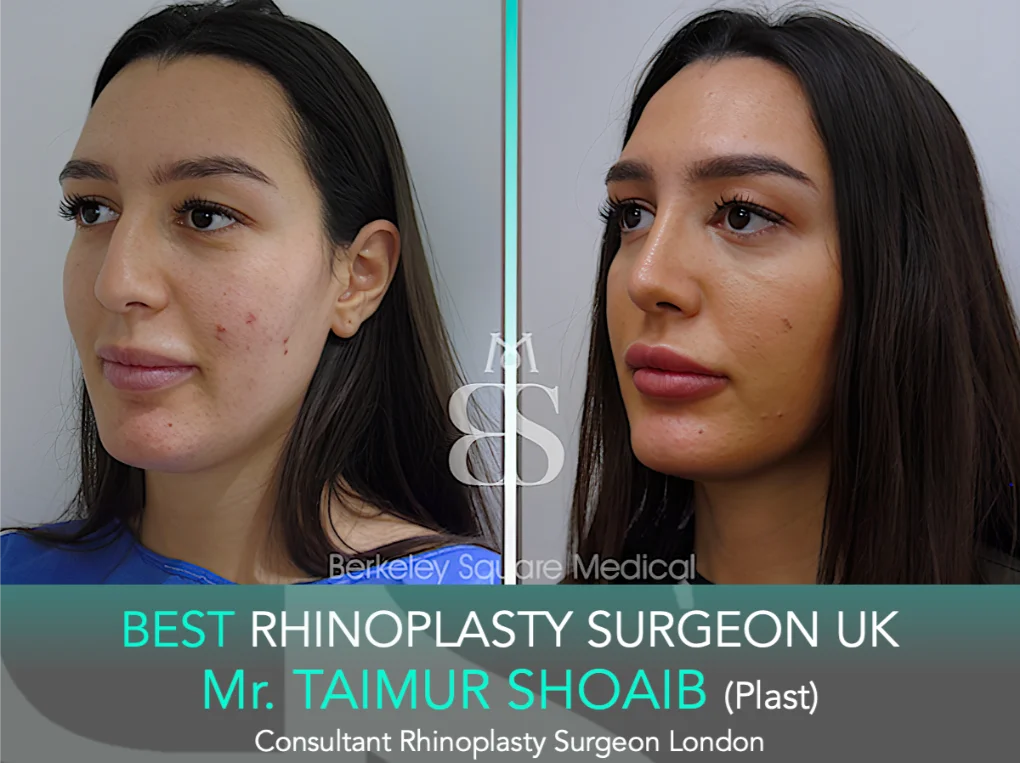
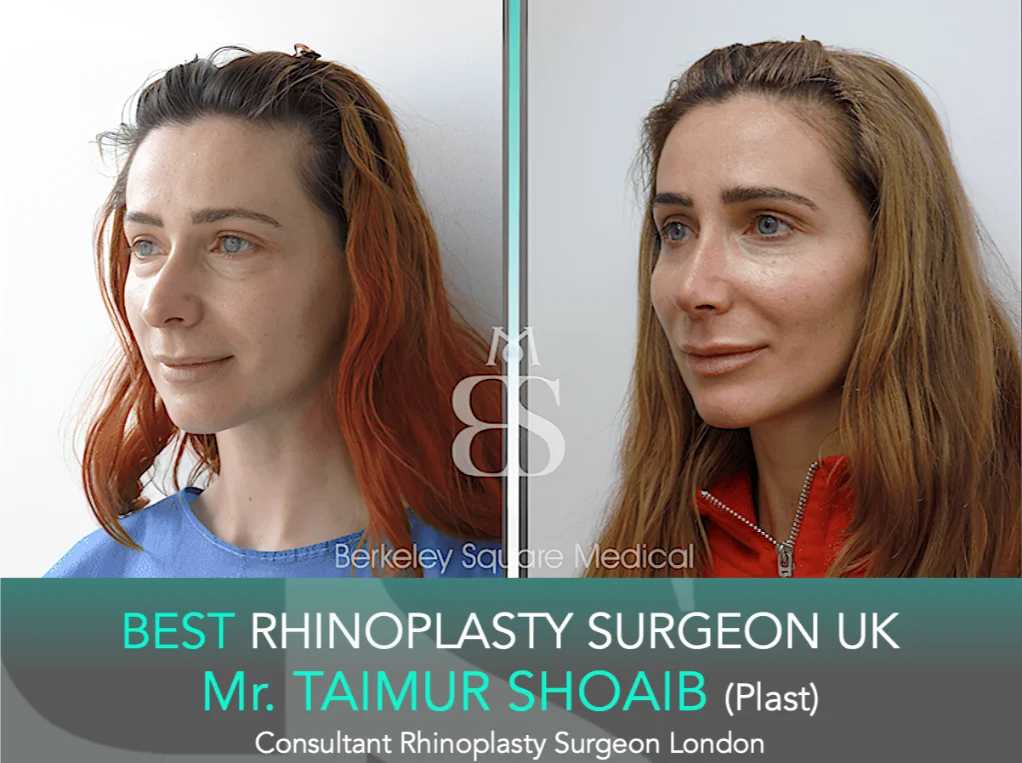
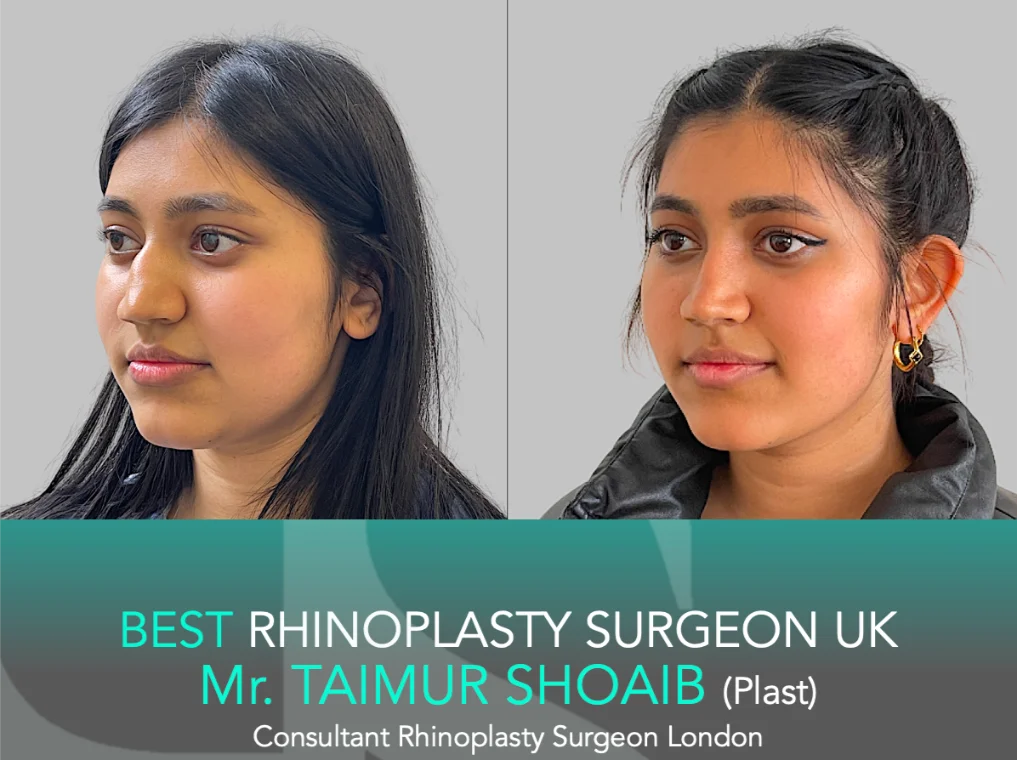
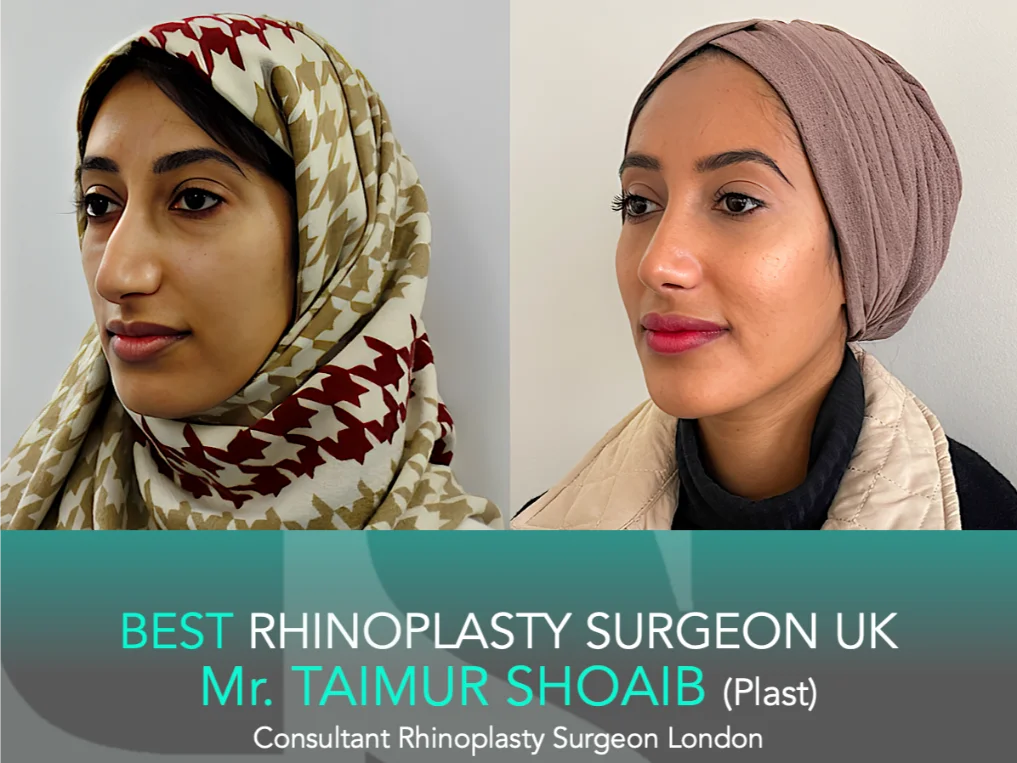
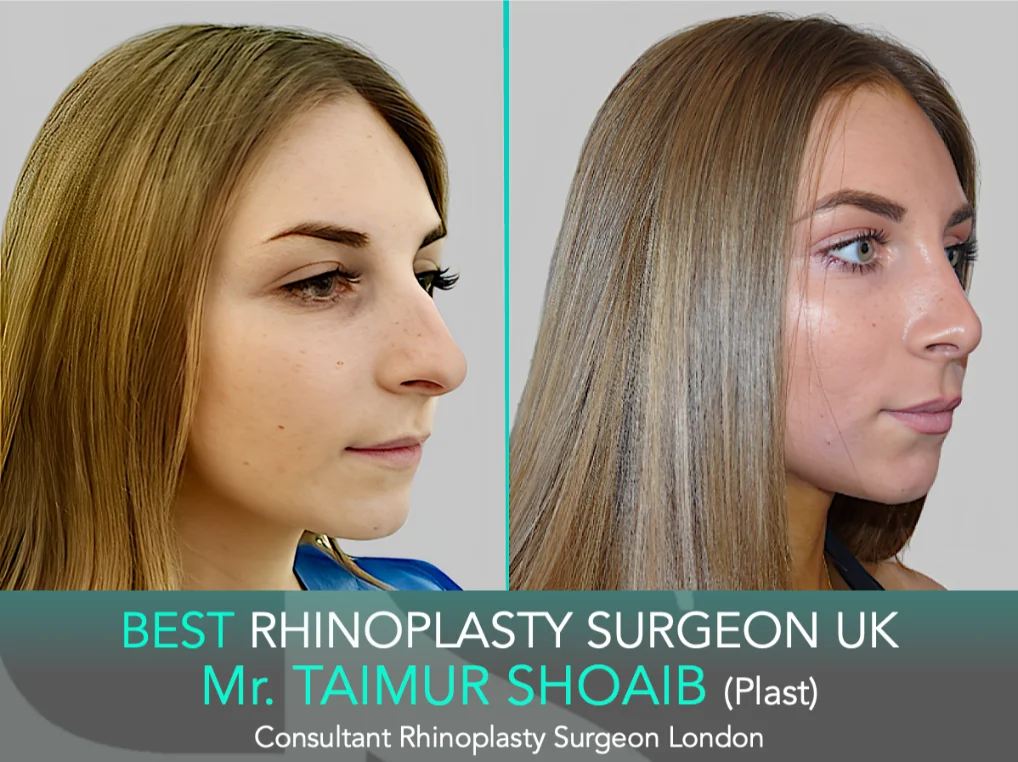
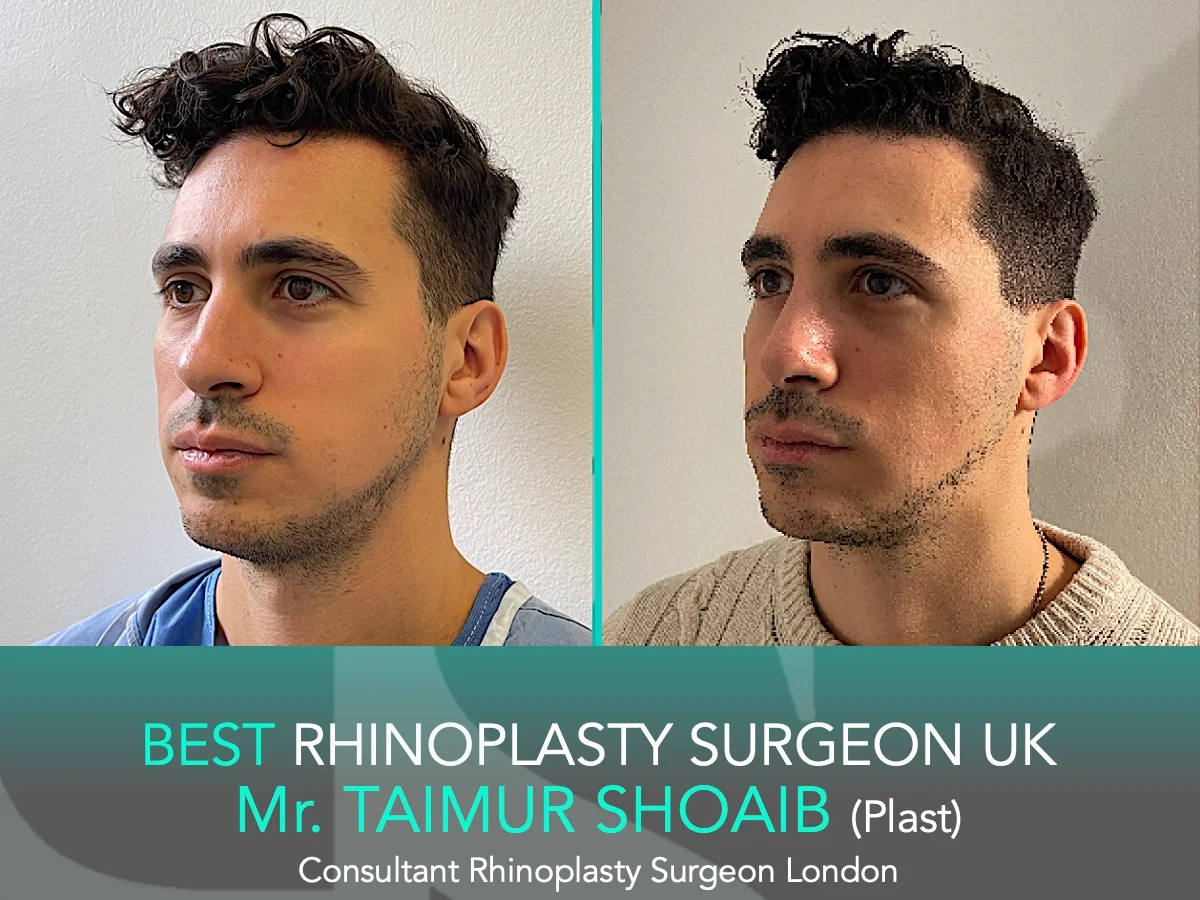
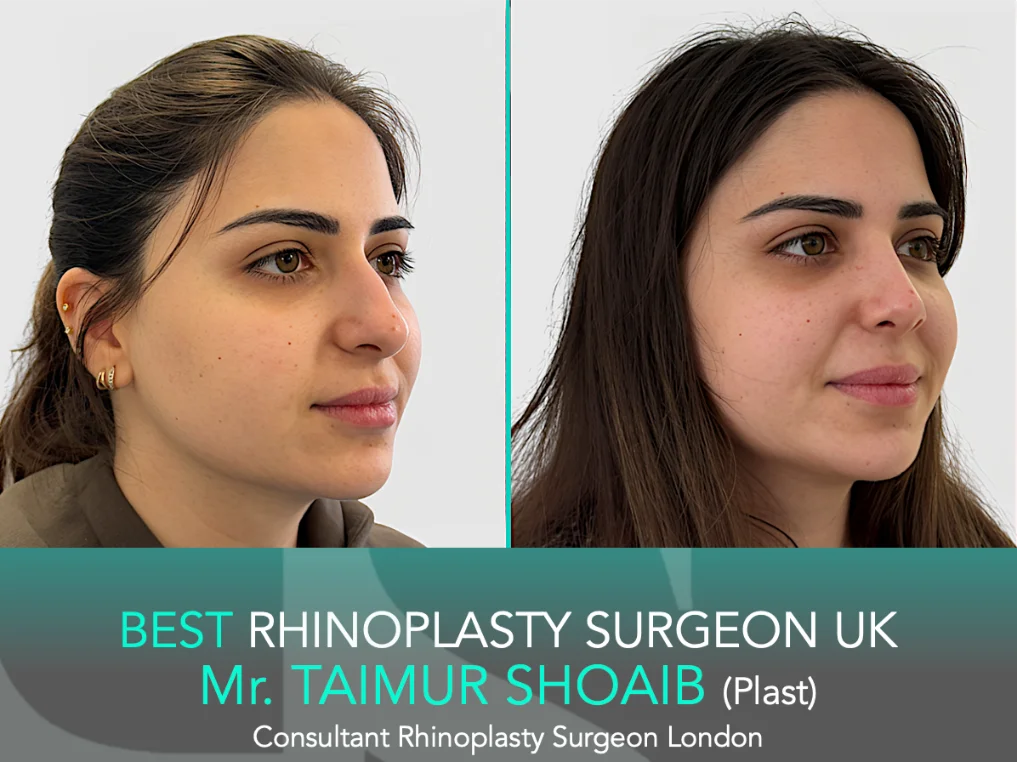
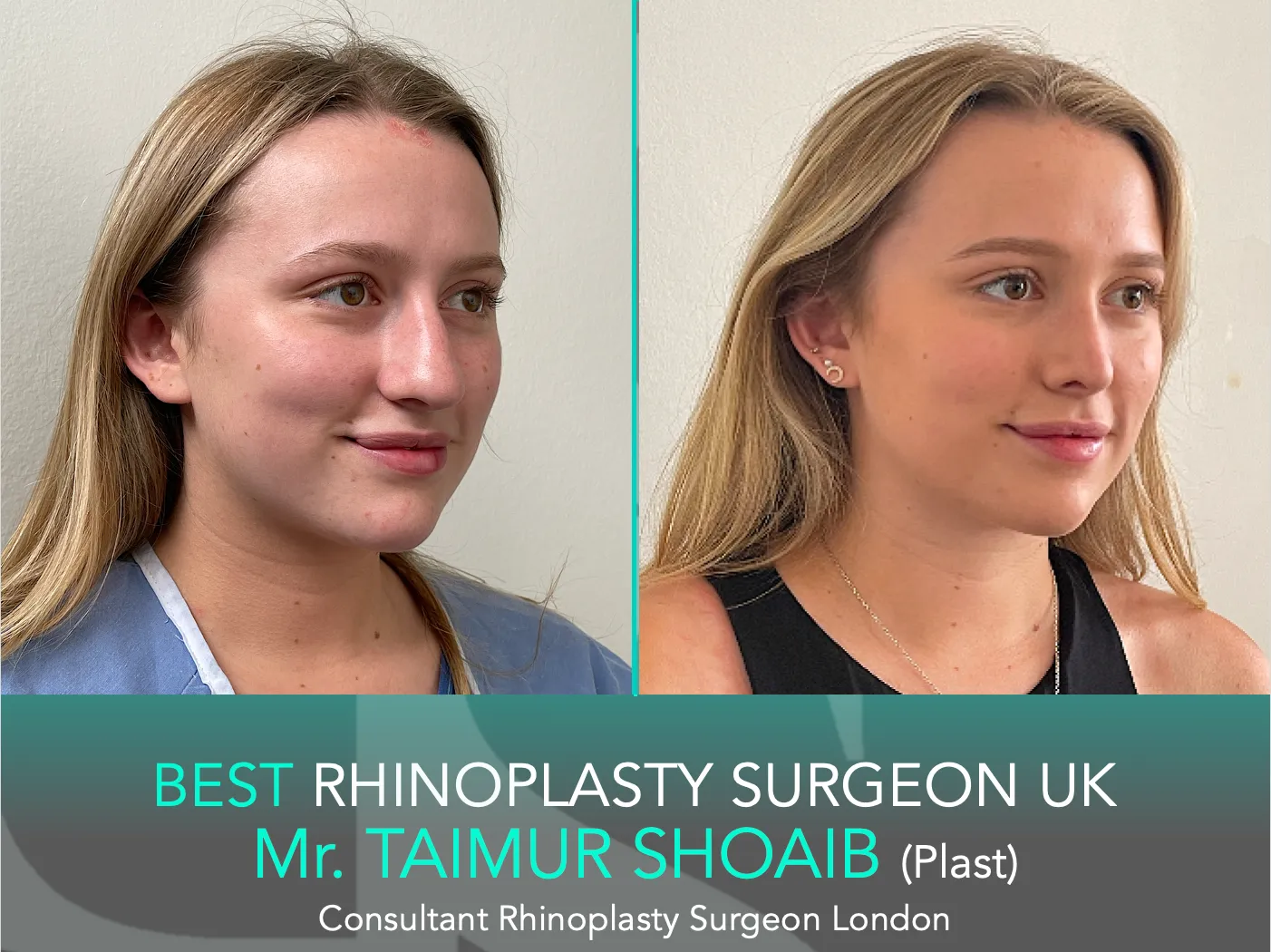
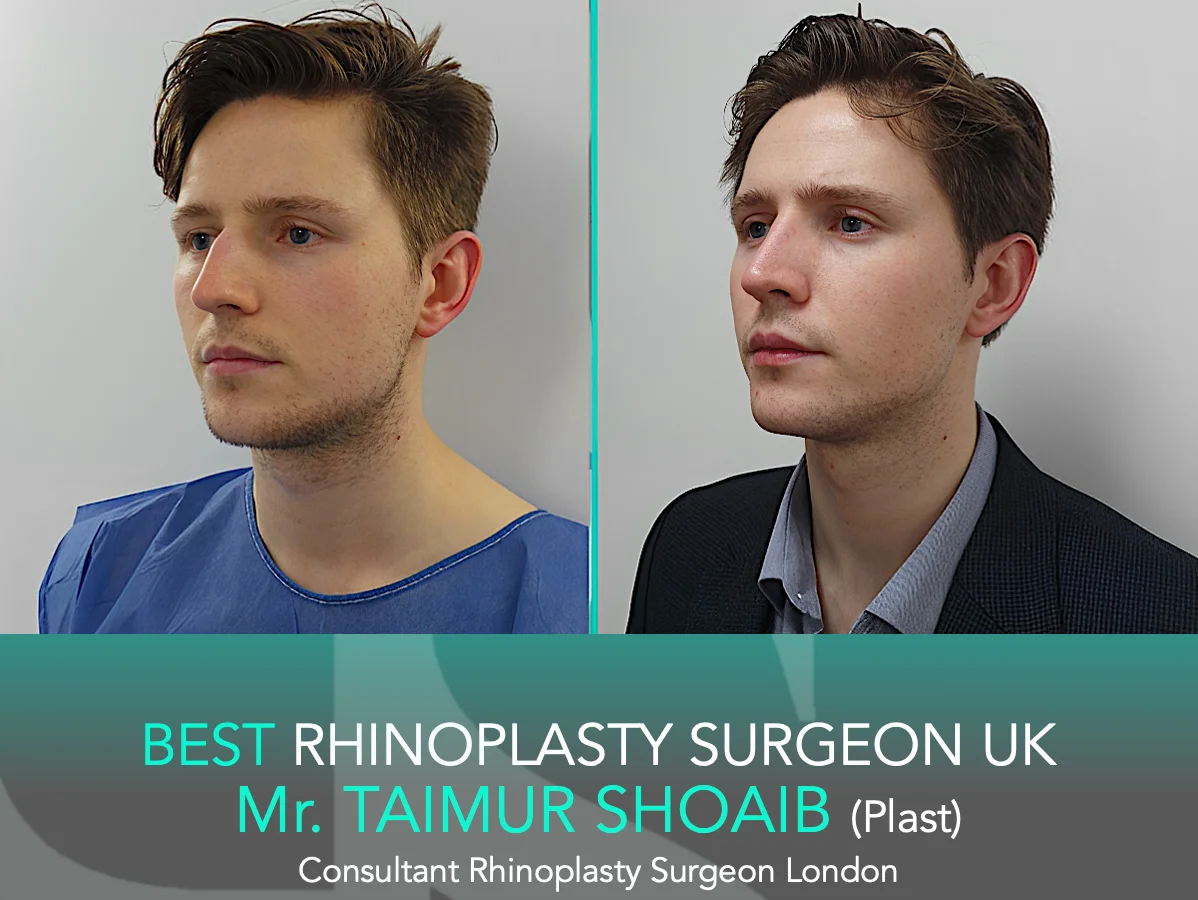
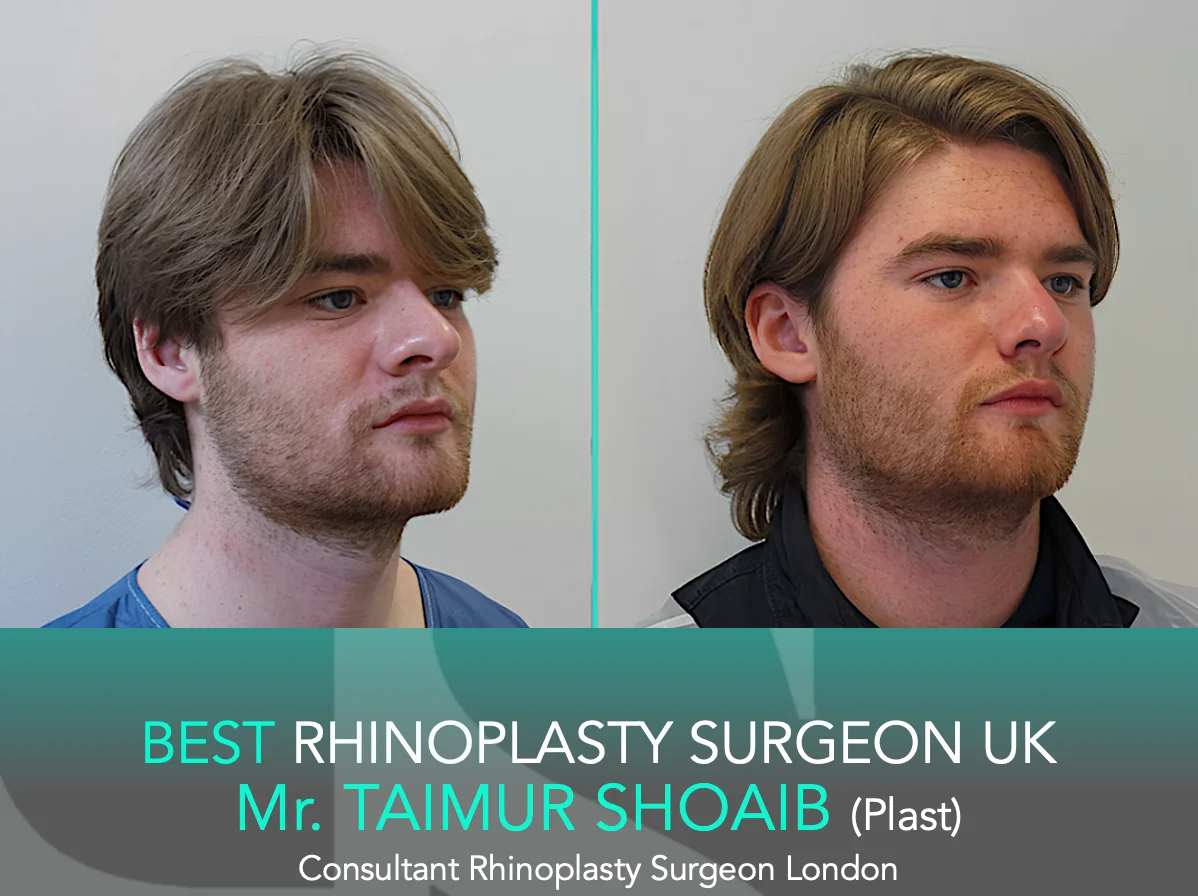
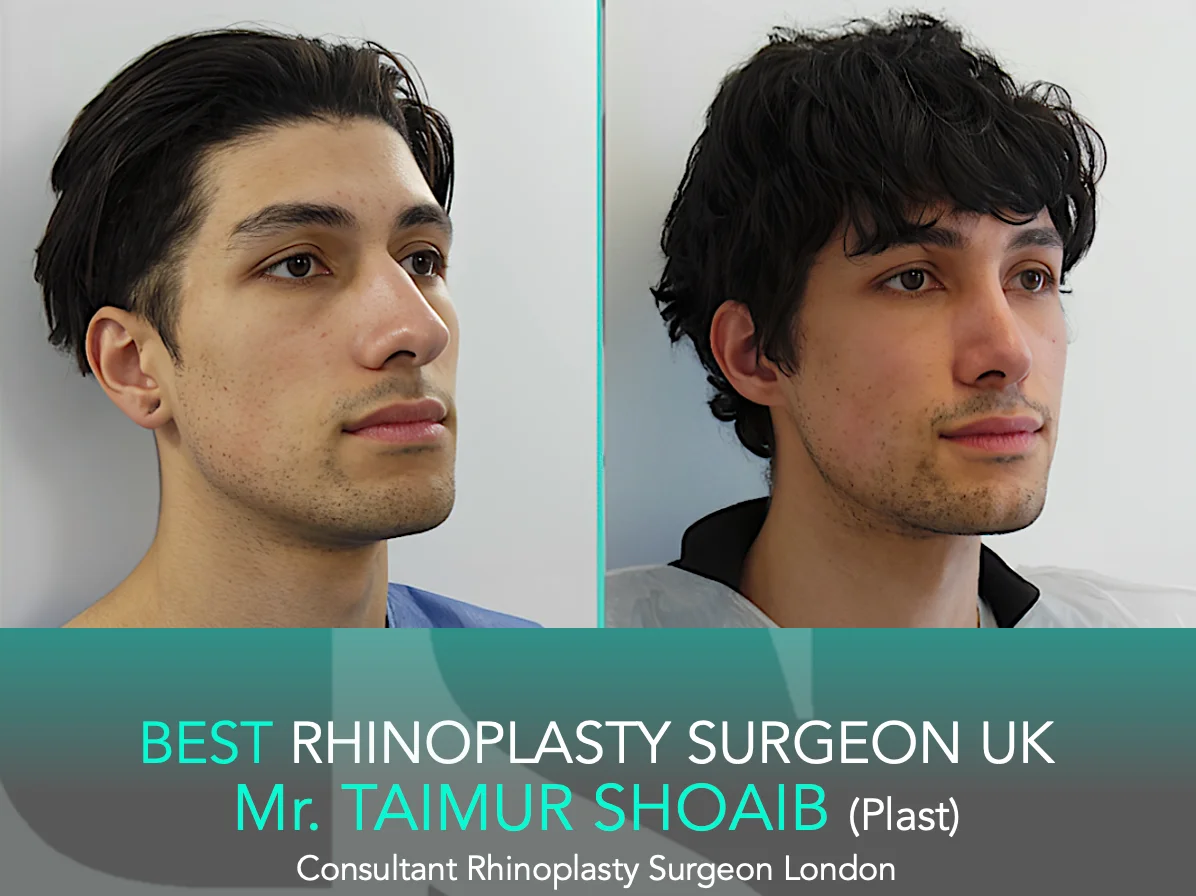
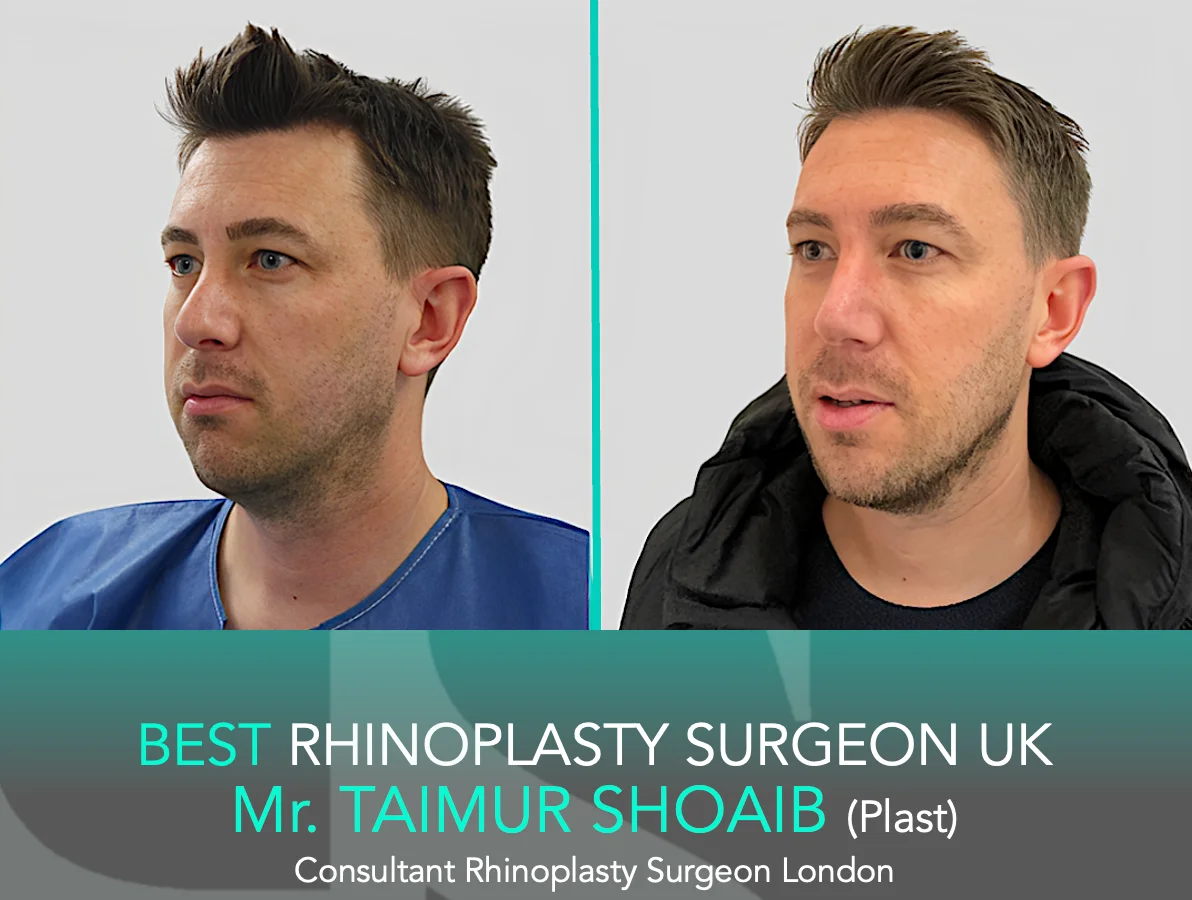
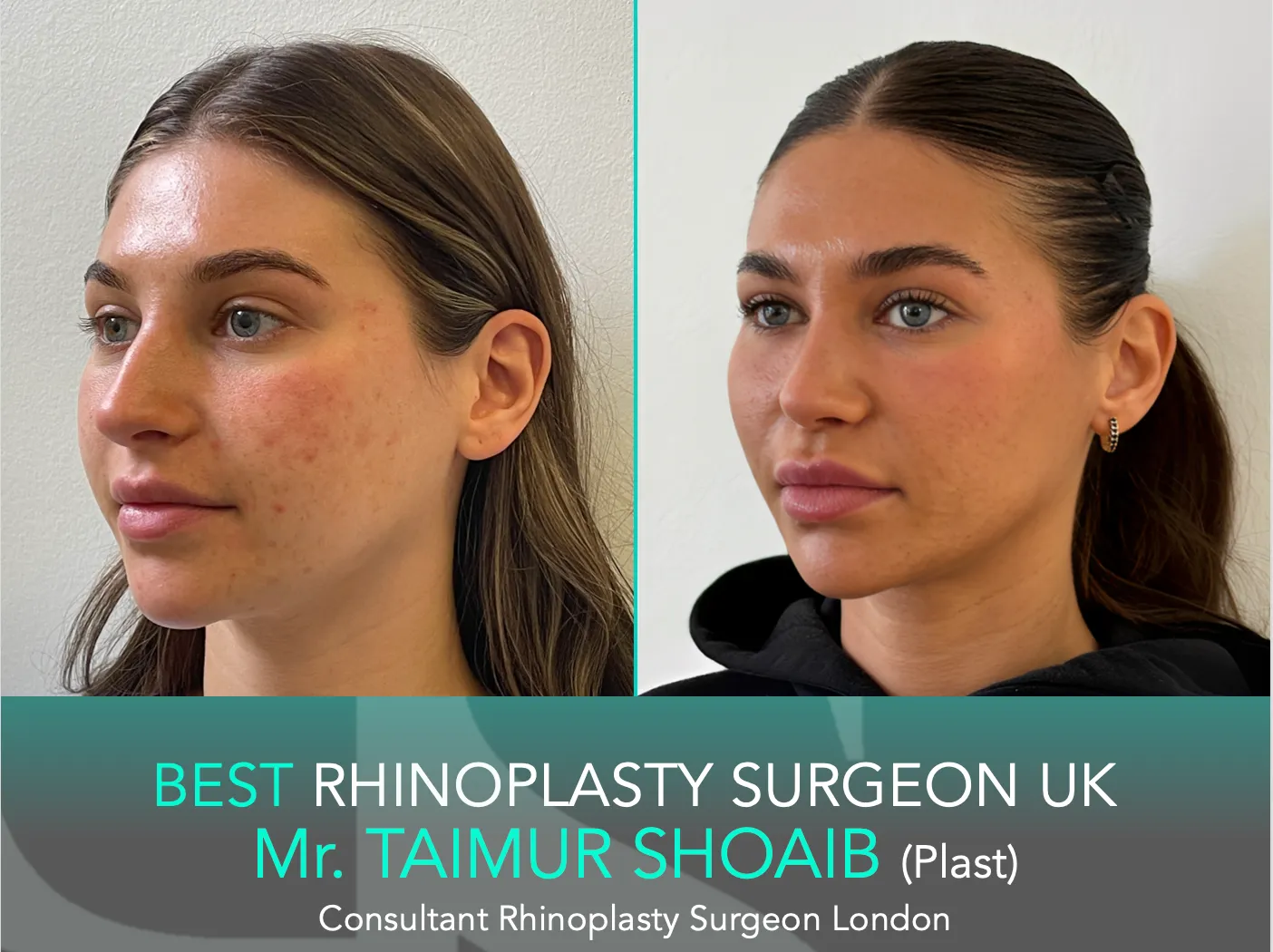
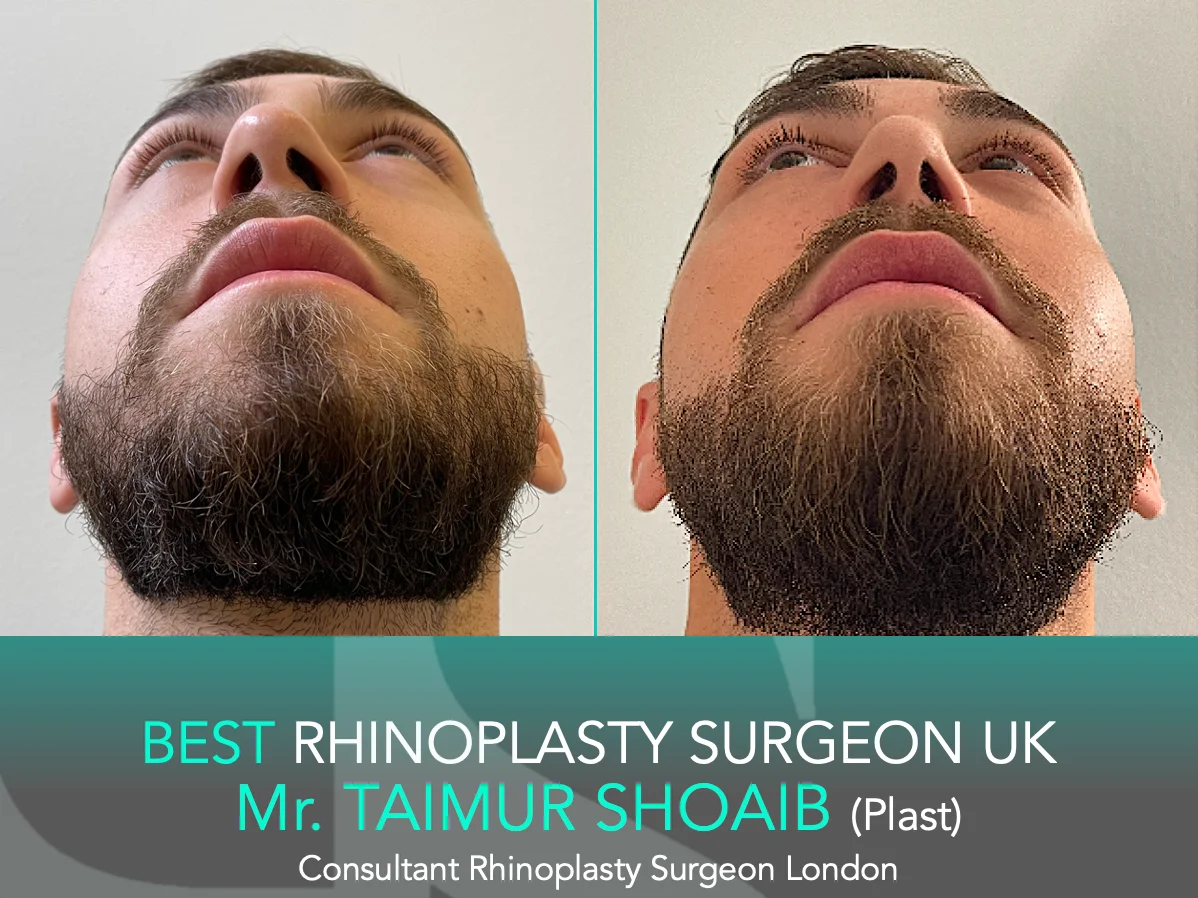
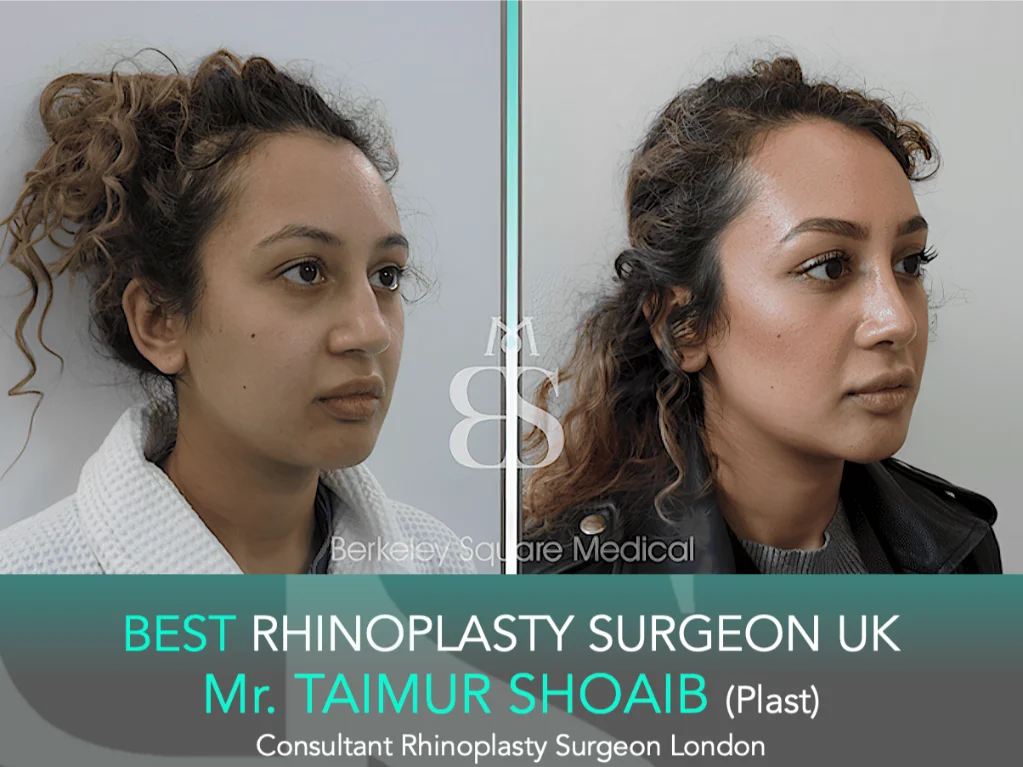
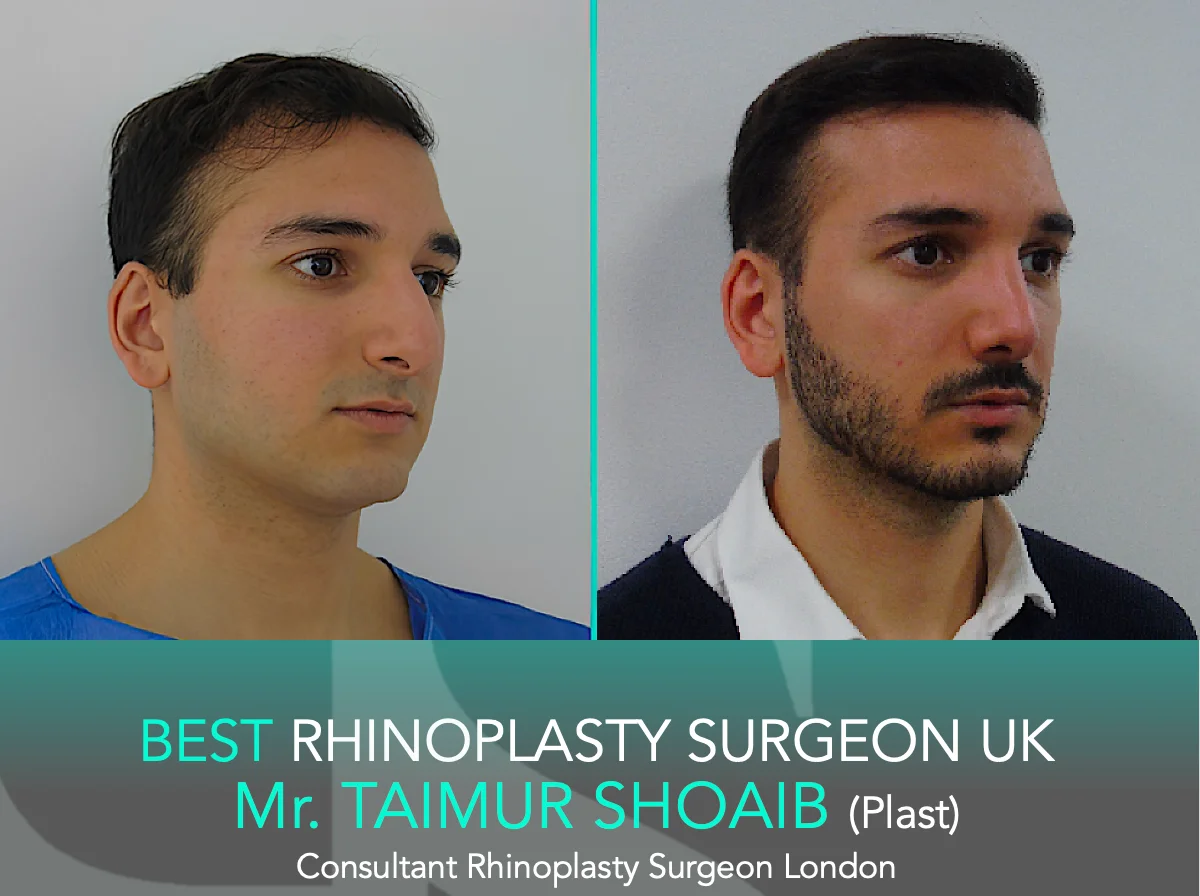
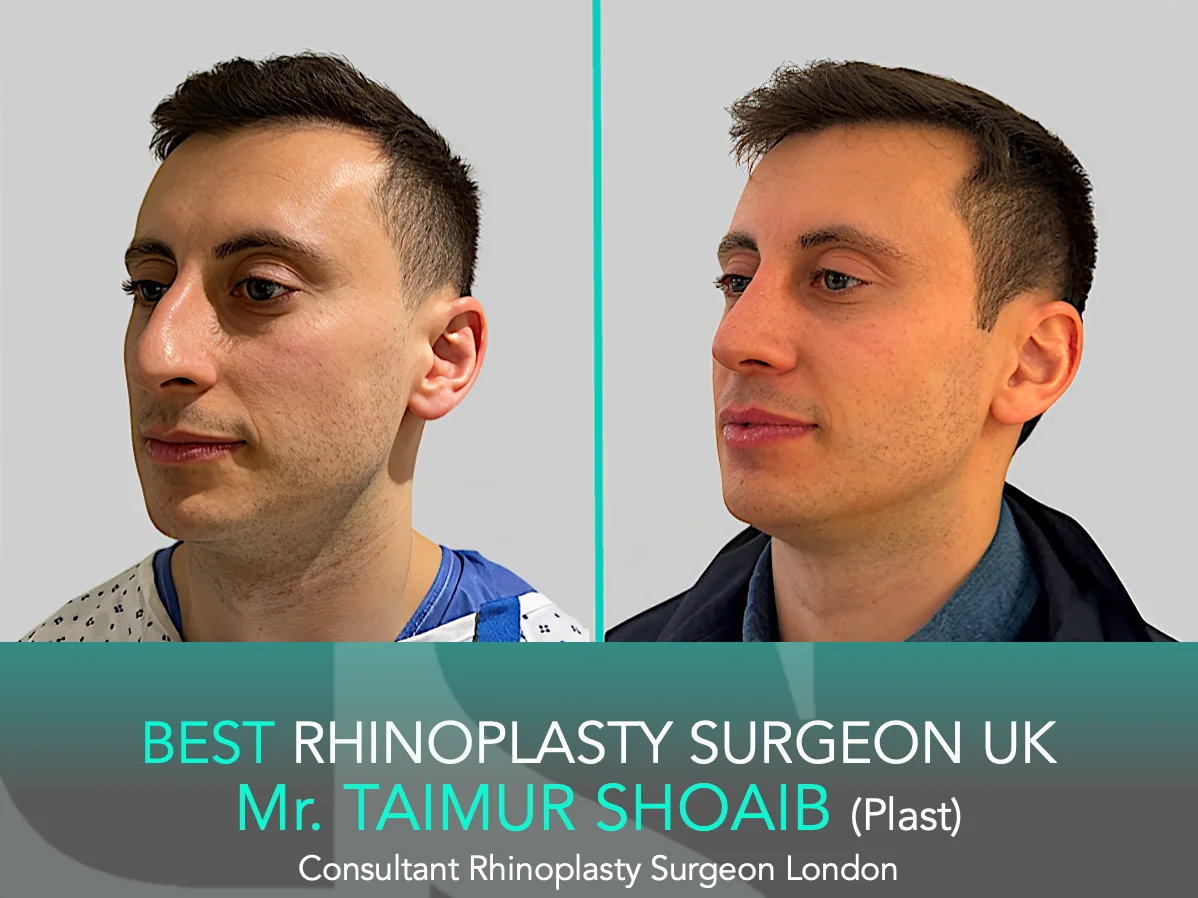
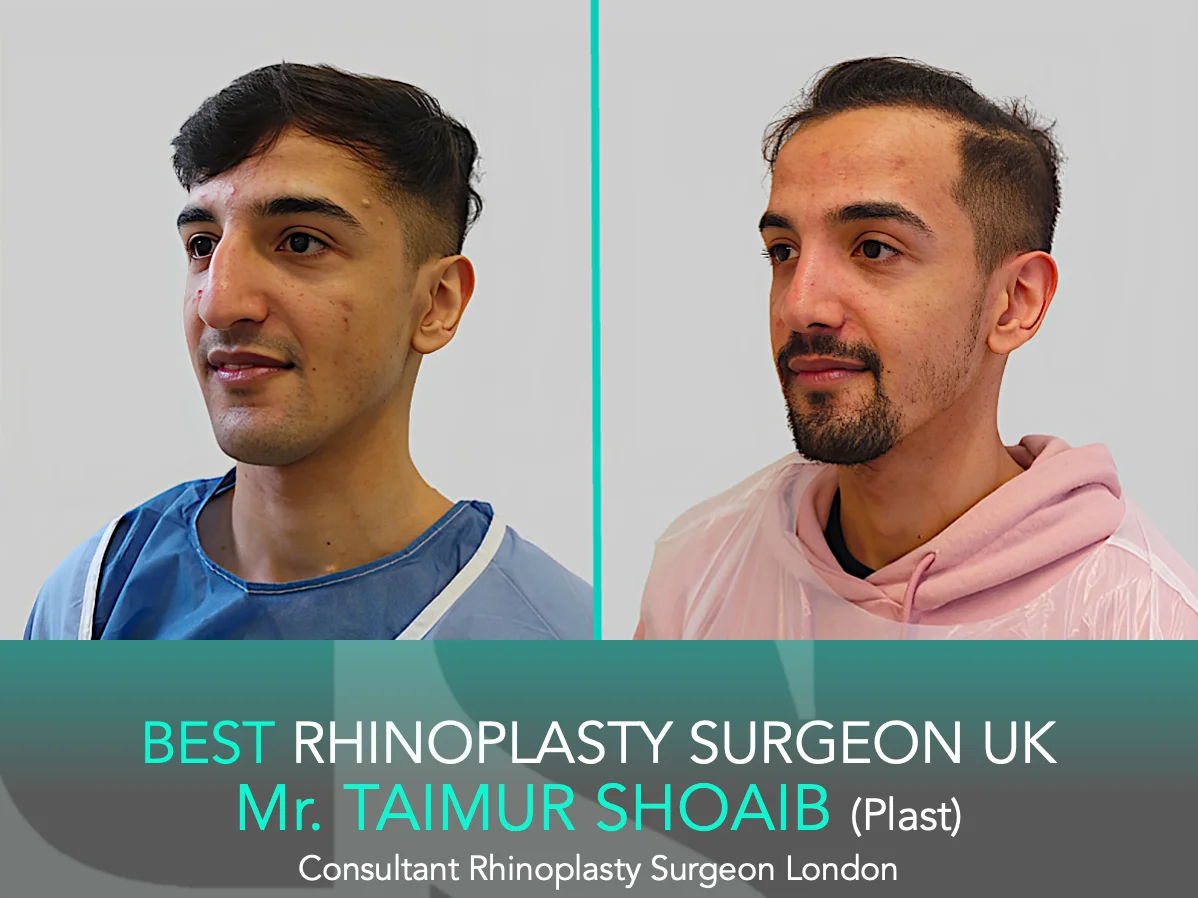
Before & After Gallery

Testimonials

Rebecca Cook
Carla
Lauren Bedford
Anna Maria
Violeta D
Nicola
Hannaa
Hannah Sandell
Rebecca Grayson
Chloe Lopes
Thayna Ferreira

Rhinoplasty - £8950.00

At A Glance

  • GMC Specialist Category

    Plastic Surgery

  • Anaesthesia

    General Anaesthetic

  • Techniques Used

    Specialising in Closed, Open And Graft Rhinoplasty

  • Surgery Time

    1 - 1.5 hours

  • Hospital Stay

    Same-Day Surgery

  • Time Off Work (Working From Home)

    24 Hours After Surgery

  • Shower/Hygiene

    12-Hours After Surgery

  • Client Facing Work

    After 1 Week

  • Driving

    48 Hours After Surgery

  • Recovery Period

    7–14 days (Initial), 12 months (Final)

Rhinoplasty Expertise Areas

Cost, Before & After Photos, Recovery, Consultation Bookings

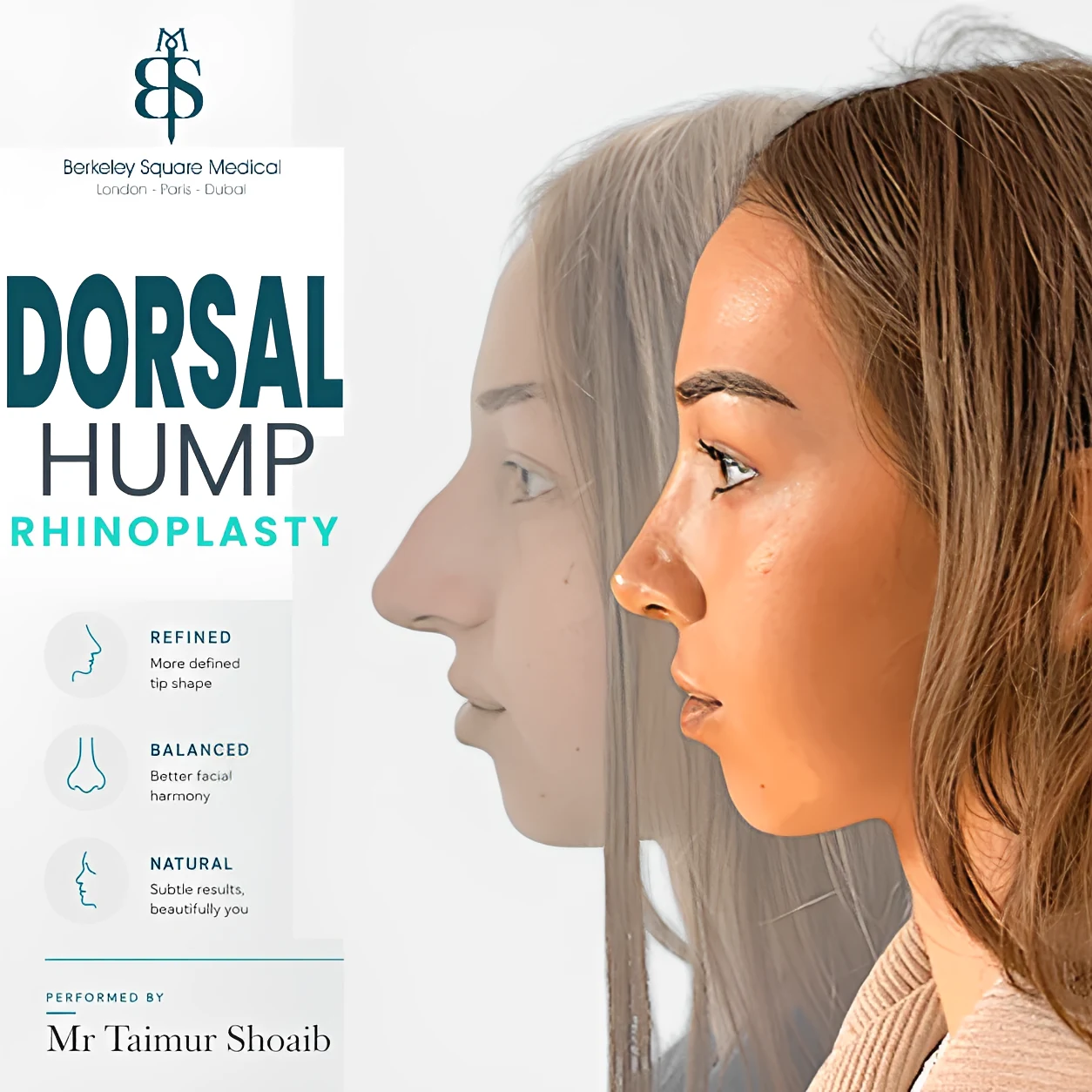
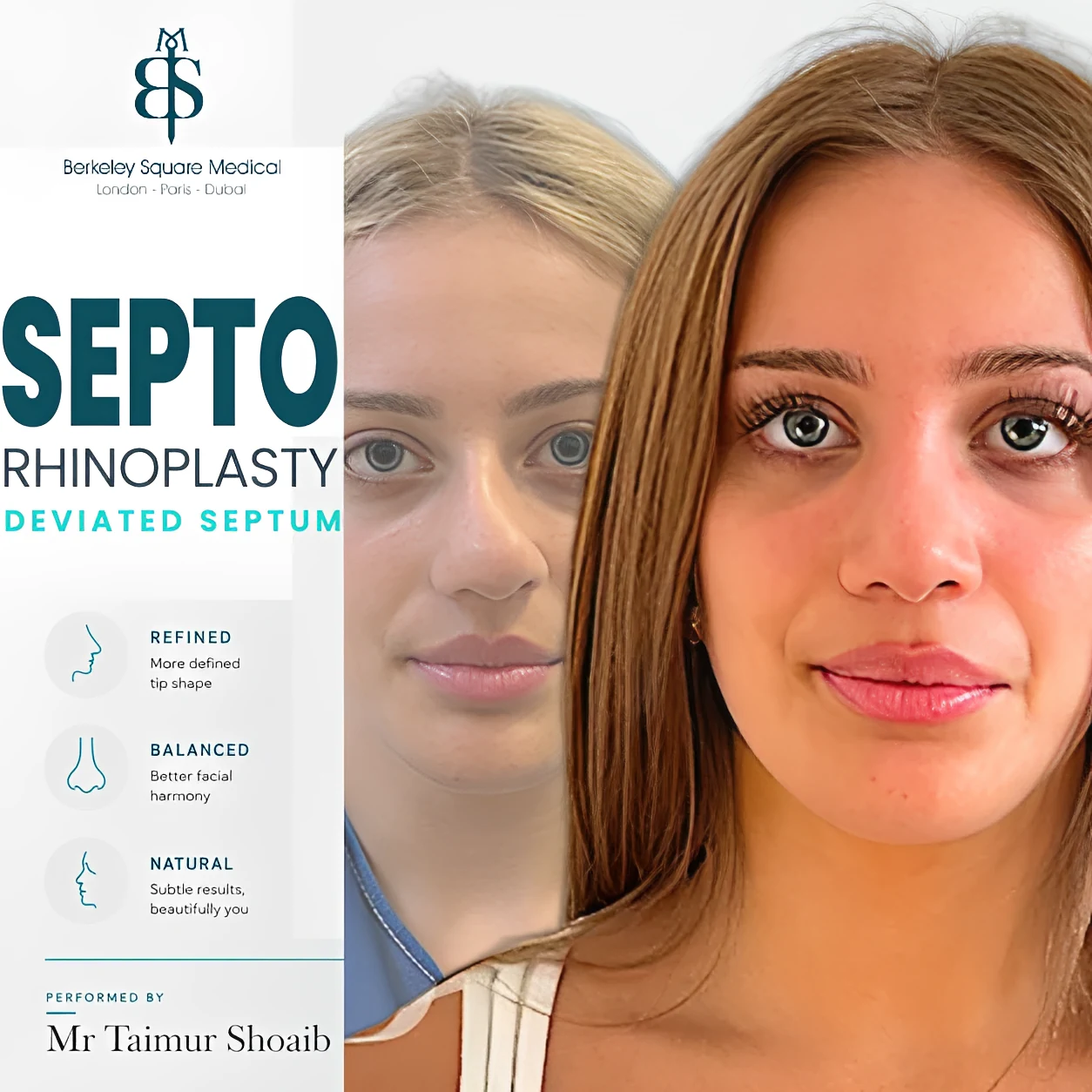
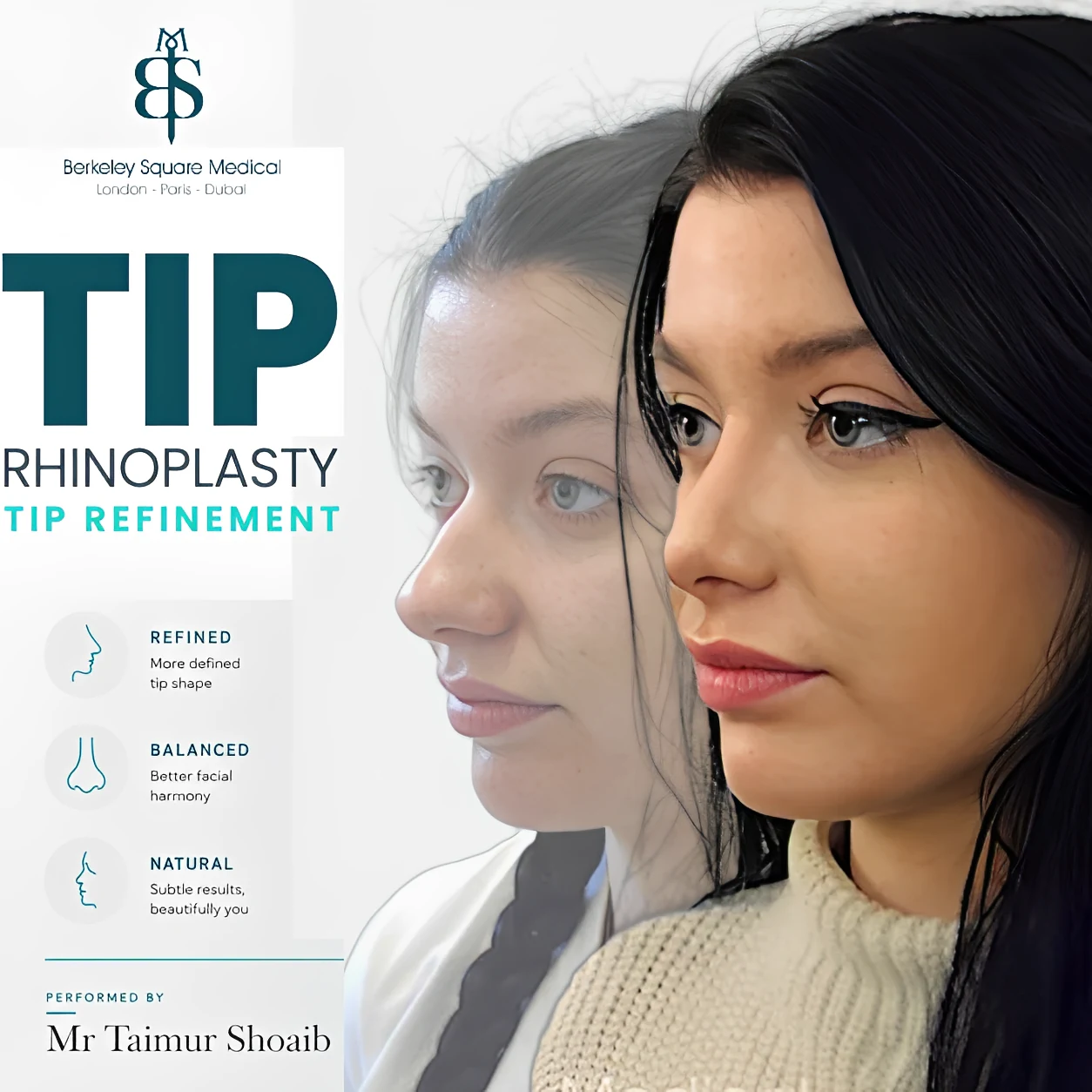
Go To Female Rhinoplasty Page

Cost, Before & After Photos, Recovery, Consultation Bookings

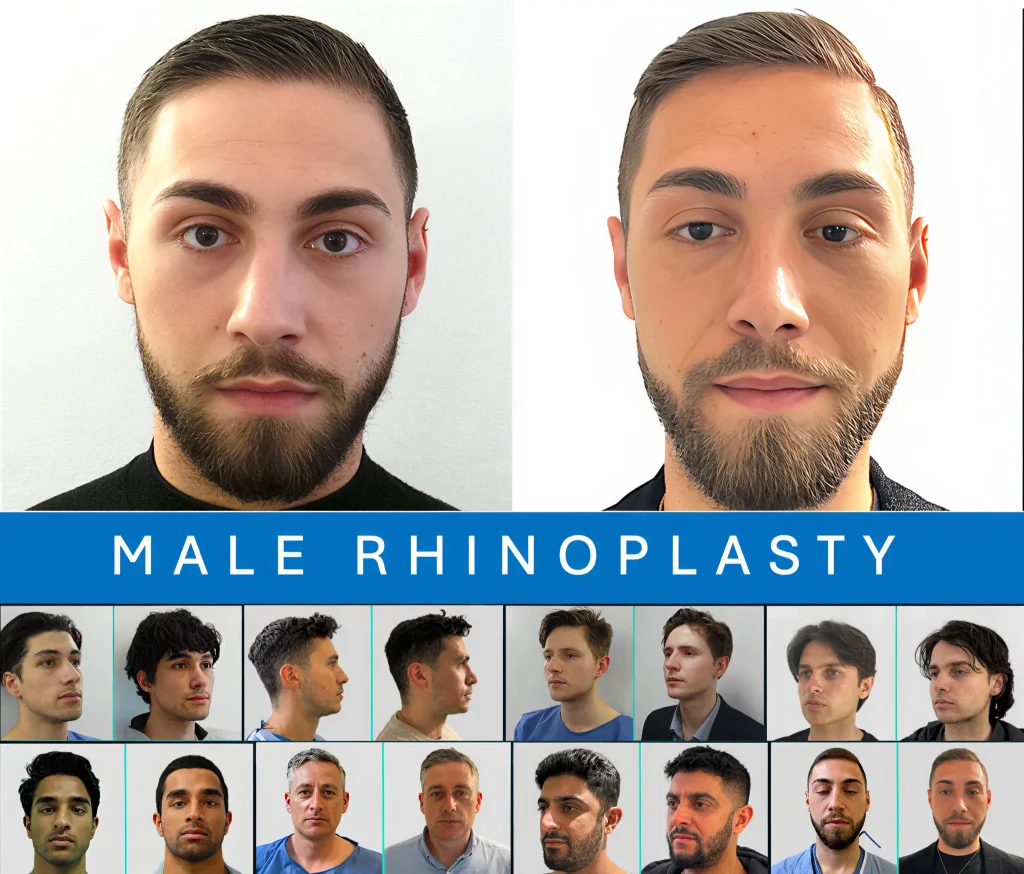
Go To Male Rhinoplasty Page

Cost, Before & After Photos, Recovery, Consultation Bookings

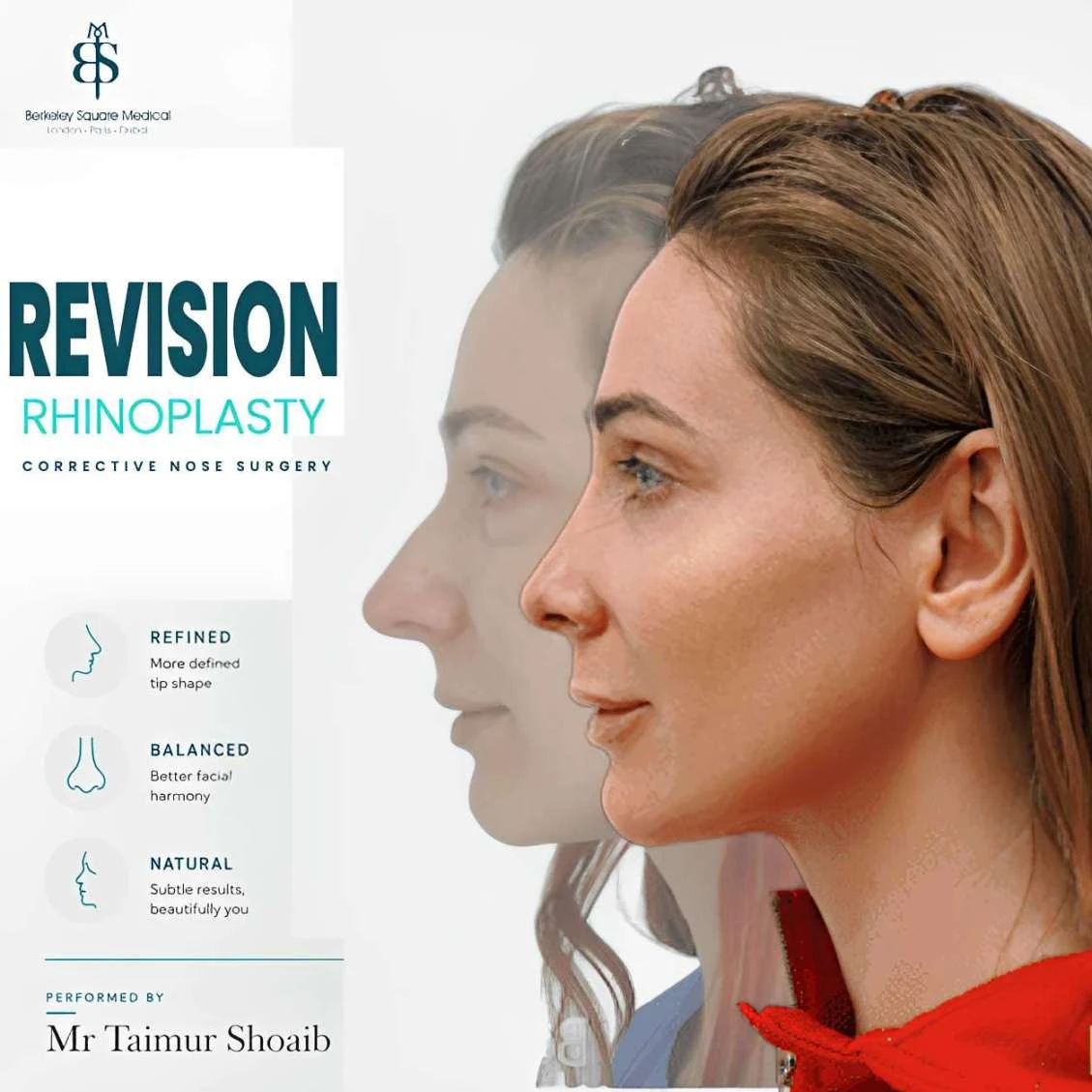
Go To Revision Rhinoplasty Page

Why Patients Choose Mr Taimur Shoaib

Consultant Plastic Surgeon | GMC Number: 3615443

Plastic Surgery | Specialist Register

In the UK, the gold standard for surgical qualification is representation on the General Medical Council (GMC) Specialist Register for Plastic Surgery. This accreditation is only achieved after a surgeon has completed years of rigorous, specialist training, confirming their ability to perform complex nasal reconstructions independently.

1. Structural Preservation and Natural Aesthetics ↓

Mr Shoaib’s surgical technique is defined by Structural Preservation, an approach that prioritises the long-term integrity of the nasal framework. By avoiding aggressive tissue removal, he ensures that aesthetic refinement supports healthy Respiratory Function and facial harmony. This focus on anatomical stability ensures results that age naturally, avoiding the “over-operated” appearance and maintaining both form and function for decades.

2. High-Volume Expertise and Verified Data ↓

Precision in rhinoplasty is a product of high surgical volume and rigorous outcome monitoring. Mr Shoaib performs over 120 cases annually, with every procedure tracked via a comprehensive internal clinical audit. Our most recent data, based on 905 Consecutive Cases, shows a Revision Rate of 3.5% for 2025 and 3.3% for 2024. These figures, consistently below the global average, reflect a dedicated commitment to surgical excellence and patient safety. Note: 2026 clinical outcomes are currently being audited and will be published upon the completion of the annual data cycle.

3. Elite Surgical Qualifications and Memberships ↓

Mr Shoaib is a Fellow of the Royal College of Surgeons (FRCS Plast), representing the highest tier of specialist surgical qualification in the UK. As a full member of BAAPS and BAPRAS, his practice is strictly governed by the UK’s leading bodies for aesthetic and reconstructive surgery. He also maintains international standing through memberships in ISAPS and UKAAPS, ensuring a global standard of patient safety and surgical innovation.

4. A Consultant-Led Pathway to Recovery ↓

Every stage of your surgical journey is managed personally by Mr Shoaib, ensuring a seamless transition from consultation to final result. All procedures are conducted exclusively within CQC-registered UK hospitals, providing a regulated and secure environment for your care. Our pathway utilises advanced 3D Anatomical Mapping and dedicated anaesthetic teams to prioritise long-term stability and patient-centric safety.

Taimur Shoaib
Latest posts by Taimur Shoaib (see all)

Mr Taimur Shoaib
Consultant Plastic Surgeon, GMC Specialist Register (Plastic Surgery)


Mr Shoaib is a Consultant Plastic Surgeon registered with the General Medical Council (GMC No. 3615443), specialising exclusively in primary, revision, and functional rhinoplasty. His surgical philosophy integrates Detailed Anatomical Assessment with proportionate facial analysis to achieve stable, natural-looking outcomes that preserve long-term airway health.

With a surgical career spanning over 30 Years, Mr Shoaib has performed aesthetic and reconstructive procedures for more than 19,000 Patients. His practice is dedicated to Evidence-Informed Techniques and regulated, hospital-based care, consistently adhering to the most rigorous UK clinical standards and GMC safety protocols.

Professional Qualifications

You can verify Mr. Shoaib's current licence and specialist status via the GMC's official portal here.

Verify on the GMC Register → Click Here

Awards & Accreditation:

  • PROFESSIONAL MEMBERSHIPS

    Full Member, British Association of Aesthetic Plastic Surgeons (BAAPS)
    Full Member, British Association of Plastic, Reconstructive and Aesthetic Surgeons (BAPRAS)
    Full Member, International Society of Aesthetic Plastic Surgery (ISAPS)
    Full Member, UK Association of Aesthetic Plastic Surgeons (UKAAPS)
  • REGISTRATION & SPECIALISATION

    Fully Registered with the General Medical Council (GMC No. 3615443)
    Listed on the GMC Specialist Register for Plastic Surgery
    Fellow of the Royal College of Surgeons of Edinburgh (FRCS Plast)
  • INDUSTRY AWARDS & RECOGNITION

    Winner, Best Surgical Result UK 2024 – Safety in Beauty Awards (Hilton Park Lane, London)
    Winner, Best Plastic Surgeon UK – UK Diamond Awards (Excellence in Safety)
    Winner, Best Plastic Surgeon UK 2021 – National Aesthetic Awards
    Most Influential Plastic Surgeon UK 2021/22 – MCA UK Awards
    Best Cosmetic Surgeon Scotland (2015, 2017) – MCA Awards
  • Our Patient Trust & Verified
    Reviews

    Mr Taimur Shoaib is a highly rated specialist on Doctify, the UK’s leading independent healthcare review platform. With a consistent 4.9/5 star rating from verified patients, his feedback reflects a strong commitment to clinical safety, honest consultation, and natural looking results.

    View Mr Shoaib’s Verified Patient Reviews and Outcomes on Doctify

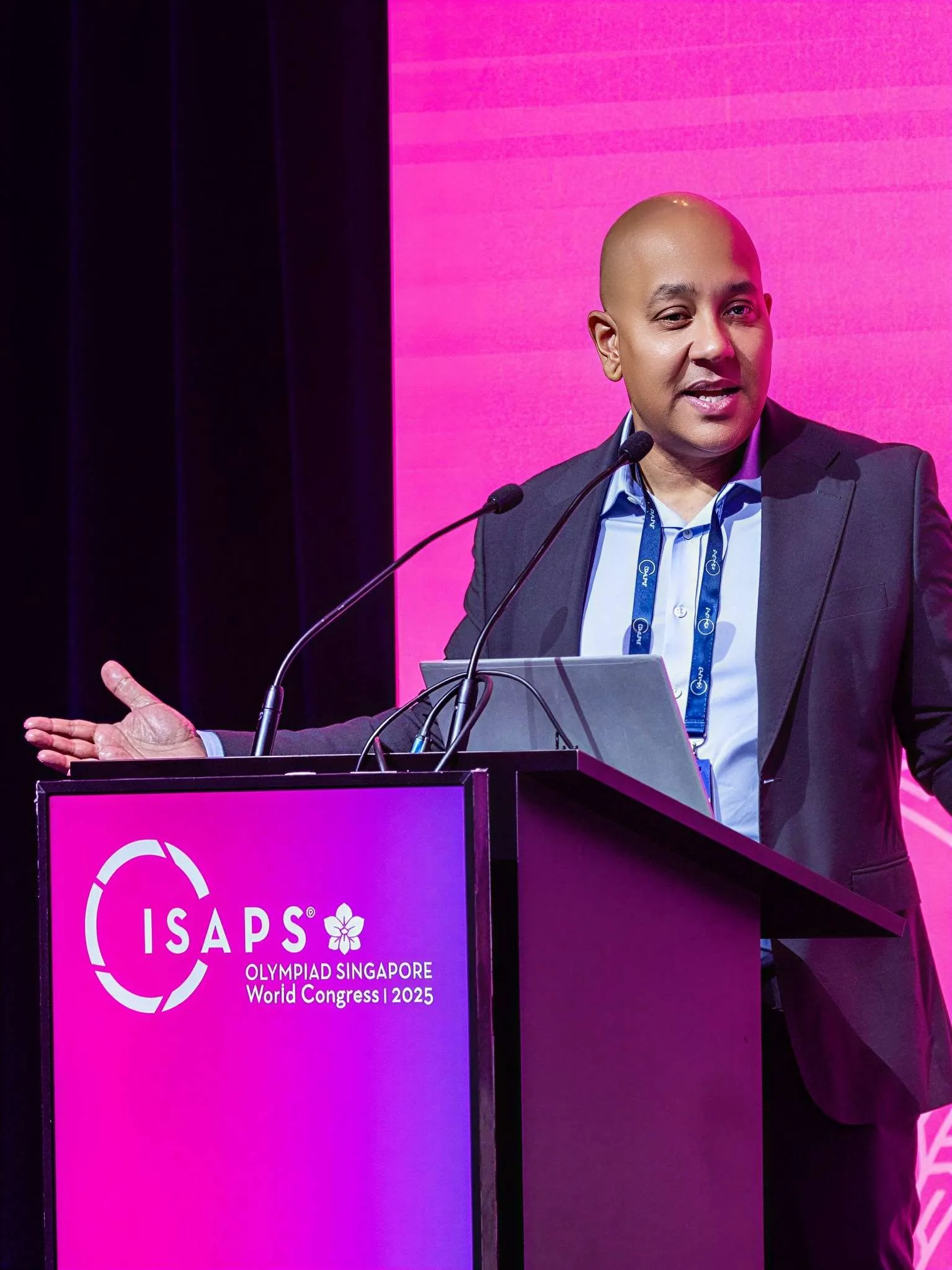
    Mr Shoaib’s innovations in Closed Rhinoplasty were globally recognized at the ISAPS Olympiad World Congress 2025 in Singapore, where his technique for advanced tip reshaping won the Bronze Award in the Rhinoplasty scientific category.

    ISAPS Olympiad Singapore 2025: Rhinoplasty Award Winners
    Mr Shoaib presenting at ISAPS Olympiad World Congress 2025 Singapore

Choosing The Right Specialist:

Choosing the right consultant plastic surgeon is the most important step toward achieving a safe, natural, and structurally stable rhinoplasty result. In the UK, specialist listing on the GMC Register for Plastic Surgery remains the fundamental safety requirement.

1 Mastering 3D Nasal Anatomy & Structural Stability
Rhinoplasty is one of the most technically demanding procedures in aesthetic plastic surgery because it alters both external appearance and internal structure. True expertise lies in understanding nasal anatomy in three dimensions, including cartilage strength, skin thickness, tip support mechanisms, septal alignment, and long-term structural stability.
2 Comprehensive Clinical & Functional Assessment
A specialist rhinoplasty practice should involve detailed anatomical assessment, careful photographic and functional analysis, and clear surgical planning that anticipates how the nose will heal over time. This includes evaluating airflow, internal nasal valve function, and septal deviation. Where clinically appropriate, septoplasty may be performed alongside rhinoplasty to correct obstruction and preserve breathing function.
3 Reducing the Risk of Revision Rhinoplasty
Poor planning can compromise structural support and increase the likelihood of long-term dissatisfaction or revision rhinoplasty. By approaching rhinoplasty as both a structural and aesthetic operation, a specialist surgeon reduces unnecessary risk and protects long-term nasal function.
4 Prioritising Airway Stability & Respiratory Health
Your nose plays a central role in facial balance and respiratory health. Choosing a surgeon who prioritises airway stability as highly as cosmetic refinement is one of the most important decisions you can make.

Is Rhinoplasty Right for You?

Rhinoplasty is a highly personalised procedure. During your initial consultation with Mr Taimur Shoaib, a comprehensive clinical evaluation of your nasal anatomy, skin quality and breathing function is performed to determine whether surgery is the safest and most effective option for you.

  You May Be a Good Candidate If:
  • Physical Maturity: Your facial growth is complete, typically 16+ for females and 18+ for males.
  • Good General Health: You are in good physical health with no underlying conditions that could impair healing.
  • Specific Concerns: You have clear goals regarding the size, shape or symmetry of your nose, or experience functional concerns such as septal deviation.
  • Positive Outlook: You are seeking improvement for yourself rather than attempting to meet external expectations or pursue perfection.
  When Rhinoplasty May Not Be Appropriate:
  • Active Smoking: Nicotine constricts blood vessels and increases the risk of skin necrosis, delayed healing and infection. Patients are encouraged to stop smoking or vaping at least 4–6 weeks before and after surgery.
  • Unrealistic Expectations: Seeking to replicate a specific celebrity feature that does not align with your facial proportions or biological structure.
  • Medical Contraindications: Certain bleeding disorders, severe cardiac conditions or poorly controlled diabetes may increase surgical risk.
  • Recent Nasal Surgery: If rhinoplasty has been performed within the past 12 months, tissues may still be healing and revision may be premature.
  • Body Dysmorphic Disorder (BDD): Mental wellbeing is prioritised. Surgery is rarely appropriate where psychological distress is centred on minor perceived flaws.

Your Rhinoplasty Journey:
Clinical Standards, Safety & Recovery

1

Your Consultation: Specialist Planning

Your consultation is a specialist, consultant-led clinical assessment. The goal is to confirm safety, suitability, and a stable long term plan based on your anatomy and breathing, not a rushed discussion.

Step 1: Your goals and concerns

We clarify what you want to improve, for example nasal hump, deviation, tip shape, projection, width, or breathing restriction, and we set priorities. This step matters because rhinoplasty outcomes are determined by millimetres, and clear aims prevent overcorrection.

Step 2: Medical history and anatomical assessment

A structured review is performed, including prior nasal surgery or trauma, medications, allergies, smoking or nicotine use, and healing risk factors. Examination assesses skin thickness, cartilage strength, septal support, internal nasal valve stability, and overall facial proportion.

Step 3: Imaging and surgical direction

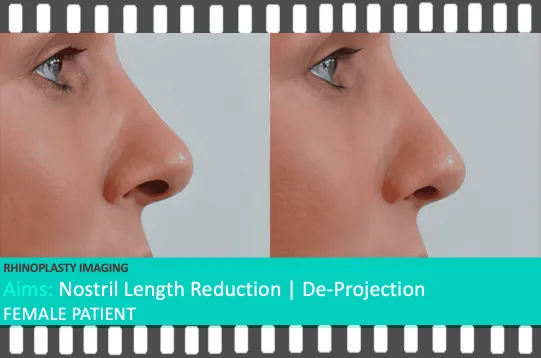
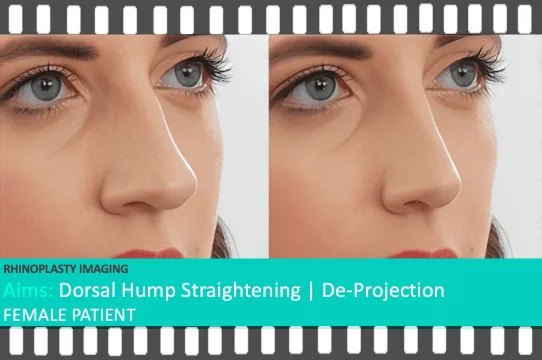
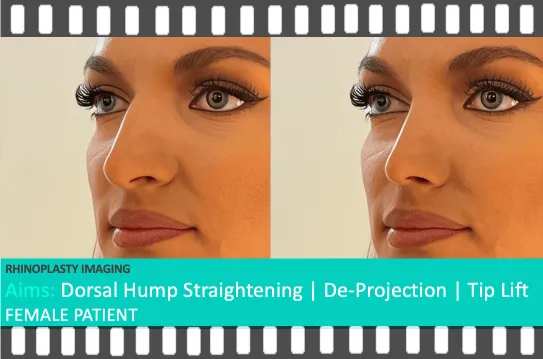
Clinical photography is used to analyse symmetry and plan changes logically. Where imaging simulation is used, it supports communication and planning. It helps confirm direction, but it is not a guarantee of an identical final outcome because healing varies.

Step 4: Risks, benefits, and limitations

Risks and realistic limitations are discussed clearly, including what can and cannot be achieved safely. Informed consent means you understand both the potential benefit and the trade offs, particularly around structure and breathing.

After the consultation, you receive a written medical summary by email to document the plan and key points. You then meet the clinical team on the same visit to discuss logistics, availability, and practical preparation.

Beyond his clinical practice, Mr Shoaib is a prolific contributor to plastic surgery research with over 76 peer-reviewed publications. His work in facial reconstructive surgery ensures his approach to rhinoplasty is grounded in the latest anatomical science and surgical innovation.
ISAPS World Congress 2024, innovations in rhinoplasty
A recognised global educator, Mr Shoaib was recently an invited speaker at the ISAPS World Congress 2024, where he presented his innovations in advanced tip reshaping techniques to the international surgical community.
Explore the 2024 ISAPS Innovations in Rhinoplasty Session
2

Your Surgery: Precision & Safety

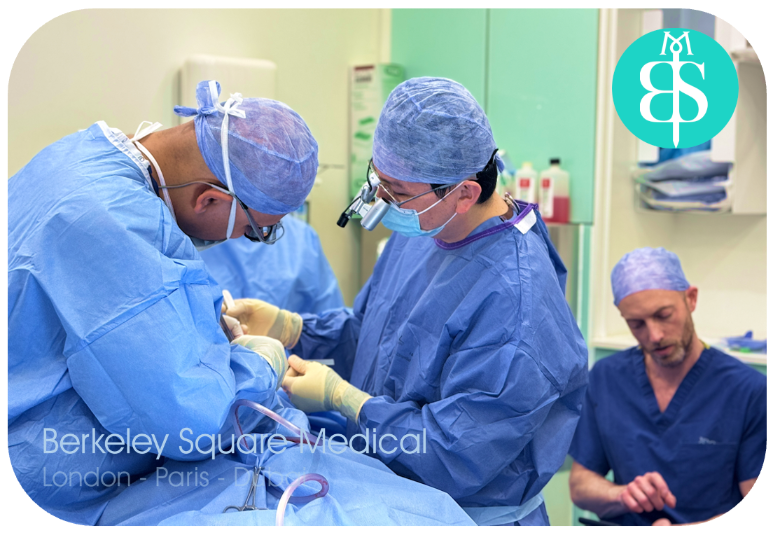
Surgery is performed in a CQC registered UK hospital with consultant anaesthetist oversight. The priority is controlled technique, structural stability, and airway safety, not aggressive reduction.

Step 1: Final review and consenting

On the day of surgery, you meet Mr Shoaib again to confirm the plan, answer final questions, and complete consent directly with your surgeon. Pre operative clinical photographs are taken to support structured comparison during follow up.

Step 2: Anaesthetist assessment

You meet your anaesthetist to review medical history, airway considerations, and monitoring. Anaesthetic consent is completed when everything is clear and you feel comfortable.

Step 3: Technique choice, open or closed

The approach is selected based on anatomy and complexity. Closed rhinoplasty may suit certain refinements, while open rhinoplasty can be necessary for more complex reshaping or revision work. Where clinically appropriate, septoplasty or structural grafting may be used to protect breathing and support long term stability.

The surgical philosophy prioritises structural preservation, stable tip support, dorsal integrity, and long term airway safety. Each case is recorded within a structured clinical audit process.

Leading the Field: Reducing Revision Rates

Mr Taimur Shoaib is at the forefront of rhinoplasty innovation. In a peer reviewed 2023 publication in the Aesthetic Surgery Journal Open Forum, Mr Shoaib reported a clinical revision rate of 3.5%.

This outcome is attributed to a structured approach to planning, structural preservation, and post operative decision making, including a refinement protocol designed to address minor surface irregularities without committing a patient to further surgery when it is not clinically necessary. For patients, this supports a more predictable, stable result with a focus on long term definition.

Read the Full Peer-Reviewed Study: Postoperative Fillers in Rhinoplasty

Mr Shoaib's expertise in Closed Rhinoplasty is supported by published research demonstrating a remarkably low 0.8% complication rate across a published 238 patient case study.

Read the Clinical Safety Study on PubMed Central

3

Your Recovery: Stability & Refinement

Recovery is a gradual process. Early swelling and congestion are expected, and refinement continues for many months as the nose settles structurally. The most reliable way to judge progress is by checkpoints, not daily inspection.

Key milestones

Day 7: Splint removal and early clinical review.
Weeks 2 to 6: Bruising fades, swelling reduces, comfort improves.
3 months: Majority of visible swelling settles, structured assessment and photography.
6 to 12 months: Ongoing refinement, long term stability evaluation.

What most patients experience

Most patients return to non strenuous work at around 10 days, depending on bruising and comfort. A large proportion of swelling improves within the first 3 months, with continued subtle refinement up to 12 months, particularly in the tip.

Clinical Excellence: Our monitored internal audit data shows a 3.5% revision rate in 2025, based on recorded outcomes and structured follow up.

A Smoother Journey: Our goal is to ensure you are thrilled with your result without needing a second major operation.

The "Refinement" Advantage: Minor skin or tissue irregularities that occur during healing can often be settled using a specialised fine tuning protocol rather than more surgery.

Built to Last: This technique prioritises the long term strength of your nose, ensuring the new shape remains stable, masculine, and well defined for years to come.

Proven Success: Mr Shoaib’s data led approach has successfully reduced the need for revision surgery to just 3.5%, giving you peace of mind throughout your recovery.

Read the Full Study on How We Reduce Revision Rates
4

Understanding Risks: Complete Transparency

Rhinoplasty, like all surgical procedures, carry risk. The purpose of this section is to explain what is common, what is uncommon, and what requires urgent review, so you can make an informed decision.

Common, expected recovery effects

1. Swelling and bruising (very common, around 80% of patients)

Swelling and bruising around the nose and eyes is expected after rhinoplasty. It is typically most noticeable in the first week, then improves steadily. Following aftercare instructions closely can reduce severity and duration.

2. Nasal bleeding and congestion (very common early, around 90% of patients)

Light bleeding and a blocked sensation are common in the first 24 to 72 hours. This usually settles with time and routine care. Heavy bleeding or worsening symptoms should be reviewed promptly.

3. Temporary numbness and stiffness (very common, around 90% of patients)

Numbness, tightness, and stiffness, especially in the tip, are normal early on. Sensation usually improves over weeks to months as swelling settles and tissues soften.

Less common risks

4. Breathing difficulty (uncommon, around 5% of patients)

Some patients experience breathing difficulty during healing, particularly if swelling is significant. If symptoms persist beyond recovery expectations, assessment may be needed to exclude structural narrowing.

5. Infection (rare, around 1% of patients)

Infection is uncommon. If it occurs, it is usually managed with antibiotics. Increasing redness, worsening pain, fever, or discharge should be reported promptly.

6. Scarring (rare, around 1% of patients)

Most scarring is minimal, particularly with closed techniques. With open rhinoplasty, the columella incision usually heals well. Scar quality can vary, and careful aftercare supports best healing.

7. Unsatisfactory aesthetic outcome (uncommon, around 3% of patients)

Healing is individual, and subtle asymmetry or irregularity can occur. Where appropriate, non surgical options may be considered, and revision surgery is only discussed if it is clinically justified and safe.

8. Allergic reaction (very rare, around 0.02% of patients)

Allergic reactions to medication or anaesthetic agents are rare. Your medical history and anaesthetic assessment are designed to reduce risk, and hospitals carry appropriate emergency medication.

9. Septal perforation (very rare, around 0.05% of patients)

Septal perforation, a hole in the nasal septum, is uncommon but more serious. It may cause crusting, bleeding, or airflow issues and can require further management.

When to contact the team

You should contact the team promptly if you experience increasing pain, worsening redness, fever, heavy bleeding, or any sudden breathing concern. Knowing what is expected versus what needs review is part of safe care.

Risk reduction is achieved through careful patient selection, consultant led planning, regulated operating theatres, consultant anaesthetic oversight, and structured follow up. The objective is long term structural stability and protection of nasal function.

Make Your Enquiry

+44(0)203 811 8175


    Considering any cosmetic treatment is a significant step forward. Your consultation with Mr. Shoaib and our Team will provide clarity, expert insight, and honest guidance — focused entirely on your goals.

    Tell us about you

    A Few Contact Details

    Which procedure are you enquiring about?


    Mr Taimur Shoaib, Consultant Rhinoplasty Surgeon London UK

    Integrity in Rhinoplasty: A Message from Mr. Taimur Shoaib

    "Choosing rhinoplasty is a significant life decision; it’s a permanent structural change to your face, and it’s a journey that should never be rushed. I always tell my patients: please, take your time. Your nose is as much about how you breathe as how you look.

    My role as a GMC-registered Consultant Plastic Surgeon is to be your advocate for safety and function. Beyond the aesthetics, we must ensure your nasal breathing (Septoplasty) is protected. I encourage you to look past the marketing and price tags—instead, look for a surgeon’s FRCS (Plast) qualifications, their documented outcomes, and their honesty regarding surgical risks. At Berkeley Square Medical, we believe a successful result is built on realistic expectations and a shared commitment to your long-term post-operative aftercare."

    RealSelf Patient Reviews of Berkeley Square Medical

    FAQ

    Taimur Shoaib
    Latest posts by Taimur Shoaib (see all)

    Make Your Enquiry

    +44(0)203 811 8175

    Any questions, enquiries, or just looking for a consultation? Simply send your enquiry here and we will get back to you with a reply promptly.


      Considering any cosmetic treatment is a significant step forward. Your consultation with Mr. Shoaib and our Team will provide clarity, expert insight, and honest guidance — focused entirely on your goals.

      Tell us about you

      A Few Contact Details

      Which procedure are you enquiring about?


      COPYRIGHT © BERKELEY SQUARE MEDICAL 2026. ALL RIGHTS RESERVED.


        Considering any cosmetic treatment is a significant step forward. Your consultation with Mr. Shoaib and our Team will provide clarity, expert insight, and honest guidance — focused entirely on your goals.

        Tell us about you

        A Few Contact Details

        Which procedure are you enquiring about?


        ×

          Tell us about you

          A Few Contact Details

          Which procedure are you enquiring about?


          ×

            Tell us about you

            A Few Contact Details

            Which procedure are you enquiring about?


            ×