Travelling abroad for a rhinoplasty can seem like a sensible way to save money. The advertised price is lower, the clinic looks modern, and the package often includes a hotel and airport transfers. For some patients the result is perfectly acceptable. For a growing number, however, the saving comes at a cost they did not expect: a nose that does not look or breathe the way they hoped, and very little support once they are back home.
If you are unhappy with a nose job performed overseas, you are not alone, and you do have options. This guide explains why problems after surgery abroad are becoming more common, how to recognise when something may genuinely be wrong, and what to do next. It also explains how revision rhinoplasty in London with a UK-registered specialist can help correct both the appearance and the function of your nose.
- Cosmetic surgery tourism is rising, and so are the complications. UK hospital treatment after surgery abroad rose by 94 per cent over three years, according to BAAPS.
- Turkey accounts for around three quarters of corrective cases, and follow-up care abroad is often limited or unavailable.
- Warning signs that may point to a need for revision include difficulty breathing, a collapsed or uneven bridge, an over-rotated or pinched tip, and asymmetry that does not settle.
- Most surgeons advise waiting around twelve months after the original surgery before a revision, so the tissues can fully heal.
- A revision should be planned by a GMC-registered specialist working in a CQC-regulated setting, with a thorough assessment and realistic, imaging-supported expectations.
Why So Many People Travel Abroad for Rhinoplasty
Cost is the main driver. In one decade-long UK study presented to the British Association of Aesthetic Plastic Surgeons (BAAPS), 83 per cent of patients who had gone abroad said the lower price was their primary reason, and more than half had paid under £5,000 for surgery, travel and accommodation combined.
The difficulty is that the headline price rarely reflects the full picture. Aftercare, revision surgery if something goes wrong, and the management of any complications are often not included, and may not be available at all once you have flown home. In the same research, 66 per cent of patients said they would not make the same decision again, and around half expressed outright regret.
The Hidden Risks of Rhinoplasty Abroad
Surgery is never completely risk-free, wherever it is performed, and many surgeons working abroad are highly skilled. The concern raised repeatedly by UK and international surgical bodies is not the destination itself but the way some procedures are sold, regulated and followed up.
A 2026 analysis of the BAAPS national database reviewed 198 patients who returned to the UK with complications after cosmetic surgery abroad between 2022 and 2024. The findings are sobering. 76 per cent had been treated in Turkey, almost half needed further surgery under general anaesthetic, and the cost to the NHS was estimated at £1.2 to £1.8 million over two years. Wound healing problems, infection and tissue damage were among the most common issues.
For rhinoplasty specifically, three problems stand out:
- Limited follow-up. If swelling, breathing problems or an unexpected shape develop after you return home, the operating surgeon is often unreachable, and you may have no medical records to pass on to a UK surgeon.
- Difficulty arranging revision. Surgeons who travel to operate are frequently not registered to practise in the UK, so going back for a correction is rarely practical.
- Variable regulation. In the UK, surgeons can be checked on the GMC Specialist Register and clinics are regulated by the Care Quality Commission. These safeguards are not guaranteed elsewhere.
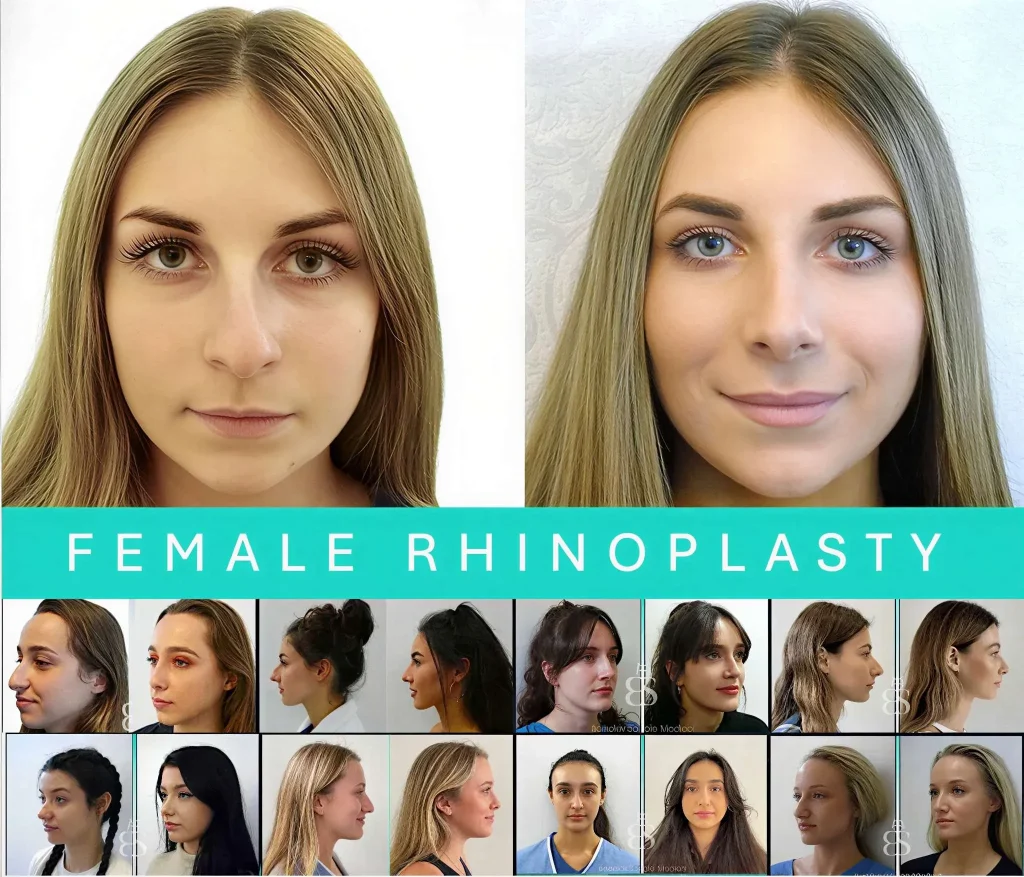
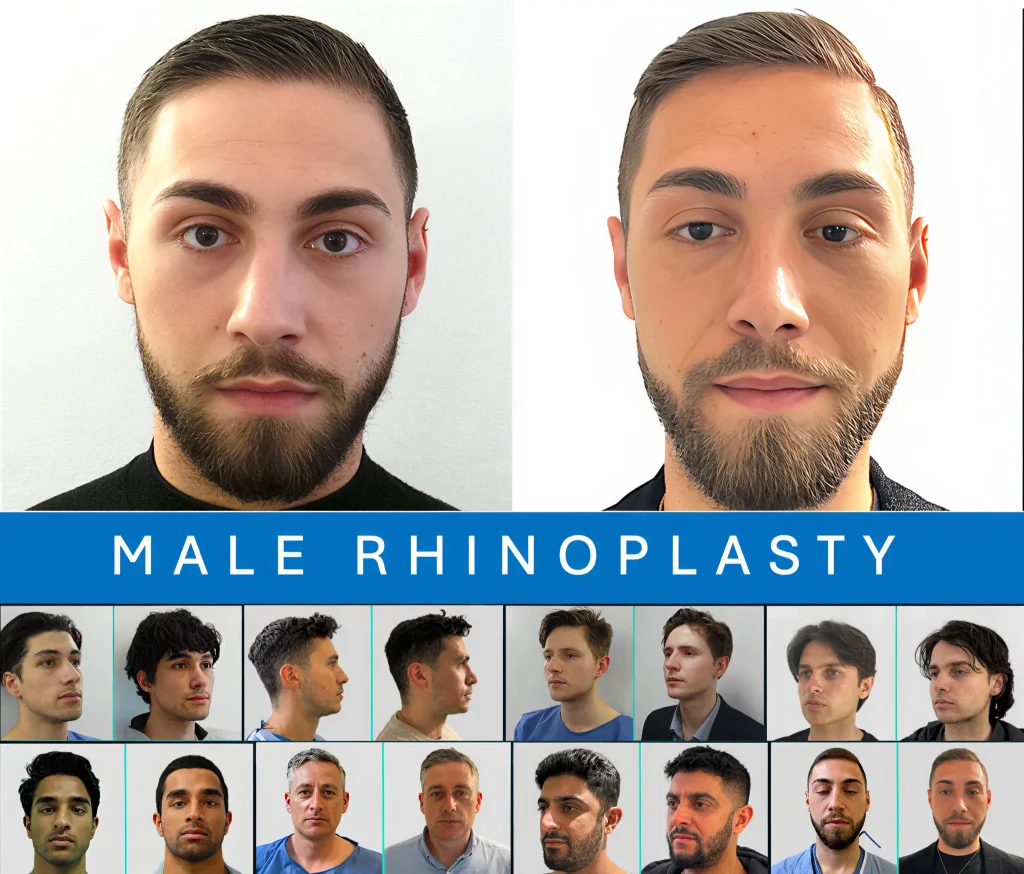
Rhinoplasty before & after, by Mr Taimur Shoaib FRCS
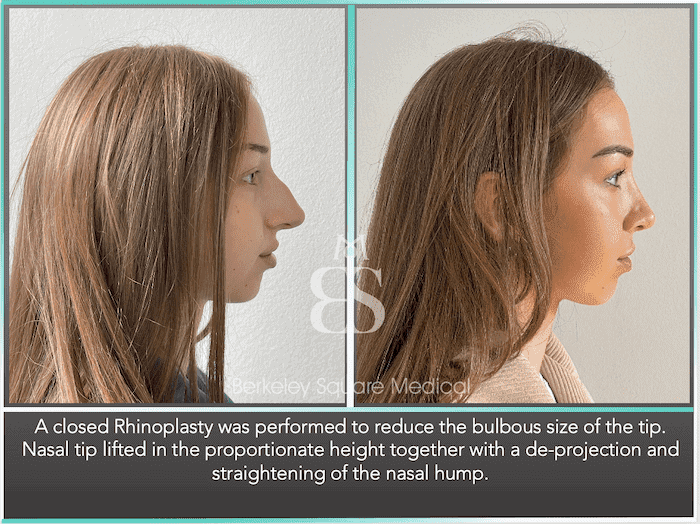
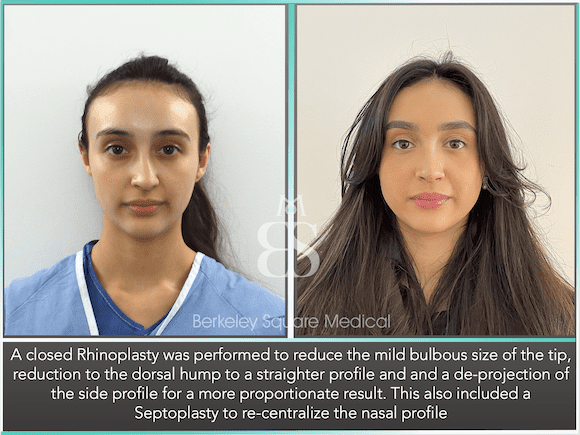
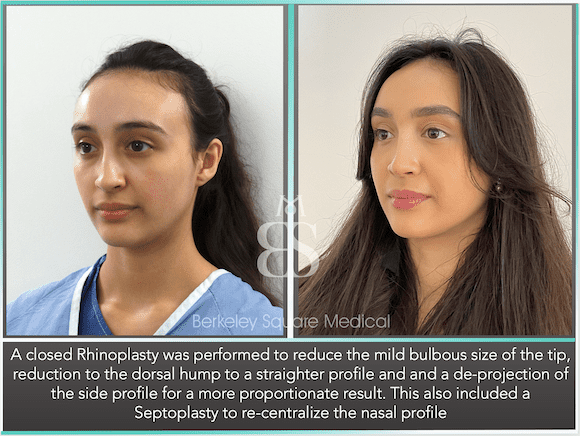
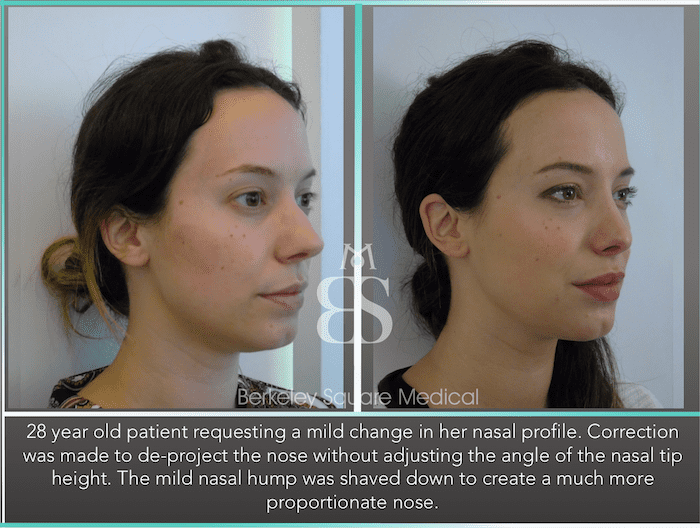
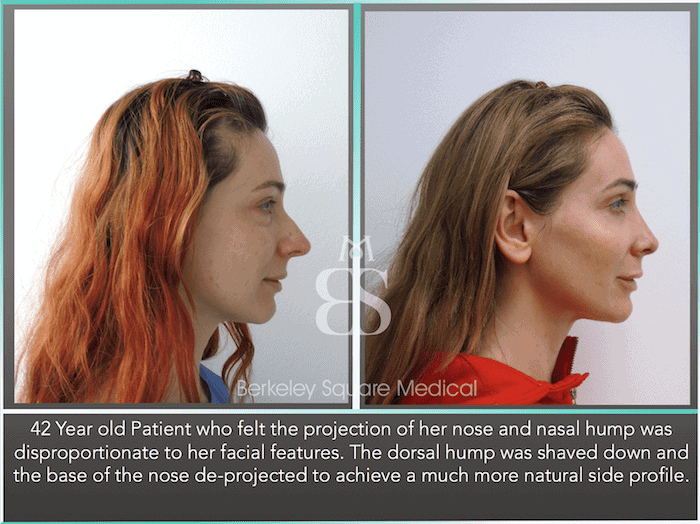
A selection of Mr Shoaib's rhinoplasty results. Individual results vary.
Signs Your Rhinoplasty Abroad May Need Revision
Some changes after rhinoplasty are completely normal. Swelling can take twelve months or more to fully settle, and the nose continues to refine during that time, so it is important not to judge the final result too early. That said, certain signs may indicate a problem that could benefit from revision.
Functional concerns to watch for↓
- Persistent difficulty breathing through one or both nostrils
- A feeling of internal collapse or blockage when you inhale
- Recurrent crusting, bleeding or sinus problems
Aesthetic concerns to watch for↓
- A bridge that looks uneven, too low (a scooped or saddle shape), or that still has a visible hump
- A tip that appears pinched, over-rotated (too upturned), or that droops
- Asymmetry, irregularities you can see or feel, or a nose that no longer suits your face
If any of these persist beyond the normal healing period, it is worth arranging an expert assessment.
What To Do First if You Think Something Is Wrong
- Do not panic, and do not rush. Unless you have signs of infection, such as increasing pain, redness, fever or discharge, which need urgent medical attention, most concerns are best assessed once the early swelling has settled.
- Gather your records. Any operation notes, photographs from before your surgery, and details of what was done are extremely helpful to a revision surgeon. Request them from the original clinic if you can.
- Book a specialist assessment. A consultation with a UK revision specialist will clarify what can realistically be improved, and when.
- Be wary of a quick second operation. Operating on a nose too soon, before the tissues have healed, can make a future correction harder. Timing matters.
How Revision Rhinoplasty After Surgery Abroad Works
Revision rhinoplasty, also called secondary rhinoplasty, is one of the most technically demanding procedures in facial plastic surgery. Scar tissue from the first operation, altered anatomy and, sometimes, a shortage of cartilage all make the second procedure more complex than the first. This is precisely why it should be carried out by a surgeon who specialises in it.
Revision rhinoplasty is one of the most demanding procedures in facial plastic surgery. It should be carried out by a surgeon who performs it regularly.Mr Taimur Shoaib, FRCS (Plast)
At Berkeley Square Medical, the process begins with a detailed consultation. Mr Shoaib examines both the appearance and the internal function of your nose, reviews any records you have, and listens carefully to what you want to change. Where it helps, computer imaging during the consultation is used to discuss realistic goals and align expectations before any decision is made.
Depending on what is needed, a revision may involve refining the tip, rebuilding support with cartilage grafts, straightening the bridge, or improving the airway. Every plan is tailored to the individual nose. You can read more on our dedicated revision rhinoplasty page, and find current fees on our rhinoplasty cost guide.
When Can You Have Revision Rhinoplasty?
As a general rule, surgeons advise waiting at least twelve months after the original rhinoplasty before undergoing a revision. This allows swelling to resolve and the tissues to soften and stabilise, which gives the revision surgeon the best possible conditions to work with and the most predictable result. The exception is a functional emergency or an obvious structural problem, which may need earlier attention. Your surgeon will advise on the right timing for your individual case.
Why Choose a UK Specialist for Your Revision
BAAPS and the Royal College of Surgeons consistently advise patients to consult a UK surgeon first. The reasons are practical: continuity of care, accountability, and access to expert help if you need it.
Mr Taimur Shoaib is a consultant plastic surgeon on the GMC Specialist Register (GMC 3615443), a Fellow of the Royal College of Surgeons, and a member of BAAPS. He is an Honorary Senior Clinical Lecturer at the University of Glasgow and has published widely in the field, including peer-reviewed research in the Aesthetic Surgery Journal on techniques that help reduce revision rates. His own audited revision rate is 3.5 per cent, well within the range reported in the surgical literature.
If you are considering a correction, the safest first step is a proper assessment with a specialist who performs revision rhinoplasty regularly and will be there for your aftercare.
Specialised Rhinoplasty For Men
Explore our specialist procedures. Tap any card to read more.
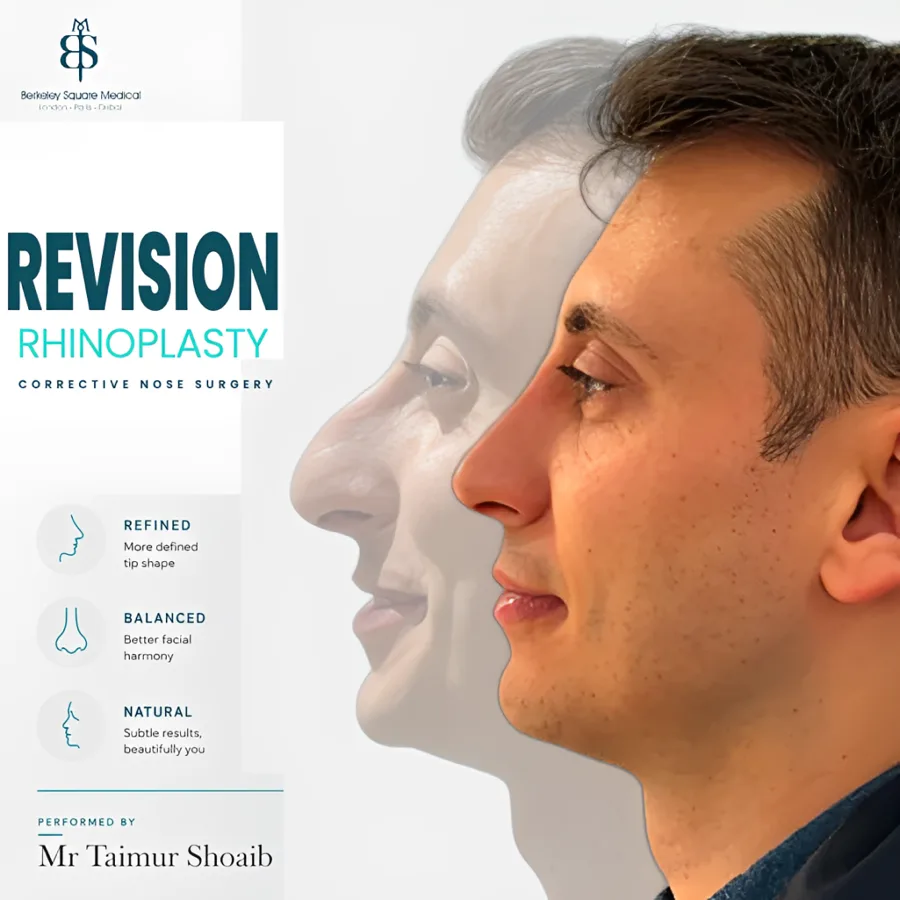 Revision RhinoplastyCorrecting or improving a previous rhinoplasty.Read more
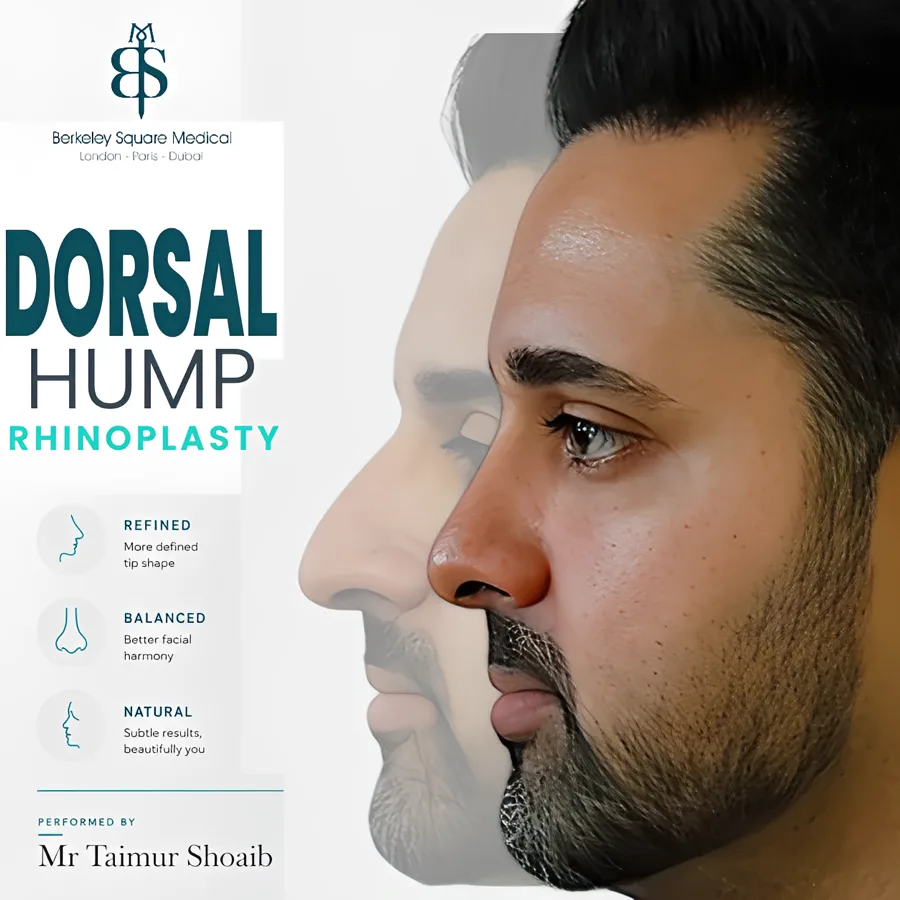 Dorsal Hump RhinoplastyRemoving a bump on the bridge for a straight profile.Read more
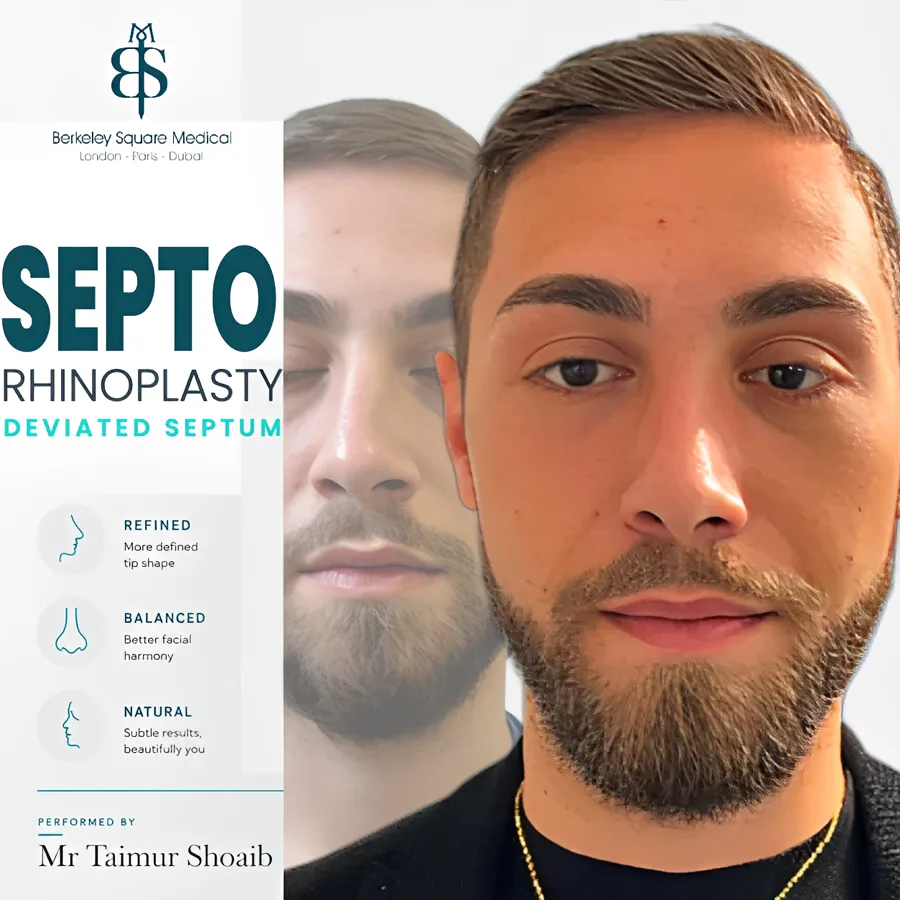 SeptorhinoplastyStraightening the nose and improving breathing.Read more
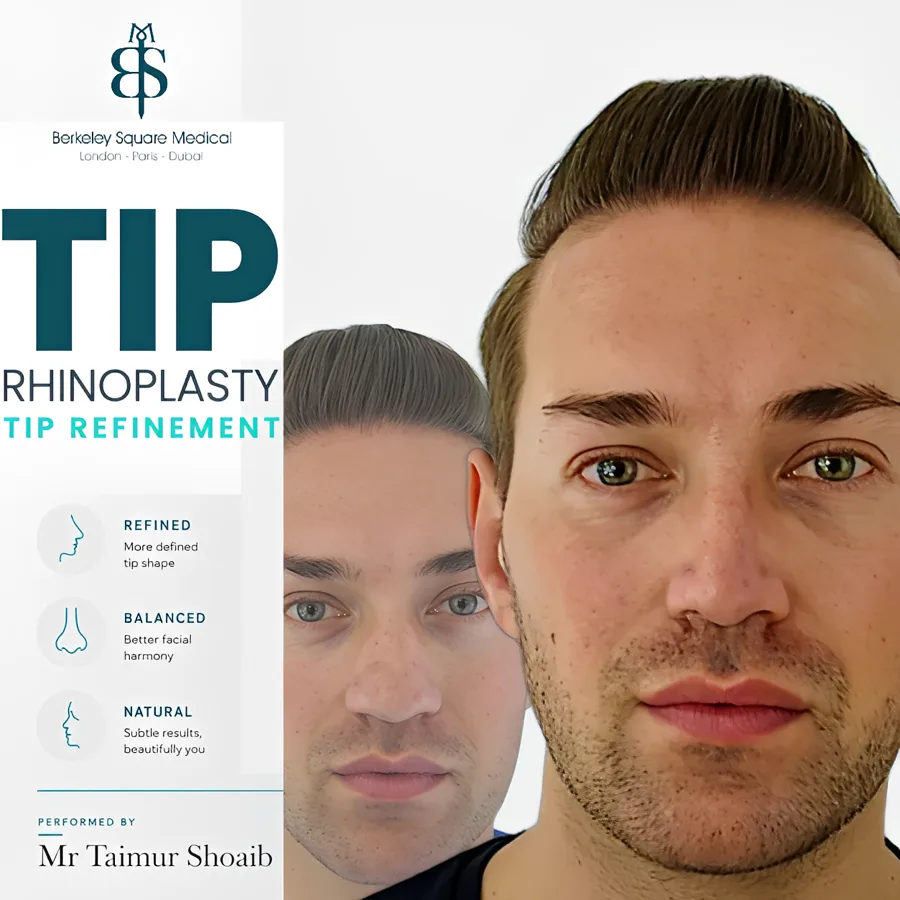 Tip RhinoplastyRefining a bulbous, drooping or asymmetrical tip.Read more
Specialised Rhinoplasty For Females
Explore our specialist procedures. Tap any card to read more.
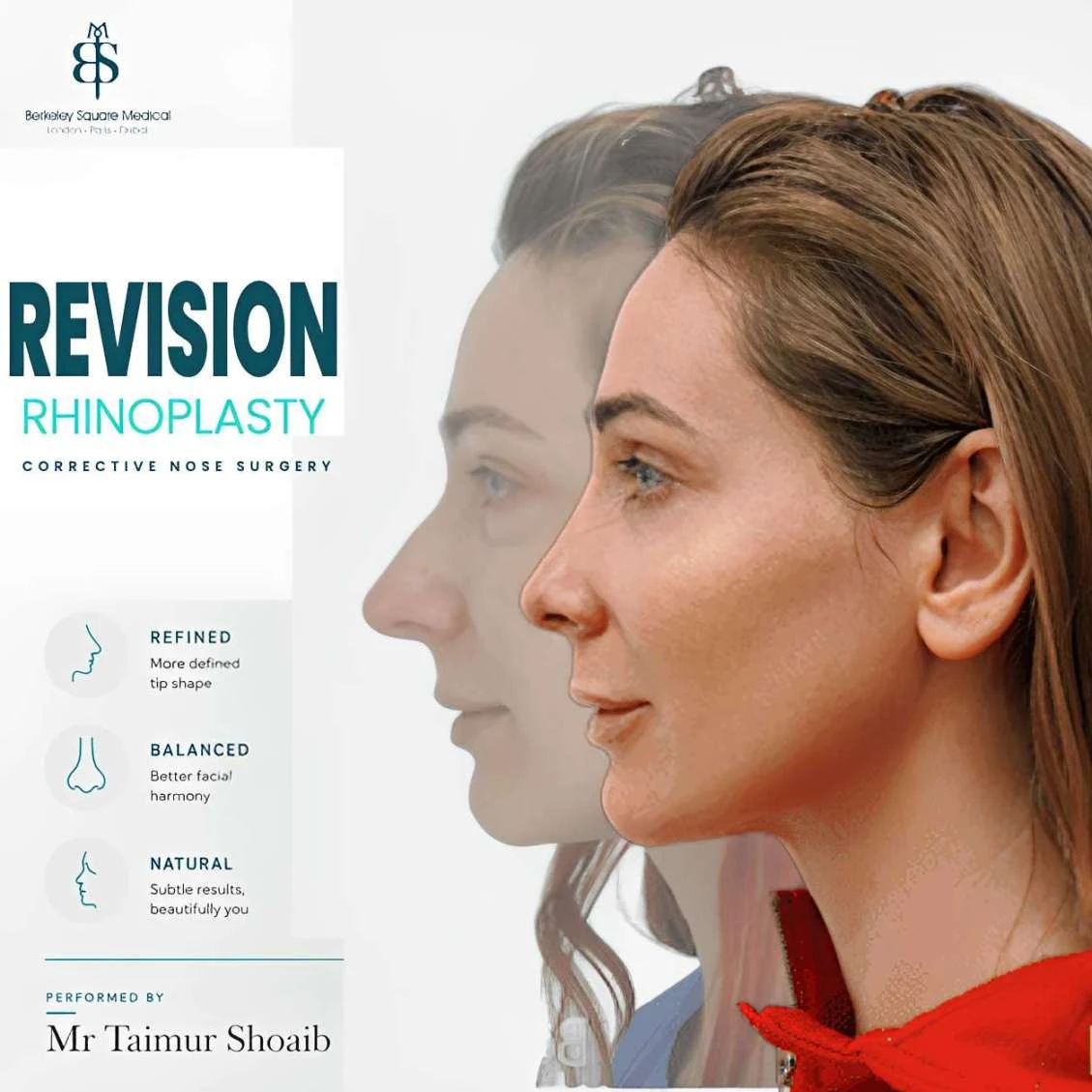 Revision RhinoplastyCorrecting or improving a previous rhinoplasty.Read more
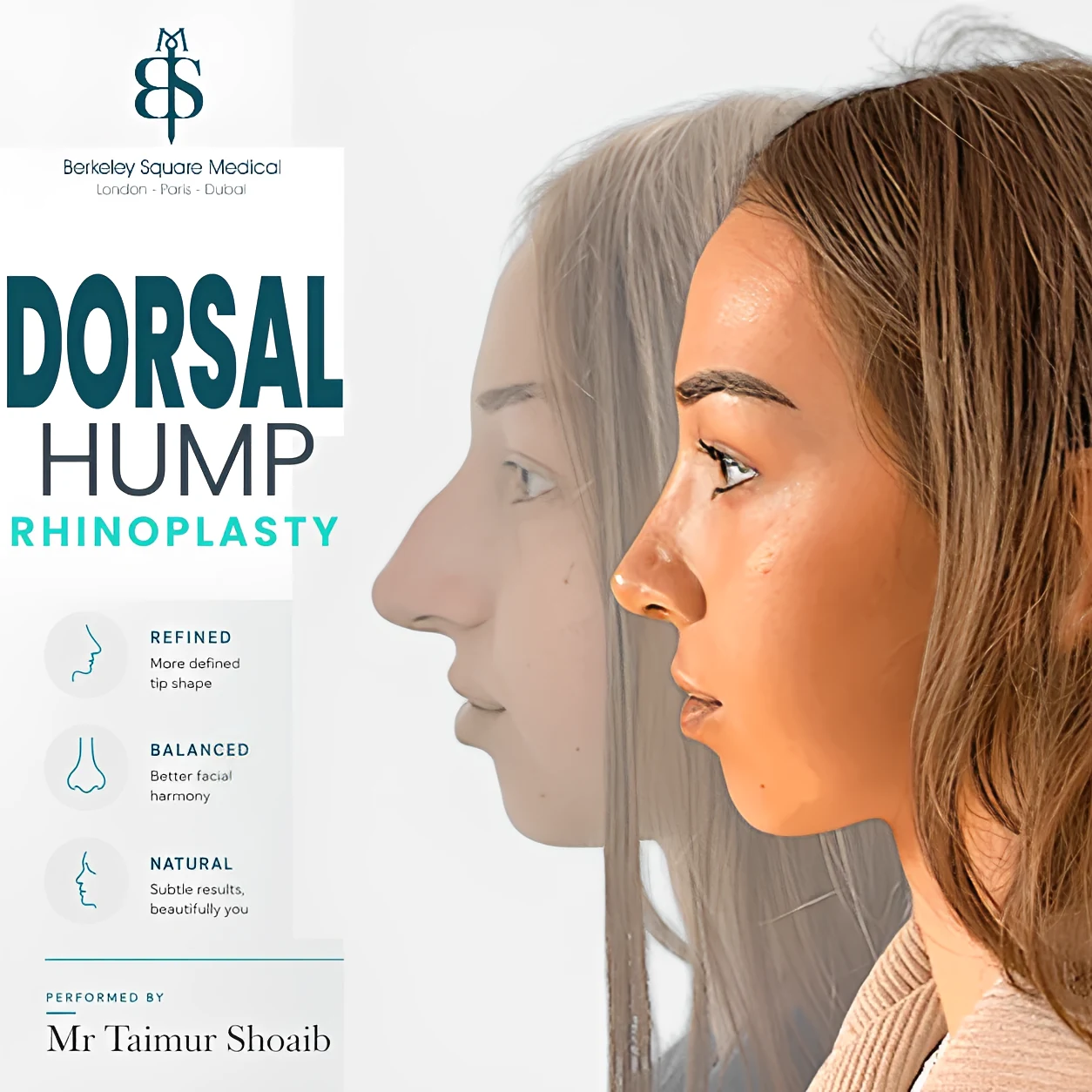 Dorsal Hump RhinoplastyRemoving a bump on the bridge for a straight profile.Read more
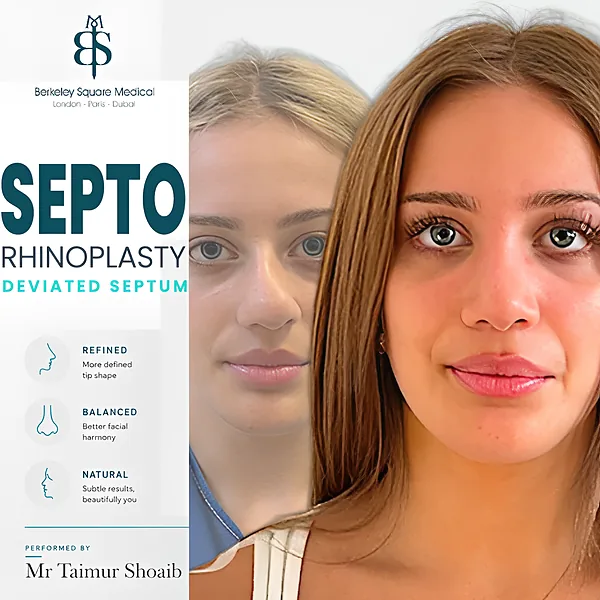 SeptorhinoplastyStraightening the nose and improving breathing.Read more
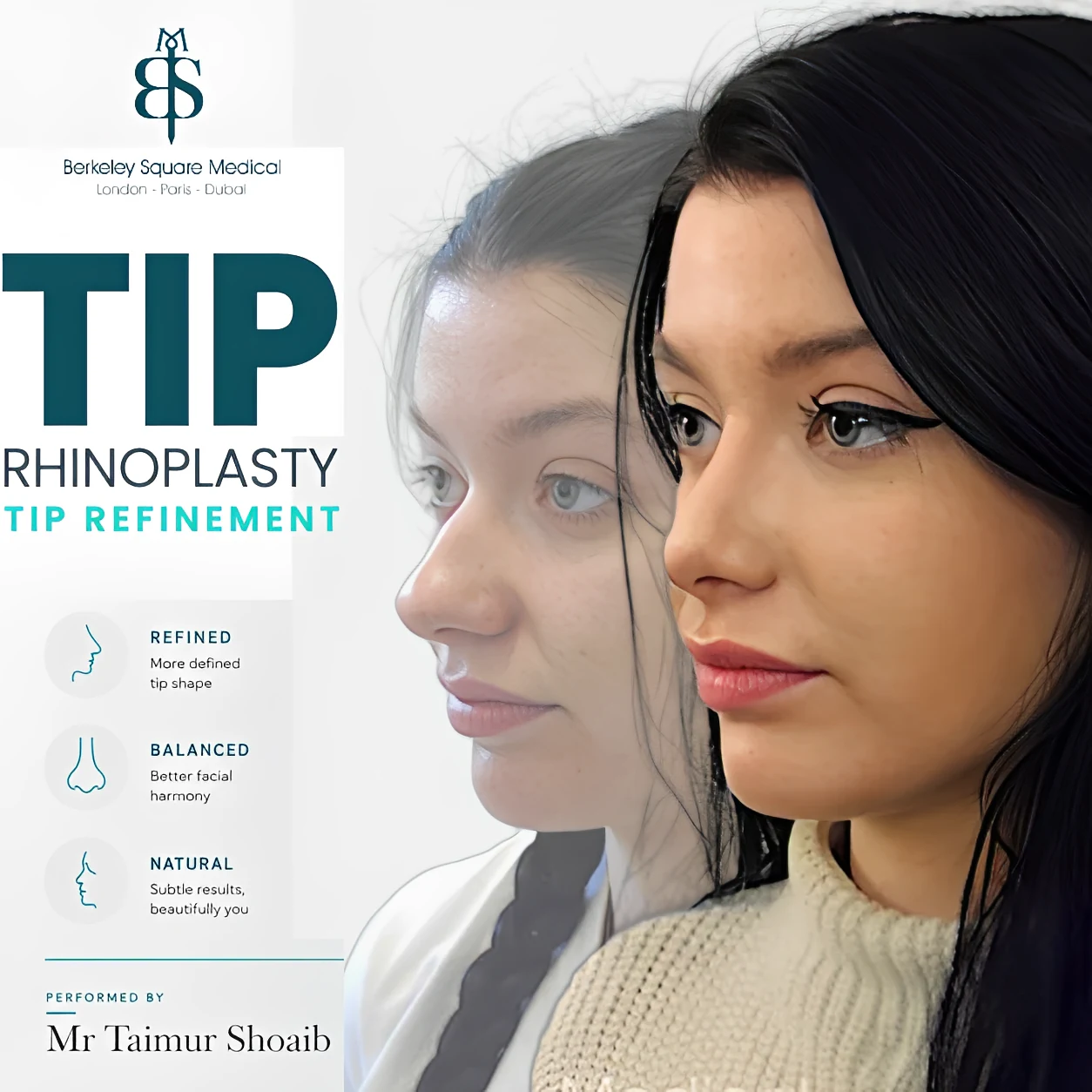 Tip RhinoplastyRefining a bulbous, drooping or asymmetrical tip.Read more
Considering rhinoplasty in London?
If you are weighing up your options in the UK, the next step is a consultation with Mr Taimur Shoaib at 64 Harley Street. Explore rhinoplasty at Berkeley Square Medical, see typical rhinoplasty costs in London, or read about septorhinoplasty in London if breathing is also a concern.
About the author