Rhinoplasty is one of the most technically demanding operations in plastic surgery, and it has one of the highest revision rates of any cosmetic procedure. If you have read the horror stories, that caution is well placed, and a clear checklist is the best way to act on it. The single biggest factor in your result, and in avoiding the cost and difficulty of a revision later, is the surgeon you choose. Price, clinic decor and marketing tell you very little. This is the checklist we would genuinely give a friend, followed by an honest look at how to judge each point for yourself.
- Confirm the surgeon is on the GMC Specialist Register for plastic surgery yourself, and look for FRCS (Plast) and membership of BAAPS or ISAPS.
- Choose a genuine rhinoplasty specialist who operates on noses regularly, and who treats both the appearance and the breathing.
- Study a large, varied gallery of the surgeon’s own before-and-after patients, including noses like yours.
- Insist on a proper consultation with the surgeon who will actually operate, and expect honesty rather than a hard sell.
- Look for transparent, all-inclusive pricing and genuine aftercare in a regulated UK setting.
Why the surgeon matters more than anything else
A modern, comfortable clinic and a persuasive website are easy to produce. Surgical judgement and consistency, built over hundreds of operations, are not. Rhinoplasty combines millimetre-level aesthetic work with the structural engineering that keeps your airway open, which is why results vary so much between surgeons. Getting the choice right the first time is the best protection against a second operation, which is usually harder than the first.
1. Verify the credentials yourself
In the UK, confirm the surgeon is on the GMC Specialist Register for plastic surgery. Anyone with a basic medical degree can legally call themselves a “cosmetic surgeon”, so the specialist register is the line that matters. You can search the GMC register directly, in a couple of minutes, using the surgeon’s name. Membership of BAAPS (British Association of Aesthetic Plastic Surgeons) and ISAPS signals recognised training and standards. FRCS (Plast) after a surgeon’s name shows they passed the specialty examination of the Royal College of Surgeons in plastic surgery.
2. Look for genuine rhinoplasty specialisation
A surgeon who performs rhinoplasty regularly, not occasionally, has the case volume and judgement this operation demands. Plastic surgery is broad, and a surgeon who performs rhinoplasty only occasionally is not the same as one who does it week in, week out. Ask directly how often they perform rhinoplasty, and whether they handle both primary and revision cases. A specialist who regularly corrects other surgeons’ work has seen how noses behave over the long term.
3. Expect both aesthetic and functional expertise
Your nose has to look right and work right. A surgeon focused only on appearance can leave you with a refined nose that no longer breathes well; one focused only on function may not deliver the look you wanted. The right surgeon assesses the inside of your nose as carefully as the outside, and can address a deviated septum or internal collapse in the same operation where needed. Ask how they protect and, if necessary, rebuild the structural support of the nose.
4. Study the before-and-after evidence properly
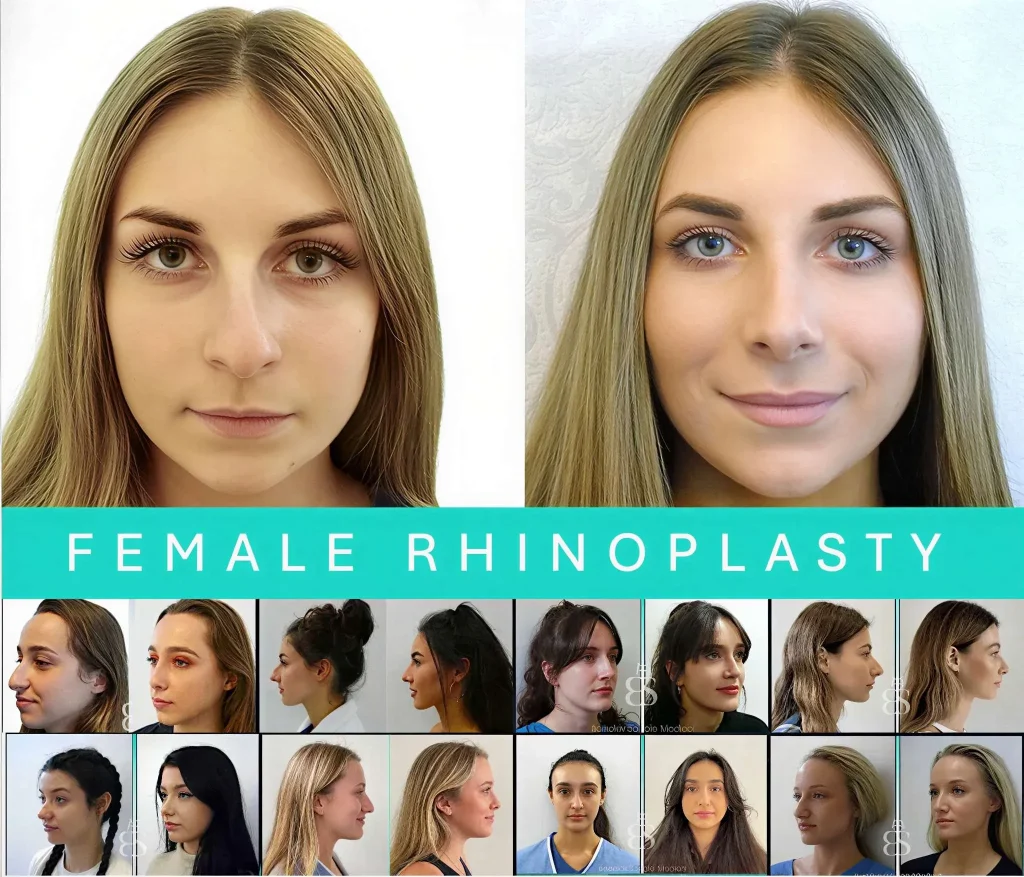
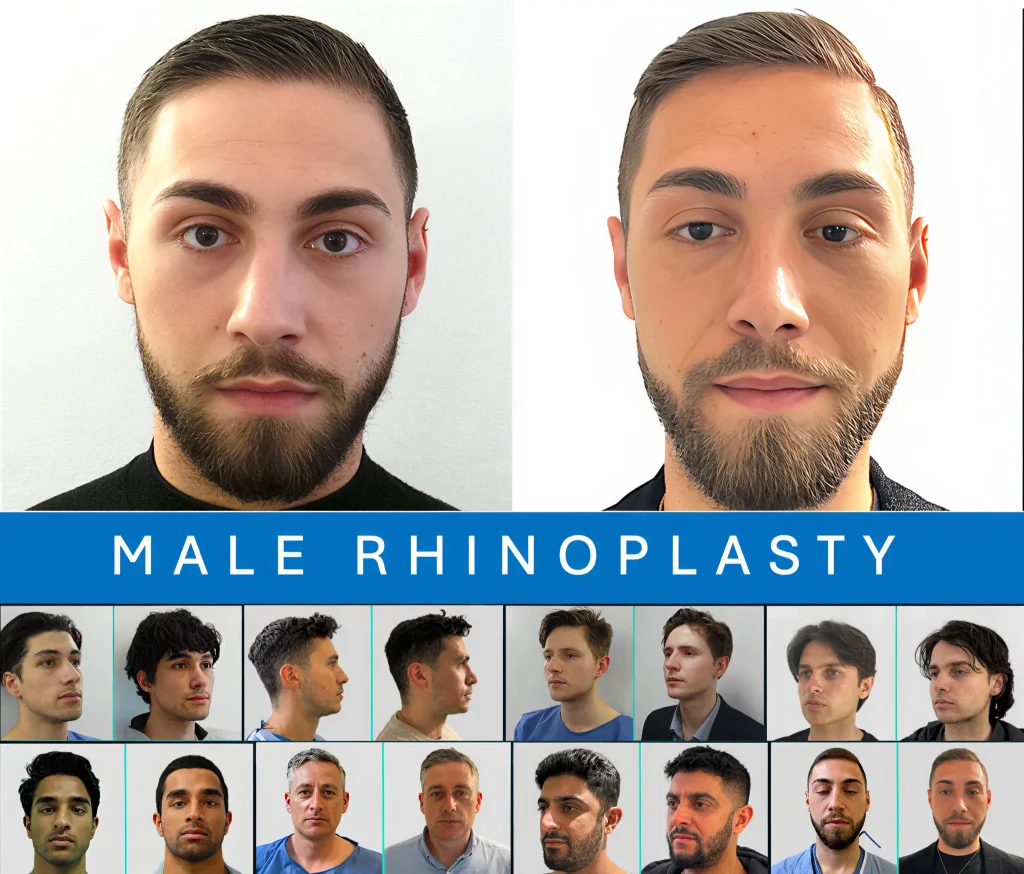
Ask to see a large, varied gallery of that surgeon’s own patients, not stock images or a handful of flawless photos. Look for noses similar to yours, consistent results across many cases, and natural outcomes rather than obviously “done” noses. Consistency across many patients tells you far more than one or two perfect examples. A surgeon confident in their work will have plenty to show and will be happy to show it.
Rhinoplasty before & after, by Mr Taimur Shoaib FRCS
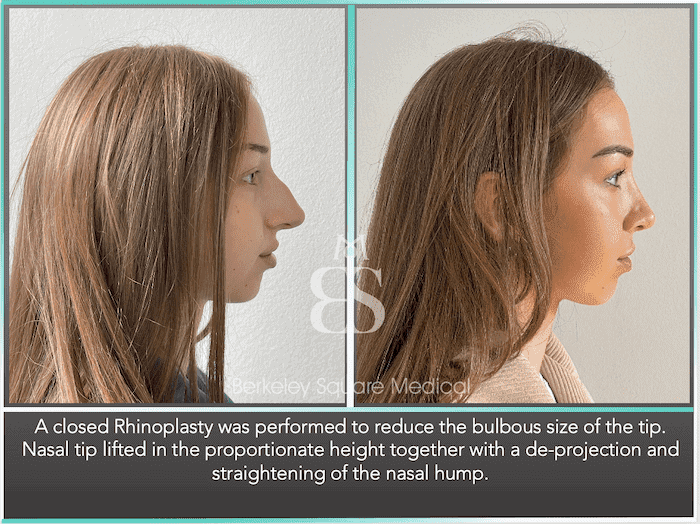
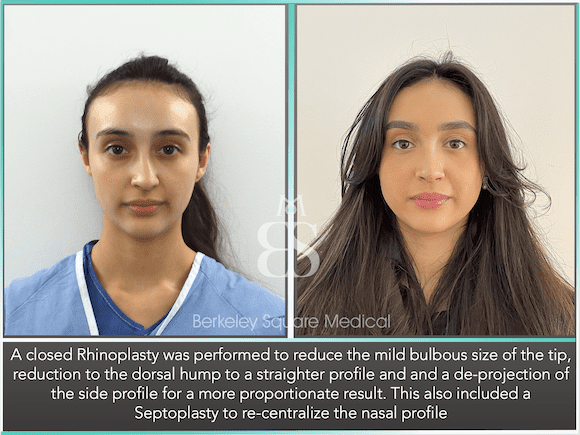
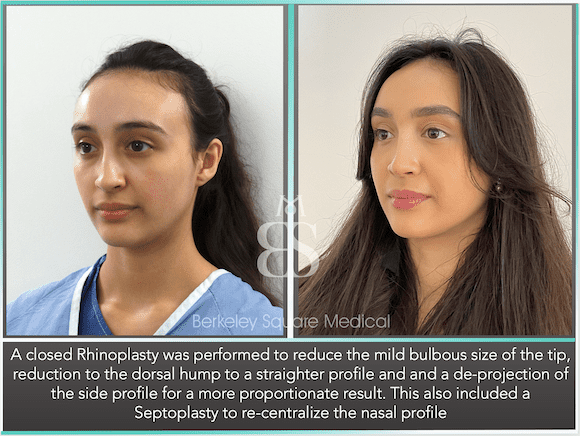
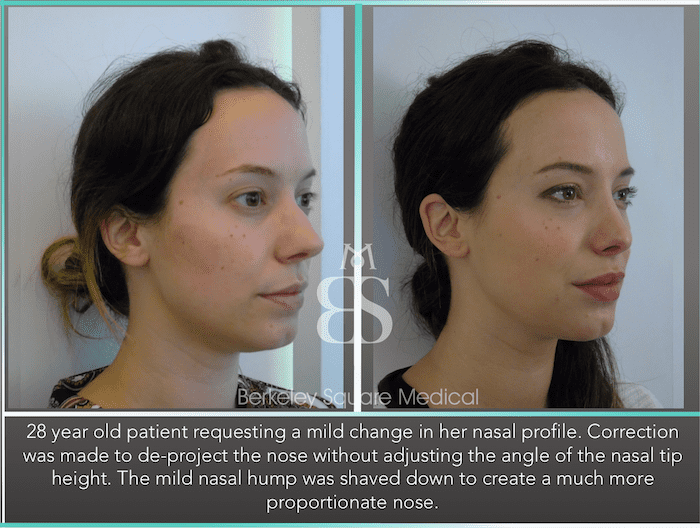
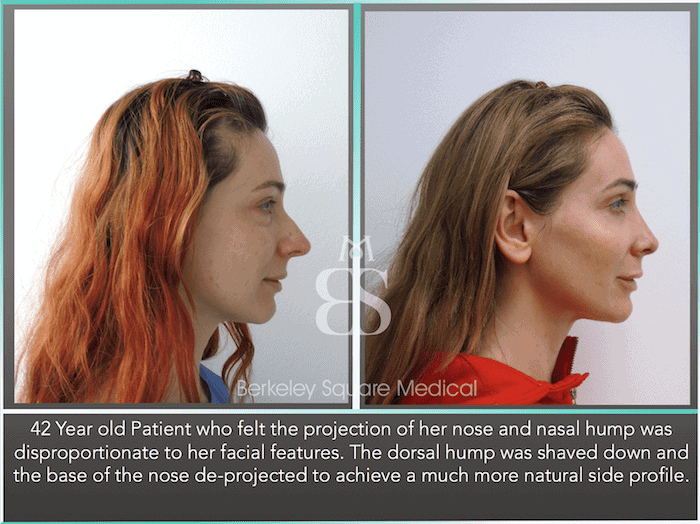
A selection of Mr Shoaib’s rhinoplasty results. Individual results vary.
5. Insist on a consultation with the surgeon who will operate
You should meet, and be examined by, the surgeon who will actually perform your operation, not a salesperson or a patient coordinator. This is your chance to judge whether they listen, examine you properly, and explain their plan in a way you understand. A good consultation often uses tools such as computer imaging to discuss realistic goals, so you leave with a clear, shared idea of what is achievable before any decision is made.
6. Expect honesty, not a hard sell
A good surgeon tells you what rhinoplasty can and cannot achieve for your nose, and will sometimes advise against surgery or suggest a non-surgical option instead. Pressure to book quickly, guarantees of a perfect result, discount deadlines, or vague answers to direct questions are all warning signs. Surgery is a serious decision, and the right surgeon treats it that way.
7. Understand what is included in the price
Transparent, fixed pricing that includes aftercare protects you from surprises. Be cautious of a quote that covers only the surgeon’s fee, with theatre, anaesthesia and follow-up billed on top, or of a headline price that seems far below the market. See our rhinoplasty cost guide for what an all-inclusive price looks like and why the cheapest option rarely works out cheapest.
8. Check aftercare and accountability
Ask what happens after surgery. Who will you see at your follow-up appointments, and for how long? A UK surgeon working in a CQC-regulated clinic offers continuity of care and clear accountability if you need help. This is also the central reason surgeons advise caution about operating abroad: once you are home, follow-up care and any correction can be difficult to arrange. We look at that in detail in our guide to the risks of rhinoplasty in Turkey and, if it has already happened, revision rhinoplasty after surgery abroad.
Questions to ask your rhinoplasty surgeon
Take this short list to your consultation. The answers, and how openly they are given, tell you a great deal.
- Are you on the GMC Specialist Register for plastic surgery, and are you a member of BAAPS or ISAPS?
- How often do you perform rhinoplasty, and do you carry out revision surgery?
- Can I see a range of your own before-and-after photos, including noses like mine?
- Will you be the surgeon operating on me, and will I see you at my follow-ups?
- How will you protect my breathing as well as change the appearance of my nose?
- What does the price include, and what would happen, and cost, if I needed a revision?
- No verifiable specialist registration, or evasiveness when you ask about credentials.
- Reluctance to show a proper gallery of their own before-and-after patients.
- Pressure to book quickly, time-limited discounts, or guarantees of a perfect, risk-free result.
- No direct consultation with the operating surgeon before you commit.
- Pricing that hides theatre, anaesthesia or aftercare, or a total that seems too good to be true.
Where is the best place to have rhinoplasty?
The honest answer is that the best place to get a nose job is wherever the right surgeon is, with proper regulation and aftercare, which for UK patients usually means having surgery in the UK. Travelling abroad can appear to save money, but the saving often disappears if a complication or an unsatisfactory result needs correcting at home. Many surgeons abroad are highly skilled; the recurring problem is the way some procedures are sold, regulated and followed up. If you are weighing this up, our guide to the hidden risks of rhinoplasty in Turkey sets out what to consider.
How Mr Shoaib measures against this checklist
Mr Taimur Shoaib meets each of the points above. He is a consultant plastic surgeon on the GMC Specialist Register, FRCS (Plast), and a member of BAAPS and ISAPS, and has published peer-reviewed research on rhinoplasty technique. He performs rhinoplasty regularly and treats both its appearance and its breathing. He consults with and plans each rhinoplasty personally, uses computer imaging during the consultation to agree realistic goals, and shows a large gallery of his own before-and-after results, all within a CQC-regulated Harley Street clinic. In other words, the checklist above is simply a description of what a specialist rhinoplasty practice should look like.
If you would like to see how he approaches your nose specifically, the next step is a consultation.
Specialised Rhinoplasty For Men
Explore our specialist procedures. Tap any card to read more.
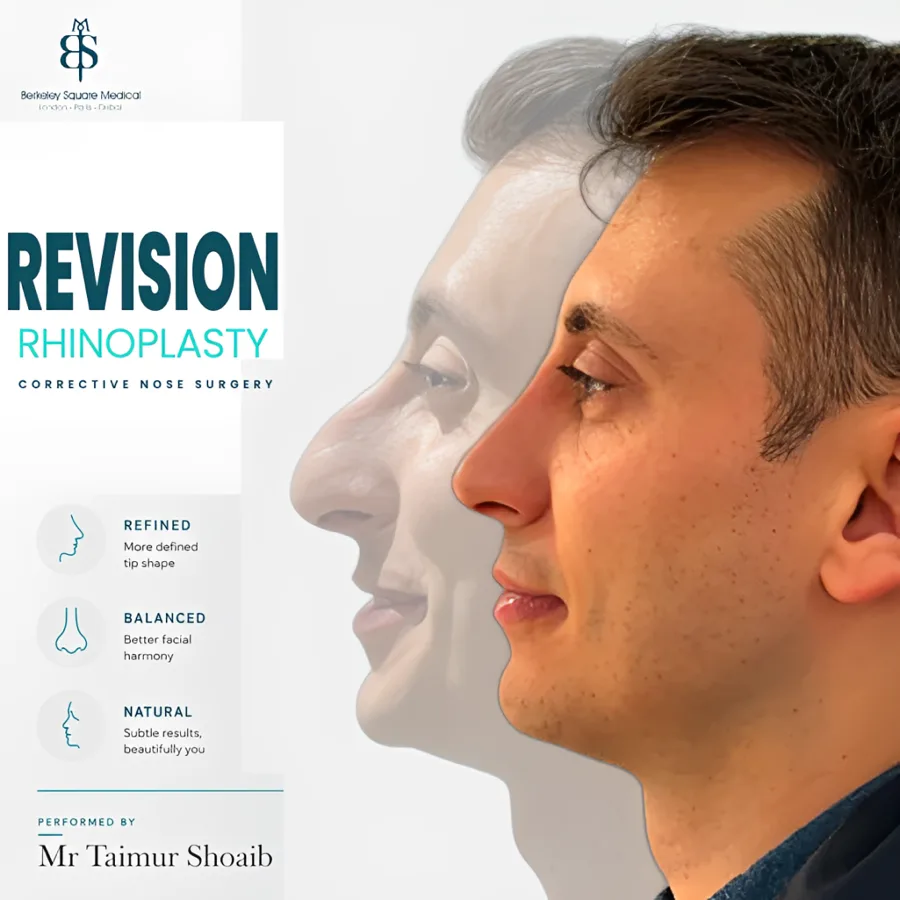 Revision RhinoplastyCorrecting or improving a previous rhinoplasty.Read more
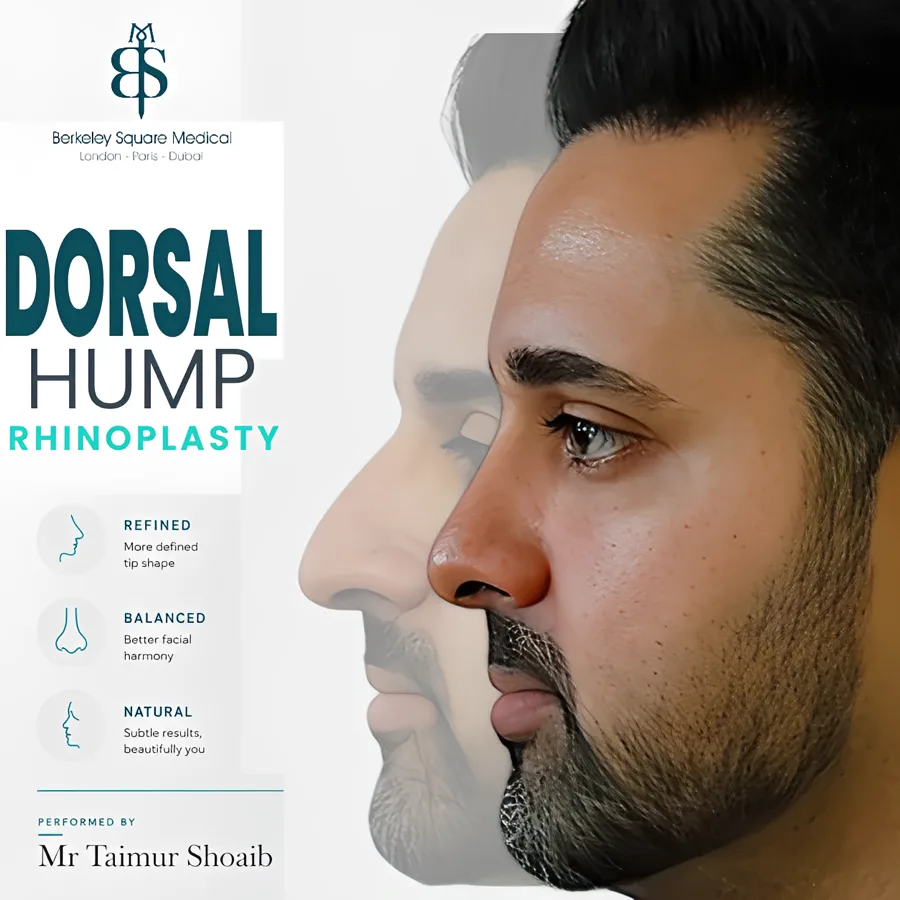 Dorsal Hump RhinoplastyRemoving a bump on the bridge for a straight profile.Read more
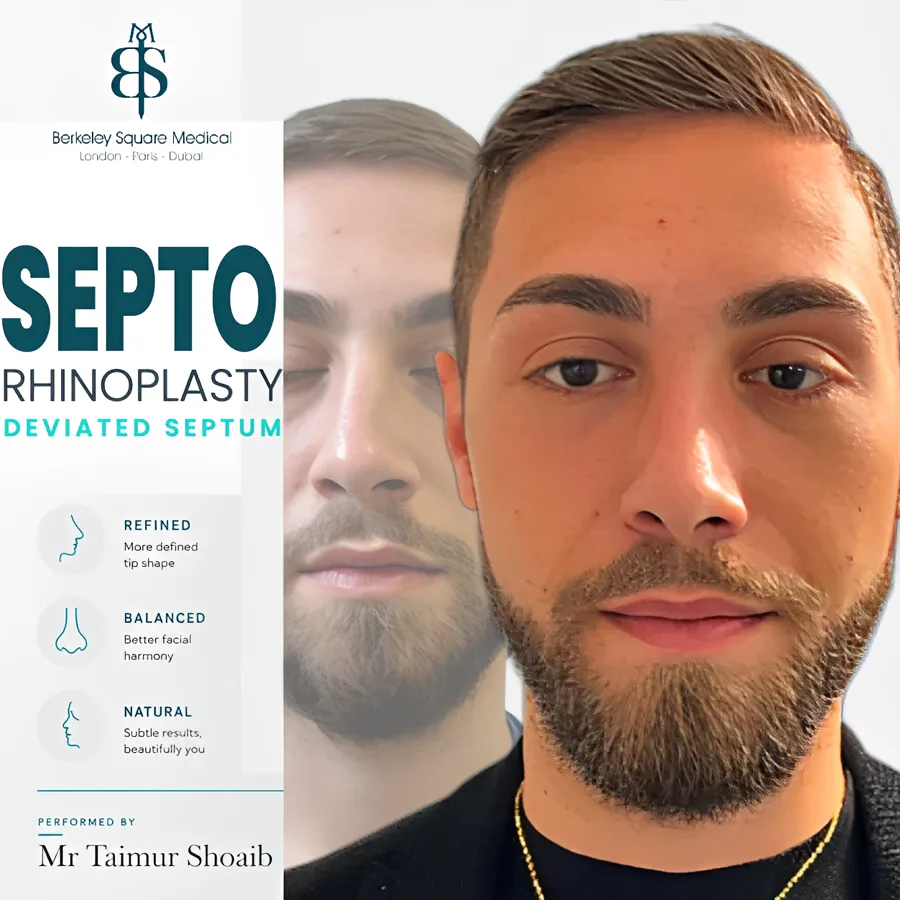 SeptorhinoplastyStraightening the nose and improving breathing.Read more
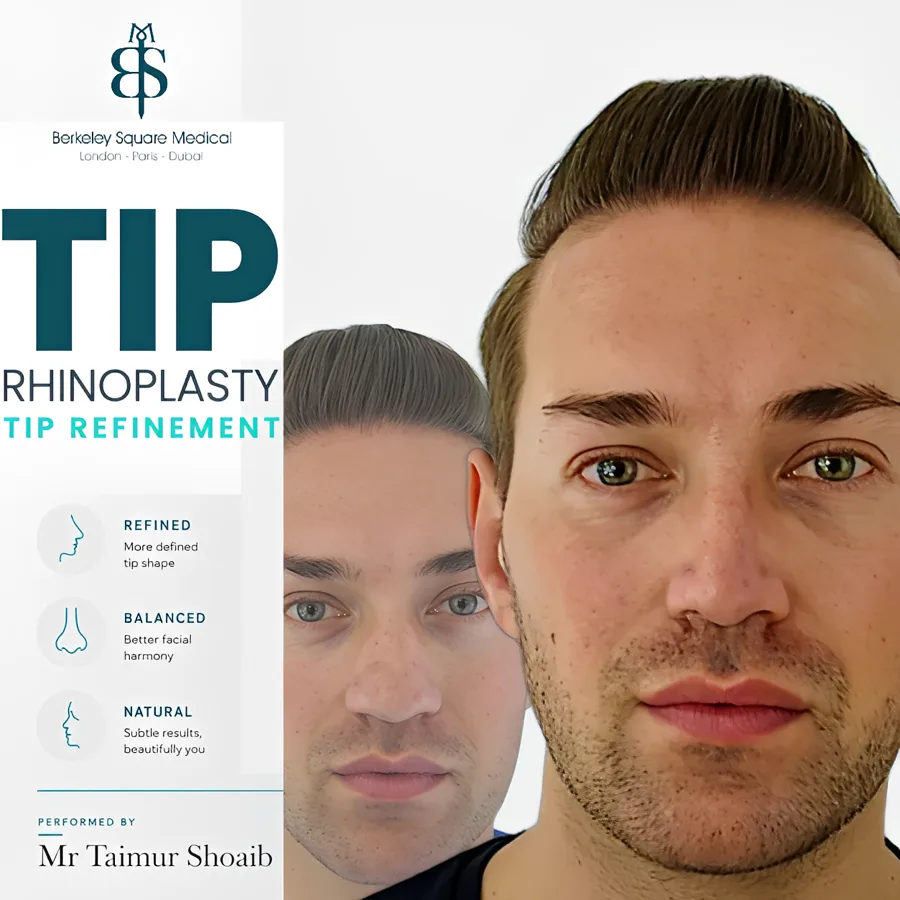 Tip RhinoplastyRefining a bulbous, drooping or asymmetrical tip.Read more
Specialised Rhinoplasty For Females
Explore our specialist procedures. Tap any card to read more.
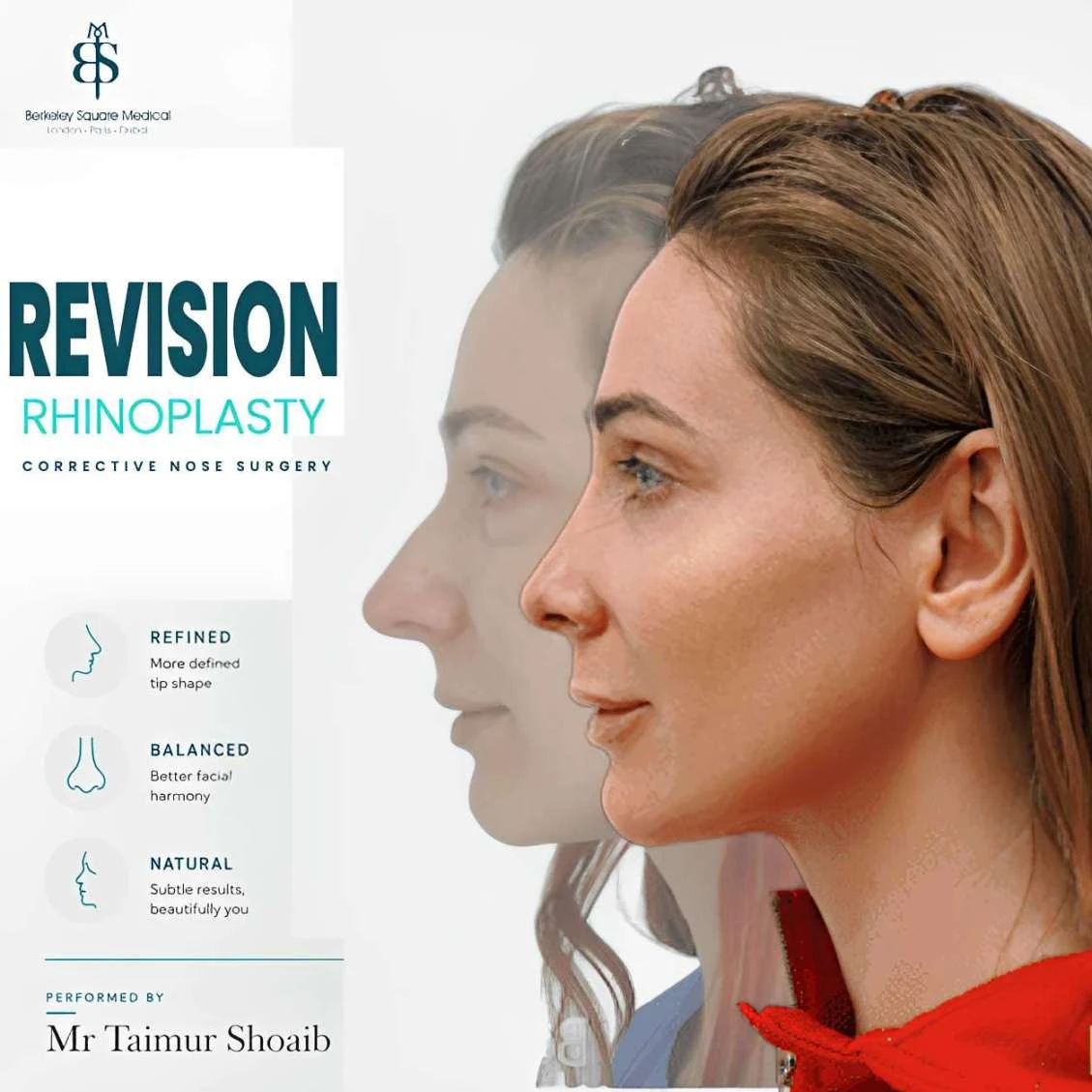 Revision RhinoplastyCorrecting or improving a previous rhinoplasty.Read more
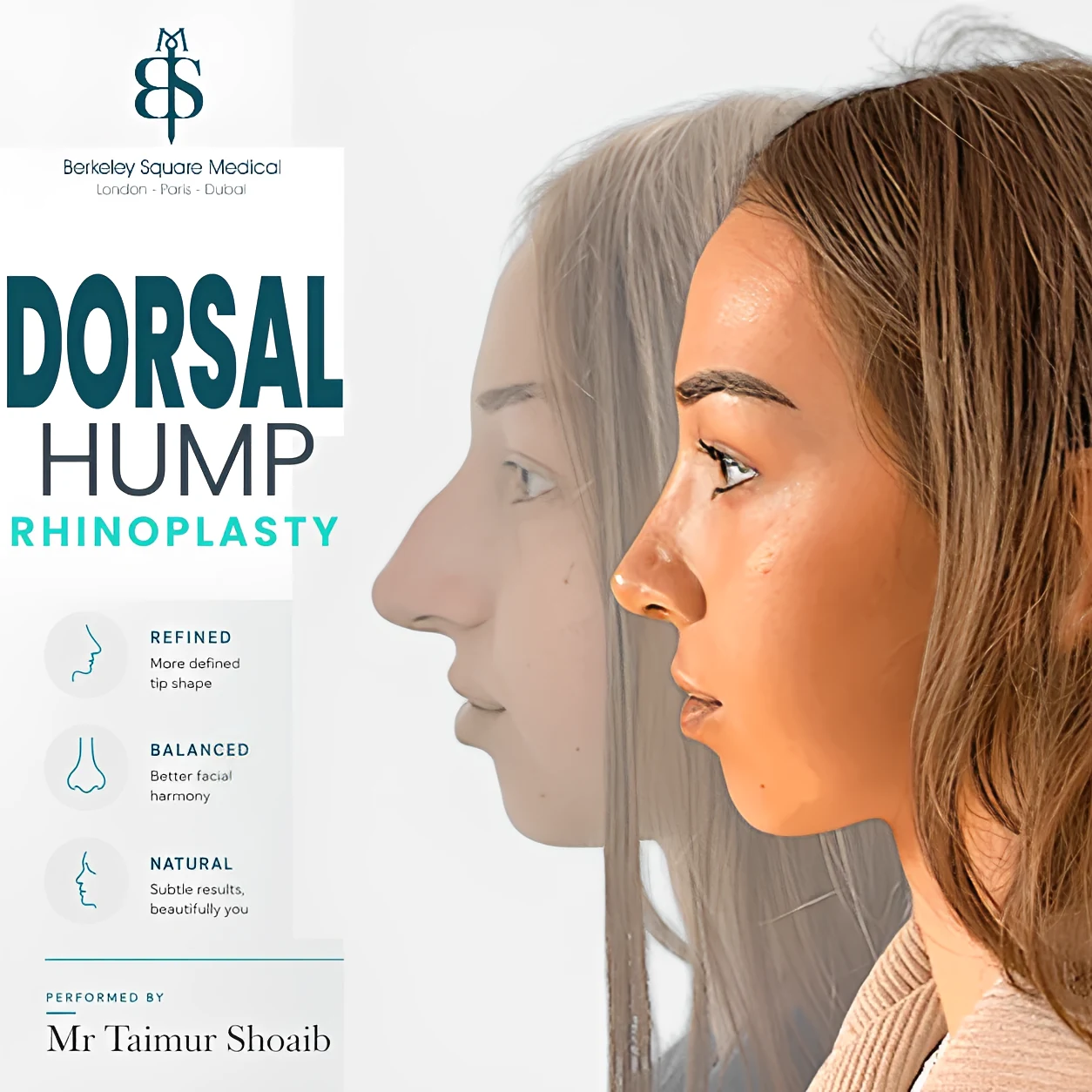 Dorsal Hump RhinoplastyRemoving a bump on the bridge for a straight profile.Read more
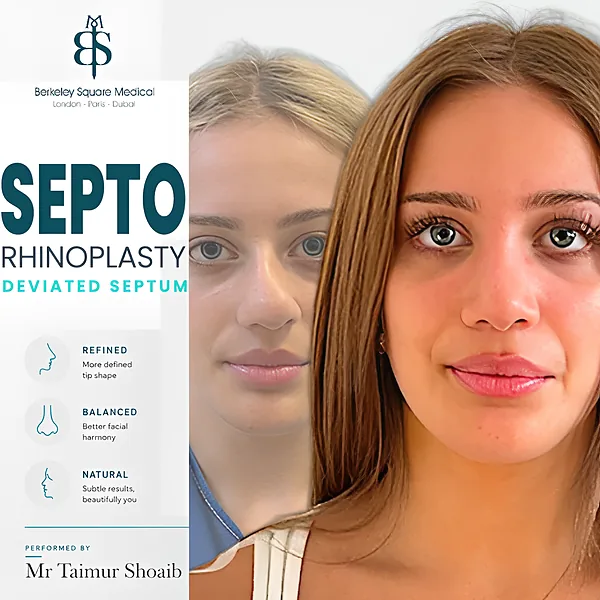 SeptorhinoplastyStraightening the nose and improving breathing.Read more
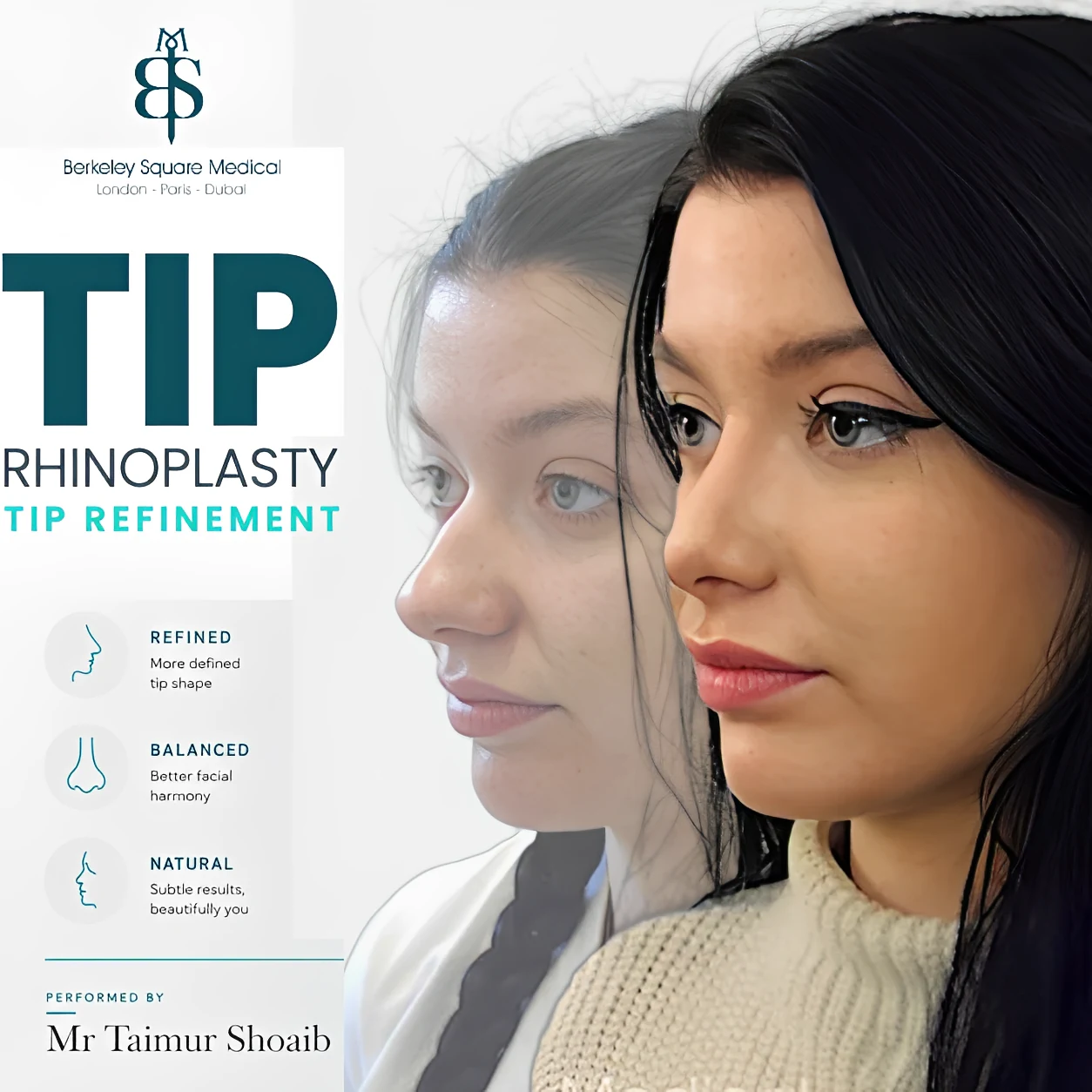 Tip RhinoplastyRefining a bulbous, drooping or asymmetrical tip.Read more
Considering rhinoplasty in London?
If you are weighing up your options in the UK, the next step is a consultation with Mr Taimur Shoaib at 64 Harley Street. Explore rhinoplasty at Berkeley Square Medical, see typical rhinoplasty costs in London, or read about septorhinoplasty in London if breathing is also a concern.
About the author