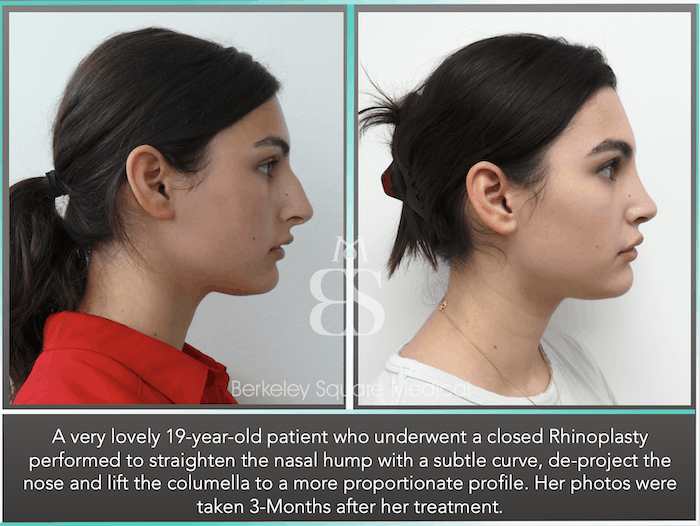
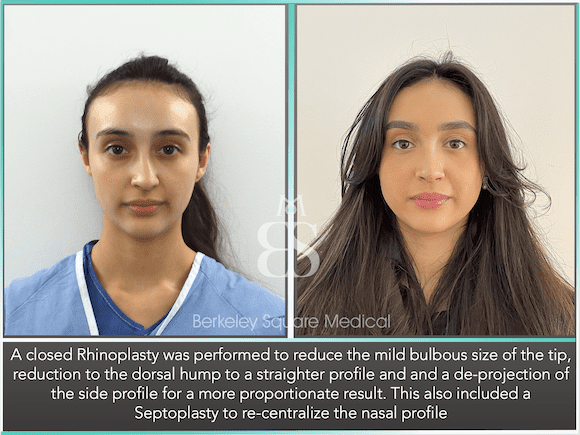
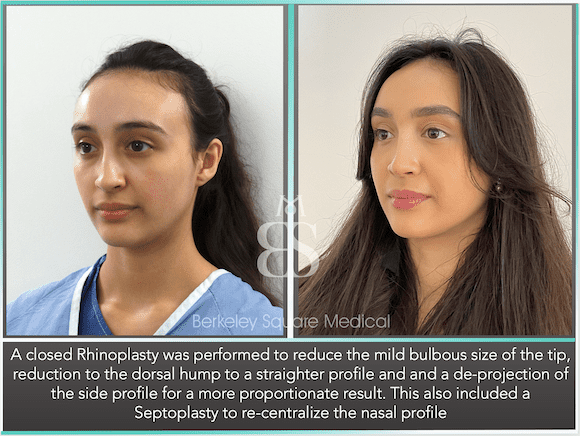
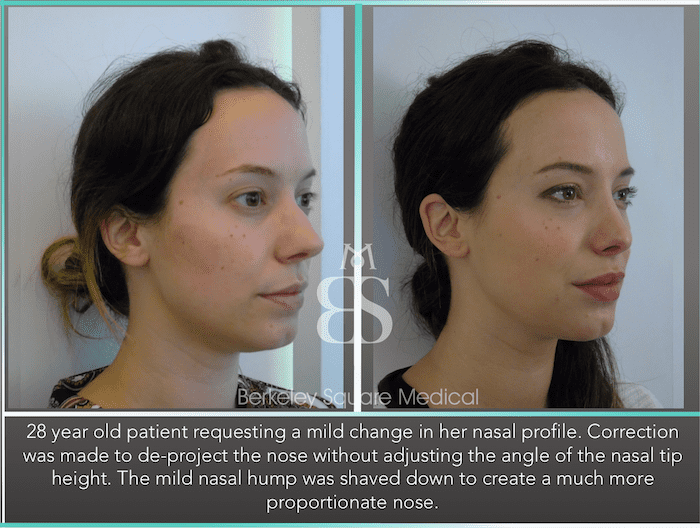
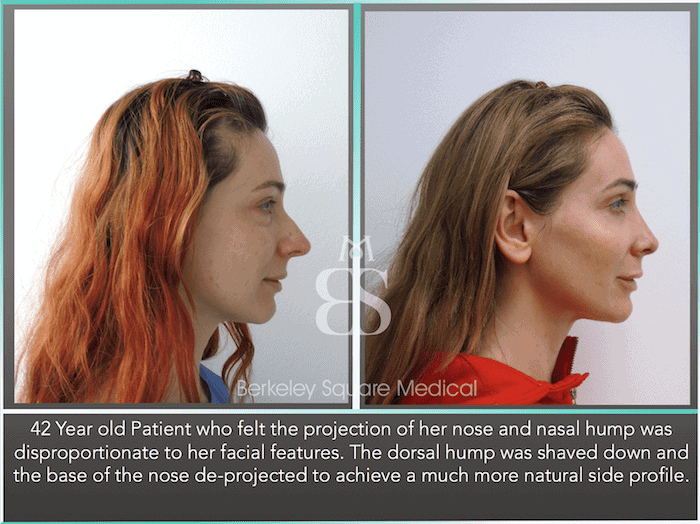
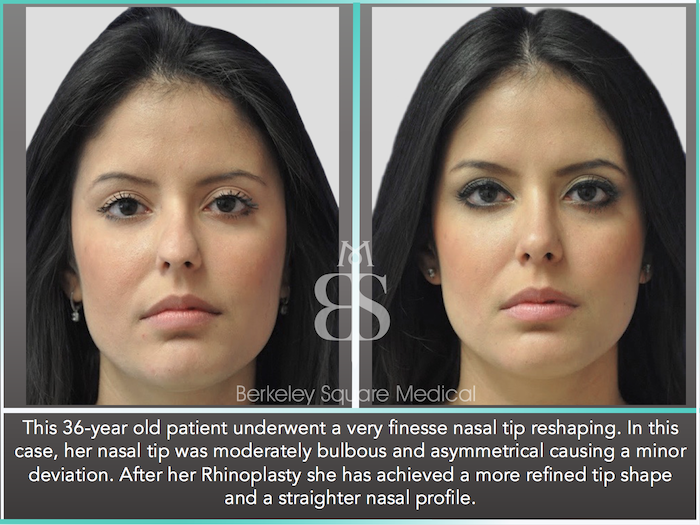
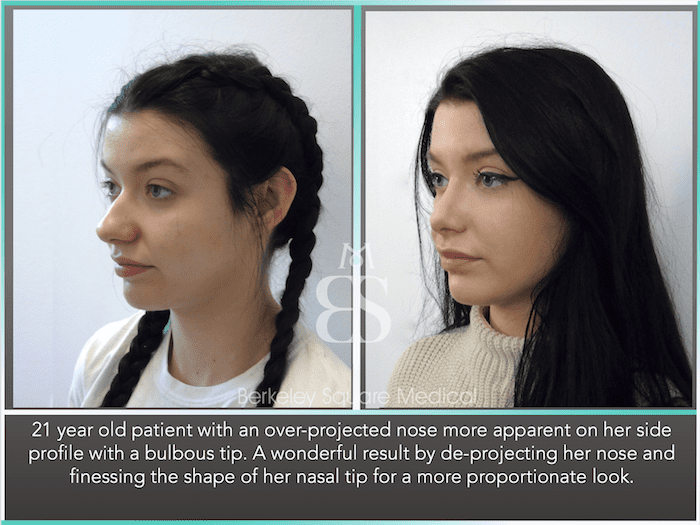
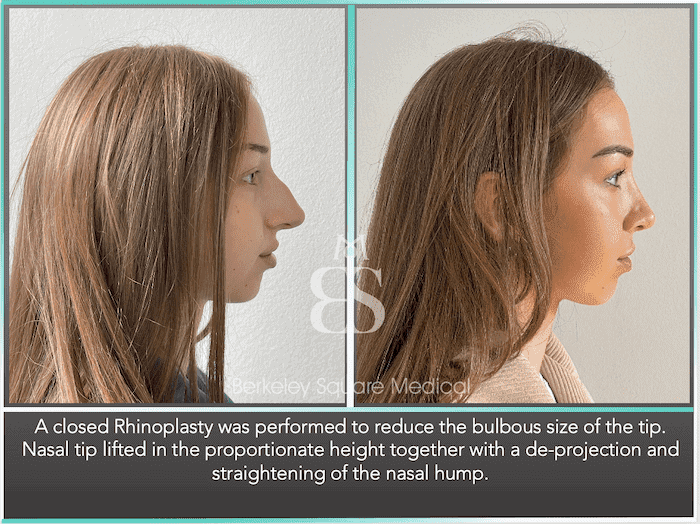
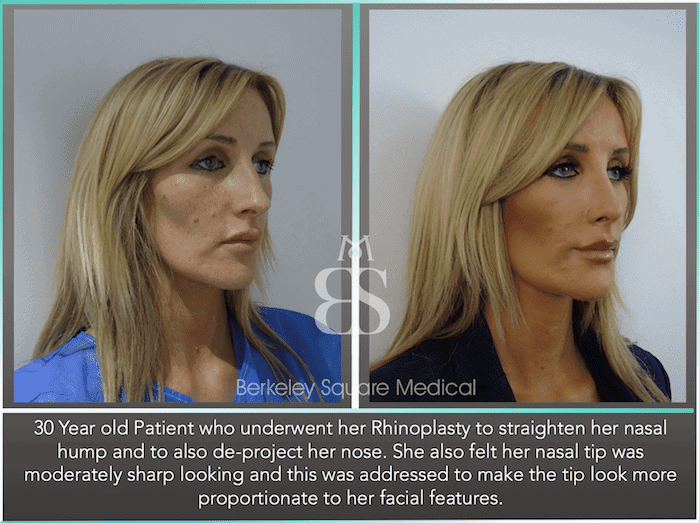
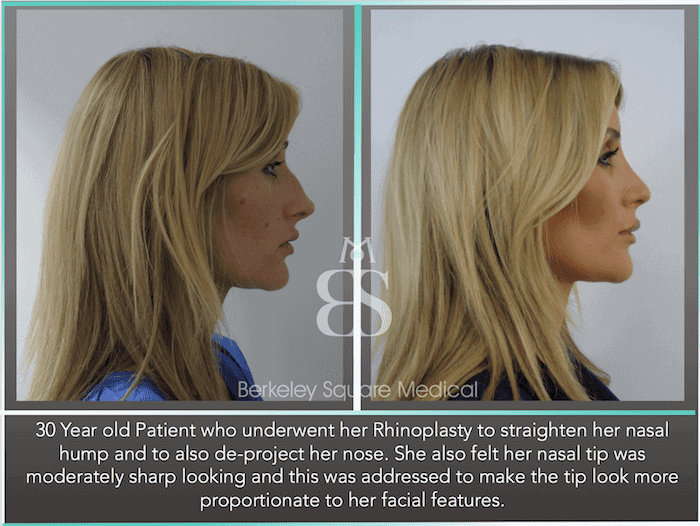
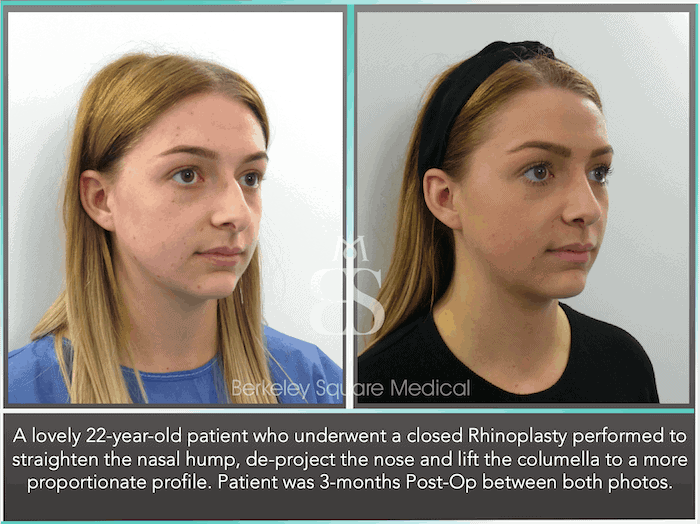
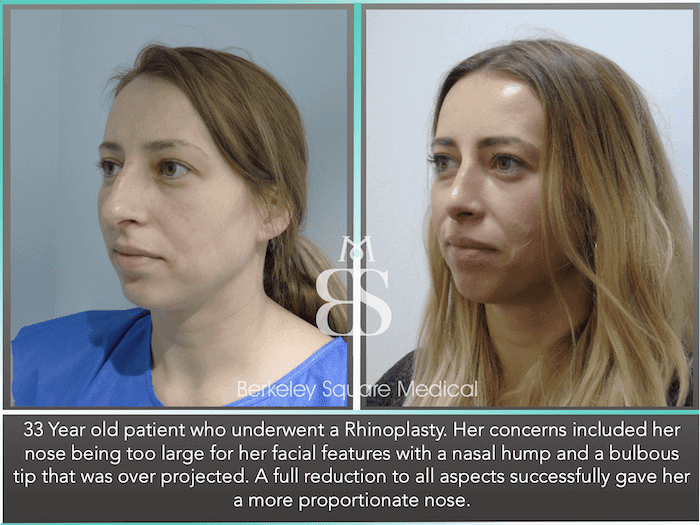
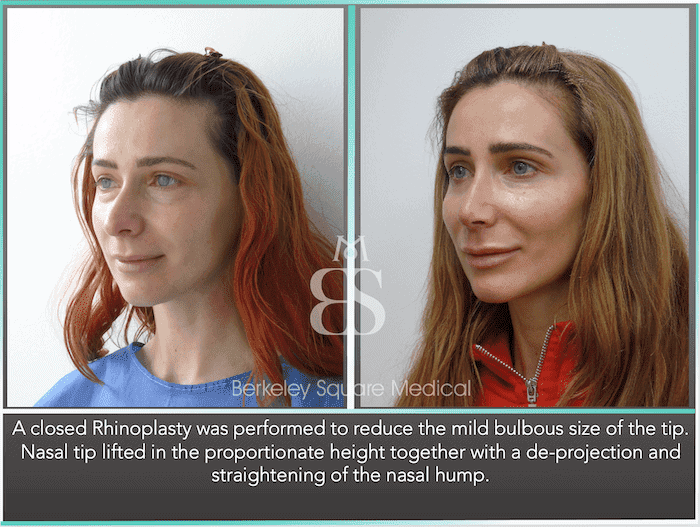
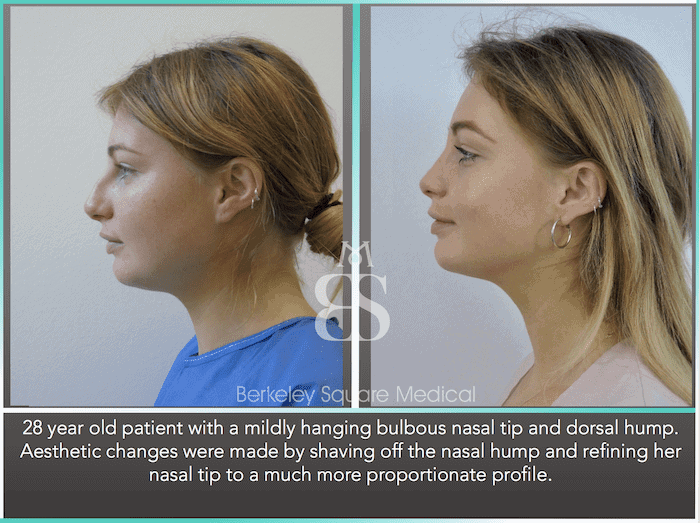
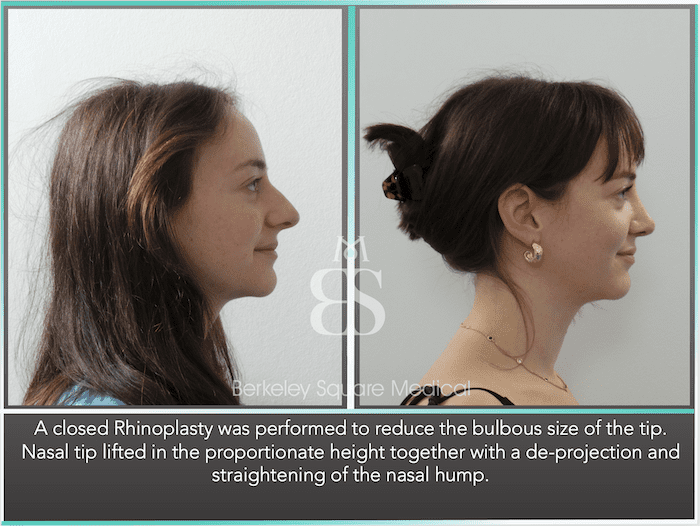
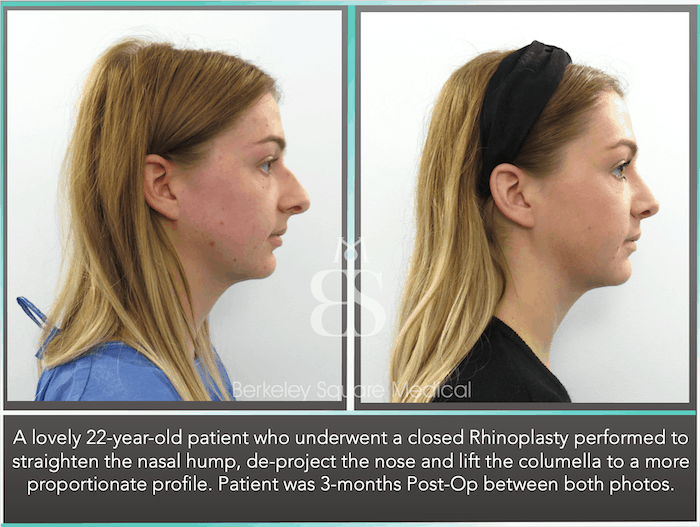
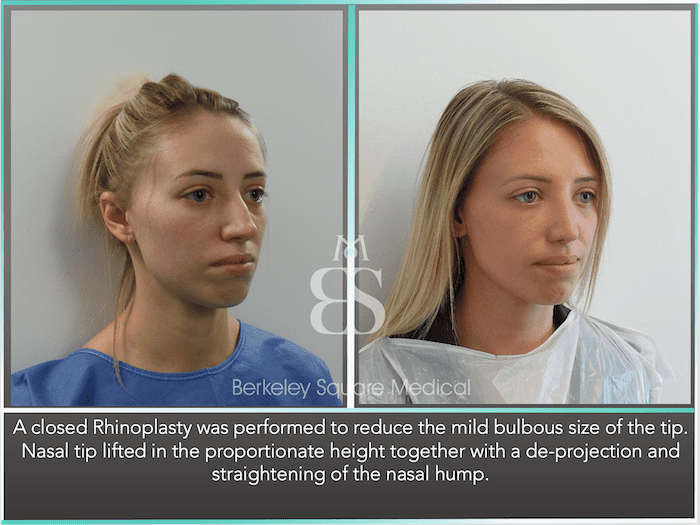
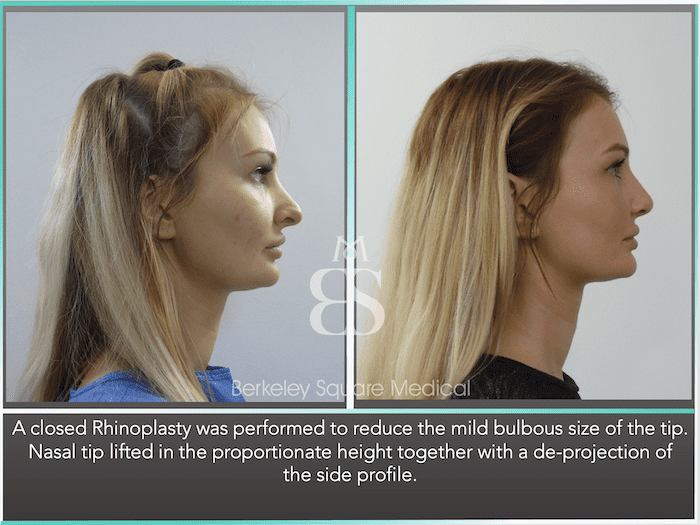
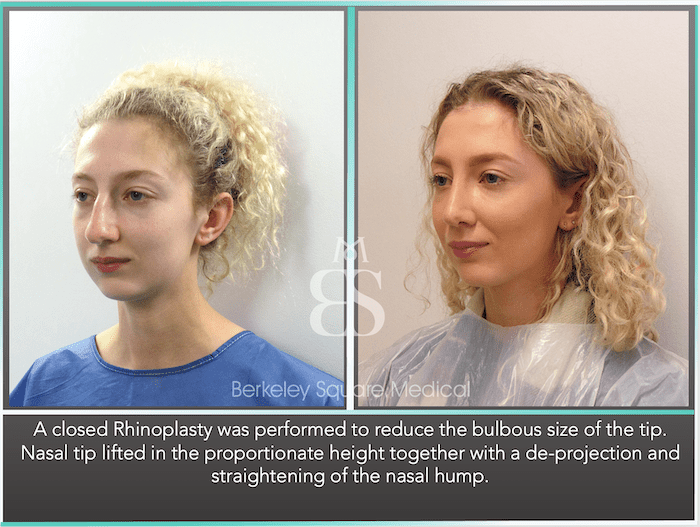
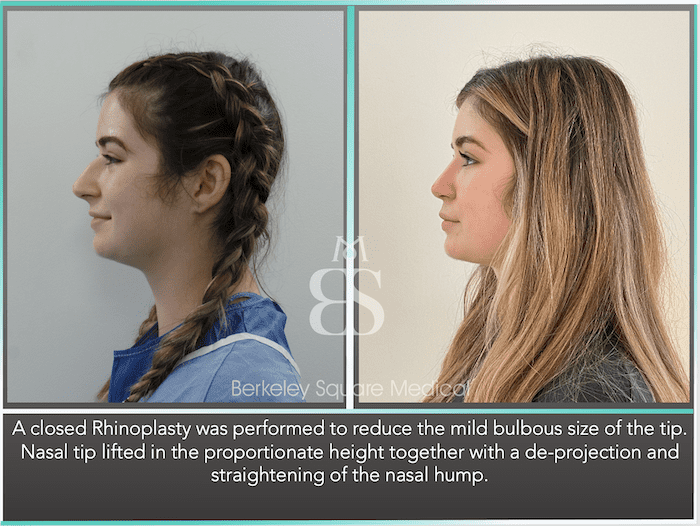
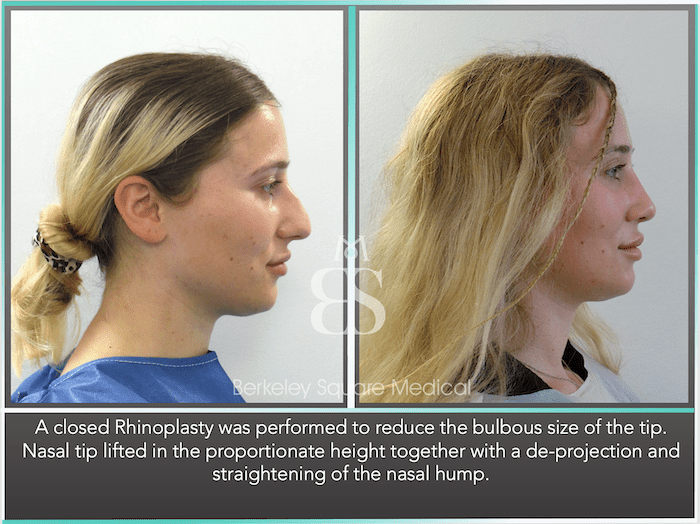
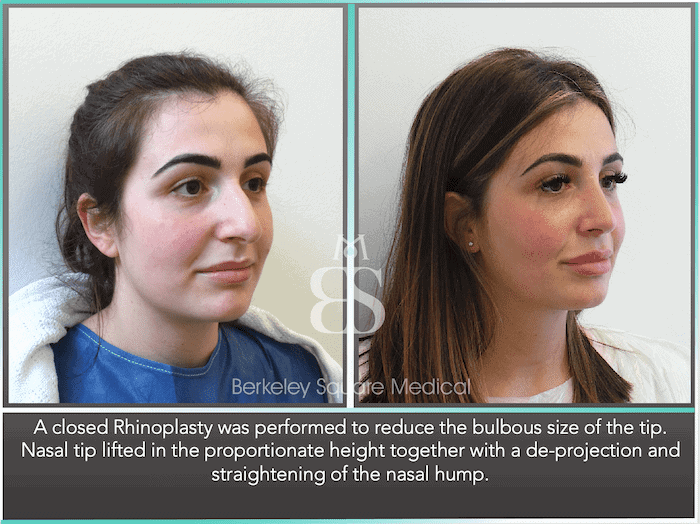
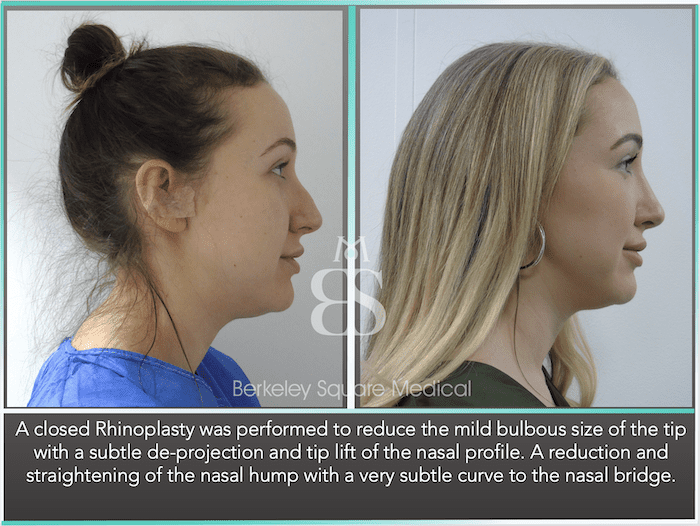
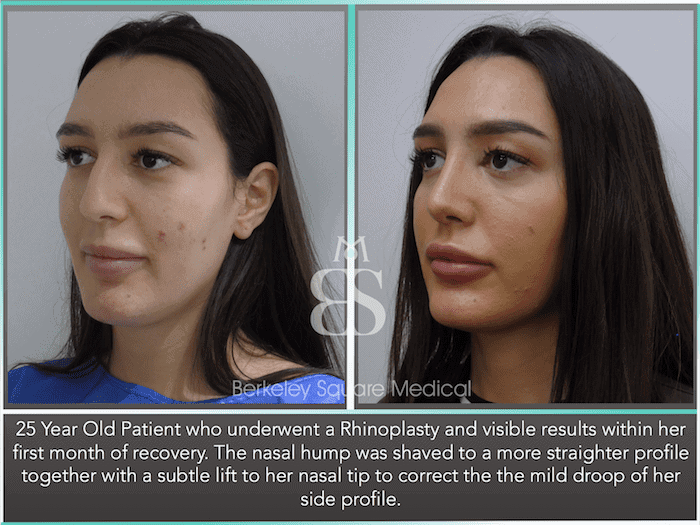
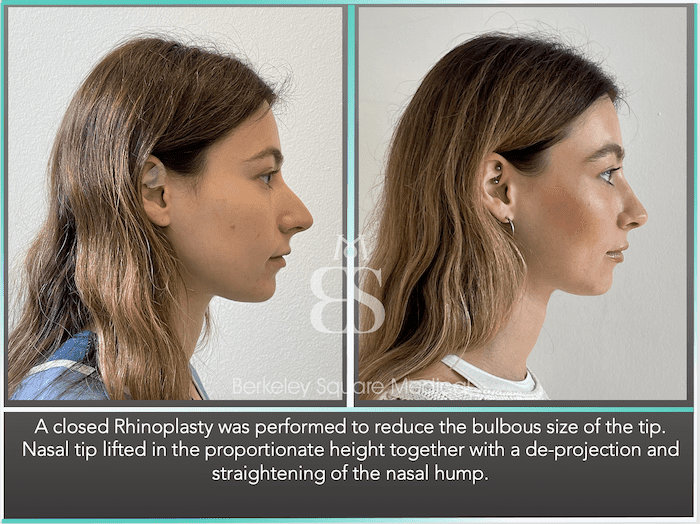
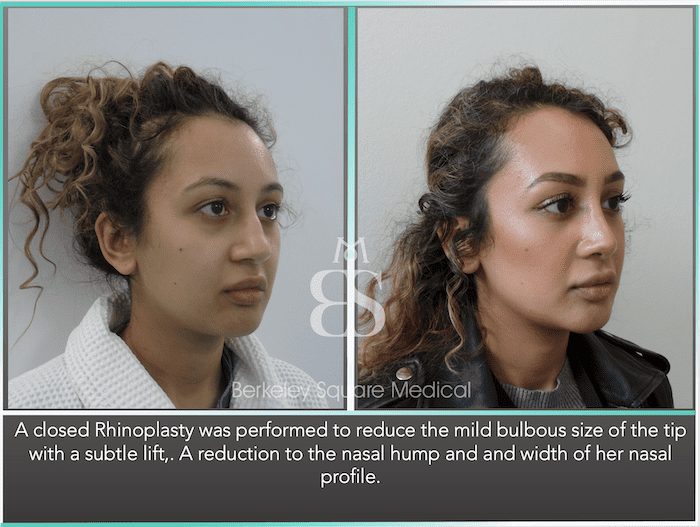
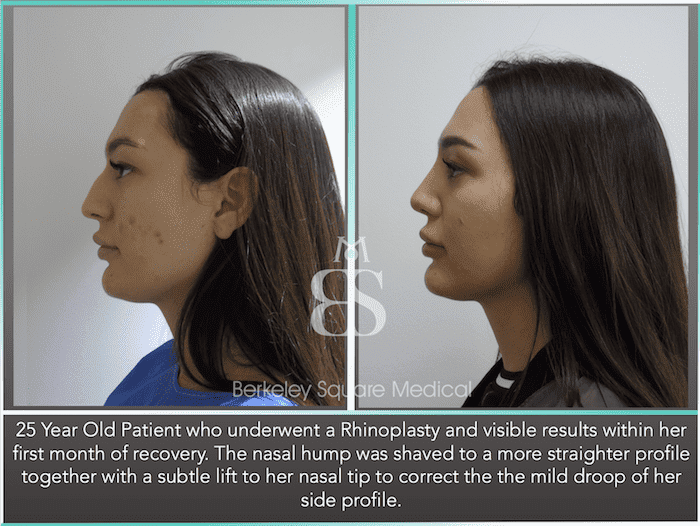
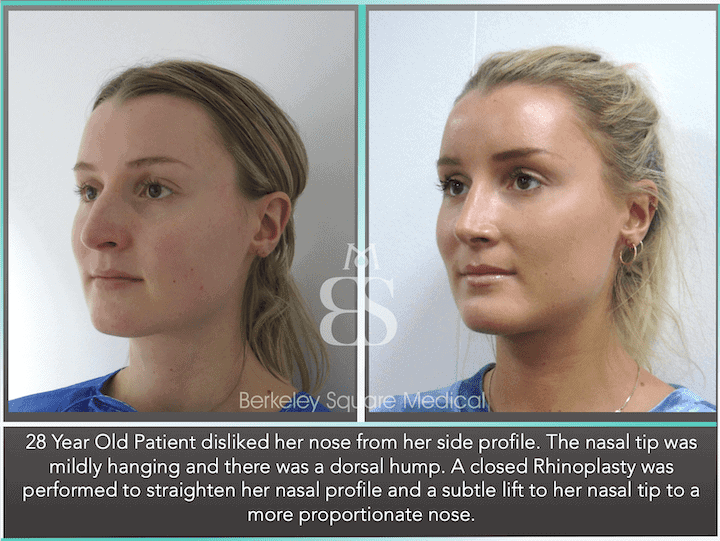
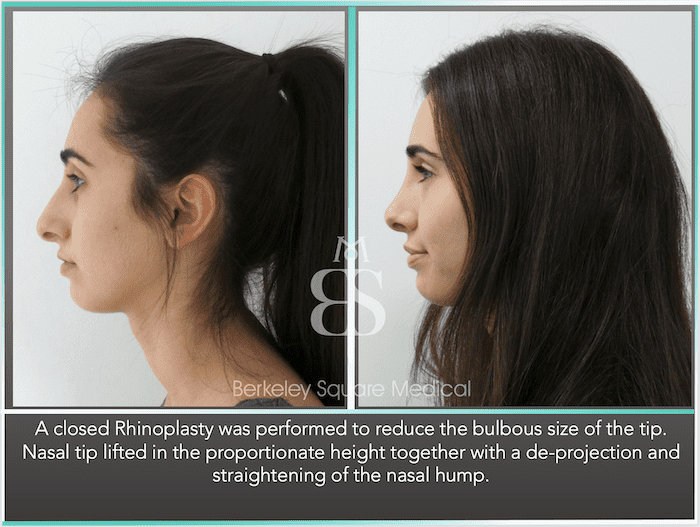
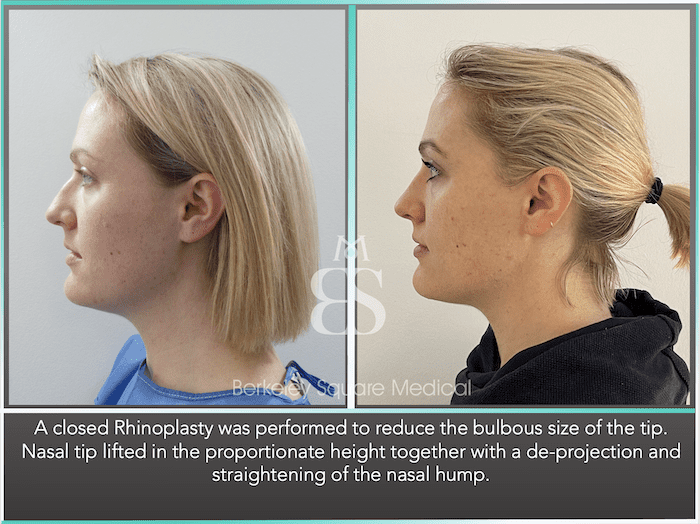
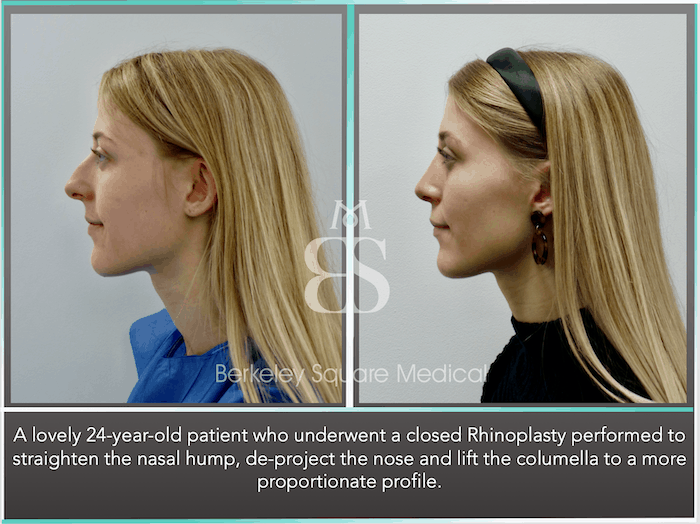
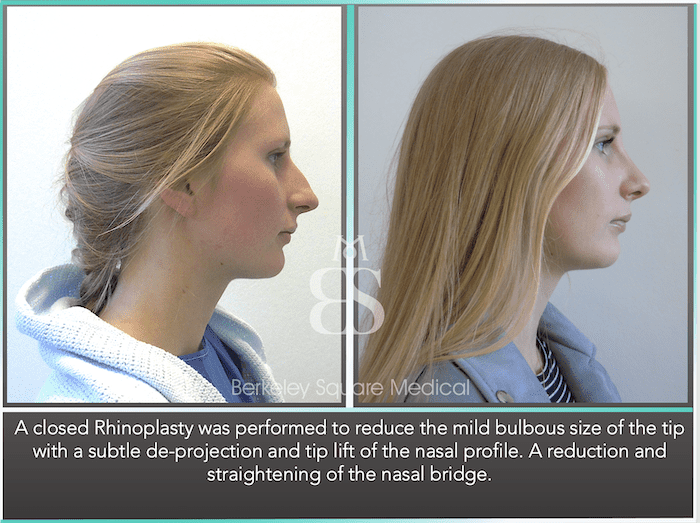
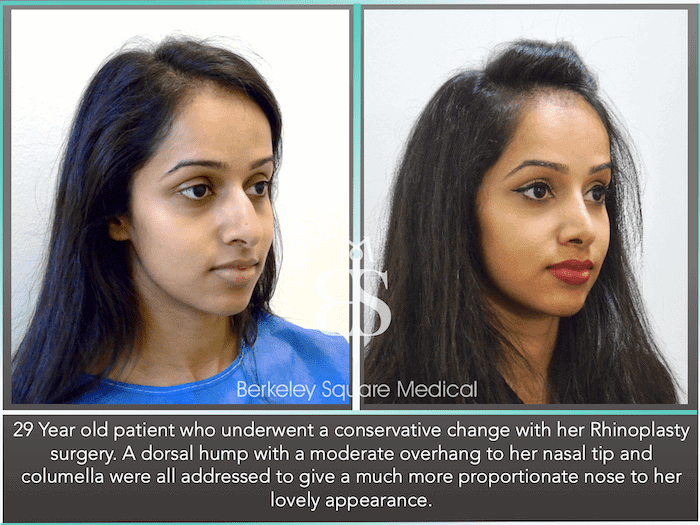
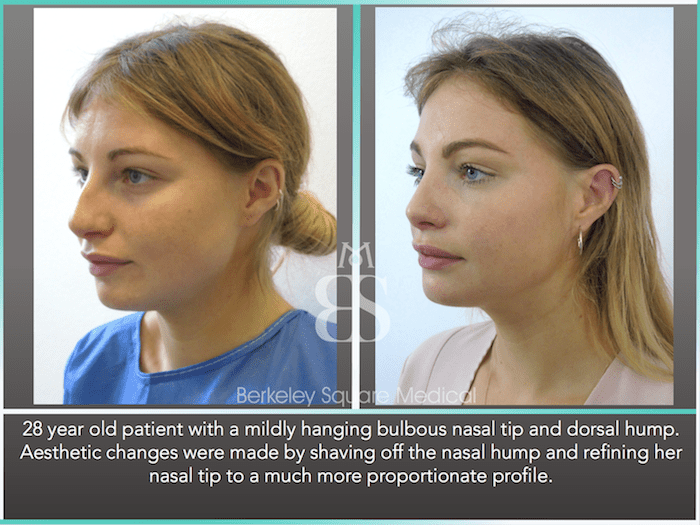
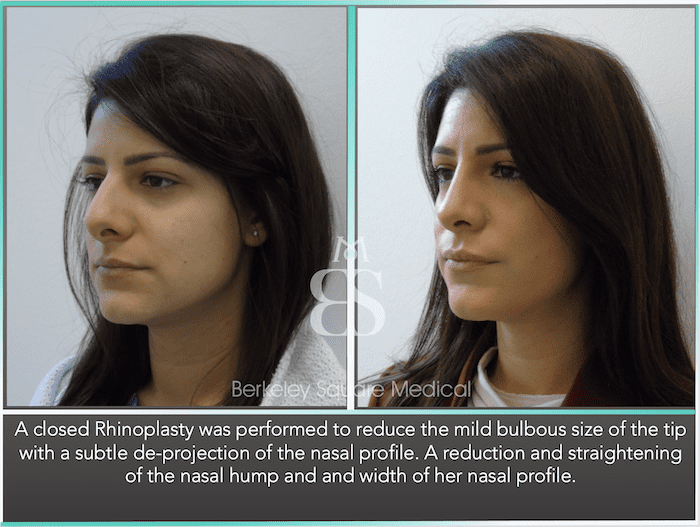
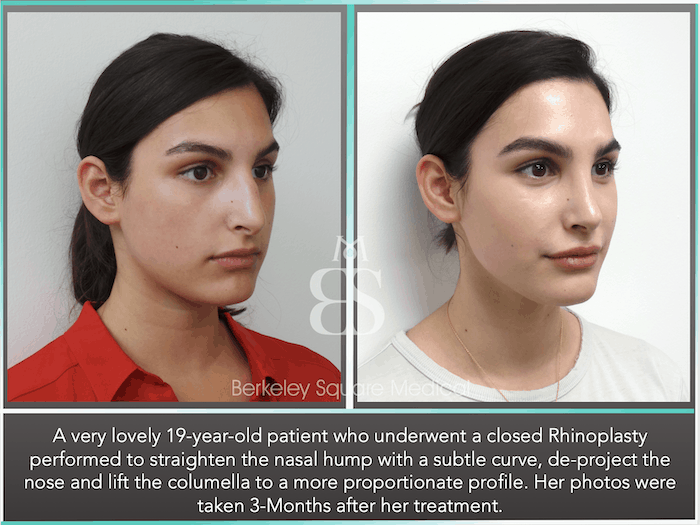
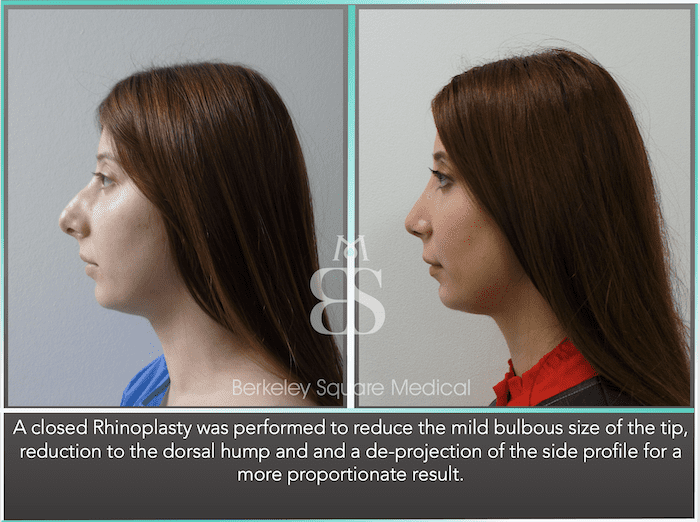
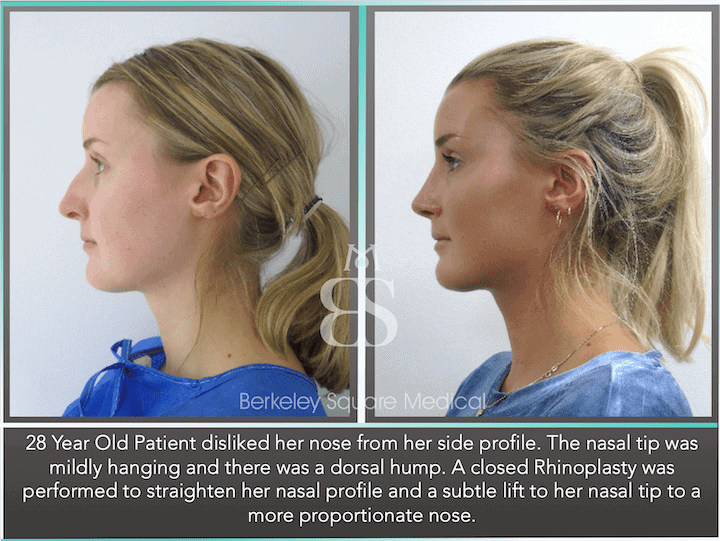
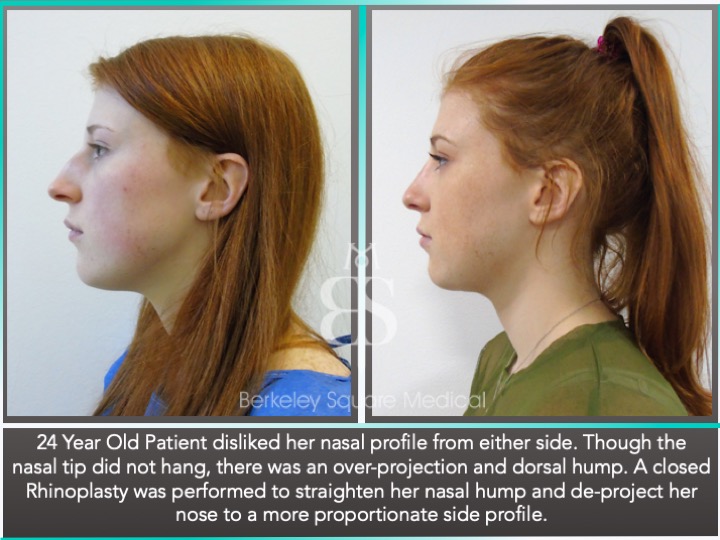
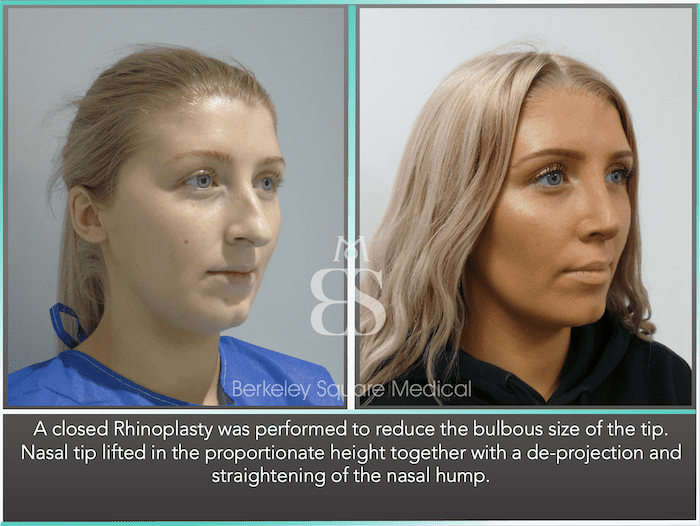
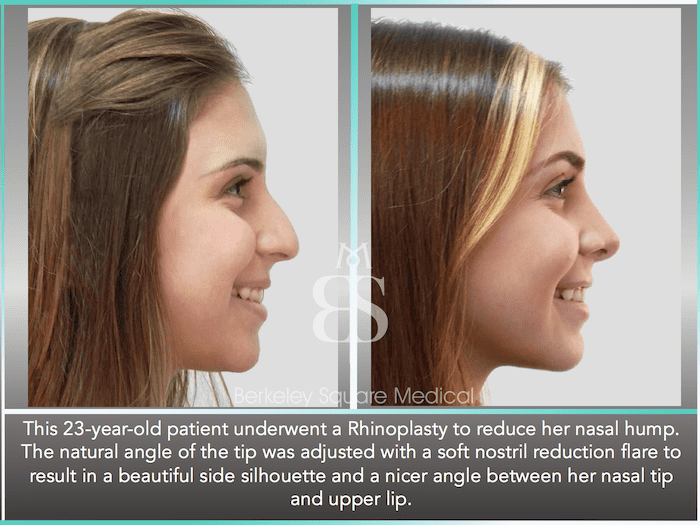
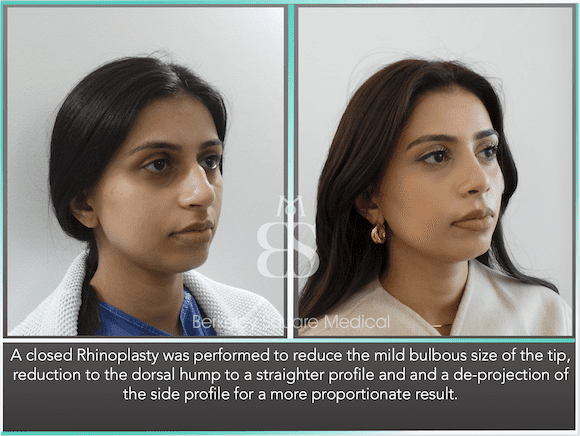
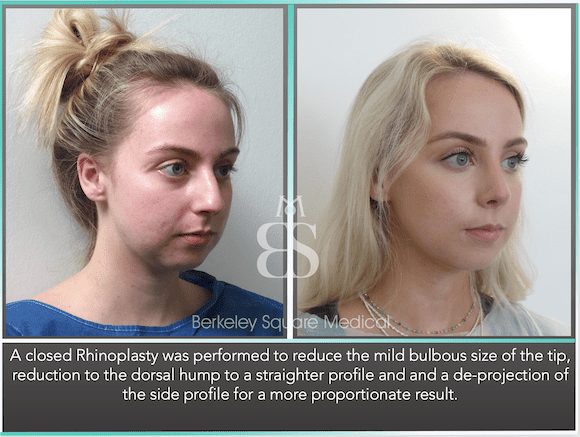
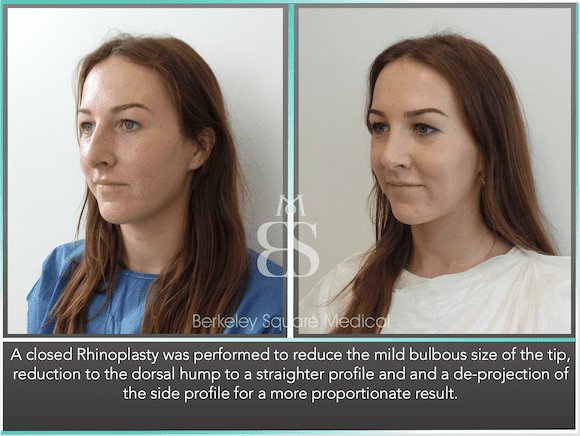
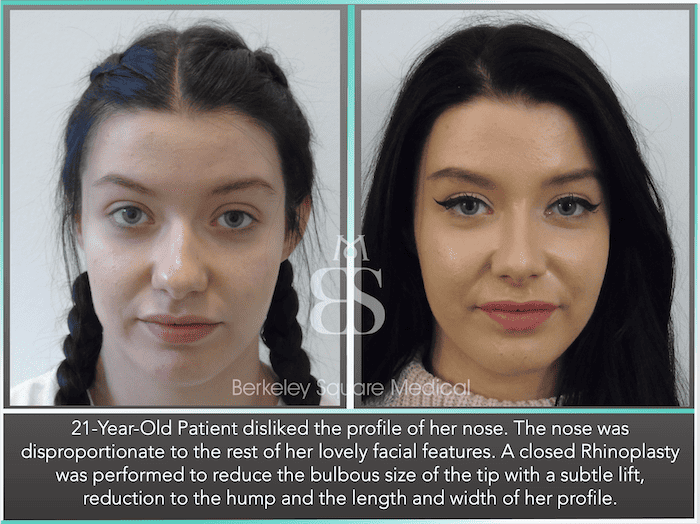
If a previous Rhinoplasty left you with a result you did not expect, or concerns your first surgeon could not resolve, you are not alone. Revision Rhinoplasty is one of the most technically demanding procedures in facial surgery, and choosing the right specialist the second time matters even more than the first. In Mr Shoaib's peer-reviewed audit of 800 of his own patients (2015 to 2022) the revision rate was 3.5%, against roughly 10% reported in the literature (a single-surgeon series; results vary). Your initial consultation is with Mr Shoaib personally, not a patient coordinator.
Medically Reviewed by Mr Taimur Shoaib, FRCS (Plast) | Last Updated: 28 July 2026
9250
Procedures Completed
30
Years Surgery Experience
Intro
Before and After
Testimonials
Surgeon
Videos
At a Glance
What to expect
Imaging
Clinic
Articles
Related Links
Real self
FAQ
Podcasts
Specialist Revision Rhinoplasty Surgery in London: Aesthetic Balance & Functional Integrity
3.5 in 100Mr Shoaib's audited revision rate across his overall Rhinoplasty practice (primary and revision combined), against the roughly 1 in 10 reported in the published literature. Revision surgery is more complex and less predictable than a first operation.
0.8%Complication rate in his published series of primary closed Rhinoplasty. Revision is more complex and carries higher, less predictable risks, discussed individually at your consultation.
Peer-ReviewedMr Taimur Shoaib has published research specifically on reducing Rhinoplasty revision rates, in the Aesthetic Surgery Journal Open Forum, 2023.
FRCS (Plast)Mr Taimur Shoaib, GMC 3615443. On the GMC Specialist Register, Fellow of the Royal College of Surgeons of Edinburgh, and a member of BAAPS, ISAPS and UKAAPS.
Violeta D★★★★★
Finally I got my confidence back, and for the first time in years I feel that people see me and not my nose. Having had an unsuccessful Rhinoplasty many years ago and being extremely unhappy since, I couldn't have chosen a better Doctor to carry out my 2nd surgery. I am over the moon with my new nose.
Posted on Google, 14 November 2018
Revision Rhinoplasty aims to correct an undesired aesthetic appearance of your nose caused by a previous Rhinoplasty surgery. It is a delicate procedure requiring one of the highest levels of specialisation from your Rhinoplasty surgeon. At Berkeley Square Medical, we are Rhinoplasty specialists for both men and women. An internal audit shows that around 24% of the Rhinoplasty operations Mr Shoaib performs each year are revisions, correcting surgery first carried out by other surgeons in the UK or abroad. Many patients who come to us for revision had their first Rhinoplasty with a general cosmetic clinic rather than a Rhinoplasty-specific specialist, and that difference in training and caseload is often the root cause of the result they want corrected. Revision surgery with Mr Taimur Shoaib is offered as a single, fixed, all-inclusive fee.
Is Revision Rhinoplasty Common?
Revision Rhinoplasty is one of the highest inquiries by patients in the cosmetic surgery sector for corrective surgery. Let us look at why this growing trend is happening and what you should consider before undergoing a revision Rhinoplasty.
Different Interpretations↓
You and your surgeon had different interpretations of your goals, possibly due to a lack of communication. All patients have a goal they wish to achieve, and the first important question your surgeon should answer is: are your goals within the normal limitations of safe surgery? If the answer is yes, then your surgeon should have an experienced understanding of the natural facial anatomy and discuss the aims to proportionate your nasal profile. The goal of Rhinoplasty should be to make your nose proportionate to your facial features.
Unrealistic goals↓
Many surgeons will carry out a Rhinoplasty surgery with a one-size-fits-all philosophy, and sadly this might not align with the goals of what you had hoped to achieve. Patients must be reminded that a slight change in the shape of their nose can change their entire surrounding facial features, and their surgeon must have experience in communicating this clearly.
Your surgeon had little Rhinoplasty experience↓
Your surgeon not only needs to be on the specialist register with the General Medical Council (UK) as a Plastic Surgeon, but also needs to have a substantial portfolio of Rhinoplasty patients and a low, audited revision rate. Rhinoplasty must be one of their most frequent surgeries. It is inadvisable to select a surgeon who performs great breast and body surgery results but only performs the odd Rhinoplasty treatment each month.
You did not undertake Rhinoplasty Imaging↓
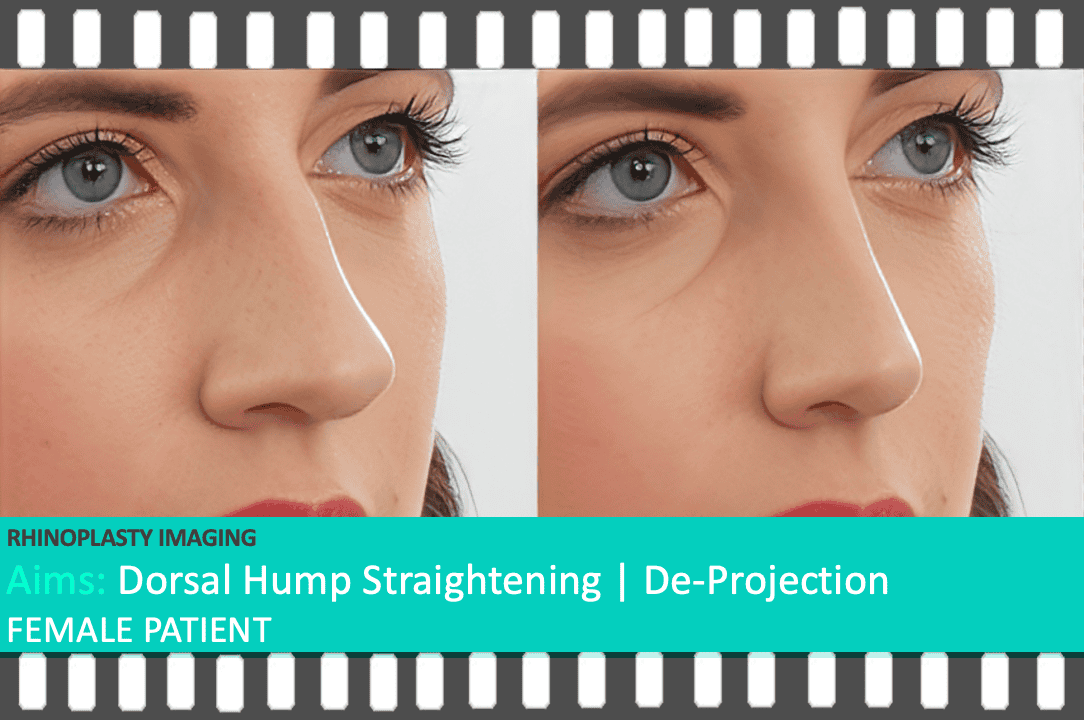
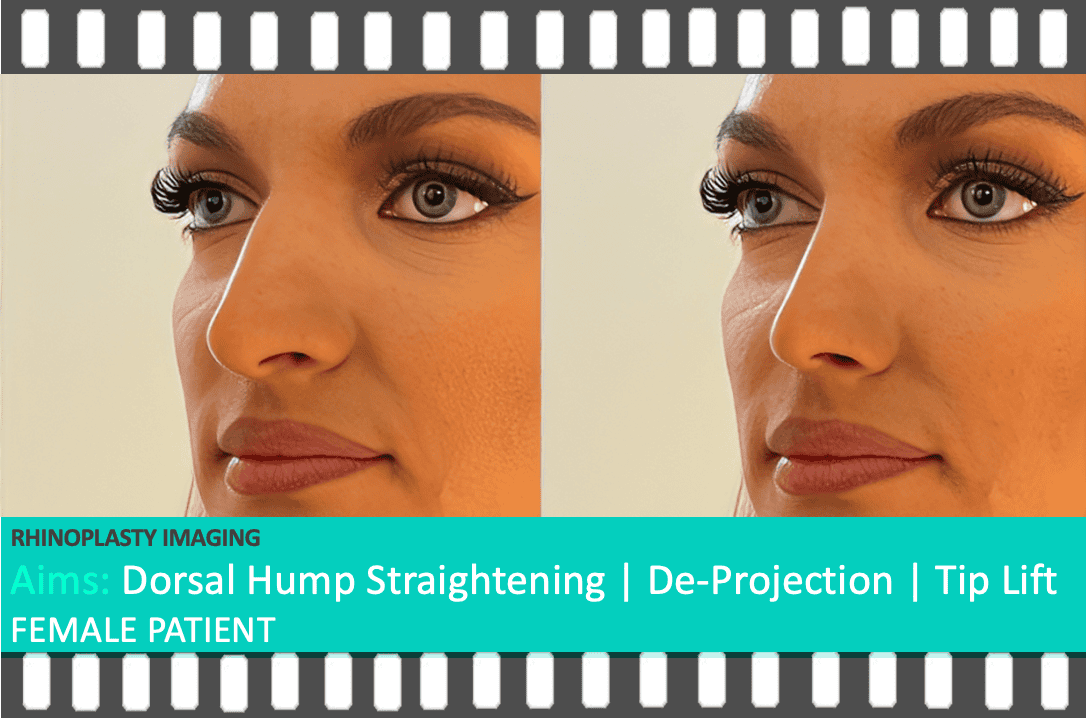
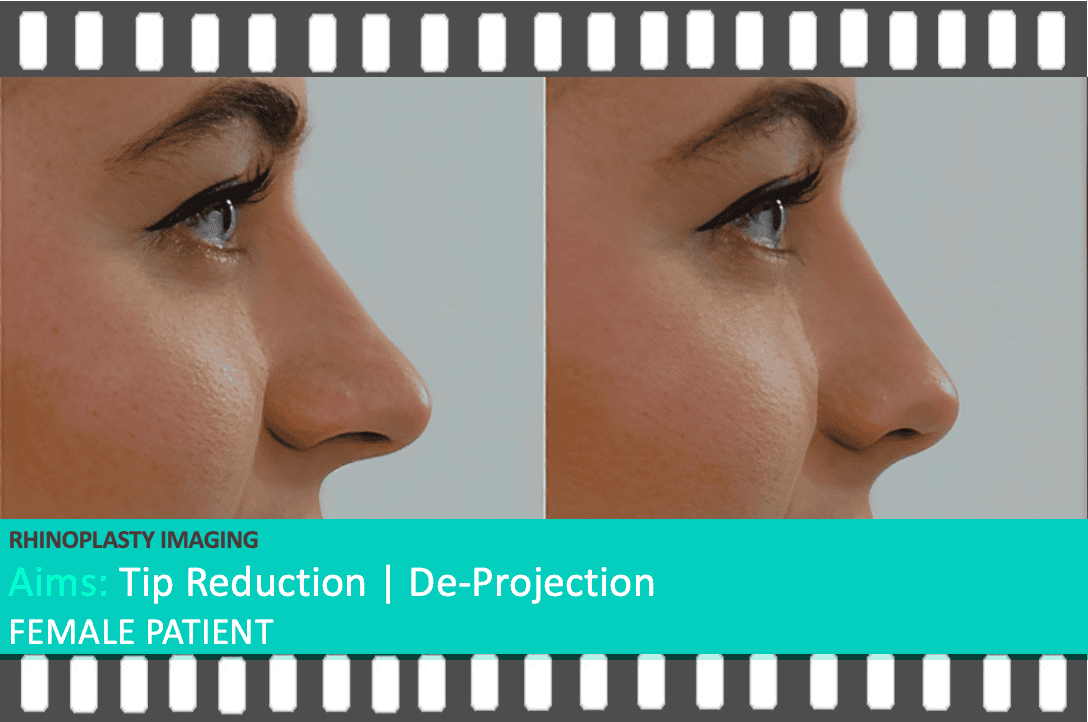
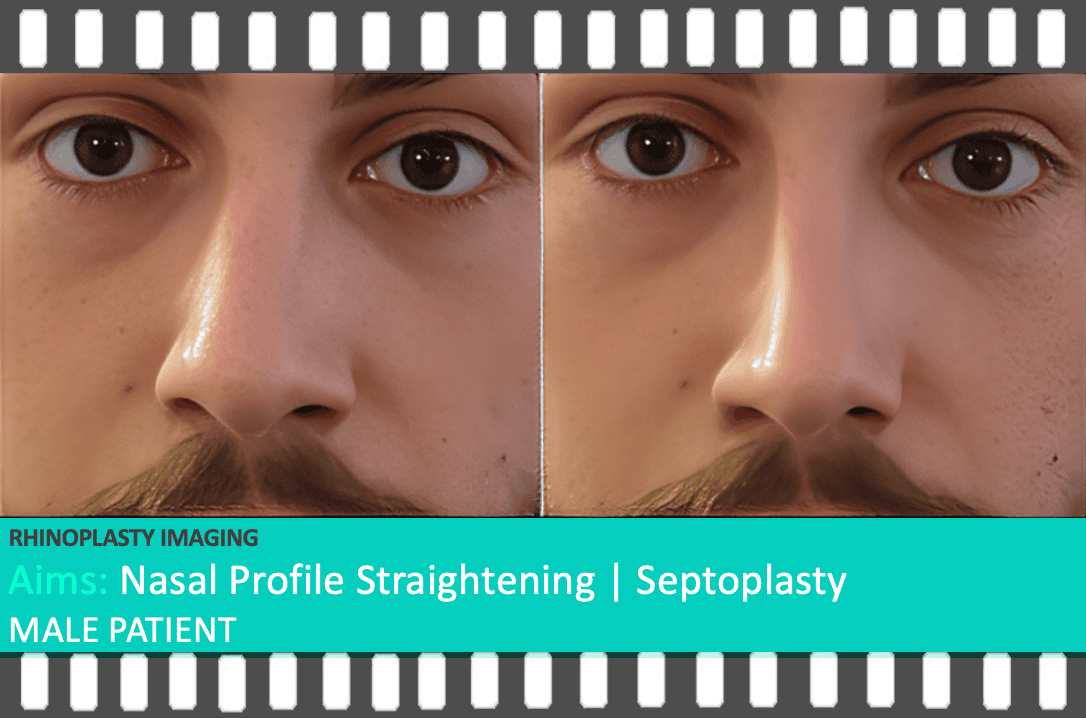
Although this is not a mandatory service, Rhinoplasty Imaging has the great benefit of visually aligning your goals with your surgeon. At Berkeley Square Medical, we encourage all Rhinoplasty patients suitable for a revision to undergo Rhinoplasty Imaging, to ensure they have confidence leading into their treatment.
Operated at an undervalued price↓
A growing number of patients had their previous Rhinoplasty abroad, often a decision based on price, which is understandable. The issue we see more often is what comes afterwards: limited or no local aftercare, which can affect the final result. Many patients whose first Rhinoplasty was performed elsewhere achieve a good corrected result with us, though revision outcomes are less predictable than first-time surgery and results vary from person to person. What matters most is that Mr Shoaib fully informs each patient on the benefits, risks and realistic outcome of what can be achieved.
Why Mr Shoaib's Revision Results Stand Apart
The most reliable measure of a revision surgeon is published, audited outcome data, and Mr Shoaib's is exactly that:
An independently audited revision rate of 3.5%, well below the roughly 10% reported across the published Rhinoplasty literature.
A 0.8% complication rate with no infections recorded across his published series of closed-Rhinoplasty patients.
Peer-reviewed research published specifically on reducing Rhinoplasty revision rates, in the Aesthetic Surgery Journal Open Forum, 2023.
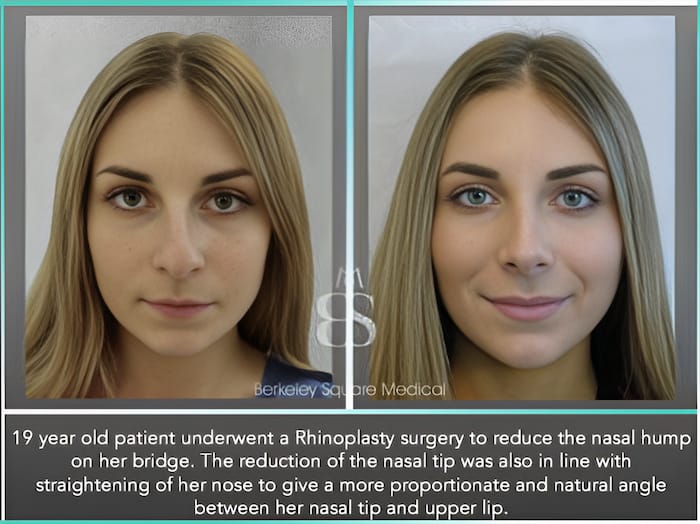
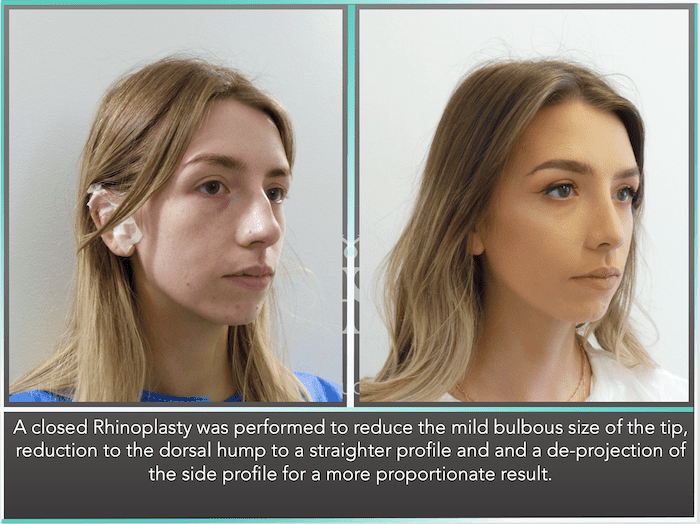
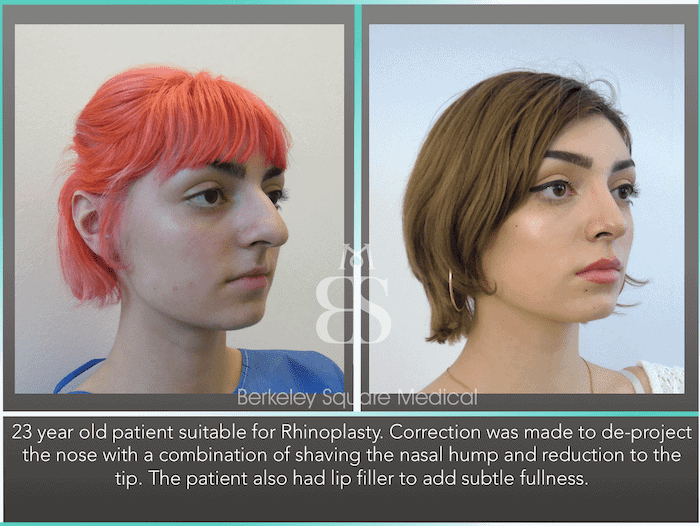
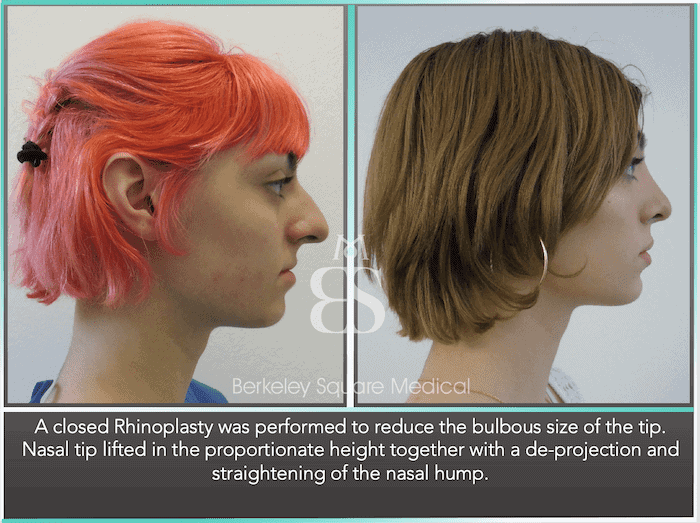
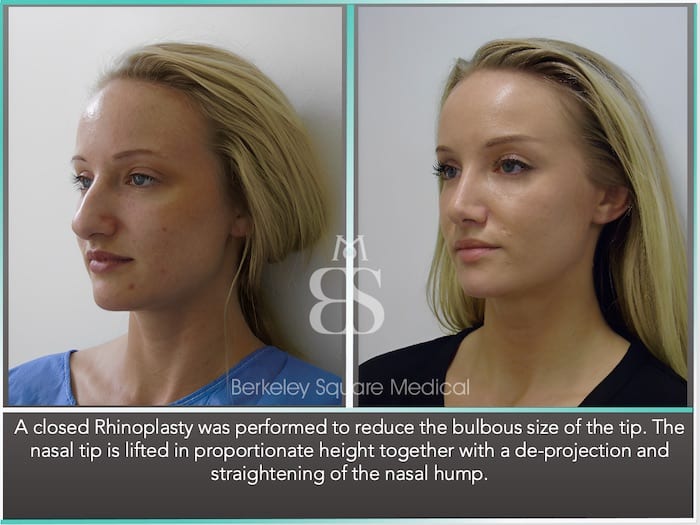
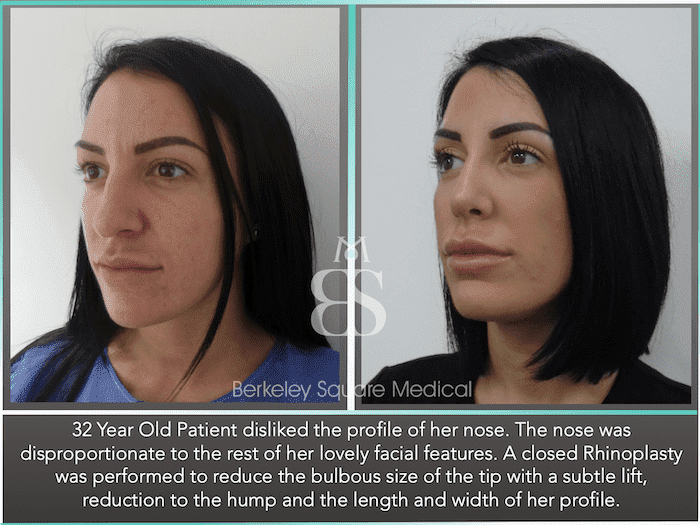
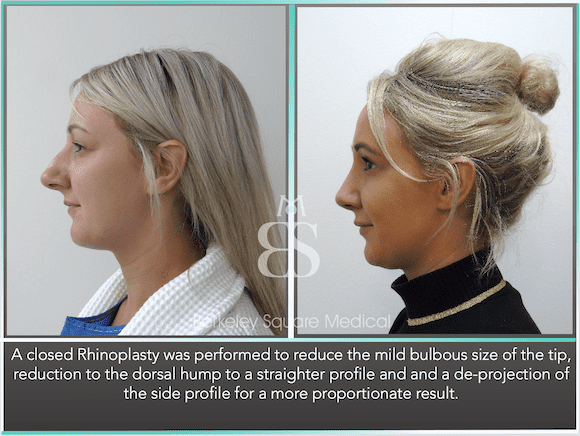
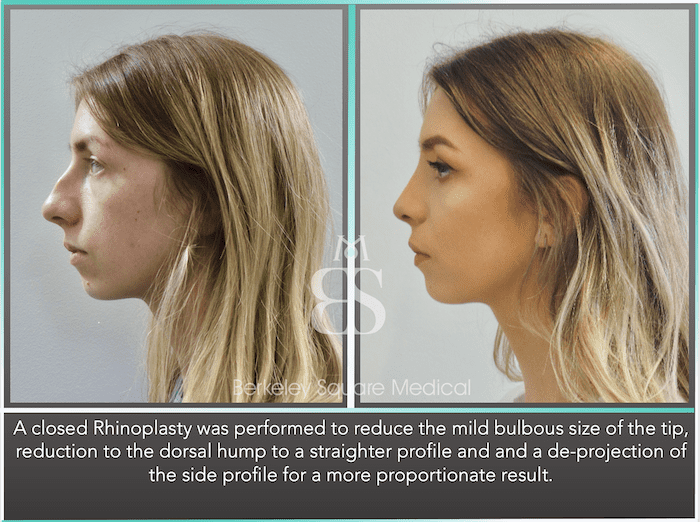
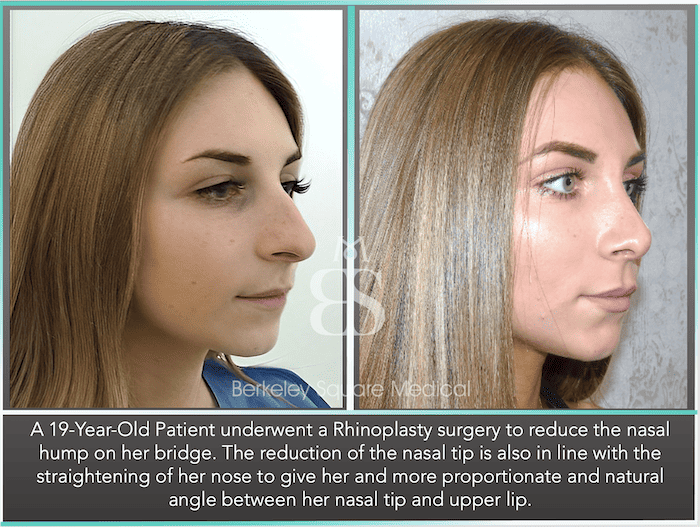
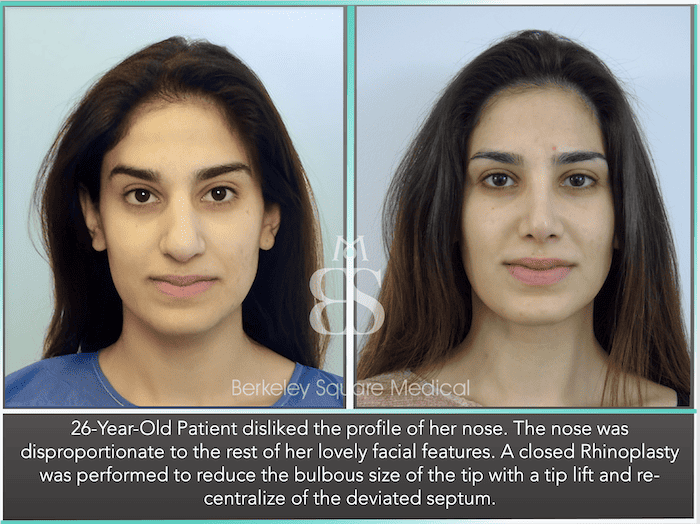
There are three broad reasons patients come to us for a revision: the first result changed too little, the first surgery created a new concern, or the risks of the original operation affected the final result. In practice these show up as specific concerns with the tip, the bridge and profile, or the function and structure of the nose. Each is explained below, with examples corrected by Mr Shoaib.
Tip & Nostril Concerns↓
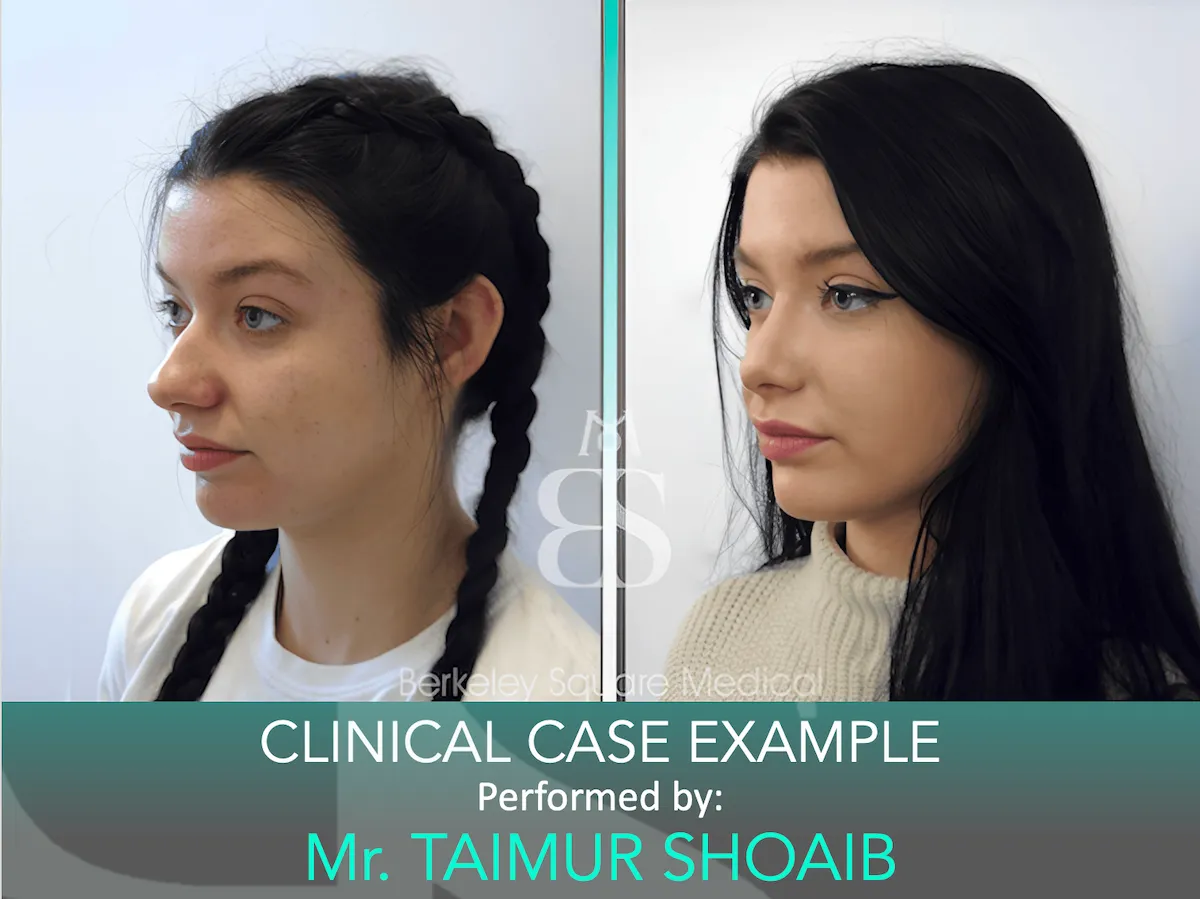
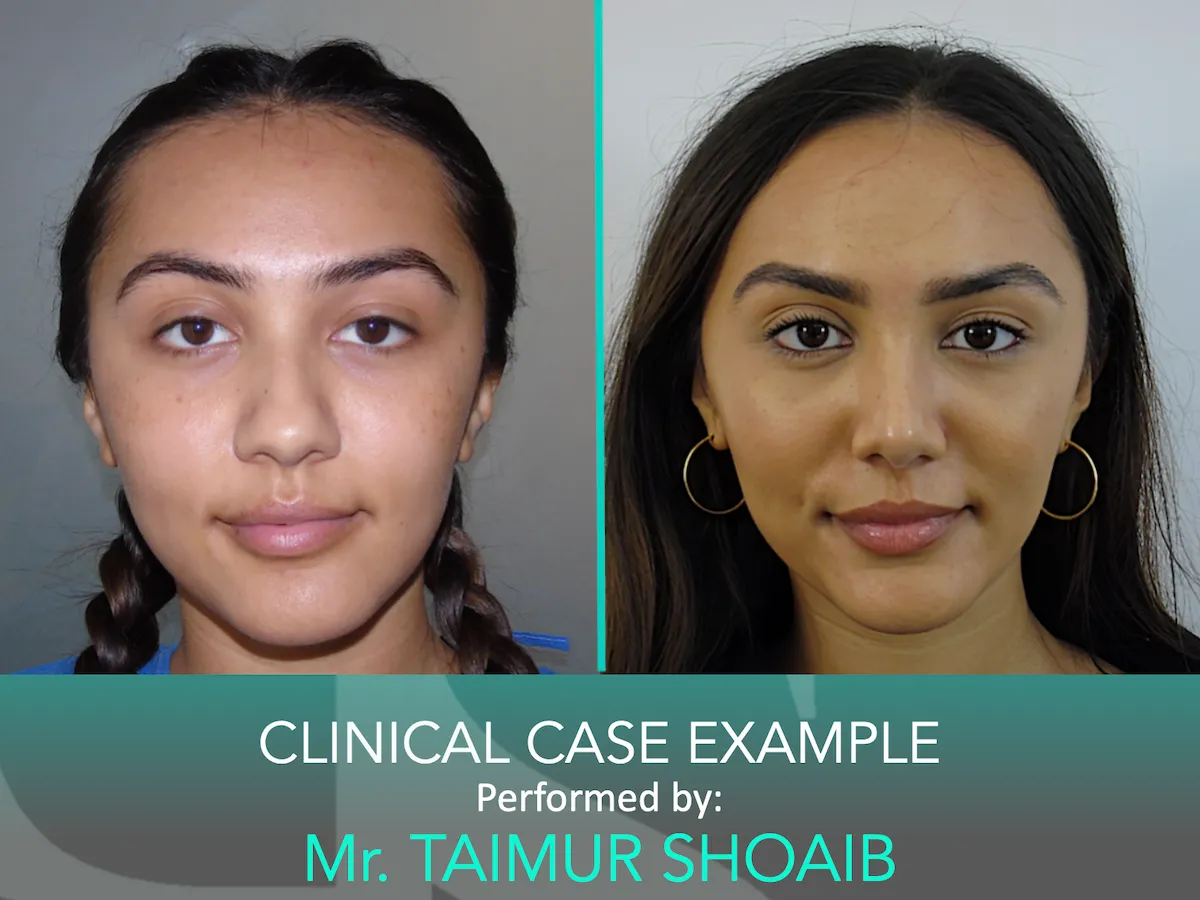
The most common reason patients seek a revision is that the first result changed too little, usually a very conservative reduction that leaves you wanting more. A further reduction is often possible, though sometimes the framework of your nose limits how much more can safely be done. The tip is frequently left looking bulbous, or still too large for the face. These are the tip and nostril concerns we correct most often.
Residual or Recurrent Bulbous Tip
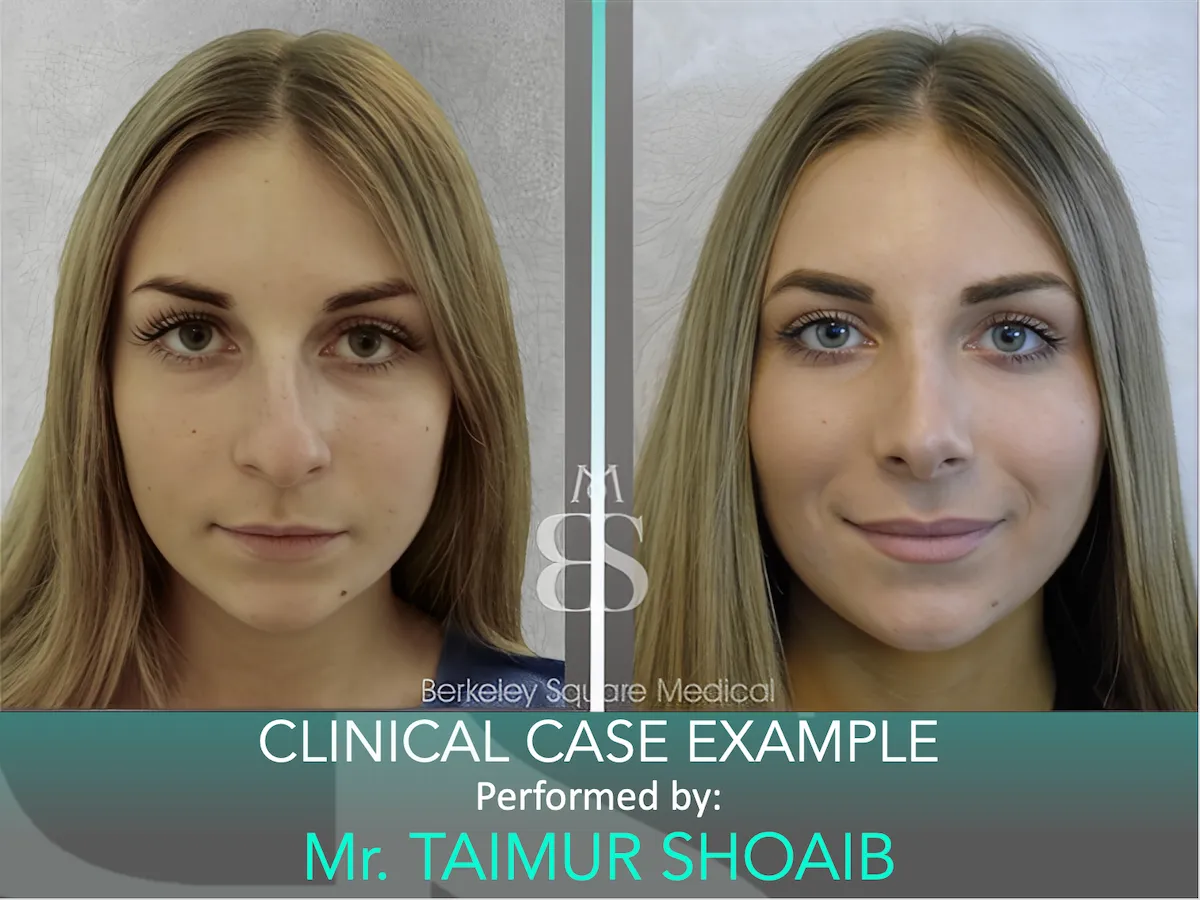
What happened: The nasal tip stays rounded or poorly defined after a previous Rhinoplasty, often because the underlying cartilage was left untreated or is masked by scar tissue.
How Mr Shoaib corrects it: Mr Shoaib refines the remaining cartilage and manages the scar tissue to improve definition while preserving the support the tip still has.
Clinical case example, performed by Mr Taimur Shoaib
Pinched or Over-Resected Tip
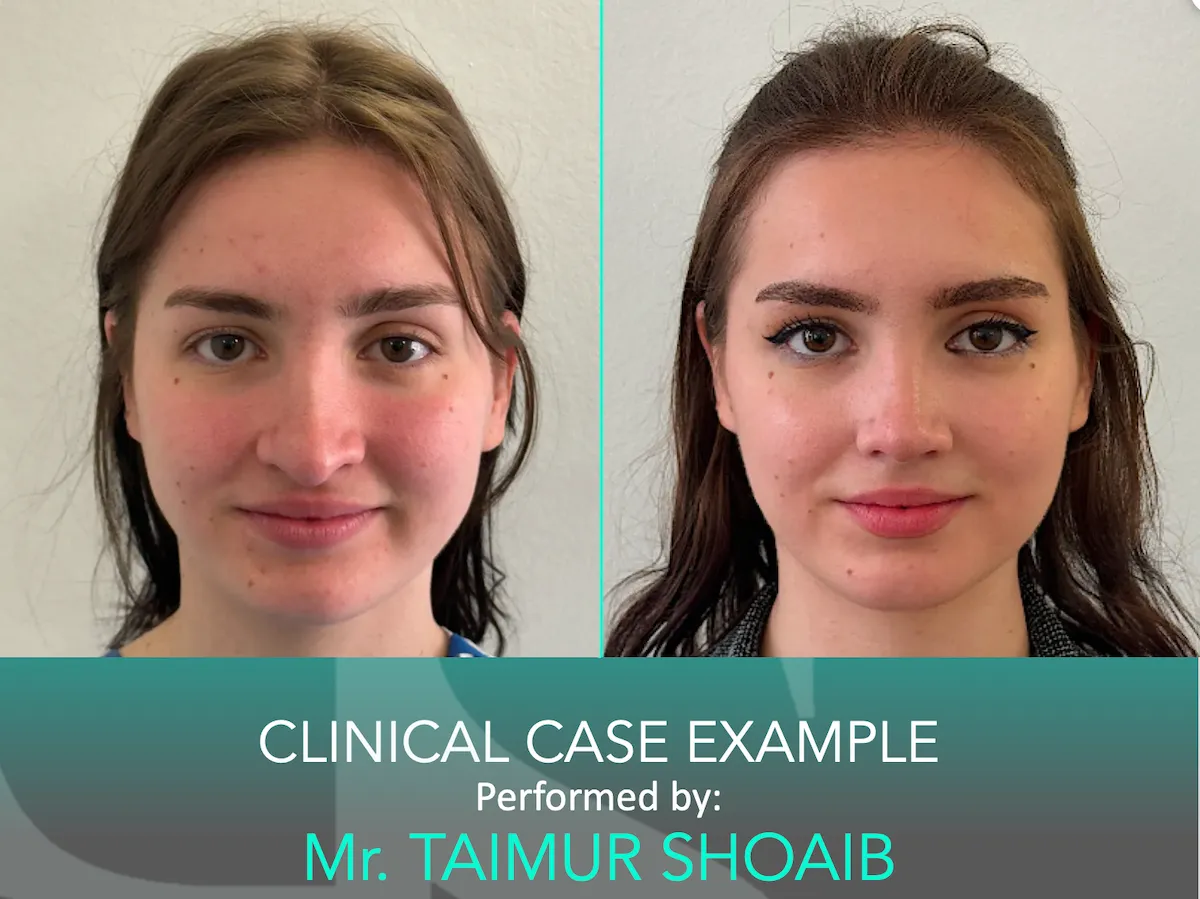
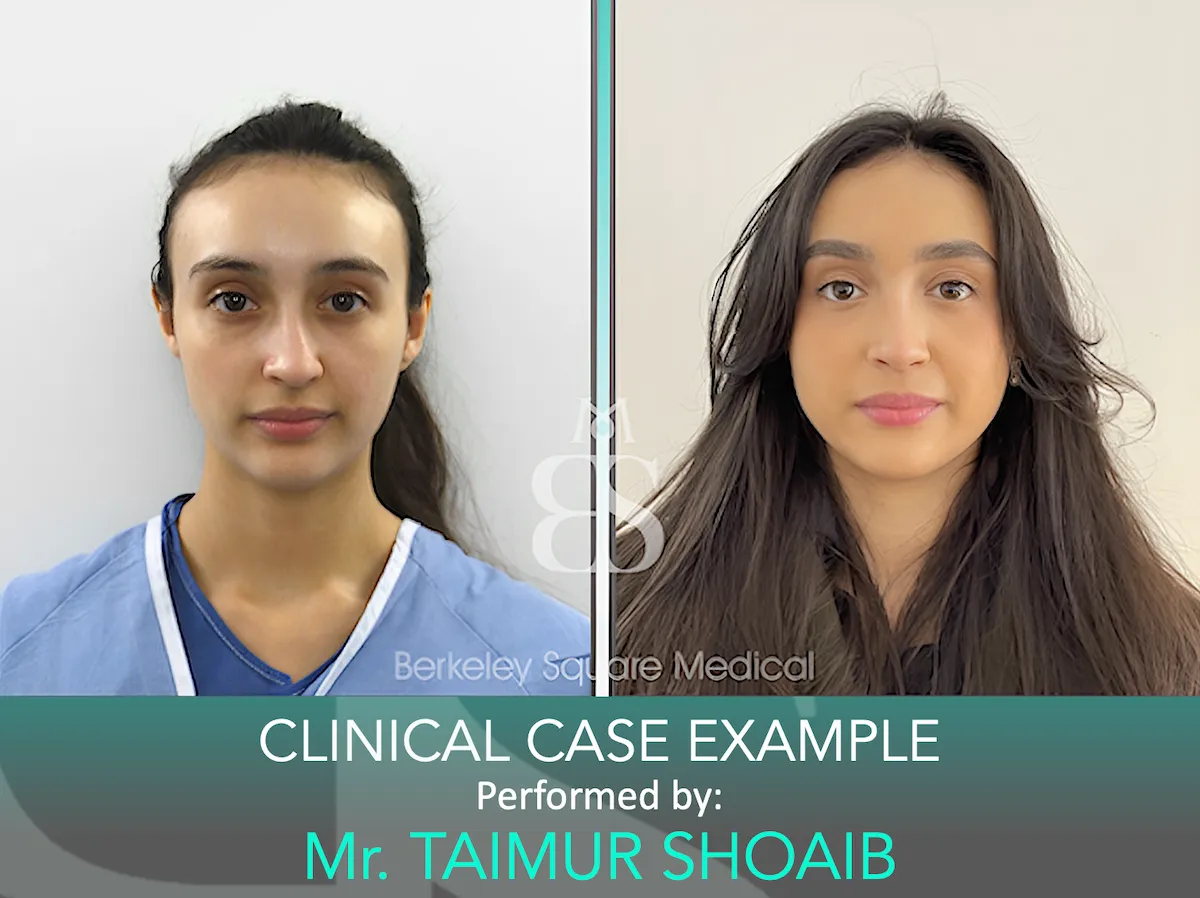
What happened: Too much cartilage was removed at the first surgery, leaving a pinched, asymmetric or unsupported tip that can also affect breathing.
How Mr Shoaib corrects it: Structural grafts, often taken from the ear, rebuild a natural, supported tip shape.
Clinical case example, performed by Mr Taimur Shoaib
Alar Retraction or Notching
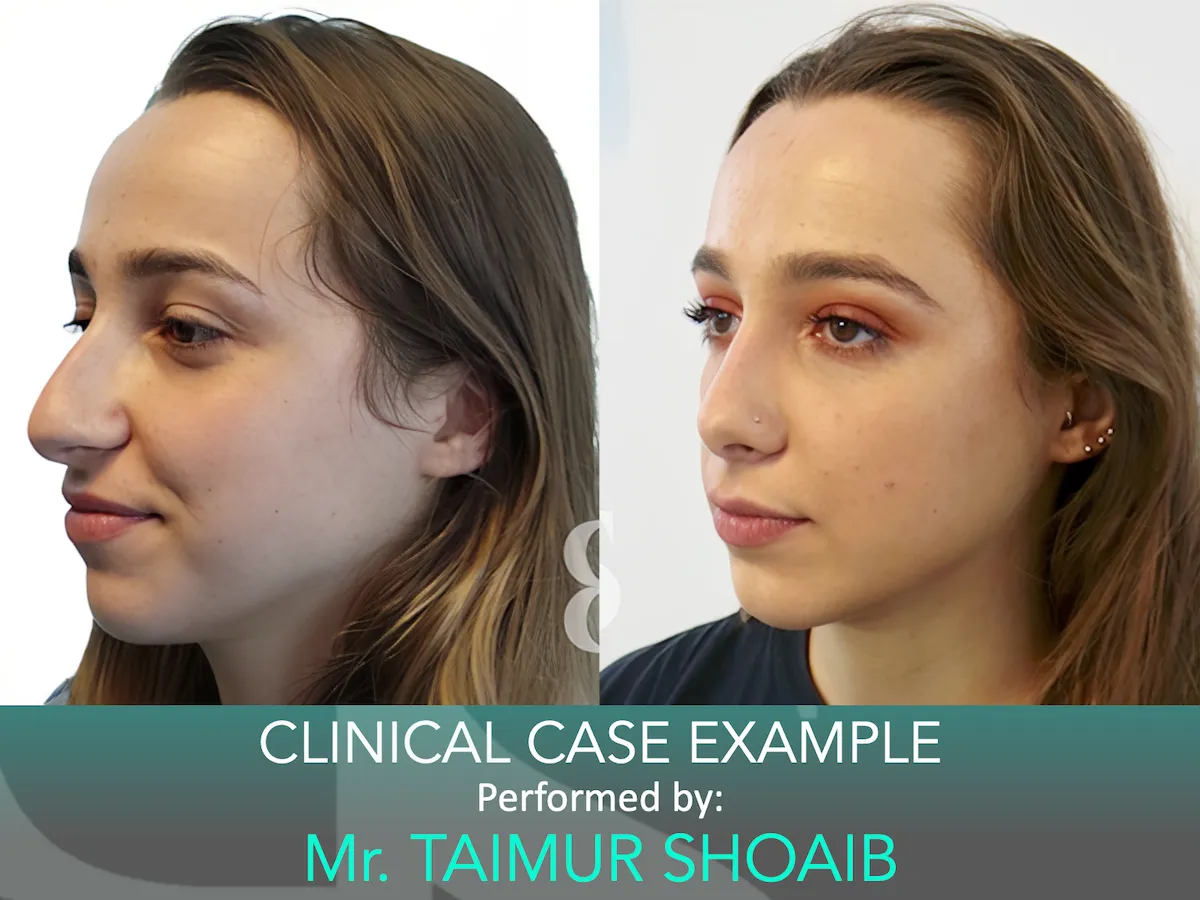
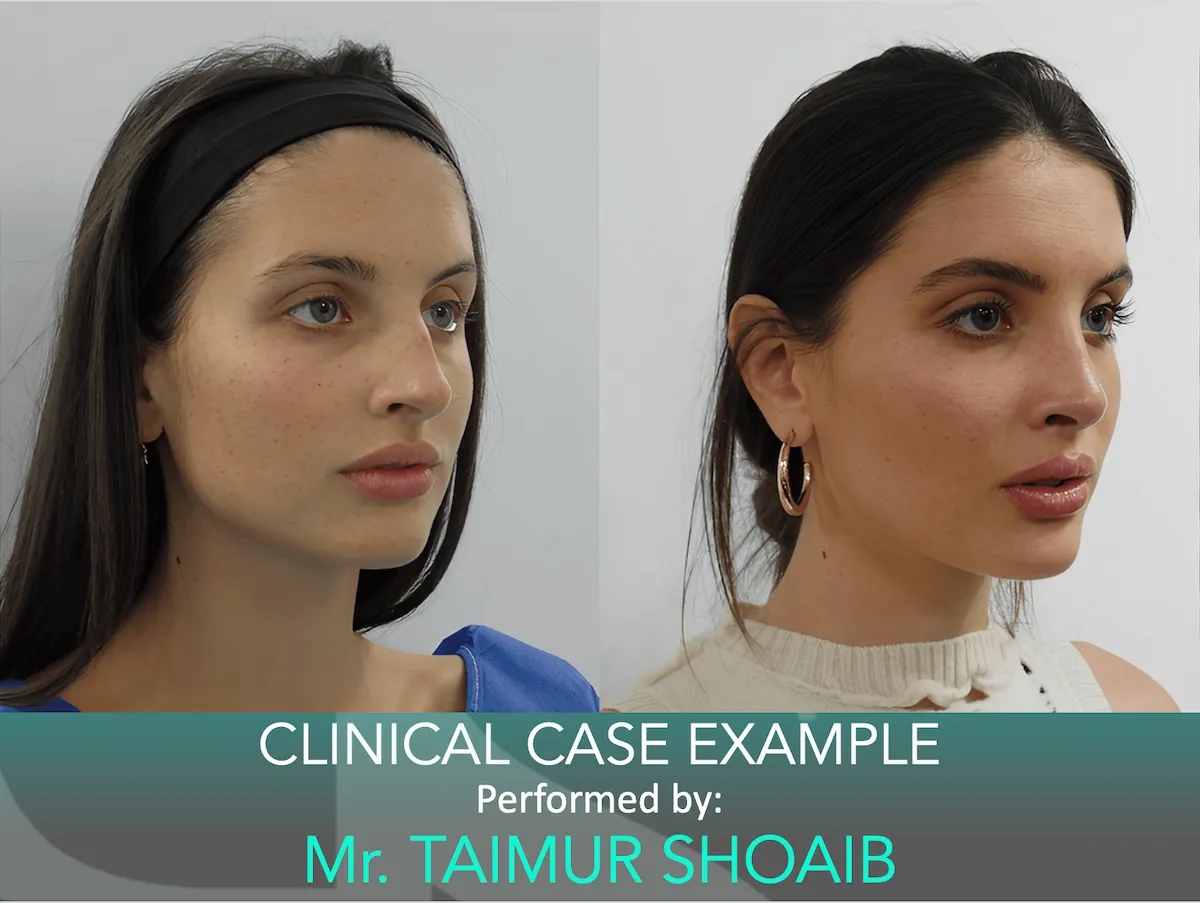
What happened: The nostril rim has been pulled upward or notched after a previous reduction, exposing more of the nostril than is natural.
How Mr Shoaib corrects it: Carefully placed grafts lower and support the rim to restore a balanced nostril shape.
Clinical case example, performed by Mr Taimur Shoaib
Bridge & Profile Concerns↓
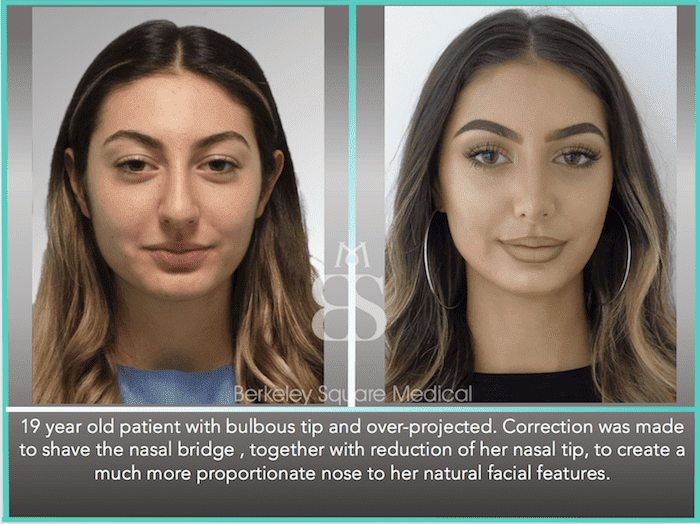
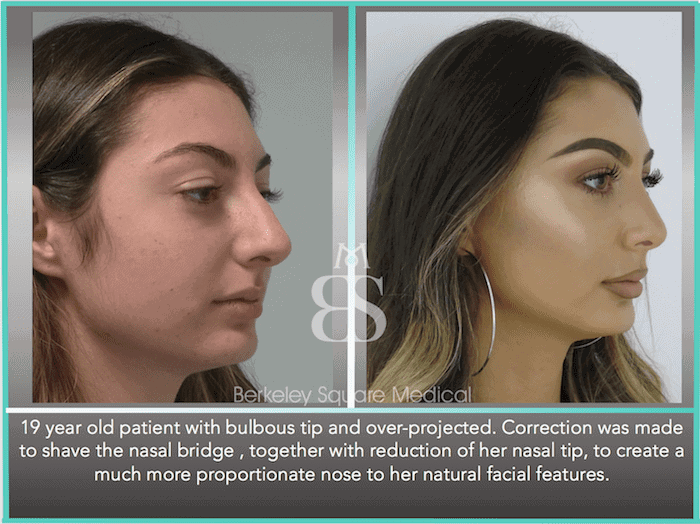
Sometimes the first operation creates a new concern it did not set out to. A common example is straightening a nasal hump without de-projecting the nose, so it still projects too far. The nose can also look larger from certain angles, or the bridge and nostrils wider than you expected. The bridge and profile concerns we see include the following.
Residual or Recurrent Dorsal Hump
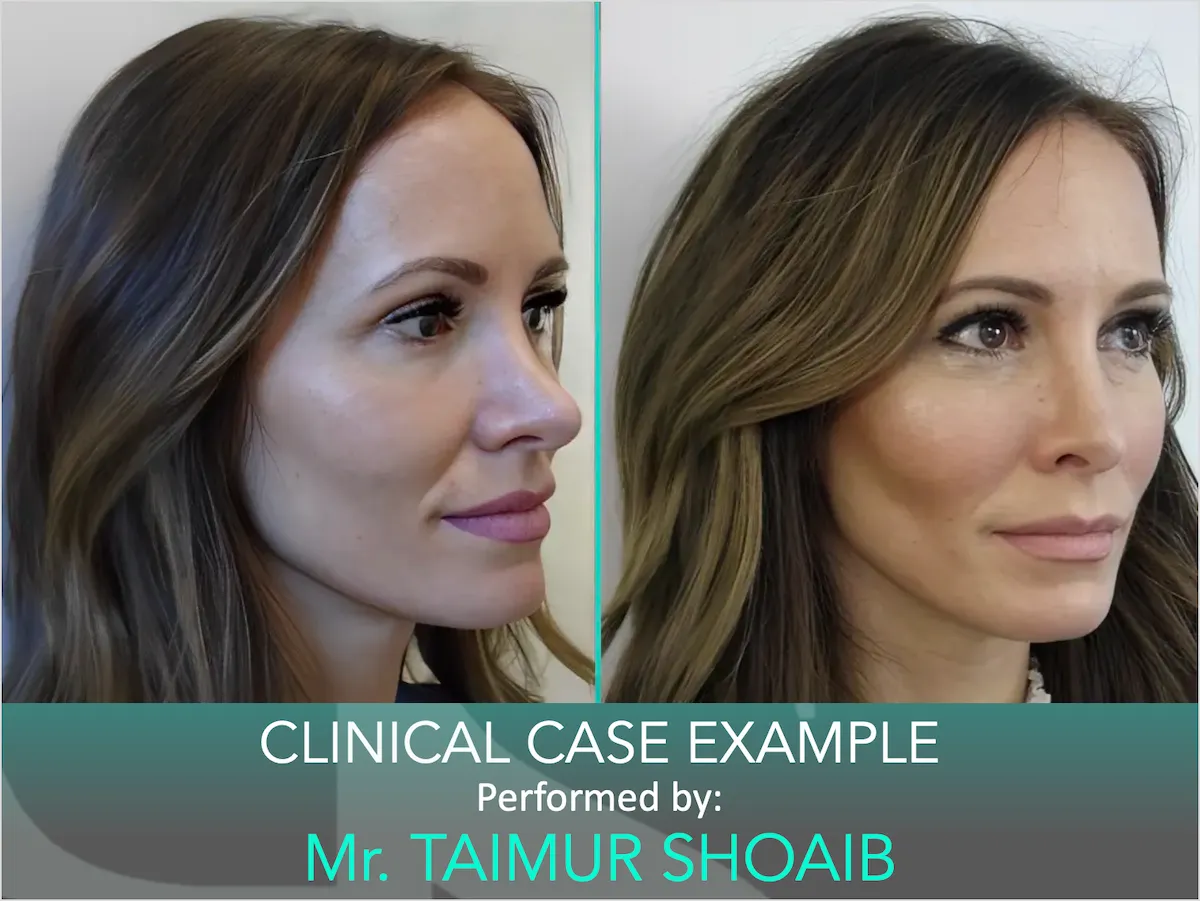
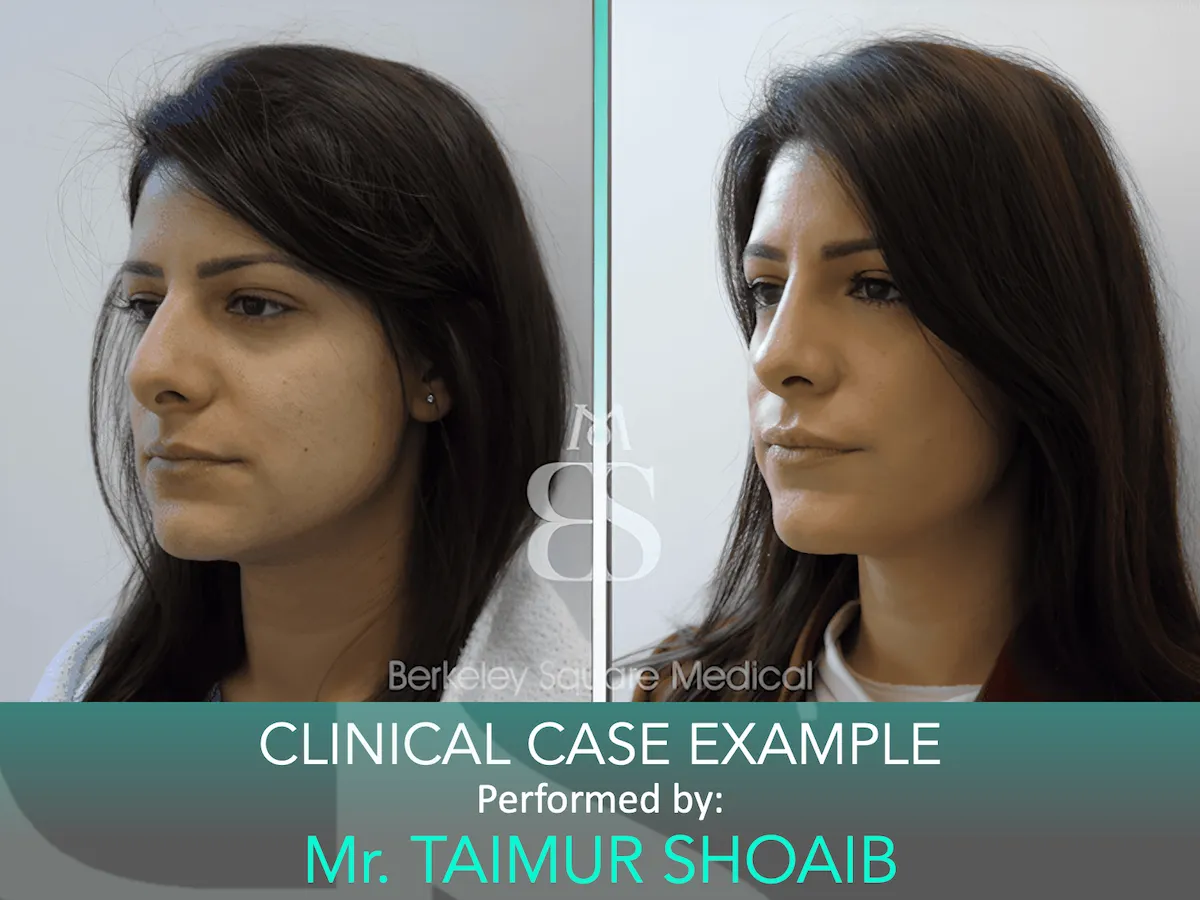
What happened: A hump on the bridge was incompletely reduced at the first surgery, or has become more visible as the swelling settled.
How Mr Shoaib corrects it: Further controlled reduction refines the profile while preserving the integrity of the bridge.
Clinical case example, performed by Mr Taimur Shoaib
Over-Resected or Scooped Bridge
What happened: Too much was taken from the bridge during the previous operation, leaving a saddle or scooped profile that looks operated on.
How Mr Shoaib corrects it: Autologous cartilage grafting restores natural height and a defined, stable contour.
Clinical case example, performed by Mr Taimur Shoaib
Residual Deviation or Wide Bridge
What happened: The nose stays crooked or wide after a first Rhinoplasty, often because the bones were not fully reset.
How Mr Shoaib corrects it: Controlled osteotomies straighten and narrow the bridge, with structural reinforcement for a predictable long-term result.
Clinical case example, performed by Mr Taimur Shoaib
Function & Structural Concerns↓
The risks of the original operation can also affect the final result. Dips and bumps can appear along the contour of the bridge as the bone heals, more visible in natural light or photographs. Excess scar tissue can build around the tip and make it look bulbous, the bones may not have reset and left a deviation, and breathing can be left compromised. These functional and structural concerns include the following.
Breathing Problems After Rhinoplasty
What happened: Airway obstruction has been caused or left behind by the previous surgery, sometimes from a residual septal deviation or collapsed internal valves.
How Mr Shoaib corrects it: Functional correction and valve support restore airflow while maintaining external balance.
Clinical case example, performed by Mr Taimur Shoaib
Loss of Structural Support
What happened: The framework has been weakened by earlier cartilage removal, risking gradual collapse or distortion over time.
How Mr Shoaib corrects it: A structural rebuild using your own cartilage restores support and protects the long-term result.
Clinical case example, performed by Mr Taimur Shoaib
Precise, Low-Trauma Bone Work
What happened: Already-traumatised soft tissue is more vulnerable during a second operation.
How Mr Shoaib corrects it: Ultrasonic (piezo) technology allows selective bone contouring while protecting the blood vessels and skin, supporting a smoother recovery.
Clinical case example, performed by Mr Taimur Shoaib
Make Your Enquiry
+44(0)330 058 0212
Revision Rhinoplasty Before & After Results:
Revision Rhinoplasty Results
Testimonials
Violeta D, Revision Rhinoplasty Patient
Finally I got my confidence back and for the first time in years.Having had an unsuccessful Rhinoplasty many years ago and being extremely unhappy since I couldn't have chosen a better Doctor to carry out my 2nd surgery...
(Read My Full Review on Google Reviews)
Carla
Thank you so much for your amazing work. I can’t explain enough how happy I am with the results from my Rhinoplasty surgery at Berkeley Square Medical with Mr Shoaib...
(Read My Full Review on Google Reviews)
Lauren Bedford
I selected Berkeley Square Medical :) and my consultation took place with Dr Shoaib in Harley street. My first impression entering their reception was brilliant!...
(Read My Full Review on Google Reviews)
Anna Maria
Thank you Dr Shoaib and Berkeley Square for giving me the best nose! As you know that I've wanted my Rhinoplasty for more than 3 years and I thought i would have to wait even longer because of the lockdown...
(Read My Full Review on Google Reviews)
Rebecca Cook
I've finally completed my decade long wait to have my Rhinoplasty! It's easy for me to say that I should have had this sooner, but with relationships and studying/working abroad etc, I've put this off longer than I should...
(Read My Full Review on Google Reviews)
Nicola
My experience with Berkeley Square Medical has been impressive.They have been extremely supportive both prior the surgery, during the recovery and after. A special thank to Mr Taimur Shoaib for the masterpiece he delivered...
(Read My Full Review on Google Reviews)
Hannaa
I had a rhinoplasty done at Berkeley Square Medical, and I cannot express how happy I am , currently 3 months post operation. Dr Shoaib prior to getting my surgery done made me feel extremely comfortable with addressing what I would like done to my nose with rhinoplasty...
(Read My Full Review on Google Reviews)
Hannah Sandell
Dr Shoaib for looking after me throughout my Rhinoplasty surgery. I've been unhurried and looked after through the entire process and that has meant a lot to me. I went with Berkeley Square and Mr Shoaib from two previous friends who have had great results with him last year...
Rebecca Grayson
Thank you Mr Taimur Shoaib and your team! My Rhinoplasty has made me feel normal and I certainly don't focus on my nose anymore as a problem. In fact I do actually remember it's something Mr Shoaib mentioned to me at my first consultation...
(Read My Full Review on Google Reviews)
Chloe Lopes
I'm extremely grateful to you guys! Not simply just the fantastic results Mr Shoaib performed for me, but to all the members of staff there. I really can't thank you all enough with the way you have cared for me. From making my decision for my nose surgery...
(Read My Full Review on Google Reviews)
Thayna Ferreira
Absolutely over the moon for picking Mr Shoaib and his team for my surgery. The whole team at Berkeley Square Medical are simply amazing and efficient. Couldn’t recommend this clinic higher :)
(Read My Full Review on Google Reviews)
Mr Taimur Shoaib
Consultant Plastic Surgeon | GMC Number: 3615443
Mr Shoaib is a Consultant Plastic Surgeon registered with the General Medical Council (GMC No. 3615443), specialising exclusively in primary, revision, and functional rhinoplasty. His surgical philosophy integrates Detailed Anatomical Assessment with proportionate facial analysis to achieve stable, natural-looking outcomes that preserve long-term airway health.
With a surgical career spanning over Three Decades, Mr Shoaib has performed aesthetic and reconstructive procedures for more than 19,000 Patients combined in NHS and Private Sectors. His practice is dedicated to Evidence-Informed Techniques and regulated, hospital-based care, consistently adhering to the most rigorous UK clinical standards and GMC safety protocols.
Professional Qualifications: Mr Taimur Shoaib
You can verify Mr. Shoaib's current licence and specialist status via the GMC's official portal here.
Full Member,
British Association of Aesthetic Plastic Surgeons
(BAAPS)
✓
Full Member,
International Society of Aesthetic Plastic Surgery
(ISAPS)
✓
Full Member,
UK Association of Aesthetic Plastic Surgeons
(UKAAPS)
REGISTRATION & SPECIALISATION
✓
Fully Registered with the
General Medical Council
✓
Listed on the GMC Specialist Register for Plastic Surgery
✓
Fellow of the Royal College of Surgeons of Edinburgh (FRCS Plast)
INDUSTRY AWARDS & RECOGNITION
✓
Winner, Best Surgical Result UK 2024 – Safety in Beauty Awards (Hilton Park Lane, London)
✓
Winner, Best Plastic Surgeon UK – UK Diamond Awards (Excellence in Safety)
✓
Winner, Best Plastic Surgeon UK 2021 – National Aesthetic Awards
✓
Most Influential Plastic Surgeon UK 2021/22 – MCA UK Awards
✓
Best Cosmetic Surgeon Scotland (2015, 2017) – MCA Awards
Your Revision Rhinoplasty Journey: A Guide For Returning Patients
If you are reading this, you have most likely already had a Rhinoplasty and are weighing up whether a second operation is the right step. A revision journey is different from a first procedure. It begins with understanding what happened the first time, assessing how your nose has healed, and being honest about what surgery can and cannot safely achieve. The stages below explain exactly what to expect when you choose Mr Taimur Shoaib for your revision.
1Your Revision Consultation & Reassessment
Because you have already had a Rhinoplasty, your revision consultation is a reassessment rather than a first conversation. Mr Shoaib will want to understand what was done before, what you hoped to achieve, and exactly where the current result has fallen short. Where possible, bring your previous operation notes, the name of your original surgeon, and any photographs of your nose before your first surgery.
Reviewing Your Previous Surgery
Mr Shoaib will establish which technique was used, how long ago you were operated on, and whether any cartilage was removed or grafted. This history shapes what is realistically achievable second time around.
Assessing Healed and Scarred Anatomy
A nose that has been operated on contains internal scar tissue, and its cartilage may have been weakened, removed or repositioned. This is the single biggest difference between a primary and a revision, and it directly affects what can be safely changed.
3D Imaging Of Your Nose As It Is Now
Imaging is taken from your nose in its current, healed state, so that your goals and Mr Shoaib's surgical plan are aligned to your real starting point rather than to your nose before the first operation.
An Honest Discussion Of Feasibility
Mr Shoaib will tell you plainly whether a revision is advisable, whether it is better to wait, or whether the structure cannot safely take further surgery. Turning patients away when the risk is not justified is a deliberate part of his practice.
Timing
A revision is usually only appropriate at least 12 months after your previous surgery, so that swelling has fully resolved and the true final result of the first operation is clear.
Did you know? An internal audit shows that around 24% of the Rhinoplasty operations Mr Shoaib performs each year are revisions, correcting work first carried out by other surgeons in the UK or abroad.
2Revision Surgery Day, Step by Step
The logistics of your surgery day mirror a primary procedure, but the operation itself is more involved. Here is what to expect from arrival to discharge at our private hospital on Harley Street, London.
Admission and Pre-Operative Photographs
You will be welcomed by our nursing team, settled into your private room, and a fresh set of pre-operative photographs will be taken as a baseline for your result.
Final Plan With Mr Shoaib
Before surgery, Mr Shoaib will review the surgical plan with you and confirm the approach, then complete your consent.
An Open Approach Is More Common
Revision surgery frequently uses the open technique, because full access to the scarred and altered framework allows the most precise and predictable correction.
Cartilage Grafting
Where cartilage was removed or weakened during your first surgery, Mr Shoaib may rebuild support using cartilage from your ear or, for larger reconstructions, your rib.
A Longer, More Meticulous Operation
Working through scar tissue and reconstructing support takes more time and care than a first procedure, which is why surgeon experience matters most in revision.
Recovery, Discharge and Chauffeur
You will wake in your private recovery room under our team's care. Once you are comfortable and the team is satisfied, you will be given detailed aftercare instructions and chauffeur-driven home within London and Greater London as a complimentary service.
3Revision Recovery & Aftercare
Recovery after a revision follows the same shape as a first Rhinoplasty, but is usually slower and less predictable, because the tissues have already been altered.
At Berkeley Square Medical we are one of the few clinics in the UK to offer a 24-hour online messaging service dedicated to supporting your recovery, with specialist rhinoplasty clinicians available throughout your healing.
Swelling Takes Longer To Settle
Swelling, especially at the nasal tip, is slower to resolve in a revision. Visible refinement can take 12 to 24 months in complex cases as the nose re-settles and the skin adapts to the new framework.
Scar Tissue and Skin Redraping
Scar tissue is more aggressive in revision cases and can obscure the result for several months. Skin that has thinned from previous surgery may also redrape less easily.
Steroid Management
Where appropriate, Mr Shoaib may use gentle steroid injections in the months after surgery to soften internal scar tissue and allow the contours to become more defined over time.
Day 7 and Beyond
Your splint and any external micro-stitches are removed at around day 7. Internal stitches are dissolvable. Most patients return to desk-based work within 10 to 14 days.
Long-Term Follow-Up
You will be seen over a 12 to 24 month period with ongoing photographic assessment, and any functional concerns addressed during surgery are monitored throughout your recovery.
4Revision Risks & Limitations
Revision Rhinoplasty carries the same risks as a primary procedure, with several that are more pronounced because of previous surgery. Mr Shoaib will discuss each of these honestly at your consultation.
Persistent or Worsening Asymmetry
Asymmetry can be harder to correct in a revision because the natural tissue planes have been disrupted and scar tissue can pull the nose during healing. Each layer, whether skin, cartilage or bone, is assessed and addressed separately.
Breathing and Structural Support
Support may be compromised if too much cartilage was removed at the first surgery. Cartilage grafts from the ear or rib are used to rebuild and support the airway so the nose both looks and works well.
Unpredictable Swelling and Scarring
Scar tissue formation is less predictable in revision and can take many months to mature, which is why patience and close follow-up are essential.
Over-Correction or Under-Correction
Each revision carries a tighter margin for change. Sometimes a nose can only be improved so far without risking long-term harm.
When Mr Shoaib Will Say No
If the structure cannot safely take further surgery, or the achievable improvement would be marginal and not justify the risk, Mr Shoaib will decline to operate. This restraint is the most important safety feature of his practice.
Is Revision Rhinoplasty Right for You?
Revision is a more demanding procedure than a first Rhinoplasty, and it is not right for everyone. At your consultation Mr Taimur Shoaib carries out a full assessment of your healed nasal anatomy, skin quality, breathing and previous surgical history to determine whether a revision is the safest and most effective option for you.
You May Be a Good Candidate If:
At Least 12 Months Since Your Last Surgery: your tissues have fully settled and the true result of the first operation is clear.
A Specific, Realistic Concern: you can identify what you want improved and understand that revision aims to improve the result, not to achieve perfection.
Good General Health: you have no conditions that impair healing, and you are a non-smoker or willing to stop for 4 to 6 weeks before and after surgery.
Adequate Tissue Or Openness To Grafting: enough cartilage remains, or you are open to ear or rib grafting where rebuilding is needed.
Sound Psychological Footing: you are seeking improvement for yourself, with realistic expectations.
When Revision May Not Be Appropriate:
Less Than 12 Months Since Surgery: the tissues may still be healing and a revision may be premature.
Active Smoking: nicotine constricts blood vessels and, in already-scarred tissue, significantly increases the risk of poor healing and skin problems.
Expectations Of Perfection: every revision has a tighter margin for change, and a flawless result cannot be guaranteed.
Severely Compromised Skin Or Structure: after multiple operations the skin or framework may not safely tolerate further surgery.
Body Dysmorphic Disorder (BDD): mental wellbeing is prioritised, and surgery is rarely appropriate where distress centres on minor perceived flaws.
Awards & Accreditation:
Are Instagram & TikTok Affecting Your Rhinoplasty Research?
OPEN Rhinoplasty vs CLOSED Which is BEST for Your Nose?
Is Rhinoplasty REALLY Better Than Nose Filler for a Permanent Fix?
Rhinoplasty for Out-of-Town Patients: Planning from Outside London
Why Patients Take Their Time When Considering Rhinoplasty: Key Factors & Decision-Making Process
What to Expect at Your Rhinoplasty Consultation: Setting Goals, Risks, & Outcomes
REVISION RHINOPLASTY KEY FACTS:
At A Glance
Surgery time
60-90+ Minutes
Hospital Stay
Same-Day Surgery
Techniques Used
Specialising in Closed, Open And Graft Rhinoplasty
Splint and Suture Removal
Day-7 After Surgery
Driving
48 Hours After Surgery
Client Facing Work
After 1 Week
Time Off Work (Working From Home)
24 Hours After Surgery After 1 Week
Shower/Hygiene
12-Hours After Surgery
Initial Recovery
1-2 Weeks
Full Recovery
12 Months
What to expect
Revision Rhinoplasty Recovery and Risks:A Personalised Approach by Mr Taimur Shoaib
Revision Rhinoplasty is one of the most technically demanding procedures in facial plastic surgery. Unlike a first-time (primary) Rhinoplasty, a revision involves correcting or rebuilding what has already been operated on, often in the presence of scar tissue, weakened cartilage, and unpredictable healing patterns. The stakes are naturally higher, but so too is the importance of experience and judgement. Mr Taimur Shoaib has performed hundreds of complex revision Rhinoplasty procedures, many of which involved correcting work carried out by other surgeons. His approach is deliberate and honest: he will not undertake revision surgery if the risks outweigh the achievable aesthetic or functional outcome. Revision Rhinoplasty is not about chasing perfection. It is about restoring balance, form, and confidence with care and precision.
The Recovery Journey: What to Expect After Revision Rhinoplasty↓
Recovery after revision Rhinoplasty follows the same general structure as a primary procedure, but is often slower and more nuanced. The tissues have already been altered, which means:
Swelling takes longer to resolve, especially at the nasal tip.
Healing is less predictable, particularly where scarring or previous grafts are present.
Skin may not redrape as easily, especially if it has thinned from prior surgery.
Most patients return to desk-based work or light activity within 10 to 14 days. However, visible refinement of the nose can take 12 to 24 months, particularly in complex cases. This timeline reflects the delicate process of the nose re-settling and the skin adapting to the underlying framework. At every stage, Mr Shoaib remains closely involved in monitoring your recovery, and you will be seen regularly, especially in the first few months, to assess healing and address any concerns early.Persistent or Worsening Asymmetry↓
In revision cases, asymmetry can be harder to correct because the natural tissue planes have been disrupted. Scar tissue can also pull the nose during healing. Mr Shoaib mitigates this by meticulously evaluating where the asymmetry originates from, whether skin, cartilage or bone, and addresses each layer separately during surgery. A common example is uneven nostrils after rhinoplasty, where the two nostril openings differ in size or height.
Breathing Difficulties↓
Structural support may be compromised from the previous surgery, especially if too much cartilage was removed, which can lead to nose collapse or a collapsed nasal valve. In such cases, Mr Shoaib may use cartilage grafts, often harvested from the ear or rib, to rebuild and support the nasal airway. His goal is not only an aesthetically improved nose but one that functions properly.
Unpredictable Swelling and Scar Tissue Formation↓
Scar tissue is more aggressive in revision cases and can obscure results for many months. Where necessary, Mr Shoaib may use gentle steroid injections in the months following surgery to soften internal scar tissue and allow the nasal contours to become more defined over time. A persistent fullness just above the tip is known as a pollybeak deformity, which may be softened with these injections or corrected surgically. Firm, thickened scar tissue after rhinoplasty is one of the most common reasons patients seek a revision.
Over-Correction or Under-Correction↓
Each revision carries a tighter margin for change, and sometimes a nose may be limited in how much it can be improved without risking long-term harm. This is precisely why Mr Shoaib will turn patients away if he feels the structure cannot withstand further surgery, or if the improvement would be marginal and not justify the risk. Over-resection can also leave the strip of tissue between the nostrils pulled upward, a retracted columella, which is corrected by rebuilding support with cartilage grafts.
The Role of Follow-Up and Aftercare↓
After your surgery, Mr Shoaib will remain actively involved in your recovery:
Scheduled follow-ups take place over a 12 to 24 month period.
Ongoing photographic assessments help track changes in subtle ways.
Steroid management is used when appropriate to control scar-related swelling.
Breathing assessments are made throughout recovery if functional issues were addressed.
By maintaining a close relationship with each revision Rhinoplasty patient, Mr Shoaib ensures the healing process aligns with the original plan and that no issue is left unattended.
Revision Rhinoplasty UK: For Patients Nationwide and After Surgery Abroad
Patients travel to 64 Harley Street from across the UK, and from overseas, specifically for revision surgery. Revision (secondary) rhinoplasty is one of the most technically demanding operations in facial surgery: the tissue planes from a first operation have been disrupted, scar tissue behaves less predictably, and improving a previous result is more difficult than a primary rhinoplasty. Many people who had their first rhinoplasty elsewhere, at another UK clinic or abroad, look for a consultant plastic surgeon with genuine experience in revision surgery rather than a general cosmetic provider.
Revision rhinoplasty is always assessed in person at 64 Harley Street. Unlike a first-time nose, a previously operated nose can only be judged by examining it directly: Mr Shoaib needs to feel the scar tissue, gauge the strength and position of the remaining cartilage, and see how the skin moves over the underlying framework. These findings cannot be read from photographs or a video call, yet they determine what is realistically achievable, which is why a hands-on examination always comes before any advice on surgery. For patients travelling from across the UK or from abroad, the visit is arranged so that this examination, your imaging and a full discussion of your options all take place together. For some patients the honest conclusion after that examination is that further surgery is not recommended, or that the nose needs longer to settle first.
Where your first operation was performed abroad, it helps to bring any operation notes or records you have; where these are unavailable, Mr Shoaib will discuss the added uncertainty this creates. The nose also usually needs to settle fully before further surgery, commonly around twelve months after the previous operation, so sometimes the right advice is to wait, or that a small non-surgical refinement will serve you better than another operation. Revision outcomes are less predictable than first-time surgery and results vary from person to person.
Experience and Published Research in Revision Rhinoplasty
Revision rhinoplasty is where experience and honest judgement matter most. Mr Taimur Shoaib, FRCS (Plast), GMC 3615443, is a consultant plastic surgeon on the GMC Specialist Register who has published peer-reviewed research on rhinoplasty outcomes.
In a peer-reviewed audit of his own practice covering 800 rhinoplasty patients treated between 2015 and 2022 (Aesthetic Surgery Journal Open Forum, 2023), the revision rate was 3.5%, and a small proportion of patients chose a minor non-surgical filler refinement rather than a further operation. Because dermal fillers are relevant here, we disclose that Mr Shoaib is a paid Key Opinion Leader for Allergan (a manufacturer of dermal fillers); this is disclosed for transparency and does not change our clinical advice, which is always based on what is best for the individual patient. This is a retrospective single-surgeon case series (Level V evidence, the lowest tier of clinical evidence): it describes one surgeon's own results and does not predict any individual patient's outcome. The audit reflects Mr Shoaib's overall rhinoplasty practice; revision surgery is more complex than first-time surgery and its outcomes are less predictable.
Patients researching who is the best revision rhinoplasty surgeon in the UK increasingly look for published, peer-reviewed outcomes rather than marketing claims alone. Mr Shoaib's revision-rate audit was published in a peer-reviewed journal (Aesthetic Surgery Journal Open Forum), and you can read the full study via its DOI above.
Final Thoughts Before Considering Revision Rhinoplasty
Revision Rhinoplasty is not a procedure to be rushed or taken lightly. It demands experience, restraint, and a willingness to say no when necessary. Mr Taimur Shoaib's commitment to these principles is what sets his work apart, not just in London, but across the UK. If you are considering revision Rhinoplasty, know that the decision to operate must be based on anatomy, not just emotion. A well-timed, well-planned revision can restore confidence, but only when it is in the right hands, and for the right reasons.
Revision Rhinoplasty Cost in London
For a full breakdown of prices, what is included and finance options, see our rhinoplasty cost guide.
Fixed, All-Inclusive Revision Rhinoplasty Fee
£9,950
This fixed fee covers your entire surgical journey, not just the operation itself.
Before Surgery
Included: Your Full Consultation£100 set fee, creditable towards your set surgery fee, with a consultation summary e-letter.
Included: Two Surgeon ConsultationsA first in-person consultation at 64 Harley Street, and a second on the date of your treatment.
Included: Revision Rhinoplasty Imaging GalleryA front, angle and side-profile gallery showing the predictive visual aim of your revision rhinoplasty.
Included: Pre-Operative TestsThe pre-operative MRSA nasal swab test, essential for safety before your procedure.
Surgery Day
Included: Hospital & Anaesthetic FeesAll hospital fees, a private room and a dedicated nursing team for your stay.
Included: Take Home After SurgeryAll medication and garments to take home after your surgery.
Aftercare
Included: Complimentary Chauffeur HomeA complimentary chauffeur drive home after surgery in London, with options for those living outside London.
Included: 24-Hour Care Post SurgeryAn online messaging service, 24 hours a day, for the first 14 days after surgery.
Included: Post-Operative Reviews7-day, 1 to 3 month and 6 to 12 month surgeon reviews.
Included: Non-Surgical AftercareAny non-surgical nose contouring and any swelling-reduction (steroid) treatment.
No hidden extras. Everything above is included in your £9,950 fixed fee.
Revision Rhinoplasty Finance & Payment Plans
From £177 per month with our fixed fee
Representative example
Cash price £9,950. Deposit £4,975 (50%). Total amount of credit £4,975. 36 monthly payments of £177.13. Rate of interest 16.9% p.a. fixed. Representative 16.9% APR. Total amount payable £11,352. Your monthly payment depends on the deposit and term you choose. Finance is subject to status and a credit check applies. Interest-free plans (0% APR) are available over 12 months with a qualifying deposit.
If you ever have a concern about your care, our full complaints procedure is set out in our Terms & Conditions.
Your safety and happiness are of the utmost importance to us. We want to assure you that we are with you every step of the way, and that includes ensuring your Revision rhinoplasty journey is as smooth and manageable as possible, both physically and financially. Below, you can explore our flexible payment options for our fixed £9,950 all-inclusive fee, allowing you to choose a plan that fits your lifestyle while you focus on your aesthetic aims.
Finance CalculatorCheck your monthly payment options+
Rhinoplasty Treatment Cost: £9,950 Fixed Fee
£0 a month
Deposit
Monthly Payment
Total payable:
Representative example. Subject to status. APR may vary.
Finance information
Finance is provided by third-party lenders and is subject to status and approval. The representative APR is based on typical applicants, and actual rates offered may vary. Monthly payments and total repayable amounts are examples only and will be confirmed during your finance application.
Finance is provided subject to status. Taimur Shoaib Consultant Plastic Surgeon, a trading name of Kirklee Surgical Ltd (FRN 1053395), is an Appointed Representative of Chrysalis Finance Limited, which is authorised and regulated by the Financial Conduct Authority. You can verify this status on the FCA Financial Services Register here .
The fixed, all-inclusive fee covers every consultation, your surgery and hospital stay, the anaesthetist, take-home medication, a chauffeur home, and all follow-up reviews to 12 months. Nothing is added later.
Every revision consultation is with Mr Shoaib personally, not a patient coordinator.
Mr Taimur Shoaib is a Consultant Plastic Surgeon on the GMC Specialist Register (GMC 3615443) and a Fellow of the Royal College of Surgeons in Plastic Surgery, FRCS (Plast). He is a full member of the British Association of Aesthetic Plastic Surgeons (BAAPS), the International Society of Aesthetic Plastic Surgery (ISAPS) and the UK Association of Aesthetic Plastic Surgeons (UKAAPS). Practising at Berkeley Square Medical, 64 Harley Street, London, he specialises in rhinoplasty and facial plastic surgery, and personally leads every patient consultation.
Clinical Rhinoplasty 3D Imaging Anatomical Planning
INCLUDED IN YOUR CONSULTATION
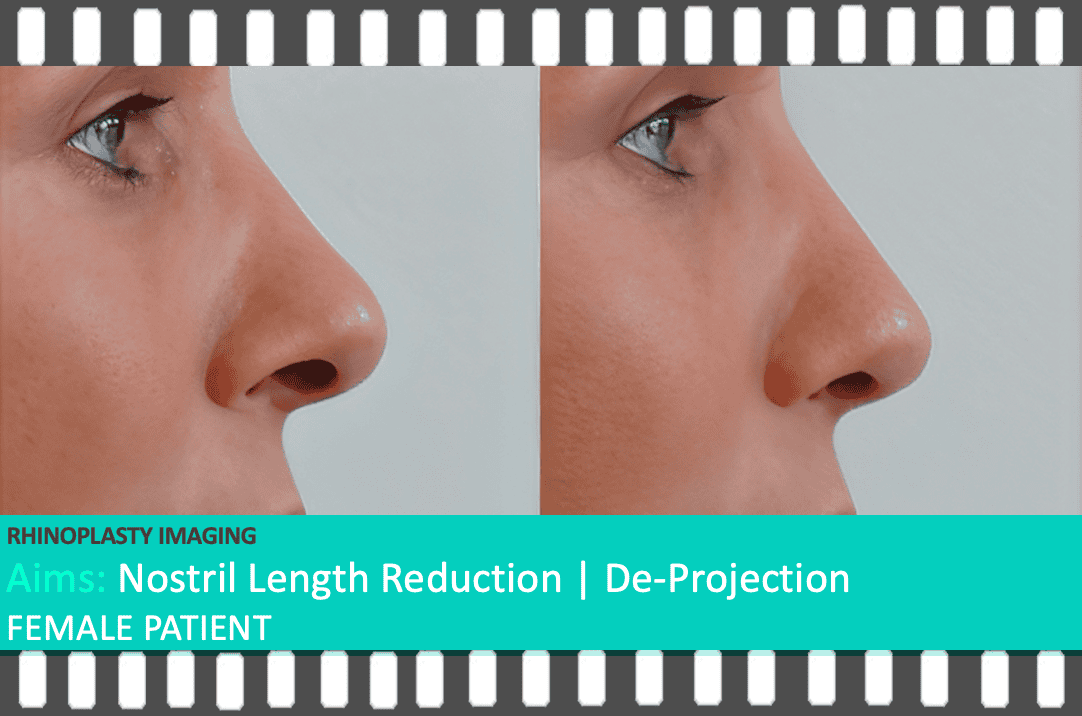
Digital imaging is an essential component of our preoperative planning process at Berkeley Square Medical. It serves as a sophisticated communication tool, allowing you and your clinical team to align on the desired aesthetic and structural objectives.
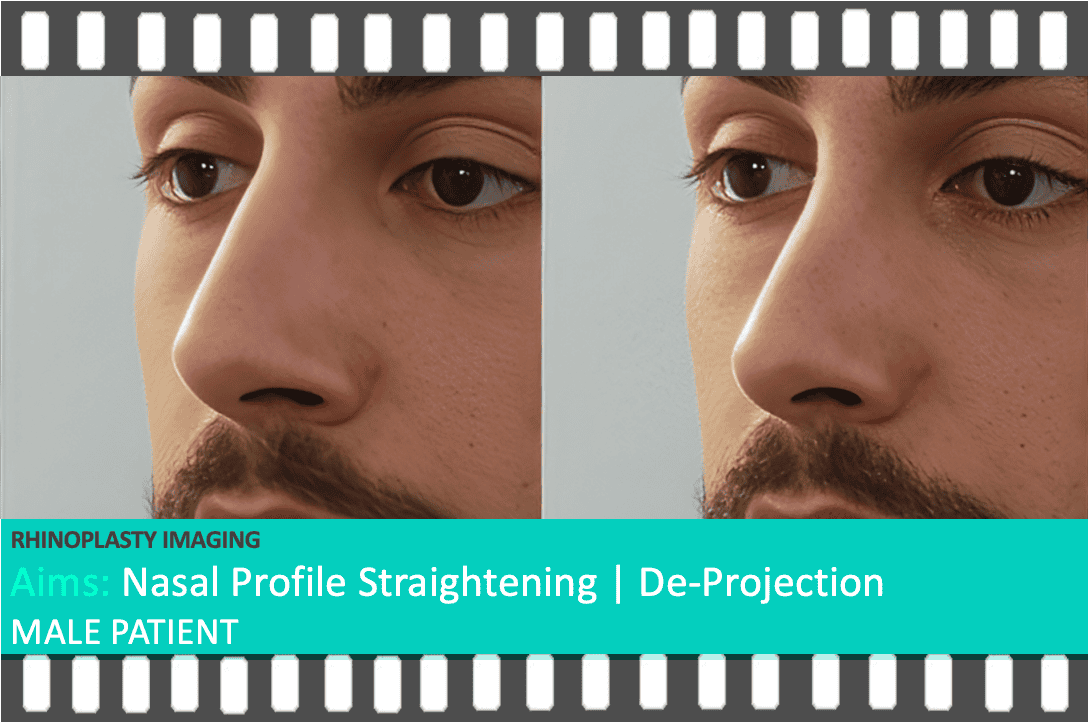
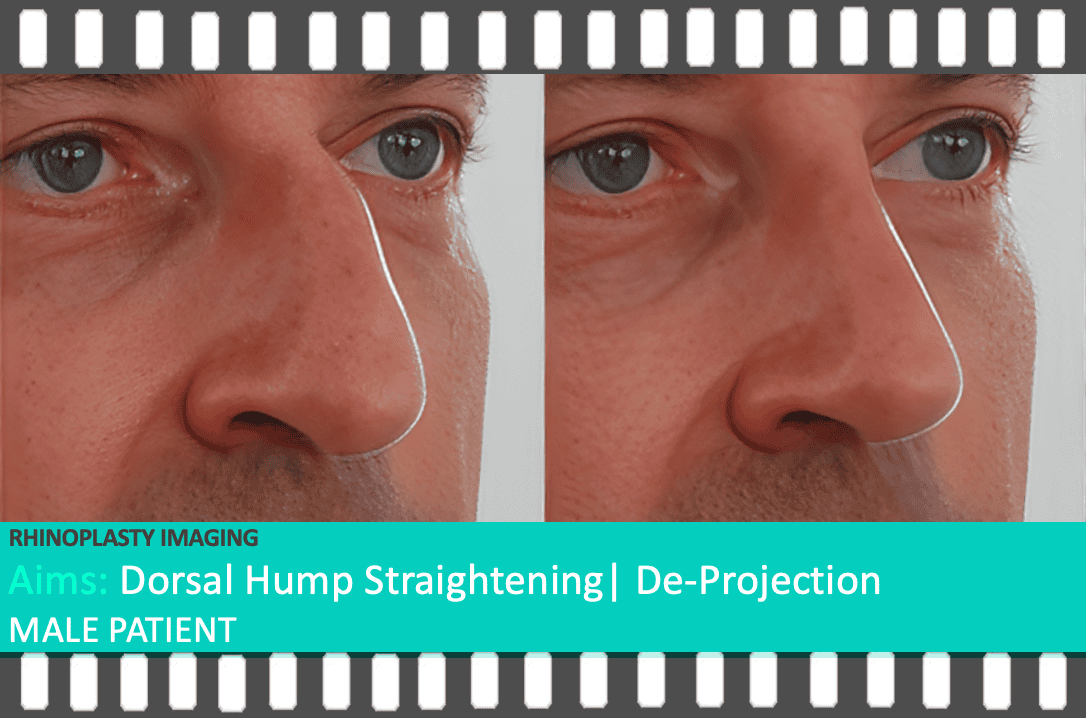
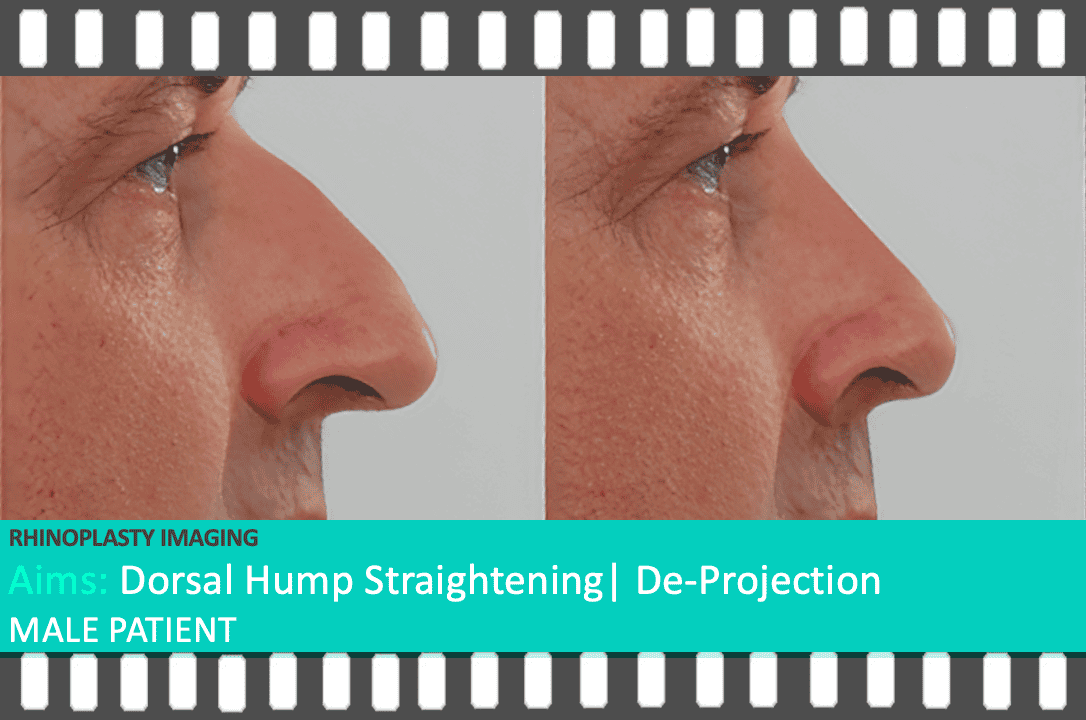
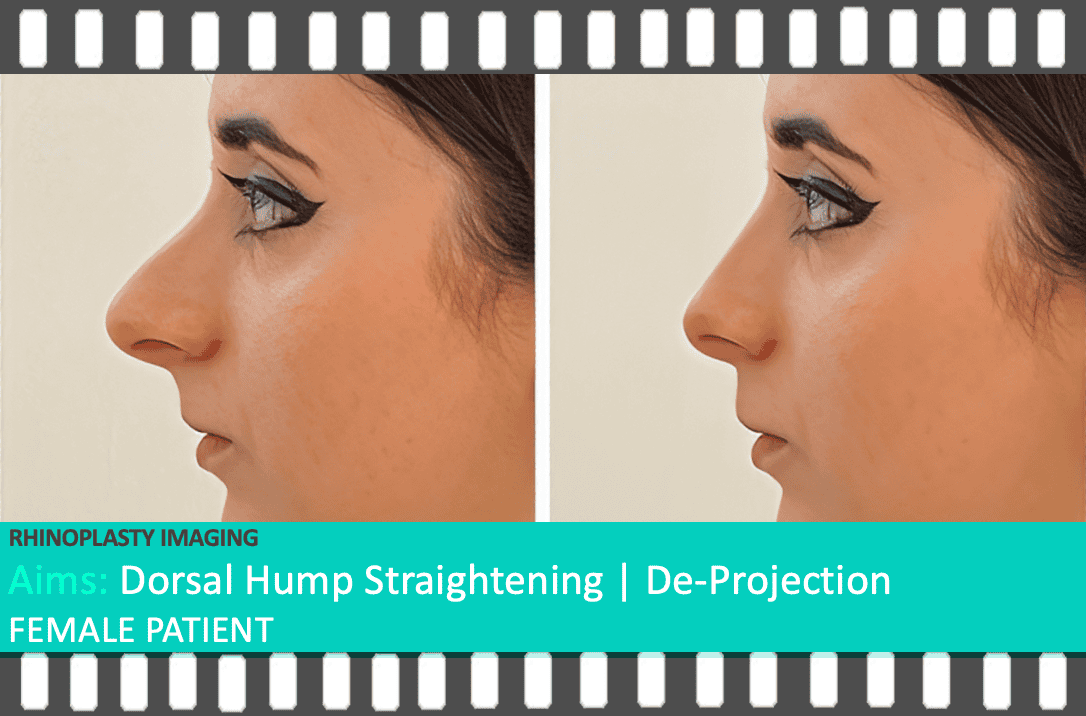
Examples of Our Rhinoplasty Digital Imaging Service:
How the Imaging Process Supports Your Journey:
► Anatomical Alignment: Using specific measurements from your consultation, we create a 3D visual aim based on your unique nasal framework.
► Multidimensional Analysis: We generate front-facing, profile, and 45-degree angle simulations to ensure facial harmony from every perspective.
► Informed Decision Making: Most patients tell us the 3D imaging helps them feel clearer and more confident about their plan before surgery.
Important Clinical Note: While imaging provides a realistic visual aim based on surgical goals, it is used for planning purposes and is not a guarantee of the final biological healing outcome.
Award winning clinic
World Renowned Medical District
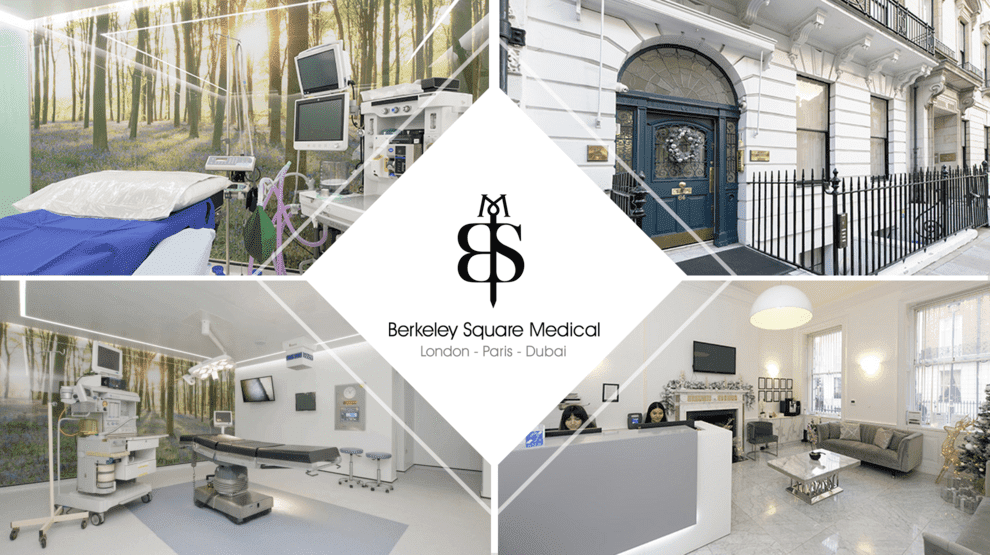
Harley Street Medical District: Your surgery is performed at our private hospital in London's premier medical district, globally recognised for elite surgical standards.
Award-Winning Hospital
Award-Winning Surgical Facility: We operate within the "Best Private Hospital London" (Medical Aesthetic Awards), ensuring a premium environment for your procedure and recovery.
Regulated By the CQC
CQC-Regulated Clinical Standards: Our hospital is fully accredited and strictly regulated by the Care Quality Commission (CQC), guaranteeing compliance with the highest UK safety protocols.
Consultant Led Practitioners
GMC Specialist Consultant Care: Every procedure is led by a Consultant on the GMC Specialist Register, supported by a dedicated team of clinical rhinoplasty experts.
Articles
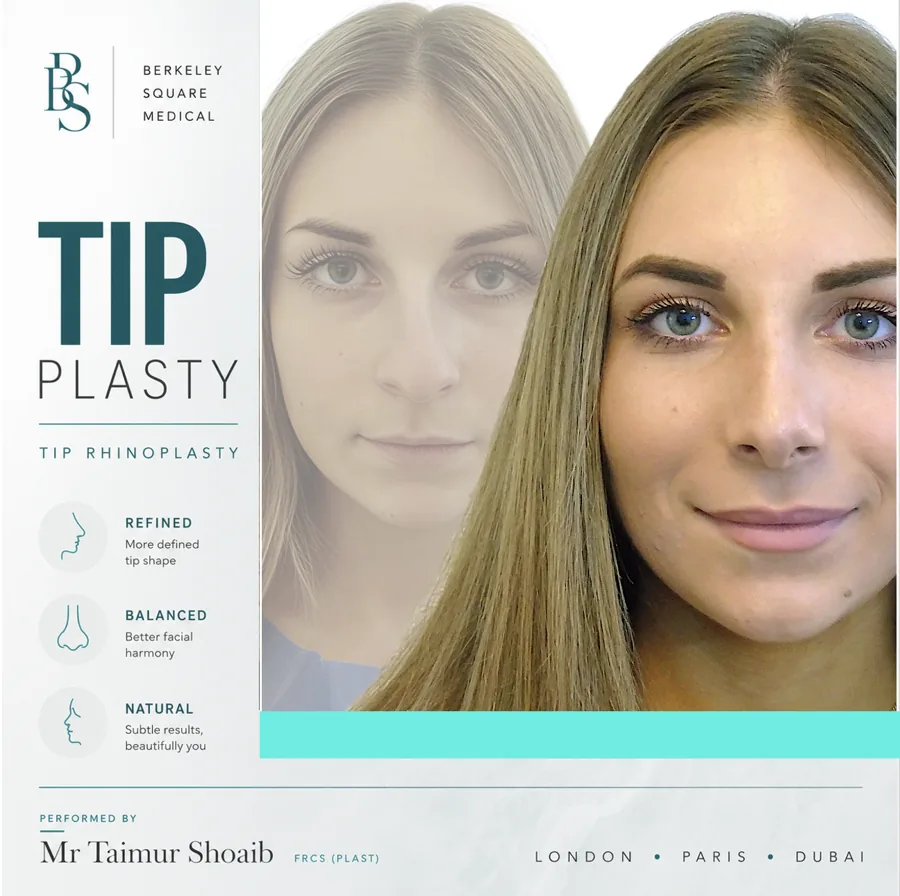
Tip Rhinoplasty
Nasal Tips That Are Bulbous, Hanging, Asymmetrical
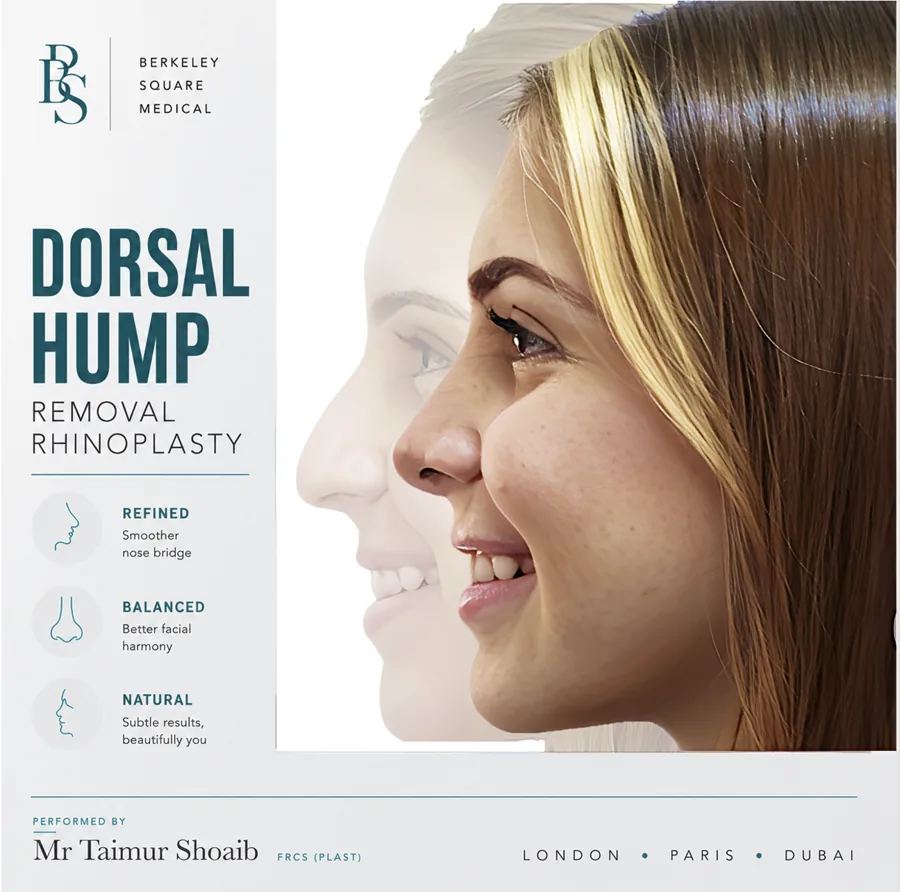
Dorsal Hump Rhinoplasty
Side Profiles That Are Humped, Crooked, Projected
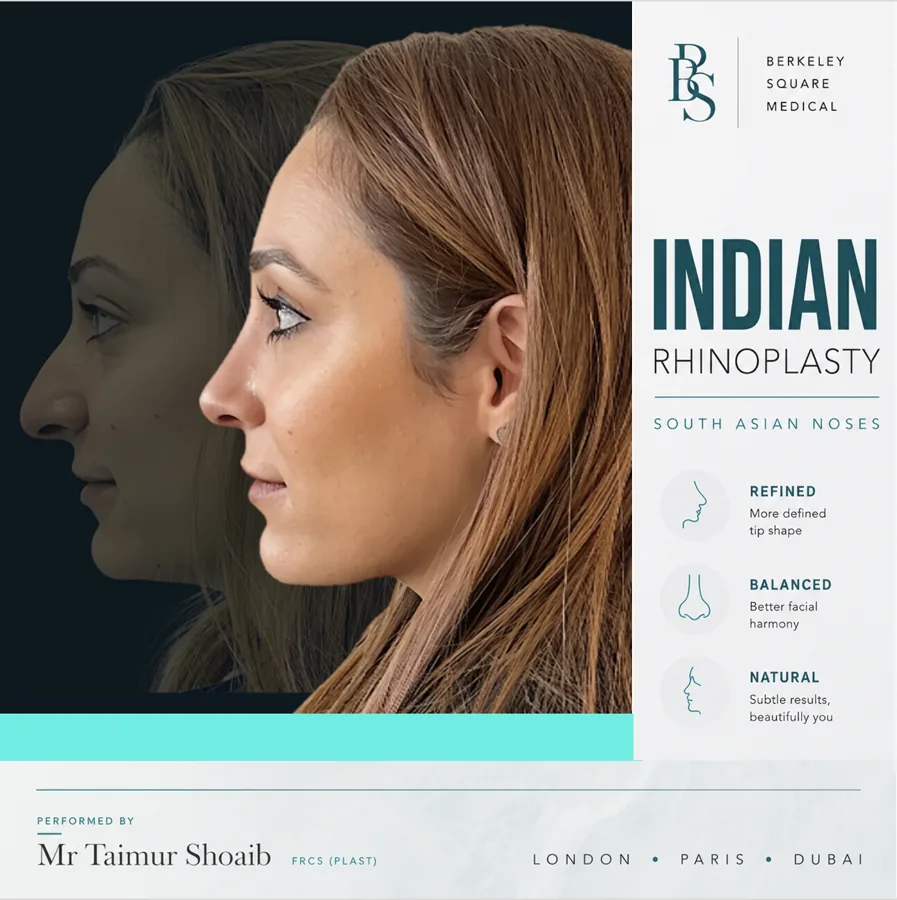
Indian/Pakistani Rhinoplasty
Patients of South Asian Heritage retaining Cultural looks
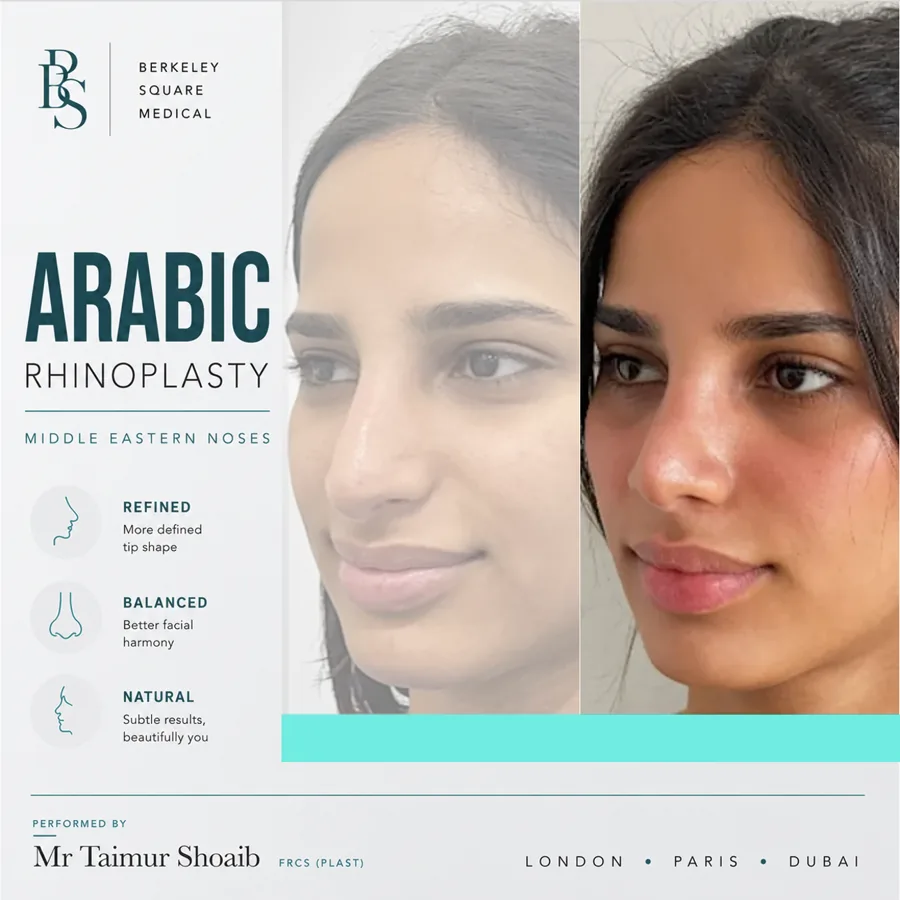
Arabic Rhinoplasty
Middle-Eastern and North African Nose Refinements
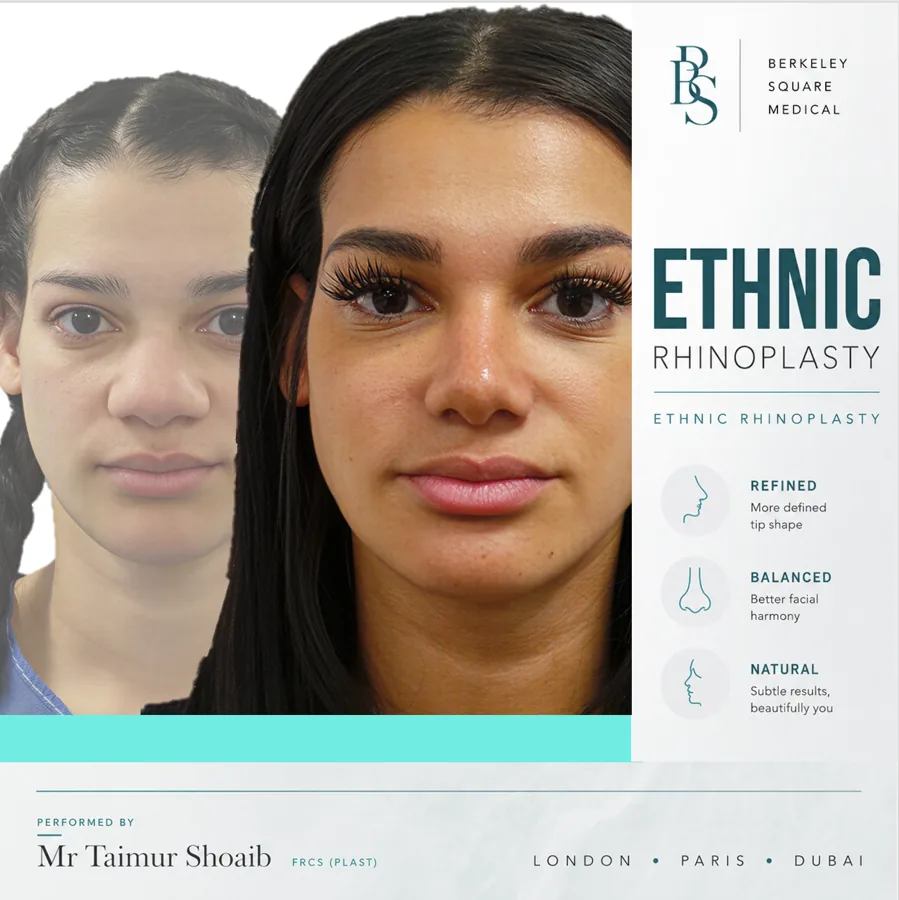
Ethnic Rhinoplasty
Looking At Ethnic Changes And What Can Be Achieved
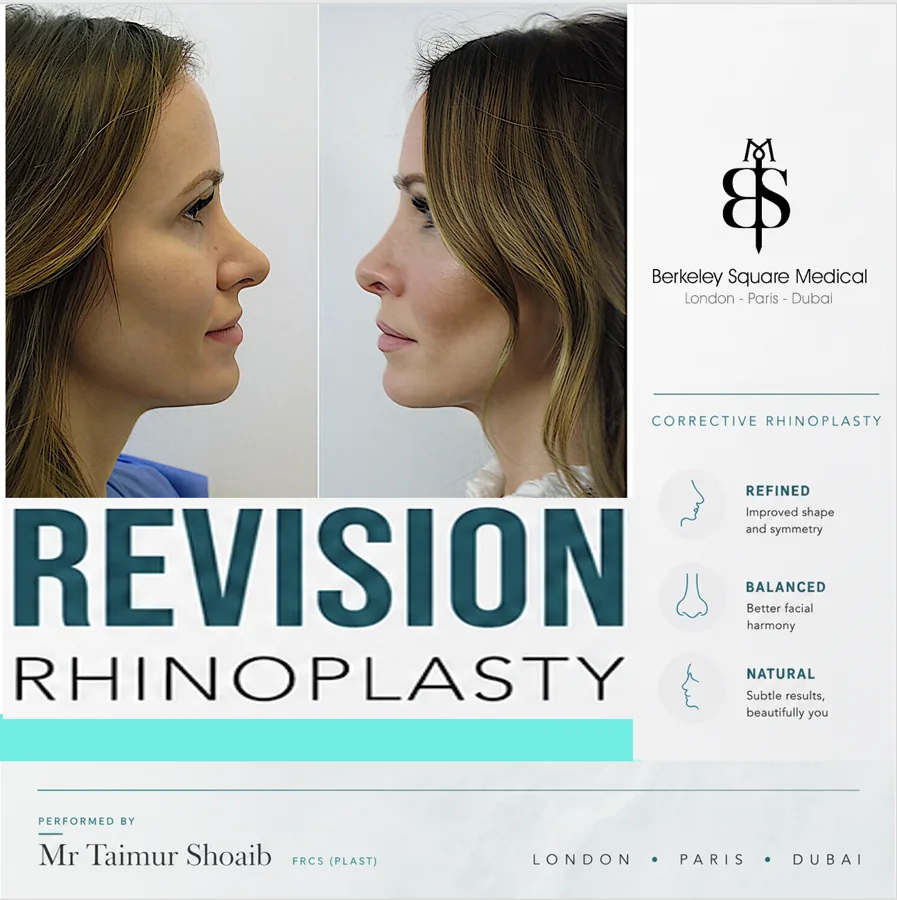
Revision Rhinoplasty
Correcting and Improving a Previous Rhinoplasty
Related Links
Patient Journey
Patient Journey We are here to guide you to make the right decision for your well-being. If you are considering an aesthetic change to your appearance, we know that it's one of the most important and personal decisions you wish to make. Therefore you need to be certain that the medical advice you receive is […]
Patient Aftercare
Patient Aftercare All cosmetic surgery procedures at Berkeley Square Medical come with a comprehensive aftercare package and a 24-hour service so you can be assured you are always under the care and guidance of our surgical team. All your immediate aftercare is included in the cost of your surgery so there are no hidden extras in our […]
Why Choose Us
If you are considering Cosmetic Surgery, we understand that it's probably one of the most important decisions you're likely to make, therefore, you need to be sure it's right for you and you receive professional and independent advice about your procedure.
Our Philosophy
Our Philosophy We began our journey setting foot in the highly fashionable area of Berkeley Square, Mayfair where luxury fashion, galleries and five-star hotels all conveniently meet to set the example for world-leading client services and experience. Our goal was to create a cosmetic surgery practice that would not only exceed patients' expectations but provide […]
How much does revision rhinoplasty cost in London?
Revision Rhinoplasty at Berkeley Square Medical is a single, fixed, all-inclusive fee with Mr Taimur Shoaib. It covers your consultations, surgery, hospital, anaesthetist and a full programme of aftercare to 12 months, with no vague starting-from figure. If a patient of Mr Shoaib's own ever needs a further adjustment to his own result, he does not charge a revision fee for it; any further surgery is still judged case by case and is never guaranteed.
Is revision rhinoplasty more difficult than a first nose job?
Yes. Revision Rhinoplasty works through scar tissue and the altered anatomy of the previous surgery, so it is more complex and less predictable than a first operation, and demands a highly experienced specialist. Mr Shoaib's audited revision rate across his overall Rhinoplasty practice is 3.5%, against roughly 10% reported across the literature (a single-surgeon series; results vary).
Can revision rhinoplasty fix breathing problems from a previous surgery?
Often, yes. Many revisions restore both the appearance and the function of the nose, correcting breathing problems caused or left behind by earlier surgery. It cannot be guaranteed in every case, and whether it is achievable for you is assessed at an in-person examination with Mr Shoaib.
How long should I wait after my first rhinoplasty before a revision?
Usually at least 12 months, so the tissues fully settle and the true result of the first operation is clear. Sometimes the right advice is to wait longer. Mr Shoaib will advise on the safe timing for your case at your consultation.
Who should perform revision rhinoplasty?
An experienced revision specialist. Mr Taimur Shoaib, FRCS (Plast), is on the GMC Specialist Register, a Fellow of the Royal College of Surgeons of Edinburgh, a member of BAAPS, ISAPS and UKAAPS, and has published peer-reviewed research on reducing Rhinoplasty revision rates.
What is the difference between primary and revision rhinoplasty?
A primary Rhinoplasty is a first-time operation on a nose that has not been operated on before. A revision, or secondary, Rhinoplasty corrects or improves the result of a previous nose operation. Revision is more demanding, because the surgeon works through scar tissue and altered anatomy rather than a fresh nose, and it is less predictable. If you have not had nose surgery before, our main Rhinoplasty page is the right place to start.
How many revision rhinoplasties has Mr Shoaib performed?
Mr Shoaib has performed approximately 600 revision Rhinoplasties. Revision is a core part of his practice: an internal audit shows around 24% of the Rhinoplasty operations he performs each year are revisions, correcting work first carried out by other surgeons in the UK and abroad.
What is the success rate of revision rhinoplasty?
There is no single, agreed industry success rate for revision Rhinoplasty, and any surgeon quoting one should be treated with caution. The most meaningful measure is a surgeon's own audited outcomes. In Mr Shoaib's peer-reviewed audit of 800 of his own Rhinoplasty patients, the revision rate was 3.5% across his overall practice (a single-surgeon series; results vary). Revision is more complex and less predictable than a first operation, and no outcome can be guaranteed.
How many times can you have a revision rhinoplasty?
There is no fixed limit, but each further operation is more difficult than the last, because scar tissue builds up and the structural support of the nose is reduced each time. Mr Shoaib will only recommend further surgery where he believes a worthwhile, safe improvement is realistically achievable, and will advise against it where it is not.
What if my first rhinoplasty was performed abroad?
We see many patients whose first Rhinoplasty was performed abroad. It does not prevent a revision, but it can make one more complex, particularly where operation notes are unavailable or where local aftercare was limited. It helps to bring any records you have. Mr Shoaib assesses what can realistically be achieved at an in-person examination.
Could a revision make my nose worse, and will Mr Shoaib be honest if it is not advisable?
Every revision has a tighter margin for improvement than a first operation and, like any surgery, carries risks, so an honest, realistic assessment matters more than ever. Mr Shoaib will tell you plainly if he does not believe a worthwhile, safe improvement is achievable, or if the tissues need longer to settle, and in those cases he will advise against operating. There is no pressure to proceed, and you are given time to reflect after your consultation before making any decision.
Mr Taimur Shoaib is a Consultant Plastic Surgeon on the GMC Specialist Register (GMC 3615443) and a Fellow of the Royal College of Surgeons in Plastic Surgery, FRCS (Plast). He is a full member of the British Association of Aesthetic Plastic Surgeons (BAAPS), the International Society of Aesthetic Plastic Surgery (ISAPS) and the UK Association of Aesthetic Plastic Surgeons (UKAAPS). Practising at Berkeley Square Medical, 64 Harley Street, London, he specialises in rhinoplasty and facial plastic surgery, and personally leads every patient consultation.