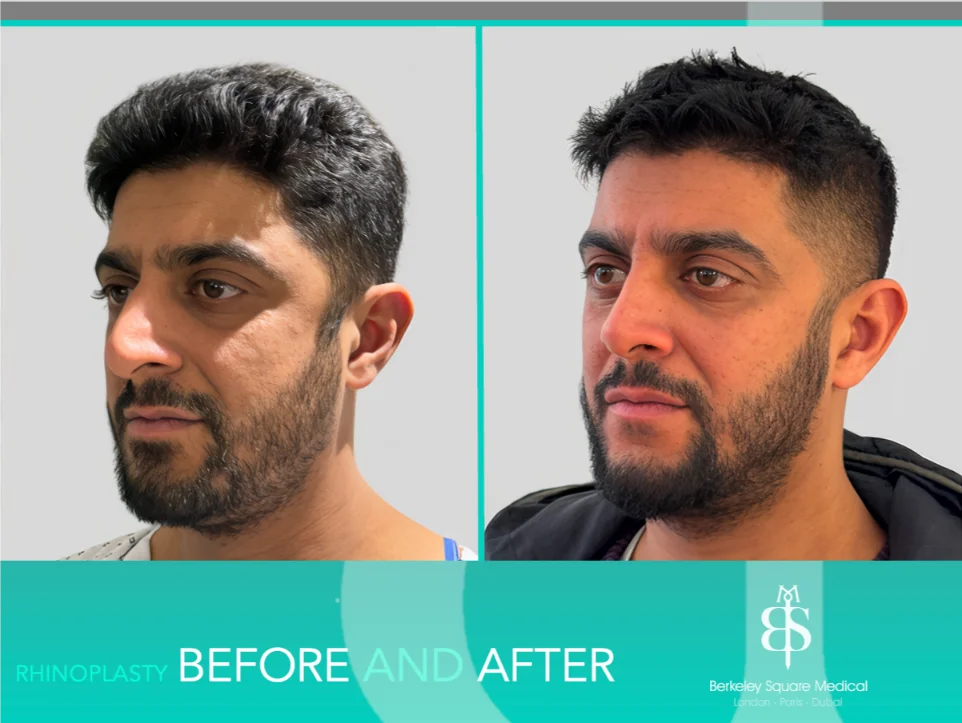
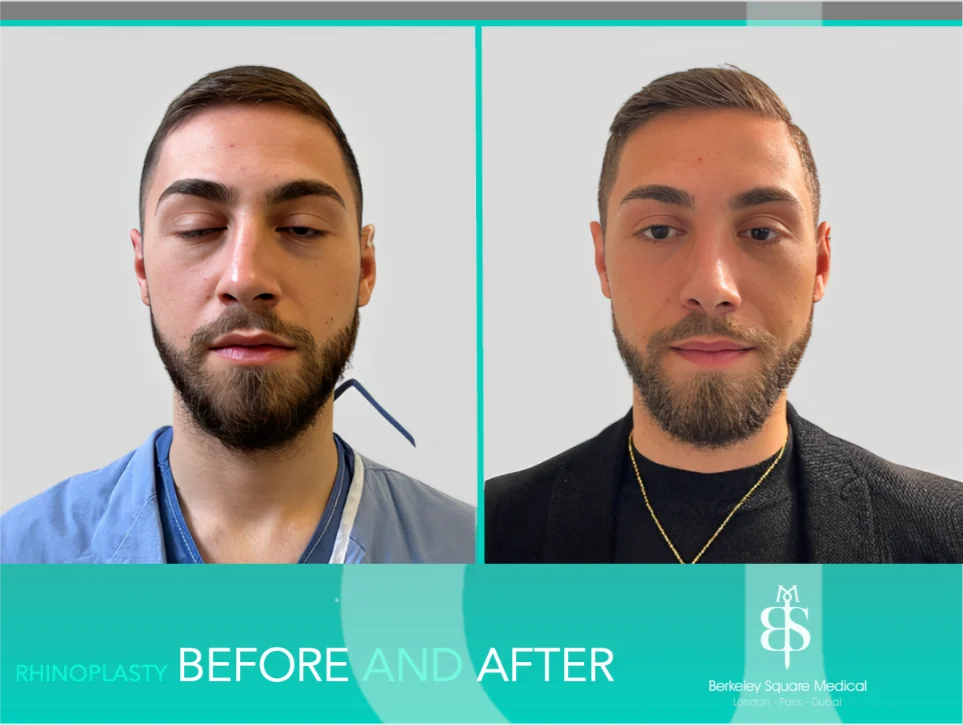
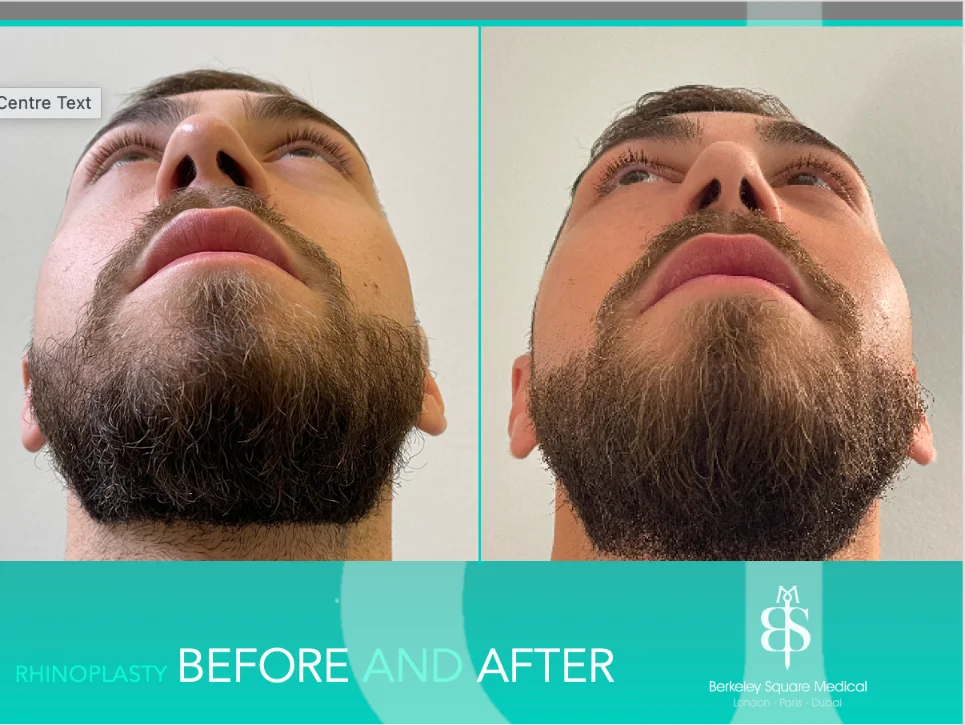
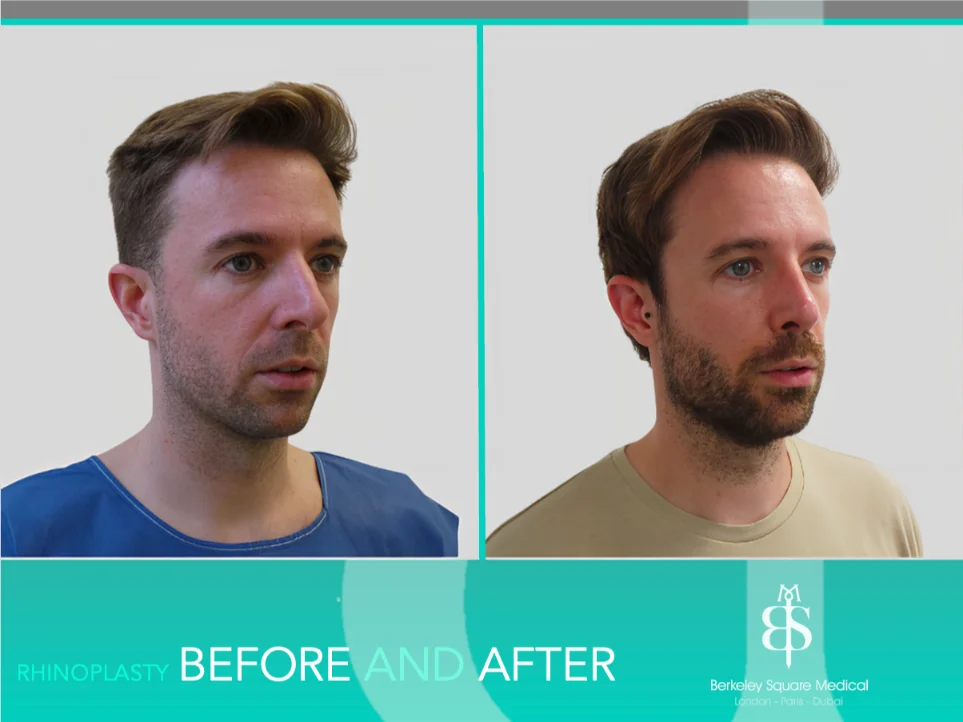
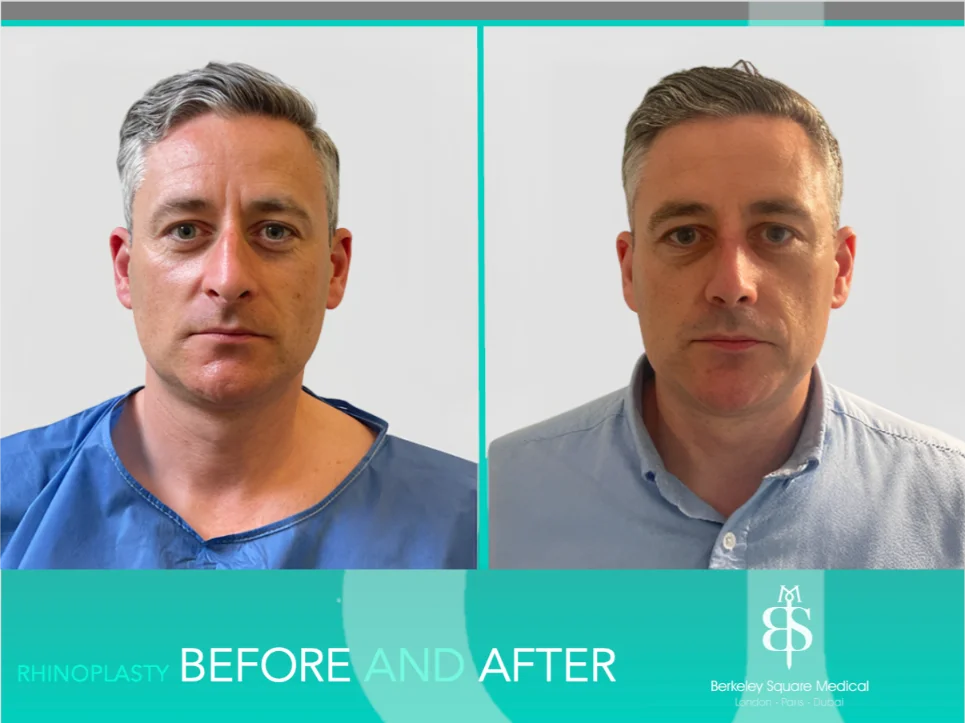
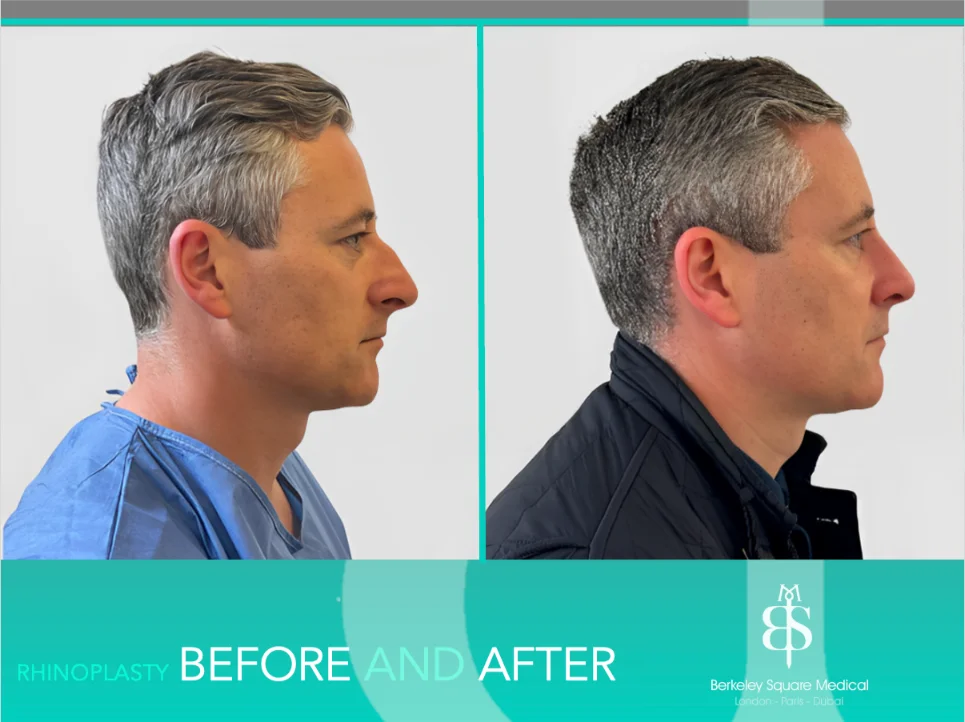
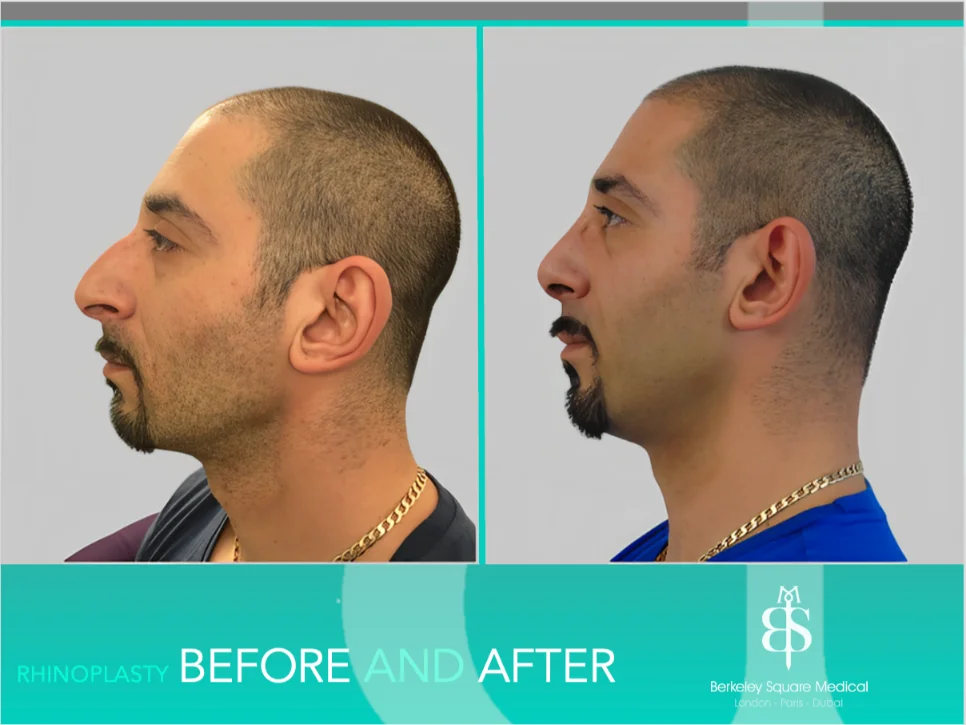
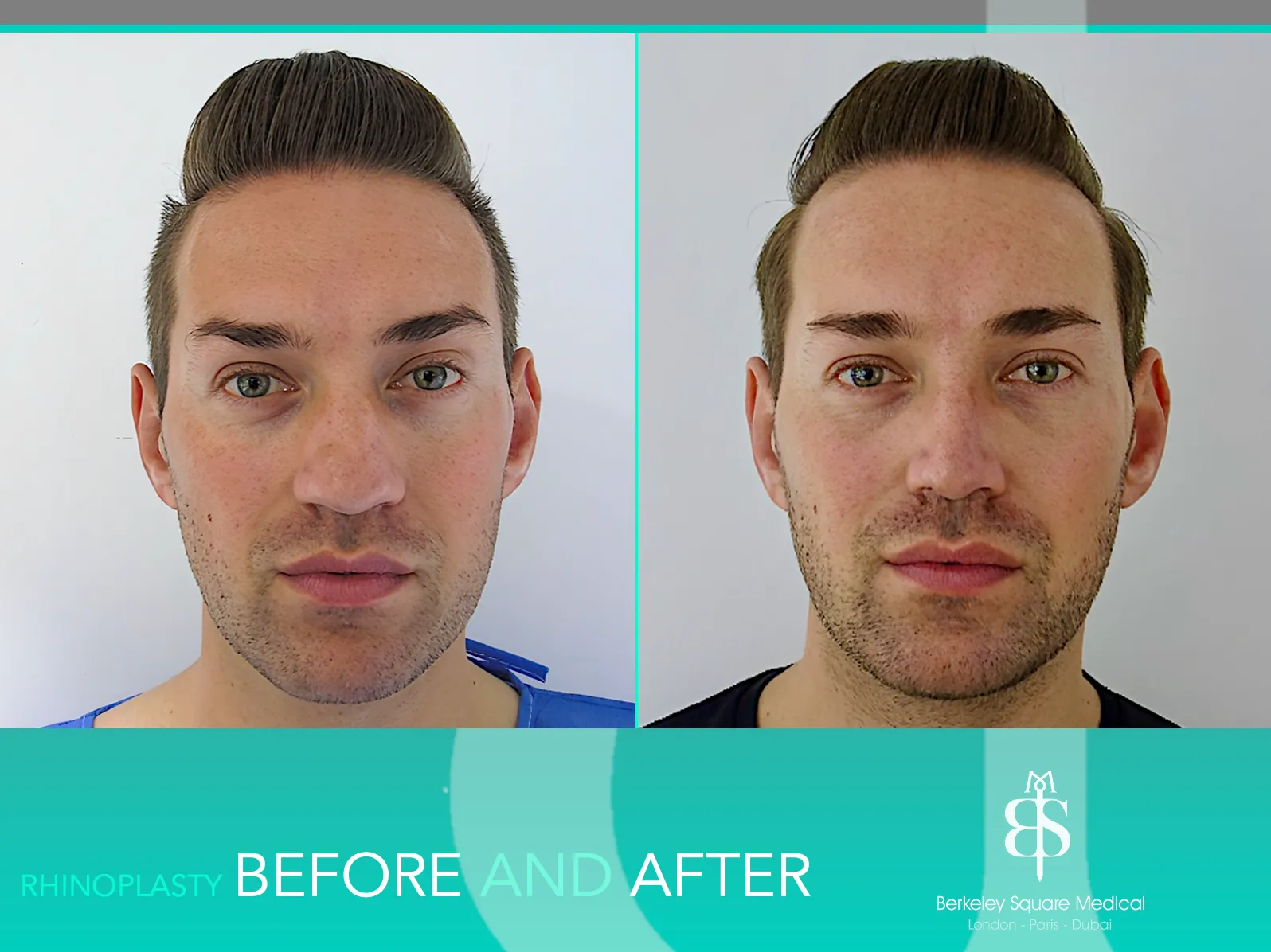
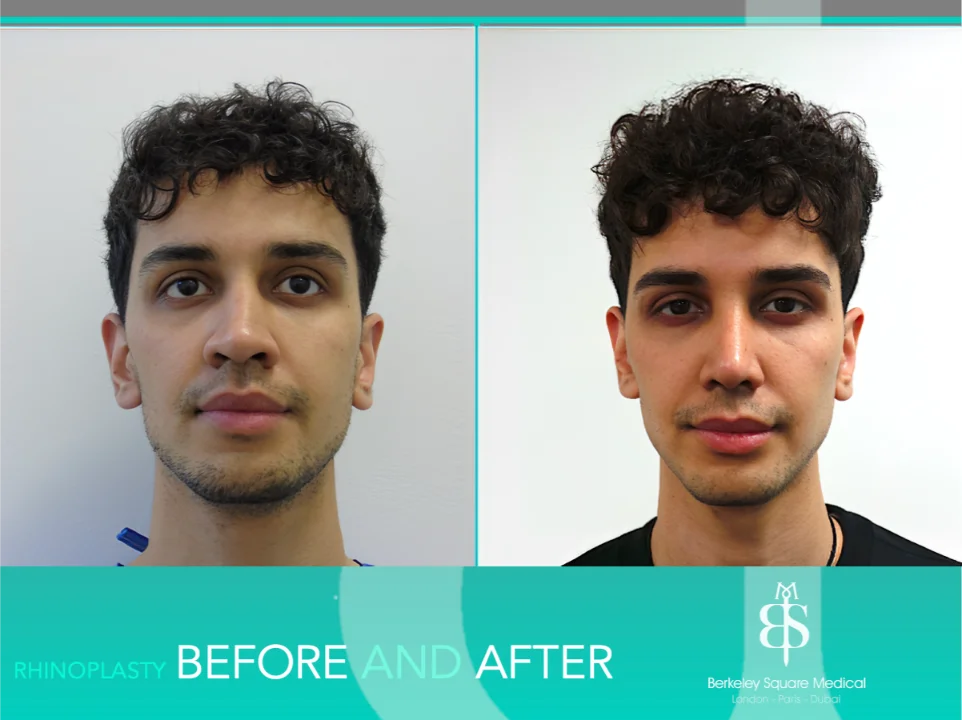
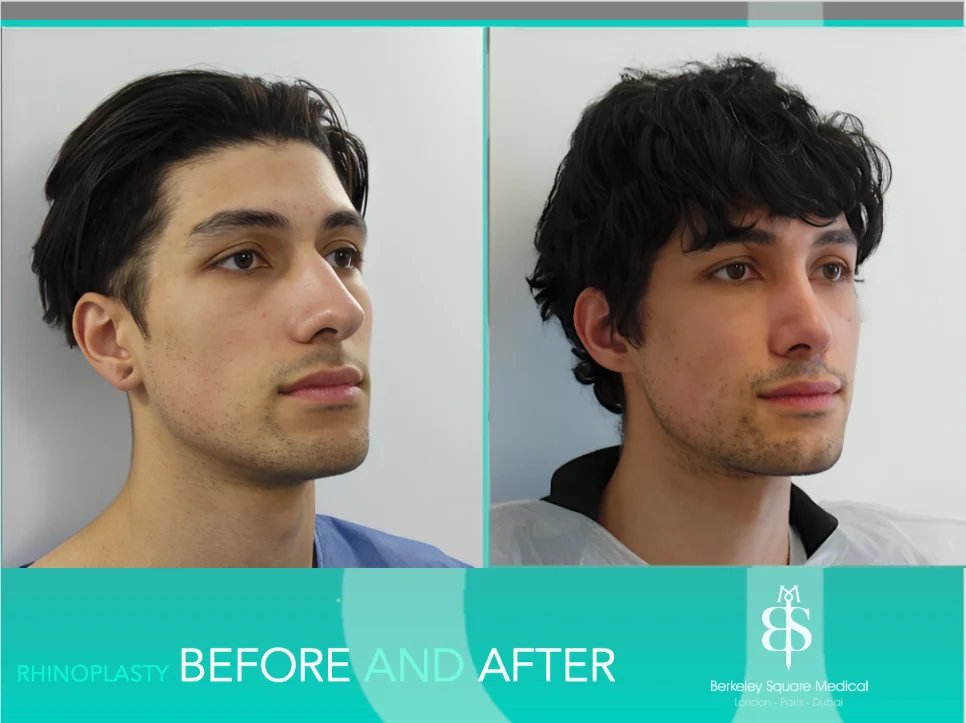
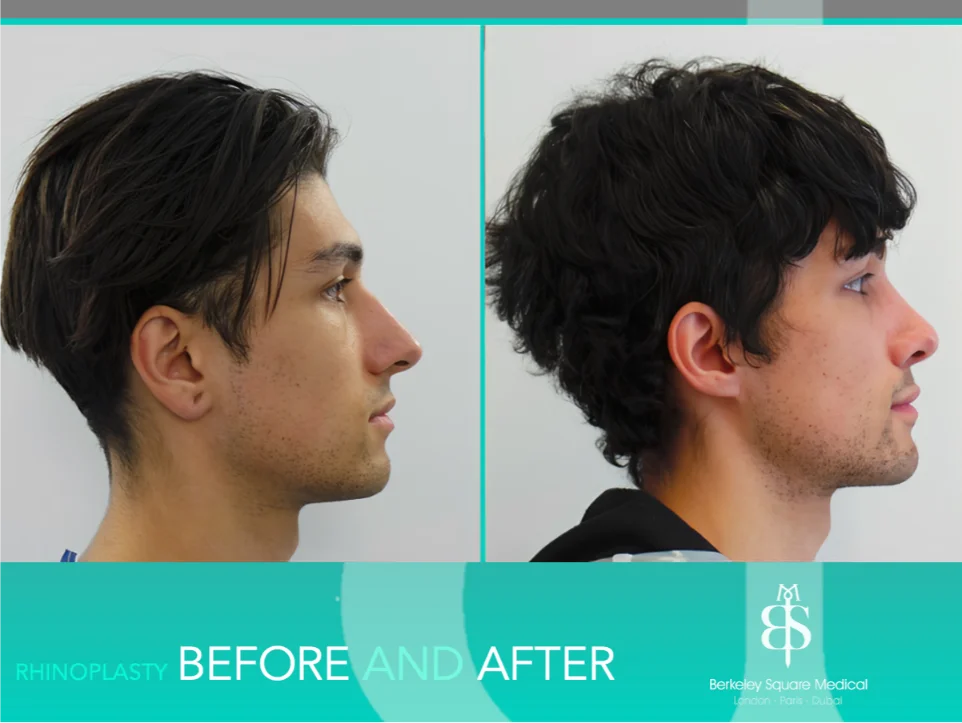
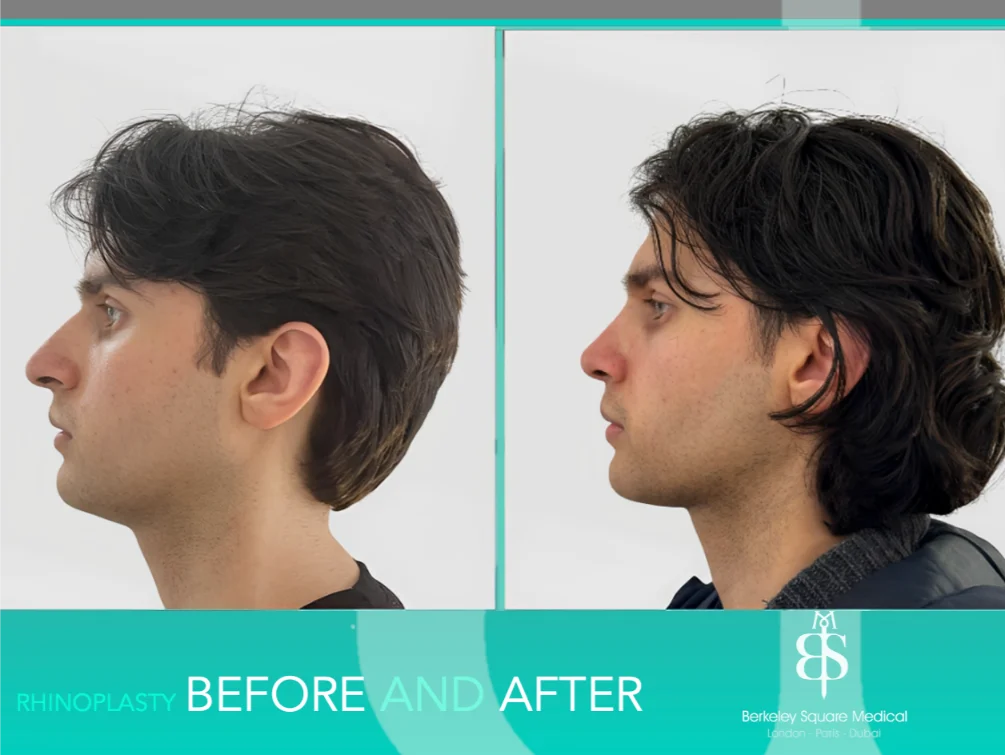
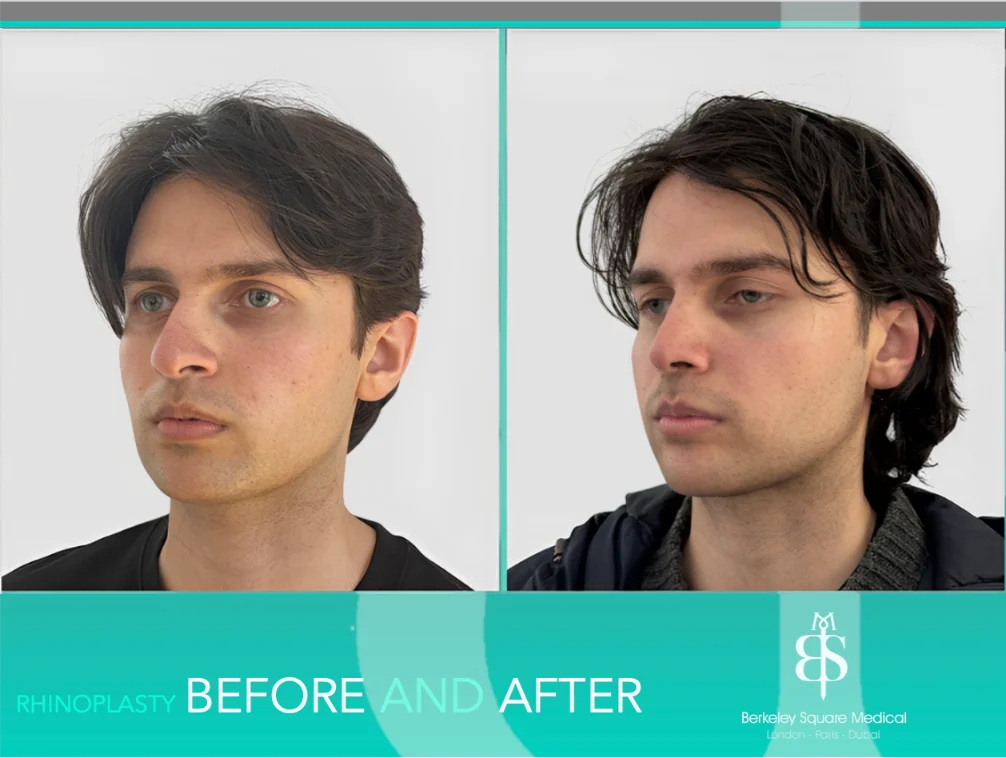
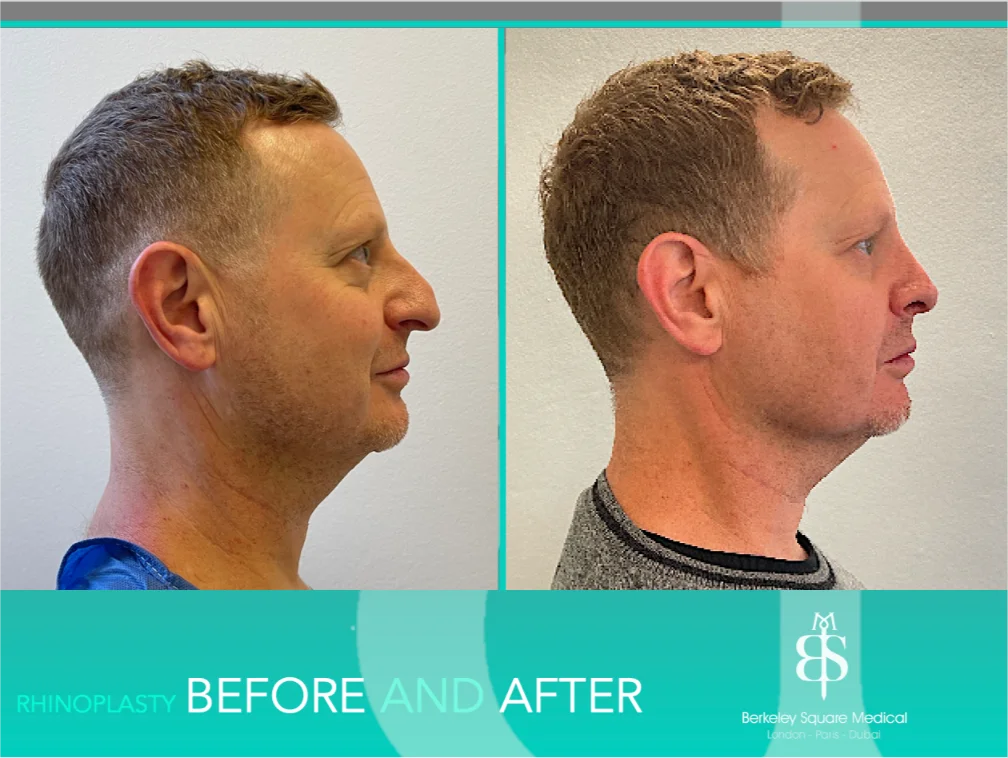
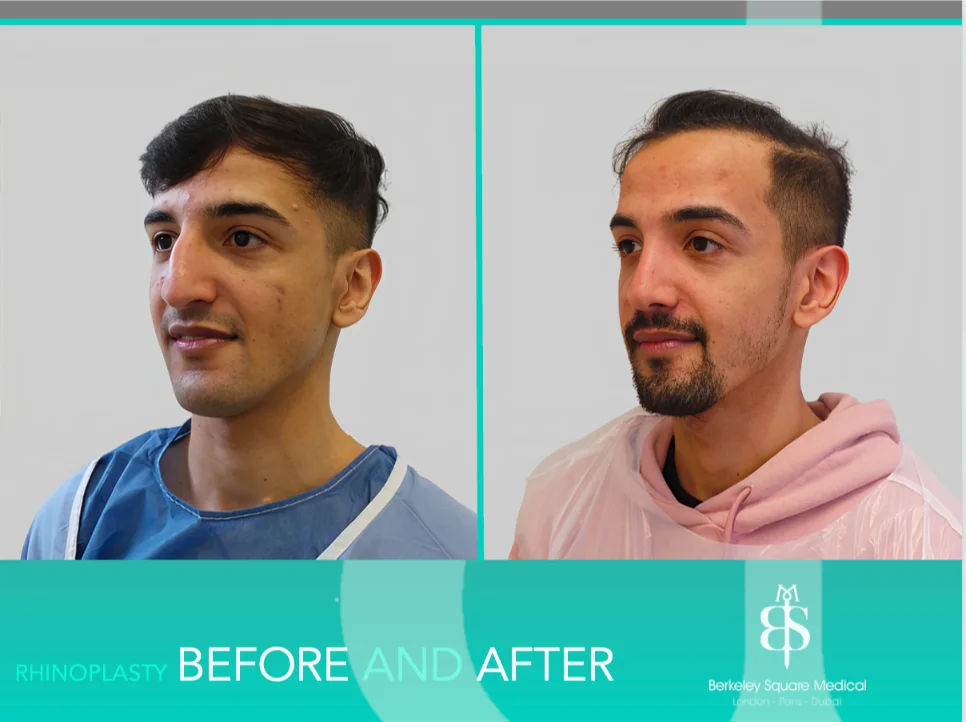
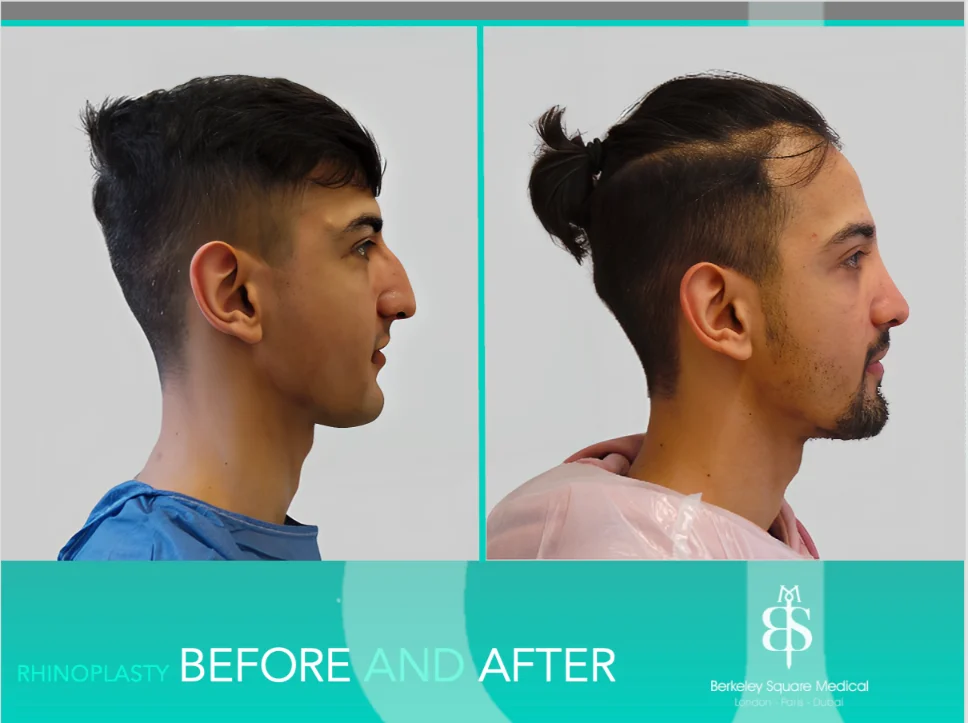
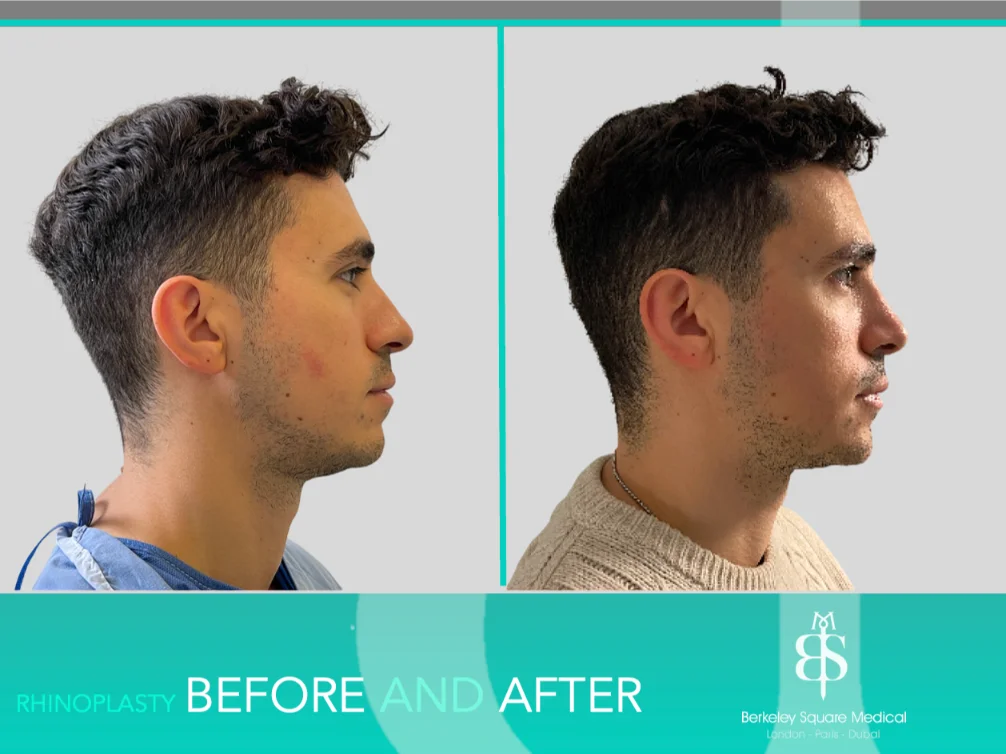
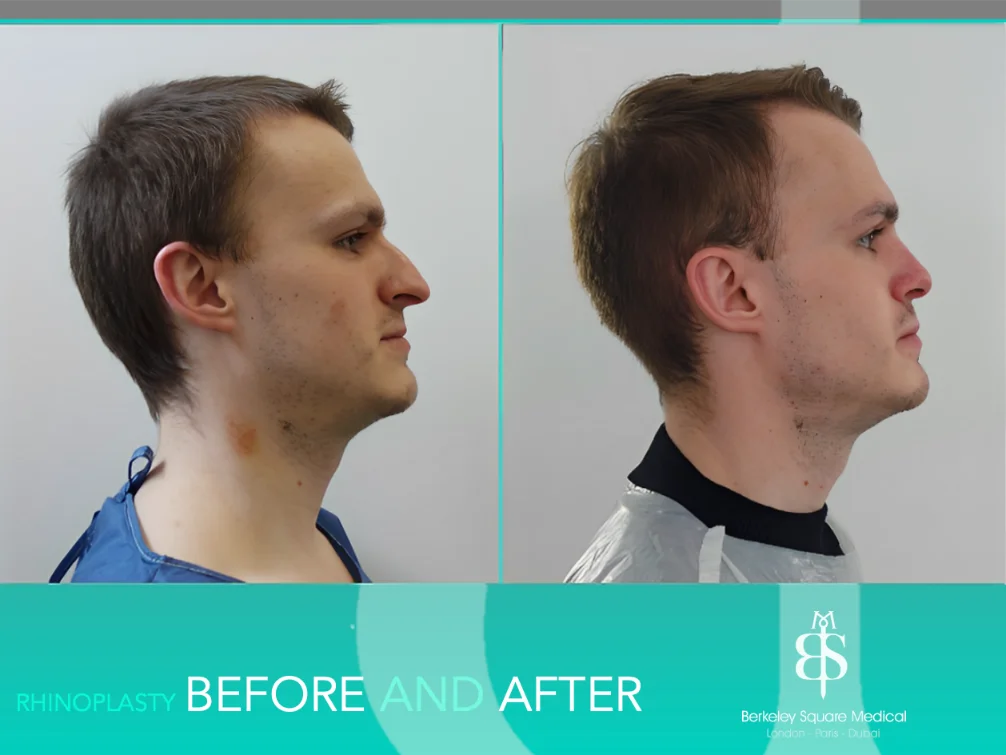
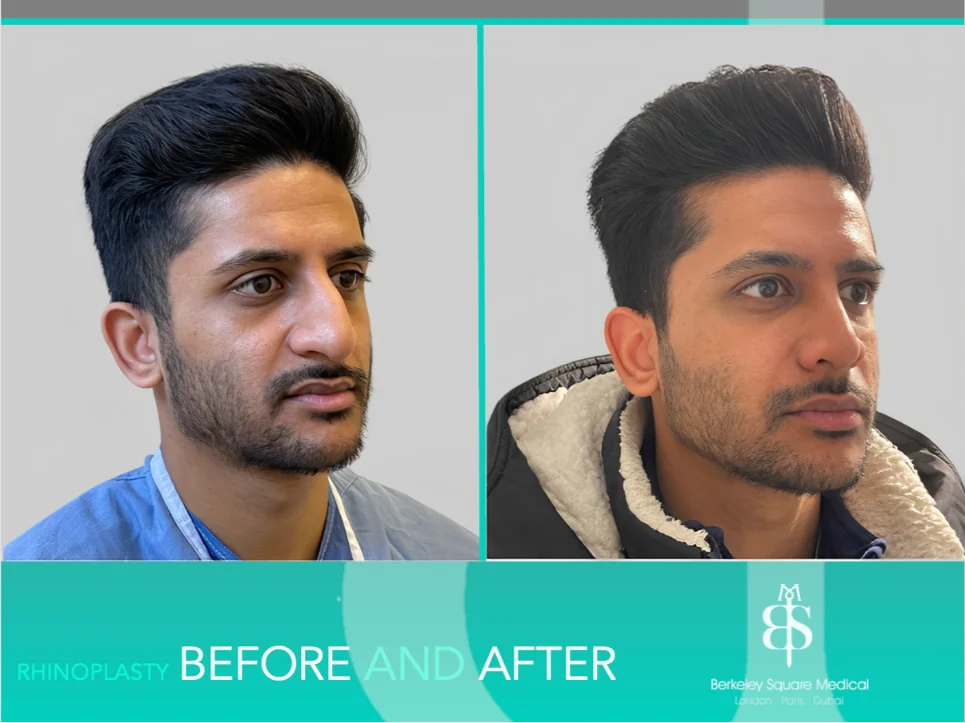
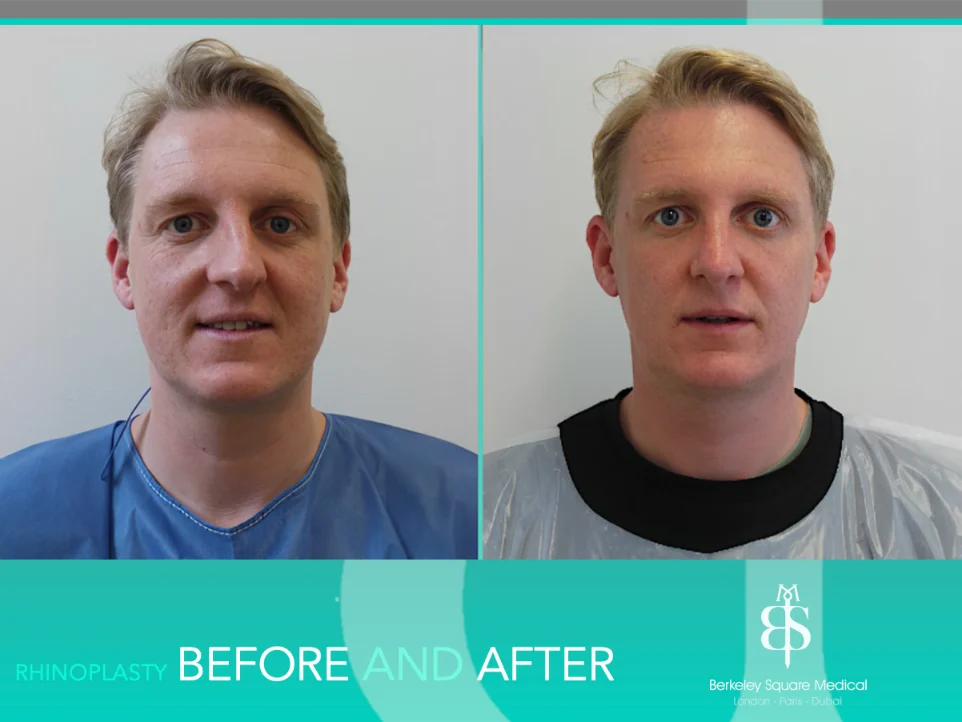
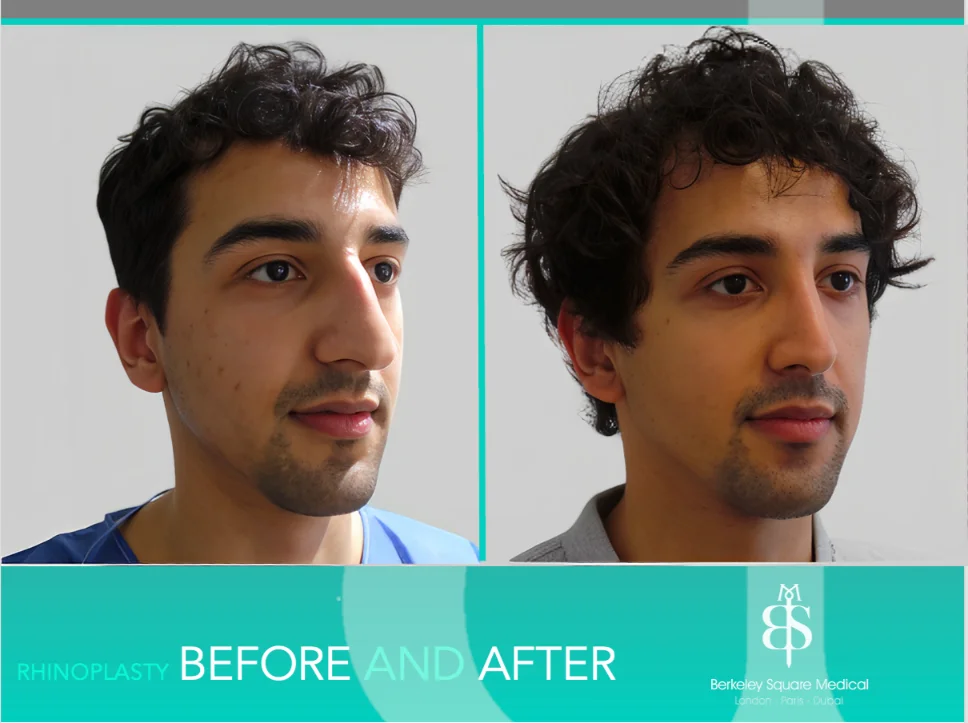
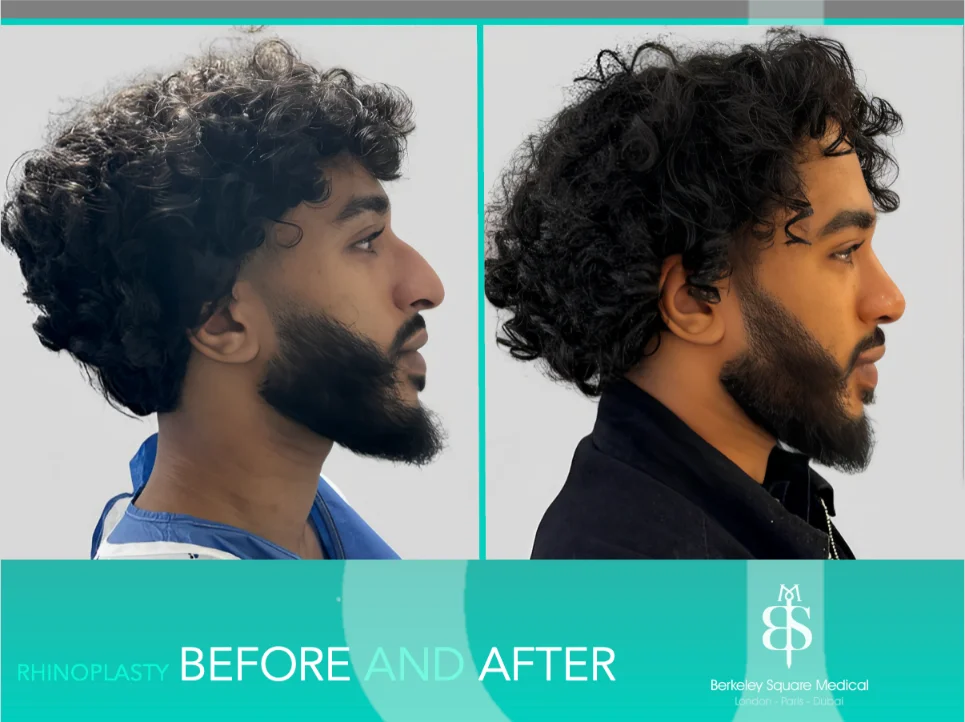
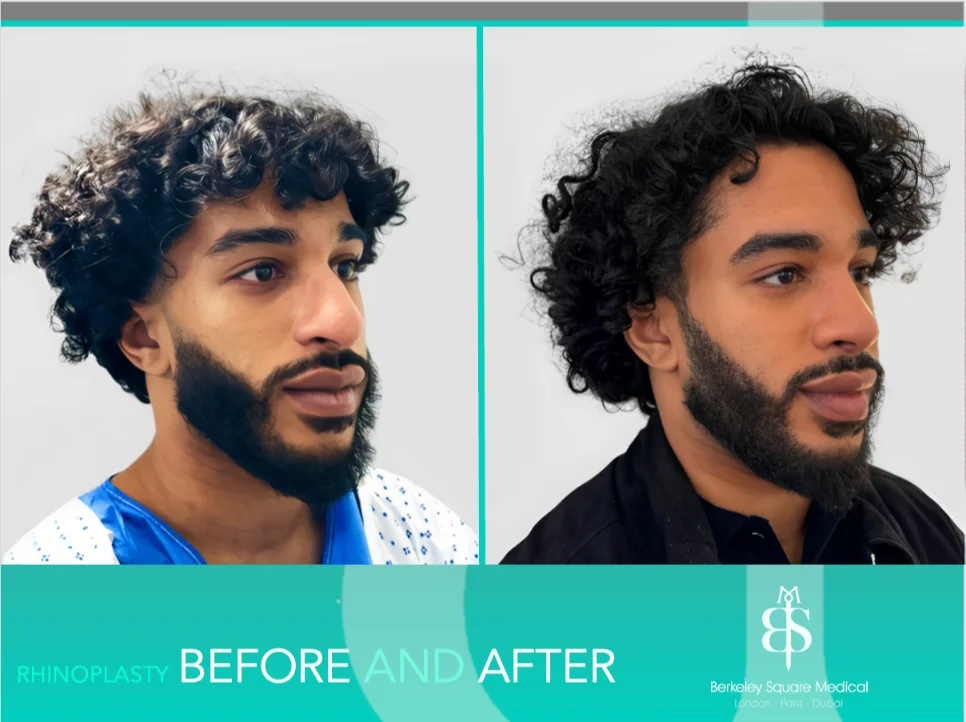
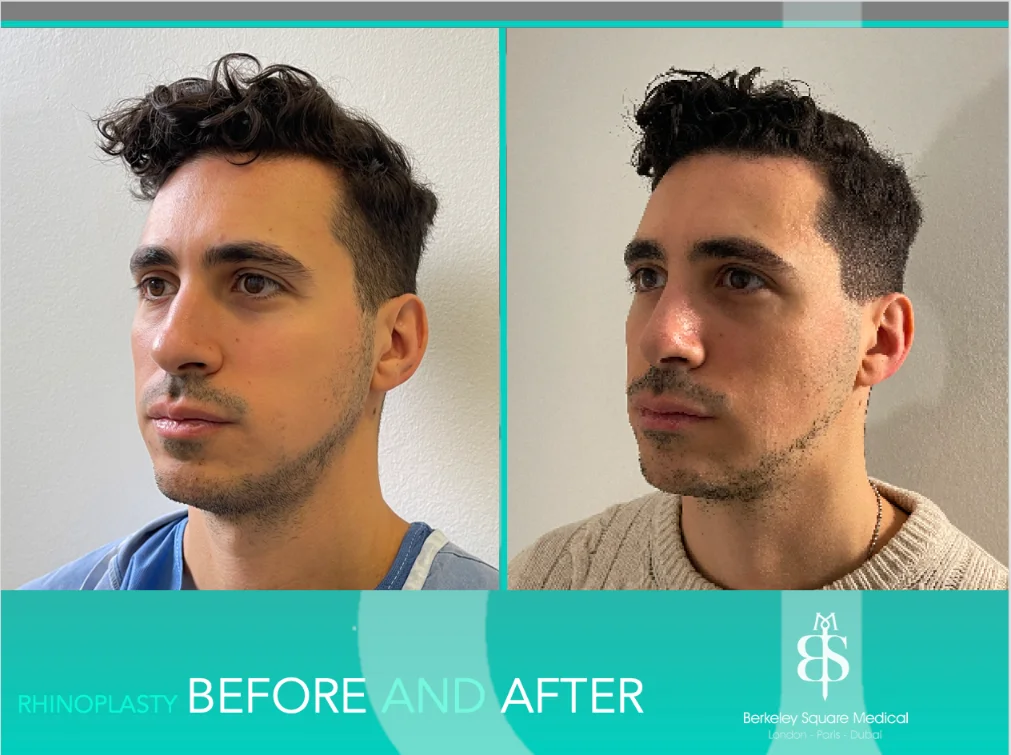
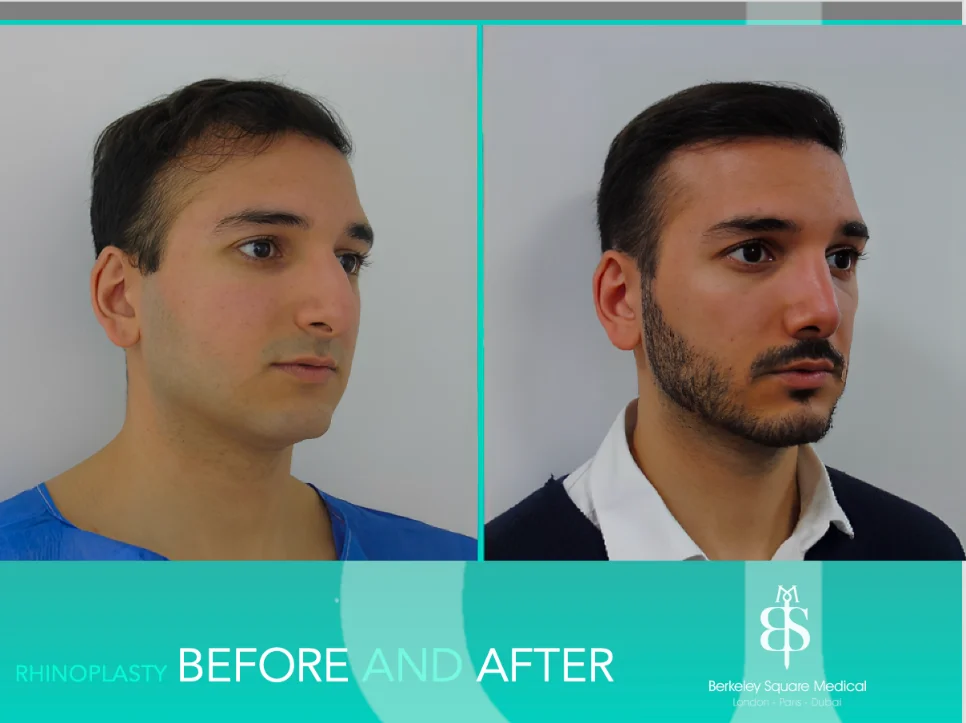
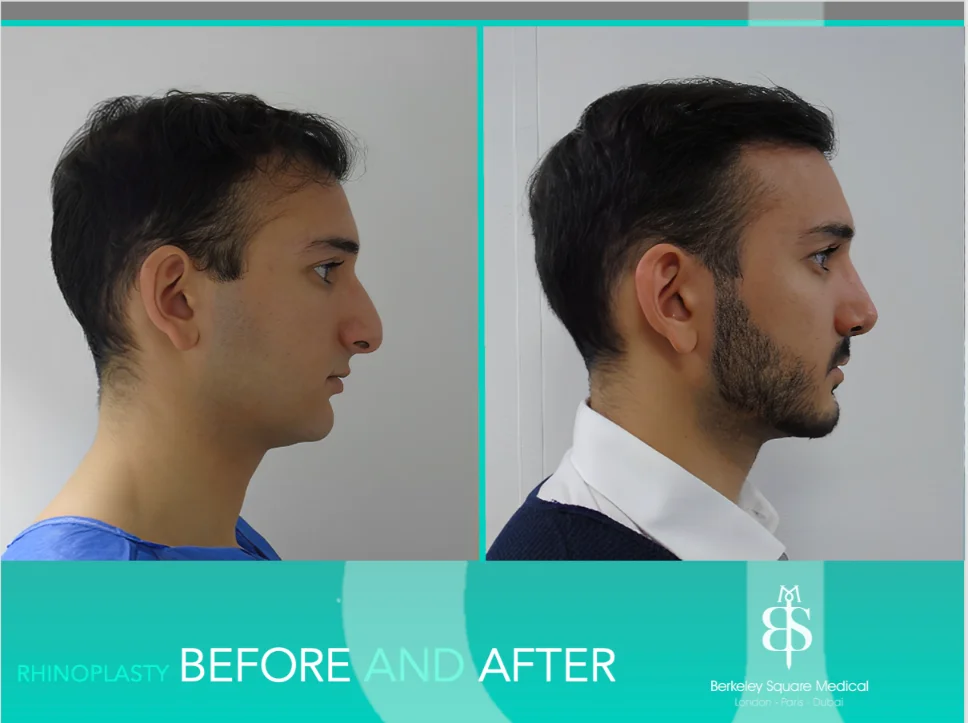
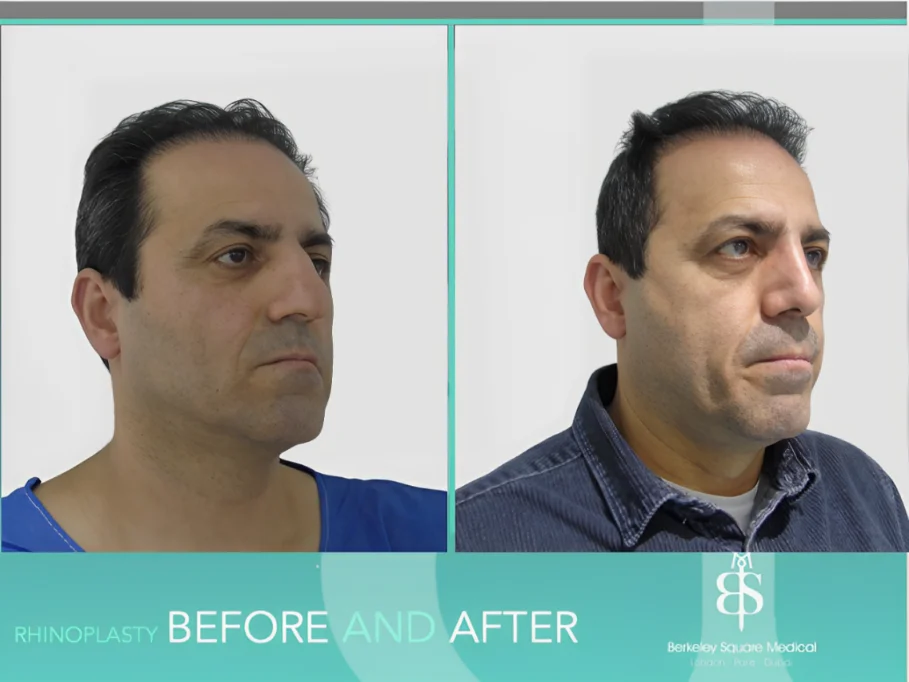
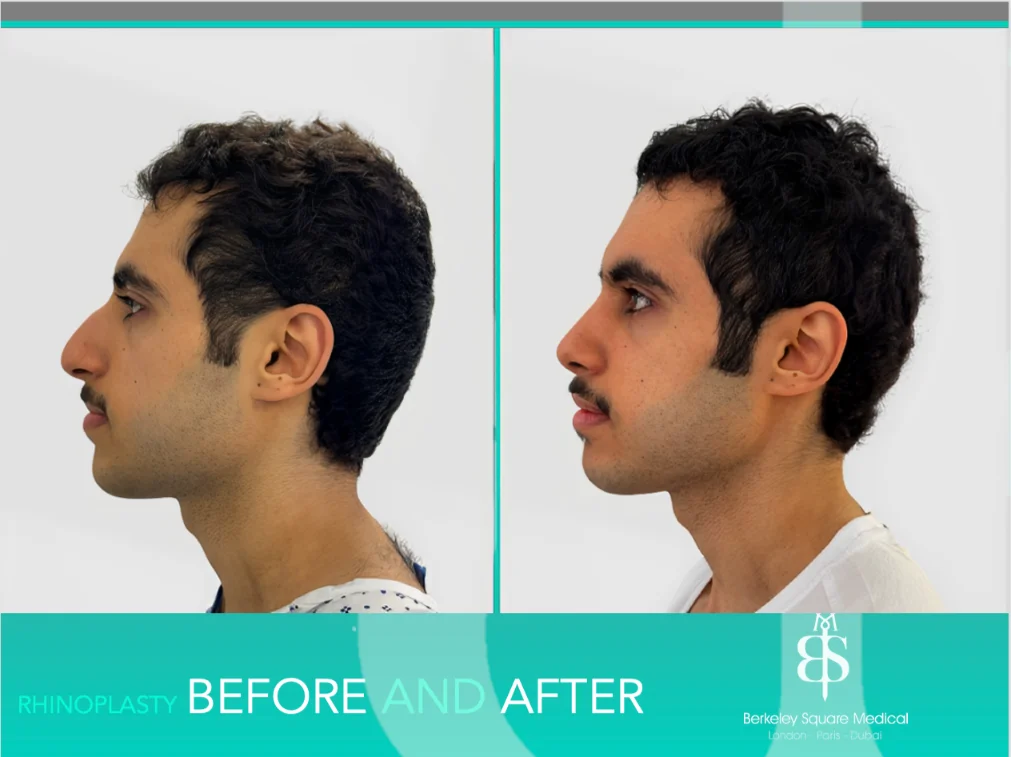
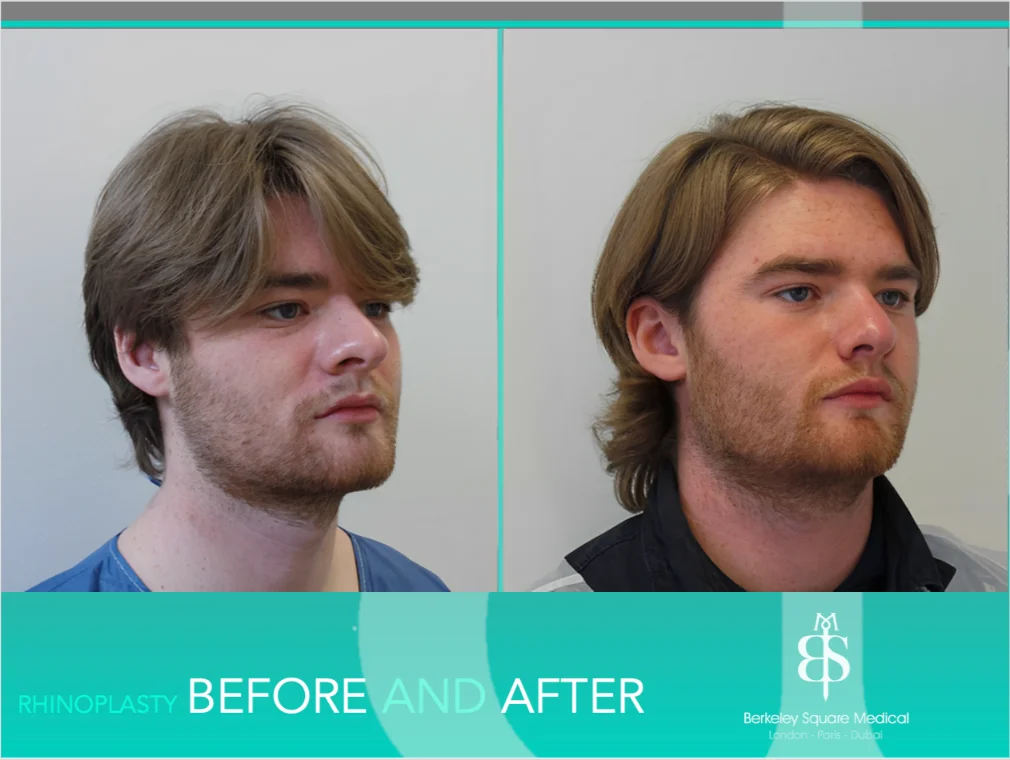
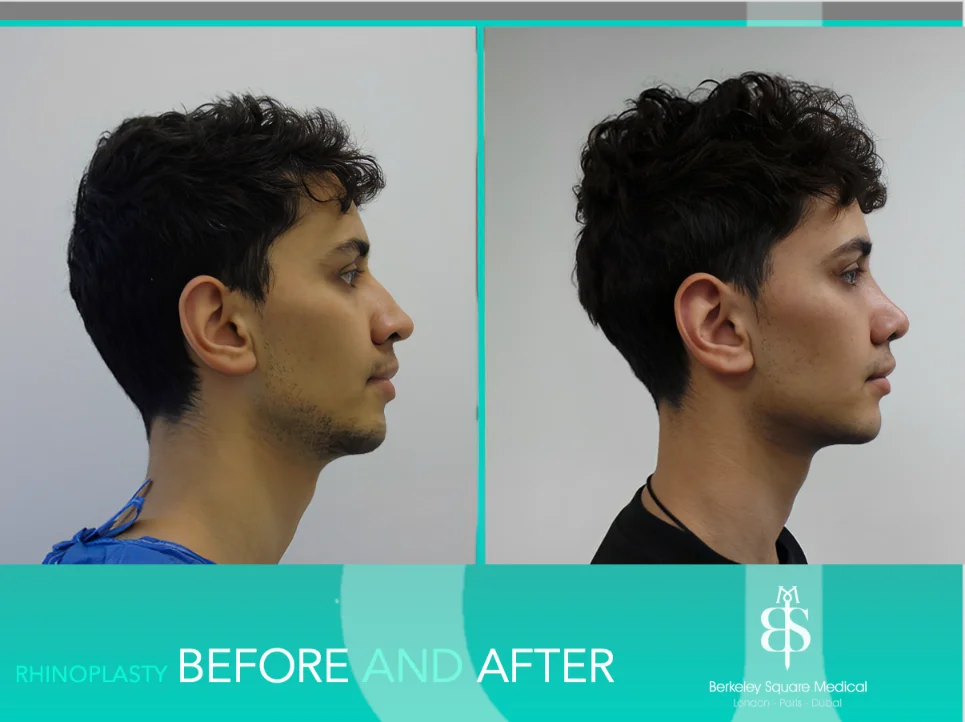
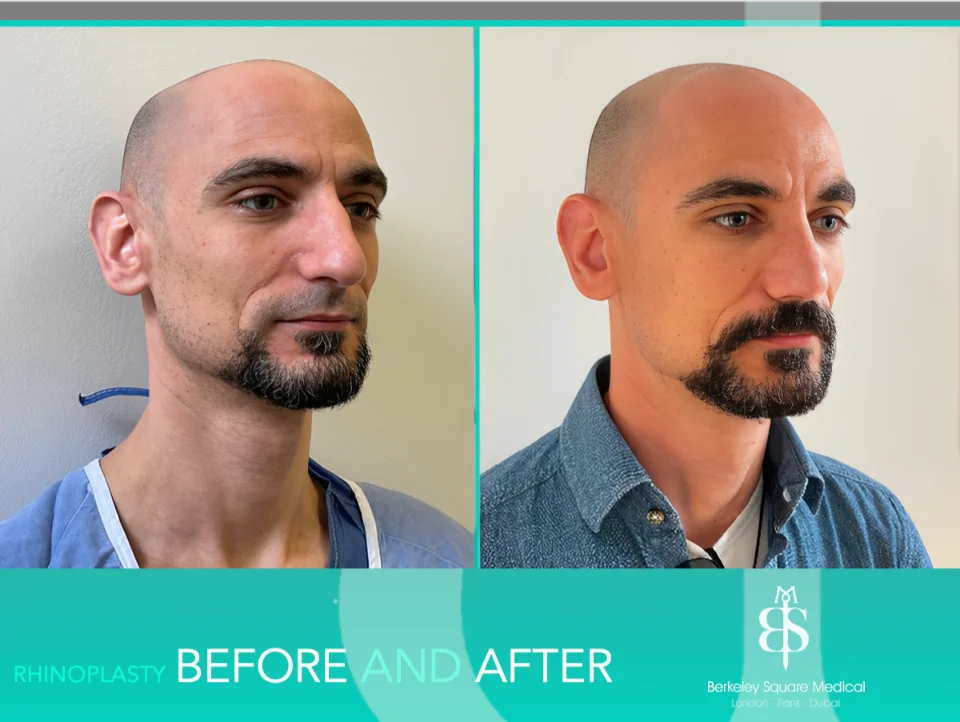
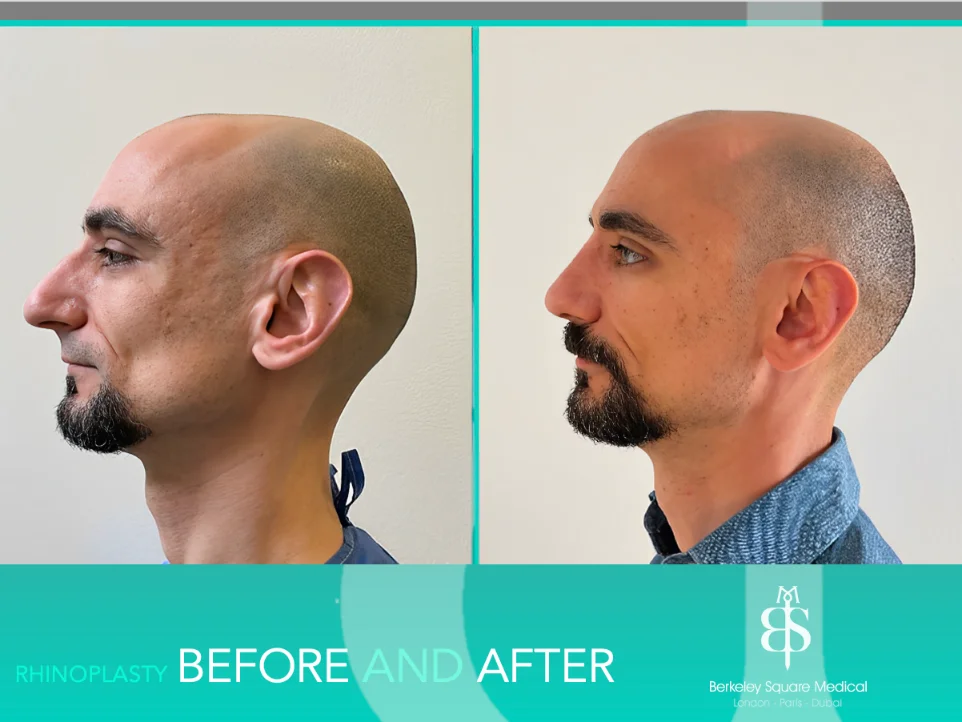
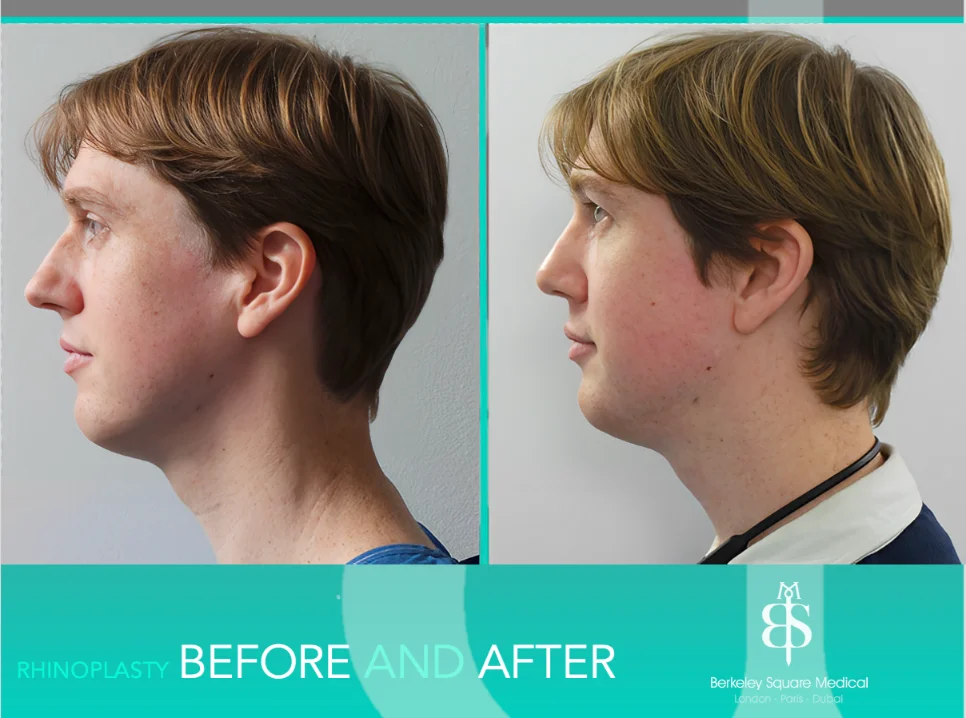
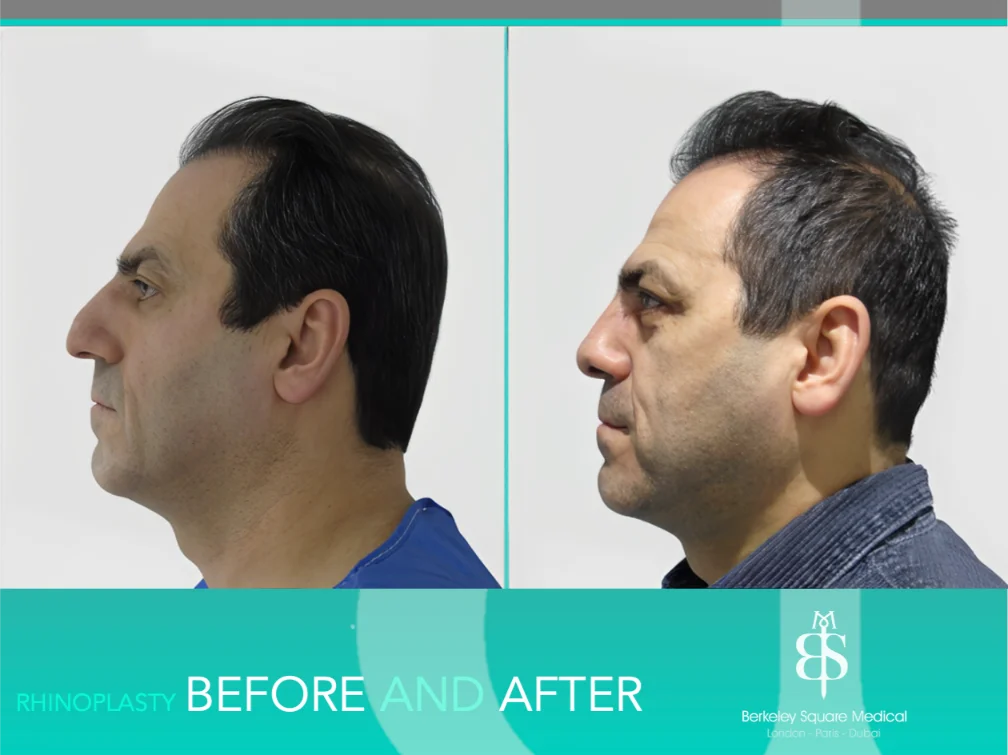
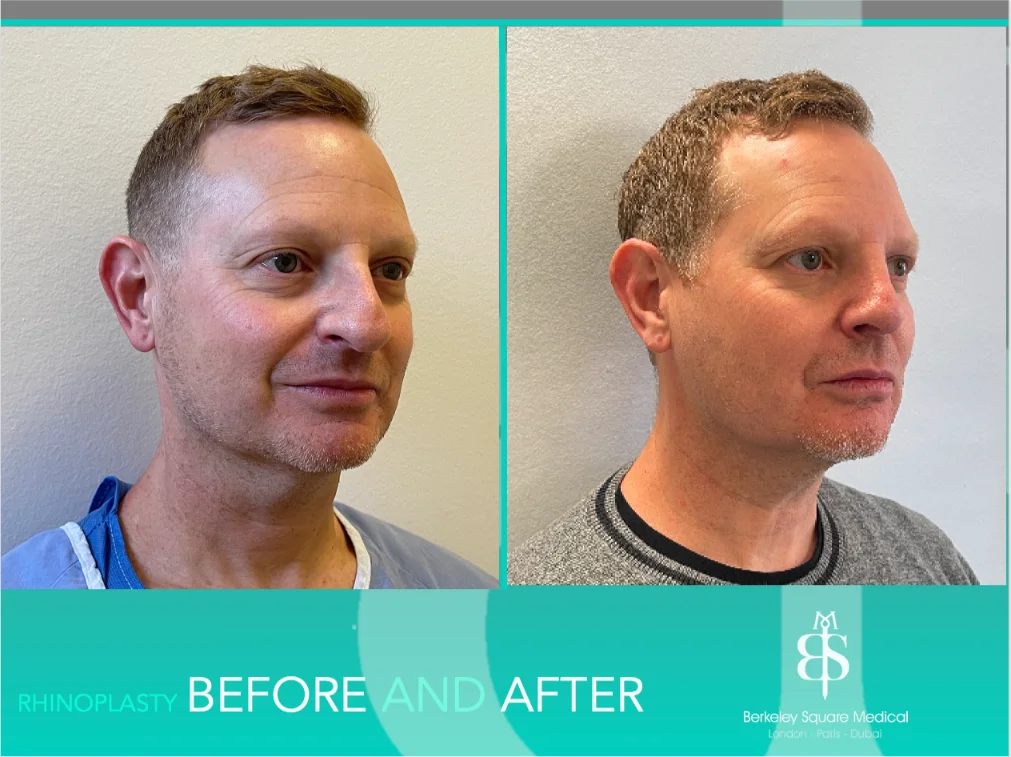
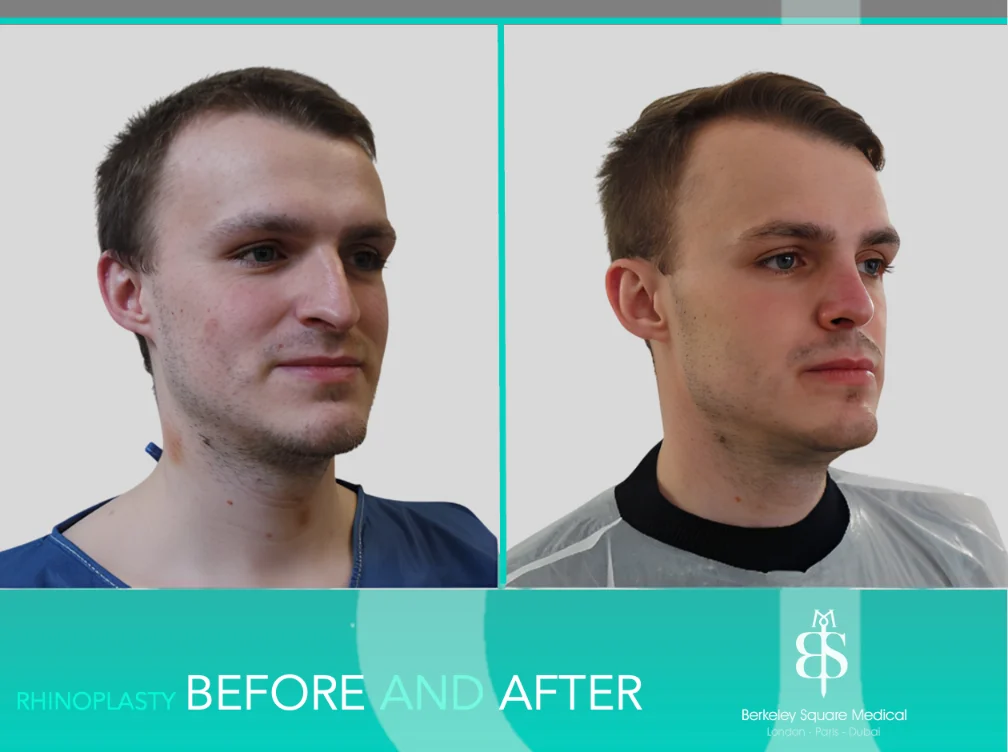
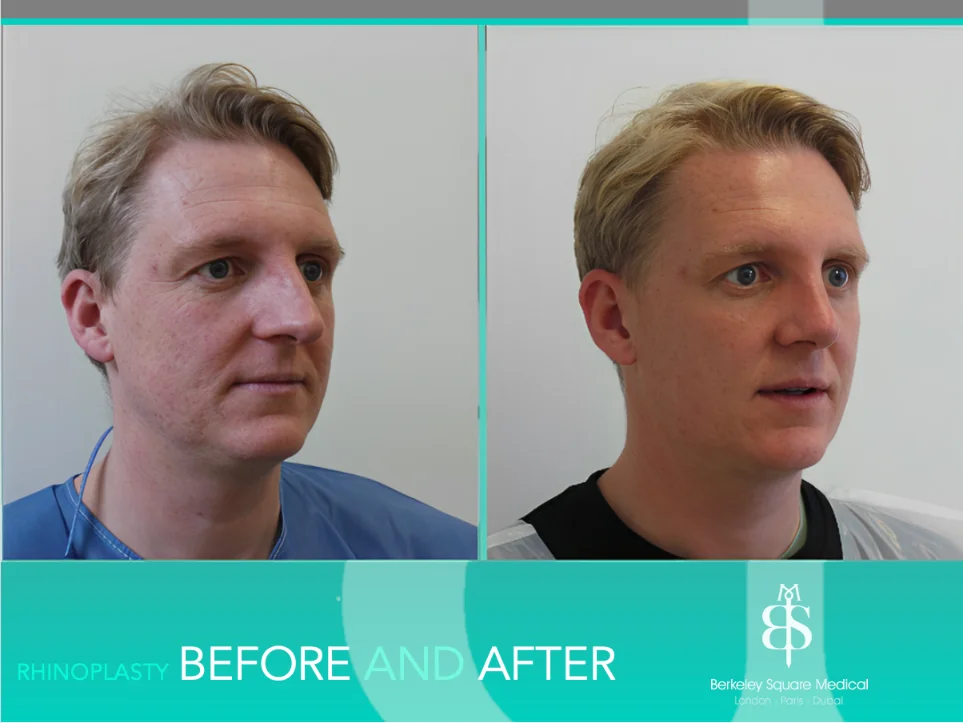
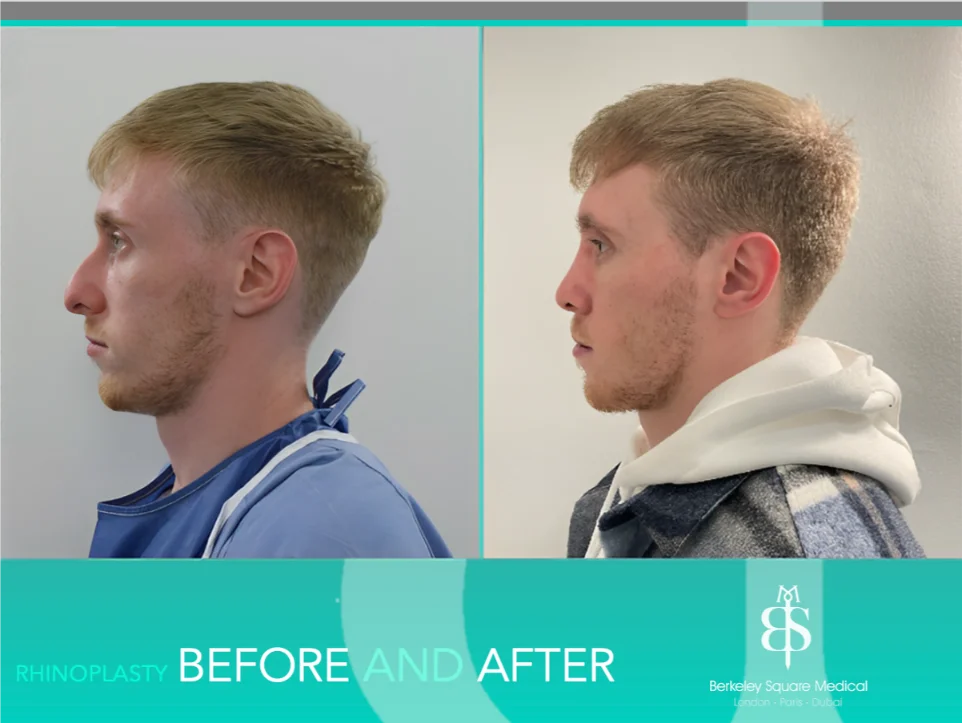
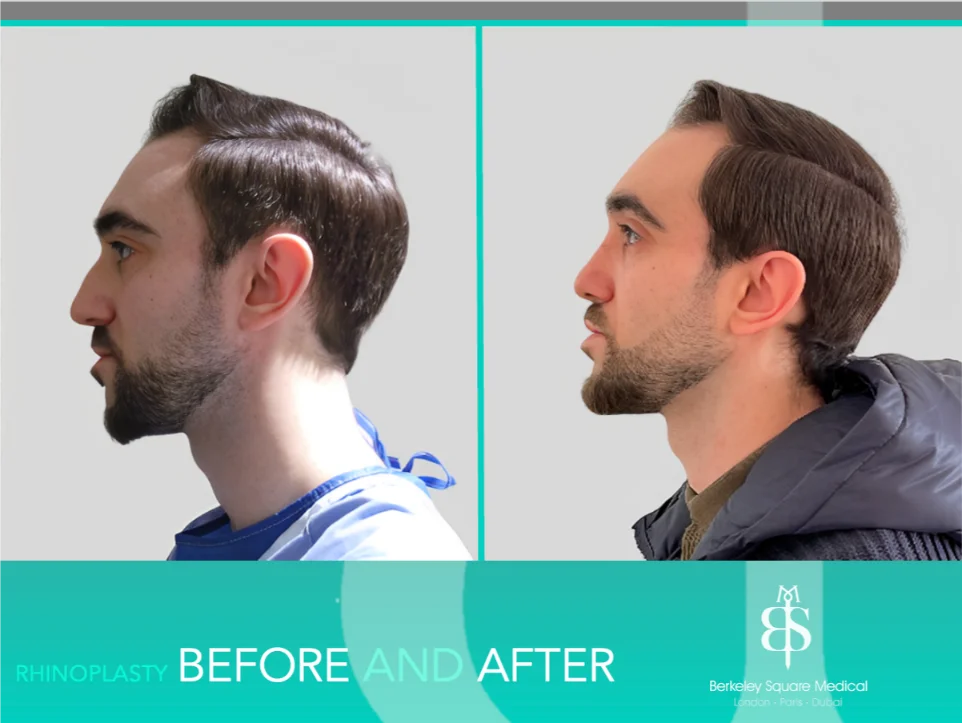
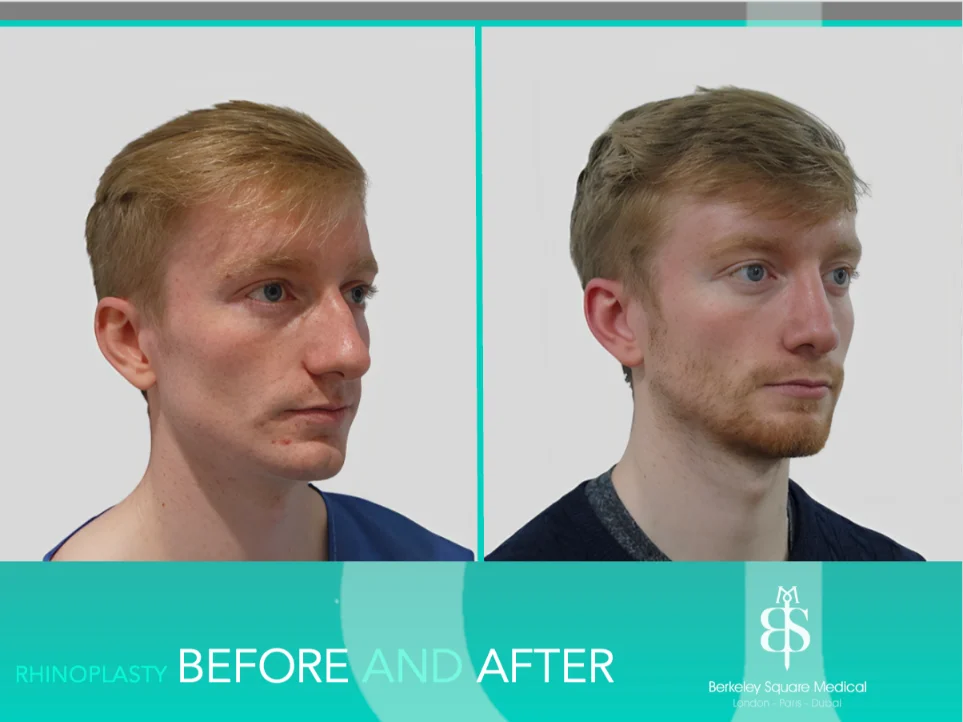
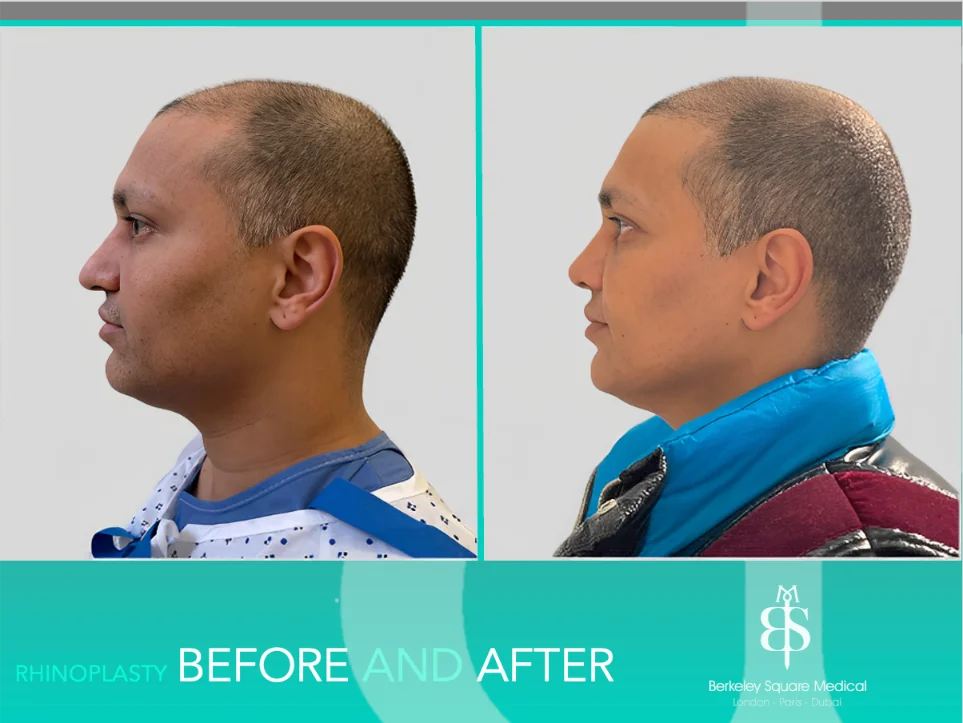
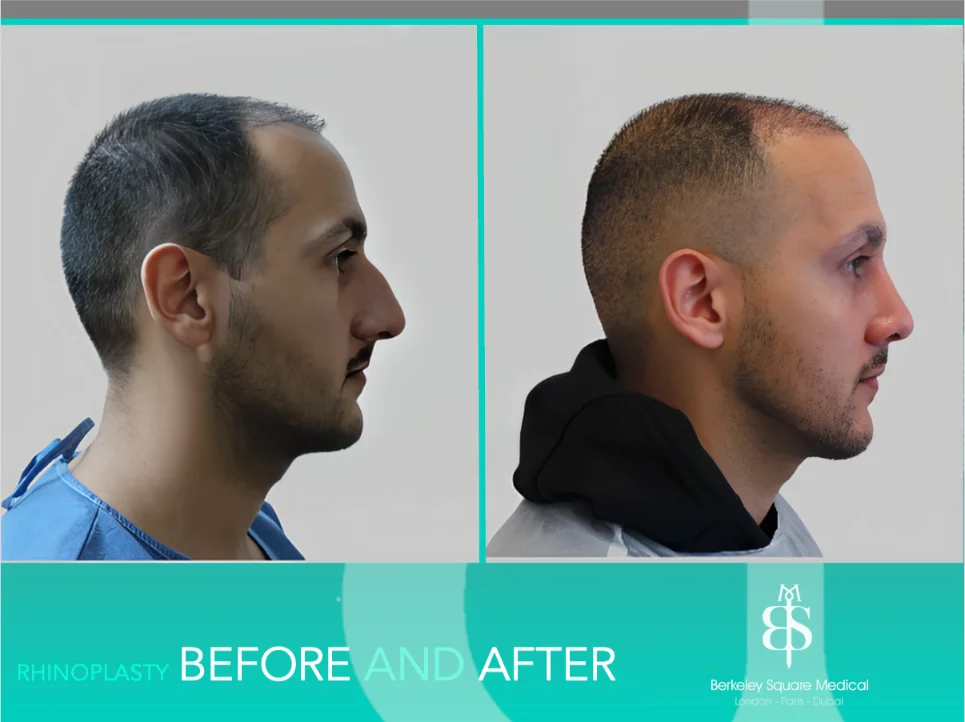
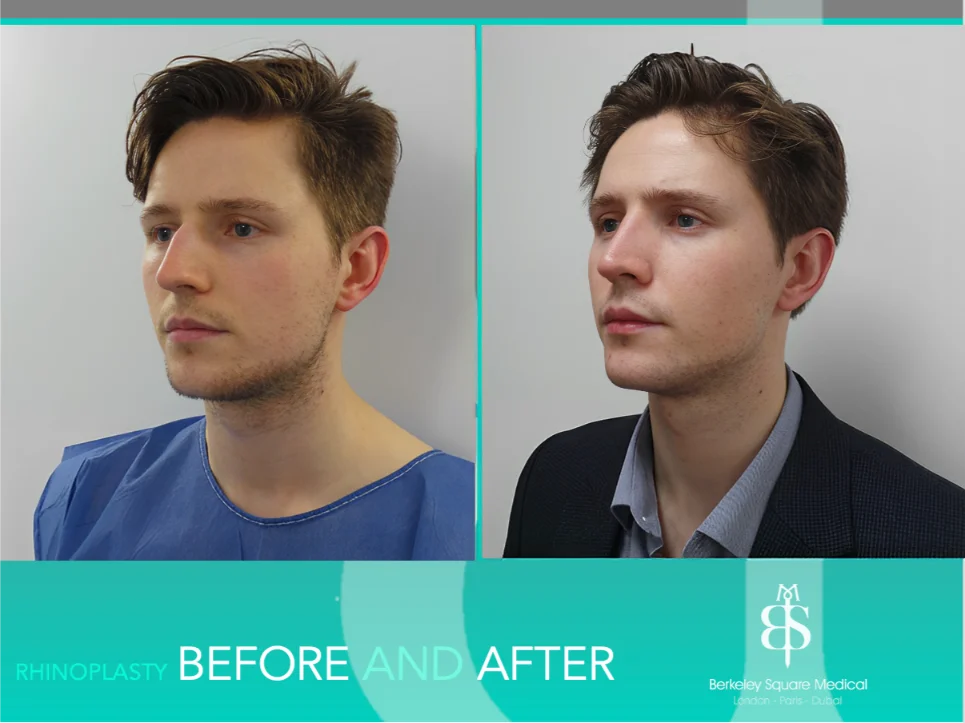
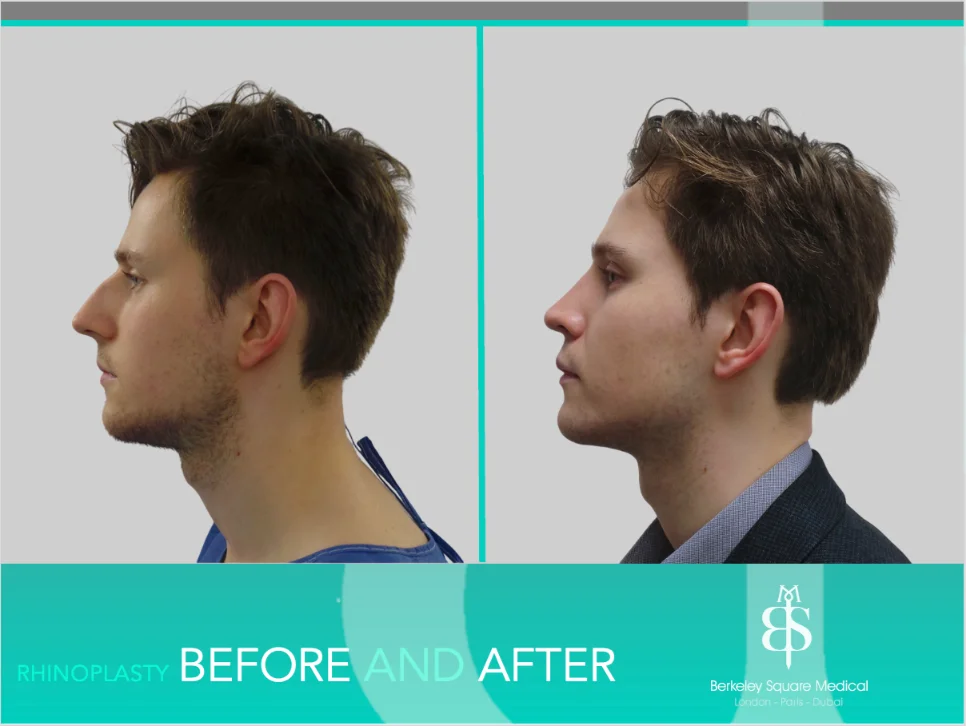
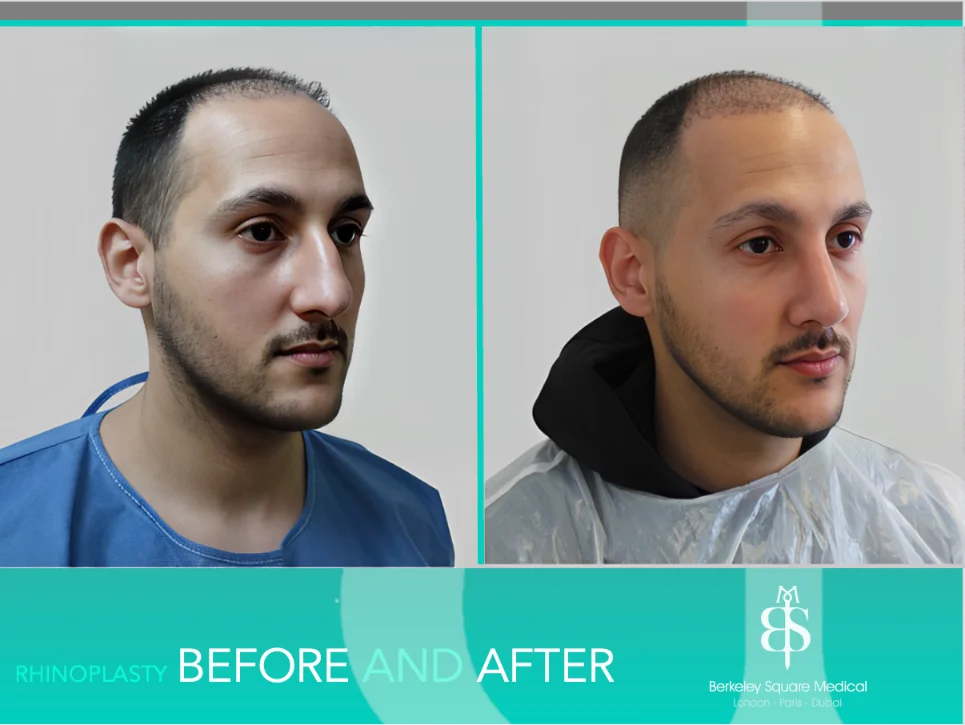
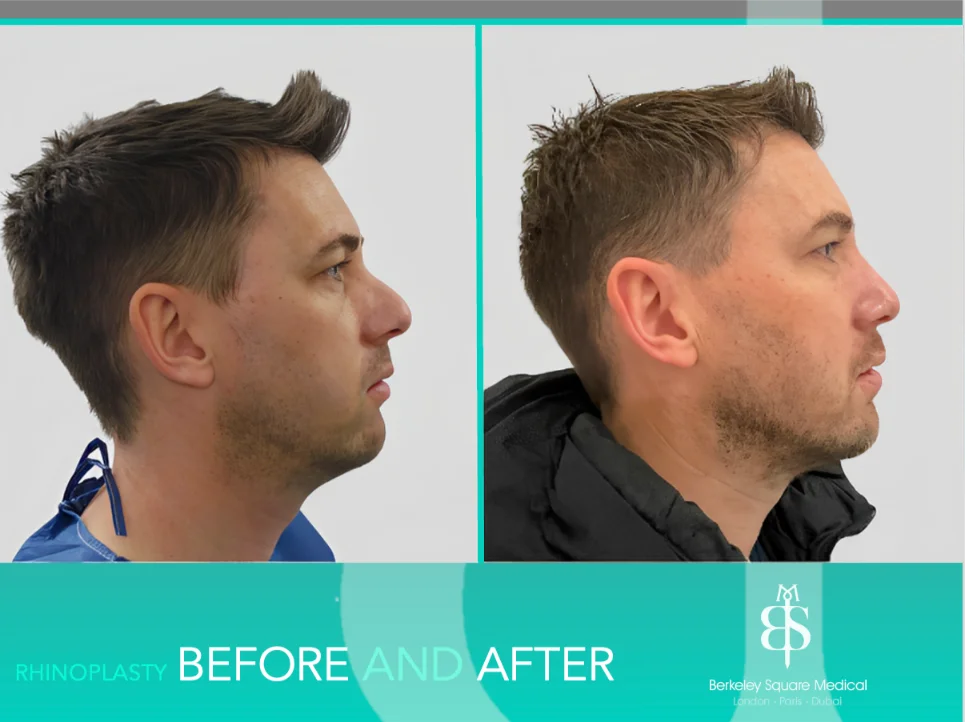
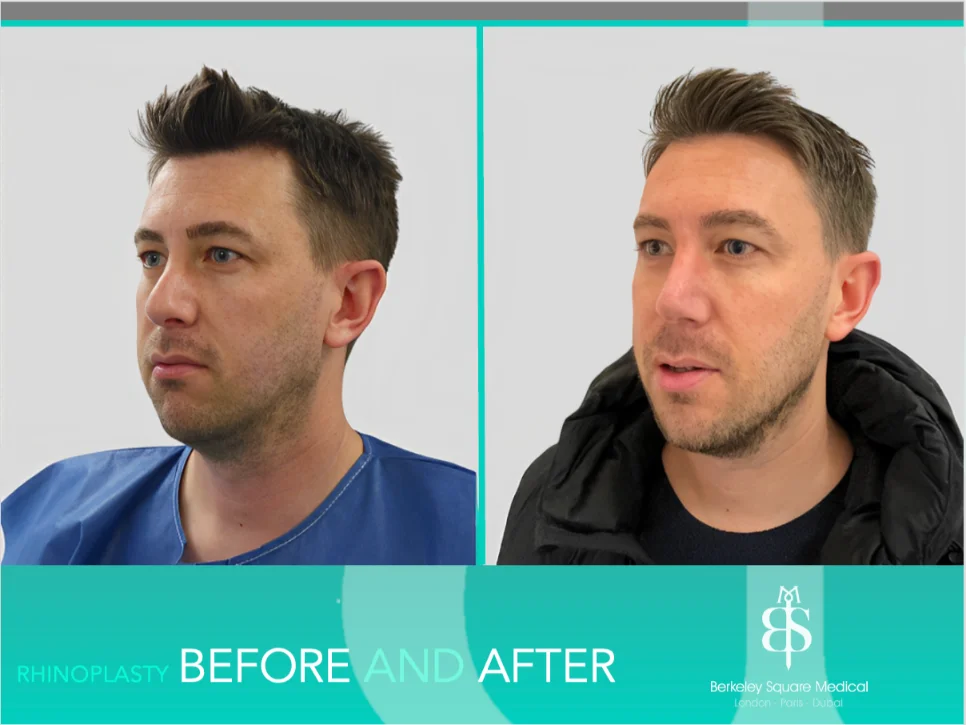
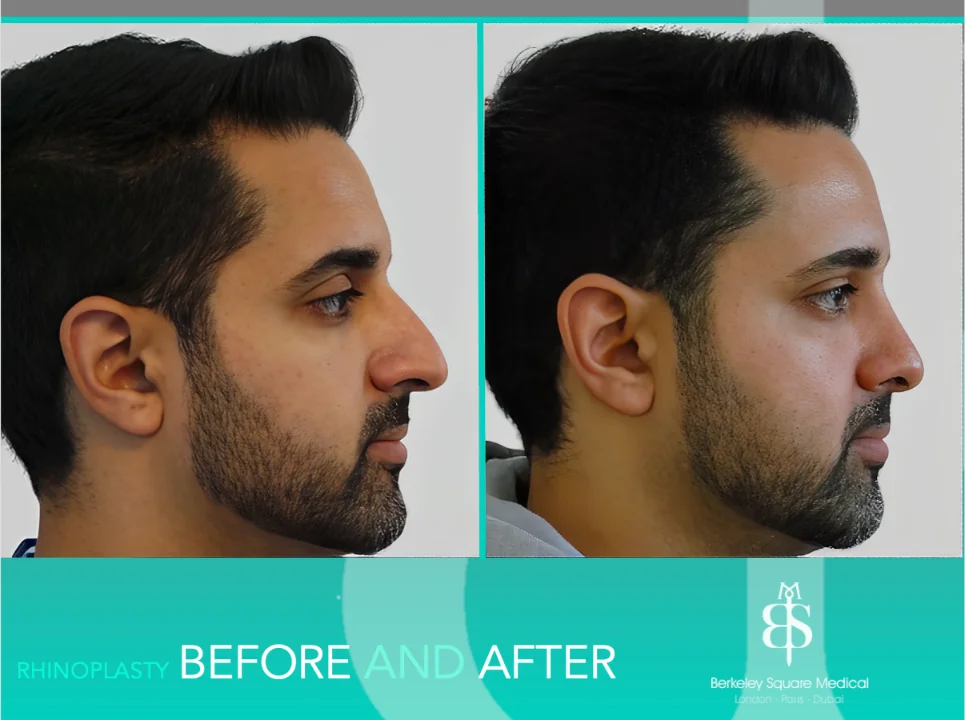
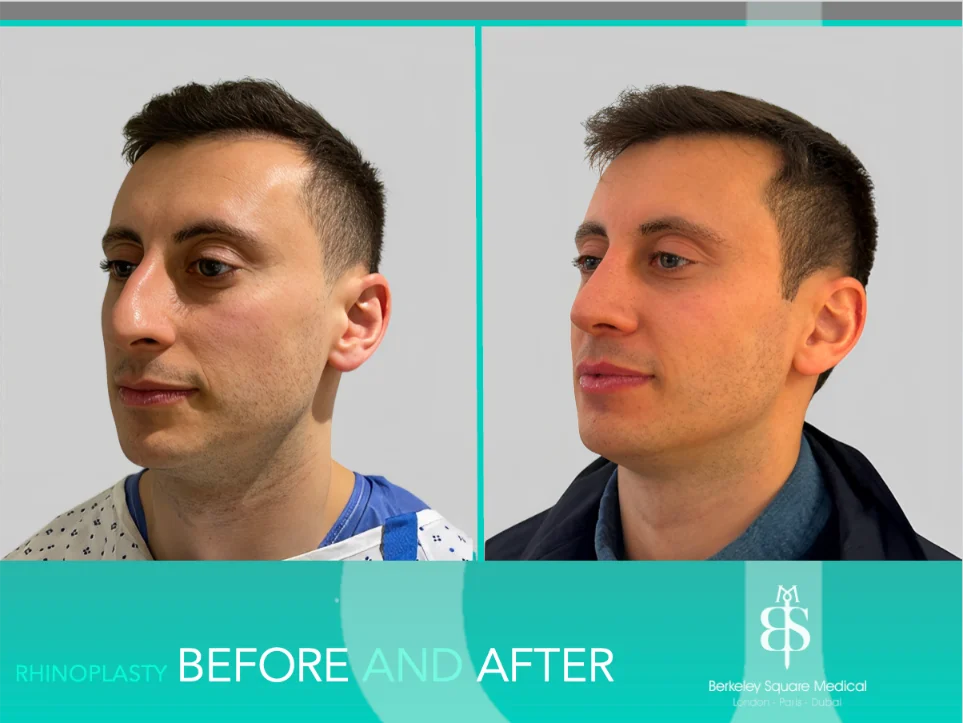
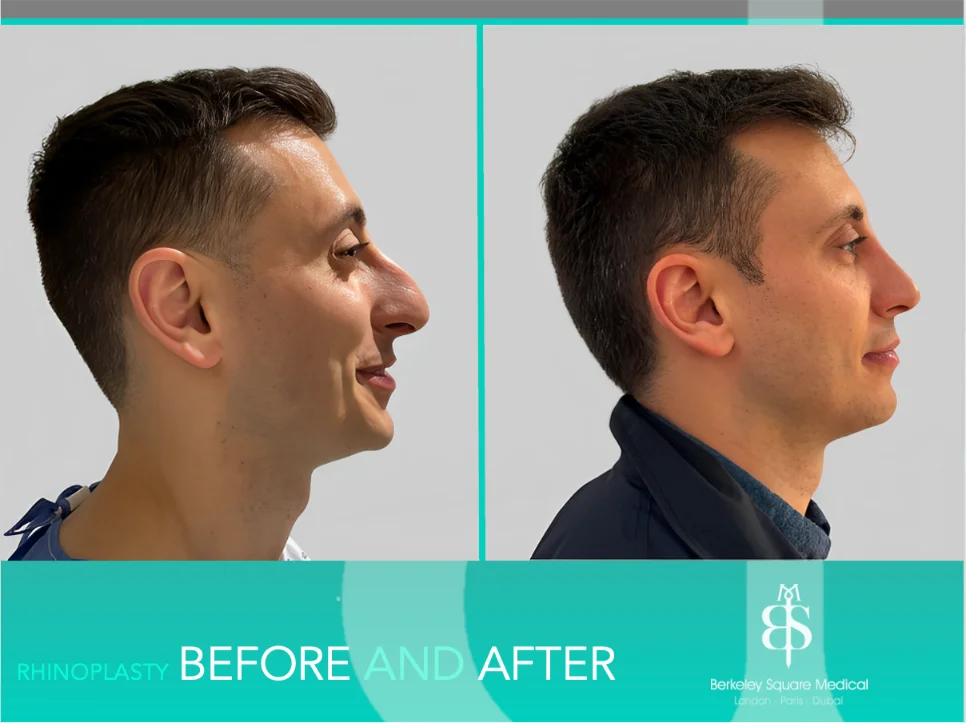
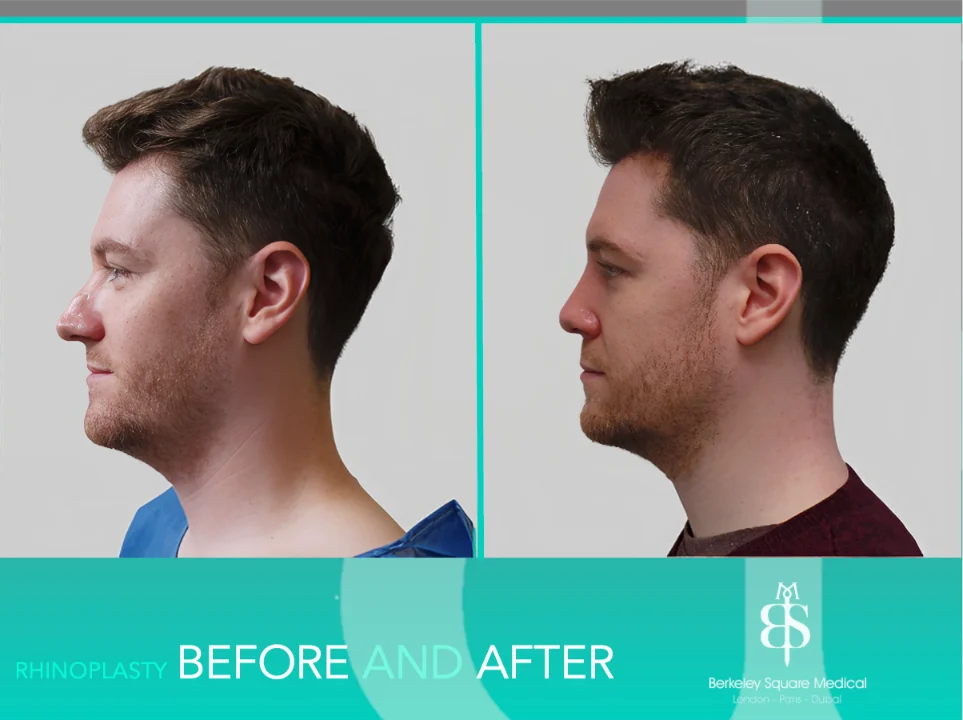
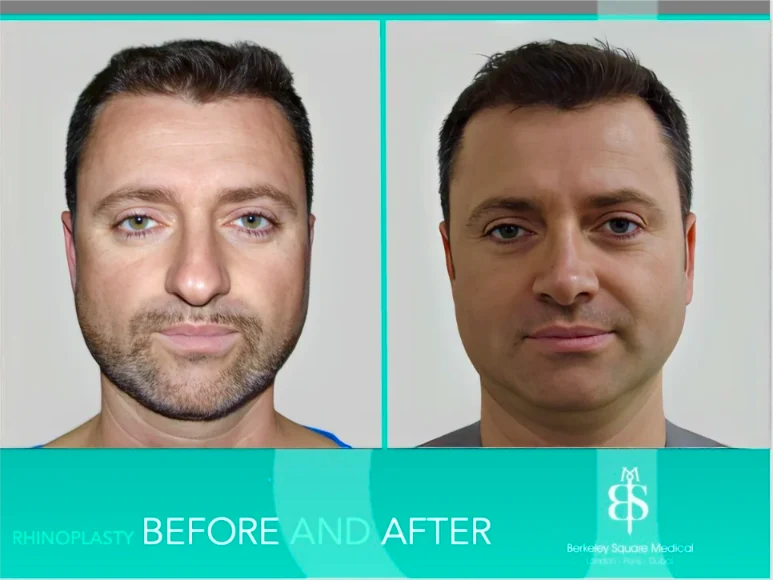
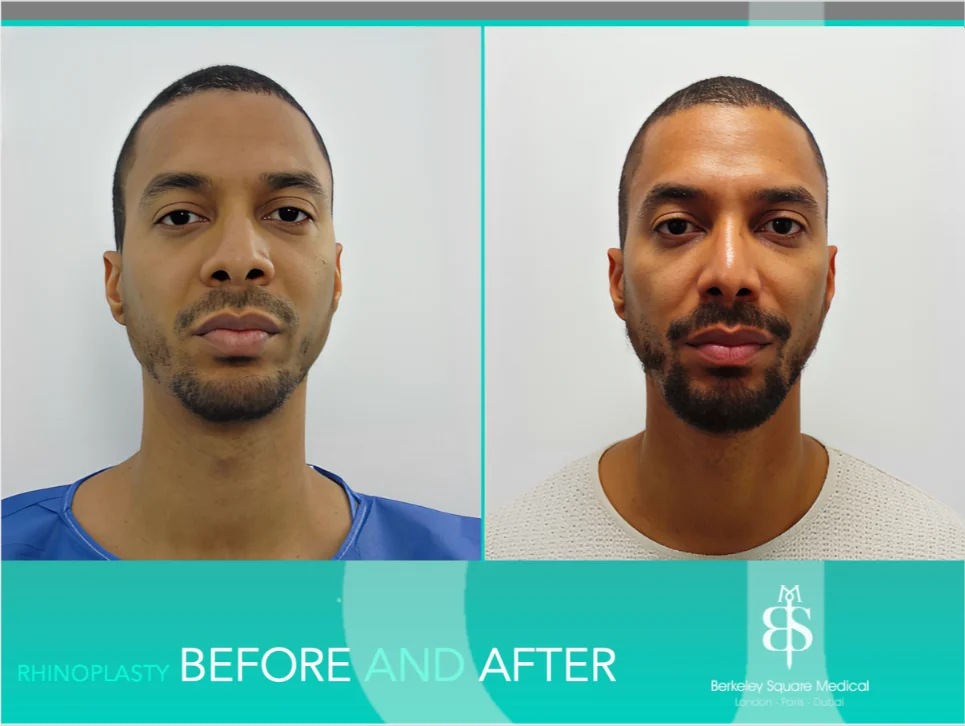
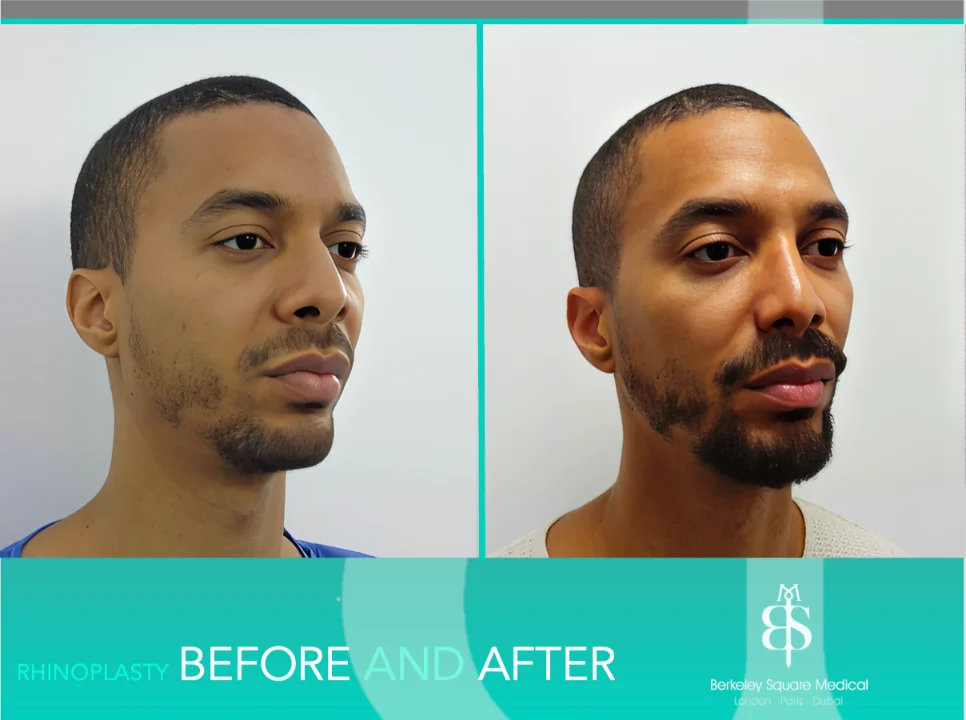
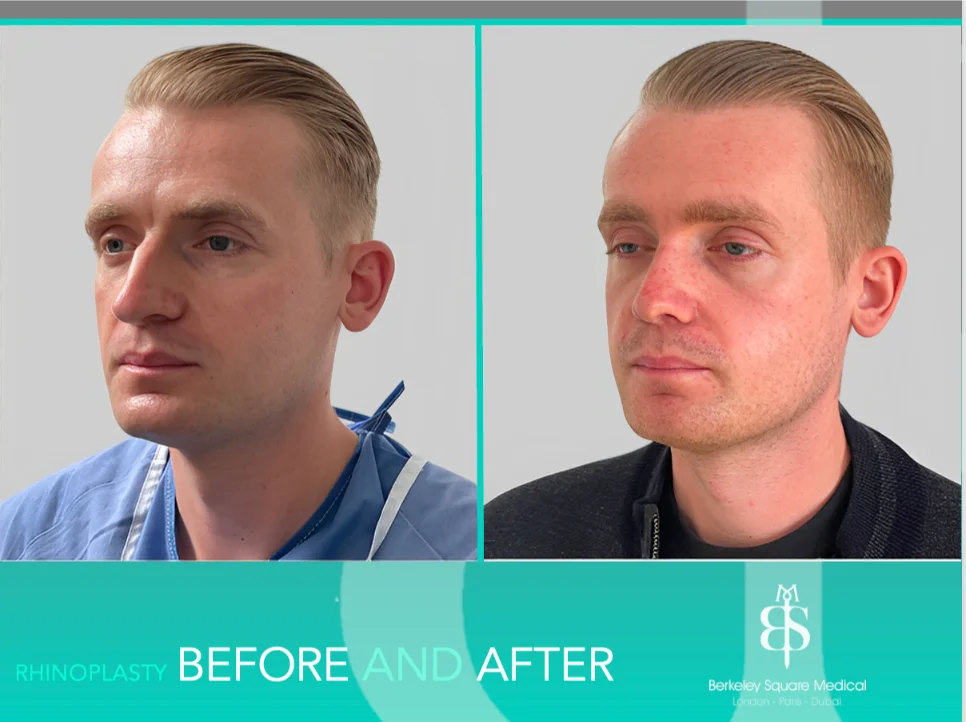
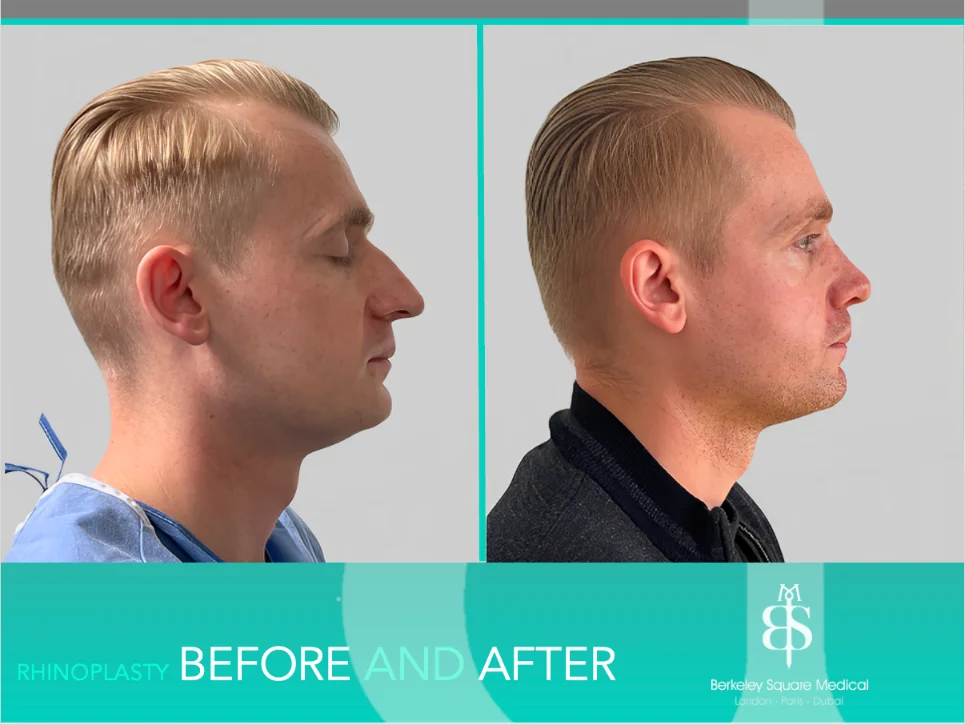
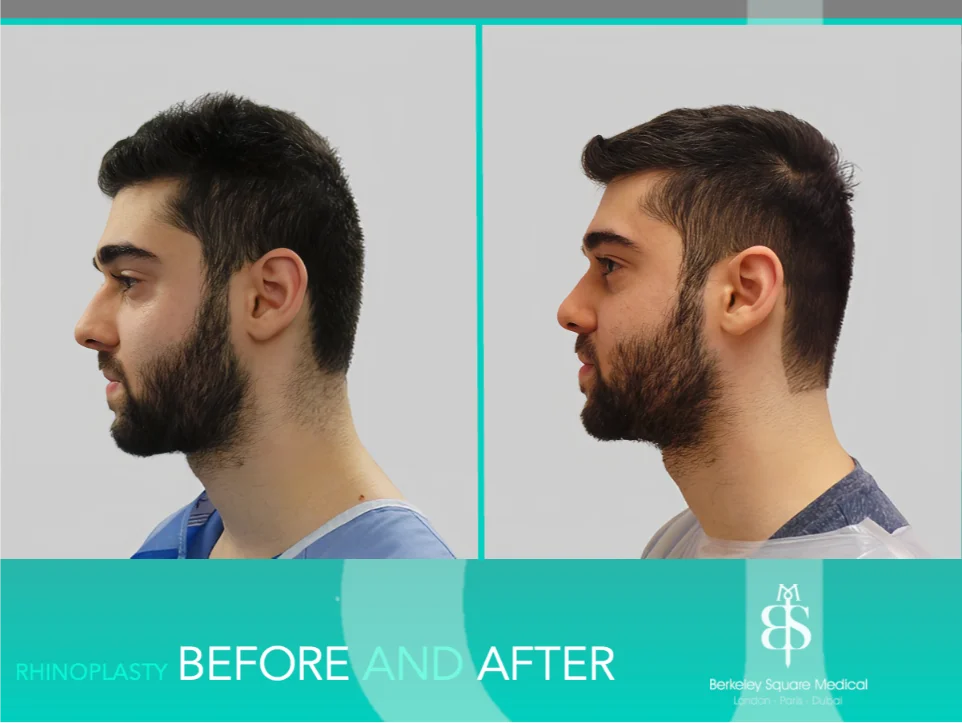
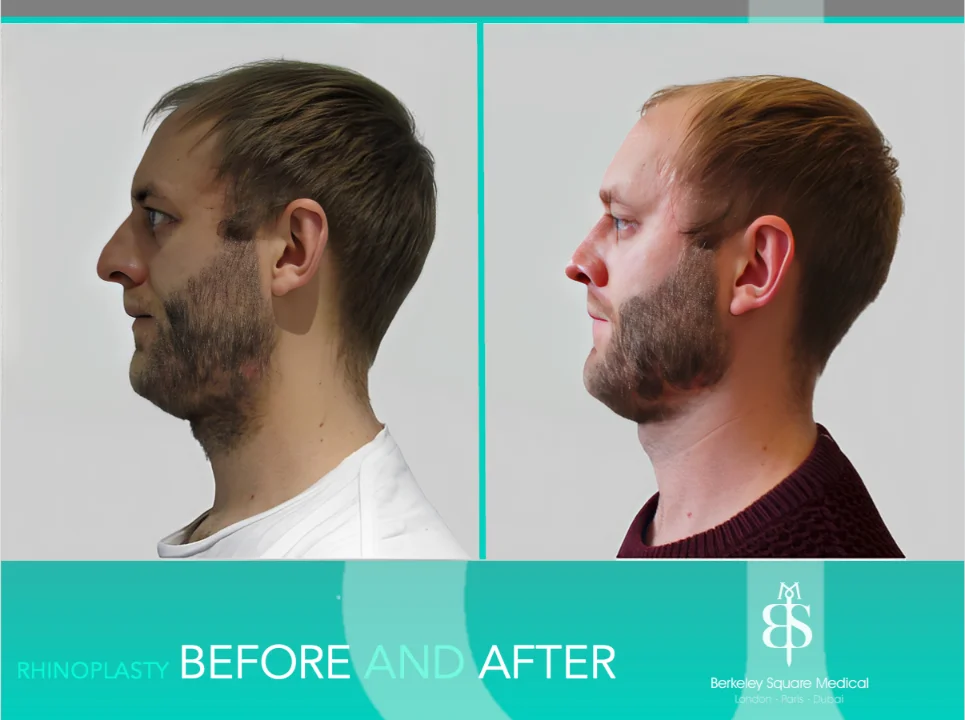
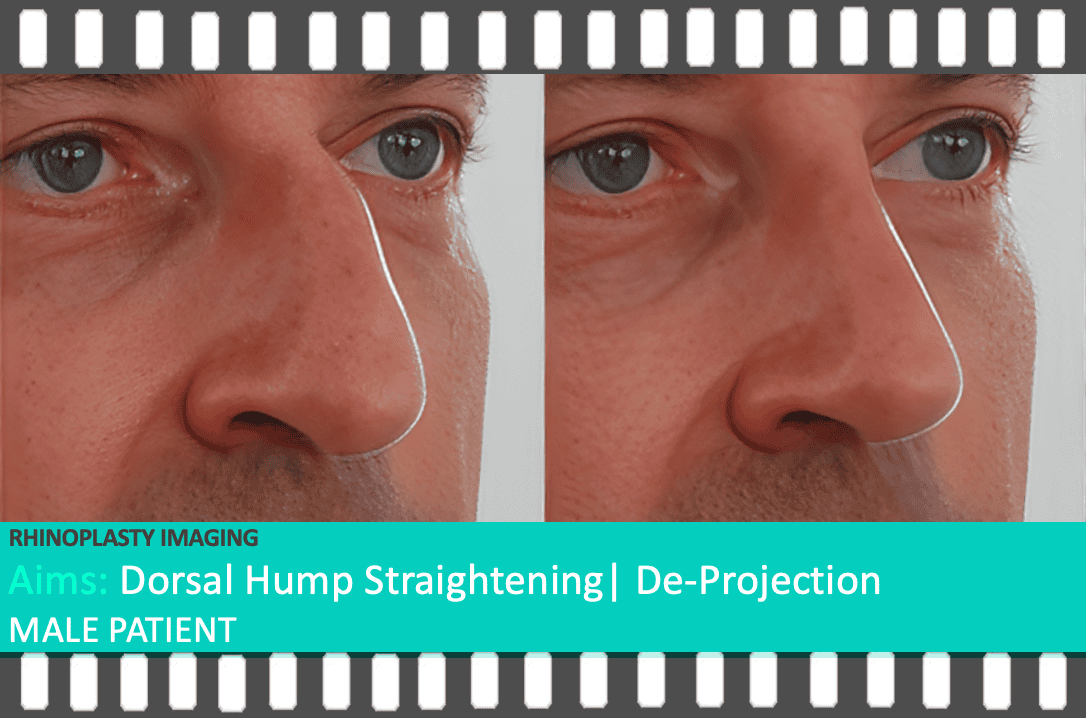
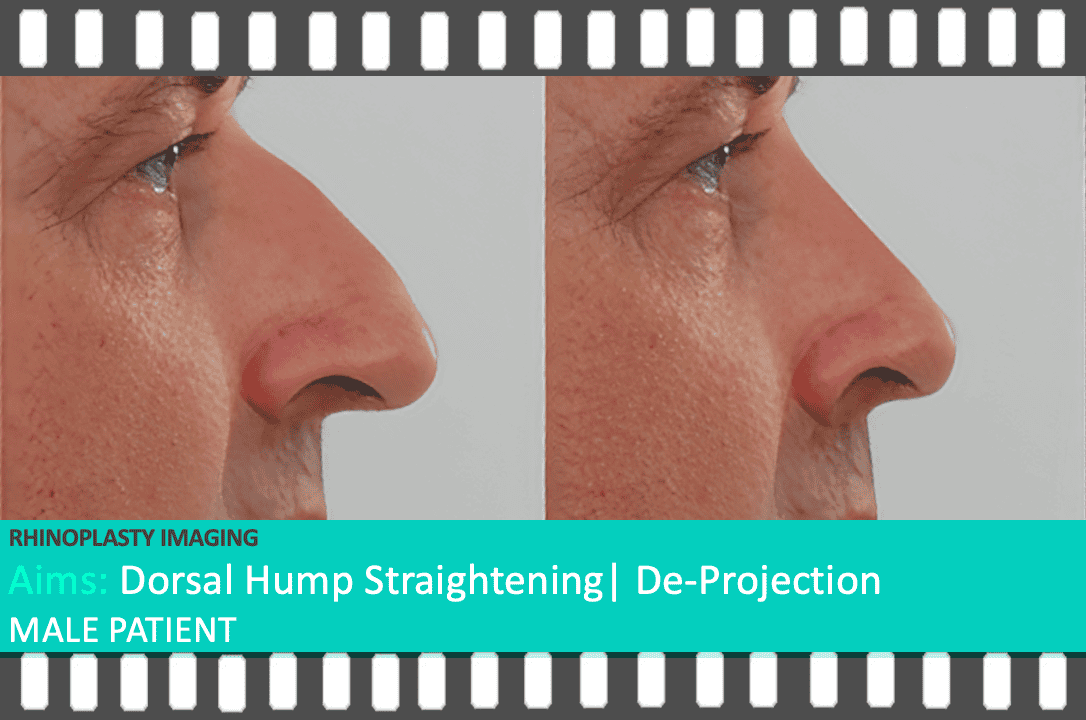
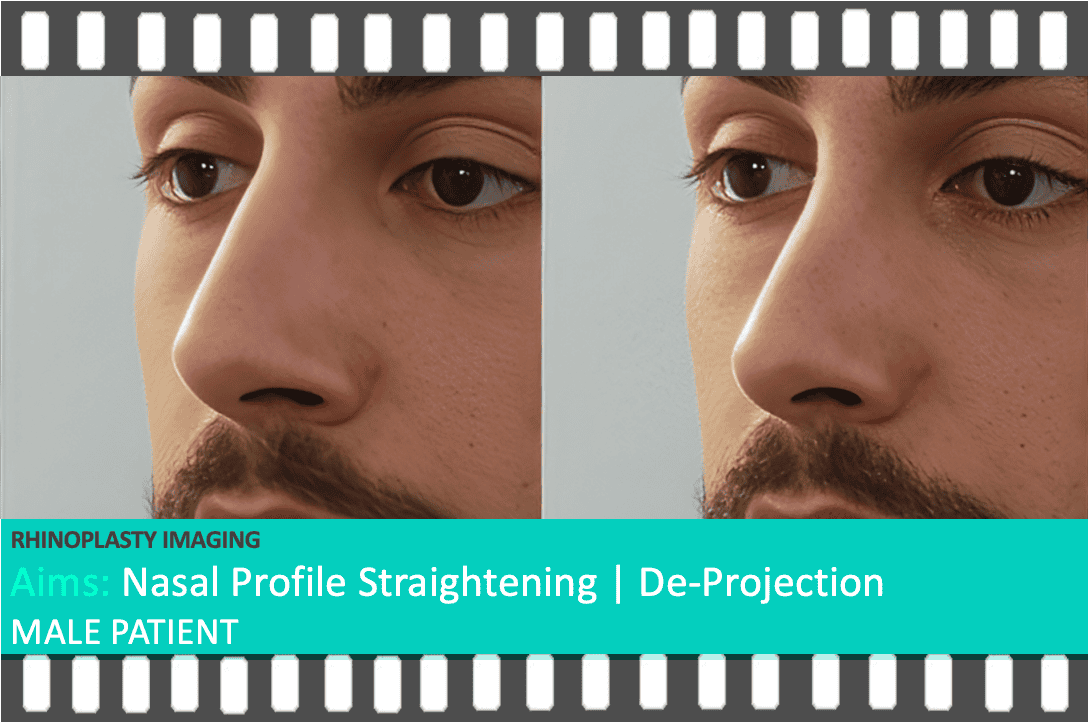
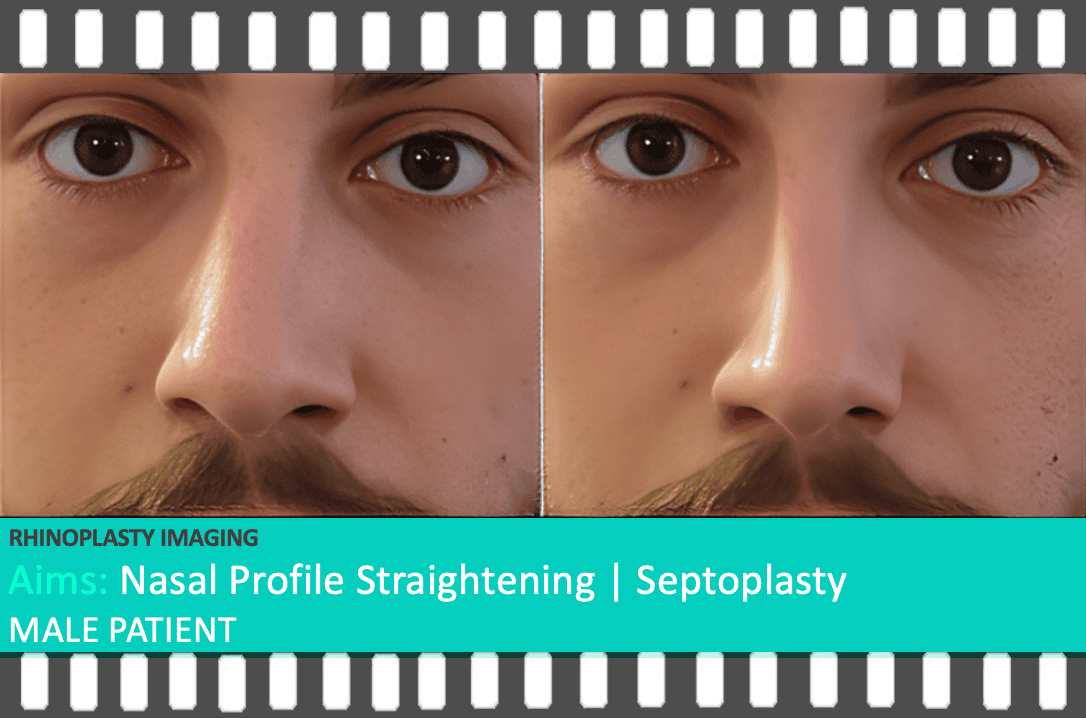
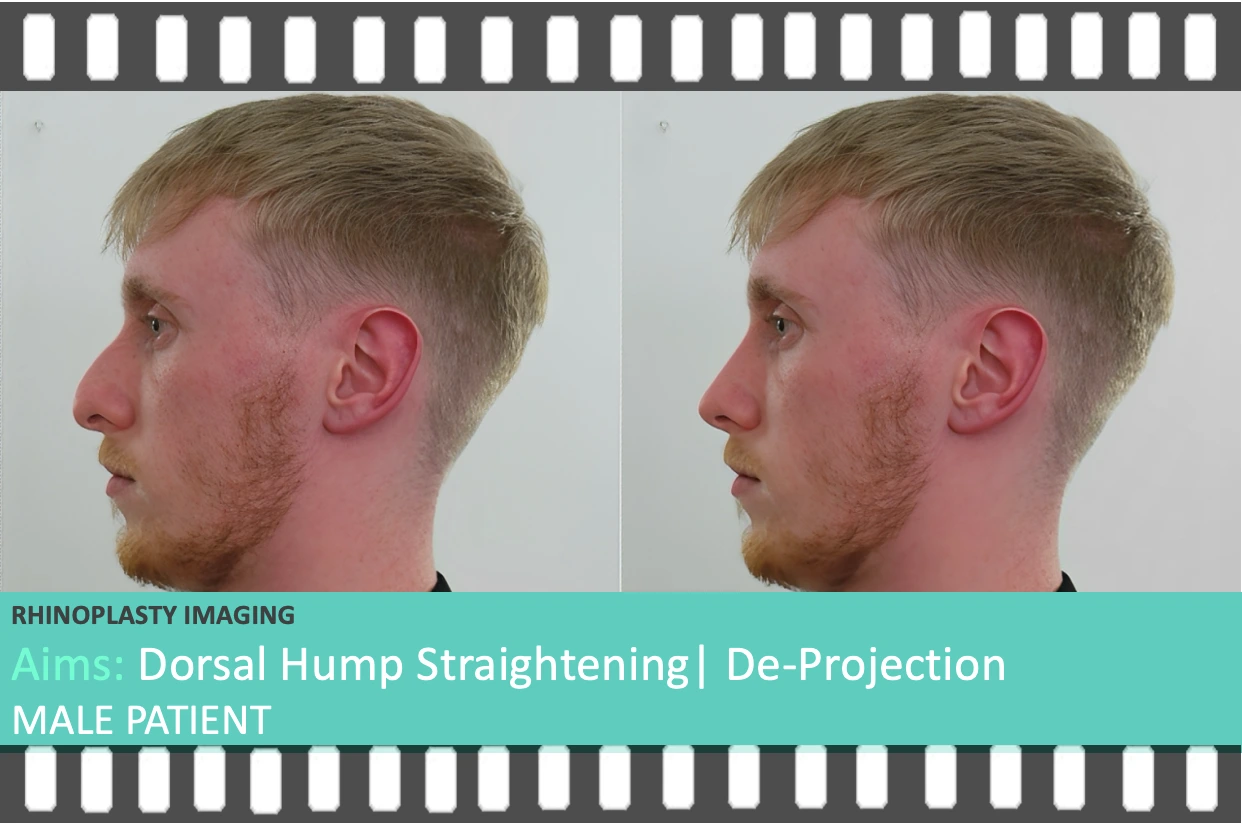
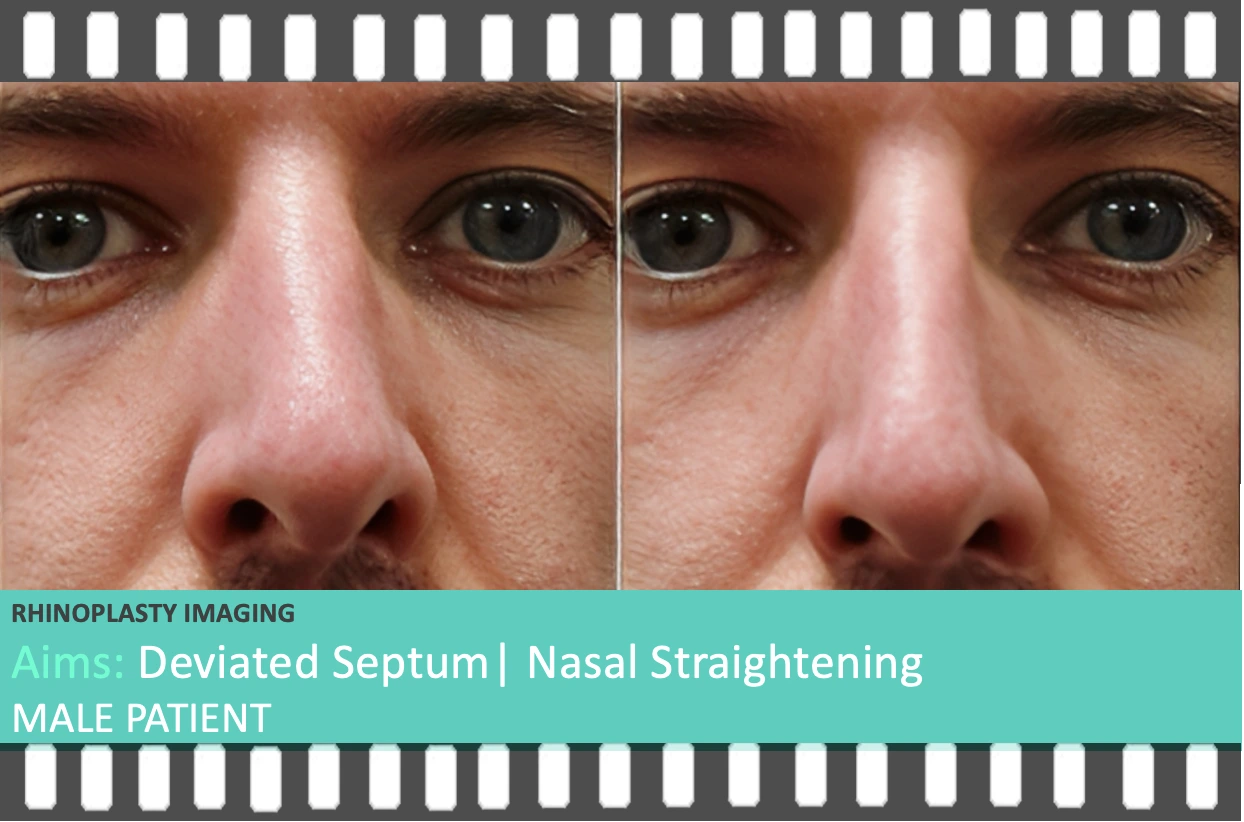
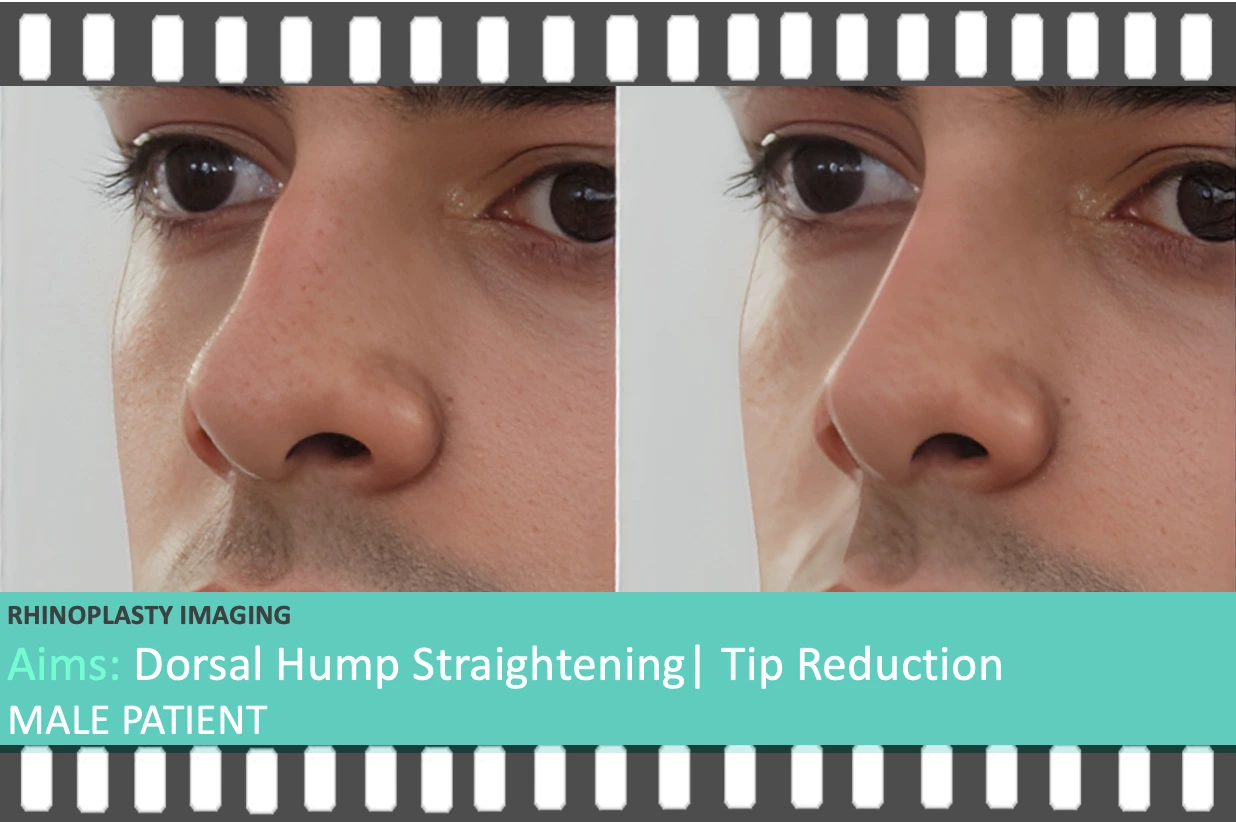
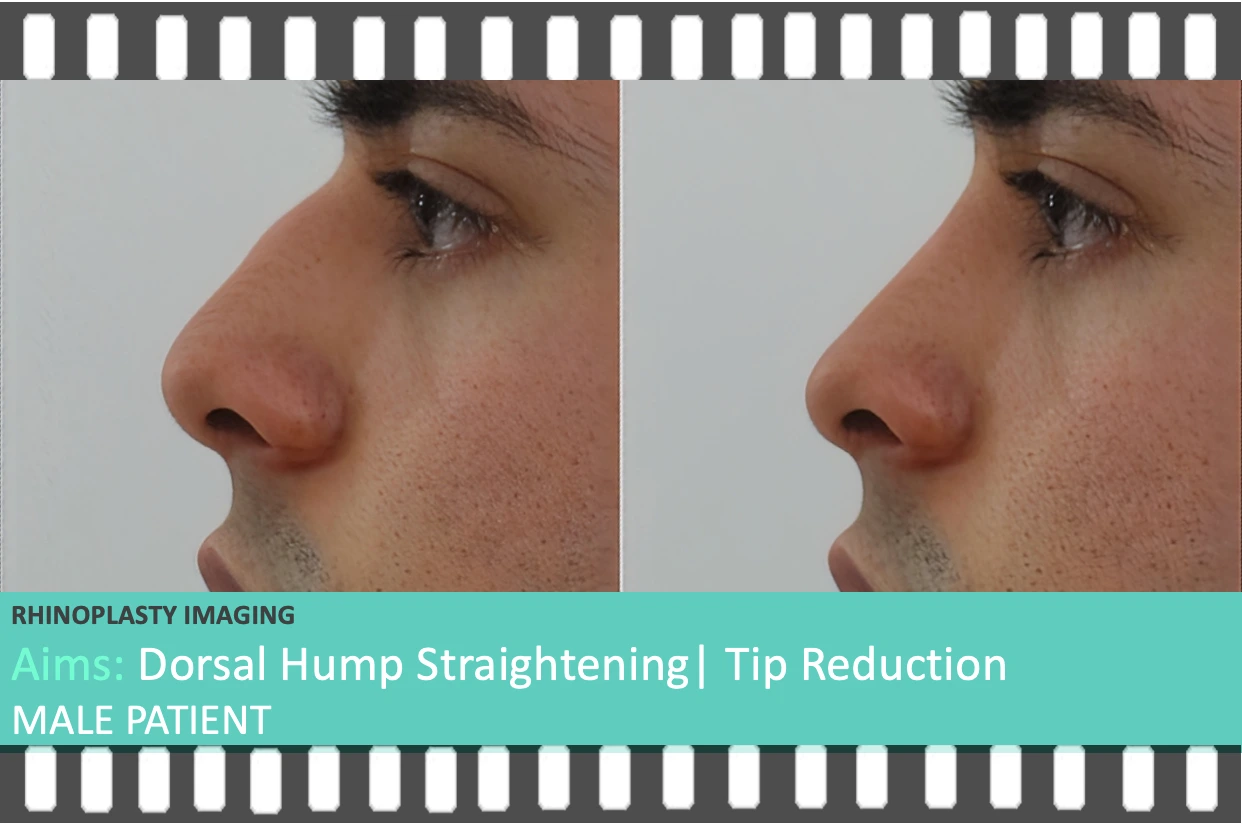
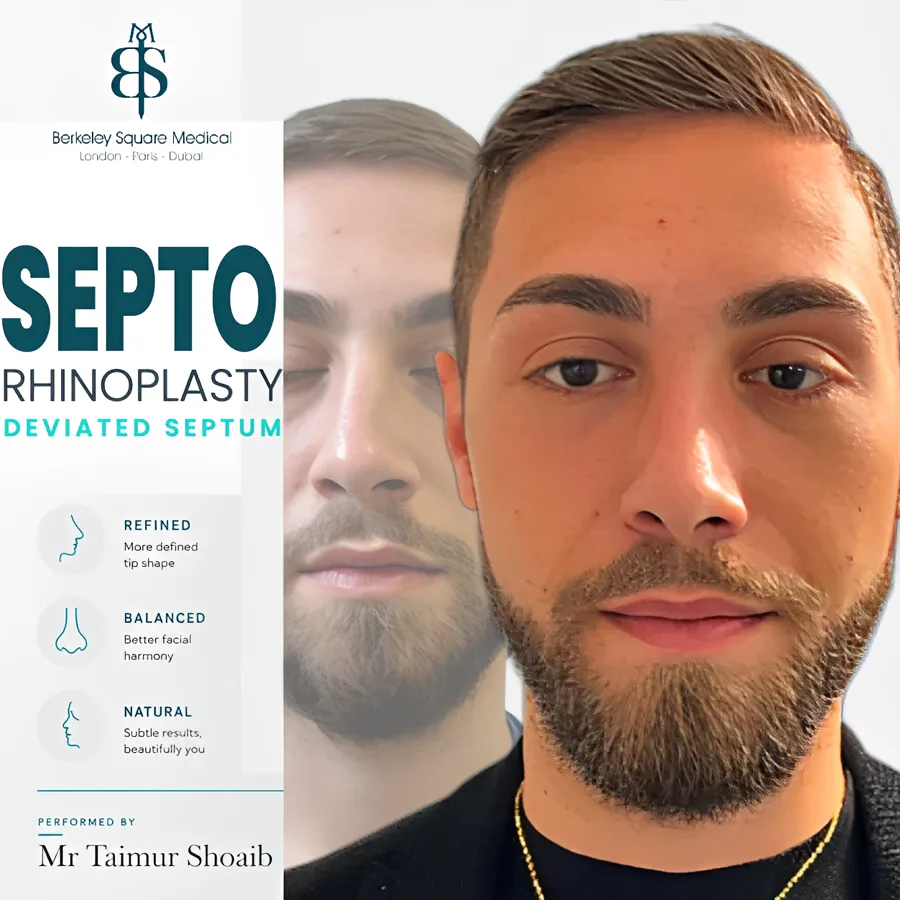
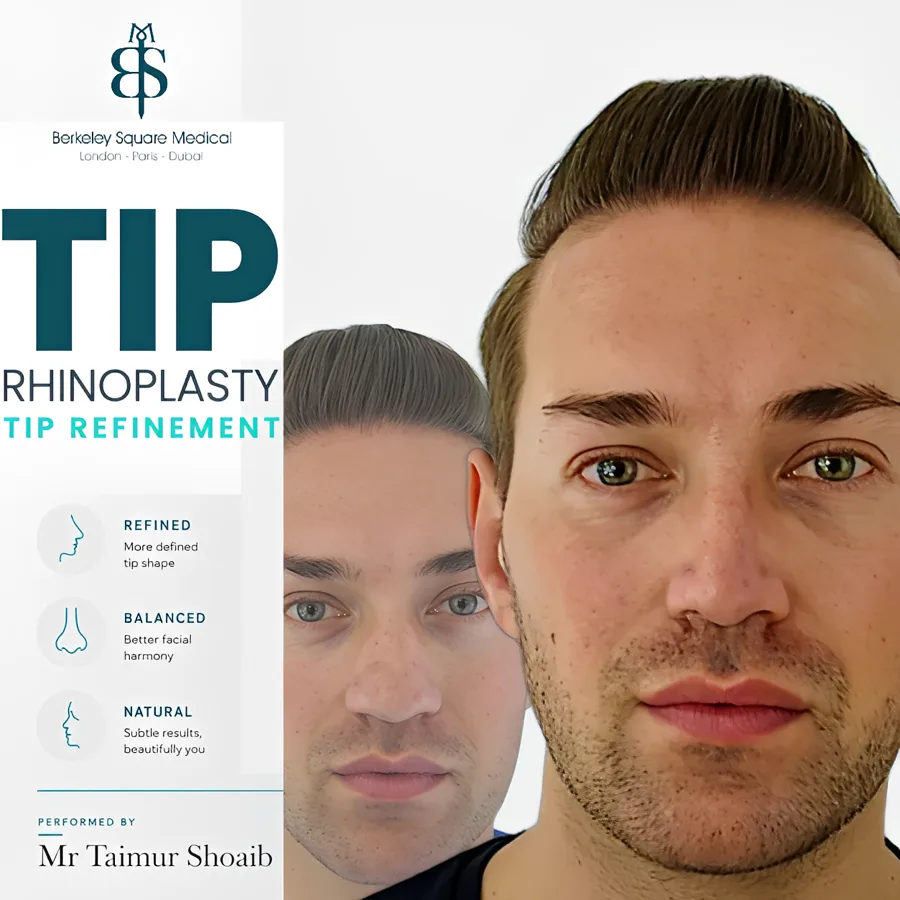
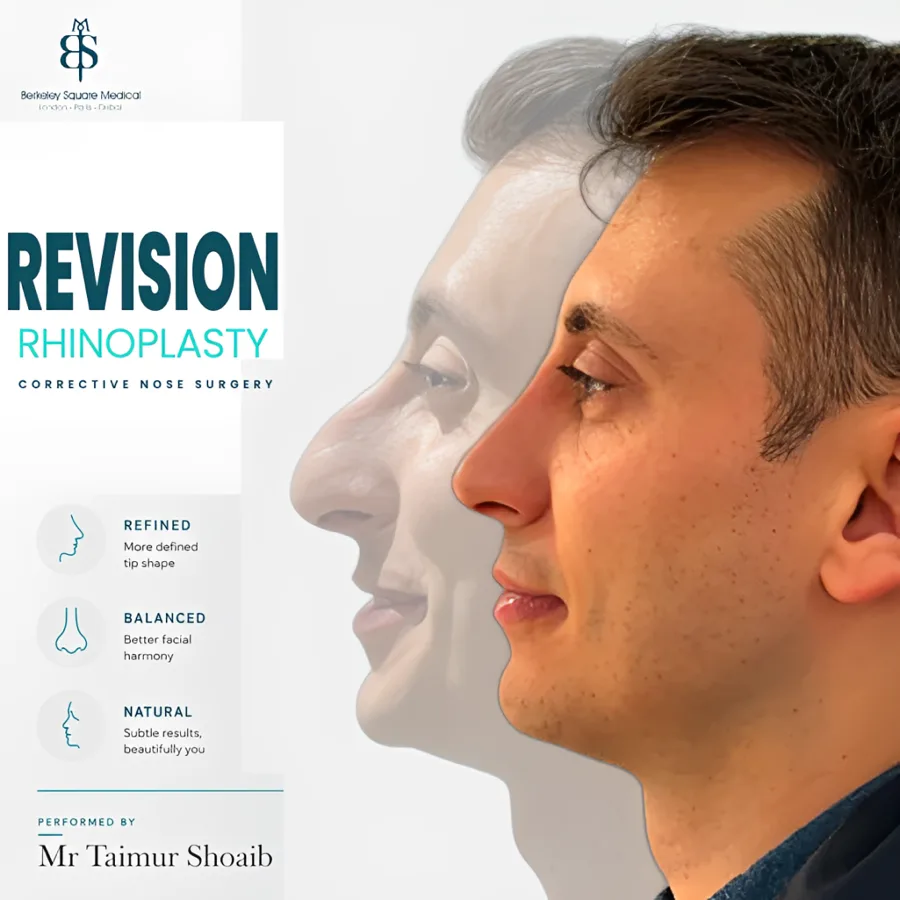
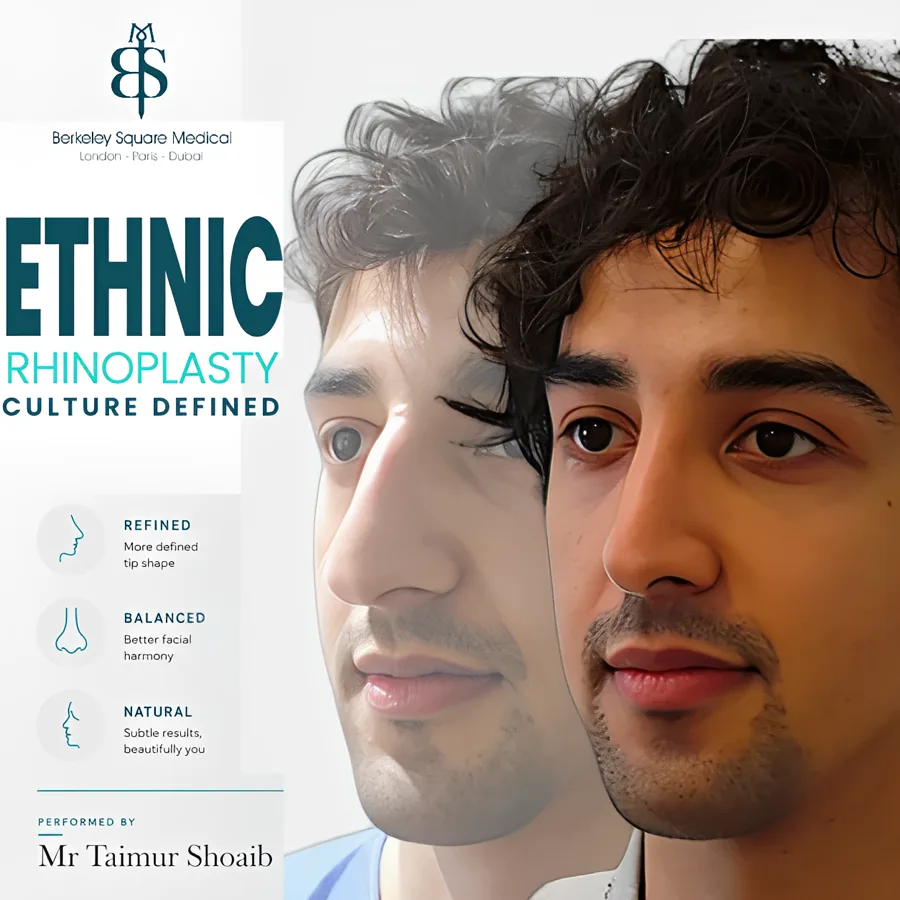
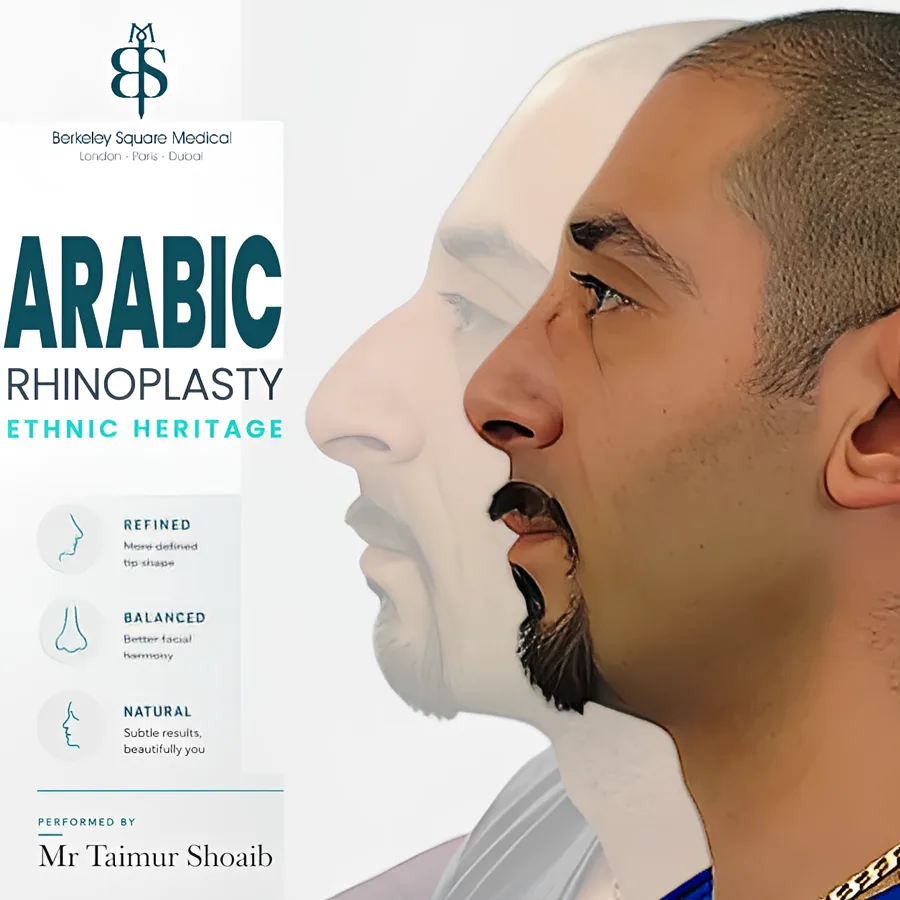
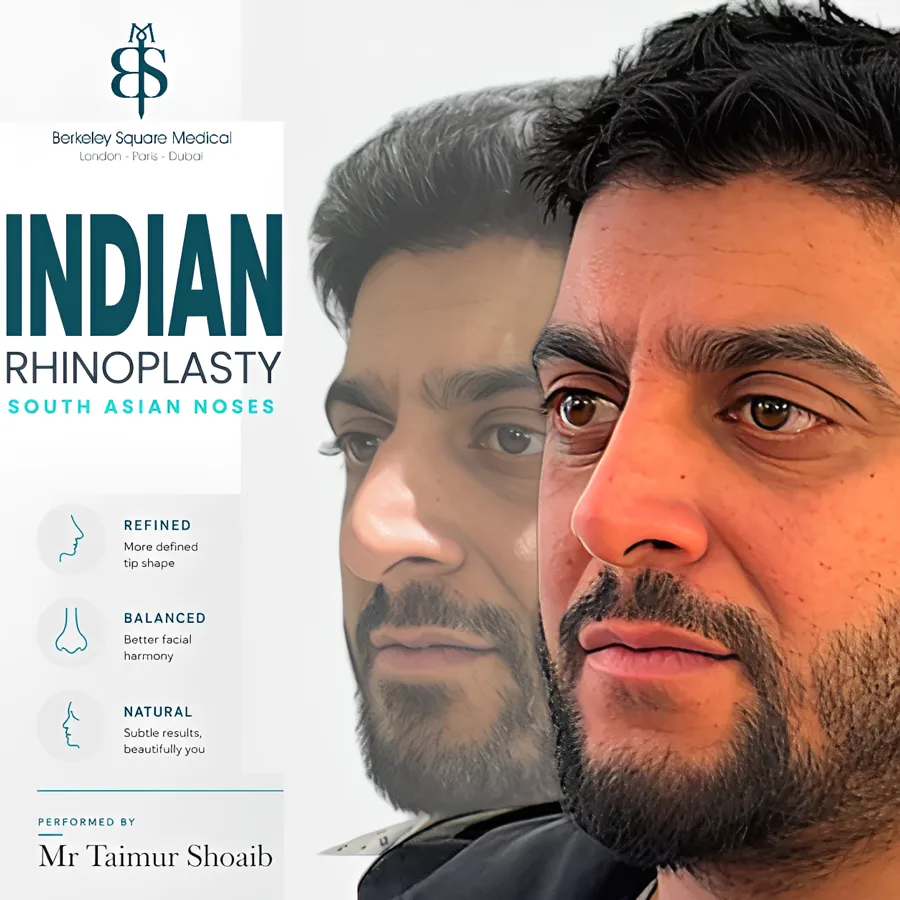
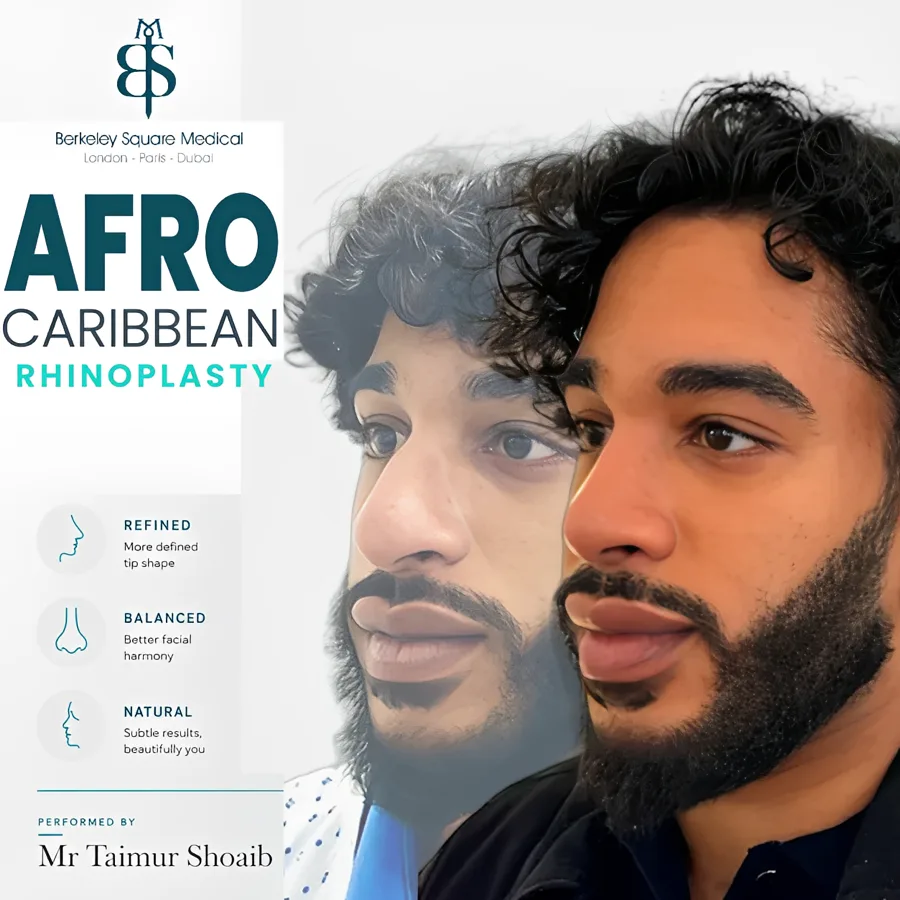
At Berkeley Square Medical, we understand that male rhinoplasty patients often have different concerns regarding recovery, including maintaining a strong, masculine nasal structure while achieving a natural result. That’s why we offer a 24-hour online messaging service, ensuring you have access to expert guidance throughout your healing process. Our dedicated rhinoplasty team, including two specialised clinicians, is available around the clock to support you.
Before You Leave Our Clinic: Setting Up for a Smooth Recovery
Your post-surgery comfort is our top priority. Before being discharged, your rhinoplasty surgeon and nursing team will walk you through a customised recovery plan, including pain relief, swelling management, and breathing techniques. If prescribed, you’ll also receive antibiotics to prevent infection.
Unlike some clinics, we ensure that all nasal packing is removed before you leave, allowing for easier breathing from day one.
To make your journey home stress-free, we provide a complimentary chauffeur service for all male rhinoplasty patients within London and Greater London to ensure you get home safely.
📌 Key Fact: Male rhinoplasty patients often experience slightly longer swelling durations than female patients due to thicker nasal skin, but strategic aftercare can speed up recovery.
The First 24 Hours After Rhinoplasty: Managing Initial Swelling & Bruising
In the first 24 hours post-surgery, expect to feel tired and slightly congested, which is completely normal. Due to thicker nasal tissues, some mild to moderate swelling will appear, and nasal breathing may feel restricted as a result.
Most patients experience some nasal blockage and minor bleeding on the first day. We provide padding to absorb any discharge, and this should naturally reduce within the first 12-24 hours.
📌 Key Fact: Swelling in male rhinoplasty patients tends to peak slightly later than in female patients due to greater skin thickness, but this also helps preserve a strong nasal framework.
The First 3 Days After Surgery: Peak Swelling & Bruising Management
By the 72-hour mark, swelling and bruising typically peak. Since men’s nasal structures are generally larger, swelling may be more noticeable along the bridge and tip compared to female patients. However, most patients feel significantly better by the end of the third day.
Discomfort is usually manageable with mild pain relief, and many patients say that mouth breathing is the biggest challenge during this time. Elevating your head and using cold compresses can help minimize swelling faster.
📌 Key Fact: Men’s facial skin is thicker and retains swelling longer than women’s, but this does not impact final results, it simply means patience is key in the first few weeks.
Day 4-5: First Signs of Visible Improvement
By day five, the worst of the swelling is behind you. Bruising begins fading, often turning from deep purple to a light yellowish hue. Many men notice early definition improvements, particularly in the bridge and side profile.
Much of the initial swelling subsides at this stage, and most patients report minimal discomfort moving forward.
📌 Key Fact: Some male patients see a temporary widening of the nasal bridge at this stage, it’s normal and will refine over the coming weeks.
Day 7: First Post-Operative Check-Up
At day seven, you’ll return to the clinic for your first post-surgery review. Here, our nursing team will remove your nasal splint and any external stitches. If you had closed rhinoplasty, only two micro-stitches will need removal.
Since all internal stitches are dissolvable, you won’t need further removals. At this stage, we’ll assess your swelling, early results, and recovery progress. International patients are typically cleared to fly unless otherwise advised.
📌 Key Fact: Many male rhinoplasty patients start seeing the basic framework of their new nose at this stage, but final definition is still months away.
Days 7-10: Resuming Light Activity
By day eight, your nasal shape may appear slightly wider after splint removal, but don’t worry, this is temporary and resolves within 24-48 hours.
Most men return to work by day 10, with most patients having minimal visible signs of surgery at this point. Light exercise and cardio can gradually resume, but weightlifting should be avoided until week four to prevent pressure on the healing nose.
📌 Key Fact: If you have thicker skin, swelling may last slightly longer, but this helps maintain a strong, defined nasal shape over time.
1 Month After Surgery: Noticeable Refinement Begins
At the one-month mark, the nasal bridge refines, and swelling reduces further. However, it’s crucial to track progress in monthly intervals, not daily, to avoid unnecessary anxiety.
By now, most of the swelling has subsided, but some refinement in the nasal tip will continue over the next few months.
📌 Key Fact: The nasal tip in male patients can take longer to refine due to thicker cartilage and skin, but the results are often more stable long-term.
3 Months After Surgery: A Key Recovery Milestone
At three months, you’ll attend your second post-operative check-up. Here, we take progress photos and compare them to your pre-surgery images.
At this stage, most male rhinoplasty patients see a more defined bridge and a stronger, structured nasal shape. Your surgeon will assess bone healing, swelling reduction, and overall recovery progress.
📌 Key Fact: Much of the final nasal shape is visible at three months, but subtle definition improvements continue up to one year.
6-12 Months After Surgery: Evaluating Your Final Results
At six months, your third post-op review will take place. By now, your nose is close to its final form, with any remaining swelling limited to the nasal tip.
By 12 months, most male patients see their final results, with only minor internal healing still ongoing. Bone structure, nasal tip projection, and bridge definition should now be fully stabilised.
📌 Key Fact: Some male patients with thicker skin may need 12-18 months for their nose to fully settle, but this ensures long-term stability in the final result.
Key Points In Recovery: What Makes Male Rhinoplasty Recovery Unique?
- Swelling lasts slightly longer due to thicker skin and stronger cartilage.
- The bridge and side profile are defined faster, while tip refinement takes more time.
- Strengthening the nasal structure ensures a masculine, natural look over time.
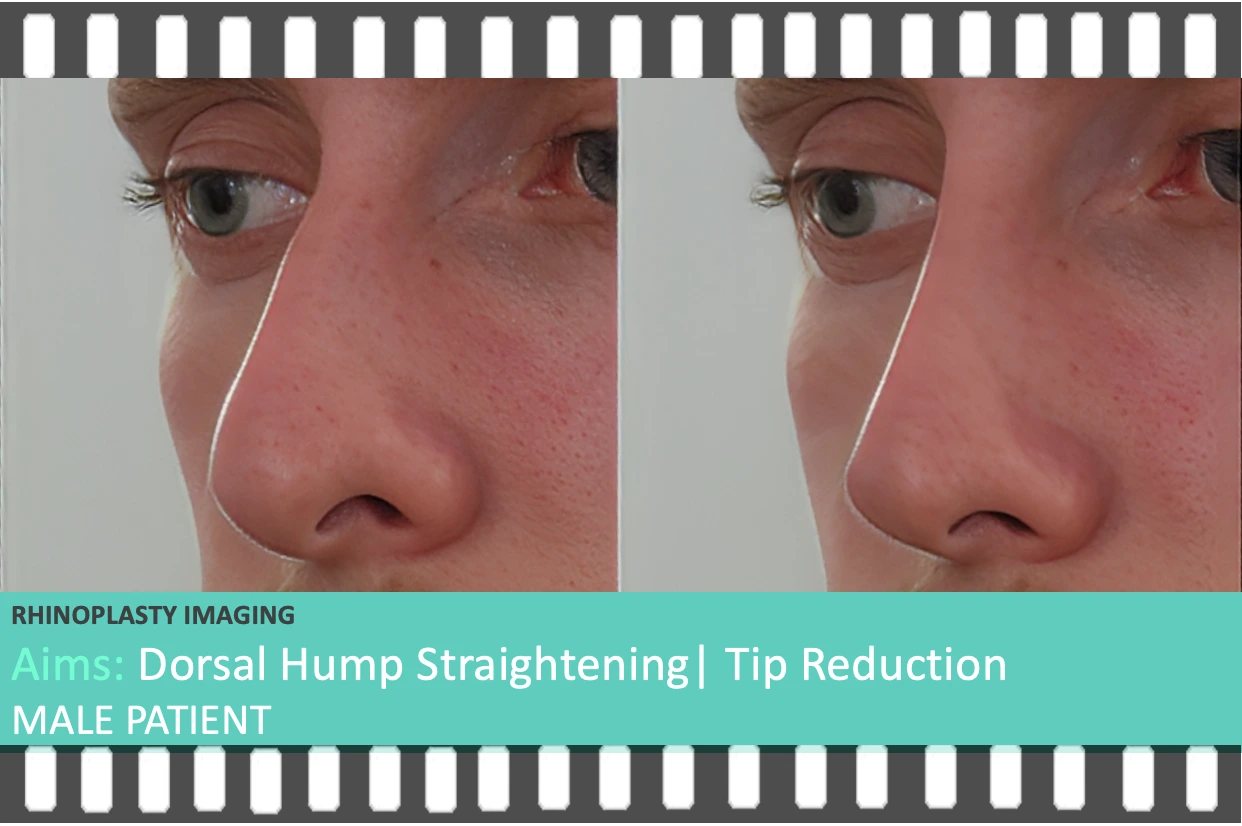
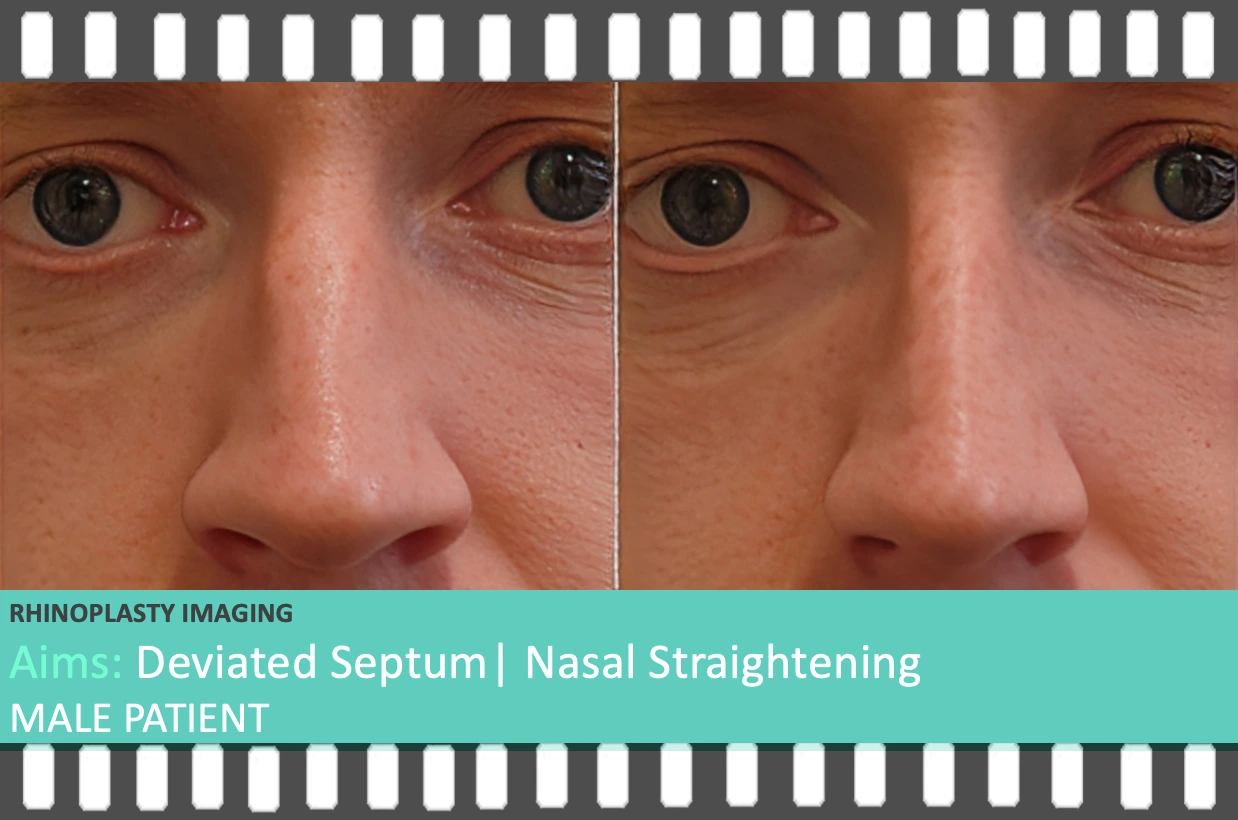
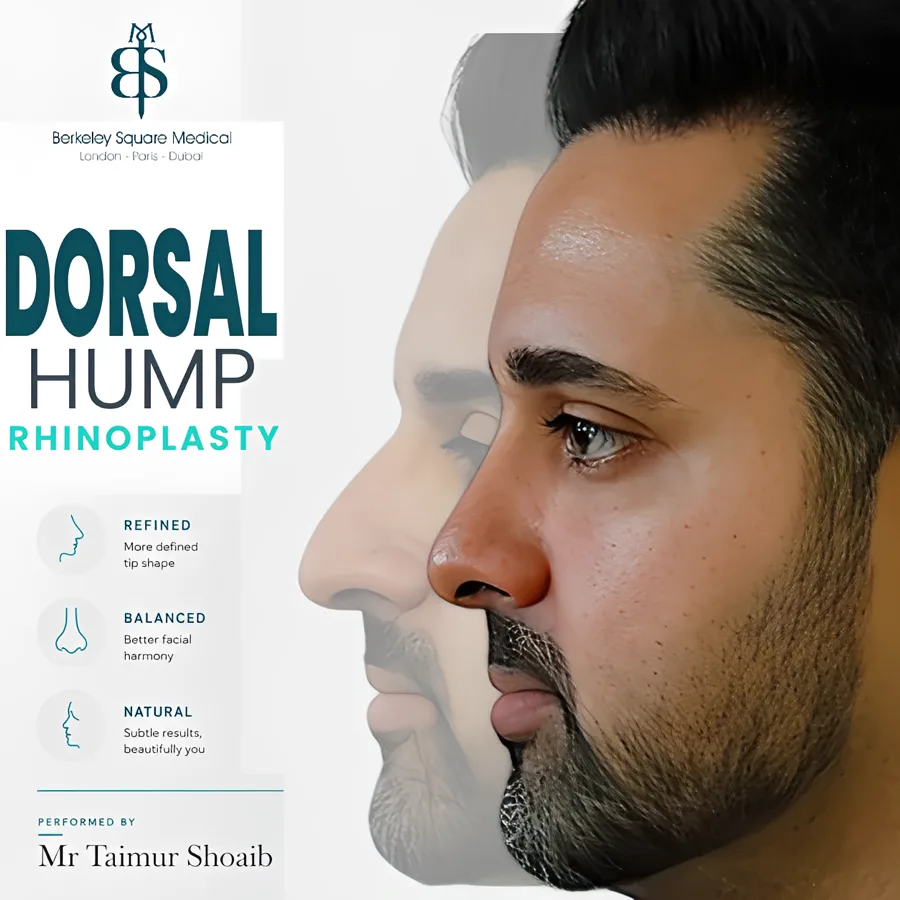
All surgery carries risk. Rhinoplasty risks include swelling, bruising, bleeding, infection, numbness, changes to breathing and, uncommonly, a result that needs revision. Before and after photographs and any imaging show individual patients; results vary from person to person and cannot be guaranteed. Cosmetic surgery is a personal decision and should never be rushed: if you feel under pressure, or are concerned about your appearance in a way that affects daily life, Mr Shoaib will discuss this openly and may suggest you speak to your GP first. There is no obligation to proceed after your consultation.