
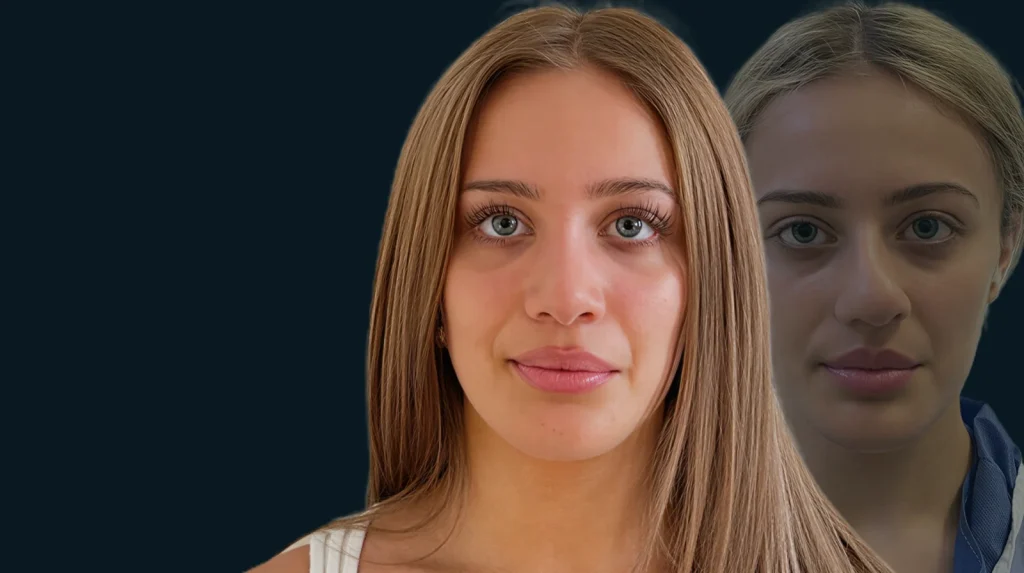
Yes, rhinoplasty is worth it for most people who have been bothered by one specific feature of their nose for a long time and who have realistic expectations. In published studies most patients are satisfied, and average satisfaction scores more than double by 12 months. It is less likely to be worth it if you feel rushed, expect it to change your life, or cannot yet accept the risks, the year-long settling time and the cost. Results vary and there are no guarantees.
Is rhinoplasty (a nose job) worth it? It is a question many people ask before surgery, and it deserves an honest answer rather than a sales pitch. The truthful version is this: for the right person, with the right reasons and realistic expectations, most people are glad they had it. In a study of 2,326 online patient reviews, 84 per cent were satisfied (Khansa 2016). For the wrong reasons, or with expectations no surgery can meet, it can be a disappointment. This page lays out both sides honestly, so you can decide for yourself. It is general information, not a recommendation for you specifically; only a consultation with a qualified surgeon can tell you what is realistic for your nose.
Who Rhinoplasty Tends to Be Worth It For, and Who Should Wait
Being honest about which group you are in is the single most useful thing you can do before deciding.
It tends to be worth it if you:
- Have one specific thing that has bothered you for years (a bump, a drooping tip, a wide bridge, or how your profile looks in photos), rather than a vague dislike.
- Want the change for yourself, not to please a partner, parent or trend.
- Understand the recovery, the cost and that the result takes months to settle.
- Also have a breathing problem caused by the structure of your nose, which your surgeon may be able to treat in the same operation after assessing it.
It is worth waiting, or reconsidering, if you:
- Feel rushed, pressured, or are deciding in a low moment.
- Expect surgery to change your life, relationships or how others treat you.
- Cannot comfortably afford the surgery and the possibility of a revision later.
Should I Get Rhinoplasty? A Quick Self-Check Quiz
Answer these honestly. The more you can answer yes, the more likely rhinoplasty is to feel worth it.
- Has the same feature of your nose bothered you for more than a year?
- Can you describe the change you want, for example removing a bump or lifting a drooping tip?
- Is this your own decision, not one made to please someone else?
- Can you accept that the result takes about a year to settle, and that a second operation is sometimes needed?
- Can you afford it comfortably, without stretching yourself?
- Are you hoping for a nose in better balance with your face, rather than a different life?
If you answered no to any of these, it may be worth pausing, and talking it through with someone you trust, your GP or at a consultation, before you decide.
Alternatives First
Surgery is not the only route. Non-surgical rhinoplasty with filler, £650 per 1ml syringe, can disguise a small bump or lift a tip without an operation, but it cannot make a nose smaller, the result is temporary, and it carries its own risks, including rare but serious ones, so it needs the same careful assessment as surgery. Waiting is also a valid choice, especially if the feeling is recent or comes and goes. And if worry about your appearance is affecting your day-to-day life, talking to your GP is a sensible first step.
Do Most People Regret Rhinoplasty? The Regret Rate, Honestly
No, most people do not regret it. A 2018 systematic review and meta-analysis in the journal Plastic and Reconstructive Surgery, which pooled eight observational studies, found that on average patient satisfaction and quality of life improved after rhinoplasty, with the largest gains in younger patients. The studies varied widely, so this is an average across studies, not a promise for any individual.
Two honest caveats matter. First, unhappy voices are louder: someone delighted with a natural result rarely posts about it, while a poor outcome is shared widely, which skews the impression online.
Second, revision is real. In one large study, of more than 175,000 patients who had septorhinoplasty in three US states between 2005 and 2009, followed for at least three years, about 3 in 100 had a second operation after a first operation, and about 8 in 100 when the operation was done for cosmetic reasons (Spataro 2016); other studies often quote figures of around 9 per cent.
Neither point should be hidden. In a published audit of his own practice (800 patients, 2015 to 2022), Mr Shoaib's surgical revision rate was 3.5 per cent, with some minor irregularities treated with filler instead, so this figure counts operations only. It is one surgeon's series, with different definitions and follow-up, so it cannot be compared directly with the study above, and it is not a guarantee for any individual. The paper discloses that the filler used was made by Allergan, and that Mr Shoaib is a Key Opinion Leader for Allergan and has been paid for lectures on fillers.
A realistic view is that satisfaction is high but not universal, and that the honesty of your surgeon about your particular nose is the best protection against regret.
When Will You Know If It Was Worth It?
Not straight away. A nose changes a great deal as it heals, so it is fairer to judge the result in stages. Our guide to rhinoplasty healing stages covers recovery week by week.
| When | What to expect |
|---|---|
| Weeks 1 to 2 | A splint for about a week, removed at your 7-day nursing review. Bruising and swelling are at their most visible, so this is far too early to judge. |
| About 3 months | Much of the swelling has settled, and you see Mr Shoaib at your 12-week surgeon review. |
| About 6 months | The shape is much closer to the final result, though the tip is still refining. |
| About 12 months | The tip has largely settled, though it can take longer for some people, for example with thicker skin or after revision surgery. This is usually the result to judge. |
The research follows the same pattern. In a 2024 review of 17 studies, average patient satisfaction scores (the Rhinoplasty Outcome Evaluation, out of 100) rose from 34 before surgery to 70 within 6 months and 80 at 12 months (Rot 2024). Many worried posts online are written in the first few months, before the nose has settled. If anything concerns you at any stage, raise it with us rather than waiting.
Rhinoplasty Pros and Cons: The Real Trade-Offs
An honest decision means holding the genuine gains and the genuine costs side by side.
| Potential gains | Genuine costs and risks |
|---|---|
| A nose in better balance with your face | A significant financial cost, and possibly more if you need revision |
| A lift in confidence and quality of life for many | Real recovery: swelling, bruising, and a splint in the early weeks |
| Sometimes better breathing, if a structural breathing problem is treated too | The final result takes up to a year, sometimes longer, to settle |
| A change you have wanted for a long time | Surgical risk, and no guarantee of the exact result you pictured |
If the left column genuinely outweighs the right for you, and your surgeon agrees the goal is realistic, that is the honest signal it may be worth it.
Does the Cost Change Whether It Is Worth It?
At Berkeley Square Medical, rhinoplasty is a fixed, all-inclusive fee of £8,950 (tip rhinoplasty £7,950, revision £9,950), agreed before surgery. The fee covers your surgeon, anaesthetist and hospital, your pre-operative tests, your medication and garments, and your reviews and aftercare for 12 months, and your £100 consultation fee is credited towards it. The rhinoplasty and revision fees also include any cartilage grafts (including ear or rib grafts). If a tip rhinoplasty turns out to need a cartilage graft, the operation becomes a rhinoplasty at the set fee of £8,950, which includes any grafts, and you will know this before surgery. If a revision is ever needed within your aftercare policy, there is no surgeon's fee, as this is covered in the cost of your original surgery. Cost is still a real part of the decision, and our guide sets out what the rhinoplasty fee includes in full. Budgeting comfortably is part of deciding whether it is worth it for you.
Is Rhinoplasty Worth It for Men?
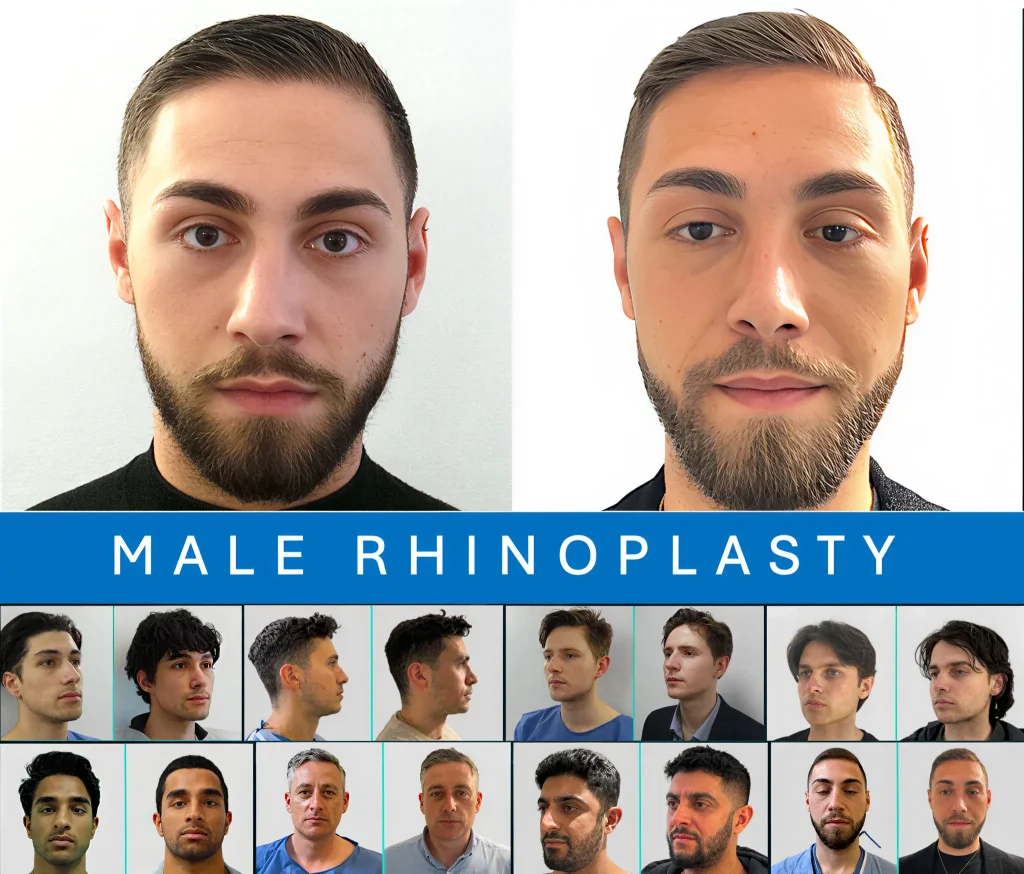
It can be, but the evidence suggests men need an especially clear goal. In a study of 2,326 online patient reviews, 56 per cent of men were satisfied compared with 88 per cent of women, and dissatisfied men were often vaguer about what was wrong; men's commonest complaints were a remaining bump, a tip that was not lifted enough, or a nose made too small (Khansa 2016). Online reviews are not a clinical trial, but they suggest a useful lesson: men who can say exactly what they want changed, usually a natural, masculine refinement such as softening a dorsal bump while keeping a strong profile, may be better placed to be happy.
Our guide to rhinoplasty for men covers the aesthetic and practical points specific to male patients.
Realistic Expectations: Key to Being Happy With the Result
One of the most important things in feeling it was worth it is realistic expectations. Surgery reshapes the nose you have; it does not give you someone else's nose or a flawless one. A good consultation spends real time on this, and computer imaging during a consultation, a surgeon-approved simulation that is a planning guide rather than a guarantee, can help you and your surgeon agree on a realistic goal before anyone commits to surgery. Going in clear-eyed is the best insurance against regret.
Your Wellbeing: Body Image and Time to Decide
Sometimes the problem is not the nose. If you spend a lot of time each day worrying about your appearance, checking mirrors or avoiding photos, or you dislike a different feature each time, surgery is unlikely to fix how you feel. Studies estimate that body dysmorphic disorder (BDD) may affect around 1 in 5 people seeking rhinoplasty, compared with about 1 in 50 adults generally (Veale 2016). Mr Shoaib screens every patient for body-image concerns at consultation. If any of this sounds familiar, speaking to your GP first is a sensible step, and the NHS has clear information on body dysmorphic disorder. Our guide to depression after rhinoplasty covers feeling low during recovery. There are always at least 14 days between your first consultation and surgery, so you have time to think it over without pressure.
Is Rhinoplasty Dangerous? The Risks in Brief
Rhinoplasty is a common, well-established operation, but like all surgery it carries risks, including bleeding, infection, breathing changes, and the chance of a result you are not happy with. Serious complications are uncommon, though dissatisfaction with the result is less rare, as the revision figures above reflect. All of these are real and worth understanding fully before you decide. Our honest guide to the side effects and risks of rhinoplasty sets them out. Weighing the risks against the benefits, with your surgeon, is exactly what "is it worth it" comes down to.
So, Is It Worth It for You?
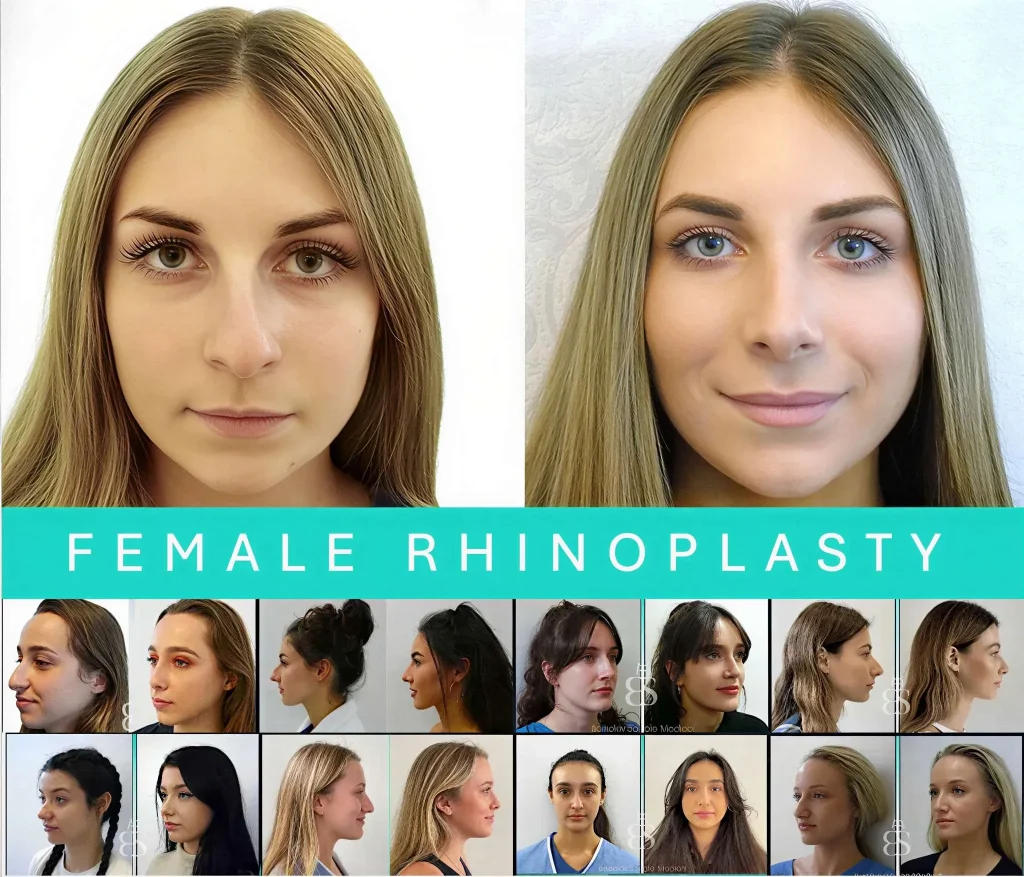
Only you can answer that, and honestly the best way to find out is not another article but a frank consultation with a surgeon who will tell you honestly what is realistic for your nose. You can also look at genuine results to calibrate your expectations in our rhinoplasty before and after gallery. If you are seriously weighing it up, an honest conversation is the next step.
A consultation is the best place to decide. Imaging can show a simulation of a realistic change for your nose, as a planning guide rather than a guarantee of your result, and there is no obligation to go ahead.
Specialised Rhinoplasty For Men
Explore our specialist procedures. Tap any card to read more.
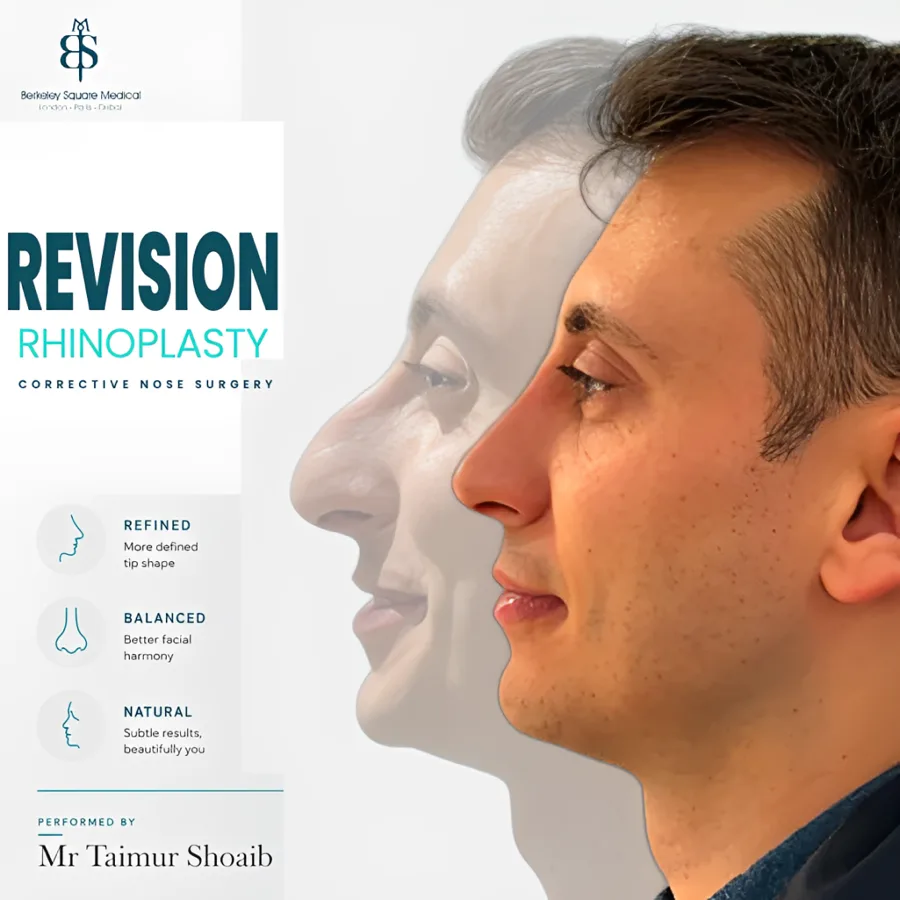 Revision RhinoplastyCorrecting or improving a previous rhinoplasty.Read more
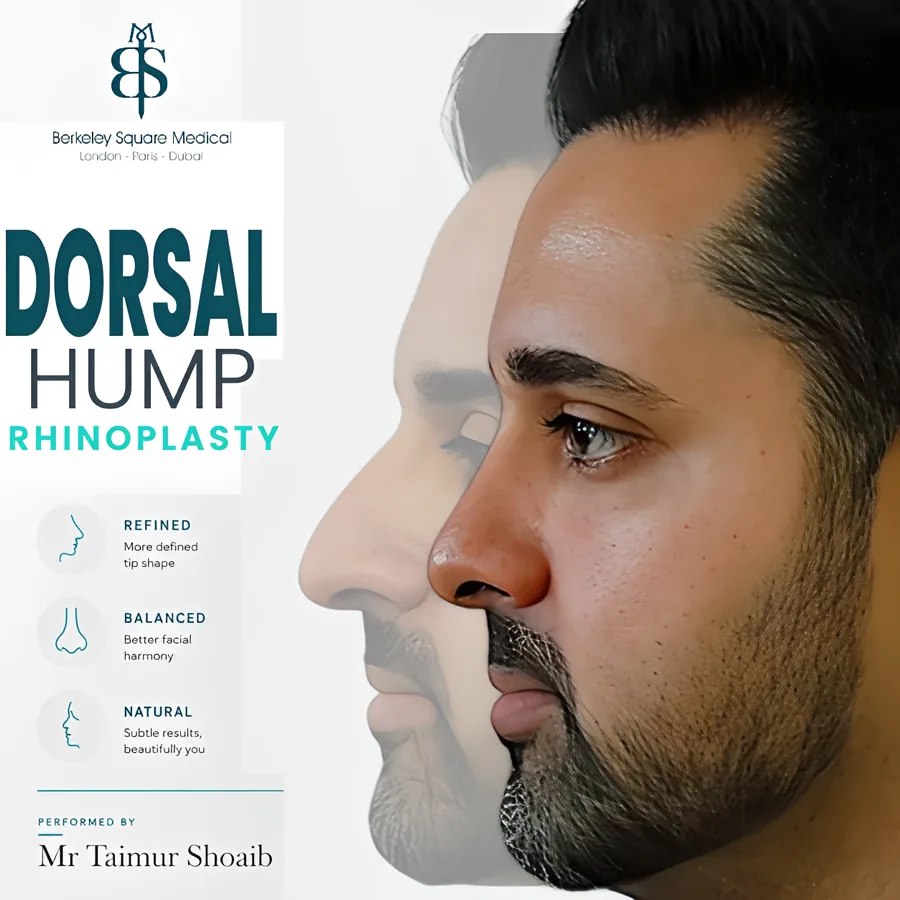 Dorsal Hump RhinoplastyRemoving a bump on the bridge for a straight profile.Read more
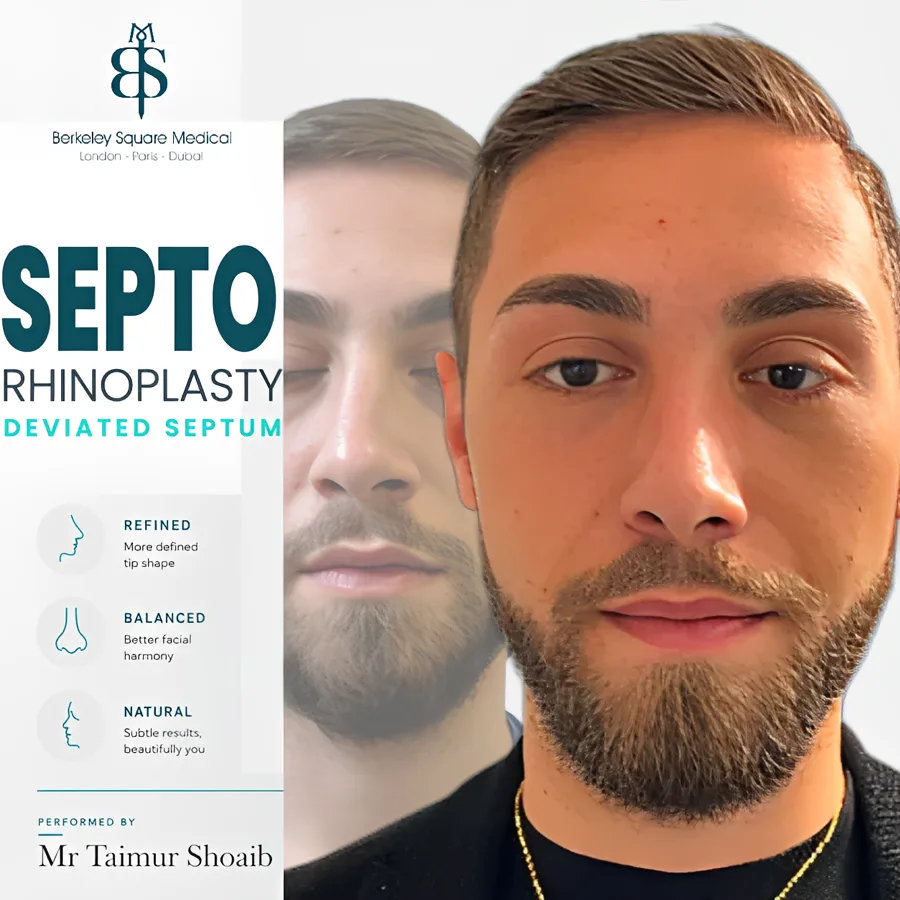 SeptorhinoplastyStraightening the nose and improving breathing.Read more
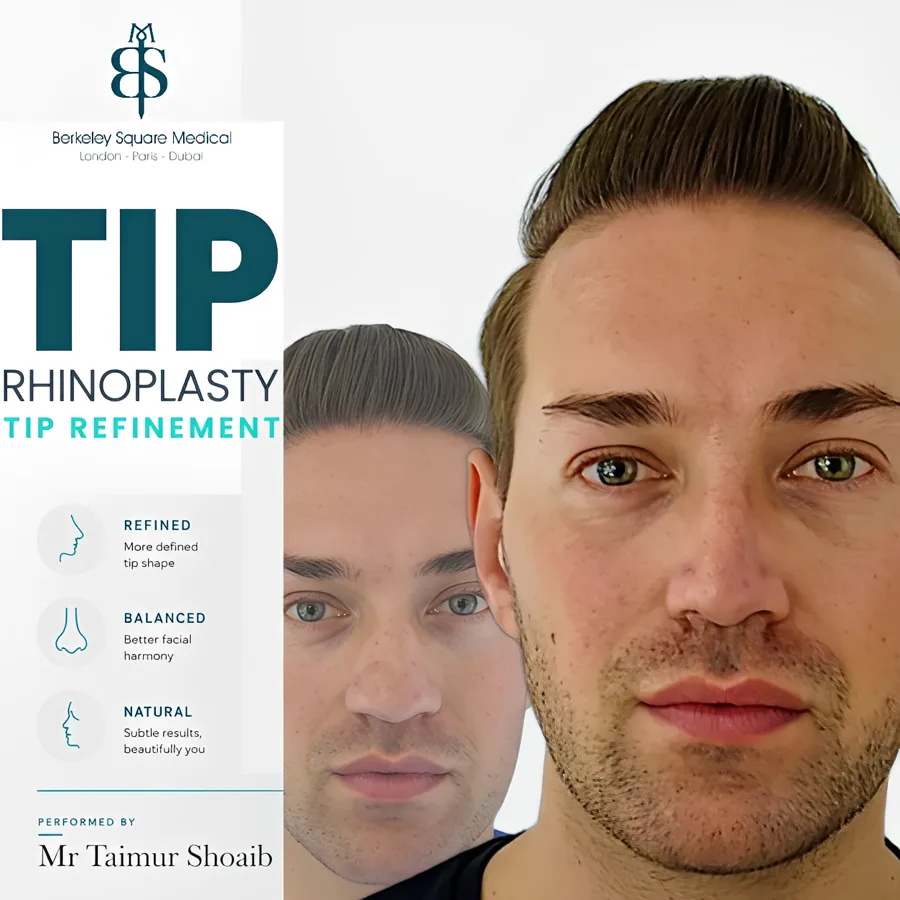 Tip RhinoplastyRefining a bulbous, drooping or asymmetrical tip.Read more
Specialised Rhinoplasty For Females
Explore our specialist procedures. Tap any card to read more.
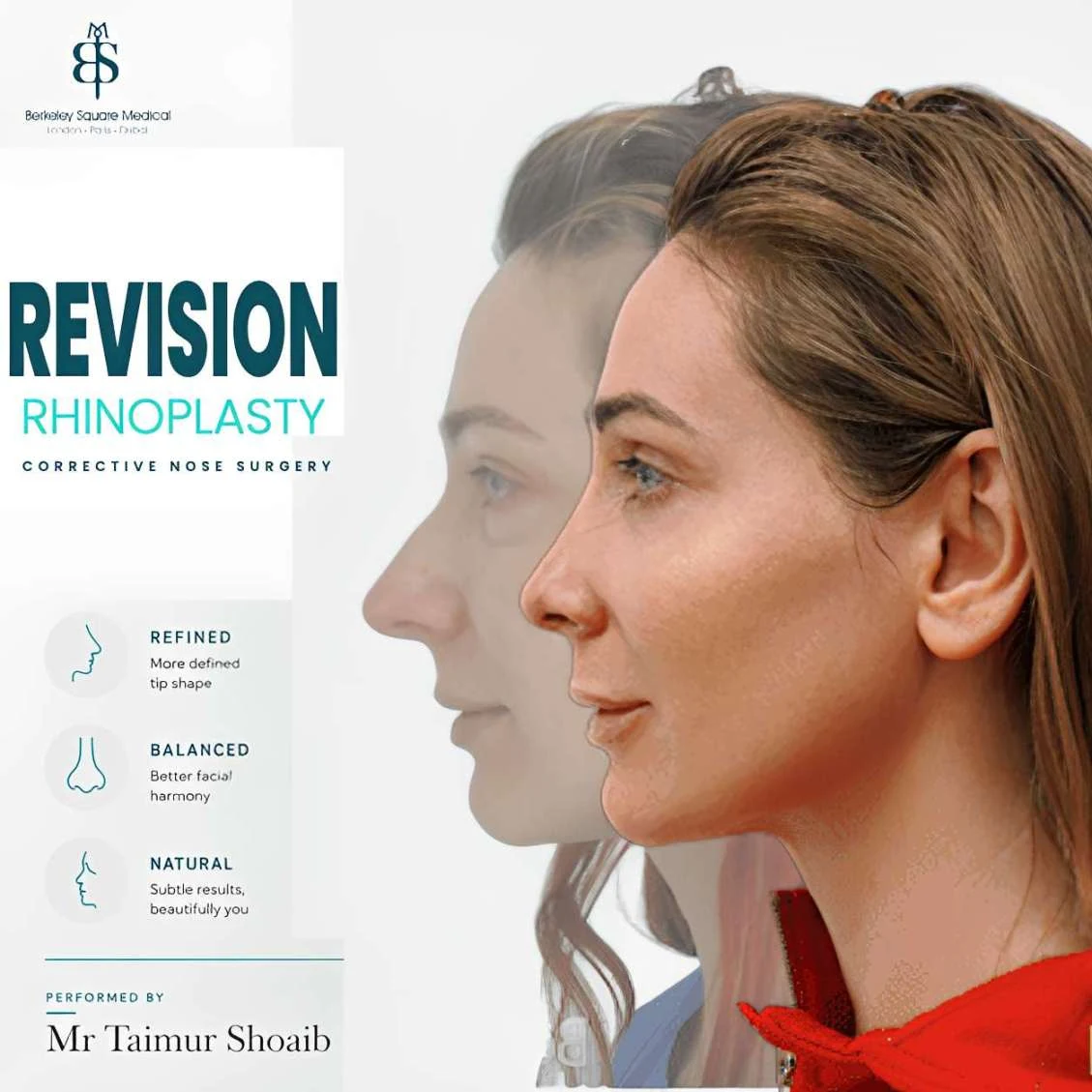 Revision RhinoplastyCorrecting or improving a previous rhinoplasty.Read more
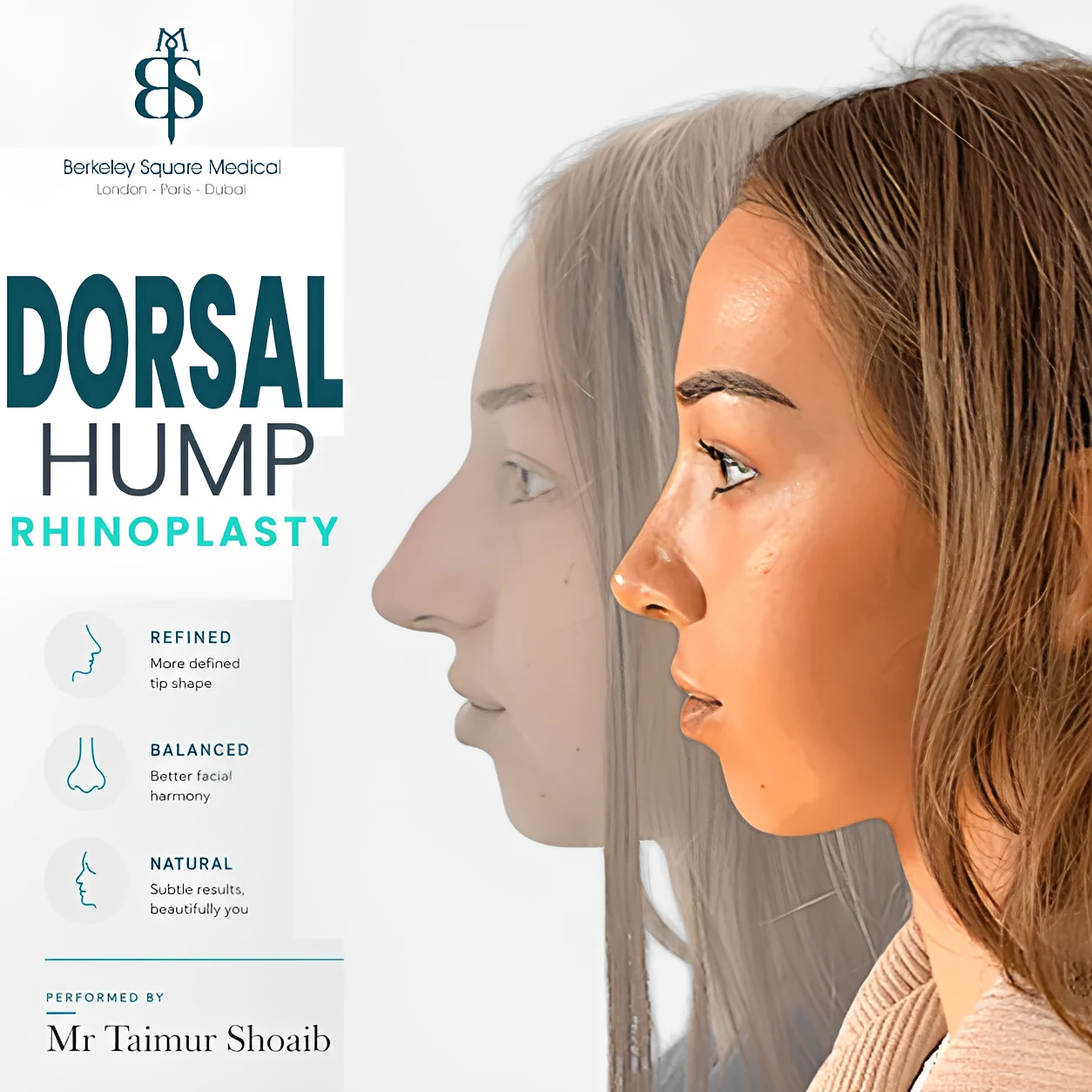 Dorsal Hump RhinoplastyRemoving a bump on the bridge for a straight profile.Read more
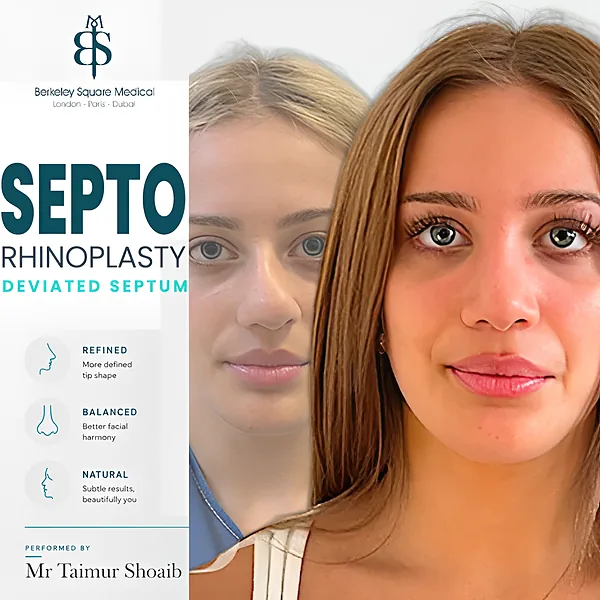 SeptorhinoplastyStraightening the nose and improving breathing.Read more
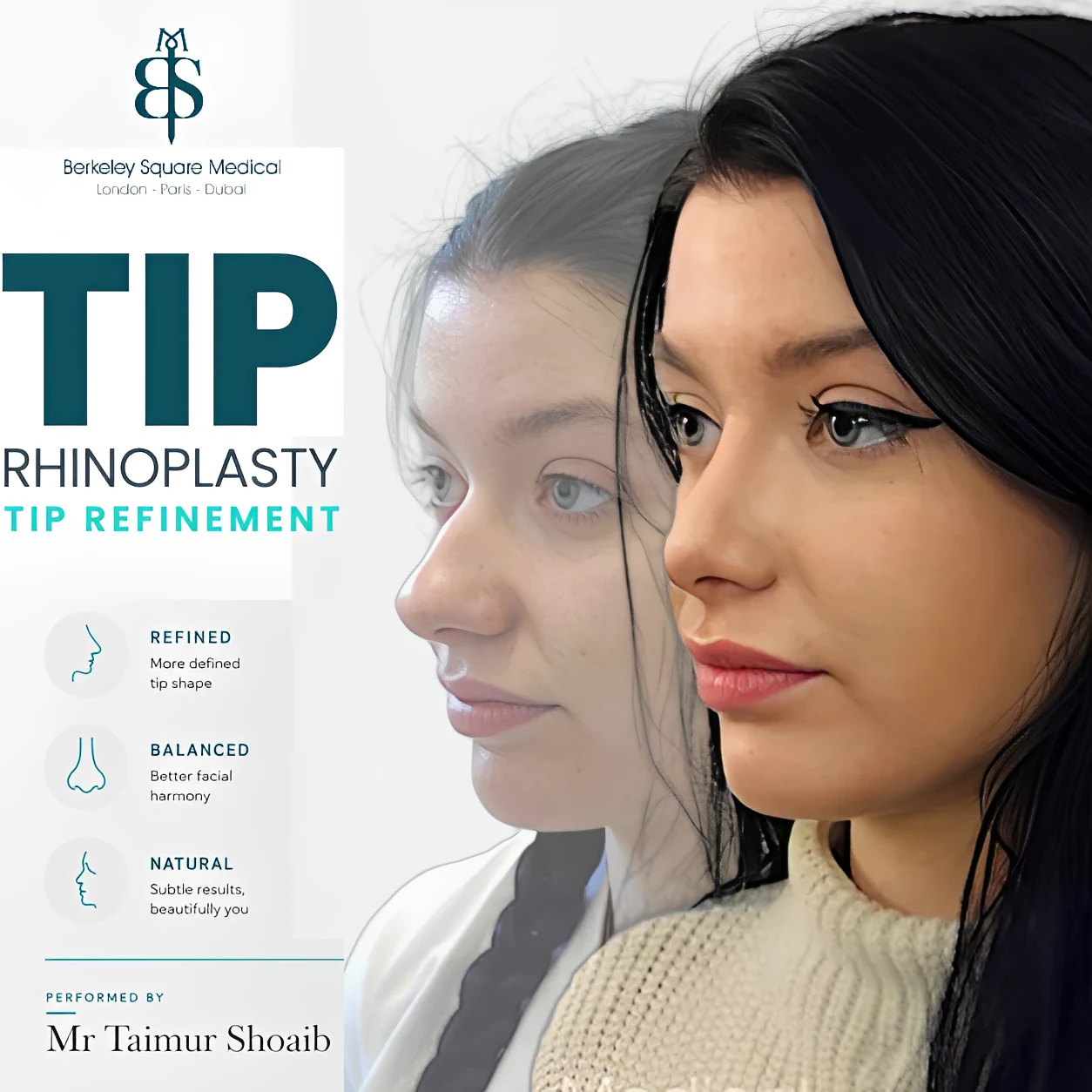 Tip RhinoplastyRefining a bulbous, drooping or asymmetrical tip.Read more
Considering Rhinoplasty in London?
If you are weighing up your options in the UK, the next step is a consultation with Mr Taimur Shoaib at 64 Harley Street. Explore rhinoplasty at Berkeley Square Medical, see our rhinoplasty fees in London, or read about septorhinoplasty in London if breathing is also a concern.
About the Author