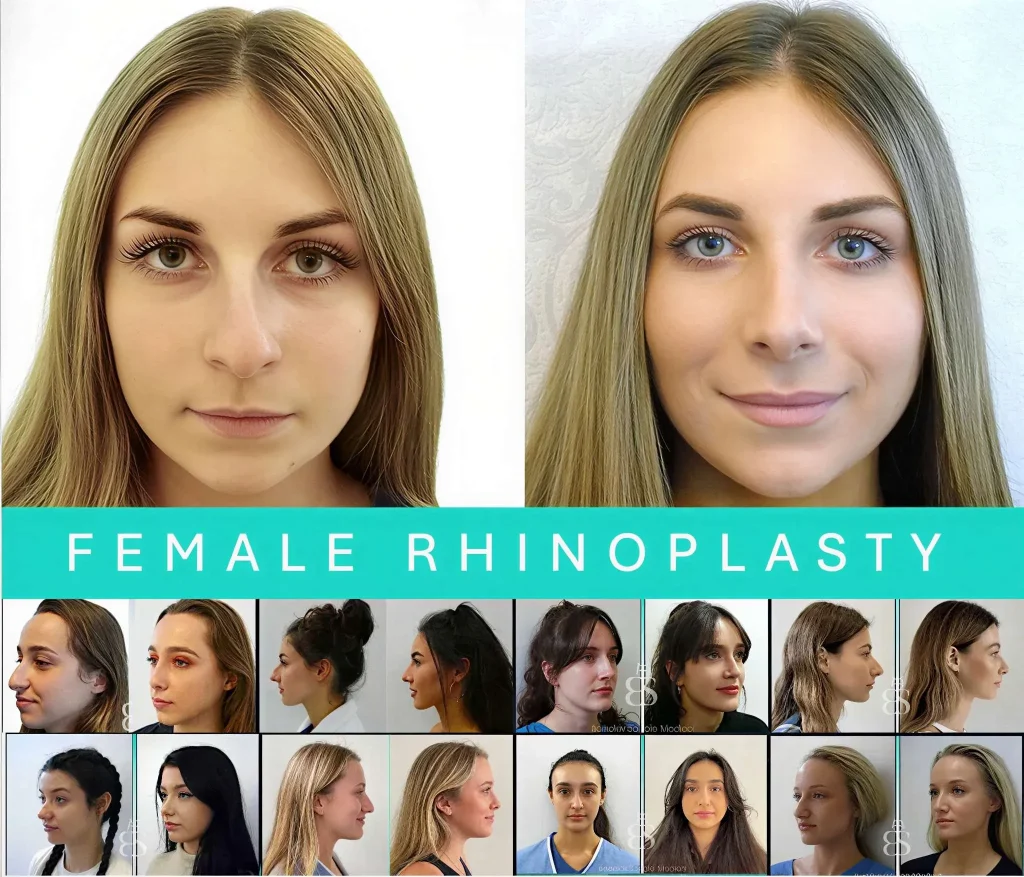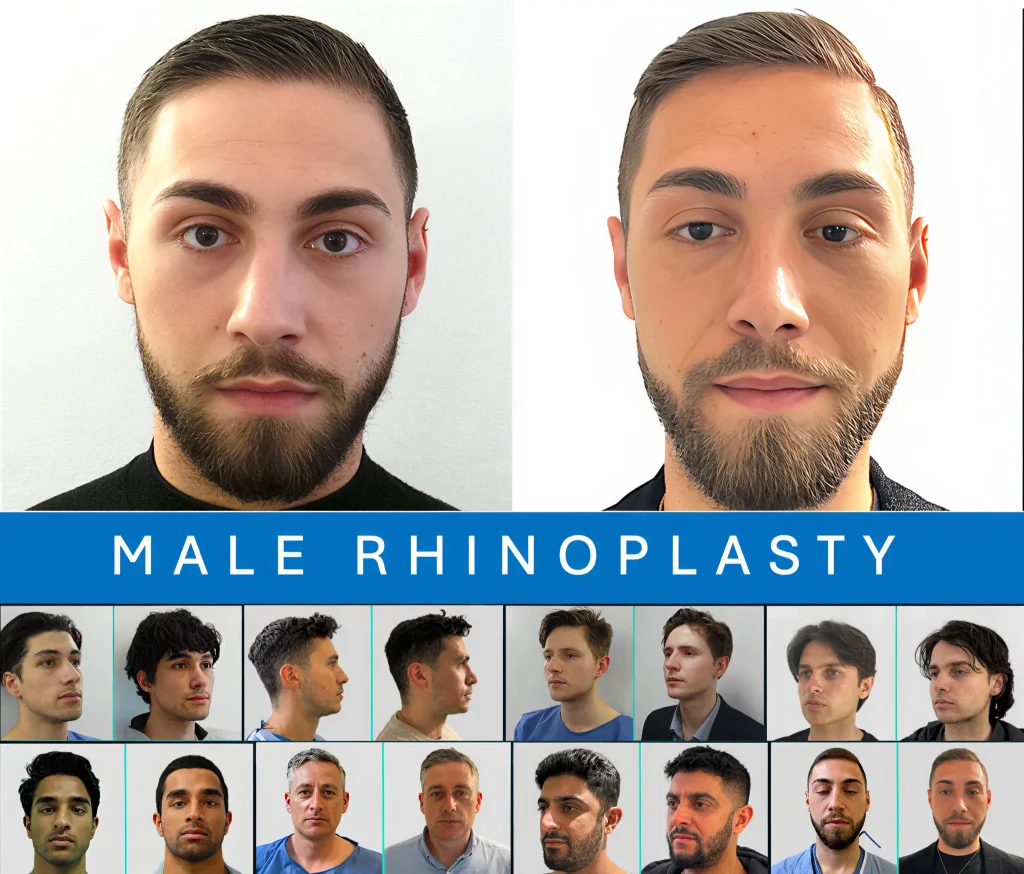

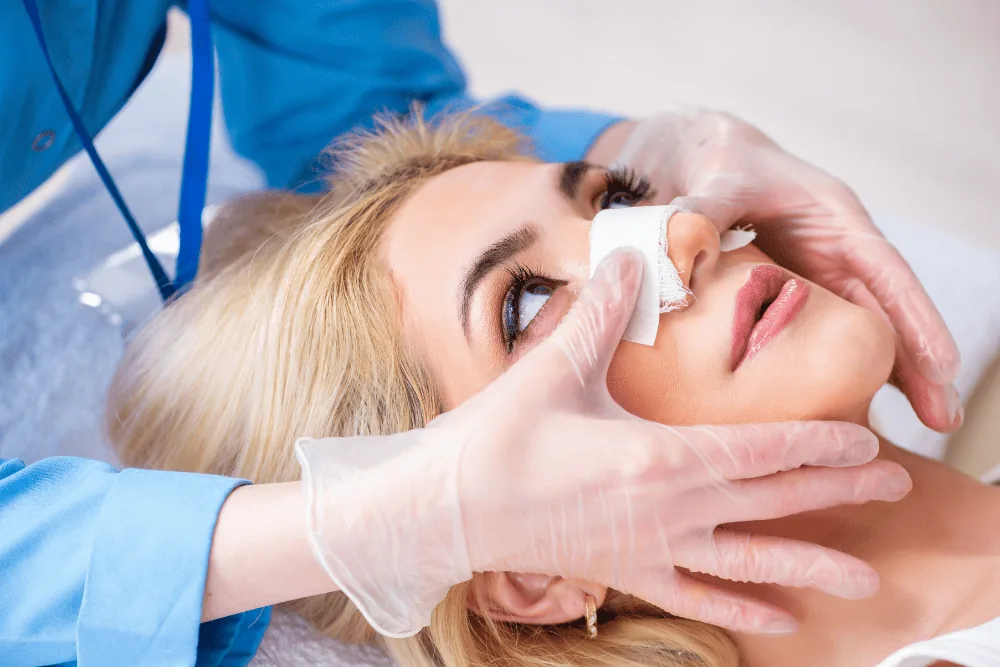
Rhinoplasty, or nose reshaping surgery (sometimes called a nose job), is one of the most popular cosmetic operations in the world. In experienced hands it can refine facial balance, improve breathing, and correct problems caused by injury or genetics.
Like any operation, though, rhinoplasty carries side effects and, less often, genuine risks. This page is written to be honest about both. It covers the everyday side effects you should expect, the rarer complications that matter, and the things patients tell us they wish they had been warned about, from numbness and changes in smell to the emotional dip in the early weeks. Where we give numbers, we cite the source, because on a subject like safety you deserve evidence rather than reassurance.
A word from the surgeon. Almost every side effect on this page is temporary and part of normal healing. Serious complications are uncommon. The most reliable way to keep your risk low is honest planning with an experienced surgeon, so we would always rather tell you the whole picture than a comfortable half of it.
Key Takeaways
- Rhinoplasty is generally safe in the hands of a qualified, experienced surgeon, but no surgery is risk free.
- Short-term effects such as swelling, bruising, numbness and a blocked nose are common, expected and temporary.
- The tip settles last. Most swelling clears within three months, but the tip can take twelve to eighteen months to fully refine, especially in thicker skin.
- Serious complications are uncommon. Large published series report an overall complication rate of around 8 percent, most of it minor, and a revision rate of roughly 5 to 15 percent.
- Choosing the right surgeon is one of the biggest factors in a safe result, more than any technique or facility on its own.
Common Short-Term Side Effects (The First Few Weeks)
These appear in the first days after surgery and settle over the following weeks. They are part of normal healing and should not be confused with complications.
1. Swelling and Bruising
Swelling and bruising around the eyes and nose are the most common effects. Peak swelling is usually in the first 72 hours and eases noticeably after 7 to 10 days. Cold compresses and keeping your head elevated help. For a stage-by-stage guide, see our swelling after rhinoplasty timeline, and read how to minimise bruising.
2. A Blocked Nose and Mild Discomfort
Most patients describe pressure and congestion rather than sharp pain, and simple pain relief controls it well. Internal swelling and splints mean your nose can feel completely blocked for one to two weeks. It is temporary, but it surprises people who expected to breathe freely straight away.
3. Minor Bleeding, a Runny Nose and Drainage
A little bloody ooze and a persistently runny nose for a few weeks are normal as the lining heals. Heavy or continued bleeding is not, and should prompt a call to your surgeon.
The Side Effects Patients Say No One Warned Them About
These are the effects that fill patient forums, because clinic pages often skip them. All are common and almost always temporary. Being ready for them is half the battle.
1. Numbness of the Tip, Lip and Front Teeth
Tiny sensory nerves are stretched during surgery, so the tip of the nose, the upper lip and sometimes the front upper teeth can feel numb or wooden. This is close to universal at first. Most sensation returns within three to six months, and the very tip can stay slightly less sensitive for up to a year. Permanent numbness is possible but rare.
2. Changes to Smell and Taste
Many patients notice their sense of smell dulls after surgery, and because flavour is mostly smell, food can taste flat for a while. The usual cause is internal swelling blocking air from reaching the smell receptors, not nerve damage. In a prospective study, most patients moved from marked early smell loss to milder, improving symptoms by about six weeks, with the great majority back to their normal level by around six months. Lasting loss of smell is very rare. Where breathing surgery is combined, smell can actually improve.
3. The Tip Stays Swollen the Longest
The tip is dense tissue under thick skin with slow lymphatic drainage, so it clears fluid last. One side often looks puffier than the other for months, partly from how you sleep. Typically most swelling is gone by three months, and the large majority has resolved by a year, with the final refinement in thick-skinned patients continuing up to eighteen months. See our full swelling timeline, stage by stage, for what to expect week by week. Asymmetry that is still obvious at around twelve months is worth reviewing with your surgeon.
4. The Emotional Dip and the "Ugly Duckling" Phase
This one is rarely discussed and matters. In the first one to three weeks you may look your worst, swollen and bruised, before the nose starts to refine. A low mood in this window is common. A systematic review found negative psychological responses in roughly half of patients at some point, and depressive symptoms in around a third within the first six months, with mood usually lifting as swelling settles and the result appears. If low mood or regret persists well beyond the early weeks, please tell us, it deserves proper support rather than silence. We cover this further in our guide to how patients feel emotionally after rhinoplasty.
5. Dryness, Crusting and an Occasional Whistle
While the inner lining heals you may have dryness, crusting and, now and then, a faint whistle when you breathe. Early on this is usually swelling or a crust and settles. A persistent whistle, or one-sided crusting and bleeding, can point to a small hole in the septum (a septal perforation) and should be checked. These are honest exceptions, not the rule.
Longer-Term Effects and Rare Complications
Breathing Changes
Most people breathe as well or better after surgery, but occasionally reshaping can narrow the airway and make breathing harder. This is assessable and treatable. See how the nose and airway relate in our guide on rhinoplasty and breathing.
Subtle Asymmetry or Contour Irregularities
Because a nose heals as living tissue, small irregularities or slight asymmetry can appear. Many are minor and settle with time. Where they persist and bother a patient, they are the usual reason a small refinement is considered. For the full picture of what can go wrong and how it is managed, read our page on rhinoplasty complications.
Scarring
In closed rhinoplasty, incisions are inside the nose and leave no visible scar. In open rhinoplasty there is a tiny scar across the columella (the strip between the nostrils), which normally fades to near invisibility.
How Dangerous Is Rhinoplasty? The Honest Numbers
Rhinoplasty is elective surgery, and published series put the overall complication rate at around 8 percent, most of it minor, so the honest answer is low risk, not no risk. It is worth knowing the real figures rather than a slogan.
- A large published series reported an overall complication rate of about 7.9 percent, most of it minor, with a revision rate of about 9.8 percent.
- Across recent reviews, revision rates sit in the region of 5 to 15 percent, usually for aesthetic fine-tuning rather than a medical problem.
- Most complications are minor (prolonged swelling, small asymmetry, minor bleeding). Serious problems that need intervention, such as significant bleeding, serious infection or a septal issue, are uncommon.
- With a consultant anaesthetist and proper pre-operative health screening, serious anaesthetic events are very rare. Death from elective rhinoplasty is exceptionally rare, so rare that it does not appear in large published complication series, though isolated case reports exist. That is exactly why thorough health screening and a consultant anaesthetist matter.
Is Rhinoplasty Safe?
For a fit, well-screened patient, operated by an experienced surgeon in an accredited setting, rhinoplasty is considered a safe procedure that most well-selected patients are pleased with, though outcomes vary from person to person. Safety is not a fixed property of the operation, though. It is strongly influenced by three things: the health of the patient, the experience of the surgeon, and honest, realistic planning of what the surgery can and cannot achieve. Those are exactly the things a good consultation exists to check. A proper consultation also considers your psychological wellbeing, including screening for body dysmorphic disorder, and a responsible surgeon will delay or decline surgery when that is the right thing to do for you.
What Happens Ten Years After Rhinoplasty?
A well-planned result is largely stable in the long term. The nose does keep ageing with the rest of the face, so over the years the skin can lose a little elasticity and the tip may soften slightly. After older, strongly reductive surgery where a lot of bone and cartilage was removed, some patients can see collapse or pinching many years later. This is a large part of why modern rhinoplasty favours preserving and supporting structure rather than simply removing it, and it is a genuine, defensible reason to choose your technique and surgeon carefully.
How to Reduce Your Risk of Side Effects
- Choose an experienced, GMC-registered plastic surgeon who performs rhinoplasty regularly. This is one of the biggest safety factors.
- Be honest at your consultation about your health, medication, smoking and your expectations. Realistic planning prevents most disappointment.
- Follow your pre-operative instructions, including stopping smoking and blood-thinning medicines where advised. See how to prepare for rhinoplasty.
- Follow your aftercare, keep your head elevated, avoid strenuous activity and knocks, and protect your nose from strong sun. Our rhinoplasty healing stages guide sets out what to expect week by week.
- Attend every follow-up. Early review is how small issues are caught before they become bigger ones.
When to Contact Your Surgeon
Contact your surgeon promptly if you have heavy or ongoing bleeding, a fever, spreading redness or discharge that suggests infection, severe or worsening pain, sudden breathing difficulty, or a persistent one-sided whistle, crusting or bleeding. Expected swelling and mild discomfort are not emergencies, but you should never feel you are bothering us by asking.
Why Read This From a Rhinoplasty Surgeon
This page is reviewed by Mr Taimur Shoaib, a Consultant Plastic Surgeon on the GMC Specialist Register (GMC 3615443) who performs rhinoplasty at Berkeley Square Medical, 64 Harley Street. He has published peer-reviewed work on rhinoplasty, including a technique paper on tip control in closed rhinoplasty (European Journal of Plastic Surgery, 2026) and further peer-reviewed work relevant to revision rhinoplasty. As with all single-surgeon research, results vary between patients and settings, and no honest surgeon can promise a specific outcome. What we can promise is a candid conversation about your individual risks before you decide anything.
Talk through your own risks first. Every nose, and every patient, is different. The best way to understand your personal side effects and risks is an unhurried consultation where we assess you properly and answer your questions honestly. Learn about rhinoplasty at Berkeley Square Medical.
Frequently Asked Questions
Is rhinoplasty safe?
For a fit, well-screened patient operated by an experienced surgeon in an accredited facility, rhinoplasty is considered safe, and most well-selected patients are pleased with their result, though outcomes vary. Serious complications are uncommon, and no surgery is completely risk free.
Is rhinoplasty 100 percent safe?
No operation is 100 percent safe, and any surgeon who tells you otherwise is not being straight with you. Rhinoplasty is low risk in the right hands, with most complications being minor and temporary, but the honest position is low risk, not no risk.
What are the common side effects after rhinoplasty?
Temporary swelling, bruising around the eyes, a blocked nose, numbness of the tip and lip, and mild discomfort are the usual early effects. Most settle within one to two weeks, while residual swelling, especially at the tip, can take several months to a year to fully resolve.
Does rhinoplasty affect your sense of smell?
It can, temporarily. Internal swelling often dulls smell and therefore taste in the early weeks. Studies show most people recover within about six weeks and the great majority by around six months. Permanent loss of smell is very rare.
How long does the tip stay swollen?
The tip settles last. Most swelling is gone within three months, but subtle tip swelling and asymmetry can continue to improve for twelve to eighteen months, particularly in patients with thicker skin.
How dangerous is rhinoplasty?
Published series report an overall complication rate of around 8 percent, most of it minor, and a revision rate of roughly 5 to 15 percent. Serious complications are uncommon, and serious anaesthetic events are very rare with proper screening and a consultant anaesthetist.
Can rhinoplasty cause long-term side effects?
Lasting effects are uncommon. A minority of patients have prolonged numbness, slight asymmetry, or breathing changes, and after older strongly reductive surgery some structural change can appear years later. Choosing an experienced surgeon and attending follow-ups reduces these risks.
What happens ten years after rhinoplasty?
Most results are largely stable at ten years. The nose continues to age with the face, so the tip may soften a little, and strongly reductive noses can occasionally show collapse or pinching over time. Structure-preserving technique helps keep results durable.
When should I contact my surgeon after rhinoplasty?
Contact your surgeon promptly for heavy or ongoing bleeding, fever, spreading redness or discharge, severe or worsening pain, sudden breathing difficulty, or a persistent one-sided whistle or crusting. Expected swelling and mild discomfort are normal.
Considering rhinoplasty in London?
Understand your individual risks and whether surgery is right for you, honestly and without pressure, at a consultation with Mr Taimur Shoaib.
Explore rhinoplasty at Berkeley Square Medical