
If you feel low, tearful or anxious after your rhinoplasty, you are not alone and there is nothing wrong with you. Feeling down in the first weeks is so common that it has a name, the "rhinoplasty blues", and for most people it is temporary and lifts as the swelling settles and you start to feel like yourself again. This page explains why it happens, how long it usually lasts, and gentle ways to cope, and it is honest about when low mood is more than the blues and it is time to reach out for support. If you are struggling right now, please read the support box below first.
If you need to talk to someone now
You do not have to wait or cope alone. Free, confidential help is available at any hour:
- Samaritans - call 116 123 free from any phone, any time, day or night.
- Shout - text SHOUT to 85258 if you would rather not talk on the phone.
- NHS 111 - call 111 for urgent medical or mental health help and advice.
- Your GP can help with low mood that is not lifting.
- If you or someone else is in immediate danger, or you are having thoughts of harming yourself, call 999 or go to your nearest A&E.
Yes. Feeling low, tearful or anxious in the first days and weeks is very common and usually temporary. It is driven by the anaesthetic and painkillers wearing off, the swelling and bruising making your nose look worse before it looks better, the tiredness and isolation of recovery, and the anticlimax after a big event. It typically lifts as the swelling settles over the first weeks. If low mood is severe, or lasts beyond about two weeks, or you feel hopeless, please speak to your GP, and use the support numbers above.
Is depression after rhinoplasty normal?
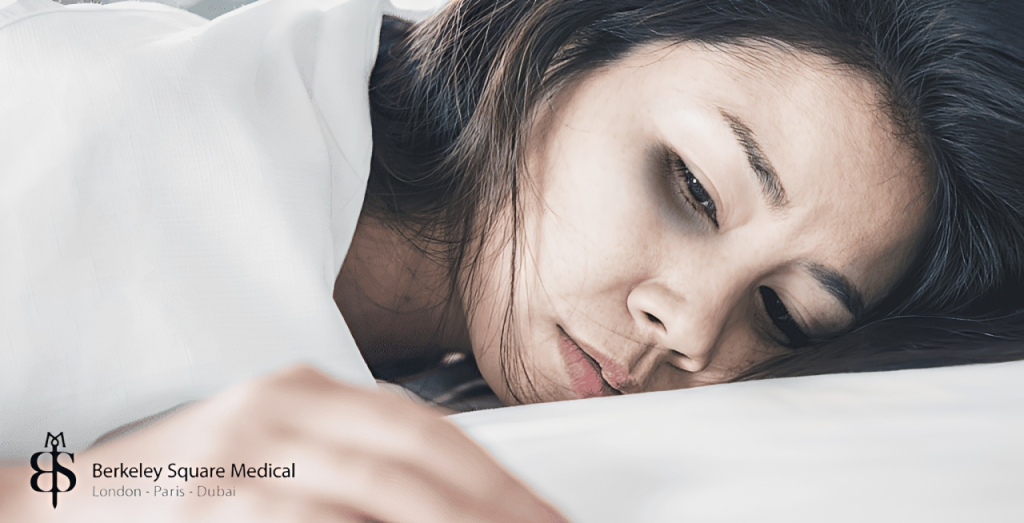
It is more normal than most people expect, and very few are warned about it. Feeling flat, weepy, regretful or anxious in the early recovery is common after many operations, and rhinoplasty has some particular reasons of its own. Knowing it is a recognised, usually passing phase, rather than a sign you made a mistake, is often a real relief in itself.
Why do I feel depressed or low after rhinoplasty?
Usually it is several things at once, not one:
- The anaesthetic and painkillers. Coming off a general anaesthetic and strong pain relief can genuinely lower your mood for a while.
- Looking worse before better. The swelling, bruising, splint and a puffy, unfamiliar nose can be a shock, and it is easy to fear the result when you cannot yet see it.
- Tiredness and disrupted sleep. Broken sleep and a blocked nose wear anyone down.
- Isolation and boredom. Resting at home, away from your usual routine and people, can feel lonely and flat.
- The anticlimax. After weeks of build-up, the quiet, uncomfortable recovery can feel like a let-down.
- Waiting for the result. Knowing the true shape takes months to emerge can feel frustrating and anxious.
None of these mean something has gone wrong. They are the ordinary emotional side of a big physical recovery.
How long does depression after rhinoplasty last?
For most people the low patch is at its worst in the first one to two weeks, when the swelling and bruising are heaviest and the nose looks least like the goal. It usually starts to lift as the splint comes off, the bruising fades and you can see the shape beginning to settle. By a few weeks in, most people feel noticeably brighter. If your low mood is not easing after about two weeks, is getting worse, or feels heavier than an ordinary dip, that is the point to reach out to your GP, rather than waiting it out alone.
Gentle ways to cope in the early weeks
- Expect the dip, and be kind to yourself. Knowing the blues are common and usually temporary takes some of their power away.
- Lean on your people. Let a friend or family member sit with you, check in, or just keep you company. Isolation makes low mood worse.
- Step away from the mirror. Constant mirror-checking and daily photos feed anxiety, because early swelling changes day to day and is not your result. Try to resist judging the nose now.
- Keep a light routine. Gentle activity, getting dressed, a little daylight and fresh air, and regular meals all steady your mood.
- Rest and sleep. Tiredness amplifies everything, so prioritise rest.
- Talk about how you feel. Saying it out loud to someone you trust, or to your GP, helps more than carrying it silently.
When it is more than the blues: reaching out for help
The rhinoplasty blues lift. Depression does not lift on its own in the same way, and it deserves proper support. Please speak to your GP, or use the numbers below, if any of the following persist beyond about two weeks, or are getting worse:
- Low mood, tearfulness or emptiness that is not easing or is getting worse.
- Feeling hopeless, or that things will not get better.
- No longer enjoying anything, or withdrawing from people.
- Not eating or sleeping, or struggling to function day to day.
If you have any thoughts of harming yourself or of ending your life, please do not wait. This needs help now. Call Samaritans on 116 123 any time, or call 999 or go to your nearest A&E if you feel unsafe. You can also text SHOUT to 85258 if you would rather not talk on the phone.
Support, any time
- Samaritans - call 116 123 free, any time, day or night.
- NHS 111 - call 111 for urgent help and advice.
- Your GP for low mood that is not lifting.
- 999 or your nearest A&E if you or someone else is in immediate danger.
Reaching out is a sign of strength, not weakness, and these feelings are treatable. You do not have to wait until things feel unbearable to ask for help.
I think I regret my rhinoplasty. What should I do?
Regret in the early weeks is extremely common and is very often the swelling and the blues talking, not your final result. At one or two weeks the nose is puffy and unformed, and it is genuinely too soon to judge it, as the true shape takes many months to emerge. Try to hold off on any conclusion for now. When the swelling has settled, if you still have specific concerns about the result, the right step is a calm, honest conversation with your surgeon, who can tell you what is still settling and what, if anything, can be done. Most people who feel low or unsure in the early weeks go on to be happy with their nose once it has settled, so try to give it time before you judge it. If your feelings about your appearance are intense, hard to control, or were difficult before surgery too, it is worth talking to your GP, who can help you find the right support.
Rhinoplasty and body image
For some people, distress about appearance runs deeper than post-surgery blues. If you find yourself preoccupied with a perceived flaw, checking or hiding it constantly, or feeling that no result will ever be enough, please be gentle with yourself and speak to your GP. This is common, it is not a failing, and there is effective, compassionate support for it. Your wellbeing matters far more than any measurement of your nose.
Related recovery guides
Much of the early low mood is tied to how the nose looks before it settles. Our honest guide to how your nose changes from one month to one year shows why the early stage looks so different from the result, and the wider picture is in our rhinoplasty healing stages guide.
Specialised Rhinoplasty For Men
Explore our specialist procedures. Tap any card to read more.
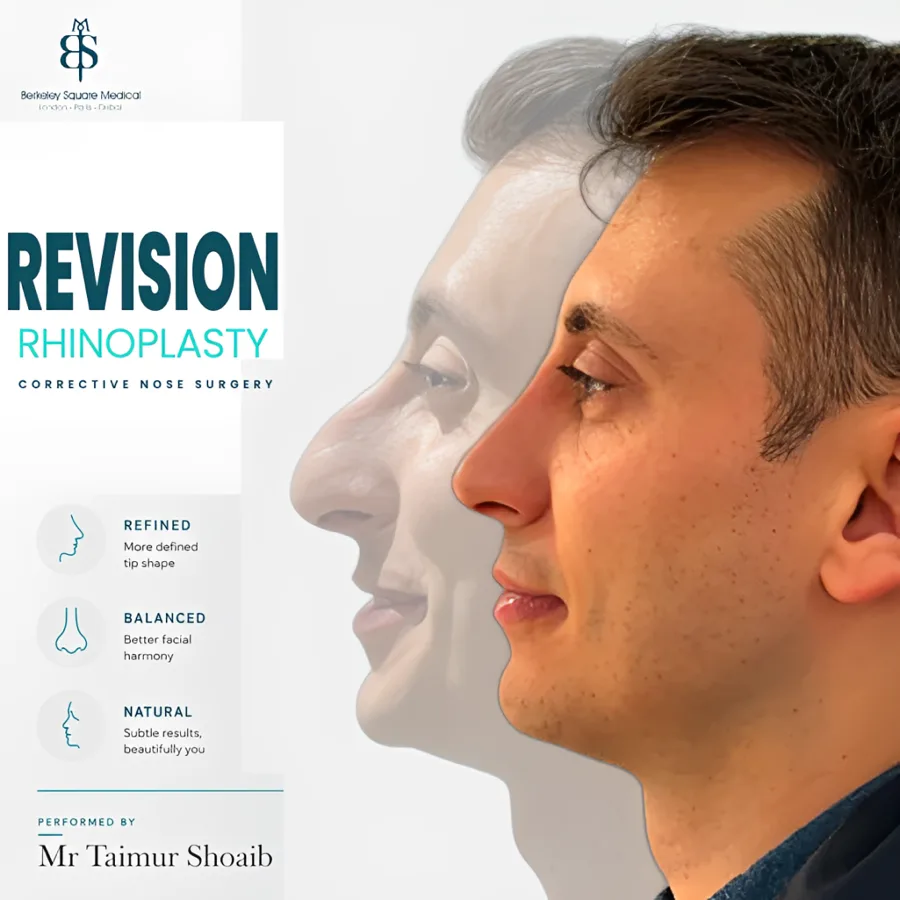 Revision RhinoplastyCorrecting or improving a previous rhinoplasty.Read more
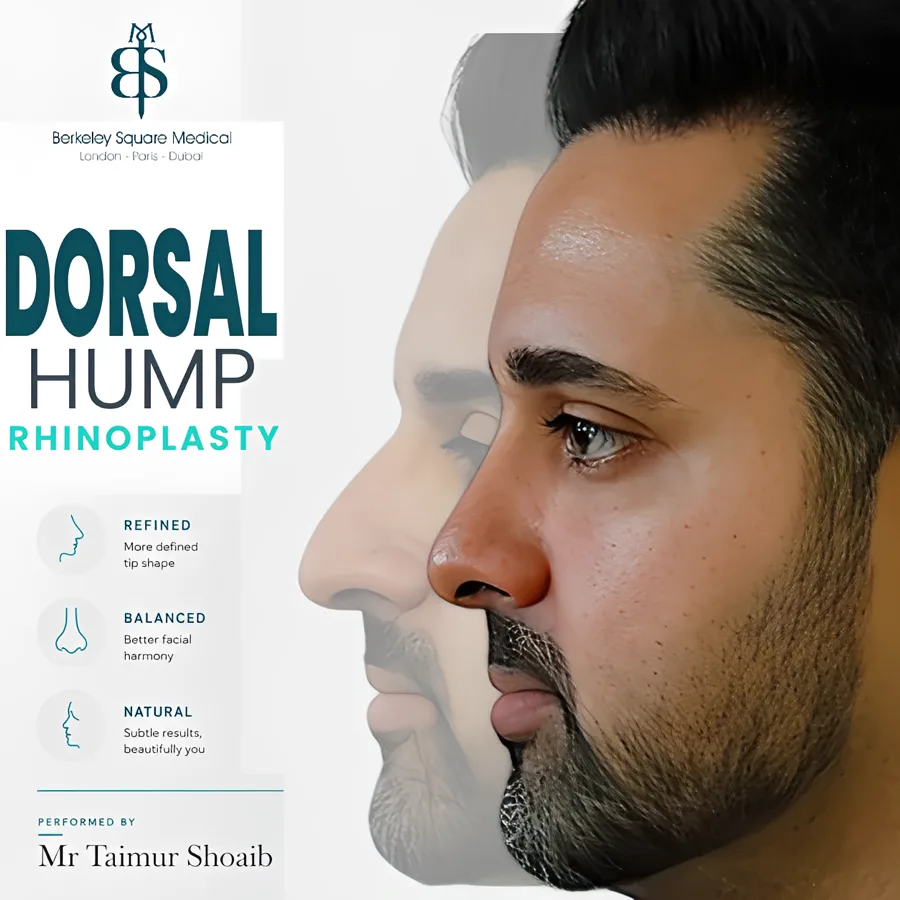 Dorsal Hump RhinoplastyRemoving a bump on the bridge for a straight profile.Read more
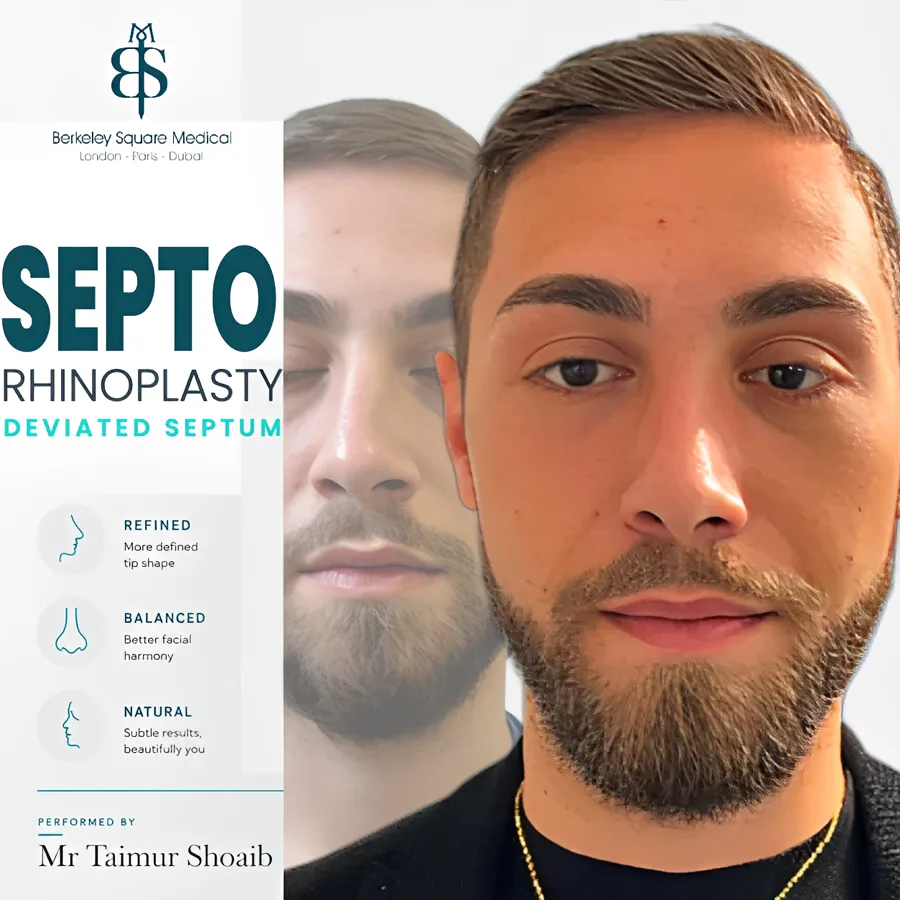 SeptorhinoplastyStraightening the nose and improving breathing.Read more
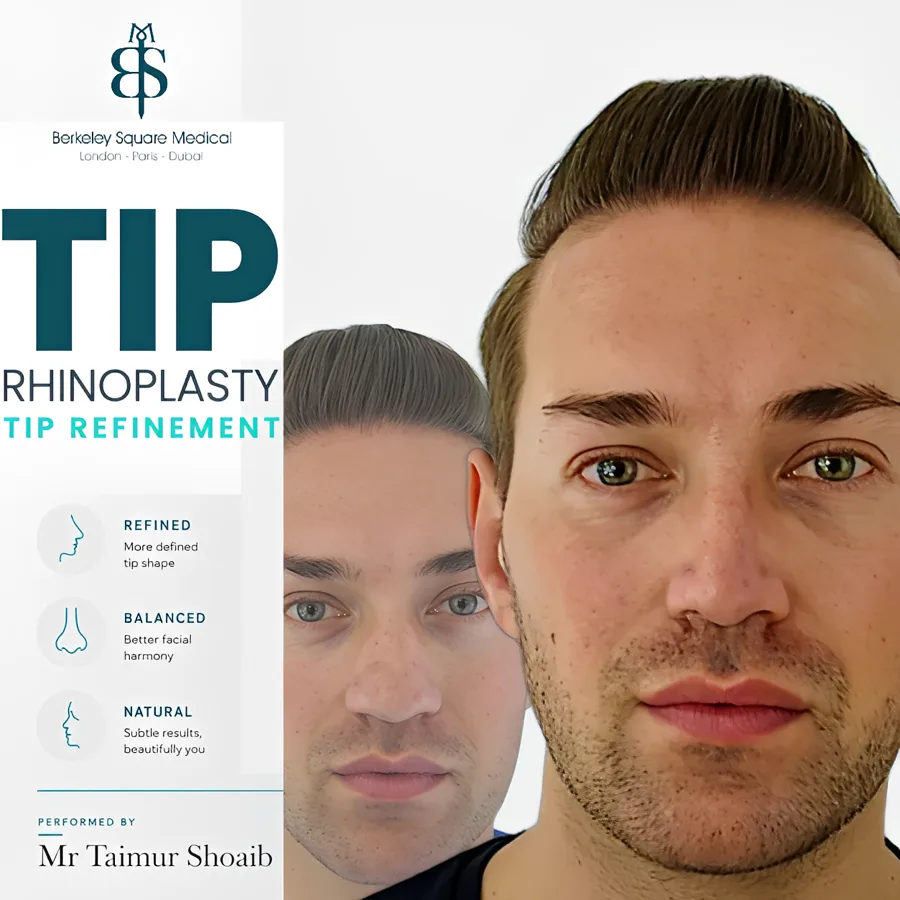 Tip RhinoplastyRefining a bulbous, drooping or asymmetrical tip.Read more
Specialised Rhinoplasty For Females
Explore our specialist procedures. Tap any card to read more.
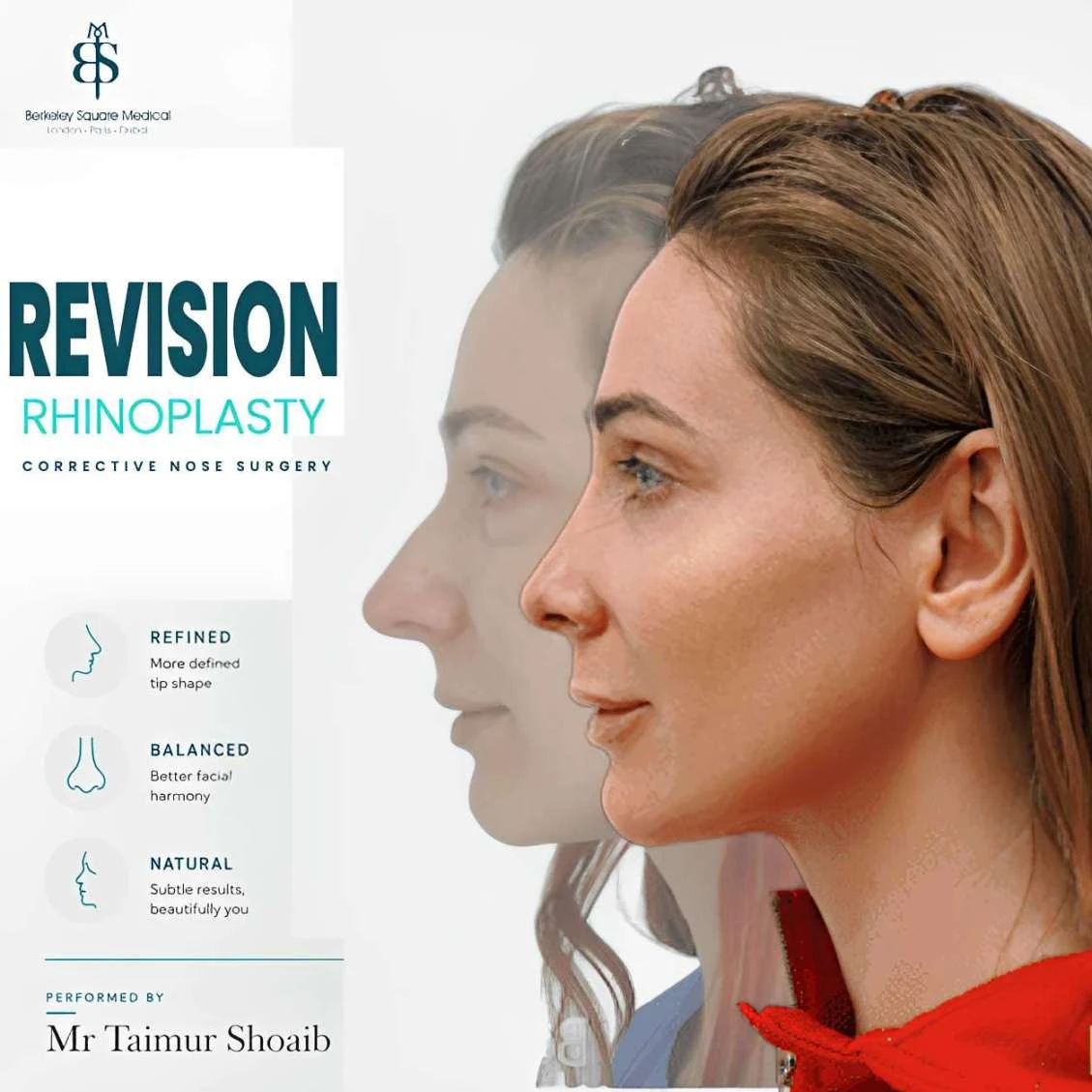 Revision RhinoplastyCorrecting or improving a previous rhinoplasty.Read more
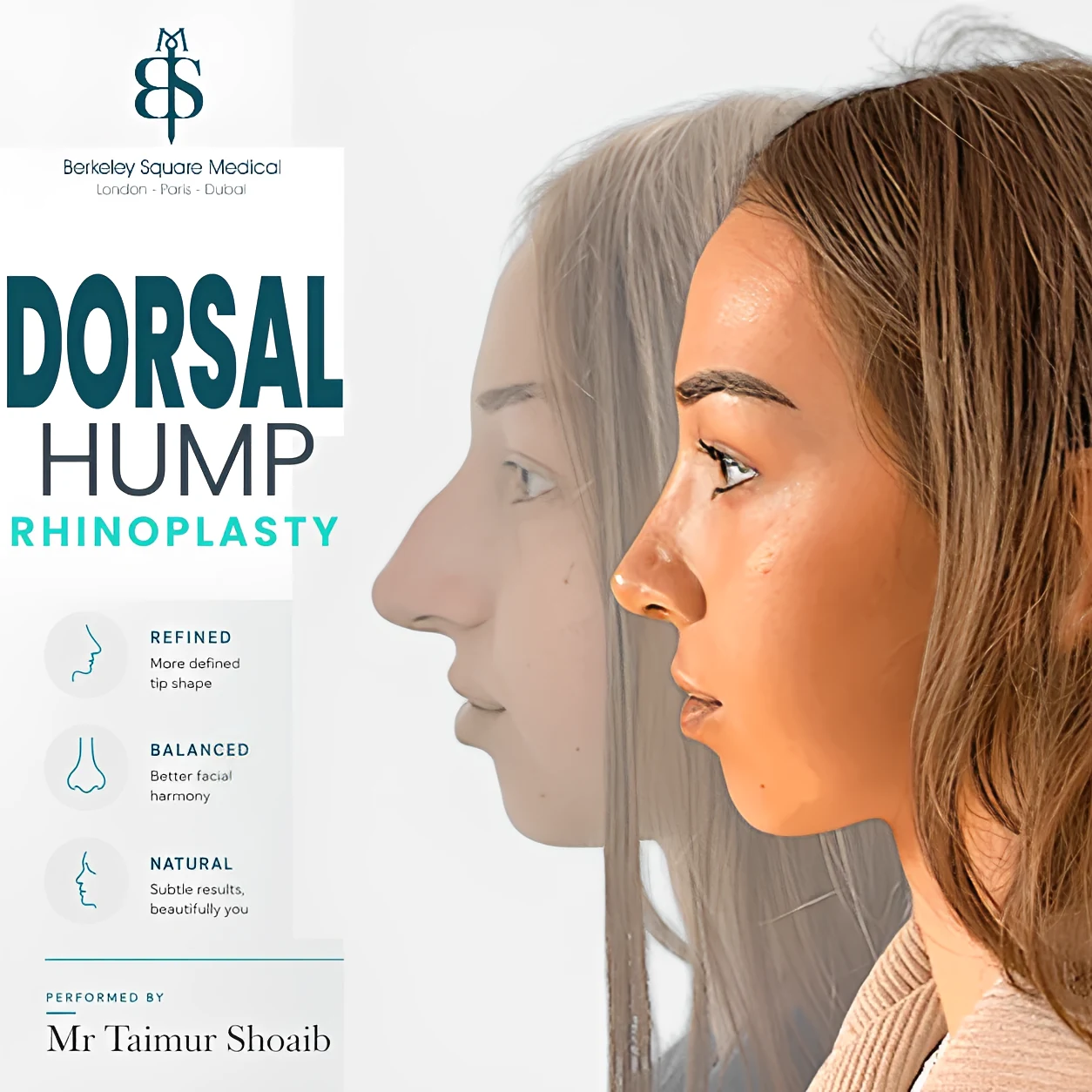 Dorsal Hump RhinoplastyRemoving a bump on the bridge for a straight profile.Read more
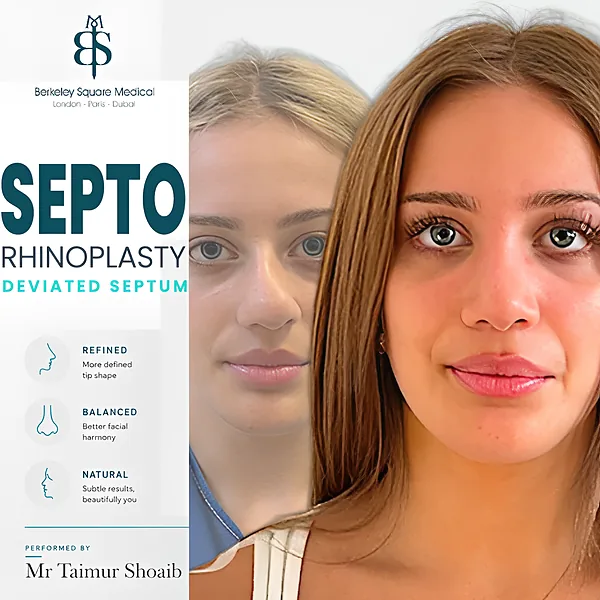 SeptorhinoplastyStraightening the nose and improving breathing.Read more
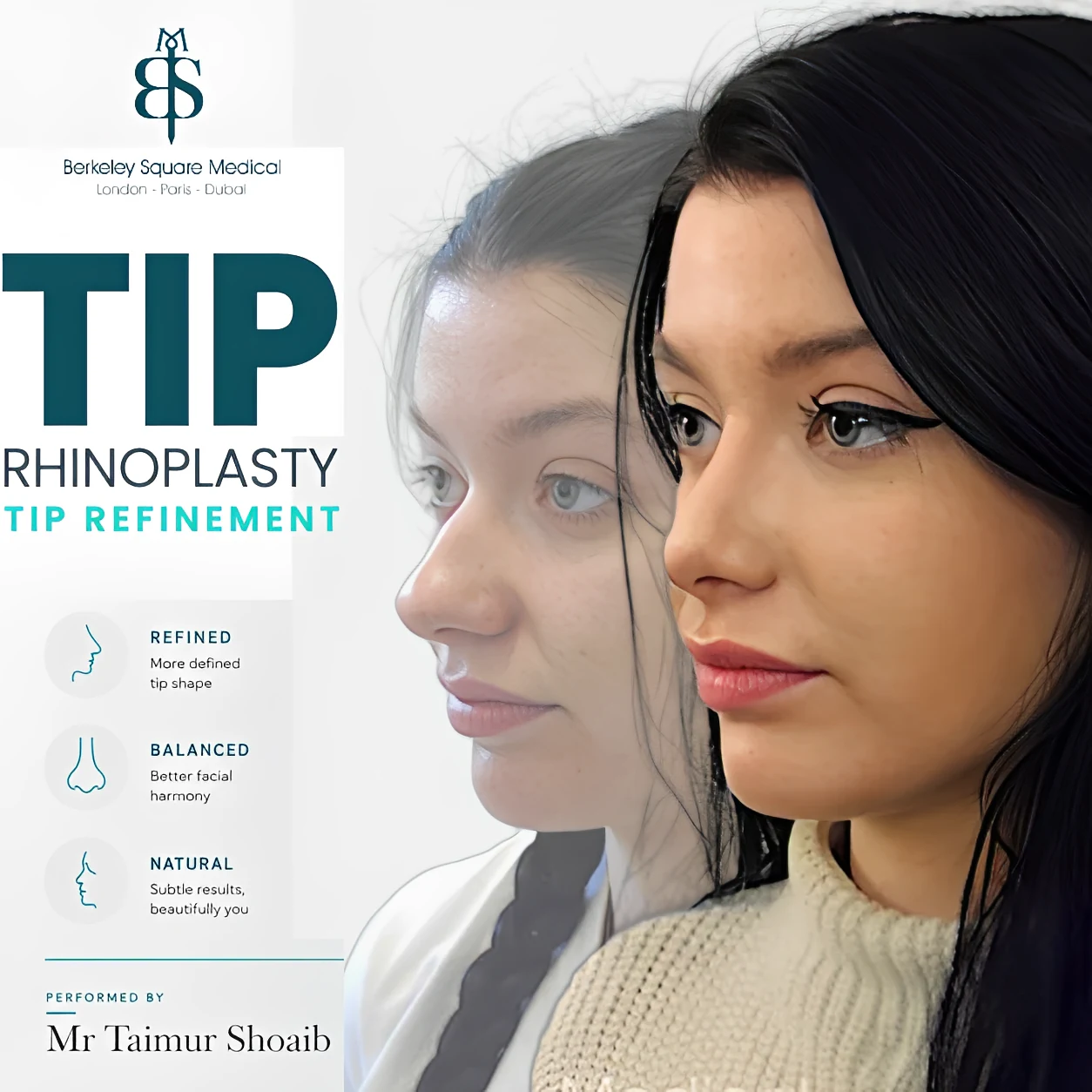 Tip RhinoplastyRefining a bulbous, drooping or asymmetrical tip.Read more
Considering rhinoplasty in London?
If you are weighing up your options in the UK, the next step is a consultation with Mr Taimur Shoaib at 64 Harley Street. Explore rhinoplasty at Berkeley Square Medical, see typical rhinoplasty costs in London, or read about septorhinoplasty in London if breathing is also a concern.
About the author