
If you have just knocked your nose after rhinoplasty and your heart is racing, take a breath first. In the great majority of cases, especially a light bump or one after the first couple of weeks, an accidental knock does not ruin your result. Your nose is more delicate in the early weeks, so it is worth knowing what is normal, what the warning signs are, and when to call your surgeon. This calm, honest guide walks you through all of that, including the common ways it happens, a toddler, a pet, a door, or in your sleep, and what to do next.
Most likely, yes. A light knock, particularly with your splint on or after the first two weeks, rarely changes the result. Apply a cold compress, keep your head elevated, and do not press or test the nose to "check" it. Then watch for the warning signs: a nosebleed that will not stop, a newly crooked or dented shape, sharply worsening pain, a grinding or shifting feeling, or new difficulty breathing. If you notice any of those, or you are simply worried, contact your surgeon, that is what they are there for.
I hit my nose after rhinoplasty, have I ruined it?
Almost everyone who bumps their healing nose immediately fears the worst, and almost always the result is fine. How concerned to be really comes down to two things: how hard the knock was, and how long ago your surgery was.
- A light tap or brush (a sleeve, a pillow, a gentle nudge) is very unlikely to cause any harm at any stage, and while the splint is on it takes most of the force for you.
- A firmer knock in the first two weeks is worth watching closely, because the bones and cartilage are still settling, but it still often causes nothing more than a little extra swelling.
- A significant, forceful impact (a headbutt, a fall, a hard object at speed), particularly in the early weeks, is the one situation that genuinely needs assessing by your surgeon, even if it looks okay.
So a moment of panic is understandable, but a knock is not the same as damage. The rest of this page helps you tell the difference.
How do I know if I damaged my nose? Normal versus warning signs
After a bump, some tenderness and a little more swelling are common and settle within a day or two. The table below separates what is usually nothing to worry about from the signs that mean you should contact your surgeon.
| Usually normal after a knock | Contact your surgeon |
|---|---|
| Brief, mild soreness or tenderness | Pain that is sharp or clearly worsening over hours |
| A small amount of blood that stops quickly | A nosebleed that will not stop with gentle pressure |
| A little more swelling for a day or two | A new, visibly crooked, dented or asymmetric shape |
| The tip feeling odd, numb or slightly different | A cracking, grinding or shifting feeling in the nose |
| Feeling anxious and wanting reassurance | New or sudden difficulty breathing through the nose |
| A stuffy, congested feeling for a day or two | A nose that feels increasingly blocked, full or under pressure over the hours after a knock |
If you are ever unsure which column you are in, treat that as a reason to call your surgeon rather than to worry alone. They may simply reassure you, or ask to see you, and occasionally arrange an X-ray or scan.
One specific thing to watch for: if your nose feels increasingly blocked or under pressure in the hours after a knock, rather than easing, mention it to your surgeon promptly. Occasionally a knock causes a small collection of blood on the septum (the wall between your nostrils), which is simple to treat when caught early, so it is worth a quick check rather than waiting.
It feels like my tip is drooping, shifting or tugging, is it damaged?
This is one of the most common worries, and reassuringly it is usually swelling rather than damage. A fresh knock adds swelling, which can make the tip feel heavier, tighter or as though something is pulling, especially around the columella (the strip of skin between your nostrils). As the swelling settles the feeling usually eases. It is still worth mentioning to your surgeon, but a changed sensation on its own, without a visible shape change or a grinding feeling, rarely means the structure has moved.
The common ways it happens, and what to do
Most knocks after rhinoplasty happen in a handful of very ordinary ways. Here is how to think about each one, the same principle runs through them all: judge it by the force, check the warning signs above, and call your surgeon if in doubt.
A baby, toddler or child headbutted my nose
This is incredibly common and, understandably, terrifying in the moment. A small child's head can catch you with real force, so this is one to take seriously: apply a cold compress, check the warning-sign table, and if it was a hard blow in the early weeks, or you see any warning sign, contact your surgeon even if it looks alright. To prevent a repeat, be very deliberate about how you hold and lift little ones, and consider a nose guard when you are around them (more on that below).
A dog or pet jumped up and hit it
An excited dog jumping up, or a cat on the bed, is another frequent culprit. Treat it exactly as above: assess the force, cold compress, check the warning signs. In the first weeks it is worth keeping pets off your lap and out of the bed, and gating them out of the room while you sleep.
I hit it on an object, or someone bumped into me
Walking into a door or cabinet, catching it on a laptop, or a knock in a crowd, these are usually glancing and often fine, particularly with the splint on. Cold compress, keep your head elevated, and monitor. As before, the deciding factors are how hard it was and how recent your surgery is.
I hit it in my sleep, or I am terrified I will
Many patients lie awake worried they will roll over or throw an arm across their face. First, reassurance: while your splint is on it shields your nose, and a hand brushing the splint is not the force that causes damage. To sleep more safely, lie on your back with your head elevated on pillows, place a pillow either side as a gentle barrier to stop you turning, and sleep alone (or well apart) if your partner moves a lot. Our full guide to sleeping after rhinoplasty covers this in detail. If you do wake having bumped it, do not panic, just run through the warning-sign table.
How fragile is my nose at each stage?
Knowing where you are in healing helps you judge how serious a bump might be. As a general guide:
- Days 1 to 7 (including day 5): at its most fragile, and usually protected by a splint. Even a light knock is worth taking care over, so treat any real knock cautiously and check the warning signs.
- Week 2: the splint usually comes off, but the bones are still soft, so keep being careful with dressing, hair washing and children.
- Weeks 3 to 5: swelling is settling and the bones are stabilising, though a moderate impact can still matter.
- Around 1 month: most of the early fragility has passed and swelling is well down, but the bones are still finishing their fusion, so a hard knock is still worth mentioning to your surgeon.
- Weeks 6 to 12: most structural healing is done and minor bumps are much less likely to affect the outcome, but avoid contact sport.
- 3 to 12 months: the final settling phase, and normal life is safe.
When do the bones fuse, and when is it safe from a knock?
The nasal bones generally knit back together over about 4 to 6 weeks, which is why the first six weeks call for the most care. From there the nose keeps strengthening over the following months, and once fully healed it can feel as robust as it was before your surgery. Your surgeon will confirm when you are clear for higher-risk activities.
I hit my nose months or a year later, is that different?
Yes, and it is reassuring. A fully healed nose behaves like any other nose: everyday knocks are not a concern. A very hard blow can still injure any nose, healed or not (that is simply how noses work), so the warning signs still apply, but you no longer need the heightened caution of the early weeks.
What to do right after you hit it
- Stay calm and sit down for a moment, panic makes everything feel worse than it is.
- Apply a cold compress gently near the area (not pressing on the nose) to limit swelling.
- Keep your head elevated, which also helps swelling settle.
- For any bleeding, pinch the soft part below the bone and lean forward for about ten minutes.
- Do not poke, wiggle or press the nose to test whether it moved, that can do more than the knock did.
- For discomfort, paracetamol is generally fine; avoid aspirin and ibuprofen unless your surgeon says otherwise, as they can increase bleeding.
- Take a quick photo so you can compare the shape over the next day.
- Then run through the warning-sign table above.
When to contact your surgeon, and what to do if you cannot reach them
Contact your surgical team if you have any of the warning signs, or simply if you are anxious and want peace of mind, there is no such thing as a silly call here. If it is out of hours and you cannot reach them and the situation is severe, for example heavy bleeding you cannot control, an obviously changed or crooked shape, or real difficulty breathing, seek urgent medical care, call NHS 111, attend A&E, or call 999 in an emergency. It is always better to have it checked than to sit at home worrying.
What about sneezing?
Sneezing worries a lot of patients, but a gentle sneeze rarely causes harm, especially if you sneeze with your mouth open to release the pressure. Do not try to stifle a sneeze, as holding it in raises the pressure inside the nose, and avoid blowing your nose for the first couple of weeks unless your surgeon says otherwise. If frequent sneezing from allergies is a problem, ask your surgeon about a safe antihistamine.
How to protect your nose and prevent knocks
- Keep your splint or cast on and dry until your surgeon removes it, it is your best protection early on.
- Be deliberate around children and pets, hold babies carefully, keep dogs off your lap and out of the bed, and gate pets out of the bedroom at night.
- Consider a nose guard or face shield (the NBA-style protective mask) if you are around small children, pets or unavoidable risk, it is a simple, effective barrier.
- Sleep on your back, head elevated, with a pillow either side as a barrier.
- Avoid contact sport and high-impact activity until your surgeon clears you, usually well beyond six weeks.
- Take care with everyday tasks like dressing, washing your hair and leaning over sinks.
Related recovery guides
This page is about an accidental knock or impact. For related worries: if your question is about touching, cleaning or picking inside the nose, see cleaning your nose after rhinoplasty. If a new bump or lump has appeared on the bridge (rather than from a knock), that is usually a different issue, covered in our guide to a bump on the nose after rhinoplasty. And for the complete list of recovery do's and don'ts, see what not to do after rhinoplasty.
Specialised Rhinoplasty For Men
Explore our specialist procedures. Tap any card to read more.
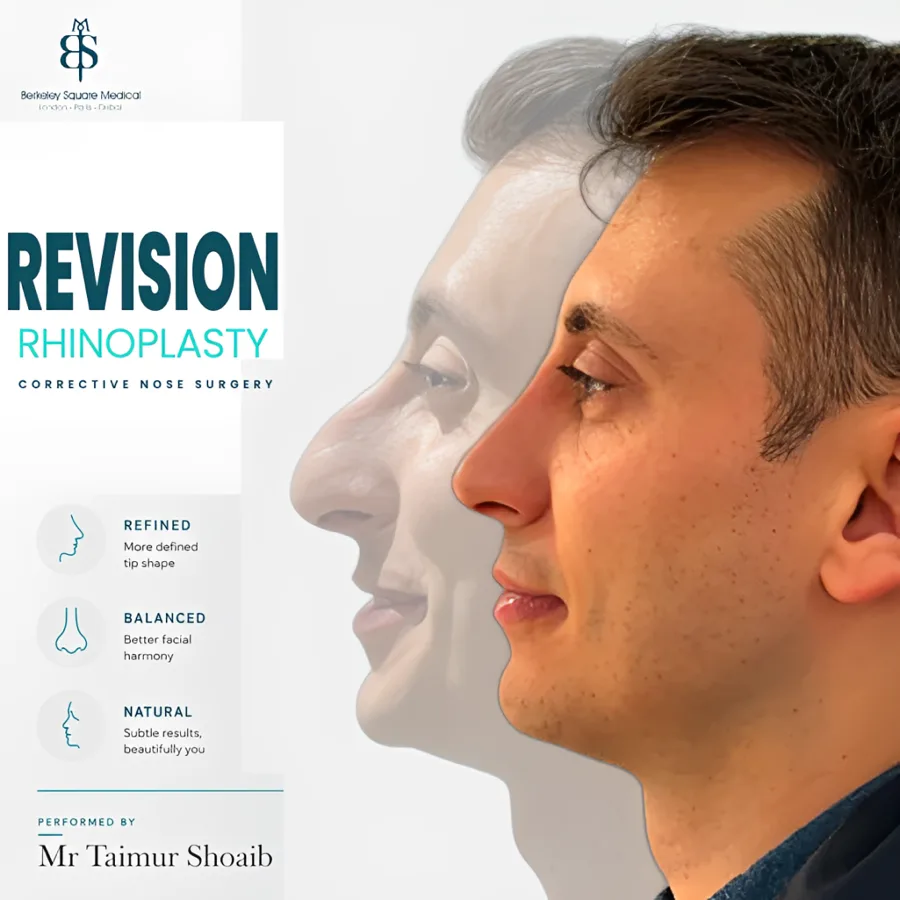 Revision RhinoplastyCorrecting or improving a previous rhinoplasty.Read more
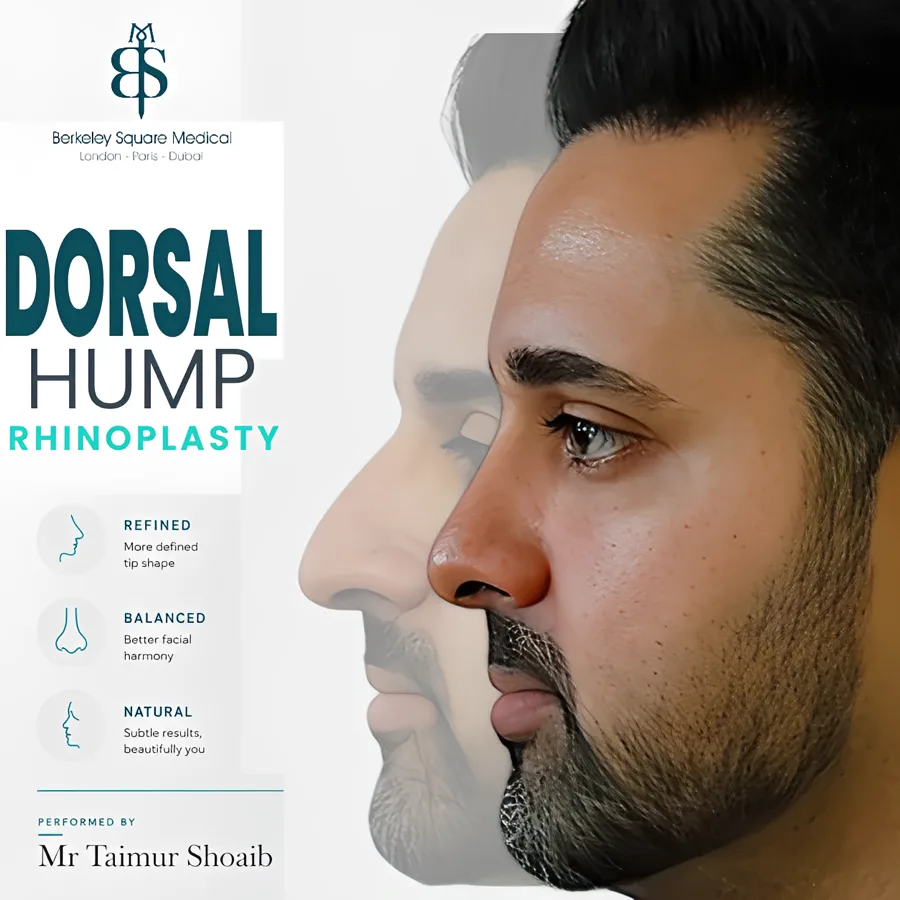 Dorsal Hump RhinoplastyRemoving a bump on the bridge for a straight profile.Read more
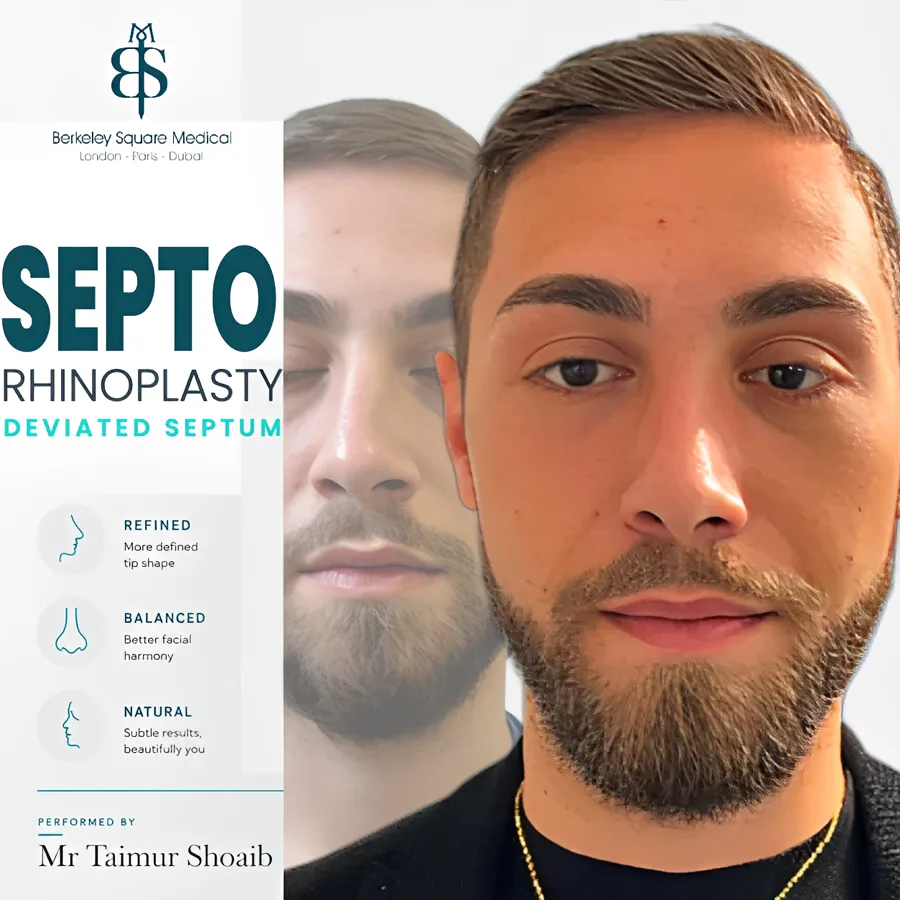 SeptorhinoplastyStraightening the nose and improving breathing.Read more
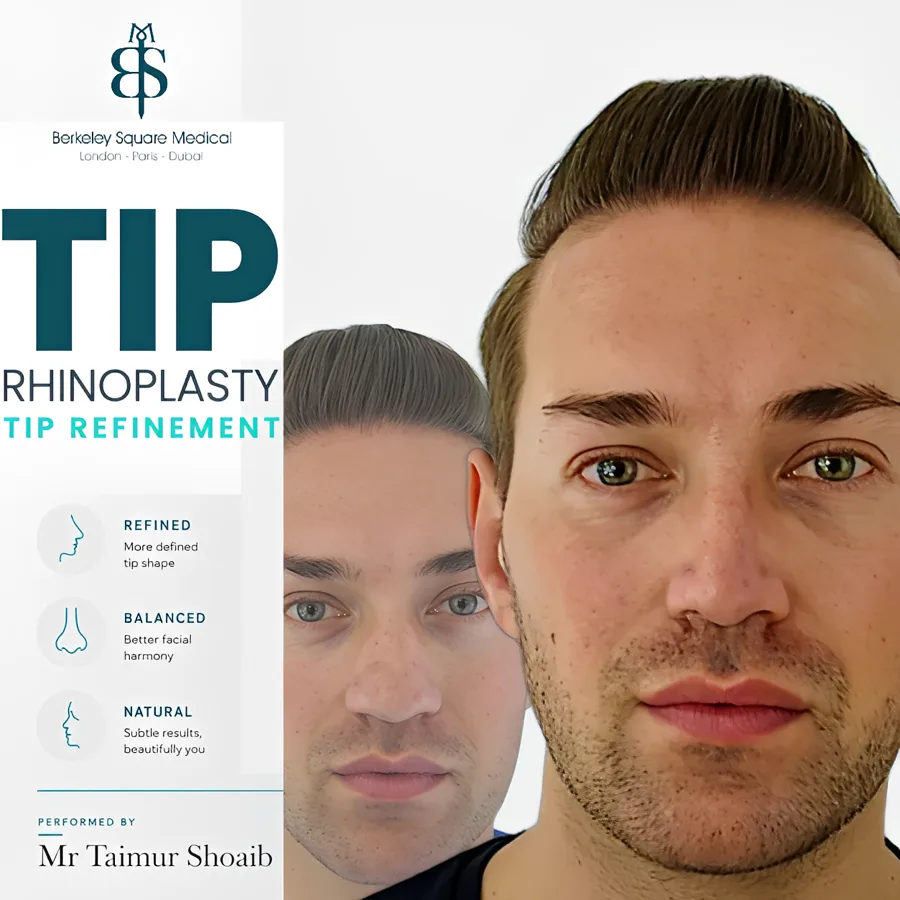 Tip RhinoplastyRefining a bulbous, drooping or asymmetrical tip.Read more
Specialised Rhinoplasty For Females
Explore our specialist procedures. Tap any card to read more.
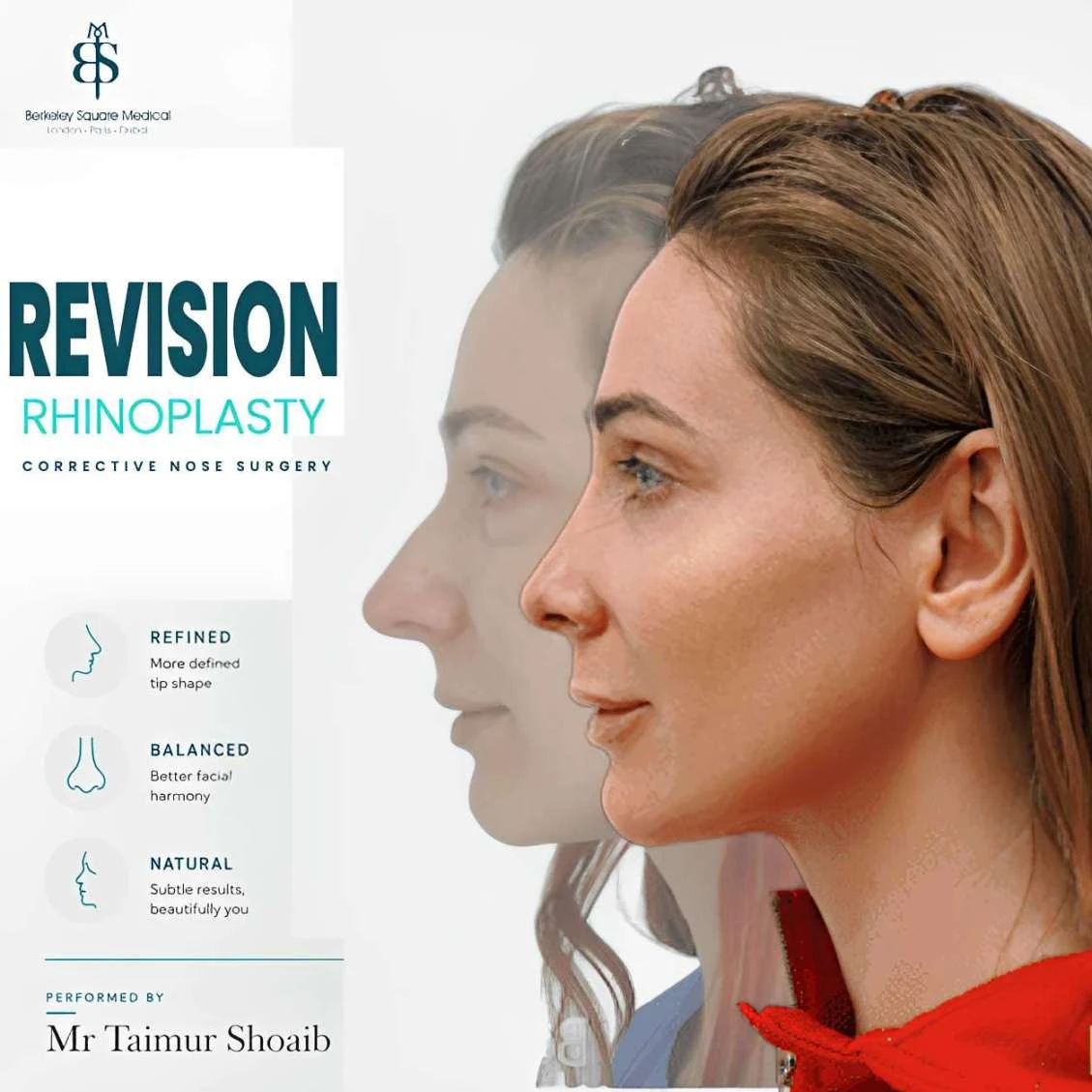 Revision RhinoplastyCorrecting or improving a previous rhinoplasty.Read more
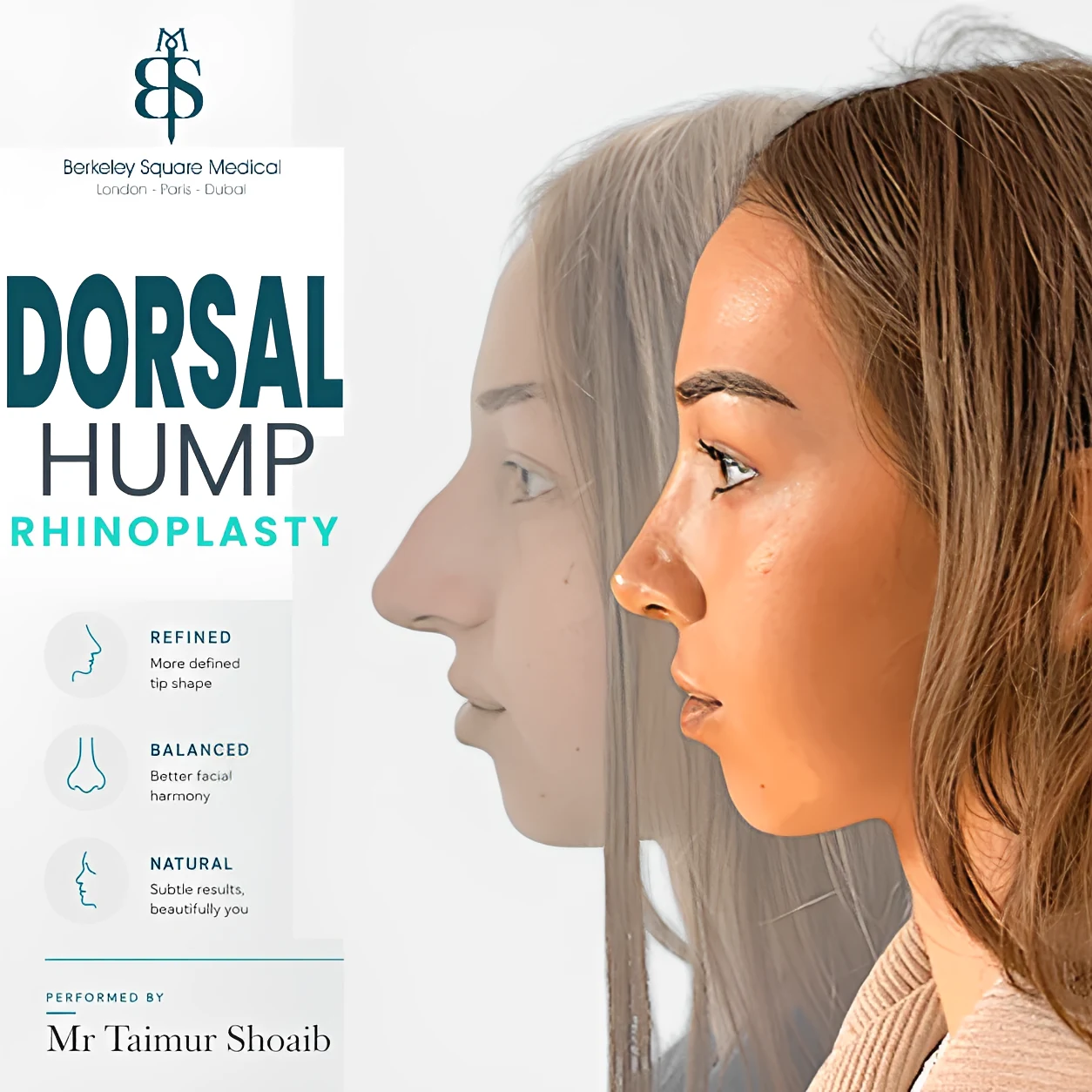 Dorsal Hump RhinoplastyRemoving a bump on the bridge for a straight profile.Read more
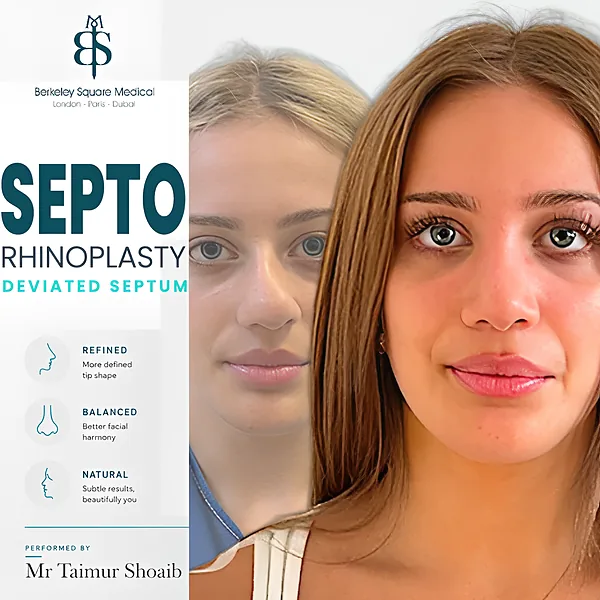 SeptorhinoplastyStraightening the nose and improving breathing.Read more
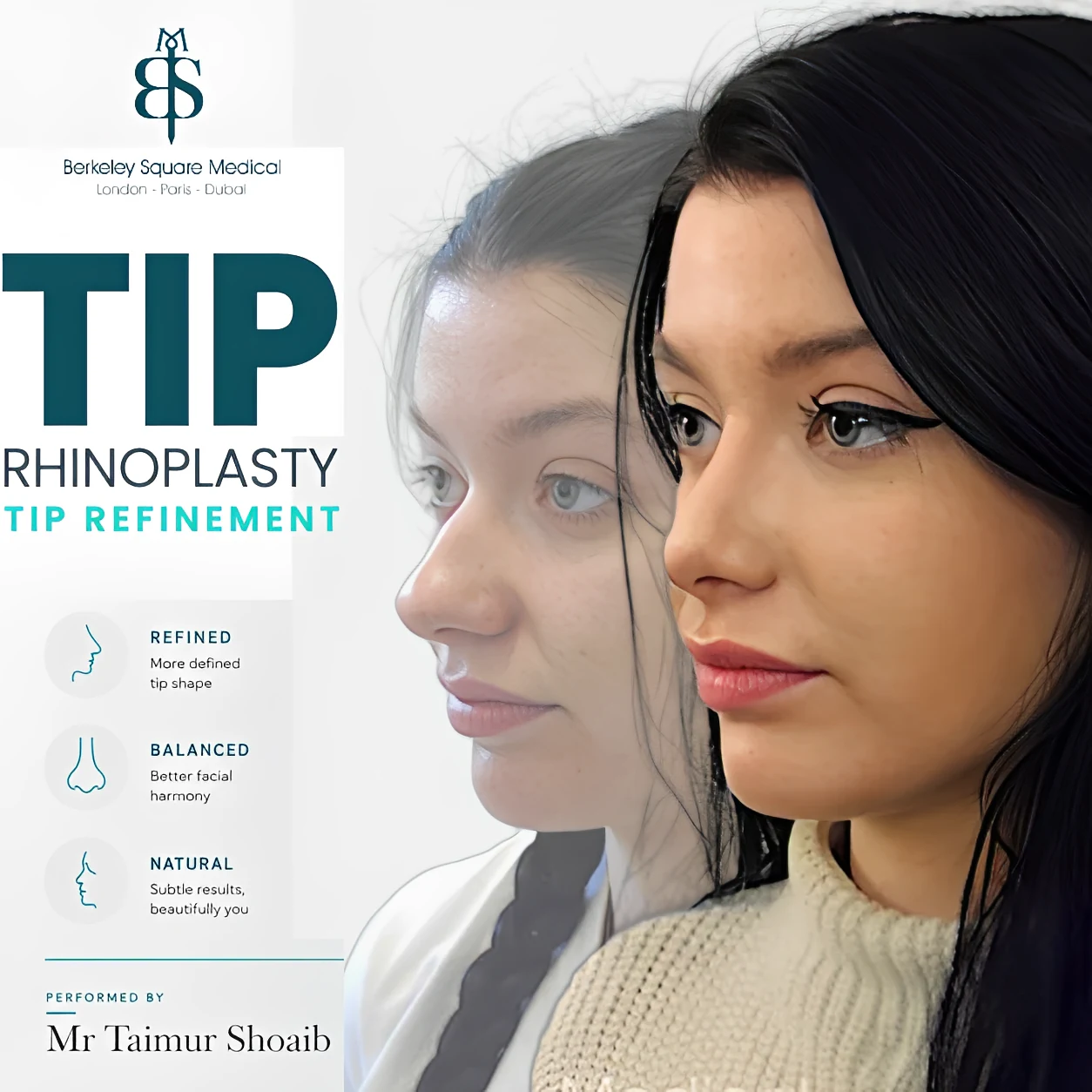 Tip RhinoplastyRefining a bulbous, drooping or asymmetrical tip.Read more
Considering rhinoplasty in London?
If you are weighing up your options in the UK, the next step is a consultation with Mr Taimur Shoaib at 64 Harley Street. Explore rhinoplasty at Berkeley Square Medical, see typical rhinoplasty costs in London, or read about septorhinoplasty in London if breathing is also a concern.
About the author