

Why swelling happens after Rhinoplasty
The body's natural response to surgery
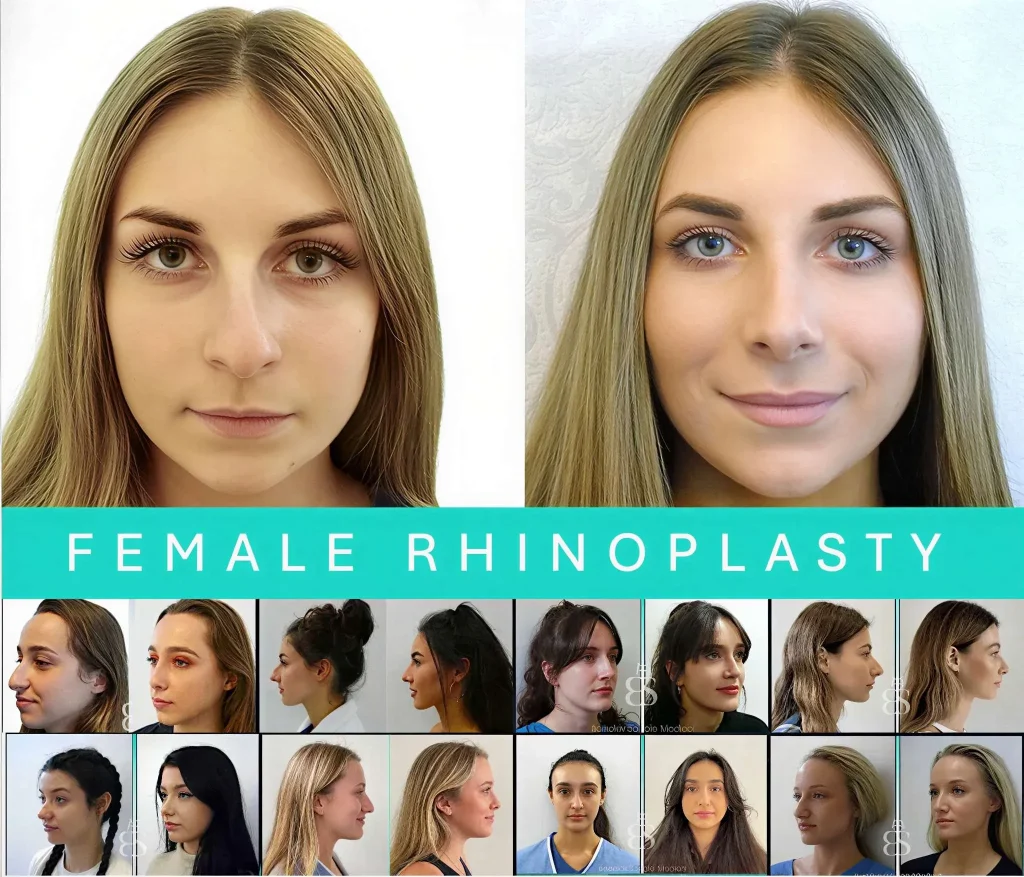
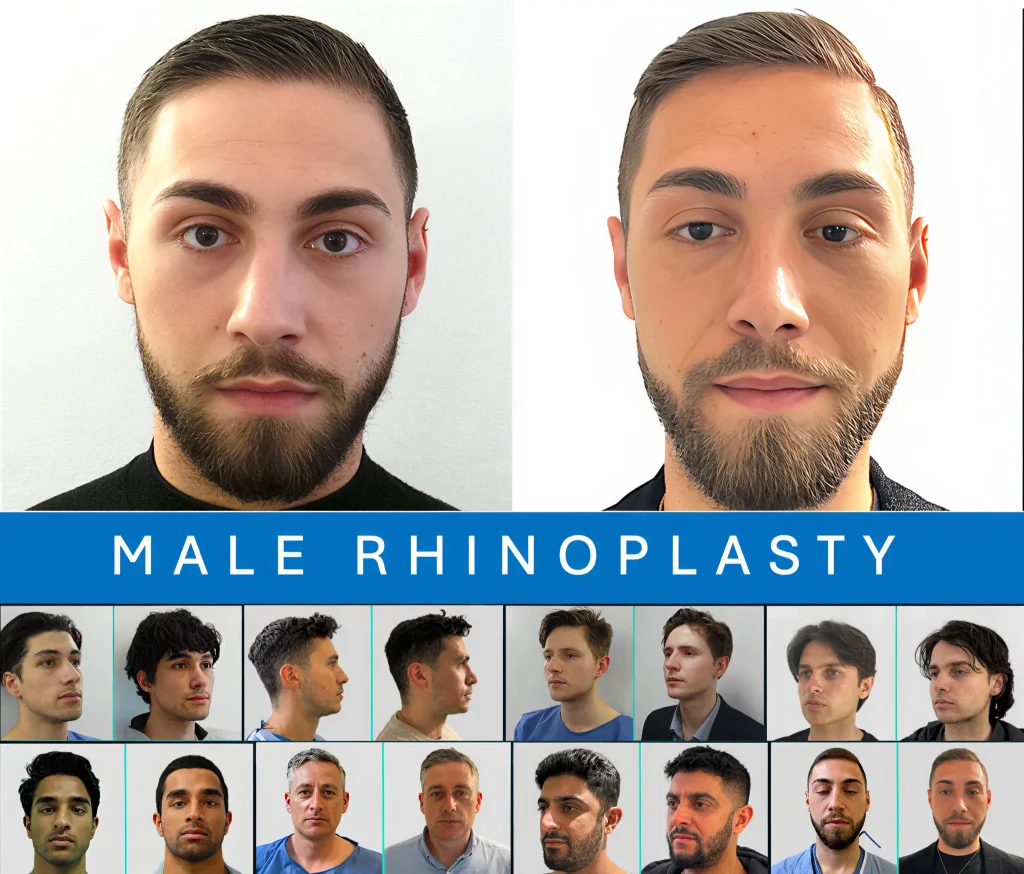
Rhinoplasty alters delicate nasal structures, so swelling is simply the body's natural response to surgical trauma. This applies equally to septorhinoplasty, where the septum is straightened at the same time, and to both closed and open approaches. Fluid builds up in the soft tissues as part of healing, and because the nose has a thin skin envelope and limited lymphatic drainage, swelling tends to linger longer here than elsewhere on the body. Several things affect how much you swell and for how long:
- Surgical technique. Open Rhinoplasty (a small incision across the columella) typically causes more early swelling because the skin is lifted off the cartilage and bone; closed Rhinoplasty usually causes less initial swelling, though the long-term timeline is similar.
- Your skin type. Thicker skin holds swelling longer, especially at the tip; thinner skin shows the new shape sooner but can also reveal minor irregularities during the swelling phase.
- Where the swelling sits. The bridge settles quickest, the tip stays swollen longest, and the under-eye area swells when the bones are narrowed or straightened.
- It is often uneven. One side draining differently, or being handled slightly differently in surgery, means one side can look more swollen than the other. This is normal and evens out over time.
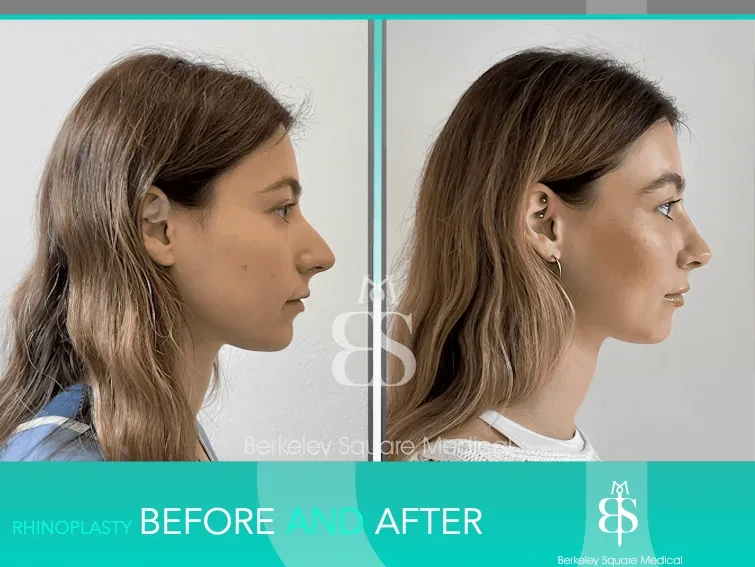
Natural results performed by Mr Taimur Shoaib at Berkeley Square Medical. Individual results vary; consenting patient.
The Rhinoplasty swelling timeline
What to expect, week by week
Swelling after Rhinoplasty follows a well-understood pattern, and almost everything patients worry about in the first weeks is a normal part of the process. The exact pace varies with the surgery, the technique and your own healing, but as a broad guide:
- First 48 hours (peak). Swelling and bruising are at their highest; cold compresses and head elevation are essential; under-eye puffiness is common.
- 1 week. Splint removal can briefly make the nose look more swollen; eye bruising begins to fade; the nose feels large, firm and numb.
- 2 weeks. Much of the dramatic swelling settles and most patients feel comfortable in social situations.
- 1 month. Swelling softens along the bridge; the tip stays swollen, especially with thicker skin.
- 3 months. A major milestone: roughly 50 to 60% of swelling has resolved and the shape looks more refined.
- 6 months. Around 70 to 80% has settled; the tip still holds a little more than the bridge.
- 12 to 18 months. Final definition appears, with the tip contour and any minor asymmetry continuing to improve.
| Time after Rhinoplasty | Typical swelling & bruising | What patients usually notice or can do |
|---|---|---|
| 0 to 48 hours | Peak swelling; bruising around the eyes most visible; nose feels tight and blocked. | Rest with the head elevated; cold compresses on the cheeks; short walks around the house only. |
| 1 week | Swelling still obvious; bruising fading; nose can look bigger after splint removal. | Many return to light, desk-based work; still avoiding exercise and heavy lifting. |
| 2 weeks | Noticeable reduction in swelling and bruising; under-eye puffiness improving; nose still firm. | More comfortable socially; light walking is fine; most people will not notice the surgery. |
| 1 month | Bridge looks slimmer; tip still rounder and swollen; mild morning swelling is common. | Usually back to most daily activities; gentle exercise often allowed if your surgeon agrees. |
| 3 months | Around 50 to 60% of swelling resolved; uneven swelling much less noticeable; tip still maturing. | Nose looks normal to others; patients feel more confident in photos and close-up. |
| 6 months | Around 70 to 80% gone; most definition visible; residual swelling mainly in the tip. | Final shape is close; small day-to-day changes in swelling can still occur. |
| 12 to 18 months | Swelling fully settled; scar tissue softened; subtle contour refinements continue at the tip. | Final result; any persistent concern can be discussed at a long-term review. |
Nasal tip swelling
Why the tip takes the longest
A swollen tip after Rhinoplasty is the most persistent part of recovery, and in Mr Shoaib's practice the tip is consistently the last area to refine. It has thicker skin, more oil glands, and slow lymphatic drainage, and it is often the area most reshaped during surgery, so fluid clears gradually. Most patients notice a rounder or fuller tip for several months, firmer tissue when they touch it, and slow but steady refinement between months 3 and 12. Tip swelling is most noticeable after open Rhinoplasty, in thicker-skinned patients, and in revision surgery. If tip shape is your main concern, our tip refinement page explains the specialist approach.
Under-eye swelling after nose surgery
Common when the bones are refined
Under-eye swelling is very common after nose surgery, especially when osteotomies (the controlled bone fractures used to narrow or straighten the bridge) are performed. Fluid collects in the delicate under-eye tissue, causing the puffiness and bruising that often surprises patients most in the first week. It is usually worst at days 2 to 4, improves quickly by week 2, and any mild residual puffiness lasts around 4 to 6 weeks.
To reduce swelling under the eyes, the most effective steps are cold compresses in the first 48 hours, sleeping elevated for one to two weeks, avoiding salty foods, and gentle lymphatic drainage massage only if your surgeon approves it. Under-eye swelling rarely signals a problem unless it becomes painful, red, or suddenly worsens.
How to reduce swelling after Rhinoplasty
Safe, surgeon-approved methods
Most swelling after a nose job or Rhinoplasty improves on its own, but these proven steps can help it settle more comfortably:
- Cold compresses (first 48 hours only). Apply cold packs to the cheeks, not directly on the nose, to reduce inflammation and bruising.
- Sleep elevated. Keeping your head above your heart improves drainage; two pillows or a wedge pillow works well.
- Reduce sodium. Salt makes the body retain fluid, which worsens swelling, so keep meals low in salt for the first 2 to 3 weeks.
- Stay well hydrated. Good hydration helps your body clear inflammatory fluid.
- Avoid exercising too soon. Intense activity increases blood flow and swelling; most surgeons advise no exercise for at least 3 to 4 weeks.
- Arnica or bromelain, only if advised. Some surgeons suggest these to help with bruising and inflammation.
- No pressure on the nose. Avoid resting glasses, blowing your nose, or facial massage unless specifically approved.
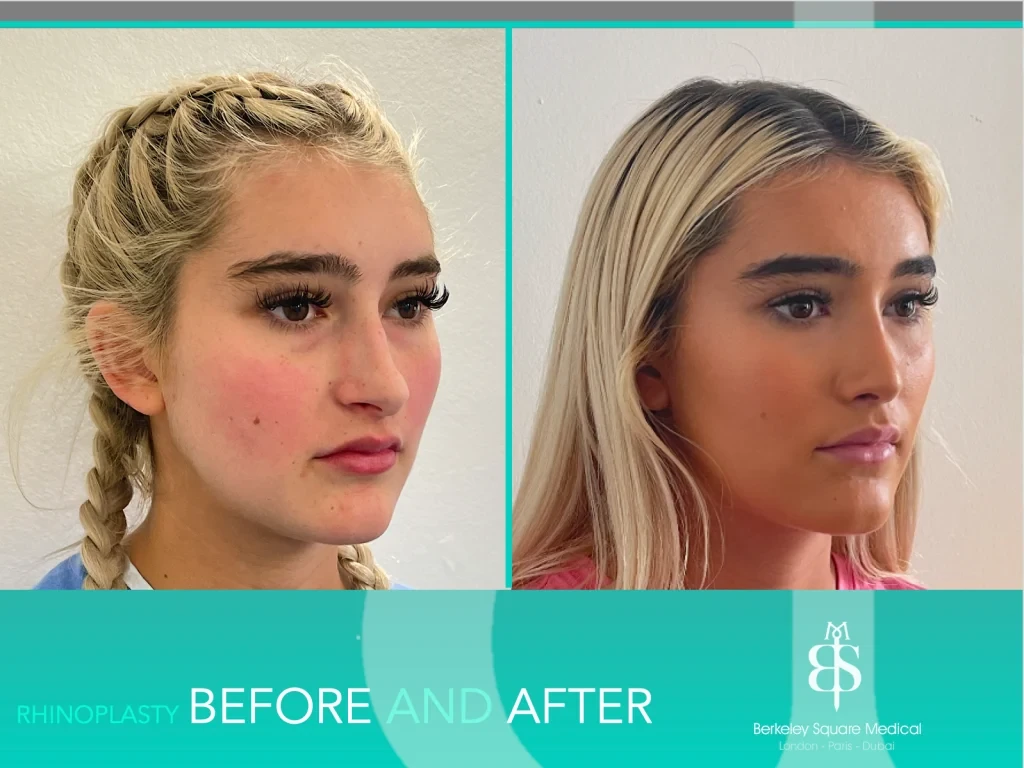
Natural results performed by Mr Taimur Shoaib at Berkeley Square Medical. Individual results vary; consenting patient.
When swelling is normal, and when to call your surgeon
The reassuring signs, and the ones to act on
Most swelling is completely expected. The following are normal and improve with time:
- Puffiness that gets a little better week by week.
- One side of the nose looking more swollen than the other.
- A firm or numb nasal tip.
- Minor morning swelling that settles by midday.
If your experience matches the list above, you are healing well. The signs below are much less common, but worth acting on promptly. Contact your surgeon if you notice:
- A sudden increase in swelling after it had been improving.
- Persistent redness, heat or a fever.
- Sharp pain that worsens rather than eases.
- Significant asymmetry that appears abruptly.
- Yellow or green discharge, or a bad smell from the nose.
- Heavy or persistent nosebleeds that do not settle with gentle pressure.
- Difficulty breathing, chest pain or shortness of breath.
Complications are uncommon, but a quick review is always the safest response if something does not feel right. If you have severe difficulty breathing, chest pain, or heavy bleeding that will not stop, treat it as an emergency and seek urgent medical care or call 999.
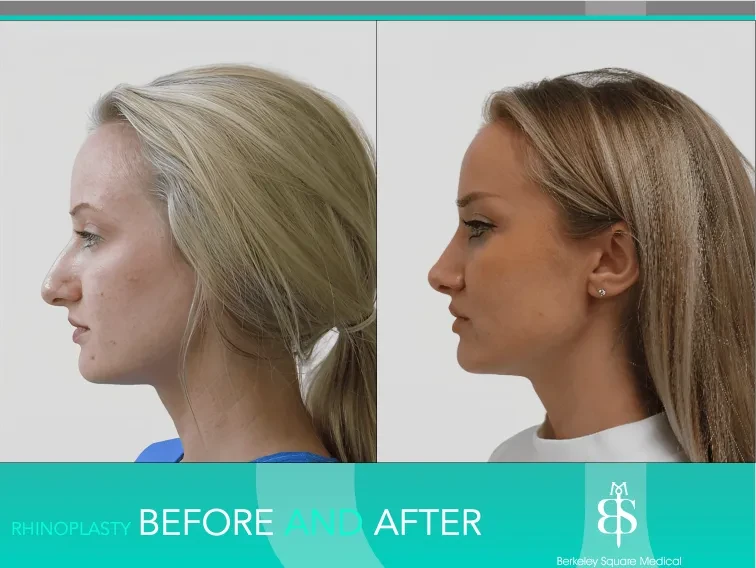
Natural results performed by Mr Taimur Shoaib at Berkeley Square Medical. Individual results vary; consenting patient.
Uneven and long-term swelling
Why it looks lopsided, and why that is usually fine
Uneven or asymmetric swelling is one of the most common worries after Rhinoplasty, and it is almost always normal, especially in the first weeks and months. It happens because most people have natural differences between the two sides of the face, because the surgeon may adjust one side more than the other to correct a deviation, because each side drains lymphatic fluid at a different speed, and because sleeping more on one side can temporarily worsen swelling there.
In thicker-skinned patients and complex revisions, this uneven swelling can last longer. It does not mean anything is wrong; it simply reflects your individual healing speed. If a concern persists once the swelling has settled, it can be reviewed calmly as part of long-term follow-up.
What is residual swelling after Rhinoplasty?
Residual swelling is the low-level puffiness that remains, particularly at the tip, after the major post-operative swelling has cleared. It is not obvious to other people and does not feel dramatic, but it softens the fine details of the result until it fully clears at around 12 to 18 months. It is a normal, expected phase of healing rather than a sign that anything has gone wrong.
If you are recovering with us, or considering Rhinoplasty and want to understand what to expect, you are welcome to book a consultation with Mr Shoaib at 64 Harley Street.
Related recovery guides
This page is your guide to swelling. For the rest of your recovery, see:
- Rhinoplasty aftercare, the full day-by-day dos and don'ts after your nose job.
- Rhinoplasty healing stages, how the nose heals overall, beyond swelling.
- Rhinoplasty side effects, other effects to expect, such as bruising, numbness and congestion.
Specialised Rhinoplasty For Men
Explore our specialist procedures. Tap any card to read more.
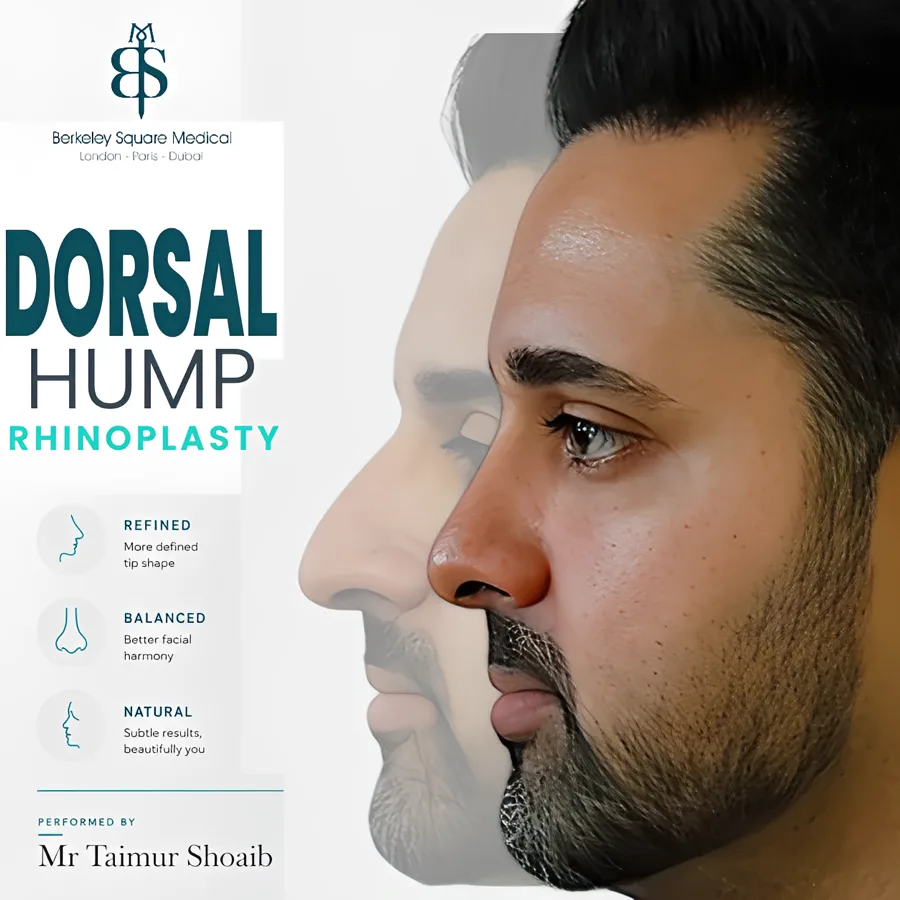 Dorsal Hump RhinoplastyRemoving a bump on the bridge for a straight profile.Read more
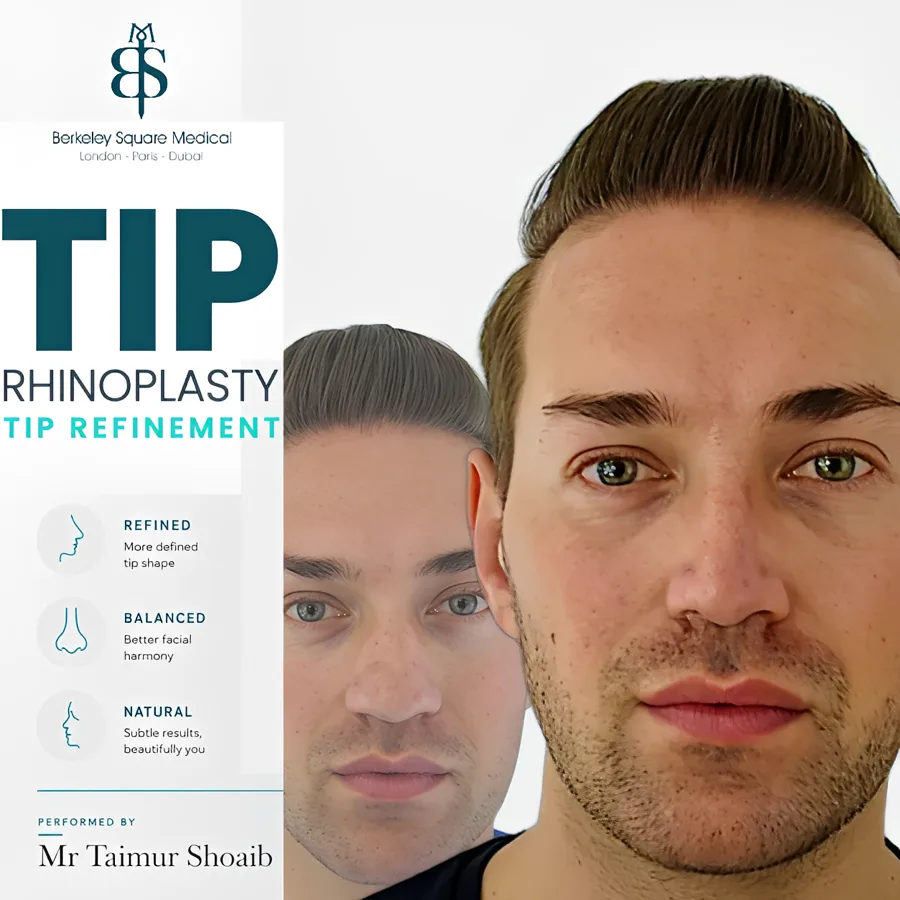 Tip RhinoplastyRefining a bulbous, drooping or asymmetrical tip.Read more
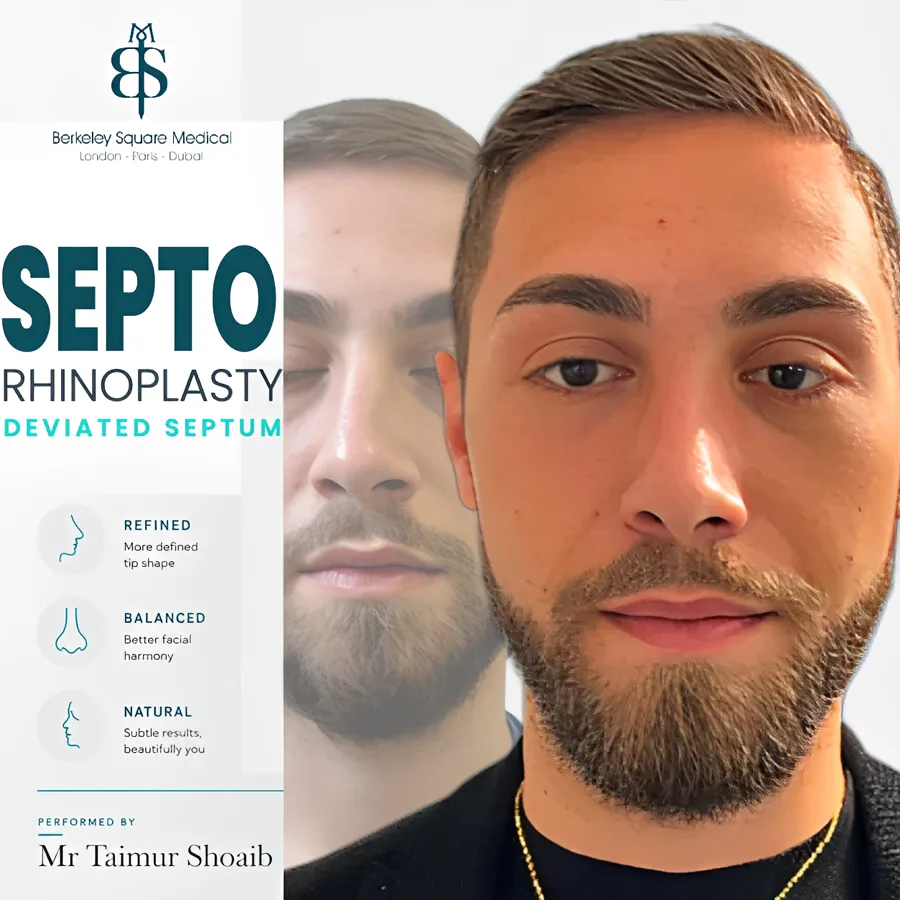 SeptorhinoplastyStraightening the nose and improving breathing.Read more
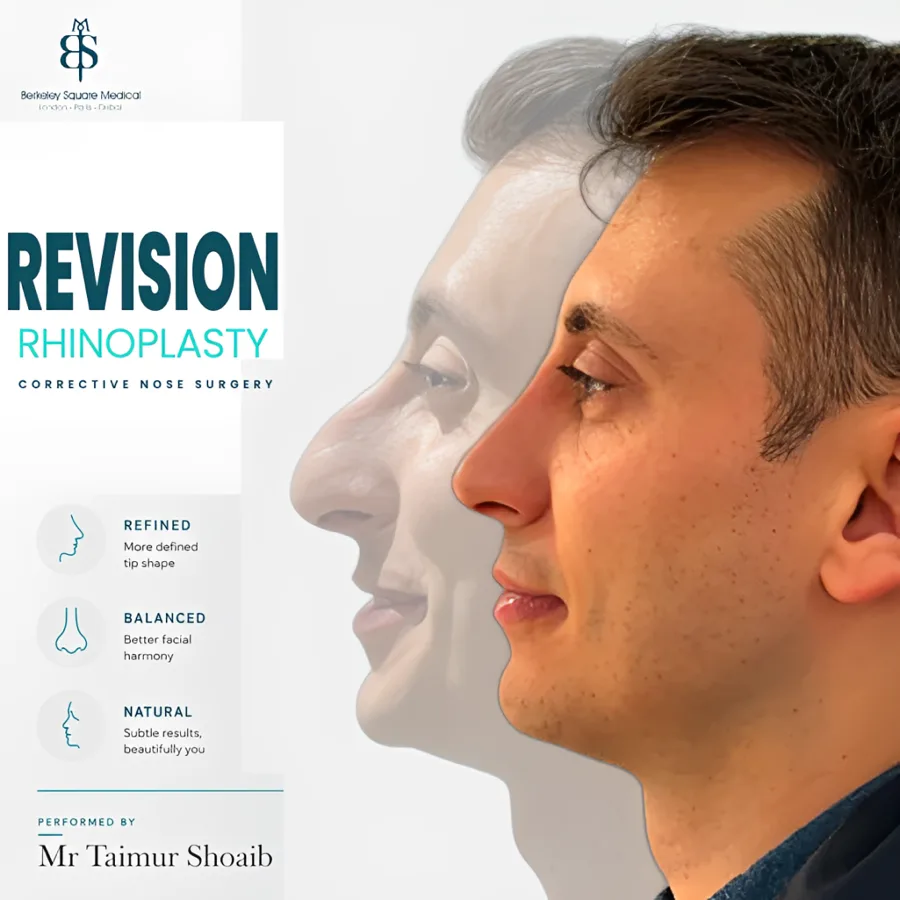 Revision RhinoplastyCorrecting or improving a previous rhinoplasty.Read more
Specialised Rhinoplasty For Females
Explore our specialist procedures. Tap any card to read more.
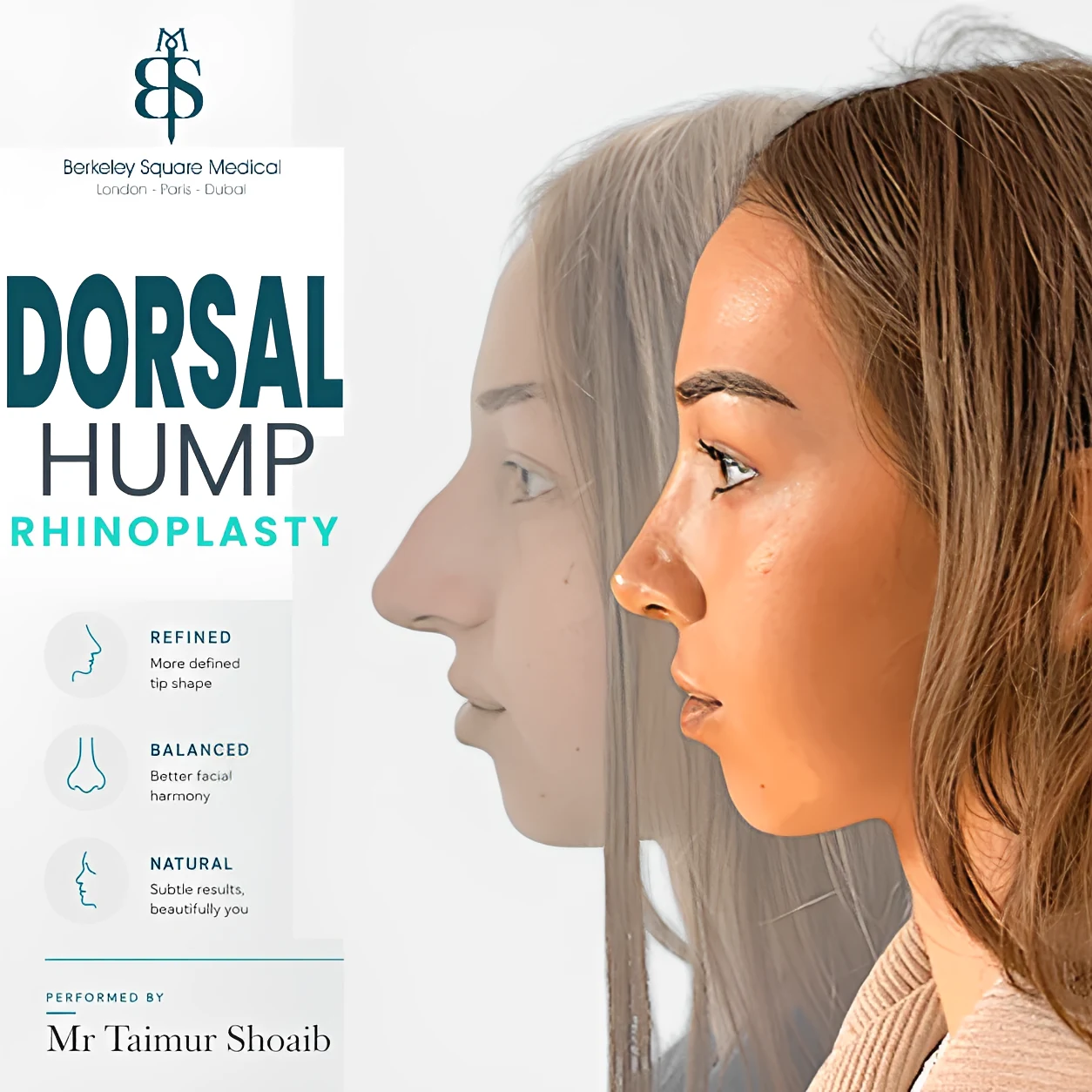 Dorsal Hump RhinoplastyRemoving a bump on the bridge for a straight profile.Read more
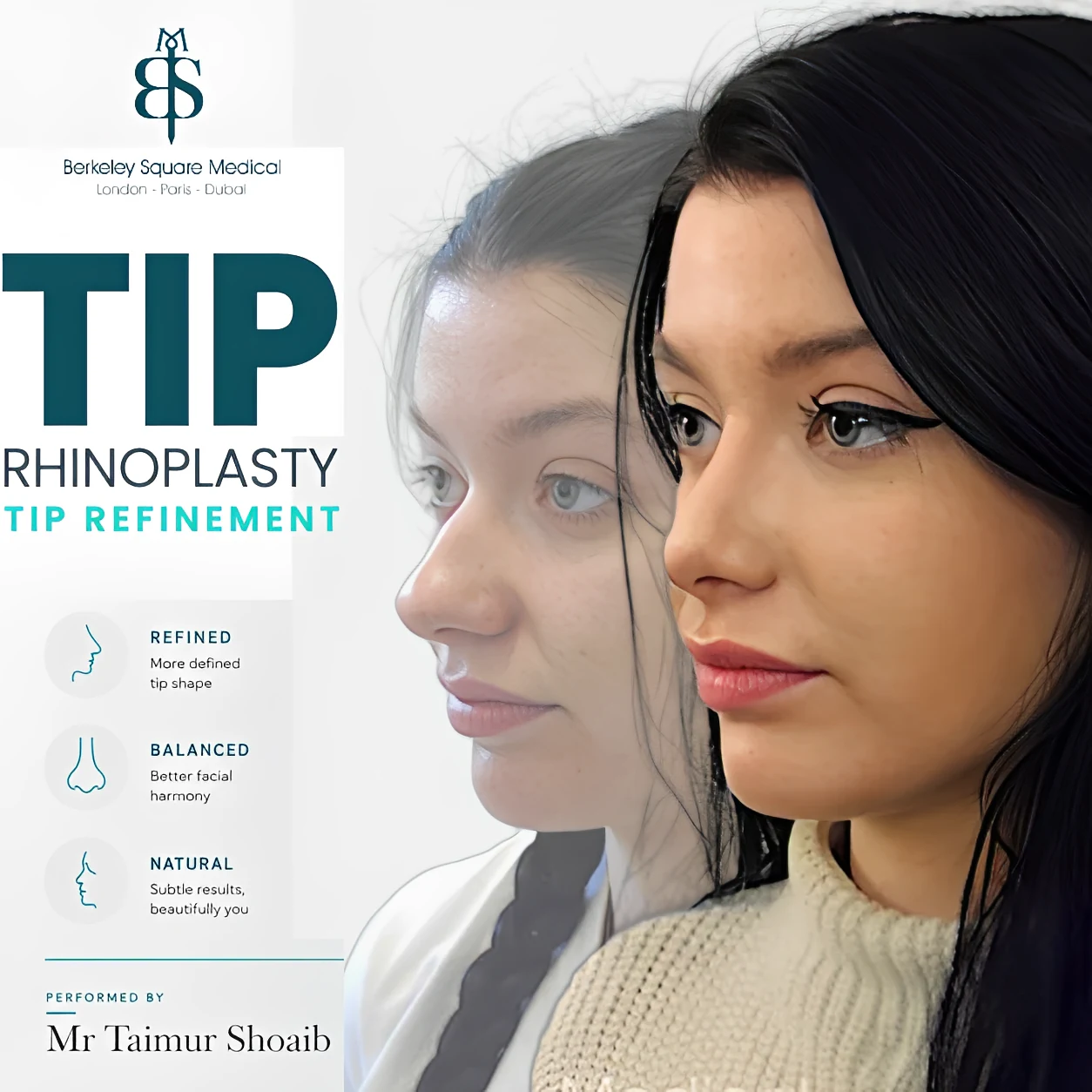 Tip RhinoplastyRefining a bulbous, drooping or asymmetrical tip.Read more
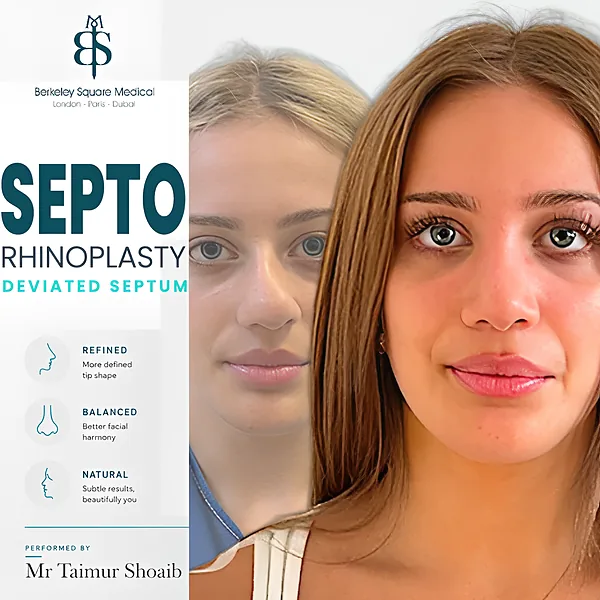 SeptorhinoplastyStraightening the nose and improving breathing.Read more
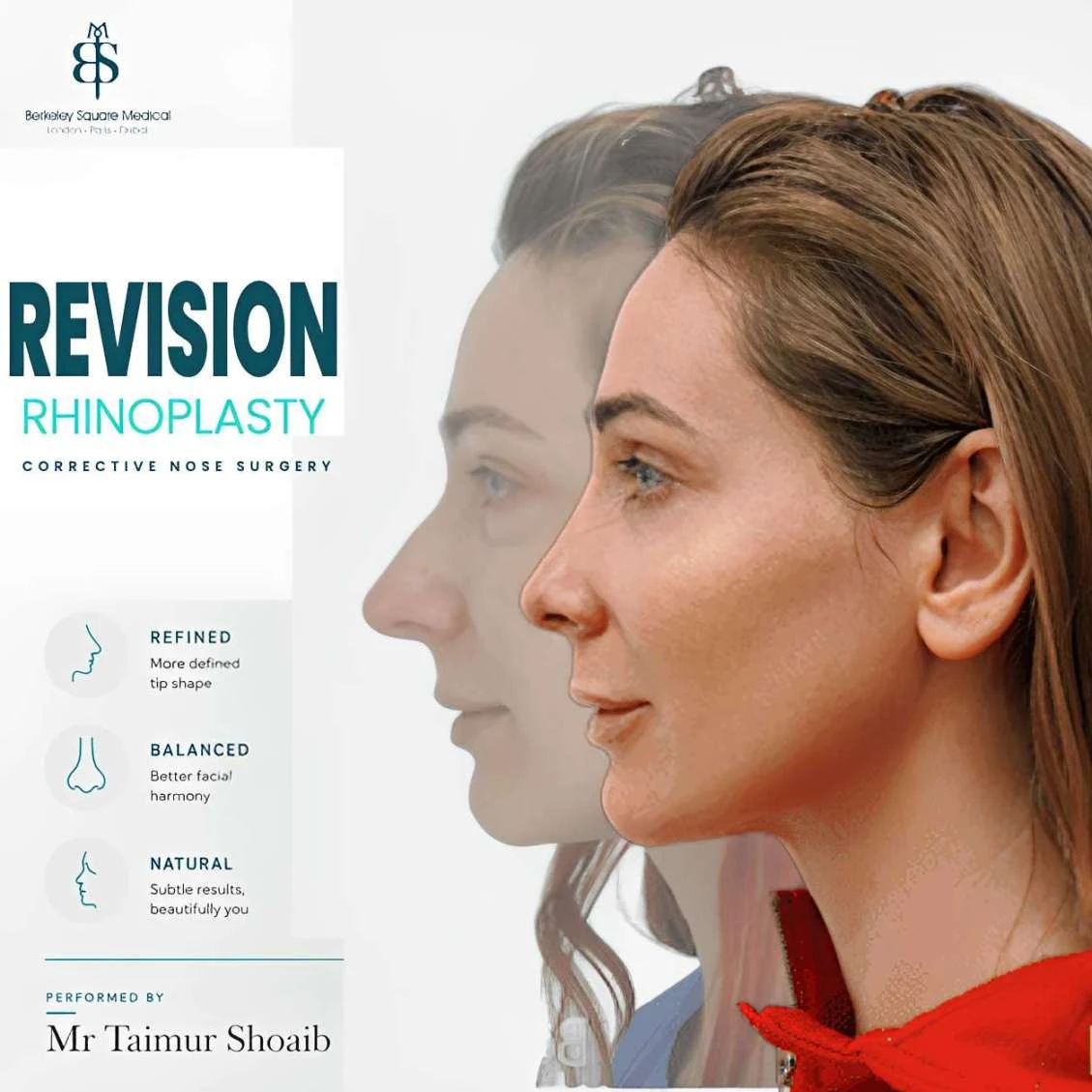 Revision RhinoplastyCorrecting or improving a previous rhinoplasty.Read more
Considering rhinoplasty in London?
If you are weighing up your options in the UK, the next step is a consultation with Mr Taimur Shoaib at 64 Harley Street. Explore rhinoplasty at Berkeley Square Medical, see typical rhinoplasty costs in London, or read about septorhinoplasty in London if breathing is also a concern.