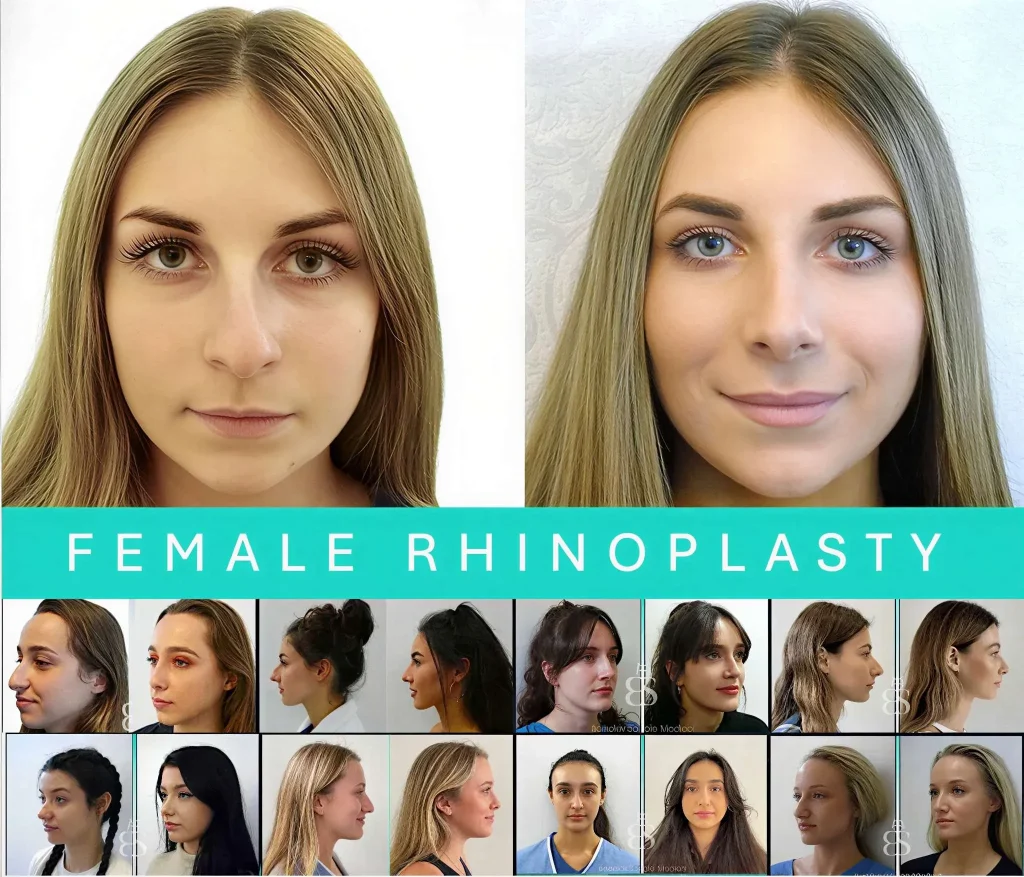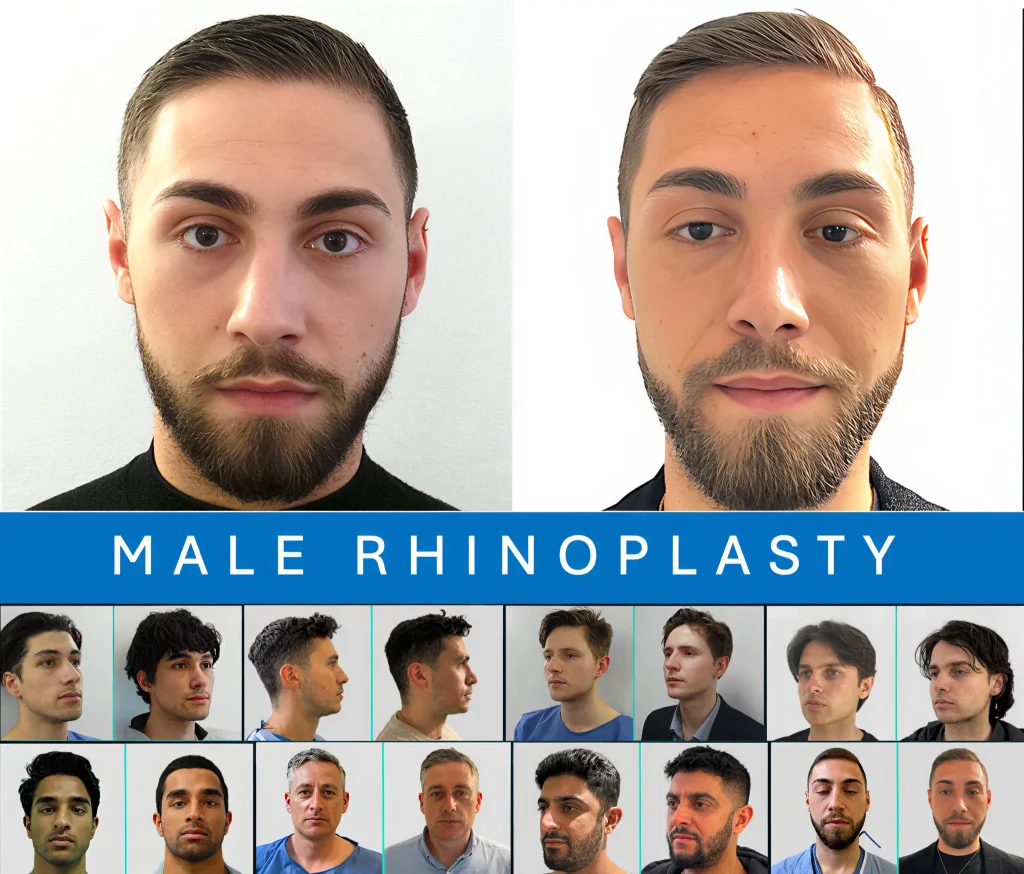


Some bruising after rhinoplasty is normal and expected, especially if any work was done on the nasal bones. It is not a sign that anything has gone wrong. What actually worries most patients is not the bruise itself but the questions around it: is the yellow stage normal, why am I still faintly bruised weeks later, when should I worry, and how do I cover it for work or an event. This guide answers all of that, alongside the timeline and how to help it fade faster.
Bruising is usually worst around day 3 to 4, fades over 7 to 10 days, and is light enough to cover with makeup by about day 10, with a faint yellow tinge lingering 2 to 3 weeks. It settles under the eyes as blood tracks down from the bridge, and is normal, especially after bone work.
How long does bruising last after rhinoplasty?
How long bruising lasts varies from person to person, and the colour-stage table below is the quickest way to see what to expect and when. It tends to be worse, and to last a little longer, in older patients, smokers, people on blood-thinning medication, and those with fair or sensitive skin. Bruising after work on the nasal bones is also more pronounced than after soft-tissue-only surgery.
| Stage | Colour and what is happening | What to do |
|---|---|---|
| Day 1 to 3 | Peak bruising, dark red, purple or blue around the eyes and upper cheeks; swelling at its worst | Cold compress, head elevated, rest |
| Day 4 to 6 | Colour starts to change, turning green then brown or yellow as it heals | Keep elevating, gentle movement |
| Day 7 to 10 | Bruising mostly faded; splint usually removed; light makeup can cover the rest | Makeup once skin is intact, back to light routine |
| Day 10 to 14 | Any yellow tinge continues to fade; most people feel confident in public again | Mineral SPF outdoors, normal life |
| Weeks 3 to 6 | Bruising gone for most; occasionally a faint under-eye shadow lingers | See a surgeon if it truly persists |
Why do my eyes and under-eyes bruise, not just my nose?
Most of the bruising shows up around and under the eyes rather than on the nose itself. During surgery, especially when the nasal bones are reshaped, tiny blood vessels are disturbed and a small amount of blood escapes into the tissues. The skin under the eyes is thin and loose, so blood naturally tracks there and pools with gravity, giving the classic black-eye look. It is a sign of blood moving and settling, not of damage to your nose.
My eyes are swollen and bruised on day 2 or 3, is this normal?
Yes. Days 2 to 3 are usually the peak, when swelling and bruising look their most alarming and the eyes can feel puffy or nearly swollen shut. This is the worst point, not a warning sign, and it turns a corner within a few days as the swelling starts to drain and the colour begins to change. Keep your head elevated, keep using cold compresses as advised, and it will steadily improve.
Why is bruising worse when the nose has been broken?
If your surgery involved controlled breaks to the nasal bones (osteotomies), for example to narrow the bridge or remove a dorsal hump, expect more bruising. The nasal bones are covered by a thin layer with its own blood supply (the periosteum), and working on the bone disturbs it, so more blood reaches the tissues around the eyes. A careful surgeon minimises this by handling the tissues gently, but some bruising after bone work is normal and not a sign of a problem. It is also common for one side to bruise or swell more than the other, especially if one side of the bridge needed more work, and this usually evens out over the following week or two.
Is yellow bruising normal? The colour stages explained
Yes, yellow is a good sign. A bruise changes colour as your body breaks down and clears the trapped blood, and it moves through a predictable sequence:
- Red, then purple or blue in the first days, when the blood is fresh.
- Green as the blood pigment starts to break down.
- Yellow or light brown as it clears, this is the final stage before the skin returns to normal.
So yellow bruising is not something going wrong, it is the last chapter of the bruise healing. If you iced diligently early on, you may even skip the darkest purple stage and see mostly a yellow tinge, which is completely fine.
Is it normal to still have bruising at 4 to 6 weeks?
For most people bruising has gone by around 2 weeks. A faint yellow or greenish shadow under the eyes can occasionally linger into weeks 3 to 6, particularly with fair or thin skin, and this is still within the range of normal as the last of the pigment clears. What is different is a persistent darkness or shadow that outlasts the bruise itself, that is under-eye discolouration rather than bruising, and we cover it separately in our guide to dark circles after rhinoplasty. If genuine bruising is getting worse rather than better, or is not fading at all, have your surgeon check it.
When should I worry about bruising?
Bruising itself does not damage your nose or your result, so a colourful few weeks is not a reason to panic. Contact your surgical team, though, if you notice any of the following, which are about bleeding or infection rather than ordinary bruising:
- Bruising or swelling that clearly worsens after the first week instead of improving.
- A firm, tense, rapidly expanding swelling or a very painful lump (a possible collection of blood).
- Spreading redness, heat, or a fever, which can suggest infection.
- Severe or one-sided pain that is not controlled by your prescribed pain relief.
- Heavy or ongoing nosebleeds.
None of these are common, but they are worth a quick call rather than waiting. If you cannot reach your surgical team and symptoms are severe, such as heavy bleeding you cannot control, a high fever, or a rapidly swelling, very painful area, seek urgent medical care or attend A&E. Ordinary bruising that is fading, even slowly, is not a sign you have damaged anything.
How to cover bruising with makeup (and when you can)
Once your splint is off and the skin is fully intact with no open incisions or steri-strips, makeup is one of the quickest ways to feel yourself again. The trick is colour correction before concealer, because a colour on the opposite side of the wheel cancels the bruise:
- Yellow bruising is toned down by a lavender or purple corrector.
- Purple or blue bruising is cancelled by a yellow corrector.
- Green bruising is neutralised by a peach, red or pink corrector.
- Red or pink areas are calmed by a green corrector.
Apply a thin layer of corrector, then a skin-tone concealer over the top, blend gently, and set with a light powder. Use a clean brush or fingertip, be gentle, and keep makeup off the nose and any incision lines until your surgeon says the skin has healed.
When can I wear makeup, go back to work, or be on video calls?
Most patients feel confident being seen, including on video calls, from around 10 to 14 days, once the splint is off and bruising is light enough to cover. You can usually apply makeup to intact skin around (not on) the nose once the splint is removed and there are no open areas, often around day 7 to 10, but always follow your surgeon's specific guidance. If you have an event, plan for roughly two weeks and keep colour correctors to hand.
How to reduce bruising and help it fade faster
Before surgery
Much of the prevention happens beforehand. With your surgeon's or GP's guidance, and never stopping prescribed medication on your own:
- Avoid blood-thinning painkillers such as aspirin and ibuprofen (NSAIDs) for about two weeks before surgery, and do not restart until your surgeon says it is safe. Paracetamol is generally fine for pain relief unless your surgeon advises otherwise.
- Avoid alcohol in the days before and after, as it thins the blood and worsens swelling.
- Pause supplements that can thin the blood, such as fish oil, vitamin E, ginkgo and ginseng, after checking with your team.
- Stop smoking, which slows clotting and healing and prolongs bruising.
In the first days after surgery
- Cold compresses to the cheeks and under-eye area (not pressed directly on the nose) for the first 48 hours, around 15 to 20 minutes at a time, help limit swelling and bruising.
- Keep your head elevated day and night, propped on pillows or a wedge, so blood and fluid drain away from the face rather than pooling.
- Stay hydrated and rest, and avoid bending, lifting and strenuous activity, which raise pressure in the face.
Cold compress or warm compress?
Use cold in the first 48 hours or so, when the aim is to limit fresh bleeding and swelling. Some surgeons suggest gentle warmth later on, once bleeding has stopped, to help the body clear a bruise that has already settled. The timing matters, so follow your own surgeon's advice rather than switching early.
Do arnica, bromelain, pineapple, vitamin K cream or red-light help?
These are popular, and some patients feel they help, but the honest position is that the evidence is limited and mixed rather than proven. Arnica and bromelain (an enzyme found in pineapple) are the most commonly used, and some clinics offer LED or red-light sessions. If you would like to try any of them, clear it with your surgeon first, because some can thin the blood or upset the stomach and are not right for everyone, and none replace the basics of icing, elevation and avoiding blood thinners. Vitamin K creams are sometimes suggested for bruising, but the evidence is similarly limited and anecdotal, and they should only be used on intact skin away from any incisions and after checking with your surgeon. Do not start high-dose supplements on your own around surgery.
Protect the skin as it heals
Skin that has been bruised is more prone to picking up lasting pigmentation from the sun, so once everything has healed, use a gentle mineral (SPF) sunscreen on the area when you are outdoors to avoid a longer-lasting mark.
Bruising, swelling and dark circles are not the same thing
It helps to know which is which, because each has its own timeline. This page covers bruising, the colourful marks that fade within a couple of weeks. General puffiness that comes down over months is swelling, which has its own timeline. A darker under-eye shadow that lingers after the bruise has cleared is dark circles after rhinoplasty, which we cover separately. For everything else in recovery, see our guide to what not to do after rhinoplasty.
Specialised Rhinoplasty For Men
Explore our specialist procedures. Tap any card to read more.
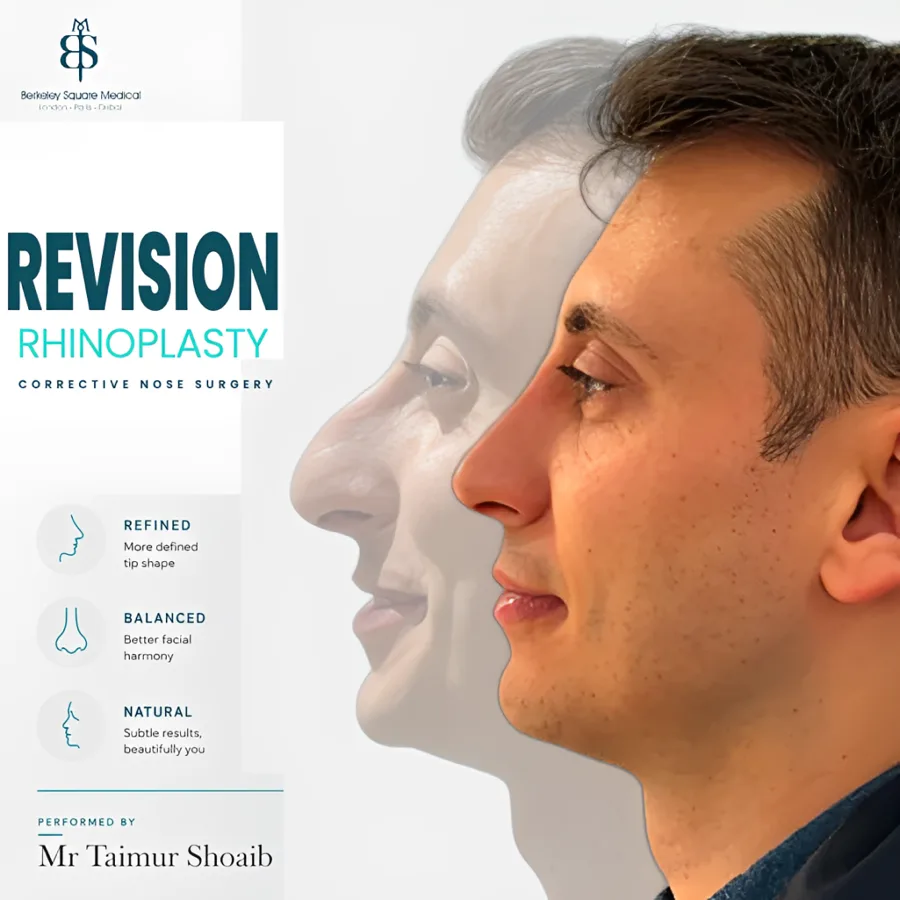 Revision RhinoplastyCorrecting or improving a previous rhinoplasty.Read more
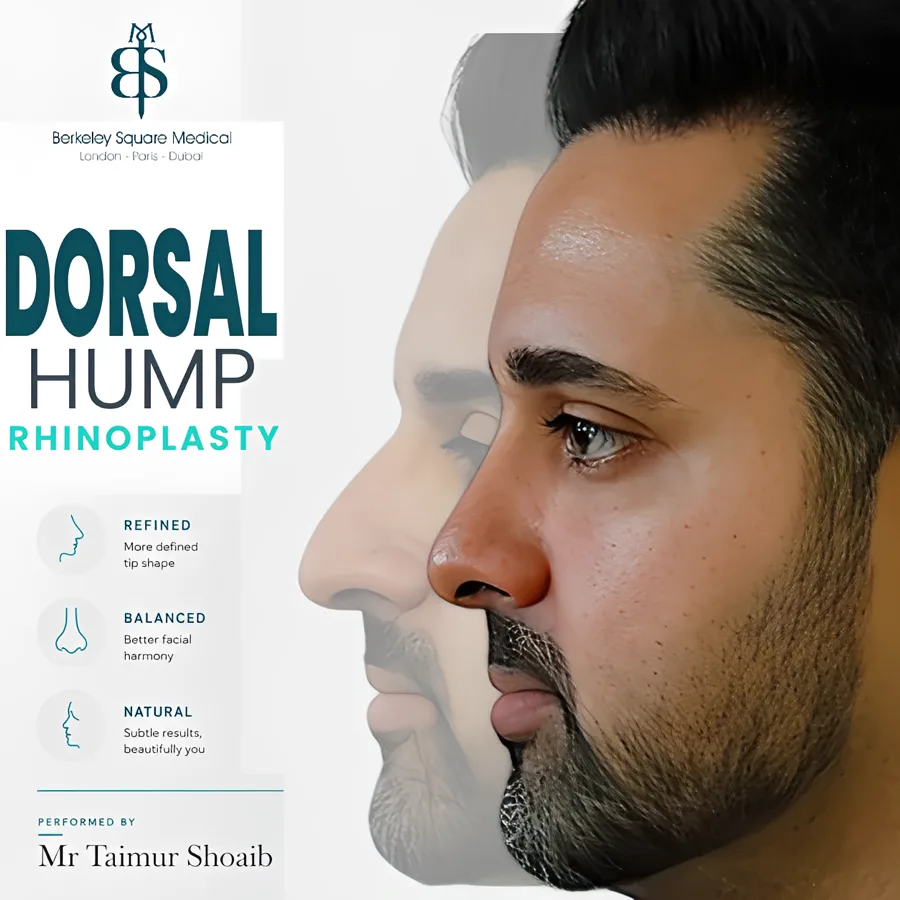 Dorsal Hump RhinoplastyRemoving a bump on the bridge for a straight profile.Read more
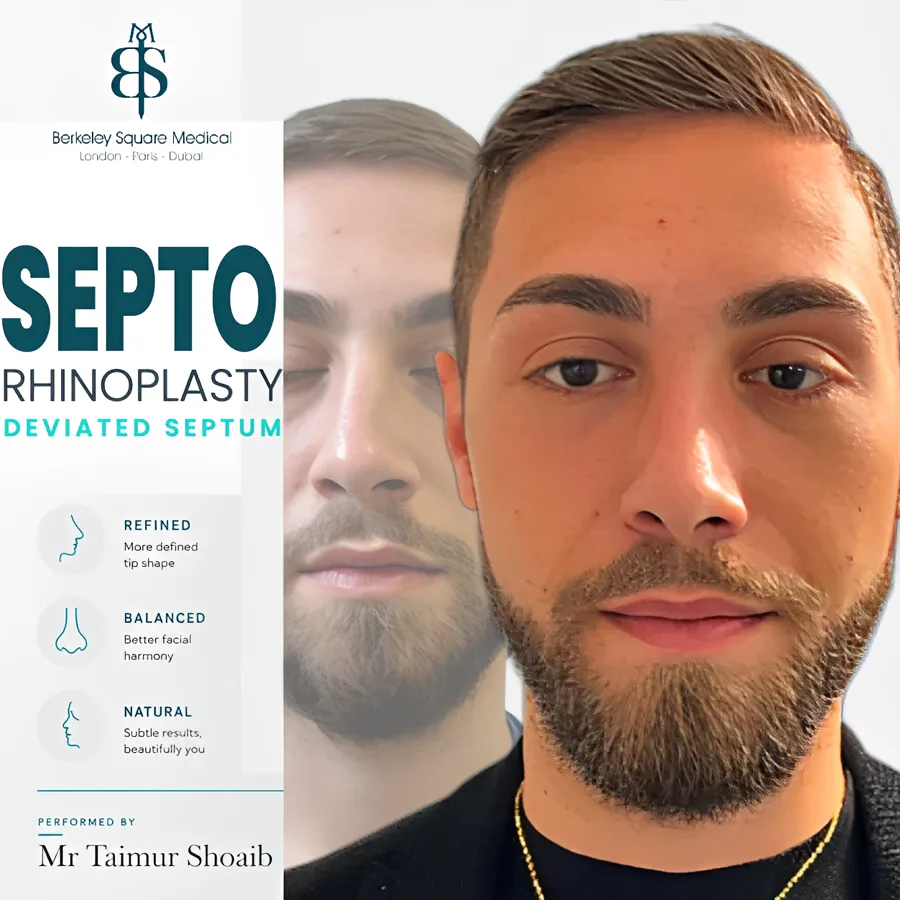 SeptorhinoplastyStraightening the nose and improving breathing.Read more
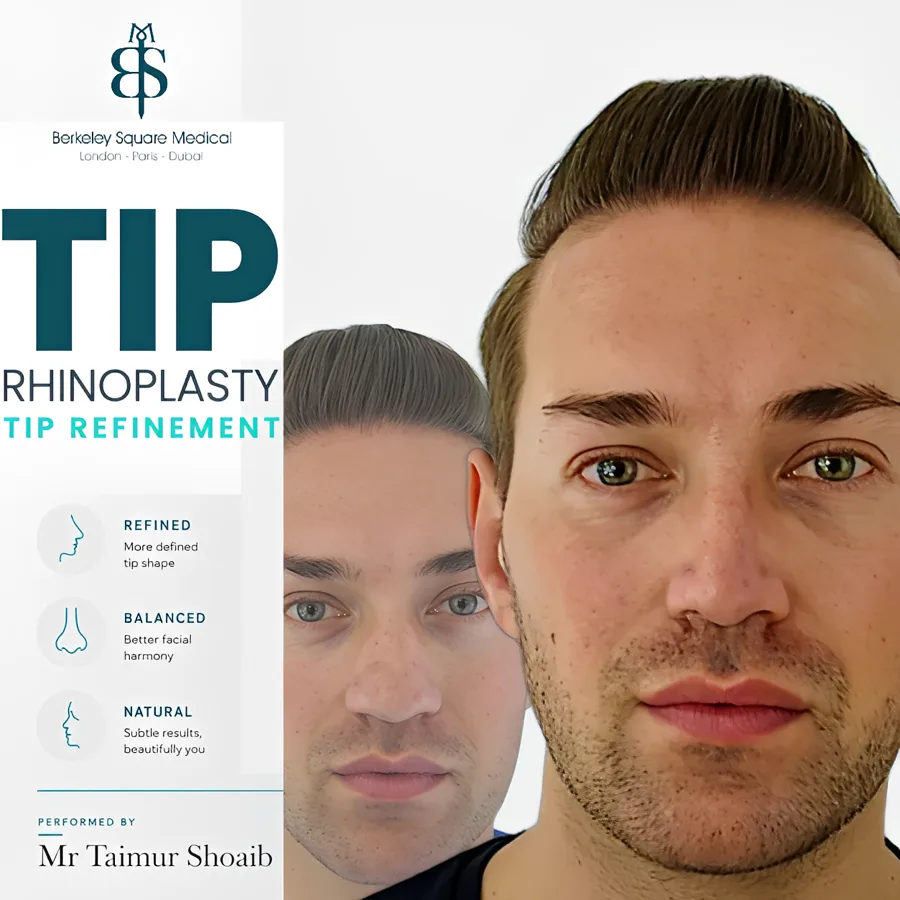 Tip RhinoplastyRefining a bulbous, drooping or asymmetrical tip.Read more
Specialised Rhinoplasty For Females
Explore our specialist procedures. Tap any card to read more.
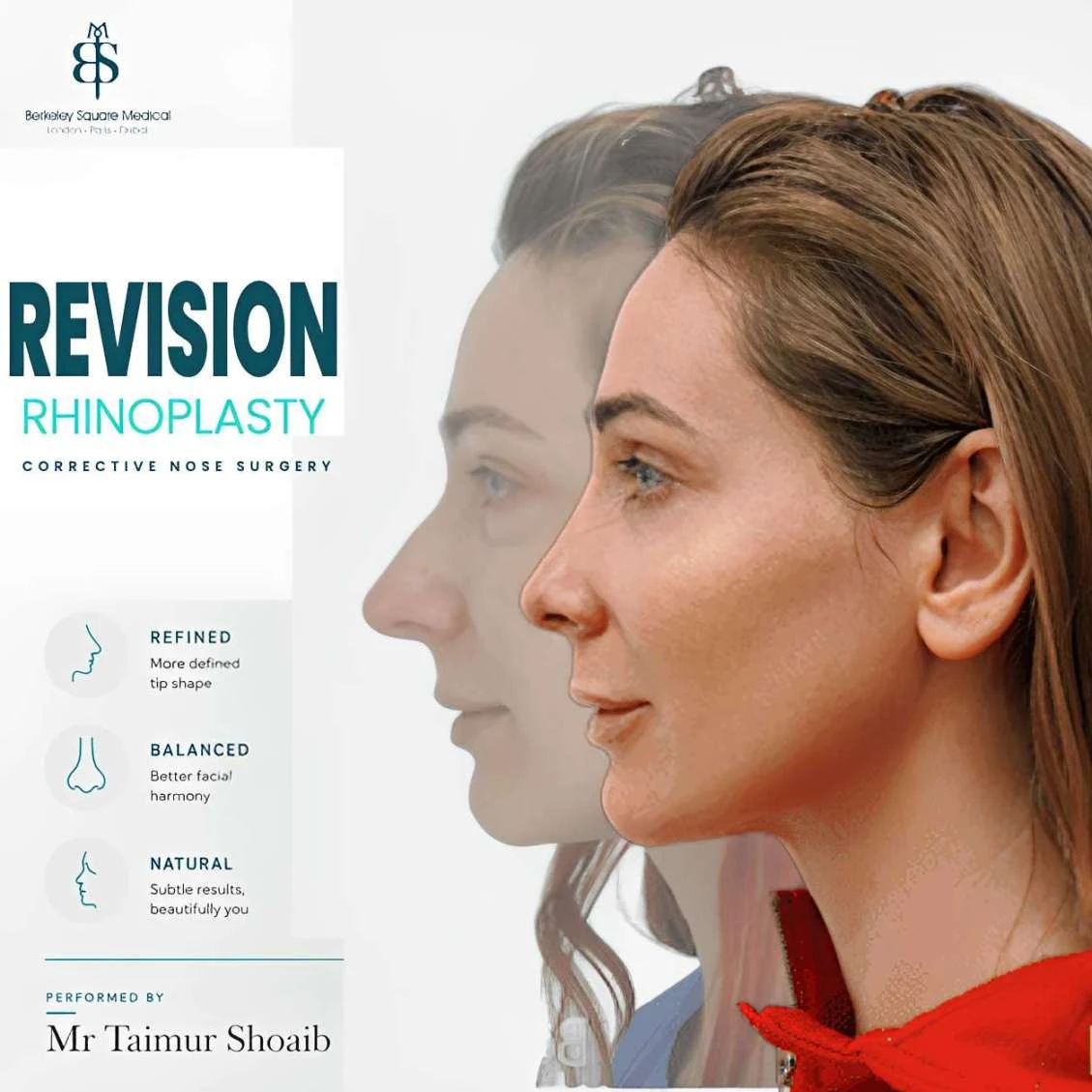 Revision RhinoplastyCorrecting or improving a previous rhinoplasty.Read more
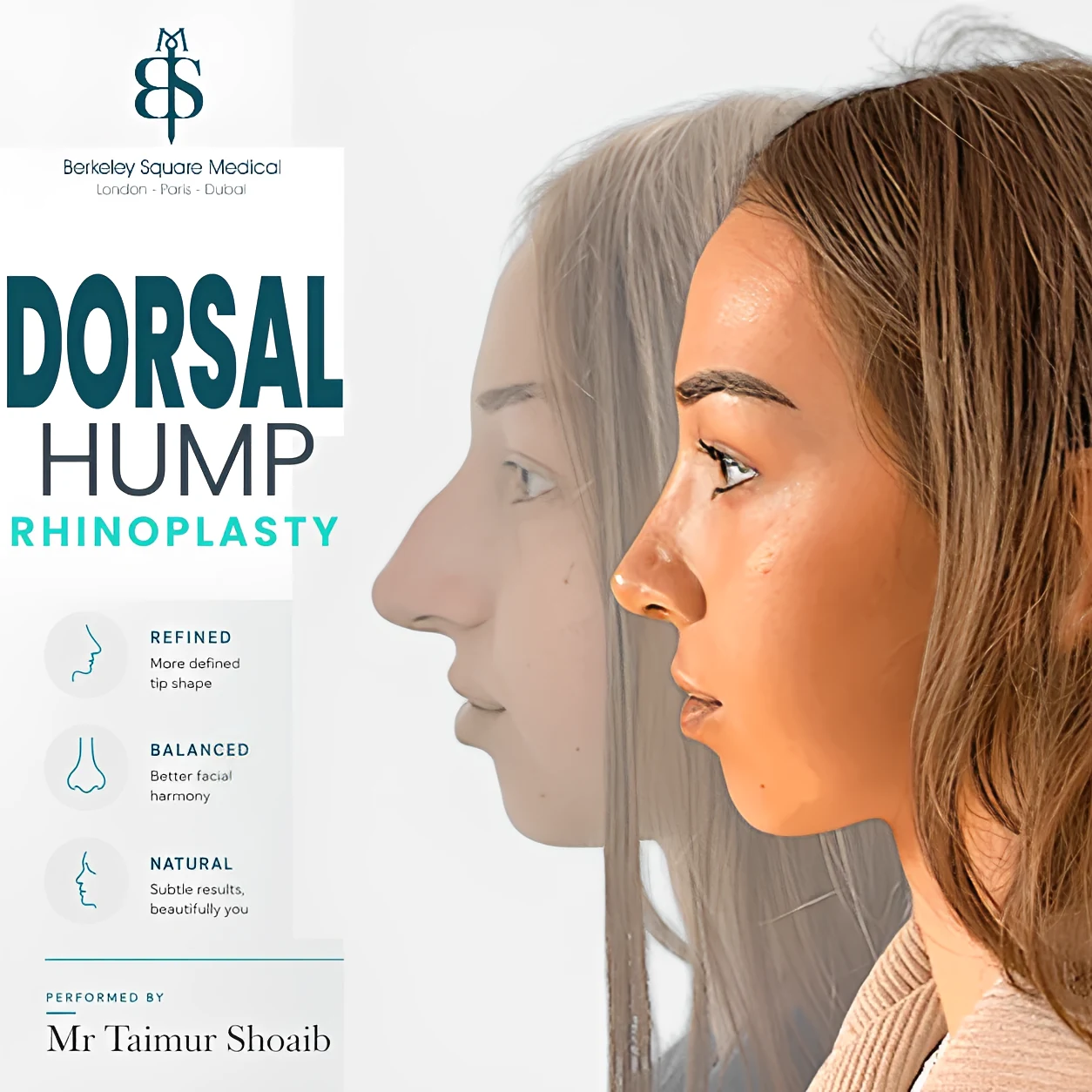 Dorsal Hump RhinoplastyRemoving a bump on the bridge for a straight profile.Read more
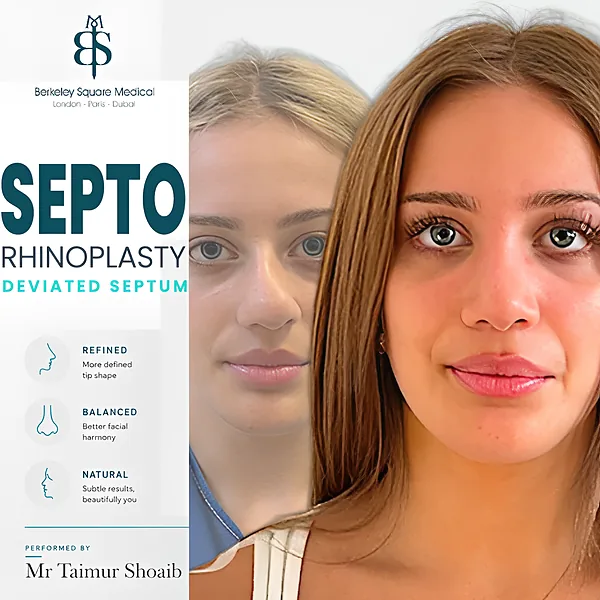 SeptorhinoplastyStraightening the nose and improving breathing.Read more
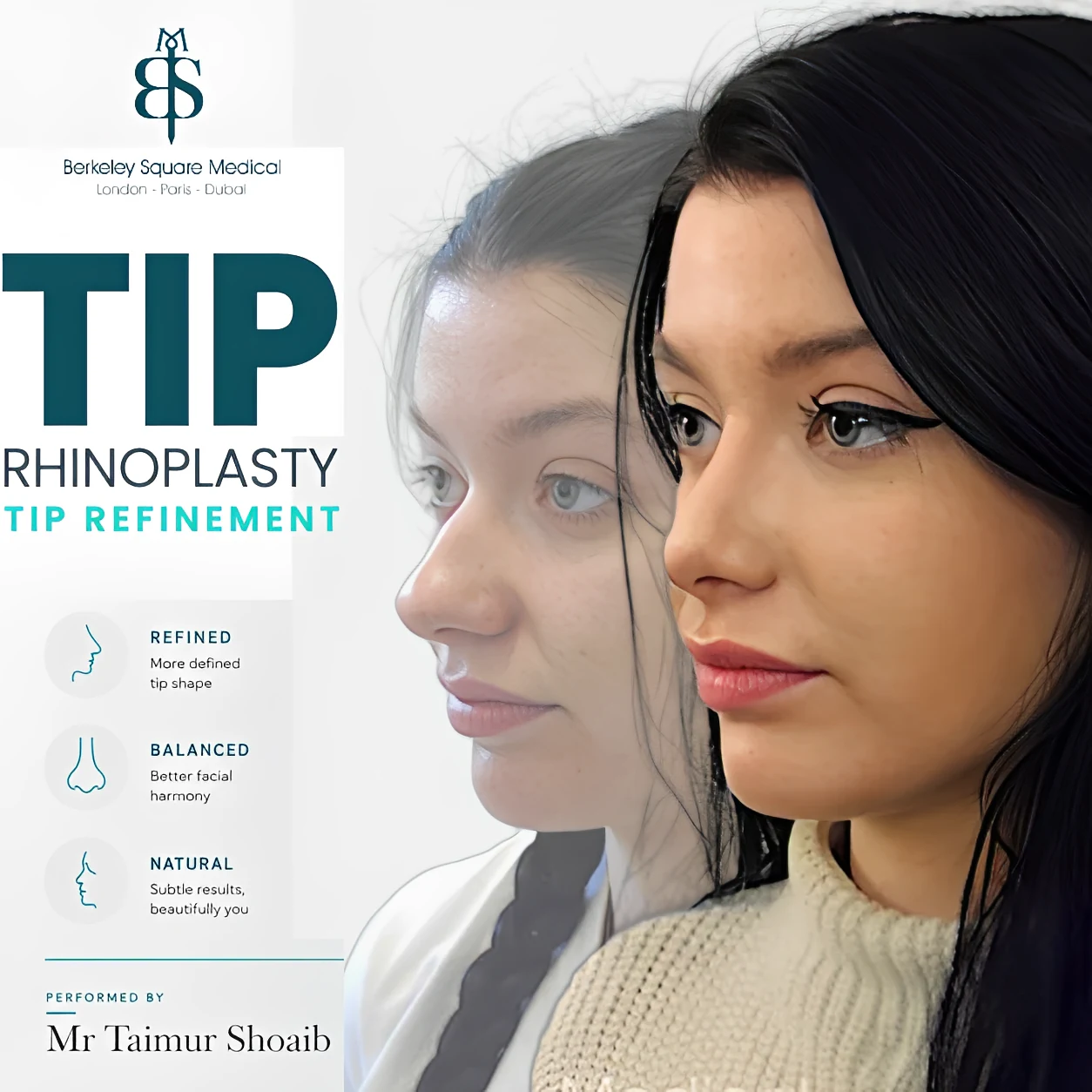 Tip RhinoplastyRefining a bulbous, drooping or asymmetrical tip.Read more
Considering rhinoplasty in London?
If you are weighing up your options in the UK, the next step is a consultation with Mr Taimur Shoaib at 64 Harley Street. Explore rhinoplasty at Berkeley Square Medical, see typical rhinoplasty costs in London, or read about septorhinoplasty in London if breathing is also a concern.
About the author