When you can start cleaning your nose
Inside and outside follow different timelines
A little blood and crusting around the nose in the first days of recovery is completely normal, and keeping the area gently clean is one of the most effective things you can do to help it settle. It is simpler than it sounds. Gentle cleaning clears the dried blood and mucus that naturally collect inside a healing nose, which keeps you more comfortable and helps keep the healing area clean. It is one part of a smooth rhinoplasty recovery, covered more fully in our rhinoplasty aftercare guide. The key is knowing what is safe, and when, because the inside and the outside of your nose heal on different schedules.
- Inside the nose. Many surgeons allow gentle saline rinsing once any nasal packing is removed, often within the first day or two, but wait until your own surgeon confirms it is safe to start.
- Outside the nose. Wait until the cast, splint or plaster comes off, normally at around 7 to 10 days, before washing the skin over your nose.
These are general guides. Every operation is slightly different, so if Mr Shoaib or your own surgeon gives you specific instructions, always follow those first. They know exactly what was done to your nose.
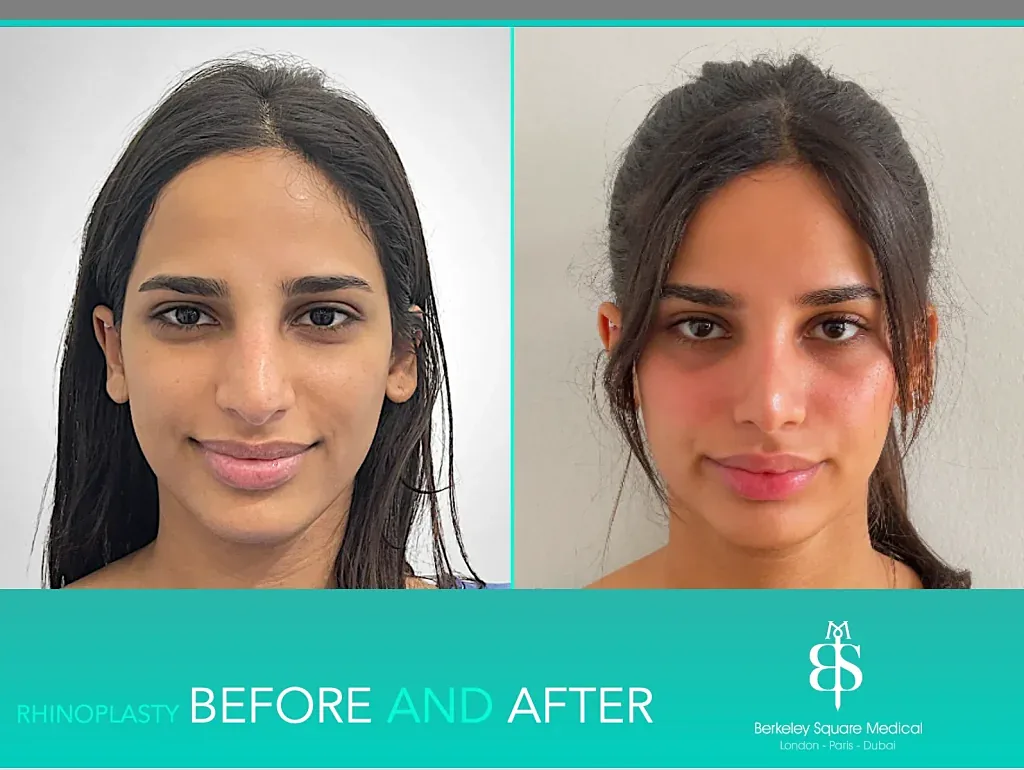
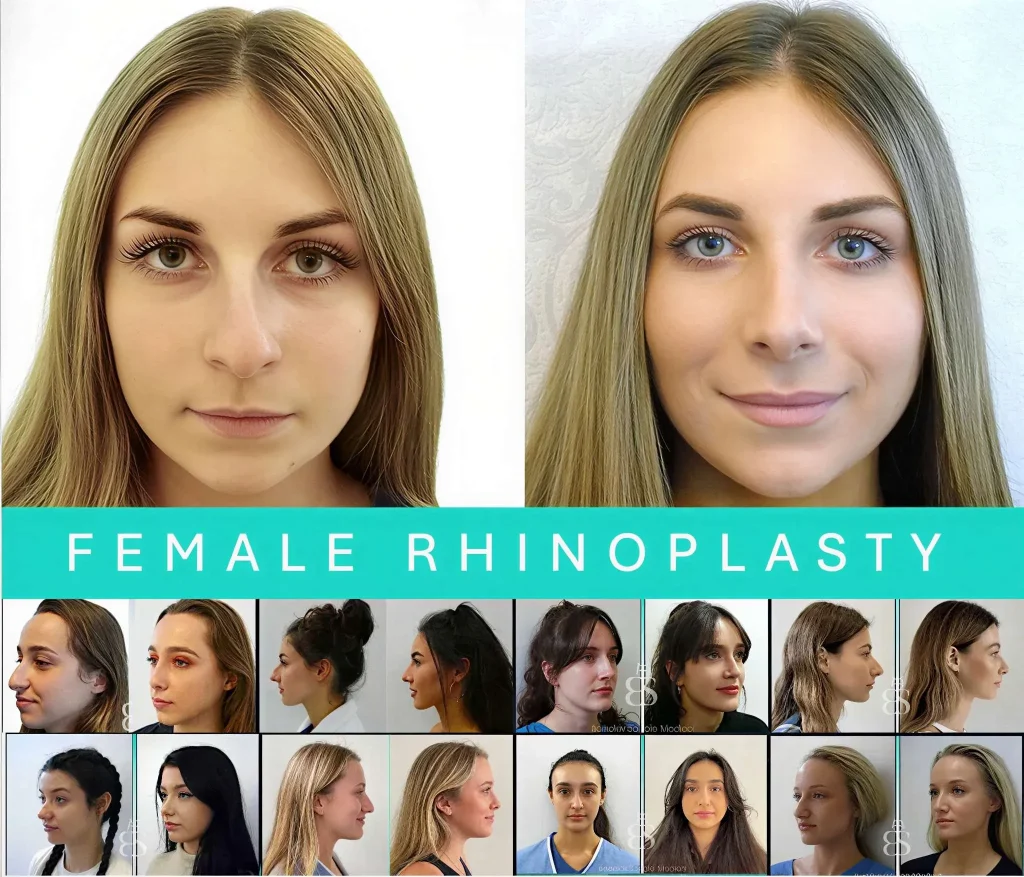
Natural results performed by Mr Taimur Shoaib at Berkeley Square Medical. Individual results vary; consenting patient.
Cleaning your nose after rhinoplasty: a week-by-week timeline
What is safe at each stage
Cleaning the right way at the right time protects the delicate work inside your nose. This is the pattern most surgeons recommend, though your own instructions always take priority. For the broader picture of how your nose changes week by week, our rhinoplasty healing stages guide covers the full timeline.
| Time after surgery | Inside the nose | Outside the nose |
|---|---|---|
| Days 0 to 2 | Leave any packing undisturbed. No cleaning inside until your surgeon removes it. | Do not wash or touch the splint or the skin around it. |
| Days 2 to 7 | Once packing is out and your surgeon agrees, begin gentle saline spray or rinse 2 to 5 times a day to soften and clear crusting. | Keep the splint dry and in place. Clean only the areas well away from it. |
| Days 7 to 10 | Continue regular saline rinses; crusting is often at its heaviest now. | After the splint is removed, gently wash the skin with lukewarm water and a mild cleanser, then pat dry. |
| Weeks 2 to 4 | Keep up saline rinses if crusting or dryness continues; avoid suction devices and forceful sprays. | Resume normal, gentle face washing; avoid scrubbing, retinols and exfoliants near the nose. |
| After 4 weeks | Rinse as needed for comfort; most crusting has settled. | Return to your usual skincare once your surgeon confirms the nose has healed. |
Throughout this period, do not blow your nose or insert anything deep inside it. If you feel congested, our guide on blowing your nose after rhinoplasty explains when that becomes safe.
How to clean and rinse the inside of your nose
How to clean inside your nose after surgery
Saline rinsing is the safest and most effective way to keep the inside of your nose clean while it heals. Salt water loosens dried blood and mucus without harsh chemicals, and it keeps the tissue moist, which reduces crusting and keeps you more comfortable while it heals. A simple routine looks like this:
- Use a sterile saline spray or a saline rinse from the pharmacy, or make up a solution exactly as your surgeon advises. Avoid tap water and anything alcohol-based.
- Tilt your head gently over a sink and apply the saline into each nostril, letting it soften the crusting. Do not force it or sniff hard.
- Let the loosened blood and mucus drain naturally. Dab, rather than wipe, with clean gauze or a tissue at the nostril opening.
- Repeat 2 to 5 times a day, or as often as your surgeon suggests, especially in the first two weeks.
- A thin smear of Vaseline or a prescribed ointment at the nostril edge afterwards, if your surgeon is happy for you to, helps stop new crusts forming.
Never insert a syringe, tissue or cotton bud deep into the nasal passages. The internal structures are still healing and can be damaged by anything pushed inside. For a fuller list of what to avoid during recovery, see our guide on what not to do after rhinoplasty.
Removing dried blood and crusting safely
How to clean blood out of your nose safely
Dried blood inside and around the nostrils is normal in the first fortnight after rhinoplasty. The safe way to remove it is to soften it first, never to pick or pull:
- Apply saline or sterile water on a cotton ball or gauze pad to the surface crusting and let it soak in until it loosens.
- Gently lift away the softened crust at the nostril opening only. If it does not come away easily, leave it and soften it again later.
- Rinse the inside with saline as above, then pat the area dry without pressing on the nose.
Using a cotton bud (Q-tip)
A cotton bud can be used to remove softened crusting, but only right at the nostril opening. Soak it in saline first, then gently roll away the loosened blood. Do not go any deeper than the very edge of the nostril, because pushing a bud inside a healing nose can disturb the reconstructed cartilage and bone. Avoid hydrogen peroxide entirely. It is too harsh for healing tissue and can damage the delicate mucosa inside a healing nose.
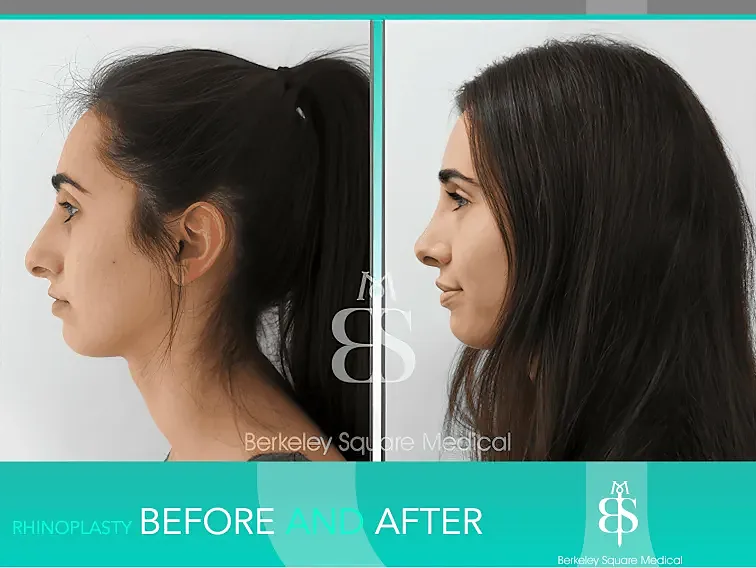
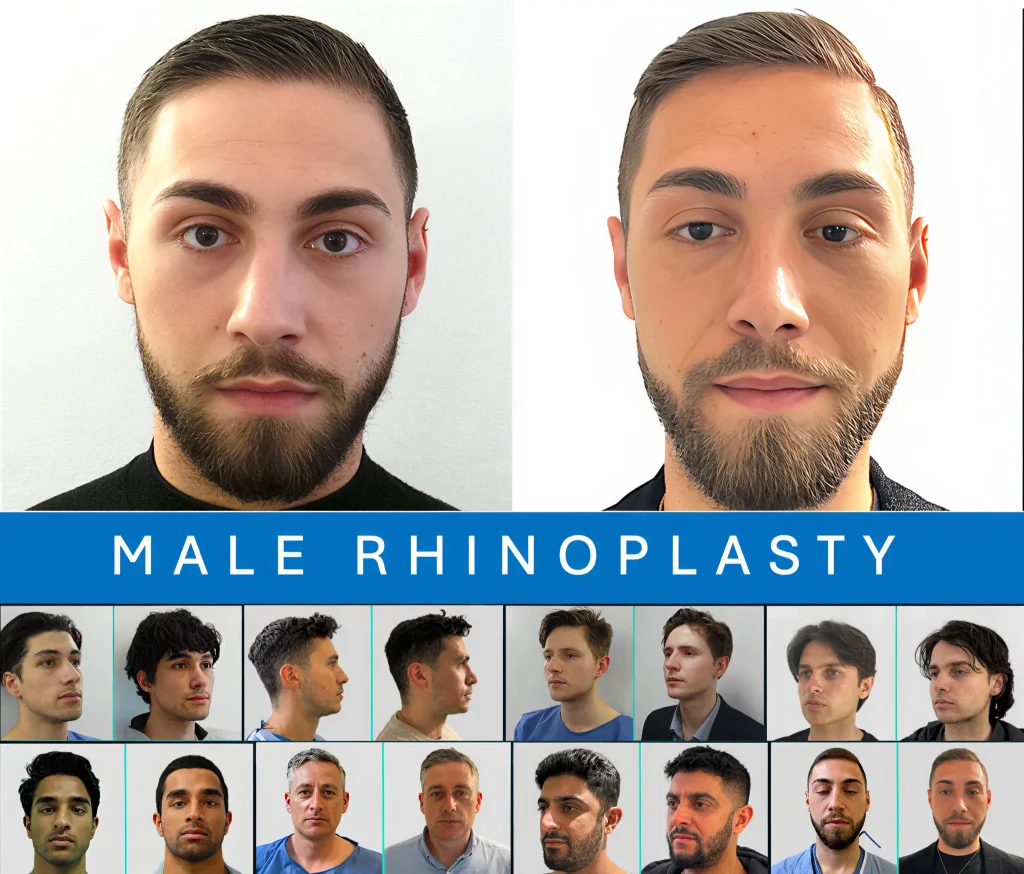
Natural results performed by Mr Taimur Shoaib at Berkeley Square Medical. Individual results vary; consenting patient.
Washing the outside of your nose
Once the splint or plaster is off
The plaster or splint applied after rhinoplasty holds the reshaped bone and cartilage in position while the initial swelling is at its highest, so keeping it completely dry is critical. Do not let water get under or around it, and avoid steam, condensation and facial products near the nose until it is removed, usually at your first post-operative appointment at around 7 to 10 days.
Once the splint is off, you can begin gently washing the outside of your nose. Use lukewarm water and a gentle, non-abrasive cleanser, and keep it light until the nose has fully healed at around 4 to 6 weeks. A few simple pointers:
- Pat, do not rub. Dry the skin gently and never press down on the bridge or tip.
- Remove leftover plaster residue carefully. Any glue from the tape can be dabbed away with a little sterile solution on gauze or a cotton swab.
- Avoid vigorous cleansers. Anything that needs firm rubbing to wash off is best left until you have fully recovered.
- Hold off on blackhead strips and exfoliation. Wait until your surgeon confirms the skin has settled before returning to that kind of routine. The same caution applies to exercise; our guide on exercise after rhinoplasty explains when it is safe to return to the gym.
How often to clean, and which products help
Keeping it simple and safe
For the inside of your nose, cleaning 2 to 5 times a day is plenty. If you keep the tissue moist with regular saline, crusting stays to a minimum and you may find once or twice a day is enough. A typical, surgeon-friendly kit is short and inexpensive, and all of it is available over the counter:
- Saline spray or rinse to clear and moisten the inside of the nose.
- Sterile gauze or cotton balls for softening and dabbing away surface crusts.
- Vaseline or a prescribed ointment at the nostril edge, if your surgeon agrees, to prevent new dried-blood build-up.
What you should not do is reach for suction devices, forceful sprays, or anything you insert deeply. Regular, gentle cleaning is more effective than infrequent but vigorous attempts, and causes far less discomfort.
When can you blow your nose?
Most surgeons recommend waiting at least 3 to 4 weeks before blowing your nose. Until then, regular saline rinsing clears the passages without the pressure that could disturb healing tissue. Our guide on blowing your nose after rhinoplasty explains exactly when it becomes safe and how to do it gently.
What comes out of your nose, and when to call your surgeon
Normal healing versus warning signs
A mixture of old blood and mucus draining from your nose for several days after surgery is completely normal, and keeping it cleared away with saline genuinely helps you stay comfortable. Left to build into hard chunks, that mixture can harbour bacteria, which is exactly why gentle cleaning matters. Most of what you notice in the first weeks is expected:
- Blood-tinged mucus and crusting, heaviest in the first week.
- A blocked, stuffy feeling as internal swelling settles. Our guide on swelling after rhinoplasty explains what to expect at each stage.
- Small spots of fresh blood if a crust is dislodged during cleaning.
Contact your surgeon promptly if you notice:
- Heavy or persistent bleeding that does not stop with gentle pressure.
- Thick yellow or green discharge, a bad smell, or a fever.
- Increasing redness, heat, or pain that worsens rather than eases.
- Any new or worsening difficulty breathing. If breathing becomes severely difficult, treat it as an emergency, see below.
- If you still have nasal packing in place and develop a high fever, a widespread sunburn-like rash, vomiting, diarrhoea, dizziness or feeling faint, seek urgent medical help straight away, as these can rarely be signs of a serious reaction.
Infections and bleeding after rhinoplasty are uncommon, but a quick review is always the safest response. If you experience severe difficulty breathing, chest pain, or bleeding that will not stop, call 999 immediately.
If you are considering rhinoplasty and want to understand exactly how aftercare is managed, you are welcome to book a consultation with Mr Shoaib at 64 Harley Street. For patients already under our care, your aftercare team is your first point of contact for any questions.
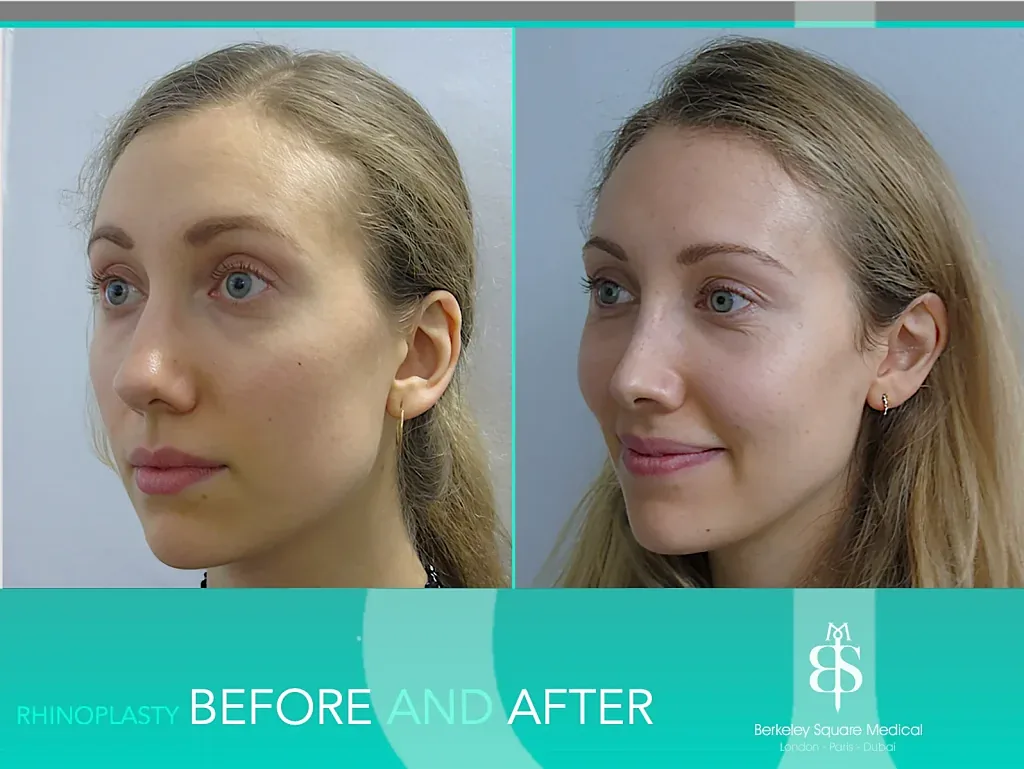
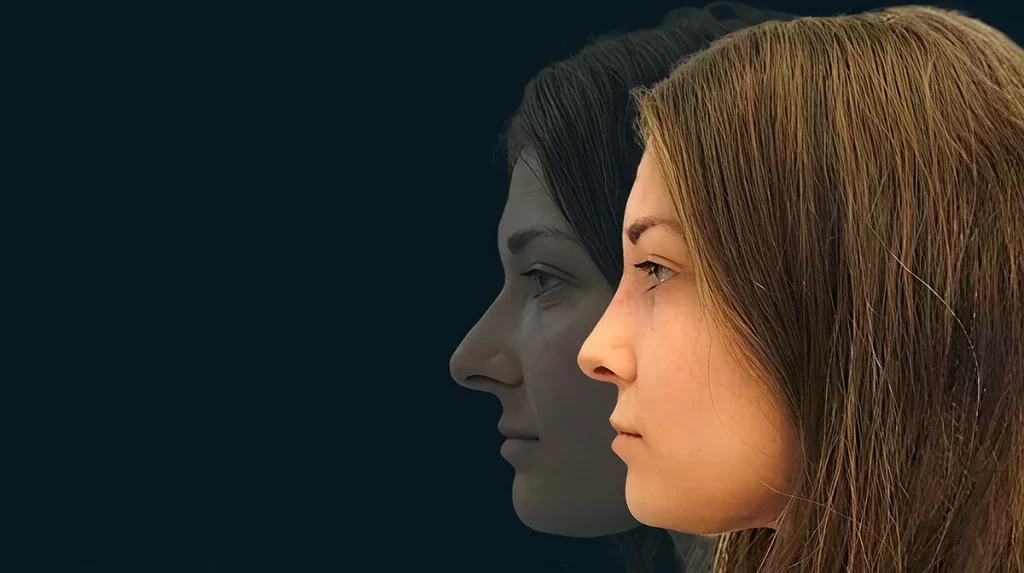
Natural results performed by Mr Taimur Shoaib at Berkeley Square Medical. Individual results vary; consenting patient.
Specialised Rhinoplasty For Men
Explore our specialist procedures. Tap any card to read more.
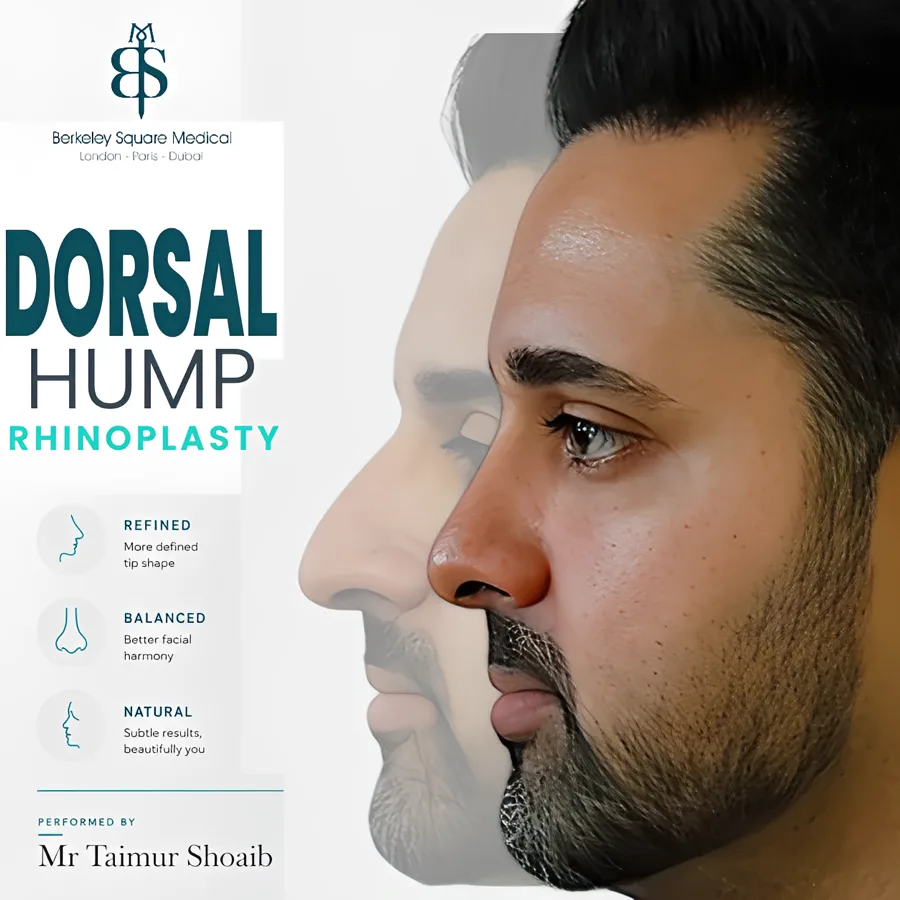 Dorsal Hump RhinoplastyRemoving a bump on the bridge for a straight profile.Read more
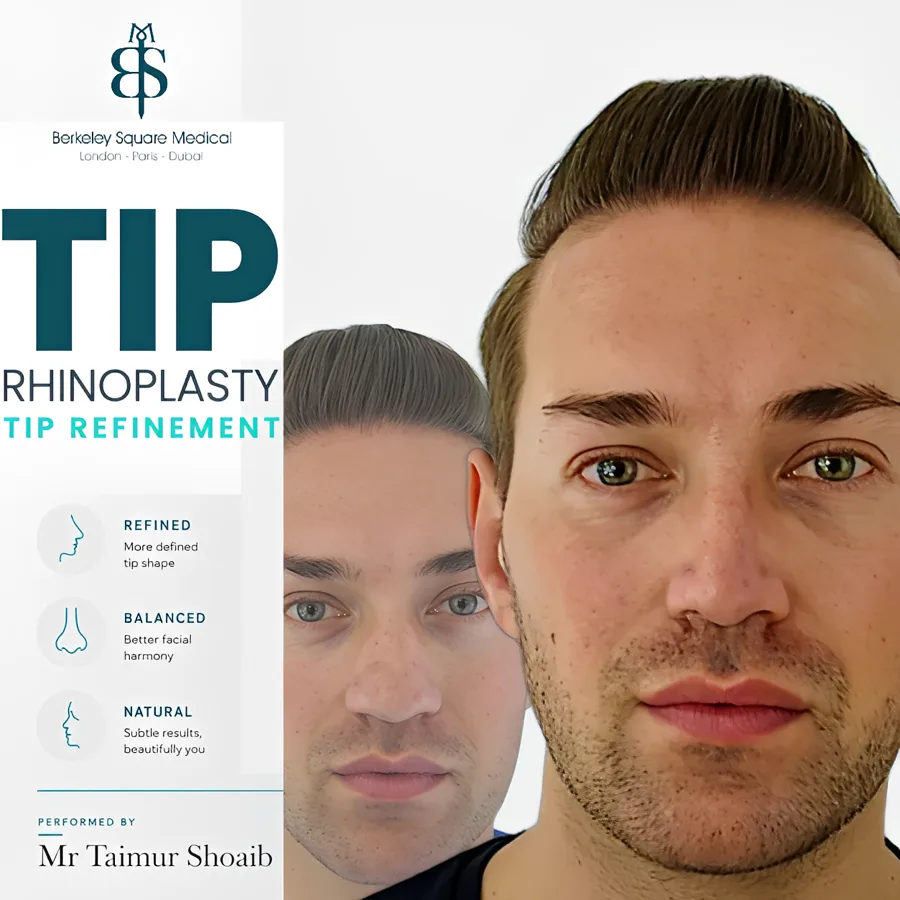 Tip RhinoplastyRefining a bulbous, drooping or asymmetrical tip.Read more
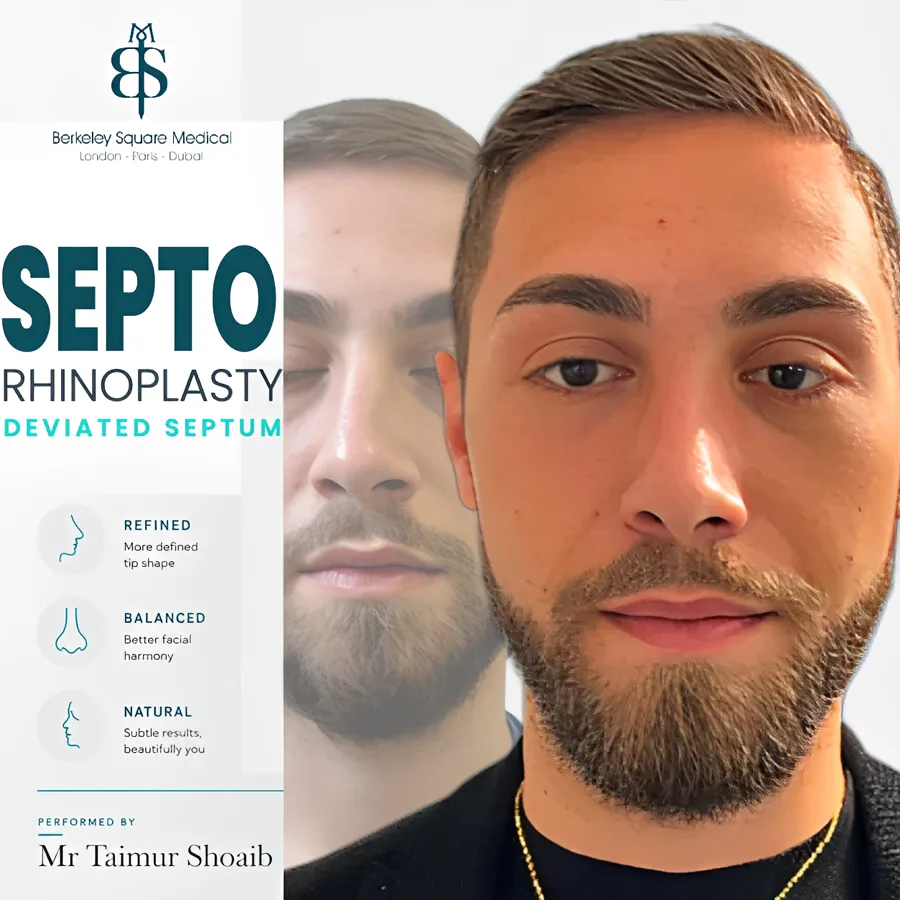 SeptorhinoplastyStraightening the nose and improving breathing.Read more
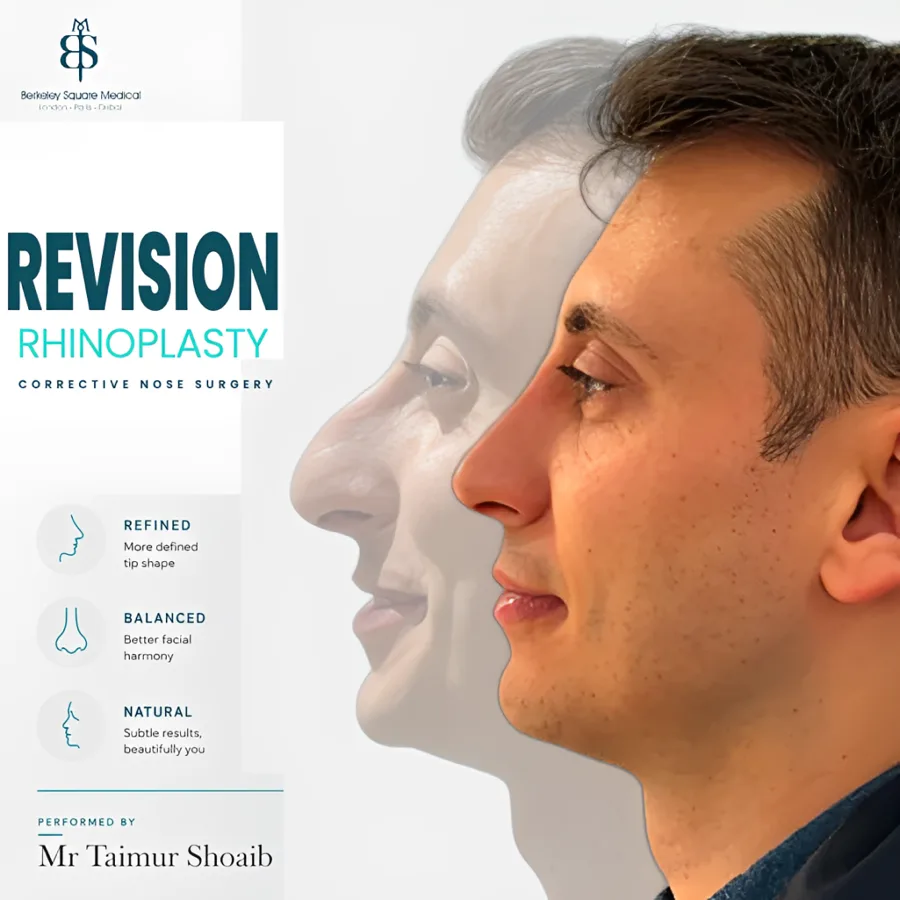 Revision RhinoplastyCorrecting or improving a previous rhinoplasty.Read more
Specialised Rhinoplasty For Females
Explore our specialist procedures. Tap any card to read more.
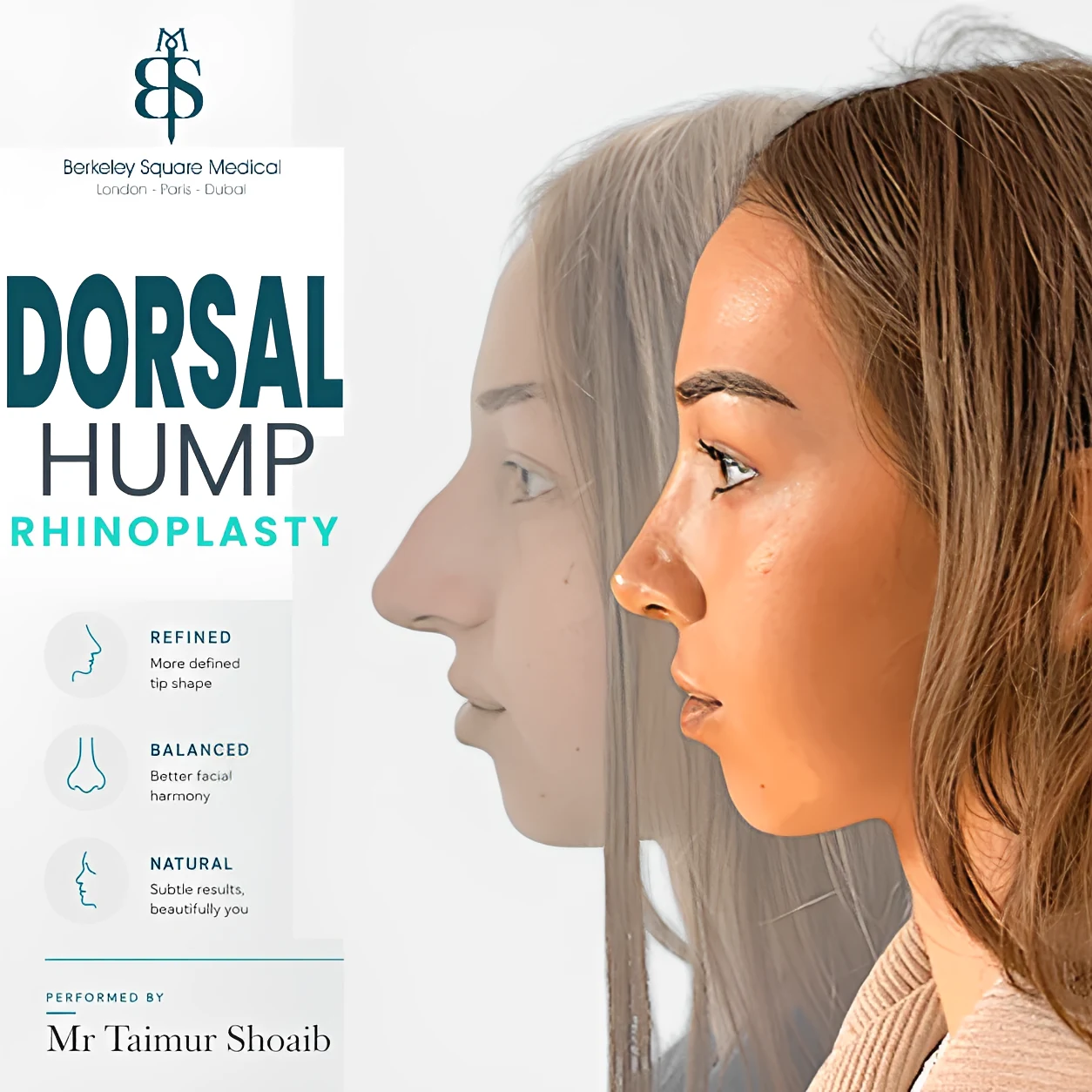 Dorsal Hump RhinoplastyRemoving a bump on the bridge for a straight profile.Read more
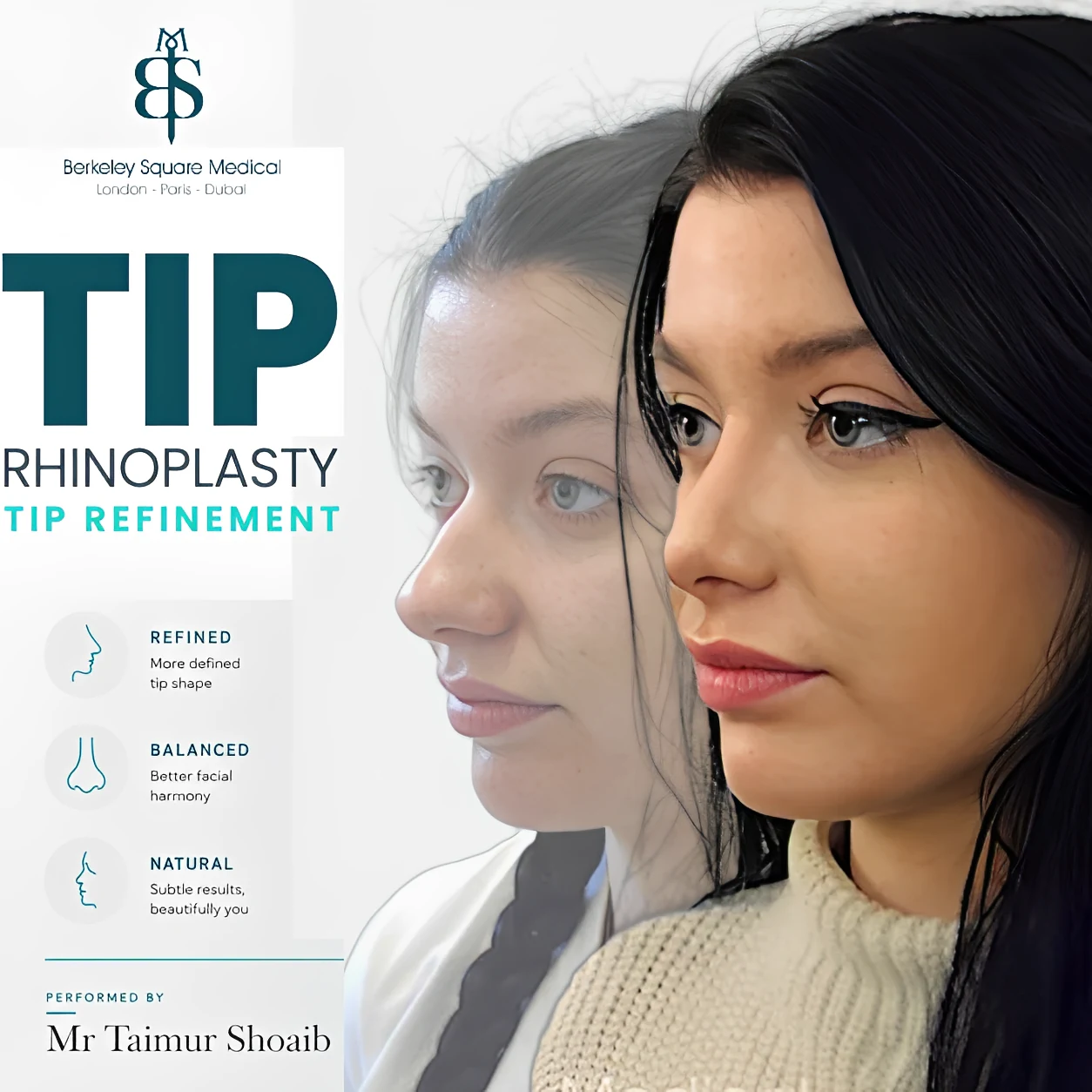 Tip RhinoplastyRefining a bulbous, drooping or asymmetrical tip.Read more
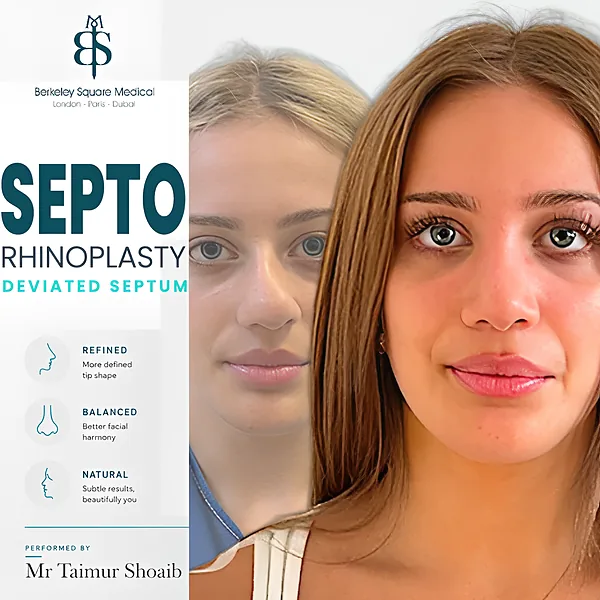 SeptorhinoplastyStraightening the nose and improving breathing.Read more
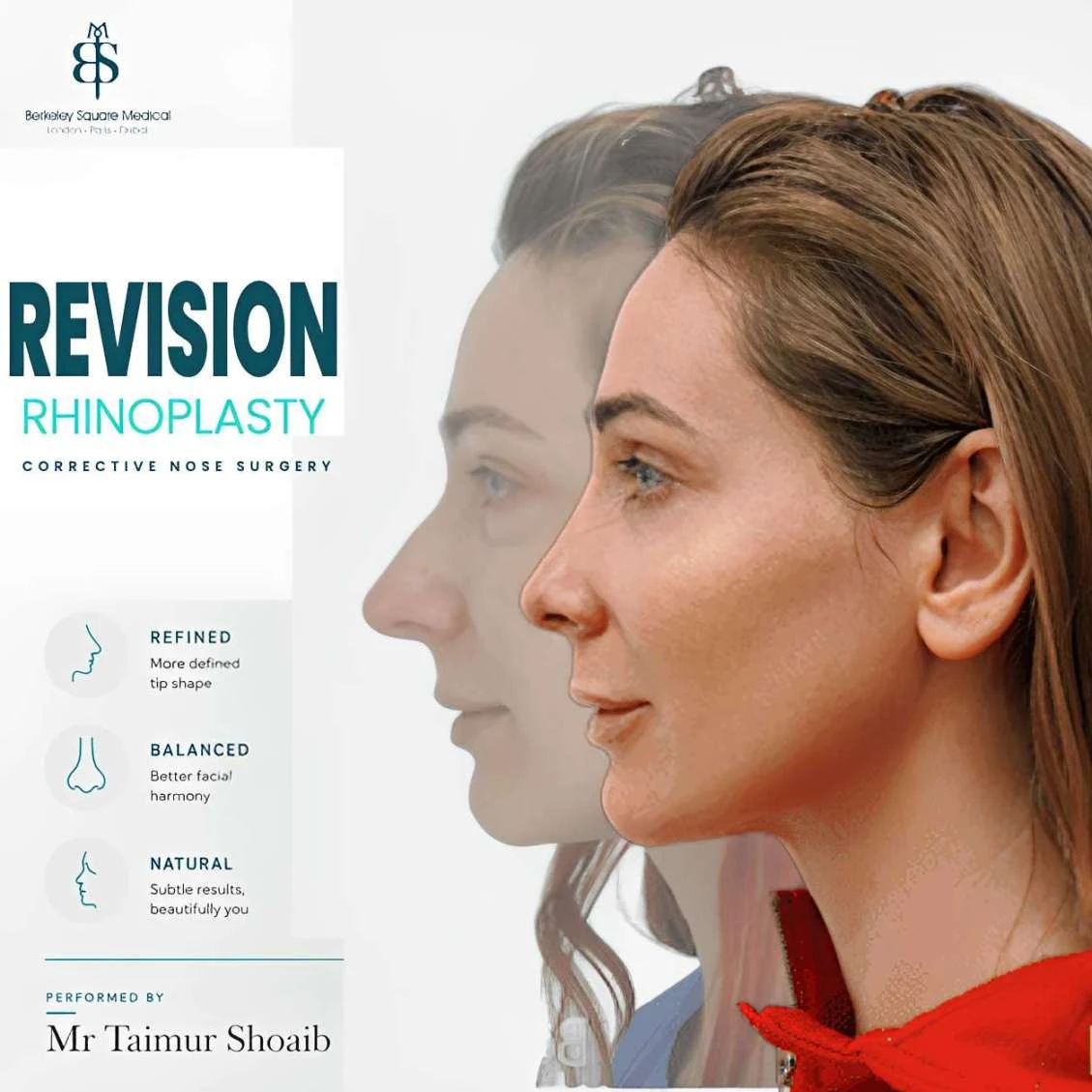 Revision RhinoplastyCorrecting or improving a previous rhinoplasty.Read more
Considering rhinoplasty in London?
If you are weighing up your options in the UK, the next step is a consultation with Mr Taimur Shoaib at 64 Harley Street. Explore rhinoplasty at Berkeley Square Medical, see typical rhinoplasty costs in London, or read about septorhinoplasty in London if breathing is also a concern.