
Nasal packing is a common part of rhinoplasty recovery, yet it remains one of the most misunderstood and feared aspects of the healing process. Whether you are preparing for surgery or looking for reassurance about what to expect, understanding how nasal packing works, and how modern techniques improve comfort, can make recovery far easier.
This guide explains what nasal packing is, why surgeons use it, how long it typically stays in, what removal feels like, and how advanced early-removal protocols at Berkeley Square Medical help minimise discomfort, breathing issues, and infection risks.
Packless rhinoplasty, and no packing left in overnight
Nasal packing is one of the things patients fear most. At Berkeley Square Medical, Mr Taimur Shoaib performs packless rhinoplasty wherever the surgery allows, so many patients have no nasal packing at all.
Where packing is used, it is always removed about 2 hours after surgery, before you go home, while it is still moist, so it has little time to dry out or collect bacteria, and you avoid the uncomfortable removal several days later that many patients worry about.
See if you are a candidate for packless rhinoplastyWhat is nasal packing, and how long does it stay in?
Nasal packing is sterile material placed inside the nose after rhinoplasty to control bleeding, support the internal structures and stabilise the septum while early healing begins. Traditional packing is often left in for 24 hours up to 7 days; dissolvable packing breaks down on its own; and at Berkeley Square Medical any packing is removed about 2 hours after surgery, before you go home.
Nasal packing, internal splints and dissolvable packing compared
| Type | What it is | Can you breathe through your nose? | How it comes out |
|---|---|---|---|
| Traditional packing | Gauze or sponge packed into the nose | No, you breathe through your mouth | Removed by the surgical team, usually after 24 hours and up to 7 days, depending on the surgeon |
| Internal silicone splints | Thin, flexible silicone sheets either side of the septum, often with a small built-in airway | Partly, through the built-in airway | Slid out at the splint review, usually about a week after surgery |
| Dissolvable packing | Gel or foam that breaks down on its own | Limited at first | Dissolves over 1 to 2 weeks, helped by saline spray |
At Berkeley Square Medical: Mr Taimur Shoaib performs packless rhinoplasty wherever the surgery allows, so many patients have no nasal packing at all. Where packing is used, it is always removed about 2 hours after surgery, before you leave the hospital, while it is still moist. Mr Shoaib does not use internal splints.
Does nasal packing removal hurt?
For most people, packing removal feels like a strong pressure or pulling sensation for a few seconds rather than a sharp pain, and breathing often feels a little easier once it is out, although swelling can keep the nose feeling blocked for a while. Experiences vary: packing that has stayed in for several days and dried out tends to be more uncomfortable to remove.
- Splints usually slide out more easily. Internal silicone splints are smooth, so they tend to slide out in one movement, whereas gauze or sponge packing can cling to healing tissue.
- A little oozing afterwards is normal. Some light, blood-tinged ooze for a day or so is expected. Dab rather than wipe, and contact the team if bleeding is heavy or does not settle.
- Do not blow your nose afterwards. Wait about 2 to 3 weeks after a standard rhinoplasty, or about 4 weeks after septorhinoplasty, revision or graft surgery. See our guide to blowing your nose after rhinoplasty.
Traditional Removal (After 1 to 7 Days)
Removal can cause discomfort because the material may adhere to tissues and feel like a strong pulling sensation. Some describe it as:
-
Sharp
-
Pressure-heavy
-
Momentarily unpleasant
The discomfort is usually brief but memorable.
Early Removal (Used at Berkeley Square Medical)
Patients typically describe removal as:
-
Mild
-
Odd rather than painful, for most people
-
Much more comfortable than expected
Because the packing is removed before it has time to dry out or stick to tissues, the experience is usually easier.
With Mr Shoaib's packless approach, many patients have no nasal packing to remove at all. Where packing is used, it is always removed about 2 hours after surgery, before you go home, while it is still moist, so you avoid the later removal, after several days, that many patients worry about.
Nasal packing, explained
Types of nasal packing
There are several forms of nasal packing used across rhinoplasty and sinus surgery, each with advantages and drawbacks. Understanding the options helps patients know what to expect, and why some materials cause more discomfort than others.
1. Traditional Gauze Packing
This is the most widely recognised form of nasal packing. Long strips of lubricated gauze are placed deep inside the nostrils to absorb blood and stabilise tissues.
-
Pros: Effective at controlling bleeding, inexpensive.
-
Cons: Causes full nasal blockage, often uncomfortable, can become stuck to healing tissue, and removal can be painful.
2. Merocel (Sponge) Packing
Merocel is a synthetic, sponge-like material that expands when moistened.
-
Pros: More consistent pressure than gauze, good for bleeding control.
-
Cons: Can feel firm inside the nose; removal may cause temporary discomfort or tearing sensation.
3. Dissolvable Nasal Packing
Dissolvable gel-foam materials are increasingly used after septoplasty or functional rhinoplasty.
-
Pros: No removal required, more comfortable, allows some airflow.
-
Cons: May not provide the same structural support as traditional packing; more expensive.
4. Internal Nasal Splints
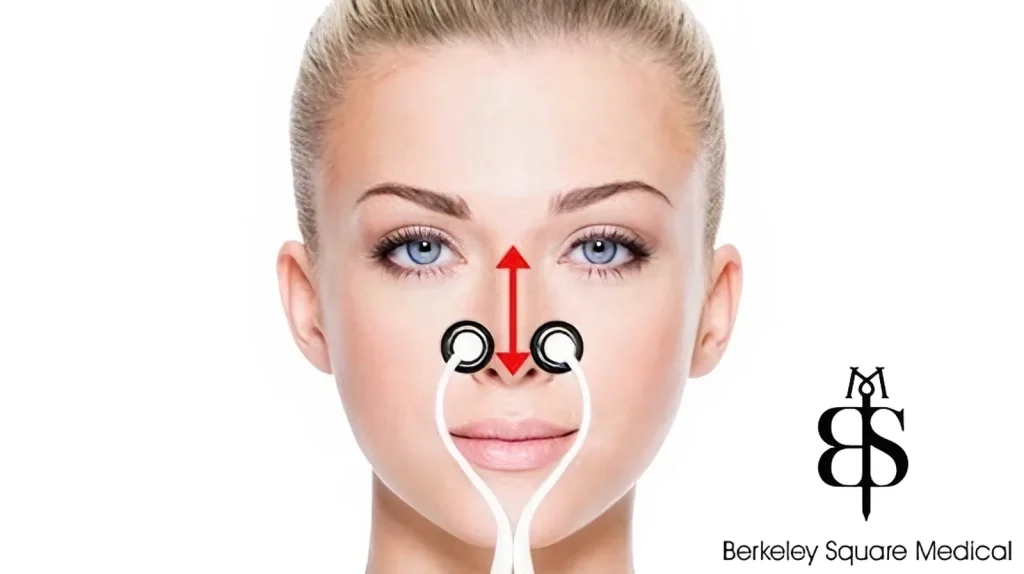
Sometimes confused with nasal packing, splints are thin, flexible plates placed inside the nose.
-
Pros: Allow limited breathing through built-in airways, reduce scar tissue formation, stabilise the septum.
-
Cons: Not a replacement for packing in all cases; may still cause pressure or temporary blockage.
5. Packless Rhinoplasty: Minimal or No Packing
At Berkeley Square Medical, Mr Taimur Shoaib performs packless rhinoplasty wherever the surgery allows, using gentle tissue handling so that many patients need no nasal packing at all. Find out if you are a candidate for packless rhinoplasty.
Where packing is used, it is always removed about 2 hours after surgery, before you go home, while it is still moist. That means it has little time to dry out or collect bacteria, and avoids the uncomfortable removal several days later that many patients fear. We do not leave packing in for days.
Common challenges and discomforts
Nasal packing is effective, but it also brings several challenges that patients frequently describe during early recovery:
Blocked Nasal Breathing
Traditional packing completely fills the nasal passages. Patients must breathe through their mouths until it is removed, which can cause:
-
Dry throat
-
Mouth discomfort
-
Difficulty sleeping
-
Increased anxiety in some patients
This is one of the main reasons nasal packing is remembered as uncomfortable, especially if it stays in place for several days.
Congestion and Pressure Sensation
Packing can create a sensation of fullness or pressure inside the nose. This is normal but can feel overwhelming for some patients, particularly when combined with swelling.
Increased Risk of Infection
Any foreign material left inside the nose for prolonged periods can slightly increase the risk of bacterial growth or infection.
More Painful Removal After Several Days
The longer packing stays in place, the more likely it is to:
-
Stick to healing tissue
-
Become dried out
-
Cause significant discomfort when pulled out
This is why early removal is becoming the preferred choice in modern rhinoplasty.
How long is nasal packing left in?
The duration depends on the surgeon, the technique used, and the type of nasal surgery performed. Here are the typical timelines:
Traditional Rhinoplasty Protocols
-
24 hours to 7 days
This is still used in many clinics. However, extended packing often increases discomfort, congestion, and sleep difficulty.
Dissolvable Packing
-
Stays in place naturally and dissolves over 1 to 2 weeks
This avoids removal discomfort but may not provide the same structural stability for certain procedures.
Berkeley Square Medical’s Early Removal Approach
-
Packing removed about 2 hours after surgery, before you go home, while still moist
Because the surgeon applies local anaesthesia before placing the packing, and because it is inserted while the patient is under general anaesthesia, the removal is: -
Comfortable and well tolerated
-
Quick
-
Far more comfortable than traditional protocols
How we optimise your rhinoplasty recovery
- Expert Surgical Techniques: Mr Taimur Shoaib and the surgical team handle nasal tissues with exceptional care to minimise trauma.
- Personalised Recovery Plans: We tailor post-operative care to each patient’s needs, ensuring the best possible outcome.
- State-of-the-Art Facilities: Patients benefit from a modern hospital environment that supports efficient, safe, and comfortable recovery.
Recovery tips to stay comfortable
To make your immediate post-rhinoplasty period smoother, consider the following:
Keep Your Head Elevated
This reduces swelling and pressure.
Stay Hydrated
It helps with throat dryness from mouth breathing.
Use a Humidifier
This adds moisture to the air and reduces nose/throat irritation.
Avoid Blowing Your Nose
Follow surgeon instructions carefully to prevent bleeding or disruption of healing structures.
Use Approved Pain Relief
Do not take medications that increase bleeding risk unless your surgeon approves them.
Attend All Follow-Up Appointments
These allow your surgical team to monitor your healing and provide reassurance.
For more information, visit our Rhinoplasty Page to speak to a member of our Rhinoplasty Team. For the full recovery timeline beyond the first few days, see our rhinoplasty healing stages guide.Nasal packing FAQs
Does nasal packing hurt when removed?
Removal can feel uncomfortable when packing has stayed in for several days, because it may dry out and stick slightly to healing tissues. With early removal, as practiced at Berkeley Square Medical, the process is quick and usually described as pressure rather than pain.
How long does nasal packing stay in after rhinoplasty?
Many clinics keep nasal packing in place from 24 hours up to a full week. Berkeley Square Medical removes nasal packing about 2 hours after surgery, before you go home and while it is still moist, which makes the experience far more comfortable.
Can you breathe with nasal packing?
Traditional packing blocks airflow completely, meaning you must breathe through your mouth. With early removal, patients at Berkeley Square Medical only have mouth breathing from the packing itself; the nose can still feel blocked from internal swelling for a while after any rhinoplasty, with airflow improving gradually as the swelling settles.
How long does dissolvable nasal packing take to dissolve?
Dissolvable packing usually breaks down over 1 to 2 weeks. Saline spray, used as your surgeon advises, softens it so it clears gradually, and small pieces may come away when you rinse. Your nose may feel blocked while it dissolves, and breathing usually improves as it clears and the swelling settles.
What if dissolvable packing is not dissolving?
Keep using saline spray as advised, as this helps it soften and clear. Do not pull at it or try to remove it yourself, as this can cause bleeding and disturb healing. If it is still there after about 2 weeks, or you notice a bad smell, heavy bleeding, fever, a rash or increasing pain, or you feel generally unwell, contact your surgical team straight away.
Can I sneeze with nasal packing or splints in?
Yes, but sneeze with your mouth open so the pressure escapes through your mouth, and try not to hold a sneeze in, as a stifled sneeze forces pressure up through the healing nose. Do not blow your nose afterwards; our guide to blowing your nose after rhinoplasty explains when it is safe.
What is nasal packing used for?
Nasal packing absorbs blood and fluid, supports internal nasal structures during early healing, and helps reduce the risk of postoperative bleeding.
What is the difference between nasal packing and internal splints?
Nasal packing is soft material placed inside the nostrils, whereas internal splints are firmer silicone devices used to stabilise the septum or support internal structures. Some surgeries require splints, packing, both, or neither depending on the surgical plan. Mr Taimur Shoaib does not use internal splints.
Does every rhinoplasty require nasal packing?
No. Some rhinoplasty techniques use dissolvable materials or avoid packing altogether. Your surgeon will decide based on how much internal restructuring is needed.
Do I have to have nasal packing, and do you offer packless rhinoplasty?
Not always. At Berkeley Square Medical, Mr Taimur Shoaib performs packless rhinoplasty wherever the surgery allows, so many patients have no nasal packing at all. When packing is needed, it is always removed about 2 hours after surgery, before you go home, while it is still moist, so it has little time to dry out or collect bacteria, and you avoid the uncomfortable removal several days later that many patients worry about.
Can nasal packing cause infection?
Extended packing can increase infection risk because bacteria can accumulate around the material. Early removal helps reduce this risk.
Worried about packing? Let's talk it through
If the thought of nasal packing is putting you off surgery, it is worth a conversation. Mr Taimur Shoaib will explain exactly what your recovery would involve at 64 Harley Street.
Explore rhinoplasty