

The one rule that matters after a nose job is simple: keep glasses off the bridge of your nose while the nasal bones heal. Resting the weight of glasses on freshly set bones can leave a lasting dent, which is exactly what you do not want after surgery. This guide gives you a clear timeline for when glasses are safe again, explains why, and, most usefully, the practical workarounds for getting through those weeks if you depend on your glasses. As always, your own surgeon's timing comes first.
Keep glasses and sunglasses off the bridge of your nose for at least 4 to 6 weeks, and many surgeons advise 6 to 8 weeks or longer, especially with heavier frames or revision surgery. The nasal bones can take up to about 3 months to heal fully. Until then, use contacts, tape your glasses to your forehead, or use cheek-resting frames. Follow your surgeon's specific timing.
How long after rhinoplasty can I wear glasses?
There is no single date, it depends on your surgery and how you heal, but this is the typical pattern:
- Under 4 weeks, including the 2-week mark: glasses stay off the bridge completely, no exceptions.
- First 4 to 6 weeks: keep glasses off the bridge entirely. This is the minimum for most people.
- 6 to 8 weeks: many surgeons clear light glasses for short spells around now, and this window is longer after heavier frames or revision surgery.
- Around 3 months: the nasal bones have usually healed enough that normal glasses are comfortable for most patients.
- By 6 months: the bones have fully settled and glasses concerns are behind you for almost everyone.
- Up to a year: the nose keeps refining, but by three months glasses are not a concern for most patients.
If you are cleared at 4 to 6 weeks but still see a faint indent from your glasses, that is usually early swelling rather than damage, and it settles. Your surgeon will give you the timing for your nose.
Why can't I rest glasses on my nose?
In the early weeks the nasal bones and cartilage are still soft and setting into their new position. Glasses concentrate their weight on two small points on the bridge, and that steady pressure on healing bone can create a permanent dent or divot. It is not the glasses themselves that are the problem, it is resting their weight on the bridge before the bone is stable.
What about sunglasses?
Exactly the same rule applies. Sunglasses rest on the bridge in the same way, and many are heavier than everyday glasses, so keep them off your nose for the same period and use the workarounds below in strong sun.
Workarounds: wearing glasses without resting them on your nose
This is where a little planning makes the weeks much easier. The options, from most to least reliable:
- Contact lenses are the simplest answer if you can wear them, as they keep everything off the nose entirely.
- Tape or prop your glasses to your forehead, using surgical tape, so the frames sit above the bridge. It looks unusual but works well at home.
- Cheek-resting or bridgeless frames that take their weight on the cheeks or brow rather than the bridge.
- The lightest frames you own, for short spells only, if you have brief cleared periods, rather than all-day wear.
- A nose guard or bridge support (the type designed to spread a glasses' weight off the bridge) can help, but only with your surgeon's approval.
What if I have to wear glasses?
Some people genuinely cannot manage without their glasses, for example with a strong prescription, an intolerance to contacts, or work that needs loupes or safety glasses. If that is you, do not simply go without a plan: ask your surgeon directly. Options usually include a short contact-lens trial, taping or cheek-resting frames for essential tasks, the lightest possible glasses for the shortest time, and a bridge support. Your surgeon can tailor this to your job and your healing rather than leaving you to guess.
Will glasses permanently damage or change the shape of my nose?
Followed sensibly, no. Once the bones have healed, glasses do not harm your result. The genuine risk is resting their weight on the bridge too early, while the bone is soft, which can leave a lasting mark. A faint indent from light glasses at four to six weeks is usually swelling and settles, but a firm indent that does not go, or that appears after heavier or earlier use, is worth having your surgeon check.
Can wearing glasses change the shape of a nose that has not had surgery?
For an adult, everyday glasses do not reshape the bone and cartilage of an unoperated nose. You may see a temporary indentation or redness where the pads sit, but that is superficial and fades once the glasses are off. If you want to genuinely change your nose shape, that is what rhinoplasty does, not glasses.
Related recovery guides
An indent or a puffy bridge in the early weeks is usually swelling settling, and our guide to how your nose changes from one month to one year explains that timeline. For the full list of things to be careful with while you heal, see what not to do after rhinoplasty.
Specialised Rhinoplasty For Men
Explore our specialist procedures. Tap any card to read more.
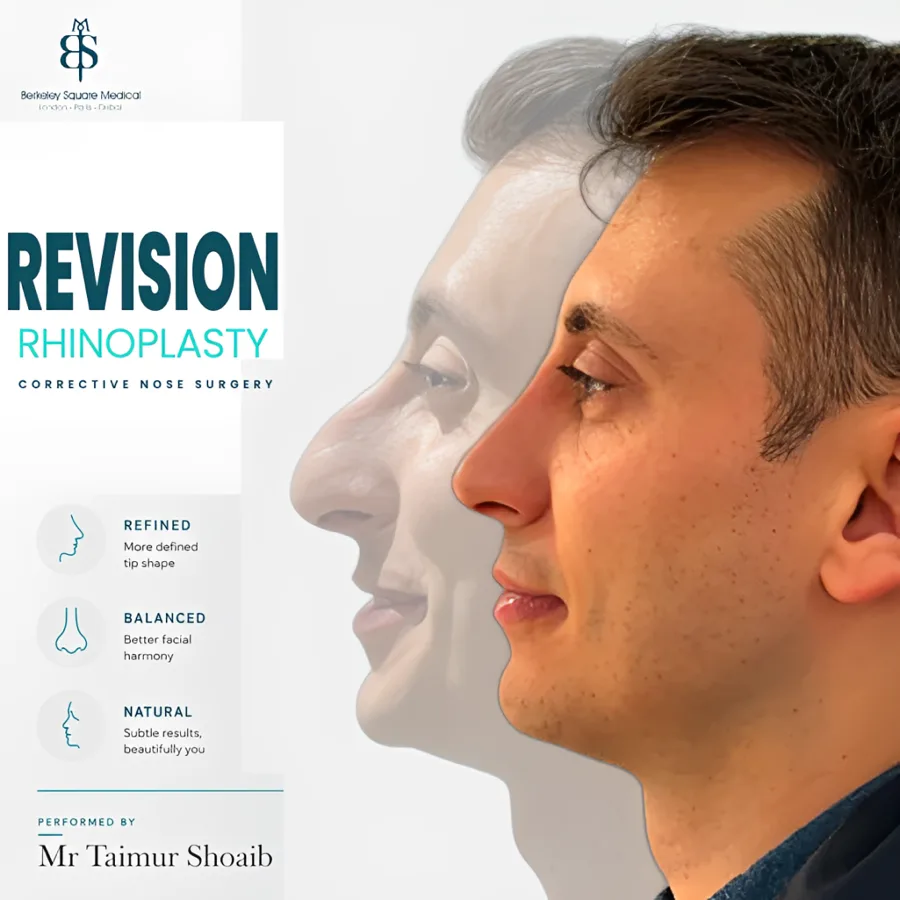 Revision RhinoplastyCorrecting or improving a previous rhinoplasty.Read more
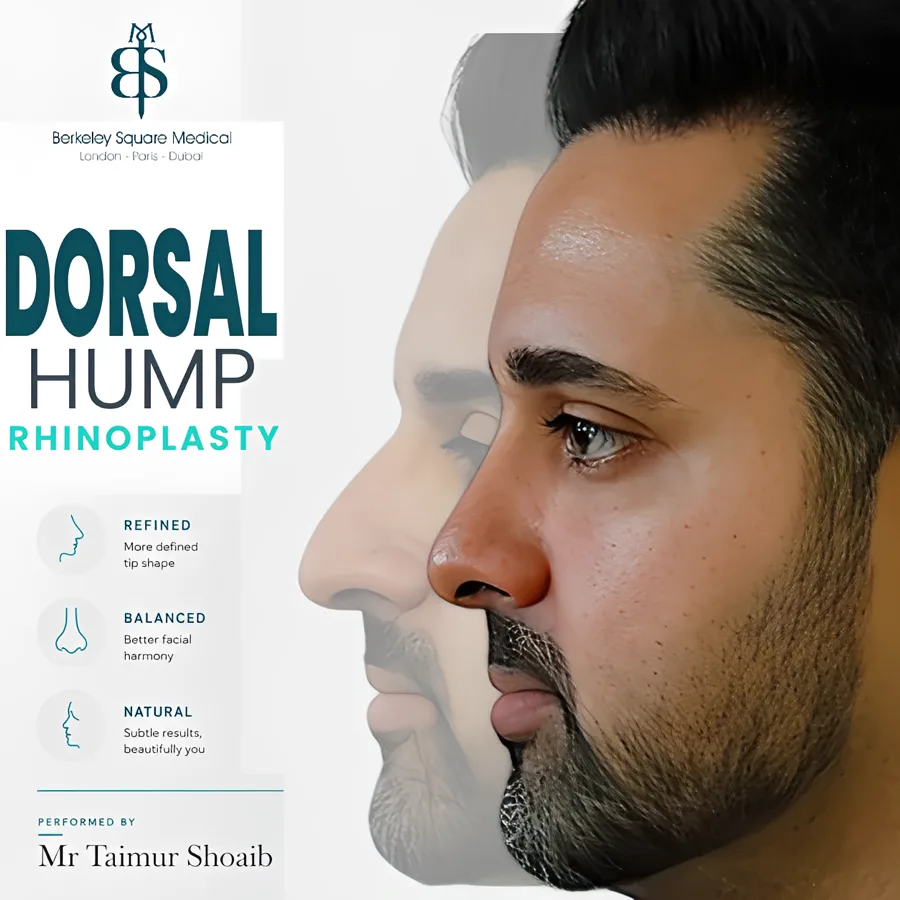 Dorsal Hump RhinoplastyRemoving a bump on the bridge for a straight profile.Read more
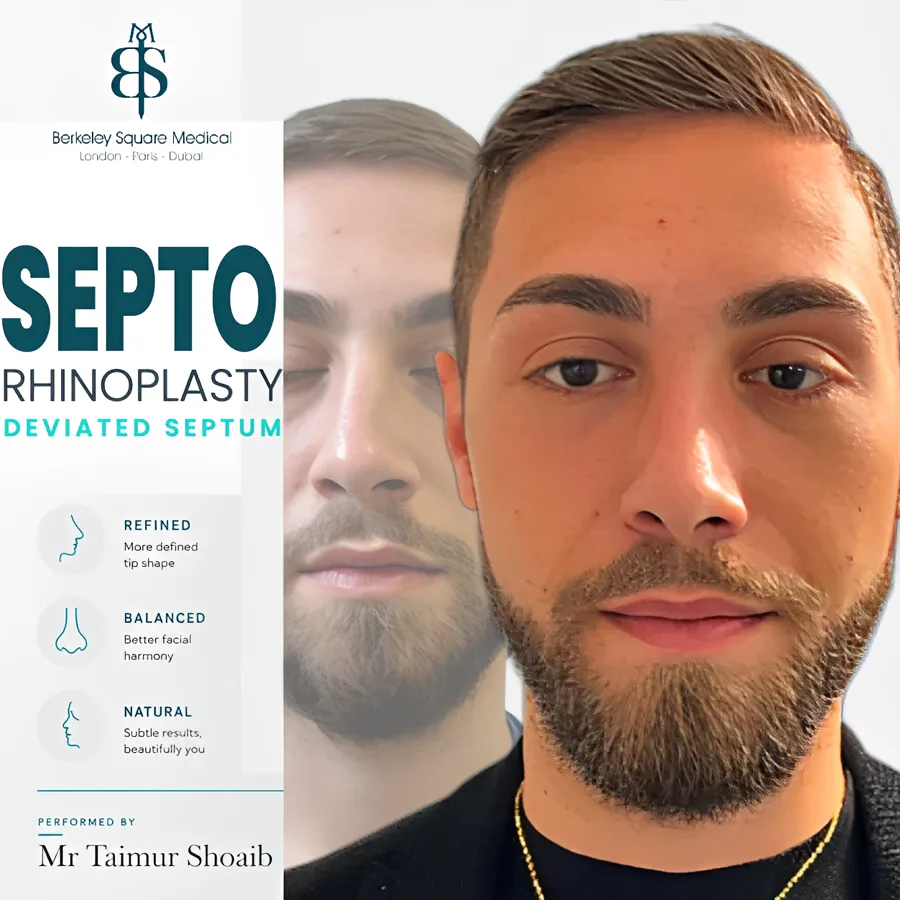 SeptorhinoplastyStraightening the nose and improving breathing.Read more
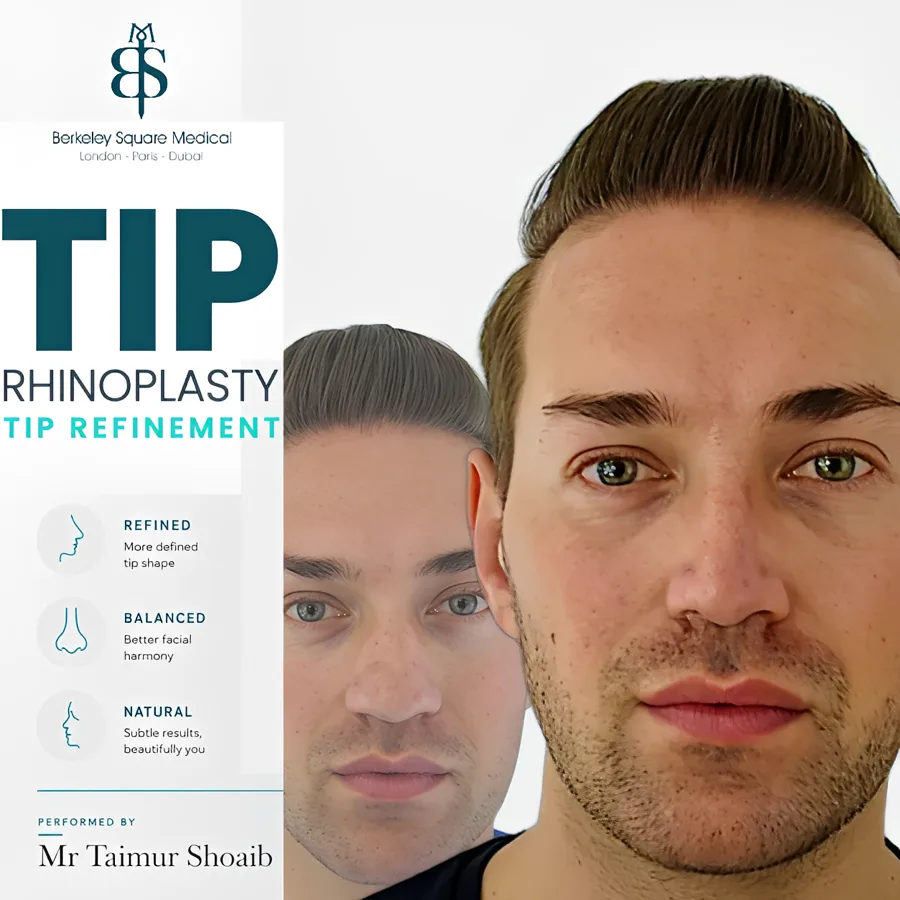 Tip RhinoplastyRefining a bulbous, drooping or asymmetrical tip.Read more
Specialised Rhinoplasty For Females
Explore our specialist procedures. Tap any card to read more.
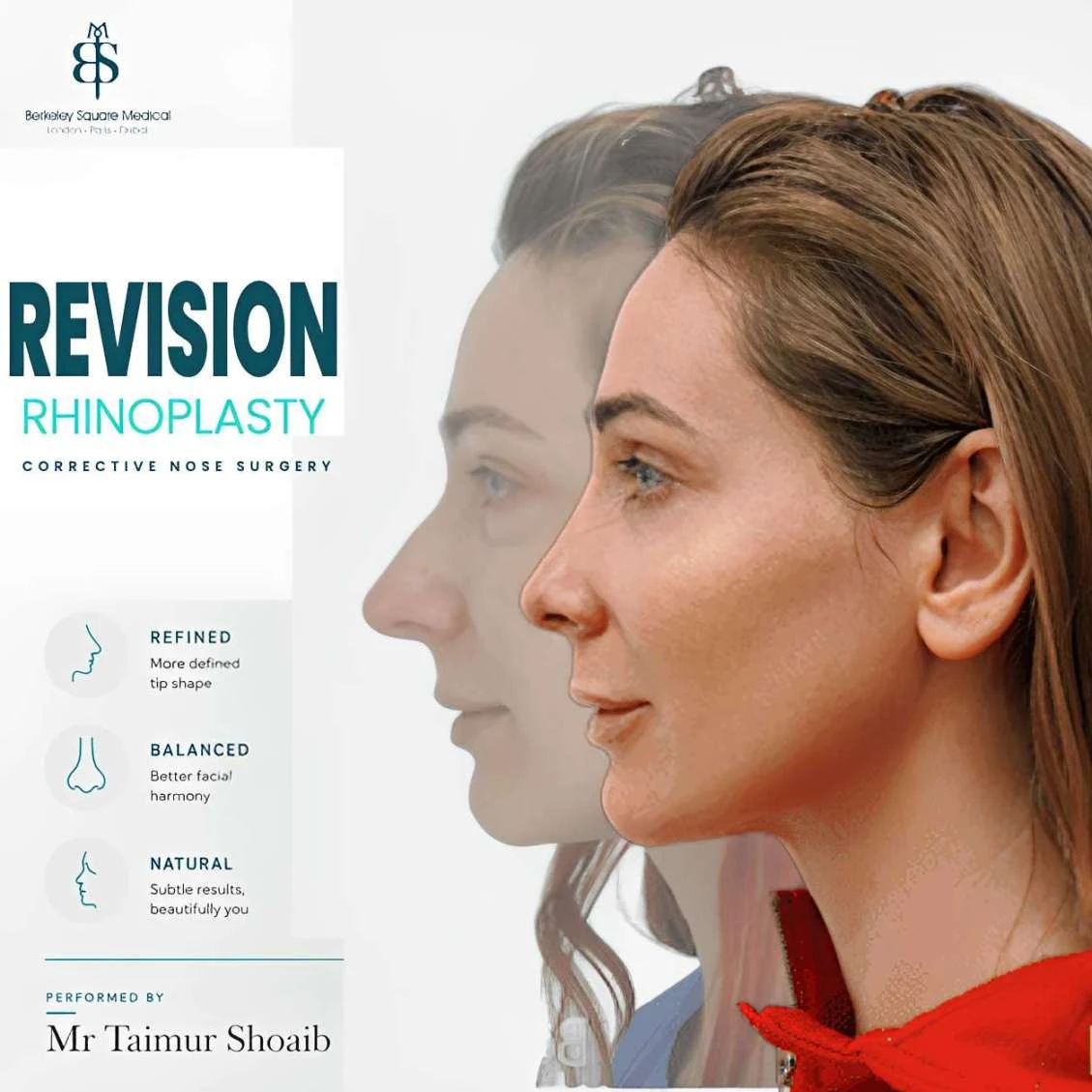 Revision RhinoplastyCorrecting or improving a previous rhinoplasty.Read more
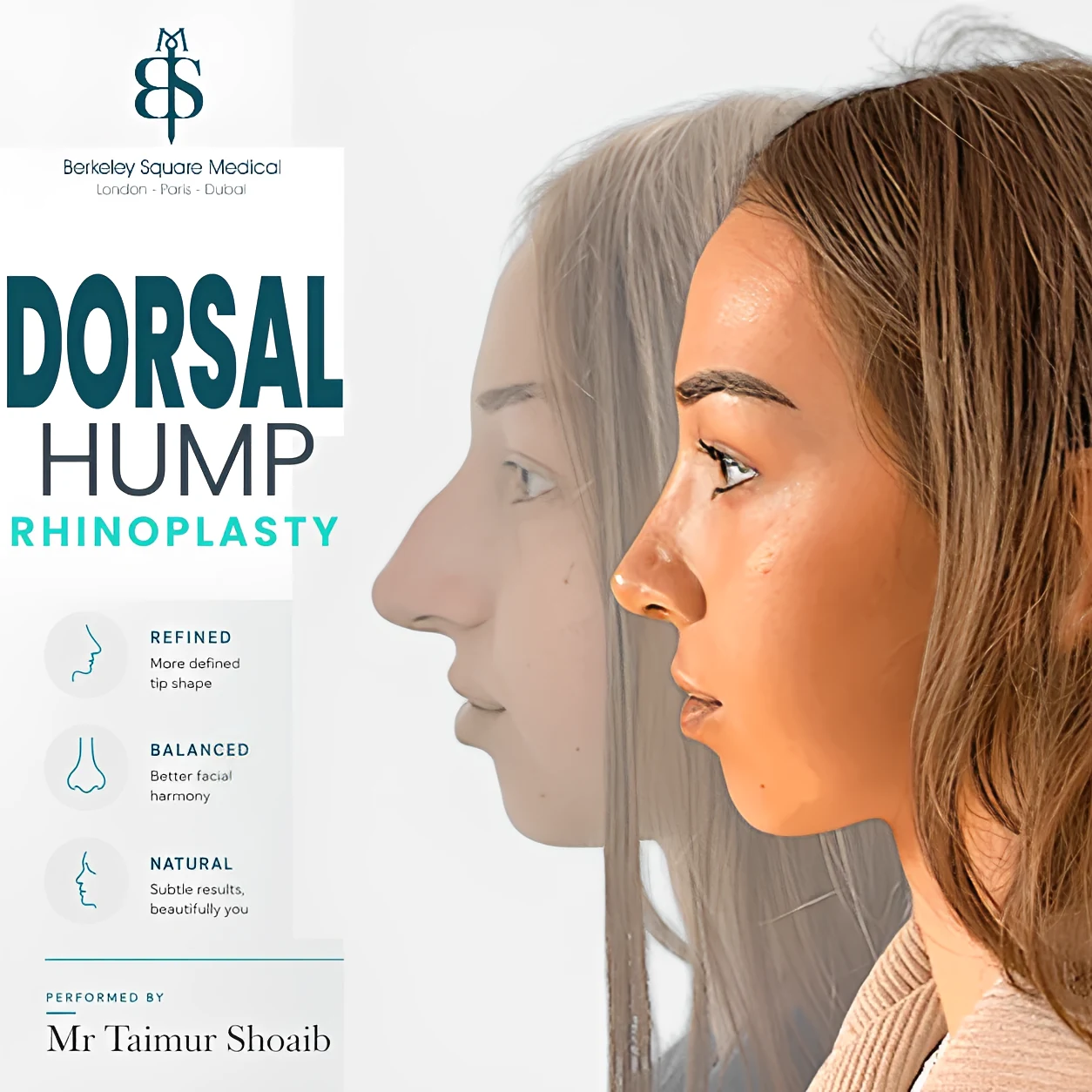 Dorsal Hump RhinoplastyRemoving a bump on the bridge for a straight profile.Read more
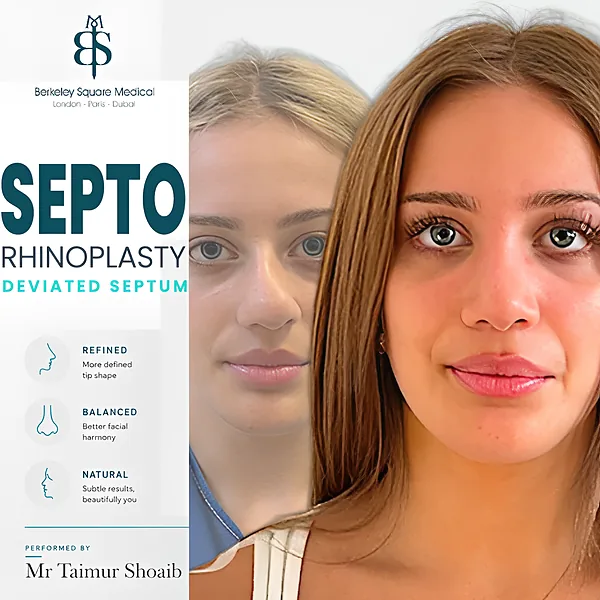 SeptorhinoplastyStraightening the nose and improving breathing.Read more
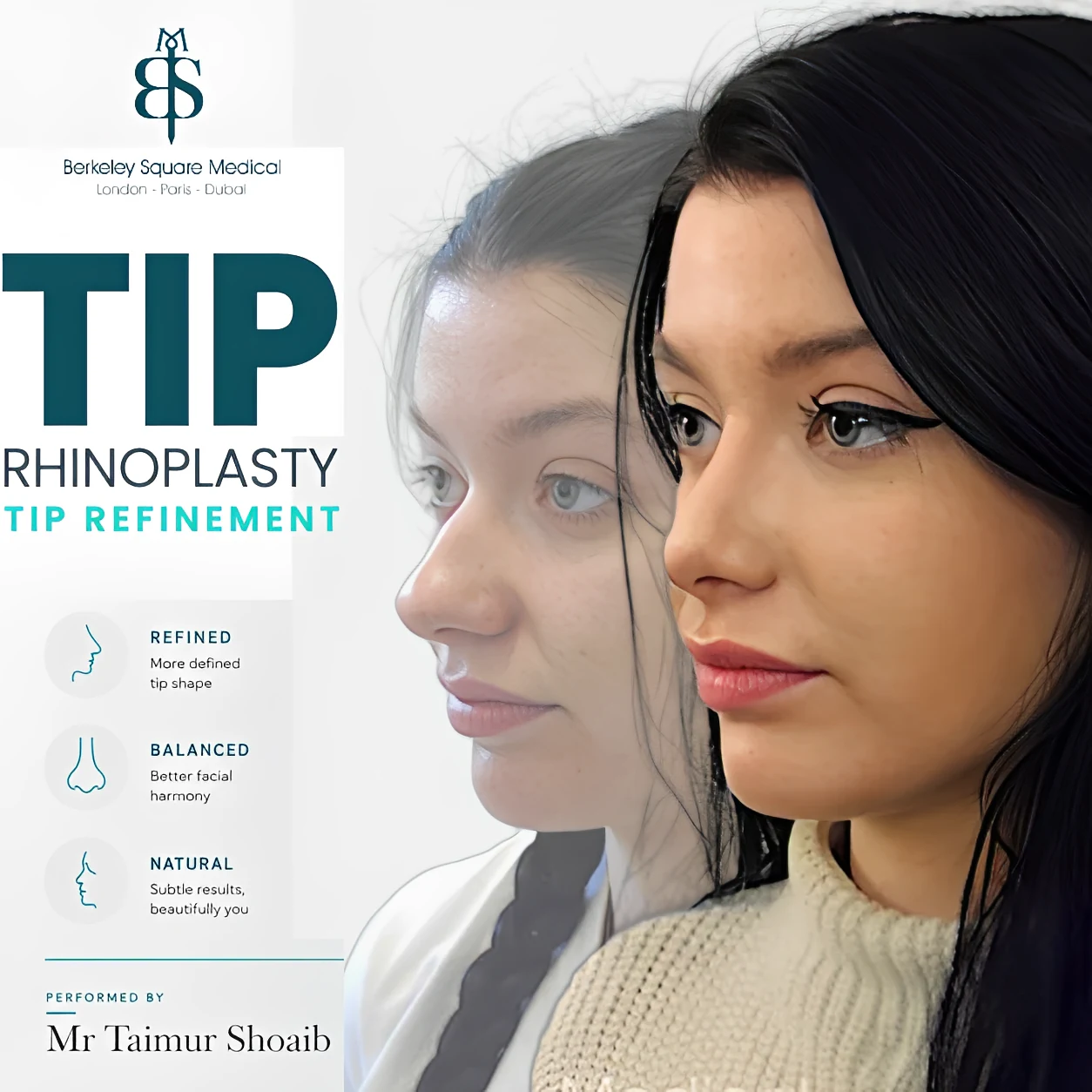 Tip RhinoplastyRefining a bulbous, drooping or asymmetrical tip.Read more
Considering rhinoplasty in London?
If you are weighing up your options in the UK, the next step is a consultation with Mr Taimur Shoaib at 64 Harley Street. Explore rhinoplasty at Berkeley Square Medical, see typical rhinoplasty costs in London, or read about septorhinoplasty in London if breathing is also a concern.
About the author