
The 12 most common nose shapes
A guide to nose types, and what each one means
There are around twelve widely recognised types of noses, each defined by the shape of the bridge, the tip and the nostrils. No shape is more normal or more desirable than another, and most people have a combination of features rather than one single type. Here is what defines each of the main nose shapes, and, where relevant, how Rhinoplasty can refine it while keeping your nose in character with your face.
The five families of nose shapes
A simple way to group the twelve types
The twelve shapes below fall into five broad families, grouped by the bridge, tip and base. Most people sit across more than one. Not sure which you have? Jump to how to identify your nose shape.
- Straight or classical: an even, straight bridge. The Greek nose.
- Curved or prominent bridge: a convex profile, often with a hump. The Roman and the hooked or hawk (aquiline) nose.
- Small or upturned: a shorter nose with a lifted tip. The celestial (also called snub) and button noses.
- Broad or lower bridge: a flatter bridge and wider base. The Nubian, East Asian and wide noses.
- Tip and skin variations: defined more by the tip and skin than the bridge. The bulbous, fleshy, crooked and combination noses.
Roman nose
A curved bridge with a dorsal hump
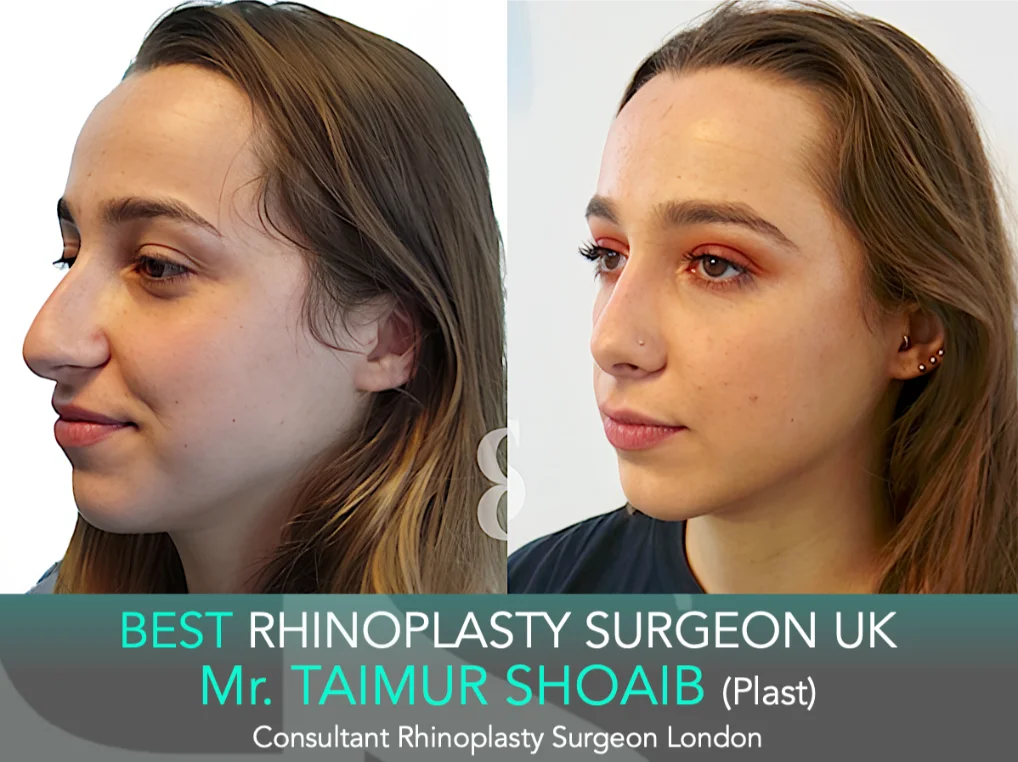
A Roman nose has a bridge that slopes outward with a slight downward curve at the tip, and a dorsal hump is common with this profile. A hump is a completely normal feature that appears across many backgrounds. Some people love it and choose to keep it; where someone would prefer to soften the profile, the bridge can be reshaped while keeping the nose in character with the rest of the face.
Greek nose
A straight, even bridge
A Greek nose has a straight bridge with little or no curve, running in an even line from between the eyes to the tip. The proportions are typically balanced, so it is not often a focus for surgery, and where someone wishes to refine it the changes are usually subtle.
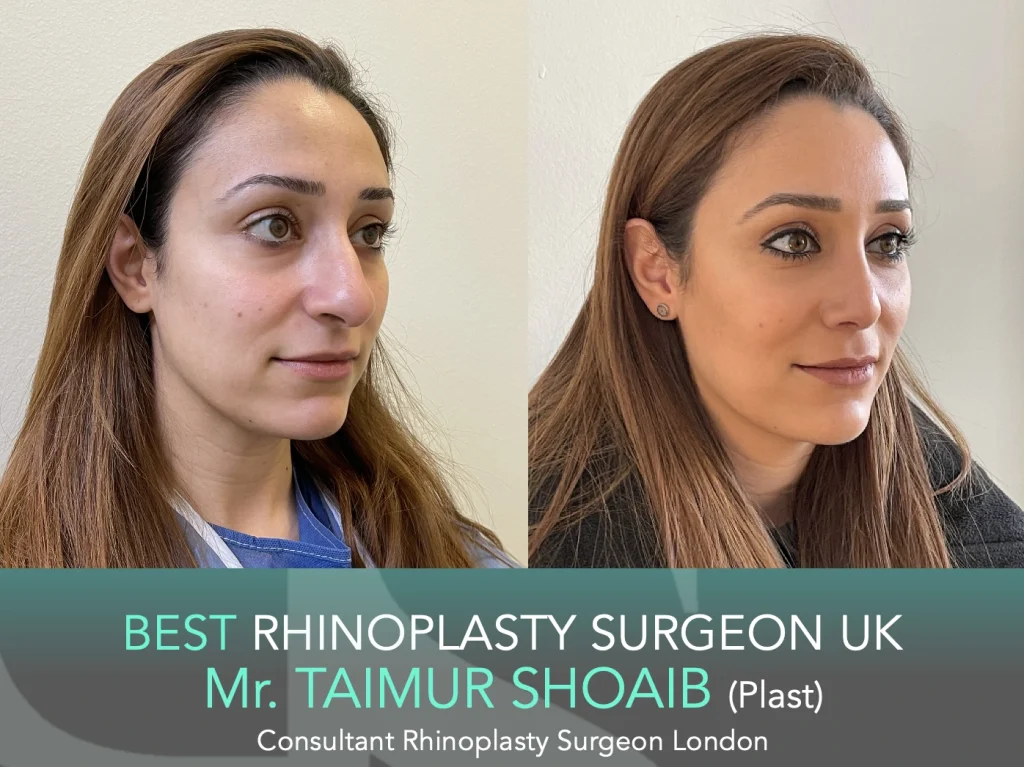
Also called a Grecian nose, the defining feature is the dead-straight line of the bridge seen from the side, with no hump and no dip, and a tip that neither droops nor turns up sharply. It is the profile often seen on classical Greek sculpture, which is where the name comes from.
Is a Greek nose rare?
There is no reliable population data on how common a truly straight Greek profile is, so any exact percentage you see online is guesswork. In practice a perfectly straight bridge is less common than people assume, because most noses have at least a slight curve, a small hump, or a tip that lifts or drops a little. A combination of features is the norm.
Is a Greek nose attractive?
Research into facial attractiveness tends to emphasise overall proportion and balance with the rest of the face, not any single nose shape. A straight bridge is often described as classical, but a nose that suits one face will not suit another. There is no objectively best shape, and surgery, when it is wanted at all, aims for balance with your features rather than a fixed ideal.
Greek nose in men and women
The straight bridge looks similar in men and women; the usual difference is at the tip and in the angle between the nose and the lip, which tends to be a little higher and more lifted in women and more neutral in men. Any refinement is planned around your own face, not a template.
Greek nose or Roman nose, how to tell
In short, a Greek nose has a straight bridge; a Roman nose curves outward, often with a hump.
| Feature | Greek (Grecian) | Roman |
|---|---|---|
| Bridge | Straight, flat line with no hump | Curved outward, often with a dorsal hump |
| Tip | Level, neither lifted nor drooping | Can point slightly downward |
| Side profile | A clean, even straight line | A convex, slightly arched line |
| Quick way to tell | Lay a ruler along the bridge in profile; a Greek nose follows it | The hump lifts the bridge away from the ruler |
If you are not sure which you have, use the quick self-check below; the Roman profile is the one with the hump.
Nubian nose
A longer bridge with a wider base
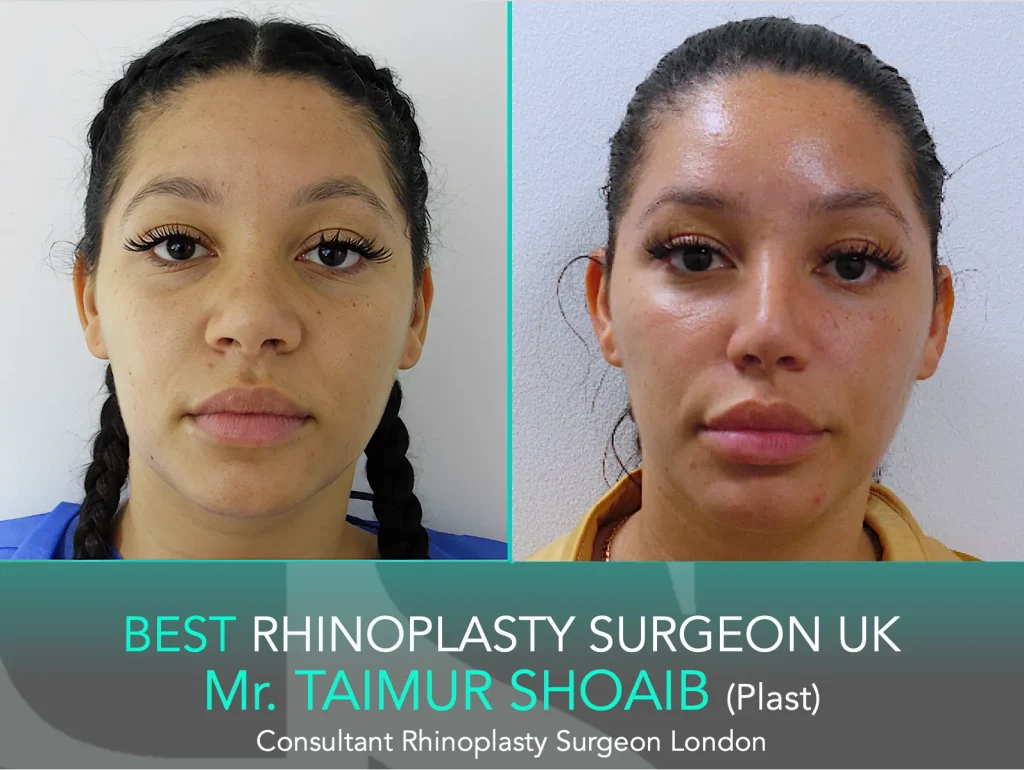
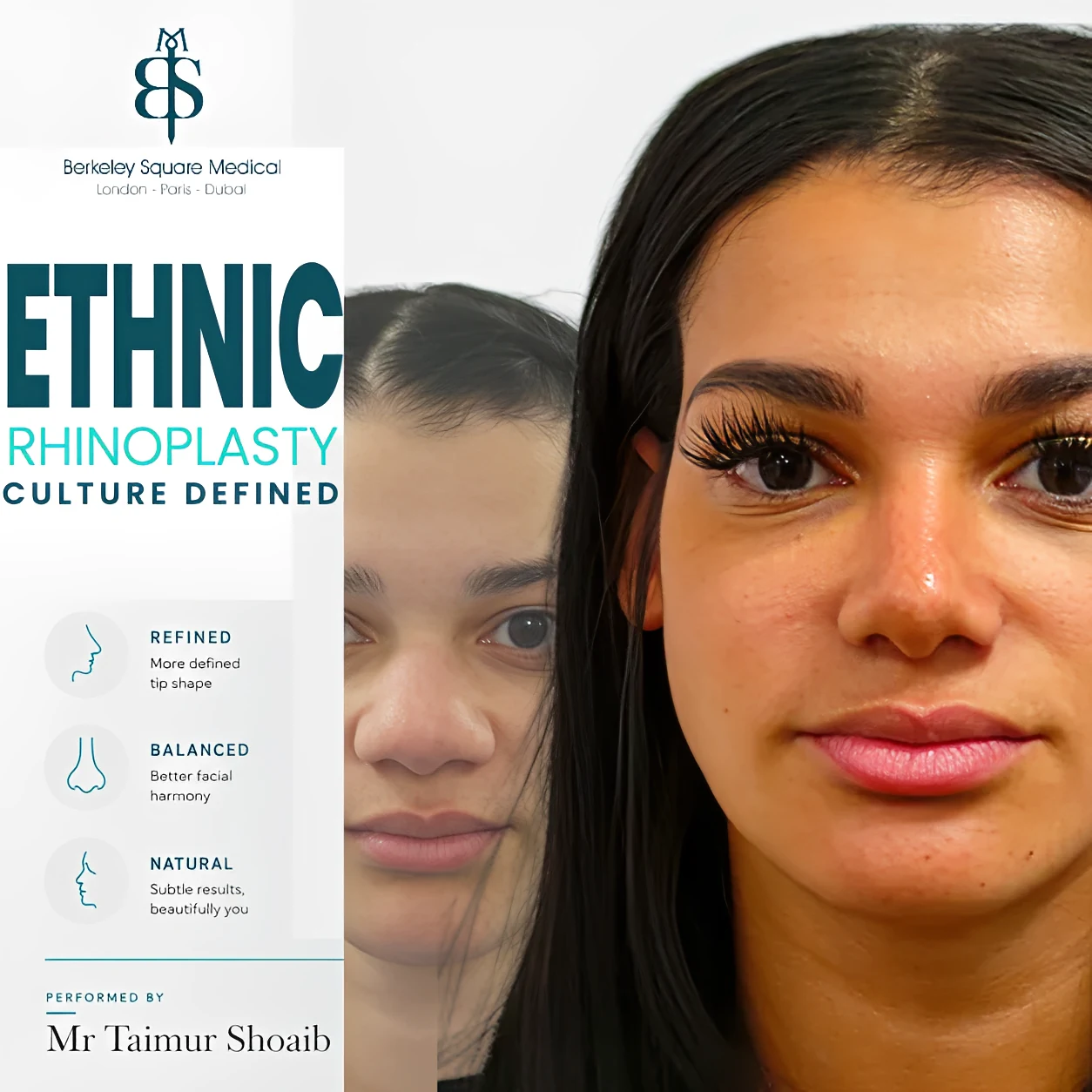
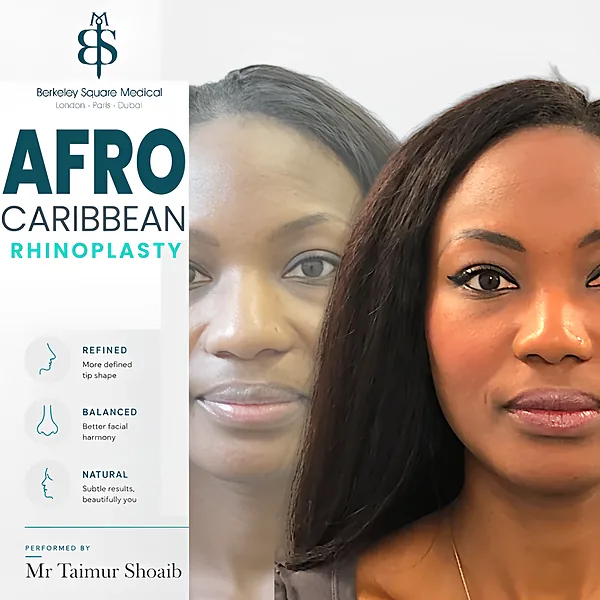
A Nubian nose has a longer bridge with a wider base and fuller nostrils, and is common in people of African heritage. Sometimes searched as an African American nose, it is a normal, common shape. Where someone wishes to change the width or the nostrils, this is done carefully to refine the appearance while preserving their natural features and character. There is no goal of making any nose look more European; ethnic features are preserved by design. The name itself comes from older systems that classified noses by ethnicity, and it is worth saying that there is wide variation between individuals of any heritage, so the label describes a general pattern rather than a rule.
Celestial nose
A shorter nose with an upturned tip
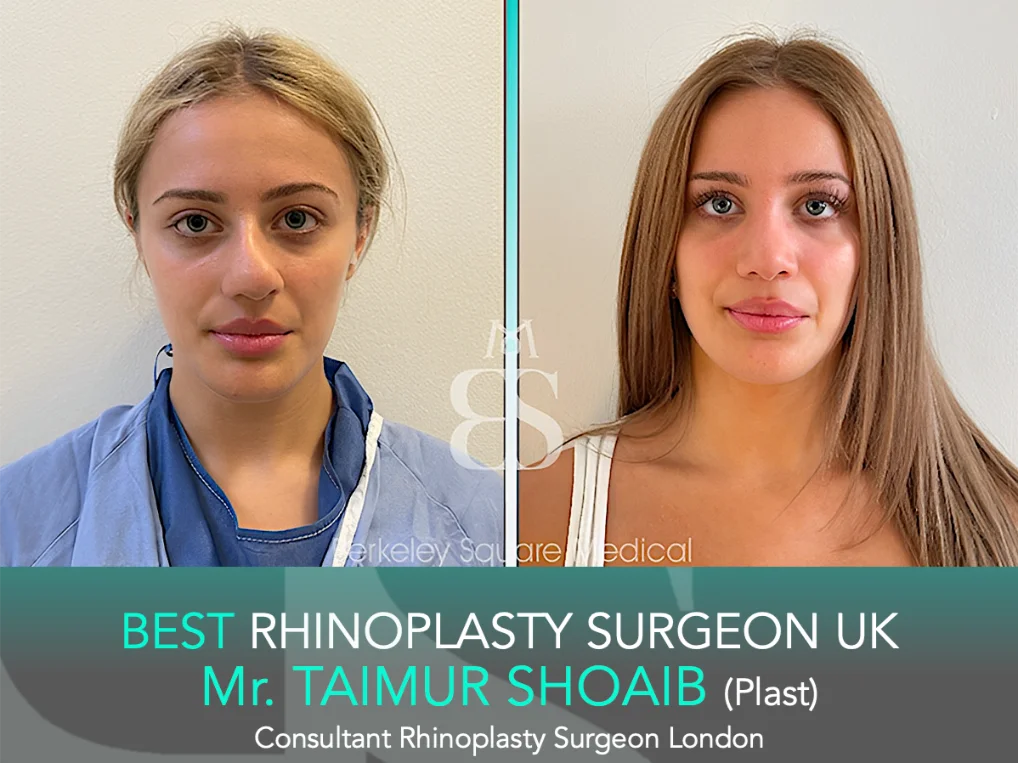
A celestial nose, also called an upturned, retroussé (retrousse) or snub nose, is a shorter nose with a tip that turns slightly upward, so the nostrils are a little more visible. The term Barbie nose is sometimes used for this upturned shape. It is a common, balanced shape, and any change is individual and assessed at consultation.
Hooked nose
A high, outward-curving bridge
A hooked nose, also called an aquiline or hawk nose, has a high bridge that curves outward with a tip that points slightly downward. It is a distinctive, normal feature. Where someone would prefer a smoother profile, the bridge and tip can be reshaped together, with results depending on your anatomy.
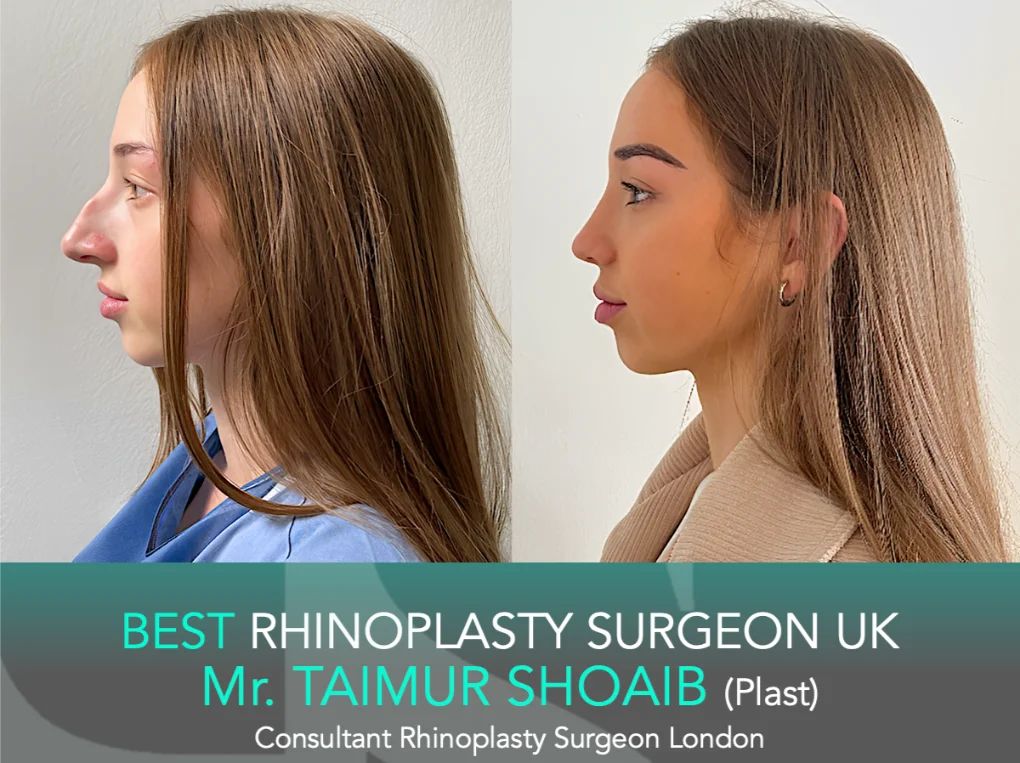
East Asian nose
A lower bridge with a softly rounded tip
An East Asian nose often has a lower bridge with a softly rounded tip and a shorter projection. It is a normal, common shape. Where someone wishes to add height to the bridge or more tip definition, this is assessed individually, and results vary with skin thickness and anatomy. The aim is never to erase ethnic character but to achieve a balanced result that still looks like you.
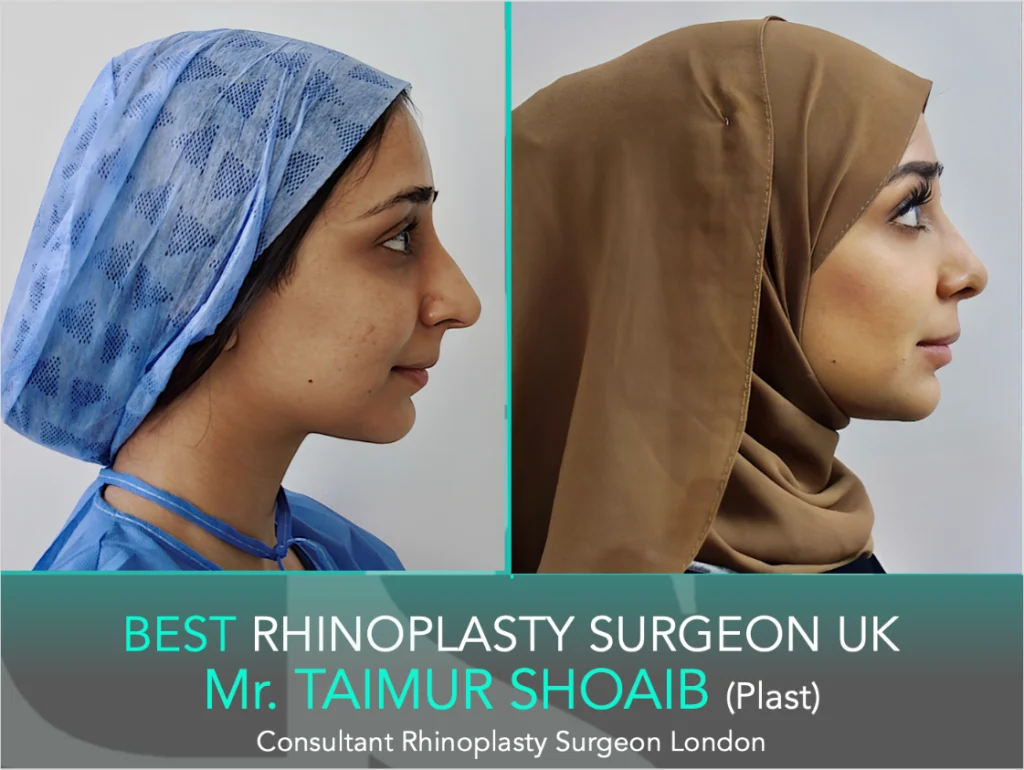
Button nose
Small, rounded and softly defined
A button nose is small and rounded with a softly defined tip and a shorter bridge. It is usually well balanced, so it is not often a focus for surgery, and where someone wishes to refine the tip the changes are subtle and depend on individual assessment.
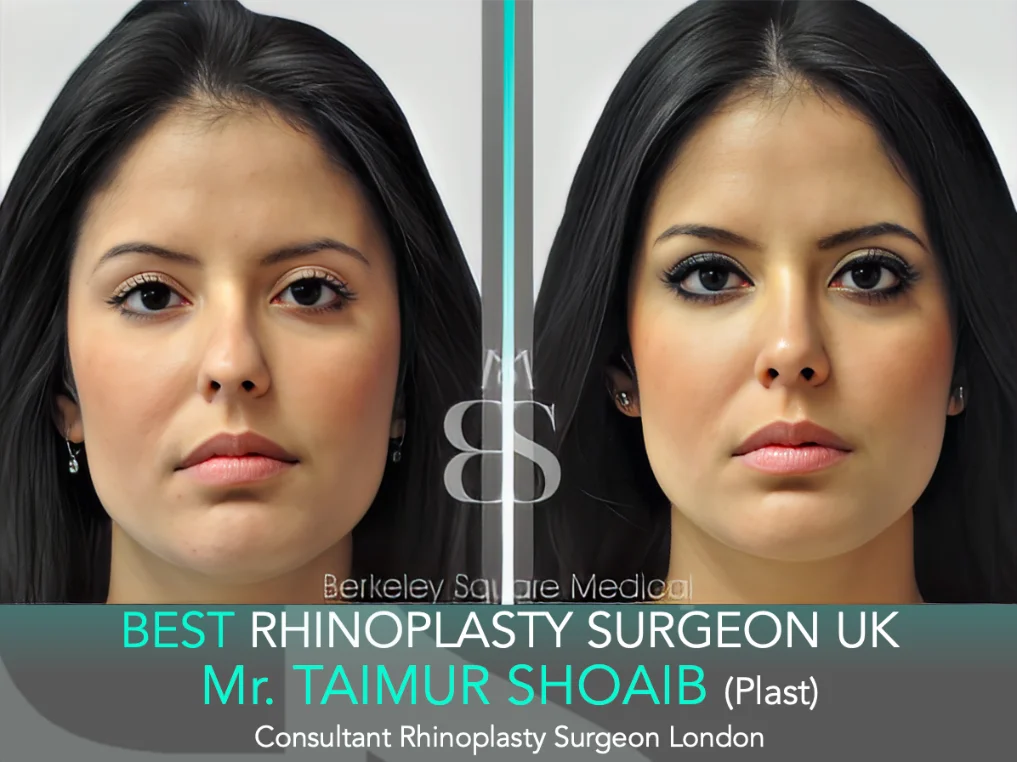
Bulbous nose
A fuller, rounded tip
A bulbous nose has a fuller, rounded tip, sometimes called a bulbous nose tip, shaped by the lower cartilages and the thickness of the skin. Where someone wishes for more definition, tip refinement can reshape the appearance of the tip, with outcomes depending on your skin type and anatomy.
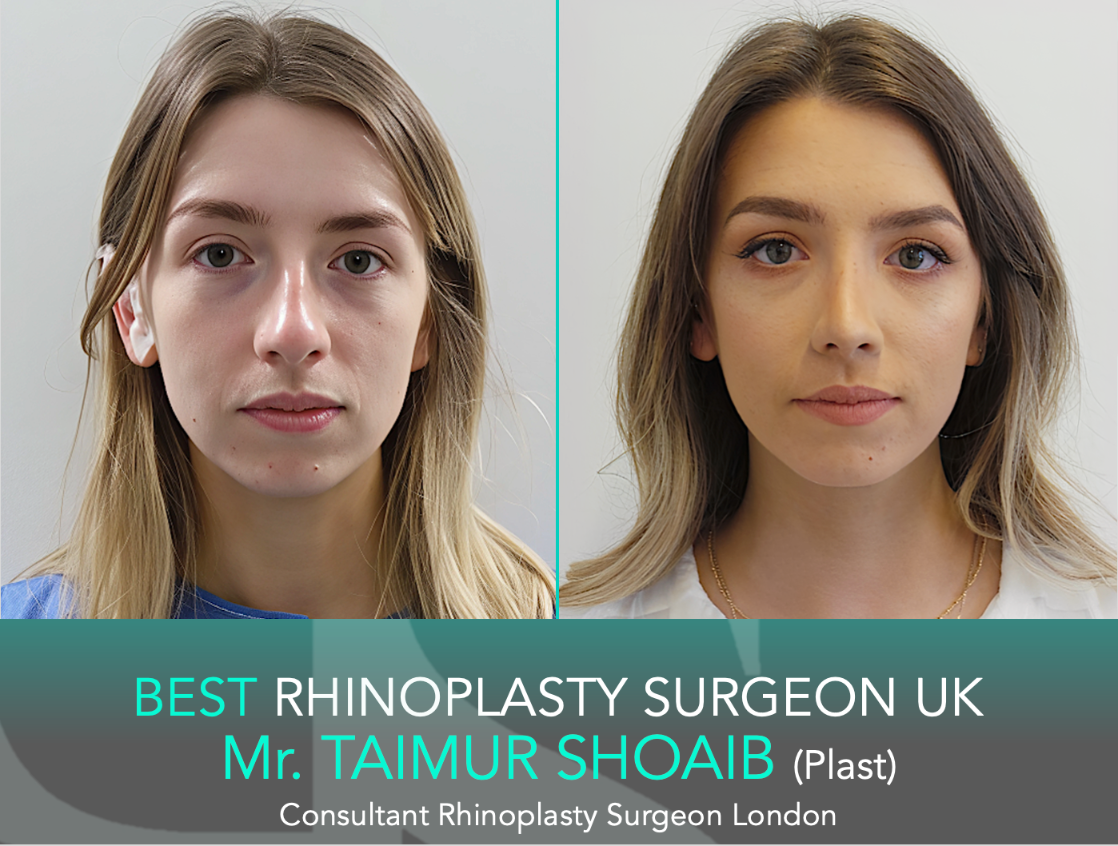
Wide or lower-bridge nose
A broader base or bridge
Some noses have a wider base or a lower, broader bridge. These are normal, common variations and no shape is better than another. Where someone wishes to change the width or projection, the options are explained on our dedicated pages, and any change is individual and assessed at consultation.
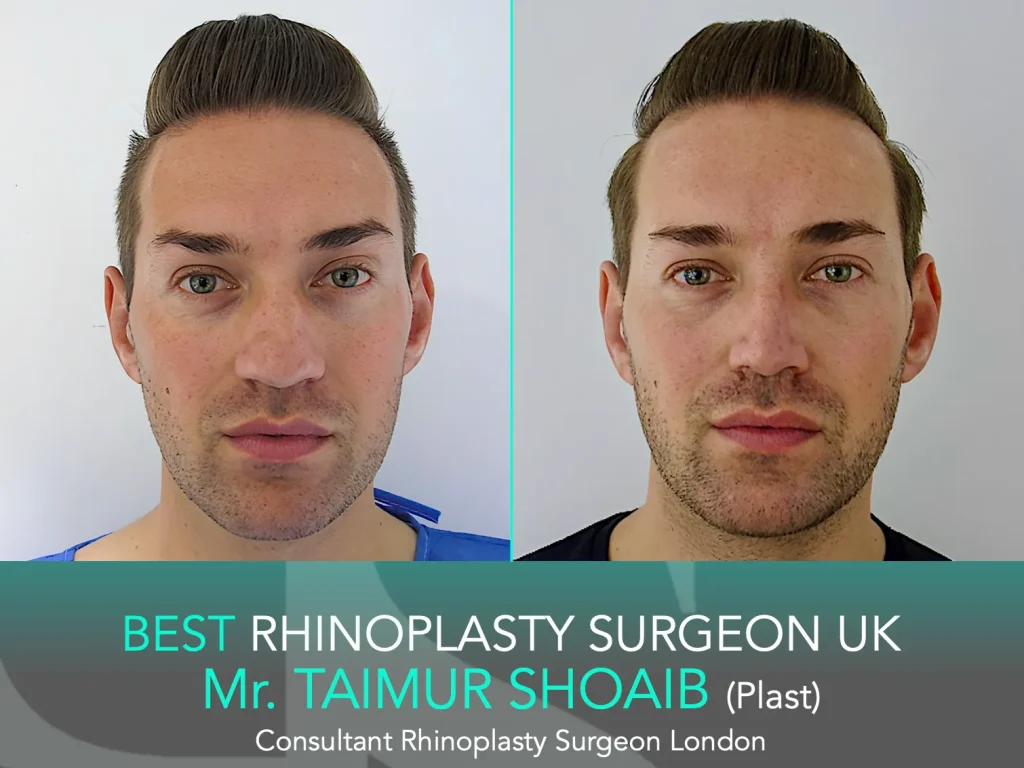
Crooked or deviated nose
A nose that leans to one side
A crooked nose leans to one side, often after an injury or because of a deviated septum, and can affect breathing as well as appearance. An assessment establishes whether the concern is cosmetic, functional, or both, before any decision is made.
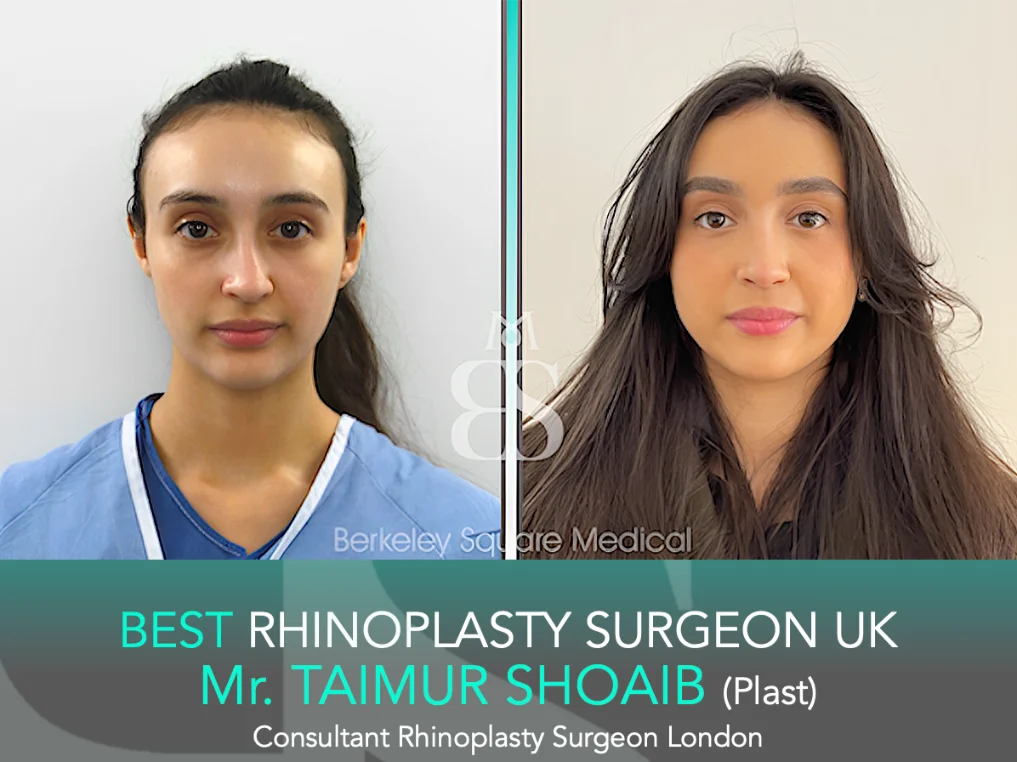
Fleshy nose
Thicker skin with a fuller tip
A fleshy nose has thicker skin and soft tissue, often with a wider or rounded tip. It is one of the more common nose shapes and is a normal variation. Thicker skin behaves differently during surgery, so a careful, individual assessment matters most with this shape.
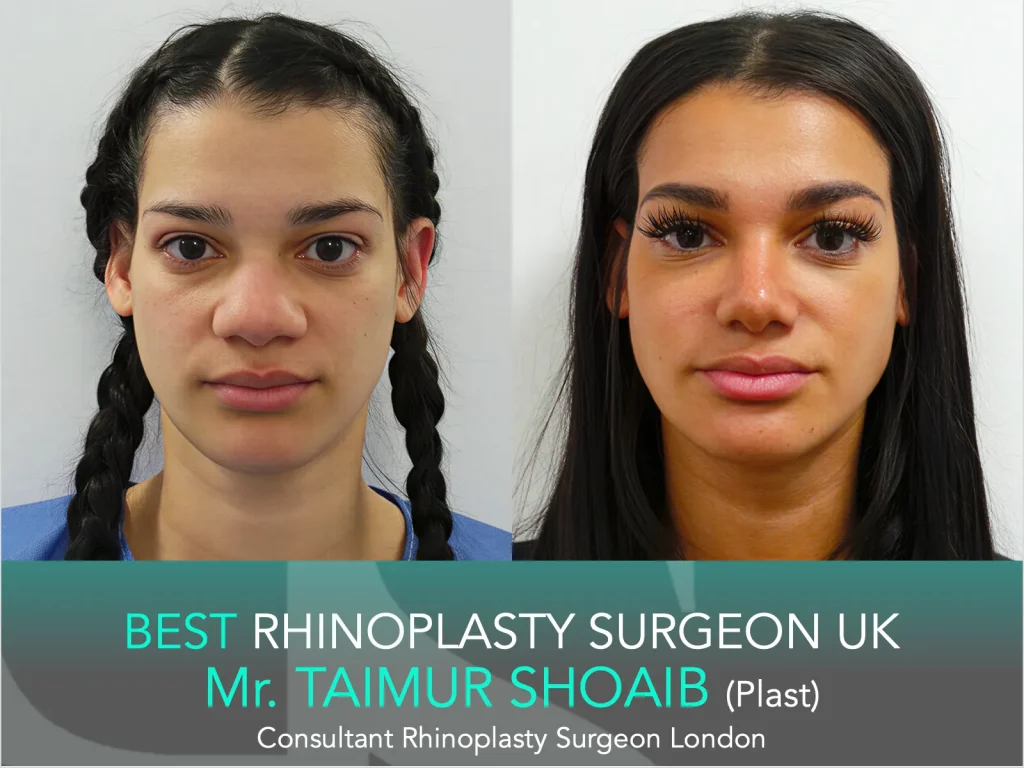
Combination nose
A mix of features, which is the norm
Most people do not have one single shape but a combination of features, for example a straight bridge with a rounded tip. This is completely normal. An assessment looks at the nose as a whole, and at how it suits your face, rather than at one feature alone. Where a previous Rhinoplasty has not delivered the result someone hoped for, revision Rhinoplasty addresses what can realistically be corrected.
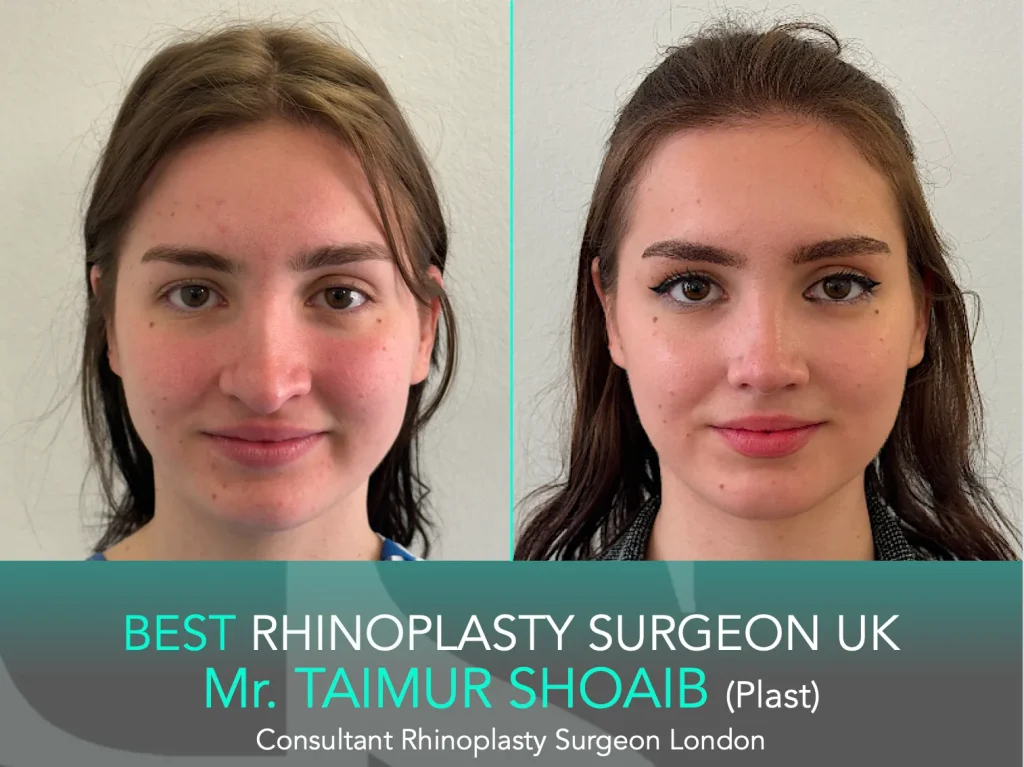
How to identify your nose shape
Three angles tell you almost everything
The easiest way to recognise your nose shape is to look at it from three angles:
- From the side. The profile shows whether the bridge is straight, curved or has a hump, and whether the tip points up, down or straight ahead.
- From the front. You can see the width of the bridge and base, and how symmetrical the nose is.
- From below. The shape and definition of the tip and the nostrils are clearest.
Many people have a combination of features. A longer nose, a sharply defined tip (sometimes called a pointed nose), or a tip that droops with age, is also common; if a drooping or over-long tip is your main concern, tip refinement addresses it specifically.
Quick self-check:
- Side profile. Is the bridge straight, raised (a hump), or dipped (scooped)?
- Tip. Does it point up, straight ahead, or down?
- Front view. Is the base narrow, average, or wide?
Your answers map onto the five families above, and most people land across more than one.
Nose types at a glance: bridge, tip and base
A quick structural comparison
This table compares the main nose types by their structure, and, where someone wants a change, what Rhinoplasty usually aims to do. No shape needs changing; this is for orientation only.
| Nose type | Bridge | Tip | Nostrils / base | Rhinoplasty usually aims to | BSM guide |
|---|---|---|---|---|---|
| Roman | Curved, often a hump | Can point down | Average | Soften the profile, keep it in character | Dorsal hump |
| Greek | Straight, even | Level | Average | Rarely needs change; refinements are subtle | No dedicated page |
| Hooked (hawk / aquiline) | High, curves outward | Points down | Average | Reshape bridge and tip together | Hooked nose |
| Celestial / button (upturned) | Shorter, slight scoop | Lifts up | Narrow to average | Subtle tip refinement if wanted | Tip refinement |
| Bulbous / fleshy | Average | Full, rounded | Average | Define the tip, allowing for thicker skin | Tip refinement |
| Wide | Broad or lower | Average | Wider base | Narrow the base or bridge in proportion | Wide nose |
| Flat / low bridge | Low, flatter | Softly rounded | Wider base | Add bridge height and tip definition | Flat nose |
| Nubian | Longer bridge | Softly rounded | Broader base, fuller nostrils | Refine width, preserving heritage | Ethnic rhinoplasty |
| East Asian | Lower bridge | Softly rounded | Average to broader base | Add bridge height and tip definition, preserving heritage | Ethnic rhinoplasty |
| Crooked / deviated | Leans to one side | Off-centre | Can look uneven | Straighten, and improve breathing if affected | Crooked nose |
What determines your nose shape
Genetics, ancestry and age
Nose shape is mainly inherited and varies with ancestry, which is why certain features are more common in some populations. Research into human populations has also linked nasal width to climate, with narrower noses more common in colder, drier regions, though researchers treat this as an association rather than a simple rule.
Your nose also changes through life: it finishes growing in the late teens to early twenties, and the tip and bridge can shift gradually with age. We cover that in our guide to whether your nose gets bigger with age.
Do you need to change your nose?
Understanding your shape is not a reason to change it
Most people never need or want surgery, and learning your nose shape is not a reason to change it. No shape is better or worse than another; each is a normal human variation, not a deficiency. If you find that worry about your appearance is affecting your daily life or mood, it is worth speaking to your GP first, and a good surgeon will always discuss this openly and will not operate when surgery is not the right answer.
Rhinoplasty is a real operation with real risks and a recovery period, and it is only ever one option. If you are considering it, you can read how Rhinoplasty at Berkeley Square Medical works, or see how much Rhinoplasty costs in London. What is achievable depends on your individual anatomy, and results vary.
To talk through your nose and your options with Mr Shoaib at 64 Harley Street, book a consultation here.
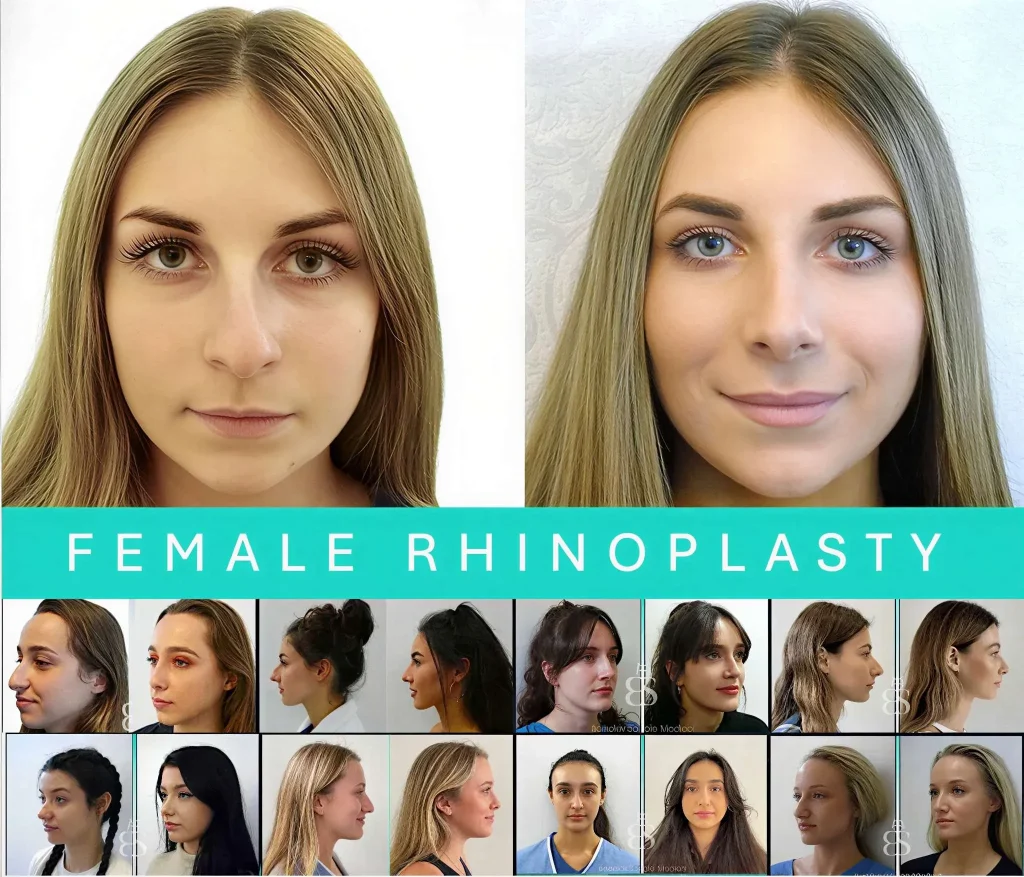
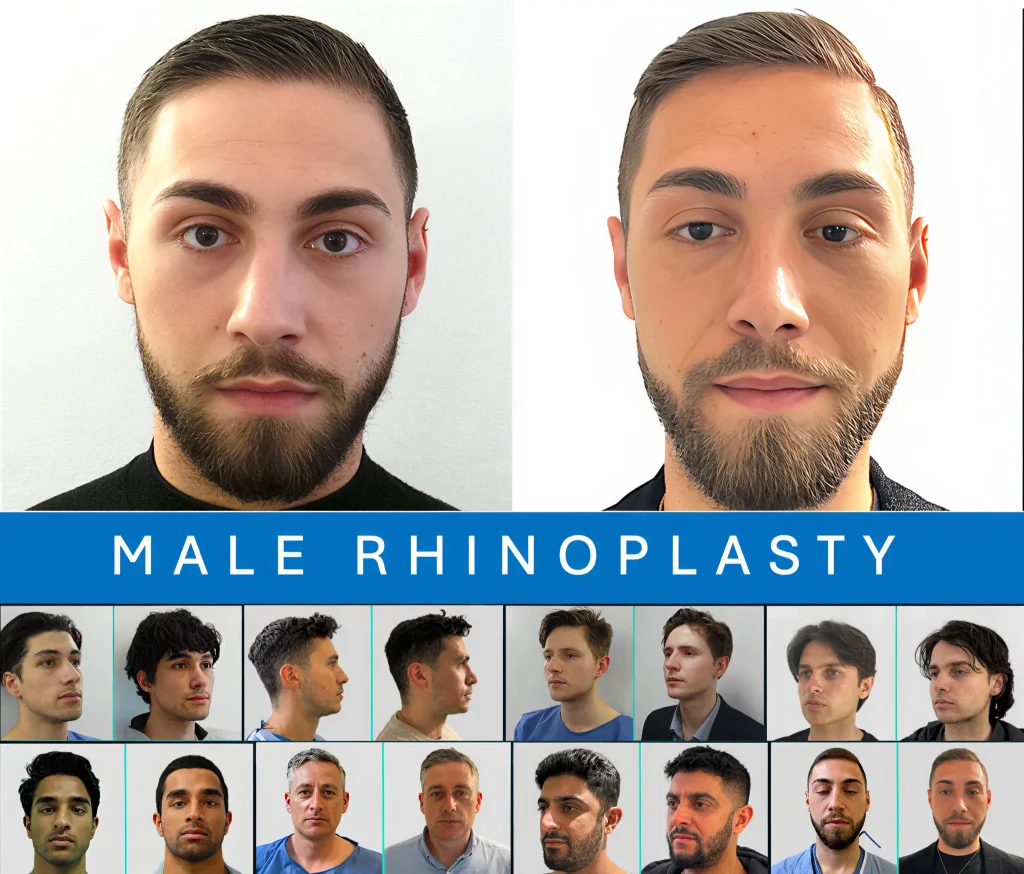
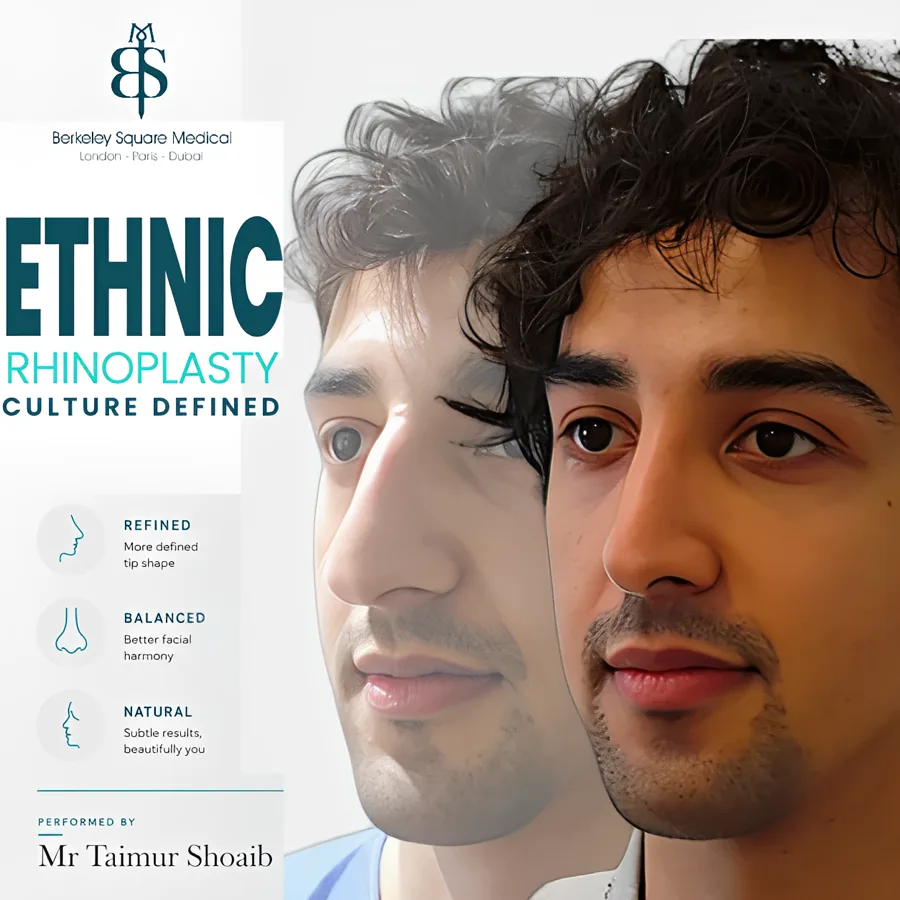
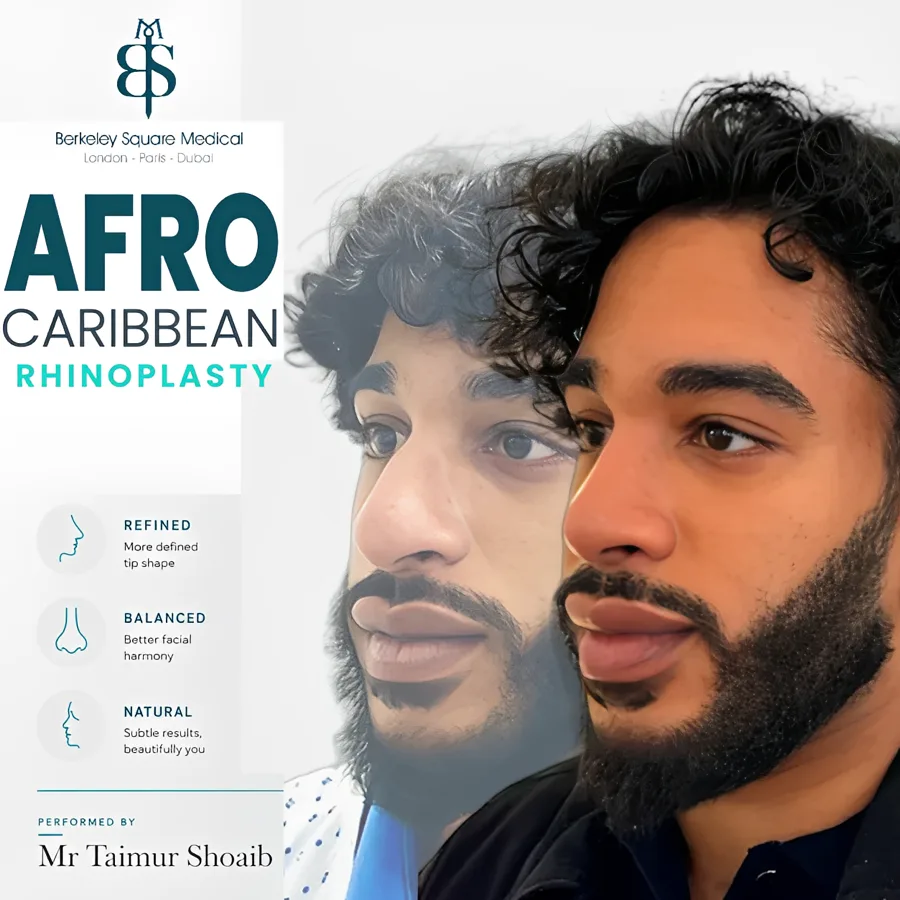
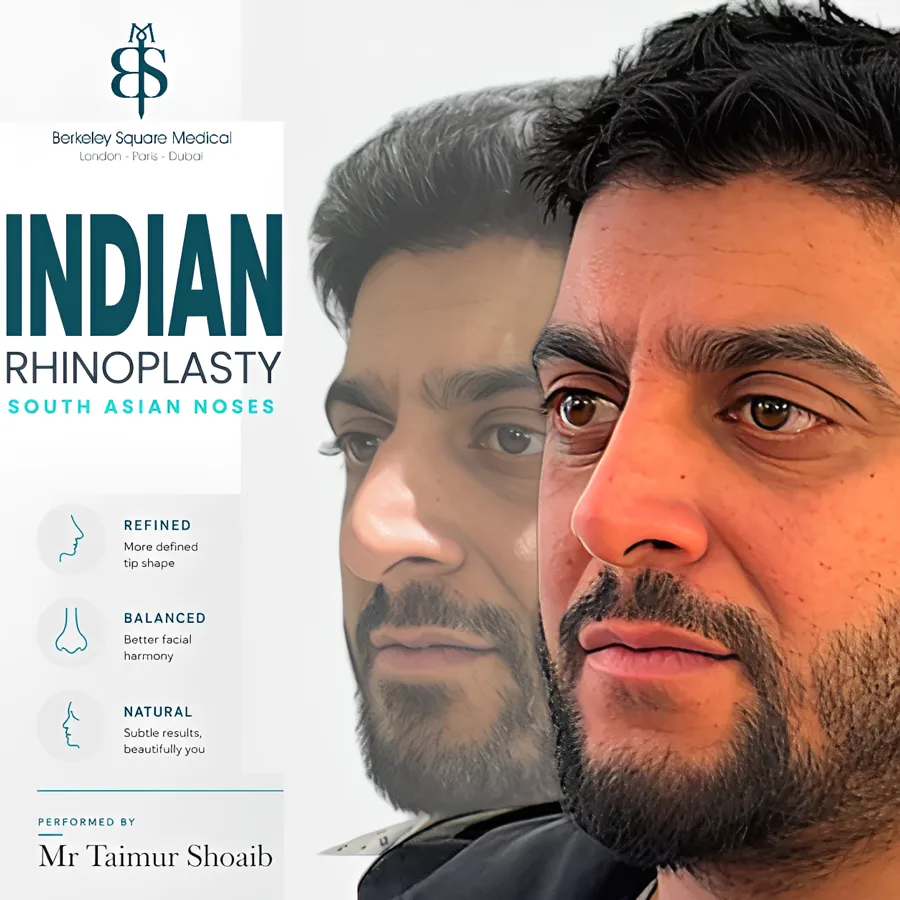
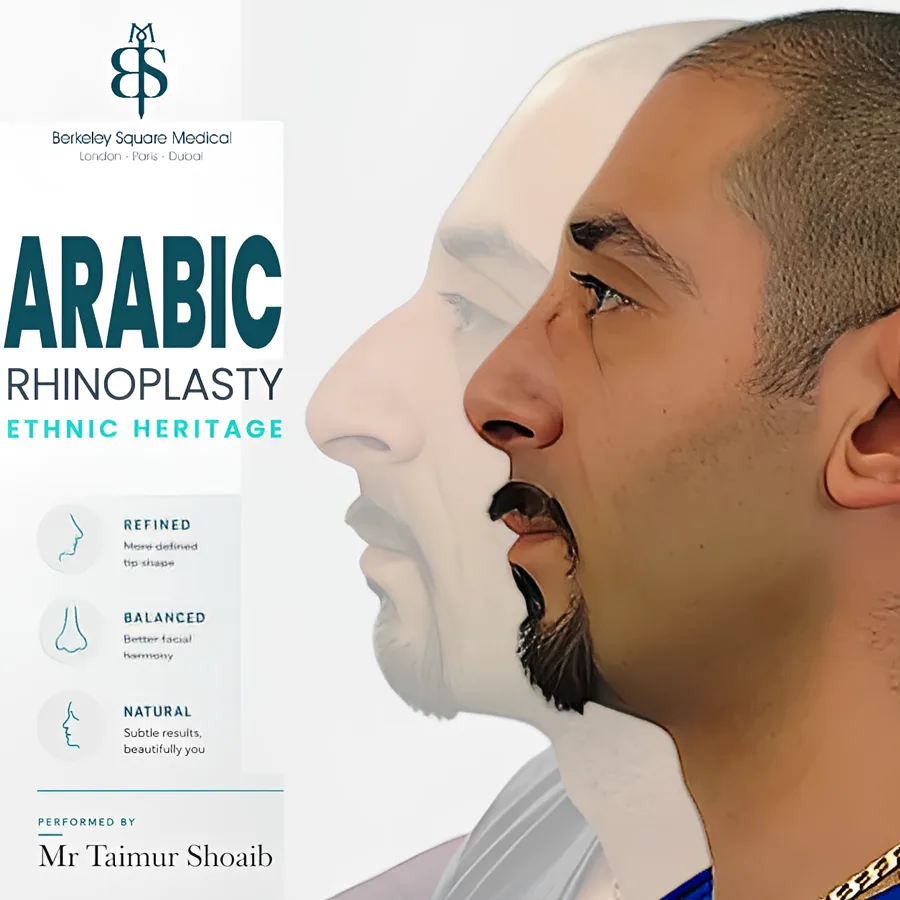
Specialised Rhinoplasty For Men
Explore our specialist procedures. Tap any card to read more.
Specialised Rhinoplasty For Females
Explore our specialist procedures. Tap any card to read more.
Considering rhinoplasty in London?
If you are weighing up your options in the UK, the next step is a consultation with Mr Taimur Shoaib at 64 Harley Street. Explore rhinoplasty at Berkeley Square Medical, see typical rhinoplasty costs in London, or read about septorhinoplasty in London if breathing is also a concern, or see the different types of rhinoplasty to understand which surgical approach may suit you.