• 0330 058 0212
  • Make an Enquiry

    Request A Call BackX

    ADDRESS64 Harley Street, London, W1G 7HB
    +44 (0)330 058 0212

    PLEASE FILL IN YOUR DETAILS

    Sending your message. Please wait...

    Thanks for sending your message! We'll get back to you shortly.

    There was a problem sending your message. Please try again.

    Please complete all the fields in the form before sending.

CROOKED NOSE RHINOPLASTYSTRAIGHTENING A DEVIATED NOSE, IN LONDON

By Mr Taimur Shoaib FRCS (Plast), GMC No. 3615443 · Authored and medically reviewed · Last updated 04 July 2026
Crooked nose rhinoplasty before and after at Berkeley Square Medical, London

Straightening a crooked or deviated nose

A crooked nose leans away from the straight line down the centre of the face, and it is one of the most common reasons people, especially those who have had a knock or a break, look into rhinoplasty. Many crooked noses also come with a deviated septum, so one side is harder to breathe through. This guide explains why a nose becomes crooked, how it is straightened, what men and women can each expect, and when the breathing can be corrected in the same operation.

Key Takeaways

The quick picture of crooked nose surgery.

  • A crooked nose leans off the midline (a deviated or asymmetrical nose), often after an injury.
  • A deviated septum often comes with it, blocking breathing on the narrower side.
  • Straightening resets the bones to the midline and corrects the septum where needed.
  • The nose can drift back if under-corrected, so it is a true test of surgical experience.
  • Men: strong and masculine; women: proportionate and natural.
  • Breathing can be fixed at the same time as a septorhinoplasty.

Make Your Enquiry

+44(0)330 058 0212


    Considering any cosmetic treatment is a significant step forward. Your consultation with Mr. Shoaib and our Team will provide clarity, expert insight, and honest guidance , focused entirely on your goals.

    Tell us about you

    A Few Contact Details

    Which procedure are you enquiring about?


    Crooked nose rhinoplasty: straightening a deviated nose

    What is a crooked nose?

    A nose that bends away from the midline

    A crooked nose is one that deviates from the straight vertical line down the centre of the face, so the bridge, the tip, or both, sit off to one side. A deviated or asymmetrical nose, as it is also known, may look like a gentle C or S shape from the front, or lean in a straight line to the left or right; you can see how it compares in our guide to nose shapes. Almost no nose is perfectly symmetrical, and a slight lean is completely normal. It is only when the deviation is noticeable, or comes with blocked breathing, that people look into crooked nose surgery to straighten it.
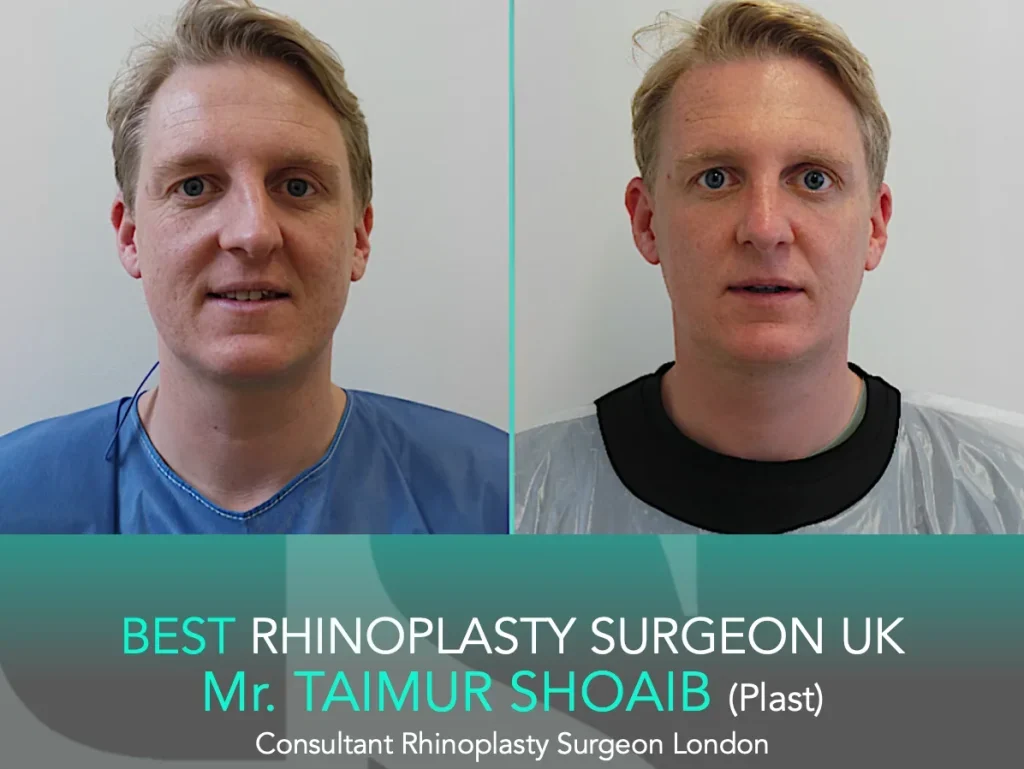
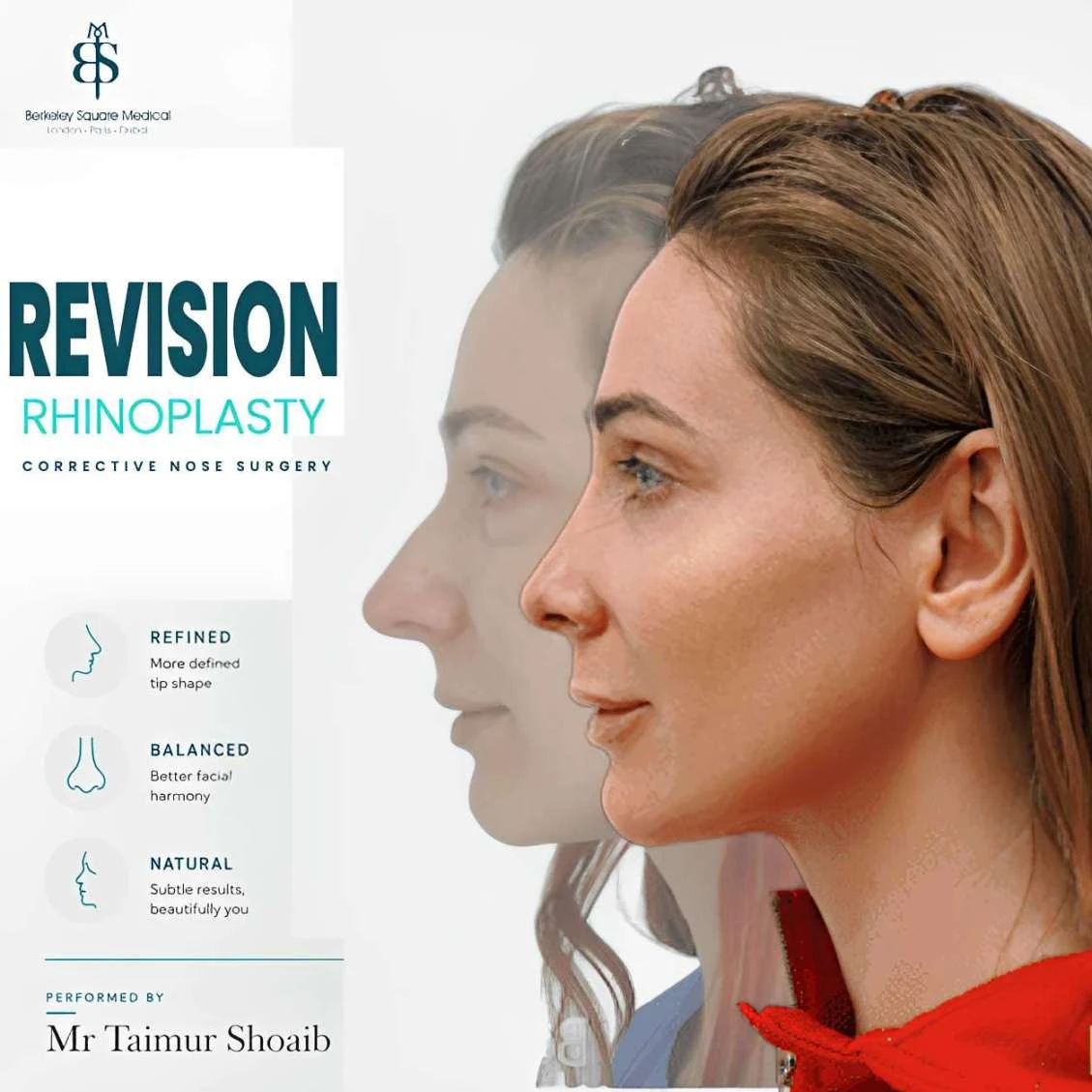
    Crooked nose rhinoplasty before and after by Mr Taimur Shoaib, a straightened profile, London
    Crooked nose straightened by Mr Taimur Shoaib at Berkeley Square Medical. Individual results vary; consenting patient.

    Why is my nose crooked?

    The common causes

    A crooked nose usually has one of a few causes, and often more than one at once:

    • A previous injury. A broken or knocked nose that healed with the bones set off-centre is the most common reason, sometimes from an injury years earlier that seemed minor at the time.
    • A deviated septum. The wall of bone and cartilage dividing the nostrils can be bent, which pushes the nose off to one side and often blocks breathing on the narrower side.
    • Genetics. Some people are simply born with an asymmetrical nose, most often because the tip cartilage on one side is a little larger or sits differently to the other, with no injury involved and the asymmetry present since the teens.
    • Previous surgery. Occasionally a nose can look crooked after earlier rhinoplasty, which is corrected with revision surgery.

    Whatever the underlying cause, Mr Shoaib identifies which is at play for you at a consultation in central London before recommending any treatment.

    Crooked nose treatment: cosmetic, or does it affect breathing too?

    Often both, and both can be treated together

    The good news is that you do not have to choose between a straighter nose and easier breathing. If you have ever felt you can only breathe properly through one nostril, or you snore more on one side, the cause is often the same deviation that is bending the outside of your nose. Where both are affected, a single operation, a septorhinoplasty in London, realigns the outside of the nose and opens the airway at the same time. Mr Shoaib assesses your breathing at consultation and tells you honestly whether a functional element is needed, or whether the correction is purely aesthetic.

    Crooked nose rhinoplasty for men

    Straightening the profile, keeping it masculine

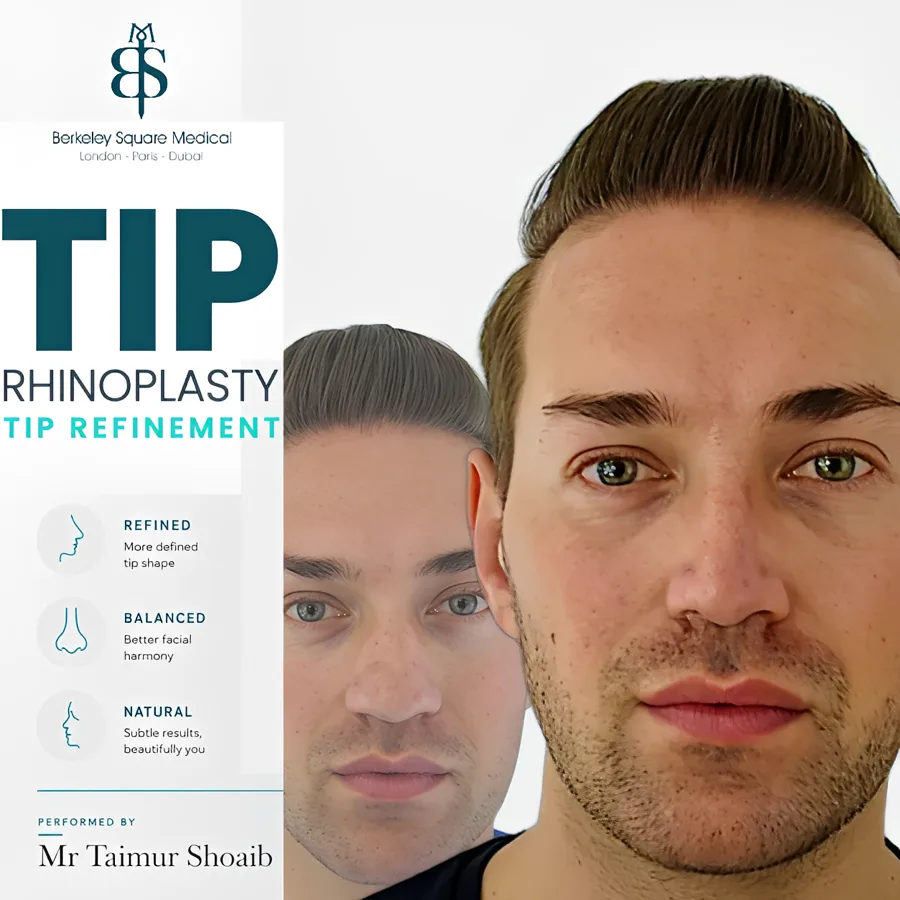
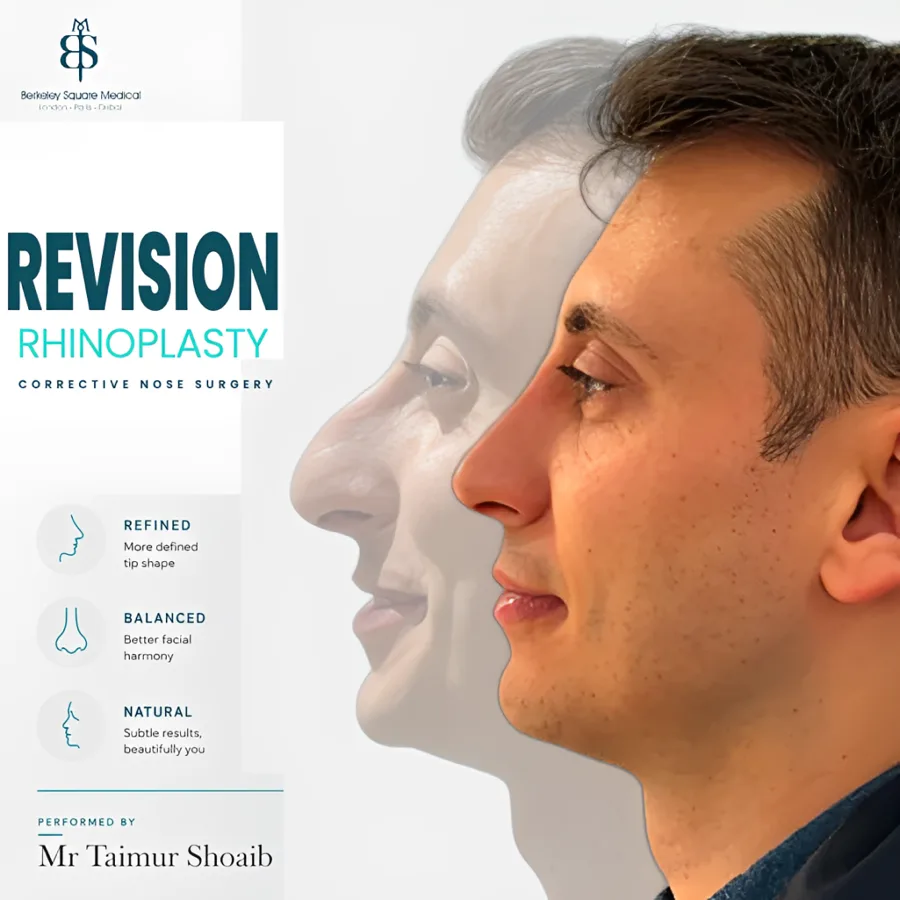
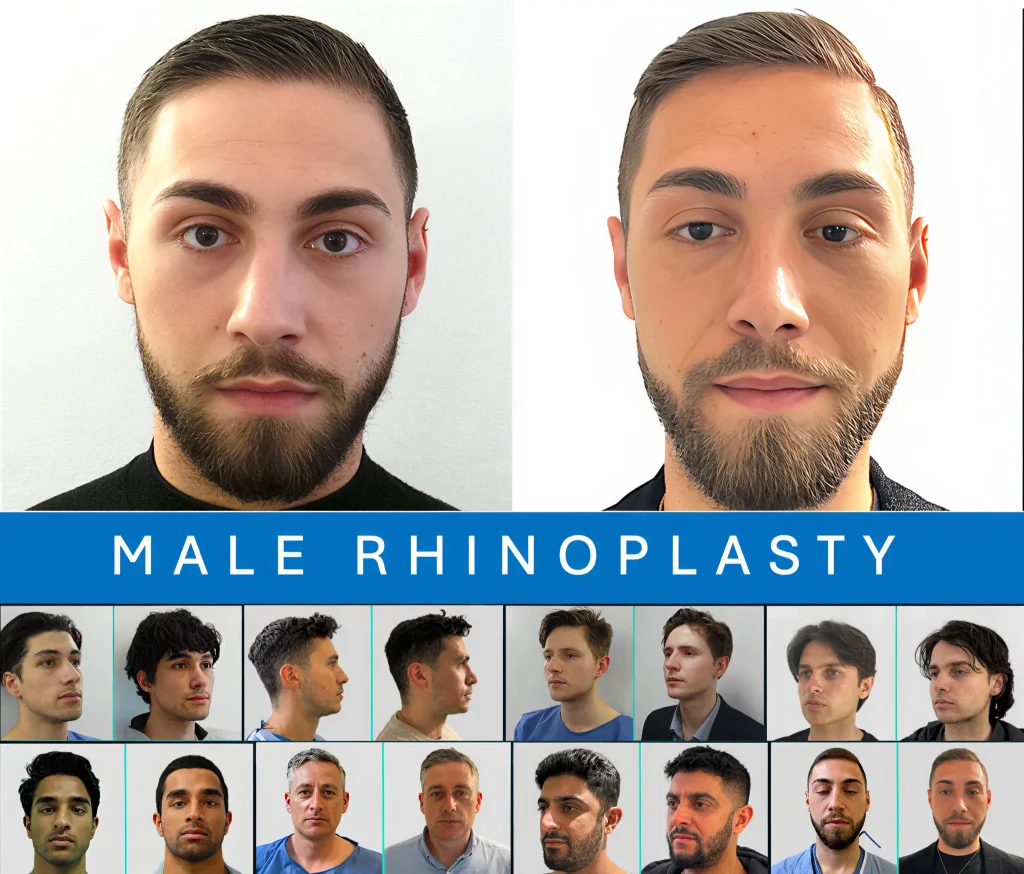
    For men, the goal is a straight, balanced nose that still looks strong and masculine, never small or over-refined. Straightening a crooked nose in a man often means resetting the nasal bones to the midline and, where needed, correcting a deviated septum so the nose sits centrally on the face. A crooked nose can make the whole face look off-balance in photos, and bringing it back to centre often has a bigger effect on how balanced the whole face looks than people expect.
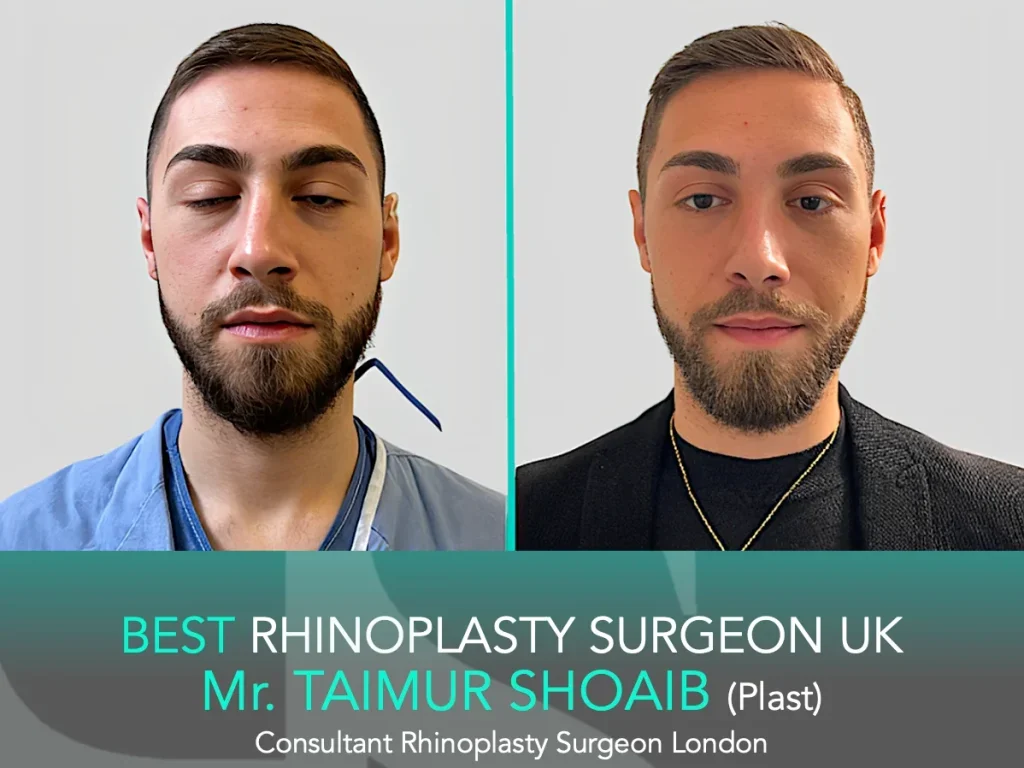
    Crooked nose corrected in a male patient, before and after, a straight masculine profile in London
    A straighter, still masculine nose. Individual results vary; consenting patient.
    Deviated nose straightened in a male patient, before and after at Berkeley Square Medical, London
    Nose brought back to the midline in a male patient. Individual results vary; consenting patient.

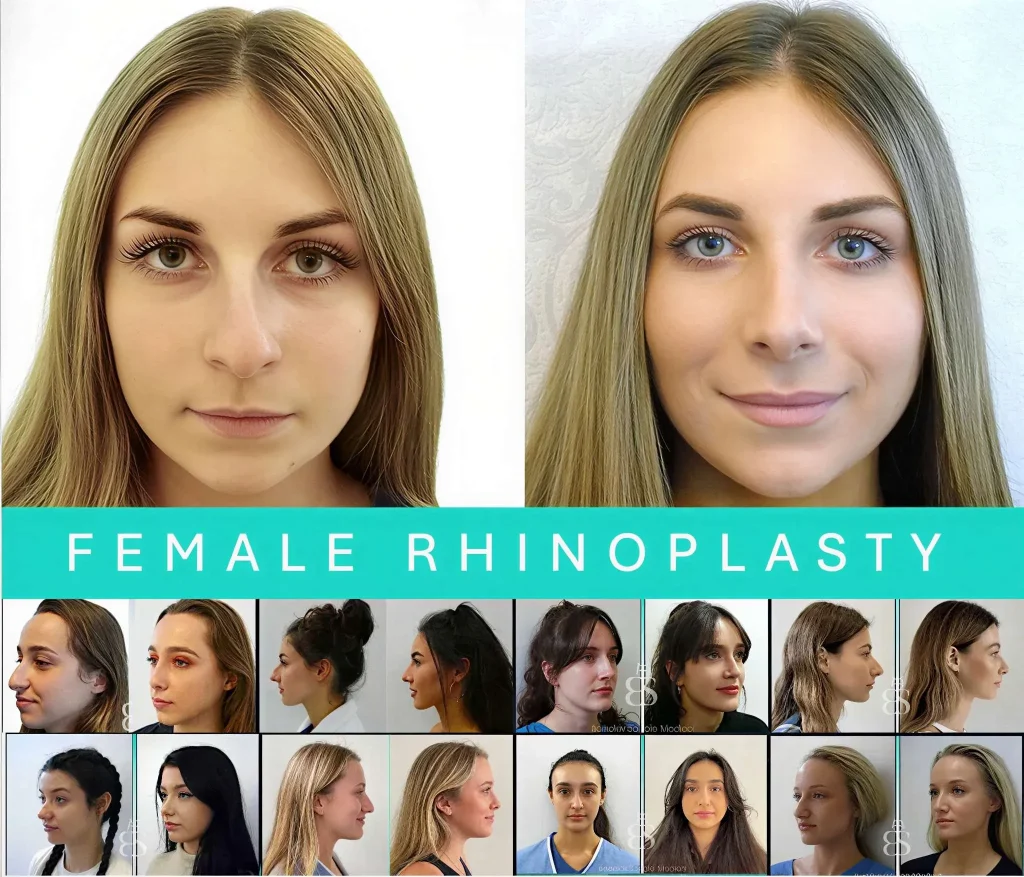
    Crooked nose rhinoplasty for women

    A straight, proportionate and natural result

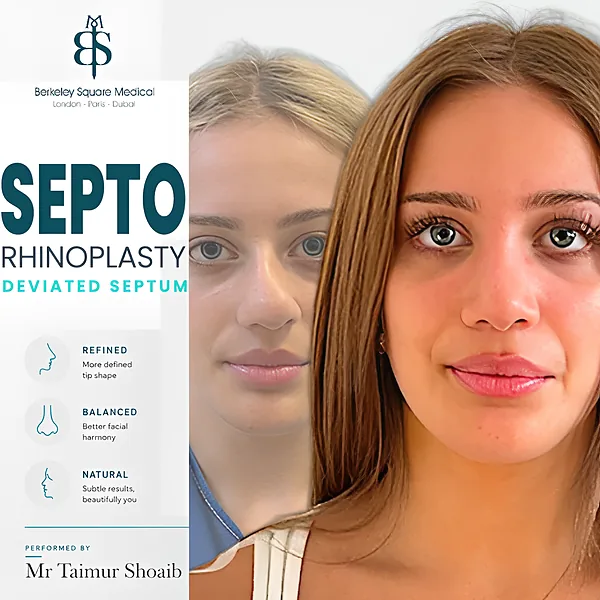
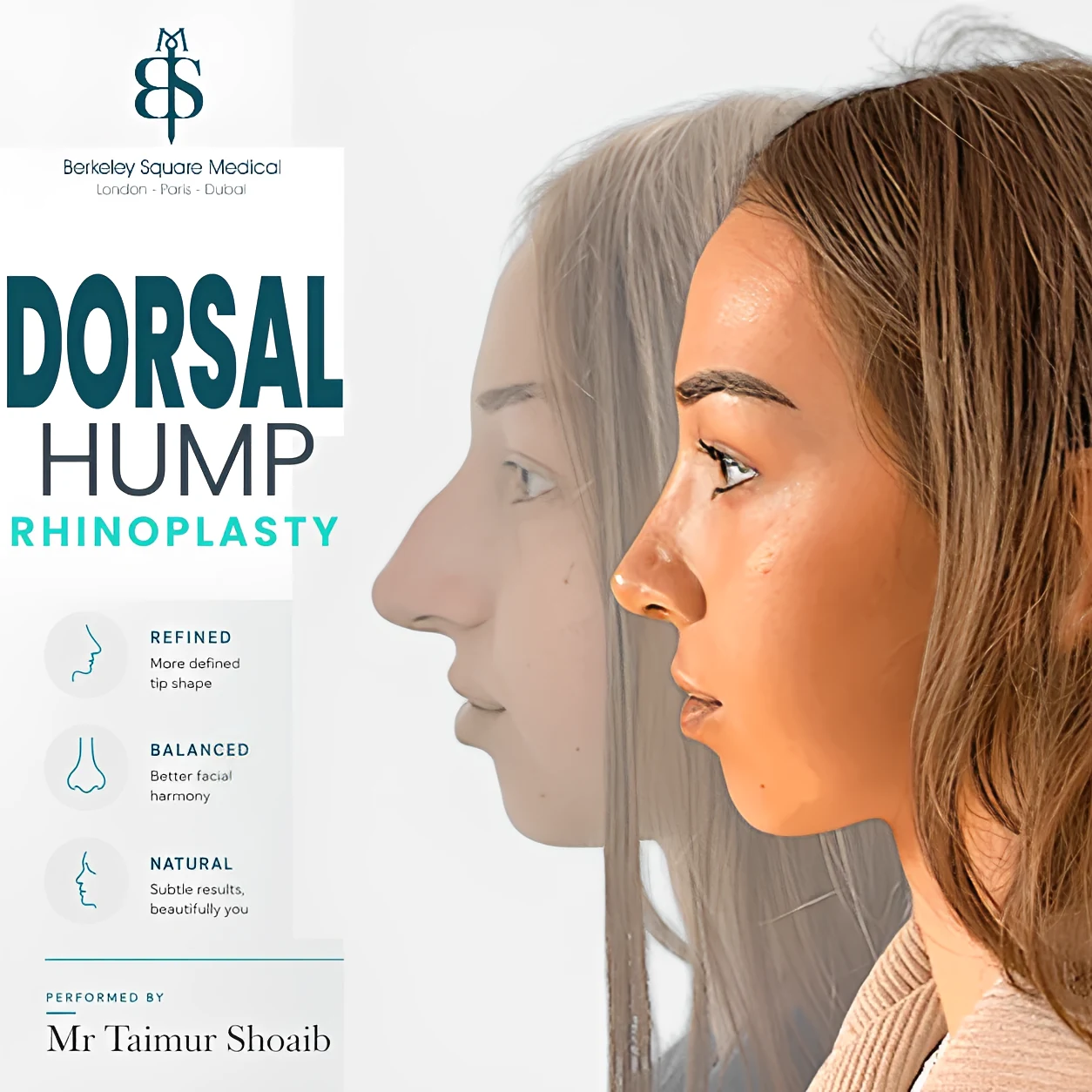
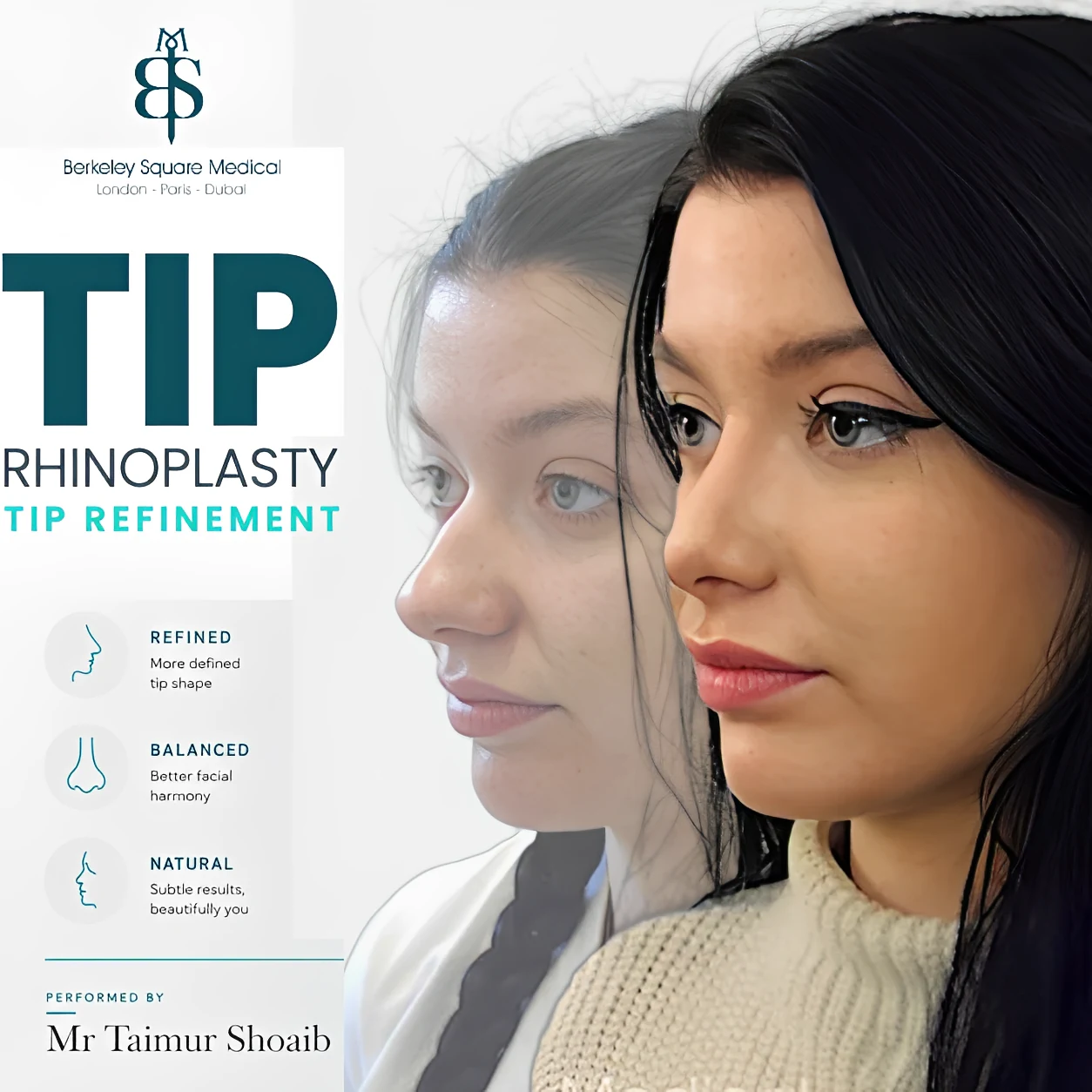
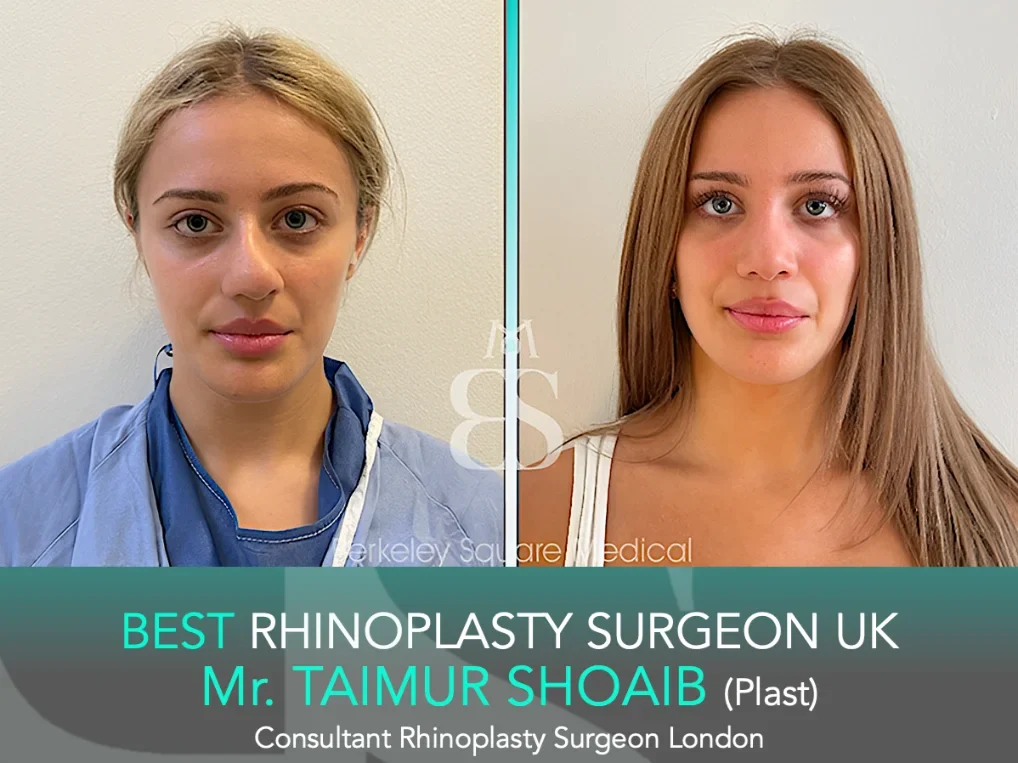
    For women, the aim is a straight, proportionate nose that sits in harmony with the eyes, lips and chin, and looks entirely natural rather than obviously operated. Correcting an asymmetrical nose can make the whole face look more balanced and photograph more evenly, and the change is usually understated. Keeping the result natural, and avoiding an over-narrowed look, is the priority.
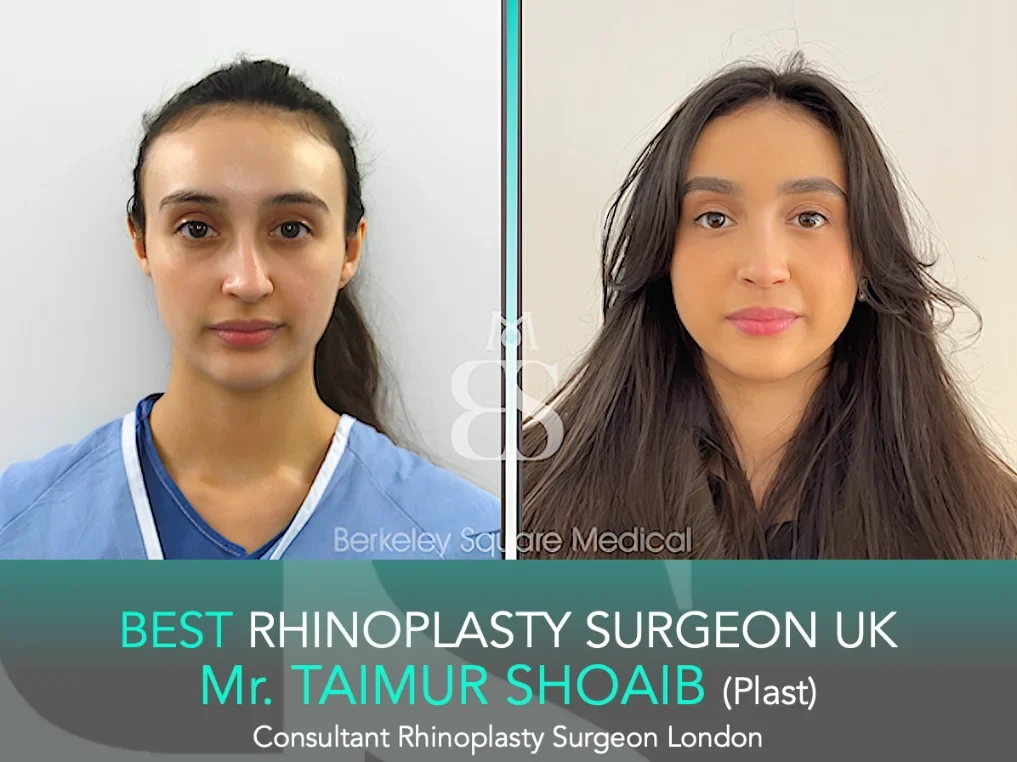
    Crooked nose corrected in a female patient, before and after, a straight natural profile in London
    A straight, natural result in a female patient. Individual results vary; consenting patient.
    Asymmetrical nose straightened in a female patient, before and after at Berkeley Square Medical, London
    An asymmetrical nose brought back to centre. Individual results vary; consenting patient.

    How crooked nose surgery works

    Resetting the nose to the midline

    Straightening a crooked nose is one of the more technically demanding rhinoplasty operations, because the nose has a memory and tends to drift back toward its old position, and even with thorough correction some tendency to drift can remain. The drift usually comes from an under-corrected caudal septum or residual bony spurs quietly pulling the nose back off-centre, which is why Mr Shoaib addresses each element rather than only the visible bend:

    • Osteotomies. Precise, controlled cuts let the nasal bones be reset to the midline.
    • Septal correction. A deviated septum is straightened, which both centres the nose and clears the airway.
    • Cartilage grafts. Spreader or supporting grafts, often from your own septum, help hold the straightened nose in its new position and reduce the tendency to drift back.
    • Open or closed. Mr Shoaib selects the approach that gives the control a crooked nose needs; complex deviations are often best corrected through an open approach.

    Recovery and results

    What to expect afterwards

    Recovery follows the usual rhinoplasty pattern. A splint protects the nose for about a week, bruising and swelling settle over the first two to three weeks, and most people feel comfortable in public by two weeks. The straighter line is visible as soon as the splint is removed, though the final result appears gradually as swelling clears over the following months. Our guide on swelling after rhinoplasty explains the timeline.

    All surgery carries risks, including bleeding, infection, temporary numbness and some residual asymmetry, which Mr Shoaib will go through in full at your consultation. Because a crooked nose tends to drift and rarely straightens perfectly, correcting a deviated nose carries a higher chance than a straightforward reduction that a small further refinement, or revision surgery, is needed to reach the straightest possible result. No surgeon can guarantee a perfectly straight nose.

    Choosing your surgeon

    Why straightening is a test of experience

    A crooked nose is one of the truest tests of a rhinoplasty surgeon, because an incomplete correction lets the nose drift back over the following year. It calls for a surgeon who corrects every element pulling the nose off-centre, not just the visible bend. Mr Taimur Shoaib FRCS (Plast) is a consultant plastic surgeon at 64 Harley Street, London, whose rhinoplasty practice focuses on natural, structurally sound results. His peer-reviewed research on tip control in closed rhinoplasty (European Journal of Plastic Surgery, 2026) reflects the same focus on precise, lasting shaping. You can read more on our London rhinoplasty surgeon page.

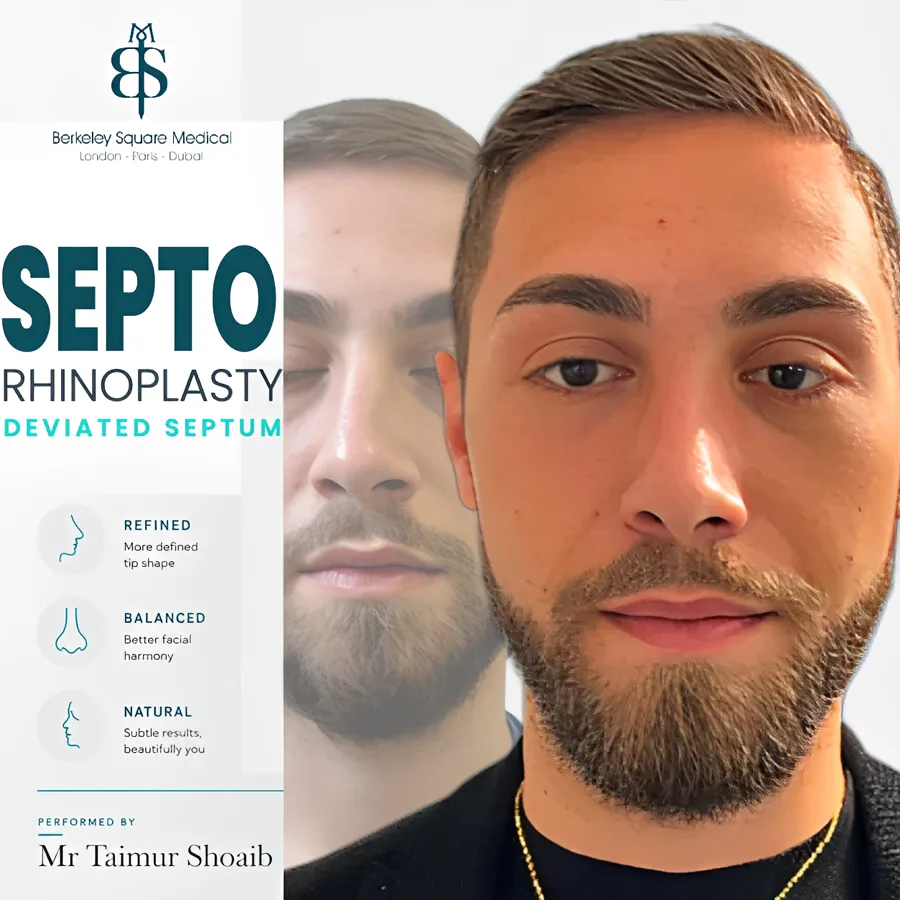
    Specialised Rhinoplasty For Men

    Related procedures that treat a crooked nose. Tap any card to read more.
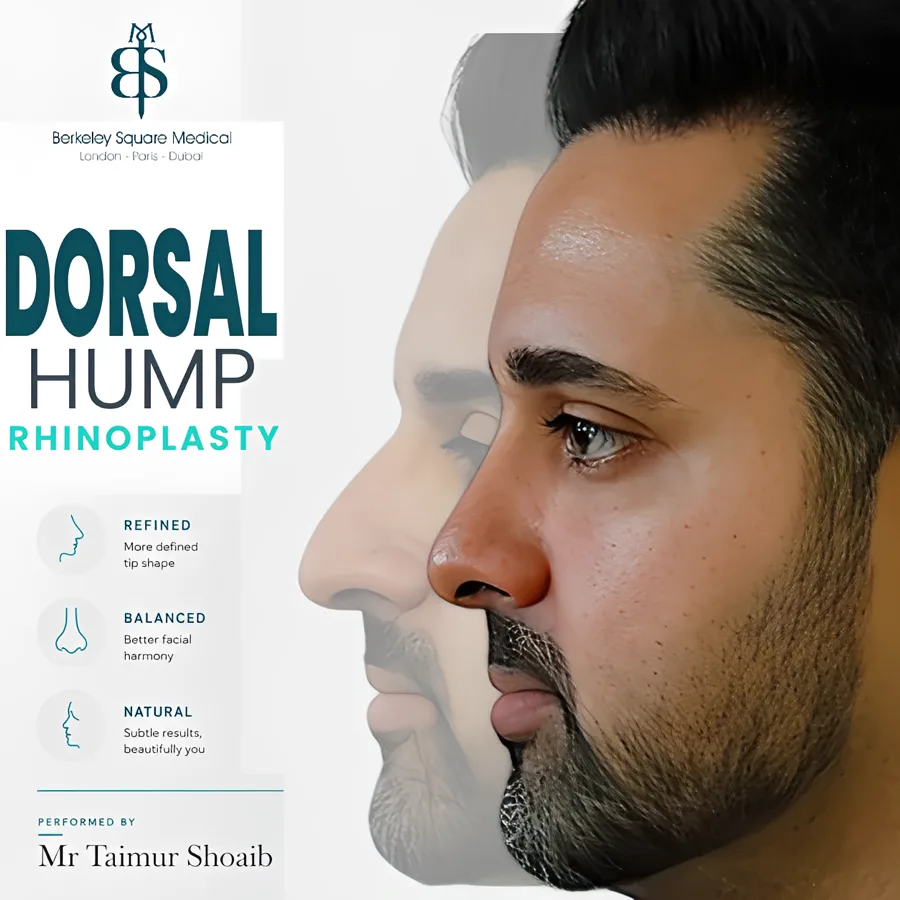
    Specialised Rhinoplasty For Females

    Related procedures that treat a crooked nose. Tap any card to read more.
    Considering crooked nose surgery in London?

    If a crooked or asymmetrical nose bothers you, or you struggle to breathe through one side, the next step is a consultation with Mr Taimur Shoaib at 64 Harley Street. See typical rhinoplasty costs in London, explore rhinoplasty with Mr Taimur Shoaib, or read about septorhinoplasty if breathing is affected.

    Book a London consultation

    At A Glance

    EXPLORE OUR COMPREHENSIVE GALLERIES

    READY TO SEE MORE?

    Berkeley Square Medical is a leading UK centre for natural Rhinoplasty. Visit our dedicated Male and Female pages for our full archive of real before-and-after results and detailed consultation information with Mr Taimur Shoaib.

    Full Case Studies, Imaging & Pricing

    VIEW FEMALE RHINOPLASTY HUB

    Full Case Studies, Imaging & Pricing

    VIEW MALE RHINOPLASTY HUB

    Crooked Nose Rhinoplasty FAQs

    What is a crooked nose?

    A crooked nose is one that deviates from the straight line down the centre of the face, so the bridge or tip sits off to one side. It is also called a deviated, bent or asymmetrical nose, and may look like a C or S shape from the front. A slight lean is normal; a noticeable deviation, or one that blocks breathing, is what people look into straightening.

    Why is my nose crooked?

    The most common cause is a previous injury or broken nose that healed off-centre, sometimes from a knock years earlier. Other causes are a deviated septum, uneven growth since the teens, or occasionally a previous rhinoplasty. Often more than one of these is involved at once.

    Can a crooked nose be fixed without surgery?

    Filler can sometimes camouflage a very mild deviation by balancing the sides, but it adds volume and cannot straighten the underlying bone or cartilage. A genuinely crooked nose, especially one with a deviated septum, is straightened properly with surgery. A non-surgical nose job suits only the mildest cases.

    Does a crooked nose affect breathing?

    Often, yes. When the septum is deviated, one side of the nose is narrower and breathing is worse on that side, sometimes with snoring. The straightening and the airway can be corrected together in one operation, a septorhinoplasty. Mr Shoaib checks your breathing at consultation.

    Is a crooked nose the same as a deviated septum?

    They are related but not identical. A deviated septum is the internal wall being bent, which often pushes the outside of the nose crooked and blocks breathing. A nose can also look crooked from the bones alone. Surgery for a crooked nose usually addresses both the outside shape and the septum where needed.

    Will straightening my nose still look natural?

    Yes. The aim is a straight, balanced nose that suits your face: strong and masculine for men, proportionate and refined for women, never over-narrowed or obviously operated. Mr Shoaib corrects the deviation while keeping the character of your features.

    How long is recovery from crooked nose surgery?

    A splint protects the nose for about a week, and most bruising and swelling settle over the first two to three weeks. The straighter line shows as soon as the splint is removed, while the final result appears gradually over the following months as swelling clears.

    How much does crooked nose surgery cost in London?

    Cost depends on the complexity of the deviation and whether the septum and breathing are treated as well. You can see typical pricing on our rhinoplasty cost in London page, and your exact quote is confirmed at consultation once your nose has been assessed.

    Make Your Enquiry

    +44(0)330 058 0212

    Any questions, enquiries, or just looking for a consultation? Simply send your enquiry here and we will get back to you with a reply promptly.


      Considering any cosmetic treatment is a significant step forward. Your consultation with Mr. Shoaib and our Team will provide clarity, expert insight, and honest guidance , focused entirely on your goals.

      Tell us about you

      A Few Contact Details

      Which procedure are you enquiring about?


      COPYRIGHT © BERKELEY SQUARE MEDICAL 2026. ALL RIGHTS RESERVED.


        Considering any cosmetic treatment is a significant step forward. Your consultation with Mr. Shoaib and our Team will provide clarity, expert insight, and honest guidance , focused entirely on your goals.

        Tell us about you

        A Few Contact Details

        Which procedure are you enquiring about?


        ×

          Tell us about you

          A Few Contact Details

          Which procedure are you enquiring about?


          ×

            Tell us about you

            A Few Contact Details

            Which procedure are you enquiring about?


            ×