Noticing that your nostrils look uneven after a nose job is one of the most common worries in the weeks and months of healing. Many patients see that one nostril looks bigger, higher, or more open than the other, and search for uneven nostrils after rhinoplasty, asymmetrical nostrils, or one nostril bigger than the other. The reassuring news is that in most cases this is swelling, not a lasting problem, and it settles as the nose heals. This guide, reviewed by a consultant plastic surgeon, explains why nostrils look uneven after rhinoplasty, how long it takes to settle, how to tell normal healing from a true asymmetry, and how a lasting unevenness is corrected.
Key Takeaways
- Uneven nostrils after rhinoplasty are common and usually caused by swelling, which is rarely equal on both sides in the early weeks.
- Most nostril asymmetry improves on its own within the first 3 to 6 months as the swelling settles, and the shape keeps refining up to a year.
- Other causes include scar tissue, differences in cartilage shape, and, rarely, altered support, which are more likely after complex or revision surgery.
- A lasting, true asymmetry is usually corrected with revision rhinoplasty, not filler; any surgical correction is normally delayed until healing has settled, usually around 12 months post-op.
- The single best way to lower the risk is choosing an experienced rhinoplasty surgeon and following your aftercare carefully.
What Do Uneven Nostrils After Rhinoplasty Look Like?
Uneven nostrils, sometimes searched as asymmetrical nostrils or nostril asymmetry, means the two nostril openings do not match in size, height, or shape. It is most obvious on the base (worm's-eye) view, looking up at the nose, and when the face moves or smiles. Common patterns include:
- One nostril looks bigger, wider, or more open than the other
- One nostril sits higher, so the nose looks tilted from below
- The strip of tissue between the nostrils (the columella) leans to one side
- One rim looks more rounded and the other more oval
A small degree of nostril asymmetry is normal in almost everyone, even without surgery, because no face is perfectly symmetrical. After rhinoplasty the difference can look more noticeable for a while because of swelling, and it usually becomes far less obvious as the nose settles.
What Causes Uneven Nostrils After Rhinoplasty?
Uneven nostrils after a nose job usually come from one or more of the following. The most common cause by far is simple swelling.
1. Swelling (the usual cause)
When tissue is reshaped during surgery, it swells as it heals, and that swelling is rarely even on both sides. One nostril can look larger or higher simply because it is more swollen. This is temporary and is the reason most early asymmetry corrects itself.
2. Scar tissue
As the nose heals, internal scar tissue forms and can contract slightly. If it forms unevenly, it can pull one side more than the other and make the nostrils look mismatched.
3. Differences in cartilage shape or support
The nostrils are shaped by delicate cartilage. Natural side-to-side differences in that cartilage, or a small change in support after surgery, can leave one nostril a different shape once the swelling has gone.
4. Rarely, changes to the tip or septum
In more complex or revision cases, changes to the nasal tip or a deviated septum can influence how the nostrils sit. A true structural asymmetry is uncommon and is assessed in person.
Is It Normal, and When Do Uneven Nostrils Settle?
Yes, it is very normal for nostrils to look uneven in the first weeks and months after rhinoplasty, and searching uneven nostrils 6 months after rhinoplasty is common because people expect it to have settled sooner. A rough timeline looks like this:
- Weeks 1 to 3: swelling is at its peak, and it is completely normal for one nostril to look larger, higher, or more open than the other. It is far too early to judge the result.
- Months 1 to 3: swelling reduces and the nostrils often begin to even out. You may still notice small differences, especially when you smile or move your face.
- Months 3 to 6: most of the visible healing is complete, and minor asymmetry often improves on its own without any treatment.
- Months 6 to 12: the final shape settles. If a genuine asymmetry remains at this stage, your surgeon can assess whether a correction is worthwhile.
If you are worried at any point, the most important step is to raise it at your follow-up visits so your surgeon can tell you whether you are seeing normal swelling or a developing asymmetry.
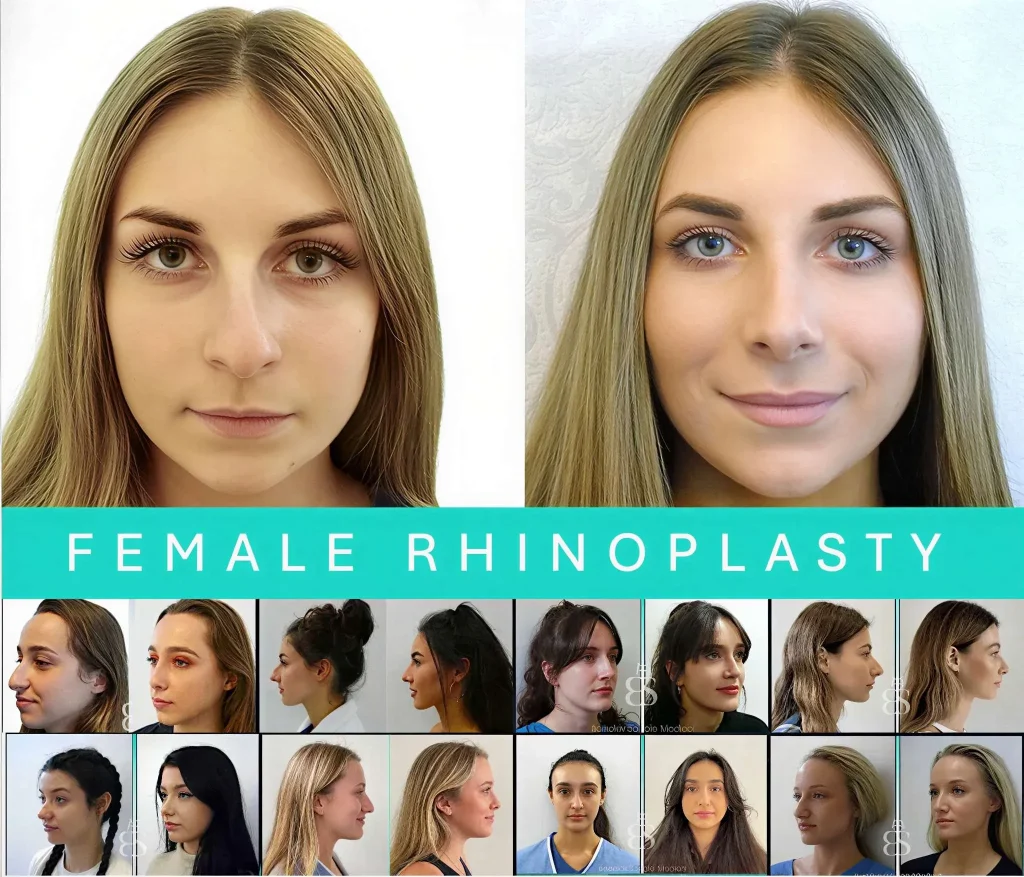
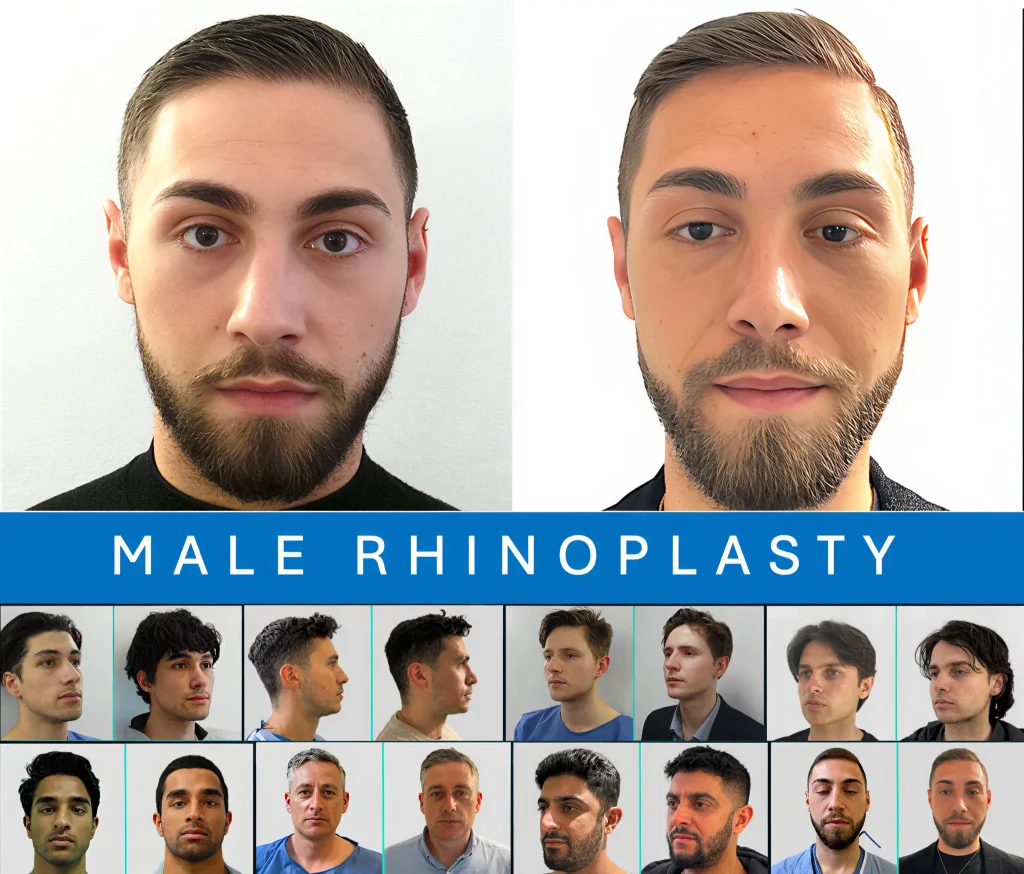
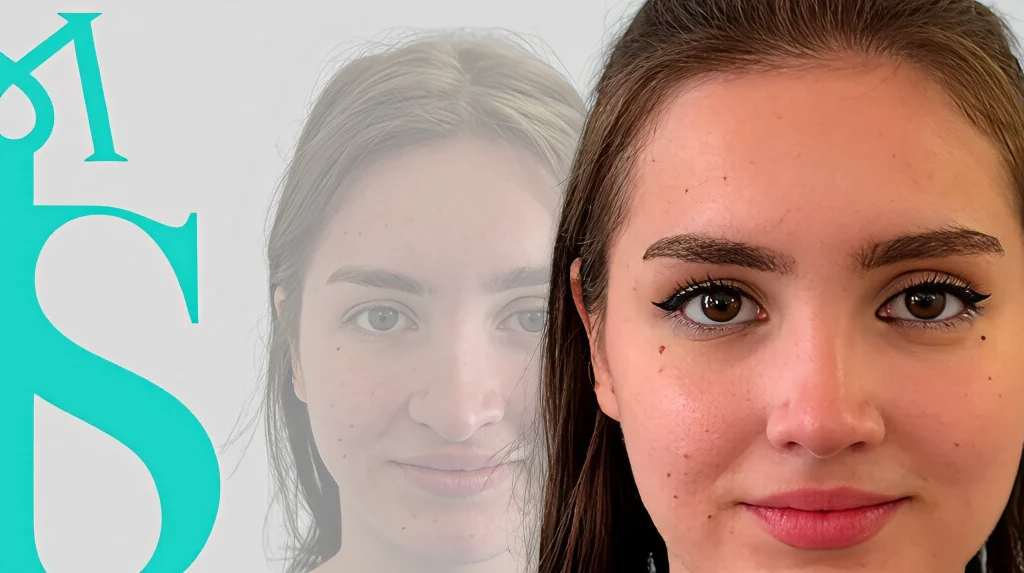
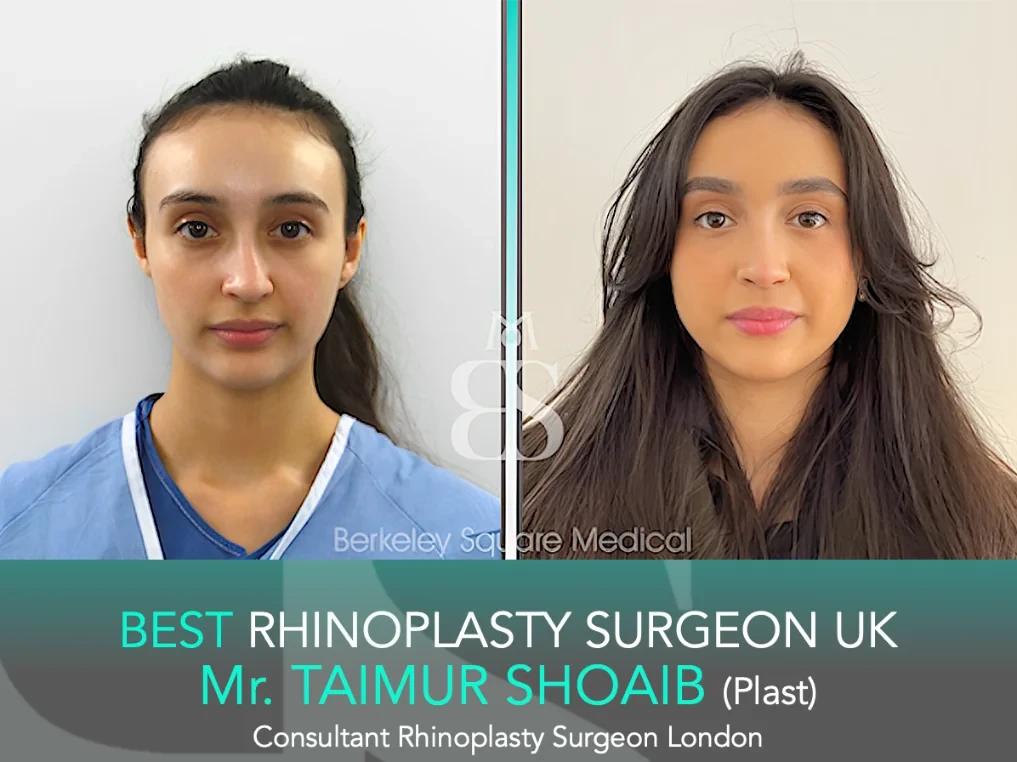
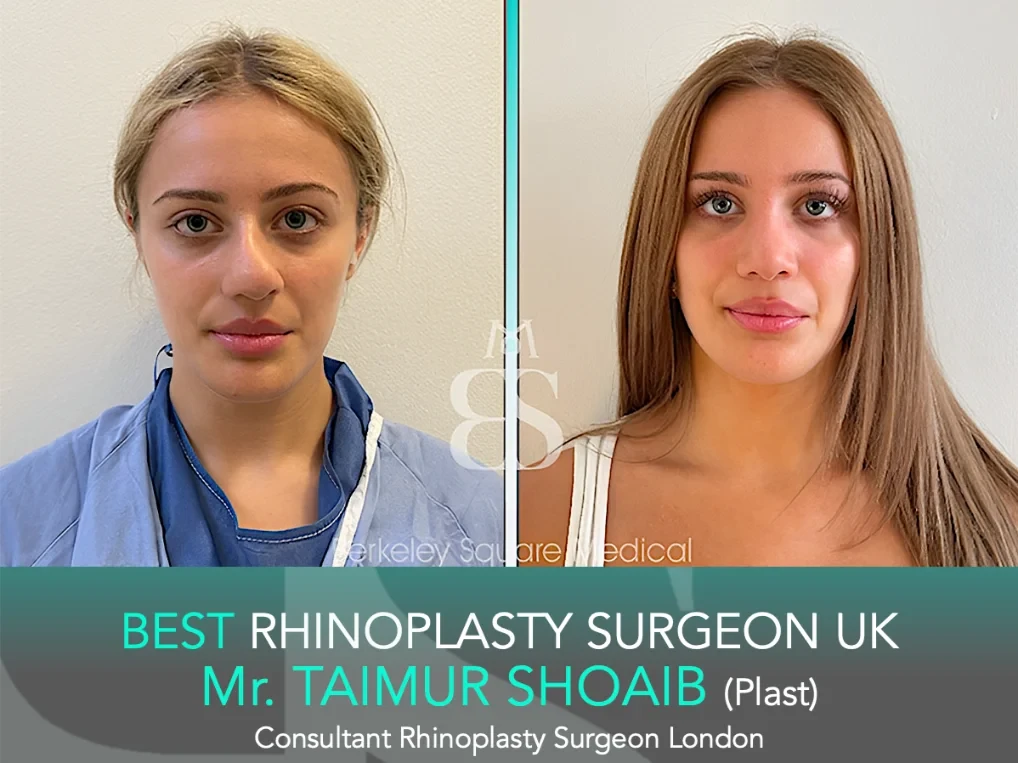
Uneven Nostril Correction: Before and After
Real results from Mr Taimur Shoaib, showing more balanced, better-matched nostrils after correction. Every nose is different, so these are shown to illustrate the kind of change that is possible, not a guaranteed outcome.
How Are Uneven Nostrils After Rhinoplasty Fixed?
If nostril asymmetry is still present once healing is complete, how it is corrected depends on the cause. The right approach is decided at a consultation after examining your nose and how it has healed.
First, time and observation
Because most early asymmetry is swelling, the first step is almost always to wait. Following your aftercare, and in some cases gentle taping or a small steroid injection to soften stubborn scar tissue, can help while the nose settles over 6 to 12 months.
Revision rhinoplasty (for a true, lasting asymmetry)
When a genuine structural asymmetry remains, the surgical correction is a revision rhinoplasty. During revision, an experienced surgeon may reshape or reposition the nostril cartilage, add small cartilage grafts (from the septum, ear, or rib) to rebuild even support, adjust the columella so it sits centrally, or refine the tip so the two sides match more closely. This is usually planned once healing has fully settled, around 12 months after the first operation, and is best done by a surgeon who regularly performs secondary rhinoplasty.
What about dermal filler?
You may read that filler can fix uneven nostrils. In reality its role here is very limited. Filler cannot reshape a nostril rim or make a larger nostril smaller; at most, in carefully selected mild cases, a small amount can camouflage a soft-tissue contour difference, and the effect is temporary. Filler in a nose that has already had surgery carries a higher risk of complications and should only be considered by an experienced injector. It is not a substitute for correcting a true structural nostril asymmetry, which needs surgery.
Can Uneven Nostrils Be Prevented?
Not every case is avoidable, because some asymmetry is natural and healing varies from person to person. The risk can be lowered by:
- Choosing a surgeon with a proven track record in rhinoplasty and revision rhinoplasty.
- A careful, symmetrical surgical plan and gentle handling of the tissues.
- Following your aftercare closely, especially advice on swelling, taping, and avoiding pressure on the nose.
- Attending your follow-up appointments so any concern is picked up and managed early.
At Berkeley Square Medical, Mr Shoaib routinely performs secondary nose surgery for patients unhappy with a previous result, including nostril asymmetry.
Related reading
- Revision rhinoplasty in London, how a previous rhinoplasty, including uneven nostrils, is corrected with cartilage grafting and tip refinement.
- Nose collapse after rhinoplasty, a loss-of-support complication and how it is repaired.
- Retracted columella after rhinoplasty, when the tissue between the nostrils pulls upward, affecting nostril show.
- Pollybeak deformity after rhinoplasty, fullness above the tip, another common post-rhinoplasty concern.
- Scar tissue after rhinoplasty, how internal scar tissue forms and how firm scar tissue is softened or removed.
Frequently Asked Questions
Is it normal for nostrils to be uneven after rhinoplasty?
Yes, it is very common. Swelling after surgery affects each side of the nose differently, so nostrils often look uneven in the early weeks and months. This usually improves on its own as the swelling settles, with most of the change happening in the first 3 to 6 months.
Why does one nostril look bigger or higher than the other after a nose job?
Uneven swelling is the usual reason one nostril looks bigger, wider, or higher than the other. Scar tissue and small natural differences in cartilage shape can also play a part. These differences most often even out within the first 3 to 6 months of healing.
How long do uneven nostrils take to settle after rhinoplasty?
Most unevenness improves within 3 to 6 months, and the nose keeps refining for up to a year. It is common to still see some asymmetry at 6 months, which is why surgeons usually advise waiting at least 6 to 12 months before considering any correction.
How do you fix uneven nostrils after rhinoplasty?
The first step is time, because most early asymmetry is swelling. If a genuine asymmetry remains once healing is complete, it is corrected with a revision rhinoplasty: the surgeon may reshape the nostril cartilage, add small cartilage grafts to even out support, centre the columella, or refine the tip. This is usually planned once healing has settled, around 12 months or later after the first surgery.
Can dermal filler fix uneven nostrils?
Only to a very limited degree. Filler cannot reshape a nostril rim or make a larger nostril smaller. In carefully selected mild cases a small amount can camouflage a soft-tissue contour difference, and the effect is temporary; because filler in a previously operated nose carries a higher risk of complications, it should only be considered by an experienced injector. A true structural nostril asymmetry needs surgical correction, not filler.
Can nostril asymmetry go away on its own?
Yes, in many cases. As swelling goes down and the tissues settle, mild asymmetry often corrects itself without any treatment. A difference that remains once healing is complete, usually after 6 to 12 months, is less likely to change on its own and can be assessed for correction.
When should I consider revision surgery for uneven nostrils?
Revision is usually considered only if the asymmetry is still clearly present after 6 to 12 months and is causing cosmetic concern or a breathing problem. Waiting allows swelling to settle fully so any correction is planned against the nose's true, settled shape.
Will uneven nostrils affect my breathing?
Often not. If the unevenness is only in the external shape or is due to swelling, breathing is usually unaffected. If there is internal narrowing, a deviated septum, or weakened support, airflow can be affected, and that is assessed as part of the examination and treated if needed.
Worried about uneven nostrils after rhinoplasty?
The first step is an examination to tell normal swelling from a true asymmetry, and to plan the right correction for your nose. Book a consultation with Mr Taimur Shoaib at 64 Harley Street, London.
Book a consultation