
• 0330 058 0212
  • Make an Enquiry

    Request A Call BackX

    ADDRESS64 Harley Street, London, W1G 7HB
    +44 (0)330 058 0212

    PLEASE FILL IN YOUR DETAILS

    Sending your message. Please wait...

    Thanks for sending your message! We'll get back to you shortly.

    There was a problem sending your message. Please try again.

    Please complete all the fields in the form before sending.

RETRACTED COLUMELLAAFTER RHINOPLASTY, CORRECTION IN LONDON

By Mr Taimur Shoaib FRCS (Plast), GMC No. 3615443 · Authored and medically reviewed · Last updated 14 August 2026
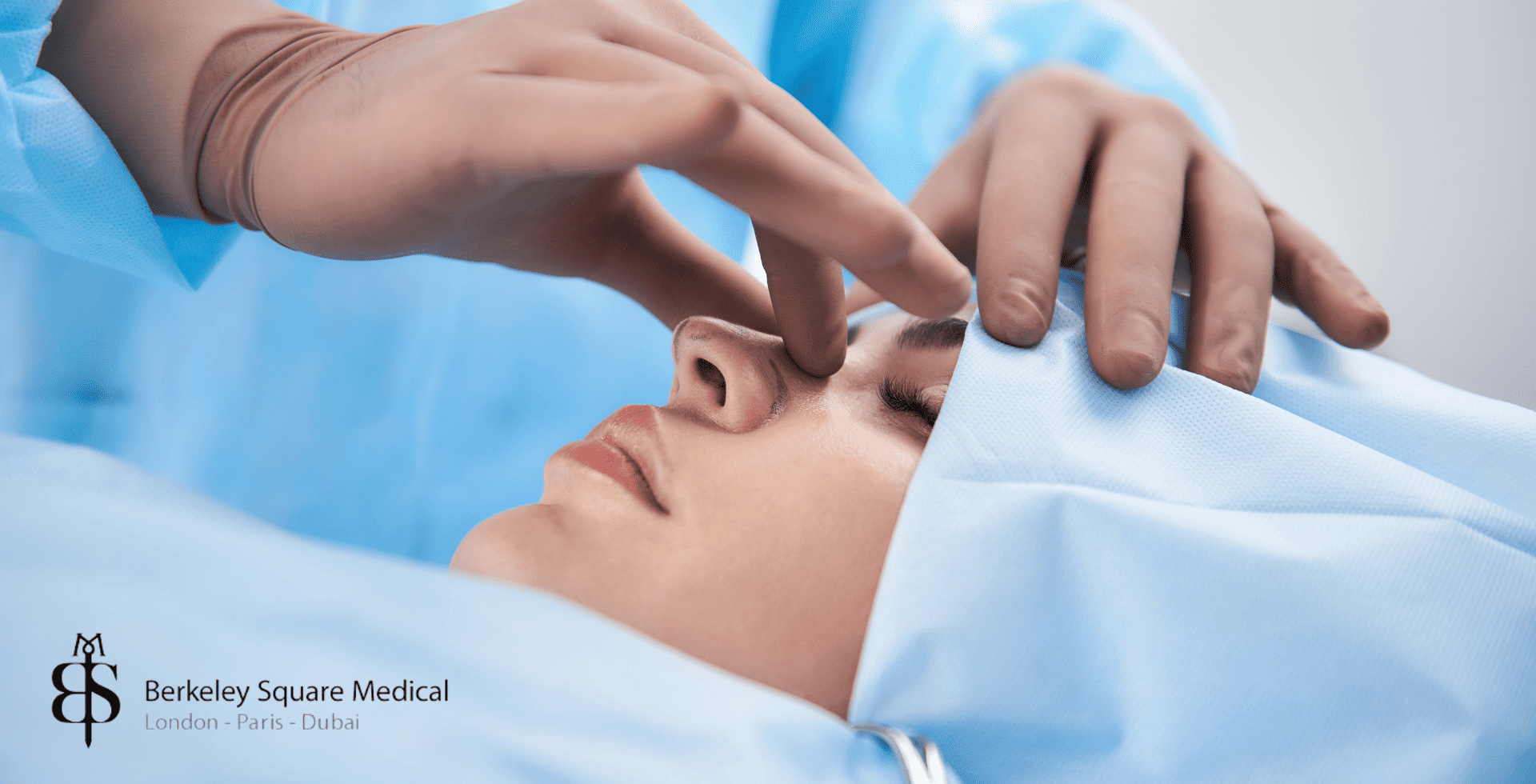
Female nasal profile before and after rhinoplasty, retracted columella correction at Berkeley Square Medical London

Make Your Enquiry

+44(0)330 058 0212


    Considering any cosmetic treatment is a significant step forward. Your consultation with Mr. Shoaib and our Team will provide clarity, expert insight, and honest guidance , focused entirely on your goals.

    Tell us about you

    A Few Contact Details

    Which procedure are you enquiring about?


    A retracted columella is one of the more recognisable things that can look wrong after a nose job. The columella, the strip of tissue between your nostrils, sits pulled up or tucked in, so the nose can look too short and the nostrils show more than they should. It can be there from birth, follow an injury, or appear after rhinoplasty when too much support has been removed. This guide explains what a retracted columella is, why it happens, what "the columella dropping" after rhinoplasty really means, when to wait and when to act, and how it is corrected, usually with a carefully planned revision.

    Medically reviewed by Mr Taimur Shoaib FRCS (Plast), GMC No. 3615443, Consultant Plastic Surgeon at Berkeley Square Medical, 64 Harley Street, London. Mr Shoaib has a particular focus on revision rhinoplasty, correcting the results of previous nose surgery. A retracted columella should be assessed in person, because the right correction depends on your individual anatomy and how your nose has healed. This page is for information and does not replace a medical assessment. Individual results vary from person to person, and no surgeon can promise a specific outcome.

    Key Takeaways

    • A retracted columella makes the nose look too short or pulled upward, often exposing more of the nostrils than normal, and is most obvious from the side.
    • It can be caused by genetics, trauma, or rhinoplasty, especially if cartilage was over-trimmed, the incision sat too high, or scar tissue has pulled the tissue up during healing.
    • Mild retraction may settle on its own as swelling resolves, but a true, lasting retraction usually needs surgical correction.
    • Wait at least 6 to 12 months after surgery before considering revision, because swelling and healing keep changing the columella's appearance.
    • Correction uses columellaplasty or cartilage grafts (from the septum, ear, or rib) to rebuild support and restore a natural contour, as part of a revision rhinoplasty.

    What Is the Columella?

    The columella, sometimes searched as the "columella nose" or nasal columella, is the thin strip of skin and cartilage at the base of the nose that separates the two nostrils and runs from the tip of the nose down to the upper lip. It is one of the features that gives the nose its shape and defines how much of the nostril is on show, and it is most visible when you look at a nose from the front or the side.

    The columella can look wrong in two opposite ways. It is retracted when too little of it shows, so the nose looks short and the nostrils are over-exposed. It is hanging when too much of it shows below the nostril rims. A retracted columella makes the nose appear too short for the face, and the balance between the columella and the nostril rims is a key part of a natural-looking result.

    What Causes a Retracted Columella?

    A retracted columella can be something you are born with, part of your natural anatomy, and it is more common in some ethnic backgrounds. It can also follow an injury to the nose. Most often, though, patients notice it after rhinoplasty, when the support that holds the columella in position has been reduced. Common surgical causes include:

    • Over-resection of cartilage: removing too much cartilage from the septum or the tip weakens the support that keeps the columella down.
    • An incision placed too high: if the columellar incision sits too high, the tissue can heal in a pulled-up position.
    • Scarring and contraction: scar tissue can tighten during healing and draw the columella upward, especially in thicker skin.
    • Loss of tip support: when the framework under the tip is weakened, the whole area can retract as it settles.

    Will My Columella Drop After Rhinoplasty?

    "Will my columella drop after rhinoplasty?" is one of the most common worries in the early months, and the honest answer is that the columella almost always changes as the nose heals. In the first weeks the tip and columella are swollen and can look higher or tighter than the final result. As the swelling settles over the following months, the columella often relaxes and shows a little more, which is normal healing, not a complication.

    A genuine problem is different from normal settling. If, once most of the swelling has gone, the columella stays pulled up and the nose still looks too short with over-exposed nostrils, that is a true retraction rather than temporary swelling. The opposite can also happen: the columella can hang too low, which is a separate issue known as a hanging columella. Because early swelling is so misleading, the appearance should be judged at 6 to 12 months, not in the first few weeks.

    How Long Should You Wait Before Correcting It?

    Healing after rhinoplasty takes up to a year, and although most of the visible change happens in the first few months, the nose keeps refining well beyond that. If you are concerned about a retracted columella, it is best to wait at least 6 months, and often 12, before considering revision. This gives the swelling time to resolve fully and the tissues time to soften, so that any correction is planned against your nose's true, settled shape rather than a temporary one. Operating too early risks working on a nose that is still changing.

    Retracted Columella Correction: Before and After

    Real results from Mr Taimur Shoaib, showing a more balanced columella and nostril show after correction. Every nose is different, so these are shown to illustrate the kind of change that is possible, not a guaranteed outcome.

    Retracted columella correction before and after in a female patient by Mr Taimur Shoaib, London, profile view
    Real patient of Mr Taimur Shoaib, shown with consent for advertising. Individual results vary and are not guaranteed.
    Retracted columella correction before and after in a female patient, oblique view, Berkeley Square Medical London
    Real patient of Mr Taimur Shoaib, shown with consent for advertising. Individual results vary and are not guaranteed.

    How Is a Retracted Columella Corrected?

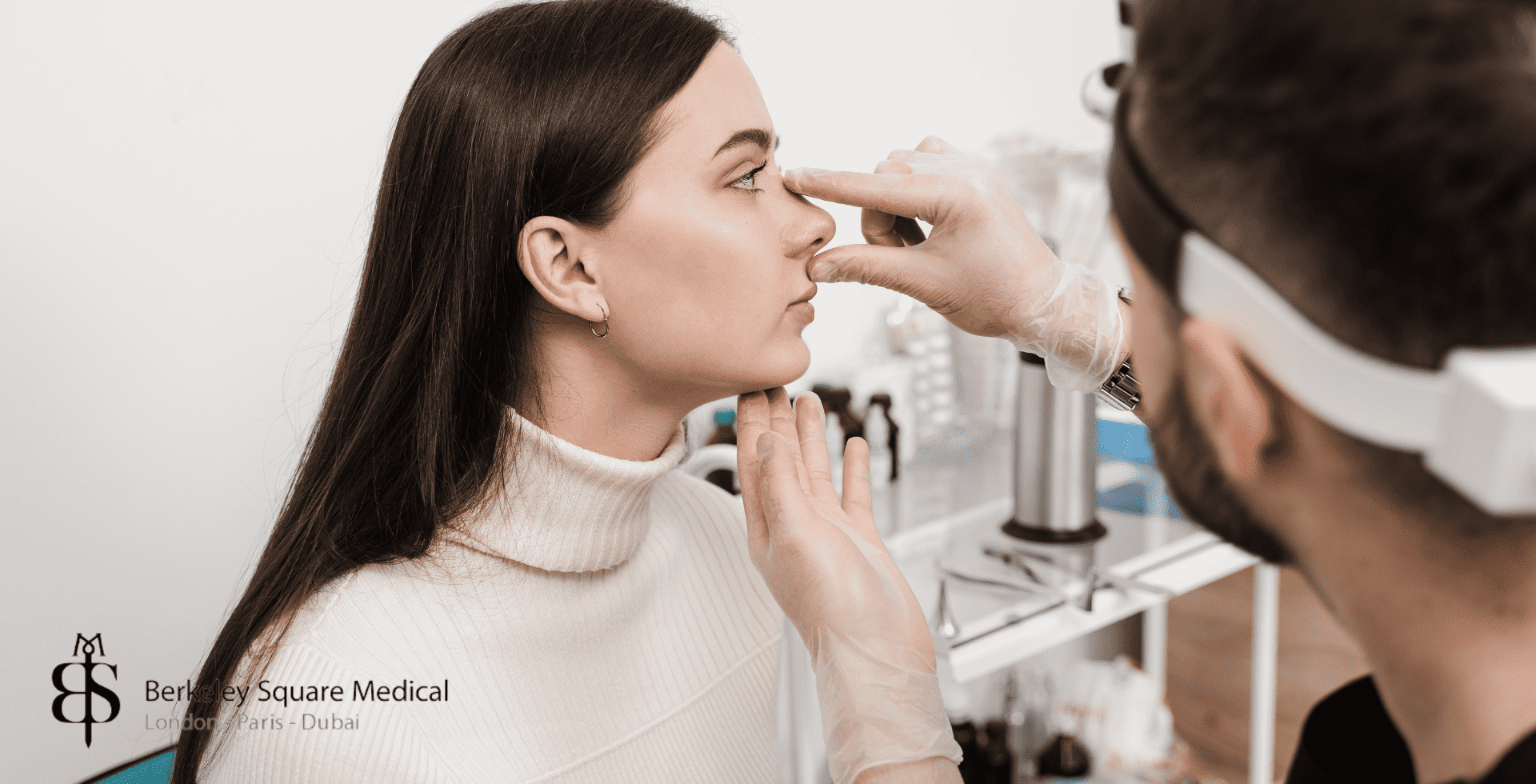
    Correcting a retracted columella is a fine-tuning operation to restore the balance of the nose, and the right approach is decided at a consultation after examining your nose and how it has healed. The options include:

    • Cartilage grafts: the most common correction rebuilds support using the patient's own cartilage, taken from the septum, ear, or rib, to bring the columella back into a natural position.
    • Columellaplasty: a targeted reshaping of the columella and surrounding tissue to improve the contour and nostril show.
    • Adjusting the tip: in some cases, refining tip support alone is enough to restore balance, without a large operation.
    • Dermal fillers: in very mild cases a filler can add a little volume beneath the nose as a temporary measure, but it does not rebuild support and surgery is more effective and lasting.

    Because a retracted columella after surgery is a healed, altered nose, its correction is a form of revision rhinoplasty, which is more demanding than a first operation and is best done by a surgeon who does a lot of it. Mr Taimur Shoaib has extensive experience in revision rhinoplasty, correcting the results of previous nose surgery.

    Related reading

    Frequently Asked Questions

    What is a retracted columella?

    A retracted columella is when the strip of tissue between the nostrils appears pulled upward or tucked in. This can make the nose look too short and expose more of the nostrils, especially from the side view.

    Can rhinoplasty cause a retracted columella?

    Yes. A retracted columella can occur after rhinoplasty if too much cartilage is removed, incisions are placed too high, or healing causes the tissue to contract. It may also result from scarring or a loss of support after surgery.

    Will my columella drop after rhinoplasty?

    The columella almost always changes as the nose heals. In the early weeks it is swollen and can look higher or tighter, and it often relaxes and shows a little more as the swelling settles, which is normal. If it stays pulled up once most of the swelling has gone, that is a true retraction and can be assessed for correction. Judge the appearance at 6 to 12 months, not in the first few weeks.

    Is a retracted columella permanent?

    Not always. Mild cases may improve as swelling subsides. A more noticeable retraction that remains once healing is complete usually needs revision surgery to rebuild support and restore balance to the nose.

    How long should I wait before fixing a retracted columella?

    Most surgeons recommend waiting at least 6 to 12 months after your original rhinoplasty. This allows swelling to fully resolve and the tissue to heal before planning a revision, so the correction is based on your nose's settled shape.

    How is a retracted columella treated?

    Surgical correction usually involves revision rhinoplasty with columellaplasty or cartilage grafts taken from your nasal septum, ear, or rib. The aim is to restore support and create a balanced nasal contour.

    Can fillers fix a retracted columella?

    In very mild cases, dermal fillers may give a temporary improvement by adding a little volume beneath the nose. However, they do not rebuild structural support, so surgical correction is usually more effective and longer-lasting.

    Does a retracted columella affect breathing?

    Most of the time it is a cosmetic concern. In some cases, where the structure of the nose has been weakened, it can go along with changes to airflow or the nasal valve, which is assessed as part of the examination.

    Concerned about your columella after rhinoplasty?

    The first step is an examination to tell normal healing from a true retraction, and to plan the right correction for your nose. Book a consultation with Mr Taimur Shoaib at 64 Harley Street, London.

    Book a consultation

    At A Glance

    EXPLORE OUR COMPREHENSIVE GALLERIES

    READY TO SEE MORE?

    Berkeley Square Medical is a leading UK centre for natural Rhinoplasty. Visit our dedicated Male and Female pages for our full archive of real before-and-after results and detailed consultation information with Mr Taimur Shoaib.

    Full Case Studies, Imaging & Pricing

    VIEW FEMALE RHINOPLASTY HUB

    Full Case Studies, Imaging & Pricing

    VIEW MALE RHINOPLASTY HUB

    Make Your Enquiry

    +44(0)330 058 0212

    Any questions, enquiries, or just looking for a consultation? Simply send your enquiry here and we will get back to you with a reply promptly.


      Considering any cosmetic treatment is a significant step forward. Your consultation with Mr. Shoaib and our Team will provide clarity, expert insight, and honest guidance , focused entirely on your goals.

      Tell us about you

      A Few Contact Details

      Which procedure are you enquiring about?


      COPYRIGHT © BERKELEY SQUARE MEDICAL 2026. ALL RIGHTS RESERVED.


        Considering any cosmetic treatment is a significant step forward. Your consultation with Mr. Shoaib and our Team will provide clarity, expert insight, and honest guidance , focused entirely on your goals.

        Tell us about you

        A Few Contact Details

        Which procedure are you enquiring about?


        ×

          Tell us about you

          A Few Contact Details

          Which procedure are you enquiring about?


          ×

            Tell us about you

            A Few Contact Details

            Which procedure are you enquiring about?


            ×