When will the NHS pay for nose surgery?
Medical need, not appearance
The NHS funds nose surgery only when it is medically necessary, not to change how your nose looks. If your only concern is the shape or size of your nose, the NHS will not fund it, and private Rhinoplasty is the route. Where there is a genuine medical problem, most often a breathing difficulty, the NHS may fund functional surgery such as a septoplasty.
In other words, the question the NHS asks is not "do you want your nose changed?" but "is there a medical reason your nose needs treating?". Understanding that distinction is the key to knowing whether you are likely to qualify.
What counts as a medical reason?
The problems that can qualify
Funding is usually considered only when there is a clear clinical need that affects your health or breathing, and where non-surgical treatments have already been tried. The most common qualifying reasons are:
- A deviated septum. When the wall between your nostrils is displaced enough to obstruct your breathing.
- Nasal injury or trauma. A broken nose or damage from an accident that affects breathing or structure.
- A congenital condition. A structural difference present from birth that affects breathing or function.
- Reconstruction after disease. Rebuilding the nose after treatment for a medical condition.
Approval is usually only given once simpler treatments have failed and the problem significantly affects your quality of life. Surgery purely to improve appearance is not funded.
How to apply, and who actually decides
From your GP to the funding board
The usual route starts with your GP, who can refer you to an ENT (ear, nose and throat) or plastic surgery specialist. That specialist assesses whether there is a clear clinical need. The funding decision is made by your local Integrated Care Board (ICB), the NHS bodies that replaced Clinical Commissioning Groups in July 2022.
Where a case is borderline, the clinician may need to make an Individual Funding Request (IFR) and demonstrate that your situation is exceptional. It is worth being realistic: these rules describe NHS England. Criteria are set locally by each ICB and vary significantly between areas. Scotland, Wales and Northern Ireland run their own NHS systems with different thresholds. And meeting the criteria does not guarantee funding, because each case is assessed individually.
NHS criteria for a deviated septum (septoplasty)
When a breathing problem may qualify
A deviated septum is when the cartilage and bone dividing your nostrils is displaced, making one side narrower. A septoplasty is the most common form of nose surgery for breathing problems funded by the NHS. Where it causes significant problems, a septoplasty on the NHS may be available. Typical requirements are:
- Persistent breathing problems that a clinician finds are not helped by treatments such as steroid sprays or antihistamines.
- Chronic congestion or blockage that affects your daily life and sleep.
- Recurrent sinus infections linked to the deviation.
These are typical examples, and the exact thresholds vary by area. A septoplasty corrects the breathing problem; it is not provided to change the appearance of the nose. Our guide to deviated septum surgery explains the procedure in detail.
Can psychological distress qualify for NHS nose surgery?
The exceptional-circumstances route
In rare cases, the NHS may consider funding surgery where there is severe, well-documented psychological harm linked to the appearance of the nose. This is genuinely exceptional. It is not a route for general dissatisfaction with how your nose looks, and it usually involves a formal assessment by a psychologist or psychiatrist as part of an Individual Funding Request.
If this applies to you, your GP is the right starting point. They can refer you for assessment and, where appropriate, support an application. As with every NHS route, meeting the threshold does not guarantee funding.
How long is the NHS waiting list?
From referral to treatment
NHS rhinoplasty waiting times vary by area and by how urgent your case is, but for non-urgent nose surgery many patients wait several months from referral to treatment, and sometimes considerably longer. For a breathing problem that is affecting your sleep or daily life, that wait can feel significant. If your breathing is significantly affected, it is worth asking your GP about the expected wait in your area.
These realities are part of why some patients who cannot access NHS treatment, or who want more control over their timing and surgeon choice, explore private options.
Cosmetic vs functional nose surgery
How the NHS draws the line between cosmetic and functional
This distinction is what decides NHS funding. Functional surgery treats a medical problem, such as a deviated septum blocking your breathing, and may be NHS-funded. Cosmetic surgery changes the shape or size of the nose for appearance, and is not.
Some patients have both a breathing problem and an aesthetic concern. In that case the NHS would only address the functional part, while any cosmetic refinement would be private. This is why some patients choose a combined private procedure that treats both at once, so the nose is only operated on a single time.
Choosing private Rhinoplasty in London
What private care adds, and when it helps
Not qualifying for NHS treatment is genuinely disappointing, and it is worth taking a moment to consider all of your options with your GP. Many people in this position do eventually pursue private treatment, not simply for speed, but because private Rhinoplasty allows you to choose your surgeon, discuss both breathing and appearance at the same consultation, and have one person responsible for your care from the first appointment through to your recovery.
At Berkeley Square Medical, Mr Taimur Shoaib treats both functional and cosmetic concerns, including combined septorhinoplasty that corrects breathing and shape together. Our main Rhinoplasty page covers the full procedure, what to expect and recovery. Outcomes always depend on your individual anatomy, and no surgeon can promise a specific result.
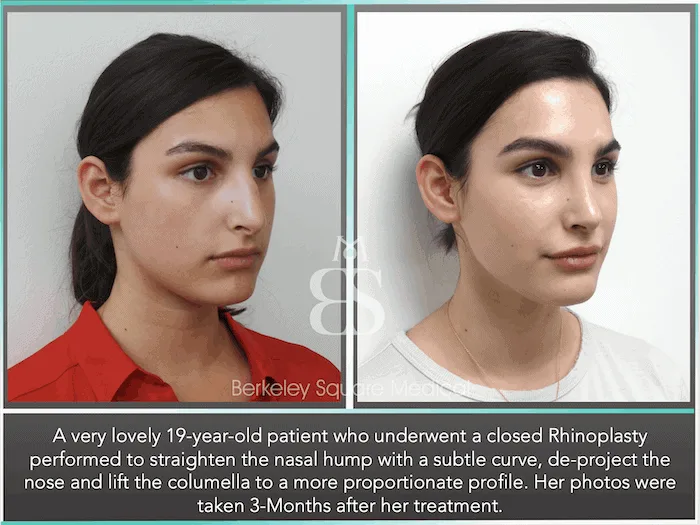
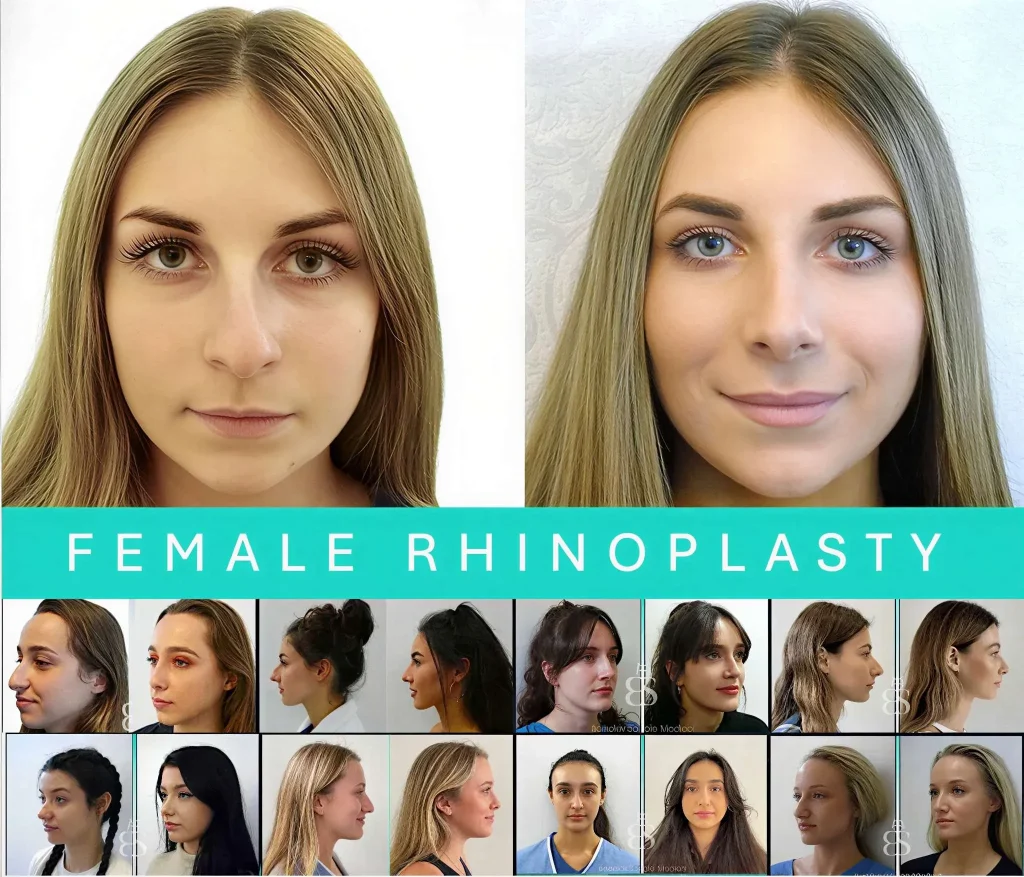
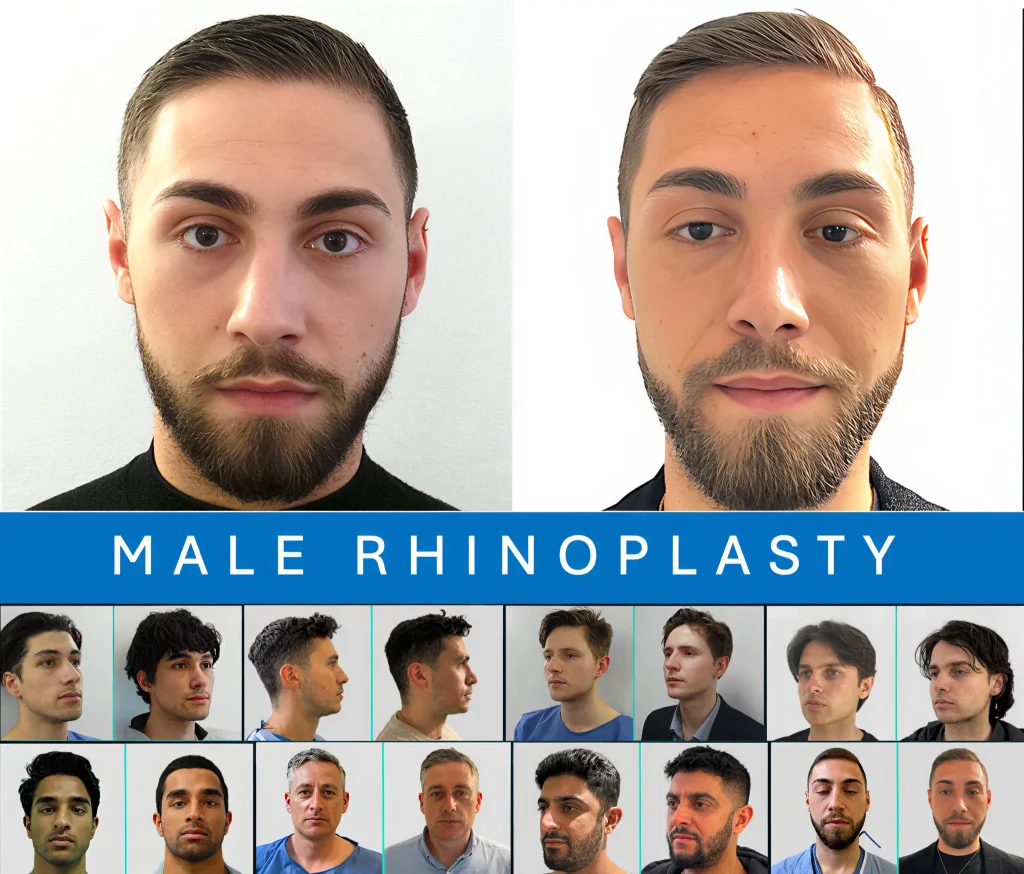
A private Rhinoplasty result at Berkeley Square Medical. Individual results vary, and this is a consenting patient.
You can also see how much private Rhinoplasty costs in London for our own pricing.
To discuss your options with Mr Shoaib at 64 Harley Street, including whether a combined procedure might suit your situation, book a consultation here.
Specialised Rhinoplasty For Men
Explore our specialist procedures. Tap any card to read more.
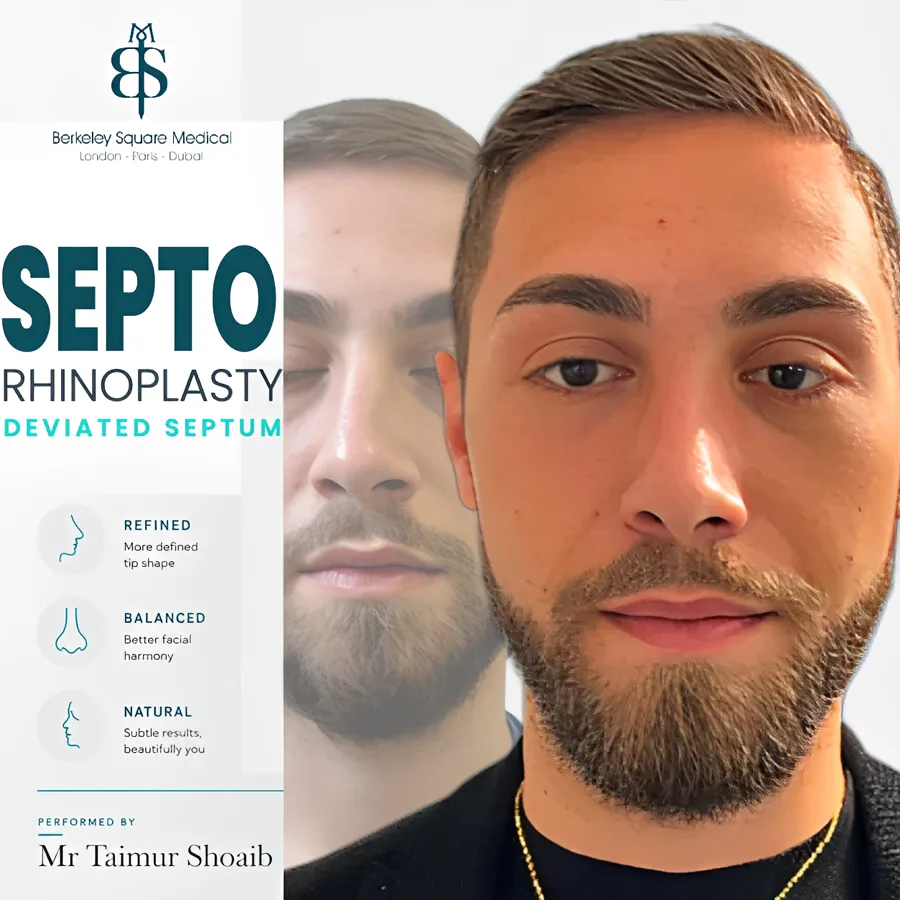 SeptorhinoplastyStraightening the nose and improving breathing.Read more
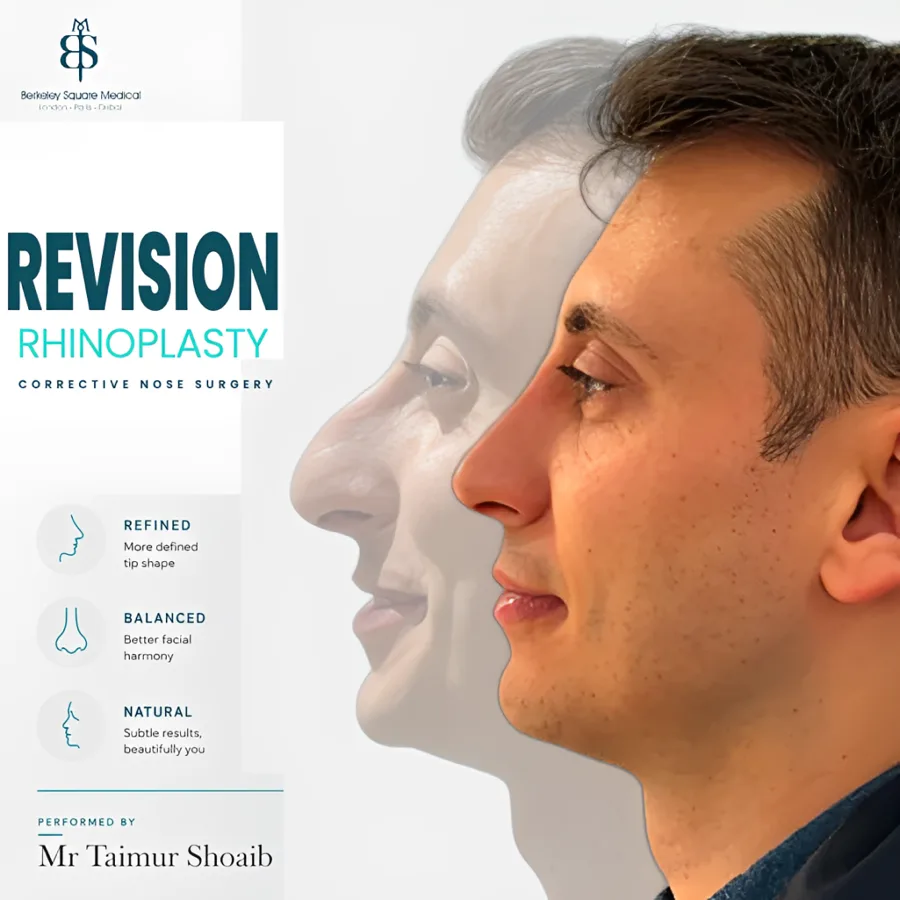 Revision RhinoplastyCorrecting or improving a previous rhinoplasty.Read more
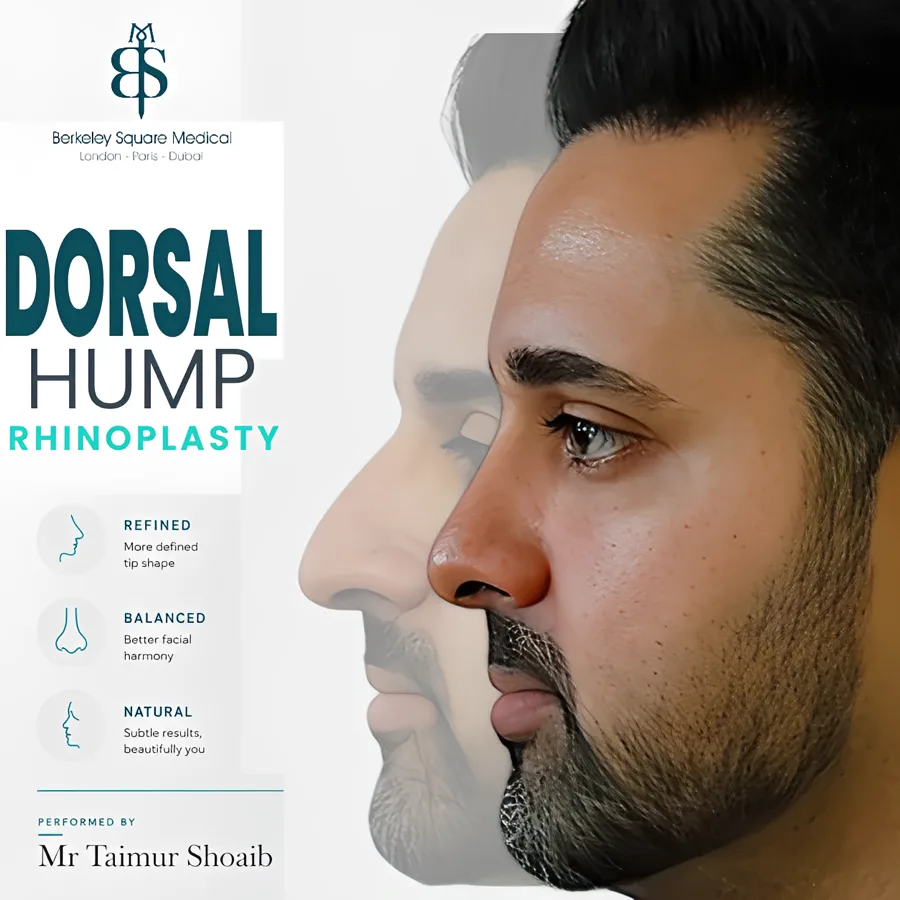 Dorsal Hump RhinoplastyRemoving a bump on the bridge for a straight profile.Read more
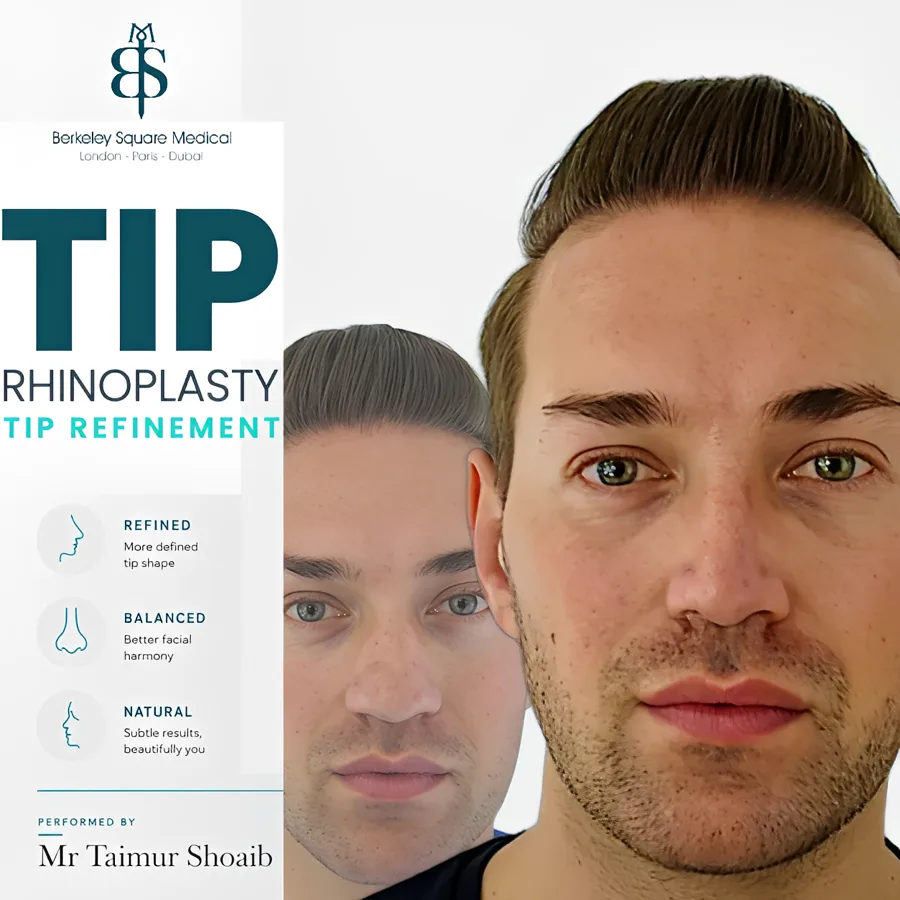 Tip RhinoplastyRefining a bulbous, drooping or asymmetrical tip.Read more
Specialised Rhinoplasty For Females
Explore our specialist procedures. Tap any card to read more.
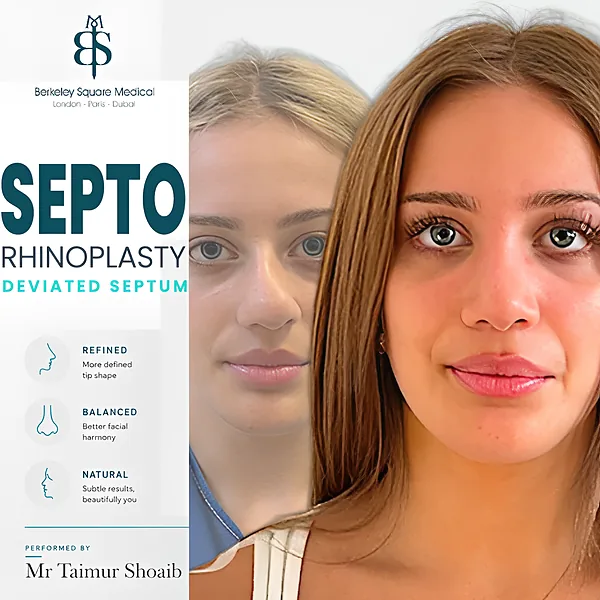 SeptorhinoplastyStraightening the nose and improving breathing.Read more
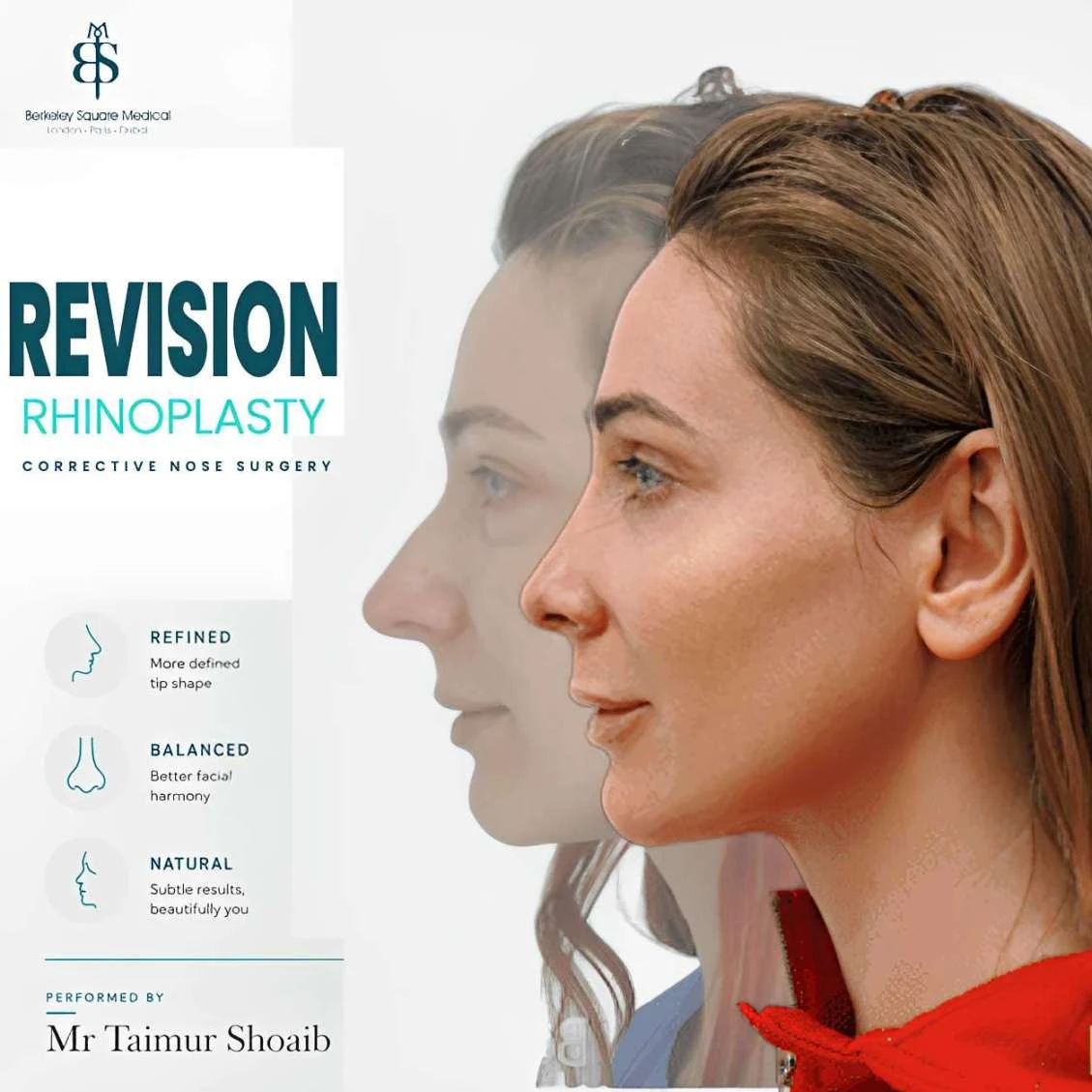 Revision RhinoplastyCorrecting or improving a previous rhinoplasty.Read more
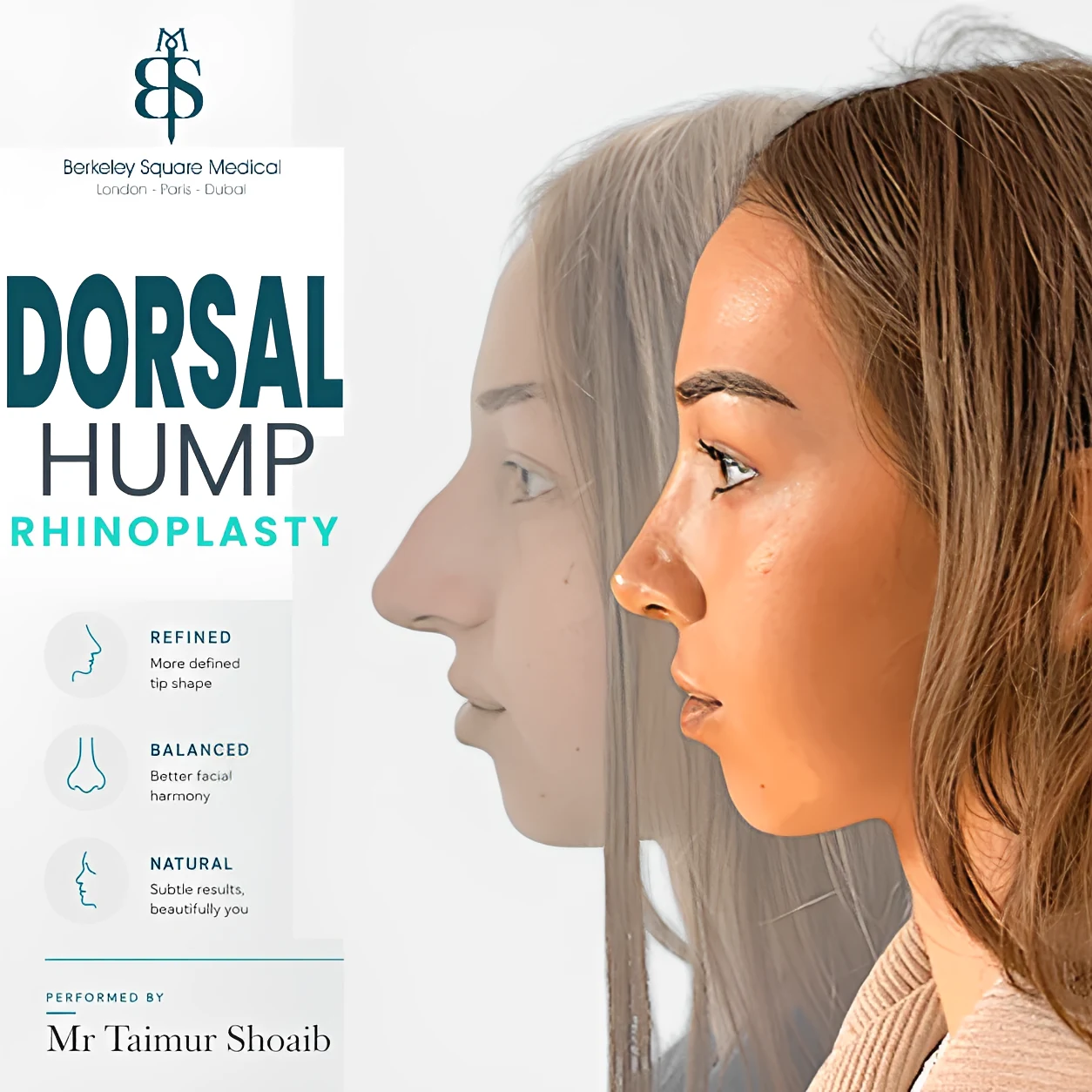 Dorsal Hump RhinoplastyRemoving a bump on the bridge for a straight profile.Read more
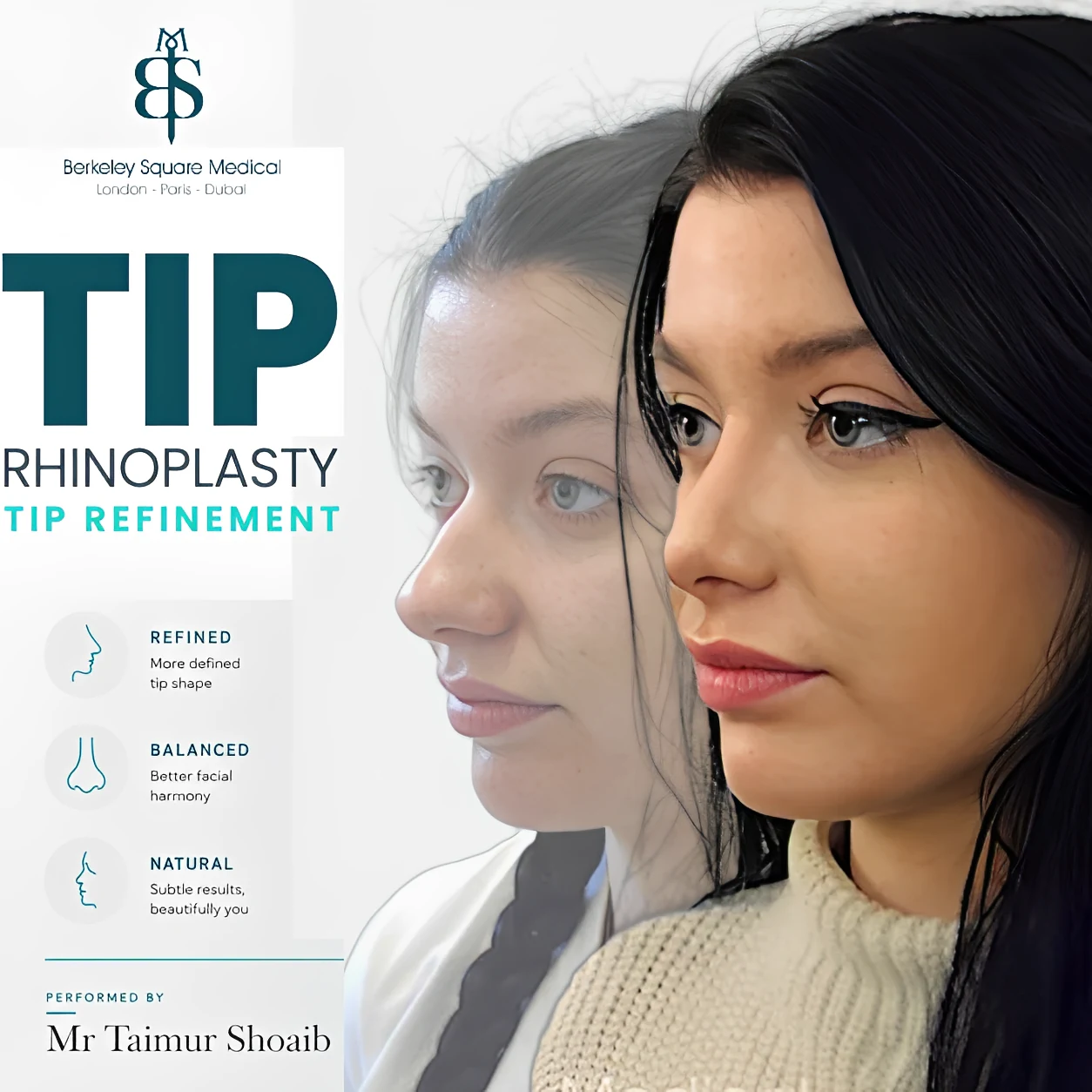 Tip RhinoplastyRefining a bulbous, drooping or asymmetrical tip.Read more
If the NHS route is not open to you
NHS rhinoplasty is only funded in specific medical circumstances, and waiting lists can be long. If you do not qualify, or you would rather not wait, a private consultation is the quickest way to understand your options. Explore rhinoplasty at Berkeley Square Medical, see typical rhinoplasty costs in London, or read about septorhinoplasty in London if you also struggle to breathe through your nose.