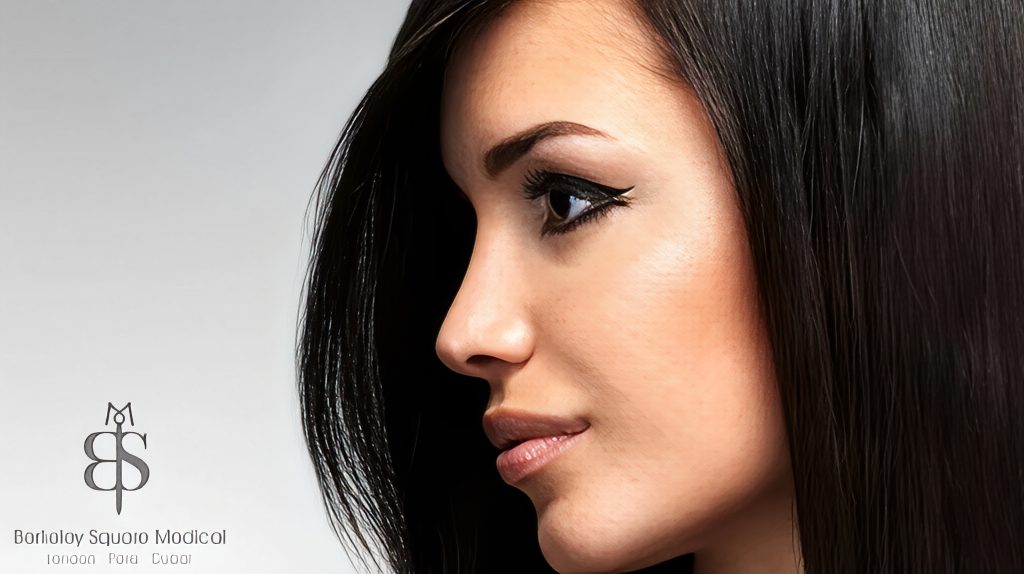
One of the most reassuring parts of a modern rhinoplasty consultation is being able to see a simulation of how your nose might look before you commit to anything. Computer imaging, sometimes called 3D imaging or morphing, lets you and your surgeon preview possible changes on a picture of your own face and, just as importantly, agree on what is realistic. This guide explains what it is, how it works, its genuine benefits and its honest limitations, and how to see it for your own nose. Berkeley Square Medical offers imaging as part of the consultation with Mr Taimur Shoaib.
It is a tool that shows a simulation of possible results on a photo or 3D scan of your own face. Your surgeon adjusts the image while you watch and discuss it together, so you can preview options and set realistic expectations before deciding on surgery. It is a powerful communication and planning aid, but it is a simulation, not a guarantee of the exact surgical result.
What is computer imaging in a rhinoplasty consultation?
Computer imaging is a way of previewing potential changes to your nose on a picture of your own face, rather than on a stranger's before-and-after or a generic model. Using a photograph or a 3D scan, the surgeon can show how, for example, softening a bump or refining the tip might look on you. It turns an abstract conversation about your nose into something you can actually see and respond to, together, in the consultation room.
How does computer imaging work?
The process is simple and takes place during your consultation:
- Capture: a standardised photograph or a 3D scan is taken of your face from the key angles, including the all-important side profile.
- Morph: your surgeon adjusts the image on screen, reshaping the bridge, tip or profile to show possible changes.
- Discuss: you look at the simulation together, you say what you like or do not, and the surgeon explains what is realistically achievable for your anatomy and what is not.
The result is a shared, visual understanding of the goal before any decision about surgery is made.
The benefits of computer imaging
- You can preview possible outcomes on your own face rather than imagining them.
- It sets realistic expectations, which is one of the most important factors in being satisfied after rhinoplasty.
- It improves communication between you and your surgeon, so you are both working towards the same agreed goal.
- It can reduce anxiety, because uncertainty about the look is one of the hardest parts of deciding.
- It aids surgical planning, helping the surgeon think through how to achieve the agreed result.
An honest limitation: a planning tool, not a promise
This is the most important thing to understand, and being honest about it is exactly why imaging is valuable. A computer image is a communication and planning tool, not a prediction of the exact surgical result. Your actual outcome depends on your bone, cartilage, skin thickness and how you heal, and the real nose can differ from the on-screen simulation. A responsible surgeon uses imaging to agree on a realistic direction and to rule out unrealistic ones, never to promise that your result will match the picture exactly. Any clinic that presents a morph as a guarantee is overselling it. Used honestly, though, it is one of the best tools available for going into surgery with clear, shared expectations.
How accurate is computer imaging, and what about Vectra?
Systems such as Vectra 3D produce impressively detailed simulations, and 3D capture can be more informative than a flat photo. Accuracy, however, is about the conversation, not a percentage. The image is a skilled estimate of a possible result, and how closely the final nose matches it depends on your anatomy, your healing and the surgery itself. The honest way to read any imaging, Vectra included, is as a realistic guide to the intended direction, not a measured forecast of the outcome.
Can AI show me with a nose job?
Free apps and AI filters can give you a rough, fun idea of a different nose, but they are not clinical tools. They do not know your bone and cartilage, they cannot tell you what is surgically achievable or safe for your nose, and they can set expectations that no operation could meet. If you are genuinely considering rhinoplasty, a proper imaging session with a surgeon, working from your real anatomy and honest about what is possible, is far more useful than an AI filter, precisely because it is grounded in what surgery can actually do.
Does Berkeley Square Medical offer computer imaging?
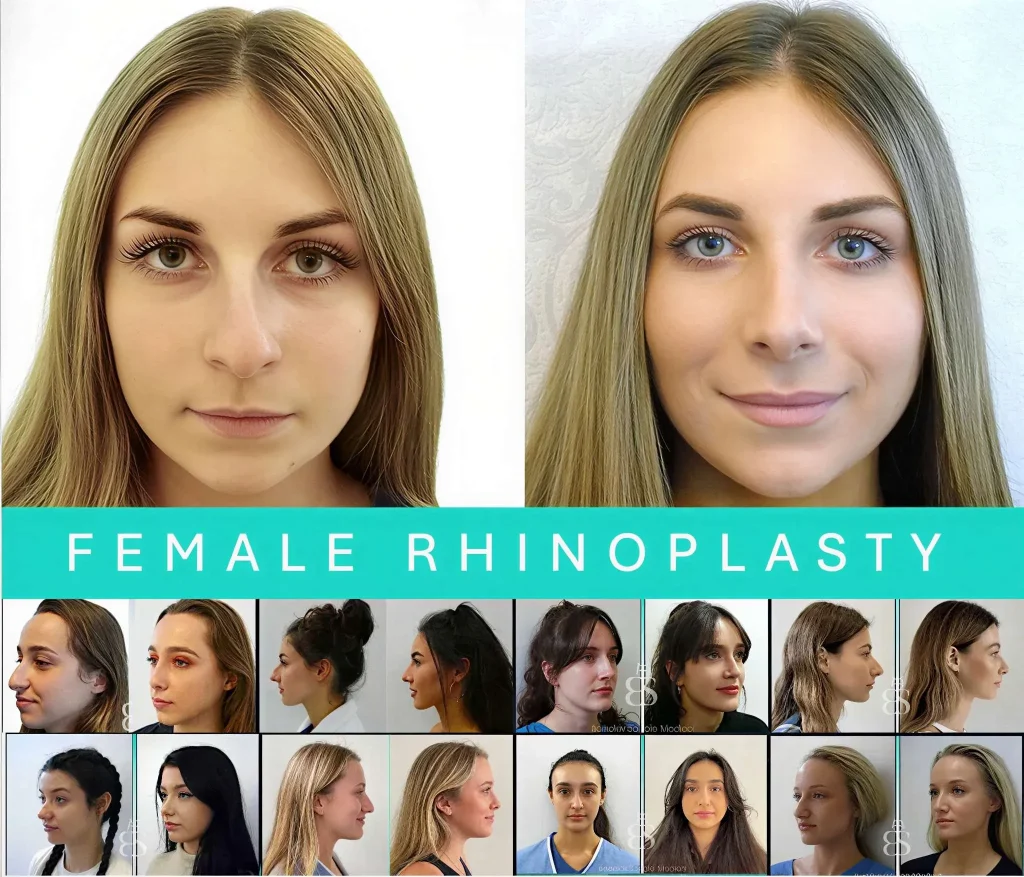
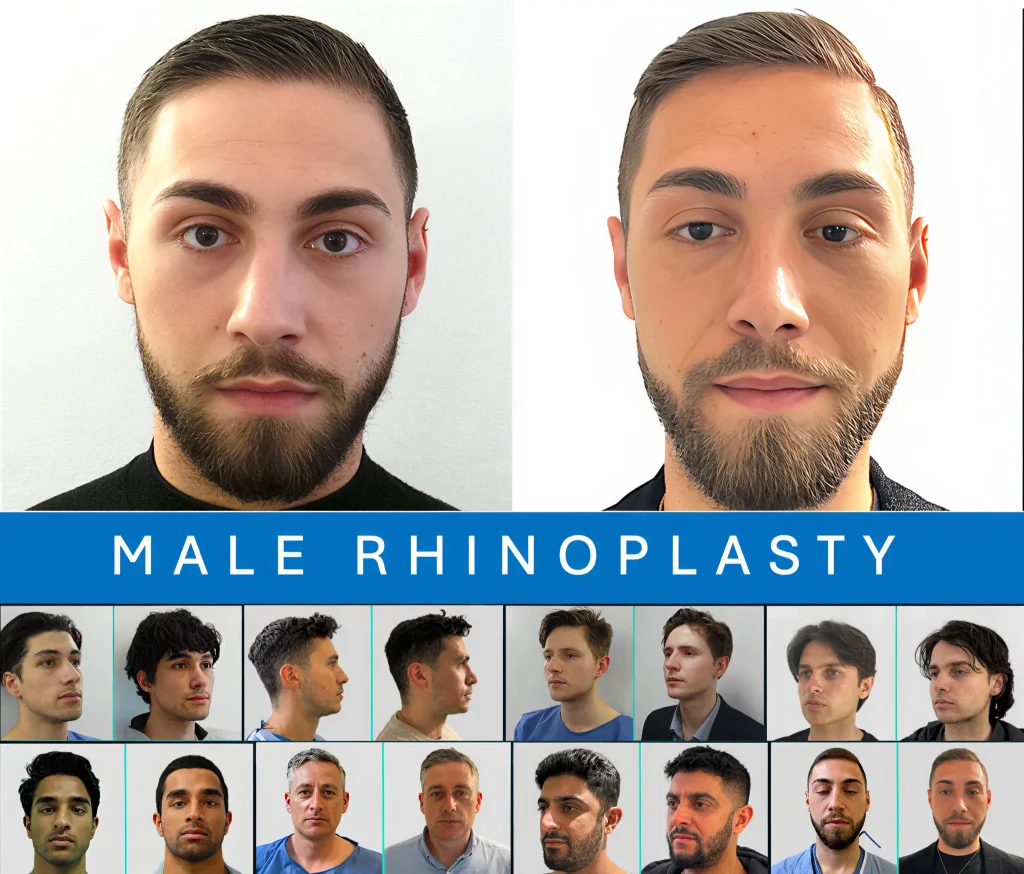
Yes. Imaging is part of the consultation experience with Mr Taimur Shoaib, so you can see and discuss possible changes on your own face and agree on a realistic goal before deciding anything. You can also start online with our rhinoplasty imaging service, and see genuine outcomes in our rhinoplasty before and after gallery. When you are ready, the best next step is a consultation where you can experience the imaging for your own nose.
Specialised Rhinoplasty For Men
Explore our specialist procedures. Tap any card to read more.
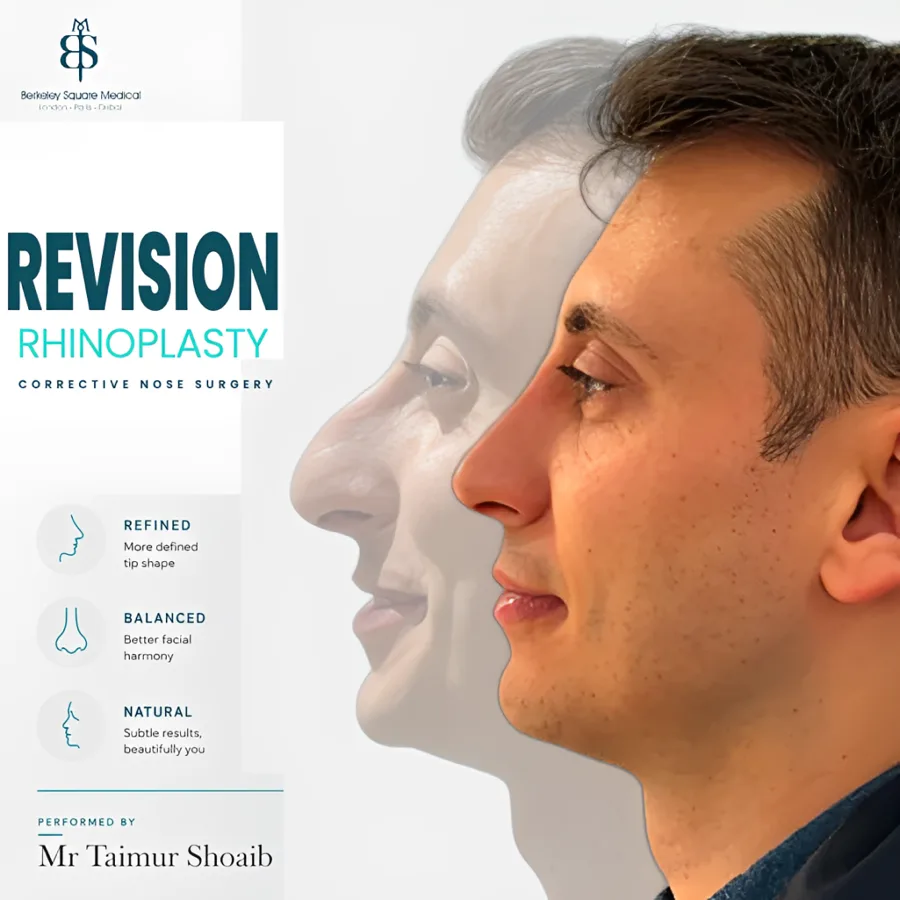 Revision RhinoplastyCorrecting or improving a previous rhinoplasty.Read more
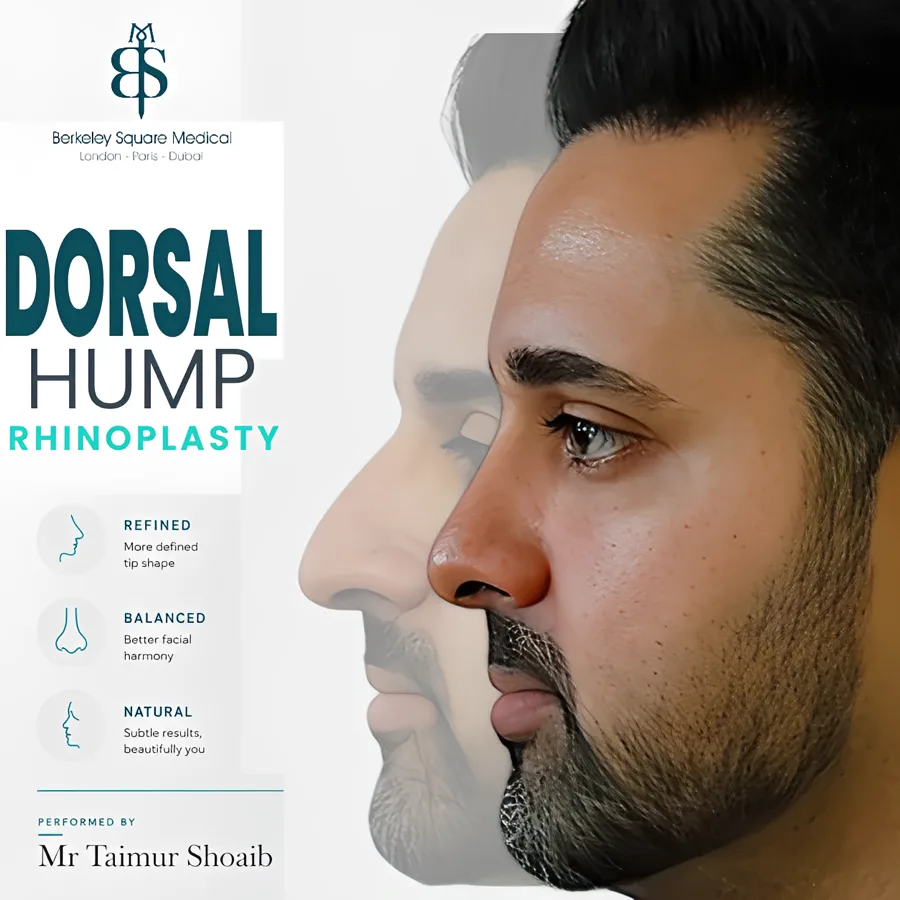 Dorsal Hump RhinoplastyRemoving a bump on the bridge for a straight profile.Read more
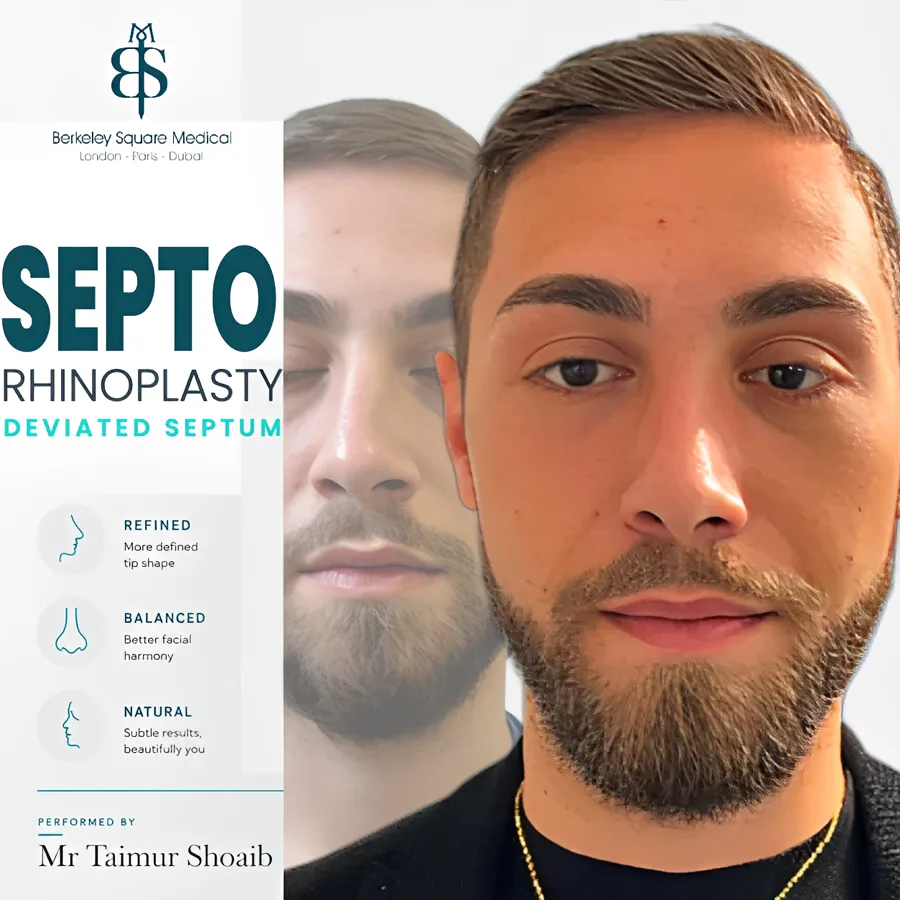 SeptorhinoplastyStraightening the nose and improving breathing.Read more
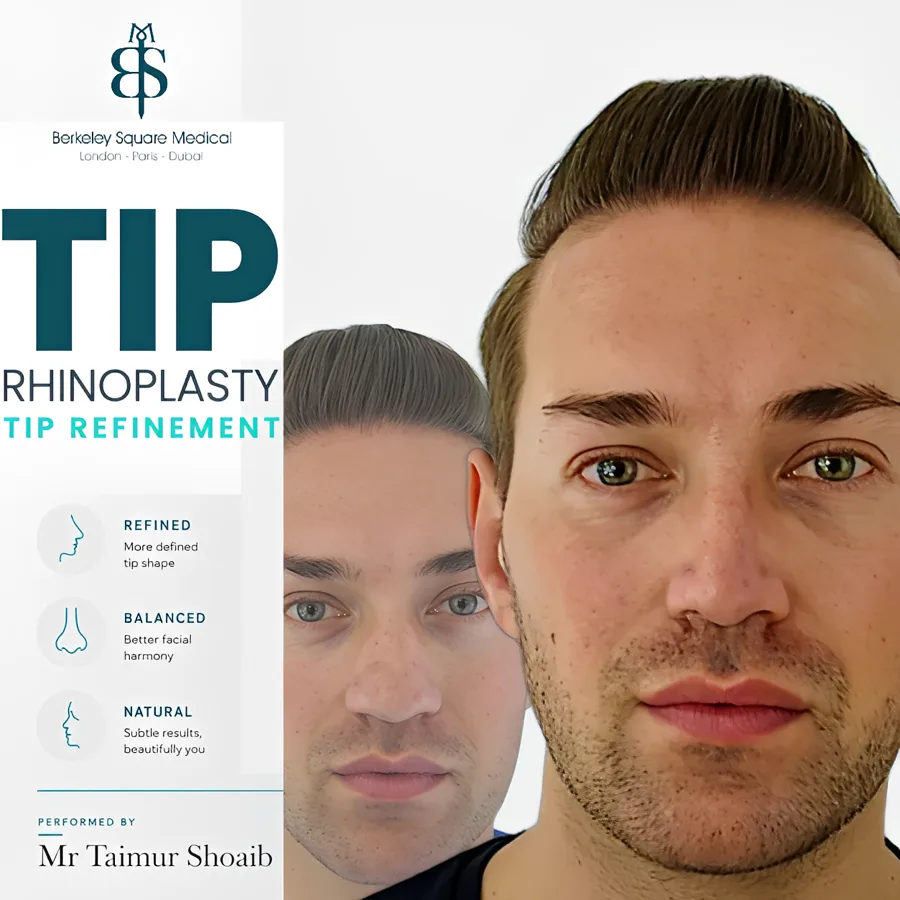 Tip RhinoplastyRefining a bulbous, drooping or asymmetrical tip.Read more
Specialised Rhinoplasty For Females
Explore our specialist procedures. Tap any card to read more.
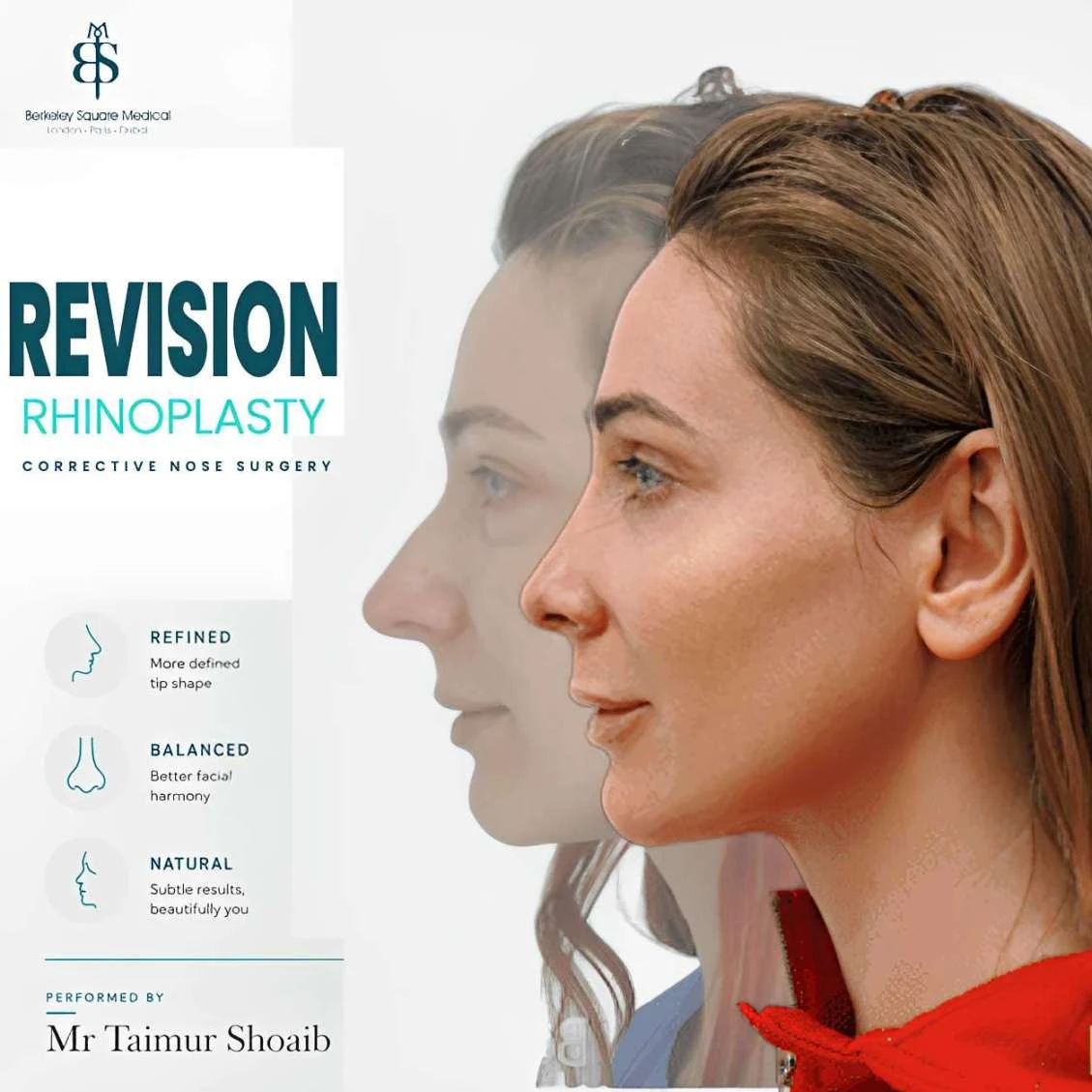 Revision RhinoplastyCorrecting or improving a previous rhinoplasty.Read more
 Dorsal Hump RhinoplastyRemoving a bump on the bridge for a straight profile.Read more
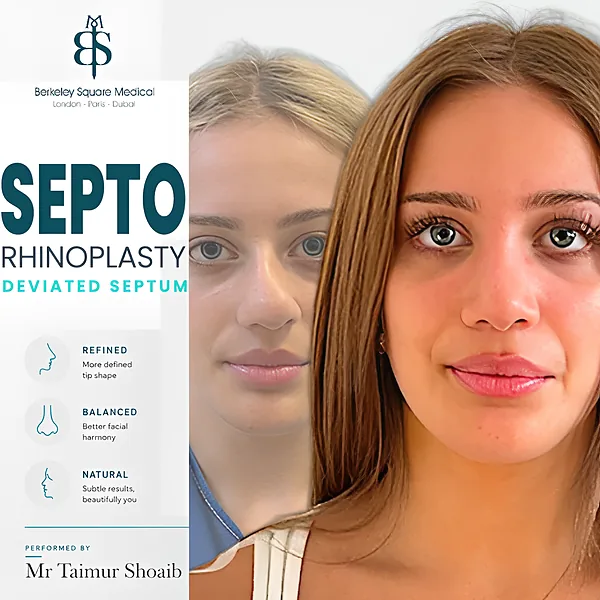 SeptorhinoplastyStraightening the nose and improving breathing.Read more
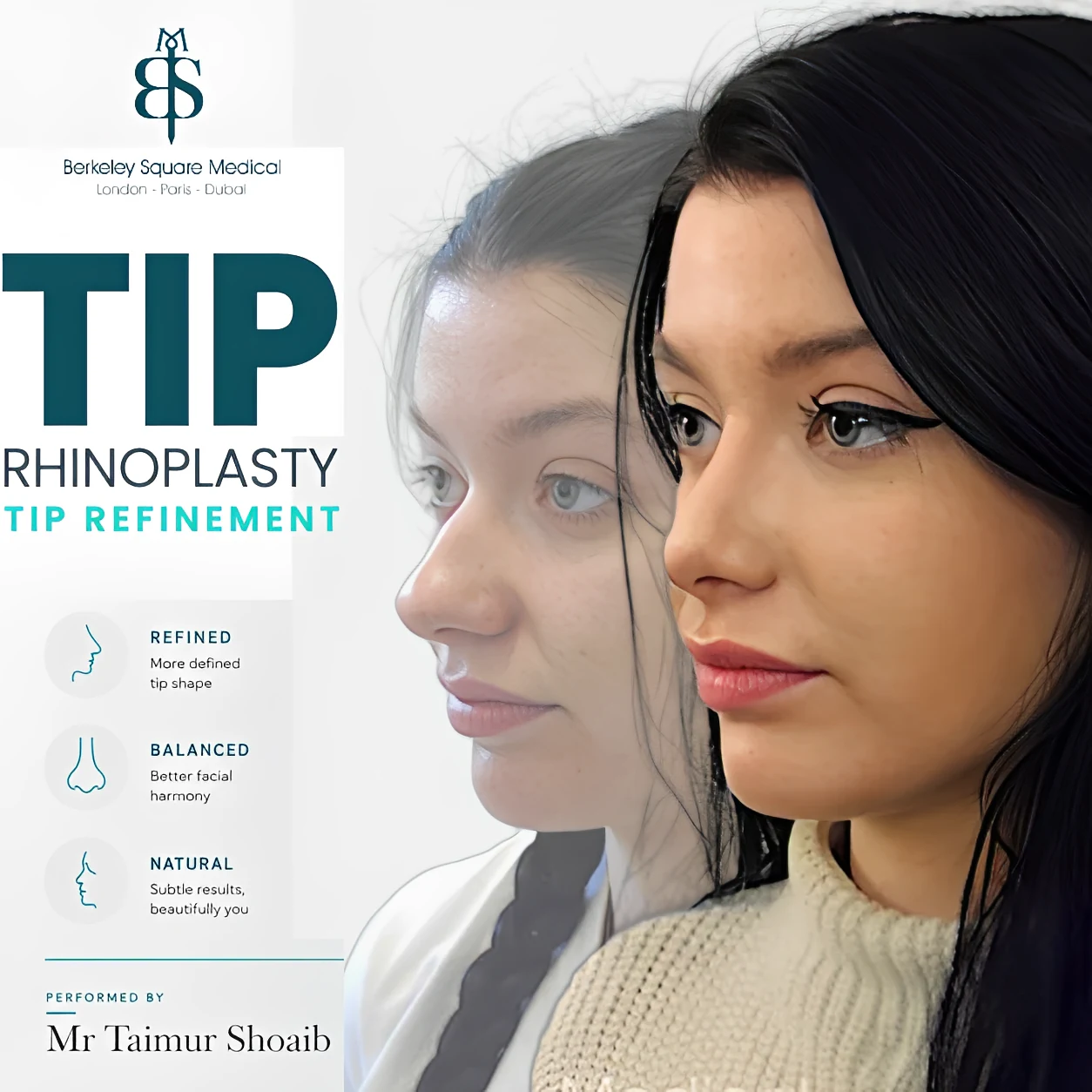 Tip RhinoplastyRefining a bulbous, drooping or asymmetrical tip.Read more
Considering rhinoplasty in London?
If you are weighing up your options in the UK, the next step is a consultation with Mr Taimur Shoaib at 64 Harley Street. Explore rhinoplasty at Berkeley Square Medical, see typical rhinoplasty costs in London, or read about septorhinoplasty in London if breathing is also a concern.
About the author