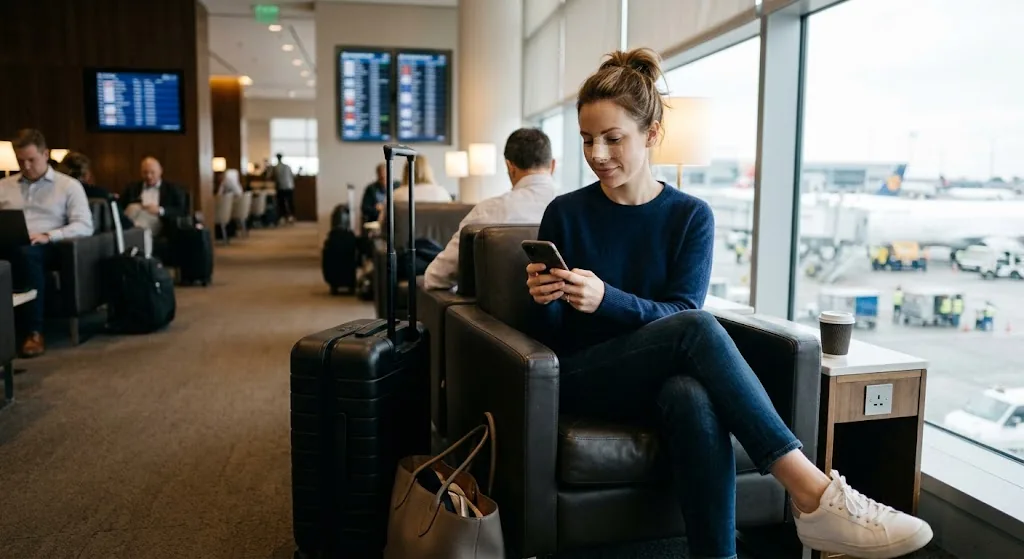
Flying after rhinoplasty is one of the most common concerns patients have, especially when travel plans are already booked. The timing matters more than most people realise, because flying too soon after nose surgery can increase swelling, discomfort, bleeding, and the risk of infection.
Here’s the quick answer most people are searching for:
Most patients can safely fly 7-14 days after rhinoplasty, depending on the extent of the procedure and how well they are healing at their first post-operative review.Long-haul flights often require waiting the full 14 days, and sometimes longer in more complex cases.
Below, we explain exactly why flying too soon can interfere with healing, the risks to be aware of, and the surgeon-approved guidelines to follow before booking your trip.
Key Takeaways
-
Most patients can safely fly 7-14 days after rhinoplasty, depending on the extent of surgery and how well they are healing at their first review.
-
Short-haul flights may be possible after 7-10 days, but long-haul flights typically require 10-14 days due to pressure changes, bacteria exposure, and longer cabin times.
-
Flying too soon increases the risk of pain, swelling, bleeding, infection, and nausea, all of which can delay recovery or affect final results.
-
Cabin air pressure can cause trapped air in nasal tissues to expand, leading to discomfort during the first week post-surgery.
-
Airports and aircraft expose patients to recirculated air and large crowds, increasing the chance of infection around healing incisions.
-
Patients should avoid lifting heavy luggage, sun exposure, and strenuous activity for several weeks after a nose job. See our guide to exercise after rhinoplasty for timings.
How Soon Can You Fly After Rhinoplasty?
Your ability to fly depends on the type of rhinoplasty performed and your individual healing response.
How soon you can fly depends on the flight and how well you are healing:
- Short-haul (under 4 hours): usually 7 to 10 days, once your surgeon or nurse confirms your nose is healing well.
- Long-haul (6+ hours): usually 10 to 14 days, because of longer cabin-pressure exposure, dehydration and less access to medical care. On a long flight, keep moving in your seat, stay hydrated and avoid alcohol to lower the general risk of a leg clot (deep vein thrombosis), as you would after any surgery.
- Stay near your surgical team for the first 14 days, the early healing stage when the risk of complications is highest, so bleeding, infection or a pressure-related issue can be assessed and treated quickly.
In practice, Mr Taimur Shoaib advises patients to plan for the full 14 days where they can, so anything unusual in early healing can be checked quickly and nothing is rushed. You can read more about how we approach rhinoplasty complications and manage them.
Travelling Patients and International Care
For patients travelling in for their Rhinoplasty from abroad, as often happens with revision Rhinoplasty patients, Berkeley Square Medical will, where possible, help arrange a suitably qualified local surgeon or consultant to support your continued care under our guidance.

Short-Haul vs Long-Haul Recovery Timeline
Here is a simplified breakdown to help you plan safely:
| Travel Type | When You Can Usually Fly After Rhinoplasty |
| Short-haul flights | 7-10 days after surgery, depending on swelling, bruising, and your post-operative review. |
| Long-haul flights | 10-14 days after surgery due to greater cabin pressure changes and increased infection exposure. |
| Non-flight travel (car, train, coach) | 7 days for short journeys. Longer trips may require 10-14 days to avoid strain and discomfort. |
| High-altitude travel (mountains) | 10-14 days due to pressure-related swelling, sinus discomfort, and slower healing. |
| Remaining near your surgeon | Recommended for the full first 14 days so complications can be managed without travel delays. |
Why Flying Too Soon After Rhinoplasty Is Risky
Flying affects the body in several ways: dry cabin air, pressure changes, and long periods in crowded spaces. After nose surgery, these factors can directly impact healing.
Below we look at the four most common side effects patients may face if they fly too early.
Pain and Pressure From Trapped Air in Nasal Tissues
During rhinoplasty, small pockets of air can remain inside the soft tissues.At altitude, this trapped air expands, which can lead to:
-
Pressure or throbbing in the nose
-
Sinus discomfort
-
Blocked ear sensation
-
Headaches
This is most noticeable in the first 7 days.
Increased Risk of Bleeding
Minor nose bleeding is common during the first week after surgery. Flying increases this risk because:
-
Cabin air is extremely dry
-
Pressure changes irritate healing blood vessels
-
Your head may be tilted forward during take-off or landing
If bleeding occurs mid-flight, it can be difficult to manage and may increase swelling.
Higher Risk of Infection
Airplanes and airports have dense, recirculated air filled with airborne bacteria.Post-surgery incisions, especially internal ones, are vulnerable.
Signs of infection include:
-
A sour or unusual smell when breathing
-
Persistent redness or swelling
-
Discharge or fever
For safety, we provide patients with a course of antibiotics to take home, whether they intend to travel or not.
Nausea and Vomiting
Post-operative medications, motion sensitivity, and cabin pressure can trigger nausea.Vomiting places sudden pressure on the nose, which may lead to:
-
Bleeding
-
Burst blood vessels
-
Increased swelling
-
Delayed healing
Beyond those risks, plan for a few practical points when you travel:
- Avoid lifting or carrying heavy baggage, which strains and puts pressure on your healing nose.
- Keep your nose out of the sun for at least six weeks. Sunburn damages the healing skin and can make the result take longer to settle, and anything that delays recovery can affect your final result.
- Ask us before using any nasal spray. An over-the-counter decongestant spray can ease the cabin-pressure changes, but check with us first so we can guide you.
Extra Precautions if You Need to Fly Soon
If flying soon after rhinoplasty is unavoidable, follow these precautions:
-
Use a saline spray to reduce pressure sensitivity
-
Stay hydrated before and during your flight
-
Avoid lifting heavy luggage
-
Wear a mask in crowded areas
-
Avoid alcohol for 48 hours before flying
-
Sit near the front of the plane for better airflow
-
Bring a neck pillow to avoid accidental bumps
-
Protect your nose from direct sunlight for 6 weeks (sunburn slows healing)
Always speak to your surgeon before using any nasal spray, even over-the-counter options. Flying is just one thing to plan around in the first weeks, our full guide to what not to do after rhinoplasty covers the rest.
For more information about having a rhinoplasty, please visit our Rhinoplasty Page.Specialised Rhinoplasty For Men
Explore our specialist procedures. Tap any card to read more.
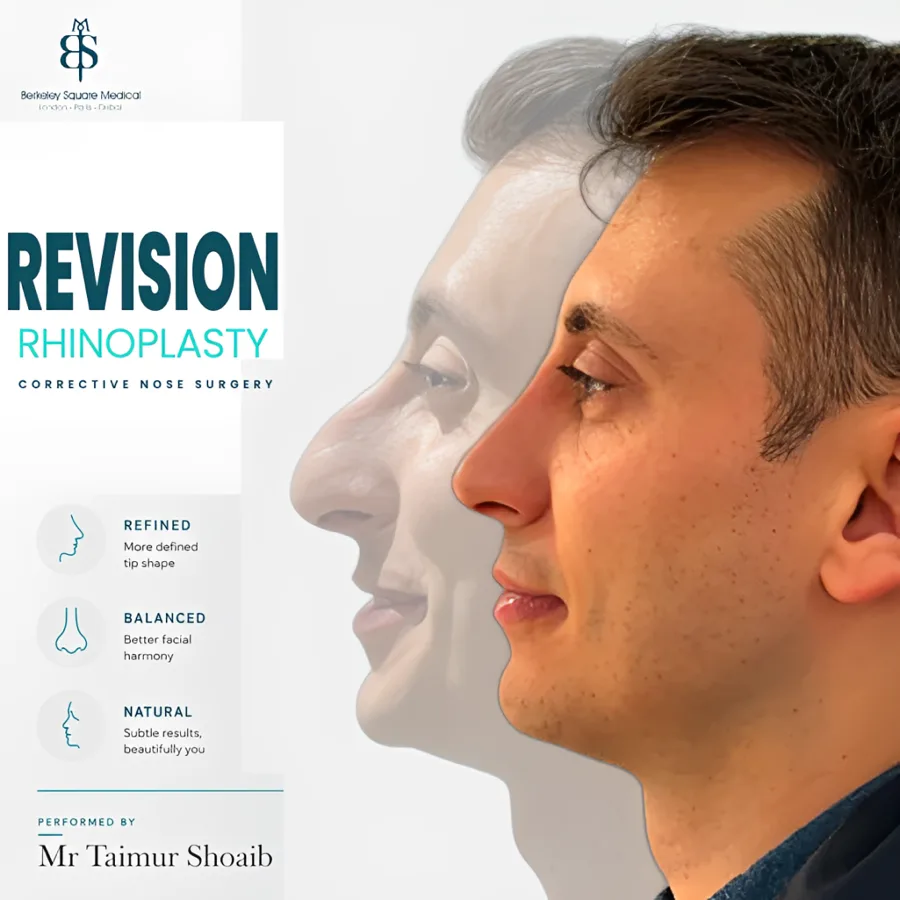 Revision RhinoplastyCorrecting or improving a previous rhinoplasty.Read more
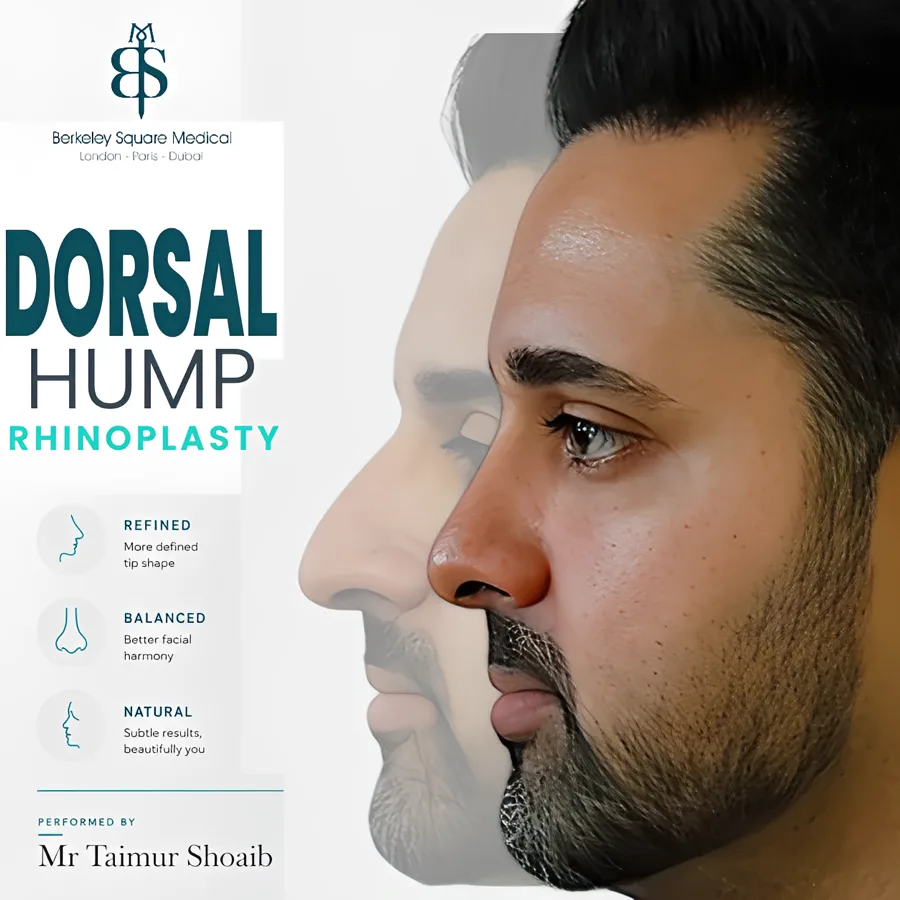 Dorsal Hump RhinoplastyRemoving a bump on the bridge for a straight profile.Read more
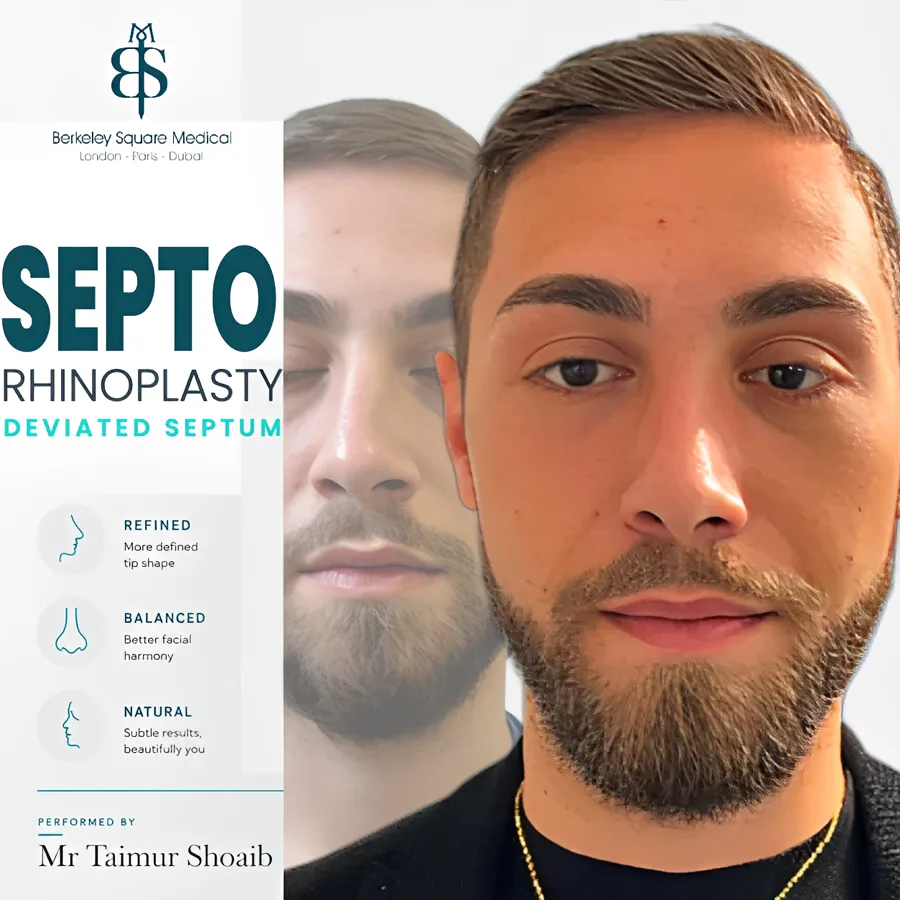 SeptorhinoplastyStraightening the nose and improving breathing.Read more
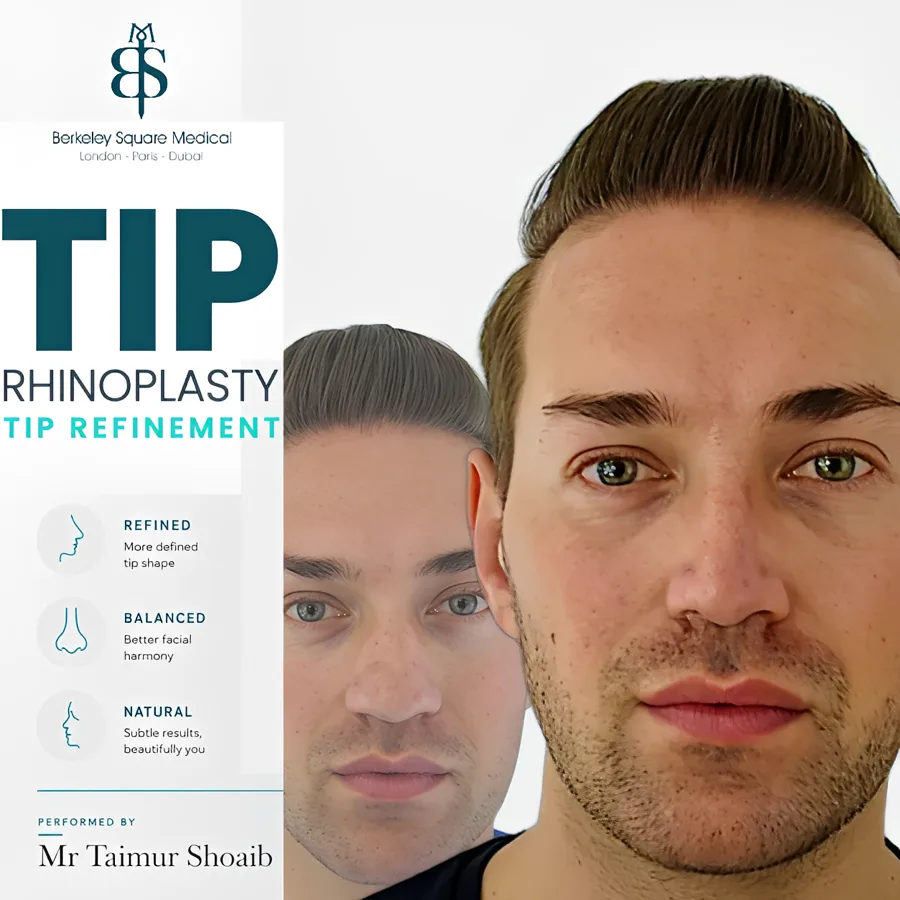 Tip RhinoplastyRefining a bulbous, drooping or asymmetrical tip.Read more
Specialised Rhinoplasty For Females
Explore our specialist procedures. Tap any card to read more.
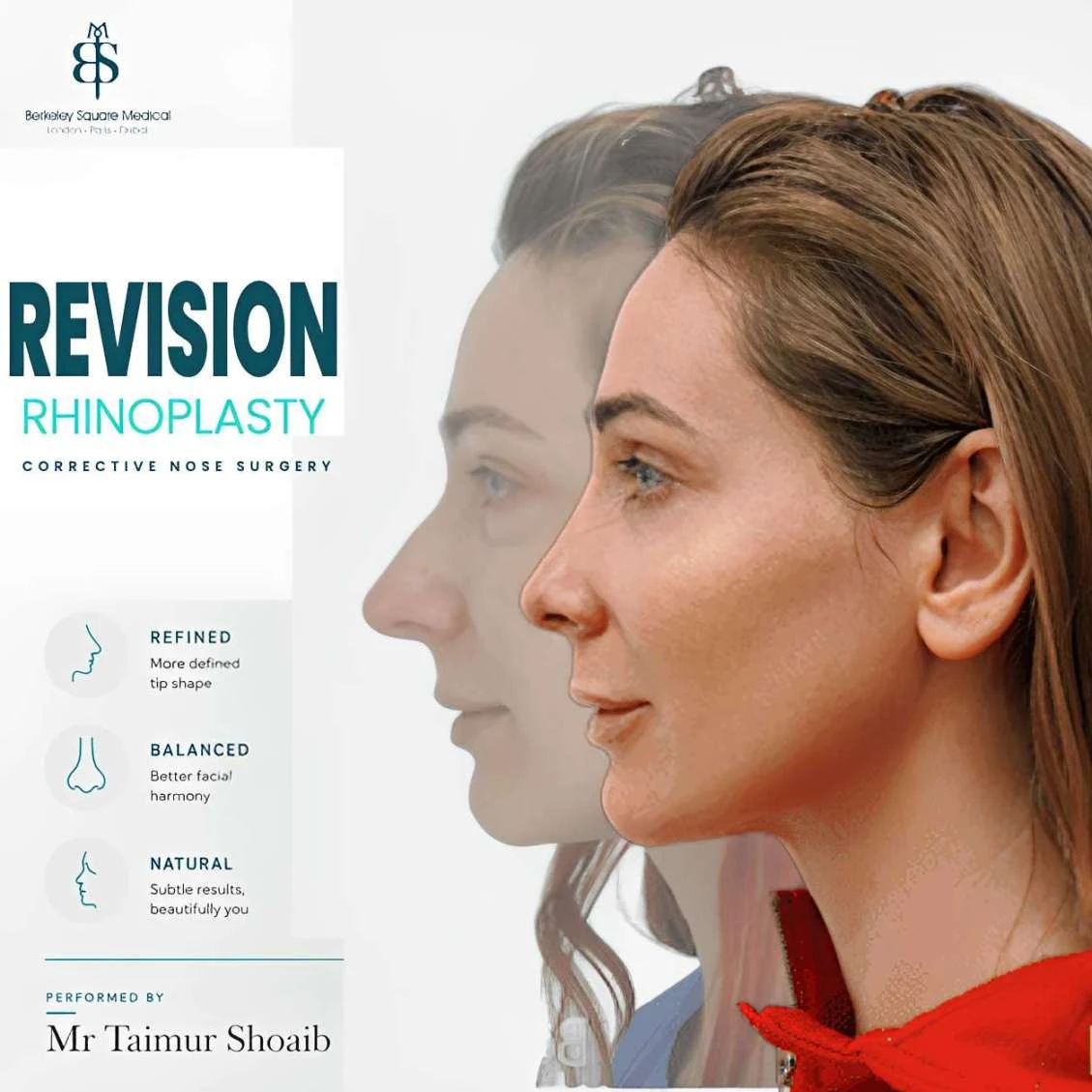 Revision RhinoplastyCorrecting or improving a previous rhinoplasty.Read more
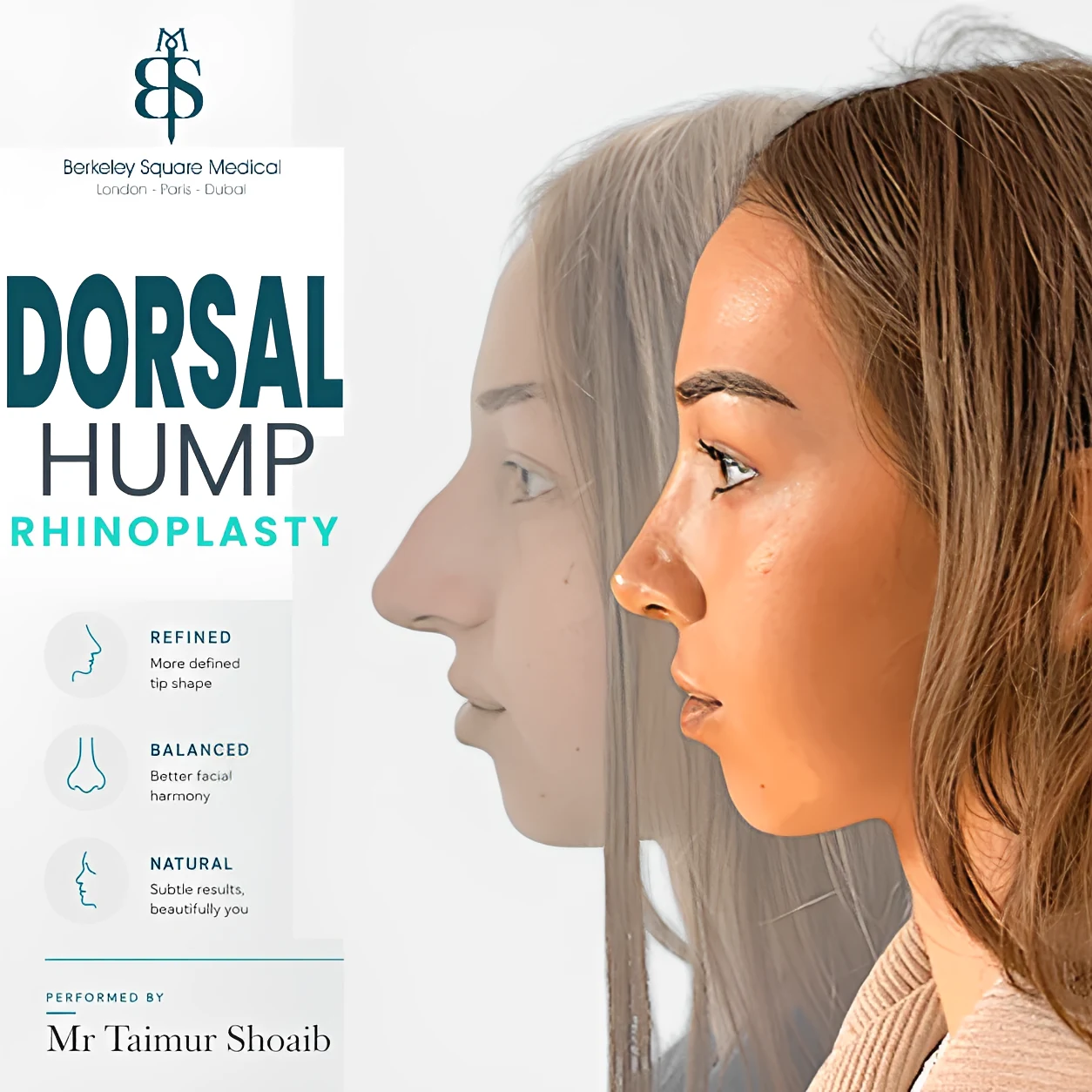 Dorsal Hump RhinoplastyRemoving a bump on the bridge for a straight profile.Read more
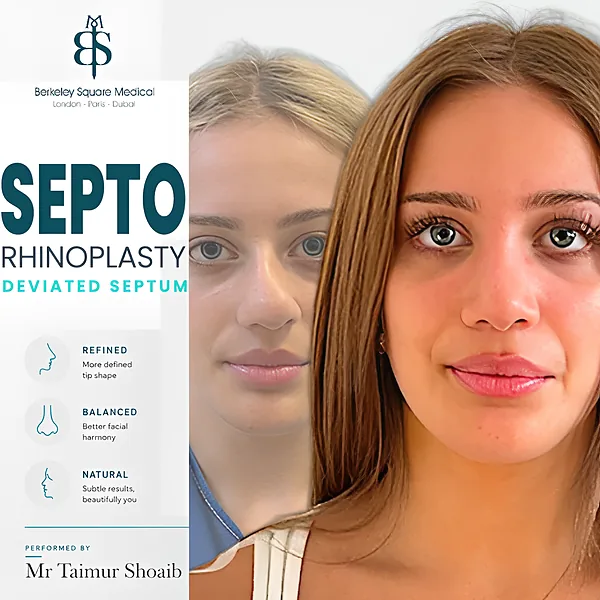 SeptorhinoplastyStraightening the nose and improving breathing.Read more
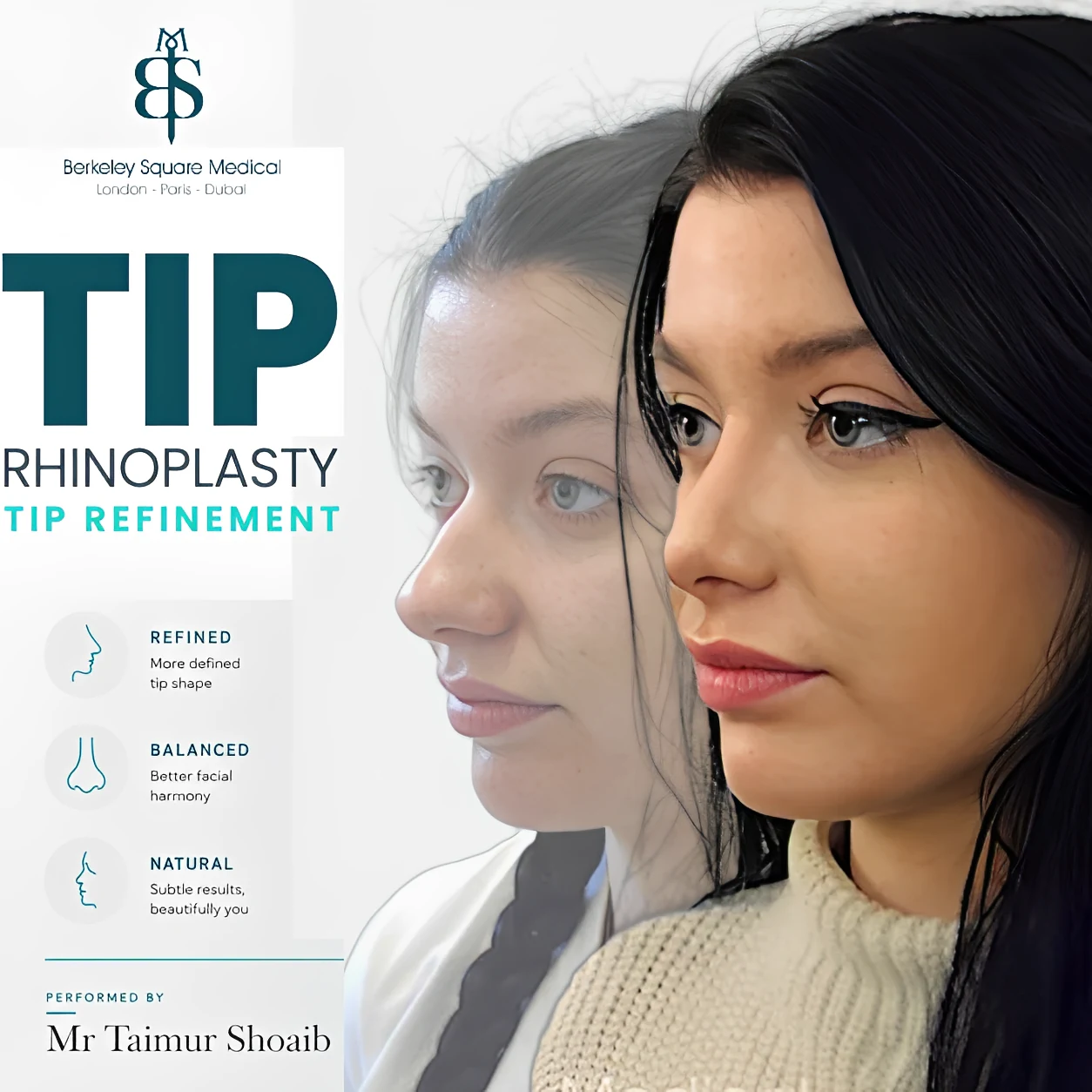 Tip RhinoplastyRefining a bulbous, drooping or asymmetrical tip.Read more
Considering rhinoplasty in London?
If you are weighing up your options in the UK, the next step is a consultation with Mr Taimur Shoaib at 64 Harley Street. Explore rhinoplasty at Berkeley Square Medical, see typical rhinoplasty costs in London, or read about septorhinoplasty in London if breathing is also a concern.
About the author