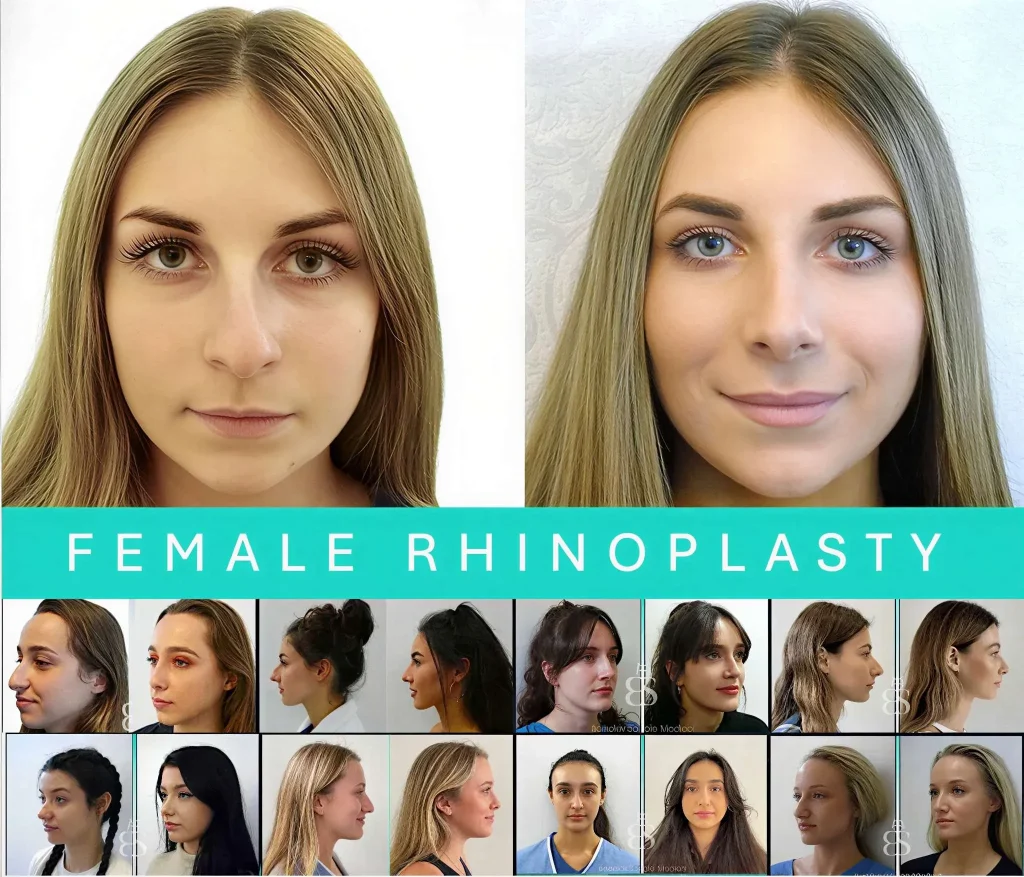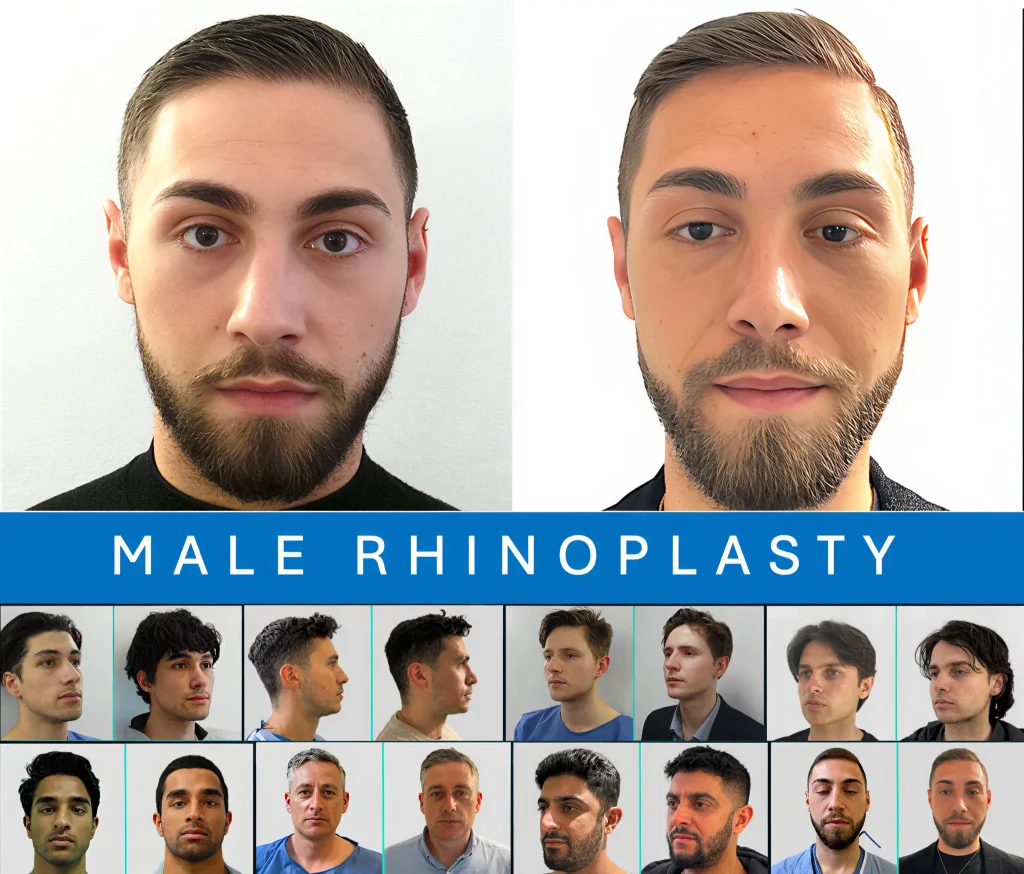

Rhinoplasty, or a nose job, is not a single operation but a family of techniques, and the right one depends entirely on your nose and your goal. Some types reduce a bump on the bridge, some refine the tip, some rebuild support in a revision, and some avoid surgery altogether. This guide explains the different types of rhinoplasty and nose surgery clearly, with real before-and-after results from our own patients for each, so you can see what each type actually changes and find the one that fits you. It is reviewed by a consultant plastic surgeon, and every type links through to a page with more detail.
Key Takeaways
- "Rhinoplasty" covers many types of nose surgery, grouped by technique (open or closed) and by goal (reduction, tip, hump, ethnic, revision, functional).
- Open and closed rhinoplasty are the two techniques, not two results; closed leaves no visible scar, open gives the surgeon more access for complex work.
- Most nose jobs combine several elements in one operation, for example reducing a hump and refining the tip at the same time.
- Not all nose reshaping is surgical: non-surgical rhinoplasty uses dermal filler to smooth small irregularities without an operation.
- The best type is the one matched to your anatomy and goal, which is why an in-person assessment with an experienced rhinoplasty surgeon matters more than choosing a "type" in advance.
Types of Rhinoplasty at a Glance
Here are the main types of rhinoplasty and nose surgery, including the different types of nose jobs, what each one is for, and where to read more. The sections below show real before-and-after results for each.
| Type of rhinoplasty | What it does | Learn more |
|---|---|---|
| Open vs closed | The two surgical techniques (incision hidden inside the nose, or a tiny external one for more access). | Open vs closed |
| Dorsal hump reduction | Removes or reduces a bump on the bridge for a smoother profile. | Dorsal hump |
| Tip refinement (tip plasty) | Reshapes a bulbous, boxy, drooping or over-projected tip. | Tip plasty |
| Reduction rhinoplasty | Makes a large or prominent nose smaller and more proportionate. | Rhinoplasty |
| Ethnic rhinoplasty | Refines the nose while preserving your natural ethnic character. | Ethnic rhinoplasty |
| Crooked nose / septorhinoplasty | Straightens a bent nose and can correct a deviated septum to help breathing. | Crooked nose |
| Revision rhinoplasty | Corrects or improves the result of a previous nose job. | Revision |
| Non-surgical rhinoplasty | Uses dermal filler to smooth small irregularities without surgery. | Non-surgical |
Not sure which type is right for you? Book a consultation with Mr Shoaib and he will recommend the approach that suits your nose.
Open vs Closed Rhinoplasty
Before the type of result, there is the type of technique. Open and closed describe how the surgeon reaches the nasal framework, not what the nose ends up looking like.
- Closed rhinoplasty: all incisions are inside the nostrils, so there is no visible external scar. It suits many primary reshaping cases.
- Open rhinoplasty: adds a tiny incision across the columella (the strip between the nostrils), giving the surgeon direct access and precise control for complex tip work, revisions, and major reshaping. The small scar usually fades to a fine, pale line.
Neither is "better" in the abstract; the choice depends on what your nose needs. Read the full comparison of open vs closed rhinoplasty.
Dorsal Hump Reduction
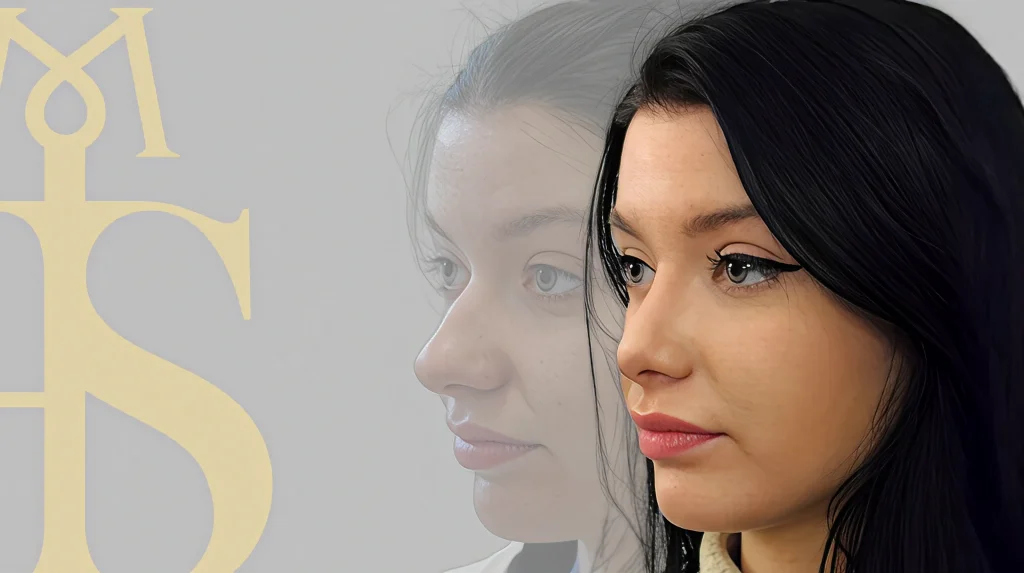
One of the most requested changes, a dorsal hump reduction lowers a bump of bone and cartilage on the bridge to create a smoother, straighter profile from the side. It is often combined with tip work so the whole profile balances.
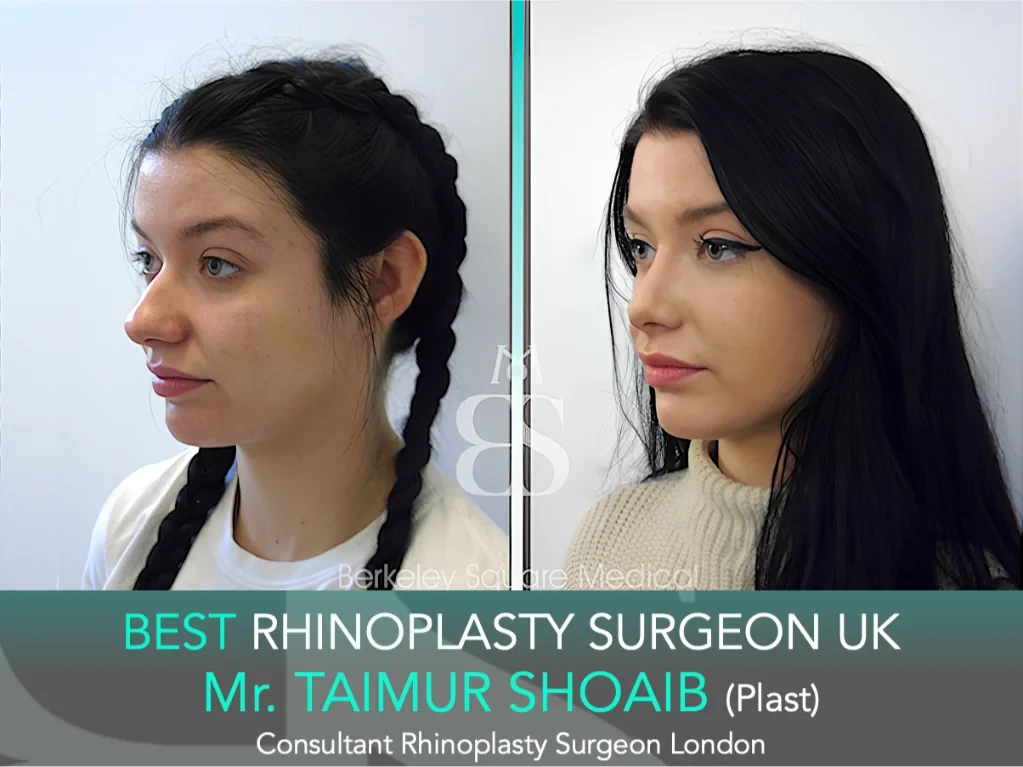
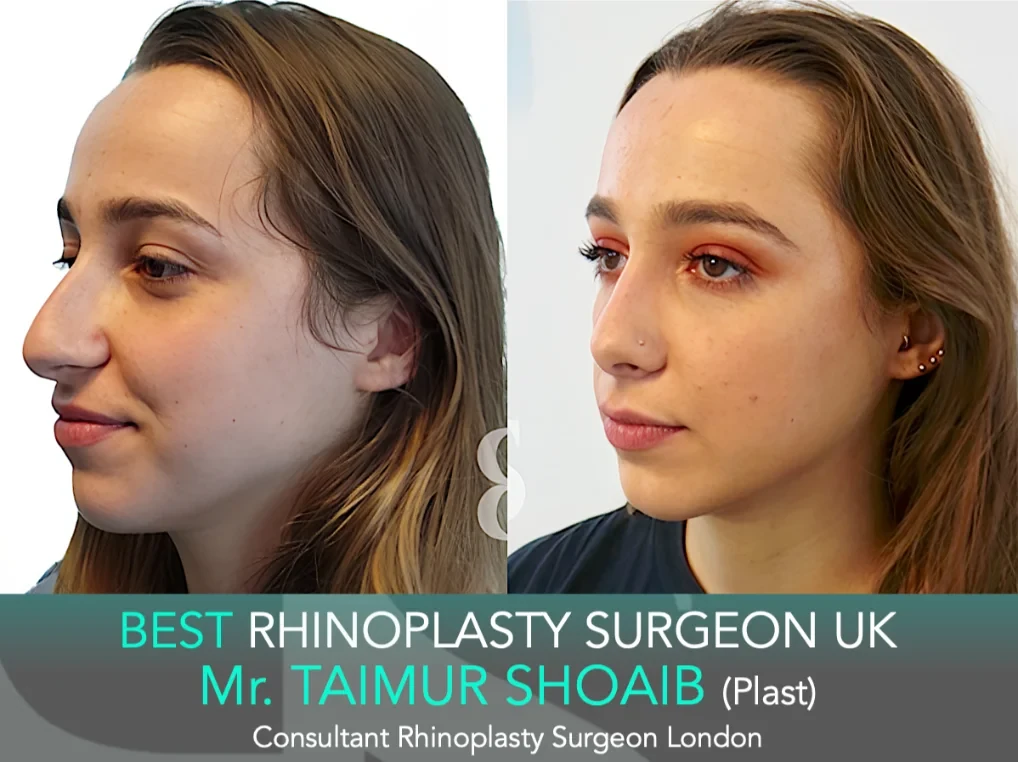
Real patients of Mr Taimur Shoaib, shown with consent for advertising. Individual results vary and are not guaranteed.
More on dorsal hump removal →Nasal Tip Refinement (Tip Plasty)
Tip refinement, or tip plasty, reshapes the cartilage of the nasal tip to correct a bulbous, boxy, drooping or over-projected tip, while leaving the bridge alone. It is one of the most delicate parts of rhinoplasty and shows most on the front and base (worm's-eye) views.
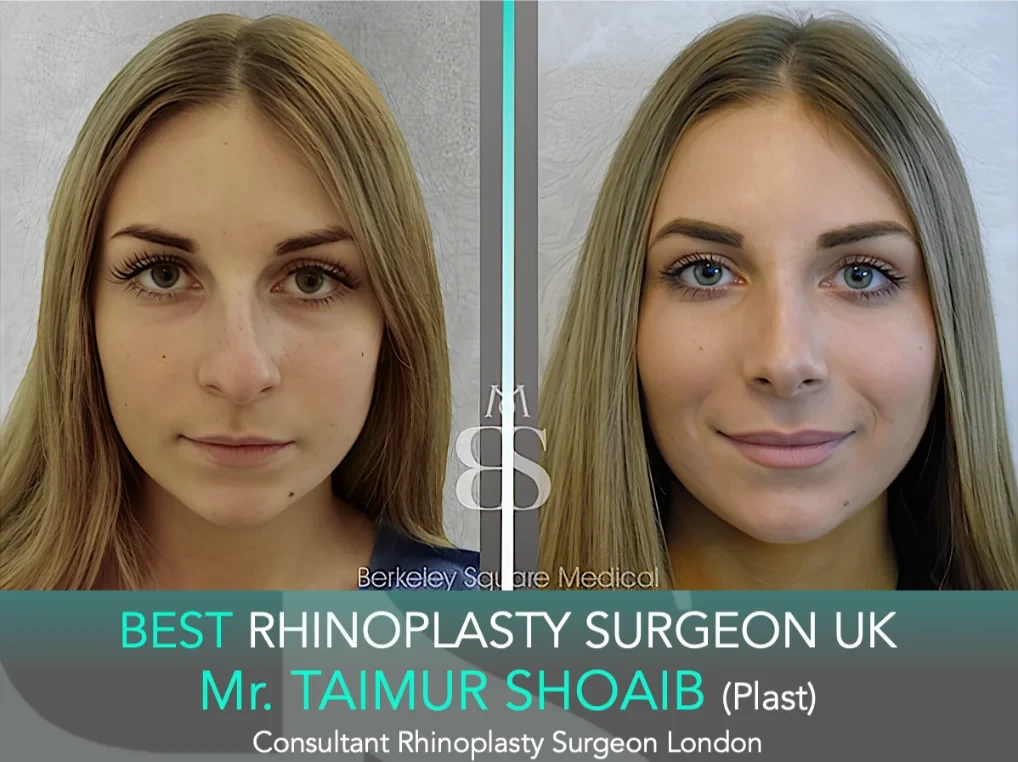
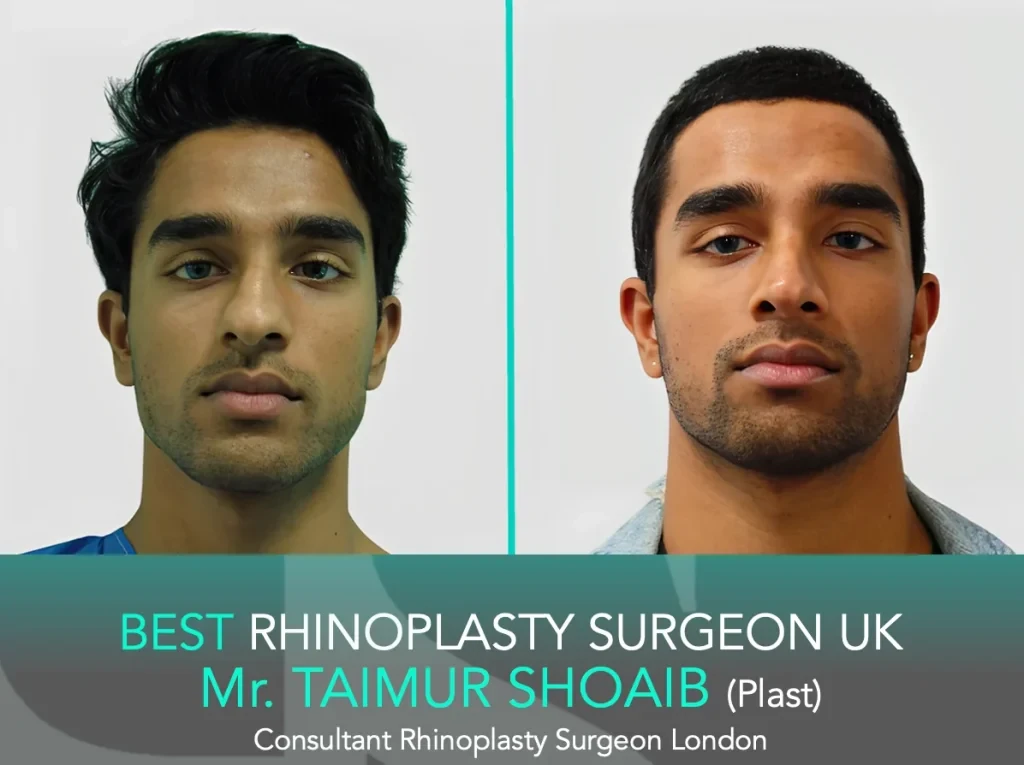
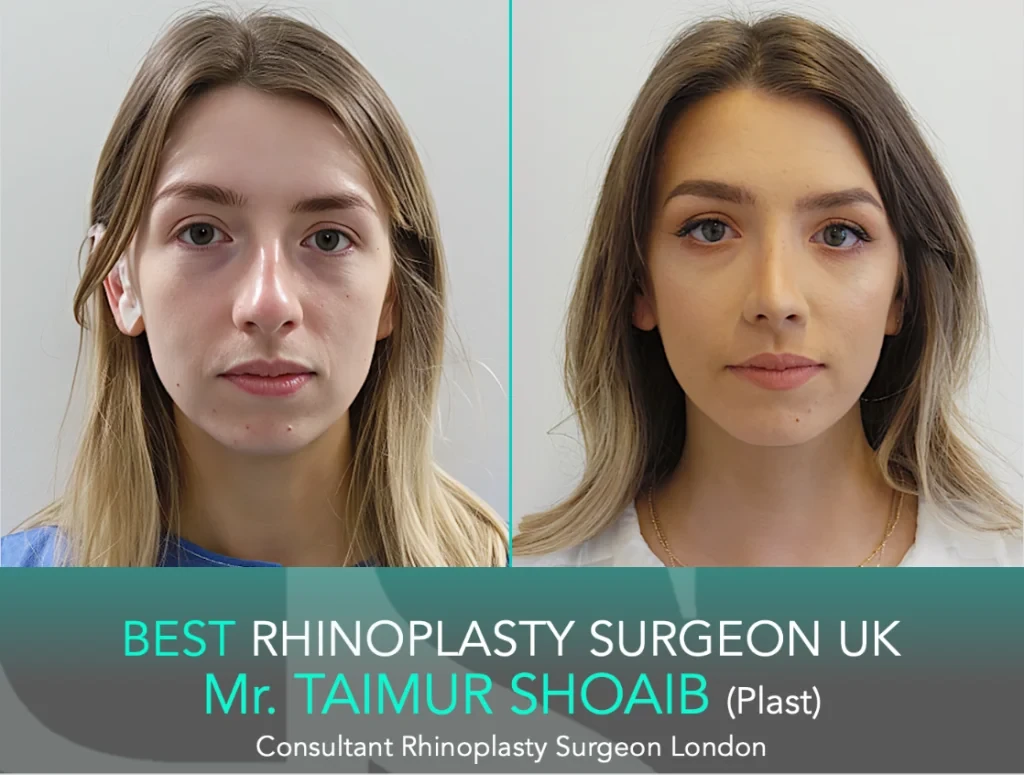
Real patients of Mr Taimur Shoaib, shown with consent for advertising. Individual results vary and are not guaranteed.
More on tip plasty →Reduction Rhinoplasty
Reduction rhinoplasty makes a large or prominent nose smaller and more balanced with the rest of the face. It can reduce the bridge, refine the tip, and narrow the nose together, and it is one of the most common reasons people seek a nose job.
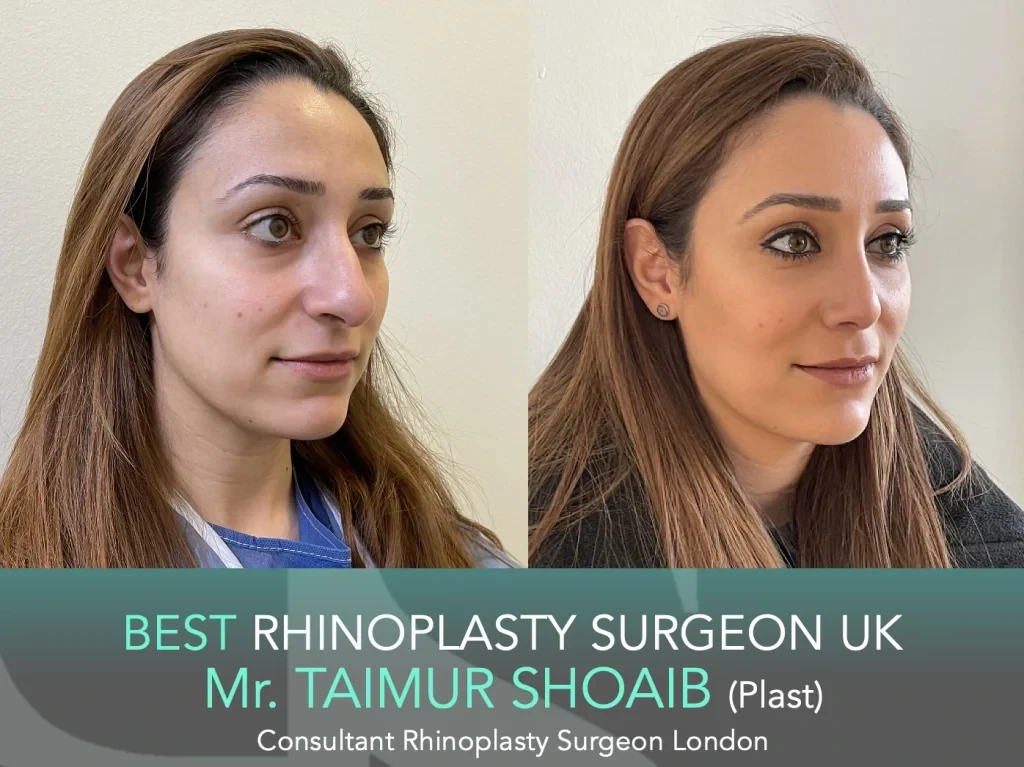
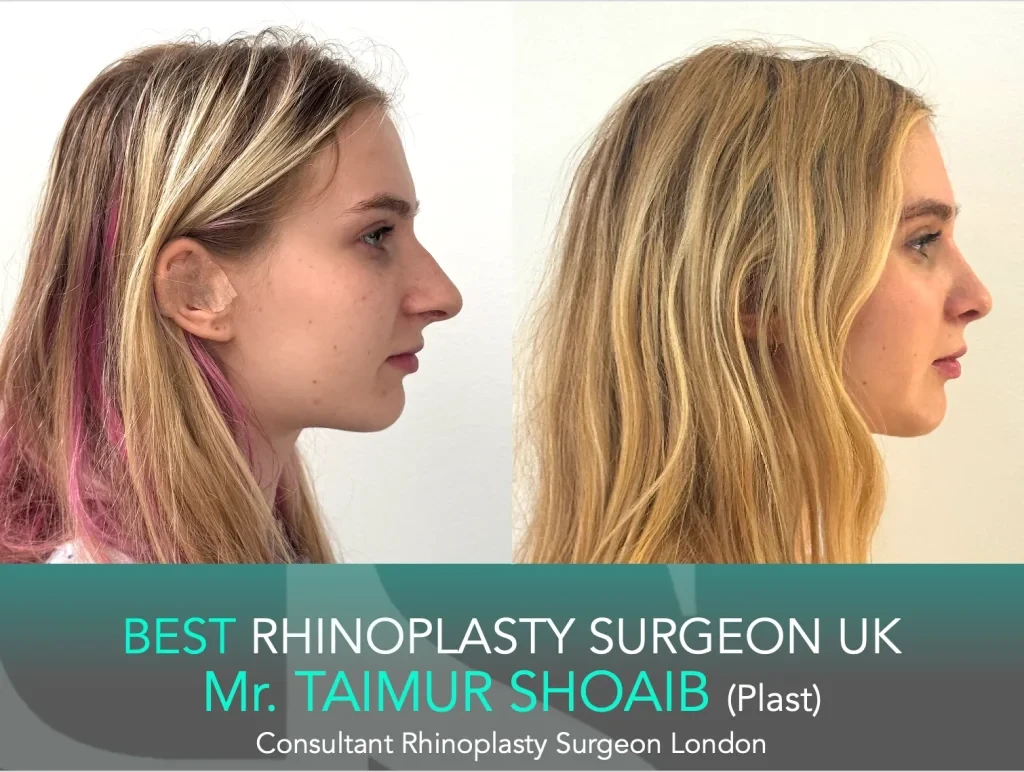
Real patients of Mr Taimur Shoaib, shown with consent for advertising. Individual results vary and are not guaranteed.
More on rhinoplasty →Ethnic Rhinoplasty
Ethnic rhinoplasty refines the nose while preserving the features that reflect your heritage, rather than imposing a single "ideal" shape. It calls for specific experience with different skin thickness and cartilage strength, for example in African, Middle Eastern, and South and East Asian noses.
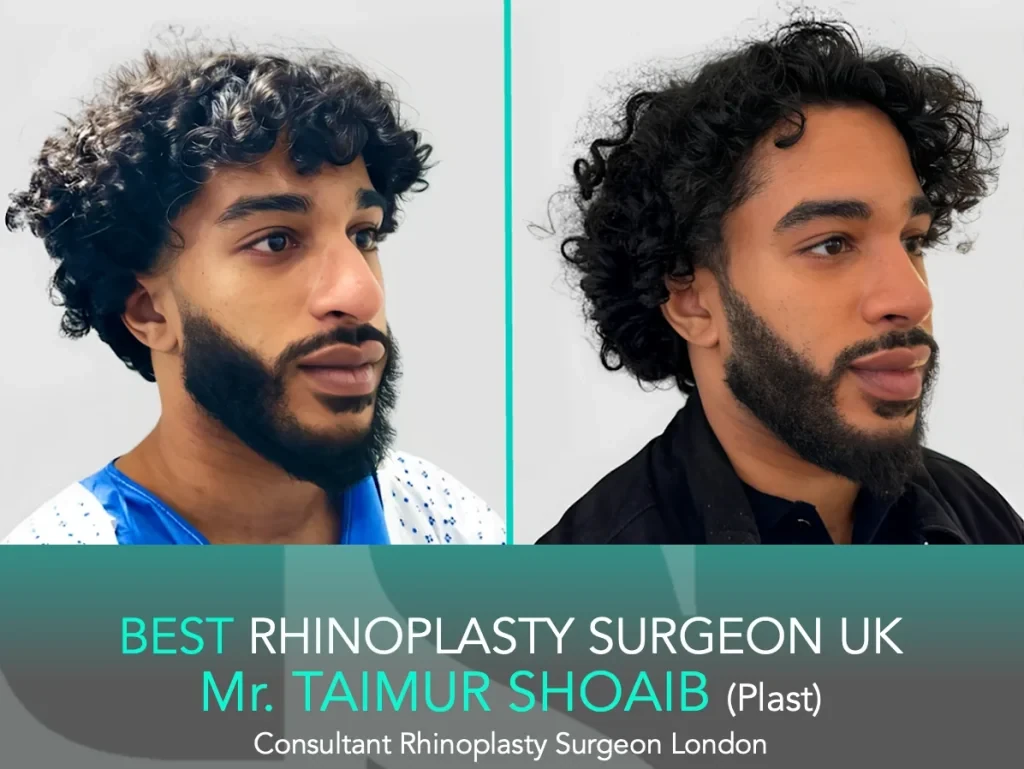
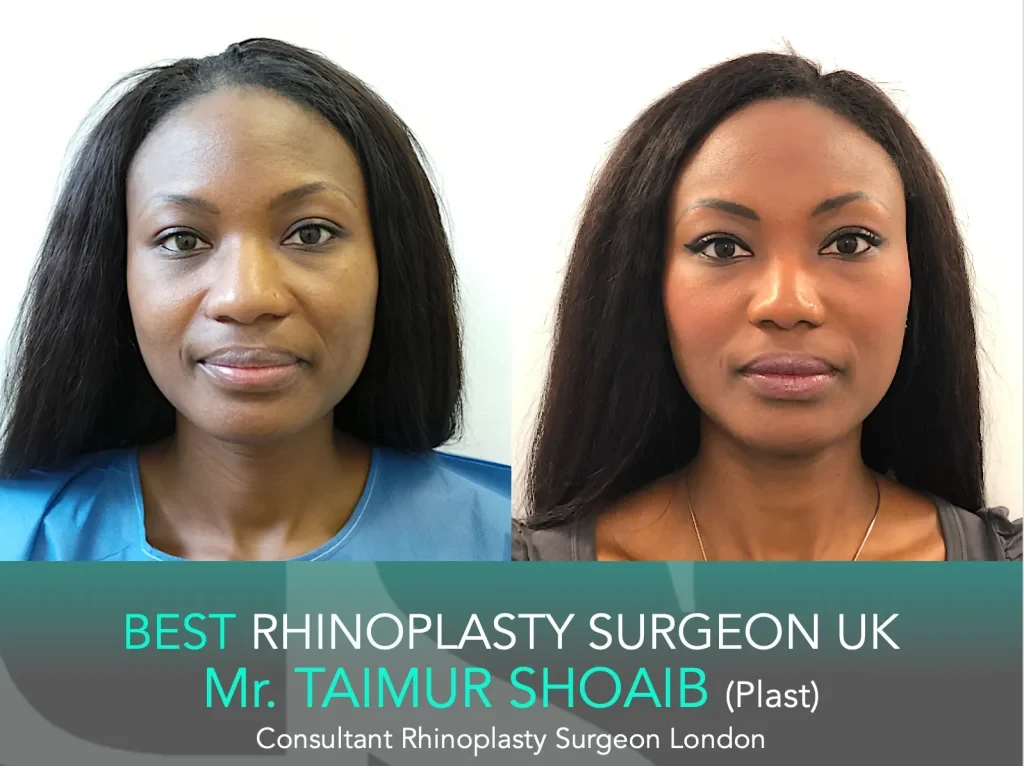
Real patients of Mr Taimur Shoaib, shown with consent for advertising. Individual results vary and are not guaranteed.
More on ethnic rhinoplasty →Crooked Nose Correction (Septorhinoplasty)
A crooked or bent nose is straightened by realigning the bone and cartilage, and when the septum is deviated the same operation, a septorhinoplasty, can also improve breathing. So this type is often both cosmetic and functional.
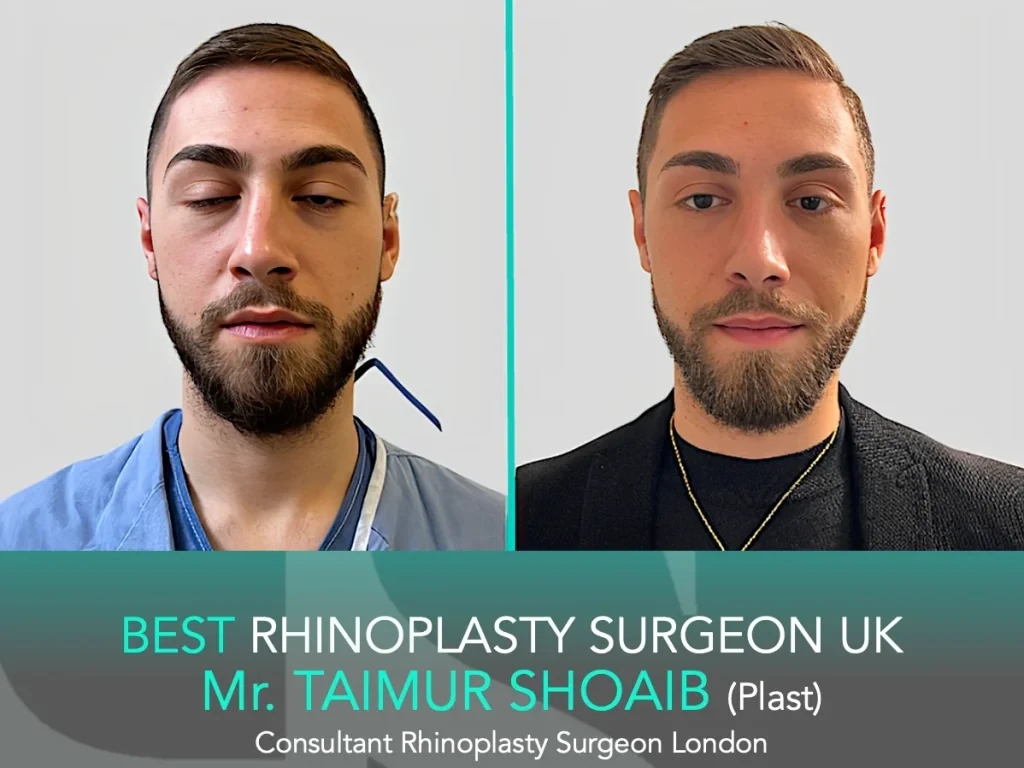
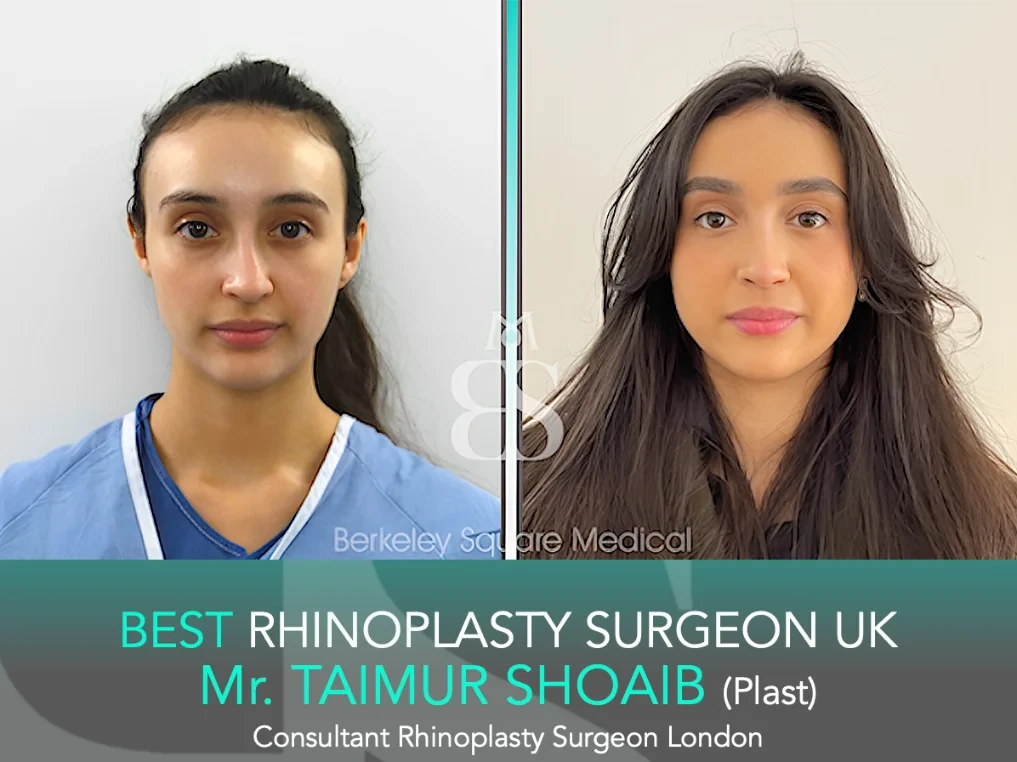
Real patients of Mr Taimur Shoaib, shown with consent for advertising. Individual results vary and are not guaranteed.
More on crooked nose correction →Revision Rhinoplasty
Revision, or secondary, rhinoplasty corrects or improves the result of a previous nose job, whether the issue is cosmetic, functional, or both. It is more complex than a first operation, because it works on a healed, altered nose, and it needs a surgeon who performs it regularly.
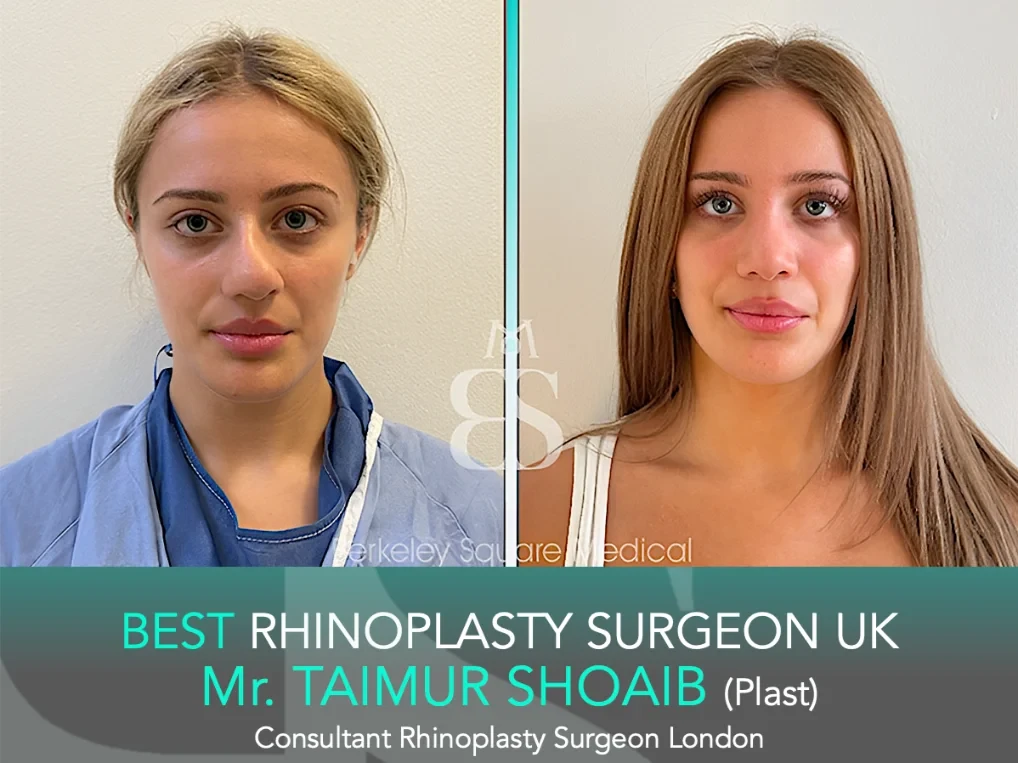
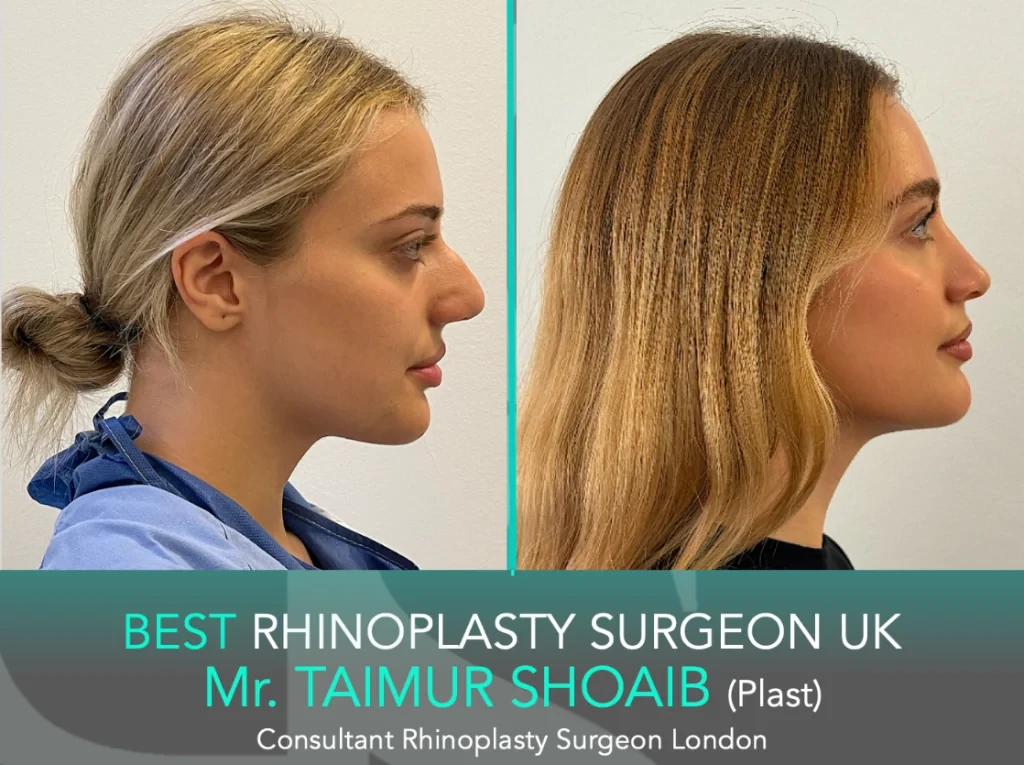
Real patients of Mr Taimur Shoaib, shown with consent for advertising. Individual results vary and are not guaranteed.
More on revision rhinoplasty →Other Types of Nose Surgery
A few more types complete the picture:
- Non-surgical rhinoplasty: dermal filler smooths small bumps or asymmetries without an operation, as a temporary, no-downtime option for suitable, minor cases, and some patients later move from filler to surgical rhinoplasty for a permanent result; it should only be done by an experienced injector, as filler in the nose carries rare but serious risks. Read about non-surgical rhinoplasty.
- Alar base reduction: narrows wide nostrils or a broad nasal base, often as part of a larger rhinoplasty.
- Functional rhinoplasty and septoplasty: corrects a deviated septum and internal structures to improve breathing, sometimes with no change to appearance.
- Reconstructive rhinoplasty: rebuilds the nose after injury, cancer surgery, or a congenital difference.
How Much Do the Different Types of Nose Surgery Cost?
Cost depends on the complexity of the type rather than a fixed price per "name". A straightforward tip or hump reduction sits at the lower end, while ethnic, revision, and reconstructive cases take longer and cost more because they are more complex. Non-surgical rhinoplasty is the least expensive but is temporary. For a clear breakdown, see the rhinoplasty cost guide, and note that the only reliable quote comes from an in-person assessment of your nose.
Frequently Asked Questions
How many types of rhinoplasty are there?
There is no single fixed number, because rhinoplasty is grouped in two ways: by technique (open or closed) and by goal (reduction, tip refinement, hump reduction, ethnic, crooked-nose or septorhinoplasty, revision, reconstructive, and non-surgical). Most operations combine several of these in one procedure tailored to your nose.
What is the difference between open and closed rhinoplasty?
They are two techniques, not two results. Closed rhinoplasty places all incisions inside the nostrils, so there is no visible scar. Open rhinoplasty adds a tiny incision across the strip of skin between the nostrils for more access and precision in complex tip work and revisions. The right choice depends on what your nose needs.
Which type of nose job is best for me?
The best type is the one matched to your anatomy and your goal, not a type chosen in advance. A dorsal hump reduction, tip refinement, ethnic rhinoplasty, crooked-nose correction, revision, or a combination may be right depending on your nose. This is decided at a face-to-face assessment with an experienced rhinoplasty surgeon.
What is functional rhinoplasty?
Functional rhinoplasty aims to improve breathing rather than appearance, usually by correcting a deviated septum (septoplasty) or reinforcing the internal nasal structures. It is often combined with cosmetic reshaping in a single operation called a septorhinoplasty.
What is ethnic rhinoplasty?
Ethnic rhinoplasty refines the nose while preserving the features that reflect your heritage, rather than aiming for one standard shape. It requires specific experience with different skin thickness and cartilage strength across African, Middle Eastern, and Asian noses.
Is non-surgical rhinoplasty a real type of nose job?
Yes, for suitable minor cases. Non-surgical rhinoplasty uses dermal filler to smooth a small bump or asymmetry without surgery or downtime, but the effect is temporary and it cannot make a nose smaller. It is not a substitute for surgery where a structural change is needed.
Do the different types of rhinoplasty cost different amounts?
Yes. Cost tracks complexity rather than the name of the type: a straightforward hump or tip case sits at the lower end, while ethnic, revision, and reconstructive cases cost more because they take longer and are more demanding. Non-surgical rhinoplasty is the least expensive but temporary.
Can more than one type be done in one operation?
Yes, and it usually is. Most nose jobs combine several elements, for example reducing a dorsal hump, refining the tip, and straightening the nose in a single procedure, so the whole nose balances rather than one feature being changed in isolation.
Not sure which type of rhinoplasty you need?
The clearest answer comes from an examination. Book a consultation with Mr Taimur Shoaib at 64 Harley Street, London, to find the right approach for your nose.
Book a consultation