0330 058 0212
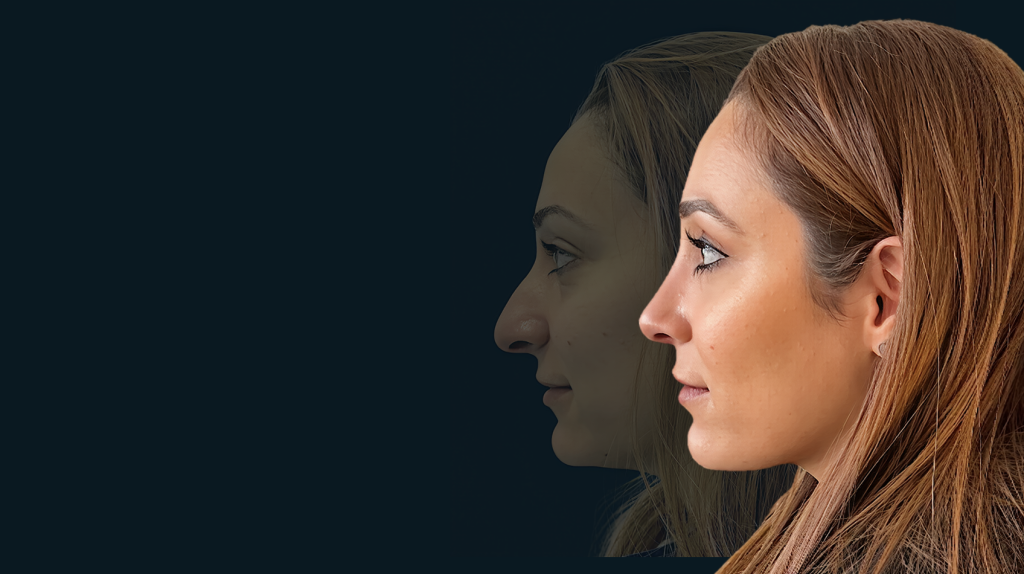
Indian and Pakistani rhinoplasty is a highly nuanced surgical discipline. Patients from these regions often present with a distinct nasal anatomy characterised by an aggressive dorsal hump and a thicker, more sebaceous skin envelope. The clinical challenge is to refine these features while providing enough internal structural support, often using your own natural cartilage, so that the new definition is clearly visible through the skin.
At Berkeley Square Medical, our approach moves away from traditional "reductive" surgery that can leave the nose looking flat or wide. Instead, we use Structural Rhinoplasty to reinforce the nasal framework. This ensures that as the skin heals and contracts over 12 months, the result remains stable, natural, and in perfect balance with your South Asian heritage.
Mr Shoaib is a published rhinoplasty surgeon experienced in refining South Asian noses.
By prioritising these anatomical markers, we deliver results that are stable and culturally authentic. Beyond aesthetics, every procedure prioritises respiratory health. During your clinical assessment, Mr. Shoaib will evaluate your nasal airway to ensure that hump reduction and alar base refinement never compromise your ability to breathe comfortably.
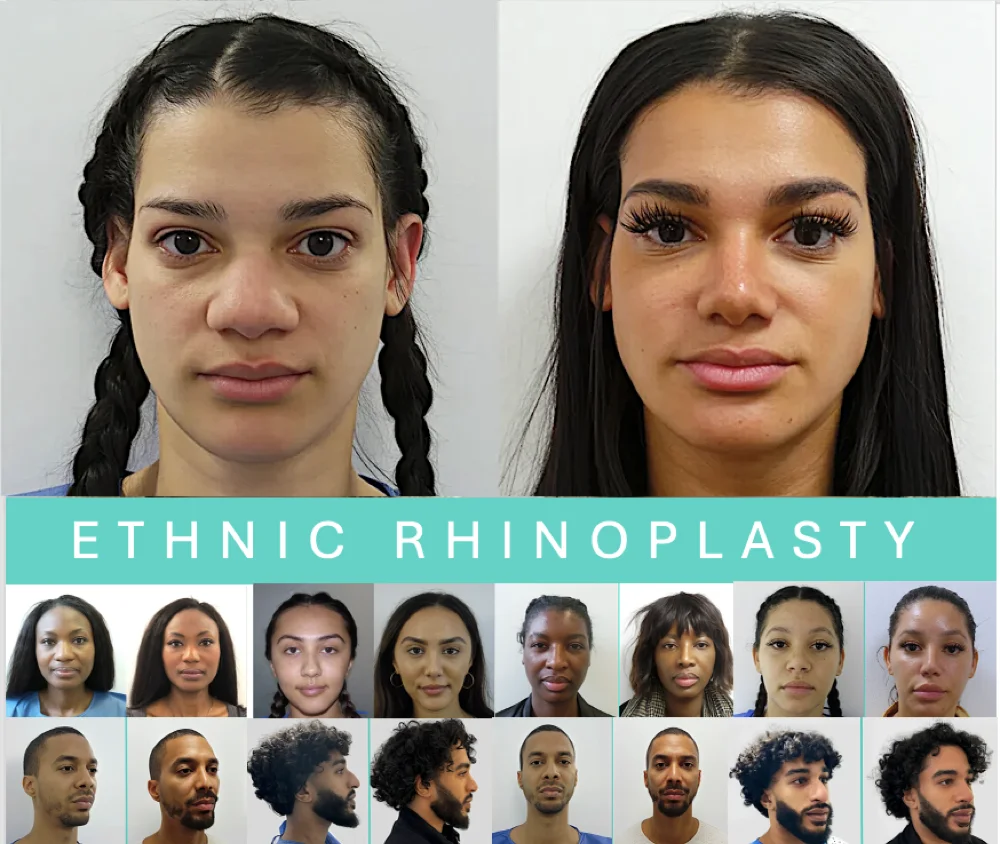
Refined Ethnic Harmony: Smoothing the dorsal hump and narrowing the alar base for natural symmetry.
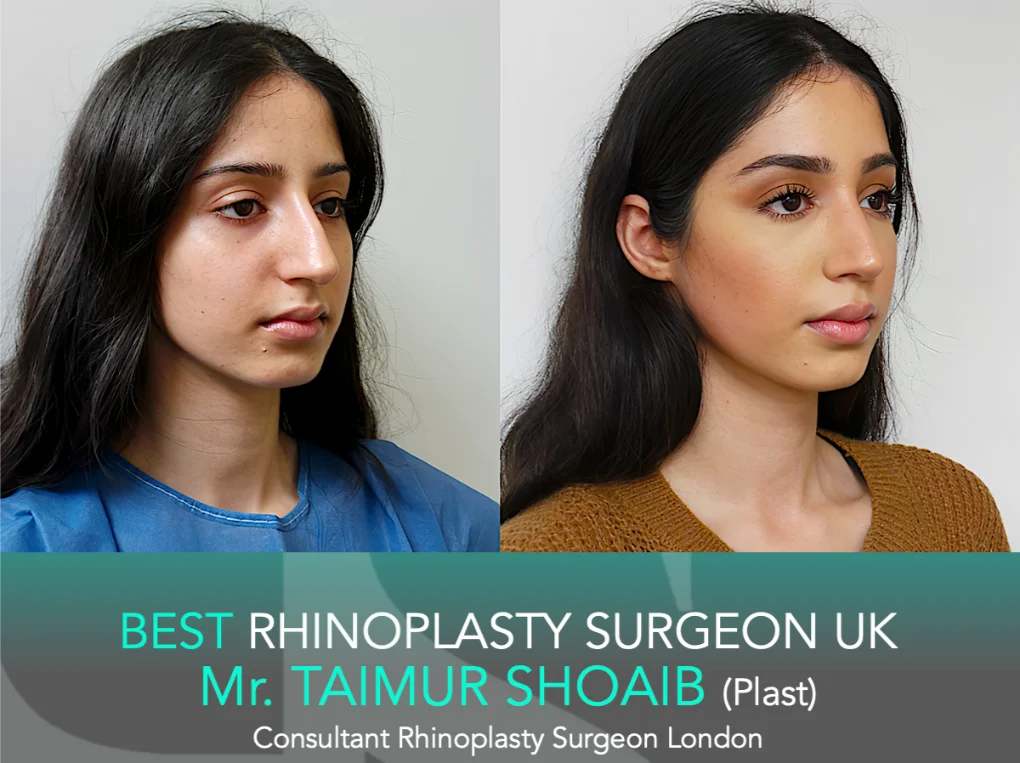
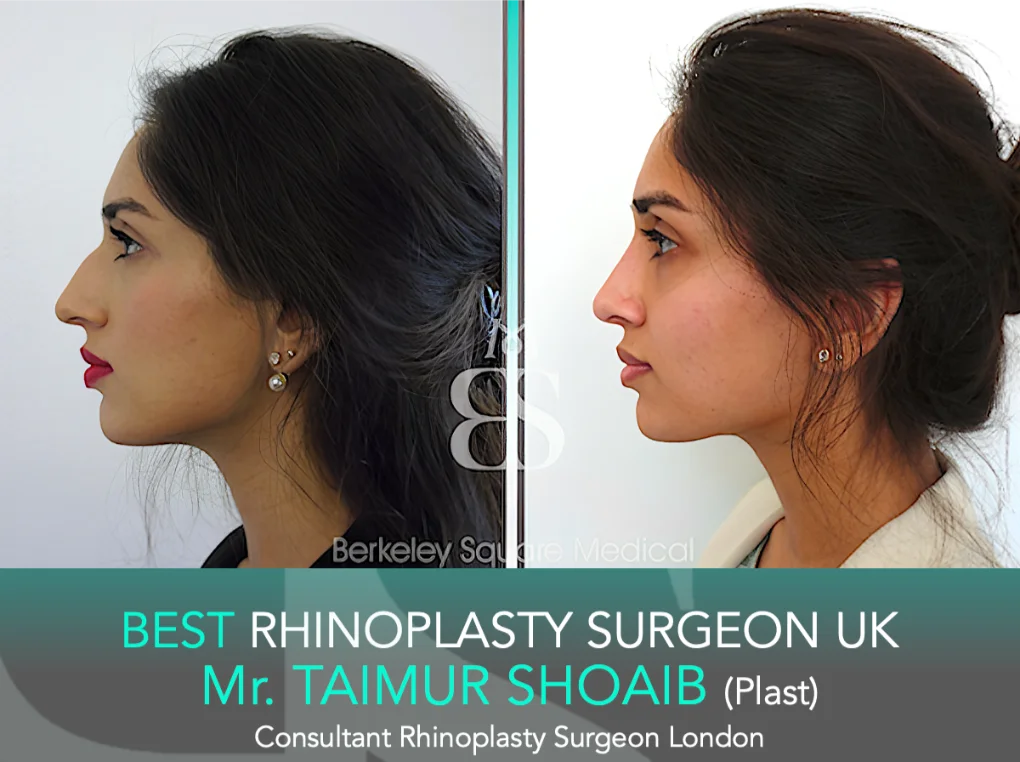
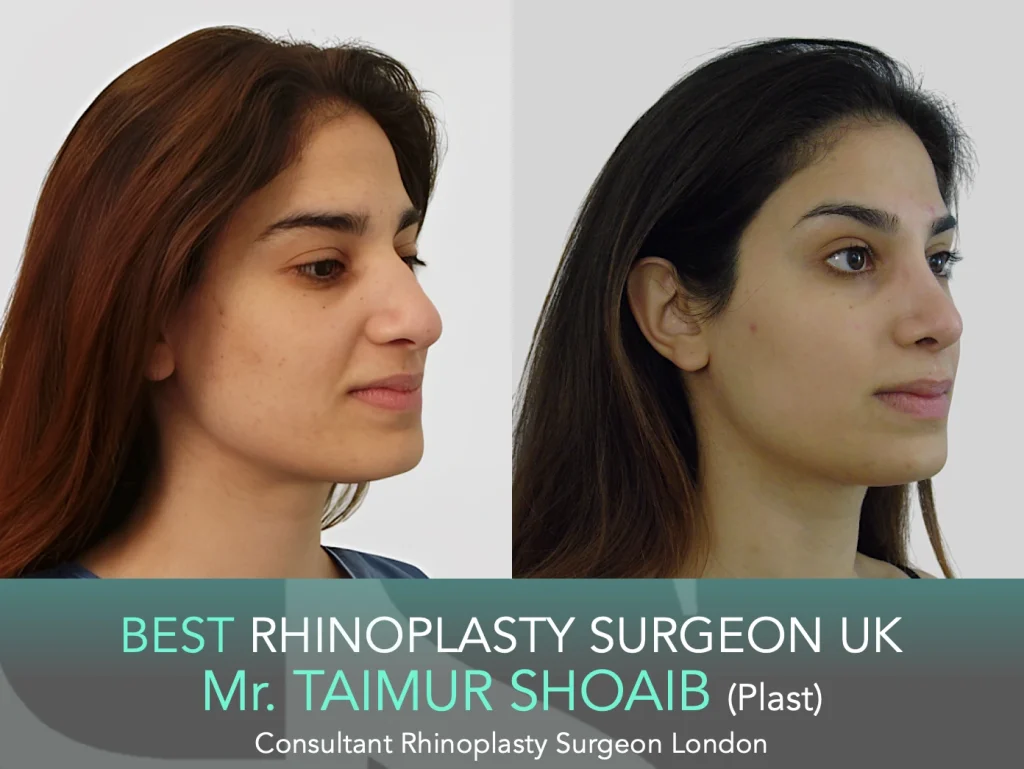
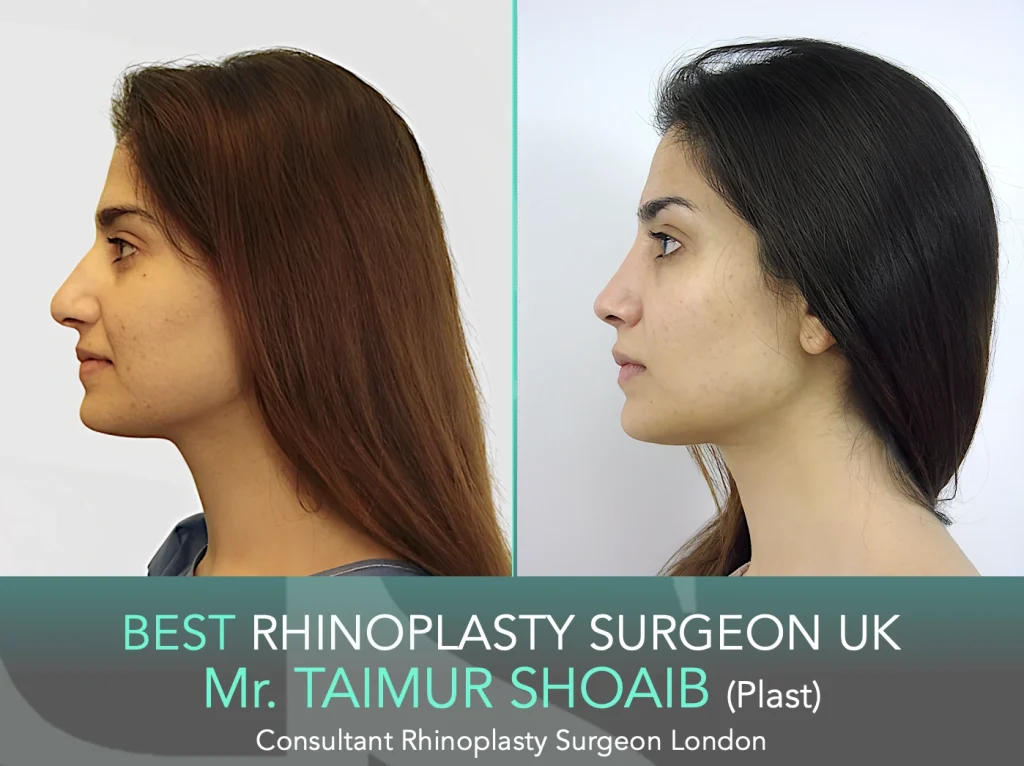
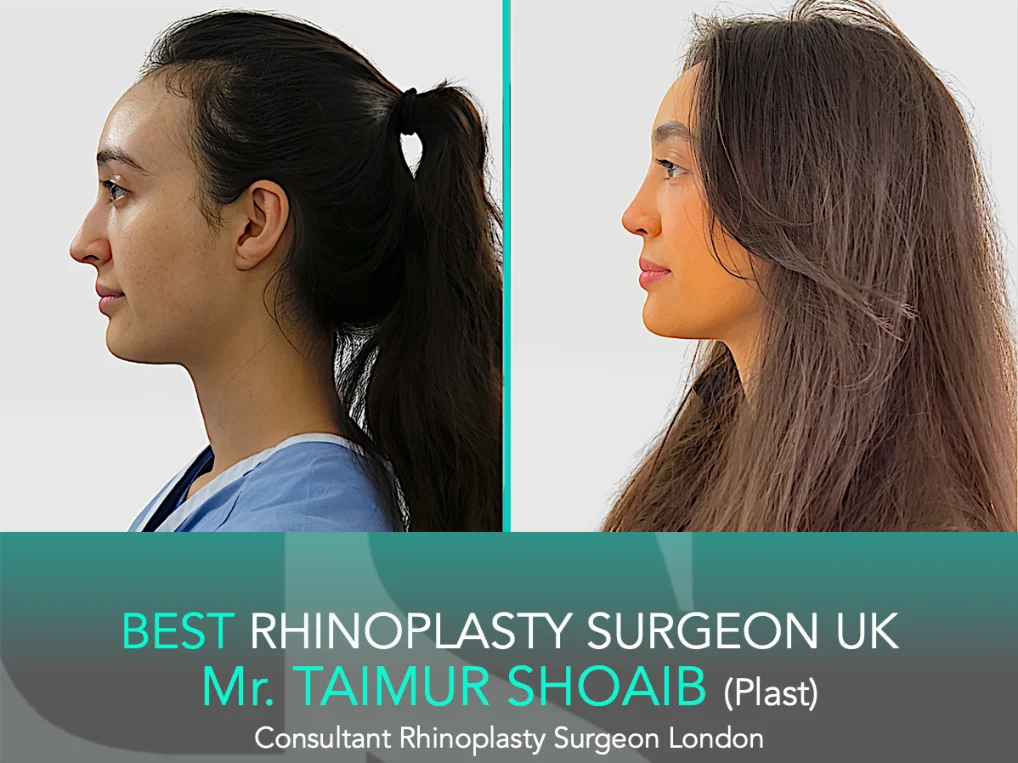
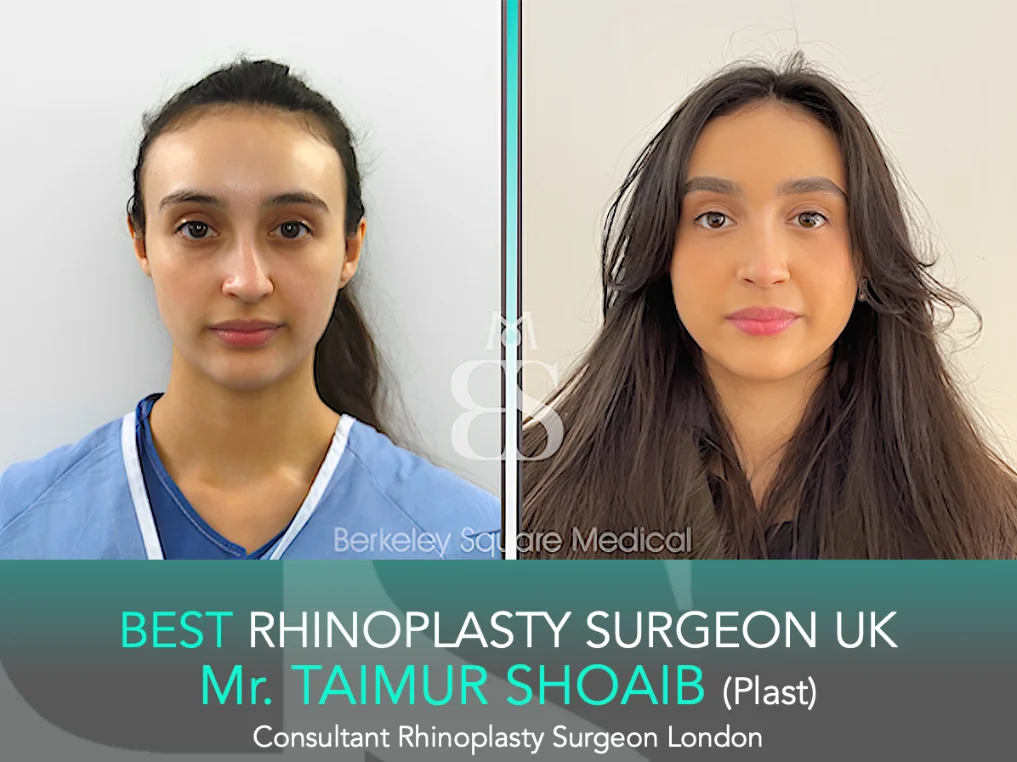
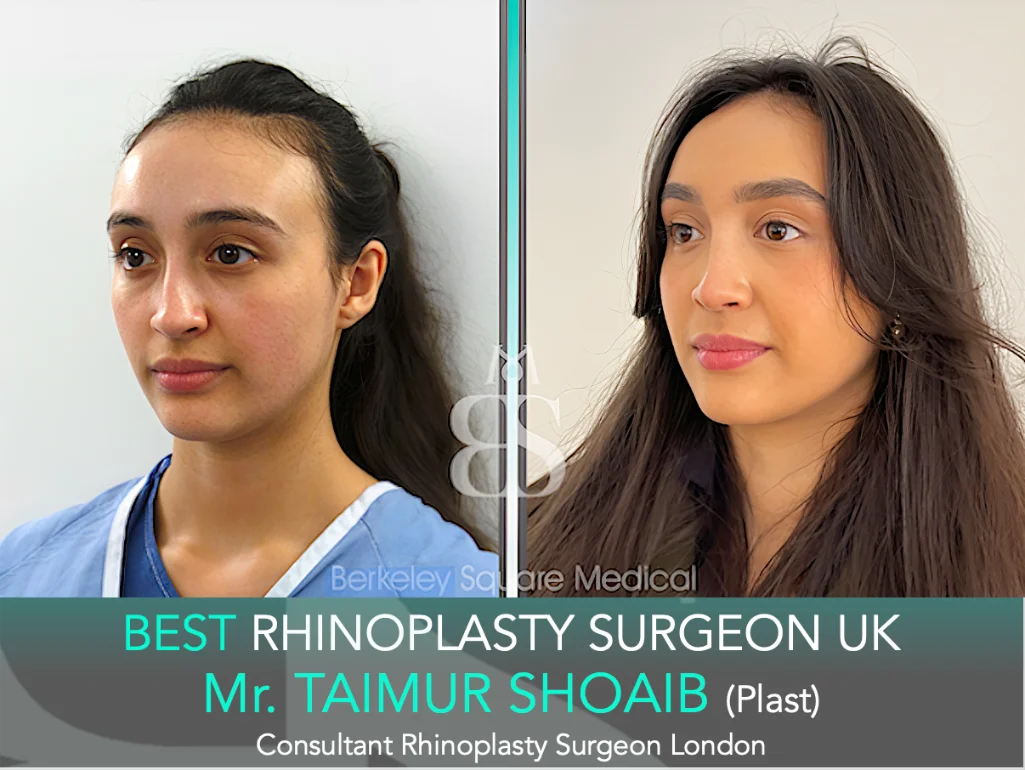
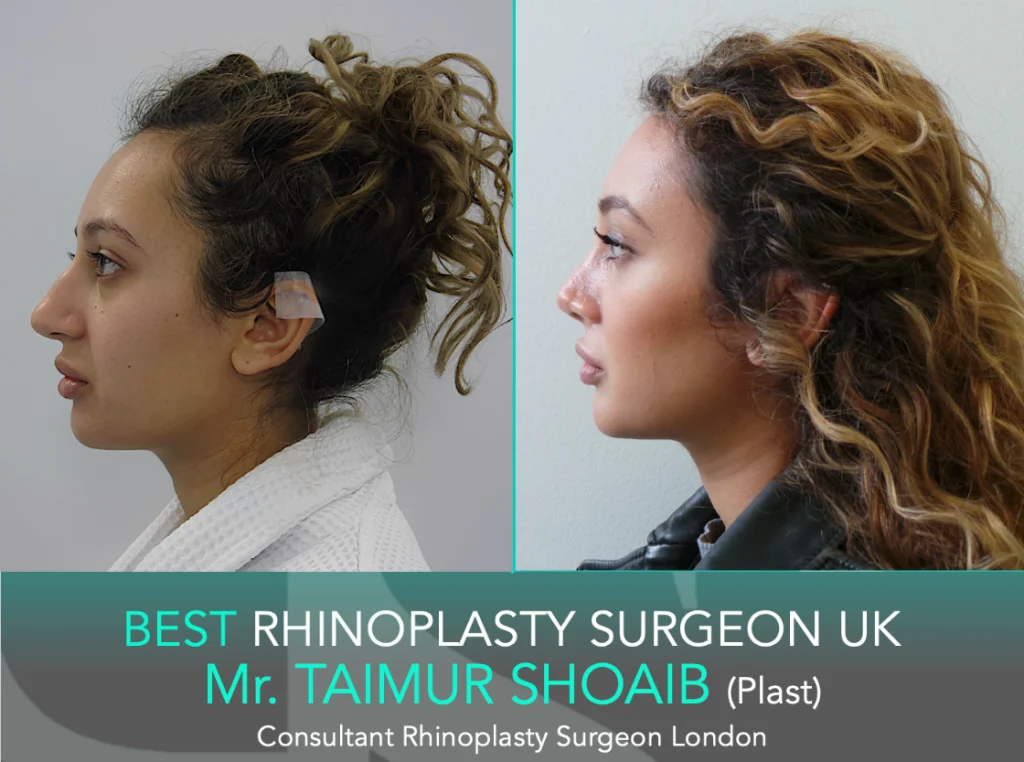
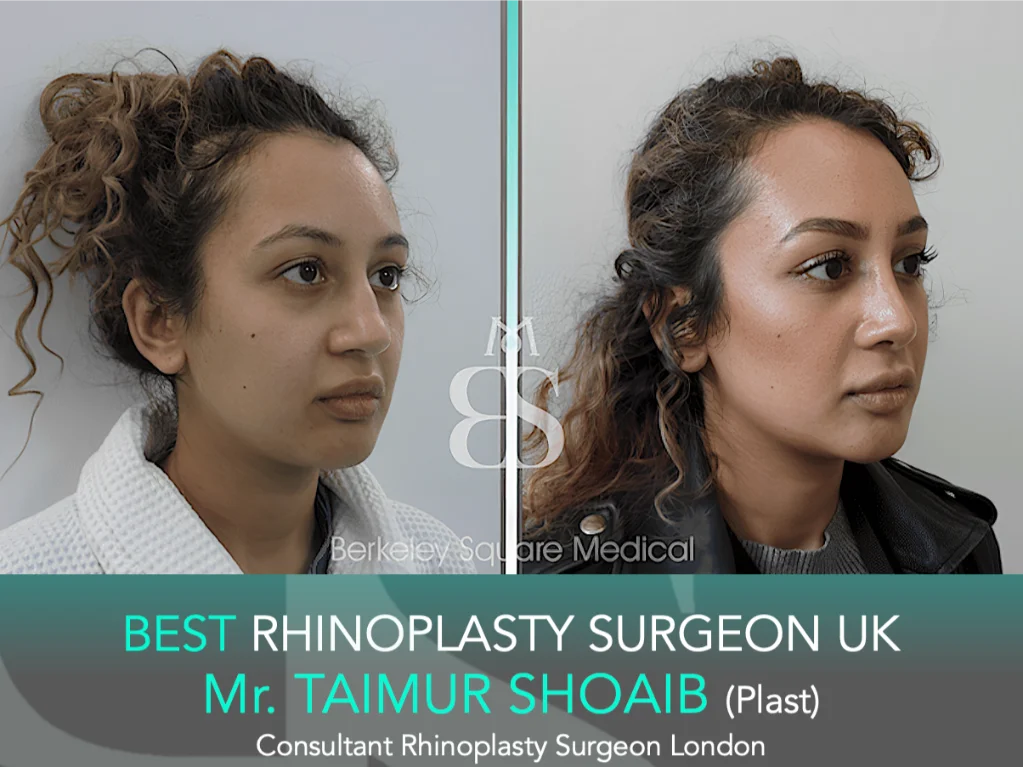
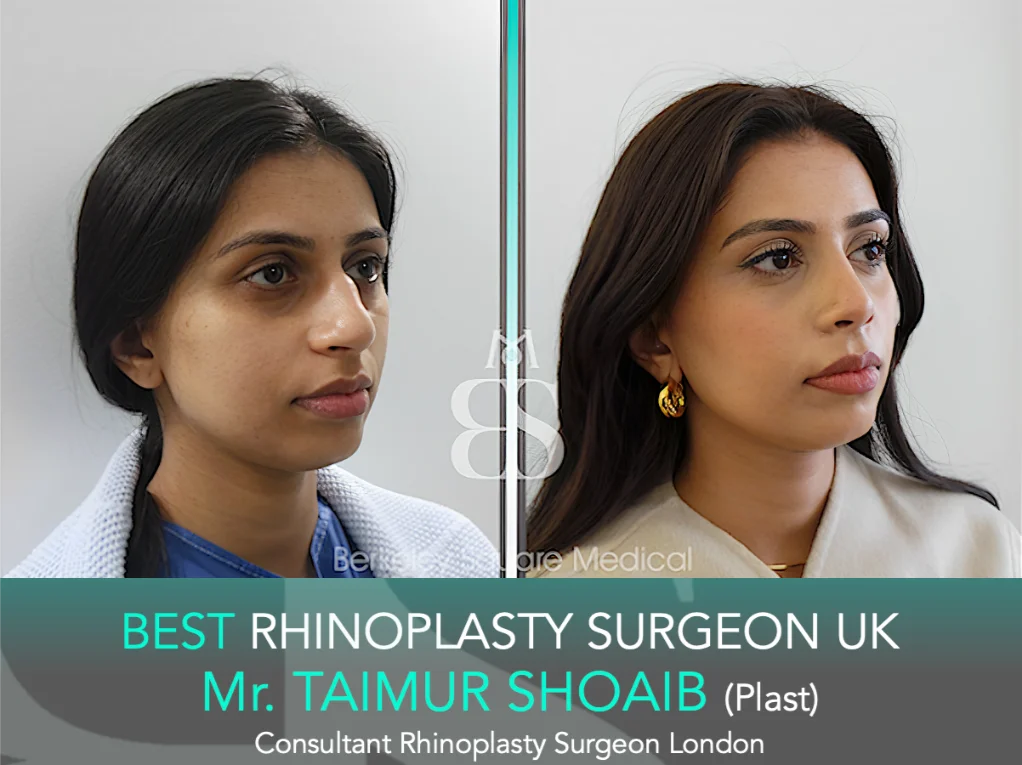
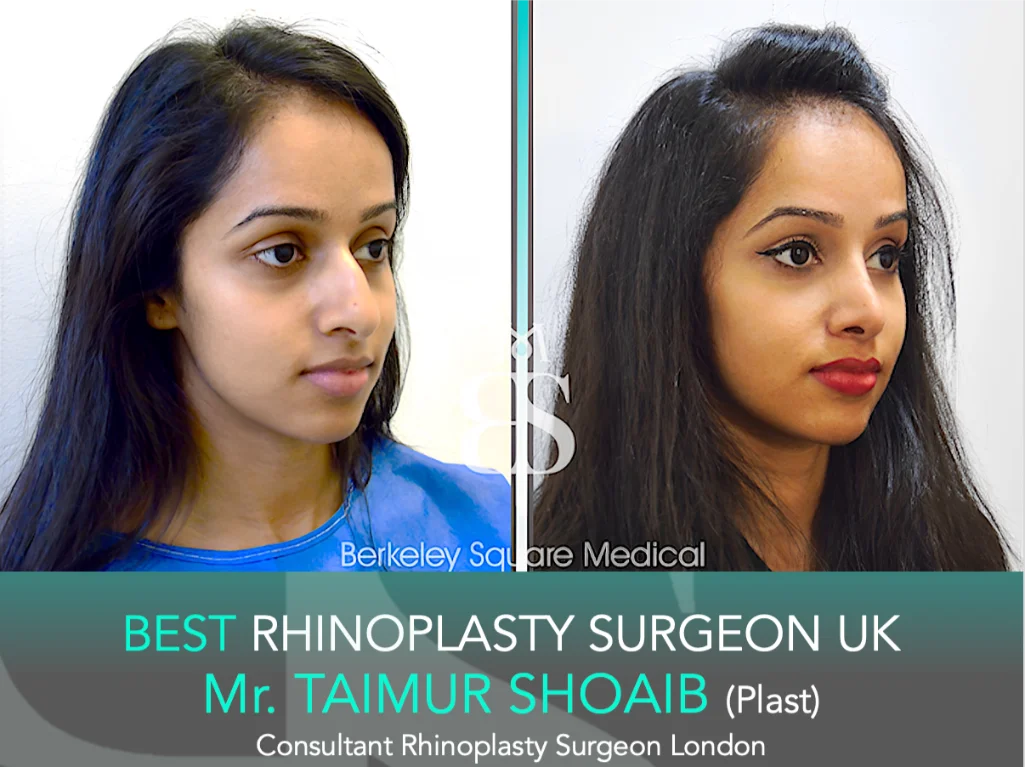
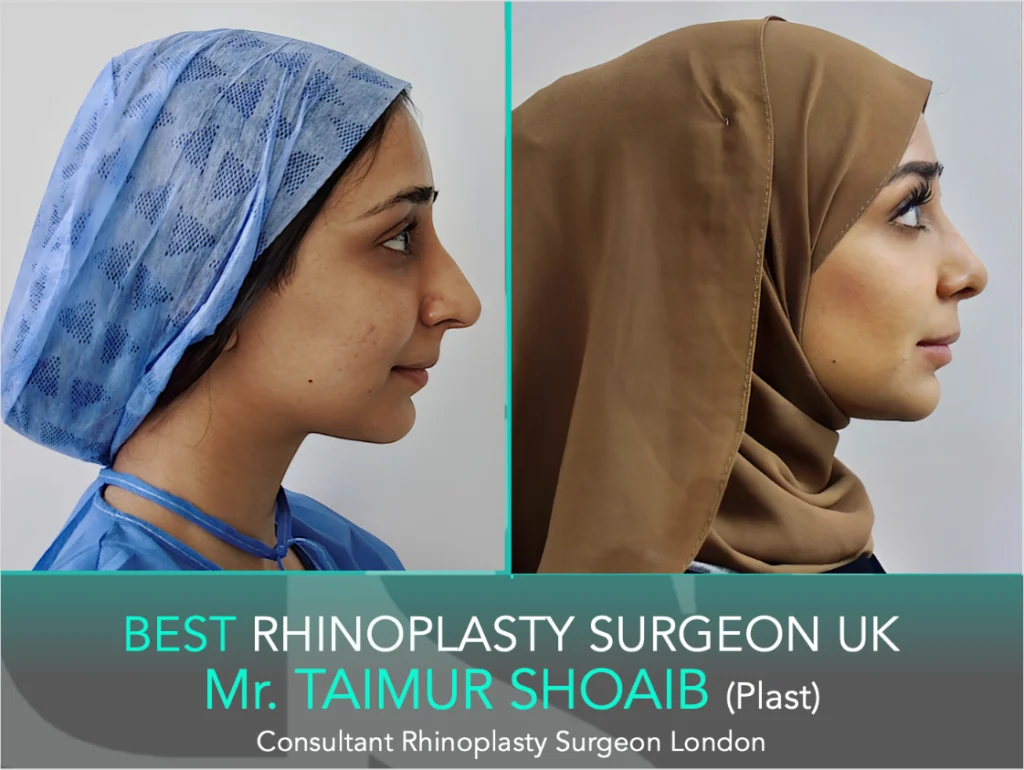
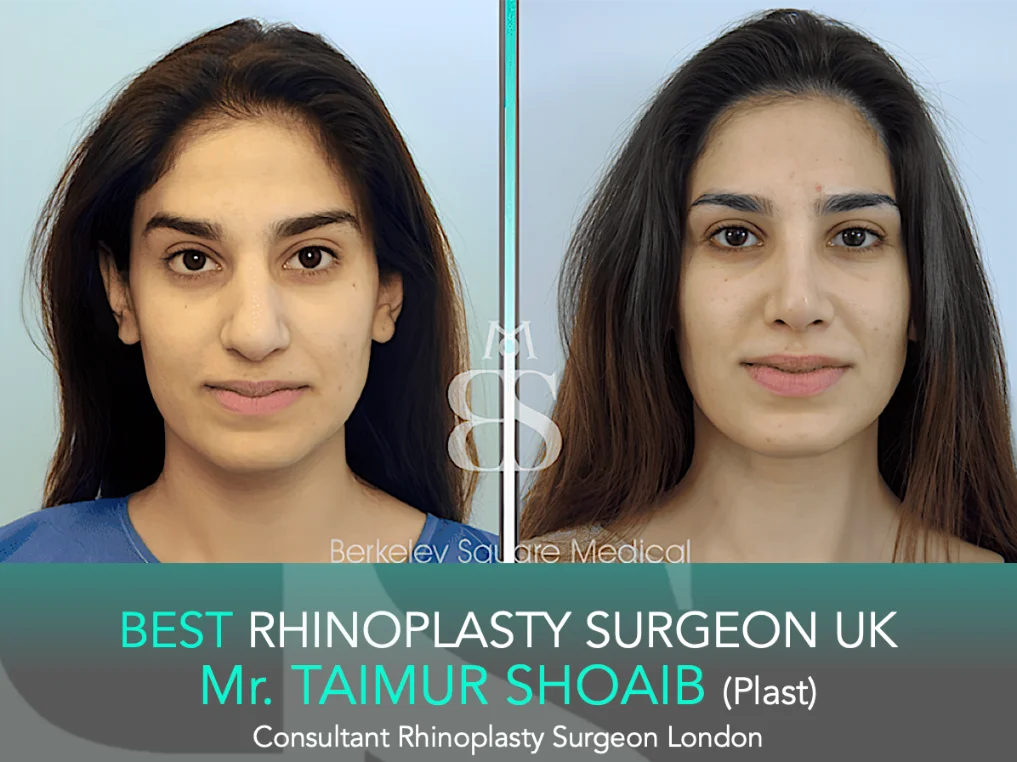
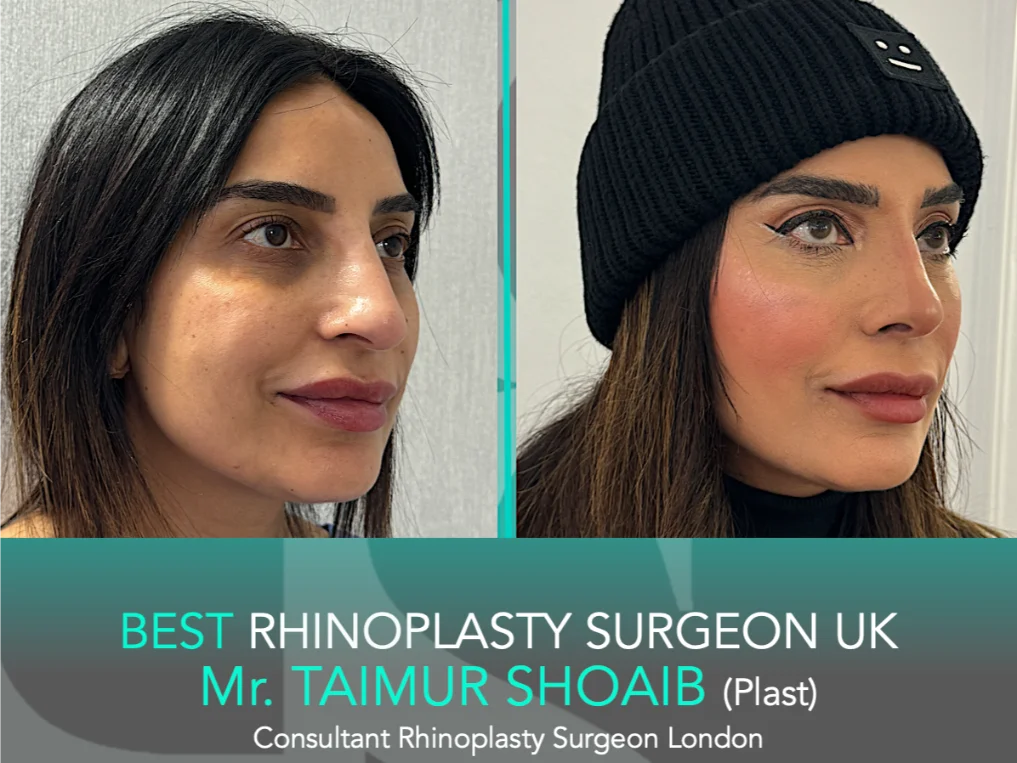
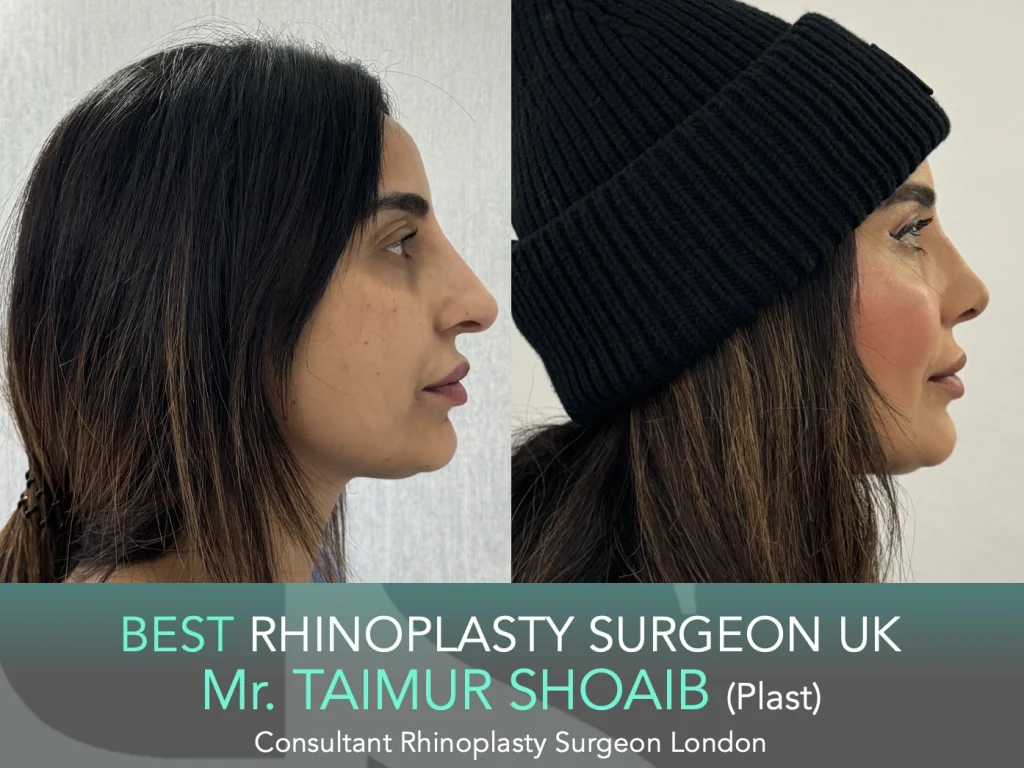
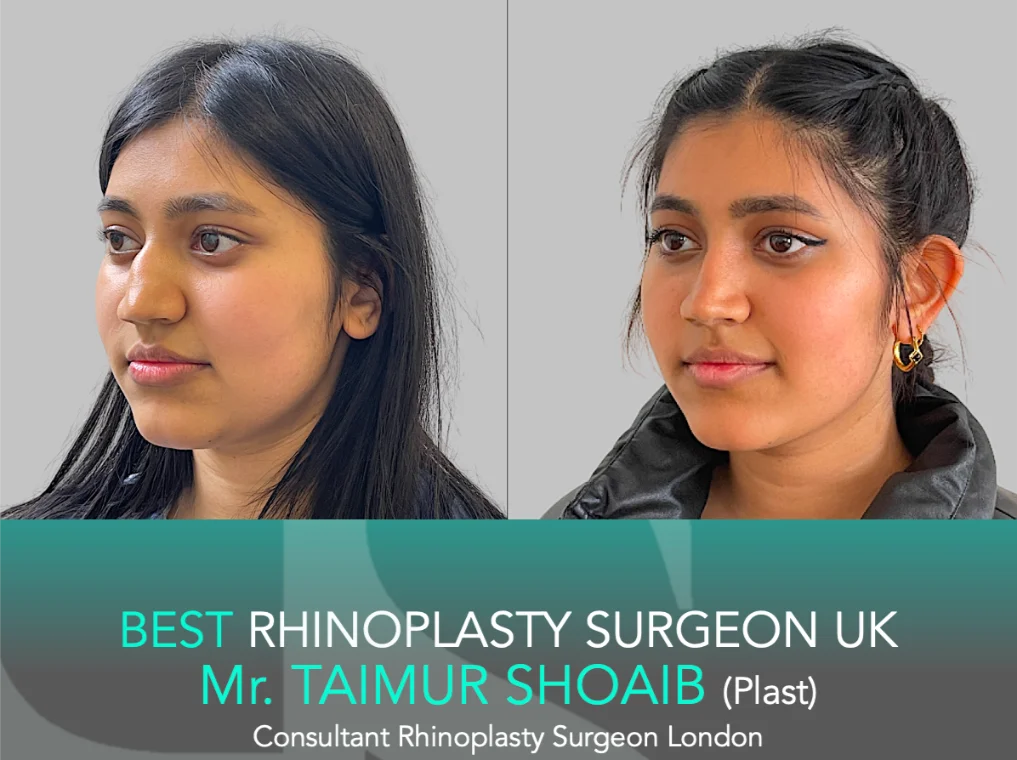
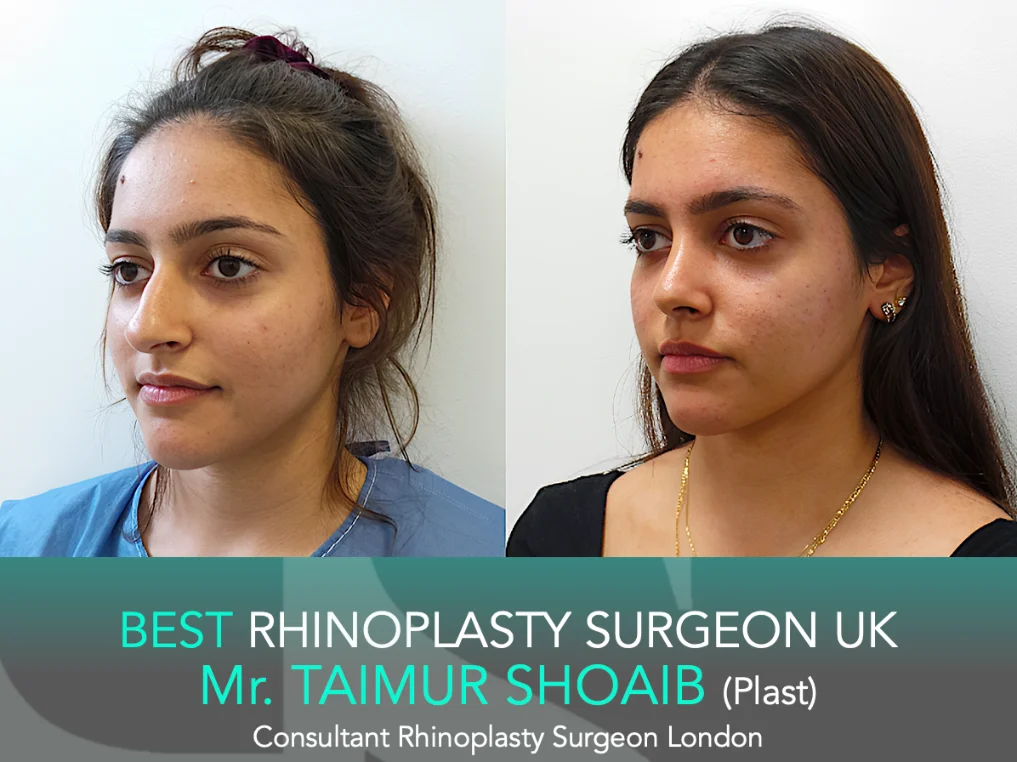
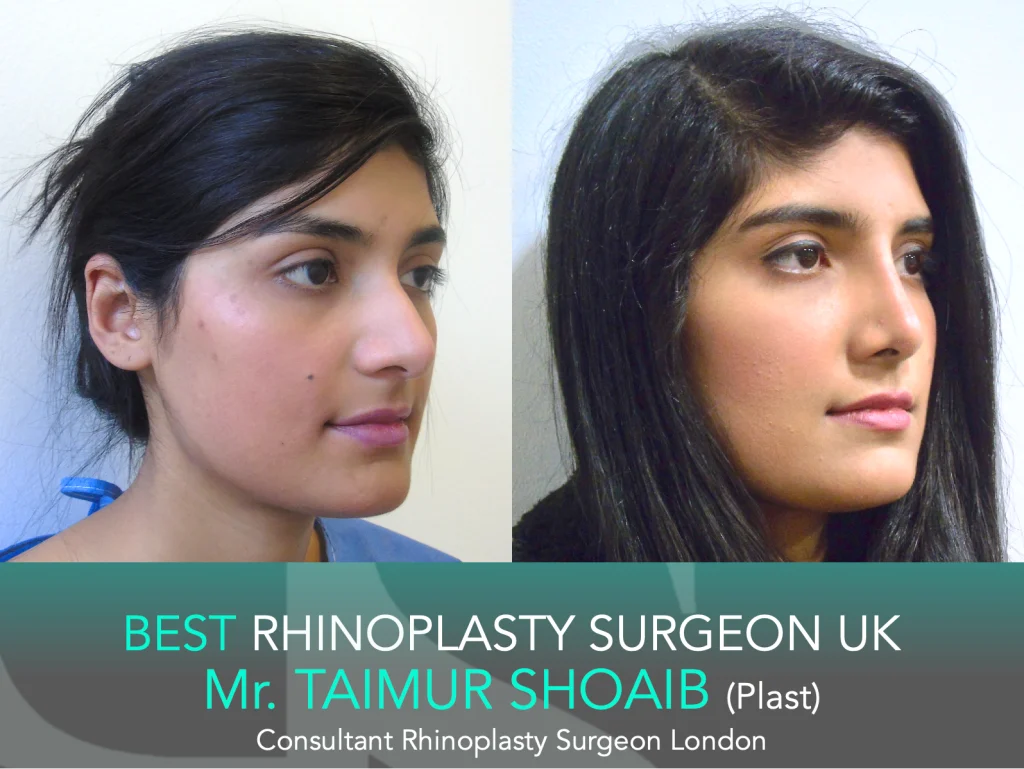
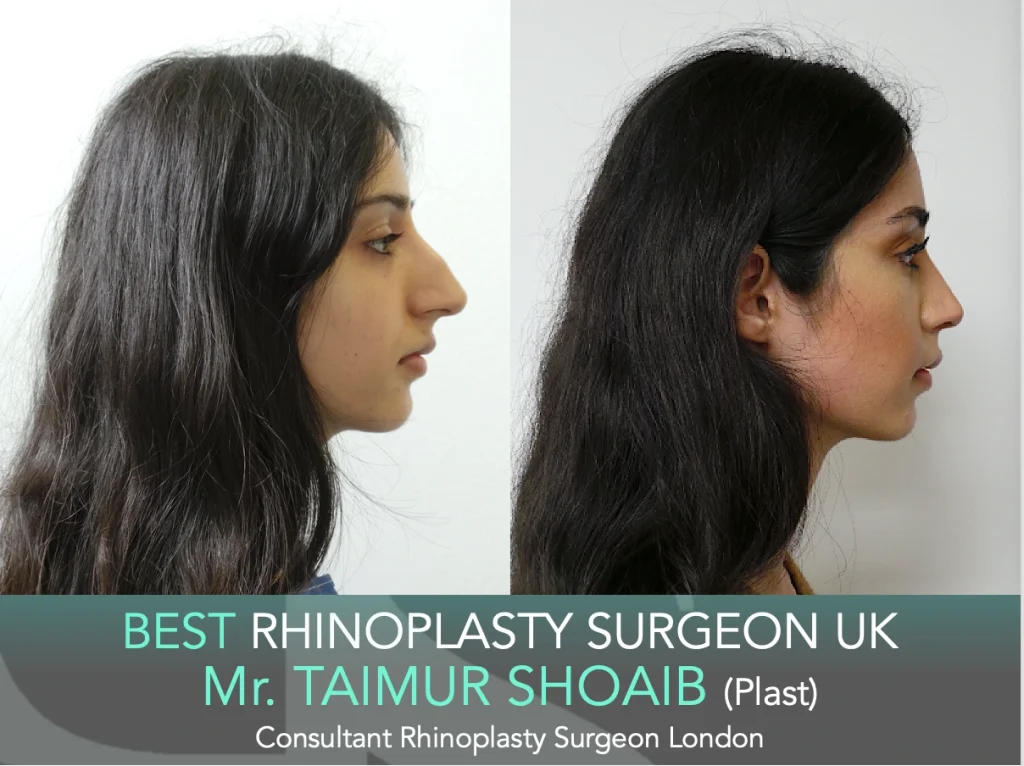
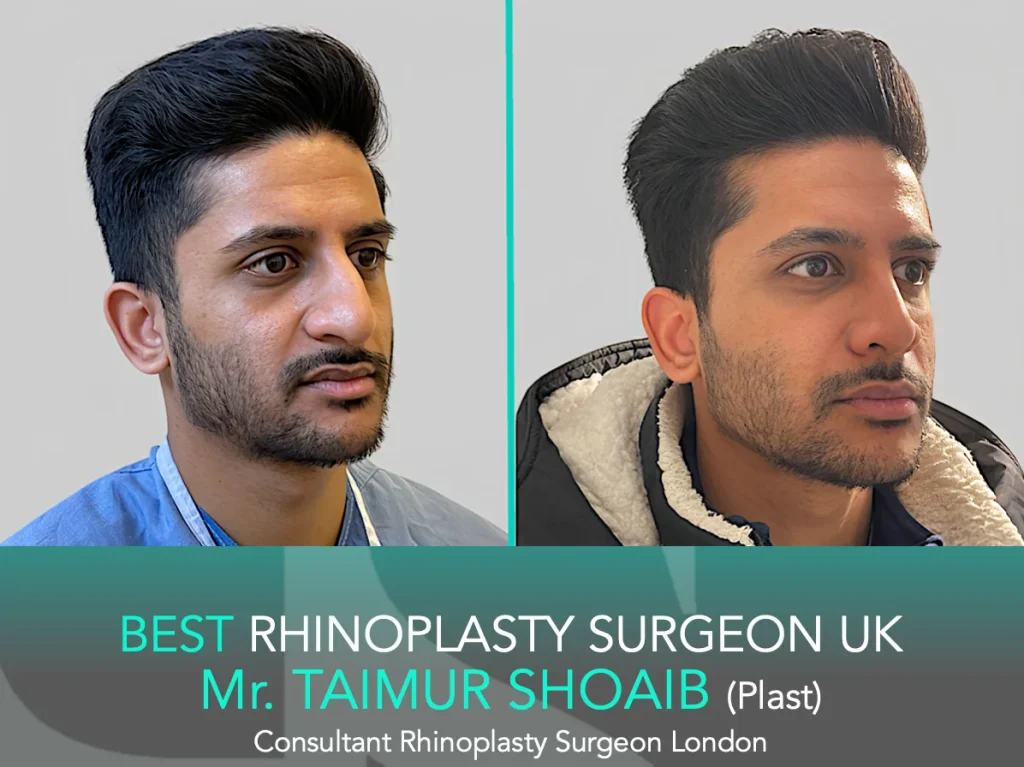
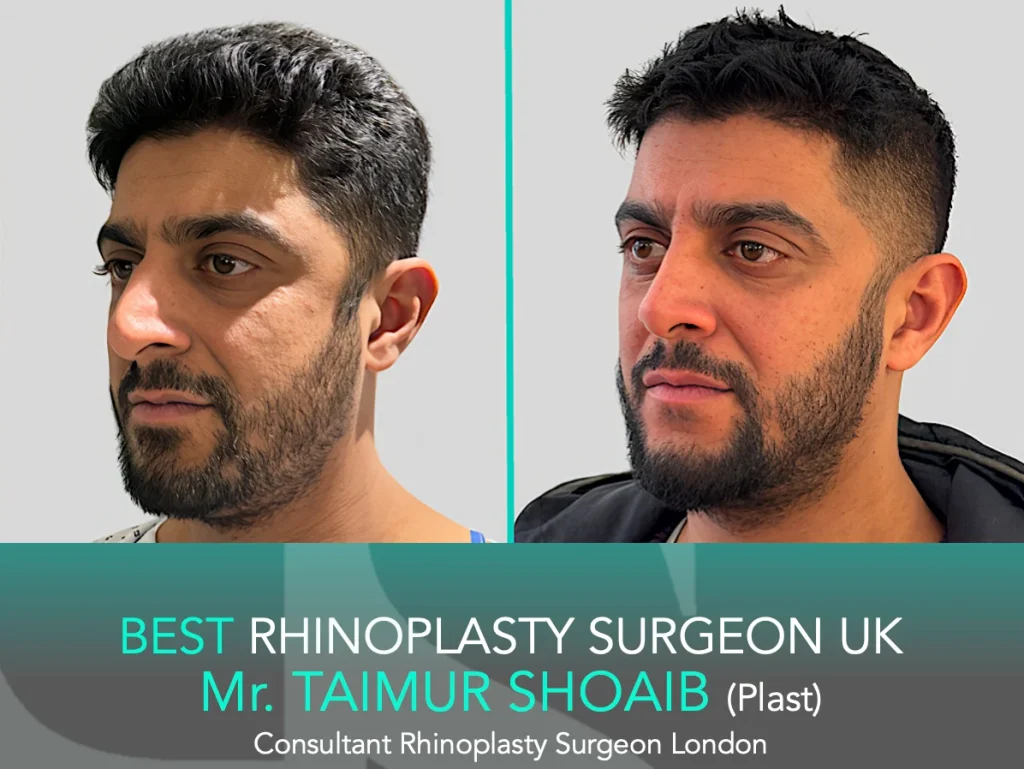
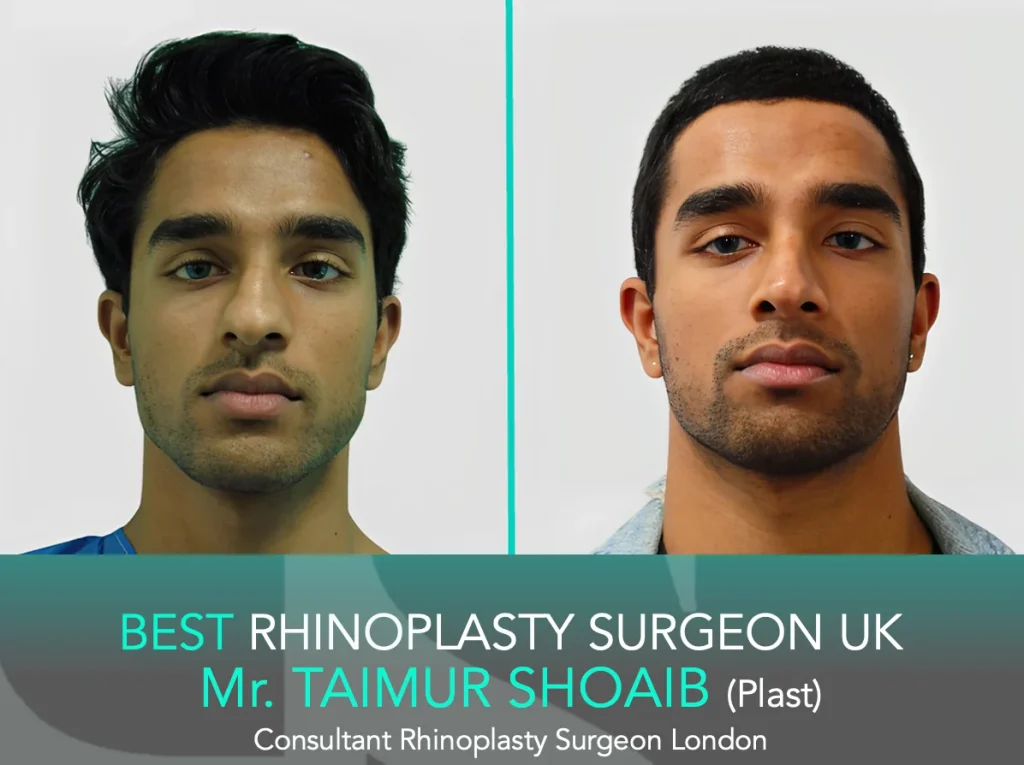
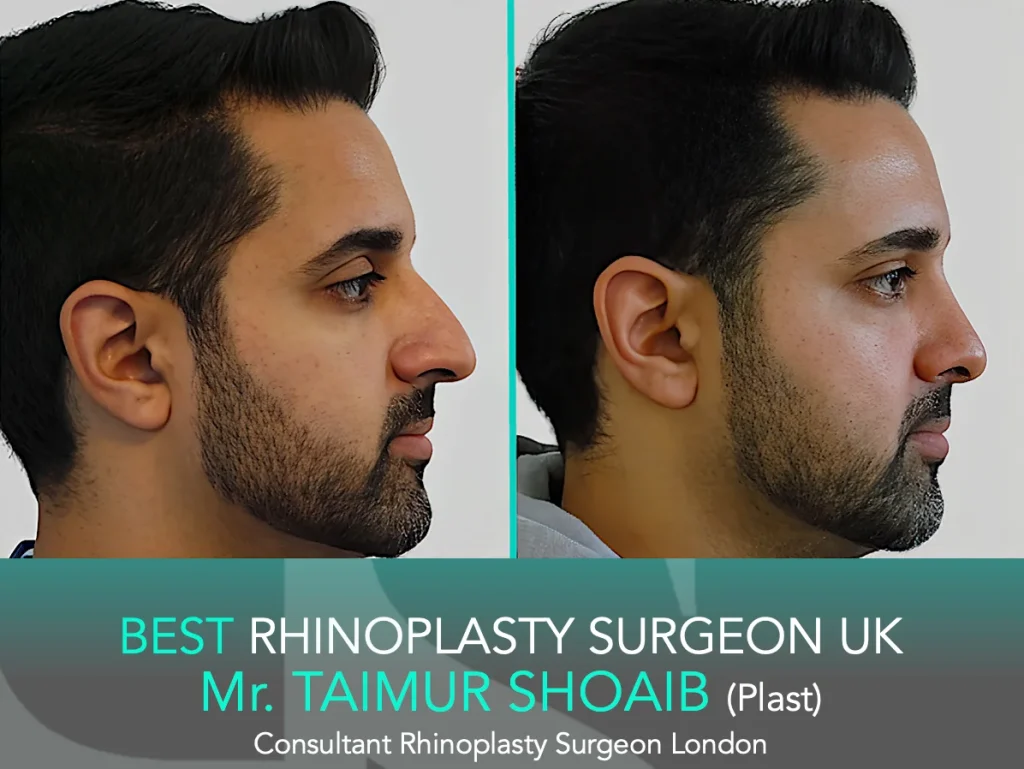
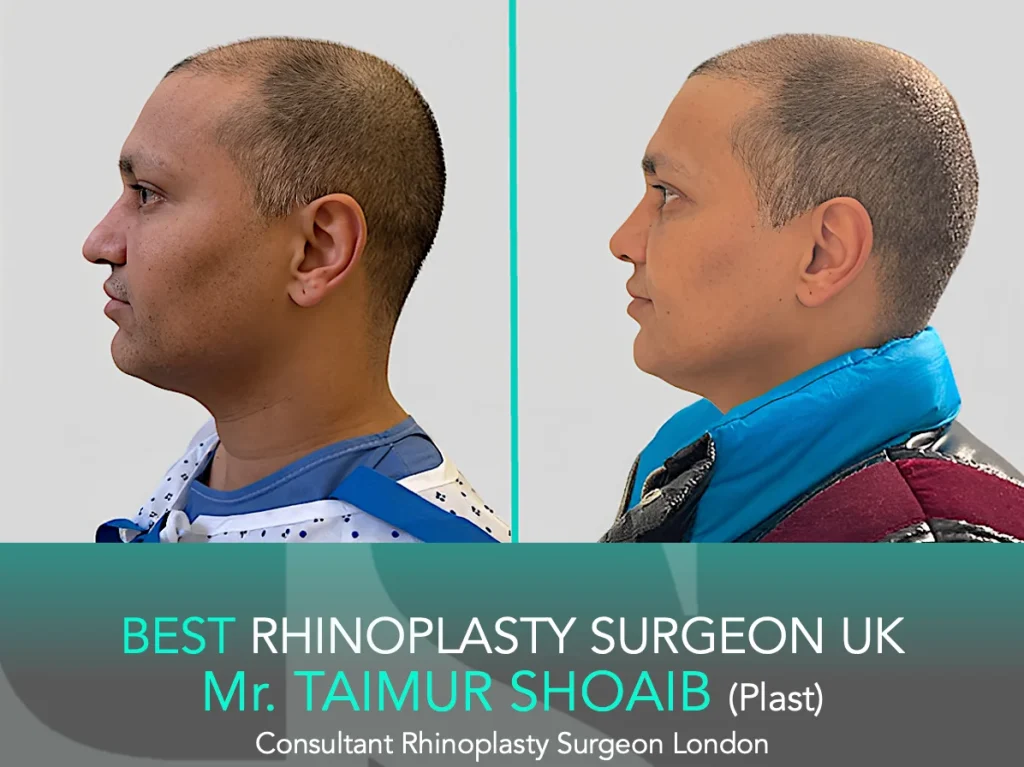
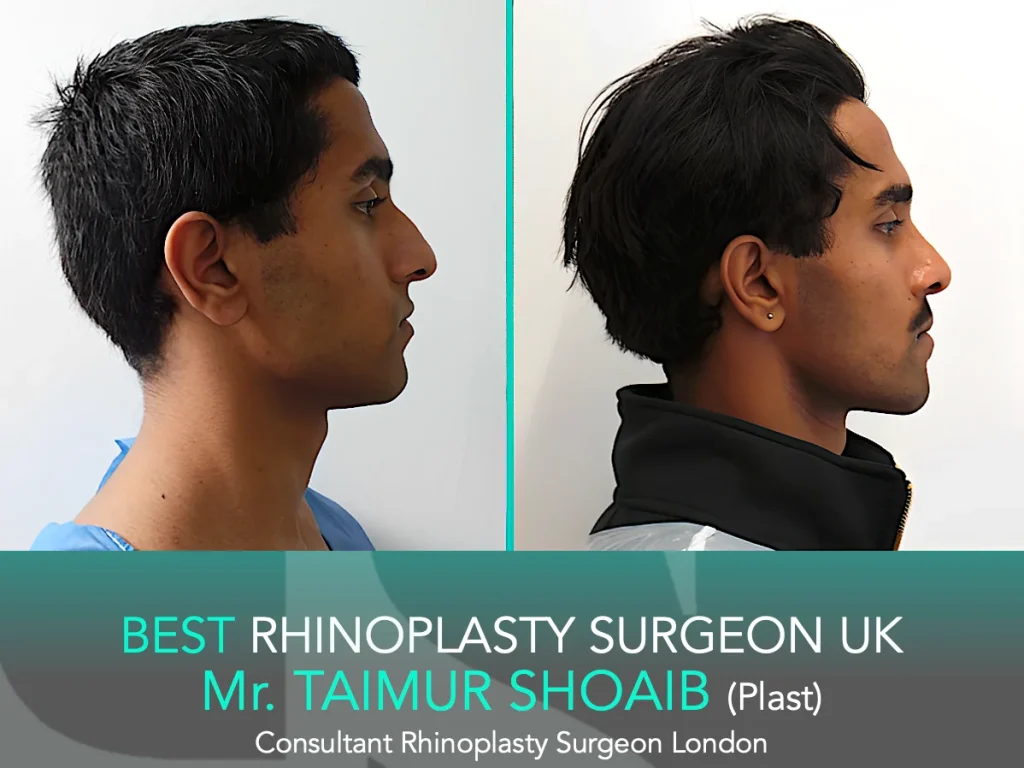
Indian, Pakistani and wider South Asian patients travel to Harley Street, London for rhinoplasty with a surgeon experienced in South Asian noses. At Berkeley Square Medical, your Indian, Pakistani or Asian rhinoplasty in London is performed by consultant plastic surgeon Mr Taimur Shoaib, FRCS (Plast), GMC 3615443, at 64 Harley Street.
South Asian noses often share certain characteristics: thicker skin, a lower or less-defined bridge, and a tip that can benefit from added support and definition. The work is usually about structure and refinement, adding support and definition rather than simply reducing, so the result looks natural and still unmistakably your own. This is refinement, not westernisation, and your ethnic identity guides the plan. Individual results vary.
Whether you are looking for Pakistani rhinoplasty, Indian rhinoplasty, or a broader Asian nose job in London, the approach is tailored to your heritage and your goals, never a single template. Every plan is built around what you want to keep as much as what you want to change.
Read more about our ethnic rhinoplasty approach across all heritages, see the all-inclusive rhinoplasty cost in London, or explore surgical rhinoplasty.
If you had your primary rhinoplasty with Mr Shoaib, he does not charge a surgeon's fee to revise it.
Book a London ConsultationAchieving a high-definition result in Indian, Pakistani and South Asian rhinoplasty requires a masterful understanding of the nasal framework. Unlike standard techniques, our approach focuses on structural reinforcement to ensure the nose remains stable as the skin heals. The goal is a profile that functions perfectly and integrates seamlessly with your features and retain your natural ethnic features.
Rhinoplasty is a highly personalised procedure. During your initial consultation with Mr Taimur Shoaib, a comprehensive clinical evaluation of your nasal anatomy, skin quality and breathing function is performed to determine whether surgery is the safest and most effective option for you.
For a full breakdown of prices, what is included and finance options, see our rhinoplasty cost guide.
£8950.00
This fixed fee covers your entire surgical journey, not just the operation itself.
 | Your Full Consultation:£100.00 (Set Fee) Creditable Towards Your Set Surgery Fee Included With Consultation Summary E-Letter. | | TWO (2) Surgeon Consultations:1st - In-Person or Zoom Video Option Included. 2nd - On the Date of Your Treatment Included.
|
| Rhinoplasty Imaging Gallery:Front, Angle and Side Profile Gallery of the Predictive Visual Aim of Your Indian & Pakistani Rhinoplasty Treatment Included.
| | Pre-Operative Tests:The Pre-Operative (MRSA) Nasal Swab Test, Essential for Ensuring Safety Before Your Surgical Procedure Included.
|
| Hospital & Anaesthetic Fees:All Hospital Fees, Private Room, Dedicated Nursing Team Assigned For Your Stay Included. | | Take Home After Surgery:All Medication And Garments Provided To Take Home After Surgery Fully Included.
|
| Complimentary Chauffeur Home:Complimentary Chauffeur Drive Home After Surgery In London Included. Options For Living Outside London Included. | | 24-Hour Care Post Surgery:Online Messaging Service 24 Hrs For The First 14 days After Surgery Aftercare Guidance Included.
|
| Post Operative Reviews:7-Day Post Operative Review Included. 1-3 Month Surgeon Review Included. 6-12 Month Surgeon Review Included. | | Non-Surgical Aftercare:Any Non-Surgical Nose Contouring Treatments Included. Any Swelling Reduction (Steroid) Treatment Included. |
Your safety and happiness are of the utmost importance to us. We want to assure you that we are with you every step of the way, and that includes ensuring your rhinoplasty journey is as smooth and manageable as possible, both physically and financially. Below, you can explore our flexible payment options for our fixed £8,950 all-inclusive fee, allowing you to choose a plan that fits your lifestyle while you focus on your aesthetic aims.
Representative example. Subject to status. APR may vary.
Finance is provided subject to status. Taimur Shoaib is authorised and regulated by the Financial Conduct Authority. You can verify this status on the FCA Financial Services Register here .


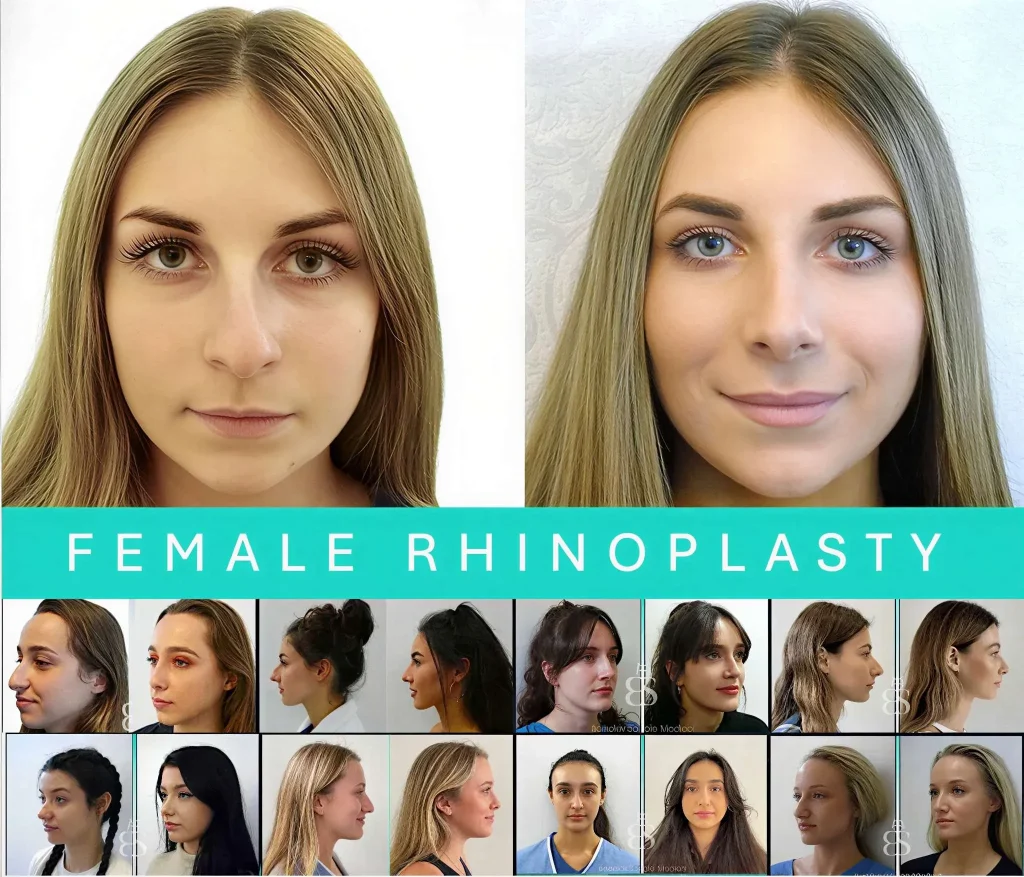
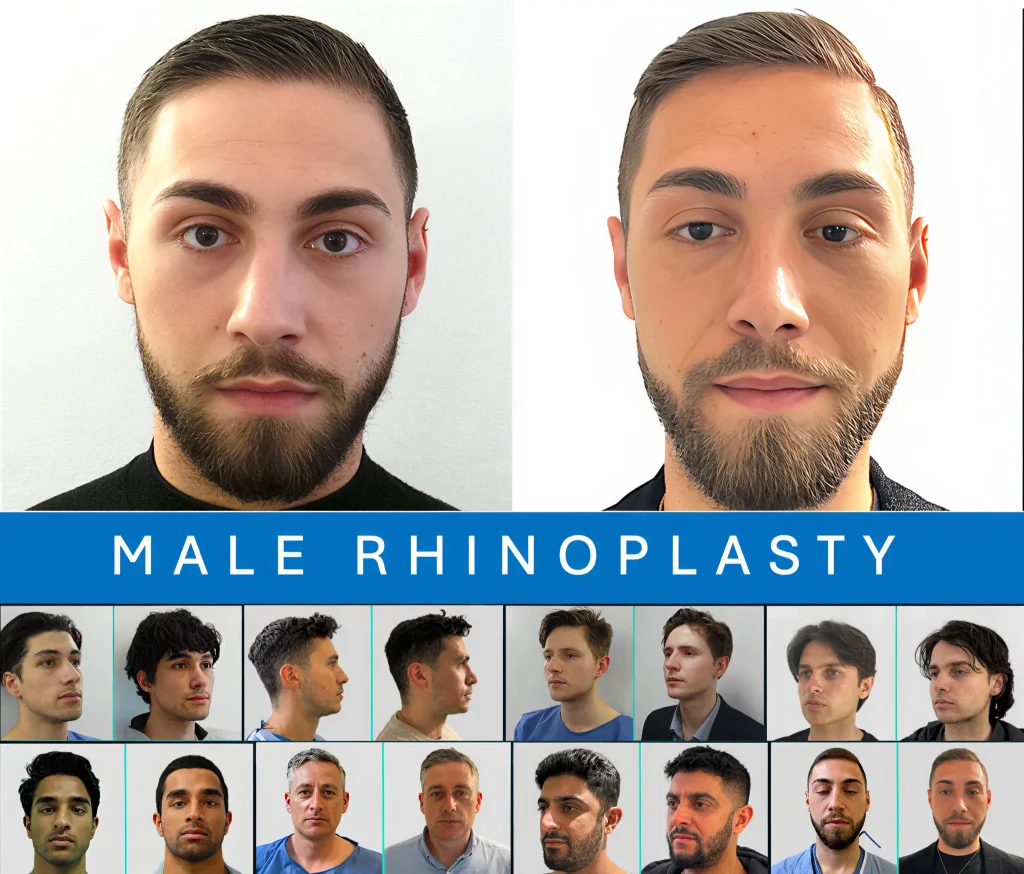
Beyond our specialised Indian, Pakistani and South Asian Rhinoplasty Results, Berkeley Square Medical is a leading UK centre for Primary Rhinoplasty for Female & Male patients. Visit our dedicated Male and Female pages below for our full archive of 200+ Before-and-After Results, Transparent Pricing, and detailed Consultation and Hospital information with Mr Taimur Shoaib.
South Asian nasal anatomy typically presents with a thicker, more sebaceous skin envelope and a more prominent dorsal hump. Standard "reductive" surgery often fails here because removing too much tissue can cause the thick skin to lose its shape. We instead utilise Structural Rhinoplasty, using autologous grafts to build a stronger framework that "pushes through" the skin to create visible, sharp definition.
Yes. By precisely reshaping the combined bony and cartilaginous bridge, we create a permanently smoother, straight profile. We focus on maintaining a strong dorsal line to avoid an over-reduced or "scooped" look, ensuring the new bridge is in total harmony with Indian and Pakistani facial proportions.
Alar Base Reduction is the surgical process of narrowing the width of the nostrils to reduce "flare". This involves internal incisions, they are meticulously placed between the columella (skin between your nostril and the inside of the nostril which connects to the cheek junction. When performed correctly, these marks fade significantly during the 12-month healing process, becoming virtually imperceptible. Alar base Reduction is often, but not always necessary in Indian and Pakistani Rhinoplasty
Thick skin holds post-operative swelling longer than thin skin, particularly in the nasal tip. While the bridge often shows definition early on, the refined "high-definition" tip can take the full 12 months to fully settle. This requires patience, as the internal framework needs time to adhere firmly to the new underlying structure.
Autologous cartilage, typically harvested from the septum or ear, is the clinical "gold standard" for South Asian rhinoplasty. Because it is your own tissue, it integrates perfectly with your body and carries no risk of rejection. This provides the essential, long-term structural support needed to support thicker skin and maintain the internal nasal valve.
Our philosophy is refinement, not erasure. The objective is a more balanced and refined version of your natural features that respects your Indian or Pakistani heritage. We focus on enhancing facial symmetry while preserving the character and character of your natural profile.
Any questions, enquiries, or just looking for a consultation? Simply send your enquiry here and we will get back to you with a reply promptly.