
What Is a Nose Collapse After Rhinoplasty?
A nose collapse after rhinoplasty refers to the loss of structural support in the nasal framework, causing part of the nose to appear sunken, flattened, or distorted. The most common area affected is the nasal bridge, but collapse can also occur in the nostrils or internal nasal valves.
This condition may be purely cosmetic, altering the appearance of the nose, or it can lead to serious functional issues, such as breathing difficulties. In most cases, the collapse occurs when too much cartilage is removed, grafts fail to integrate, or trauma occurs during healing.
Common Types of Nasal Collapse
There are several forms of nasal collapse, depending on which part of the nose has lost support:
- Collapsed Nasal Bridge (Saddle Nose): The bridge between the eyes sinks inward, leading to a scooped or concave profile. This is the most recognisable form and often results from inadequate cartilage support.
- Collapsed Nostril (Alar Collapse): One or both nostrils appear pinched or caved-in, especially when inhaling. This can be caused by weak or over-resected lower lateral cartilage, or by naturally thin, weak nostril rims.
- Nasal Valve Collapse: The internal or external nasal valve narrows or collapses during breathing, restricting airflow. This can occur after surgery or on its own with no previous surgery at all (see below). It may not always be visible externally but can cause severe functional problems.
Each type requires a different surgical approach for correction, usually involving cartilage grafts to restore support and reshape the affected area.
What Causes Nose Collapse After Surgery?
Nose collapse is one of the possible complications of rhinoplasty. It can result from structural weakness, poor healing, or problems with surgical materials. The most common causes include:
- Excessive cartilage removal: Removing too much cartilage during rhinoplasty can weaken the nose's support system, especially in the bridge or nostrils.
- Failed grafts or implants: Grafts that do not integrate properly, or silicone implants, which the body does not integrate and which can thin the overlying skin or extrude, may contribute to collapse over time.
- Injury after surgery: Trauma to the healing nose, even minor bumps, can destabilise the nasal structure.
- Infection or poor wound healing: In rare cases, infection or compromised healing can lead to tissue breakdown and loss of support.
These issues may show up shortly after surgery or even years later, especially if the nose was left structurally weak.
Nasal Valve Collapse: A Collapsing Nostril Without Surgery
Not every collapsed nose follows an operation. Nasal valve collapse is a functional condition where the narrowest part of the airway is too weak to stay open, so the sidewall of the nose or the nostril caves inward each time you breathe in. Many people who have never had surgery live with a collapsing nostril and a blocked nose without realising there is a fixable structural cause.
Internal vs external nasal valve
The internal nasal valve is the narrow angle deep inside the nose, between the septum and the upper cartilage. It is the tightest point of the whole airway, so even slight weakness or narrowing here has a big effect on breathing. The external nasal valve is the nostril opening itself; when its rim is weak or narrow, the nostril collapses inward on inhalation. Either valve, or both, can be the problem.
Why does my nostril collapse when I breathe in?
A collapsing nostril happens when the cartilage supporting the sidewall or nostril rim is too weak to resist the suction of breathing in. Common causes include naturally thin or weak cartilage, a narrow nose, ageing (cartilage weakens and the tip drops over time), previous nasal trauma, and, in some cases, a previous rhinoplasty that removed too much support. It is often worse when you breathe in hard, during exercise, or when lying on one side.
Symptoms of nasal valve collapse
- A blocked nose that is worse when you breathe in, and often worse on one side
- One or both nostrils visibly caving in when you inhale, or when you sniff hard
- Breathing that improves noticeably when you gently pull the cheek outward (the Cottle manoeuvre) or use a nasal strip
- Trouble breathing through the nose during exercise, or disturbed sleep and snoring
- Little or no relief from decongestant sprays or allergy treatment, because the cause is structural, not inflammatory
If a nasal strip or gently holding the nostril open makes a clear difference, that is a strong clue the nasal valve is the problem, and it is worth having your nose examined. Allergy, a deviated septum and enlarged turbinates can cause similar blockage, so the exact cause should be confirmed first.
How to Tell If Your Nose Is Collapsing
A collapsing nose can be both visible and functional. The signs to look out for are:
- Flat or sunken bridge: A dorsal collapse can create a scooped or saddle-nose appearance between the eyes.
- Pinched or collapsed nostrils: Alar or valve collapse can cause one or both nostrils to appear caved in, especially when breathing in.
- Difficulty breathing: A blocked or narrowed nasal passage is a key symptom of nasal valve collapse.
- Tip distortion or asymmetry: The nasal tip may droop, twist, or lose projection if support has been compromised.
If you notice any of these changes, especially after rhinoplasty, arrange a consultation promptly. Early assessment can prevent further collapse and confirm which part of the nose needs support.
How to Fix a Collapsed Nose or Collapsed Nostril
Treatment depends on the type and severity of the collapse, and on which part of the nose has lost support. The most common options are:
- Structural cartilage grafts: Revision rhinoplasty using cartilage from your own septum, ear, or rib is the most reliable way to rebuild nasal support. This is often needed for a collapsed bridge or nostril.
- Spreader grafts: Placed alongside the septum to open and support the internal nasal valve, helping to improve airflow. This is the workhorse repair for internal valve collapse.
- Alar batten and rim grafts: Small cartilage grafts that reinforce a weak or collapsing nostril (the external valve) so it is less likely to cave in on inhalation.
- Removing or replacing implants: If a silicone implant caused the collapse, it may need to be removed or replaced with natural cartilage.
- Dermal fillers (temporary): In very mild cosmetic cases, non-surgical rhinoplasty using fillers may improve shape temporarily, but it does not resolve breathing problems or restore structural support.
Where breathing is the main problem, the operation that rebuilds the airway and the nasal valves is a functional septorhinoplasty. Where the collapse follows a previous operation, it is corrected with revision rhinoplasty. An experienced surgeon will examine your nose and explain which approach fits your anatomy and the extent of the collapse.
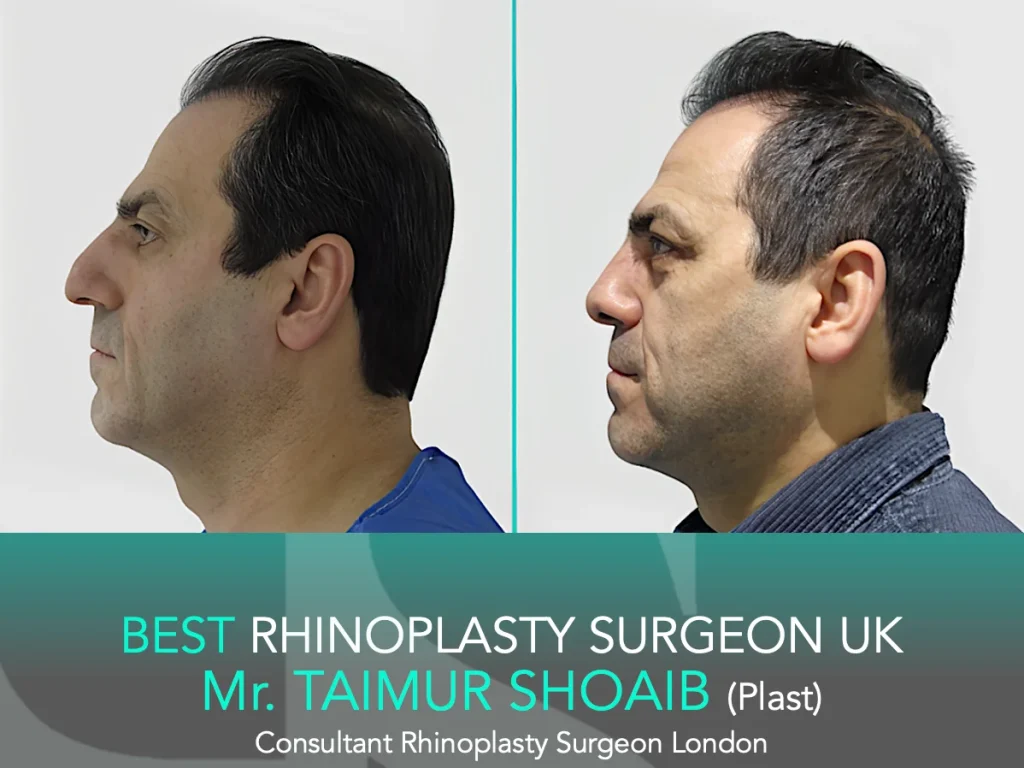
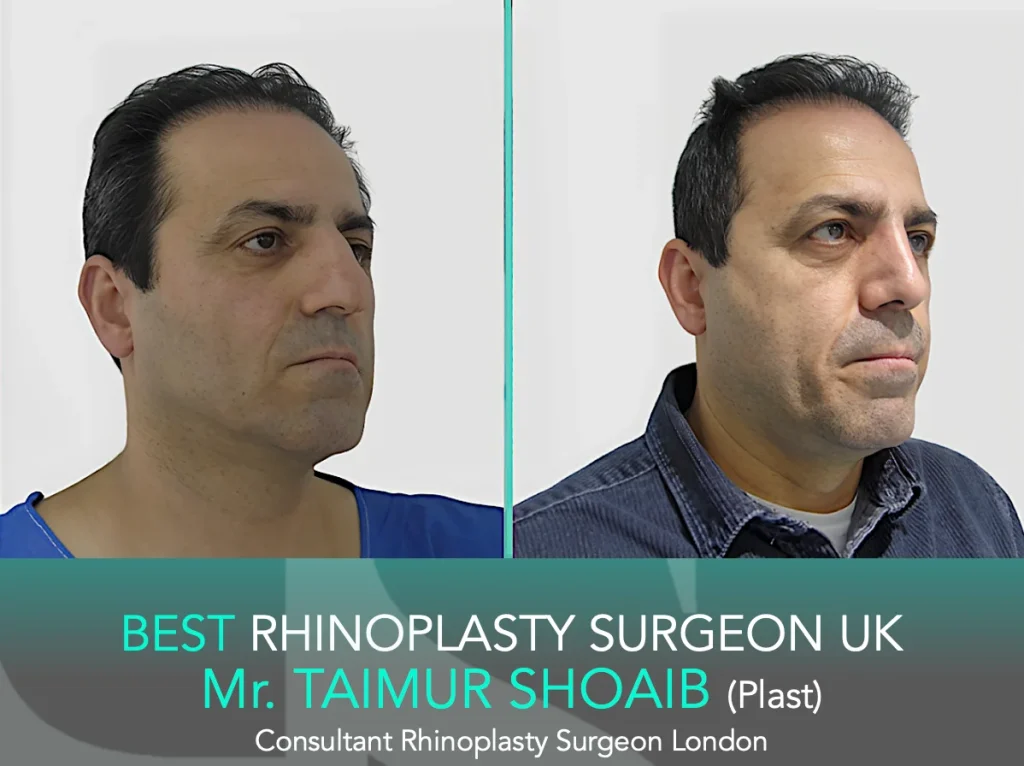
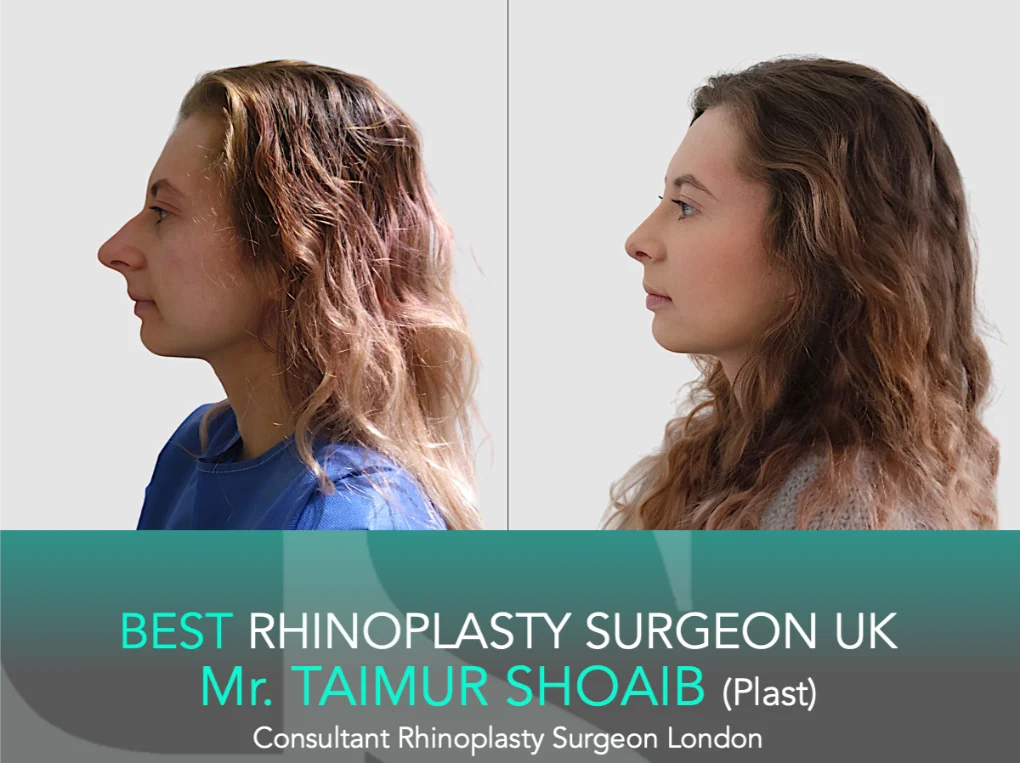
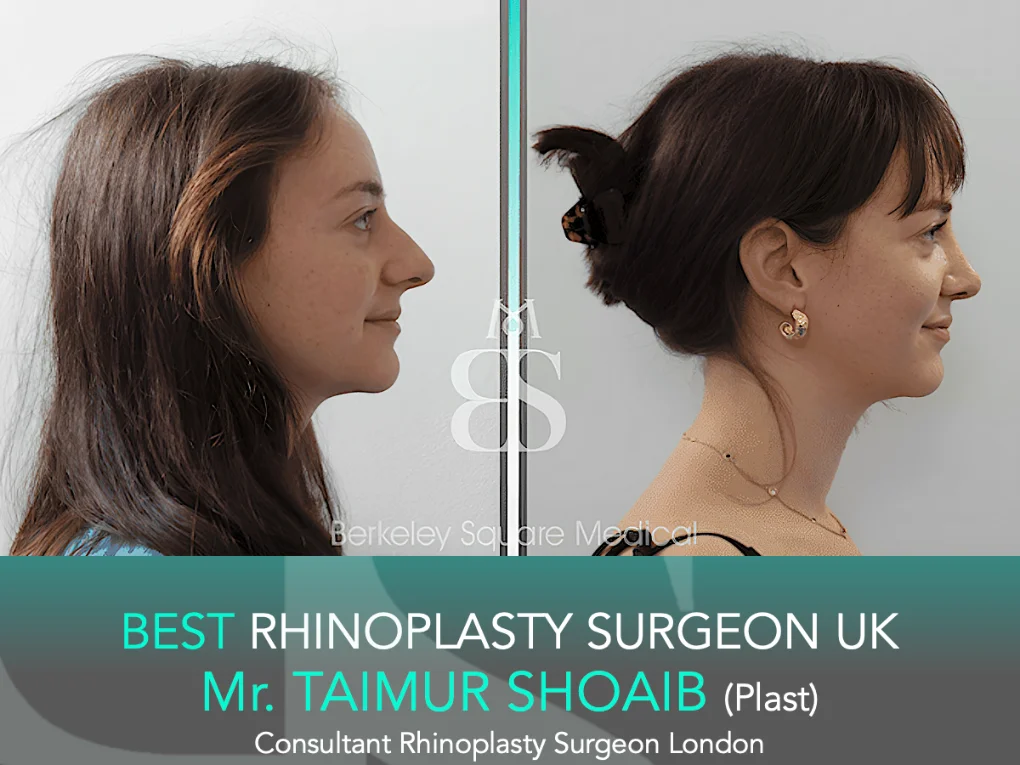
Nose reshaping: before and after
Real results from Mr Taimur Shoaib, showing a rebuilt, straighter and better-supported nose. Every nose is different, so these are shown to illustrate the kind of change that is possible, not a guaranteed outcome.
Related reading
- Revision rhinoplasty in London, how a previous rhinoplasty, saddle nose or collapse is corrected with structural grafting.
- Septorhinoplasty in London, the functional operation that repairs the nasal valves and improves breathing.
- Deviated septum surgery, another structural cause of a blocked nose, and how it differs from valve collapse.
- Retracted columella after rhinoplasty, a related loss-of-support complication affecting the tip and nostril show.
- Pollybeak deformity after rhinoplasty, another common post-rhinoplasty concern affecting the supratip and tip.
- Uneven nostrils after rhinoplasty, why nostrils look asymmetric after surgery and how it is corrected.
- Scar tissue after rhinoplasty, how internal scar tissue forms and how firm scar tissue is softened or removed.