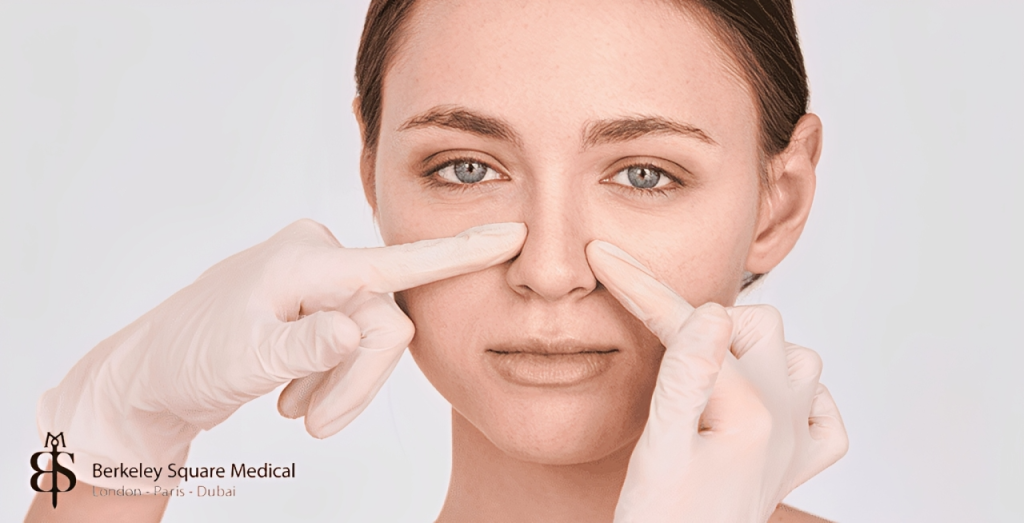
It is very common to notice blackheads, whiteheads or clogged-looking pores on and around your nose after rhinoplasty, and the urge to squeeze them can be strong. Please resist it. This guide explains why they appear, why picking is the one thing that can genuinely set back your healing nose, and how to clear them safely and patiently. As always, check anything new with your own surgeon first.
They are common and temporary: the tape, cast and splint trap oil and sweat under the dressing, and stressed post-op skin makes extra oil, which oxidises into blackheads. Do not squeeze, scrub, pick or use pore strips, because the nose is soft and easily marked for months and picking can dent it. Clear them gently with a mild cleanser, and once your surgeon approves, usually after the stitches are out at around 2 weeks, a salicylic acid (BHA) and niacinamide.
Why do I get blackheads and clogged pores after rhinoplasty?
A crop of blackheads after surgery is not a sign anything is wrong, it is a predictable response to what the skin has been through:
- The tape, cast and splint trap oil and sweat against the skin for a week or more, so pores clog under the dressing.
- Stressed, healing skin makes more oil. Surgery is a trauma response, and oilier skin blocks pores more easily.
- You cannot cleanse the nose normally in the first week, so sebum builds up.
- Trapped sebum oxidises, turning dark at the surface, which is what a blackhead is.
You may also see whiteheads in the same period. A whitehead is a pore blocked just under the skin surface, so it stays closed and pale, whereas a blackhead is open at the surface and oxidises dark. Both come from the same trapped oil, both are temporary, and both settle as the skin recovers and you can look after it normally again.
Can I squeeze, pop or extract them? Can I use pore strips?
No, and this is the most important point on the page. Do not squeeze, pop, pick, scrub or use pore strips on your nose while it is healing, and not at all without your surgeon's approval. In the early months the nasal tip and skin are delicate and the underlying structure is still soft and malleable, so pressing and picking can leave a dent, disturb the healing, or cause infection or scarring. Many patients who picked at their nose too soon regret it. However tempting the blackheads are, treating them gently is what protects your result.
How to clear blackheads safely after rhinoplasty
The safe approach is gentle and gradual, and only once your surgeon is happy for you to treat the skin:
- First week or so: only the gentle cleansing your surgeon has told you to do, and keep your hands off the nose.
- Once the stitches are out, around 2 weeks, and with your surgeon's approval: introduce a salicylic acid (BHA) product, which dissolves oil inside the pore and is ideal for blackheads. A gentle glycolic acid (AHA) can help surface texture. Apply either only to the skin, keeping it away from any incision line, and stop if the skin stings or reddens.
- Add niacinamide to help calm the skin and regulate oil.
- Keep the skin hydrated with a light, non-comedogenic moisturiser.
- Use a gentle mineral sunscreen daily, as healing skin marks easily in the sun.
- Be patient. Pores clear over weeks, not days, especially with oilier or thicker skin.
Pimples, spots and breakouts on the nose after rhinoplasty
Spots and small breakouts on and around the nose are common for the same reasons, the oil, the occlusion under the dressing and the stress of surgery. The rule is the same: do not pick or pop them, as that risks marking a delicate, healing nose. The gentle routine above helps, and they settle as your skin recovers.
Sebaceous filaments versus blackheads
Not every dark dot on your nose is a blackhead. Sebaceous filaments are the small, natural grey or tan dots that line the pores of every nose and help move oil to the surface, and they are normal rather than a blockage. A true blackhead is an oxidised plug of trapped oil. Neither should be squeezed after surgery, and a salicylic acid helps both look smaller and cleaner over time.
How long until my skin and pores return to normal?
As the swelling settles and your skin recovers, usually over several weeks to a few months, the pores gradually look clearer, particularly once you can use a proper routine again. Oilier and thicker skin takes a little longer. The key is consistency and patience rather than force.
Related recovery guides
This page is about the skin and pores. For how to clean the nose itself safely during recovery, see our guide to cleaning your nose after rhinoplasty.
Specialised Rhinoplasty For Men
Explore our specialist procedures. Tap any card to read more.
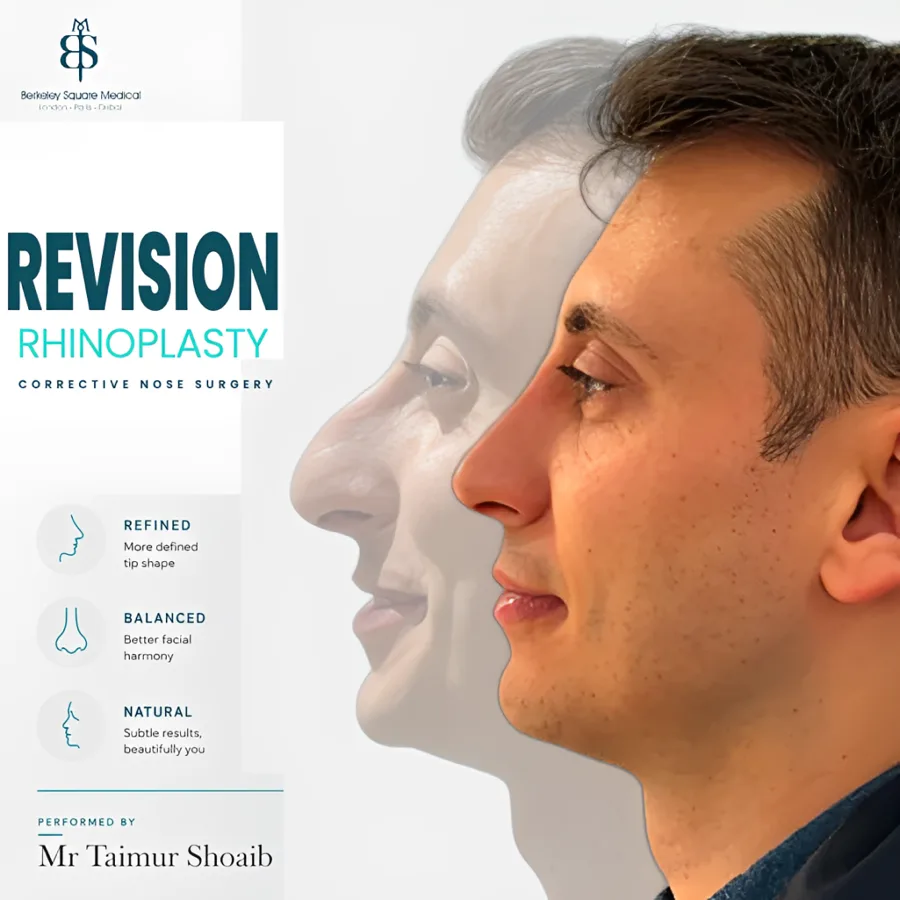 Revision RhinoplastyCorrecting or improving a previous rhinoplasty.Read more
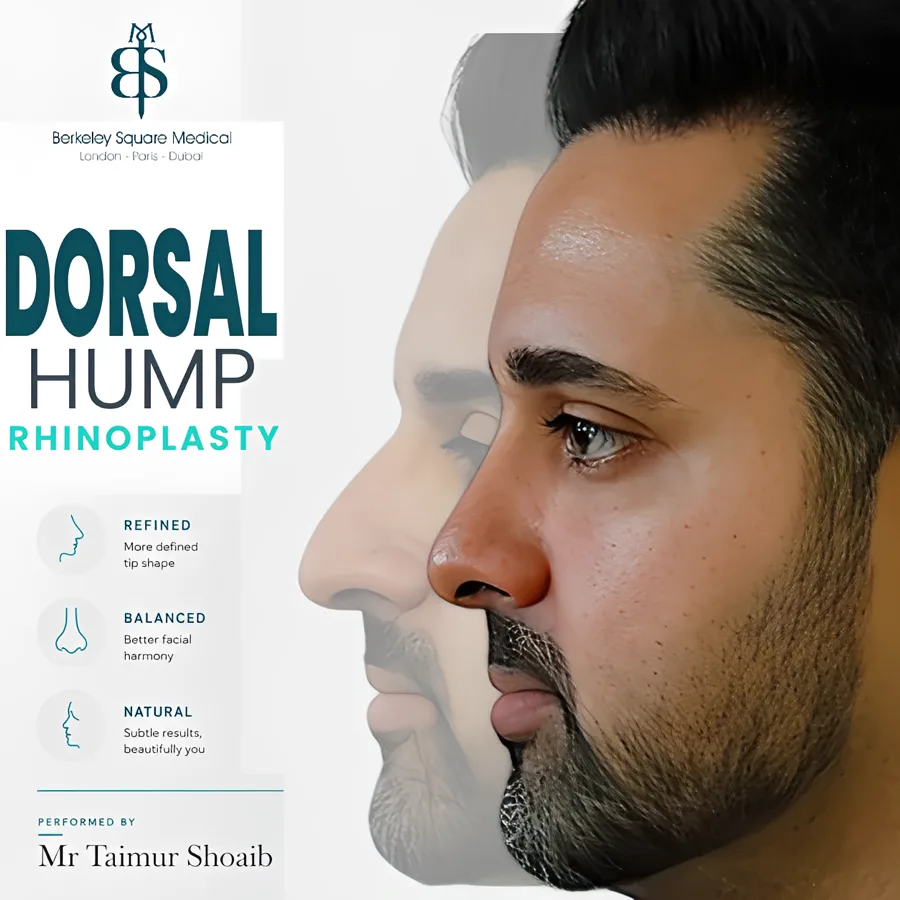 Dorsal Hump RhinoplastyRemoving a bump on the bridge for a straight profile.Read more
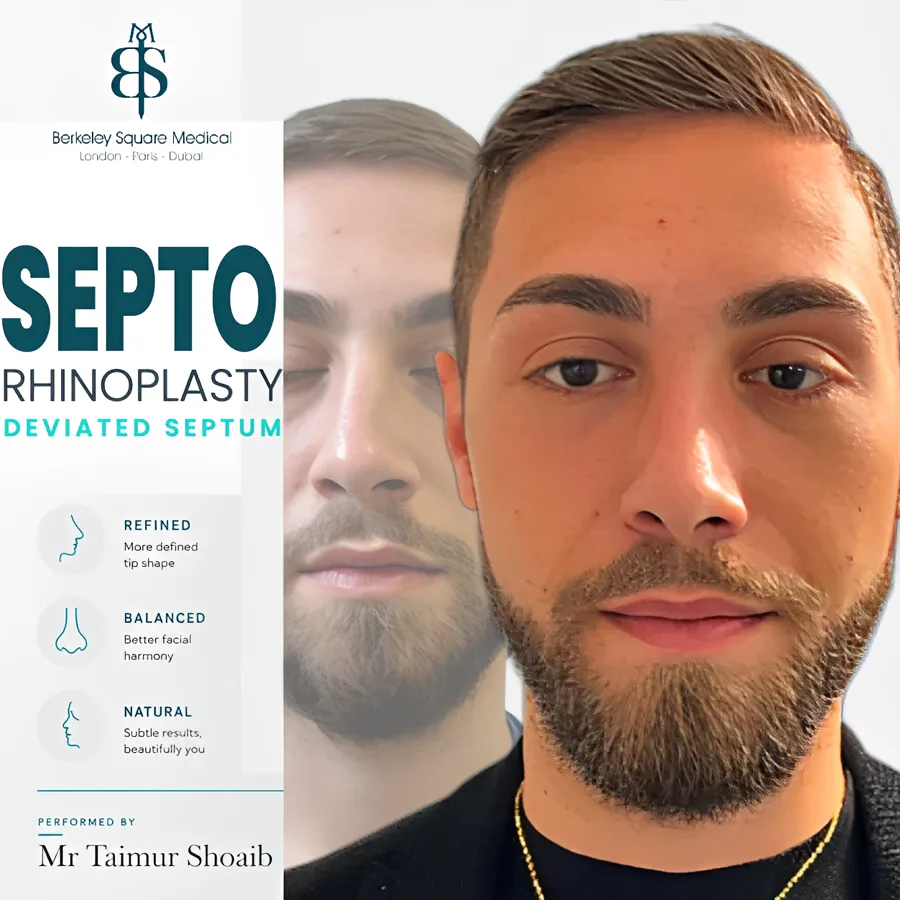 SeptorhinoplastyStraightening the nose and improving breathing.Read more
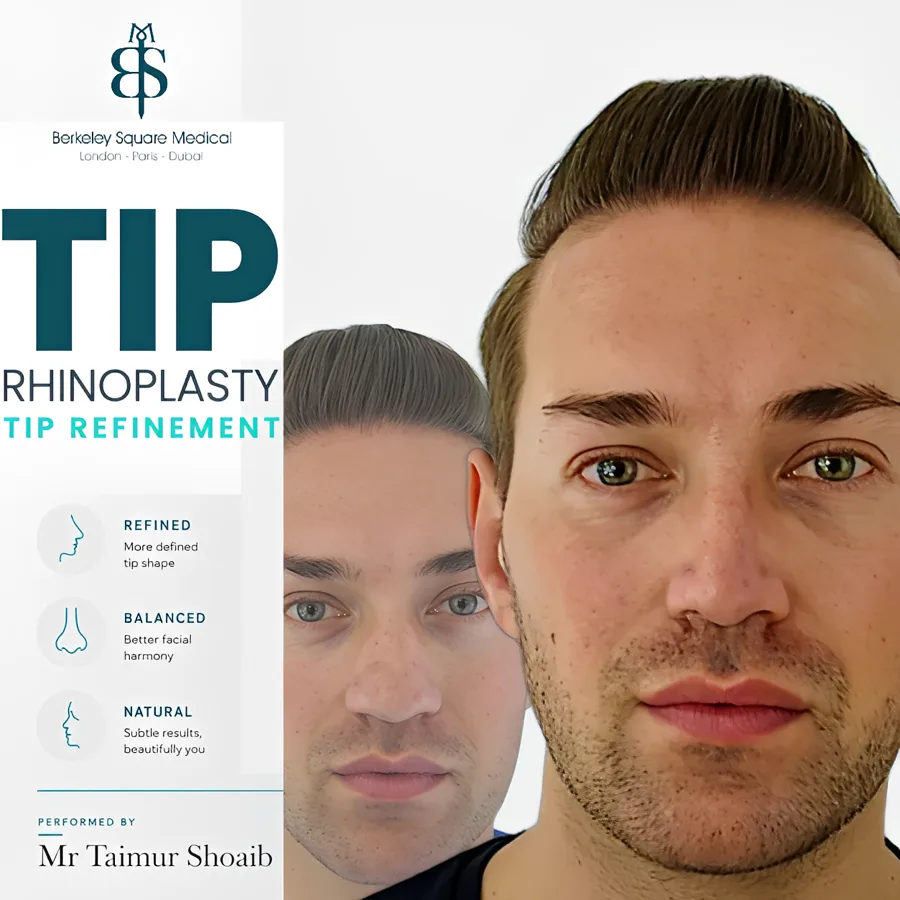 Tip RhinoplastyRefining a bulbous, drooping or asymmetrical tip.Read more
Specialised Rhinoplasty For Females
Explore our specialist procedures. Tap any card to read more.
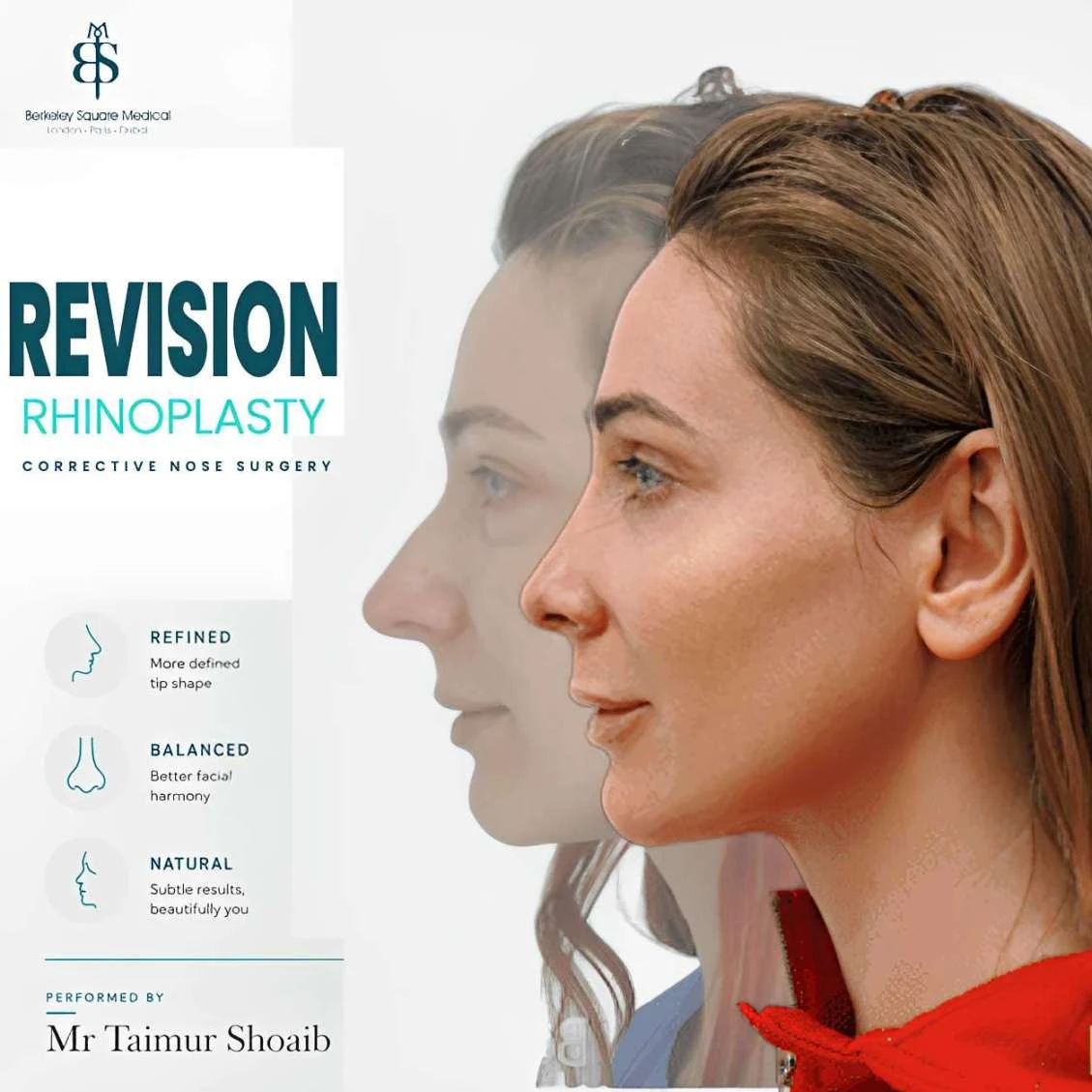 Revision RhinoplastyCorrecting or improving a previous rhinoplasty.Read more
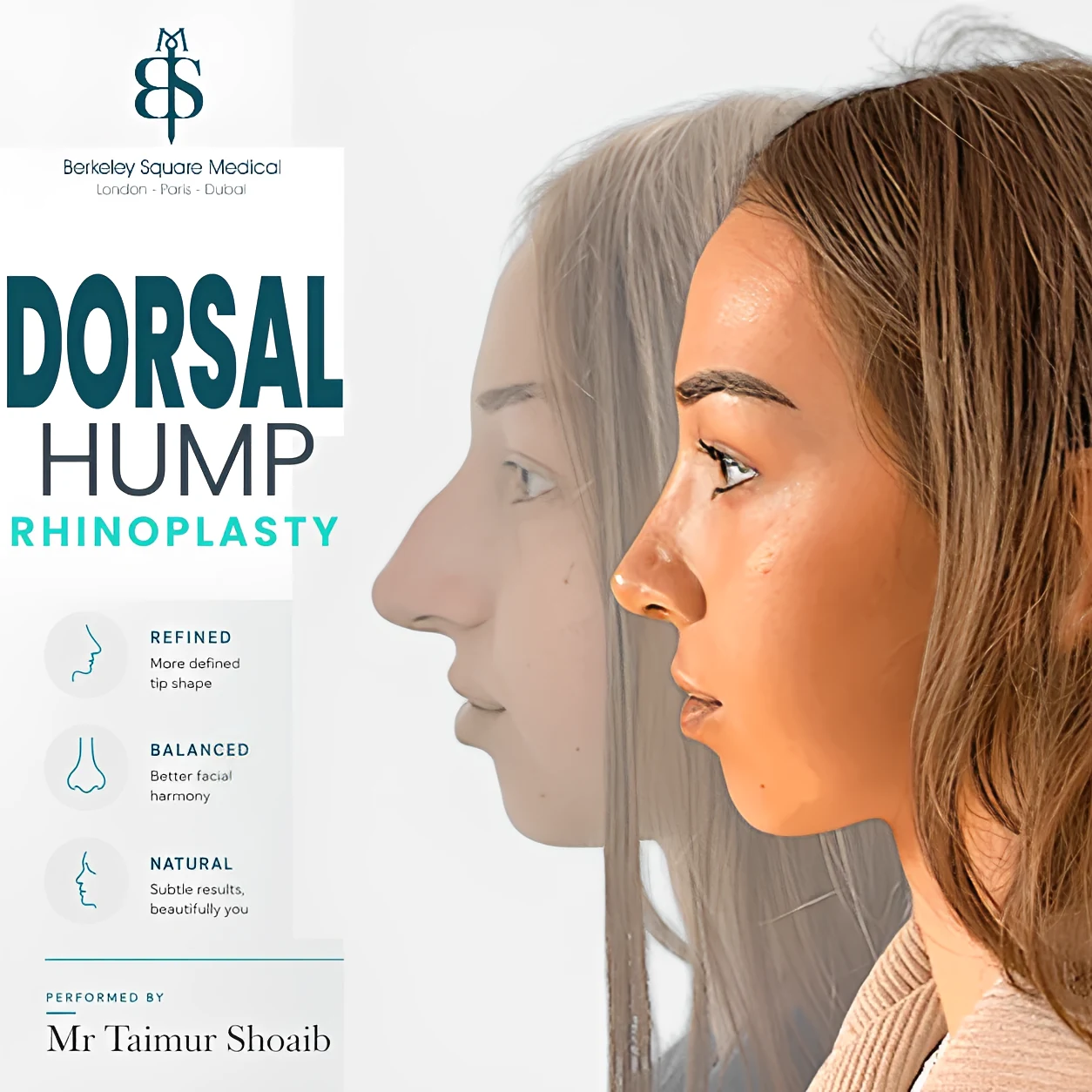 Dorsal Hump RhinoplastyRemoving a bump on the bridge for a straight profile.Read more
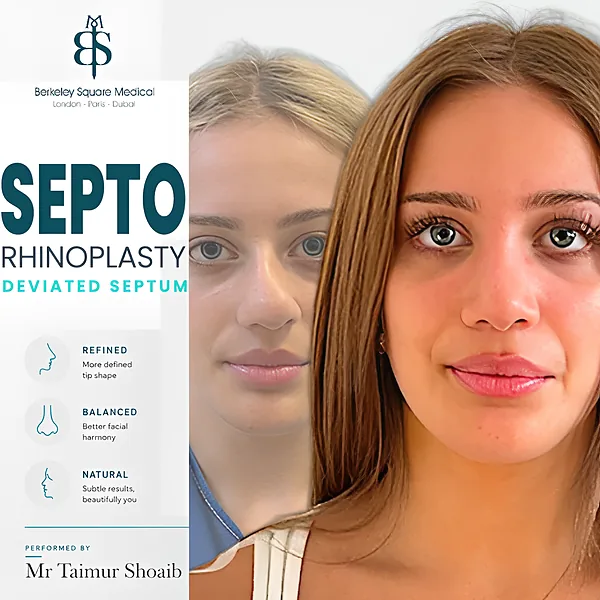 SeptorhinoplastyStraightening the nose and improving breathing.Read more
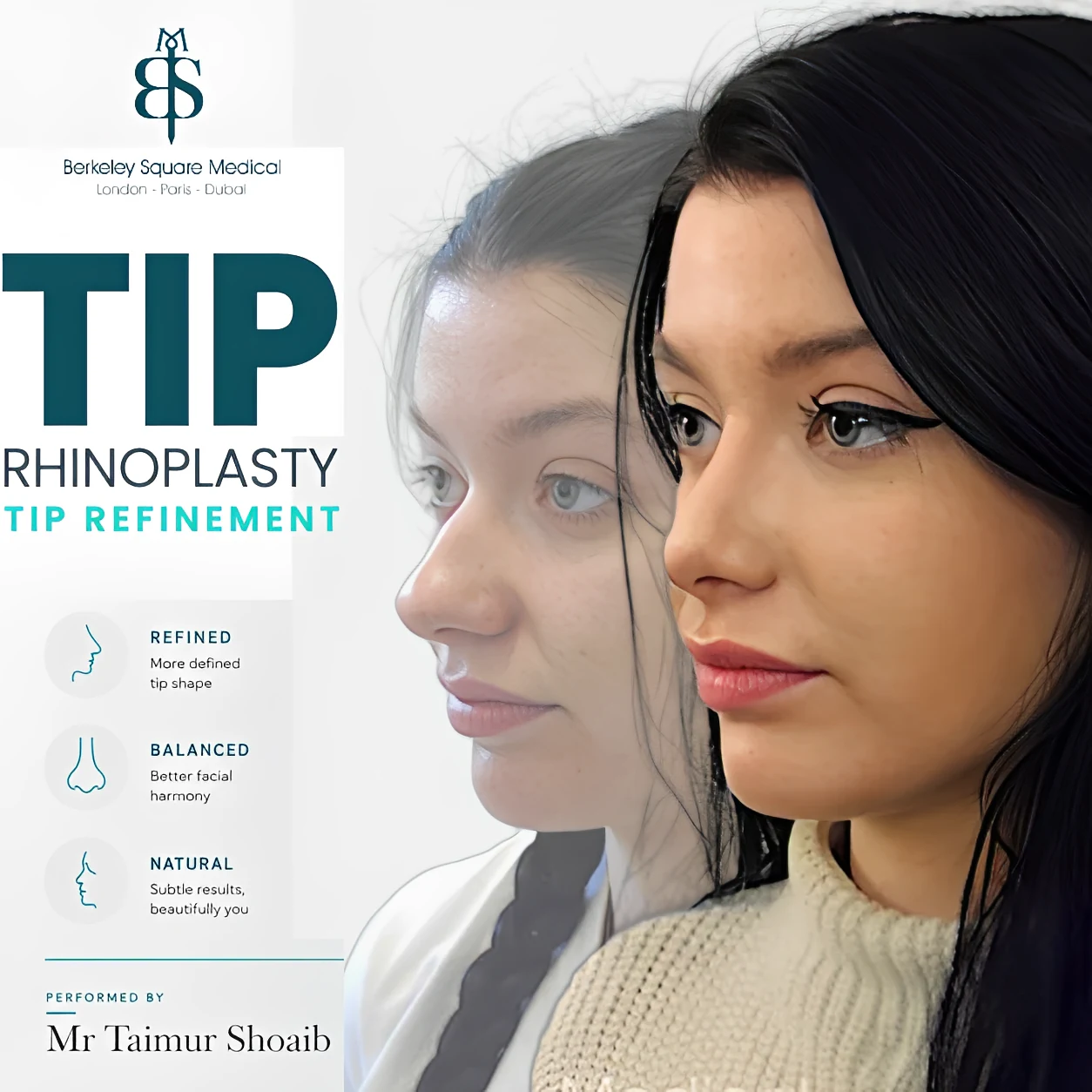 Tip RhinoplastyRefining a bulbous, drooping or asymmetrical tip.Read more
Considering rhinoplasty in London?
If you are weighing up your options in the UK, the next step is a consultation with Mr Taimur Shoaib at 64 Harley Street. Explore rhinoplasty at Berkeley Square Medical, see typical rhinoplasty costs in London, or read about septorhinoplasty in London if breathing is also a concern.
About the author