
Most guides to eating after a nose job just hand you a list of soft foods. The problems patients actually message us about are different: feeling too nauseous or too full to eat at all, not being able to open the mouth or chew because of swelling, and worrying about losing weight. This guide covers both, the practical what-to-eat and what-to-avoid, and honestly how to cope when eating itself feels hard.
For the first week, stick to soft, bland foods that need little or no chewing: yoghurt, oatmeal, scrambled eggs, mashed potato, soup (warm, not hot), smoothies, banana, avocado and well-cooked pasta. Avoid hot, spicy, very salty, hard, crunchy and chewy foods for about 1 to 2 weeks, as these irritate the nose, add to swelling or strain the face. Most people are back to a normal diet by 2 to 4 weeks. Your surgeon may adjust this for your own healing.
What can I eat after rhinoplasty?
In the first few days your appetite may be low and chewing may feel awkward, so the aim is gentle, nourishing food that asks almost nothing of your face. Good soft, bland choices include:
- Yoghurt and oatmeal or porridge, easy to eat and easy on the stomach.
- Scrambled or soft-boiled eggs, a soft protein that needs no chewing.
- Mashed potato, well-cooked pasta and rice, filling and comforting.
- Soup and broths, warm rather than piping hot, and not too salty.
- Smoothies and milkshakes, which double as a drink and a meal.
- Banana, avocado and other soft fruit, plus stewed or tinned fruit in juice.
- Soft-cooked fish and tender chicken, once you feel up to a little more.
The best foods for healing
Once you are eating comfortably, lean towards foods that genuinely support recovery rather than empty, processed ones:
- Protein (eggs, fish, chicken, dairy, beans and lentils) is the building block your body uses to repair tissue.
- Vitamin C (oranges and soft citrus, berries, tomatoes, peppers cooked soft) supports wound healing.
- Vitamin A and leafy greens (spinach, kale, sweet potato) and healthy fats like olive oil, avocado and oily fish are naturally anti-inflammatory.
- Fibre (fruit, cooked vegetables, whole grains) helps prevent the constipation that pain-relief medication can cause.
There is no single food that removes swelling, but a balanced, colourful, lower-salt diet gives your body the best conditions to heal.
What to eat after septorhinoplasty or nose surgery
The advice is the same after a septorhinoplasty or any nasal surgery: soft, low-salt, easy-to-chew food while the inside of the nose is swollen. Because breathing through the nose is often more blocked after septal work, keeping meals warm rather than hot and easy to manage through the mouth matters even more in the first week.
Foods to avoid after rhinoplasty, and why
A few types of food are worth putting aside for the first week or two, not because they are dangerous, but because they make you less comfortable or add to swelling while the nose settles.
| Timeframe | What to eat | What to avoid |
|---|---|---|
| Day 1 | Water, smoothies, yoghurt, soup, soft bland foods | Hot, spicy or salty food, alcohol, very hot drinks |
| Days 2 to 7 | Soft foods (eggs, oatmeal, mashed potato, pasta, soup) | Hard, crunchy, chewy, spicy and salty foods |
| Week 2 | Soft solids, lean meats, dairy, cooked vegetables | Spicy, very salty and heavily processed foods |
| Weeks 3 to 4 | Most normal foods, chewing with care | Anything that causes pain or feels a strain |
| Month 2+ | Normal diet, once cleared by your surgeon | None, unless your surgeon advises otherwise |
Hot and spicy food
Spicy food can irritate the lining of the nose, trigger a runny nose or sneezing, and make you feel flushed, none of which you want while healing. Very hot food and the steam that rises from it can also be uncomfortable against a tender nose. Keep meals warm rather than piping hot, and leave chilli, curry and heavy spice for a couple of weeks.
Salt and high-sodium food
Salt makes your body hold on to water, which can add to the swelling you are already trying to reduce. In the early weeks it is worth going easy on obviously salty things like crisps, salted nuts, tinned soups, processed and takeaway food, and salty cheeses. You do not need a no-salt diet, just a lighter hand than usual.
Hard, crunchy and chewy food
Anything that makes you chew hard or open wide, such as steak, crusty bread, raw carrots, nuts, chewing gum and hard or sticky sweets, is best avoided in the first week or so. The repeated movement of the upper jaw and lip pulls on the tissues near the nose and can add to swelling and soreness. Take small bites and favour foods you can eat with a spoon.
"I feel too sick to eat", coping with nausea and low appetite
This is the part most food guides skip, and it is what many patients find hardest in the first day or two. Feeling queasy or off your food after rhinoplasty is common and expected. It is usually a mix of the general anaesthetic wearing off, the pain-relief medication, and a little swallowed blood from surgery, none of which lasts long. Here is how to manage it.
Eating when you feel nauseous
Do not force a full meal. Start with small sips of water and plain, dry foods that settle the stomach, such as toast, crackers, plain biscuits or a little banana, and eat slowly. Ginger, as ginger tea (warm, not hot) or ginger biscuits, helps some people. If your nausea is severe, or you are being sick more than once or twice, tell your surgical team, anti-sickness (anti-nausea) medication can be prescribed and is very effective, so you do not have to just endure it.
Low appetite, and why to eat a little anyway
It is normal not to feel hungry for the first day or two. Part of this is simply that a blocked, swollen nose dulls your sense of smell, so food can taste of very little for a week or two, which naturally takes the edge off your appetite. That is fine for a short while, but your body heals better with some fuel, so aim for small amounts often rather than three big meals, a few spoonfuls of yoghurt, half a smoothie, a little soup. Getting some protein and fluids in matters more than eating a lot, and both your appetite and your sense of taste return as the swelling and congestion settle.
Worried about being sick with the cast on
Many patients feel anxious about vomiting while their nose is splinted. If you do feel sick, sit as upright as you can, breathe steadily through your mouth, and let your team know so they can give you anti-sickness medication. The cast is well secured, and being sick is very unlikely to dislodge it or affect your result; if the splint does feel loose or shifts, let your surgical team know. If you are vomiting repeatedly, or bringing up fresh blood, contact your surgical team rather than waiting.
Cool and soothing foods when you are queasy
When hot food turns your stomach, cool and cold foods are often the easiest to face and are perfectly fine after rhinoplasty. Yoghurt, cold smoothies, chilled soup, ice lollies, jelly and small ice chips are all soothing and gentle. The one thing to be mindful of is very hot food and steam close to the nose, cool foods themselves are not a problem.
"I can't open my mouth or chew", eating with a swollen face
Swelling around the upper lip, cheeks and the base of the nose can make opening wide and chewing feel tight and tiring in the first few days, especially if you also had work near the nasal base, and it usually eases within the first few days as the swelling settles. In the meantime, choose foods that need almost no chewing, take small bites, and use a spoon rather than biting into things:
- Blend or mash meals, soups, smoothies, mashed potato, scrambled egg, porridge and yoghurt.
- Cut everything small and soft so you barely have to chew.
- Sip meal-style smoothies and shakes if opening your mouth is uncomfortable.
- Avoid anything that needs a big bite or a lot of chewing until the tightness settles.
Will I lose weight after rhinoplasty, and how do I avoid it?
Will I lose weight?
Some people lose a little weight in the first week, simply because appetite is lower and the diet is softer and lighter than usual. It is usually small and temporary, and it comes back as you return to normal eating. If you were at a healthy weight beforehand, this is nothing to worry about.
If you are slim and do not want to lose weight
If you are naturally slim and keen not to drop weight, the trick is soft food that is also calorie-dense, so you get more energy from small, easy-to-eat amounts:
- Milkshakes and smoothies made with full-fat milk or yoghurt, banana, oats and a spoon of nut butter.
- Protein or meal-replacement shakes, an easy way to get calories and protein without chewing.
- Soft pasta, mashed potato or risotto enriched with olive oil, butter or cheese.
- Avocado, hummus and nut butters stirred into soft meals for extra calories.
Little and often, plus one or two of these calorie-rich softs a day, keeps your weight steady while chewing is limited.
How long until I can eat normally again?
Most patients follow this rough pattern, guided by how they feel and their surgeon's advice:
- Soft, bland food: the first 1 to 2 weeks.
- Crunchy, hard and chewy foods, including nuts: usually from around 2 weeks, once chewing is comfortable.
- A full normal diet: usually by around 3 to 4 weeks, when nothing you eat causes pain or a feeling of strain.
There is no fixed date, comfort is the guide. If a food hurts or feels like hard work, leave it a few more days.
Practical tips: the journey home and what to drink
For the journey home, pack soft, low-salt, no-mess food you can manage easily: water, a smoothie or milkshake, a yoghurt or a banana. Nothing hot, nothing that needs real chewing, and nothing you have to hold close to your face.
Staying hydrated matters as much as eating, so keep sipping water through the day, and remember smoothies and shakes count as both a drink and a meal. Avoid very hot drinks and skip alcohol in the early recovery, as it thins the blood, worsens swelling and interacts with medication. Our guide to drinking after rhinoplasty covers alcohol, caffeine and hydration in full.
Eating well is one part of a smooth recovery. It sits alongside the rhinoplasty healing stages, and our full guide to what not to do after rhinoplasty covers the rest of the do's and don'ts.
Specialised Rhinoplasty For Men
Explore our specialist procedures. Tap any card to read more.
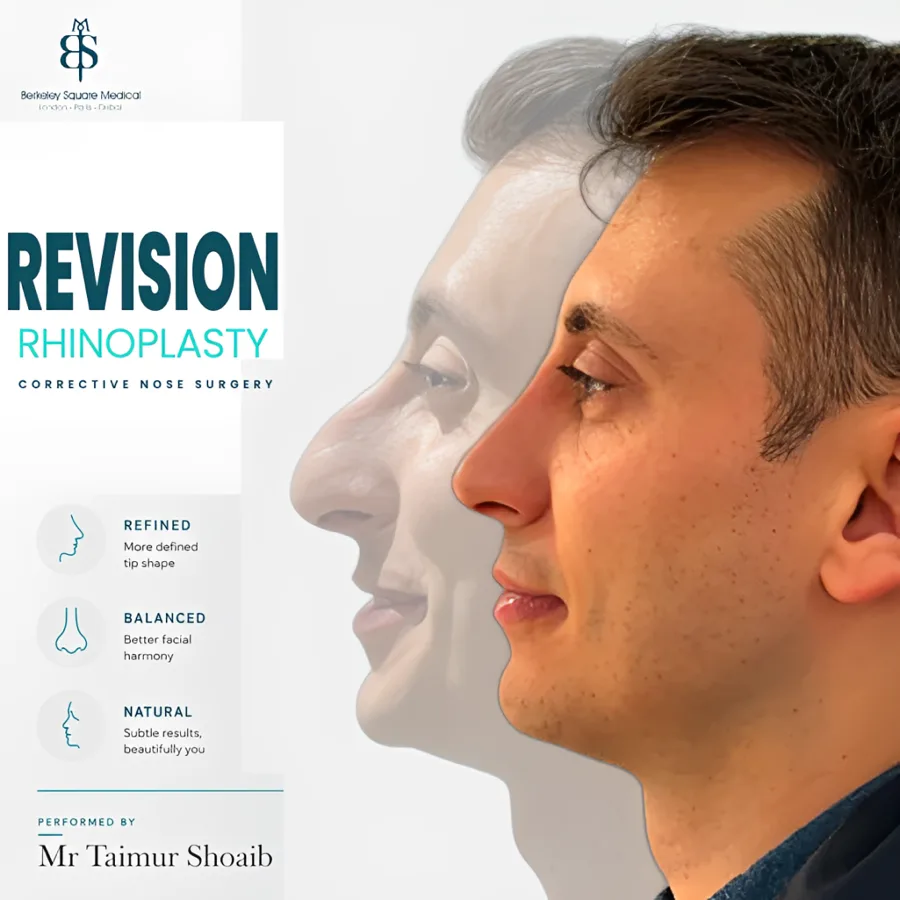 Revision RhinoplastyCorrecting or improving a previous rhinoplasty.Read more
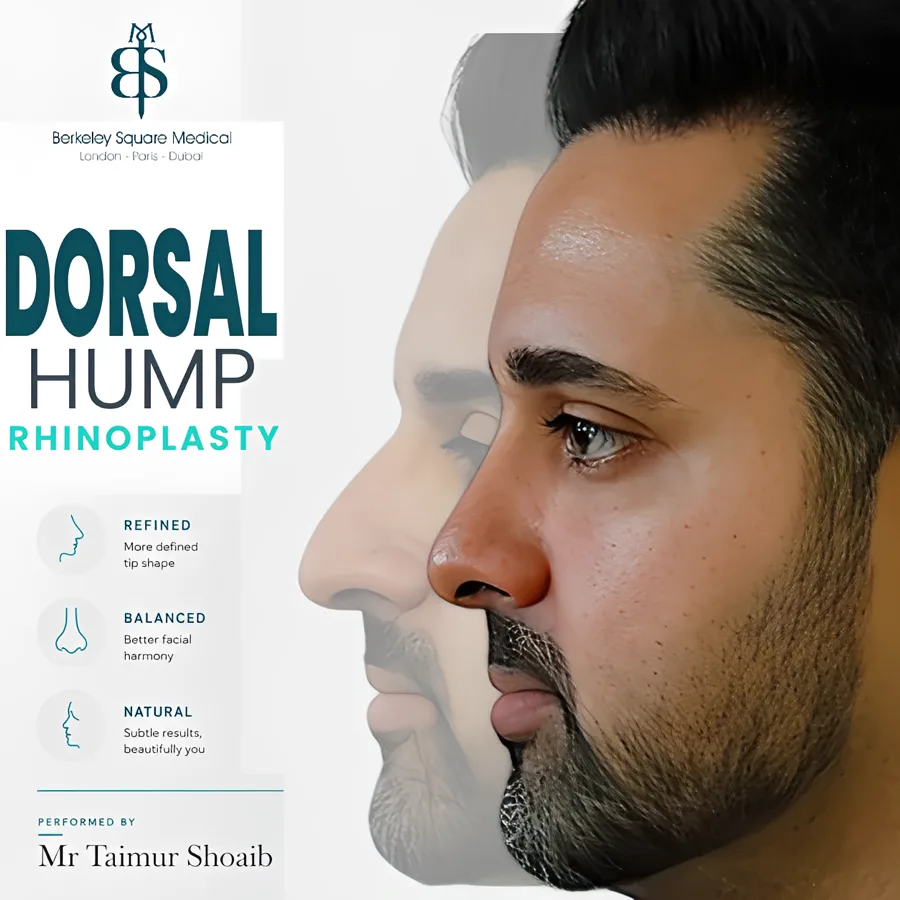 Dorsal Hump RhinoplastyRemoving a bump on the bridge for a straight profile.Read more
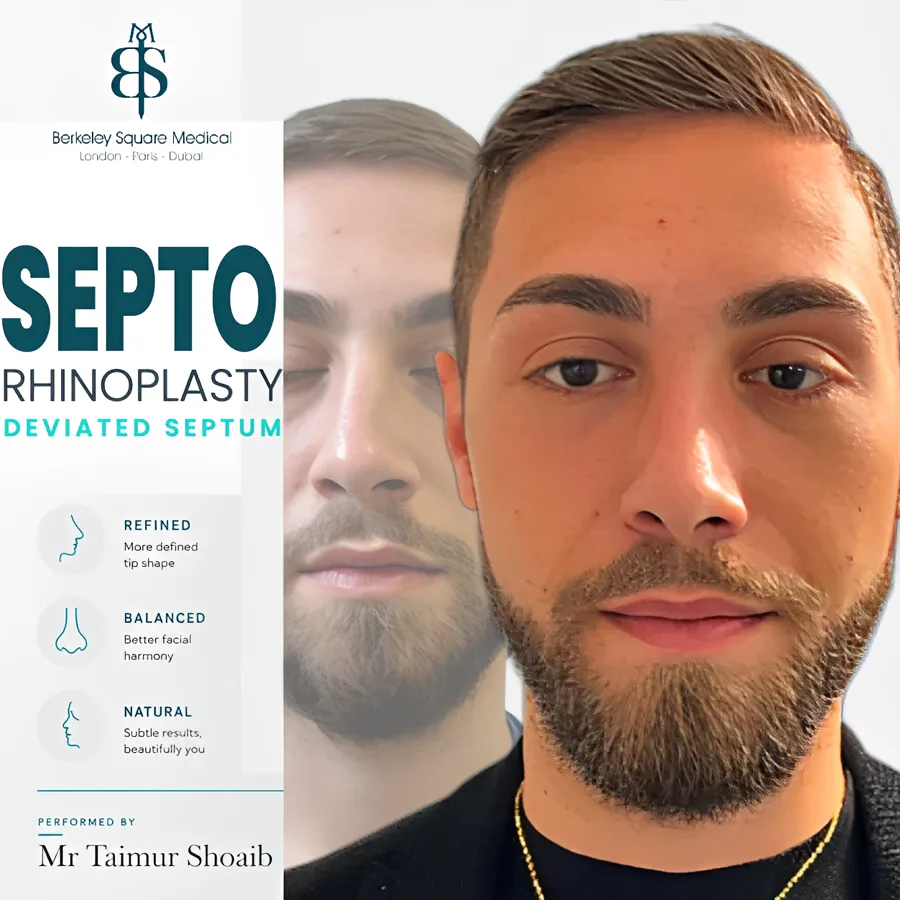 SeptorhinoplastyStraightening the nose and improving breathing.Read more
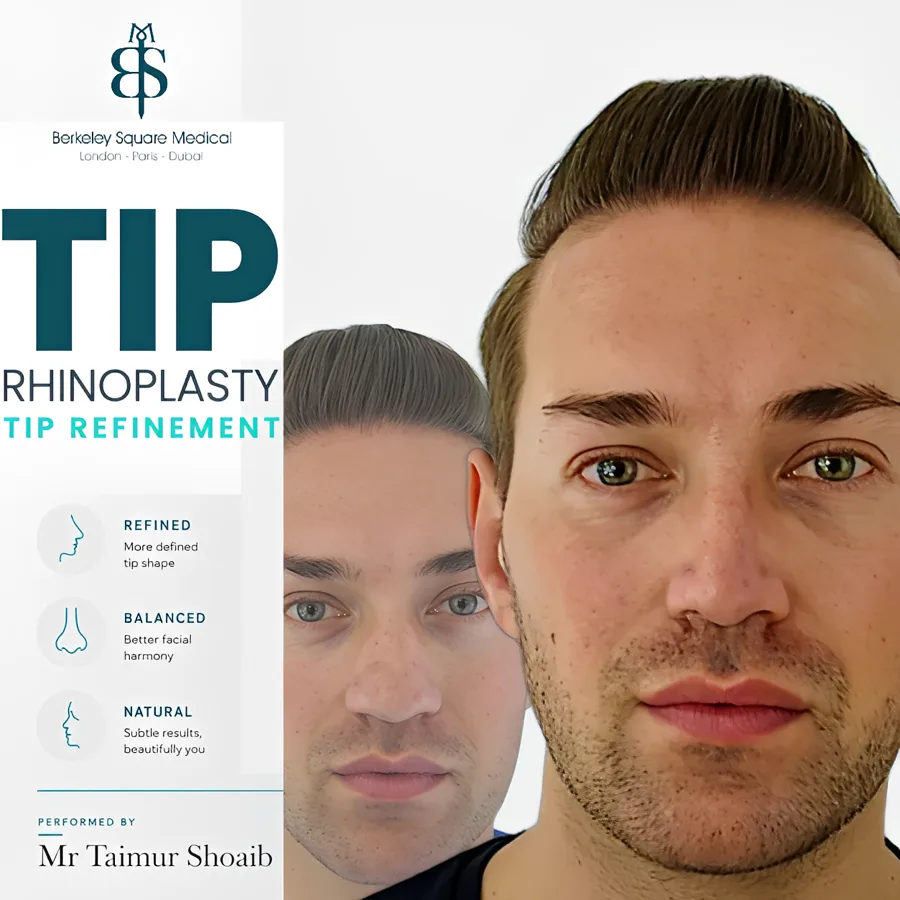 Tip RhinoplastyRefining a bulbous, drooping or asymmetrical tip.Read more
Specialised Rhinoplasty For Females
Explore our specialist procedures. Tap any card to read more.
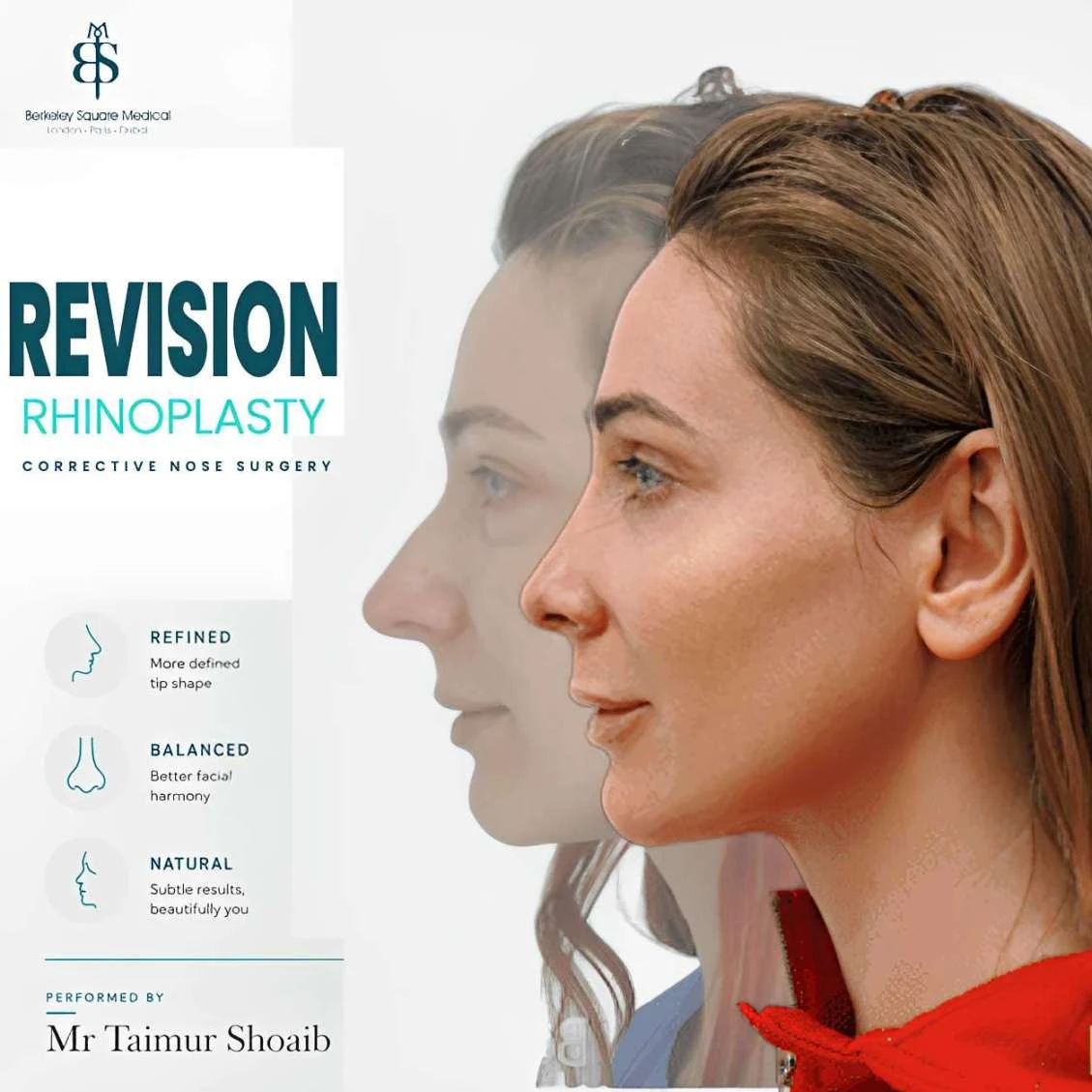 Revision RhinoplastyCorrecting or improving a previous rhinoplasty.Read more
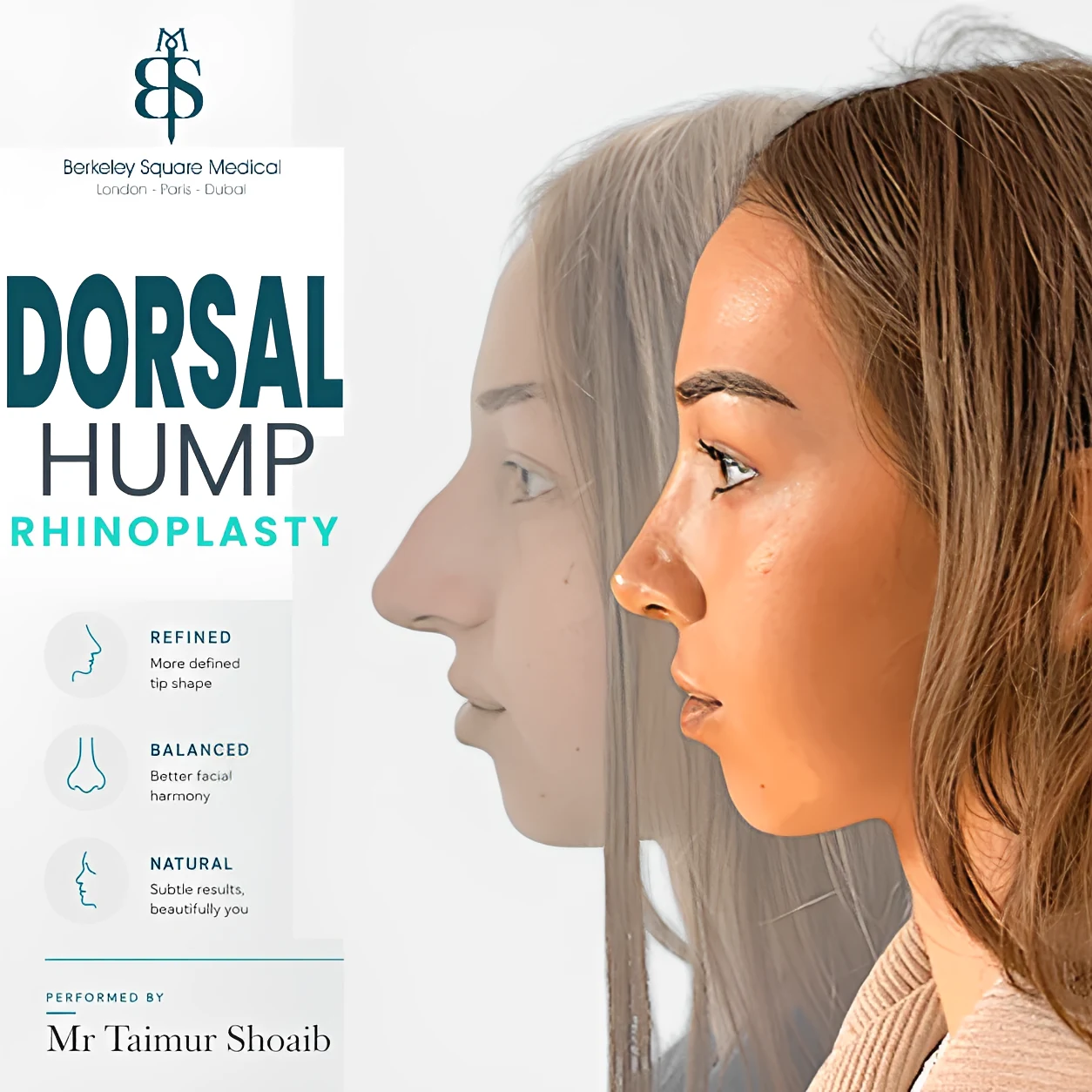 Dorsal Hump RhinoplastyRemoving a bump on the bridge for a straight profile.Read more
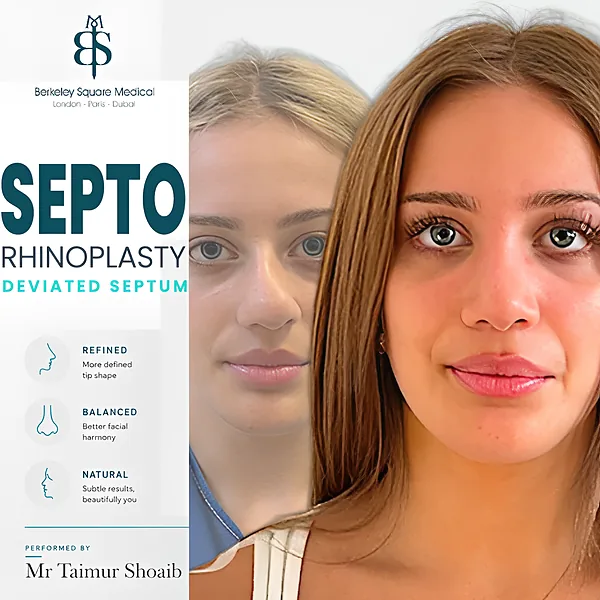 SeptorhinoplastyStraightening the nose and improving breathing.Read more
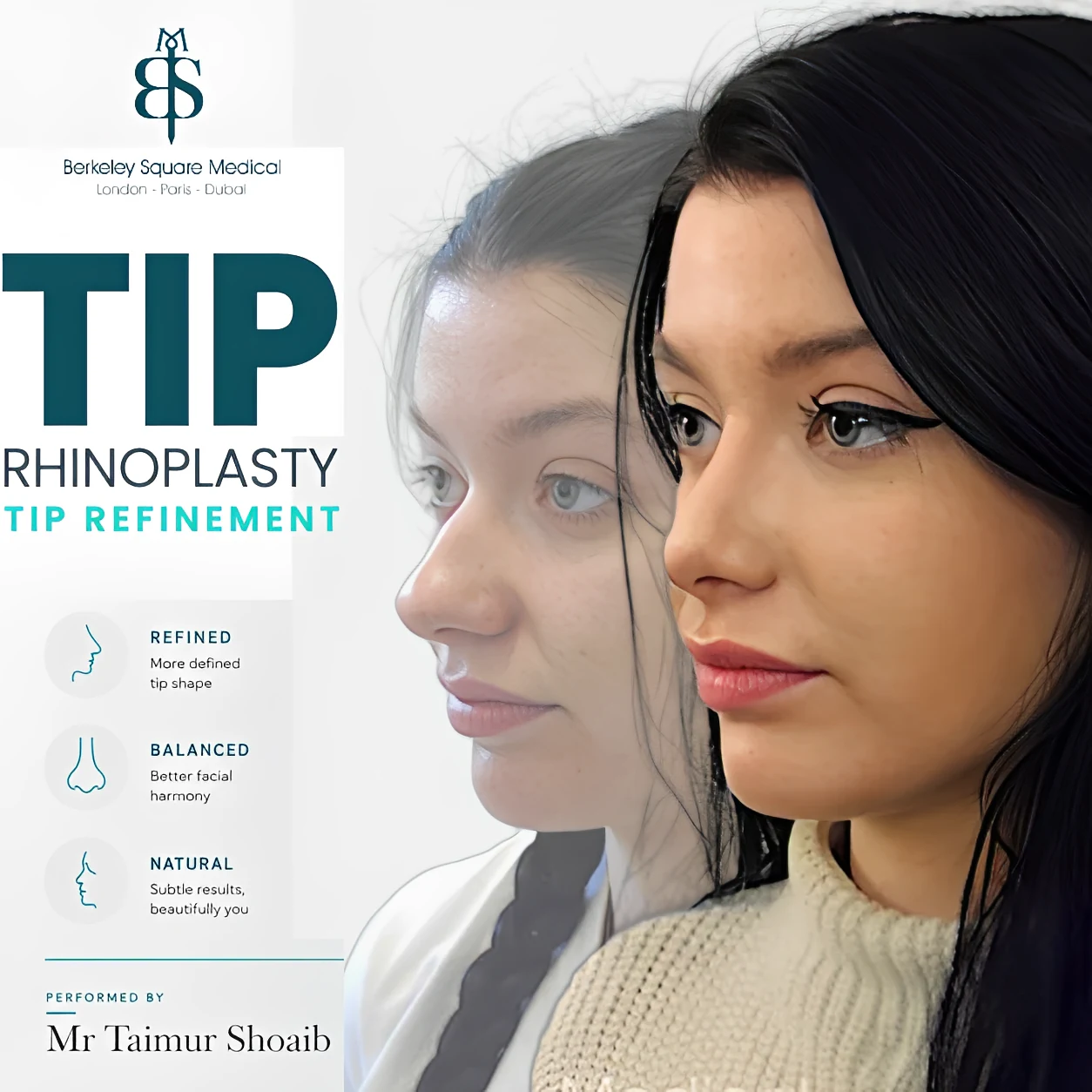 Tip RhinoplastyRefining a bulbous, drooping or asymmetrical tip.Read more
Considering rhinoplasty in London?
If you are weighing up your options in the UK, the next step is a consultation with Mr Taimur Shoaib at 64 Harley Street. Explore rhinoplasty at Berkeley Square Medical, see typical rhinoplasty costs in London, or read about septorhinoplasty in London if breathing is also a concern.
About the author