

After rhinoplasty, how you sleep matters more than most people expect, and for many the real problem is not which position is "allowed" but simply getting any sleep at all when your nose is blocked and you cannot lie the way you are used to. This guide covers both: the safe positions and timings, and honestly how to cope when you feel you cannot sleep.
Sleep on your back with your head raised 30 to 45 degrees (a wedge pillow, or two to three firm pillows). Avoid your side for about 2 weeks and your stomach for about 6 weeks. Keeping your head elevated and pressure off the nose helps swelling drain and protects your result. Your surgeon may adjust these timings for your own healing.
How should I sleep, and for how long?
For the first 7 to 14 days the safest way to sleep is:
- On your back, so nothing presses on the nose.
- With your head elevated 30 to 45 degrees. The angle matters: gravity helps fluid and swelling drain away from the nose rather than pooling in it overnight, which eases congestion and bruising and keeps pressure off the healing structures.
The timeline most patients follow, guided by their surgeon:
- Back, elevated: the first 1 to 2 weeks (at least the first 7 to 10 days).
- Side sleeping: usually from around 2 weeks, once early swelling has settled.
- Stomach sleeping and lying flat again: usually from around 6 weeks, as this puts the most direct pressure on the nose.
Why can't I sleep after rhinoplasty?
This is the part the timelines rarely cover, and it is what most patients actually struggle with. Poor sleep in the first week or two is normal and expected. It is usually a mix of a blocked nose, an unfamiliar back-sleeping position, some discomfort, and the ordinary adrenaline and anxiety of having had surgery. It is not a sign anything is wrong, and it eases as the swelling comes down. Here is how to make each part easier.
Coping with the anxiety and the first sleepless nights
It is very common to lie awake the first few nights, part discomfort, part "is everything okay?". Keep a calm wind-down, dim screens, no caffeine in the afternoon, and remind yourself that broken sleep now does not affect your result. If pain is keeping you awake, use the pain relief your surgeon approved rather than lying there. It genuinely does improve within a week or two.
When you can only breathe through your mouth
Your nose will feel blocked from swelling and any internal dressings, so you will breathe through your mouth, which leaves the throat dry and the jaw a little tired by morning. This is normal and temporary. Keep your head elevated, sip water through the night, and a bedside humidifier or a surgeon-approved saline spray eases the dryness. Do not blow your nose.
A blocked nose or packing at night
If you feel you keep half-waking because you cannot breathe through your nose, that congestion is expected in the first one to two weeks while the inside is swollen (modern rhinoplasty often avoids heavy packing, but a blocked feeling is normal either way). Elevation, a humidifier and staying hydrated all help. A brief blocked or dry-mouth feeling on waking settles, but if you genuinely cannot get air, feel panicked, or have a nosebleed that will not settle, contact your surgical team rather than waiting it out.
A sore neck from sleeping propped up
Sleeping upright for two weeks can leave your neck stiff. A firm wedge that supports your whole upper back, rather than a tall stack of soft pillows that only lifts your head, spreads the load. A small neck or travel pillow, or a recliner or adjustable bed, is gentler on the neck and holds the angle without you sliding flat.
If you are a lifelong side or stomach sleeper
For habitual side and front sleepers, back-sleeping is often the hardest part of the whole recovery, harder than the surgery itself. Practising it for a few nights before your operation makes a real difference. Wall yourself in with bolster pillows or sleep in a recliner so you cannot easily roll, and remind yourself it is only for a couple of weeks.
How long until I sleep normally again?
Honestly, most people sleep poorly for the first few nights to two weeks, and some feel almost nocturnal for a fortnight while the nose is at its most blocked and swollen. It steadily improves from there as the swelling settles on its usual timeline. You can usually return to side sleeping at about 2 weeks and to stomach or flat sleeping at about 6 weeks, so normal sleep returns in stages rather than all at once.
Sleep aids, honestly
Some patients ask about sleeping tablets. Do not start any sleep aid on your own. A few nights of broken sleep are expected and usually pass without one, and some over-the-counter or prescription sleep medicines can interact with your post-surgery medication. If sleeplessness is really affecting you, speak to your surgeon or GP so they can advise safely.
I accidentally slept on my side, did I ruin my result?
Almost certainly not. One accidental roll, especially while your splint or cast is still on, is very unlikely to change your result. The advice to avoid side-sleeping exists to prevent repeated, prolonged pressure over the healing weeks, not one brief moment. Simply move back onto your back, use bolster pillows to make it harder to roll again, and mention it at your review if you are anxious, rather than losing sleep over a single slip.
Setting up your bed to sleep better
The best pillow, and the "rhinoplasty pillow" question
People often search for a "rhinoplasty pillow" or "nose job pillow". You do not need a special product, just the right shape and support:
- A firm foam wedge (around 7 inches / 30 to 45 degrees), so your head stays raised all night instead of slipping flat.
- Positioned to support your upper back and neck, not just your head, which is kinder on your neck.
- Side bolsters or a U-shaped travel pillow to stop you rolling onto your side.
- A recliner or an adjustable bed is an excellent alternative, holding the angle without any stacking.
Your cast, tape and protecting the nose at night
Keep your cast or splint clean, dry and in place until your surgeon removes it, and rest with your head elevated so you do not knock it. After the cast comes off, some surgeons recommend taping the nose at night for a while to help control swelling. Only do this if your surgeon has shown you how and asked you to, and follow their instructions rather than a general routine.
Sleeping away from home or while travelling
If you have to sleep somewhere other than your own bed, take a U-shaped travel pillow to keep your head supported and stop you slumping onto your side, recline the seat or prop yourself up where you can, and use surgeon-approved saline for dry, pressurised air. If you are flying, read our guide to flying after rhinoplasty first, and do not fly in the first week or two if your surgeon has advised against it.
A humidifier and saline for congestion and a dry throat
A cool-mist humidifier by the bed, and a surgeon-approved saline spray, keep the nose and throat from drying out overnight while you are mouth-breathing, which is one of the simplest ways to sleep more comfortably in the first weeks.
Sleep is just one part of a smooth recovery. Keeping pressure off the nose supports the early stages of healing, and our full guide to what not to do after rhinoplasty covers the rest.
Specialised Rhinoplasty For Men
Explore our specialist procedures. Tap any card to read more.
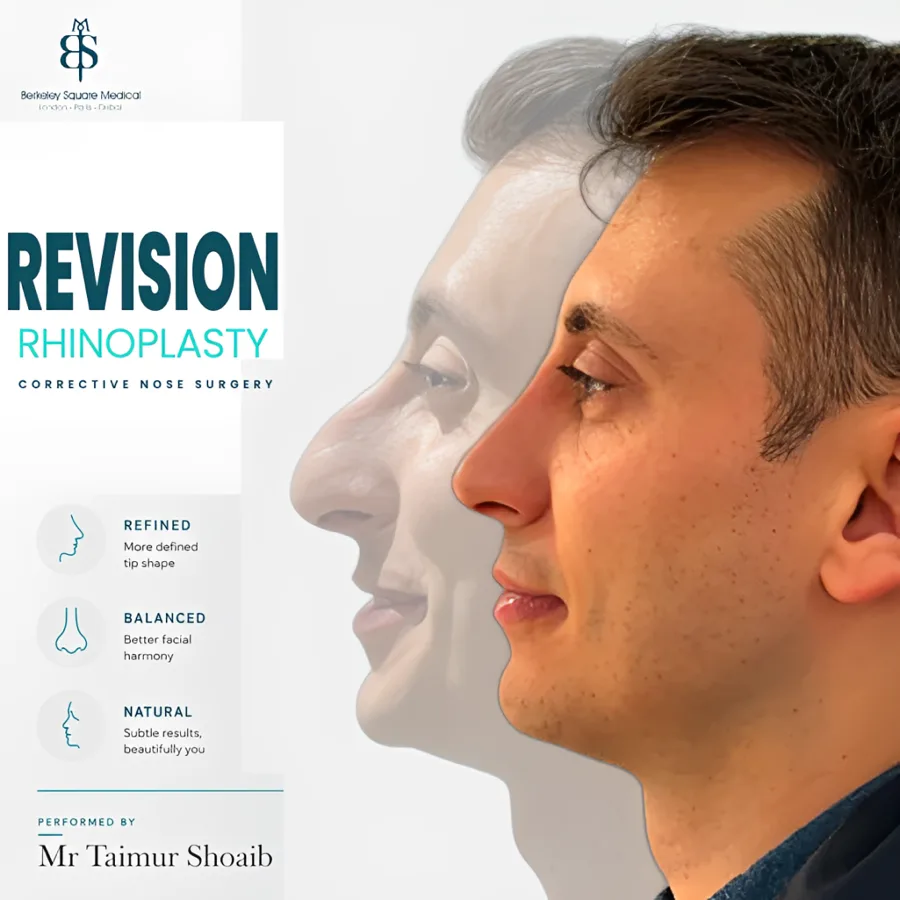 Revision RhinoplastyCorrecting or improving a previous rhinoplasty.Read more
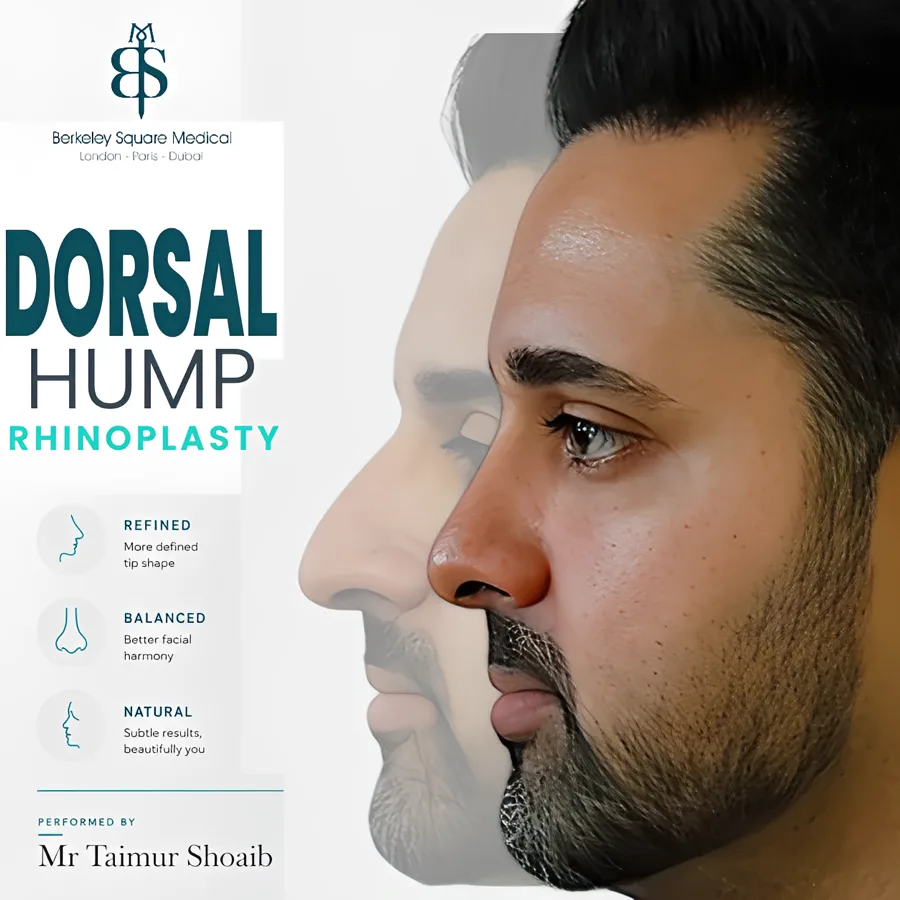 Dorsal Hump RhinoplastyRemoving a bump on the bridge for a straight profile.Read more
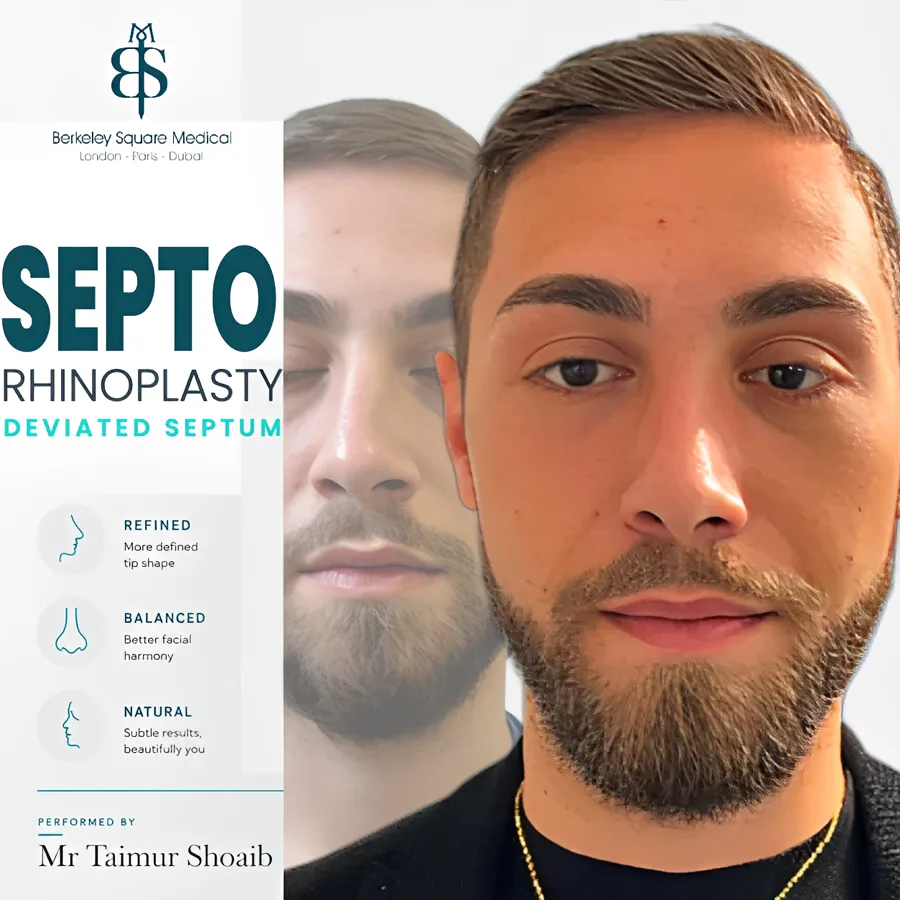 SeptorhinoplastyStraightening the nose and improving breathing.Read more
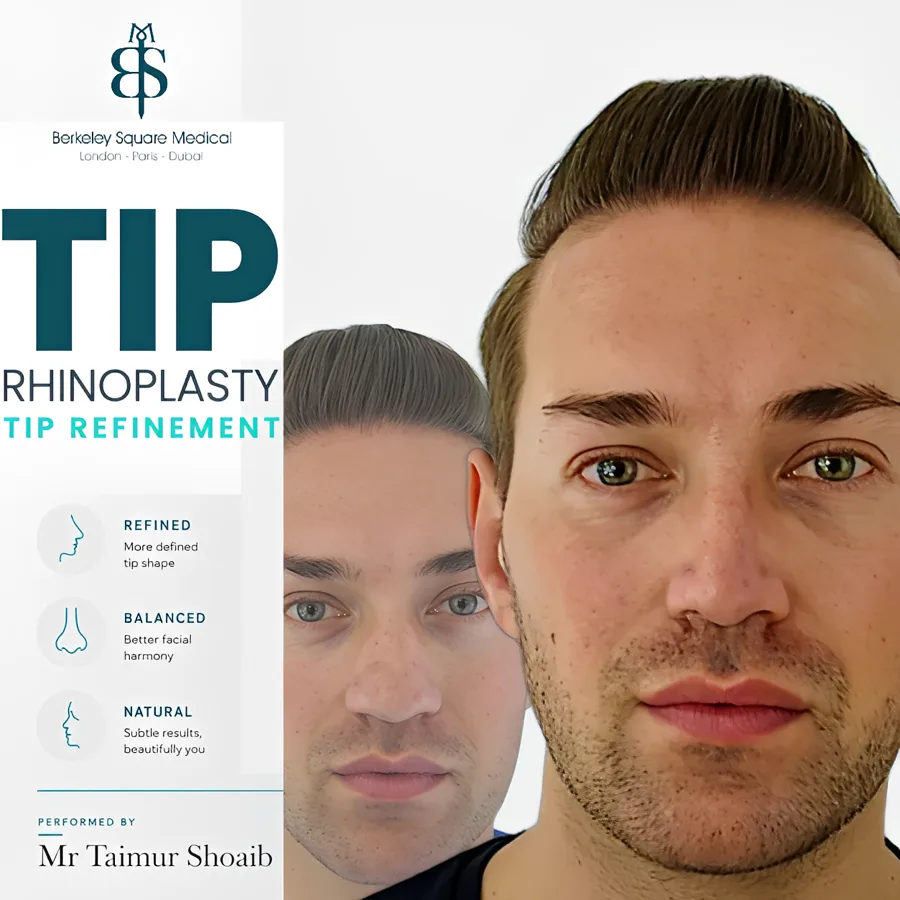 Tip RhinoplastyRefining a bulbous, drooping or asymmetrical tip.Read more
Specialised Rhinoplasty For Females
Explore our specialist procedures. Tap any card to read more.
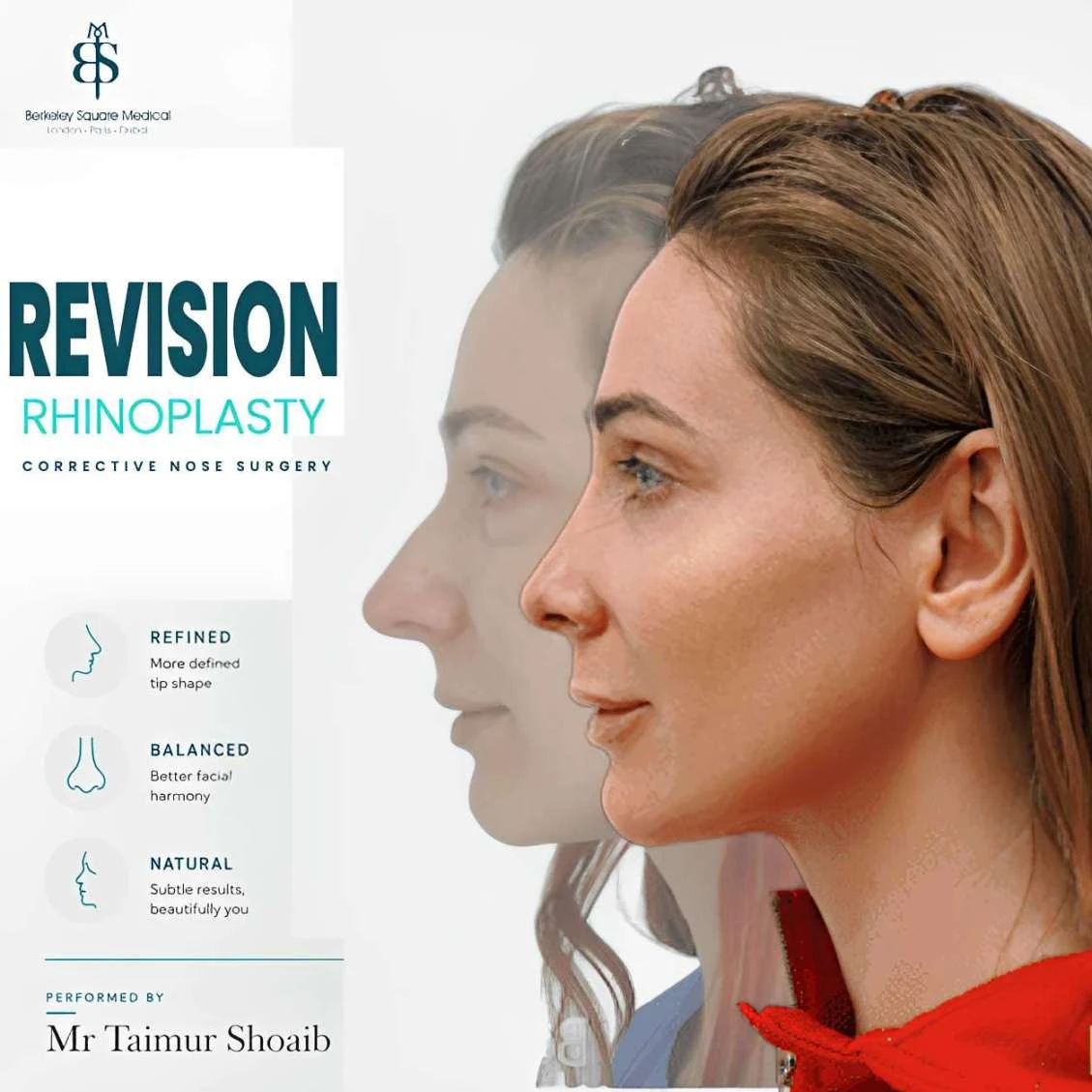 Revision RhinoplastyCorrecting or improving a previous rhinoplasty.Read more
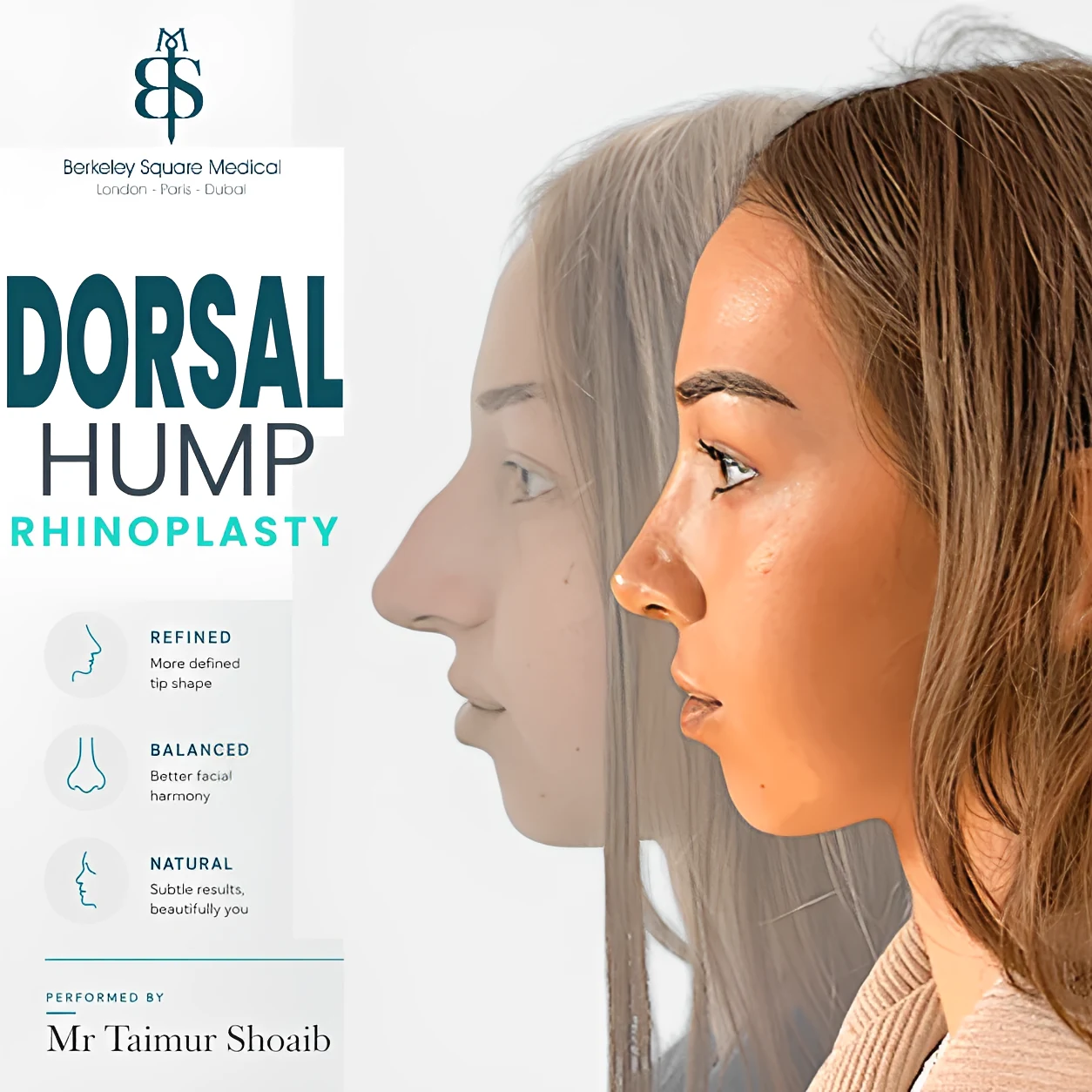 Dorsal Hump RhinoplastyRemoving a bump on the bridge for a straight profile.Read more
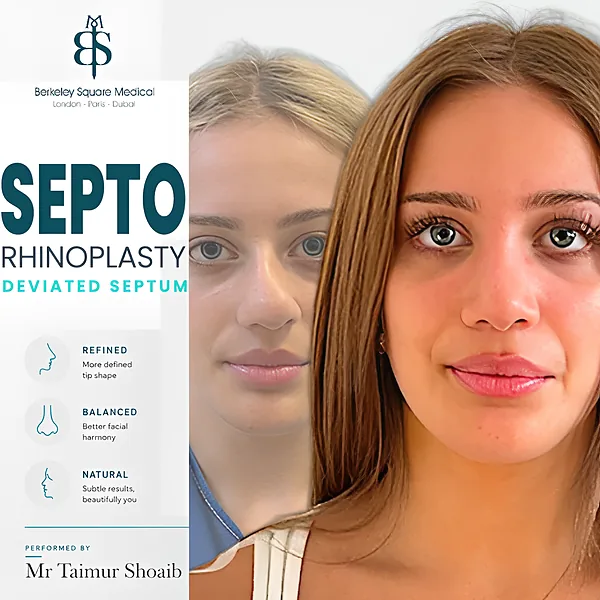 SeptorhinoplastyStraightening the nose and improving breathing.Read more
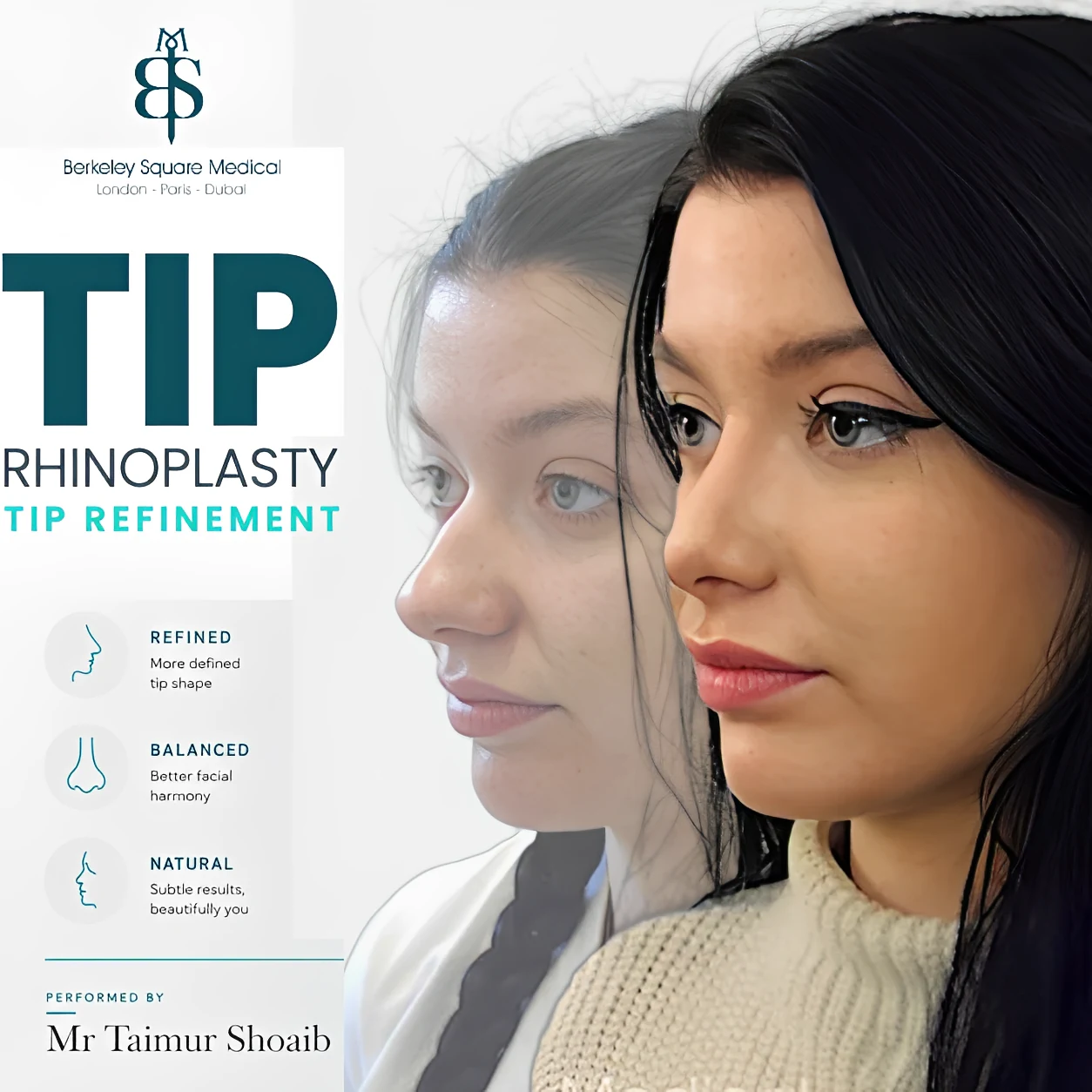 Tip RhinoplastyRefining a bulbous, drooping or asymmetrical tip.Read more
Considering rhinoplasty in London?
If you are weighing up your options in the UK, the next step is a consultation with Mr Taimur Shoaib at 64 Harley Street. Explore rhinoplasty at Berkeley Square Medical, see typical rhinoplasty costs in London, or read about septorhinoplasty in London if breathing is also a concern.
About the author