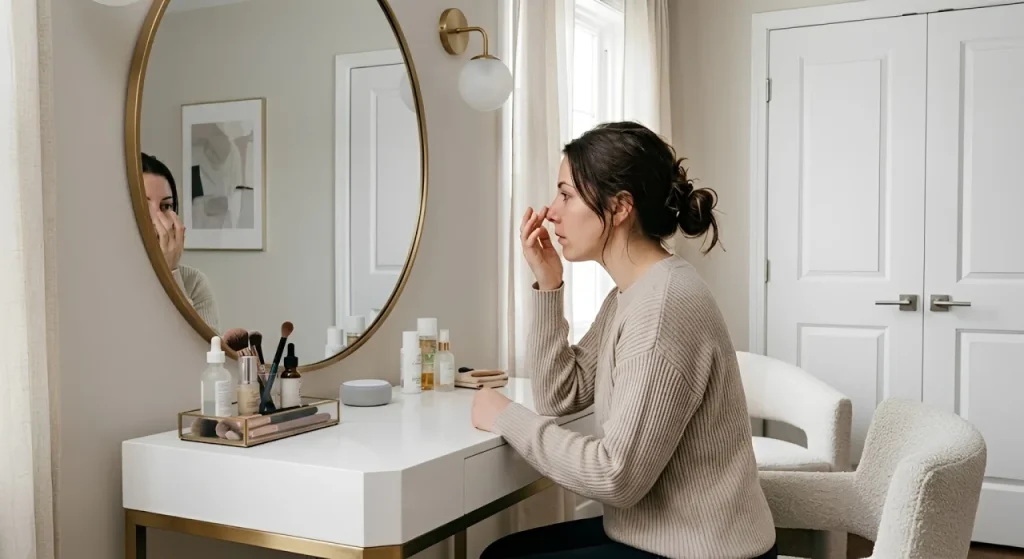
Two very different people search for nose massage. If you are wondering whether massaging or "nose exercises" can reshape your nose without surgery, the honest answer is no, and this guide explains why and what actually can. If you have had a rhinoplasty and you are caught between conflicting advice, "never touch it" versus "massage three times a day", this guide explains when massage genuinely helps, how to do it safely, and when to leave it alone. One rule runs through all of it: follow the instructions of your own surgeon, because it is specific to your operation.
On a nose that has not had surgery, massage cannot change the shape, because shape is set by bone and cartilage, not muscle. Nose massagers, clips and "nose exercises" do not work either. If you want to change your nose, the real options are non-surgical (filler) or surgical rhinoplasty, both covered below.
Only if your surgeon approves it, and generally not before the splint is off (around 1 to 2 weeks), with many surgeons starting from about 2 to 4 weeks. Gentle massage can ease swelling and tightness, but it does not change your surgical result and is never mandatory. Open, revision or graft surgery usually means waiting longer.
Part 1: Can massaging change your nose without surgery?
This is the biggest question people bring to nose massage, and the honest answer, the same one every reputable source gives, is no. Your nose gets its shape from bone and cartilage, not from muscle. Massage moves skin and soft tissue for a moment, but it cannot permanently move or reshape the firm structures underneath. Any dramatic "before and after" you see online is down to swelling, lighting, camera angle or a filter, not a real change in the nose.
Do nose massagers, clips, "nose yoga", toothpaste or Accutane work?
All of these circulate online, and none of them reshape a nose:
- Nose clips and massagers: there is no evidence they change shape, and squeezing the nose for long periods can bruise or irritate the skin and cartilage.
- "Nose yoga" or nose exercises: exercising muscles does not help, because muscles are not what set your nose shape.
- Toothpaste and other home remedies: a myth, with no effect on the nose and a risk of irritating the skin.
- Accutane (isotretinoin): this is a powerful prescription acne medicine, not a nose treatment. In very oily skin it reduces oiliness, but it does not slim or reshape the nose. It carries serious risks and is prescription-only for good reason: among other effects it can cause severe birth defects if taken in pregnancy, so in the UK it is only prescribed under strict medical supervision. It should never be taken off-label for cosmetic reasons.
Does massaging the bridge make it higher, or the nose slimmer?
No. Pressing the bridge cannot build it up or narrow it, and massaging the sides cannot make the nose smaller. The underlying bone and cartilage stay exactly as they are.
If massage cannot reshape it, what actually can?
If you want to change how your nose looks, there are two genuine options, and it is worth knowing what each can and cannot do:
- Non-surgical (liquid) rhinoplasty uses filler to add volume and camouflage, for example smoothing a small bump by filling around it or giving the tip a slight lift. It does not make a nose smaller, and it is temporary and carries its own risks. See non-surgical rhinoplasty.
- Surgical rhinoplasty is the only way to permanently change the underlying bone and cartilage, to reduce, refine or straighten the nose. See rhinoplasty, or our guide to how to make your nose smaller.
Part 2: Massaging your nose after rhinoplasty
If you have had surgery, massage is a very different topic. Here it is a way to support your recovery, mainly by helping swelling, not a way to change your result. It is only appropriate if your surgeon recommends it, and it is never compulsory.
When can I start massaging after rhinoplasty?
Timing matters as much as technique, and it is set by your surgeon. As a general picture:
- First week (splint on): do not touch or massage the nose at all. The splint is protecting it.
- Weeks 1 to 2 (splint off): still hands-off unless your surgeon has specifically shown you otherwise, the nose is freshly unsupported.
- Weeks 2 to 4: many surgeons who use massage will introduce it gently around now, if healing is on track.
- After 4 weeks: if approved, this is when a gentle routine is more commonly established. Open rhinoplasty, revision surgery and grafts often mean waiting longer, sometimes 6 to 8 weeks or more.
Never massage over a visible incision or skin that has not fully healed, and if you are not sure, ask your surgeon before you start.
Can I touch my nose 2 weeks after rhinoplasty?
Light, careful touch for cleaning and applying any creams as your surgeon has shown you is usually fine once the splint is off, but that is not the same as massage. Do not begin a massage routine at two weeks unless your surgeon has specifically told you to, as the nose is still settling.
How to massage your nose after rhinoplasty, step by step
Only if your surgeon has approved it, a simple, gentle routine looks like this:
- Wash your hands thoroughly before touching your nose.
- Optionally use a tiny amount of a light oil or moisturiser so your fingers glide rather than drag.
- Use very light pressure only, the weight of a fingertip, never firm pressing.
- Massage for around 1 to 5 minutes, two to three times a day, or exactly as your surgeon has instructed.
- Stop immediately if you feel pain, see bleeding, or notice swelling getting worse.
Bridge and sidewalls
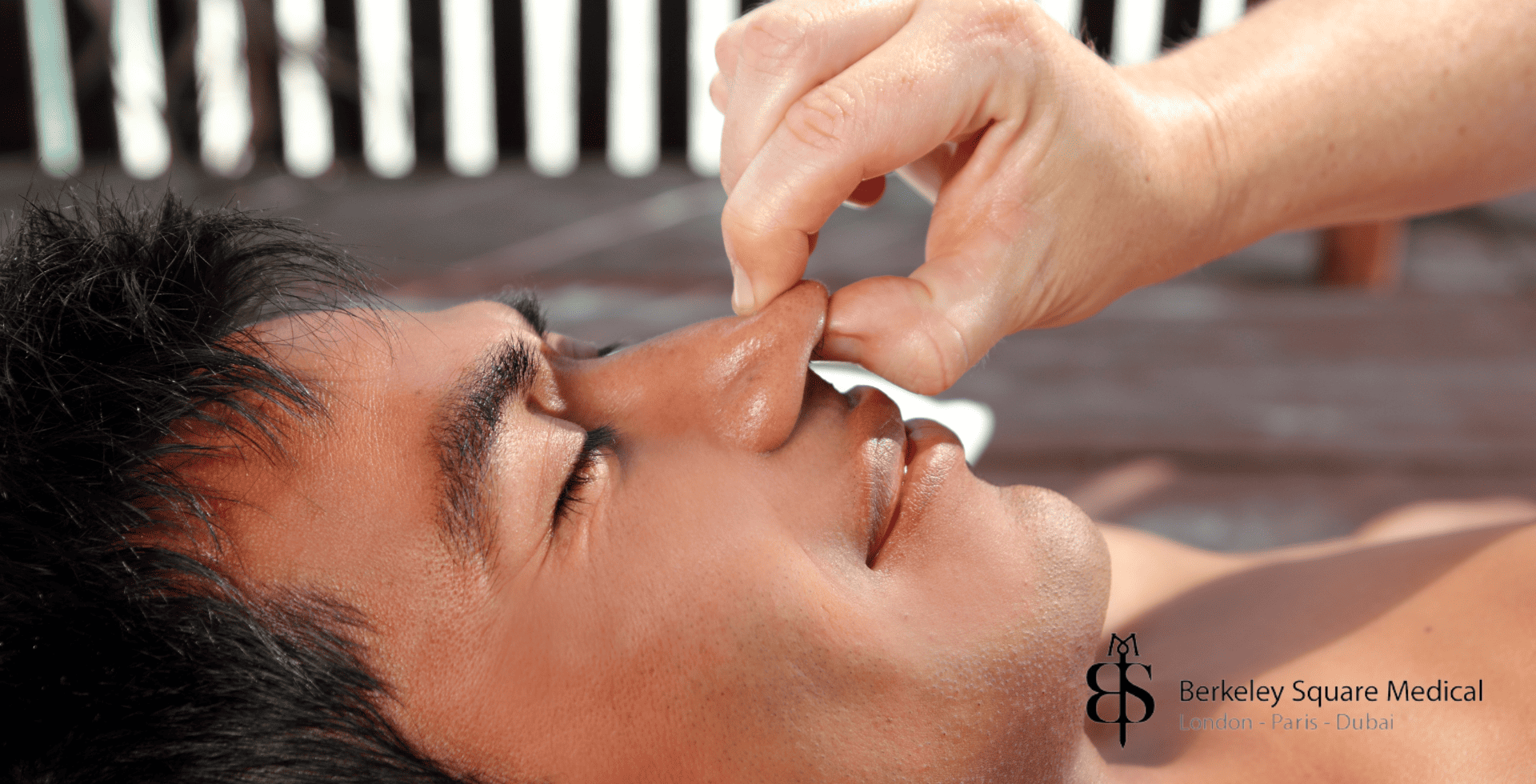
Place your index fingers gently on either side of the bridge, near the inner corners of the eyes, press very lightly for a few seconds, then glide smoothly downward along the sides of the nose. Keep it soft and slow.
The tip
Only if specifically advised, the tip is massaged with very gentle circular movements or light downward pressure, as thick-skinned tips can hold swelling longer. The tip is delicate, so never press hard here, and avoid it entirely if your surgeon has not mentioned it.
Lymphatic drainage strokes
Light strokes moving down the sides of the nose and outward toward the cheeks encourage trapped fluid to drain away, which is the main reason massage can ease swelling. The touch should be feather-light, this is about moving fluid just under the skin, not the structure beneath.
How long do I keep it up?
Where it is used, a massage routine is often continued for around 2 to 3 months while swelling is settling, then tapered as the nose refines. Your surgeon will tell you when you can stop.
Does nose massage actually work?
Honestly, the evidence is based on surgeon experience rather than large clinical trials, so it is worth being clear about what it can and cannot do. Where a surgeon recommends it, gentle massage may help to:
- Reduce swelling by encouraging lymphatic drainage of trapped fluid.
- Soften firm scar tissue and fibrosis under the skin, which can help the skin re-drape, particularly with thicker skin.
- Ease tightness and soreness and improve local circulation.
- Sometimes help a minor area of unevenness settle as swelling comes down.
What it does not do is change your long-term surgical result, the shape your surgeon created is set by the bone and cartilage. Massage is also not mandatory: many patients, especially those with thinner skin or who heal quickly, never need it and still get an excellent result.
Can I damage my nose by massaging it?
Used gently and with your surgeon's approval, massage is low risk. A common worry is, "I massaged and now it looks puffy, have I ruined it?" Almost always that puffiness is transient inflammation from handling the area, and it settles within a day, it is not damage. Ease off, and let it calm down.
Stop and contact your surgeon if you notice sharp pain, bleeding, swelling that keeps increasing rather than settling, or any signs of infection such as heat, spreading redness or discharge.
Do not massage at all if any of these apply:
- Your surgeon has not approved it, or has told you not to.
- You had grafts, implants or complex reconstruction.
- There are any signs of infection, or incisions that have not fully healed.
- It causes sharp pain, or you are unsure how much pressure is safe.
My surgeon said not to massage, but I read to do it three times a day. Which is right?
Your surgeon is right, every time. Massage advice is specific to your operation, your tissues and your surgeon's technique, so what helped a stranger online may be wrong for you. Some surgeons prescribe a daily routine; others prefer a completely hands-off recovery, and both are valid. When the internet and your surgeon disagree, follow your surgeon.
Massaging for swelling is not the same as "pressing to keep the bones straight"
Occasionally, after work on the nasal bones, a surgeon will ask a patient to apply gentle pressure in a particular direction to help guide the bones as they set. That is a specific instruction for a specific reason, not the same as general swelling massage, and you should only ever do it if your own surgeon has asked you to, exactly as they described.
Can I have a full body or spa massage after rhinoplasty?
Usually you can enjoy a gentle full body massage from around 2 to 3 weeks, but only with your surgeon's okay and with sensible limits while the nose heals:
- Lie on your back or sit upright, never face-down, so nothing presses on your nose.
- Tell your therapist you have recently had surgery so they can adapt the treatment.
- Avoid anything vigorous or that raises your blood pressure, or involves heavy pressure near the head and neck.
From around 6 weeks, once swelling has settled and your surgeon agrees, you can usually return to normal positions including lying face-down. As always, check with your surgeon first.
Related recovery guides
Massage is one small part of recovery. For the wider picture: swelling has its own detailed timeline in our guide to swelling after rhinoplasty, the overall rhinoplasty healing stages set the context, a firm fullness above the tip is covered in our guide to pollybeak deformity, and internal firmness is explained in scar tissue after rhinoplasty. For everything post-op, see our full rhinoplasty aftercare guide.
Specialised Rhinoplasty For Men
Explore our specialist procedures. Tap any card to read more.
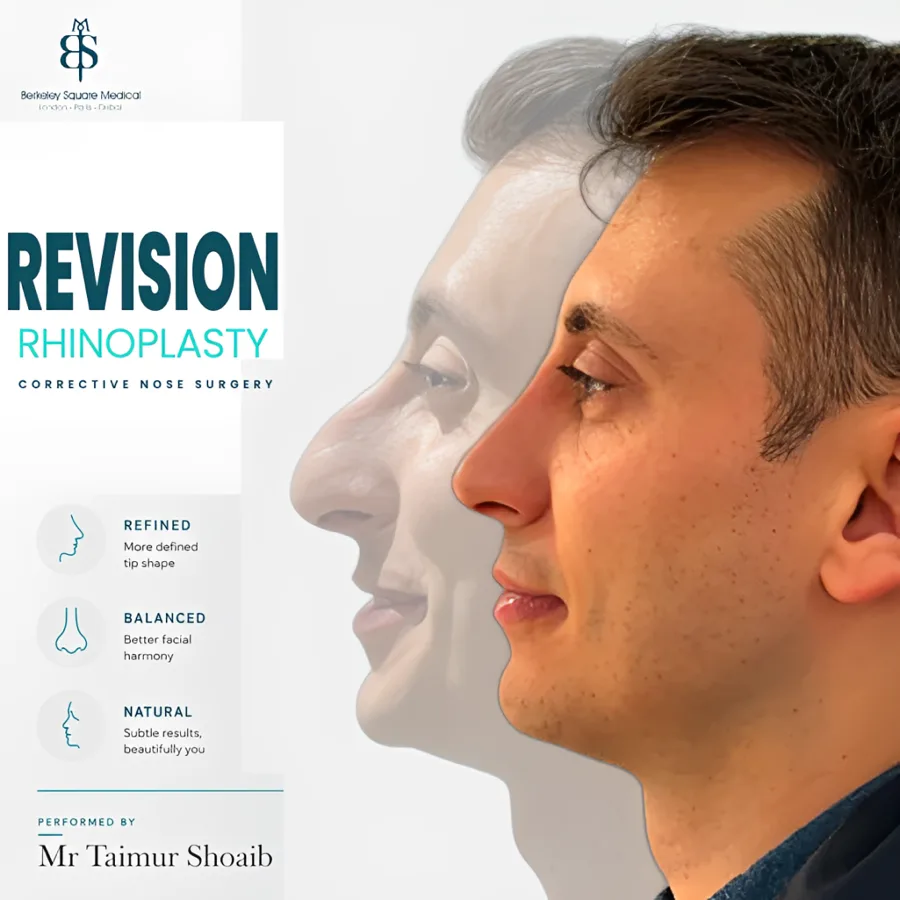 Revision RhinoplastyCorrecting or improving a previous rhinoplasty.Read more
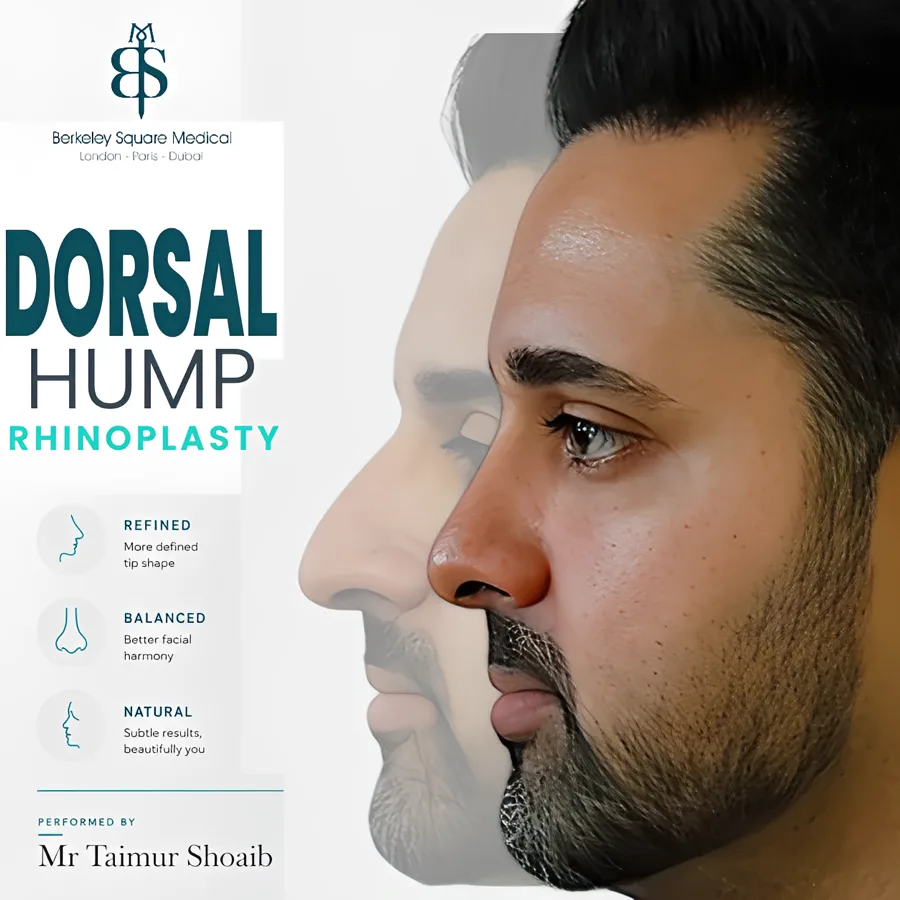 Dorsal Hump RhinoplastyRemoving a bump on the bridge for a straight profile.Read more
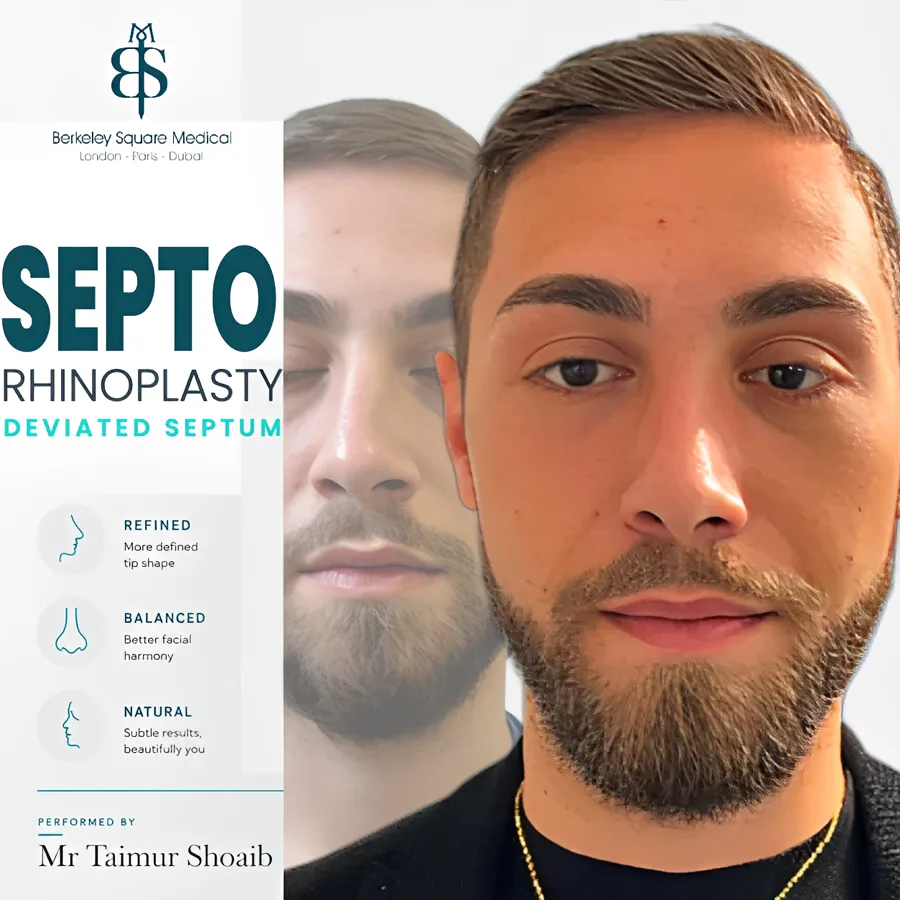 SeptorhinoplastyStraightening the nose and improving breathing.Read more
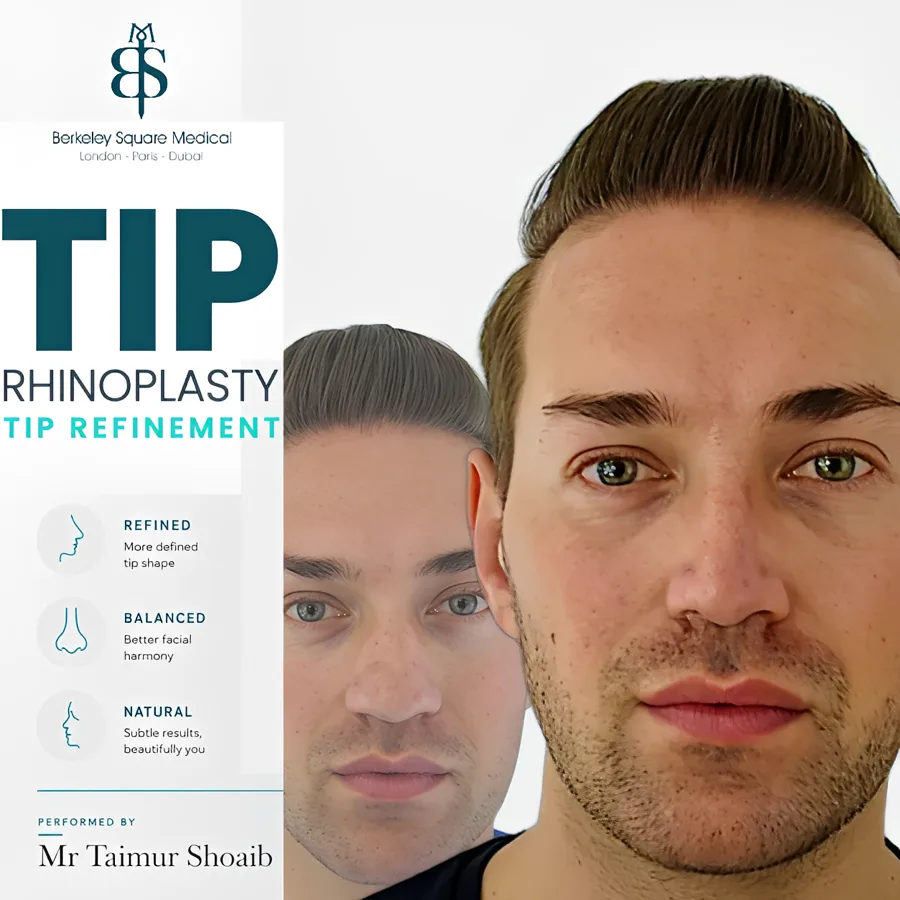 Tip RhinoplastyRefining a bulbous, drooping or asymmetrical tip.Read more
Specialised Rhinoplasty For Females
Explore our specialist procedures. Tap any card to read more.
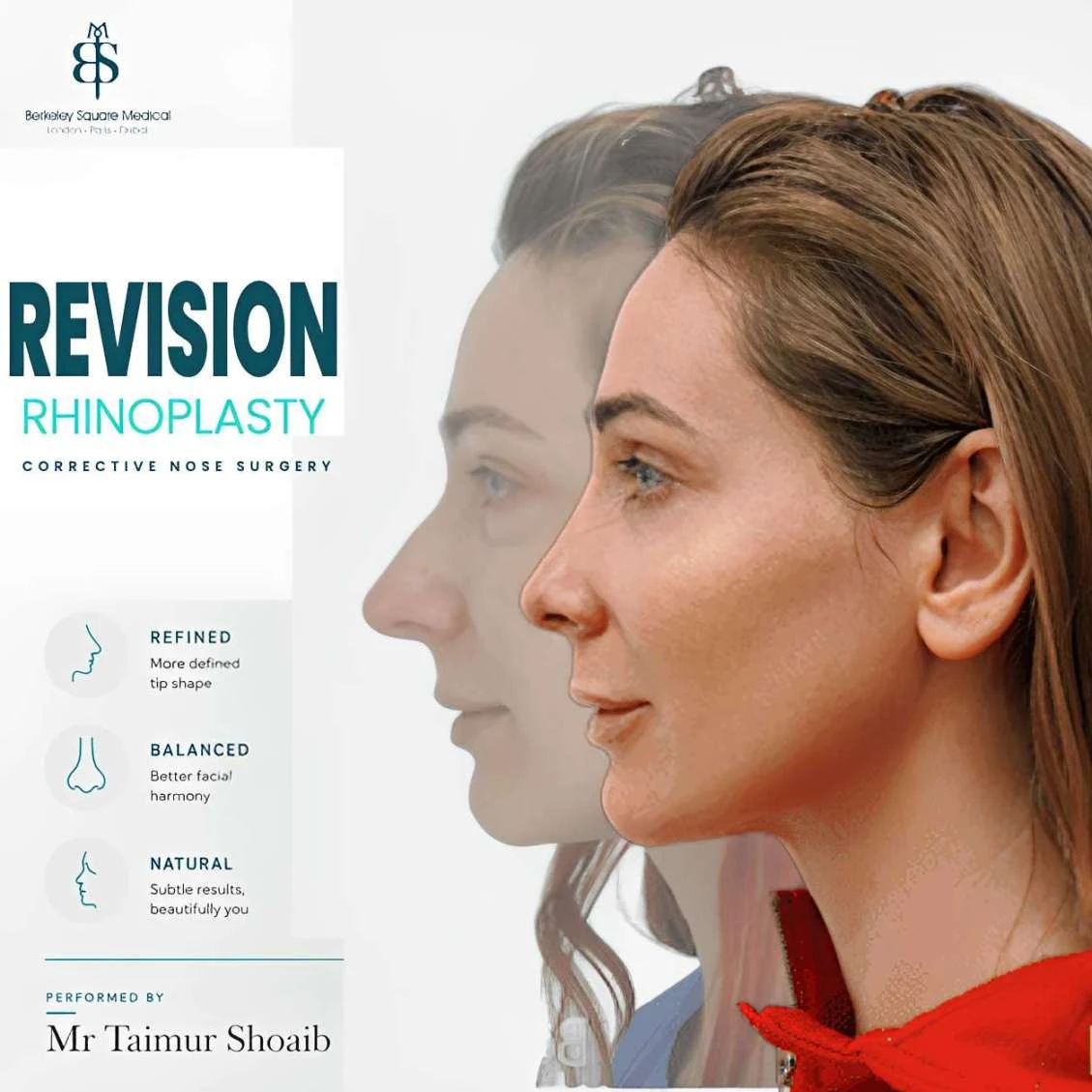 Revision RhinoplastyCorrecting or improving a previous rhinoplasty.Read more
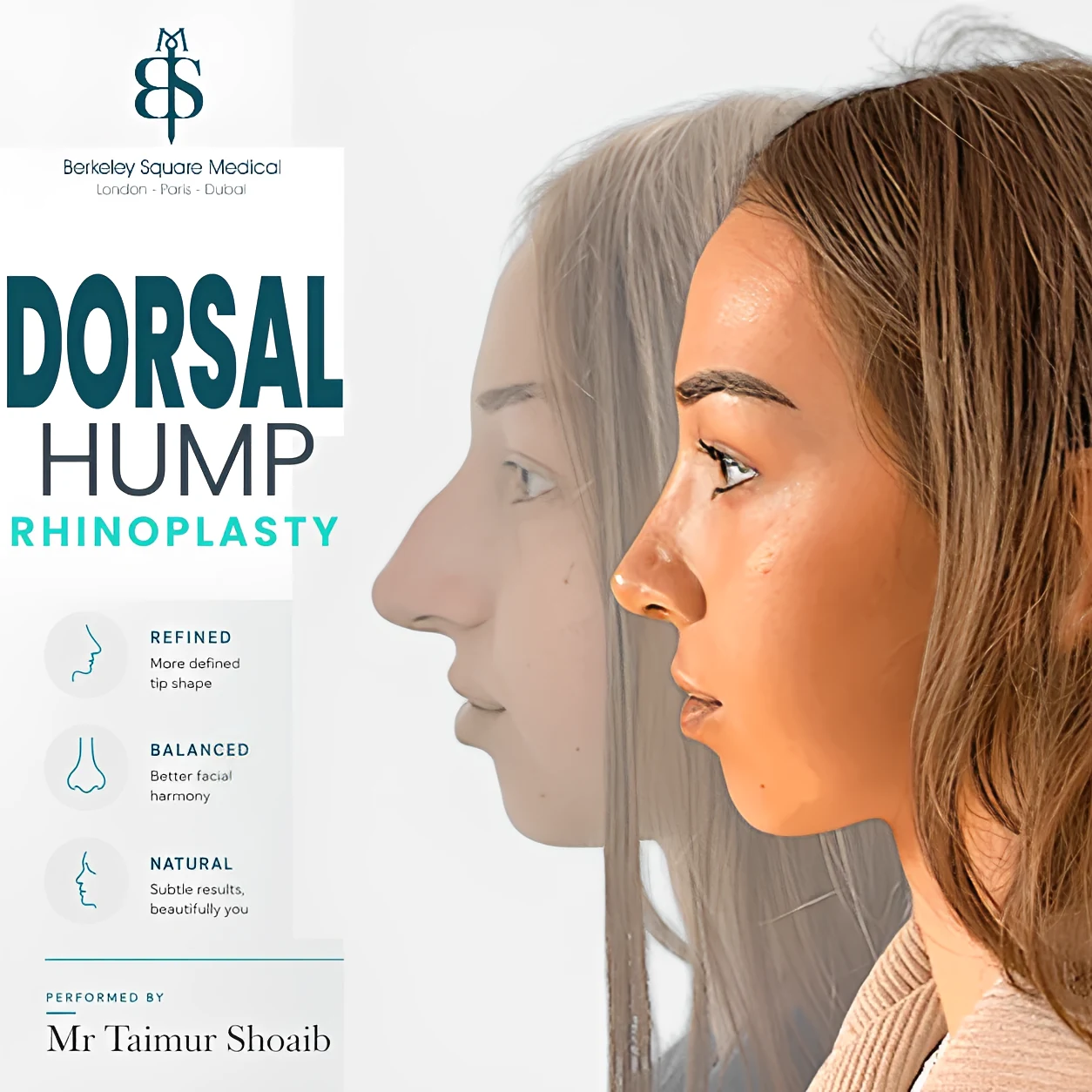 Dorsal Hump RhinoplastyRemoving a bump on the bridge for a straight profile.Read more
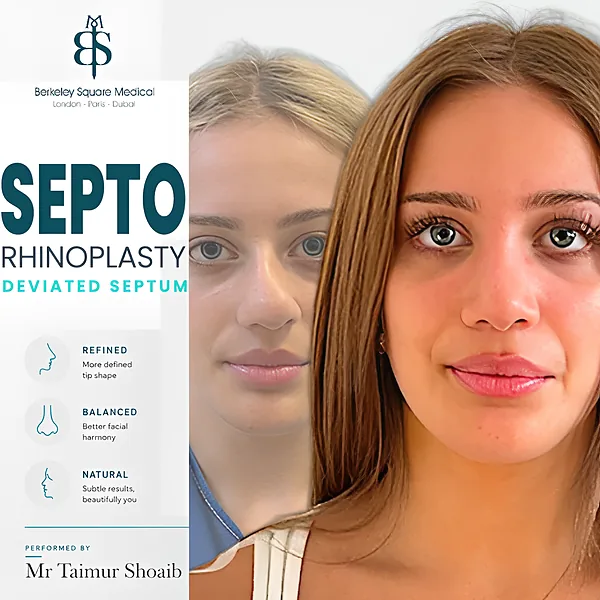 SeptorhinoplastyStraightening the nose and improving breathing.Read more
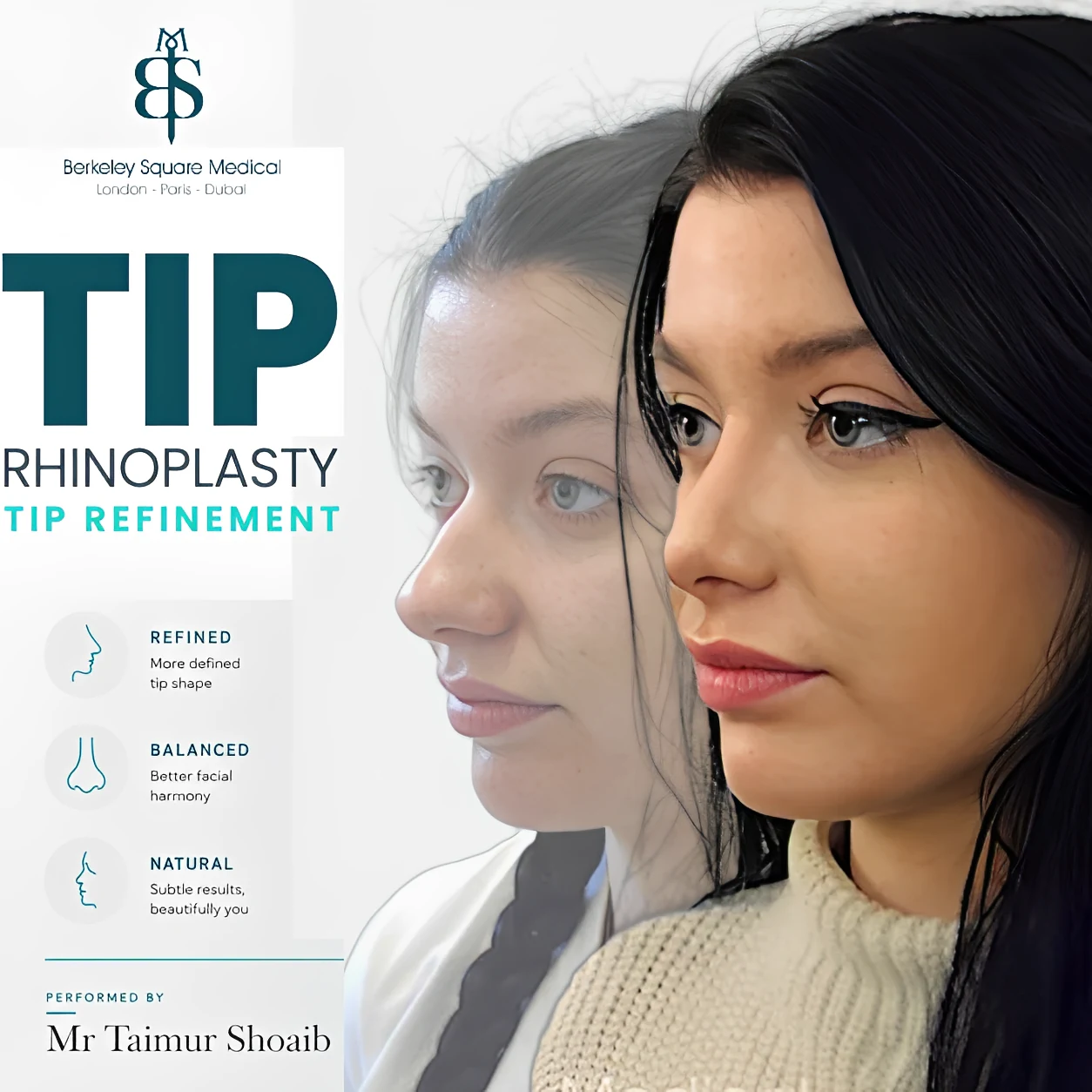 Tip RhinoplastyRefining a bulbous, drooping or asymmetrical tip.Read more
Considering rhinoplasty in London?
If you are weighing up your options in the UK, the next step is a consultation with Mr Taimur Shoaib at 64 Harley Street. Explore rhinoplasty at Berkeley Square Medical, see typical rhinoplasty costs in London, or read about septorhinoplasty in London if breathing is also a concern.
About the author