
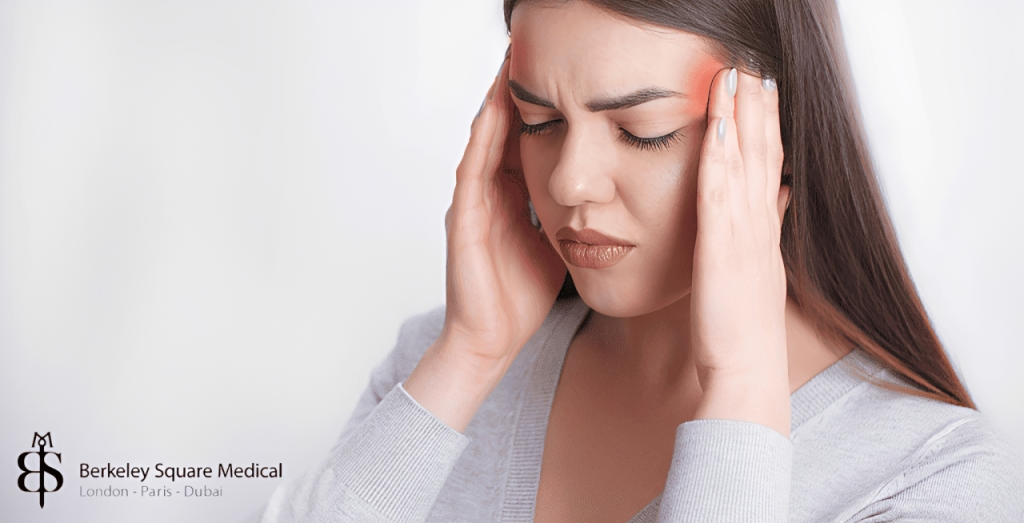
A headache in the days after a nose job is common and, in almost all cases, a normal and short-lived part of recovery rather than a sign anything is wrong. This guide explains what causes it, how long it usually lasts, how to ease it safely, and, importantly, the small number of warning signs that mean you should contact your surgeon. As always, follow your own surgeon's advice.
Yes, and it usually settles within a few days. Common causes are the anaesthetic wearing off, sinus congestion and pressure, the splint or internal packing, dehydration and caffeine withdrawal, and muscle tension. Ease it with hydration, keeping your head elevated, rest and surgeon-approved paracetamol (avoid ibuprofen and aspirin unless your surgeon says otherwise). Contact your surgeon urgently for a severe or worsening headache with a fever, vision changes or a stiff neck.
Is a headache after rhinoplasty normal?
Yes. Most patients get some degree of headache in the first days, and it is expected. Your body has been through a general anaesthetic and surgery to the nose, and the headache is usually a mix of that recovery, a blocked nose, and the ordinary knock-ons like not drinking enough or missing your usual coffee. It typically eases quickly.
What causes headaches after rhinoplasty?
Usually several small things overlapping rather than one cause:
- The anaesthetic wearing off, which commonly leaves a dull headache for a day or two.
- Sinus congestion and pressure, as a blocked, swollen nose builds pressure around the sinuses and forehead.
- The splint and any internal dressings or packing, which add to that pressure feeling.
- Dehydration, which is easy to slip into after surgery and a very common headache trigger.
- Caffeine withdrawal, if you have cut out your usual tea or coffee.
- Muscle tension in the neck and jaw from sleeping propped up on your back.
How long does a headache last after rhinoplasty?
For most people the first two to three days feel the hardest, with the most congestion, pressure and tiredness, and then the worst of it eases within a couple of days as the anaesthetic clears and you rehydrate. A milder sinus or pressure headache can come and go for a week or two while the swelling and congestion settle and the pressure equalises. As a rough guide:
- Week 1: a congestion and pressure headache is common, especially while the splint is on.
- Week 2: usually easing as the splint comes off and swelling drops.
- Week 3 onward: mostly settled for most people.
- Around 6 weeks: a new or persistent headache is less likely to be part of ordinary healing, so it is worth mentioning to your surgeon, particularly if it fits any of the warning signs below.
How to relieve a headache after rhinoplasty
- Stay well hydrated, sipping water through the day, as dehydration is one of the commonest causes.
- Keep your head elevated and rest, which also helps swelling and congestion.
- Take surgeon-approved pain relief. Paracetamol is generally fine; avoid ibuprofen and aspirin (blood-thinning anti-inflammatories) unless your surgeon specifically says otherwise, as they can increase bleeding.
- Use a surgeon-approved saline spray to ease congestion, and do not blow your nose in the early weeks.
- Keep your caffeine steady. If you normally drink coffee, a small warm cup can head off a withdrawal headache.
- Rest in a calm, dimly lit room if the headache is tension or pressure related.
When should I worry about a headache after rhinoplasty?
Ordinary recovery headaches ease with the measures above. Contact your surgeon, or seek urgent medical care, if a headache comes with any of these:
- It is severe, or rapidly getting worse.
- A high fever (for example 38°C or above) or feeling very unwell, which with a headache can point to infection. Feeling very unwell with a high fever, a widespread rash or vomiting needs urgent assessment.
- Vision changes, such as blurring or double vision.
- A stiff neck, confusion, or a headache that feels different and much worse than your normal recovery.
These are uncommon, but they are worth acting on rather than waiting out. If a headache comes with a fever or spreading redness, read our guide to the signs of infection after rhinoplasty. Rarely, a persistent one-sided pain around the eye can be nerve-related, so mention any unusual, lasting pain to your surgeon.
Headache after nose filler
A mild headache can follow a non-surgical rhinoplasty from the injections and a little pressure, and it usually settles quickly. It is not the same as recovering from surgery. A severe or unusual headache, any change in vision, or the skin changing colour after filler needs urgent attention, as these can rarely signal a vascular complication, so contact your practitioner immediately, and if you have any change in vision, seek emergency medical care without delay.
Related recovery guides
A headache is one small part of recovery. If it comes with a fever or other warning signs, our guide to infection after rhinoplasty explains what to watch for, and the way pressure and puffiness rise and fall is covered in swelling after rhinoplasty.
Specialised Rhinoplasty For Men
Explore our specialist procedures. Tap any card to read more.
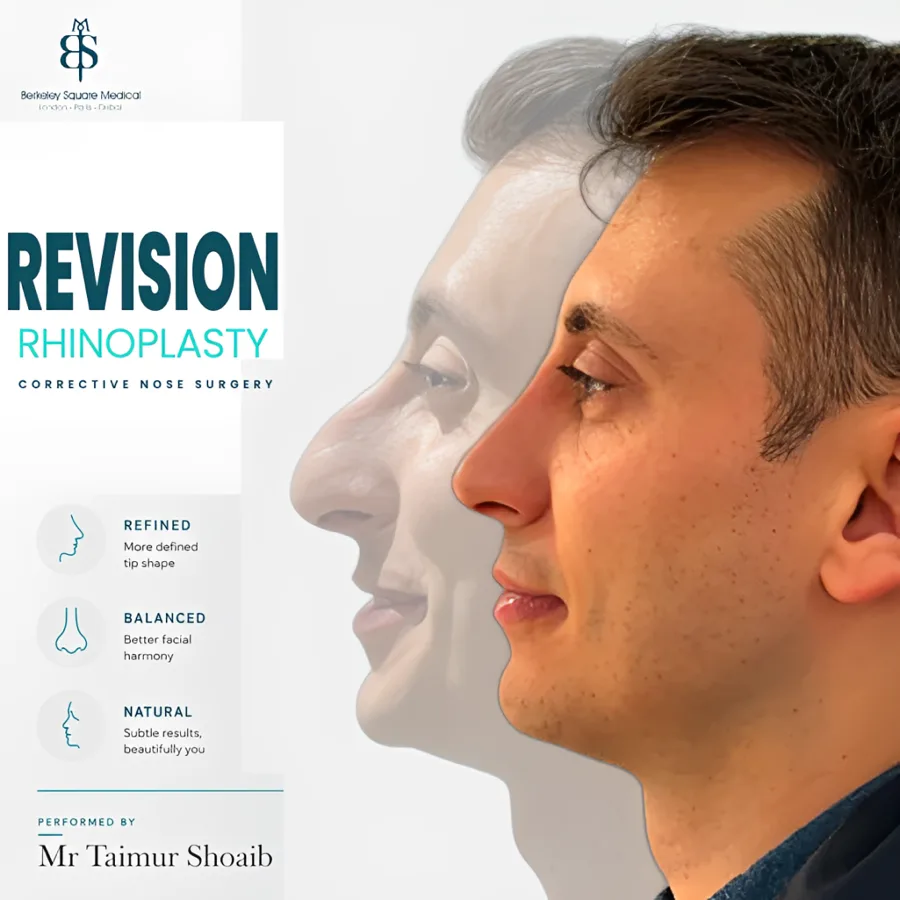 Revision RhinoplastyCorrecting or improving a previous rhinoplasty.Read more
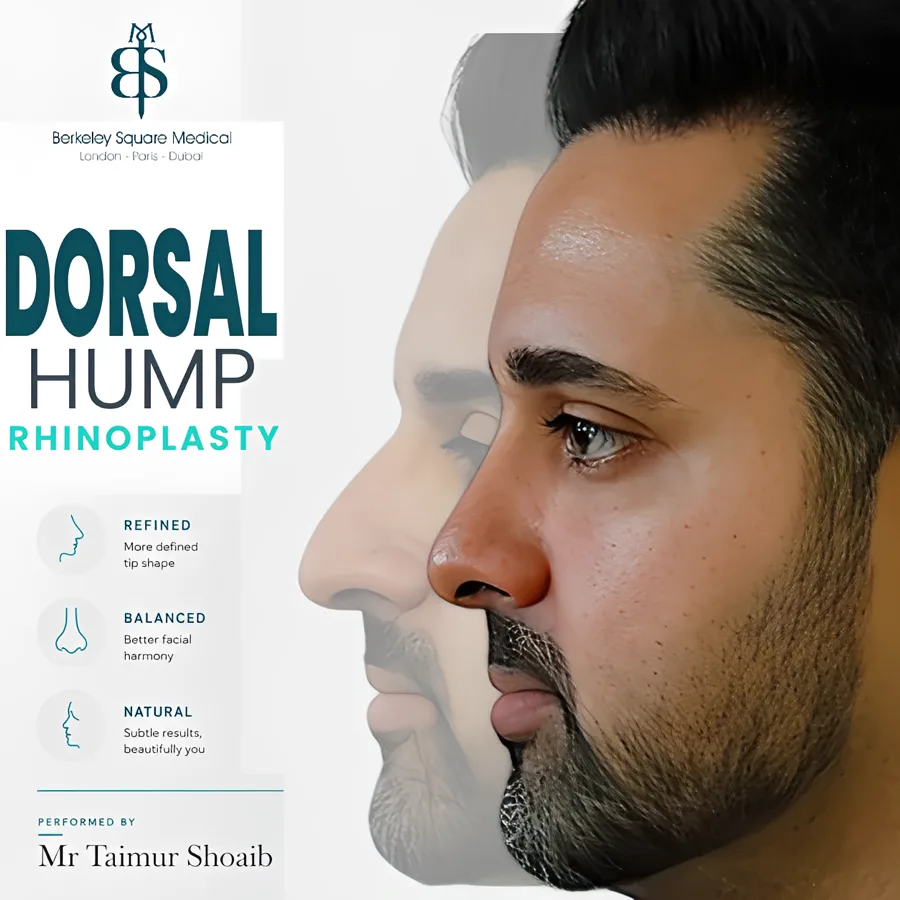 Dorsal Hump RhinoplastyRemoving a bump on the bridge for a straight profile.Read more
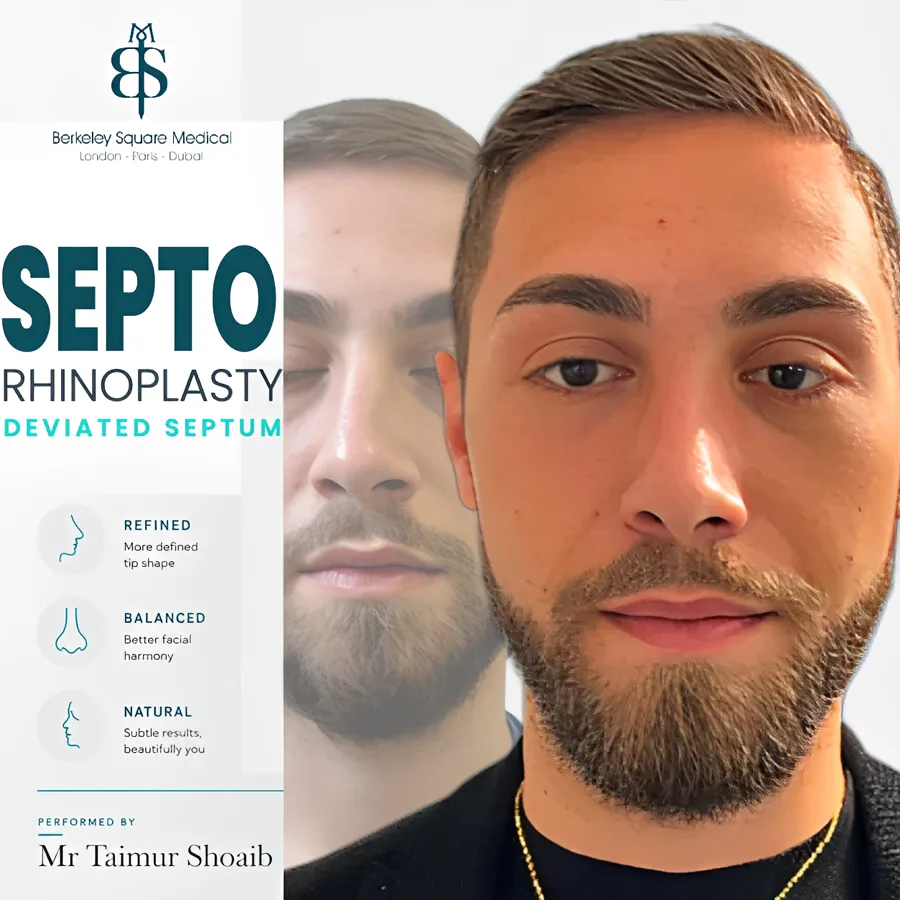 SeptorhinoplastyStraightening the nose and improving breathing.Read more
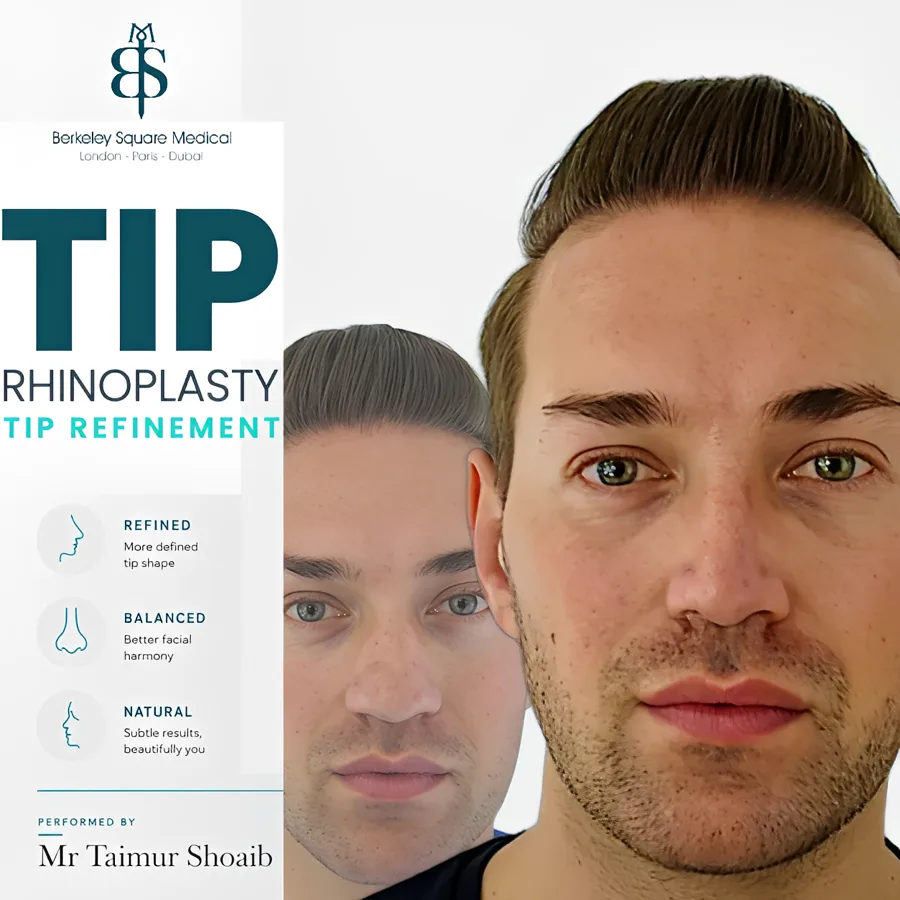 Tip RhinoplastyRefining a bulbous, drooping or asymmetrical tip.Read more
Specialised Rhinoplasty For Females
Explore our specialist procedures. Tap any card to read more.
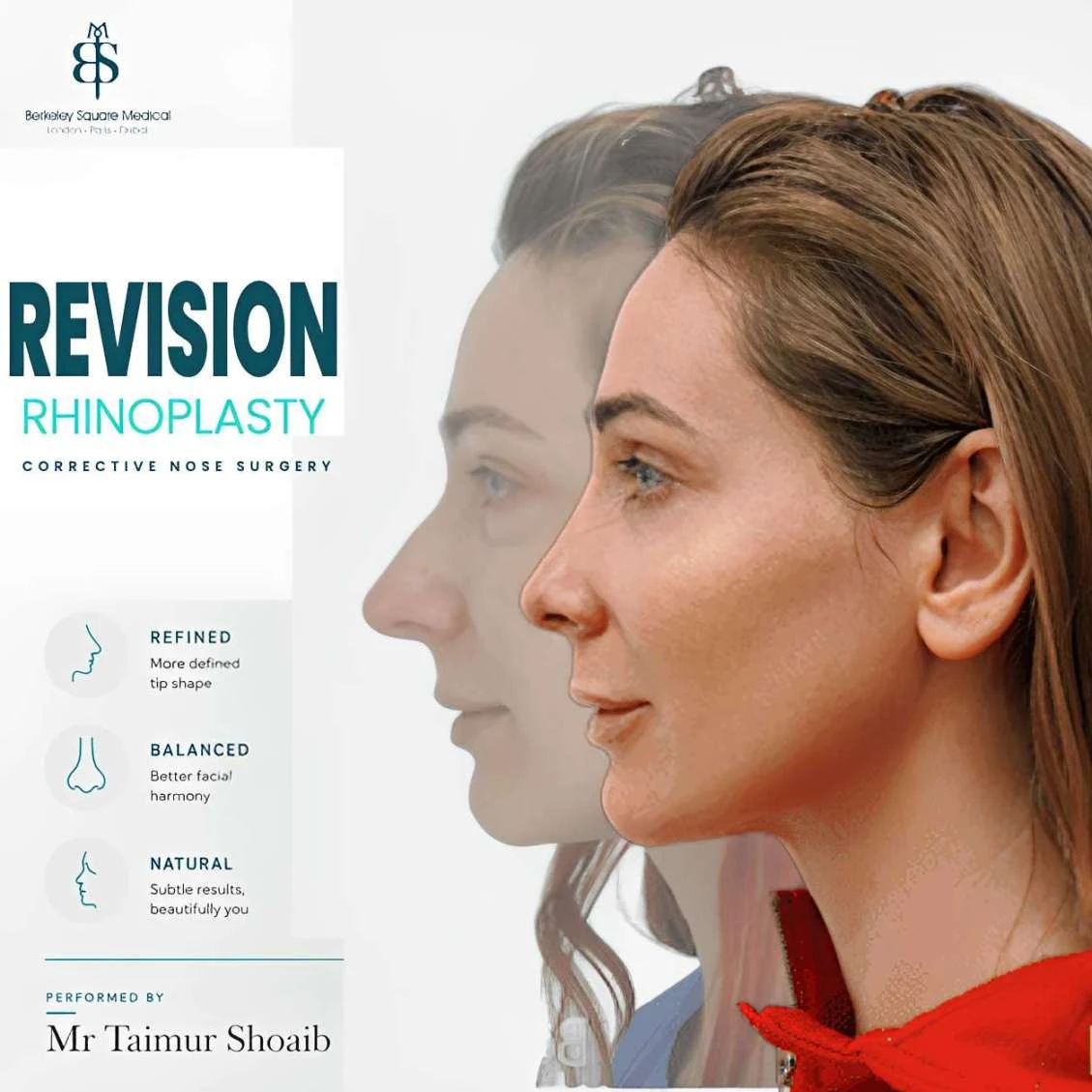 Revision RhinoplastyCorrecting or improving a previous rhinoplasty.Read more
 Dorsal Hump RhinoplastyRemoving a bump on the bridge for a straight profile.Read more
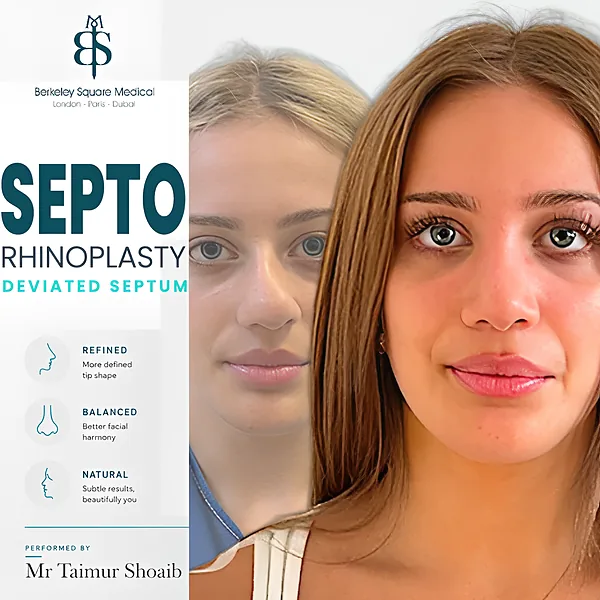 SeptorhinoplastyStraightening the nose and improving breathing.Read more
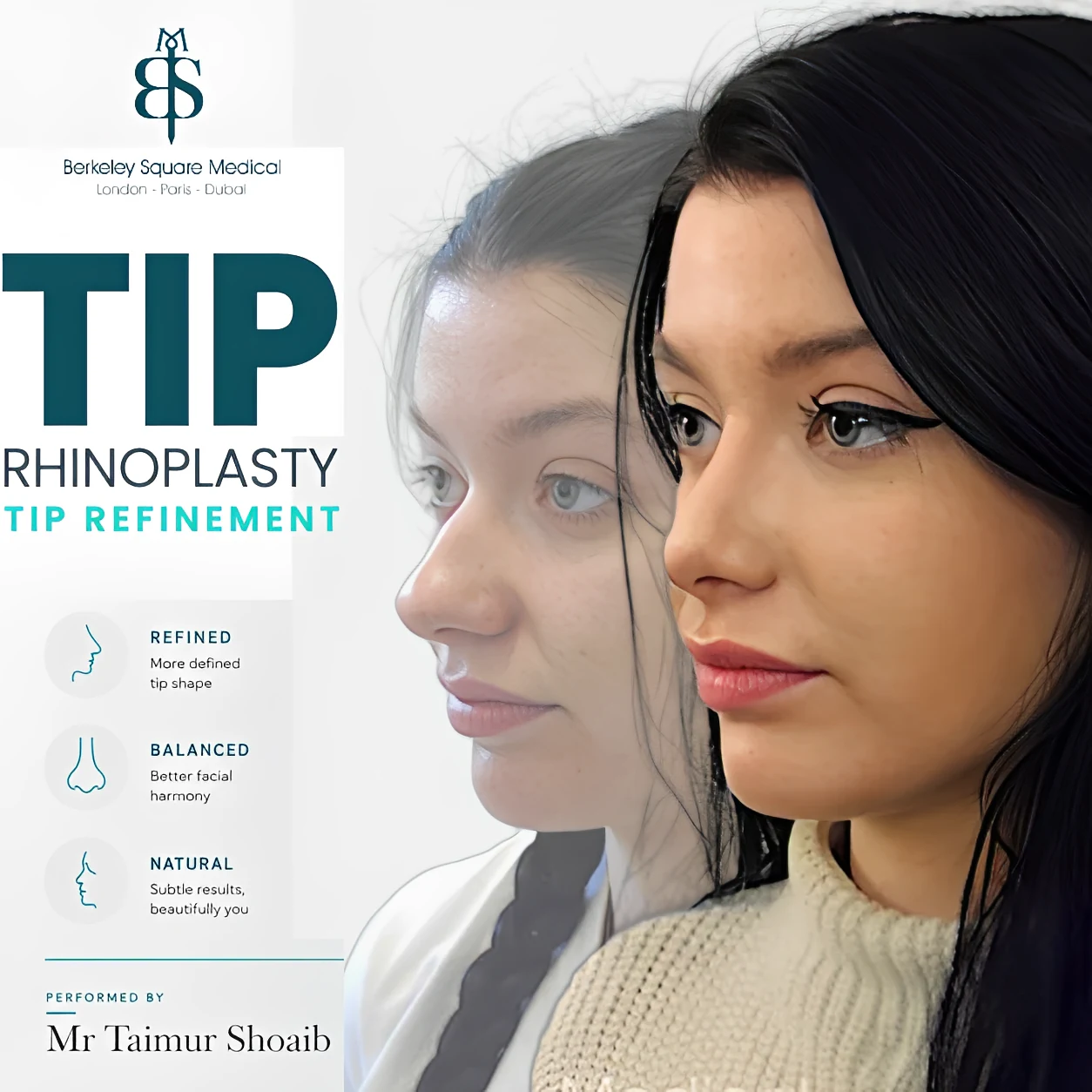 Tip RhinoplastyRefining a bulbous, drooping or asymmetrical tip.Read more
Considering rhinoplasty in London?
If you are weighing up your options in the UK, the next step is a consultation with Mr Taimur Shoaib at 64 Harley Street. Explore rhinoplasty at Berkeley Square Medical, see typical rhinoplasty costs in London, or read about septorhinoplasty in London if breathing is also a concern.
About the author