

Missing the gym is one of the most common frustrations after a nose job, and the advice online is vague. This guide gives you a clear, honest week-by-week timeline for getting back to exercise, activity by activity, with the reason behind each step. Almost all of it comes down to two things: a raised heart rate and blood pressure can cause bleeding and worsen swelling in the early weeks, and the healing bones and cartilage need time to settle without being stressed or knocked. As always, these are typical guides, so follow your own surgeon's advice.
Gentle walking is encouraged from day 1. Light exercise returns at 2 to 3 weeks, light jogging at 4 to 6 weeks, and heavy lifting and full workouts from 6 weeks or more once your surgeon clears you. Contact sport waits at least 6 weeks, and often 3 to 6 months.
How long after rhinoplasty can I exercise? A week-by-week timeline
Recovery is a gradual build-up, not a single date. This is the pattern most patients follow, guided by their surgeon:
| When | What you can do | What to avoid | Why |
|---|---|---|---|
| Days 1 to 7 | Gentle walking, moving around the house | Anything that raises your heart rate, bending, lifting | A raised heart rate and blood pressure can cause bleeding and more swelling, and bending puts your head lower, which raises pressure in the face |
| Weeks 2 to 3 | Brisk walking, a gentle stationary bike, light stretching | Running, weights, yoga inversions, contact | Strain still raises blood pressure, inversions put your head below your heart, and the bones are still knitting |
| Weeks 4 to 6 | Light jogging, the elliptical, lighter weights | Heavy lifting, HIIT, contact sport, sauna | Heavy lifts and breath-holding spike blood pressure, and heat widens blood vessels and increases swelling |
| 6 weeks + | A gradual return to full gym, running and lifting once cleared | Contact sport (often 3 to 6 months) | Contact sport carries the highest risk of a direct knock while the bones are still settling |
| 3 to 12 months | Everything, as the bones finish remodelling | Unprotected contact sport until your surgeon agrees | The nasal bones keep remodelling for up to a year, so protect against knocks until cleared |
If you feel throbbing in your nose while exercising, stop and rest. It usually means the effort is raising the pressure in your nose more than it is ready for at this stage. If it does not settle with rest, or comes with bleeding or new swelling, see the warning signs below.
Why do I have to wait to exercise?
There are two clear reasons, and together they explain every timing on this page:
- Exercise raises your heart rate and blood pressure, which in the early weeks can cause bleeding or a collection of blood (a haematoma), and pushes more blood to the healing tissues so swelling gets worse and takes longer to settle. That delays seeing your final result.
- The healing structures need to settle. The nasal bones and cartilage are still knitting for weeks, so a jolt, a knock or repeated strain before they are stable is best avoided.
Exercise after rhinoplasty, activity by activity
Walking
Gentle walking is not only allowed but generally encouraged from day 1 for most patients, unless your surgeon advises otherwise. It keeps your circulation moving, lowers the risk of clots and genuinely helps recovery, as long as you keep it gentle and do not let yourself get breathless or overheated early on.
The gym and weights
Lighter weights return at around 4 weeks and heavier lifting from 6 weeks or more, built up gradually. A simple test for whether a weight is too heavy for this phase: if you have to hold your breath and strain to lift it, it is too heavy for now. That breath-holding strain (the Valsalva manoeuvre) spikes your blood pressure exactly where you do not want it.
Running, cardio and HIIT
Light jogging and the elliptical are usually fine from about 4 to 6 weeks, with harder cardio and HIIT a little later. Build up slowly. It is common to "feel" each footfall in your nose when you first run again, and even to notice it faintly months later, which is the tissues still settling rather than a sign of damage, but if running brings on throbbing or swelling, ease back and give it more time.
Squats, deadlifts and heavy lifts
Heavy compound lifts raise the pressure inside your abdomen and chest, which pushes your blood pressure up, so they belong in the 6 weeks and beyond group and should be reintroduced gradually. The same breath-holding rule applies.
Yoga and Pilates
Gentle Pilates and easy stretching can return around 2 to 3 weeks, but inversions such as downward dog or headstands put your head below your heart, which raises pressure in the face and nose, so leave those until about 3 to 4 weeks or later and reintroduce them slowly. Hot yoga is a separate issue, covered below.
Swimming
Wait until your splint is off and any incisions have fully healed, usually around 2 to 4 weeks, before gentle swimming, and keep your face out of the water at first. Leave diving and any goggle pressure on the nose for longer, and be aware that chlorine can irritate a healing nose.
Boxing and contact sports
These carry the highest risk of a direct knock, so they wait the longest: at least 6 weeks, and often 3 to 6 months. The nasal bones keep remodelling for up to a year, so when you do return, do it only with your surgeon's agreement and, where possible, protective headgear or a face guard.
Sauna, steam room and hot yoga
Heat is the issue here. A sauna, steam room or hot yoga class dilates blood vessels and increases swelling, so avoid them for at least 4 weeks, and often longer while any swelling is still settling. Reintroduce heat gradually and stop if your nose feels more swollen or throbbing afterwards.
Warning signs to stop
Whatever the activity, stop and rest if you notice any of these, and contact your surgeon if they do not settle quickly:
- New or worsening pain in the nose.
- Throbbing that builds during or after exercise.
- A clear increase in swelling.
- Any bleeding from the nose.
- A fever, spreading redness or any discharge, which can suggest infection and should be checked promptly.
None of these mean disaster, but they are your body telling you to ease off and give it more time.
I went back too early, or I really miss the gym
First, the reassurance: if you did more than you should have and your nose throbbed or swelled a little afterwards, it almost always settles with rest, and it is not the same as ruining your result. The genuine risks of returning too soon are a nosebleed or haematoma from the raised blood pressure, and, more rarely, an effect on the result if the nose is knocked or the bones are stressed before they have set, which is why a runner who takes a hard fall or trains hard too early is the real cautionary tale, not someone who walks and stretches. If you have overdone it, drink plenty of water, rest with your head elevated, and contact your surgeon if you have bleeding that will not settle or swelling that keeps increasing. If you are simply itching to get back, use the walking and gentle-movement window fully, it genuinely helps, and build from there.
Exercise, and the rest of your recovery
A couple of related points sit on their own pages. If you have read that "nose exercises" can reshape your nose, that is a myth, explained in our guide to nose massage after rhinoplasty. Because caffeine and alcohol also raise your blood pressure, see drinking after rhinoplasty for how those fit in, and the way swelling rises and falls over the months is covered in swelling after rhinoplasty.
Specialised Rhinoplasty For Men
Explore our specialist procedures. Tap any card to read more.
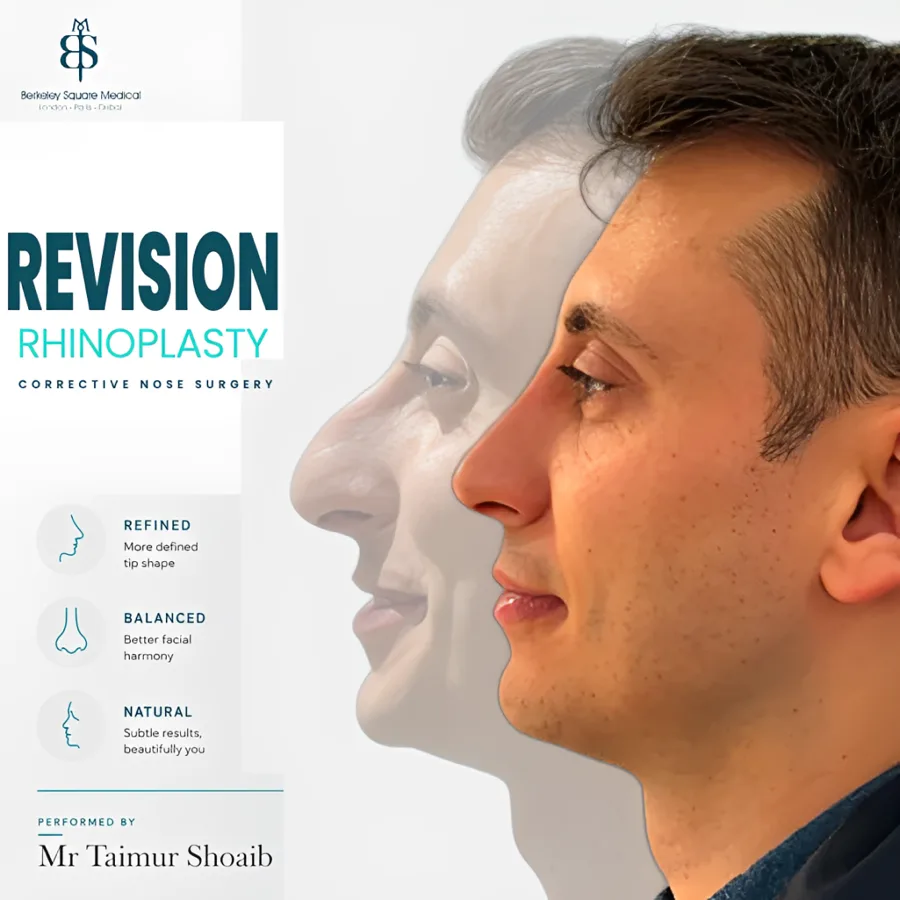 Revision RhinoplastyCorrecting or improving a previous rhinoplasty.Read more
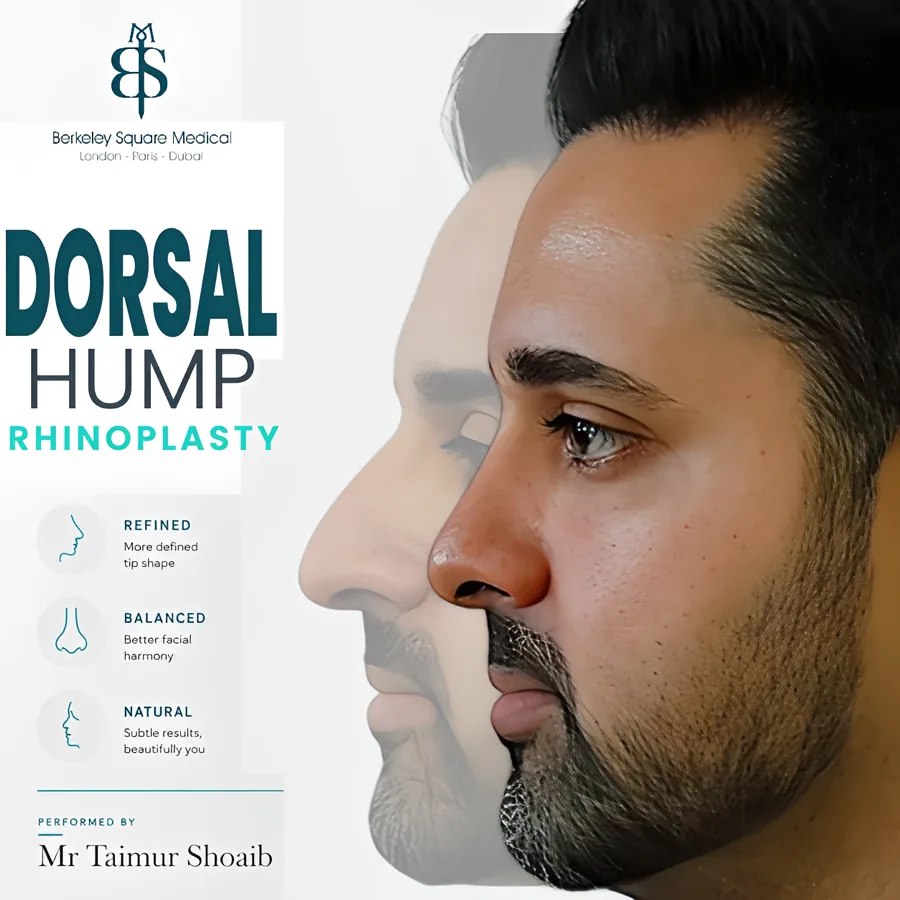 Dorsal Hump RhinoplastyRemoving a bump on the bridge for a straight profile.Read more
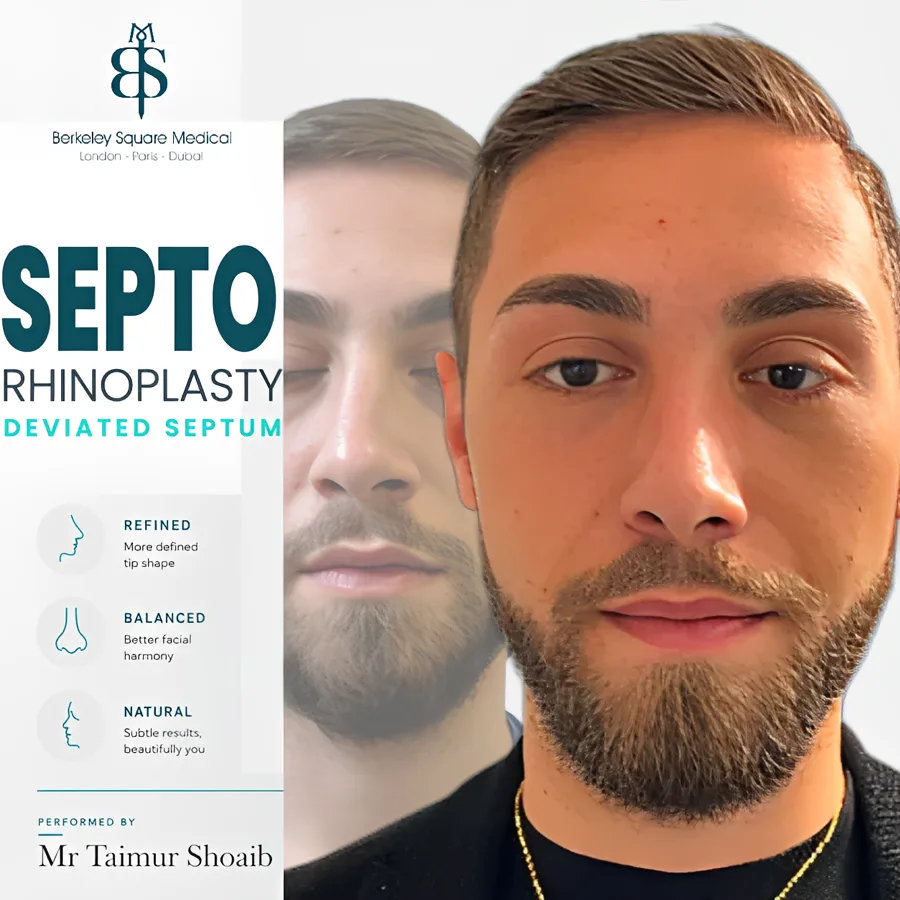 SeptorhinoplastyStraightening the nose and improving breathing.Read more
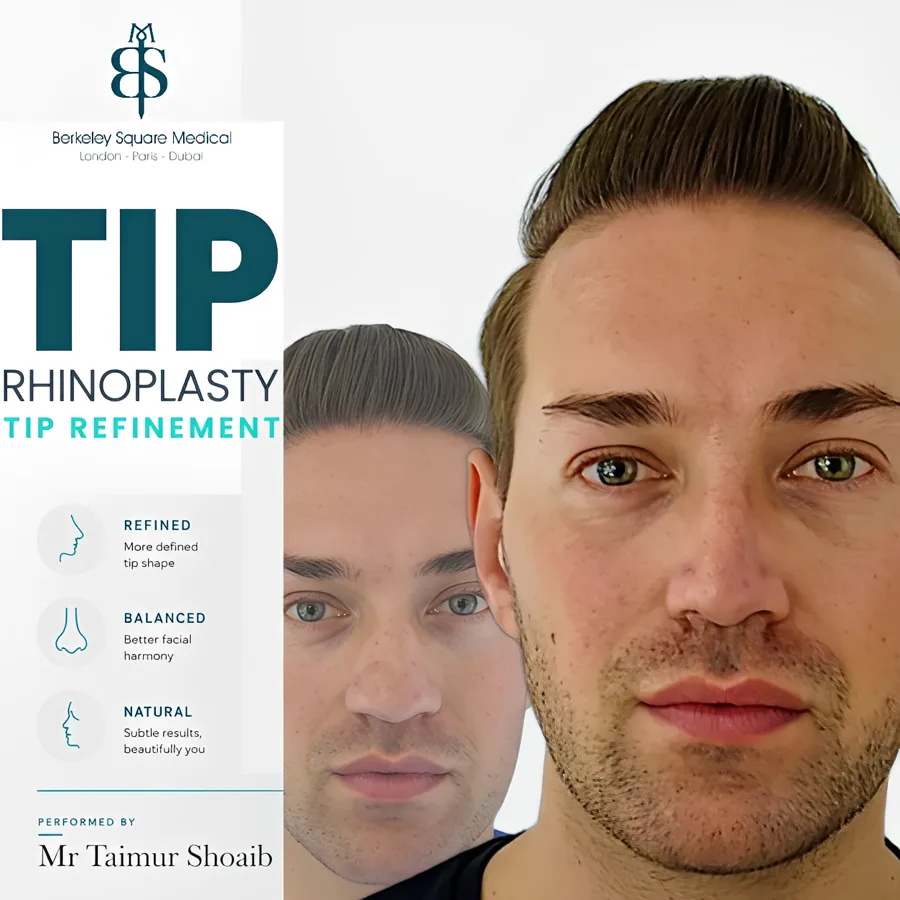 Tip RhinoplastyRefining a bulbous, drooping or asymmetrical tip.Read more
Specialised Rhinoplasty For Females
Explore our specialist procedures. Tap any card to read more.
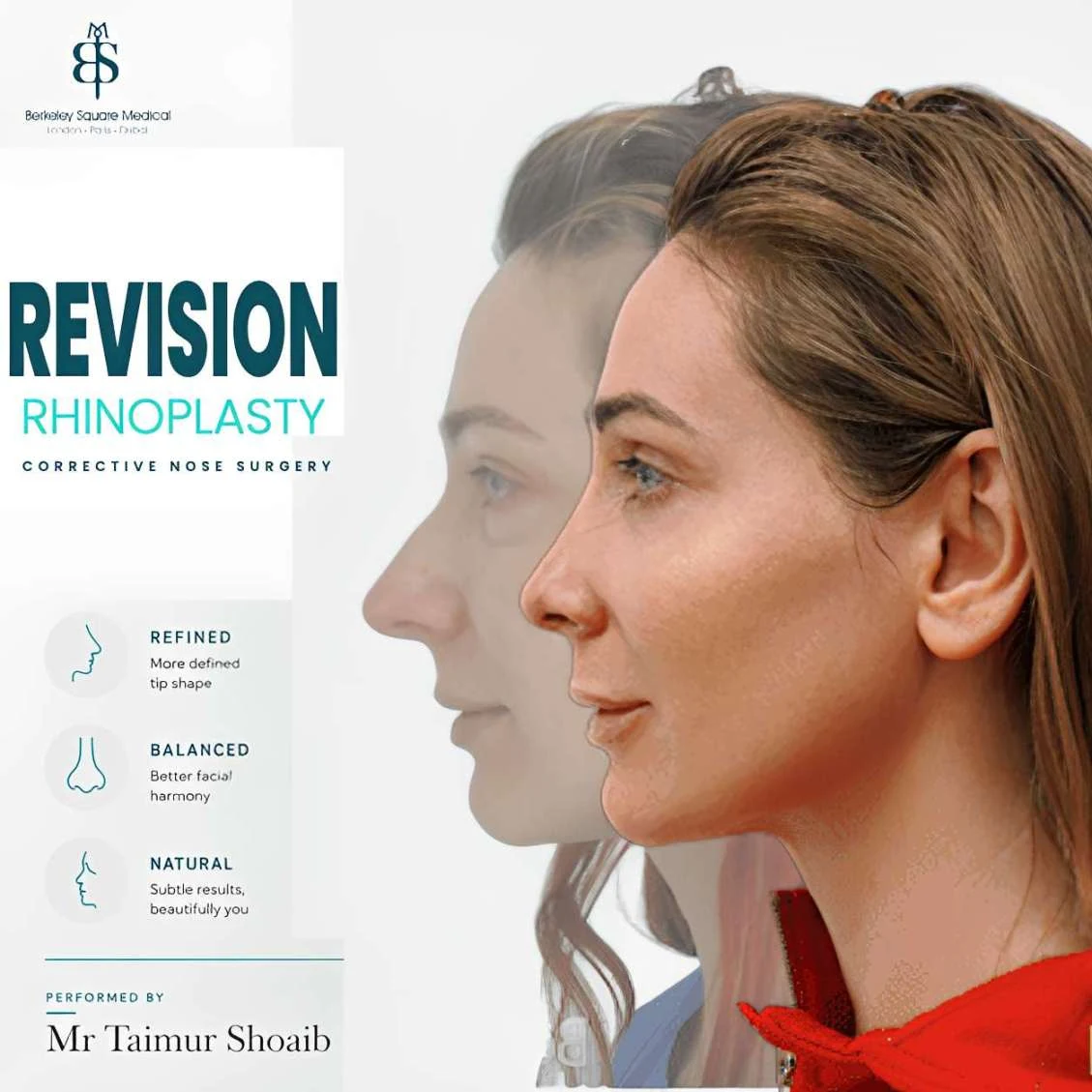 Revision RhinoplastyCorrecting or improving a previous rhinoplasty.Read more
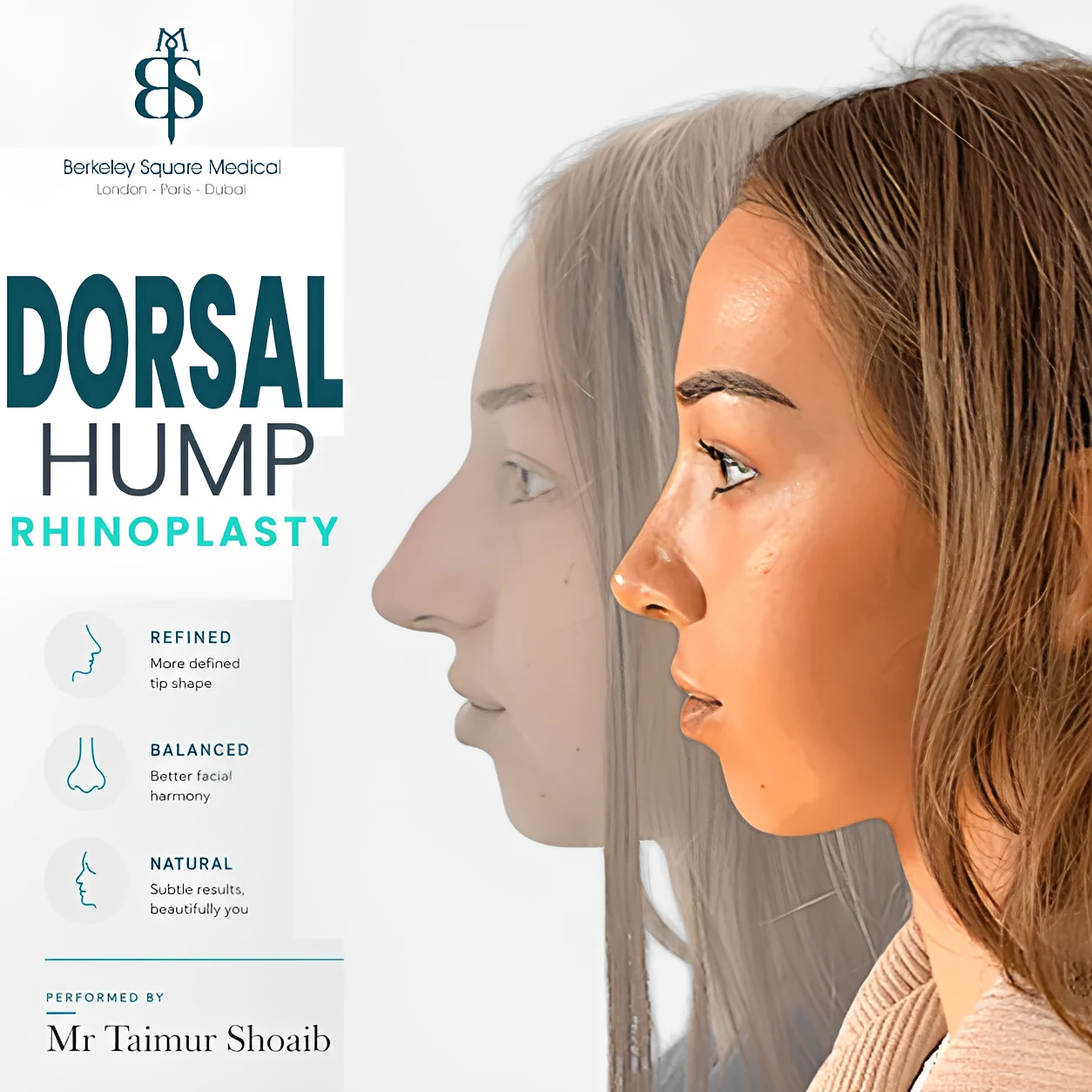 Dorsal Hump RhinoplastyRemoving a bump on the bridge for a straight profile.Read more
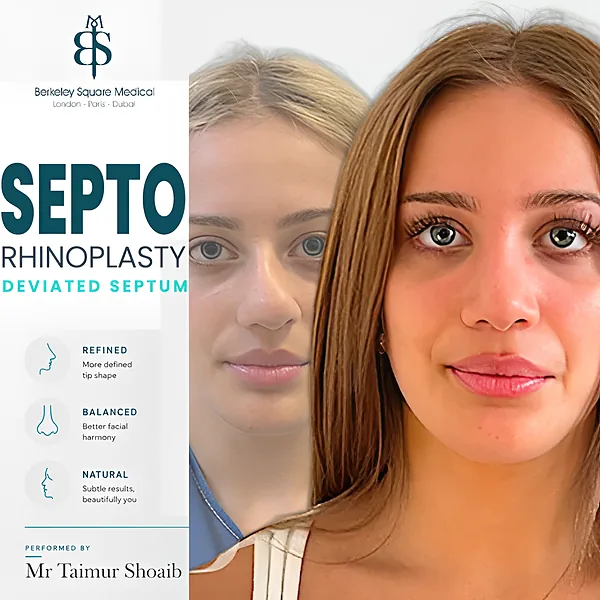 SeptorhinoplastyStraightening the nose and improving breathing.Read more
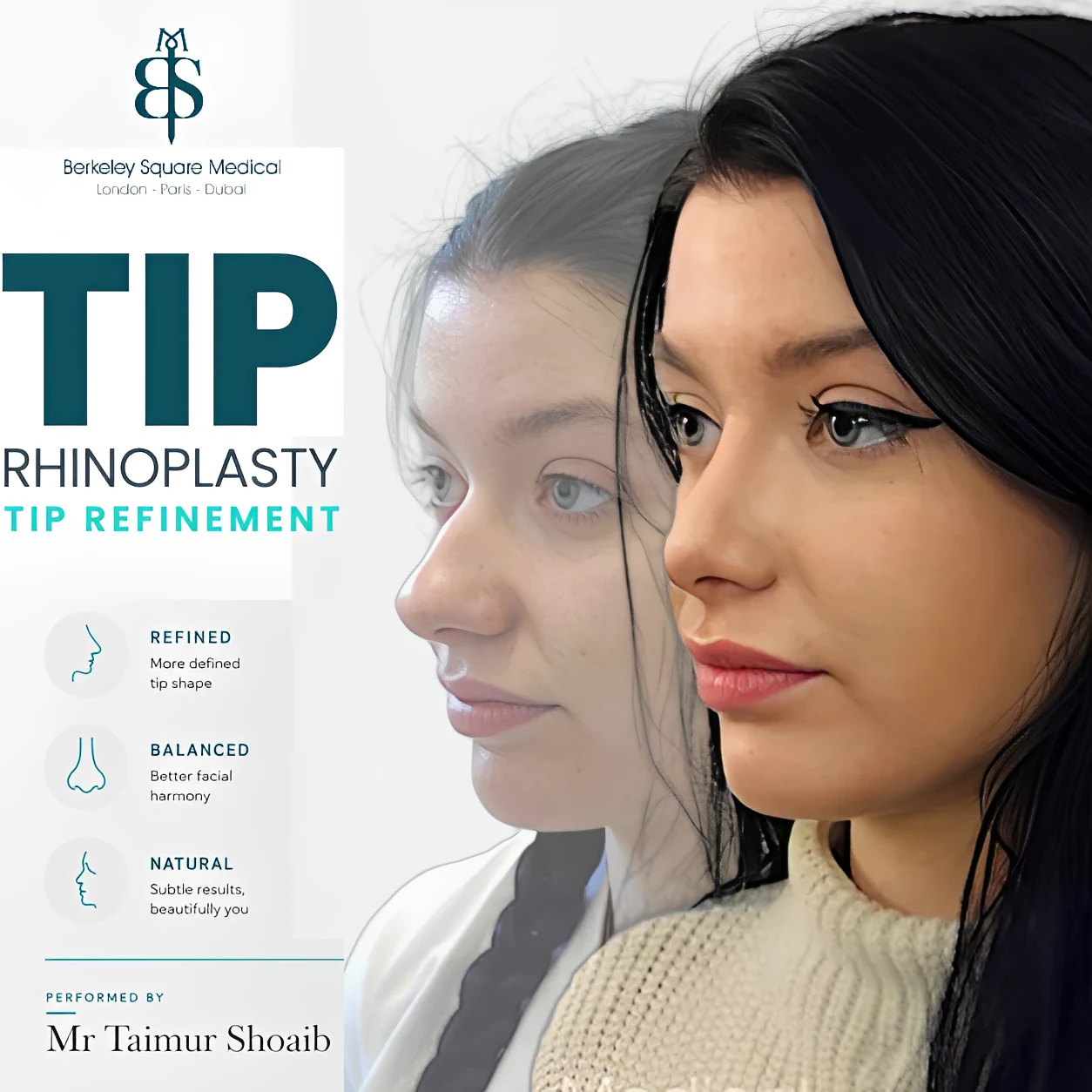 Tip RhinoplastyRefining a bulbous, drooping or asymmetrical tip.Read more
Considering rhinoplasty in London?
If you are weighing up your options in the UK, the next step is a consultation with Mr Taimur Shoaib at 64 Harley Street. Explore rhinoplasty at Berkeley Square Medical, see typical rhinoplasty costs in London, or read about septorhinoplasty in London if breathing is also a concern.
About the author