
0330 058 0212

Scarring is one of the most common concerns for patients considering a breast lift (mastopexy). While incisions are a necessary part of the procedure, their size, location, and long-term visibility can vary widely. This article covers what breast lift scars typically look like, how they heal, and the steps that can be taken to reduce their appearance over time. It also explains the different surgical techniques and aftercare practices that influence scarring, helping patients make informed decisions before surgery.
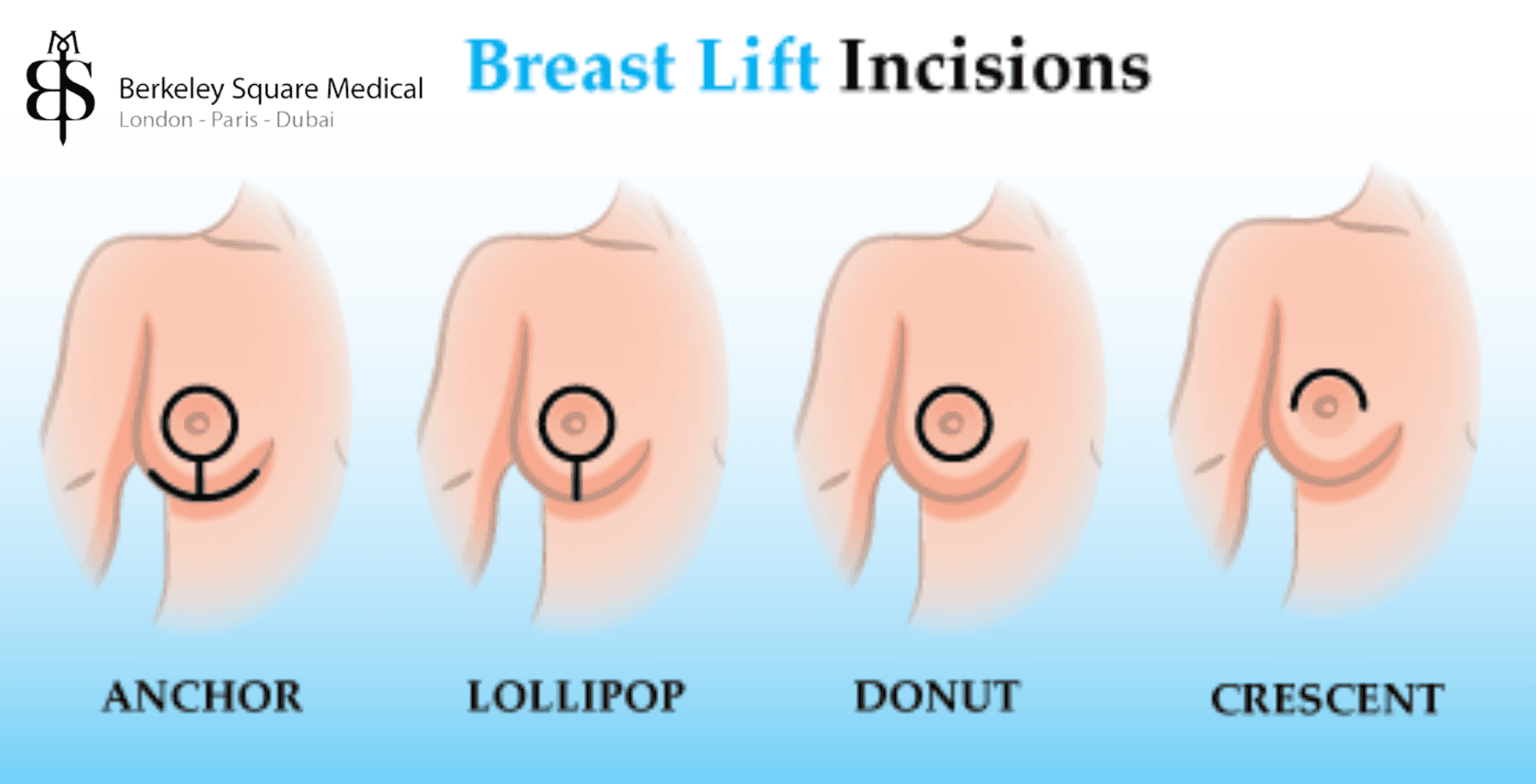
All breast lift techniques leave scars, but their size and position vary. Donut, Crescent, Lollipop, Anchor, and Horizontal lifts each use different incision patterns, which change how visible the scars are.
Scars evolve over 12–18 months, not weeks. They usually start red and raised in the first 3 months, then gradually flatten and fade over the first year, often becoming much less noticeable by 12–18 months.
Skin type and genetics strongly influence scar appearance. Darker skin tones and people prone to keloids or hypertrophic scars may need closer follow-up and proactive scar management.
Your surgeon and aftercare choices matter as much as the technique. Precise incision placement, careful suturing, not smoking, avoiding strain and sun exposure, and following post-op instructions all help scars heal better.
Simple at-home measures can significantly improve scars. Silicone gels or sheets, good hygiene, supportive bras, correct sleeping position, and good nutrition all support healthier scar formation.
More visible or problematic scars can often be improved. Options like laser therapy, steroid injections, microneedling, scar revision surgery and medical camouflage can reduce raised, pigmented or uneven scars when needed.
Several techniques can be used for a breast lift, each resulting in different types and extents of scarring. Here is an overview of the most common techniques and the associated scars:
The Donut Technique involves a circular incision around the areola. This method is ideal for patients needing minimal lift. The scar is typically well-hidden along the natural border of the areola, making it less noticeable due to the colour difference between the areola and surrounding skin.
The Crescent Technique involves a small, crescent-shaped incision along the upper half of the areola. This technique is suitable for minor lifts and can be particularly effective when combined with other breast procedures. The scar is discreetly positioned around the upper edge of the areola.
The Lollipop Technique, or vertical lift, includes an incision around the areola and a vertical incision from the bottom of the areola to the breast crease. This method provides more significant lift and reshaping. The resulting scars are more visible than those from the Donut or Crescent techniques but can still be well-concealed with proper care.
The Anchor Technique, also known as the Inverted-T lift, involves three incisions: around the areola, vertically from the areola to the breast crease, and horizontally along the breast crease. This method is used for the most substantial lifts and reshaping. While it results in more extensive scarring, these scars can be strategically placed to be less noticeable and are often hidden in the natural breast fold.
Though less commonly used, the horizontal lift involves an incision along the breast crease without any vertical or areolar incisions. It’s typically reserved for patients requiring minimal correction to the lower part of the breast. Scarring is generally limited to the inframammary fold.
Scars from a breast lift go through several stages of healing. Initially, they may appear red, raised, and slightly swollen. Over time, they generally flatten and fade in colour.
Factors such as sun exposure, proper wound care, and skin type significantly influence how quickly scars fade. Some patients may benefit from scar treatments during this period to speed up the process or improve outcomes.
Not all scars heal the same way. Depending on your skin type, genetics, and healing process, you may experience:
Your surgeon can advise on strategies to minimise or treat these scar types. Early intervention is key to managing hypertrophic and keloid scarring.
People with darker skin tones are more prone to hyperpigmentation, hypertrophic scars, and keloids, so breast lift scars may stay darker or slightly raised for longer than on lighter skin. This doesn’t mean you can’t have good cosmetic results, but it does mean scar prevention is especially important.
Strict sun protection over the incision lines, early use of silicone gel or sheets once the wounds are closed, and avoiding tension on the scars (no unsupported heavy lifting or stretching early on) all help reduce the risk of thick or dark scars. If scars do become raised or very noticeable, treatments such as steroid injections, laser therapy, or microneedling can often improve their appearance—your surgeon can recommend the safest option for your skin type.
The extent and visibility of scarring after a breast lift are influenced by several factors, each contributing to the overall healing process and final appearance of the scars:
Proper care before and after the surgery is essential for optimal scar healing. Here are key considerations and steps to ensure the best outcomes:
If scars are more visible than desired, several treatment options may help:
Always consult your surgeon before pursuing additional treatments. Many of these interventions work best when started within a few months post-op.
Breast lift (mastopexy) scars fade significantly over 6–18 months and often become flat and much less noticeable, but they do not disappear entirely. A skilled surgeon and good aftercare can make them subtle enough to be hidden by normal clothing and bras.
Your scars depend on the technique used. Donut and Crescent lifts leave scars around the areola, while Lollipop and Anchor lifts create a vertical scar (and sometimes a horizontal scar in the breast crease). Early on they look red or pink, then gradually flatten and fade to a paler line.
Incisions usually close within 2–3 weeks, but scar maturation takes much longer. Most patients see major improvement in colour and texture by 6–12 months, with continued fading up to 18–24 months.
A Crescent scar is a small, crescent-shaped line along the upper edge of the areola, used for very mild lifts. A Donut scar (periareolar) runs in a circle around the areola and is used for slightly greater lifting. Both are designed to hide the scar where the darker areolar skin meets the lighter breast skin.
Yes. Patients with darker skin tones can be more prone to hyperpigmentation, raised (hypertrophic) scars, or keloids. Careful surgical technique, strict sun protection, silicone therapy, and early treatment of any raised areas are especially important for minimising breast lift scars on dark or black skin.
Follow your surgeon’s post-operative instructions, avoid smoking, protect scars from the sun, wear your support bra, and don’t over-exert during healing. Once the incisions are closed, treatments like silicone gel or sheets and good moisturising can help scars flatten and fade.
Raised, thick, or itchy scars may be hypertrophic or keloid. Options such as silicone sheets, steroid injections, laser therapy, microneedling, or scar revision surgery can improve their appearance. Your surgeon or a dermatologist can recommend the most appropriate treatment.
No surgical breast lift is truly scarless, because skin must be removed to lift and reshape the breast. However, limited techniques like Crescent or Donut lifts use shorter incisions, and careful placement along the areola or breast crease makes scars far less visible over time.
It’s completely natural to feel concerned about breast lift scars. The good news is that with a skilled surgeon, proper aftercare, and some patience, most patients find that their scars fade significantly and are well-hidden by natural breast contours. Understanding the healing timeline and proactively managing scar care can make a meaningful difference in long-term outcomes.
If you have concerns about scarring or want to understand more about the options available to you, a consultation with an experienced surgeon is the best next step.
For more information about Breast Lift Surgery , visit our Breast Lift Page or contact us at [email protected] to arrange a consultation with our team of Consultant Breast Lift Surgeons.


Patient Journey We are here to guide you to make the right decision for your well-being. If you are considering an aesthetic change to your appearance, we know that it’s one of the most important and personal decisions you wish to make. Therefore you need to be certain that the medical advice you receive is […]

Patient Aftercare All cosmetic surgery procedures at Berkeley Square Medical come with a comprehensive aftercare package and a 24-hour service so you can be assured you are always under the care and guidance of our surgical team. All your immediate aftercare is included in the cost of your surgery so there are no hidden extras in our […]

If you are considering Cosmetic Surgery, we understand that it's probably one of the most important decisions you're likely to make, therefore, you need to be sure it's right for you and you receive professional and independent advice about your procedure.

Our Philosophy We began our journey setting foot in the highly fashionable area of Berkeley Square, Mayfair where luxury fashion, galleries and five-star hotels all conveniently meet to set the example for world-leading client services and experience. Our goal was to create a cosmetic surgery practice that would not only exceed patients’ expectations but provide […]

