
What is alar base reduction?
Narrowing wide or flaring nostrils
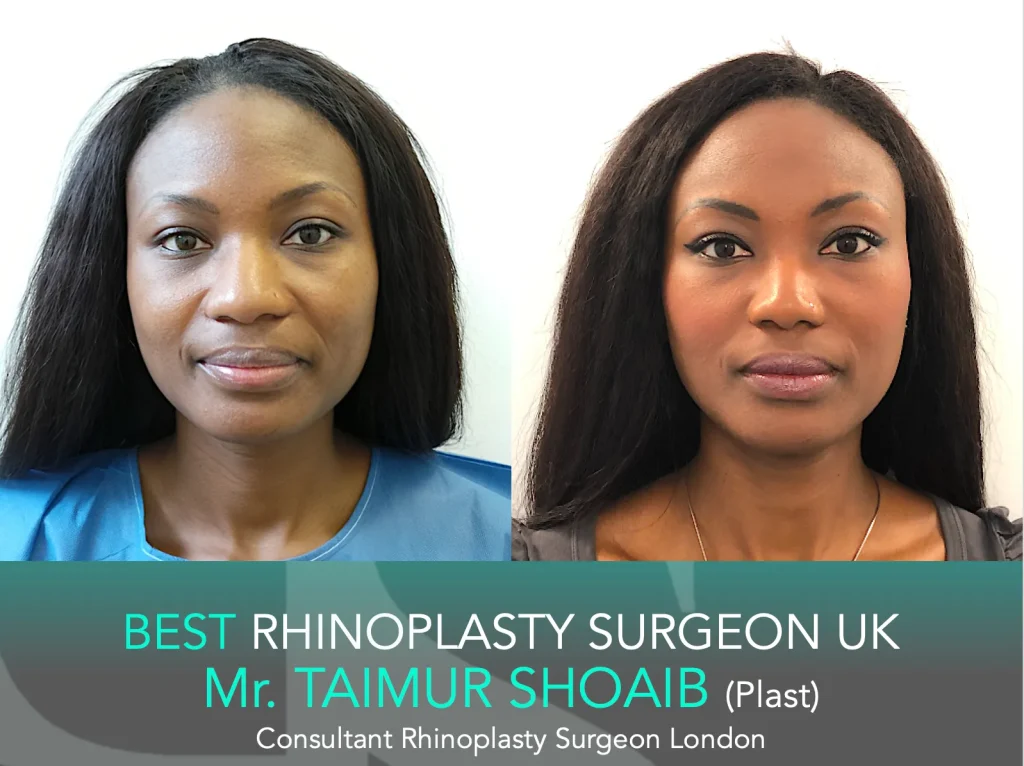
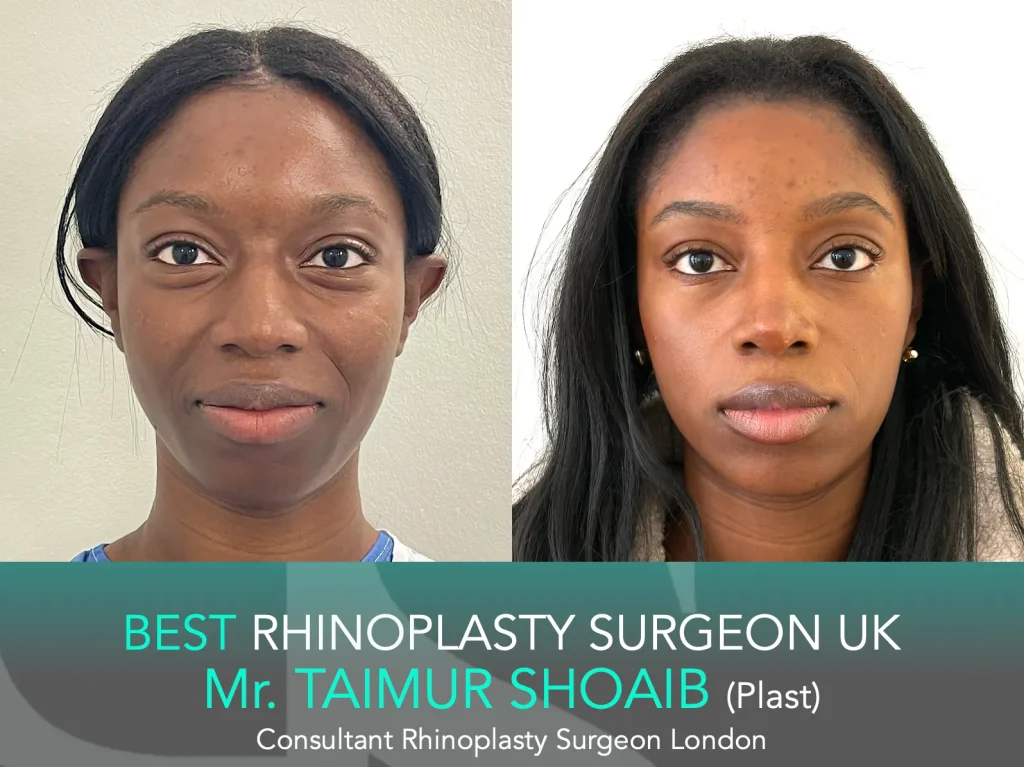
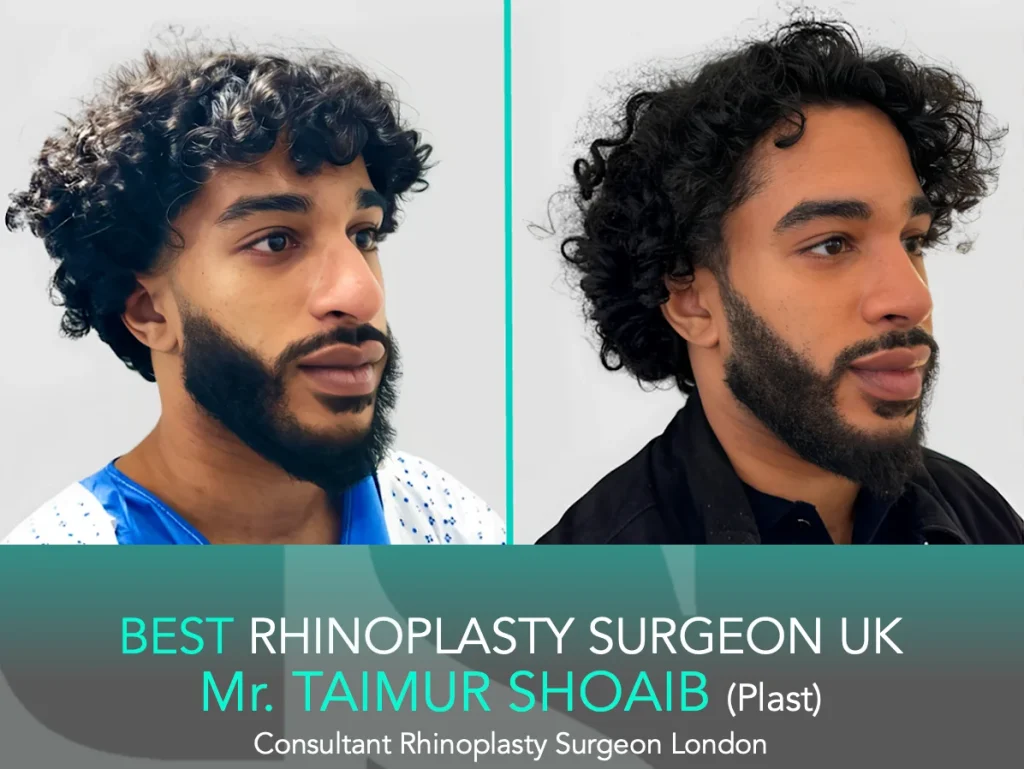
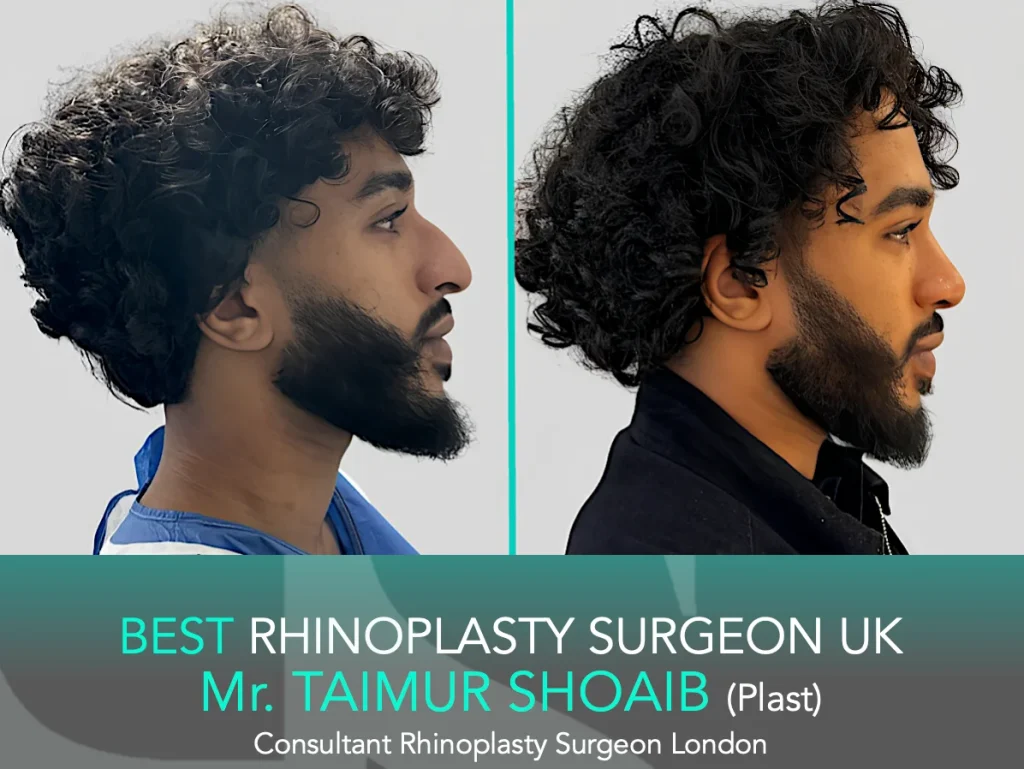
Alar base reduction, also called alarplasty or nostril reduction, is a precise operation that narrows the base of the nose where wide or flaring nostrils make the nose look broad from the front. The "alar base" is the part of each nostril that meets the cheek and the top lip, and reducing it brings the bottom third of the nose into better proportion. It can be done on its own, for people happy with the rest of their nose, or as one part of a fuller rhinoplasty.
Wide or flaring nostrils are a normal feature of many ethnic noses, not a fault, so the aim is never to erase that character. Where the width bothers you, alarplasty refines the nostrils while keeping the nose unmistakably yours.
Do you need alarplasty, a full rhinoplasty, or both?
Matching the operation to the problem
This is the question that matters most, and getting it right is what separates a natural result from an odd one. The giveaway is whether the width is only at the nostrils, or runs the length of the nose. The honest guide is simple:
- Alarplasty alone suits you if the width is purely at the nostrils and you are happy with the bridge and tip. It is a smaller operation with a quicker recovery, and the least expensive of the three (see typical rhinoplasty costs in London).
- A full rhinoplasty is needed if the whole nose looks broad, or the tip is wide or under-projected, because narrowing only the nostrils then looks out of balance with everything above it.
- Both together is common: alar base reduction is very often the finishing step of a wide nose rhinoplasty, done after the bridge and tip so the whole nose narrows in harmony.
At your consultation Mr Shoaib will tell you honestly which of these applies. If your nostrils are already in proportion, he will say so rather than operate for the sake of it. Unsure which applies to you? That is exactly what a London consultation is for.
How alar base reduction is done
Weir excision, nostril sill, or both
Narrowing the nostrils is not one single technique. Which one is used depends on whether the problem is flare (the nostrils spread outward) or width (the whole base sits too wide), and the two are often combined:
- Weir excision. A small wedge of skin is removed from the outer nostril wall to reduce flaring. The incision sits in the alar crease, the natural fold where the nostril meets the cheek, so it is hidden.
- Nostril sill excision. Tissue is taken from the base of the nostril near the lip to narrow the distance between the two nostrils where the width, rather than the flare, is the issue.
- Combined. Where a nose is both wide and flaring, the two are used together, tailored to the exact shape of your nostrils rather than a one-size template.
The work is millimetre-precise: a fraction too much and the nostrils look pinched, too little and nothing changes, which is why alarplasty rewards an experienced eye. Mr Shoaib works conservatively, taking a little less rather than a little too much, because it is far easier to refine further later than to rebuild a nostril that has been over-reduced. The deep sutures dissolve on their own, and the fine visible ones are removed at about five to seven days.
Does alar base reduction leave a scar?
Keloid risk and honest expectations
Any incision leaves a scar, so the honest answer is yes, there is a scar, but it is placed in the alar crease where the nostril meets the cheek, and in most people it settles to a fine line that is very hard to see. Careful, tension-free closure is what keeps it discreet.
One risk factor deserves plain honesty: a personal or family tendency to keloid or thickened (hypertrophic) scars, which is more common in some skin types, can make the scar more noticeable. Because alarplasty is one of the operations we perform most often for Afro-Caribbean, South Asian and Middle Eastern patients, it is a conversation we have regularly and take seriously. Mr Shoaib will assess your individual scarring risk and explain exactly how it is managed before you decide.
Alar base reduction for men
Narrower nostrils, still a strong nose
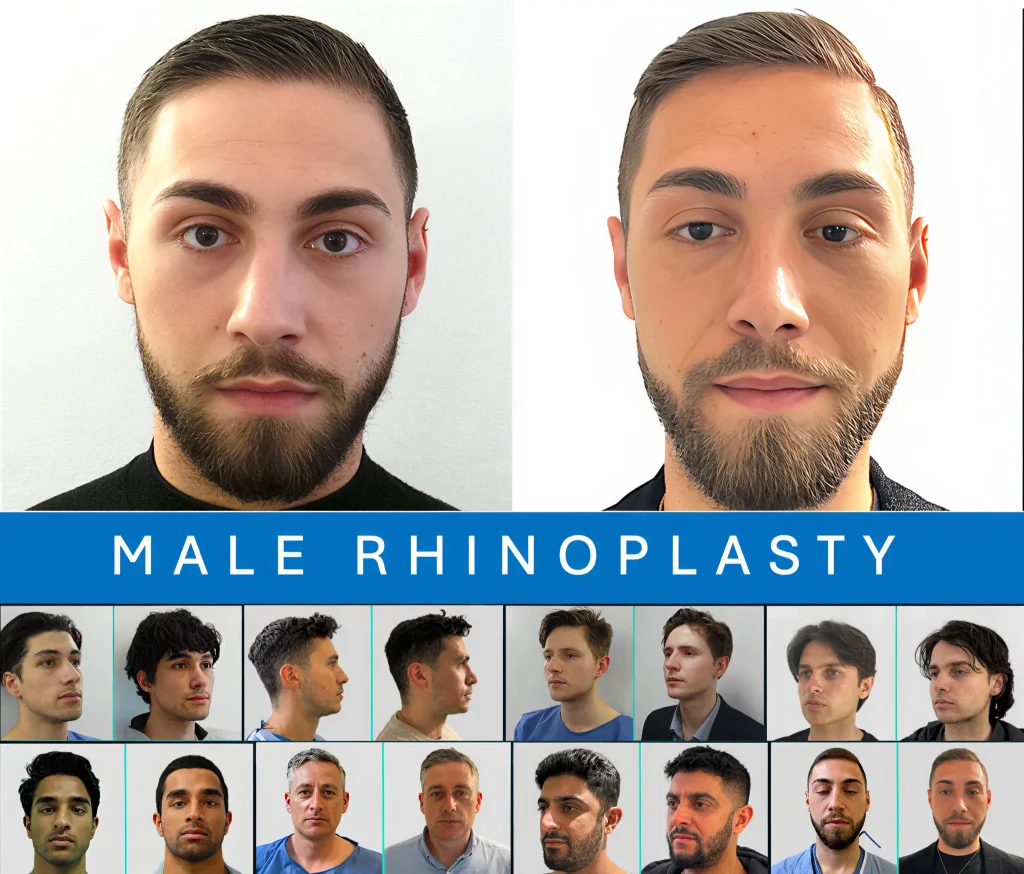
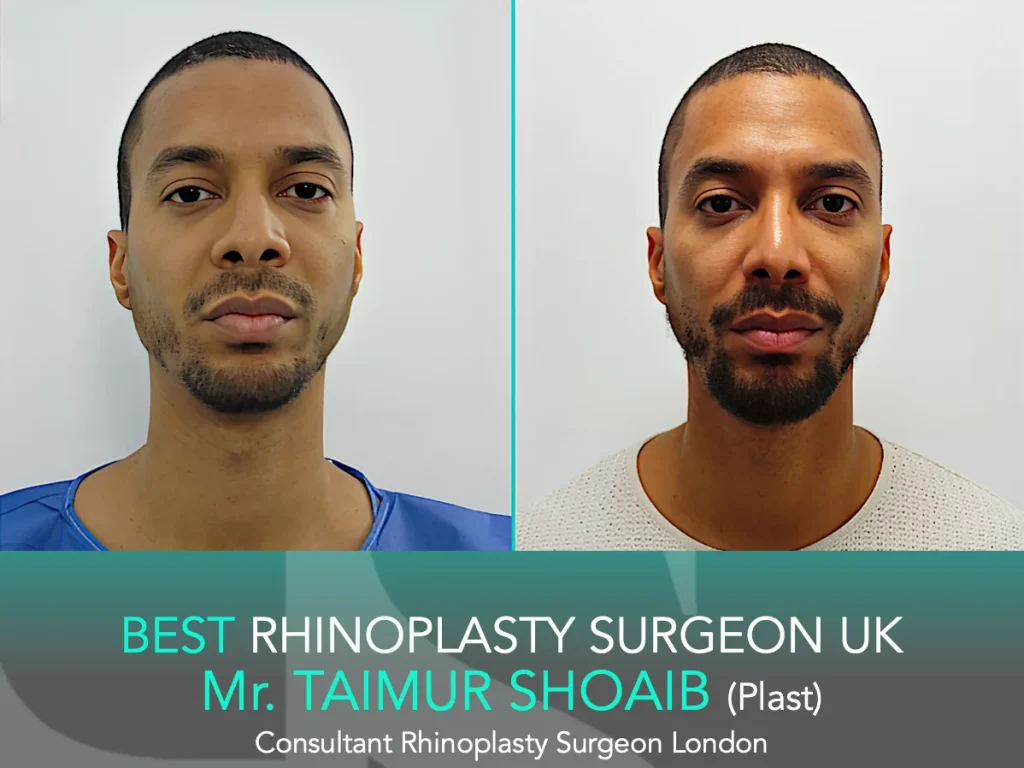
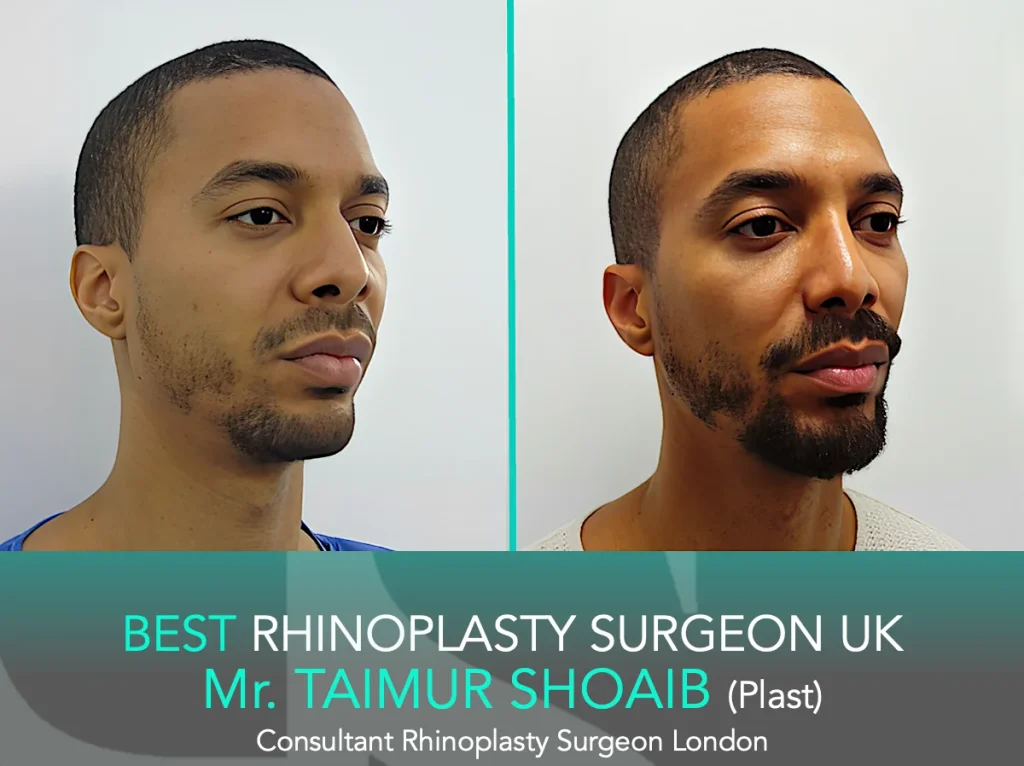
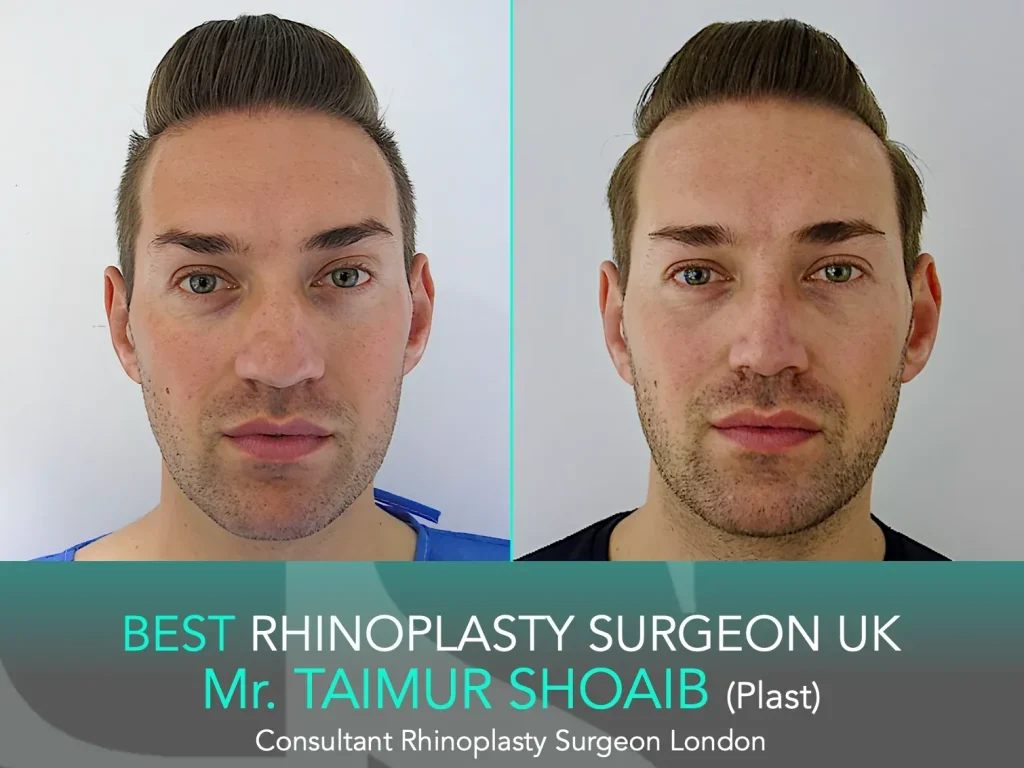
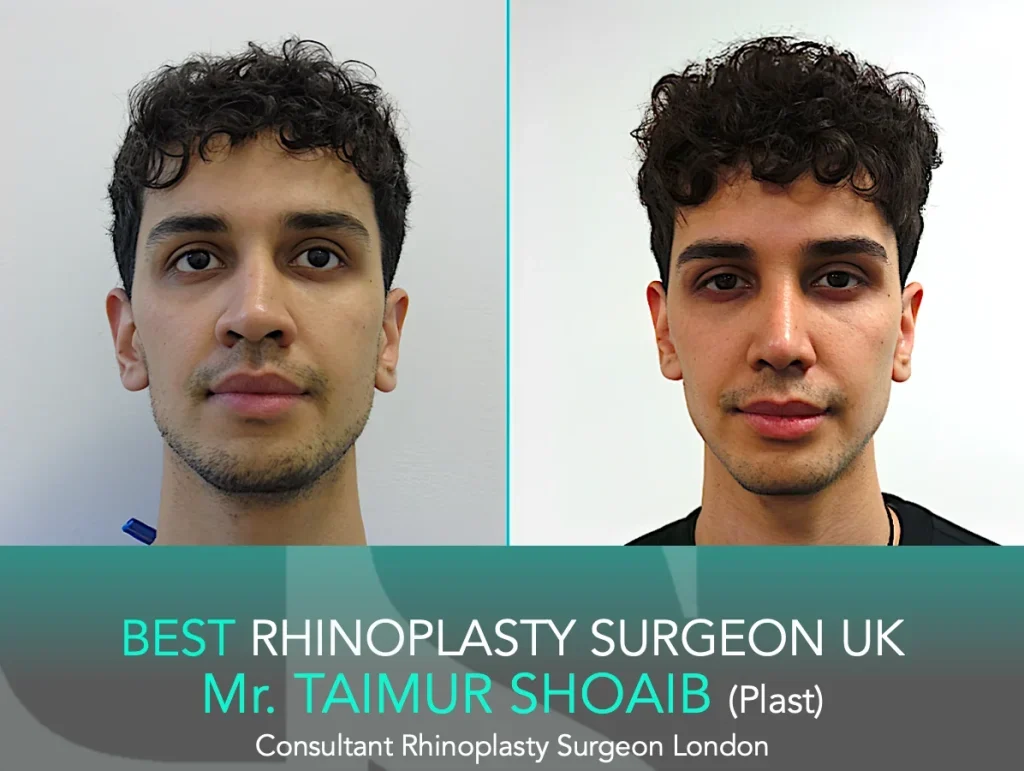
For men, the aim is nostrils that sit in better proportion without softening a strong, masculine nose. A subtle reduction can bring definition to a broad base while keeping the nose in keeping with a strong jaw and brow, and the change should read as a naturally well-proportioned nose rather than an obviously operated one.
Alar base reduction for women
Elegant, proportionate nostrils
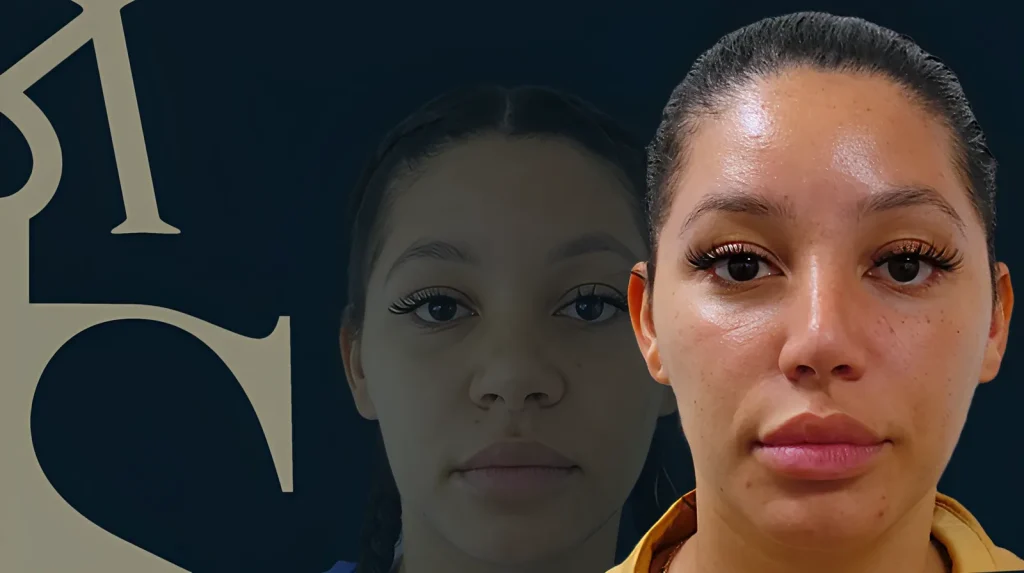
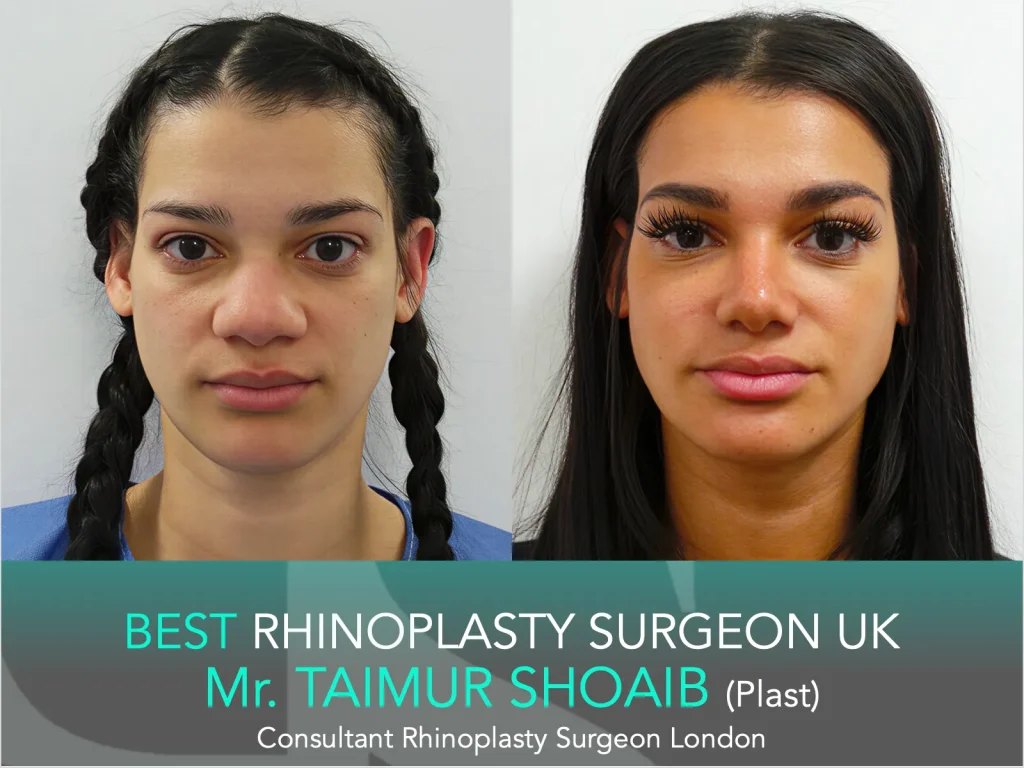
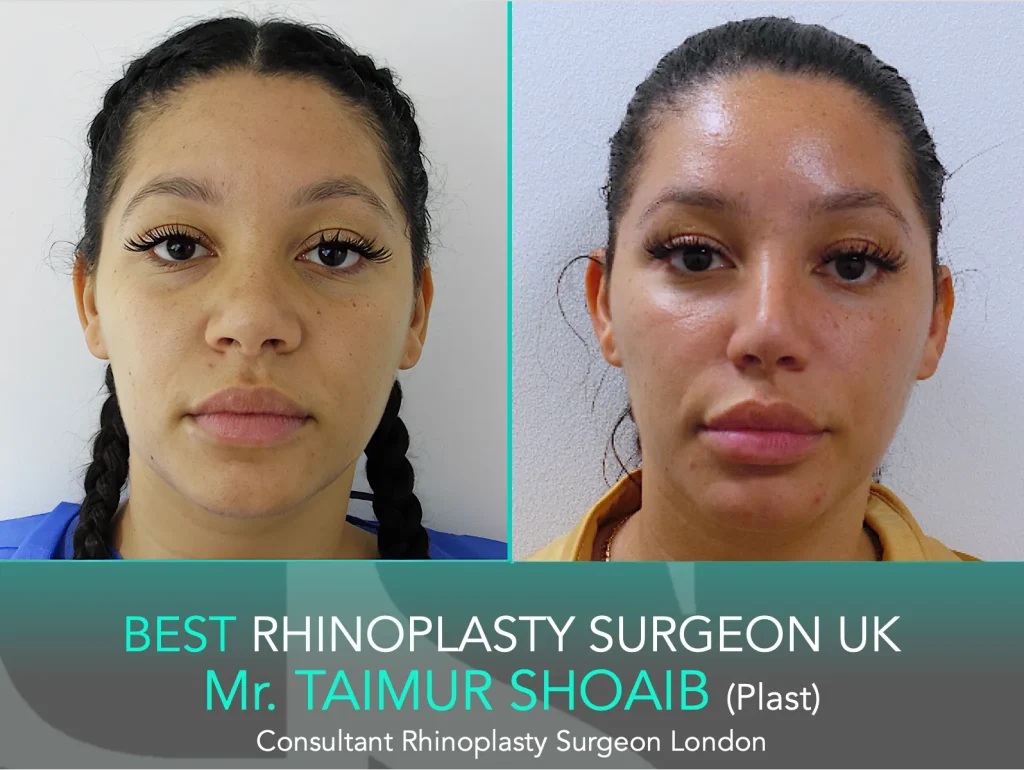
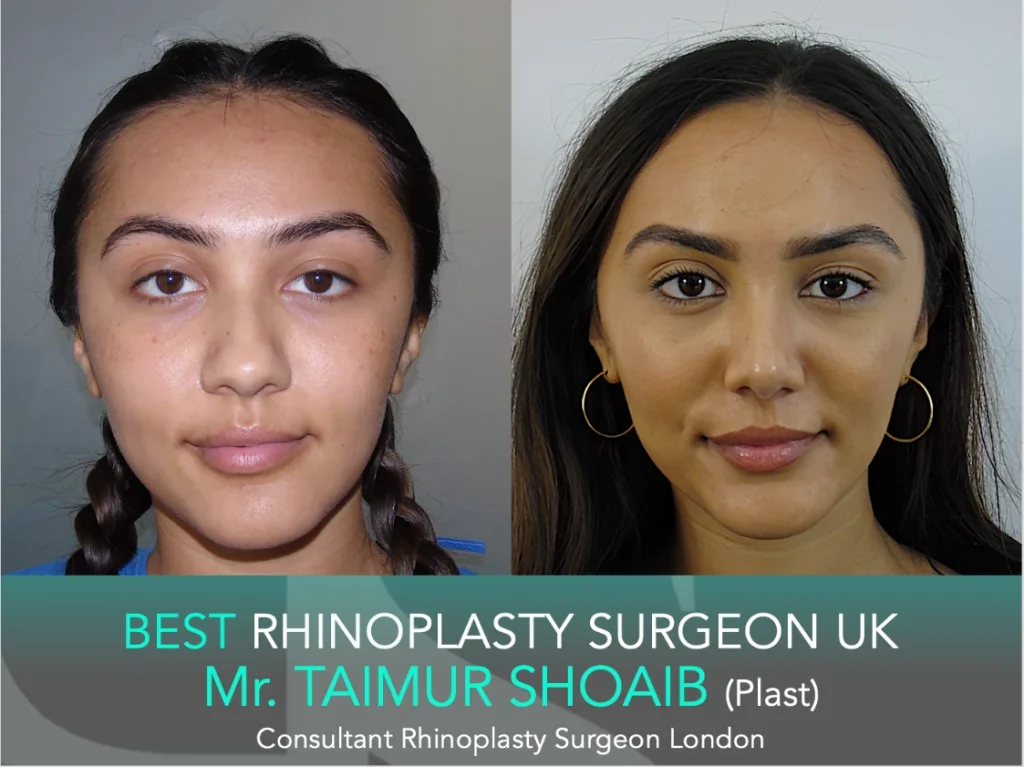
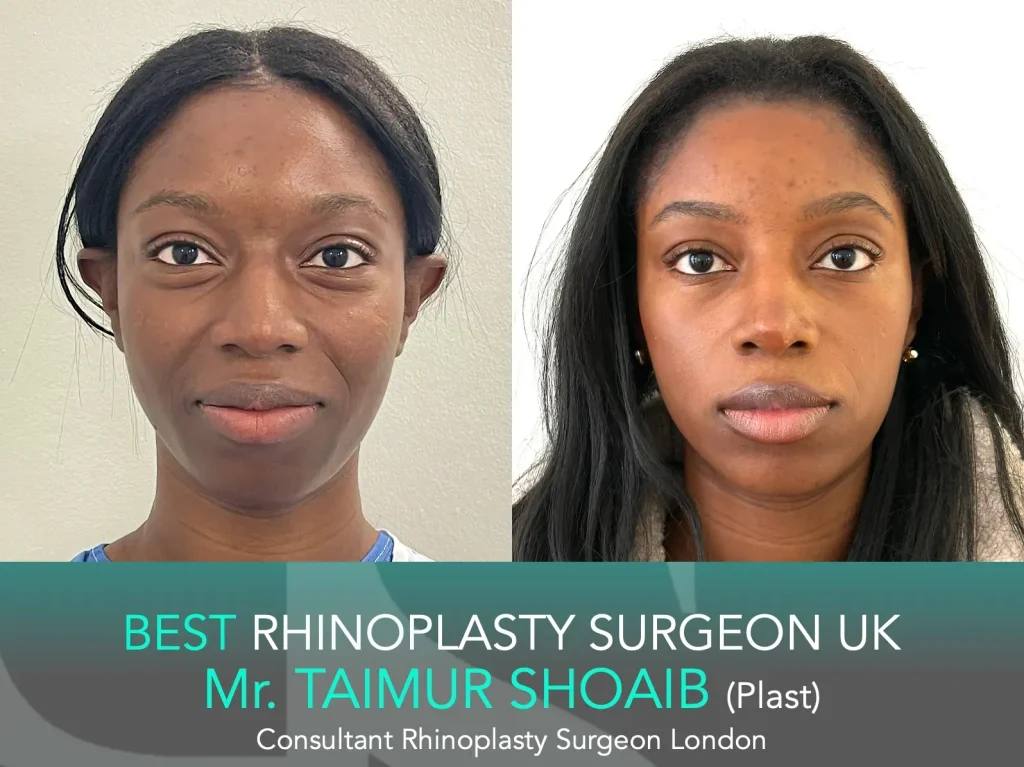
For women, the aim is a softer nostril shape that sits in harmony with the lips and the rest of the nose. Narrowing a broad or flaring base refines the whole lower third of the nose so it looks balanced from the front, while keeping the result natural and in character with your features.
Recovery and results
What to expect afterwards
Alarplasty on its own is a smaller operation than a full rhinoplasty, so recovery is quicker. There is usually mild swelling and a little bruising around the nostrils for a few days, the visible stitches come out at about five to seven days, and most people are back to normal activities within a week or two. There is no splint if the nostrils alone are treated. Where alarplasty is part of a fuller rhinoplasty, recovery follows the rhinoplasty timeline instead, which you can read about in our guide to swelling after rhinoplasty.
The result is permanent and, once the fine scar has settled, subtle: narrower nostrils that suit the rest of your nose. Because tissue is removed, the change cannot simply be undone, so as with any nostril narrowing surgery there are risks to weigh, including bleeding, infection, asymmetry between the two sides, over-narrowing or notching that can need revision, and a visible or thickened scar in those prone to it. Mr Shoaib will go through the risks that apply to you, and how they are minimised, at your consultation before you decide.
Choosing your surgeon
Why precision matters here
Alar base reduction looks simple but is unforgiving: the difference between a natural result and a pinched or scarred one is a matter of millimetres and of where the incision is hidden. It also calls for a surgeon who narrows the nostrils while respecting the character of an ethnic nose, never flattening it into something generic. Mr Taimur Shoaib FRCS (Plast) is a consultant plastic surgeon at 64 Harley Street, London, and his peer-reviewed research on tip control in closed rhinoplasty (European Journal of Plastic Surgery, 2026) reflects the same focus on precise, natural shaping of the lower nose. You can read more on our London rhinoplasty surgeon page.
Specialised Rhinoplasty By Heritage
Nostril and nose reshaping tailored to your heritage.
 Ethnic RhinoplastyNose surgery tailored to every heritage.Read more
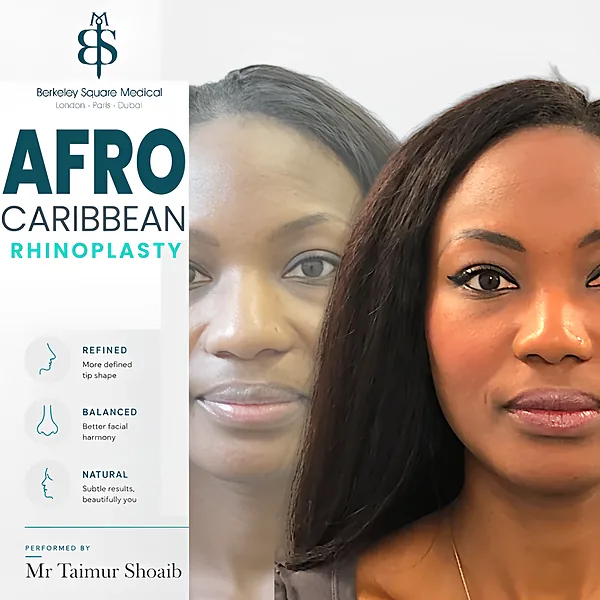 Afro-Caribbean RhinoplastyRefining and narrowing African and Caribbean noses.Read more
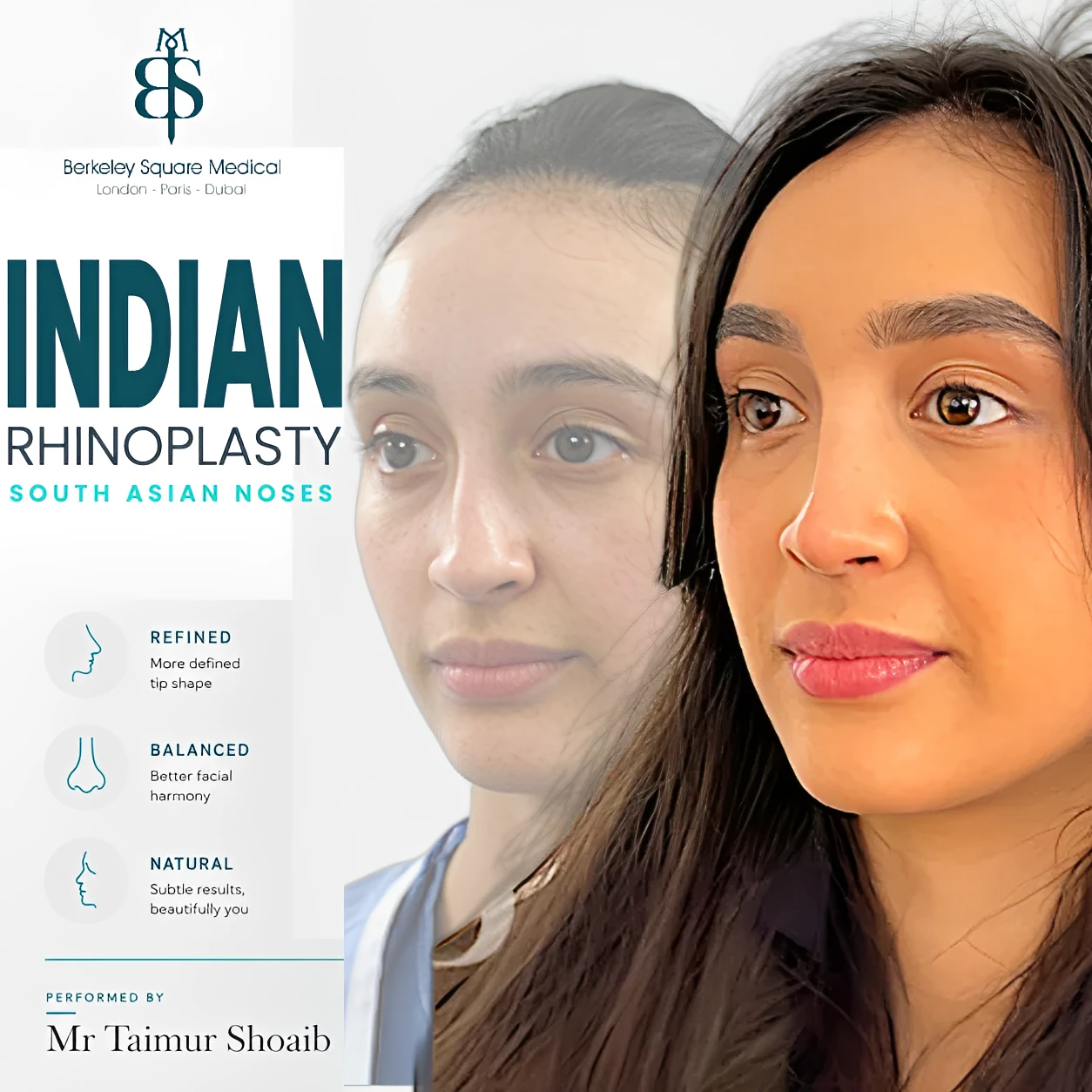 Indian & Pakistani RhinoplastySpecialist South Asian nose refinement.Read more
 Arabic RhinoplastyRefining the Middle Eastern nose in proportion.Read more
Not sure if you need alarplasty, a full rhinoplasty, or both?
If wide or flaring nostrils bother you, the next step is a consultation with Mr Taimur Shoaib at 64 Harley Street, where he will tell you honestly whether alarplasty alone or a fuller wide nose rhinoplasty is the right choice for your nose. See typical rhinoplasty costs in London or explore rhinoplasty with Mr Taimur Shoaib.