• 0203 811 8175
  • Make an Enquiry

    Request A Call BackX

    ADDRESSBerkeley Square House, Berkeley Square, Mayfair, London, W1J 6BD
    +44 (0)203 811 8175

    PLEASE FILL IN YOUR DETAILS

    Sending your message. Please wait...

    Thanks for sending your message! We'll get back to you shortly.

    There was a problem sending your message. Please try again.

    Please complete all the fields in the form before sending.

Rhinoplasty for Crooked Nose: Straightening and Restoring Confidence

Rhinoplasty for Crooked Nose: Straightening and Restoring Confidence

A crooked or asymmetrical nose is more than a cosmetic concern. It can affect breathing, cause constant congestion, and significantly impact how confident you feel in everyday life. This is one of the most common reasons people seek crooked nose rhinoplasty or nose straightening surgery, and demand is especially high in London.

At Berkeley Square Medical, our specialist rhinoplasty surgeon has extensive experience correcting crooked, twisted, or deviated noses using advanced techniques that improve both appearance and nasal function. This guide explains why noses become crooked, which treatments can fix them, when surgery is necessary, and what results you can expect after correction.

Key Takeaways

  • A crooked nose can be caused by trauma, genetics, a deviated septum, or previous surgery, often affecting both appearance and breathing.

  • Mild cosmetic asymmetry can be improved with non-surgical nose straightening using dermal fillers, but this only offers temporary visual correction.

  • Crooked nose rhinoplasty provides the most reliable and permanent results by straightening bones, reshaping cartilage, and correcting septal deviation.

  • Surgical correction often improves airflow and breathing, especially when combined with septoplasty.

  • Recovery typically progresses over 6–12 months, with major swelling resolving in the first few weeks.

What Causes a Crooked Nose?

A crooked nose occurs when the nasal bones, cartilage, or septum are misaligned, causing the nose to look off-centre, twisted, or uneven. This can affect one or multiple parts of the nose — the bridge, tip, or midsection. Common reasons include:

Injury or Trauma

A past nasal fracture or impact injury that didn’t heal properly is one of the most frequent causes. Even minor trauma can shift cartilage or bone just enough to create long-term asymmetry.

Genetic Anatomy

Some people are simply born with a crooked or asymmetric nasal structure. Variations in cartilage growth, bone shape, or septal alignment can all contribute to a naturally uneven appearance.

Deviated Septum

A deviated septum occurs when the cartilage dividing the nostrils leans to one side. This can make the external nose appear crooked and may also cause breathing problems.

Previous Surgery

A poorly executed rhinoplasty elsewhere can leave the nose looking off-centre or twisted. In these cases, revision rhinoplasty is required to restore both symmetry and structural support.

If your crooked nose affects breathing, causes congestion, or impacts your confidence, surgical correction is often the most effective long-term solution.

Crooked Nose Treatment Options: Non-Surgical vs Surgical

Treatment Type Best For Can It Straighten the Bone? Can It Improve Breathing? Results Duration
Makeup Contouring Mild cosmetic imbalance No No Temporary (makeup only)
Dermal Filler (Non-Surgical Rhinoplasty) Minor asymmetry, smoothing bumps No (adds volume only) No 6–12 months
Botox for Nostril Flare Minor muscular asymmetry No No 3–4 months
Septoplasty Deviated septum, functional issues Partially Yes Permanent
Crooked Nose Rhinoplasty (Surgical) Moderate–severe crookedness Yes Yes Permanent
Revision Rhinoplasty Correcting previous surgery Yes Yes Permanent


Crooked Nose Rhinoplasty: What the Surgery Involves

Rhinoplasty for a crooked nose is a highly specialised procedure that aims to reposition the nasal bones, reshape the cartilage, and straighten the septum to create a more symmetrical, balanced appearance. In many cases, it also improves breathing by clearing blockages in the airway.

There are two main surgical approaches:

  • Open rhinoplasty: A small incision is made at the base of the nose (between the nostrils), allowing full visibility and access to the underlying structures. This approach is often preferred for severe or complex crookedness.
  • Closed rhinoplasty: All incisions are made inside the nostrils, leaving no external scars. This method may be suitable for mild to moderate deviations where less extensive reshaping is required.

Depending on your individual anatomy, your surgeon may use several techniques during your procedure:

  • Osteotomies: Carefully repositioning the nasal bones by making controlled fractures to move the bridge back to the centre.
  • Cartilage grafts: Harvesting cartilage from the septum, ear, or rib to strengthen the nose’s structure and maintain straightness. Spreader grafts are commonly used to widen and support the midsection.
  • Septoplasty: Straightening the nasal septum internally, which is often necessary when a deviated septum is contributing to both cosmetic and breathing issues.
  • Tip reshaping: If the nasal tip is twisted or drooping, fine adjustments are made to create better symmetry.

Surgery is typically performed under general anaesthetic and lasts between one and three hours, depending on the complexity of correction needed. Your surgeon will personalise every step to ensure not just a straighter appearance, but also improved nasal function where necessary.

straightened nose

Crooked Nose Surgery Cost

At Berkeley Square Medical, we charge a convenient all-inclusive price of £8950.00 for our rhinoplasty procedures. (Price as of November 2025)

This price includes all pre-surgery assessments and first consultation, all medications, garments, and tools used during the surgery, and the complete follow-up regimen.

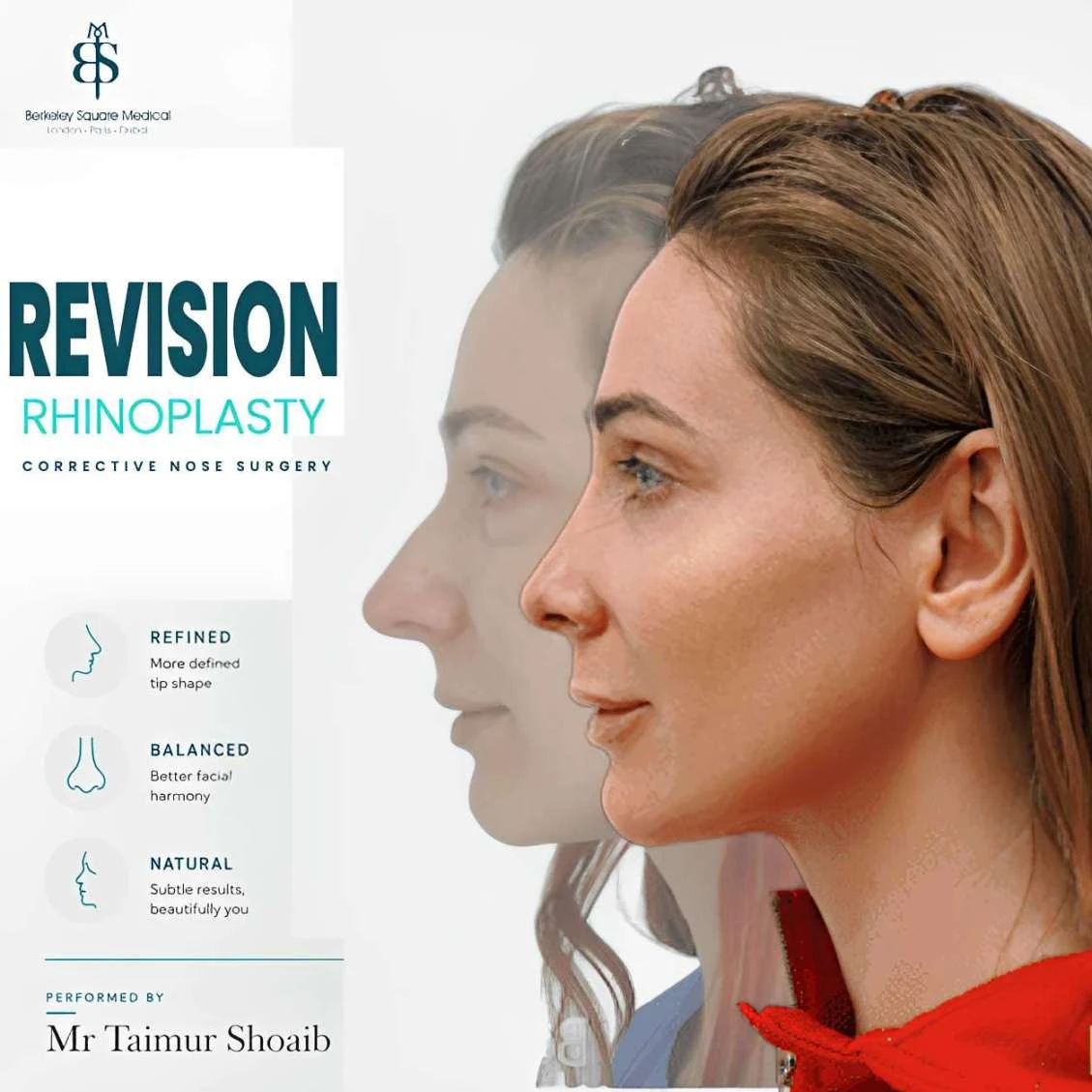
Revision Rhinoplasty for a Crooked Nose

There may be rare cases where after rhinoplasty, the nose becomes crooked again.

In these instances, revision surgery may be performed to correct any issues. This surgery is typically less invasive than primary rhinoplasty and has a quicker recovery time of six weeks or less.

Our London clinic often has patients coming to us after having unsatisfactory results from previous nose surgeries in other countries. As a result, our consultant rhinoplasty surgeon is one of the most experienced specialists in the world when it comes to secondary surgery.

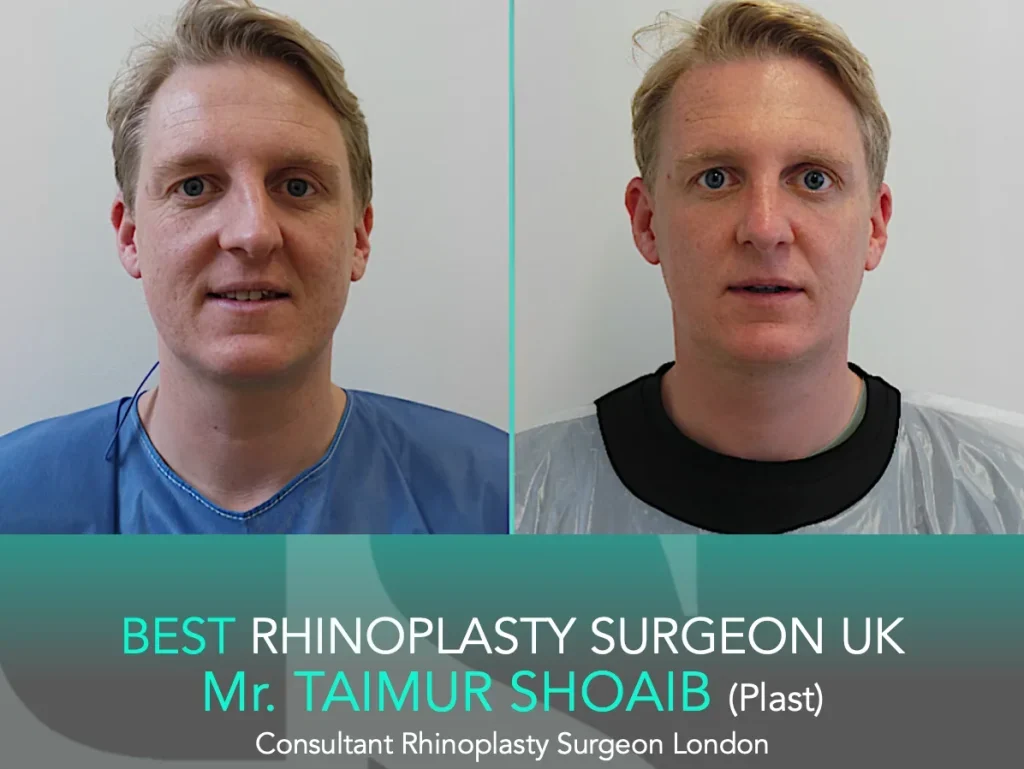
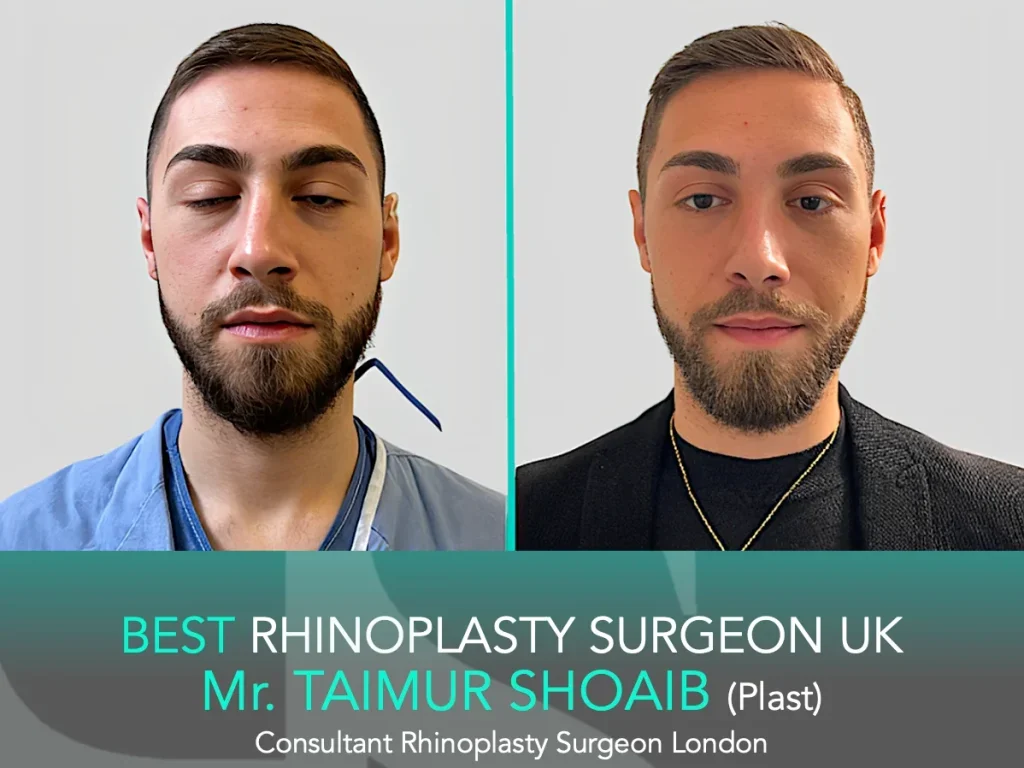
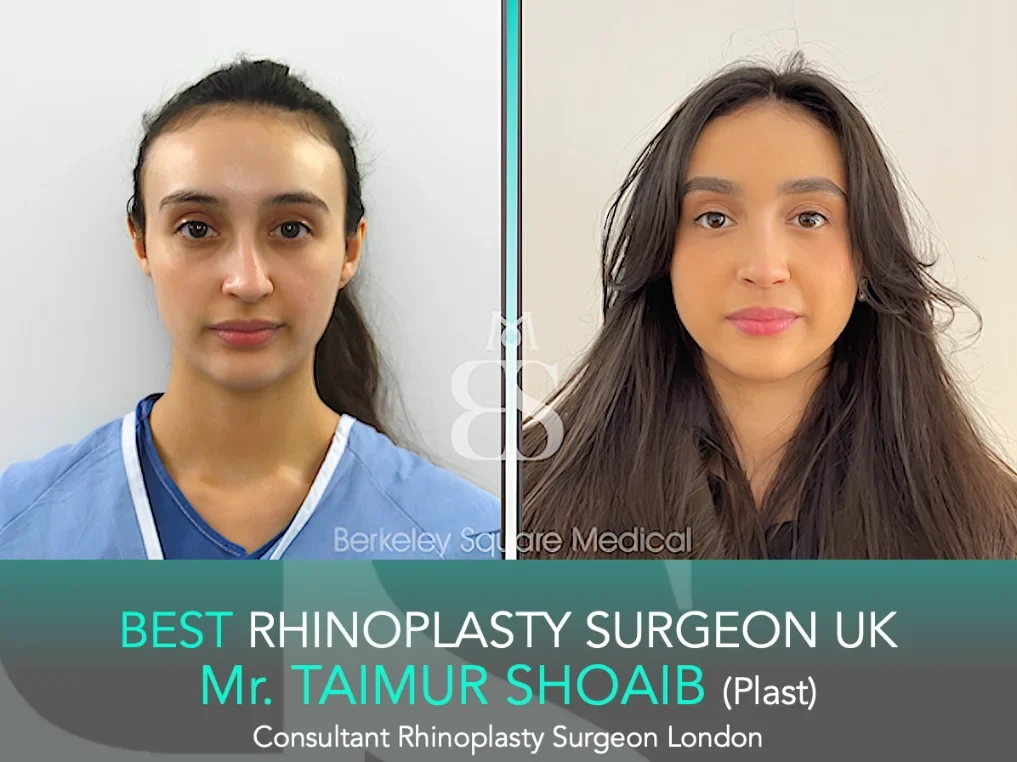
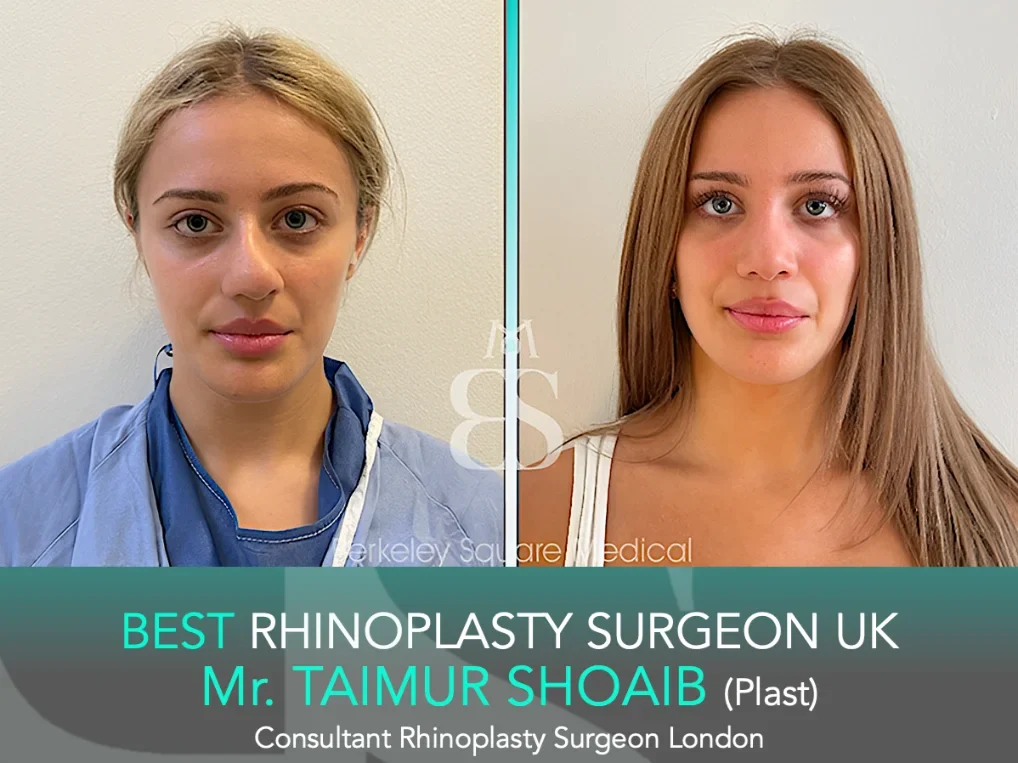
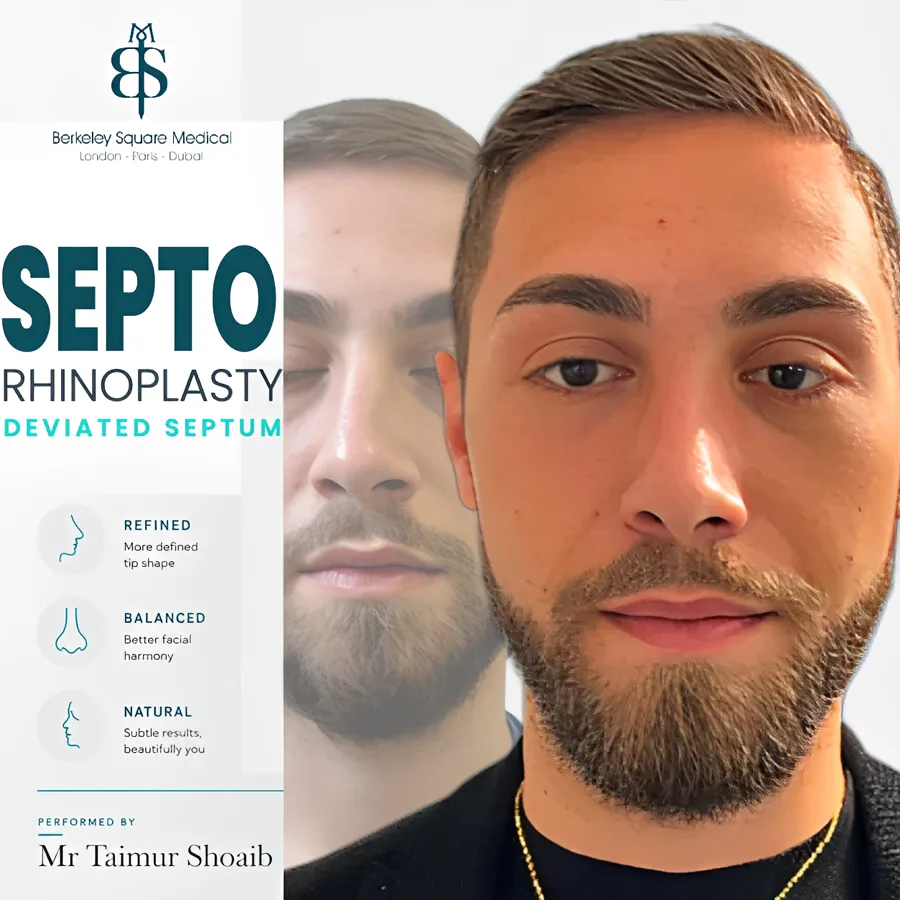
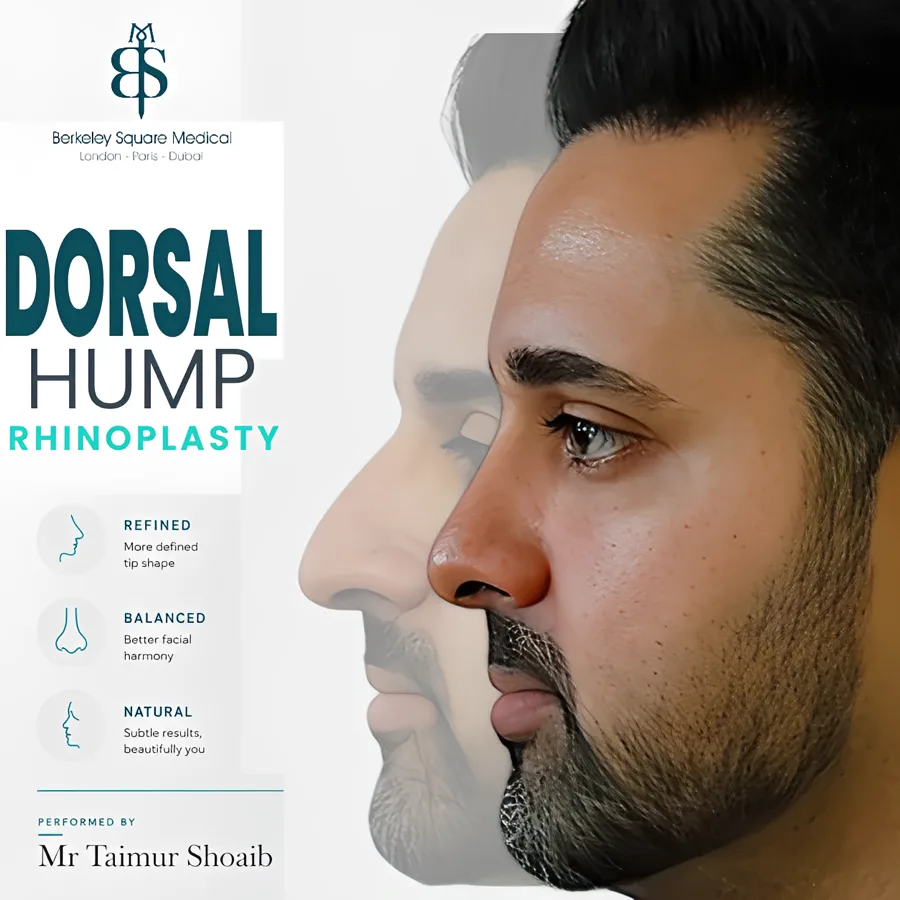
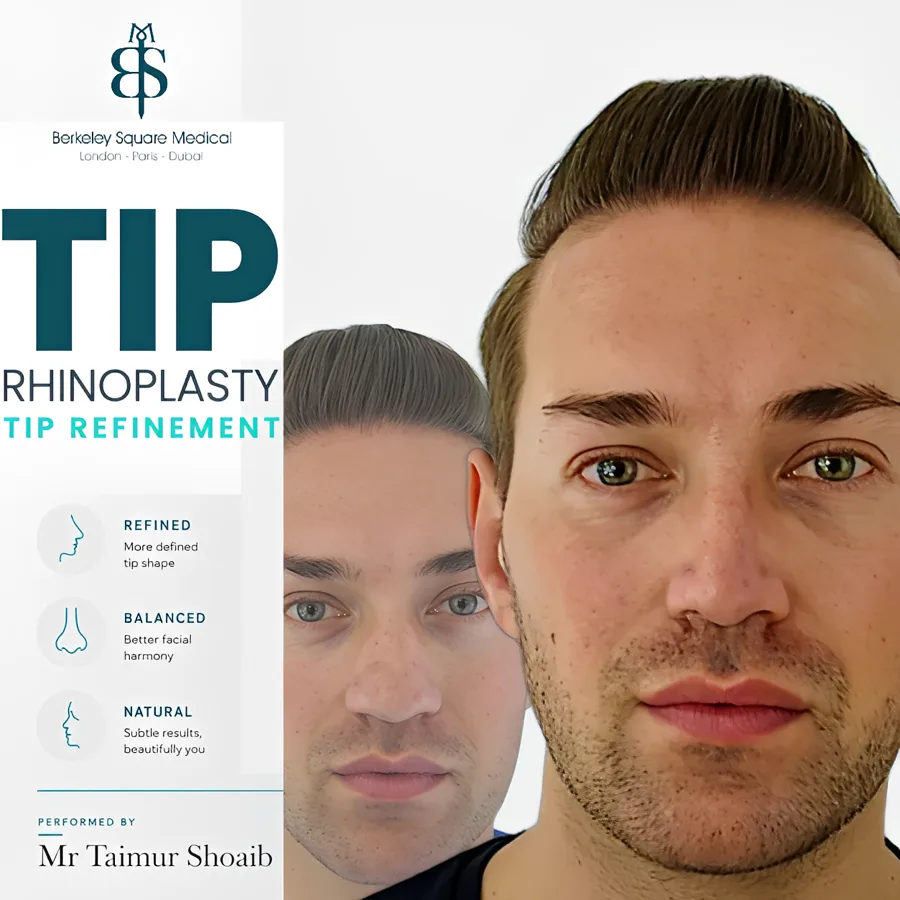
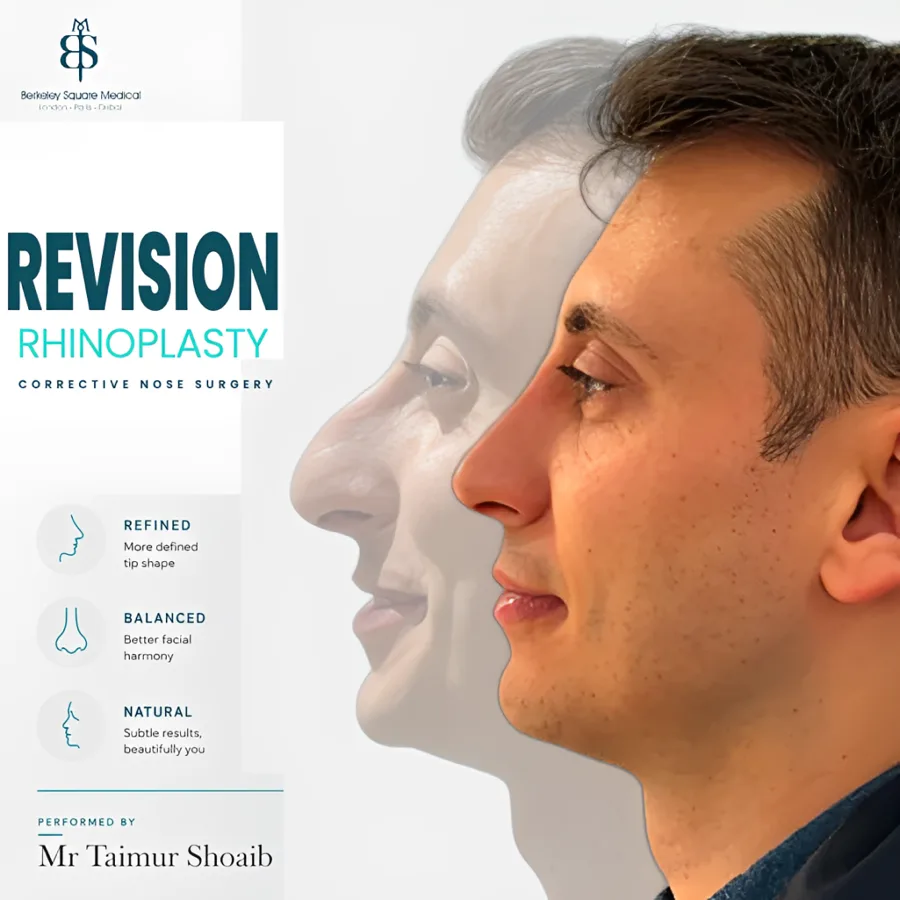
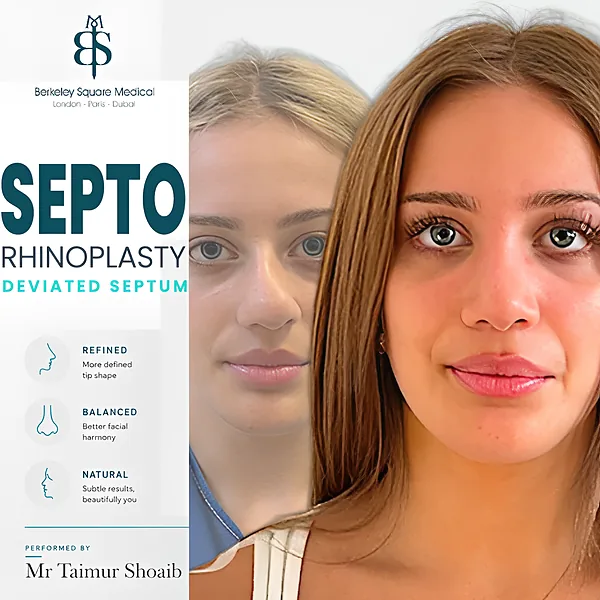
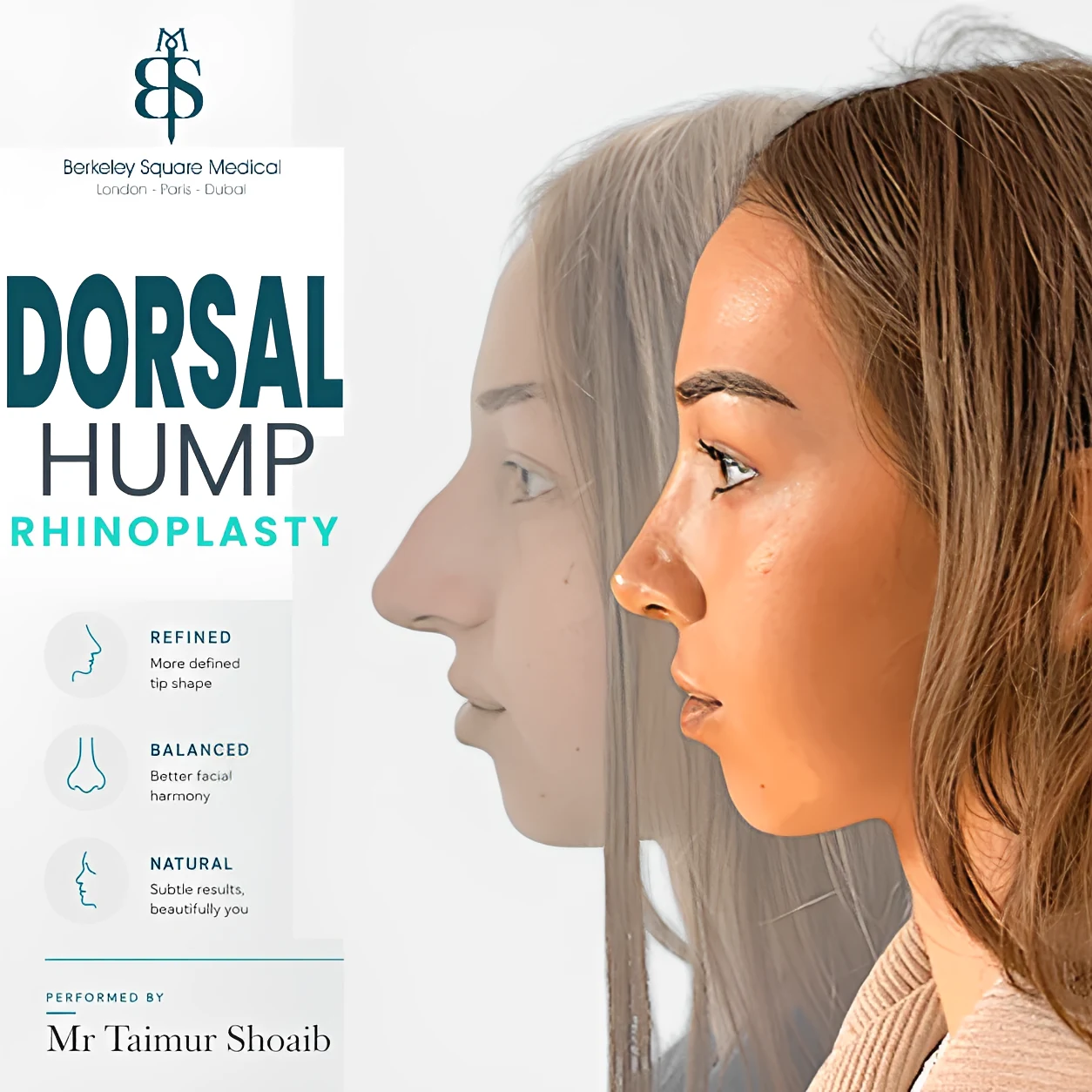
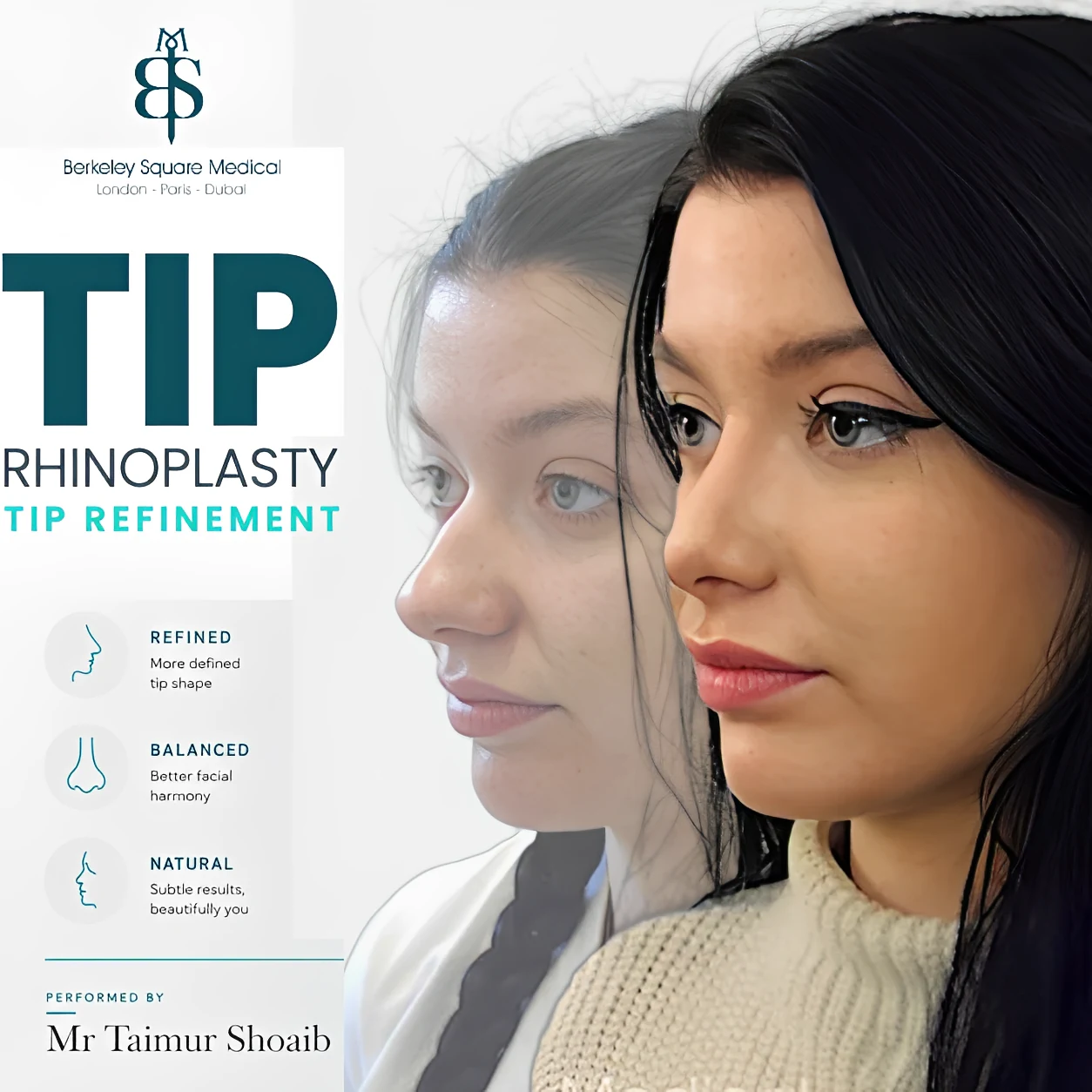
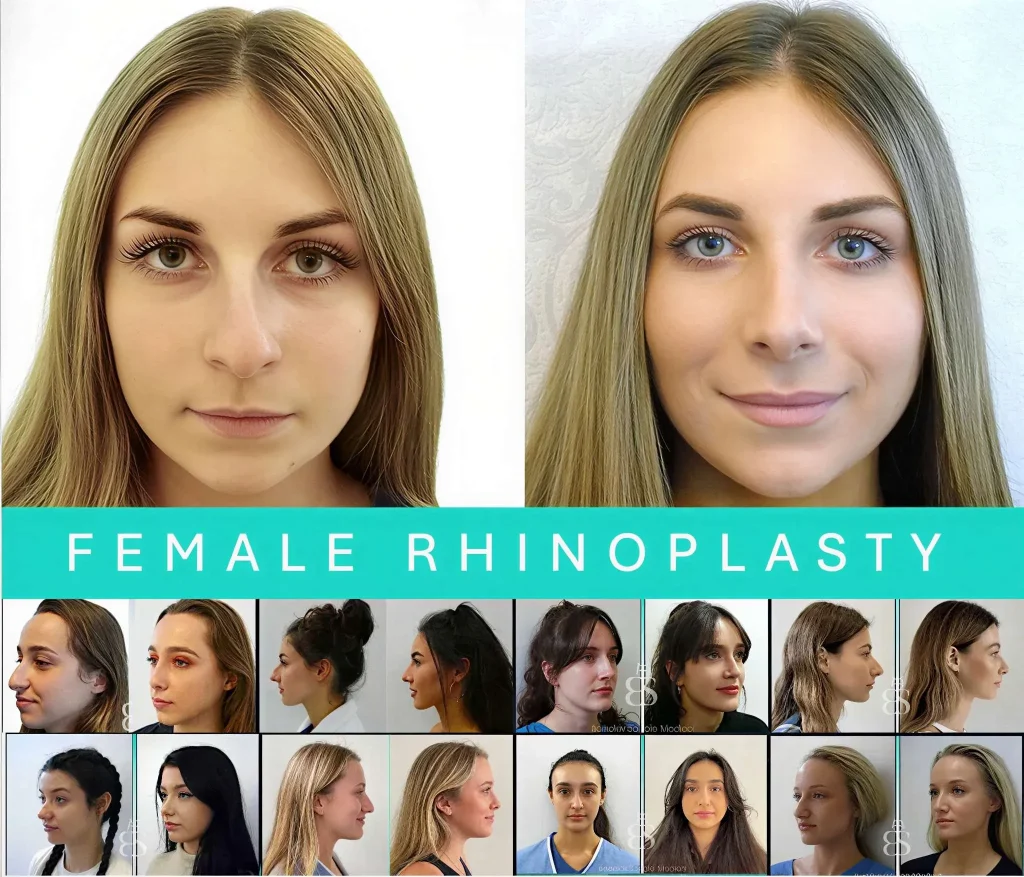
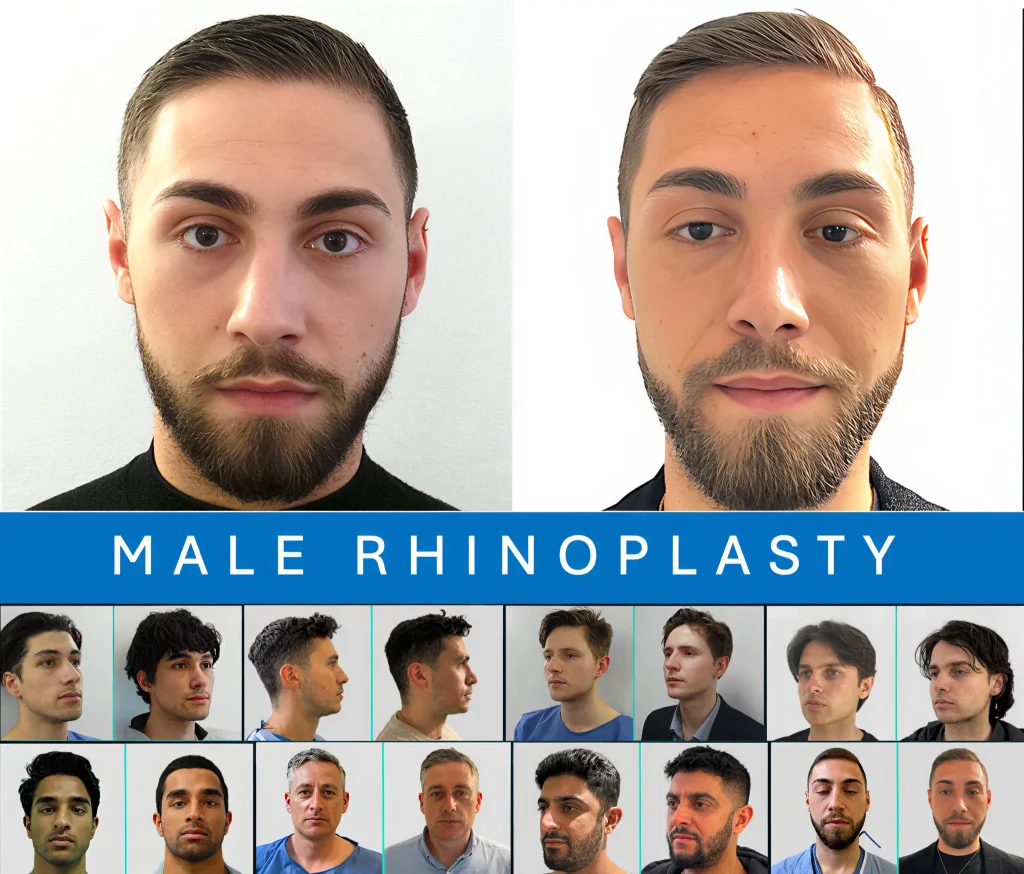
Crooked Nose Before and After Photos

One of the best ways to judge the experience of the nose surgeon is to ask for photos of their previous work. You can see before and after photos of our previous rhinoplasty patients on our dedicated page.

Recovery Timeline and Results

After your nose surgery, your recovery will follow a gradual, step-by-step process. While your final results will take time to fully appear, many patients start noticing an improved nasal shape and breathing comfort within weeks.

Here’s what to expect during recovery:

Week 1: You’ll go home with a small external splint and possibly internal nasal packing. Mild swelling, bruising around the eyes, and some congestion are normal. Pain is usually manageable with prescribed medication. Most patients return for splint and stitch removal around day 7.

Weeks 2–3: Major swelling and bruising begin to subside. You’ll feel more comfortable resuming light activities or returning to desk-based work. Avoid strenuous activity or exercise during this stage.

Weeks 4–6: The shape of the nose becomes more refined. Breathing through the nose often improves, especially if septoplasty was performed.

3–6 months: Residual swelling continues to fade, particularly at the tip. Most people feel confident in their appearance by this stage.

12 months: This is when the final result is considered fully healed — scars (if any) are well faded, and the nasal structure has settled into its new, permanent form.

Results and benefits include:

  • A straighter, more symmetrical nasal profile
  • Improved breathing and airflow (especially if a deviated septum was corrected)
  • Better facial harmony and confidence in social situations
  • Long-lasting changes — with proper care, the results can last a lifetime

While complications are rare, it’s important to follow your surgeon’s aftercare guidance carefully and attend all scheduled follow-ups to ensure optimal healing.

Non-Surgical Options and Limitations

For patients with mild cosmetic deviations and no breathing issues, non-surgical treatments may offer a temporary improvement.

Non-surgical rhinoplasty (dermal fillers)

Using hyaluronic acid fillers, a skilled practitioner can smooth out bumps or subtly balance asymmetries to create the appearance of a straighter nose. This is a quick, injectable treatment with results that last 6–12 months.

However, there are limitations:

  • It does not actually straighten the nasal bone or correct a deviated septum
  • It cannot improve breathing
  • Fillers cannot reduce size or projection — they can only add volume for contouring
  • Over time, repeat treatments are needed to maintain the effect

If your crooked nose affects both your appearance and nasal function, or if you’re looking for permanent results, surgical rhinoplasty remains the most effective option.

Choosing the Right Surgeon and Next Steps

Crooked nose rhinoplasty is one of the most technically complex forms of nose reshaping surgery. It requires not just aesthetic skill, but also a deep understanding of nasal anatomy and airway function. Choosing the right specialist is essential.

When considering surgery, look for:

  • A GMC-registered plastic surgeon with experience in complex rhinoplasty cases
  • A clinic that offers in-depth consultations, including 3D imaging or morphing
  • Transparent pricing and aftercare
  • A clear surgical plan that addresses both cosmetic and functional concerns

Why Choose Berkeley Square Medical?

At Berkeley Square Medical, we are proud to be one of the UK’s most sought-after clinics for rhinoplasty – including for correcting crooked or twisted noses. Our consultant-led team offers:

  • Expertise in both primary and revision rhinoplasty
  • Advanced techniques to ensure natural-looking, symmetrical results
  • A strong focus on both function and aesthetics
  • All-inclusive pricing with no hidden costs
  • Full pre- and post-operative care from start to finish

Take the next step with confidence.

If you’re ready to explore your options for straightening a crooked nose and improving your quality of life, book a personalised consultation with our expert team at Berkeley Square Medical. We’ll take the time to understand your goals, assess your nasal structure, and guide you through every stage of your treatment journey.

FAQ

Can a crooked nose be fixed without surgery?

Mild cosmetic asymmetry can sometimes be improved with dermal fillers, makeup contouring, or Botox for nostril flare. However, these treatments cannot straighten bone, reposition cartilage, or correct breathing problems. For permanent structural correction, rhinoplasty is required.

Why is my nose crooked?

A crooked nose can result from genetics, a deviated septum, past trauma, or cartilage and bone that healed unevenly. In some cases, a previous rhinoplasty that did not properly address symmetry can also leave the nose off-centre.

Is crooked nose surgery painful?

Most patients describe the discomfort as mild pressure or congestion rather than sharp pain. Modern rhinoplasty techniques and prescribed medication make the recovery process very manageable.

How long does crooked nose rhinoplasty take to heal?

Most swelling and bruising improve within 2–3 weeks. Breathing usually feels better within 4–6 weeks, and the final refined shape settles fully at around 12 months.

Will fixing a crooked nose improve my breathing?

Yes. If a deviated septum or internal collapse is contributing to the crooked appearance, correcting it often improves airflow, reduces snoring, and relieves chronic congestion.

Is crooked nose surgery permanent?

Yes. Once the bones and cartilage heal into their new position, the results are long-lasting. Only trauma or injury in the future could cause new deviation.

How do I know if I need surgery or fillers?

Fillers can help only if the crookedness is visual and mild. If the deviation is structural or causing breathing issues, surgery is the only effective long-term solution.

Sanjay Rai
Sanjay Rai

Make Your Enquiry

+44(0)203 811 8175


    Considering any cosmetic treatment is a significant step forward. Your consultation with Mr. Shoaib and our Team will provide clarity, expert insight, and honest guidance — focused entirely on your goals.

    Tell us about you

    A Few Contact Details

    Which procedure are you enquiring about?


    Make Your Enquiry

    +44(0)203 811 8175

    Any questions, enquiries, or just looking for a consultation? Simply send your enquiry here and we will get back to you with a reply promptly.


      Considering any cosmetic treatment is a significant step forward. Your consultation with Mr. Shoaib and our Team will provide clarity, expert insight, and honest guidance — focused entirely on your goals.

      Tell us about you

      A Few Contact Details

      Which procedure are you enquiring about?


      COPYRIGHT © BERKELEY SQUARE MEDICAL 2022. ALL RIGHTS RESERVED.


        Considering any cosmetic treatment is a significant step forward. Your consultation with Mr. Shoaib and our Team will provide clarity, expert insight, and honest guidance — focused entirely on your goals.

        Tell us about you

        A Few Contact Details

        Which procedure are you enquiring about?


        ×

          Tell us about you

          A Few Contact Details

          Which procedure are you enquiring about?


          ×

            Tell us about you

            A Few Contact Details

            Which procedure are you enquiring about?


            ×