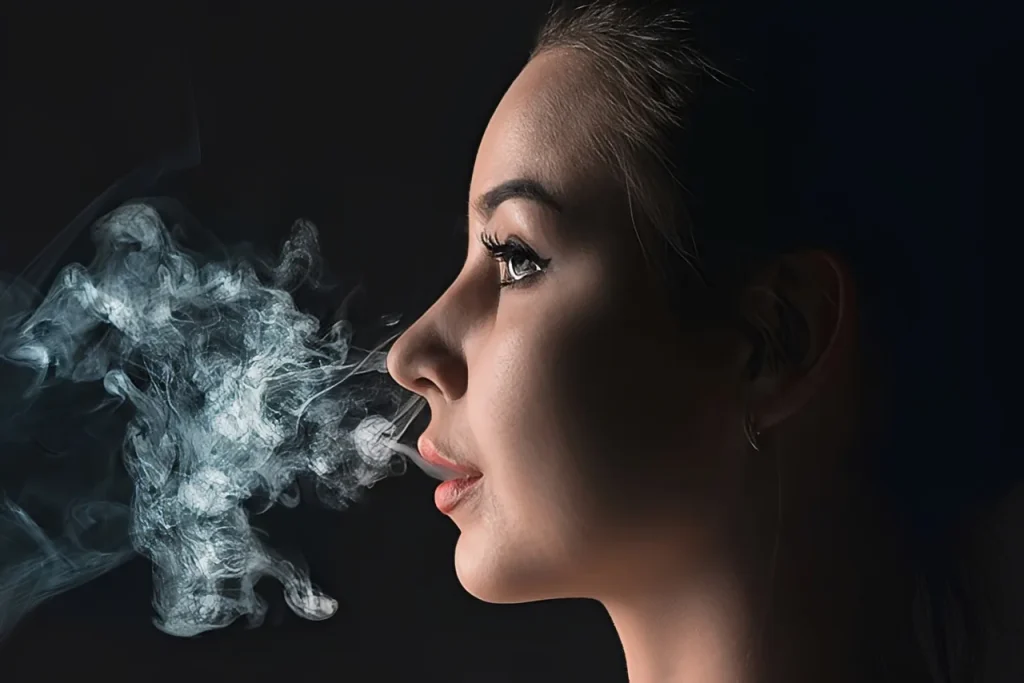
Of everything within your control after a nose job, stopping nicotine is the single most important. And it does not matter whether you smoke or vape, because the problem is the nicotine itself: it narrows your blood vessels and cuts the blood supply to the healing nose, which slows healing, worsens swelling and raises the risk of infection and, in rare cases, tissue damage. This guide covers when to stop before and after surgery, every form of nicotine, why it matters so much, and what to do if you have slipped. As always, follow your own surgeon's specific advice.
No, and vaping is not a safer alternative, because both deliver nicotine. Stop nicotine about 2 weeks before surgery and for at least 4 to 6 weeks after, and longer if you can. It narrows blood vessels and cuts the oxygen reaching the healing nose, which slows healing and raises the risk of infection.
Can I vape after rhinoplasty?
No. Vaping carries the same core risk as smoking. E-cigarettes and vapes still deliver nicotine, which constricts your blood vessels and reduces the oxygen and blood flow that the healing tissues depend on. It is a very common misconception that vaping is a safe substitute during recovery, and it is not. The absence of tar does not remove the nicotine problem.
How long before and after should I stop smoking or vaping?
The more nicotine-free time around your surgery, the better your nose heals. A common guide, and your surgeon's own advice takes priority:
| When | Guidance | Why |
|---|---|---|
| Before surgery | Stop around 2 weeks before (many surgeons ask for longer) | Lets blood flow to the skin and tissues recover before the operation |
| After surgery | Stop for at least 4 to 6 weeks, longer if you can | This is when the nose is healing and most vulnerable to poor blood supply |
| Ideal | Use the surgery as the moment to quit for good | Every nicotine-free week lowers your risk and improves the result |
Nicotine in every form
It is the nicotine, and the smoke, that cause the harm, so all of these matter, not just cigarettes:
- Cigarettes and vapes / e-cigarettes: both deliver nicotine and are the main ones to stop.
- Nicotine gum, patches and lozenges: these still contain nicotine, so they are not a free pass during recovery. They can have a role as a supervised quit aid, but only if your surgeon or GP has agreed it, not as a way to keep topping up nicotine.
- Chewing tobacco and snus: nicotine again, with the same blood-vessel effect.
- Cannabis, whether smoked or in edibles: smoking it irritates the airway and, like any smoke, impairs healing, and it can interact with medication, so avoid it too.
- Second-hand smoke: being around other people's smoke still exposes you, so keep out of smoky environments while you heal.
Why is nicotine worse than most other habits?
Because of what it does to your blood supply. Nicotine causes your blood vessels to constrict (vasoconstriction), which cuts the flow of oxygen-rich blood to exactly the tissues that are trying to heal. After rhinoplasty, the skin of the nose is relying on a delicate blood supply to survive and redrape over the new shape. Reducing that flow is the single biggest controllable threat to your result, and in more serious cases it raises the risk of infection, wound-healing problems and, rarely, the skin or tissue not surviving. That is why surgeons are stricter about nicotine than about almost anything else.
I smoked or vaped after my rhinoplasty, have I ruined it?
Try not to spiral, but do not brush it off either. One slip early on is a risk, not a certainty of a bad outcome, and because the harm from nicotine is cumulative, the best thing you can do is stop again now, which genuinely reduces your risk from this point on. Tell your surgeon honestly, as they would far rather know, and watch for warning signs such as poor or slow healing, skin that looks dusky, grey or dark, increasing pain, or any signs of infection. Many people find surgery is the push that finally helps them quit for good, and if you want to use patches or gum as a bridge, discuss it with your surgeon or GP first, remembering that those still contain nicotine.
Can I vape after nose fillers or non-surgical rhinoplasty?
The concern is much smaller than after surgery, because a non-surgical rhinoplasty with filler does not create a healing wound or rely on the skin surviving over a reshaped framework. Nicotine is still never good for your skin or circulation, but there is no incision to compromise, so the strict stop-before-and-after rule is specific to surgery. Follow your practitioner's advice either way.
Nicotine, alcohol and infection
A few related points: alcohol also slows healing and thins the blood, so avoid pairing the two early on, and our guide to drinking after rhinoplasty covers the timings. Because nicotine raises the risk of wound problems, it is worth knowing the signs of infection so you can act early if anything looks wrong.
Specialised Rhinoplasty For Men
Explore our specialist procedures. Tap any card to read more.
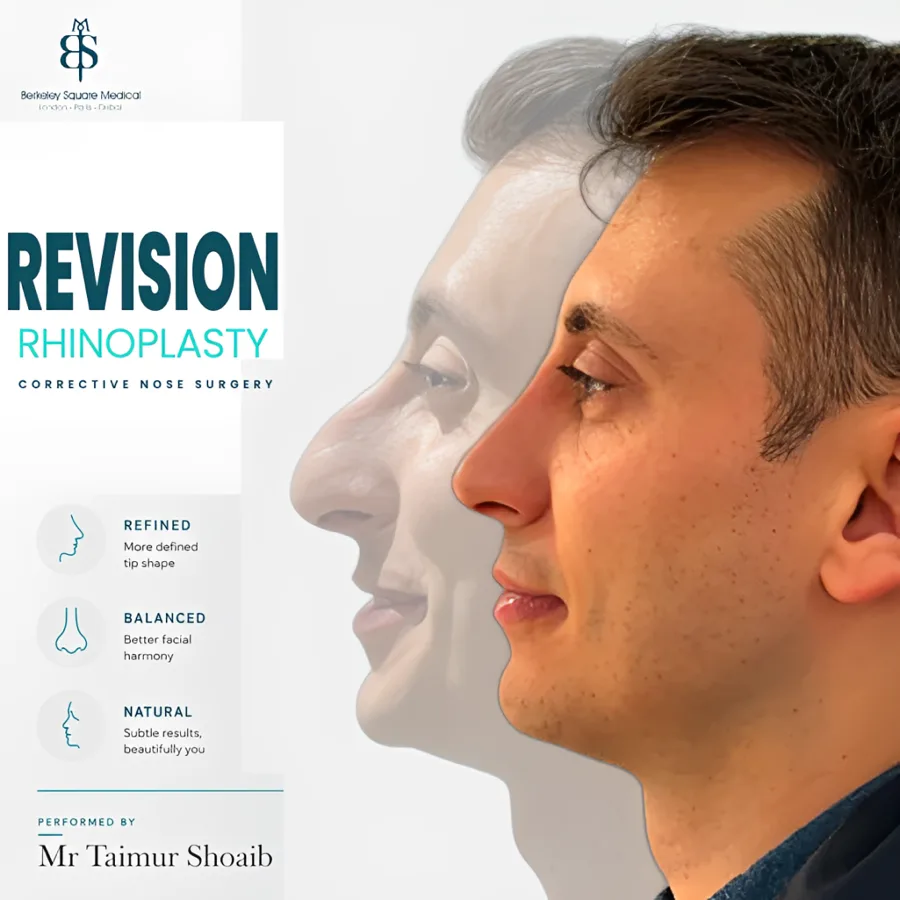 Revision RhinoplastyCorrecting or improving a previous rhinoplasty.Read more
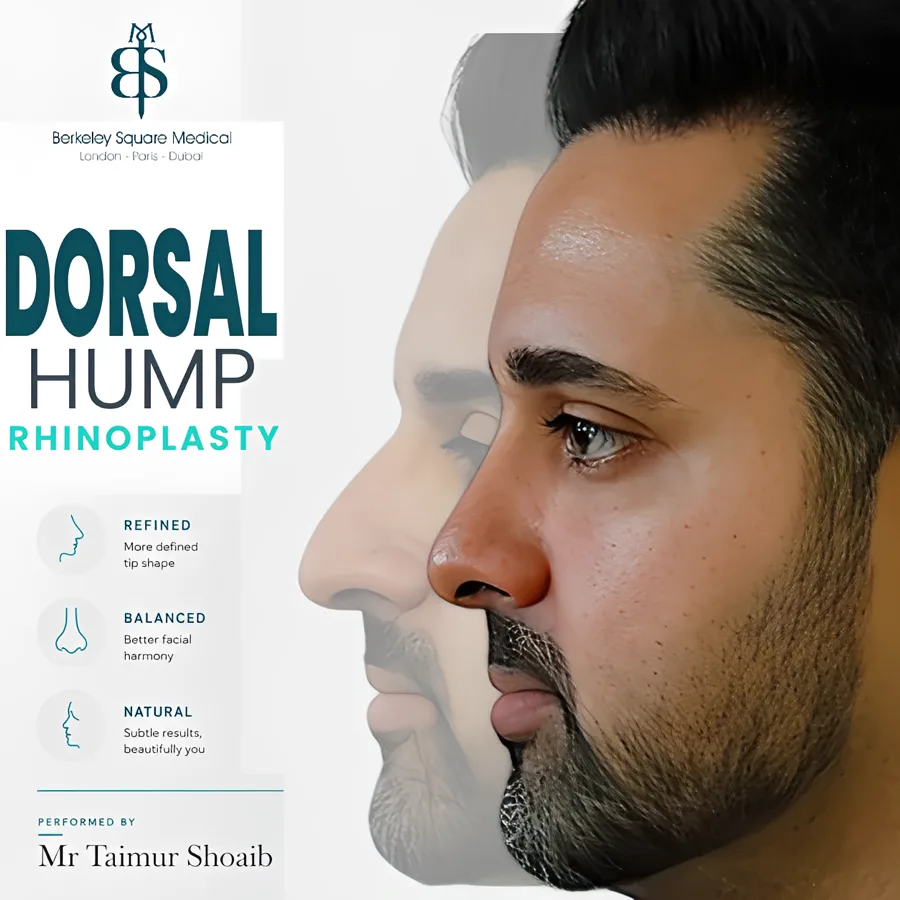 Dorsal Hump RhinoplastyRemoving a bump on the bridge for a straight profile.Read more
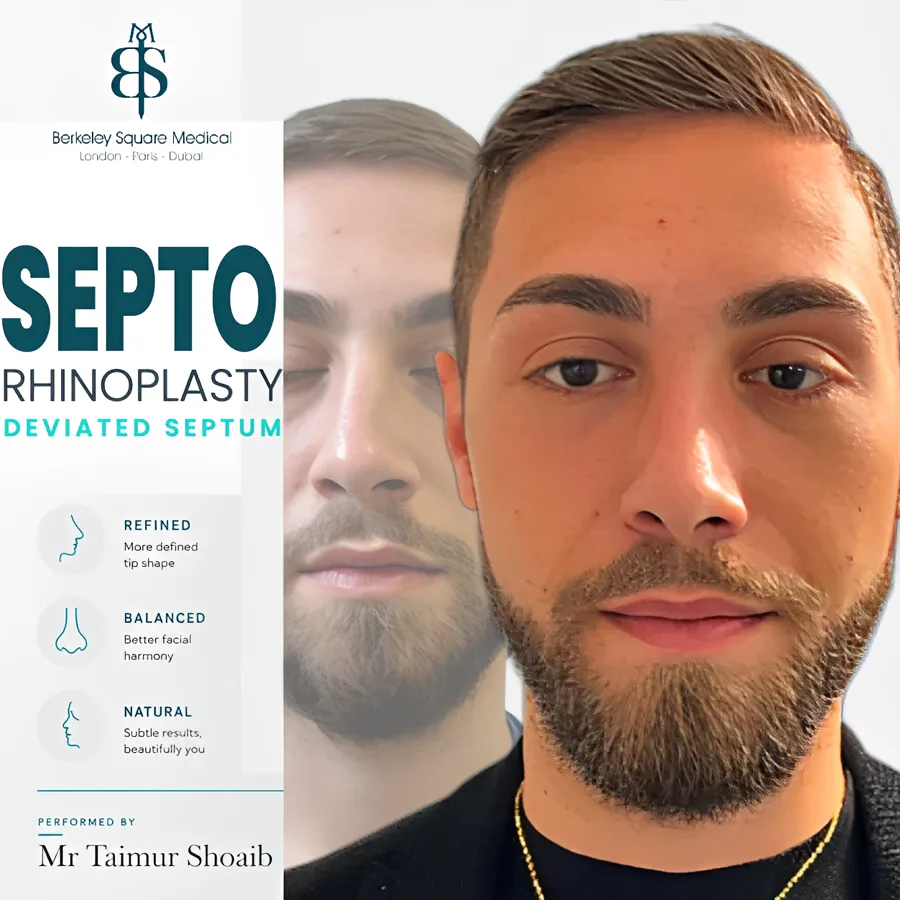 SeptorhinoplastyStraightening the nose and improving breathing.Read more
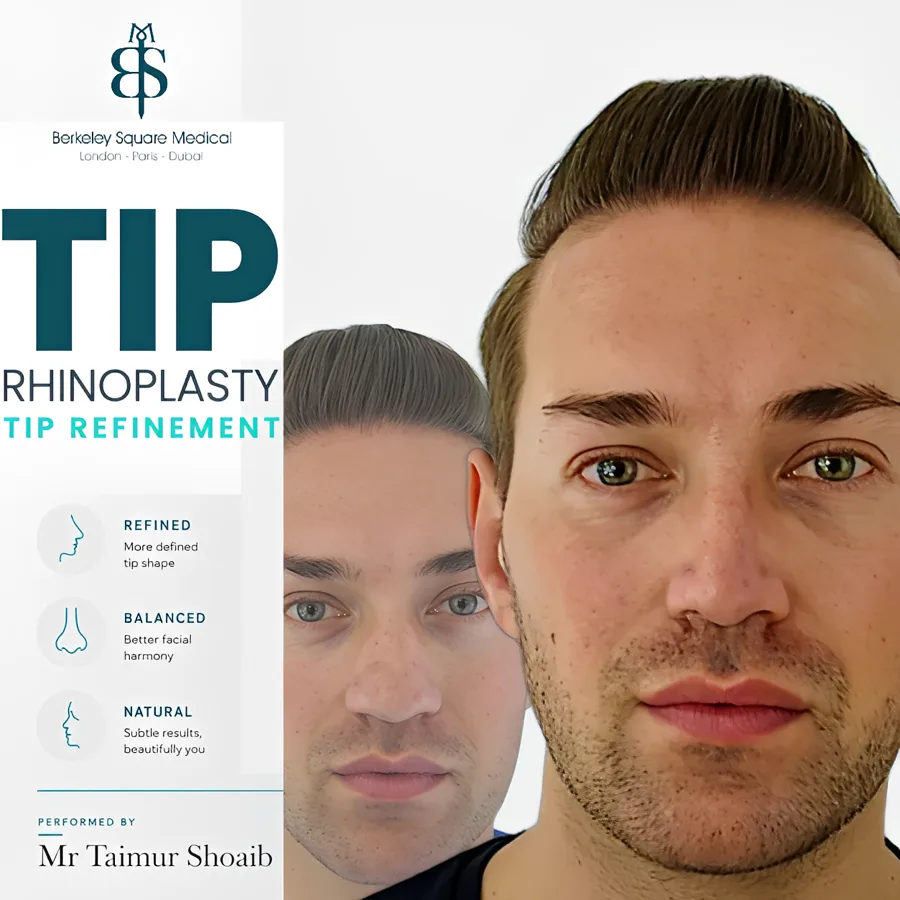 Tip RhinoplastyRefining a bulbous, drooping or asymmetrical tip.Read more
Specialised Rhinoplasty For Females
Explore our specialist procedures. Tap any card to read more.
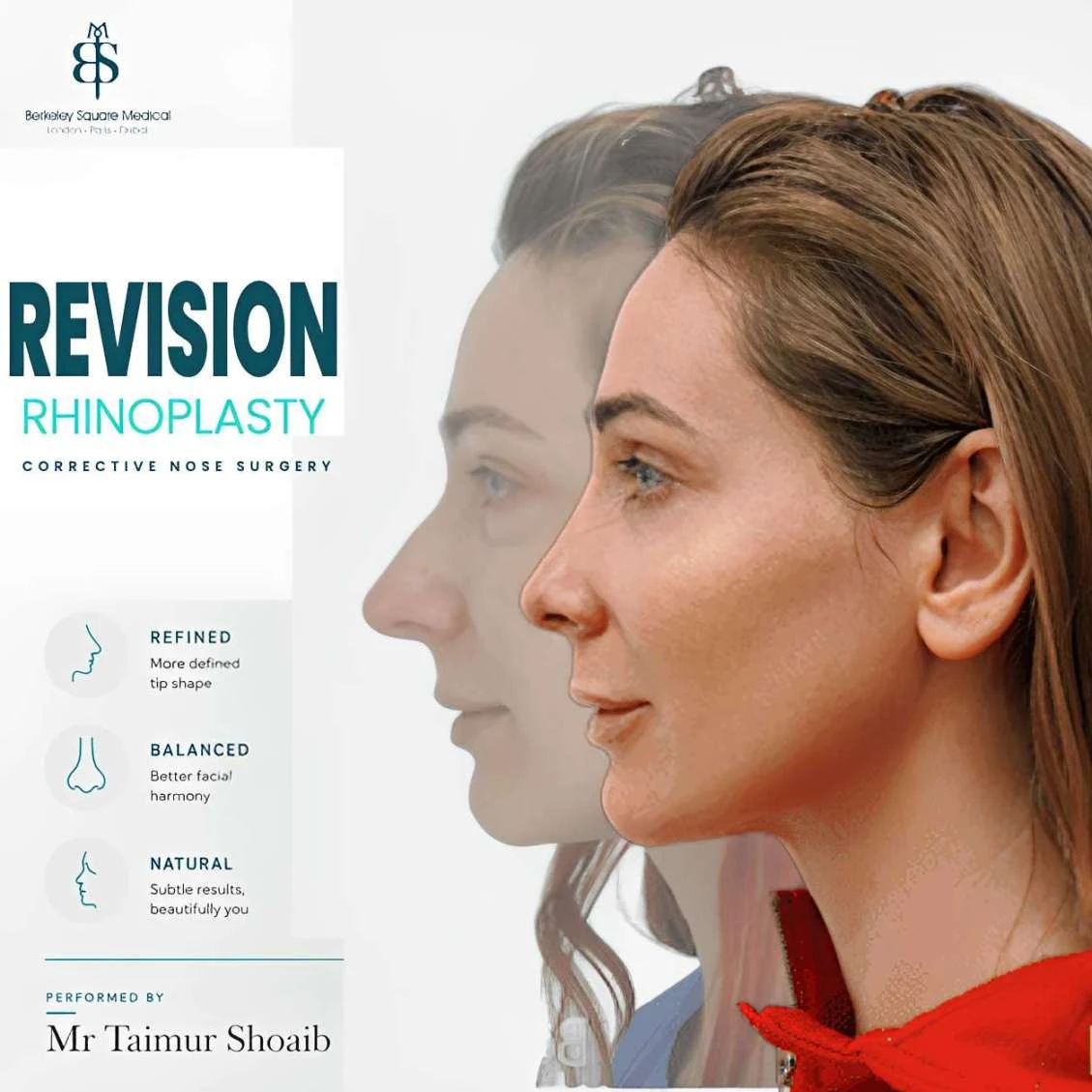 Revision RhinoplastyCorrecting or improving a previous rhinoplasty.Read more
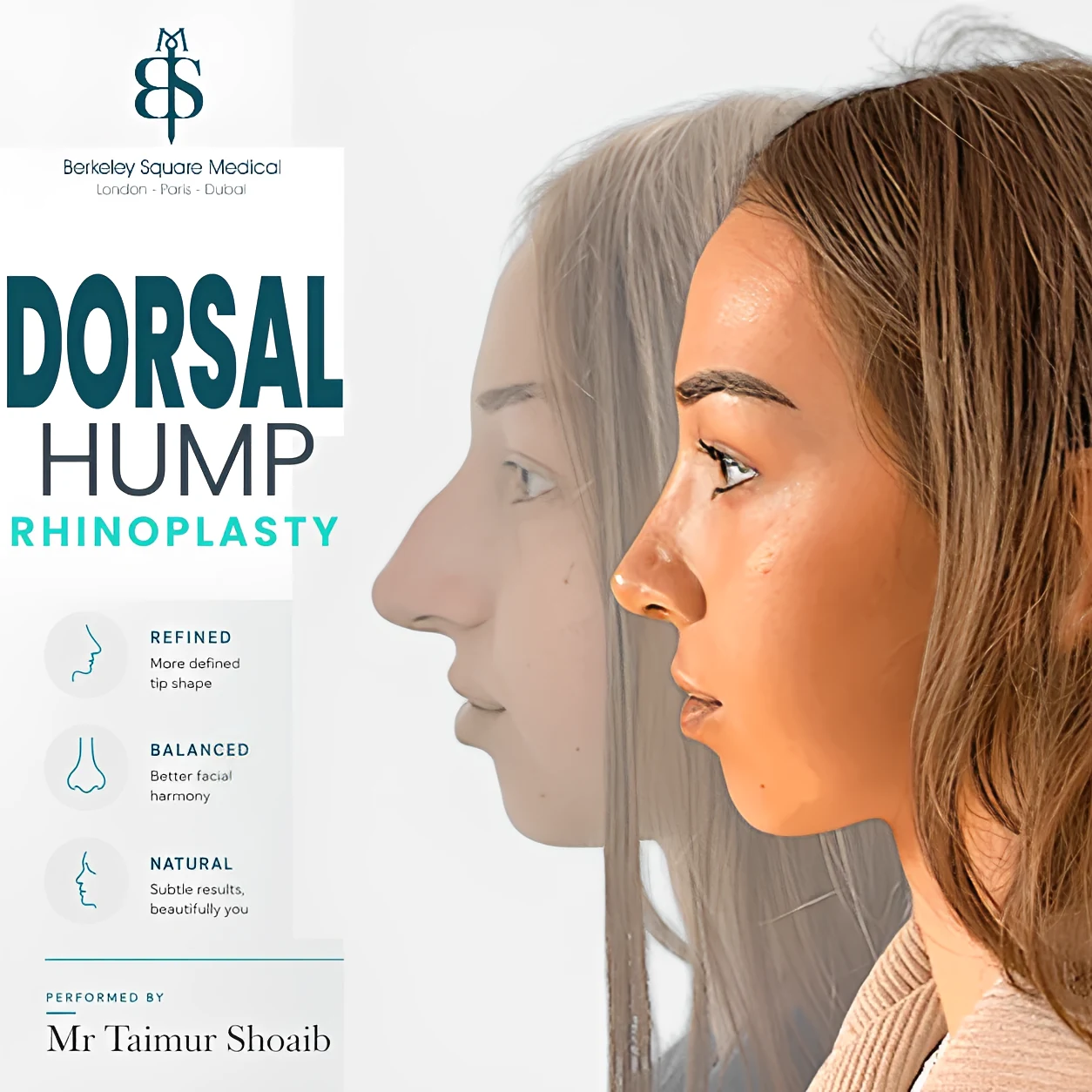 Dorsal Hump RhinoplastyRemoving a bump on the bridge for a straight profile.Read more
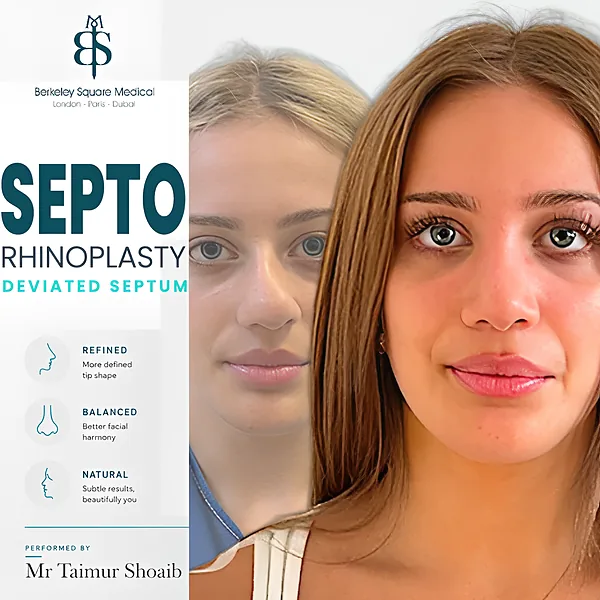 SeptorhinoplastyStraightening the nose and improving breathing.Read more
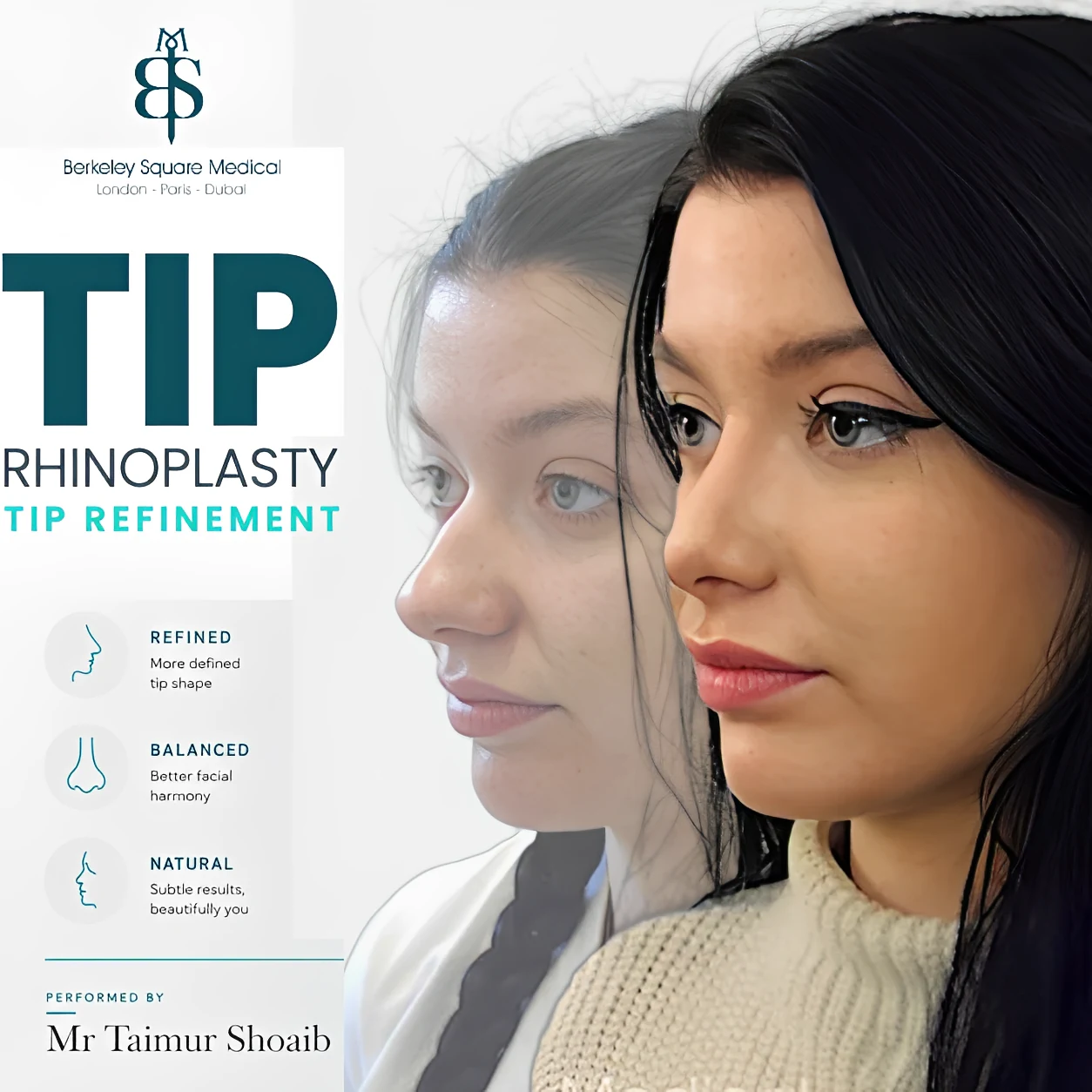 Tip RhinoplastyRefining a bulbous, drooping or asymmetrical tip.Read more
Considering rhinoplasty in London?
If you are weighing up your options in the UK, the next step is a consultation with Mr Taimur Shoaib at 64 Harley Street. Explore rhinoplasty at Berkeley Square Medical, see typical rhinoplasty costs in London, or read about septorhinoplasty in London if breathing is also a concern.
About the author