Wanting to feel a bit more yourself, and to cover the bruising, is one of the first things many people think about after a nose job. The good news is you can usually wear makeup on most of your face fairly soon, as long as you keep it off the nose and any incisions until they have healed. This guide gives you a clear timeline, the one distinction that matters most, and how to apply and remove makeup gently so you protect your result. As always, follow your own surgeon's advice.
You can usually wear makeup on the rest of your face within a few days, which is how most people cover bruising, but keep makeup off the nose itself and any incisions until they have healed, usually around 2 weeks, and only once your surgeon is happy. Apply gently with clean brushes, patting rather than dragging, and remove it carefully without rubbing the nose. Gentle mineral makeup is a good choice while you heal.
How long after rhinoplasty can I wear makeup?
There is no single date, and your surgeon's guidance comes first, but this is the typical pattern:
| Area | Typical timing |
|---|---|
| Rest of the face (cheeks, eyes, lips) | Within a few days, avoiding the splint and any tape |
| Covering bruising away from the nose | Once the skin is unbroken, often within the first week |
| On the nose itself | After the splint is off and incisions have healed, usually around 2 weeks, with surgeon approval |
| Over the incisions (open rhinoplasty columella) | Only once fully healed and your surgeon confirms, sometimes a little later |
Face makeup versus makeup on the nose: the key difference
This is the distinction that matters. Makeup on the rest of your face, your eyes, cheeks and lips, is generally fine within a few days and is perfectly safe to use to cover bruising, as long as you stay clear of the splint, tape and any broken skin. Makeup on the nose itself is different, because the incisions and healing skin need to be left clean and untouched. Products on an unhealed incision can irritate it, clog it or introduce bacteria, so the nose stays makeup-free until it is healed and your surgeon gives the go-ahead.
How to apply makeup gently while you heal
- Be gentle and avoid pressure. The nose and the area around it are tender and the structure is still settling, so no rubbing, pressing or dragging near it.
- Pat, do not drag. Use light patting or rolling motions with a sponge or soft brush rather than pulling the skin.
- Use clean brushes and sponges. Fresh, clean tools lower the risk of irritation or infection on healing skin.
- Keep clear of the nose and incisions until they are healed and cleared, even when working on the cheeks nearby.
- Keep off the splint, cast and tape. While the dressing is on you can still do your eyes, cheeks and lips, taking care not to disturb or wet the splint.
- Less is more in the early weeks. A light hand is kinder to recovering skin.
How to cover bruising after rhinoplasty
Bruising usually spreads to the under-eye area and cheeks and is easy to camouflage with foundation and concealer once the skin is intact:
- Start with a colour corrector. A green corrector neutralises red or purple bruising, and a peach or yellow tone counters the blue-grey stage as it fades.
- Layer a concealer matched to your skin over the corrector, patted on gently.
- Set lightly with powder so it lasts without needing to be touched.
- Work around the nose, not on it, and never on broken or taped skin.
If bruising is heavy, mention it to your clinic. Keeping your head elevated and following aftercare helps it fade faster in the first place, and our guide to bruising after rhinoplasty explains why it happens and how long it lasts.
When can I wear eye makeup after rhinoplasty?
Eye makeup such as mascara, eyeshadow and liner is usually fine within a few days, since it sits away from the nose, but be gentle around bruised, swollen under-eyes and take care not to tug the skin. Remove it softly at the end of the day without dragging near the nose. If you have had any work around the eyes as well, follow your surgeon's specific timing.
Removing makeup safely
Taking makeup off gently matters as much as putting it on. Use a mild, non-irritating remover on a soft pad, and work around the nose rather than over it while it is healing. Avoid scrubbing, harsh wipes or anything that drags the skin. If any product has strayed near a healing incision, clean it only as your surgeon has instructed rather than rubbing at it, and let your clinic know if the area becomes red, sore or starts to weep.
What kind of makeup is best while healing?
Gentle mineral makeup is a good choice in the early weeks, as it tends to be lighter and less likely to irritate or clog recovering skin. Look for non-comedogenic products, keep your tools clean, and introduce anything new cautiously. Once you are fully healed and cleared by your surgeon, you can return to your usual routine, including on the nose.
Makeup for a special occasion soon after surgery
If you have an important event coming up, you can usually cover bruising and look presentable within a week or so using foundation and concealer on the face, though the nose itself may still be swollen and should stay makeup-free until it has healed. Tell your surgeon about the date in advance so they can advise on timing and what is safe, rather than pushing the nose too soon.
Related recovery guides
Blocked pores and blackheads are common under the tape and cast, and our guide to blackheads after rhinoplasty covers looking after the skin safely. For the wider list of things to be careful with while you heal, see what not to do after rhinoplasty.
Specialised Rhinoplasty For Men
Explore our specialist procedures. Tap any card to read more.
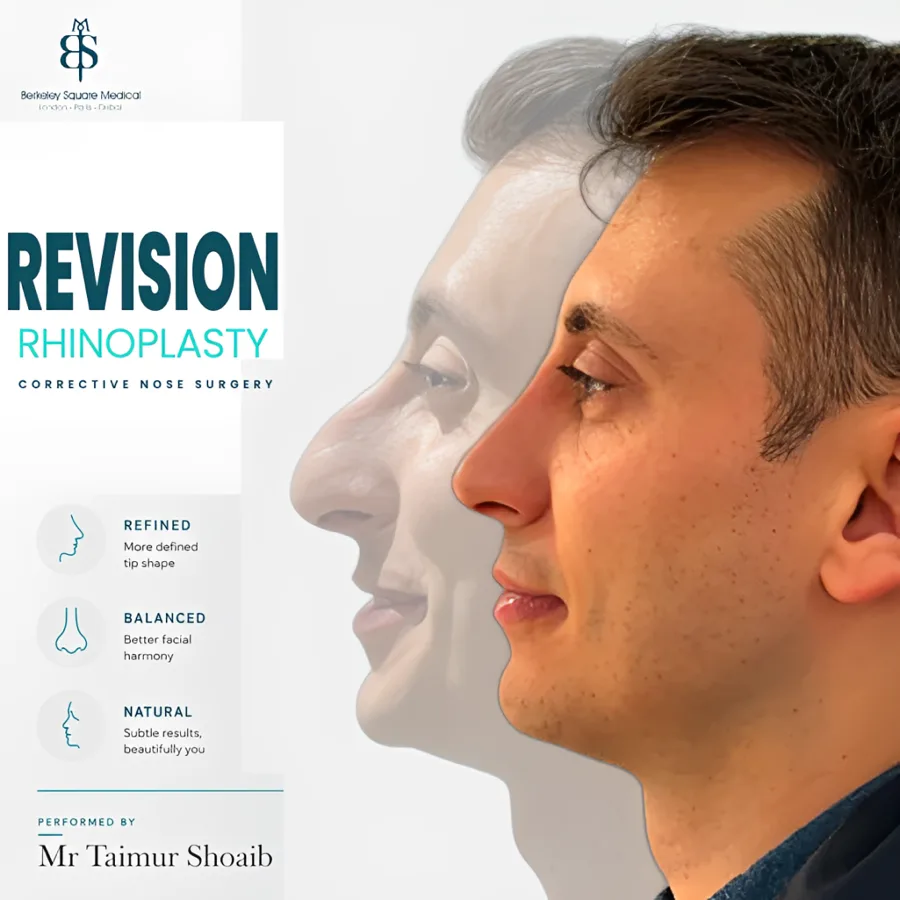 Revision RhinoplastyCorrecting or improving a previous rhinoplasty.Read more
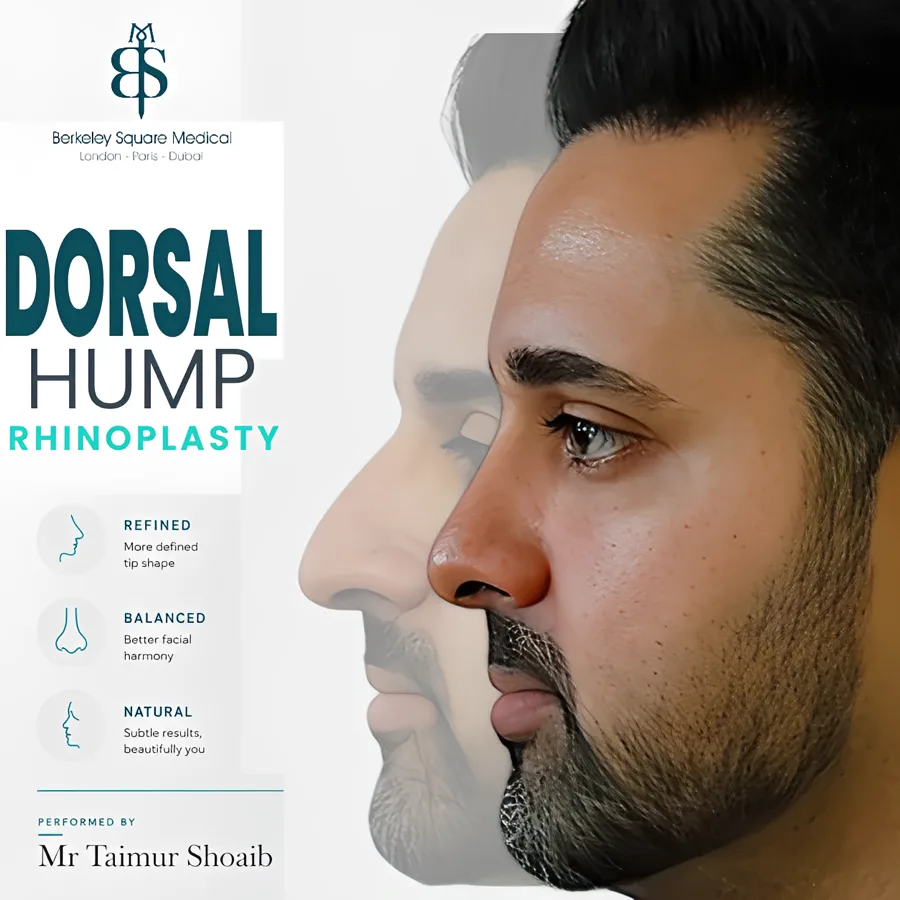 Dorsal Hump RhinoplastyRemoving a bump on the bridge for a straight profile.Read more
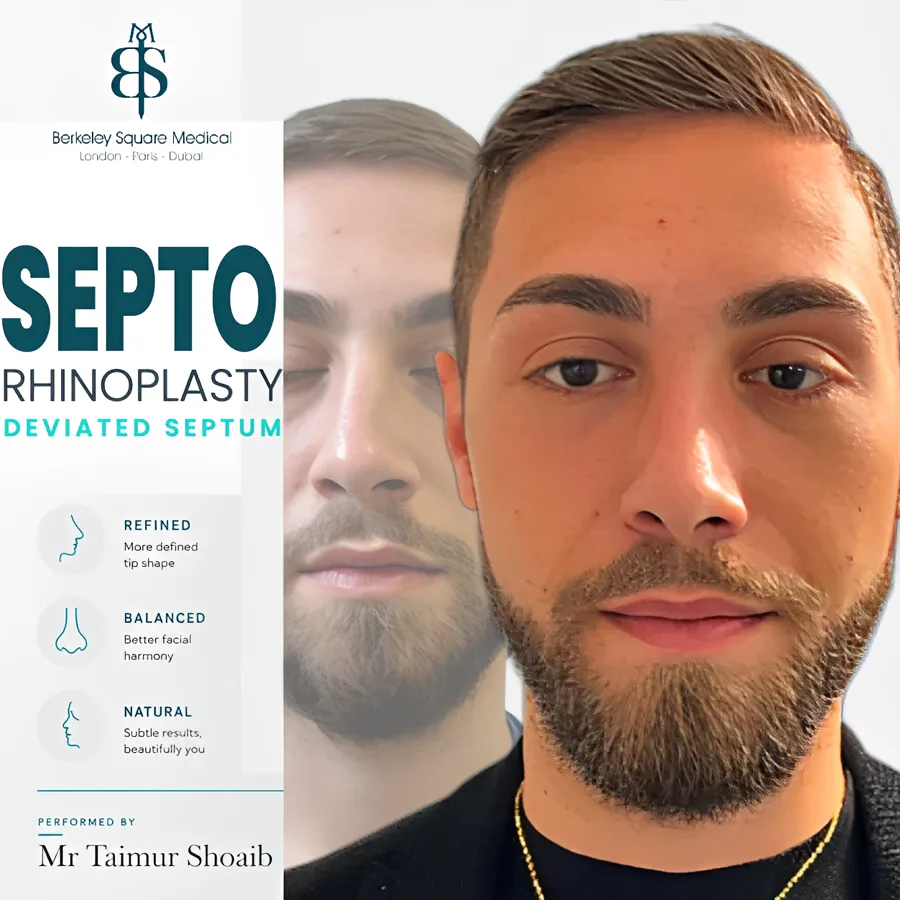 SeptorhinoplastyStraightening the nose and improving breathing.Read more
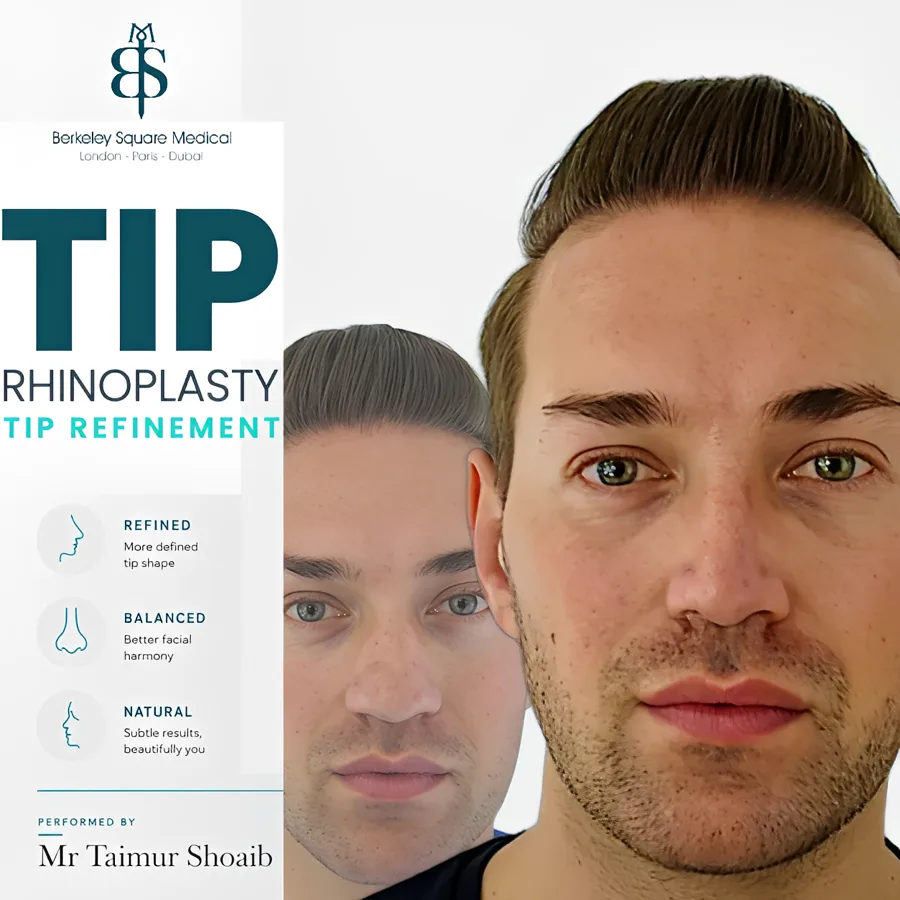 Tip RhinoplastyRefining a bulbous, drooping or asymmetrical tip.Read more
Specialised Rhinoplasty For Females
Explore our specialist procedures. Tap any card to read more.
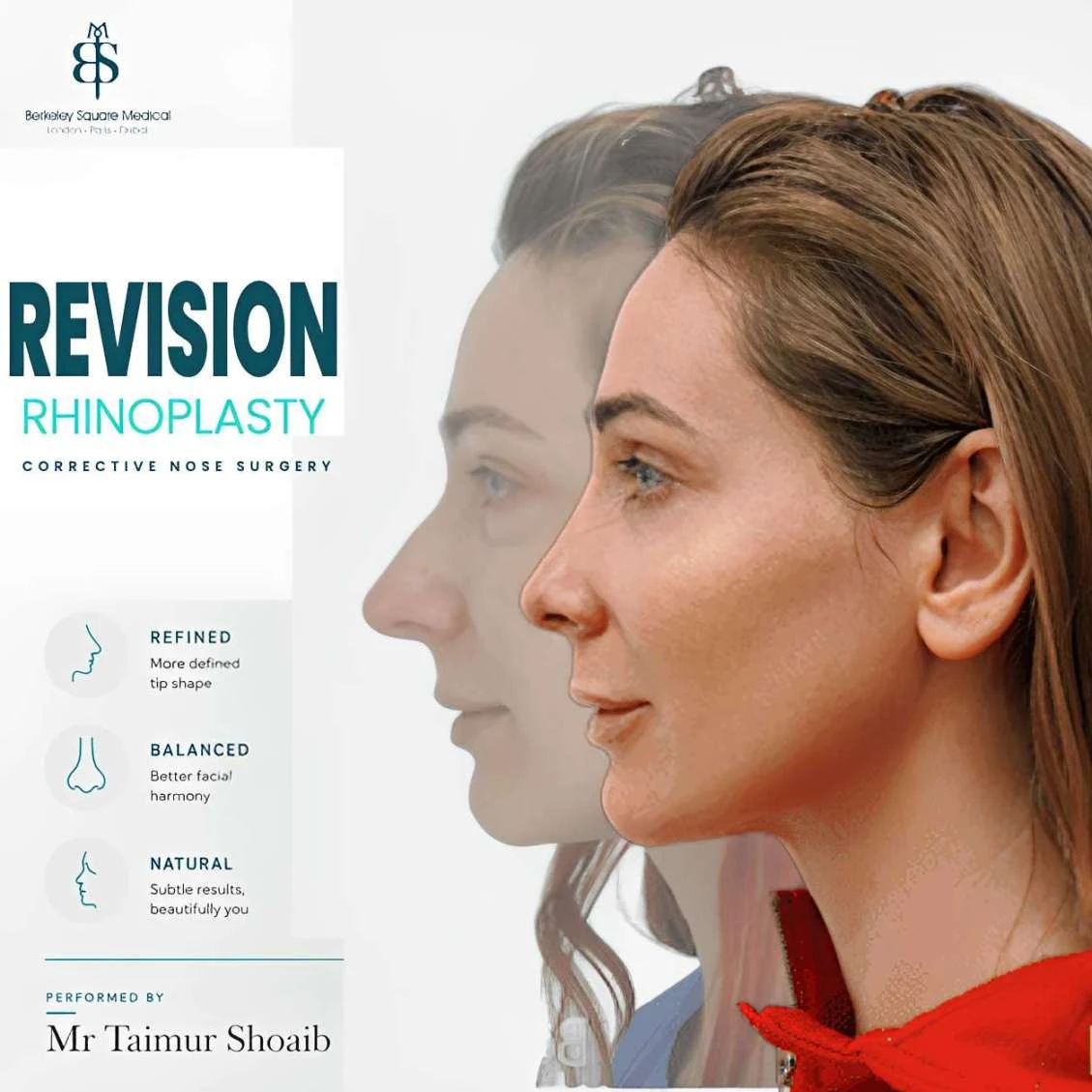 Revision RhinoplastyCorrecting or improving a previous rhinoplasty.Read more
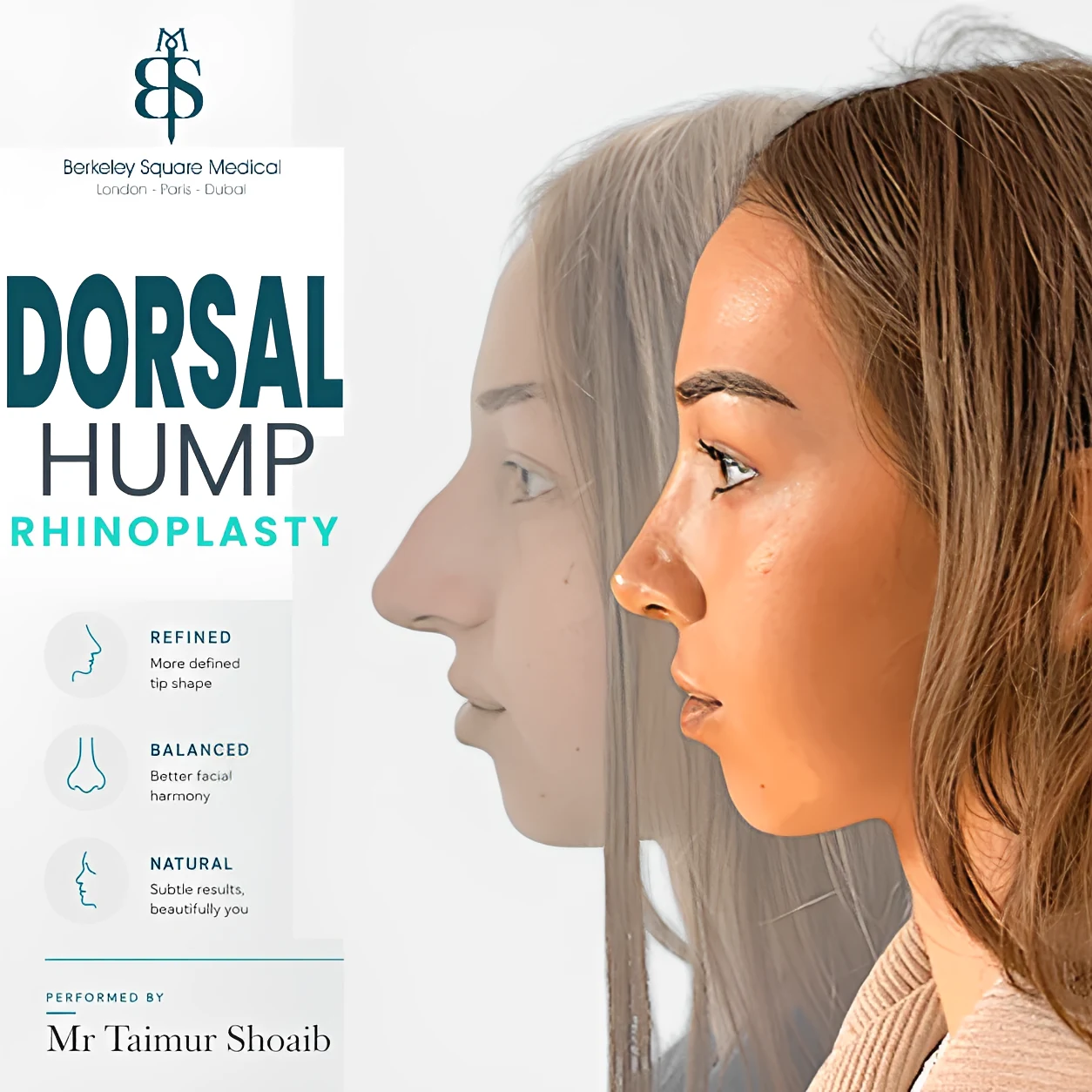 Dorsal Hump RhinoplastyRemoving a bump on the bridge for a straight profile.Read more
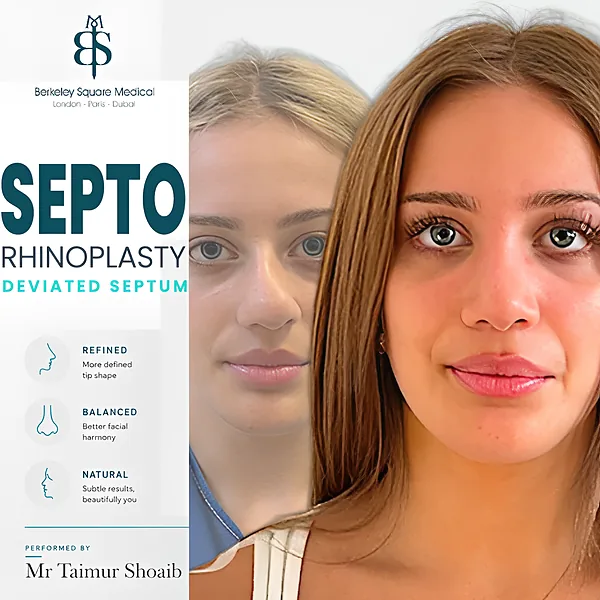 SeptorhinoplastyStraightening the nose and improving breathing.Read more
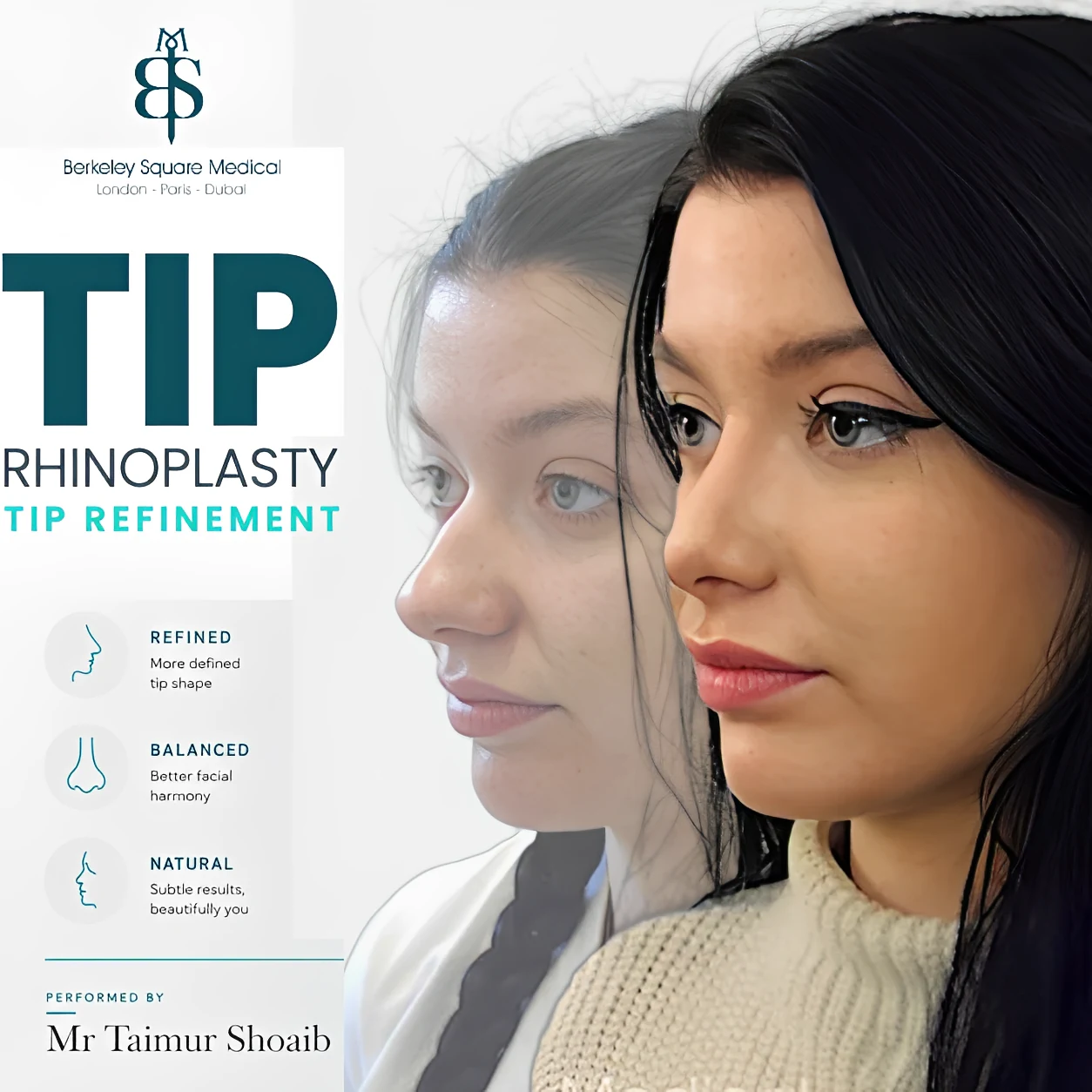 Tip RhinoplastyRefining a bulbous, drooping or asymmetrical tip.Read more
Considering rhinoplasty in London?
If you are weighing up your options in the UK, the next step is a consultation with Mr Taimur Shoaib at 64 Harley Street. Explore rhinoplasty at Berkeley Square Medical, see typical rhinoplasty costs in London, or read about septorhinoplasty in London if breathing is also a concern.
About the author