
0330 058 0212

Breast reduction surgery can be life-changing—helping relieve back pain, improve posture, and restore confidence. But one of the most common questions patients ask is: “What will the scars look like?”
Scarring is a natural part of any breast reduction, yet most patients are reassured to learn that today’s techniques are designed to keep scars as minimal and discreet as possible. With proper care, they typically fade into fine lines that sit along the natural contours of the breast.
At Berkeley Square Medical, we understand that the decision to undergo surgery isn’t just about the result – it’s about understanding the whole process, including what your body will look like as it heals. In this guide, we explain what breast reduction scars look like, including anchor and lollipop scars, how they heal over time, what affects their appearance (including considerations for darker skin tones), and the most effective ways to reduce and improve scarring.
Breast reduction scars are normal and expected, but modern techniques make them far more discreet than many patients anticipate.
The most common scar patterns are anchor, lollipop, periareolar, and liposuction-only, each suited to different reduction goals.
Scar appearance depends on factors like surgical technique, skin type, breast size, genetics, and post-operative care.
Scars typically evolve through phases—red or raised early on, gradually softening and fading over 6–18 months.
Proper aftercare—silicone products, massage, sun protection, and a support bra—can significantly improve scar outcomes.
Patients with darker skin tones may experience hyperpigmentation or raised scars, but tailored care helps minimise these effects.
Advanced treatments such as laser therapy, steroid injections, or microneedling can further refine scars when needed.
All surgical procedures that involve incisions will leave some degree of scarring – and breast reduction is no exception. However, today’s techniques are designed to minimise visible scarring while maximising aesthetic results, and many women are pleasantly surprised by how well their scars heal over time.
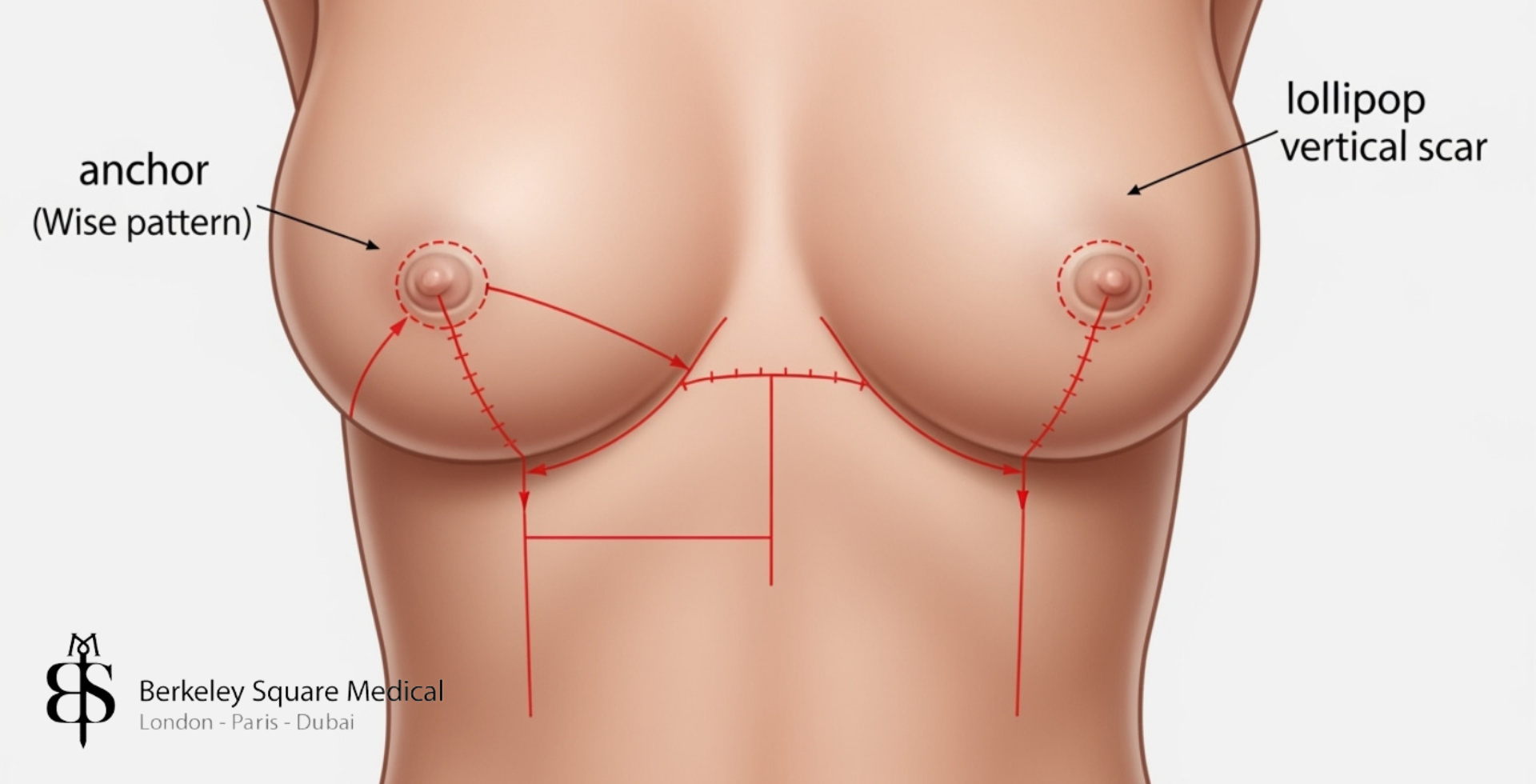
A lollipop scar—also known as a vertical breast reduction scar—is created using a surgical technique that involves two incisions:
One circular incision around the areola
One straight, vertical incision from the areola down to the breast crease
This pattern forms a “lollipop” shape, giving the method its name.
The lollipop incision is typically chosen for moderate breast reductions or when the goal is reshaping and lifting rather than removing large amounts of tissue.
Scarring and healing:
Generally heals faster than anchor scars
Fades into a fine line over 6–18 months
Leaves no horizontal scar under the breast
Works well for women who want minimal scarring but still need lifting and reshaping
It provides a balance between significant reshaping and limited scarring, which is why many modern surgeons favour it when appropriate.
Your scar pattern depends on the surgical technique your surgeon uses, which will be chosen based on the amount of tissue to be removed, the position of your nipples, and your skin quality.
This is the most commonly used technique for women seeking a significant size reduction. It involves three incisions: around the areola, a vertical line from the areola to the breast fold, and a horizontal line along the breast crease. These form an “anchor” or “T” shape.
Only a single circular incision around the areola. Used when minimal volume needs to be removed or combined with a breast lift.
In select cases, breast size can be reduced using liposuction alone, which involves a few tiny incisions near the armpit or breast fold.
Every technique involves some degree of scarring, but a well-planned procedure by an experienced surgeon will ensure those scars are placed in discreet areas and fade significantly over time.
Scarring is a natural part of the healing process, but not all scars are the same. How your scars look in the long term depends on a combination of surgical technique, individual healing, lifestyle factors, and aftercare.
Surgical Technique
One of the most important factors in how well your scars heal is how your surgery is performed. At Berkeley Square Medical, we use:
A well-executed operation reduces trauma to the skin and soft tissues, setting the foundation for smooth healing and minimal scarring.
Skin Type and Genetics
Some people are simply more prone to certain types of scars than others. If you or your family have a history of hypertrophic or keloid scarring, it’s important to mention this during your consultation. Likewise, your skin tone can affect how scars appear. For example:
Surgeons at Berkeley Square Medical will assess your risk factors and recommend tailored scar care if you are at higher risk of problematic healing.
Age and Breast Composition
Younger patients tend to have more collagen, which can sometimes lead to more noticeable early scarring, though this also supports faster wound healing. Larger breasts or those with more drooping can create greater tension on incision sites, which can stretch scars unless properly supported post-op.
Lifestyle and Aftercare
Factors such as smoking, diet, hydration, and sun exposure all play a significant role in how well your scars fade. A poor healing environment can result in wider, darker, or raised scars, while diligent aftercare can significantly improve outcomes.
Understanding how scars evolve helps set realistic expectations and avoids unnecessary worry during your recovery. Here’s a general timeline:
0–2 Weeks: Initial Healing Phase
2–6 Weeks: Scar Formation
2–6 Months: Scar Maturation Begins
6–18 Months: Scar Fading
This process varies from person to person, but most patients see marked improvement by 6–12 months post-surgery.
Women with darker skin tones may notice that breast reduction scars heal a little differently. This is completely normal and relates to how melanin-rich skin responds during recovery.
Darker skin tones may be more prone to:
Hyperpigmentation — scars can appear darker before gradually fading
Hypertrophic or keloid scars — raised scars are more common in people with a history of this type of healing
Longer early visibility — scars may take a few extra months to lighten
Your surgeon will tailor your aftercare to your skin type, using:
Careful incision placement and tension-reducing closure
Early silicone gel or silicone sheets
Strict sun protection to prevent permanent darkening
Targeted treatments (e.g., steroid injections or laser) if raised areas develop
With consistent aftercare, scars on darker skin tones typically fade well over 12–18 months. Most patients find that improved comfort, confidence, and posture make the temporary appearance of scars well worth it.
While some scarring is unavoidable, the appearance of scars can be greatly improved with proper post-operative care. Here are the most effective strategies:
Follow Your Surgeon’s Aftercare Instructions
This includes cleaning protocols, dressing changes, and wearing your post-surgical support bra. Compression garments help reduce swelling and prevent skin tension, which supports cleaner scar formation.
Avoid Smoking and Alcohol
Nicotine restricts blood flow and delays healing. Quitting smoking before and after surgery is one of the most effective ways to promote healthy scars.
Use Silicone Products
Silicone gels or silicone sheets are widely regarded as one of the most effective topical treatments for surgical scars. They help:
Begin using silicone products once the incisions have fully closed – usually around 2–3 weeks post-op.
Gentle Scar Massage
After about 3–4 weeks (or when advised), begin massaging your scars gently once or twice a day using a moisturiser or silicone gel. This promotes collagen reorganisation, improves scar flexibility, and reduces lumpiness.
Limit Sun Exposure
New scars are extremely sensitive to UV light. Sun exposure can cause permanent discolouration, making them darker and more visible. Use SPF 30+ on scars or keep them covered for at least 12 months after surgery.
In some cases, additional scar treatments may be helpful to improve the final appearance:
At Berkeley Square Medical, we offer personalised scar assessments during your follow-up appointments. If any scar is healing poorly, we intervene early with appropriate treatments to improve the outcome.
It’s completely normal to feel anxious about how your body will look after surgery. For many women, the idea of having scars on their breasts feels daunting at first. But what we often see is a dramatic shift in perspective once healing begins.
Before Surgery
After Surgery
The reality is: scars fade, but the benefits of reduced weight, pain relief, and increased confidence often remain for life.
As one of London’s top-rated cosmetic surgery clinics, Berkeley Square Medical provides expert care with a strong focus on safety, aesthetics, and scar minimisation.
We believe in transparency, education, and patient-centred care. From your first consultation through to final follow-up, our team supports you at every stage of your recovery.
Yes. All breast reduction procedures involve incisions, so some degree of scarring is permanent. However, most scars fade significantly within 6–18 months and often become thin, pale lines that are barely noticeable. Proper surgical technique and consistent scar care can make scars far less visible over time.
This depends on the incision pattern used.
Anchor scars leave a circular scar around the areola, a vertical line to the breast fold, and a horizontal line hidden in the crease.
Lollipop scars include only the areola and vertical incision.
Periareolar scars follow the border of the areola and blend well with natural pigmentation.
Scars usually appear red or pink at first and gradually lighten and flatten as they heal.
Your surgeon will recommend the incision pattern that safely achieves your goals based on breast size, skin quality, and the amount of tissue to be removed. If a smaller incision—like the lollipop pattern—will work for your anatomy, a skilled surgeon will always choose the least invasive option.
You can improve scar appearance by following your surgeon’s aftercare plan, avoiding smoking, using silicone gels or silicone sheets, protecting scars from sun exposure, and wearing your support bra consistently. Gentle scar massage (once approved) and good hydration also support better healing.
Yes—but darker skin tones may be prone to hyperpigmentation, raised scars, or keloids. With careful surgical planning, strict sun protection, silicone therapy, and early treatment of any raised areas, most patients with darker skin heal with smooth, discreet scars.
If you’re considering breast reduction but feel unsure about scarring, we invite you to speak with our team. At Berkeley Square Medical, we’re committed to helping you feel informed, supported, and confident every step of the way.
Book a private consultation at our London clinic to discuss your goals, see real patient results, and learn exactly how we minimise and manage scars throughout your surgical journey.
Breast reduction can be transformative – and with the right care, the scars won’t define your result.
London Cosmetic Surgery group Berkeley Square Medical, is one of the UK’s leading providers of Aesthetic and Cosmetic Surgery. For more information about breast reduction at our clinic, please visit: https://www.berkeleysquaremedical.com/breast-reduction


Patient Journey We are here to guide you to make the right decision for your well-being. If you are considering an aesthetic change to your appearance, we know that it’s one of the most important and personal decisions you wish to make. Therefore you need to be certain that the medical advice you receive is […]

Patient Aftercare All cosmetic surgery procedures at Berkeley Square Medical come with a comprehensive aftercare package and a 24-hour service so you can be assured you are always under the care and guidance of our surgical team. All your immediate aftercare is included in the cost of your surgery so there are no hidden extras in our […]

If you are considering Cosmetic Surgery, we understand that it's probably one of the most important decisions you're likely to make, therefore, you need to be sure it's right for you and you receive professional and independent advice about your procedure.

Our Philosophy We began our journey setting foot in the highly fashionable area of Berkeley Square, Mayfair where luxury fashion, galleries and five-star hotels all conveniently meet to set the example for world-leading client services and experience. Our goal was to create a cosmetic surgery practice that would not only exceed patients’ expectations but provide […]

