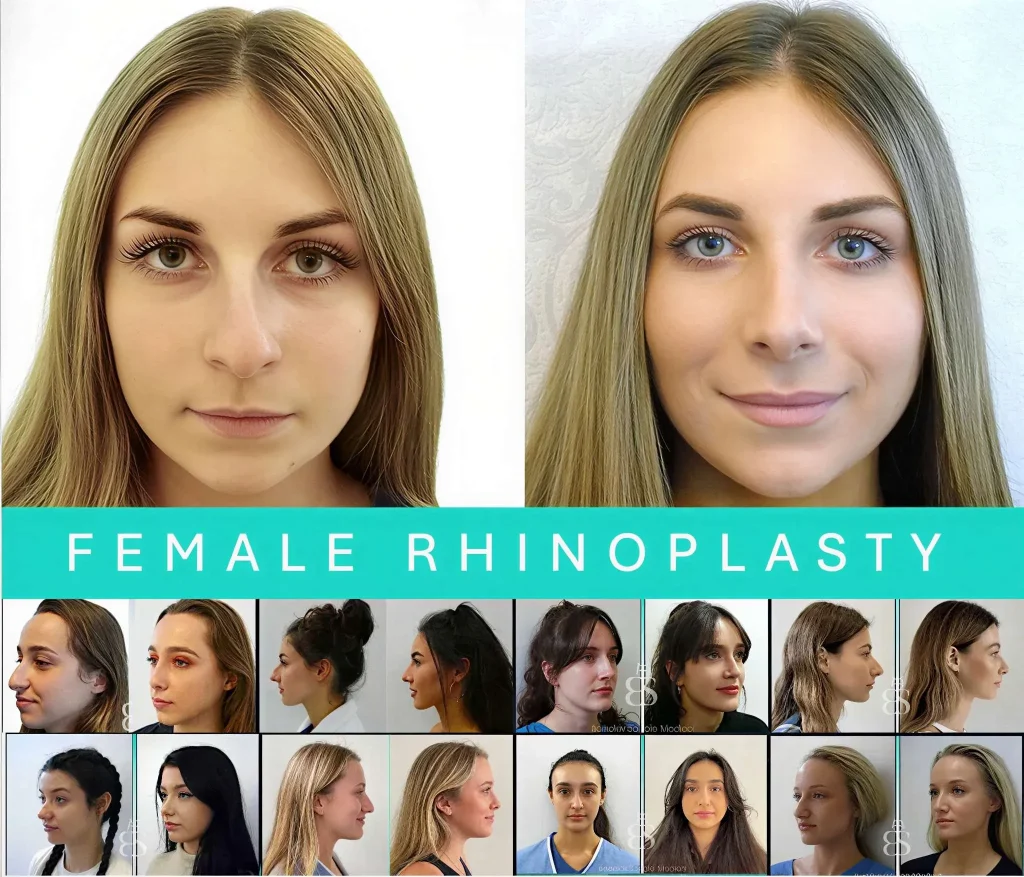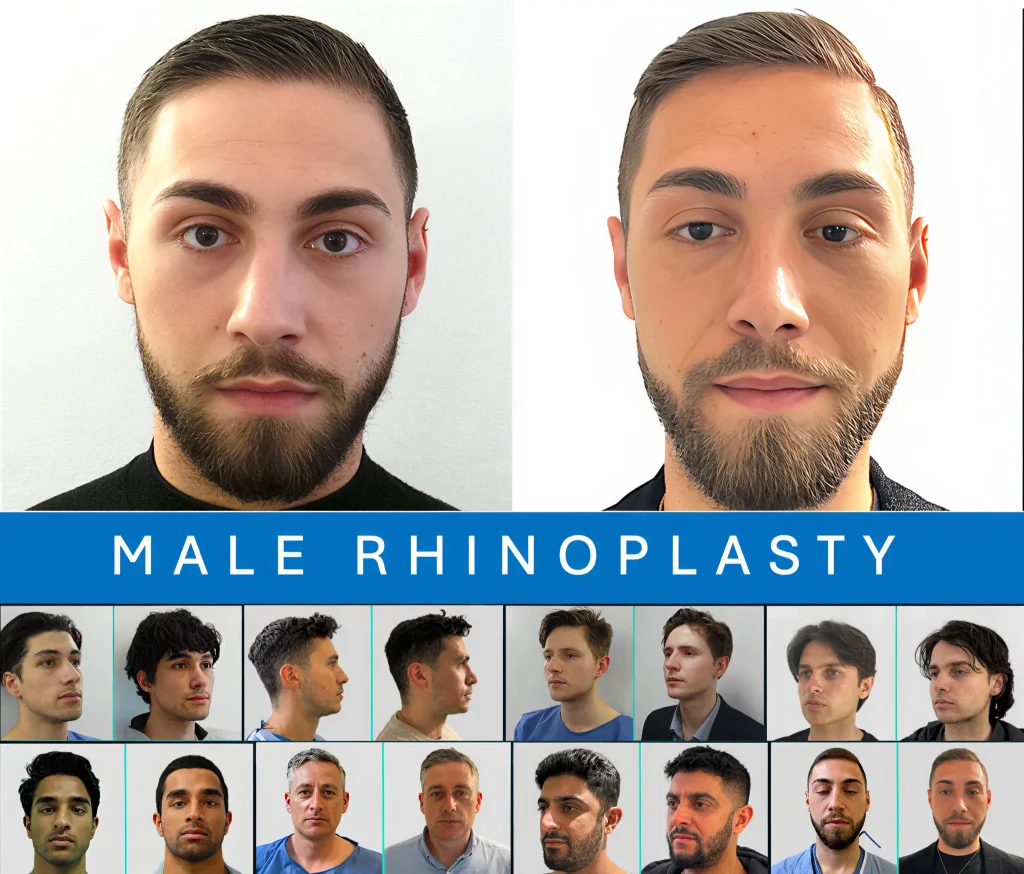
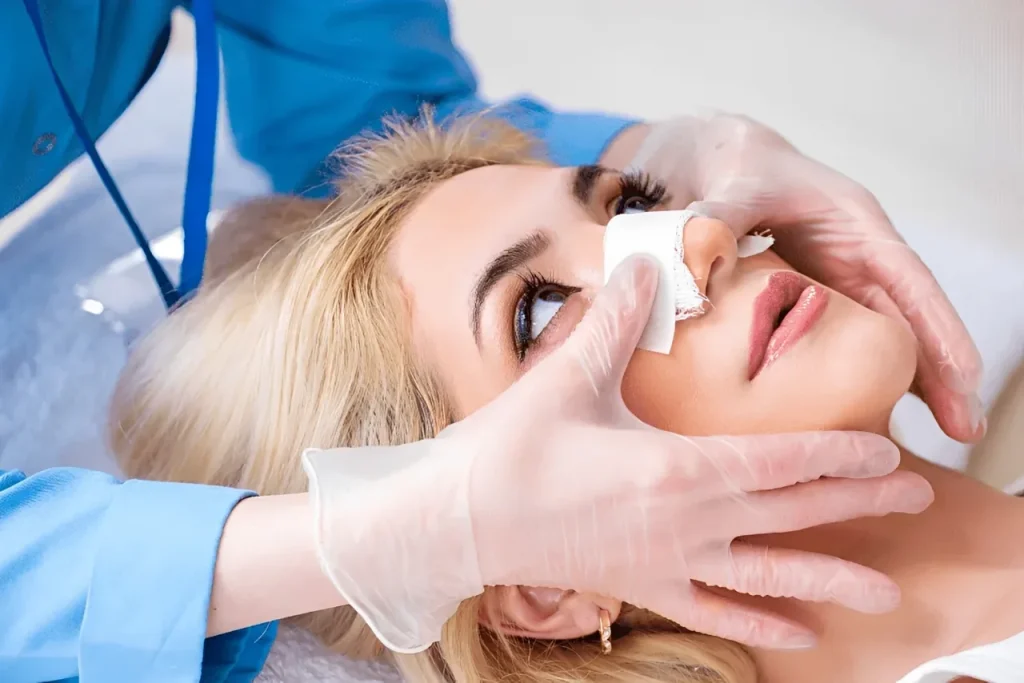
Rhinoplasty is a safe operation in experienced hands, and serious complications are uncommon. This page is written to be honest about the ones that matter, the genuine adverse events that can happen when healing does not go to plan, rather than the normal swelling and bruising that every patient expects.
Understanding the real complications, how often they occur, how they are recognised and how they are put right helps you make a clear decision and choose your surgeon carefully. Where we give numbers, we give a range drawn from the published surgical literature rather than a single figure, because on a subject like this you deserve honesty, not false reassurance.
Side effect or complication? A side effect is your body's expected response to surgery, such as swelling, bruising or temporary numbness, and it settles on its own. A complication is an unexpected event that deviates from normal healing, such as infection, significant bleeding, a septal perforation or a breathing obstruction. This page covers complications. For the normal, temporary effects, see our guide to rhinoplasty side effects.
Key Takeaways
- Serious complications are uncommon. Most reported problems are minor, and major complications that need intervention are rare in experienced hands.
- Complications are not the same as side effects. Swelling, bruising and numbness are normal healing, covered on our side effects page.
- The complications that matter are septal perforation, infection, haematoma and significant bleeding, poor wound healing, persistent breathing difficulty, healing asymmetry and, rarely, structural collapse.
- Revision is not the same as botched. Published series put revision rates at roughly 5 to 15 percent, usually for fine-tuning, not because surgery failed.
- Choosing an experienced surgeon and honest planning are the biggest factors in keeping your risk low.
How Common Are Rhinoplasty Complications?
The honest answer is that the risk is low but not zero, and the published figures vary widely depending on how a complication is defined and which patients are studied. It helps to think in three tiers: effects almost everyone gets, which are normal side effects rather than complications; uncommon complications; and rare but serious ones. This page covers the second and third tiers.
- Overall complication rate: published series report a wide range, from around 4 percent to the high teens, because the range is dominated by minor events such as prolonged swelling or small asymmetries.
- Major or significant complications that need active treatment, such as serious bleeding, serious infection or an airway problem, are uncommon, commonly reported in the low single digits.
- Revision surgery: around 5 to 15 percent of patients have a revision, most often to refine an aesthetic detail rather than to correct a medical problem.
We deliberately give ranges rather than a single headline figure, because a false-precision number would not be honest. The most useful thing to know is that the serious events below are rare, and that most are recognised and managed well when you are under the care of an experienced surgeon.
The Serious Complications of Rhinoplasty
These are the genuine adverse events, distinct from normal recovery. Each is uncommon, and each is manageable when caught early. They fall into two groups: the general risks of any operation, and the risks specific to the nose.
General surgical risks
As with any procedure under anaesthetic, there is a small risk of a reaction to the anaesthetic and, rarely, of blood clots in the legs or lungs. These are uncommon in fit, well-screened patients, and your team takes active steps to prevent them. The nose-specific complications below are the ones most patients want to understand.
Septal perforation
A hole through the septum, the wall of cartilage and bone that divides the nostrils. It is reported in roughly 0.5 to 2 percent of cases in the surgical literature. It can cause a whistling sound on breathing, crusting, dryness and recurrent bleeding, though many small perforations cause no symptoms at all. It is managed with humidification and lubrication, a small silicone septal button, or surgical repair using cartilage or fascia.
Infection
Reported in roughly 0.2 to 2 percent of cases, and a little more likely in revision surgery or where grafts or implants are used. It can appear within days as redness and swelling, or later as a graft-related problem. It is treated with antibiotics, drainage of any abscess, and, in severe cases, removal of an infected graft or implant.
Haematoma and significant bleeding
Some oozing is normal, but a septal haematoma, a collection of blood under the lining of the septum, is the one to know about. Left untreated it can damage the cartilage and lead to collapse, so it is drained urgently. It usually shows as increasing pressure, blockage or pain in the days after surgery. See the dedicated bleeding section below for what is normal and when to worry.
Poor wound healing and skin problems
Skin breakdown over the bridge of the nose is very rare, reported at well under 1 percent. The risk is higher in smokers, in people with very thin skin, with over-tight taping, and notably after recent nasal fillers, which is a published and avoidable risk. It is managed with careful wound care and, rarely, later reconstruction. Less seriously, some patients notice persistent redness or small visible surface vessels over the bridge, which usually fades and can be treated if it lingers.
Persistent breathing difficulty
Most people breathe as well or better after surgery, but if supporting cartilage is over-reduced or weakened, the nasal valve can collapse and make breathing harder. This is one of the more common reasons a patient seeks revision. It is corrected with structural grafts, such as spreader or alar batten grafts, that rebuild support.
Lasting change in smell
Most people notice a temporary dulling of smell from early swelling, which settles and is covered as a normal effect on our side effects page. A lasting change to the sense of smell is a recognised but rare complication, more likely where extensive internal work was needed.
Healing asymmetry and contour deformity
A nose heals as living tissue, so small irregularities can appear, including a pollybeak (fullness above the tip), an inverted-V, or slight asymmetry. Much early asymmetry is simply swelling and keeps improving, which is why a settled result should not be judged before around twelve months. Skin type matters here: thicker skin tends to stay swollen longer and can mask fine detail, while very thin skin can show small irregularities more readily. A genuine, fixed structural asymmetry that remains after twelve months may be addressed with revision.
Structural collapse (saddle-nose)
Loss of height and support across the bridge, giving a scooped or saddle shape. It is rare, well under 1 percent with modern structure-preserving technique, and more likely after infection, an untreated septal haematoma, or over-aggressive removal of septal cartilage. It is corrected with structural cartilage grafting.
Bleeding After Rhinoplasty: What Is Normal and When to Worry
Some bleeding after a nose operation is completely normal, and knowing the difference between normal oozing and a warning sign is one of the most common worries patients have.
- Normal: light bleeding or oozing in the first 24 to 72 hours, and occasional spotting for up to one to two weeks as the lining heals.
- Contact your surgeon if you are soaking through gauze every ten minutes or so, if a nosebleed lasts more than about 30 minutes, or if heavy bleeding starts or continues beyond the first few weeks.
This is bleeding in the context of rhinoplasty recovery. It is not the same as a spontaneous nosebleed in day-to-day life, which is a first-aid matter, not a surgical one.
Can Rhinoplasty Go Wrong? Botched Results and Revision
Yes, like any operation, rhinoplasty can have a disappointing outcome. It is worth being honest about the commonest one: more often than any complication, unhappiness comes from a technically sound result that simply did not match what the patient pictured. That is why careful imaging and an unhurried consultation matter so much, and it is a very different situation from a genuine complication.
"Botched rhinoplasty" is a lay term, not a clinical diagnosis, and it usually describes a poor aesthetic or functional result: an over-reduced or pinched nose, a pollybeak, an obvious asymmetry, or difficulty breathing.
It is important to be honest about what this means. A revision rate of roughly 5 to 15 percent does not mean that 5 to 15 percent of noses are botched. Most revisions are small refinements once the tissues have fully settled. A genuine structural or functional problem that persists beyond around twelve months is when revision is properly considered.
If your rhinoplasty has not healed as hoped, a secondary procedure can often improve both the appearance and your breathing once everything has settled. Mr Taimur Shoaib regularly performs corrective surgery. Read about revision rhinoplasty at Berkeley Square Medical, including when it is appropriate and what it involves.
How to Reduce Your Risk of Complications
- Choose an experienced, GMC-registered plastic surgeon who performs rhinoplasty regularly. This is the single biggest factor in a safe result.
- Be honest at your consultation about your health, medication, smoking and your expectations, so the plan is realistic and safe.
- Avoid nasal fillers close to surgery, which can compromise the blood supply to the skin.
- Follow your aftercare closely, protect your nose from knocks, and keep every follow-up appointment so any problem is caught early. Our rhinoplasty healing stages guide sets out what to expect.
When to Contact Your Surgeon
Expected swelling and mild discomfort are normal. Contact your surgeon the same day if you notice any of the following, which can be early signs of a complication:
- A temperature above 38°C, or spreading redness, warmth or discharge that suggests infection.
- Increasing pressure or pain on one side, or one nostril becoming completely blocked, which can signal a septal haematoma.
- Skin over the bridge or tip turning white, dusky or dark.
- Heavy bleeding that does not settle with gentle pressure, or a nosebleed lasting more than about 30 minutes.
- Sudden or worsening difficulty breathing, or any change in vision.
Some of these need emergency care, not a phone call. Call 999 or go to your nearest A&E immediately if you have sudden or severe difficulty breathing, chest pain, a sudden change in vision, or bleeding you cannot control. For the other signs above, contact your surgeon the same day.
You should never feel you are bothering us by asking.
Why Read This From a Rhinoplasty Surgeon
This page is reviewed by Mr Taimur Shoaib, a Consultant Plastic Surgeon on the GMC Specialist Register (GMC 3615443) who performs rhinoplasty and revision rhinoplasty at Berkeley Square Medical, 64 Harley Street. He has published peer-reviewed work directly relevant to complications and their avoidance, including an audited single-surgeon series of closed rhinoplasties (Indian Journal of Otolaryngology and Head & Neck Surgery, 2022) and a technique paper on tip control in closed rhinoplasty (European Journal of Plastic Surgery, 2026). As with all single-surgeon research, this is lower-tier evidence, results vary between patients, and no honest surgeon can promise a specific outcome. What we can promise is a candid conversation about your individual risks before you decide anything.
Worried about rhinoplasty complications?
Whether you are planning surgery or concerned about a result that has not healed well, discuss your individual risks honestly with Mr Taimur Shoaib.
Learn about revision rhinoplastyFrequently Asked Questions
How common are rhinoplasty complications?
Serious complications are uncommon. Published series report a wide overall range from around 4 percent to the high teens, but this is dominated by minor events. Major complications that need active treatment are rare, usually in the low single digits, and around 5 to 15 percent of patients have a revision, most often for minor refinement.
Can rhinoplasty go wrong?
Yes, like any surgery it can have a disappointing outcome, such as an over-reduced or asymmetric nose or difficulty breathing. Serious problems are uncommon, and many concerns settle with time. Where a genuine structural or functional problem persists, it can usually be improved with revision surgery once healing is complete.
How do I know if my rhinoplasty is botched?
"Botched" is a lay term for a poor result, such as a pinched tip, a pollybeak, obvious asymmetry or breathing difficulty. Because much early irregularity is swelling, a result should not be judged before around twelve months. If a real problem remains after that, a revision assessment is the sensible next step.
What are the warning signs of complications after nose surgery?
Contact your surgeon promptly for heavy or ongoing bleeding, a fever, spreading redness or discharge, increasing one-sided pressure or pain, sudden or worsening breathing difficulty, or any change in vision. Expected swelling and mild discomfort are normal.
Can you go blind from a nose job?
Loss of vision from rhinoplasty is extraordinarily rare. It is most often discussed in relation to nasal filler injections rather than surgery. It is a recognised but exceptionally uncommon event, which is one more reason to be assessed and treated by an experienced surgeon.
Can a rhinoplasty result change or collapse years later?
Results are largely permanent, but the nose continues to age with the face, so the tip can soften slightly over the years. After older, strongly reductive surgery, some structural change or collapse can appear over five to twenty years, which is why modern technique favours preserving and supporting structure.
Does ear cartilage grow back after being used in rhinoplasty?
No. Cartilage has very little blood supply and does not regenerate at the site it is taken from. When a small amount of ear cartilage is used as a graft, the surgeon takes it in a way that preserves the shape and support of the ear.
Considering rhinoplasty or revision in London?
Understand your individual risks honestly and without pressure at a consultation with Mr Taimur Shoaib at 64 Harley Street.
Explore rhinoplasty at Berkeley Square Medical